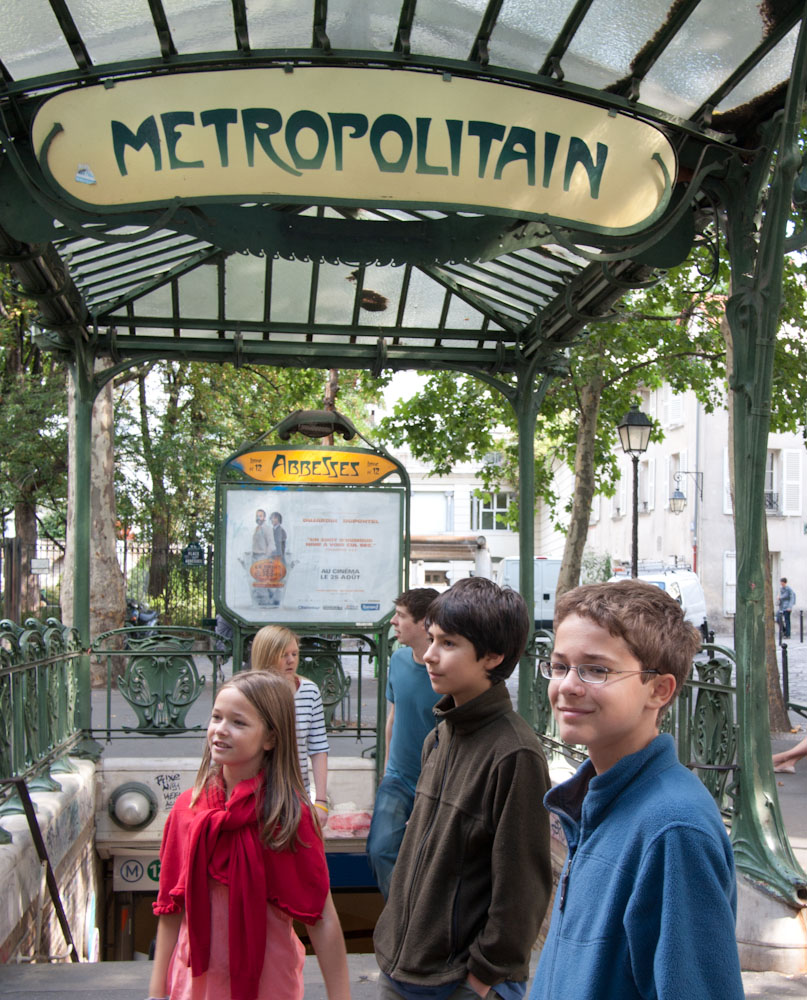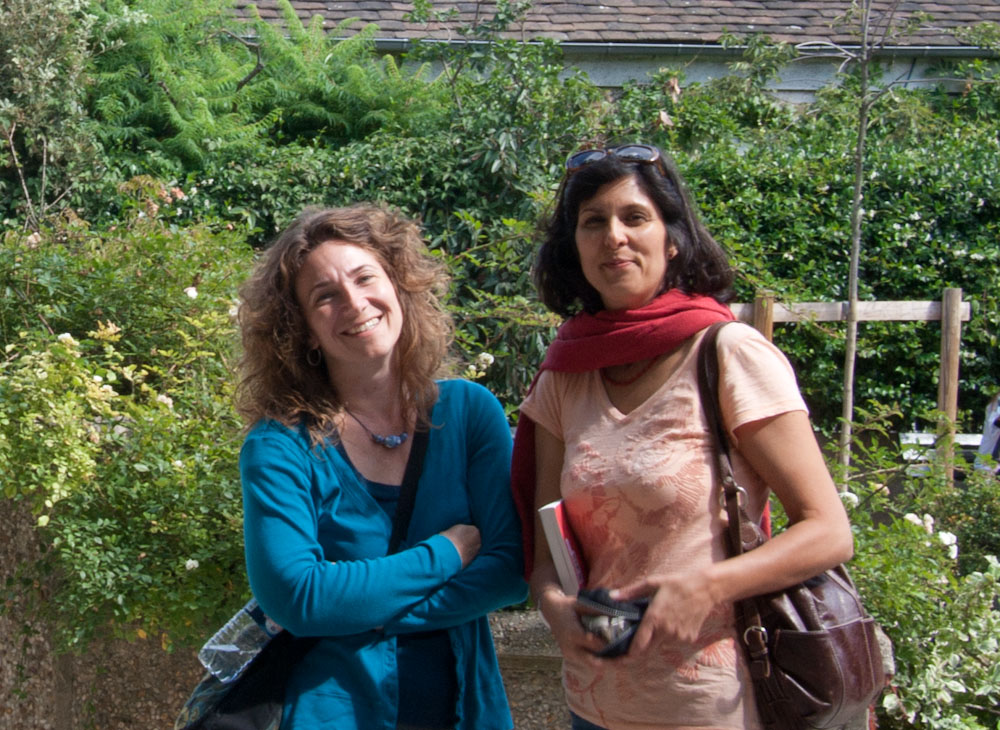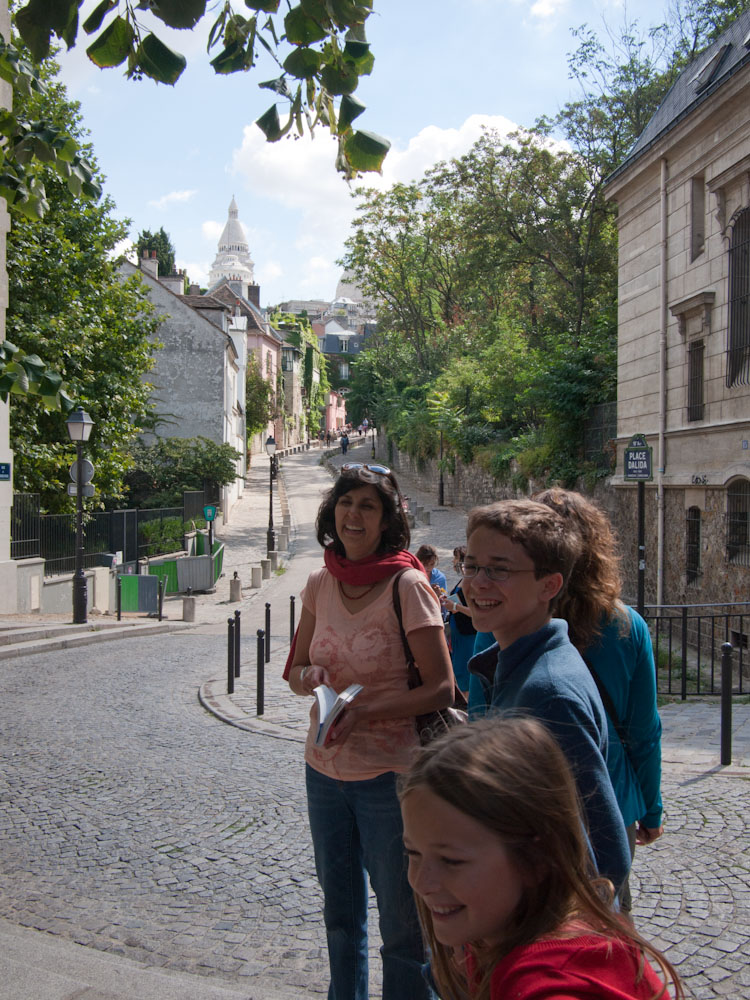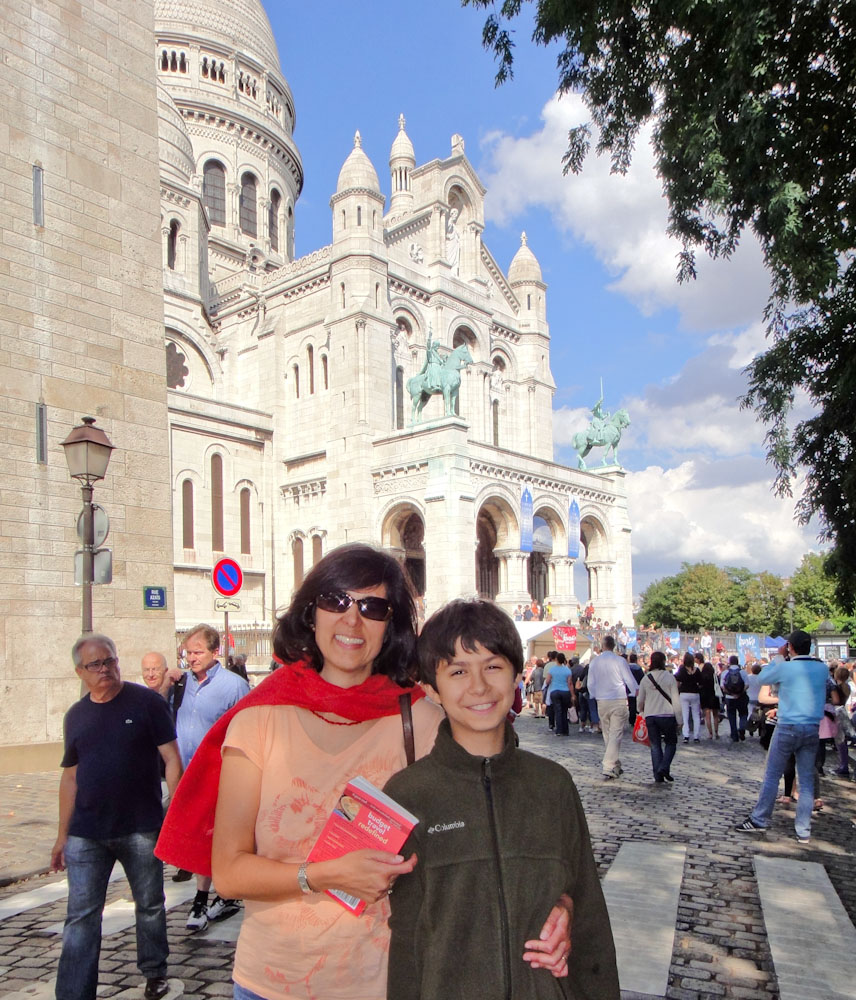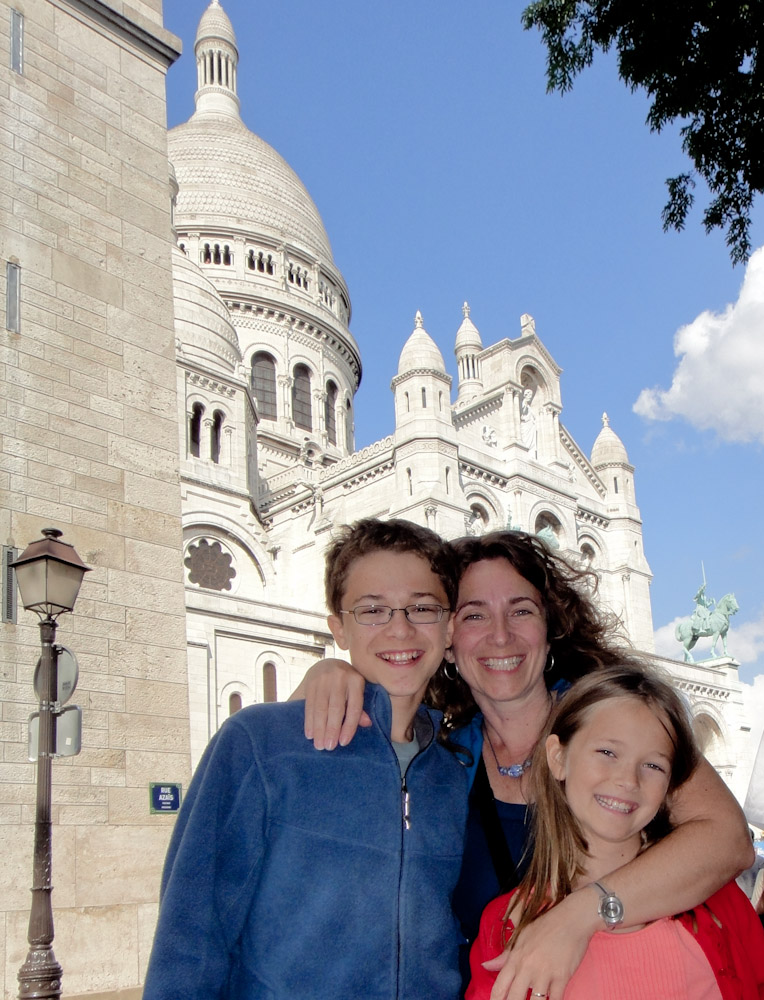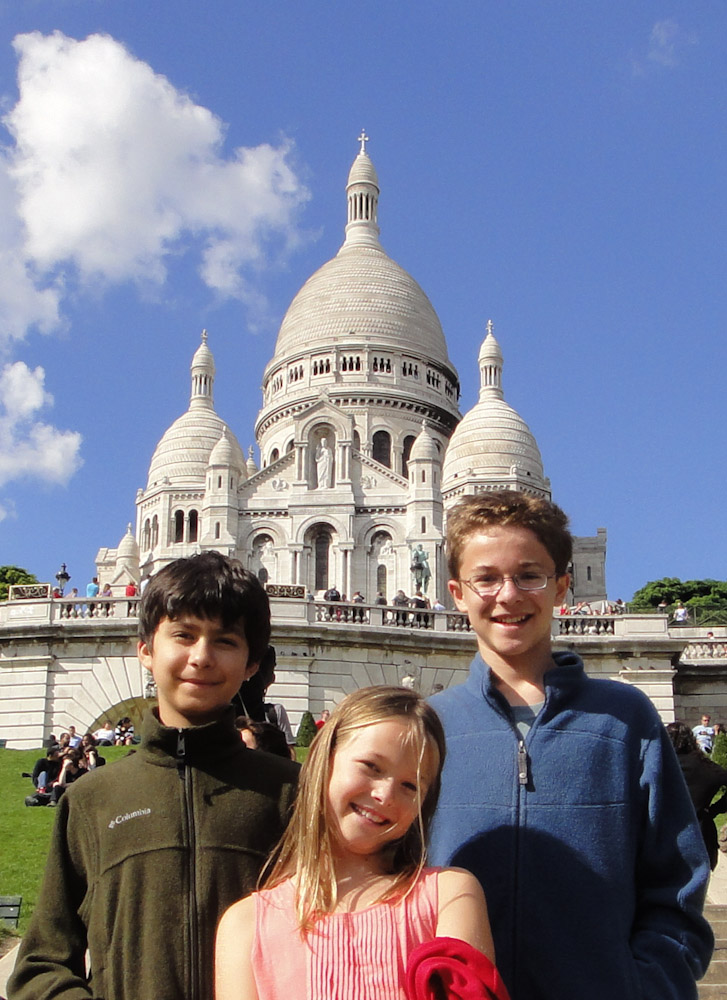
The Waller’s from Natick were in town last week to watch the World Badminton Championships. We were able to see them on several days and to meet Patrick’s parents as well. On the last day Maria and Peter came over, and after tea (of course!) we took the Metro over to the Montmartre section of the city, whose history is vital to Paris and begins with St. Denis, the patron saint of the city.
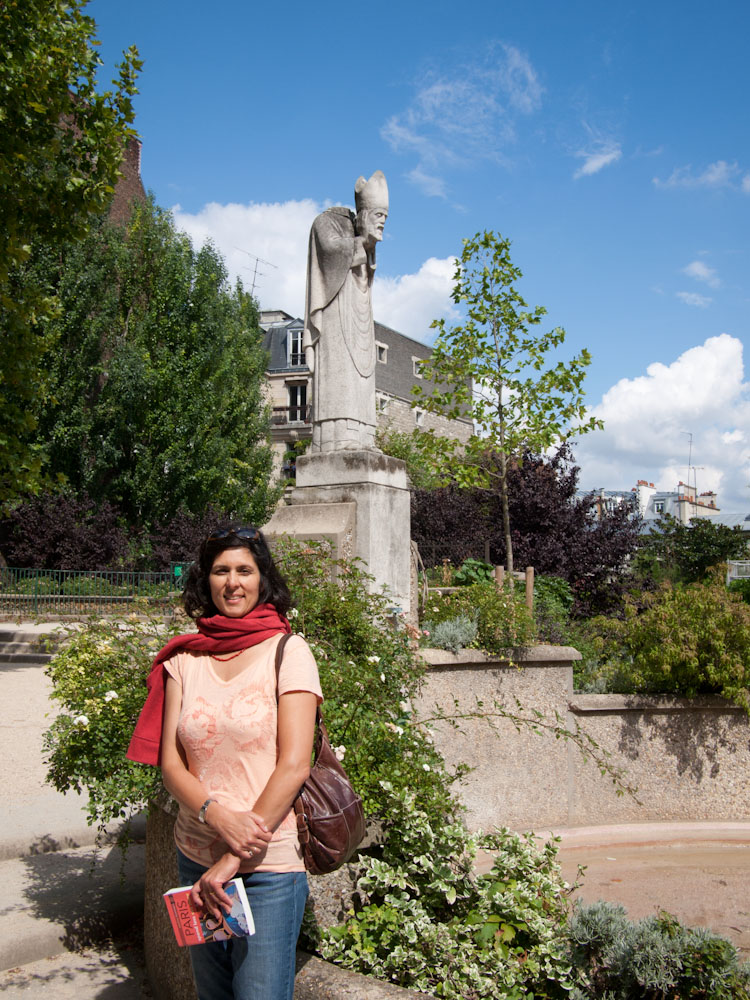
Saint Denis was the first Bishop of Paris, sent there in 250AD to convert the locals to Christianity. It was a tough job because the Romans controlled the area completely – they built a thriving town Lutece that later became the heart of Paris – and they were persecuting Christians all over the world (see Carter’s Underground City posting). After Bishop Denis succeeded in converting a number of people to Christianity, the Romans marched him to the tallest nearby hill and chopped off his head. Instead of dying, the devoted man picked up his own head and kept on preaching! He walked for six miles before death. The hill where this event happened is called Montmartre, a name possibly going all the way back to the Roman name, Hill of Mars. (P.S. The place where St. Denis reputedly ended his walk and collapsed is now the site of the St. Denis Basilica, which is also famous – it is where the Kings of France are buried).
Over time, Montmartre was planted with vineyards and over 30 windmills were built on its steep sides. In the 1800s when the Russians invaded Paris, they used the heights for setting up artillery and shelling the city. Famously one man tried to defend his windmill; the Cossacks chopped him into pieces and attached them to the arms of his mill.
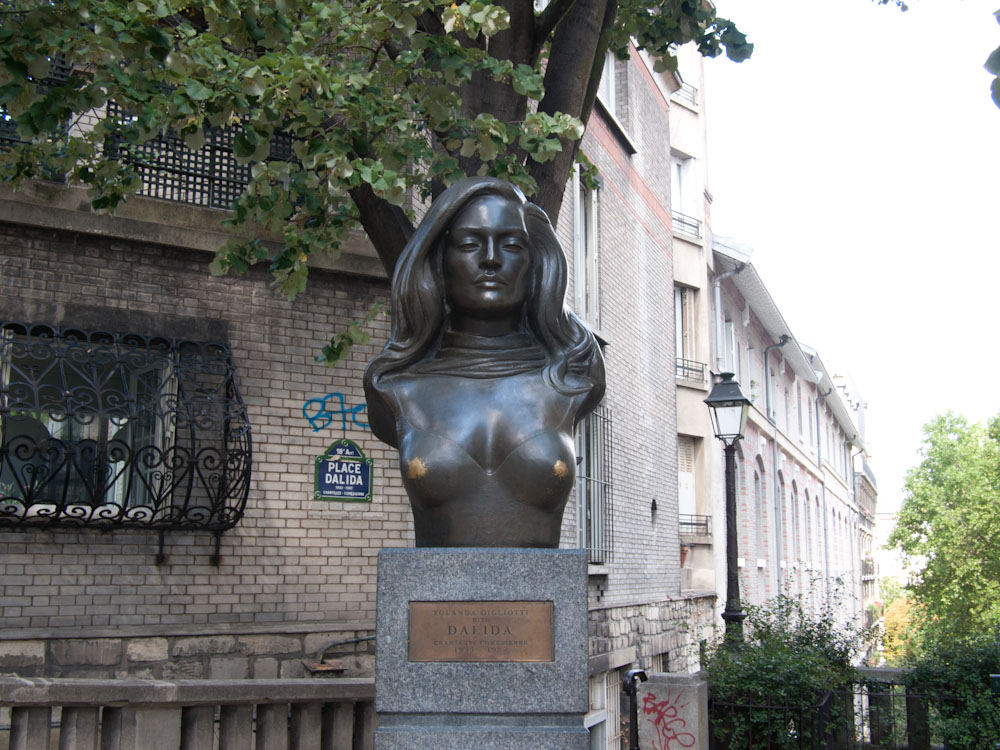
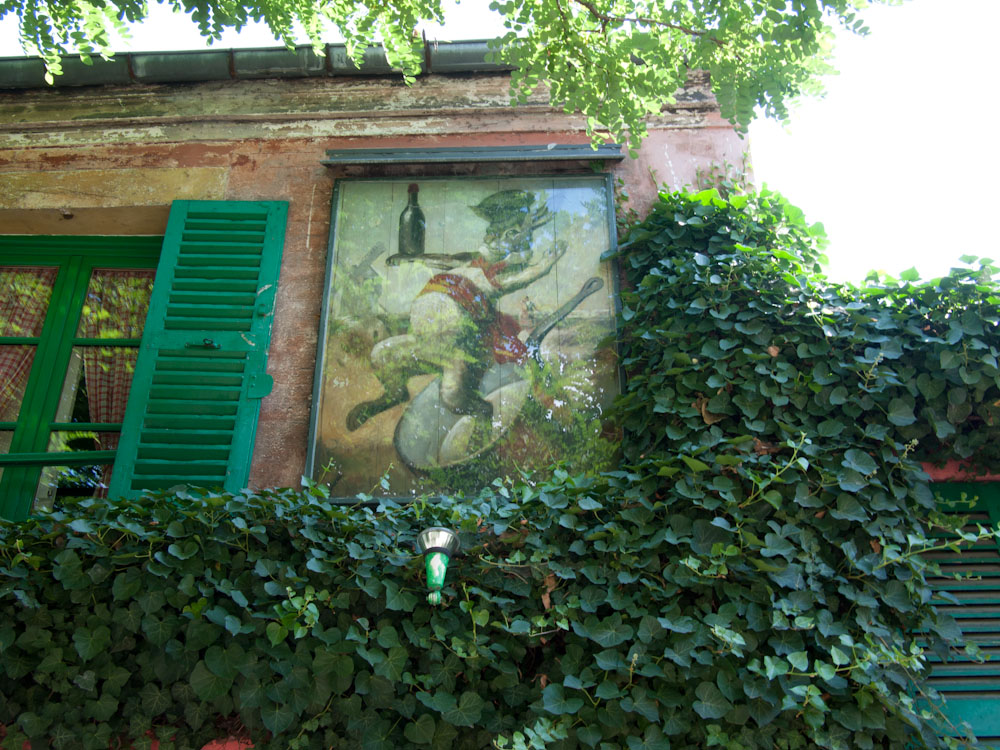
However the most important activity there, owing perhaps to the vineyards and plentiful local wine, was drinking. This was the site of the famous Moulin Rouge. Many other cabarets sprang up such as the Lapin Agile. At the turn of the century a large church was built there – a famous landmark you can see easily from the Eiffel Tower – perhaps in response? At the same time, Montmartre was becoming a hotbed for artists, some living freely together in communes. The talent in Montmarre included Pissaro, Picasso, Modigliani, Van Gogh, Matisse, Renoir, Degas, and Toulouse-Latrec. By now you may also recognize Montmartre as the setting of La Boheme, the same story that inspired Rent. More recently French film star Dalida lived here and has a statue you can rub for luck. Poet Langston Hughes (assigned reading for Natick 7th graders this year in Term 1) lived there for a while as well.
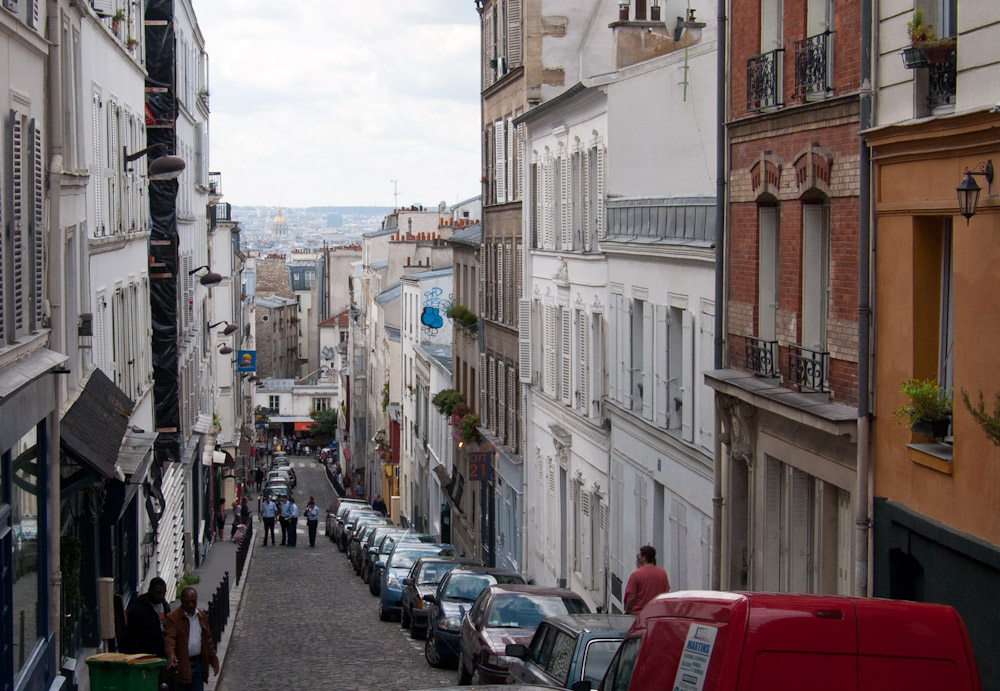
Nowadays, on a brilliant sunlit afternoon, what you can mostly see are rows of charming houses and buildings. We took a guided walk that stops at these various historical sites and winds its way up the hill to reach the Basilica Sacre Coeur, stopping for a cafe lunch along the way.
It was an idyllic setting to walk with our friends and enjoy some quiet moments together, before summer ended and they returned home to the States.