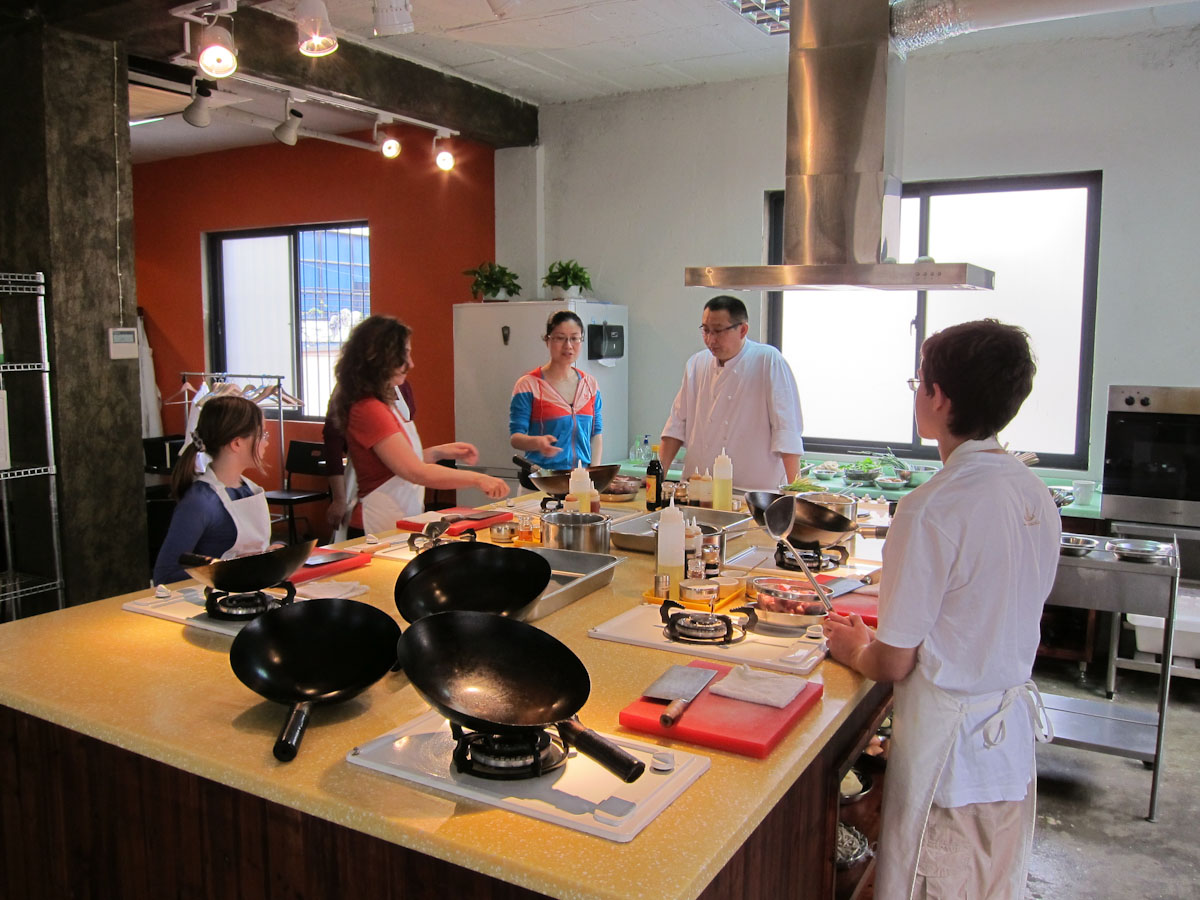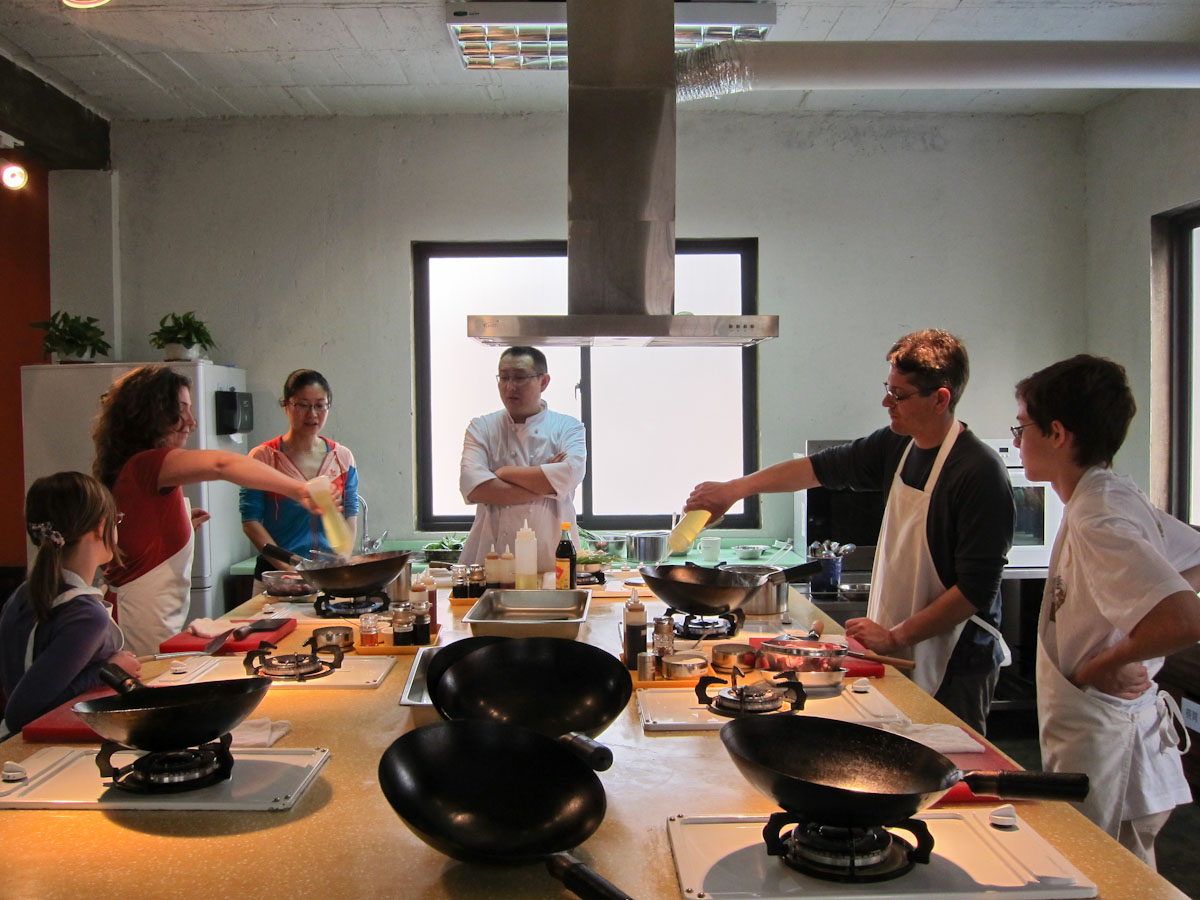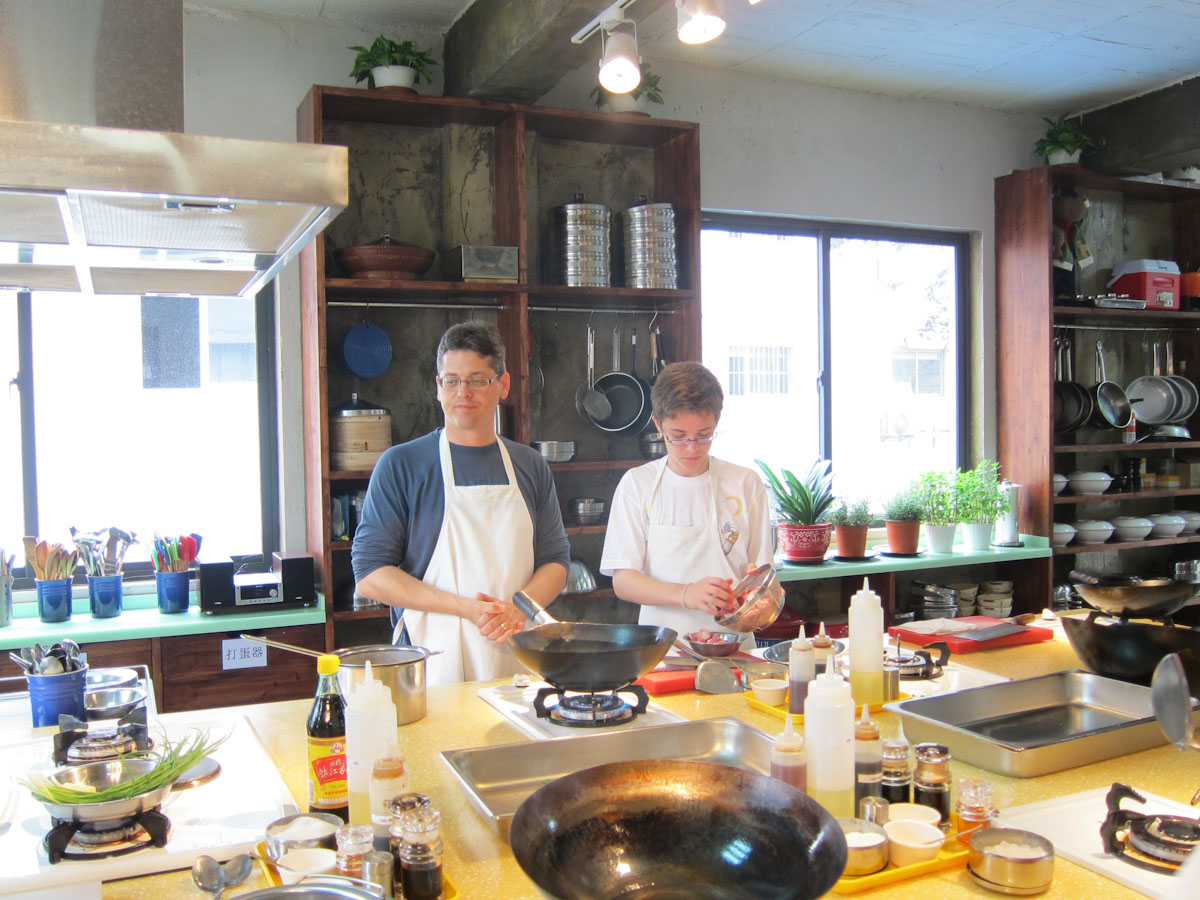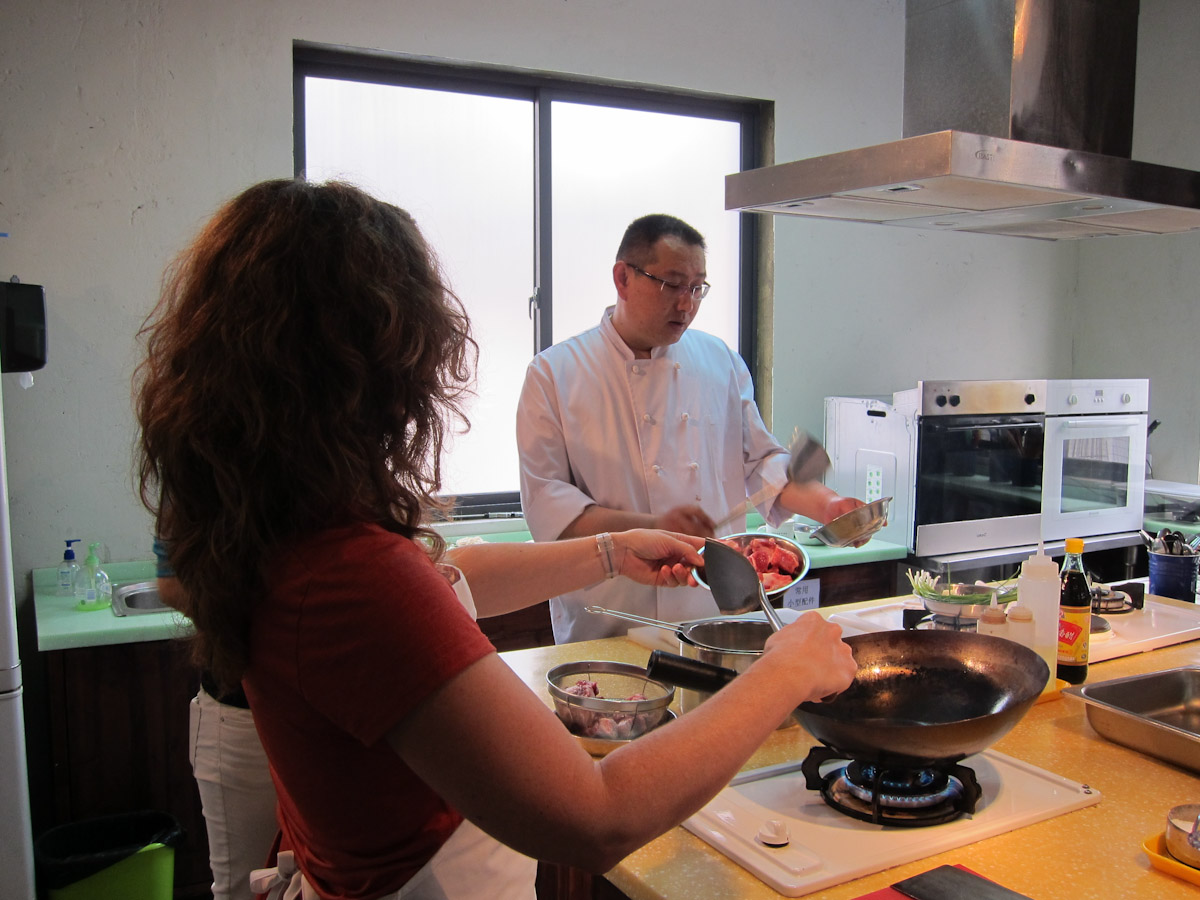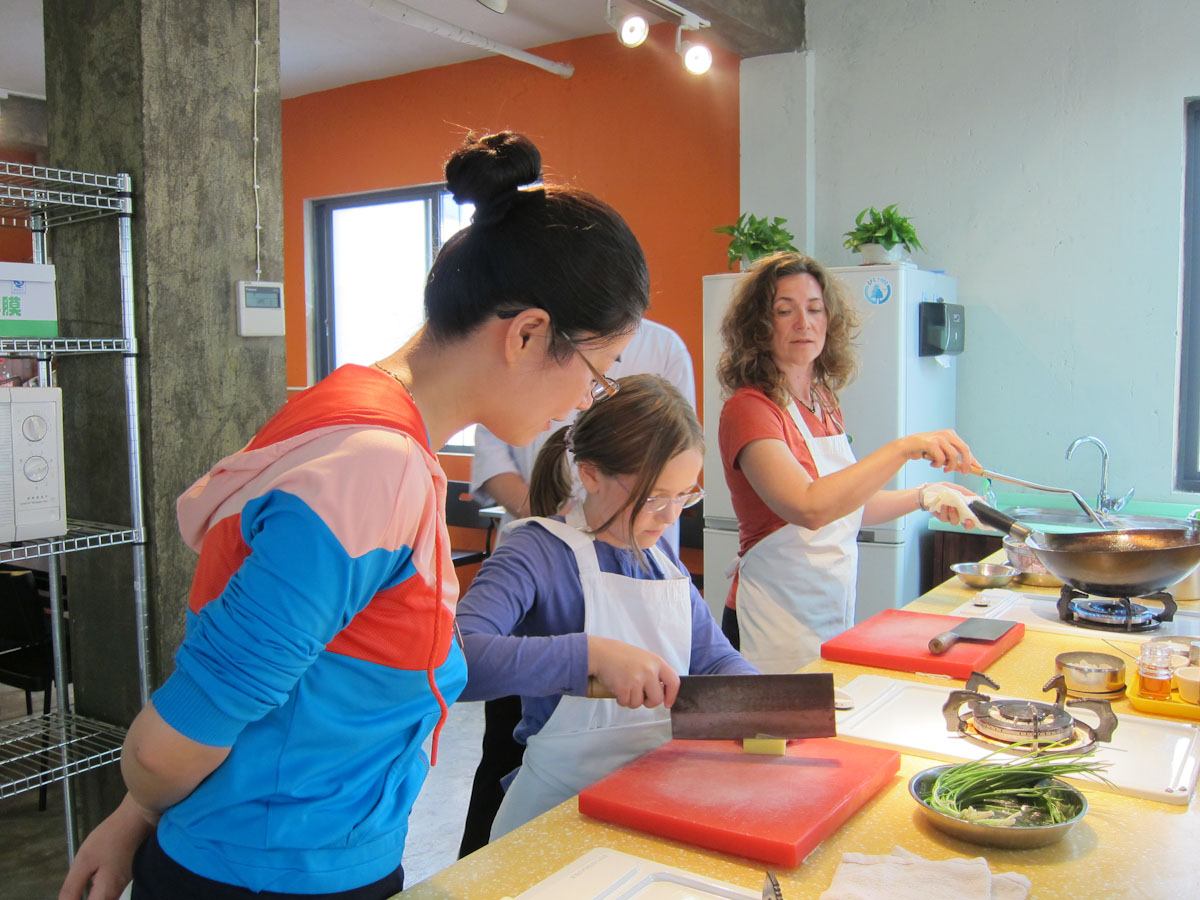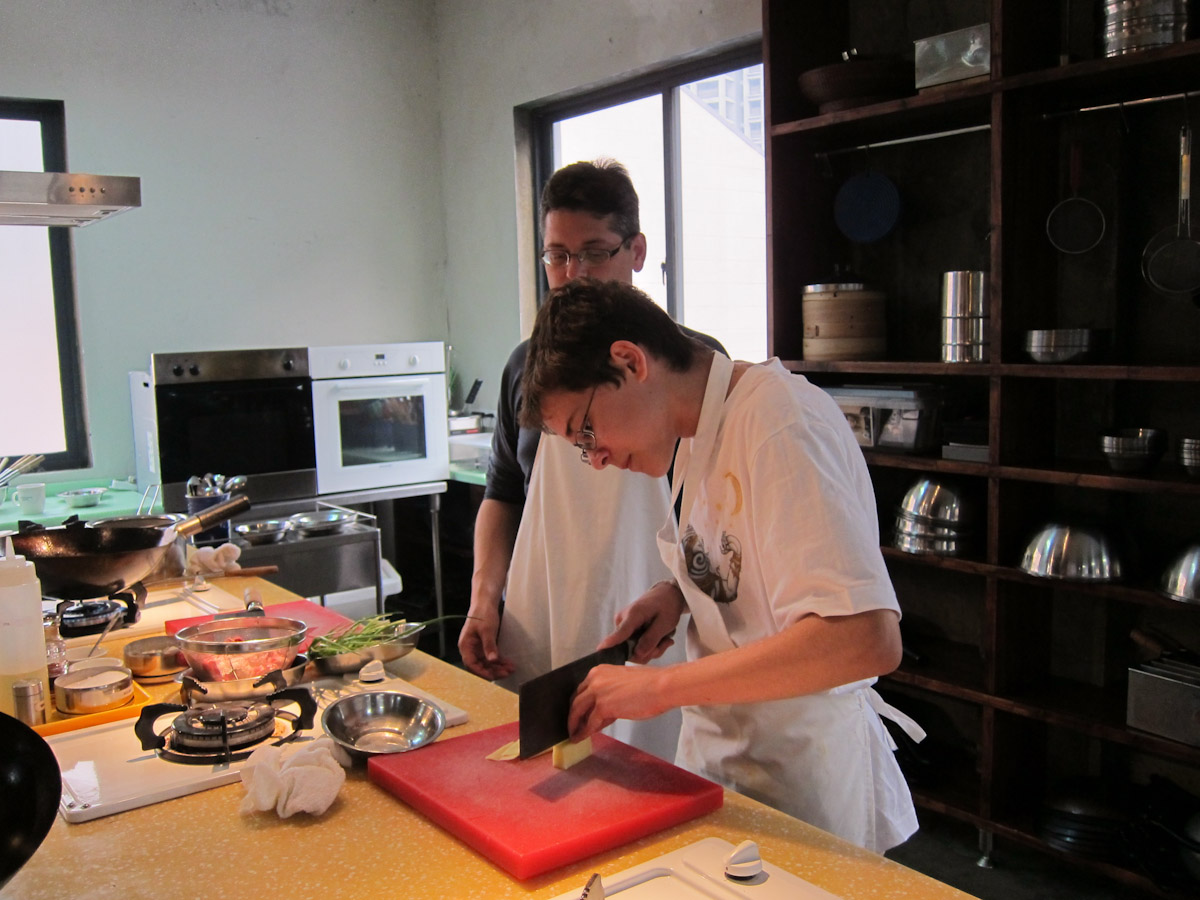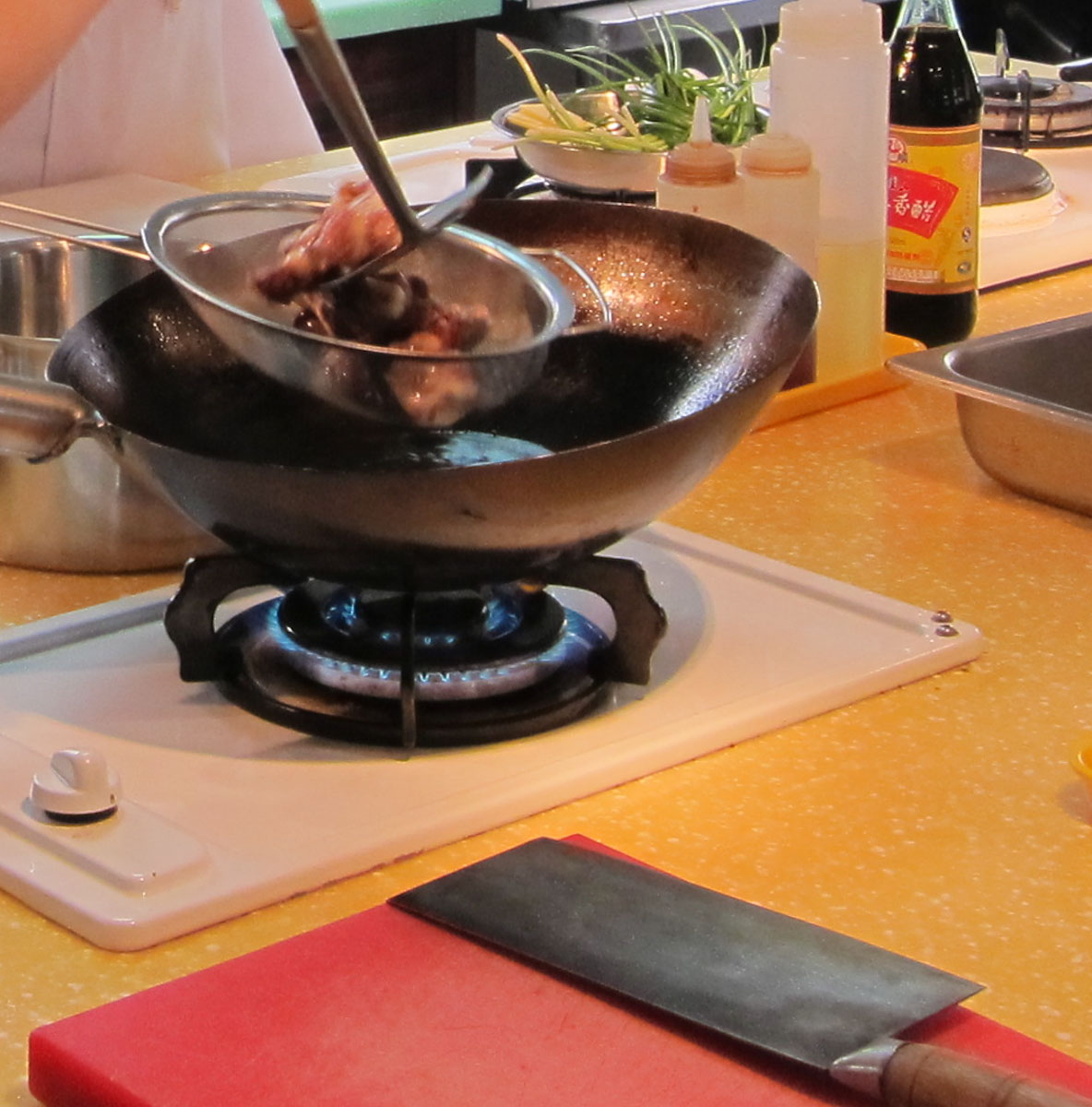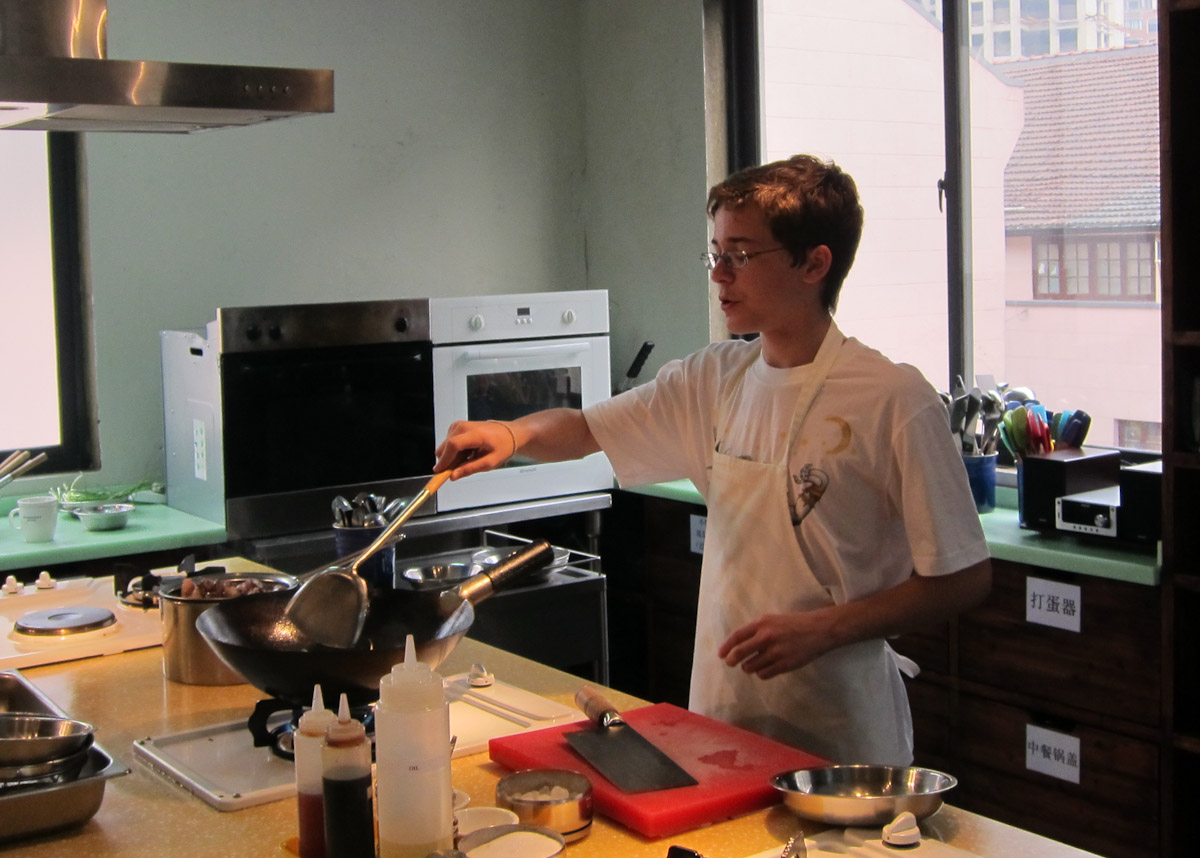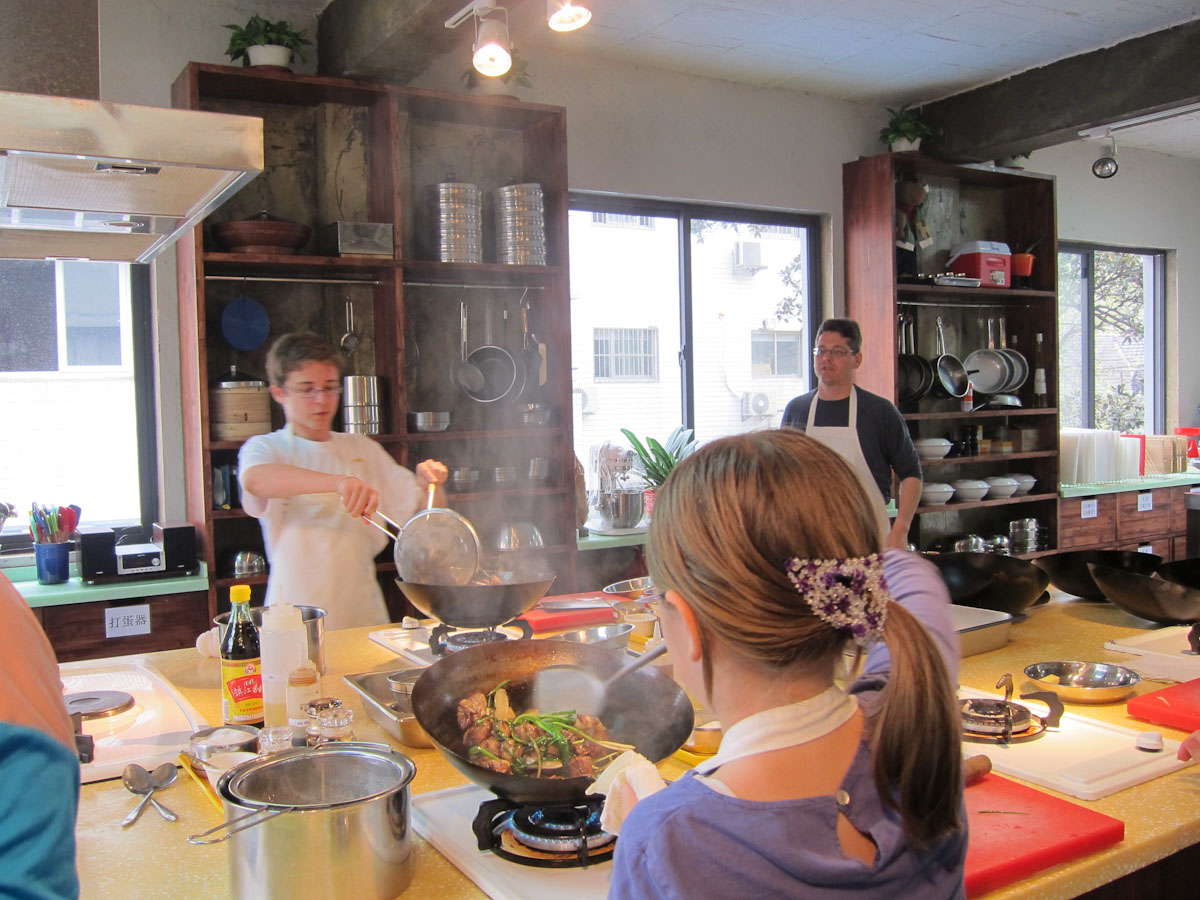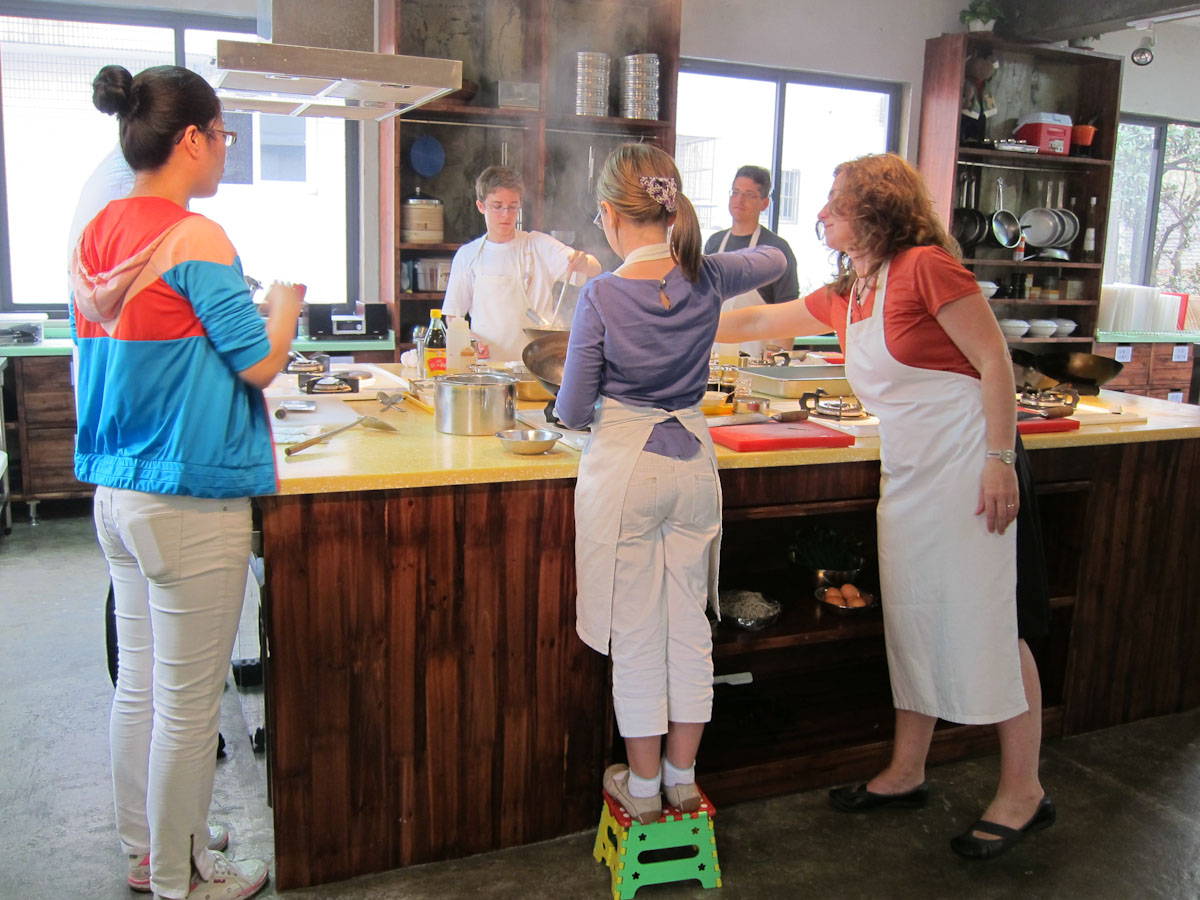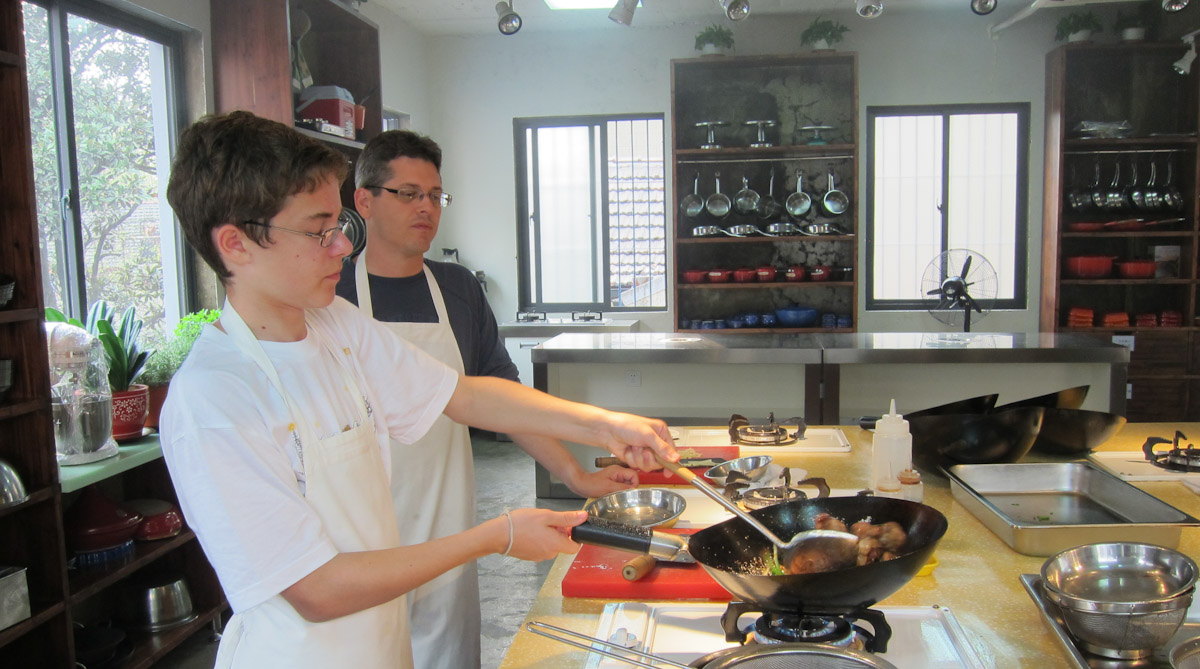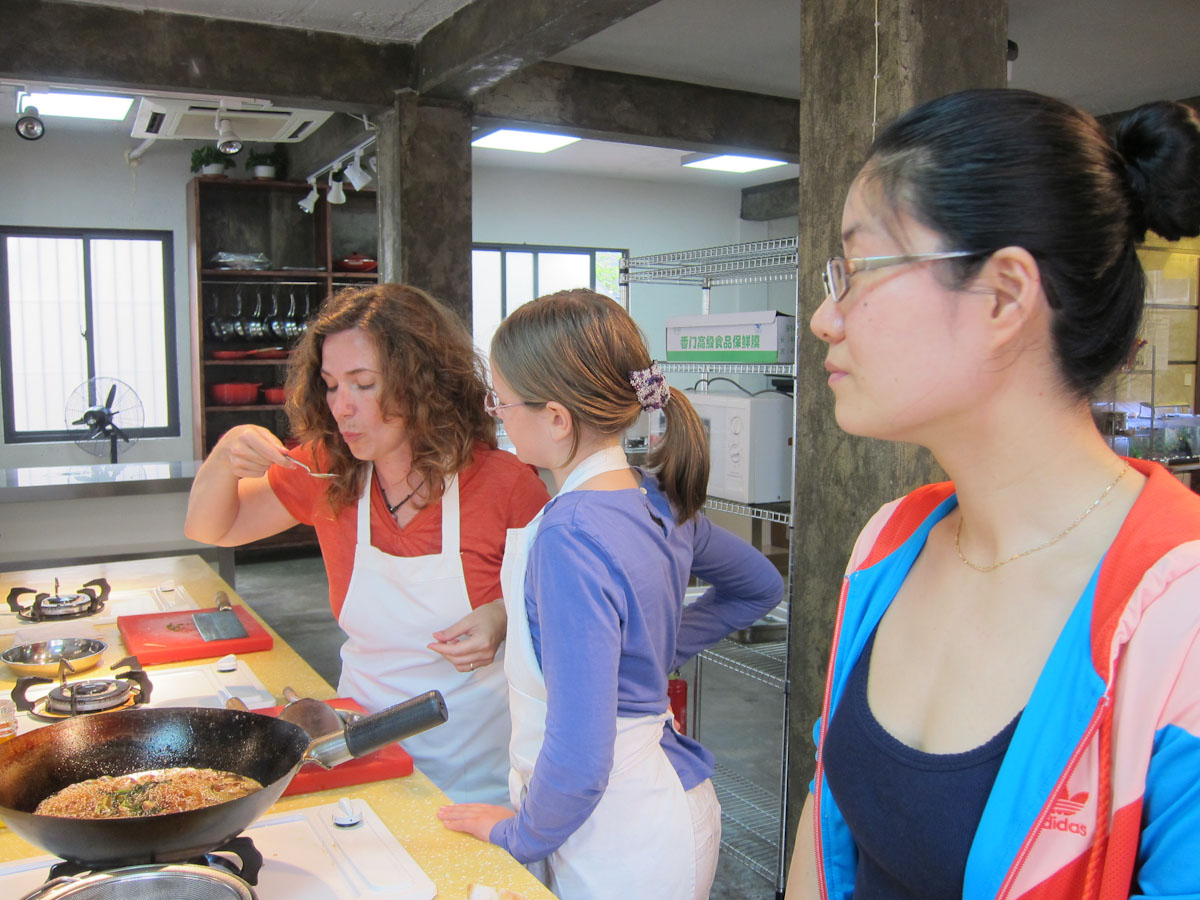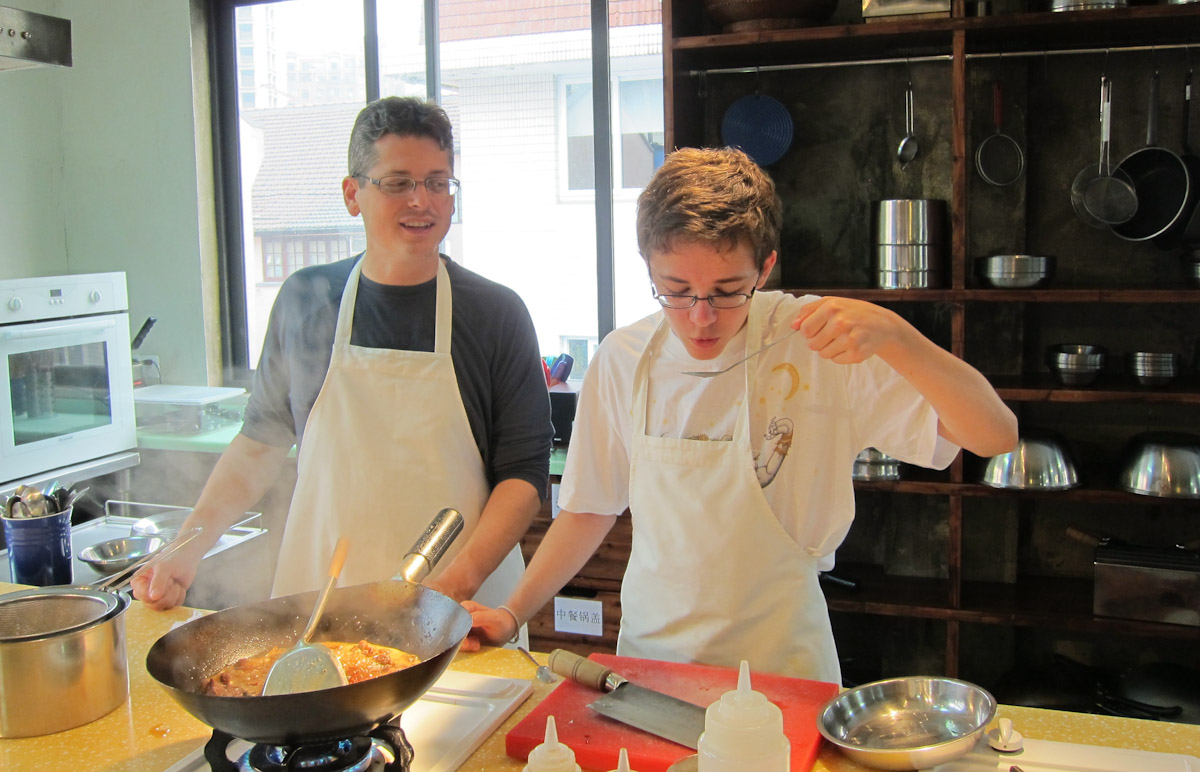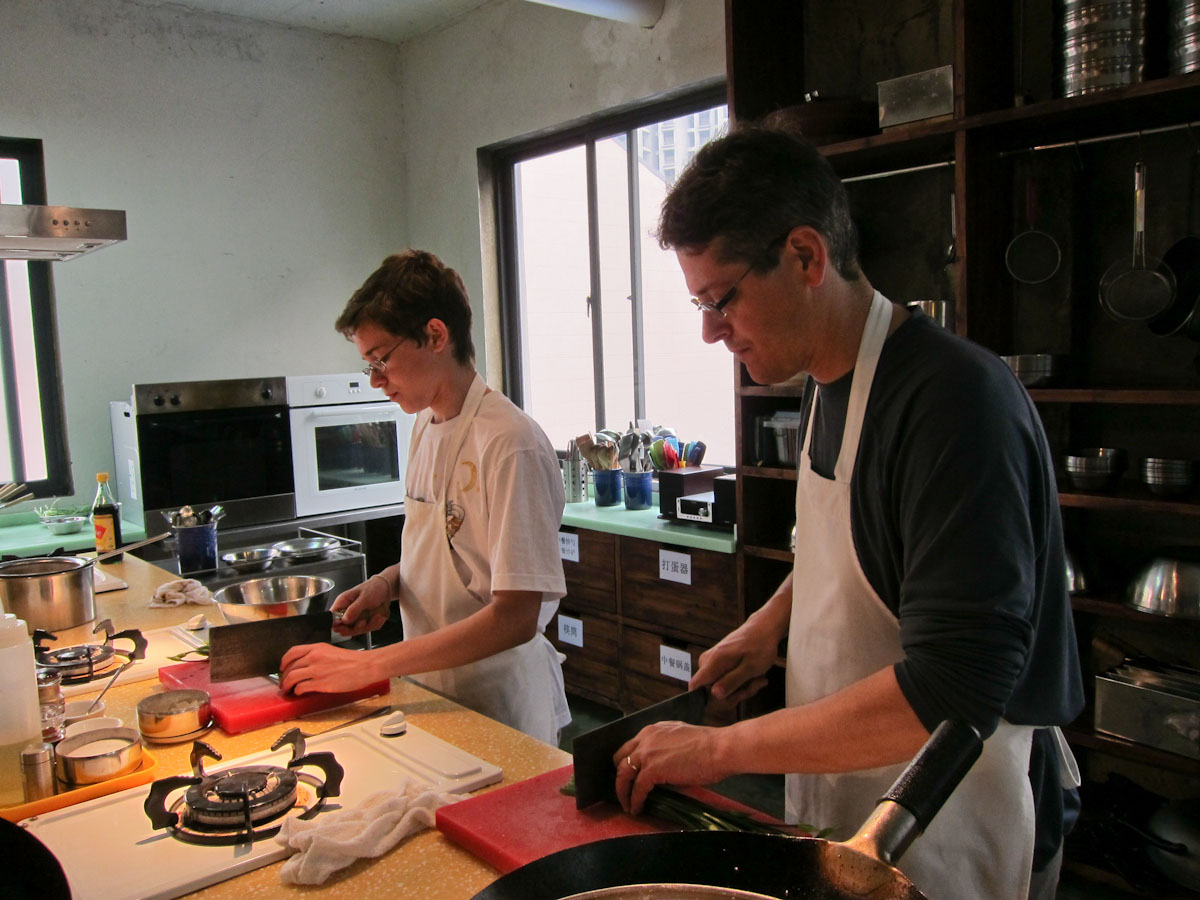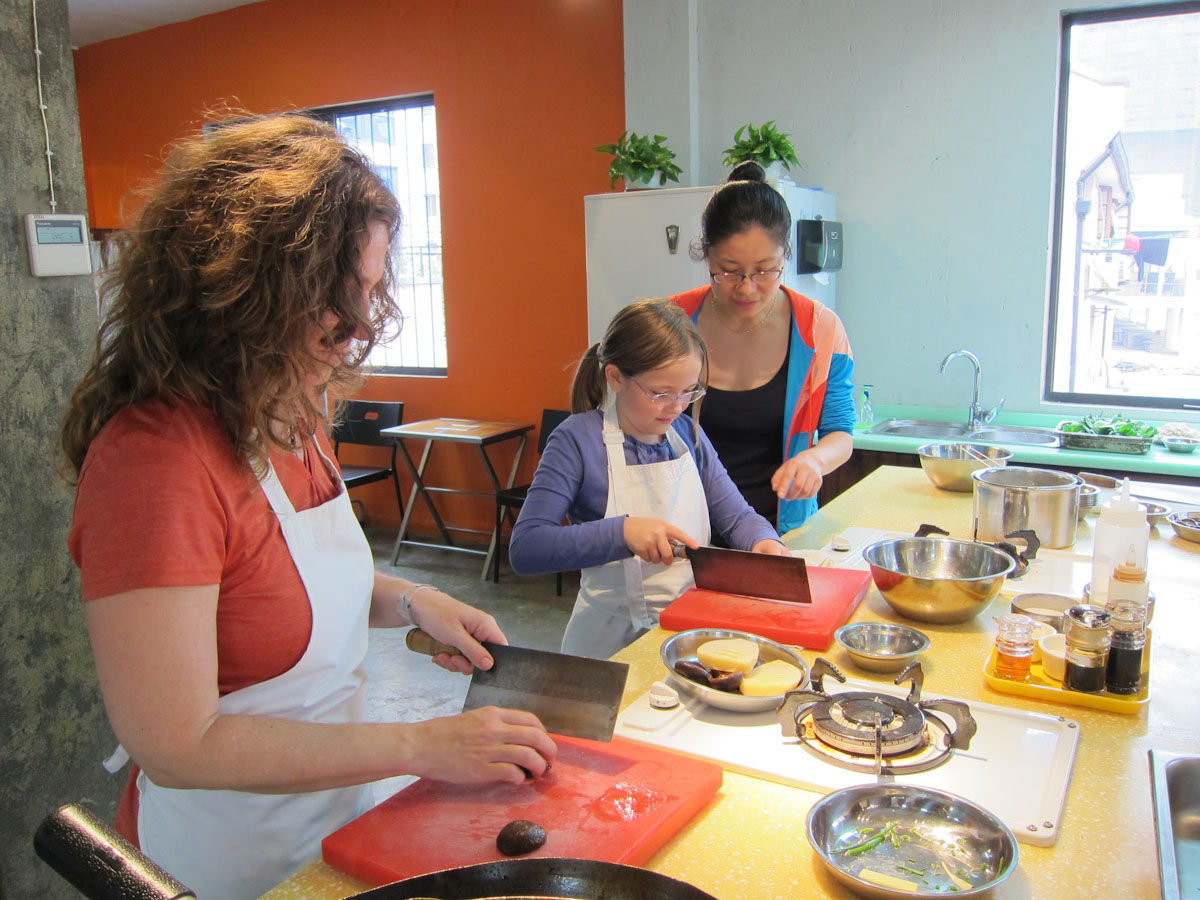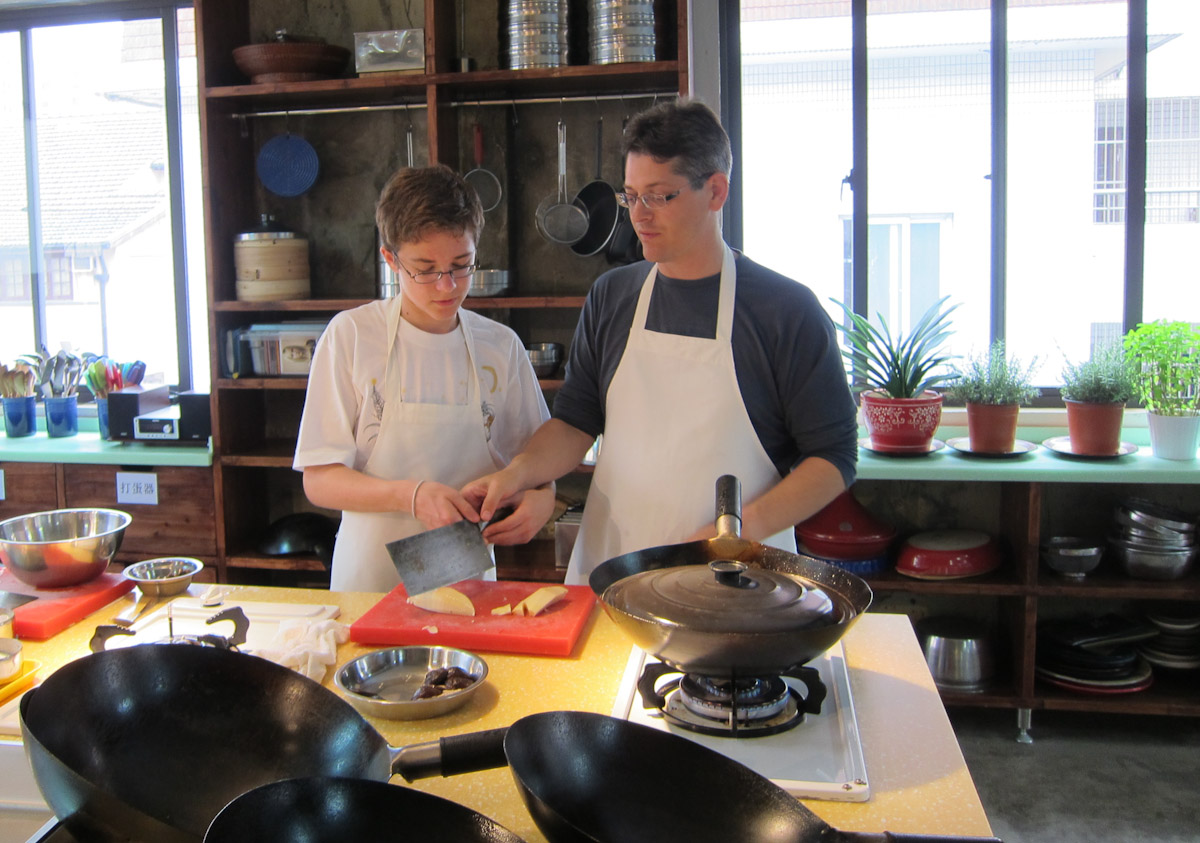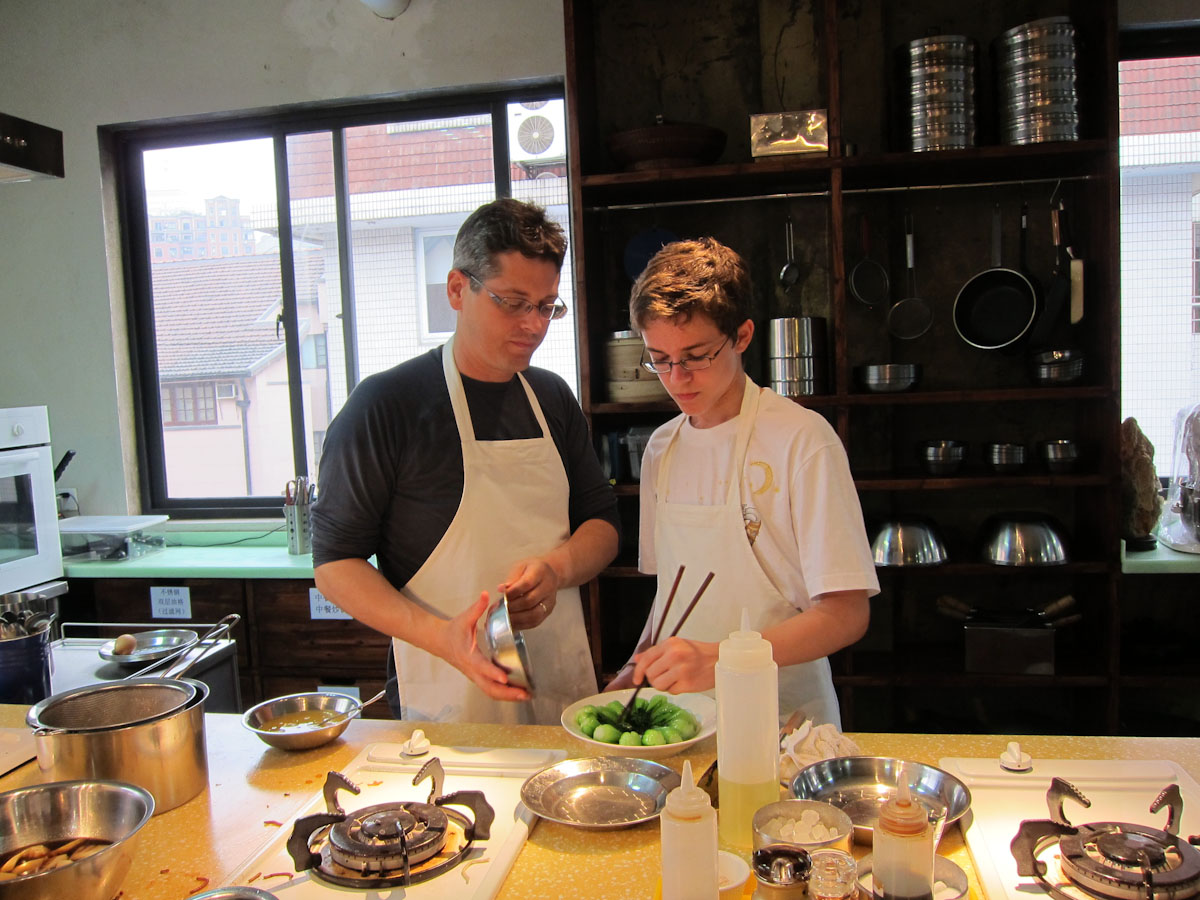
We took two cooking classes in China: the first was in Beijing (see Dumpling Daze post) and the second was in Shanghai. The cuisine in Shanghai is characterized as less sweet and slightly spicier, but is nowhere near as spicy as that found in Szechuan province.
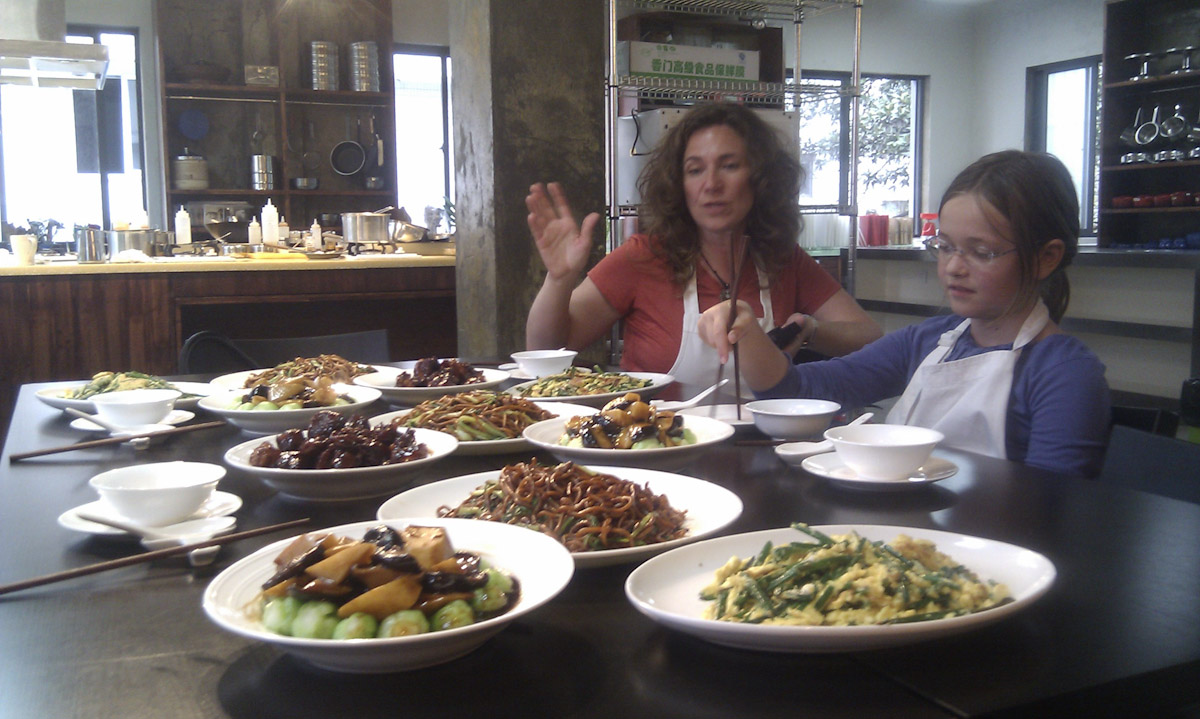
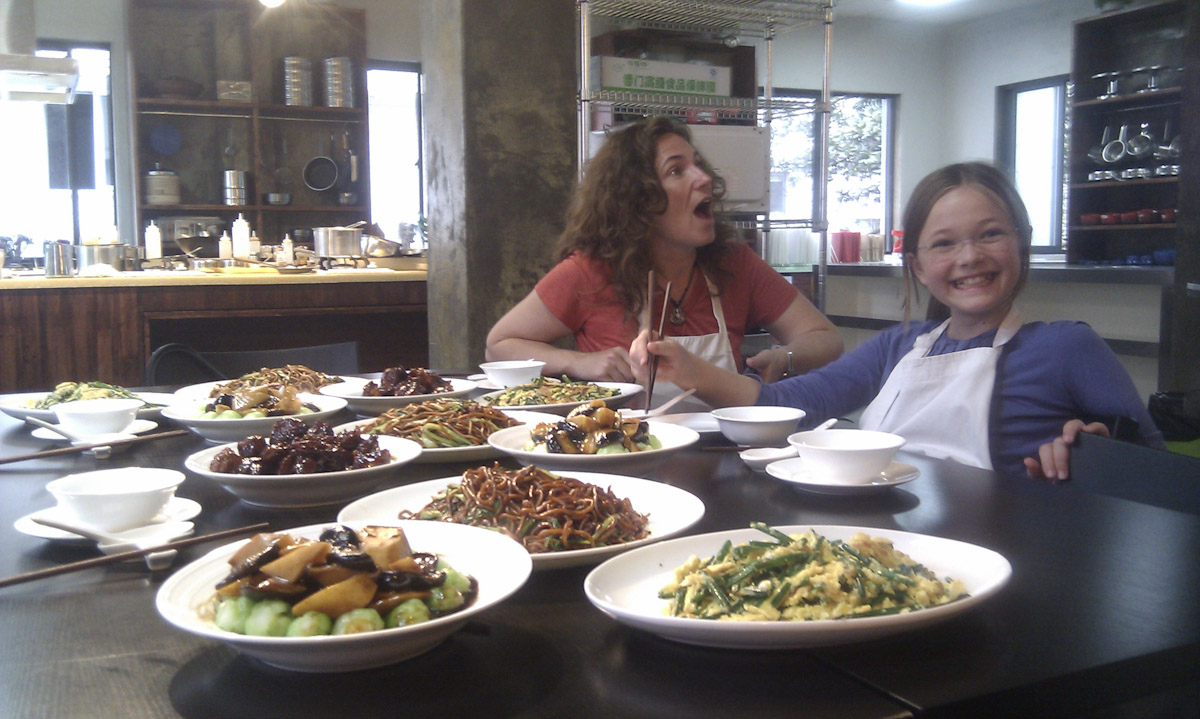
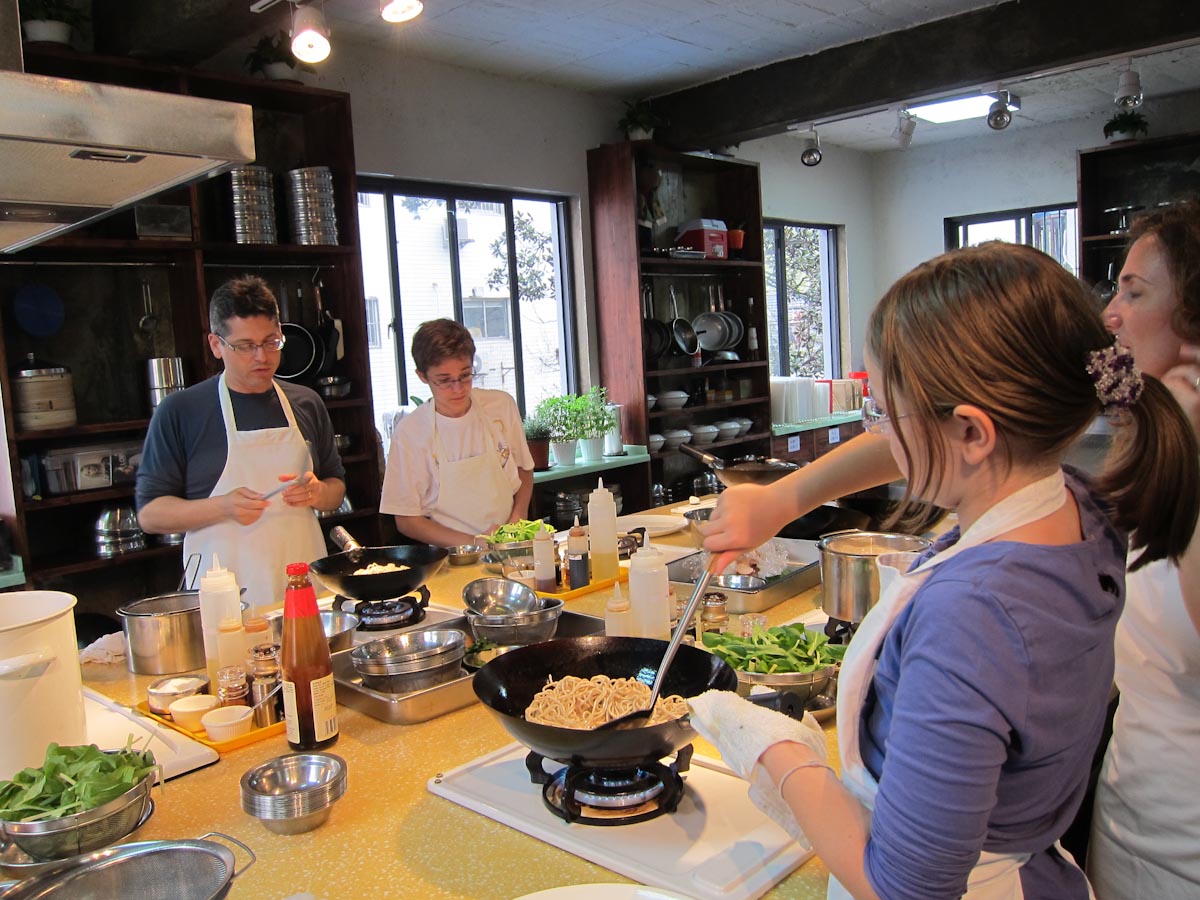
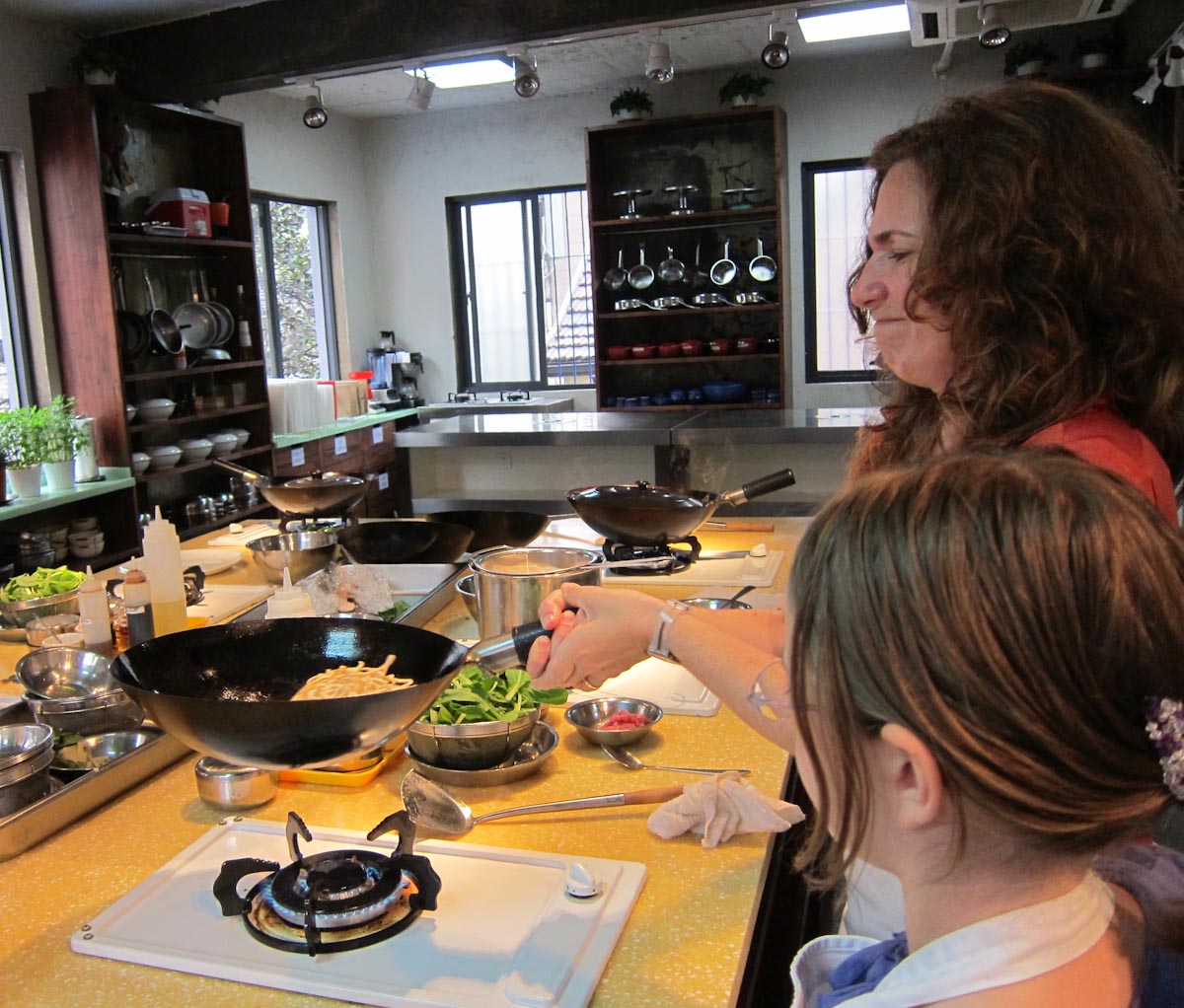
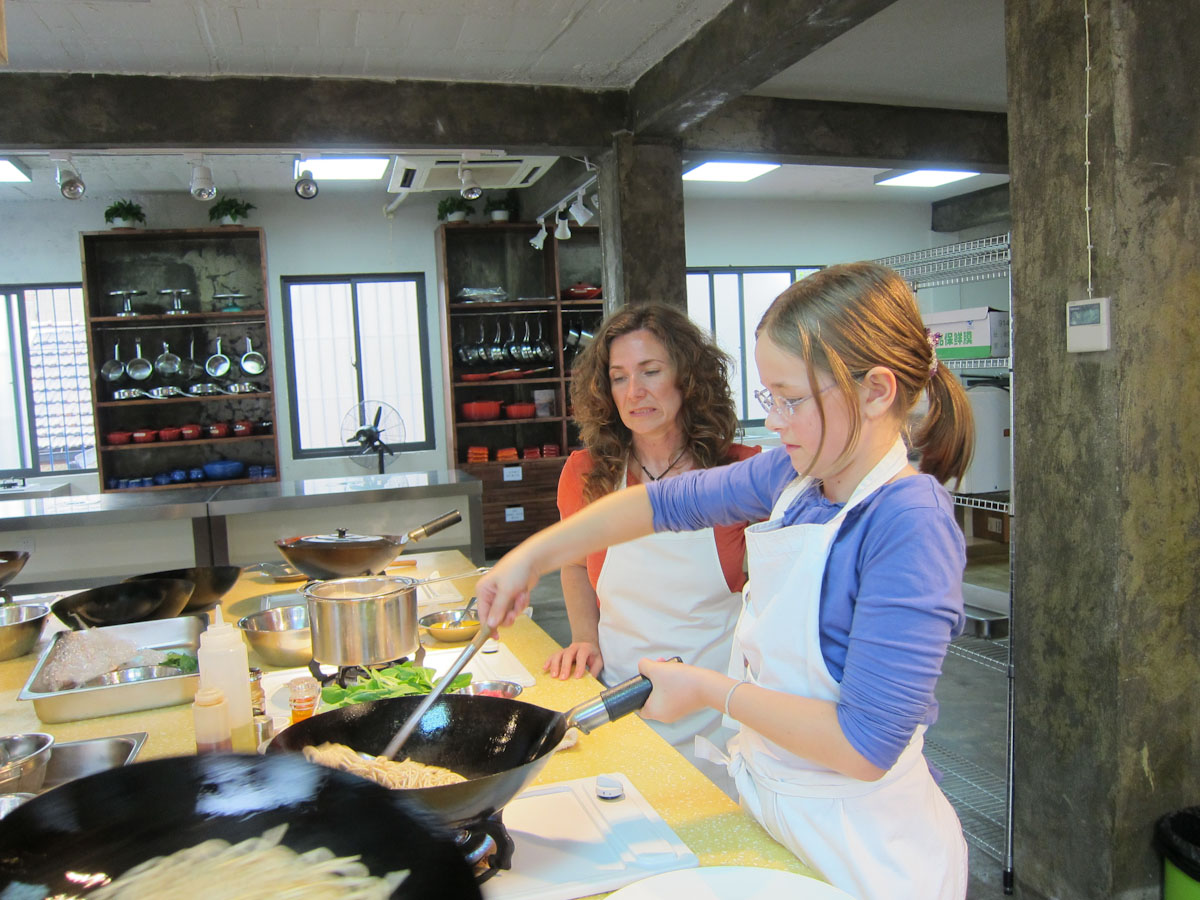
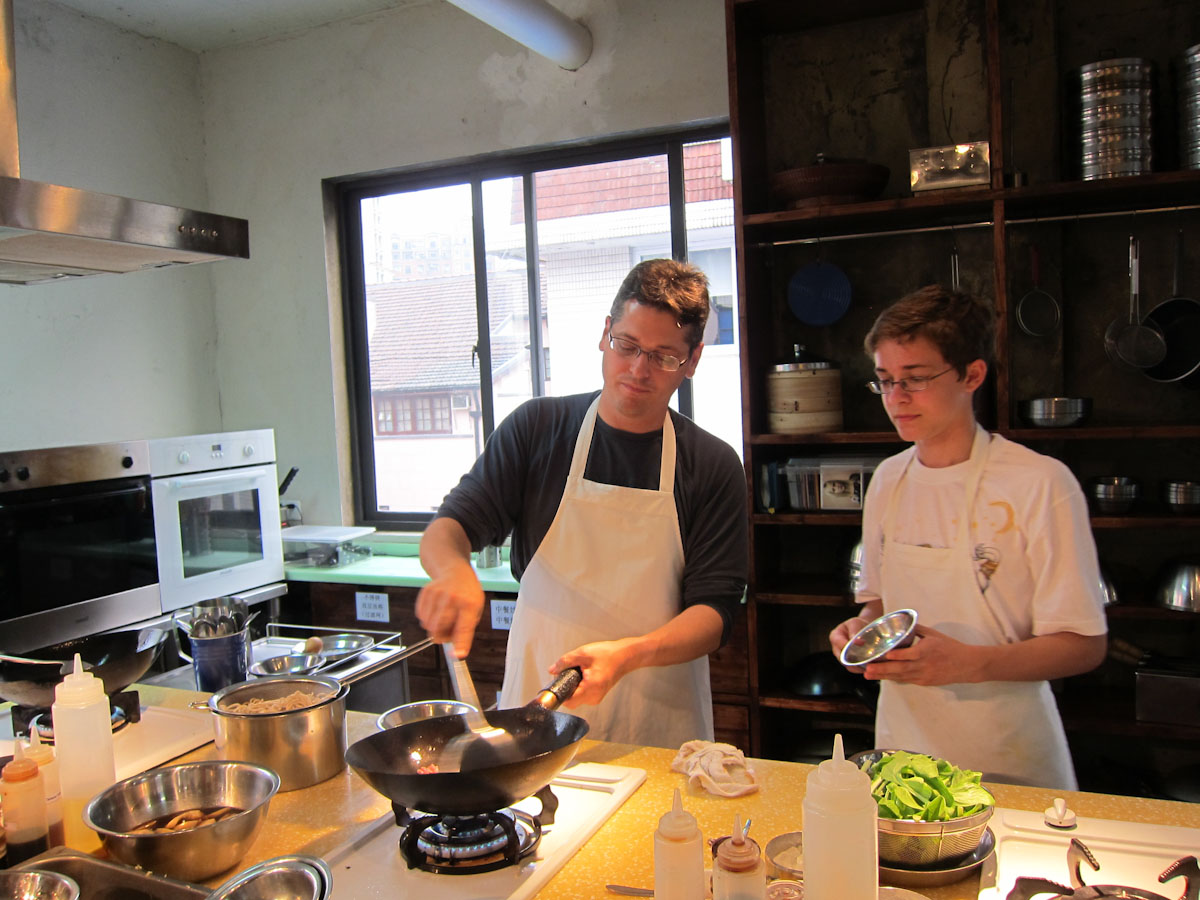
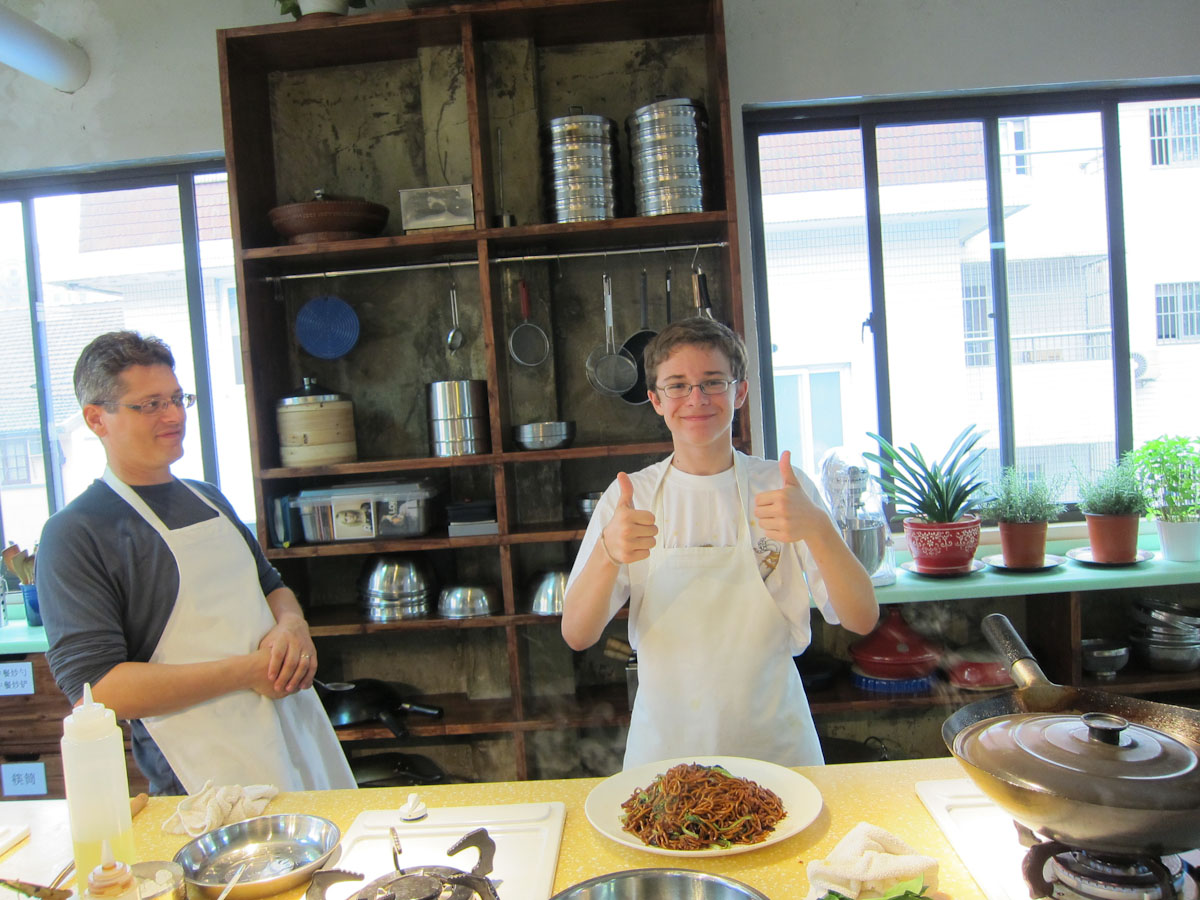
Our lesson at The Kitchen Studio focused on home cooking and we made a range of dishes which turn up regularly for the family meal. These included braised sweet and sour pork ribs, Shanghai fried noodles, egg and garlic scallion omelet, and stir fried mushrooms with winter bamboo root.
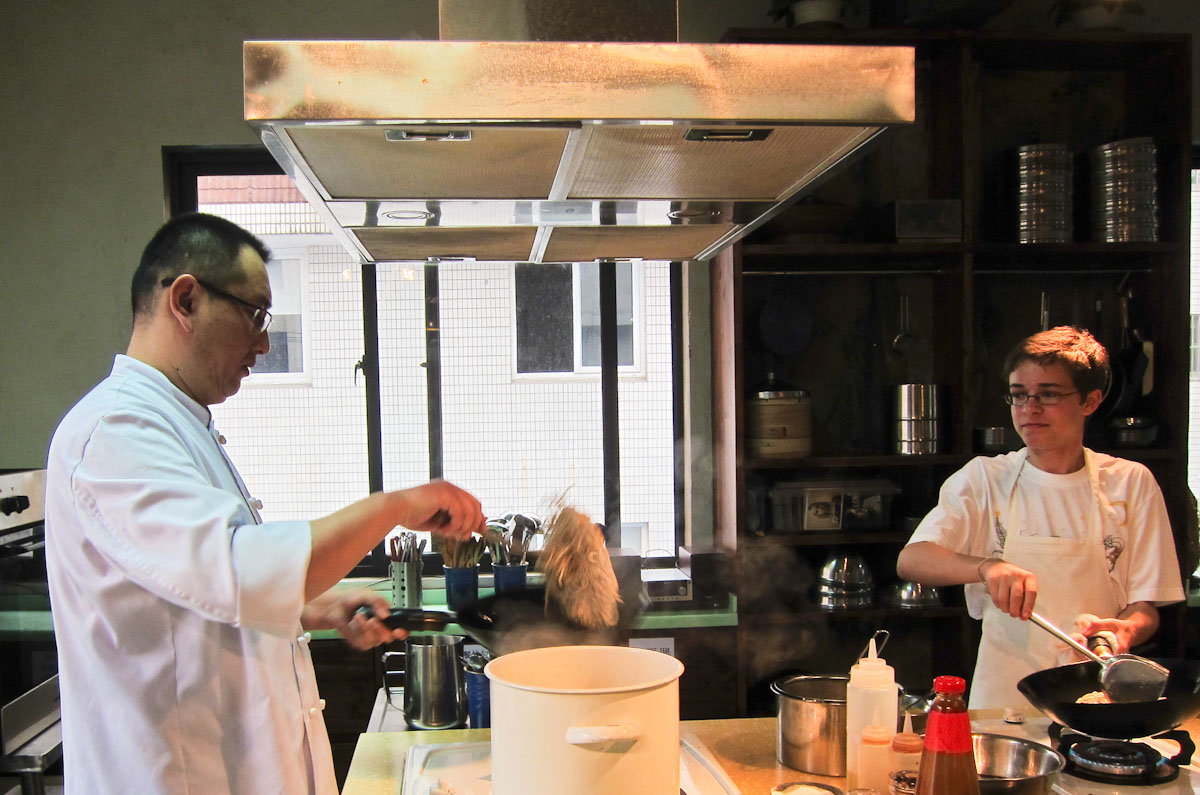
Our chef instructor was quite serious and encouraged us to chop, fry, and clean at a professional pace. It felt like a tremendous accomplishment when he smiled and nodded at our efforts. He spoke no English so we were grateful that owner Miranda was there to translate.
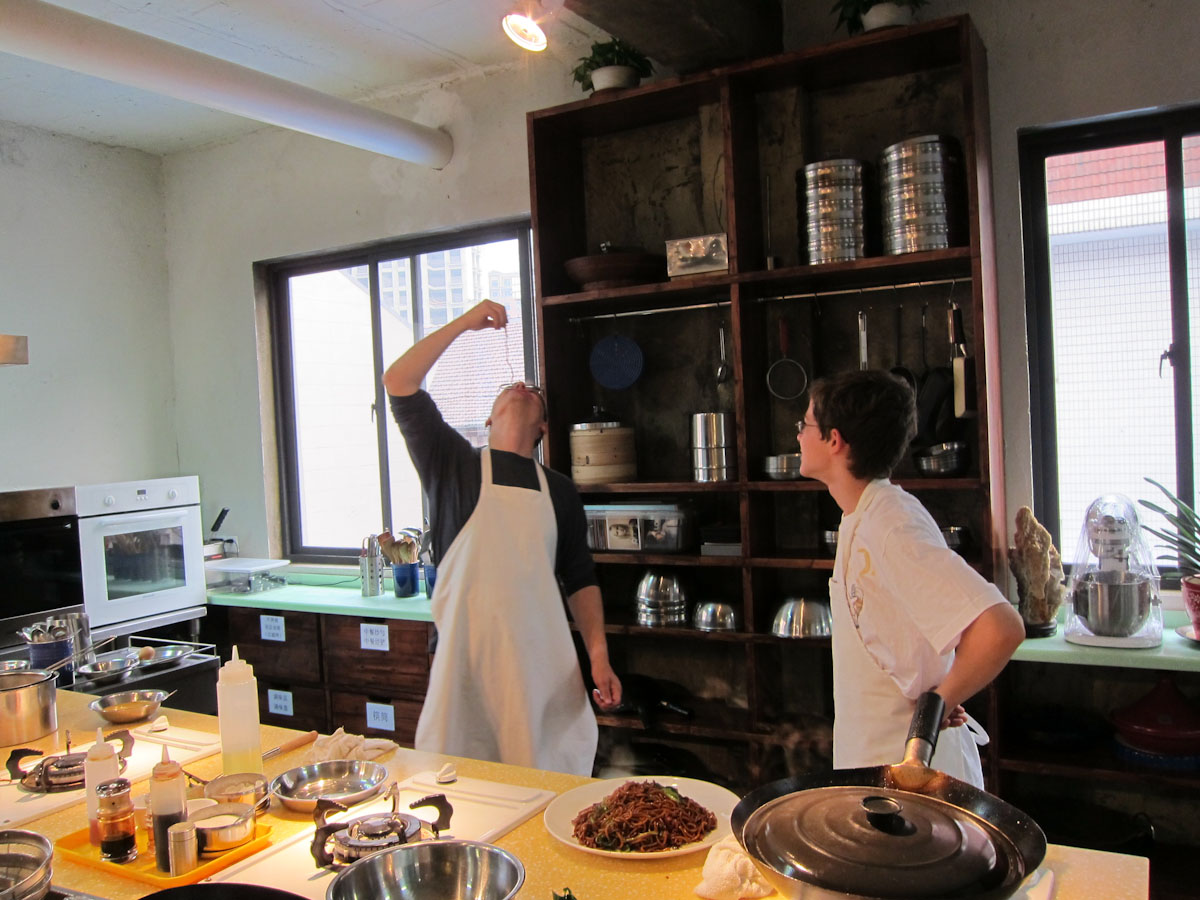
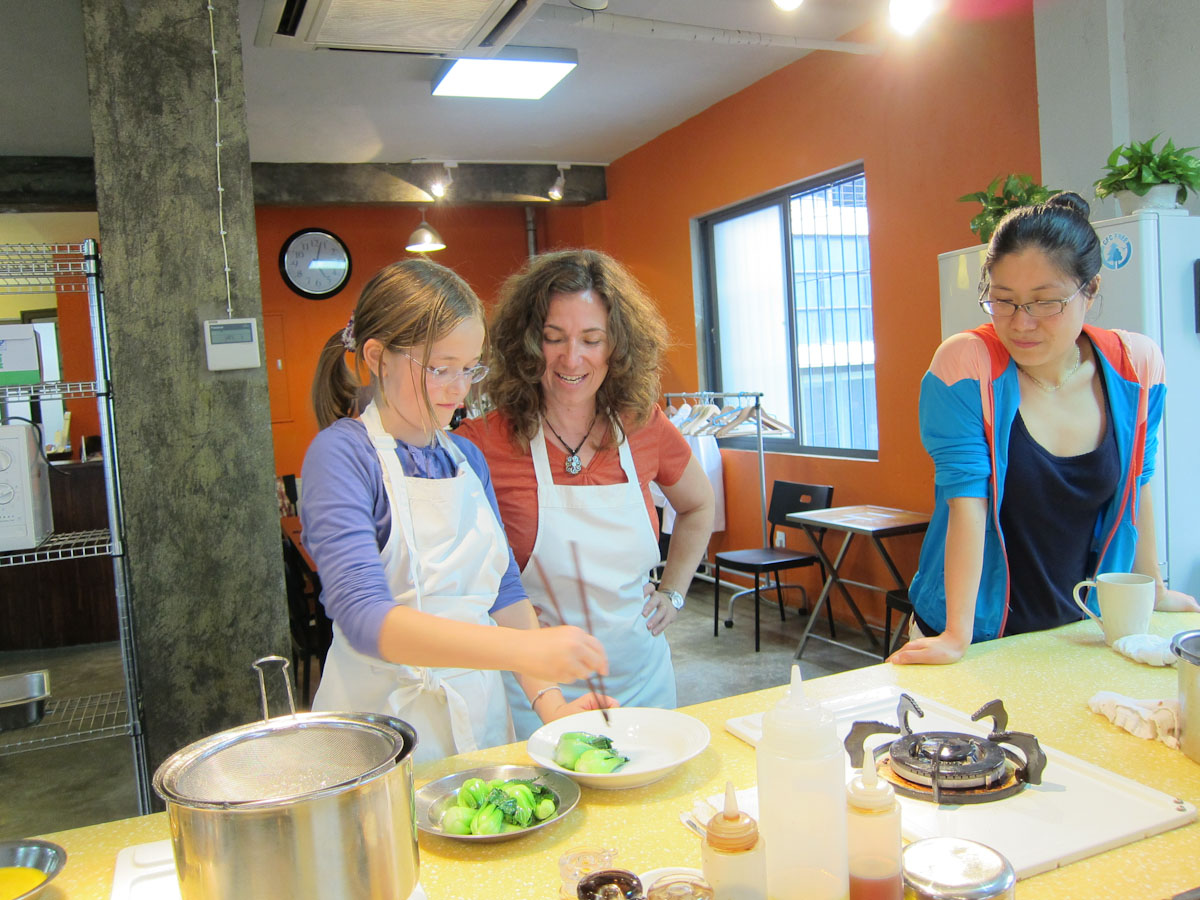
When it came time to sample the results, we asked our guide Stacy to be the official taste tester. We had worked in two teams—girls and boys—and were eager to see how the dishes differed, if at all. Stacy was terrific and blunt in her assessment: the boys’ stir fried noodles were richer in taste (because they had burned them slightly?) and more to her palate, and the girls’ sweet and sour pork ribs were declared perfect. Russ disagreed on the rib call because both he and I preferred the boys’ version. It tasted slightly more savory and salty (heavier on the soy and lighter on the sugar?) but both were really excellent. Happily, Miranda shared all of the recipes.
Key takeaways:
- The average Chinese family meal consists of at least three dishes plus rice. The more people, the more dishes.
- Protein is rarely served in large portions but rather in bite-sized pieces mixed with vegetables, rice, or noodles.
- Timing is everything when you’re talking about multiple dishes (just think about Thanksgiving dinner). A good Chinese wife is expected to get everything on the table at once so nothing is eaten cold.
- In the event that dishes come out at different times, there is no standing on ceremony: people dig in as the dishes arrive.
- Dessert usually consists of whole or sliced fruit.
- Every kitchen must be equipped with a cleaver and a wok. The cleaver is a multi-purpose chopping, slicing, whacking knife. A skilled operator can hack through bones, julienne spring onions with the sharp-edged tip, and smash garlic with the wide blade. The deep high sides of the wok are absolutely necessary if you will work with oil at high heat, and I intend to procure one as soon as I return for its sheer versatility: in this single pan you can fry, braise, boil, and steam.
Some live action shots of the lesson are below.