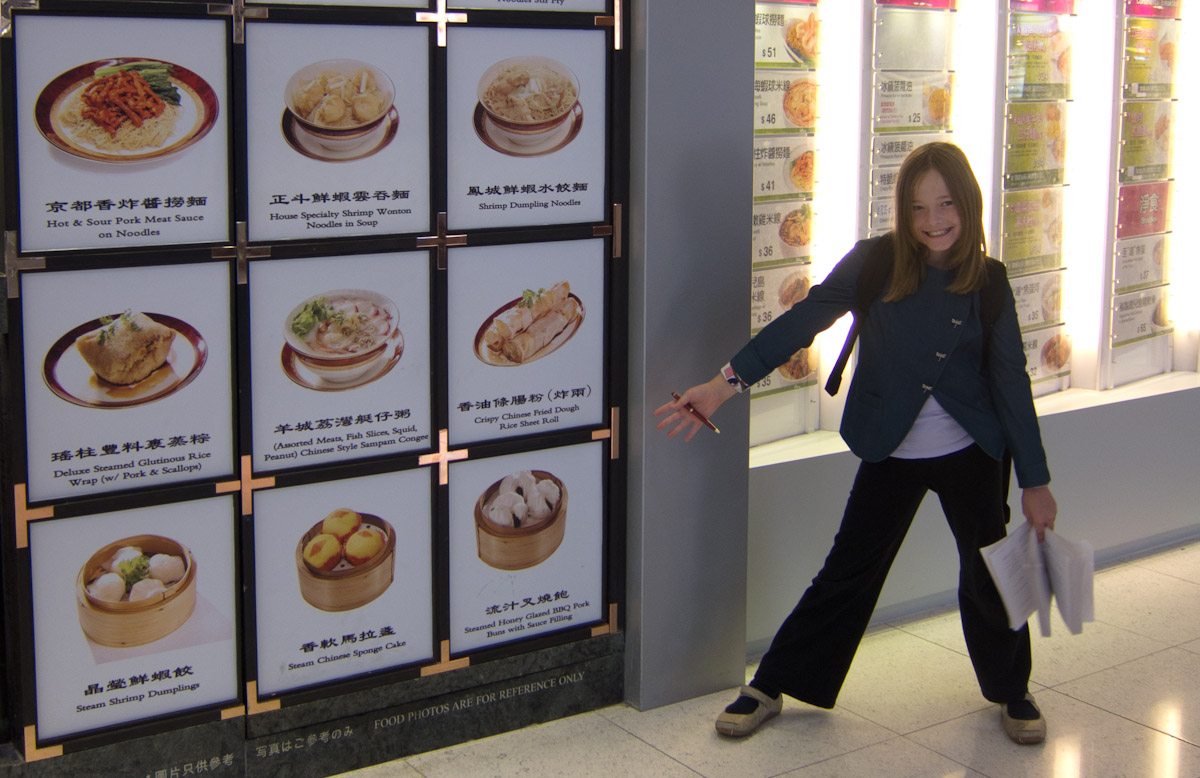
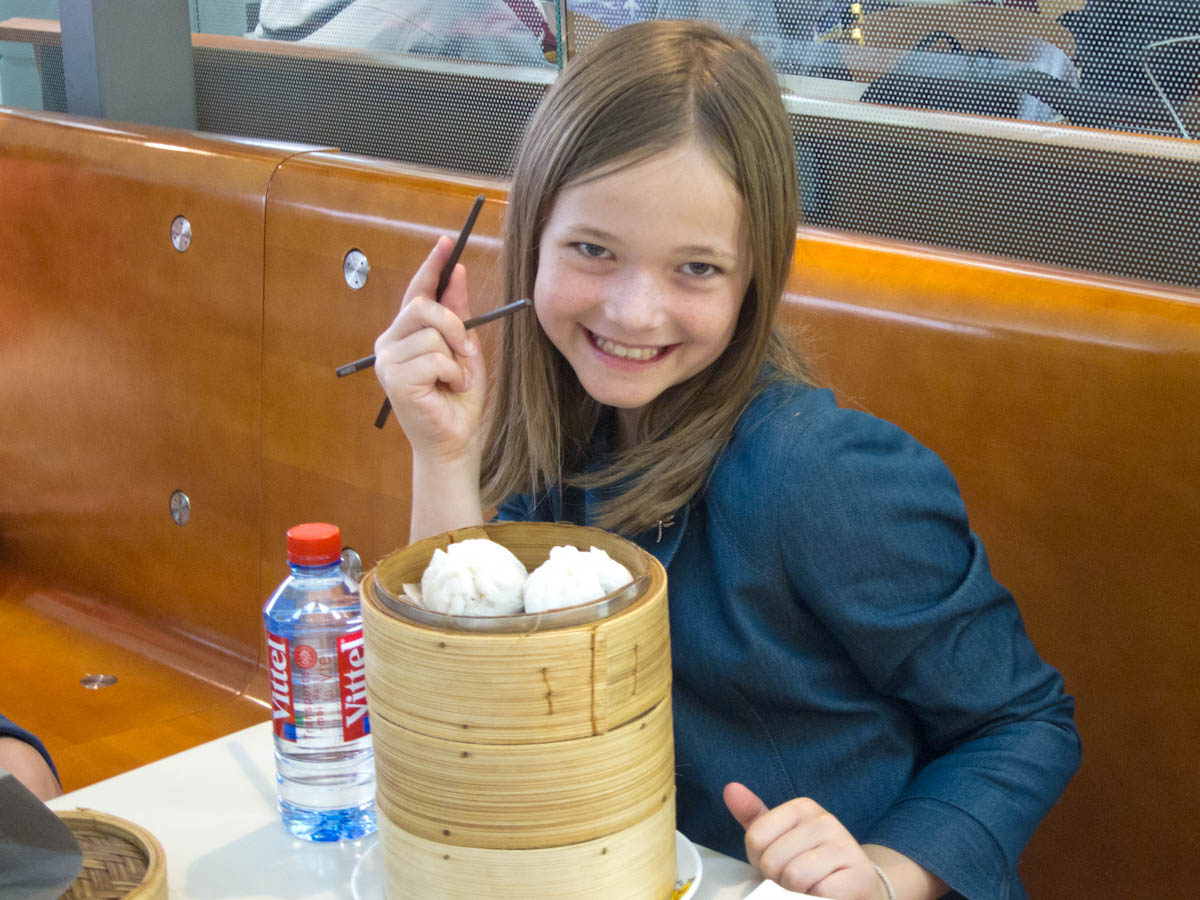
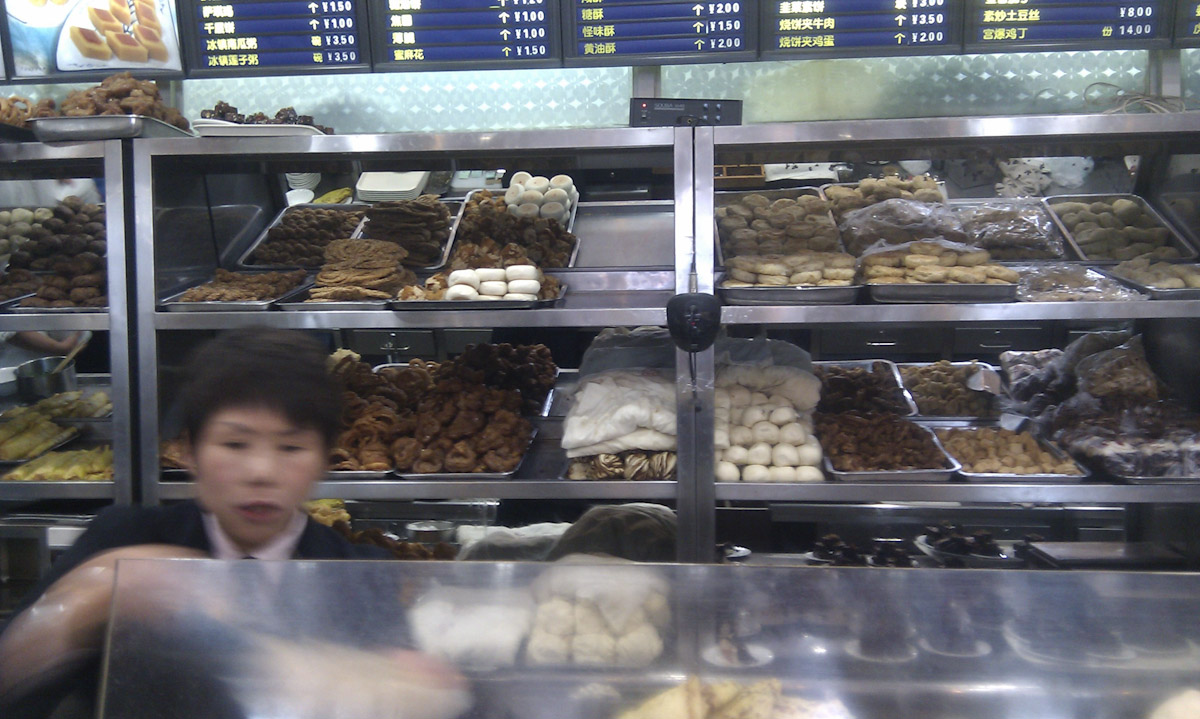
Eating in China has been one of our best culinary adventures yet.
This caught me by surprise because I didn’t think I really liked Chinese food. With the exception of dim sum in Chinatown, most of what I had sampled at home came slathered in a goopy brown sauce laden with soggy vegetables and tiny bits of overcooked meat.
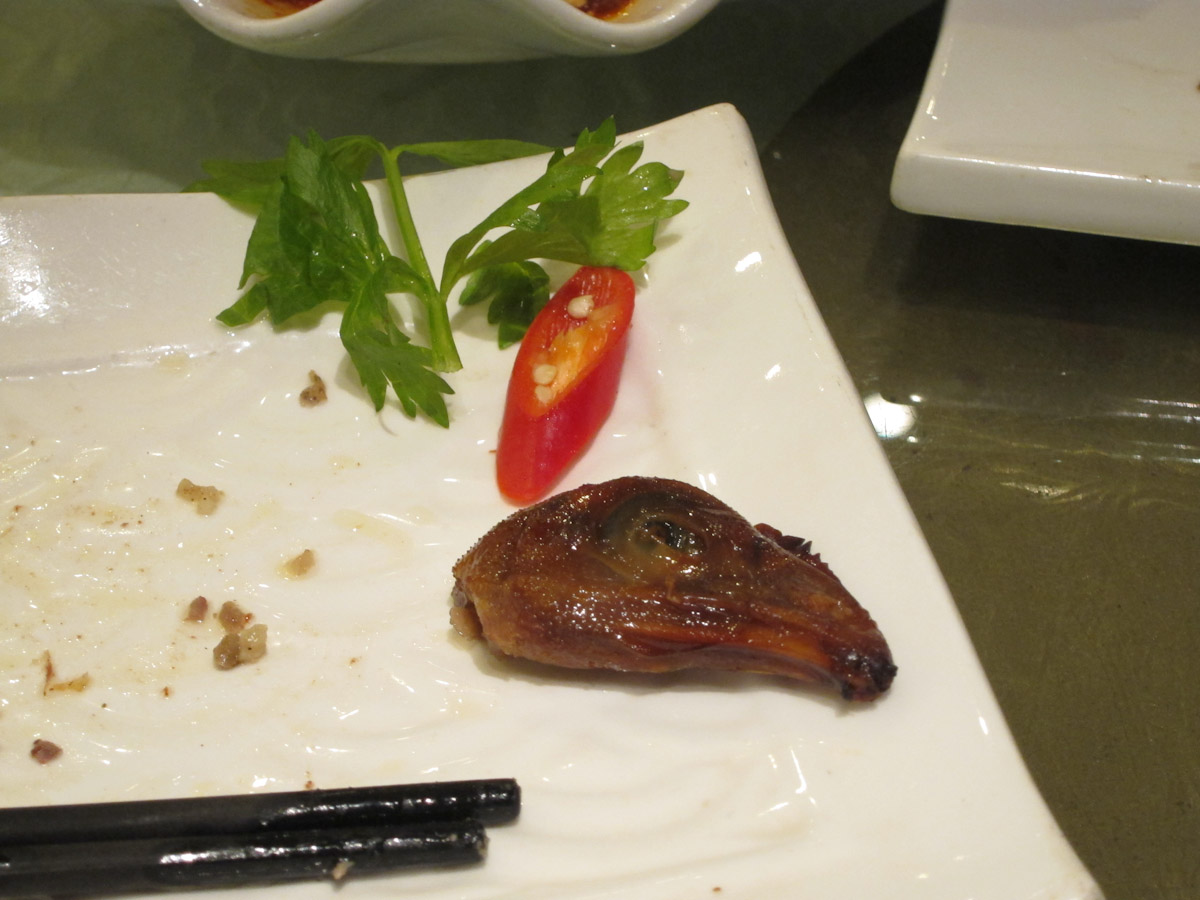
Happily, we didn’t encounter anything like that during our visit. Our first meal in Beijing was, fittingly, Peking duck. We followed our friend Brenda’s advice and headed straight to Made In China where we had the real McCoy. It was fantastic even though it included the head (the brains are a delicacy and yes the kids both tried them).
We were also surprised by what was not served much: rice. This was quite remarkable because rice had been described to us “the bread of China” and we certainly never had a Chinese meal at home without it. It turns out the reason for this conspicuous absence had to do with geography: most of our time was spent in the north where the climate is too cold for rice fields. Here, wheat serves as the primary starch and is transformed into all sorts of buns, cakes, breads, and noodles.
One of the most marvelous incarnations is the dumping.
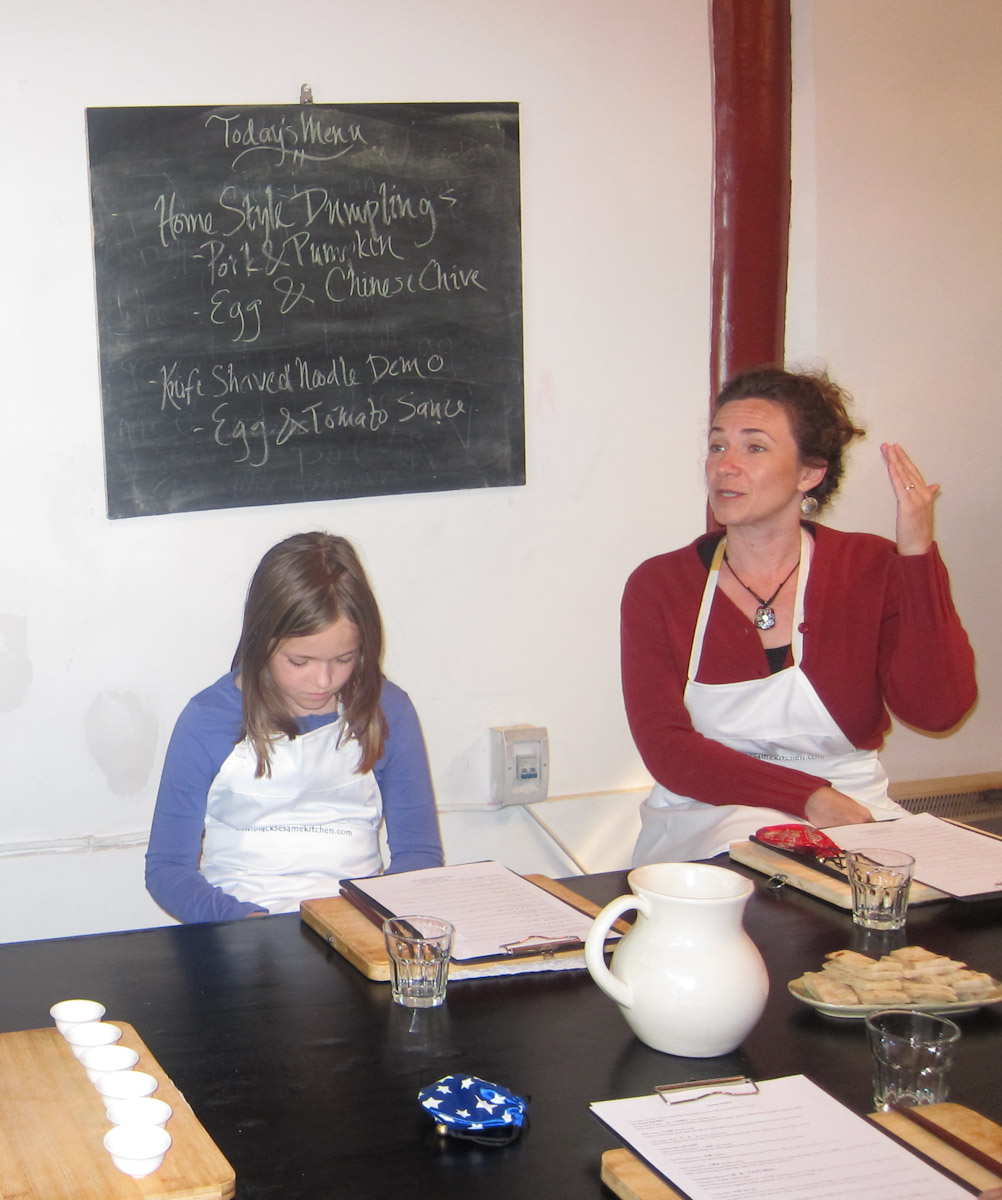
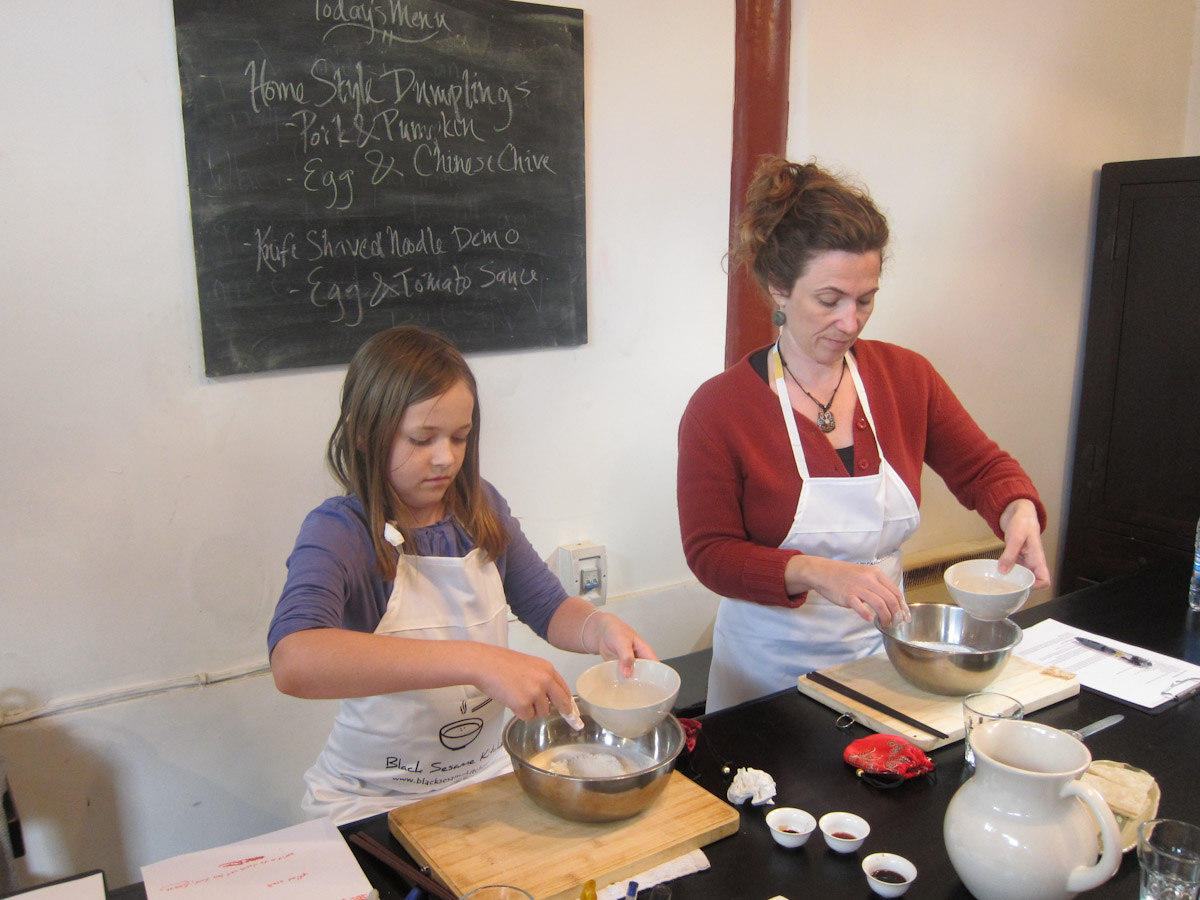
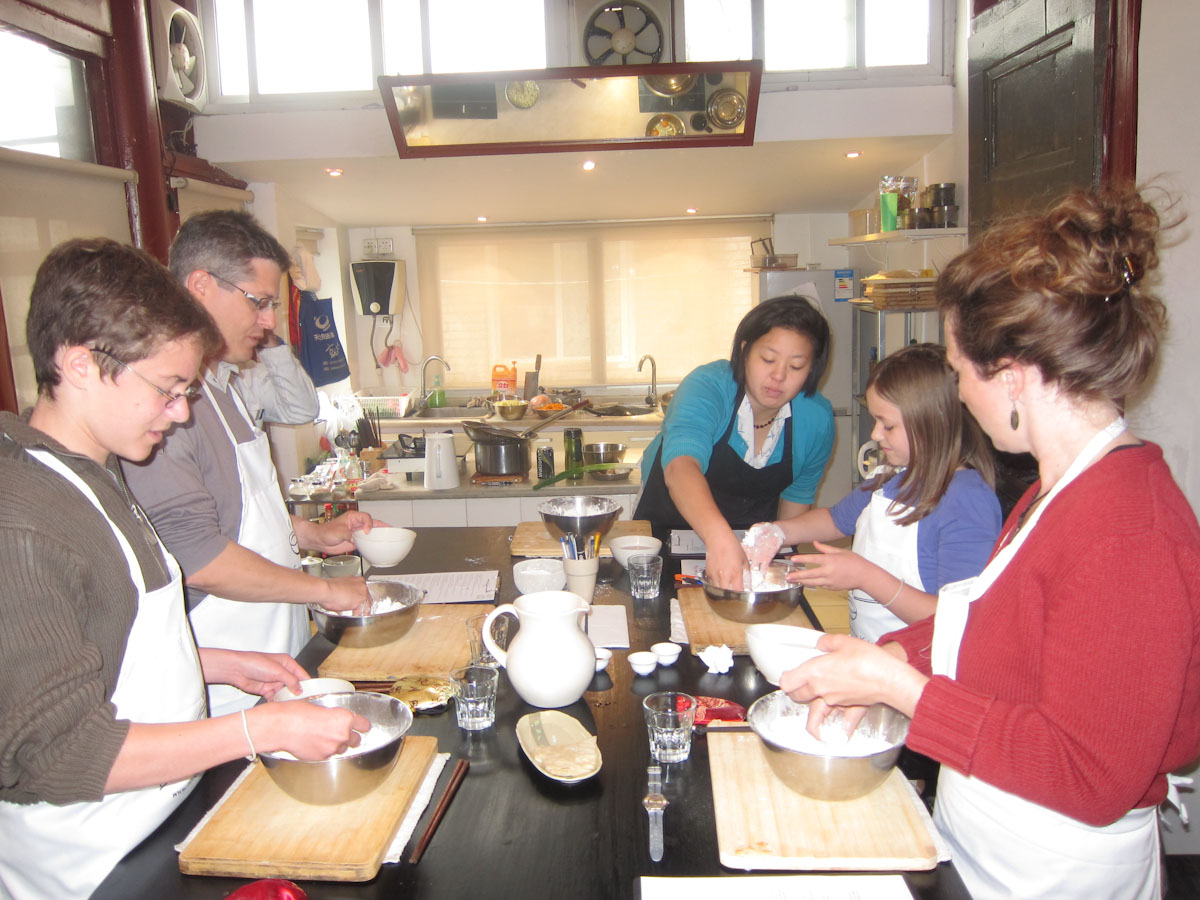
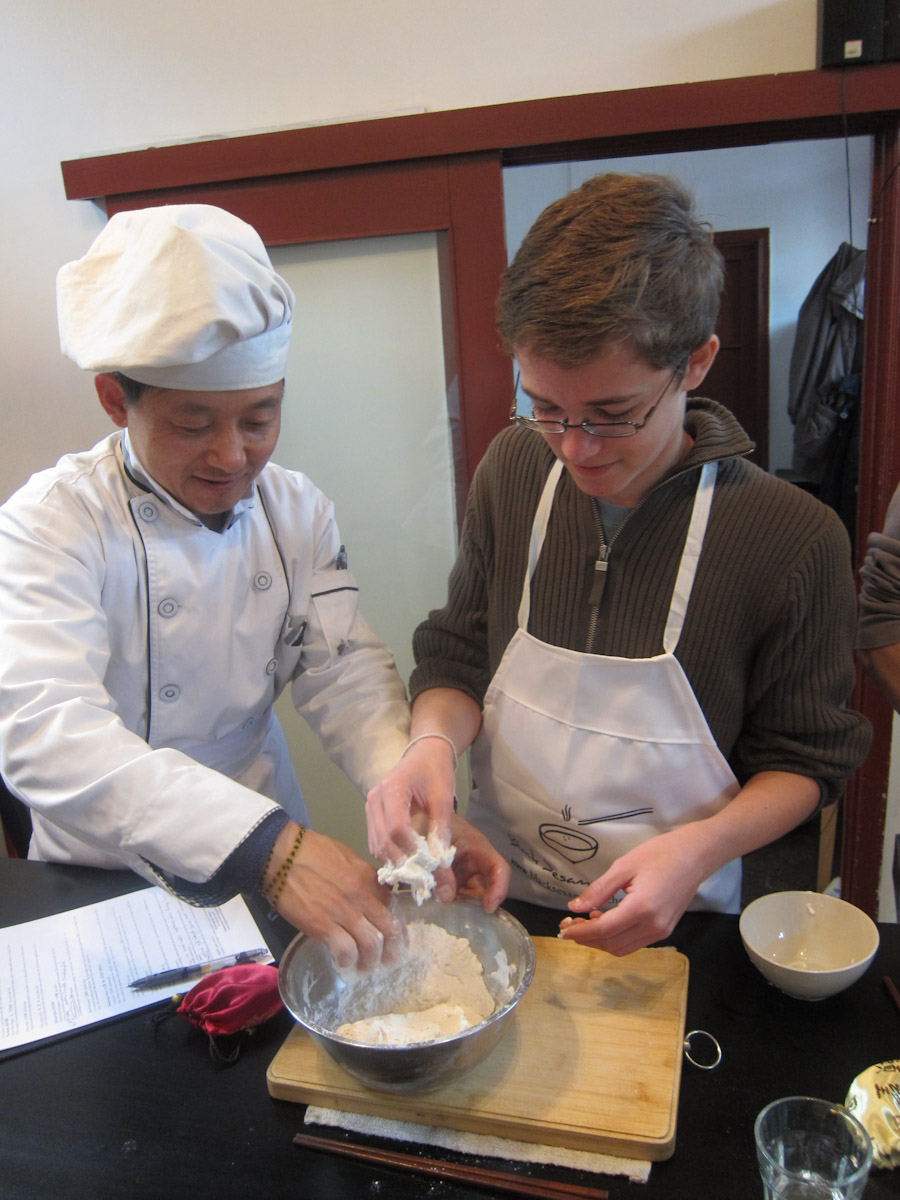
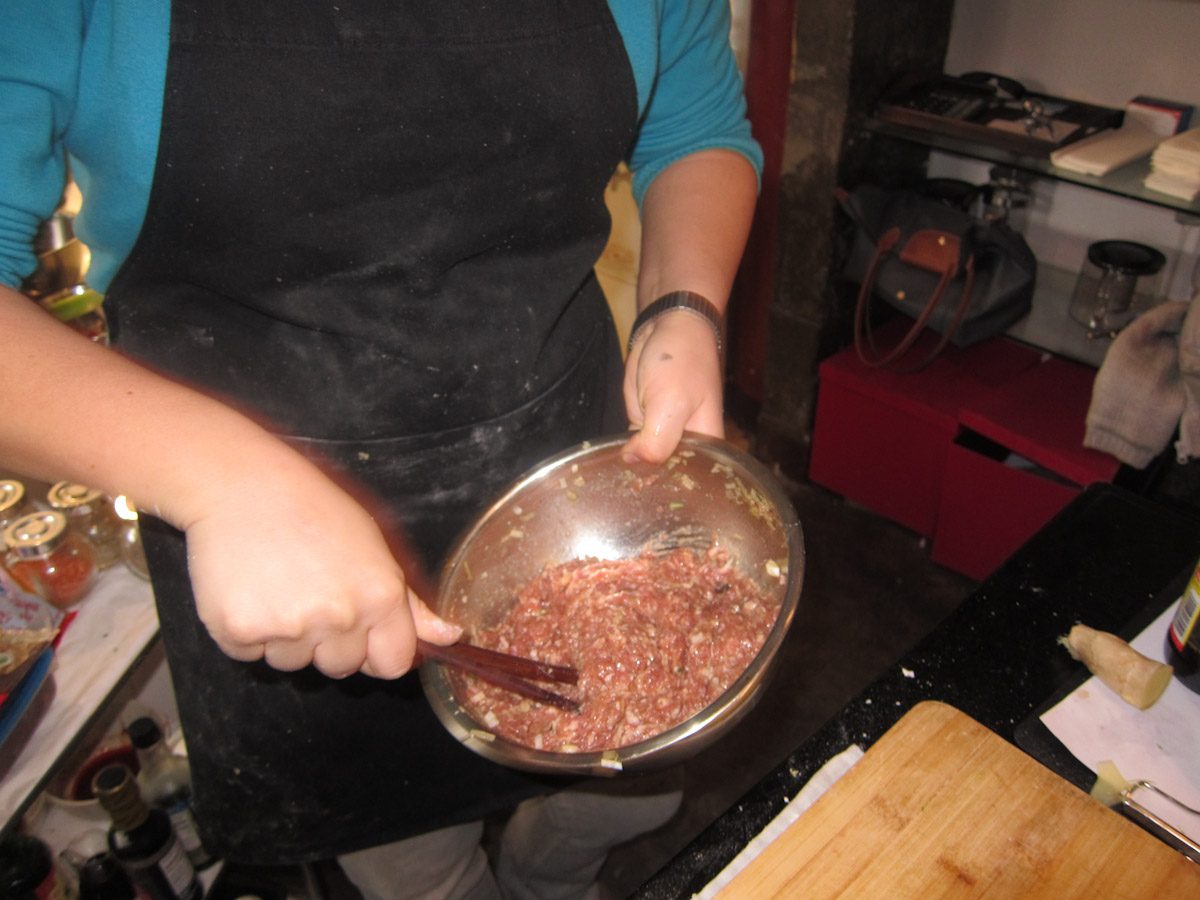
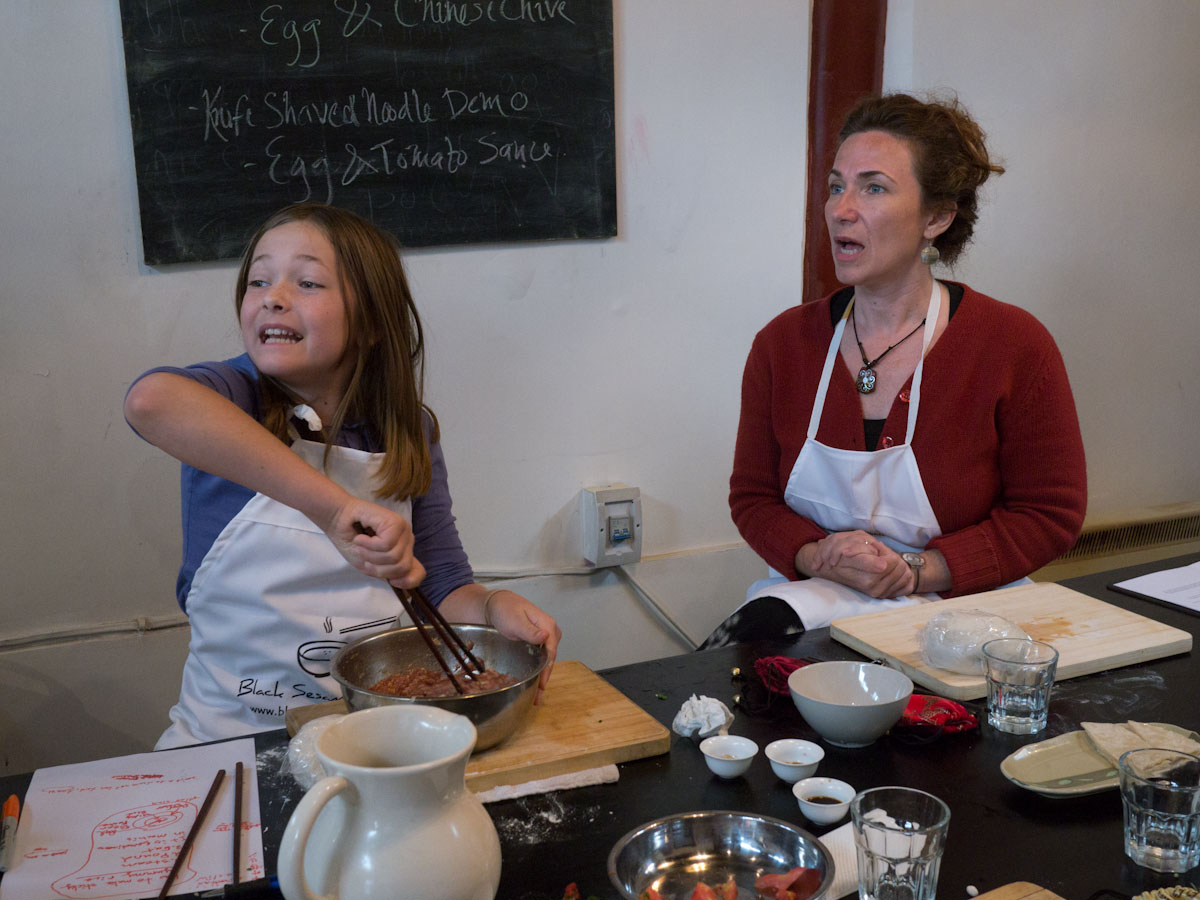
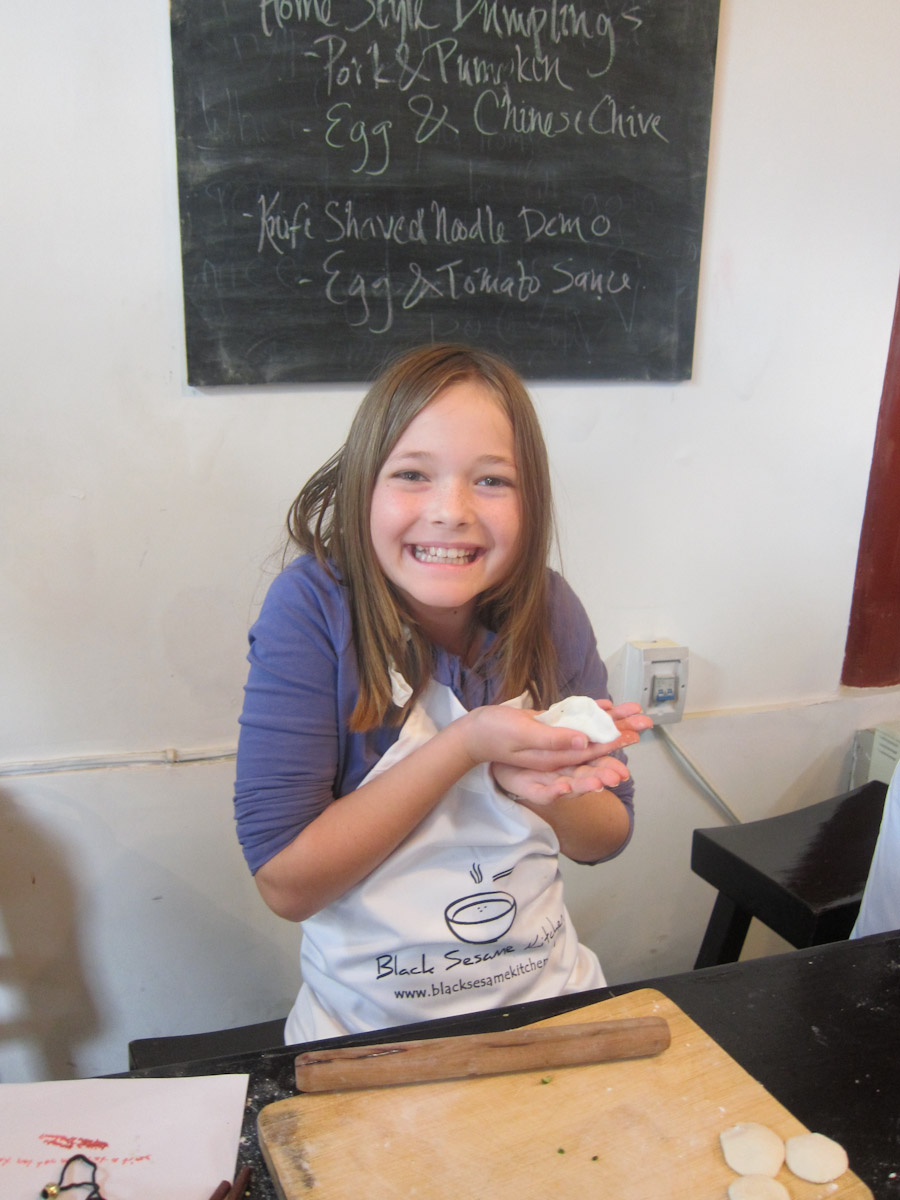
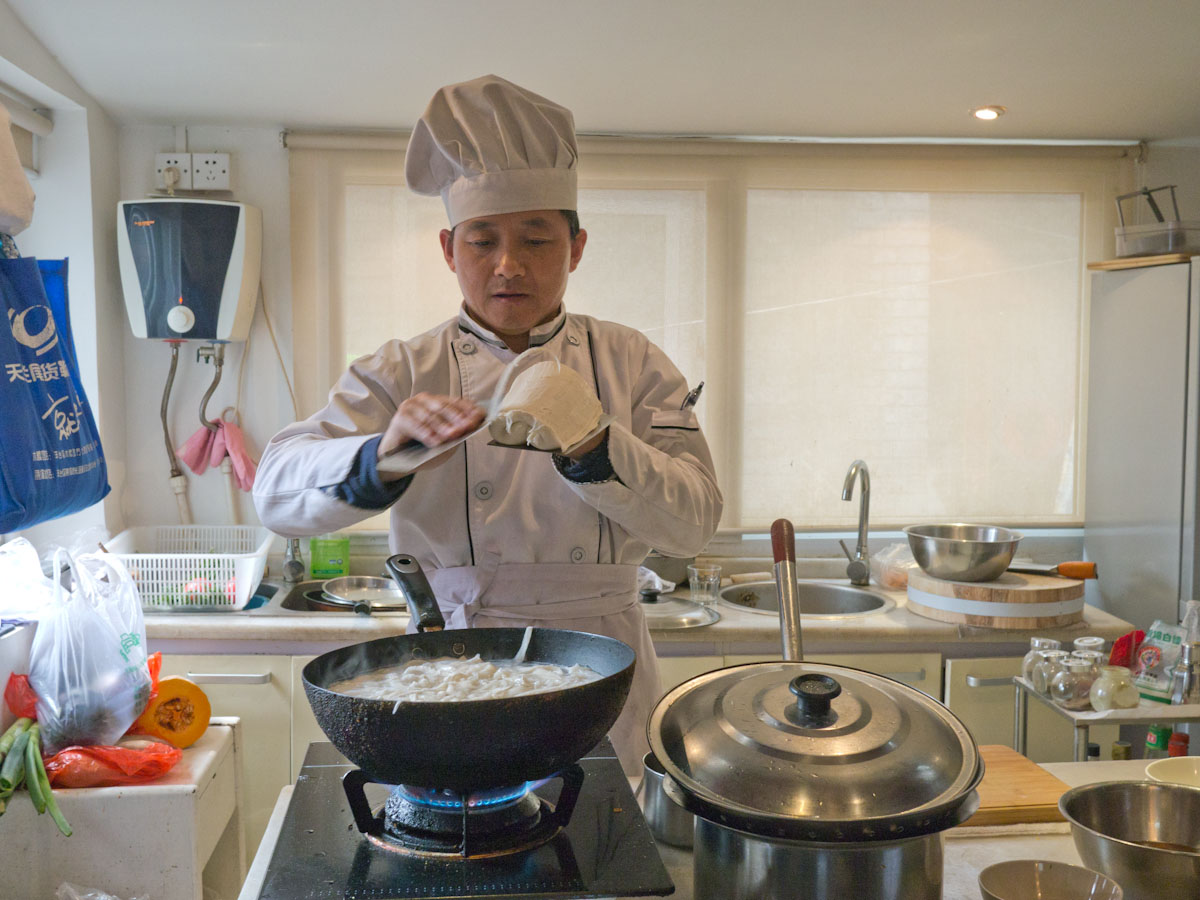
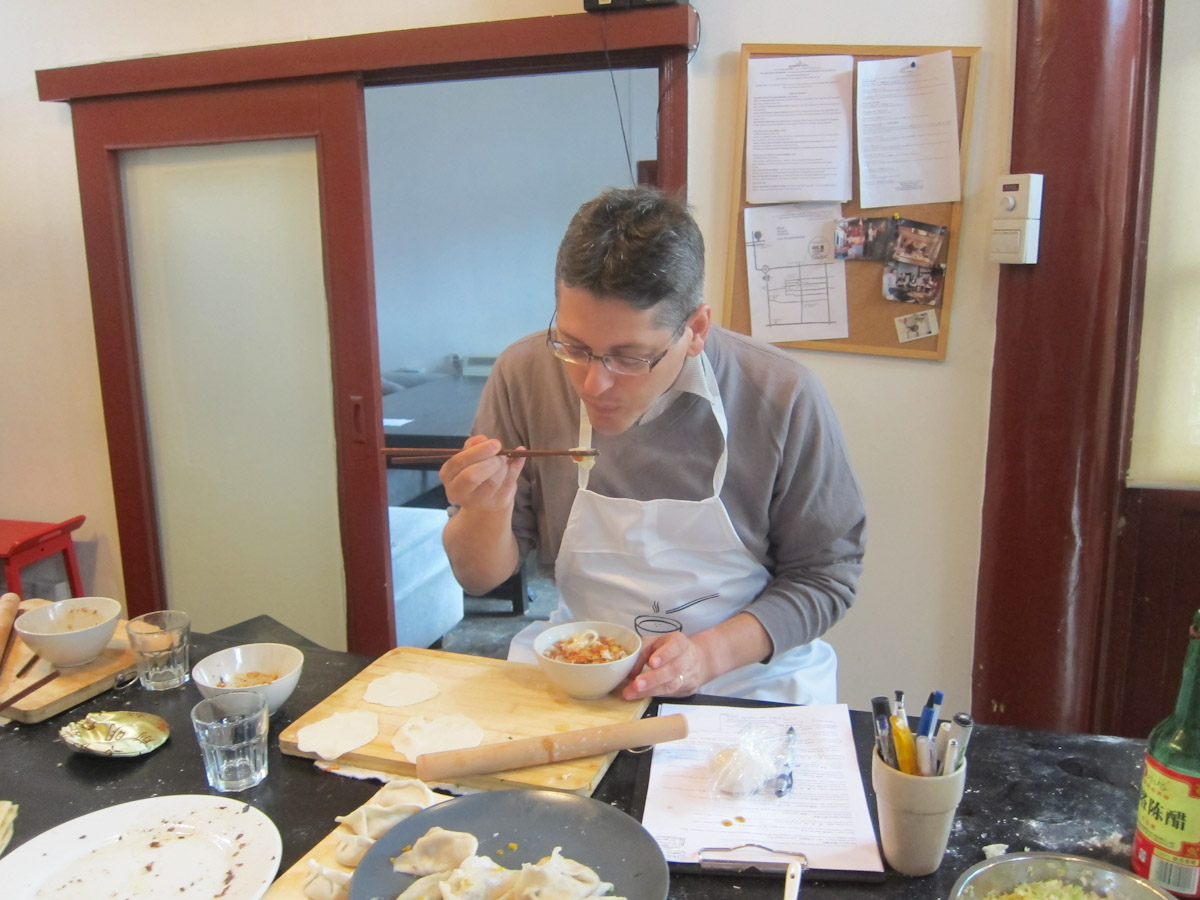
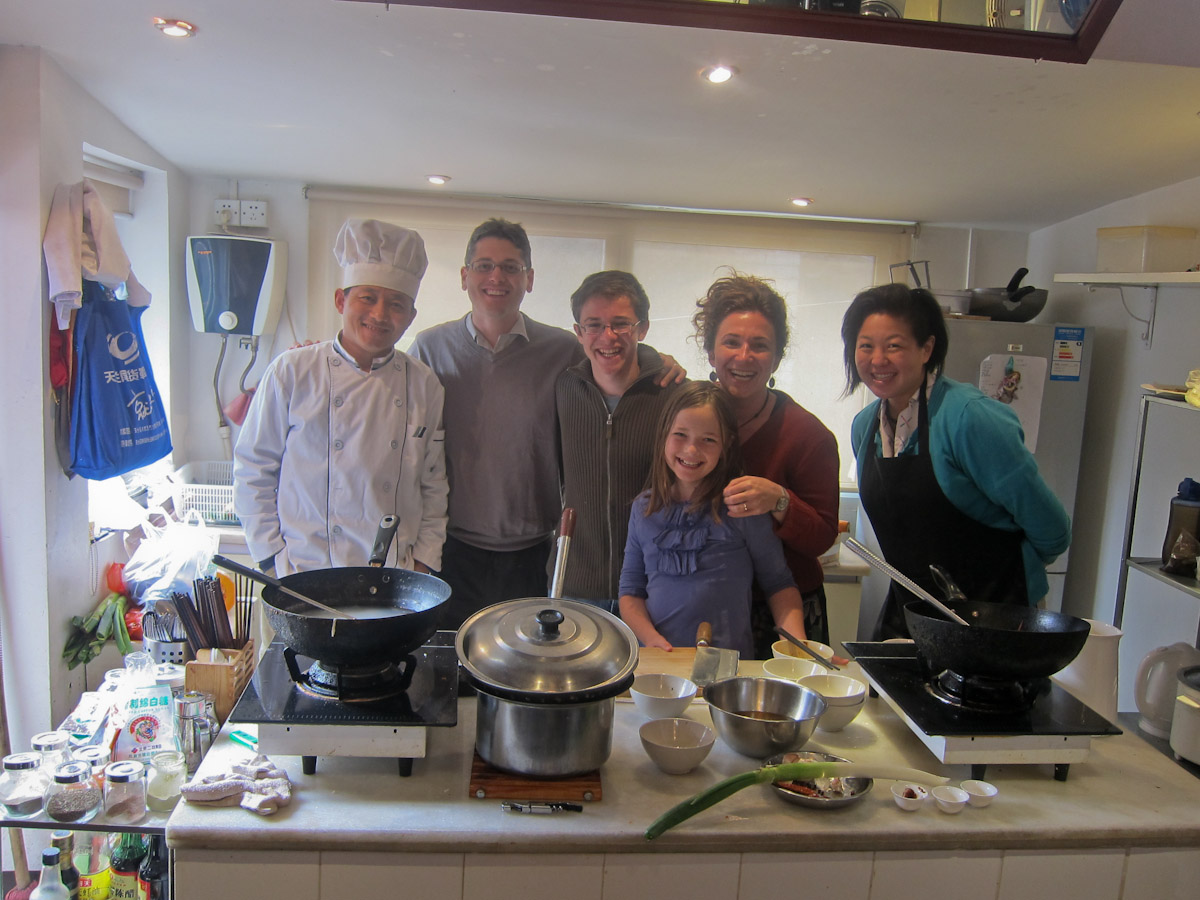
We began our formal Chinese culinary education with a homemade dumpling and noodle cooking class at Black Sesame Kitchen in Beijing. On the menu were pork and pumpkin potstickers, egg and scallion dumplings, and hand-sliced thick noodles in a tomato-egg sauce.
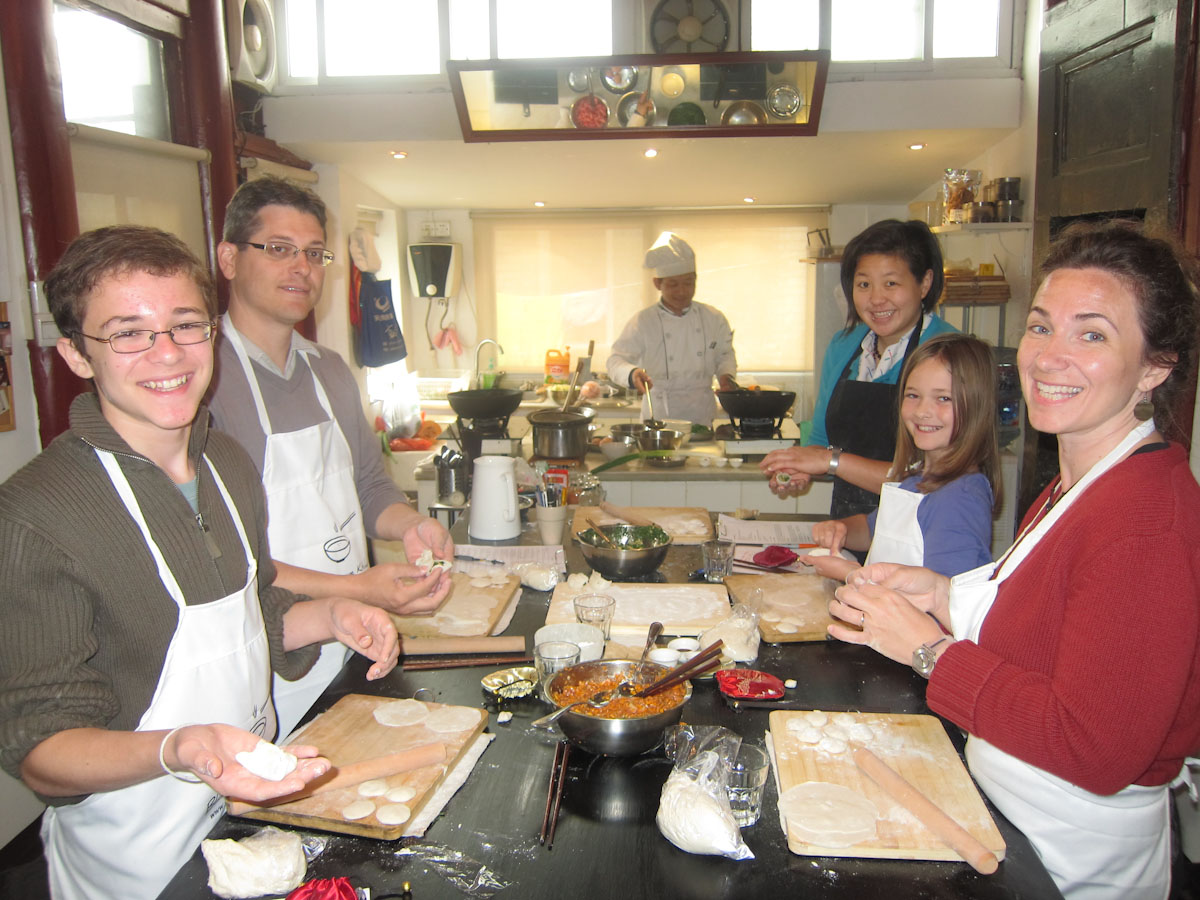
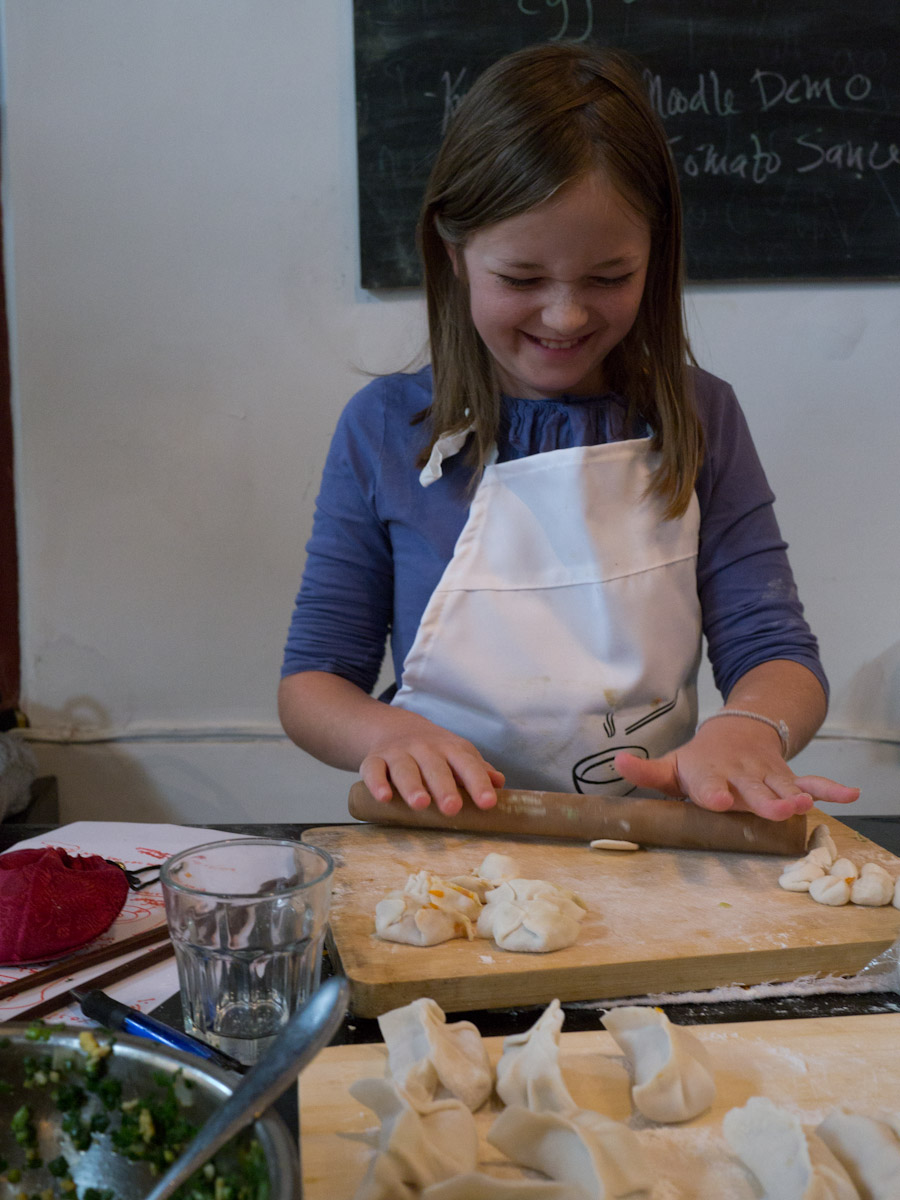
We had a fantastic time learning to make the dough from scratch: high-gluten flour mixed with water kneaded by hand until just the right consistency is achieved. No other ingredients. I marveled that we didn’t end up with papier mache paste but, amazingly, our results were just as tasty as the teacher’s.
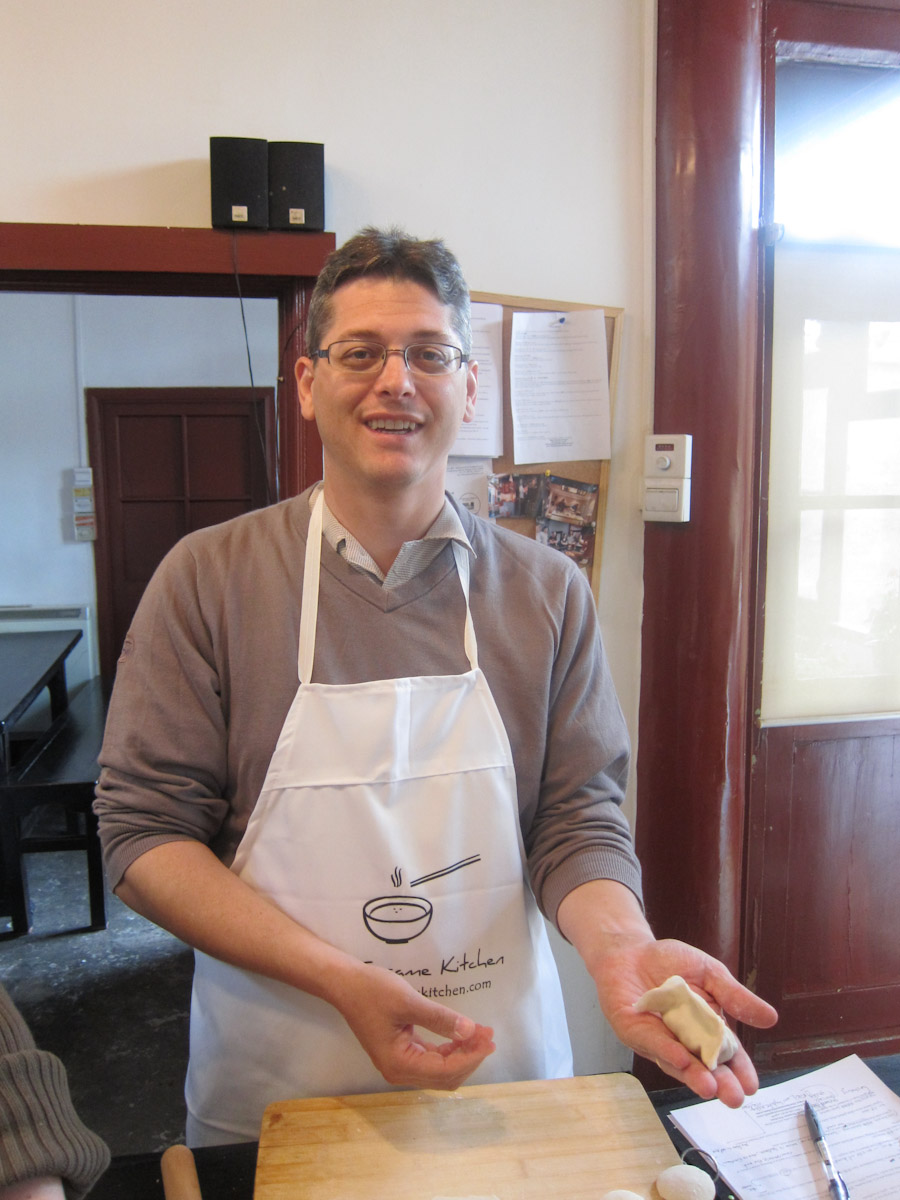
Then we rolled, filled, and pleated each tiny dough circle until we held the perfect dumpling in the palm of our hands. It was very time-intensive but satisfying work. The good news is that dumplings can be assembled in large batches and then frozen for up to three months before cooking.
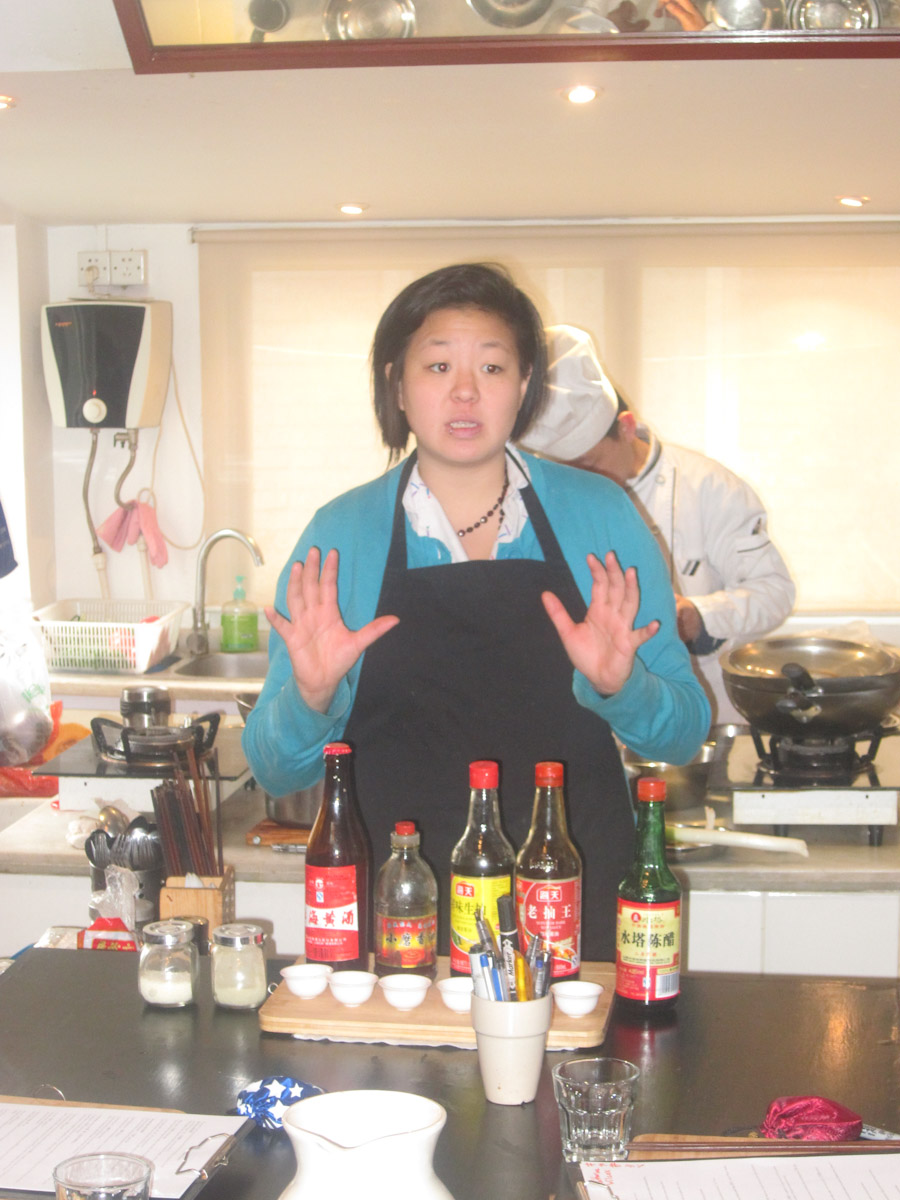
We also learned about the classic Chinese mise en place, or core set of seasonings. At home, I keep a tray of my most often used ingredients right by the stovetop so they are readily at hand; these include olive oil, coarse salt, white pepper, black pepper, and a blend of herbs de Provence (rosemary, thyme, garlic). The Chinese set is quite different and includes safflower or rapeseed oil (for high-heat cooking), light soy, dark soy, rice vinegar, sugar, salt, chili oil or paste, white pepper (never black), and sesame oil (for seasoning, never cooking). We also learning that leeks, garlic, and ginger are the foundation for many, many dishes just the way olive oil, garlic, and basil form the basis of most Italian recipes.
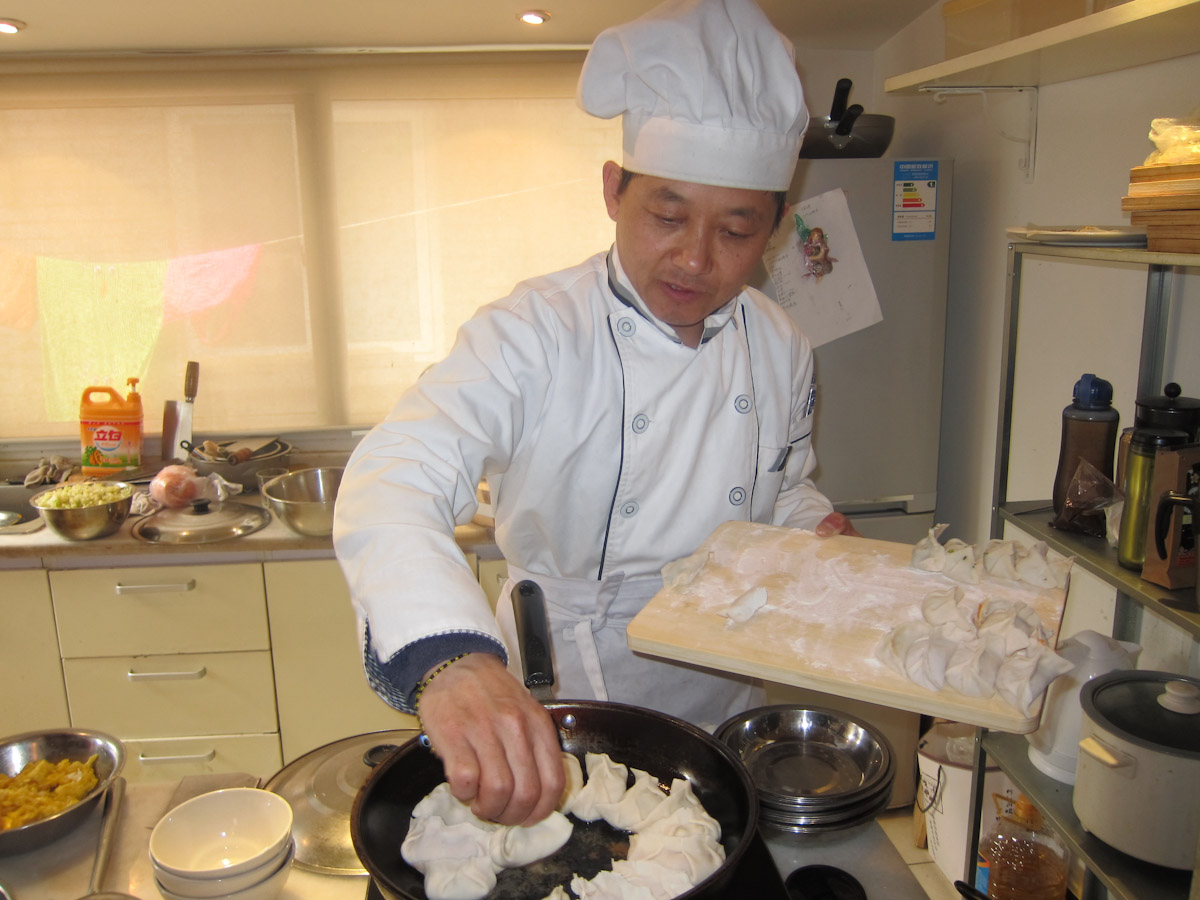
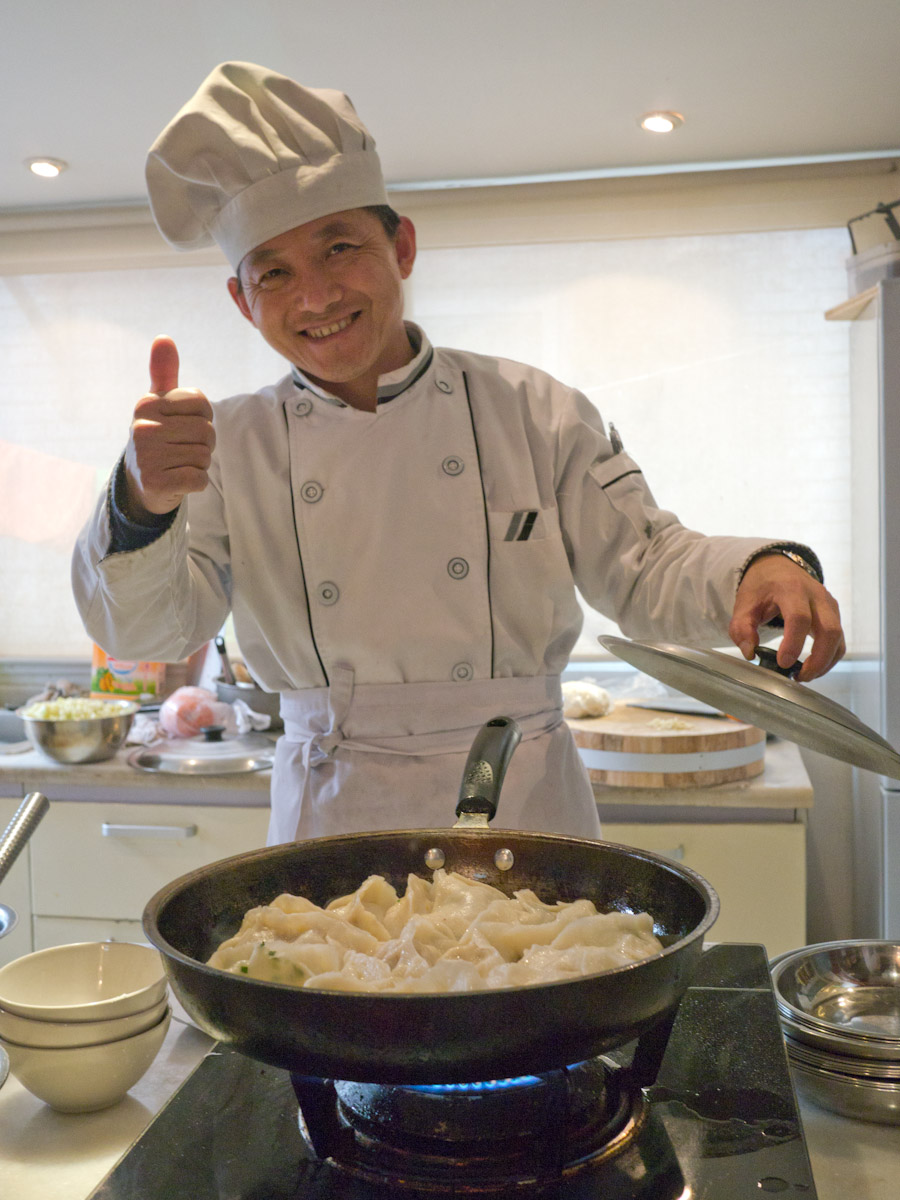
One of the best techniques we mastered was how to properly cook a potsticker. The dumplings are effectively twice cooked: first, they are sautéed in a single layer in hot, oiled wok until they are nicely browned; next, water is added and the wok is covered. The dumplings simmer and steam until all the water has been absorbed. The end result is a crunchy bottom and a soft, toothsome top. Delicious.
While we were delighted with the dumplings we made in Beijing (they tasted far better than any we’d had at home), we soon learned that dumplings have been elevated to an art form in the ancient capital city of Xi’an. Even Beijingers concede that they really know how to do up the dumplings there. We conducted our own taste test the first evening we arrived. Our guide, Gerard, had made reservations for a “dumpling banquet” at the most famous dumpling house in Xi’an. This, he assured us, meant that we would be sampling the best in the entire country. We loved the pride he displayed and were ready to rise (expand!) to the challenge.
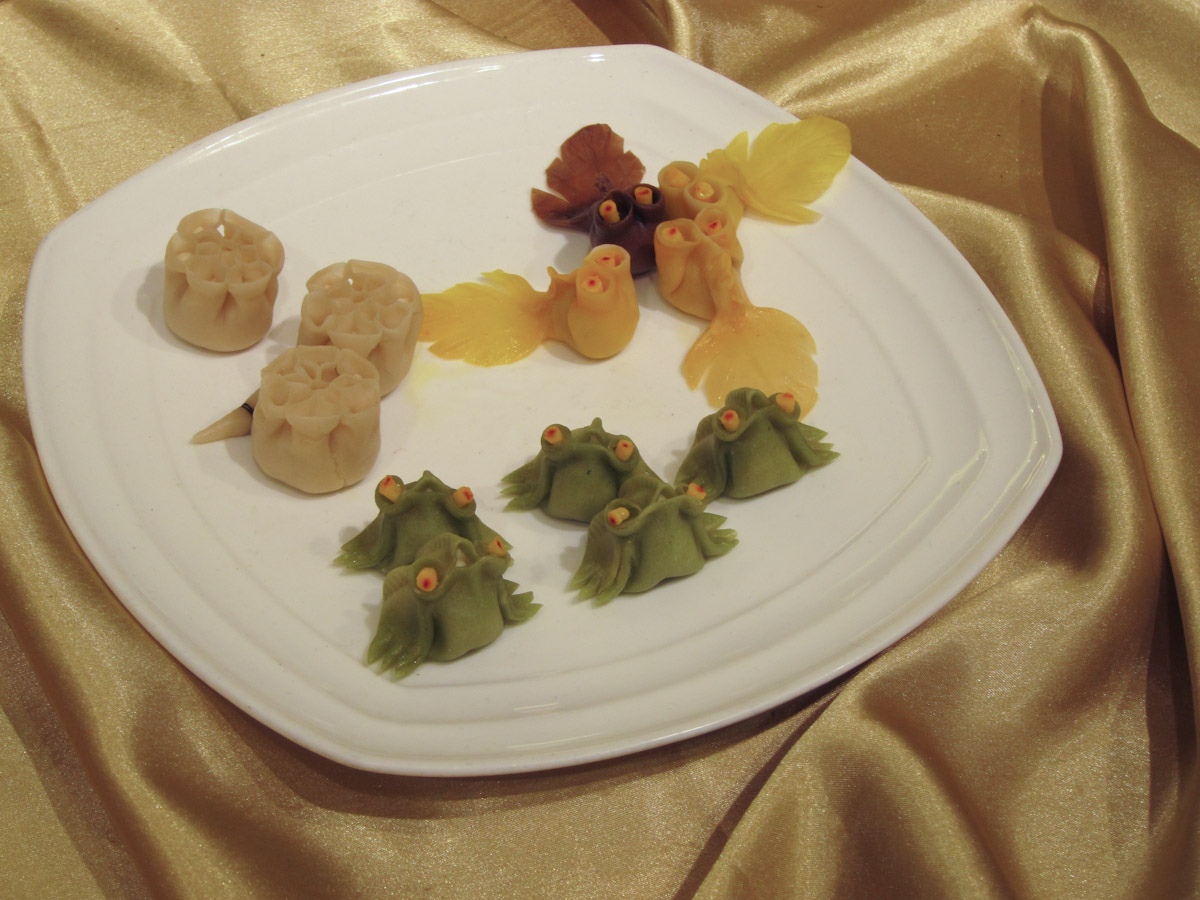
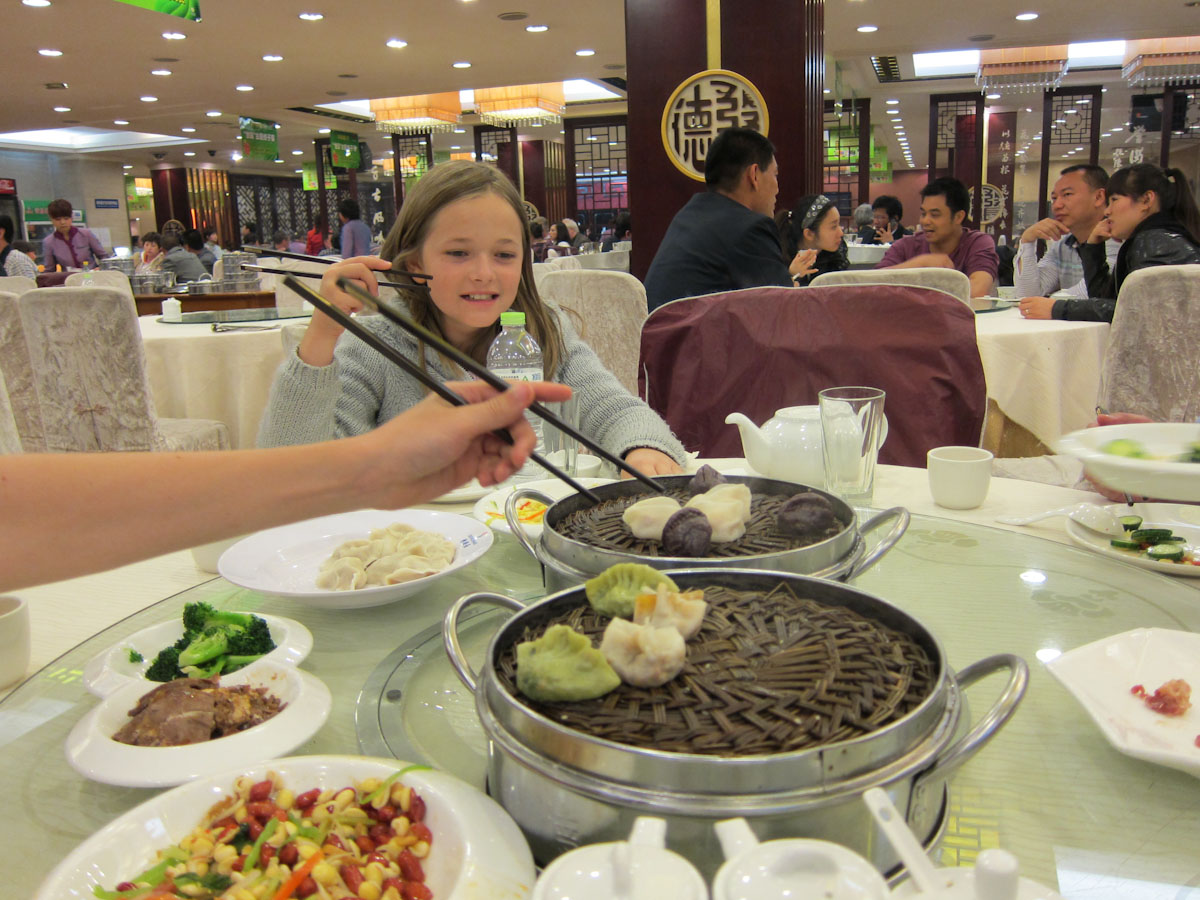
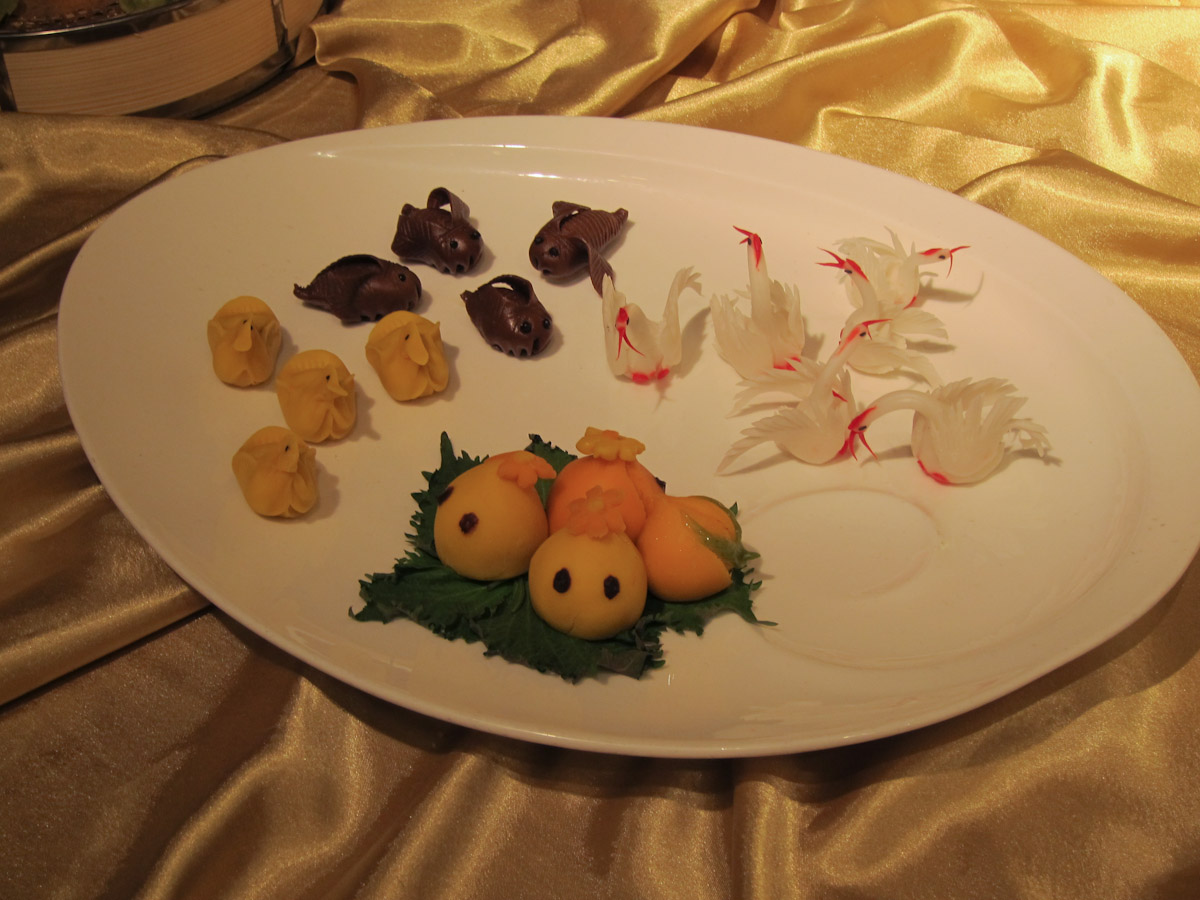
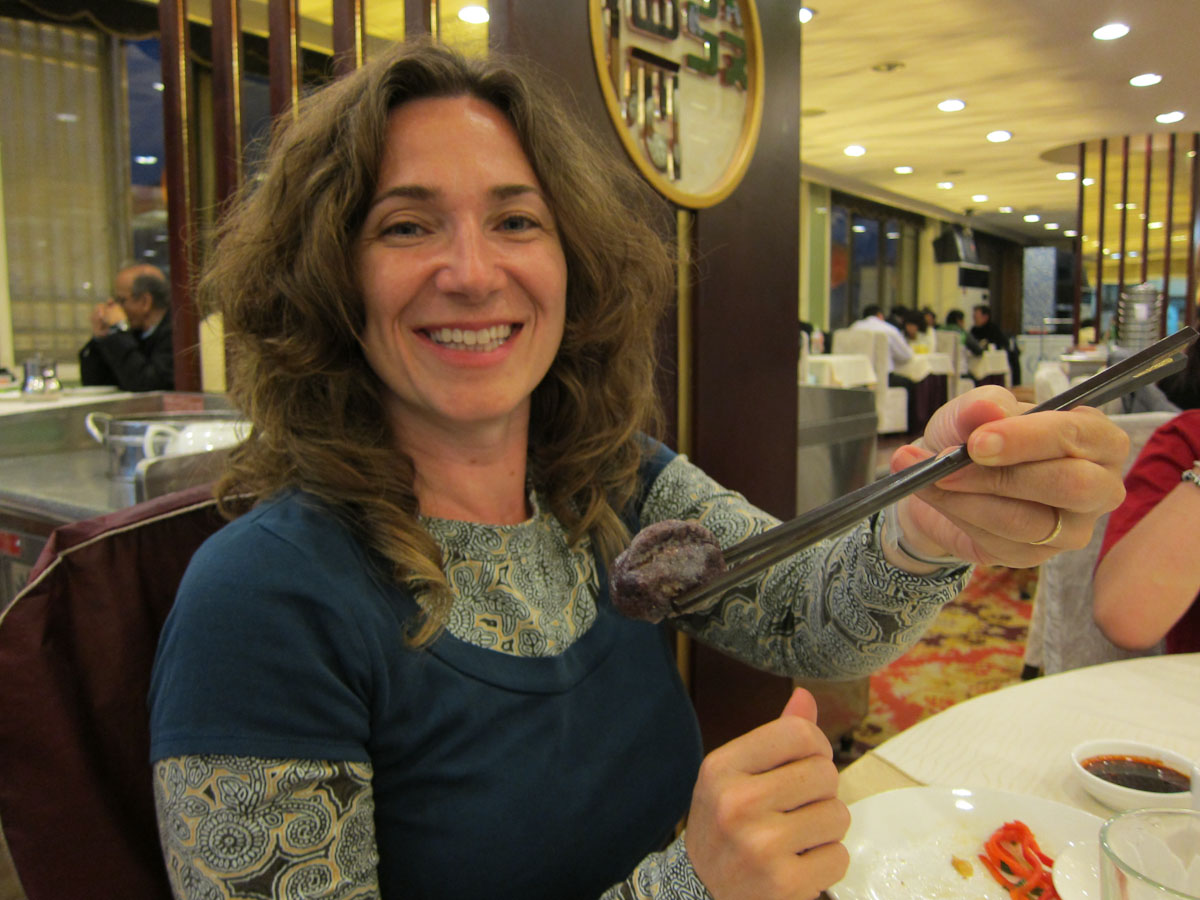
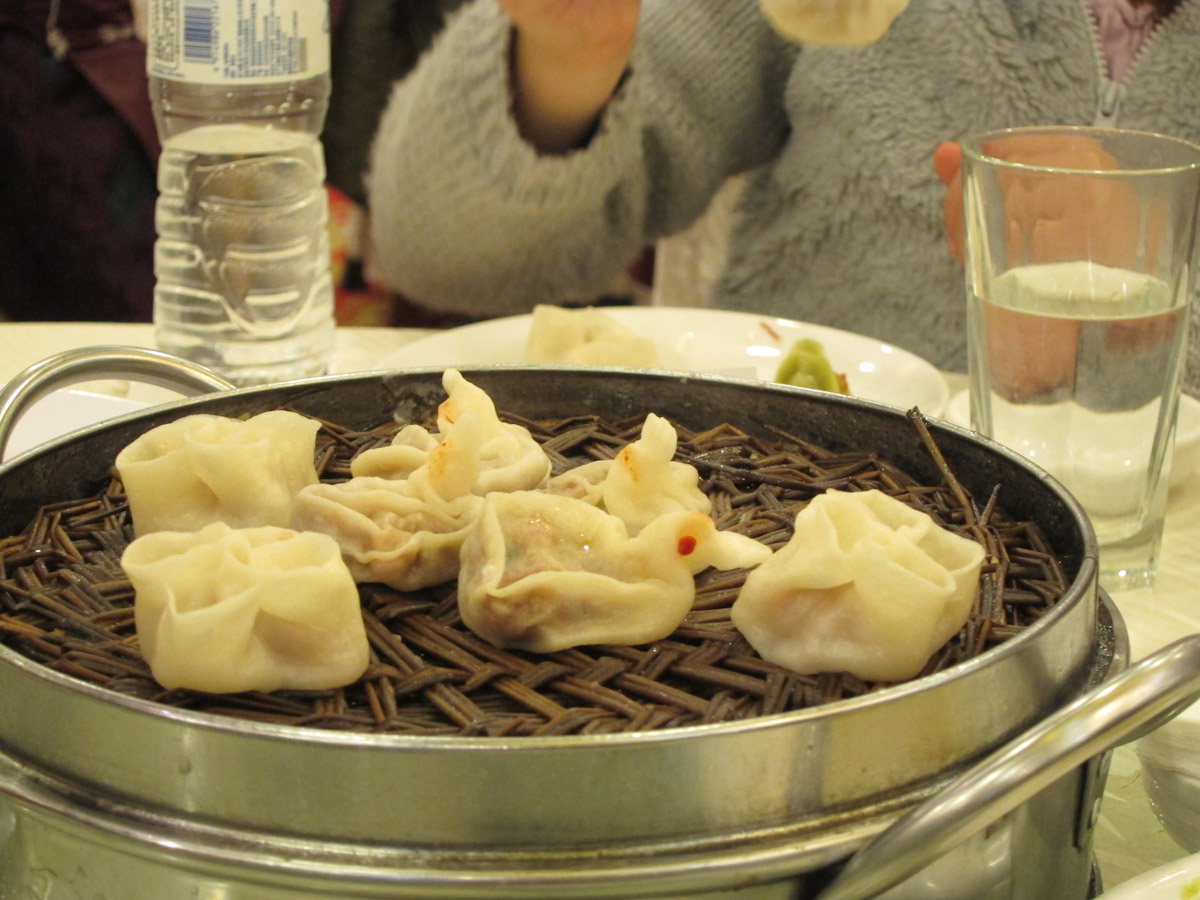
The restaurant was enormous and full of locals and tourists alike. Every dumpling is made by hand to order, which is incredible when you consider that the restaurant seats several hundred people. We were astonished by the variety of forms and fillings: there were green dumplings shaped like miniature frogs stuffed with frog meat, orange dumplings stuffed with pumpkin, dumplings shaped like birds stuffed with duck, there was even a brown dumpling shaped just like a walnut; it was filled with a sweet walnut paste and was one of my favorites. All in all, we tried fifteen different varieties.
We waddled our way out, sated and smiling. We readily conceded that Xi’an was indeed the culinary capital of dumplings in China and possibly even the world. Gerard seemed satisfied that we had passed an unspoken test and rewarded us with visits to purely local restaurants for the rest of our stay. This was a gift.
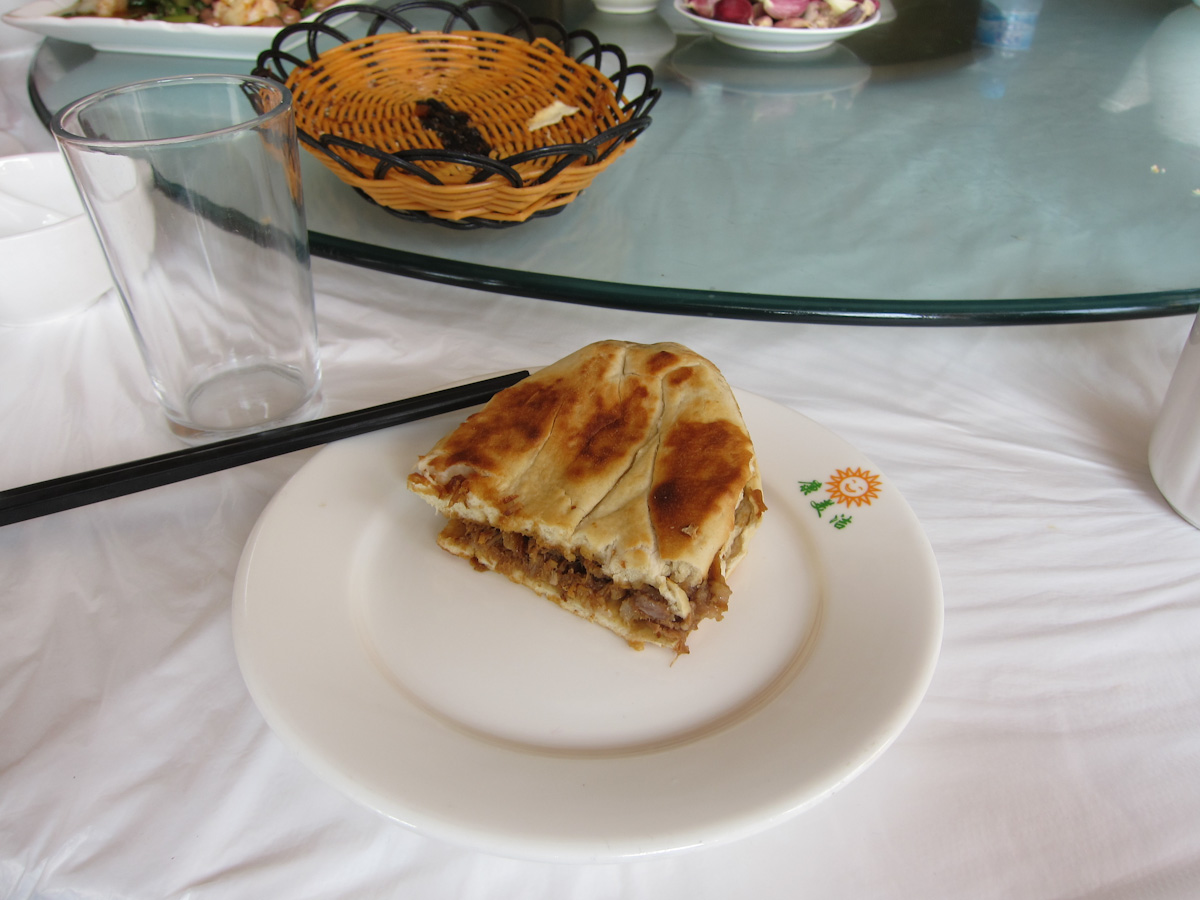
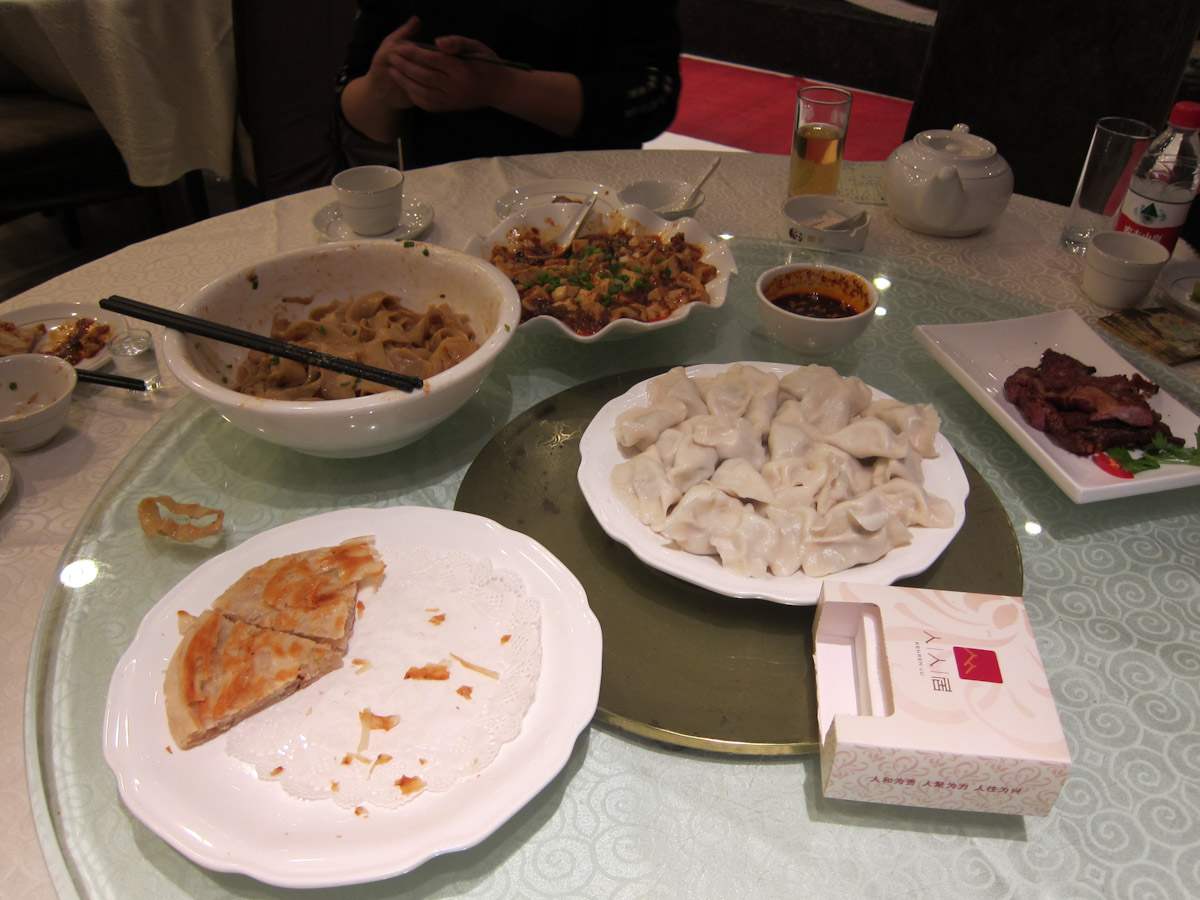
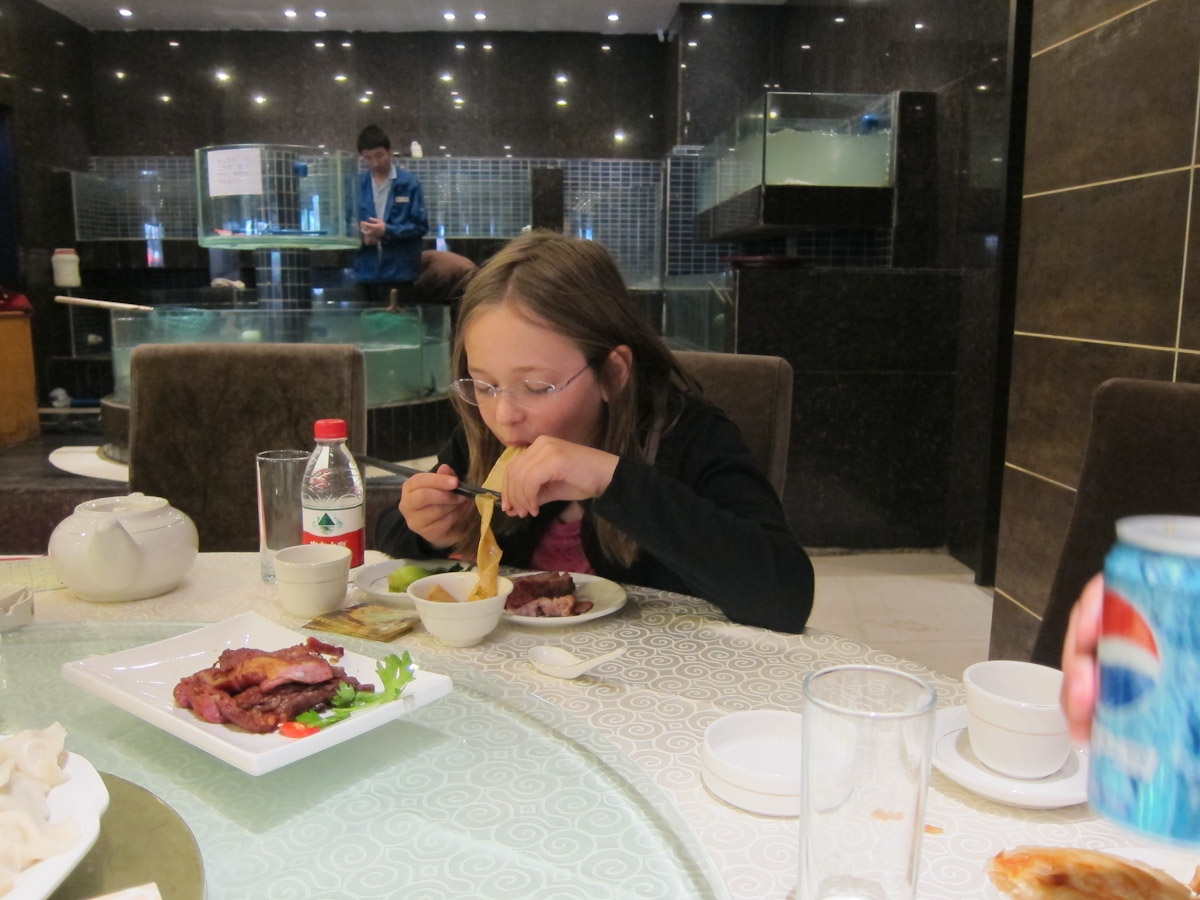
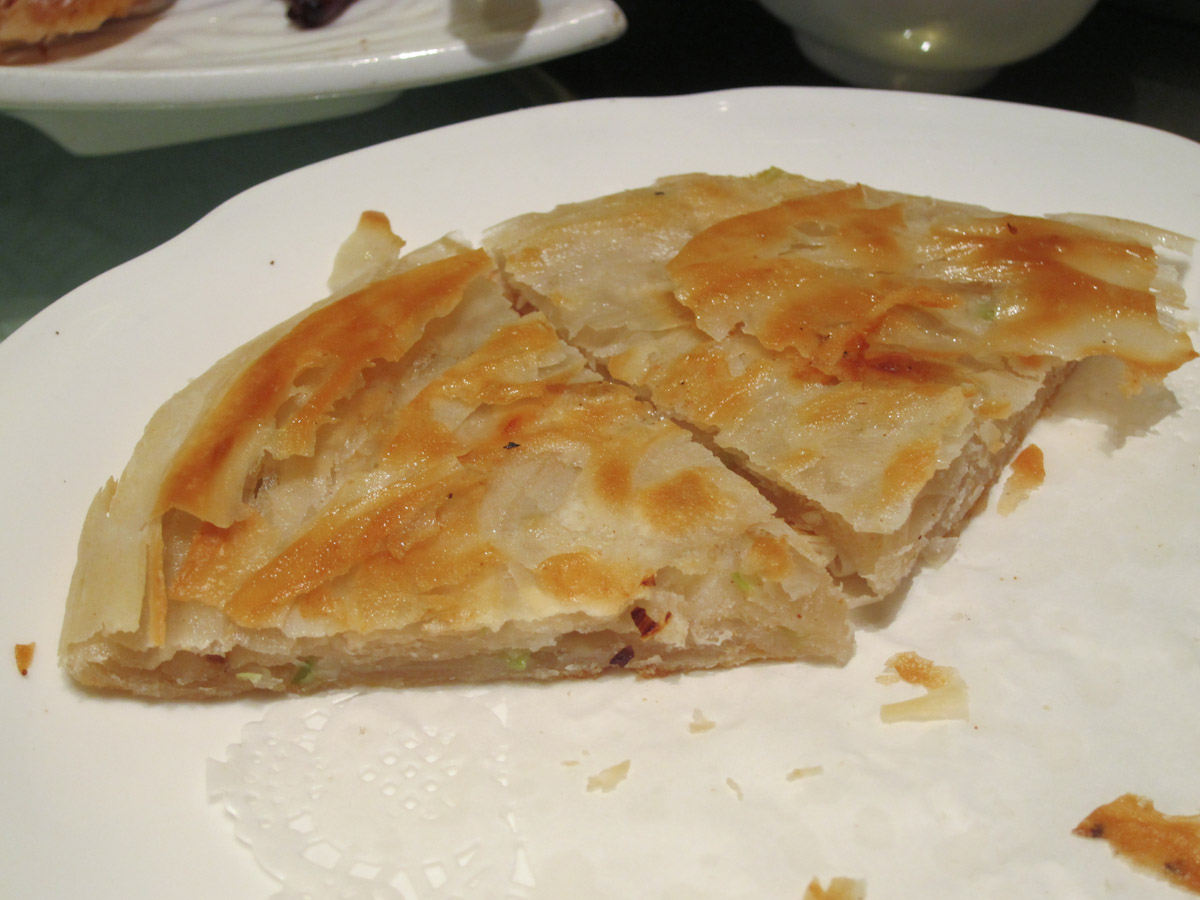
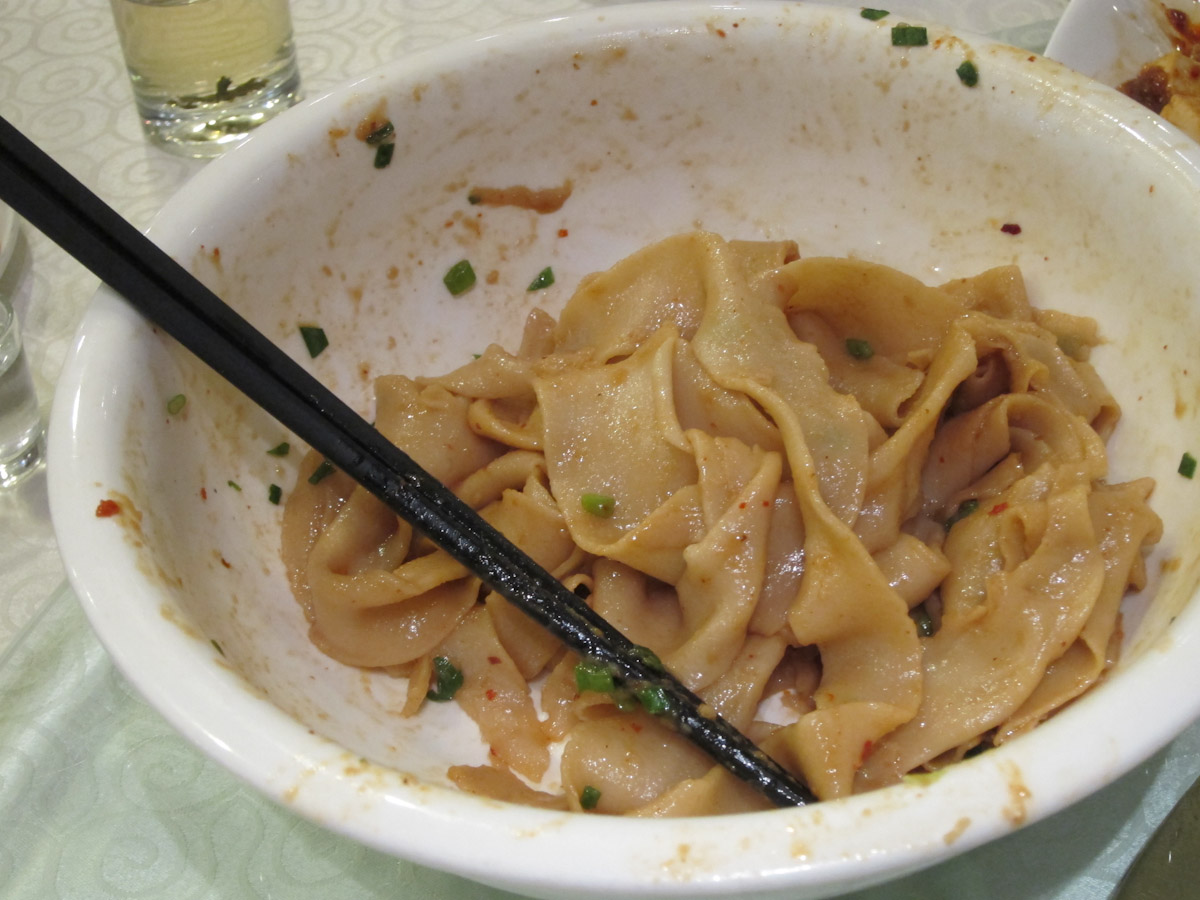
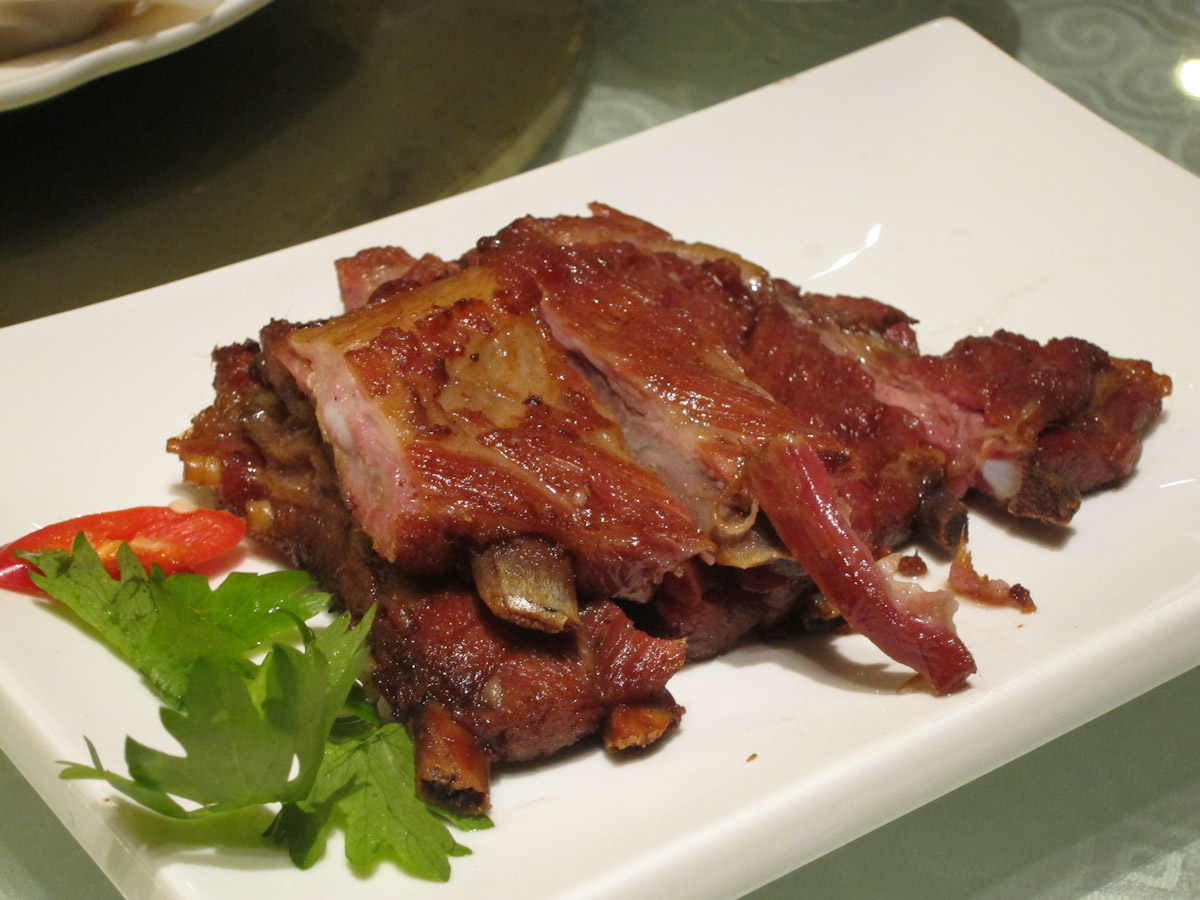
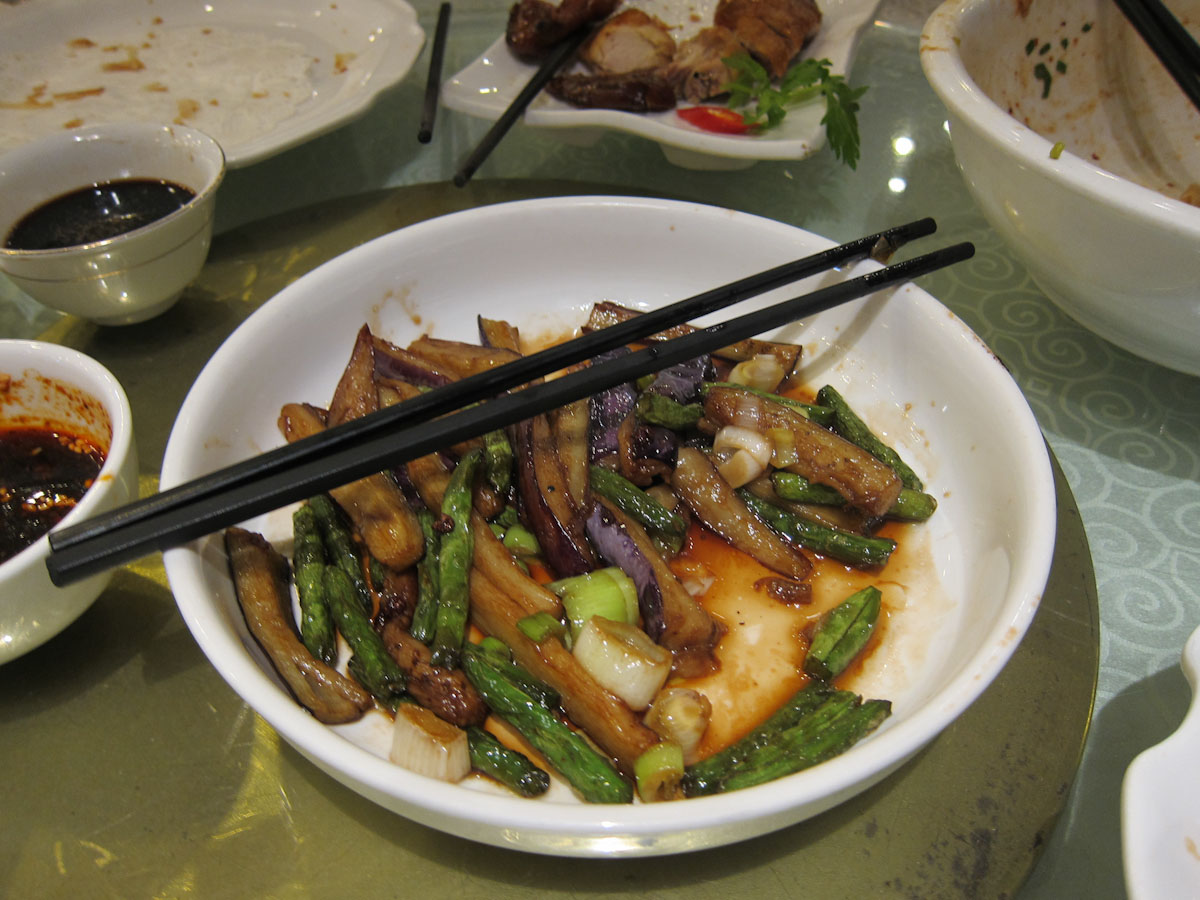
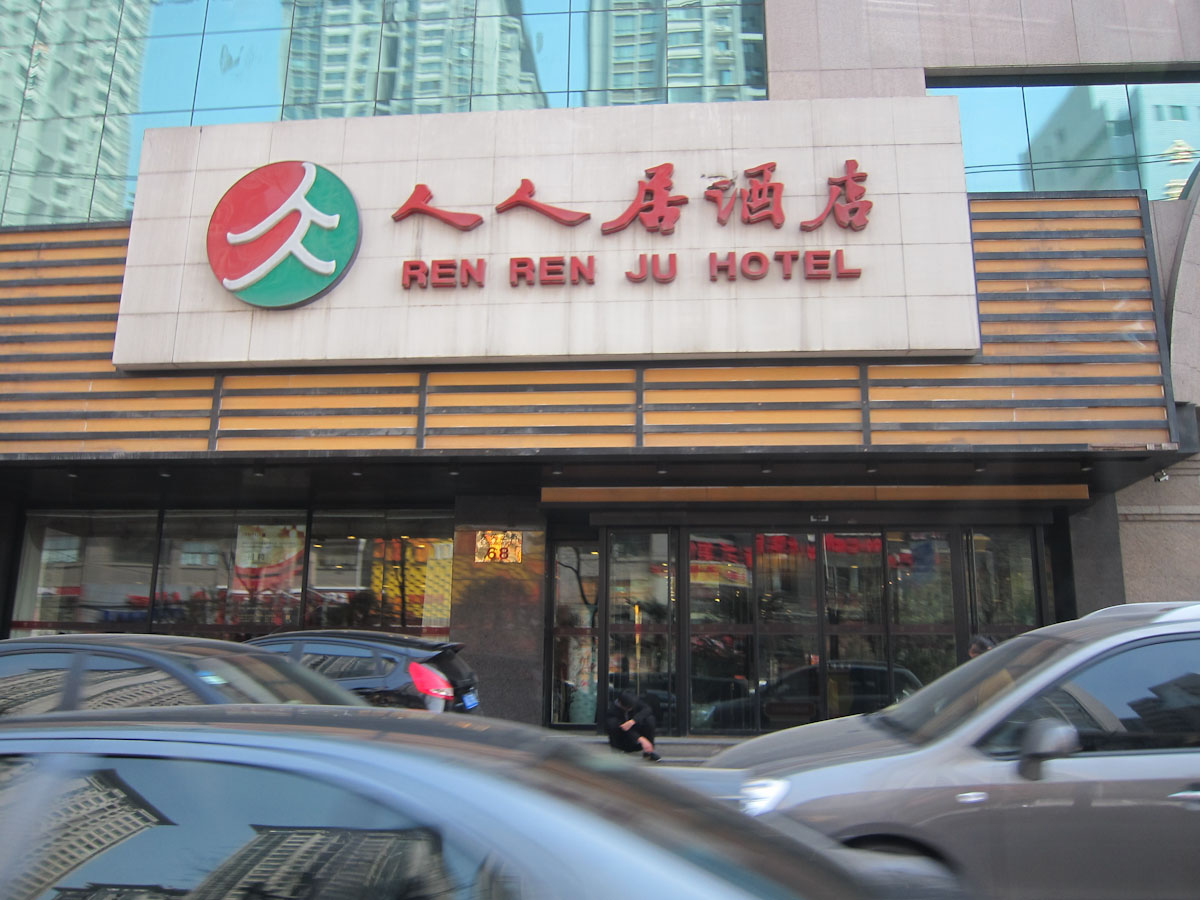
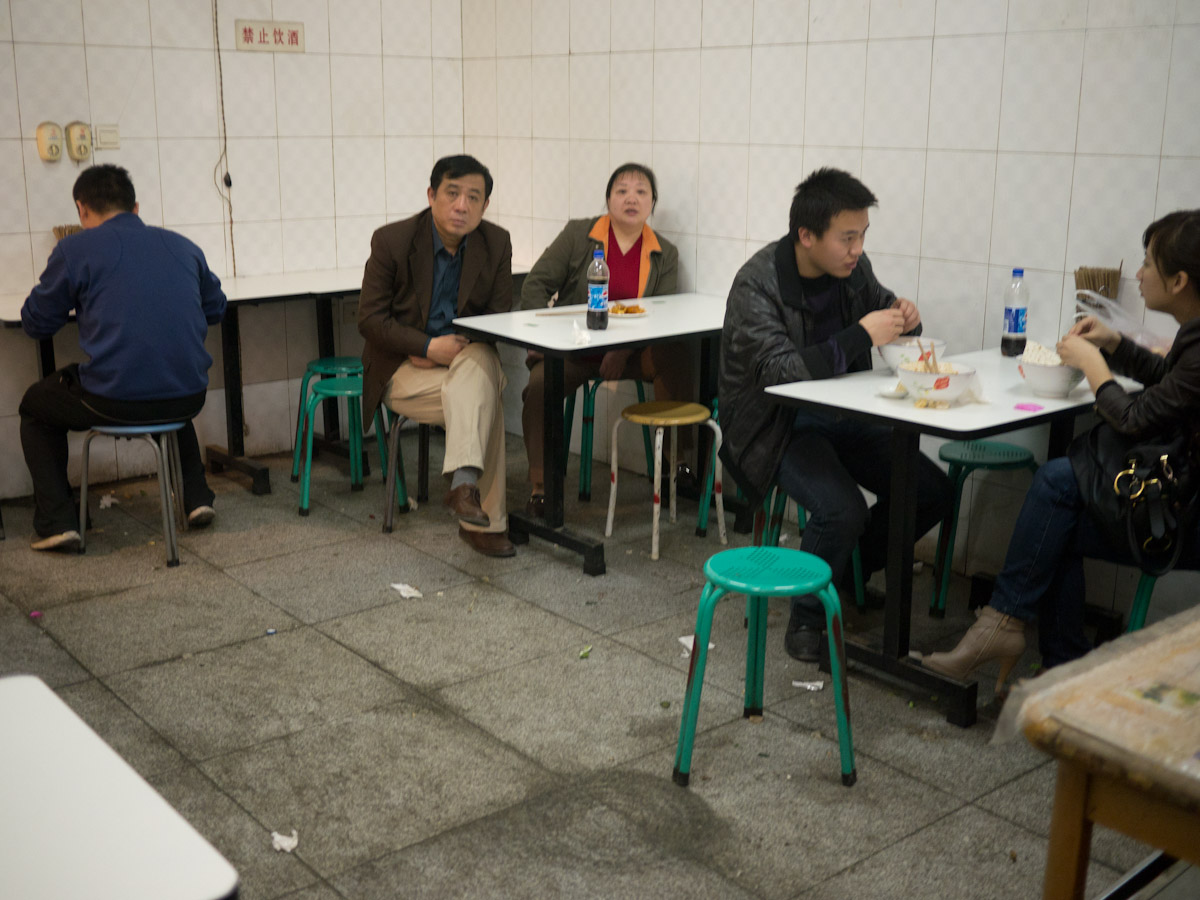
We had lunch at one of his favorite business restaurants where we tried crispy garlic-roasted chicken, flakey pastry scallion pancakes, wide noodles, more dumplings, succulent pork ribs, spicy tofu, and the best eggplant and green bean dish we had ever tasted. We were the only non-Chinese customers but the friendly stares did not deter us from digging in with gusto. In fact, I think our fellow diners appreciated the enthusiasm with which we went about our meal. We certainly would never have found this restaurant without Gerard because the mistranslated street sign welcomed visitors to a “Hotel”.
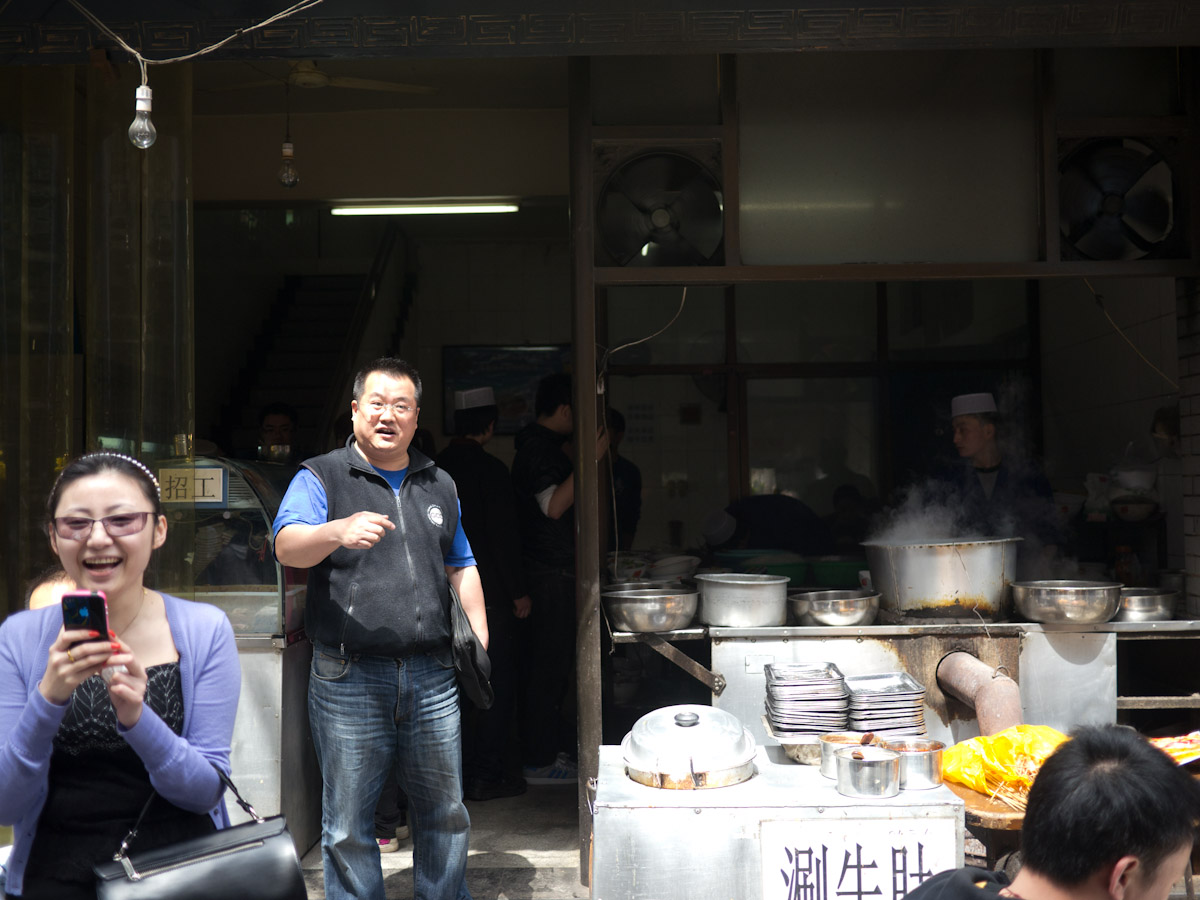
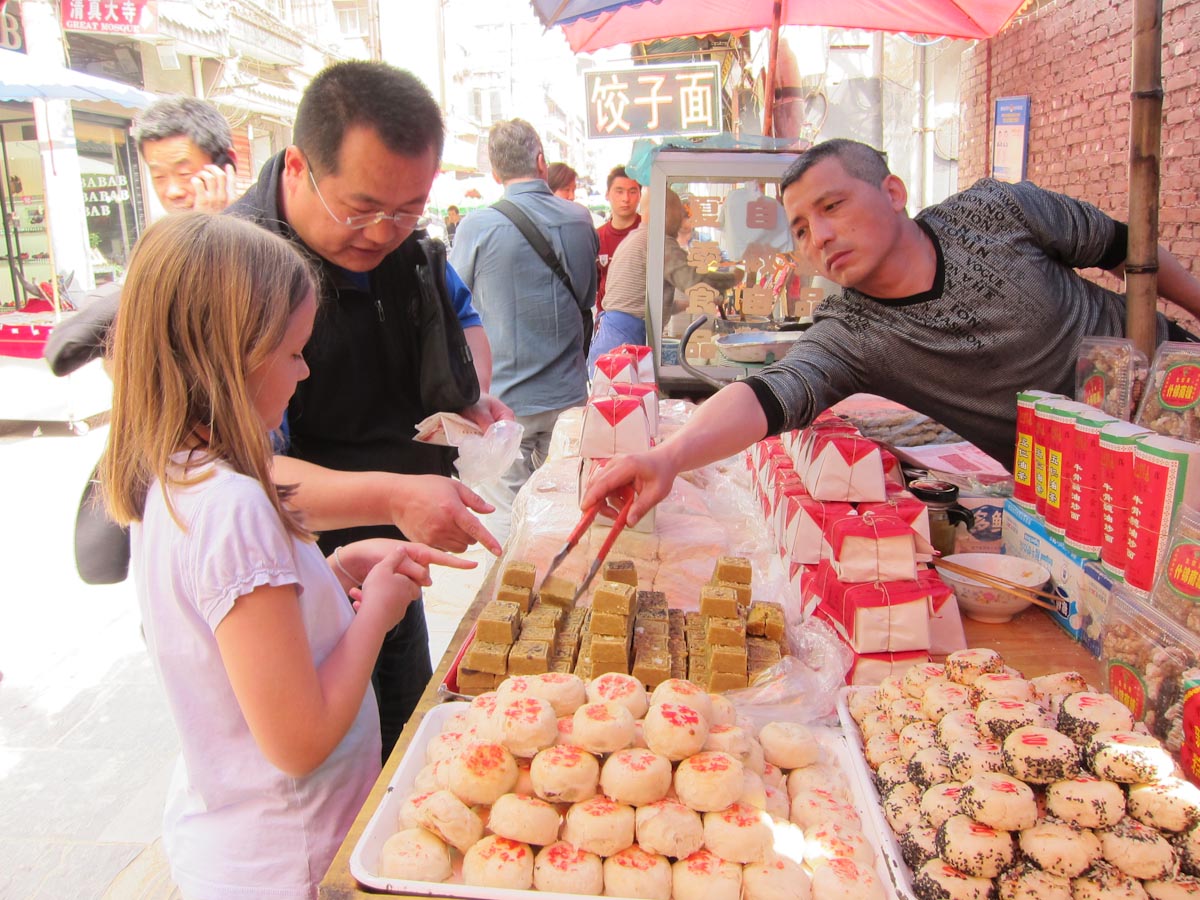
The next day we had our most adventurous food outing of all. Gerard had promised to take us to the Muslim quarter of Xi’an which housed one of his absolute favorite lunch spots. He told us that in his twenty years of touring he had only taken one other visitor to this place and that guy was a food writer. I was a little nervous as we wandered down alleys filled with shoppers, vendors, and outdoor stalls selling foods of every sort, many of which were completely foreign and a little bit startling. I reminded him that we did not want to try the famous fried scorpions no matter how much of a delicacy they were. He just grinned and promised me that we were going to love it.
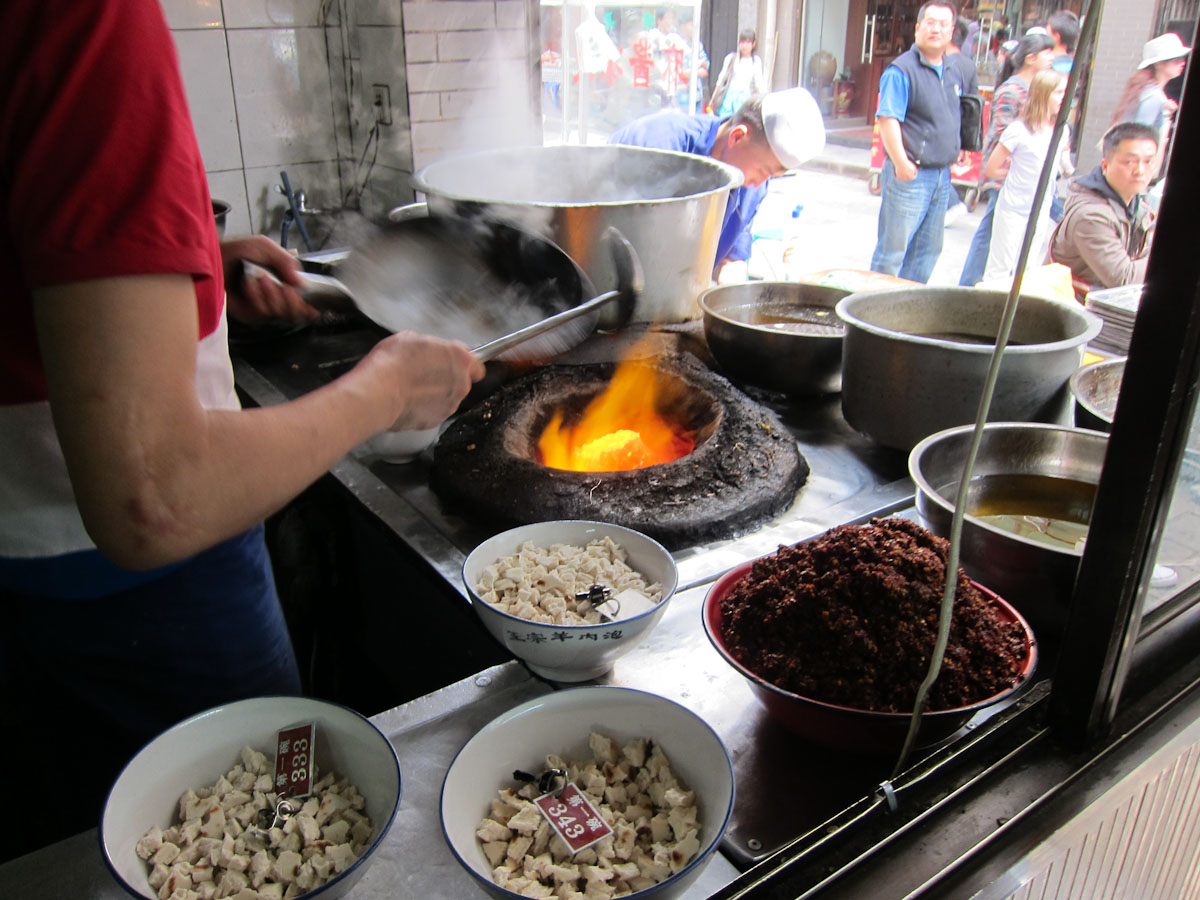
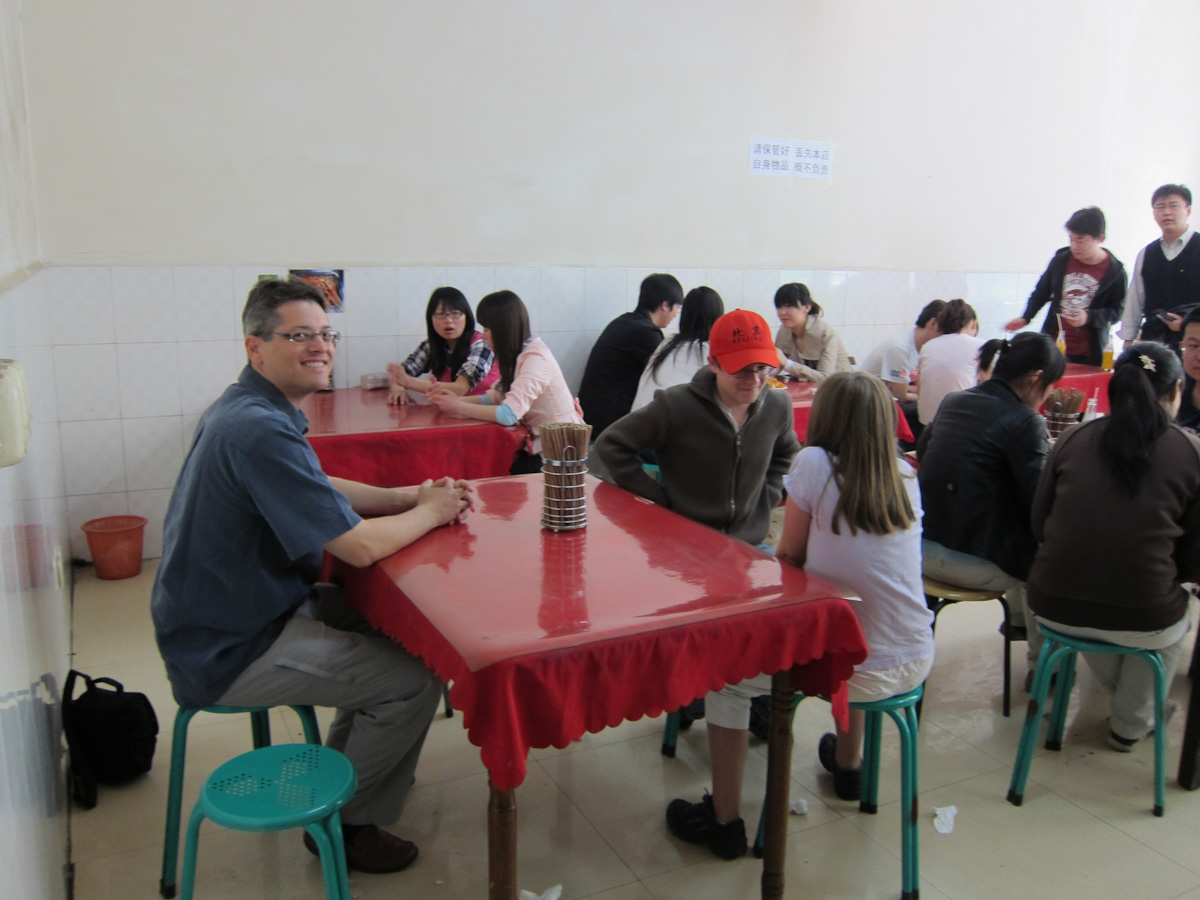
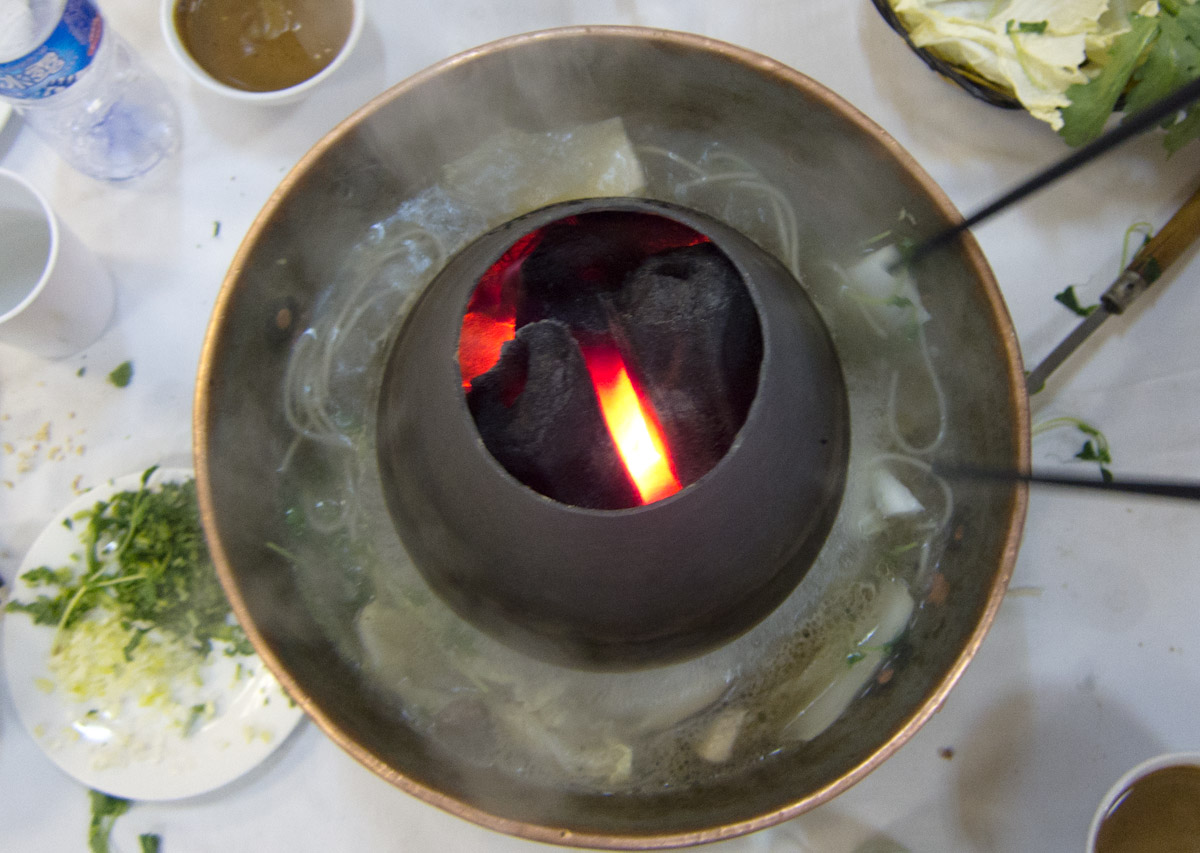
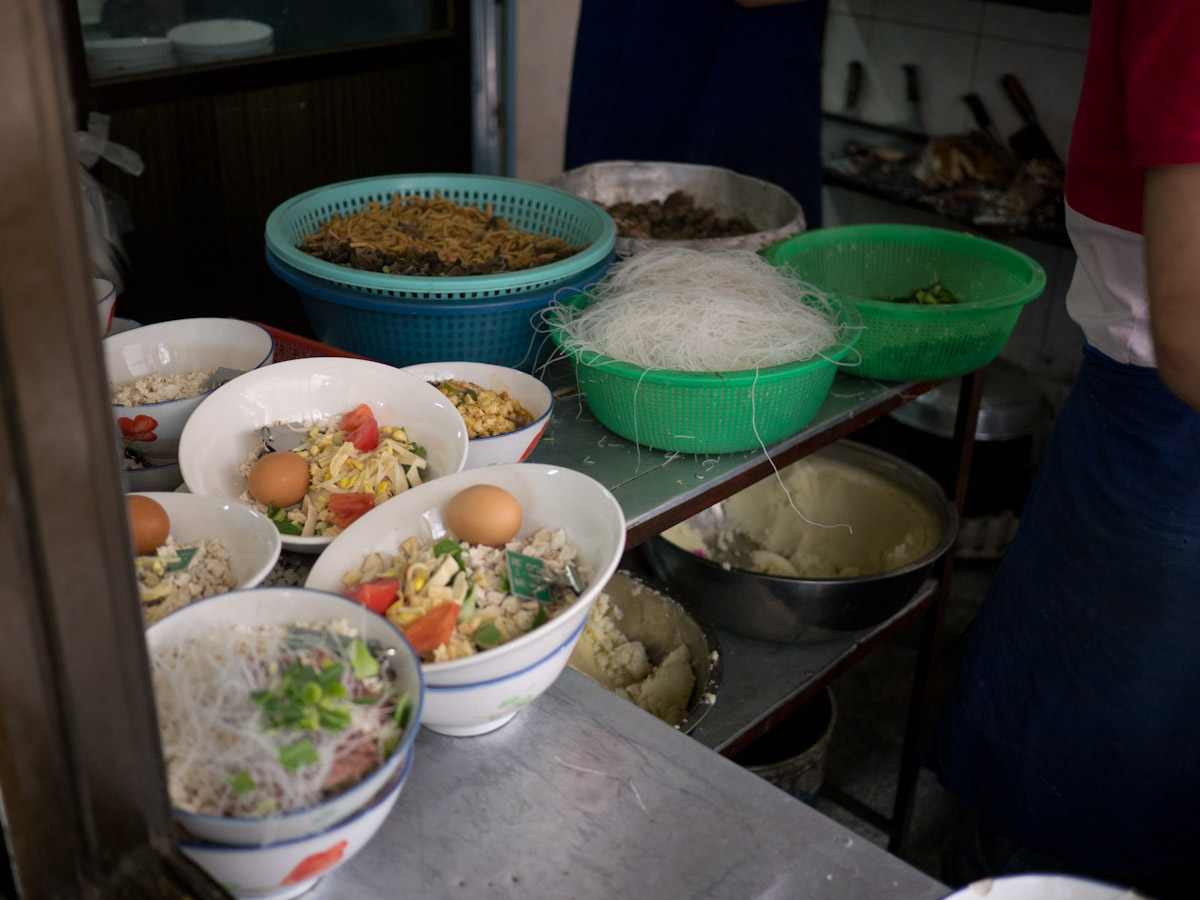
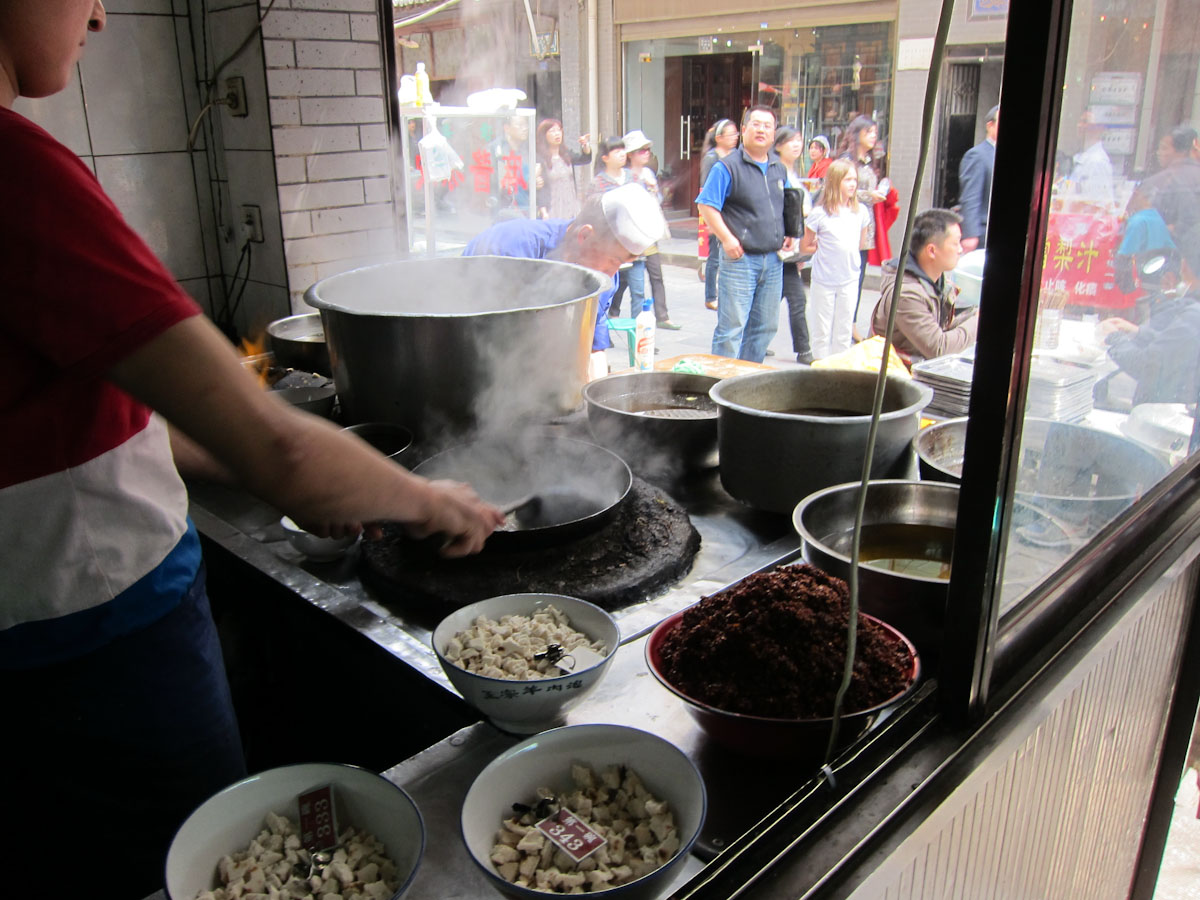
We turned into a doorway flanked by a dozen tables, all full, at which people were busy tearing flat loaves of bread into teeny tiny pieces. There was also a large open fire where two men attended to something bubbling in a cast iron wok. We went inside, first floor all tables full again. Up we went to the second floor where we waited for a busboy to clear a table. I told myself that busy was a good sign and tried not to notice the floor.
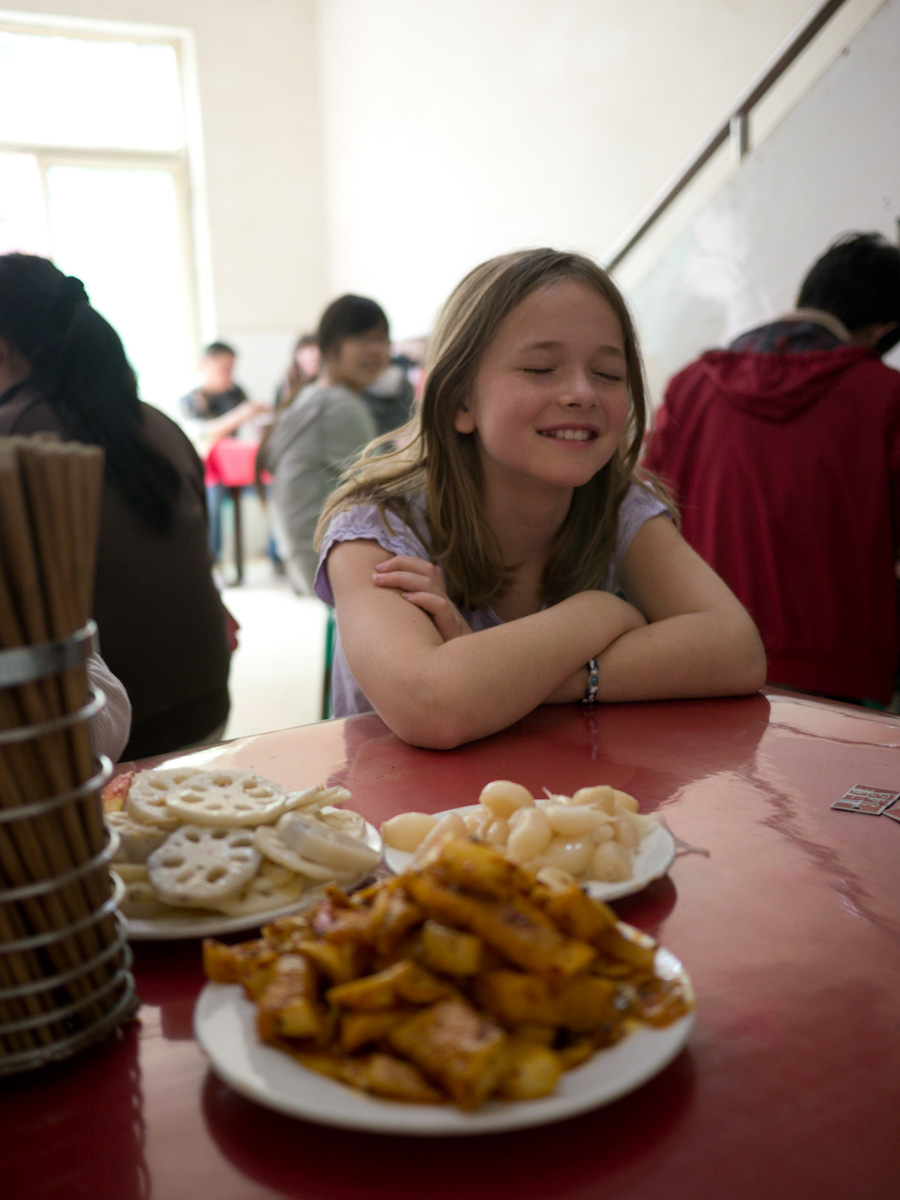
I was sure that this place was not listed in any of the western guide books. When the kids asked if the chopsticks in the bucket on the table were clean, I didn’t answer directly but replied that it looked as though they were intended for us. Sin of omission or leap of faith, only time would tell.
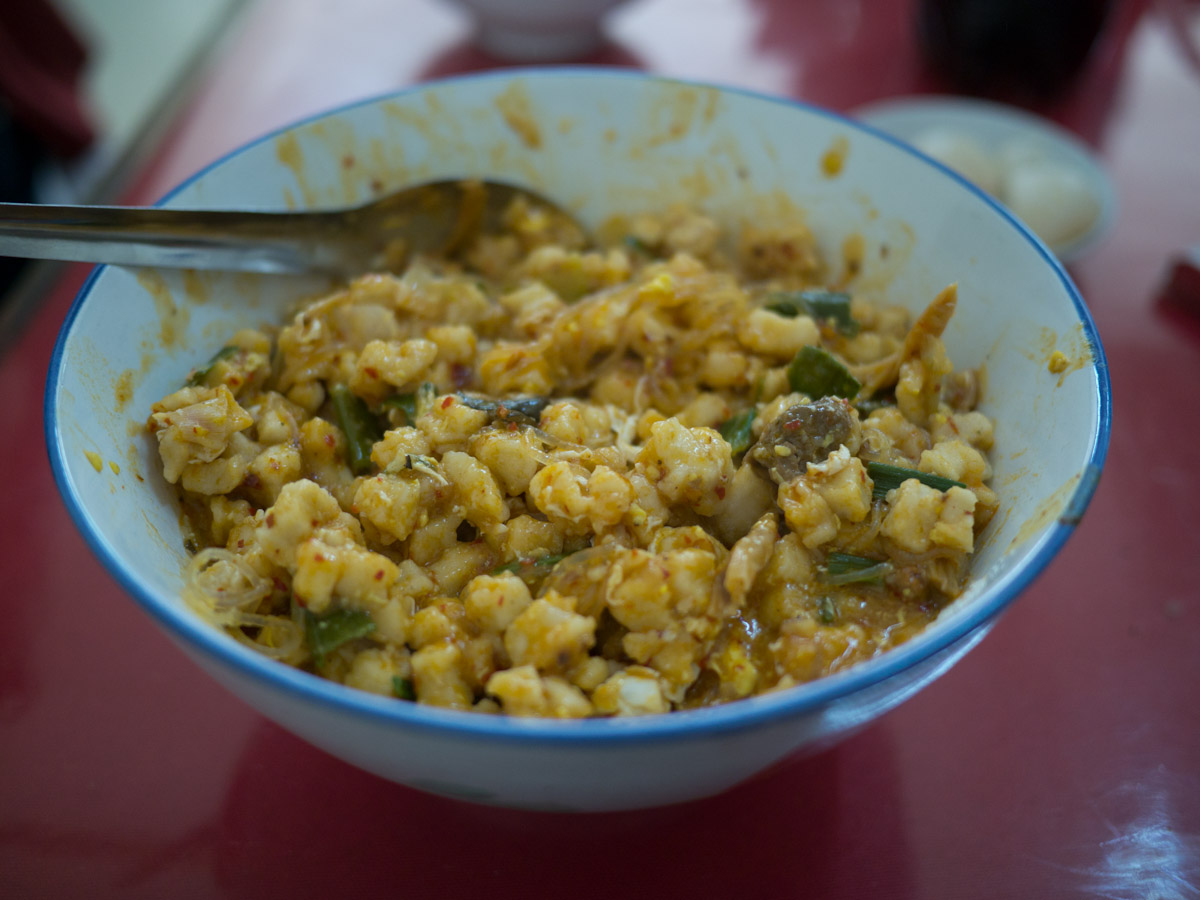
The restaurant served one basic dish—mutton pancake soup—and the recipe was almost 1000 years old.
Gerard recounted the story of how a traveling monk arrived in Xi’an in the 11th century exhausted, hungry, and begging for food. All he had was a rock-hard pancake. He approached a restaurant and asked for hot water to moisten his pancake. Instead of water, the beneficent owner gave him mutton soup. Many years later the monk became the emperor of all China! He declared that of all his imperial meals, that particular bowl of soup was the best thing he’d ever eaten. He made a return trip to Xi’an where he again sampled the dish (hastily recreated by the owner) and declared it to be the first bowl of soup in the empire. Business has been booming ever since. That original restaurant kept replenishing the same bowl of stock without the fire going out for seven centuries in a row. Its replacement, where we ate, was over 100 years old.
When our food finally arrived, we tasted history and declared that the emperor had been right!