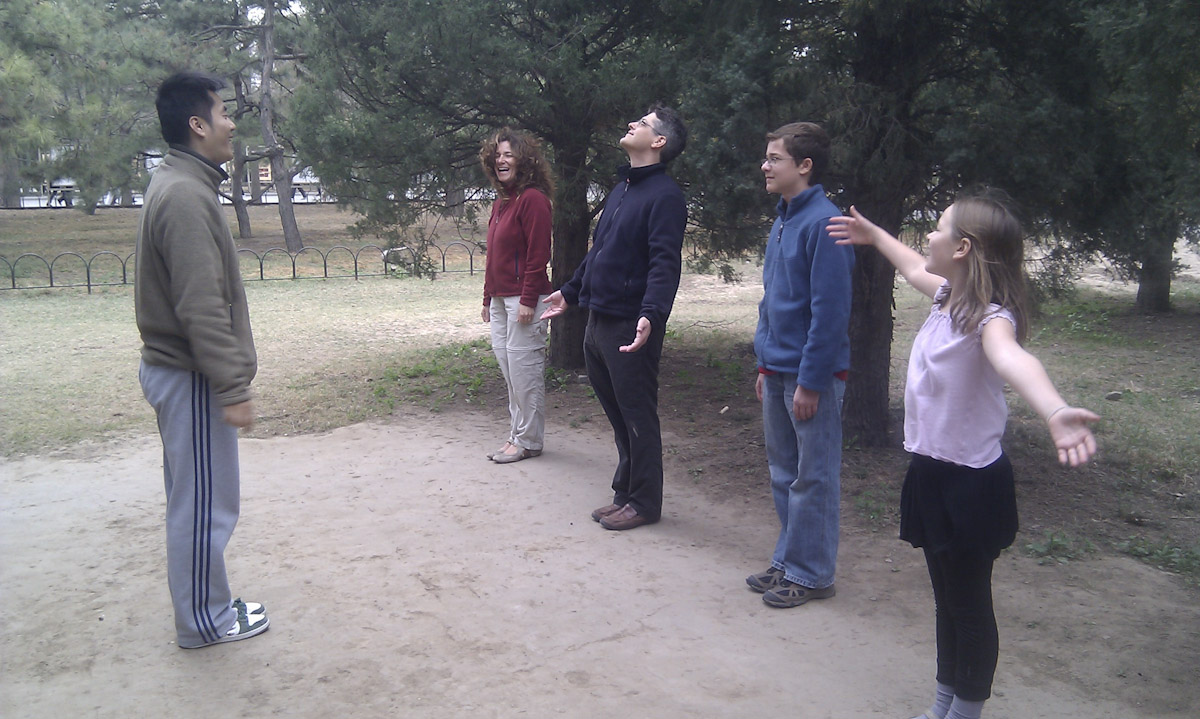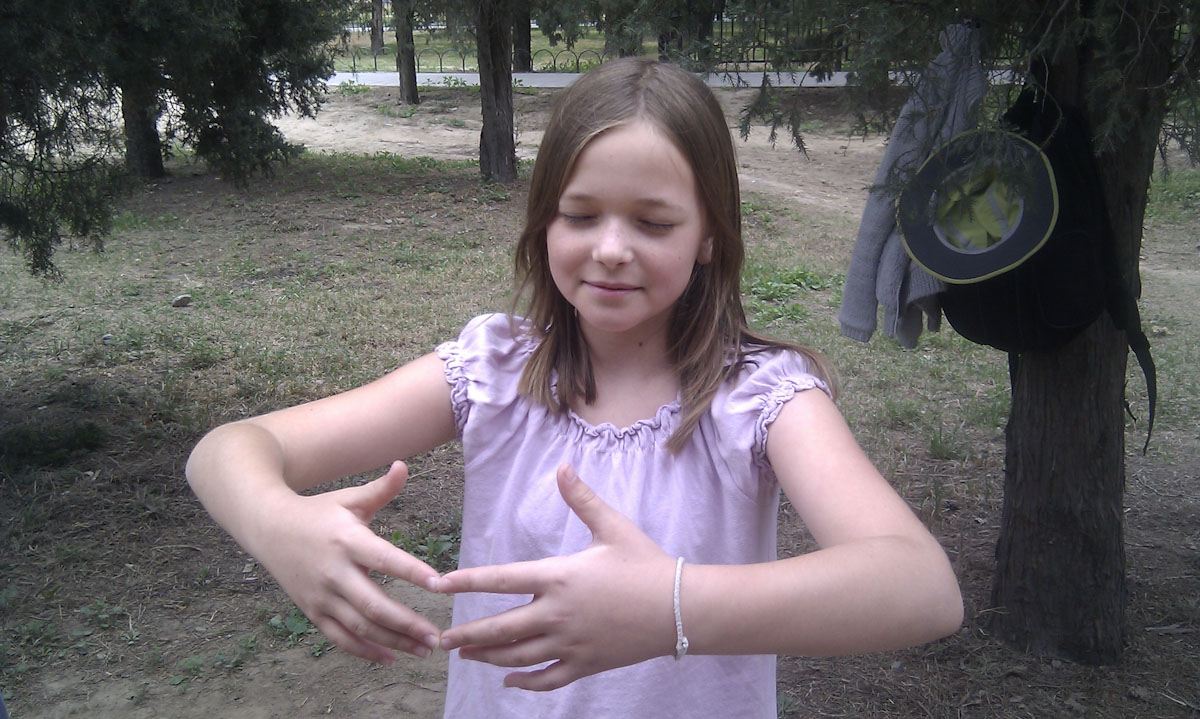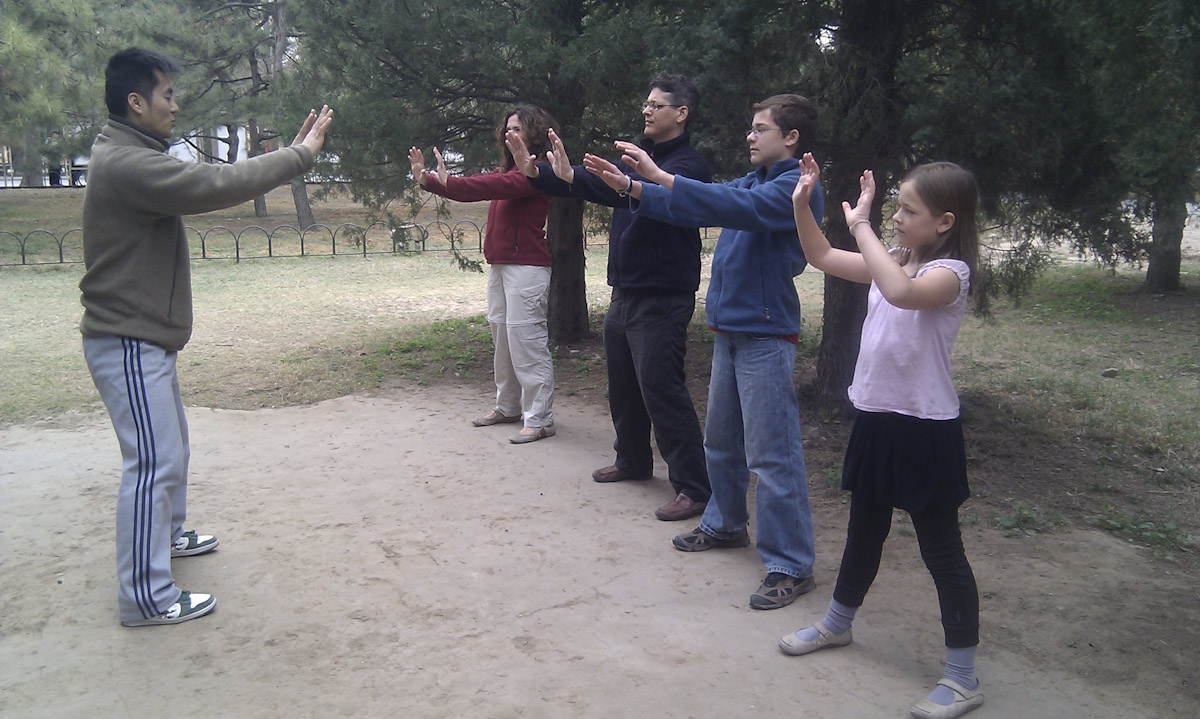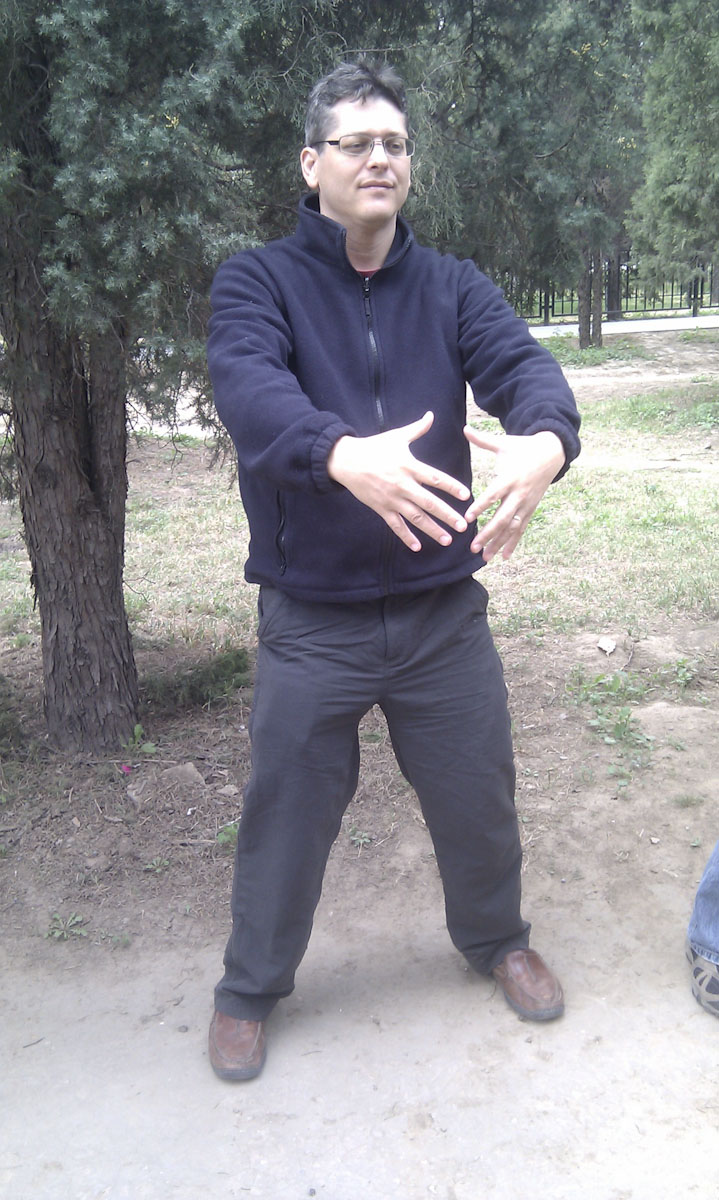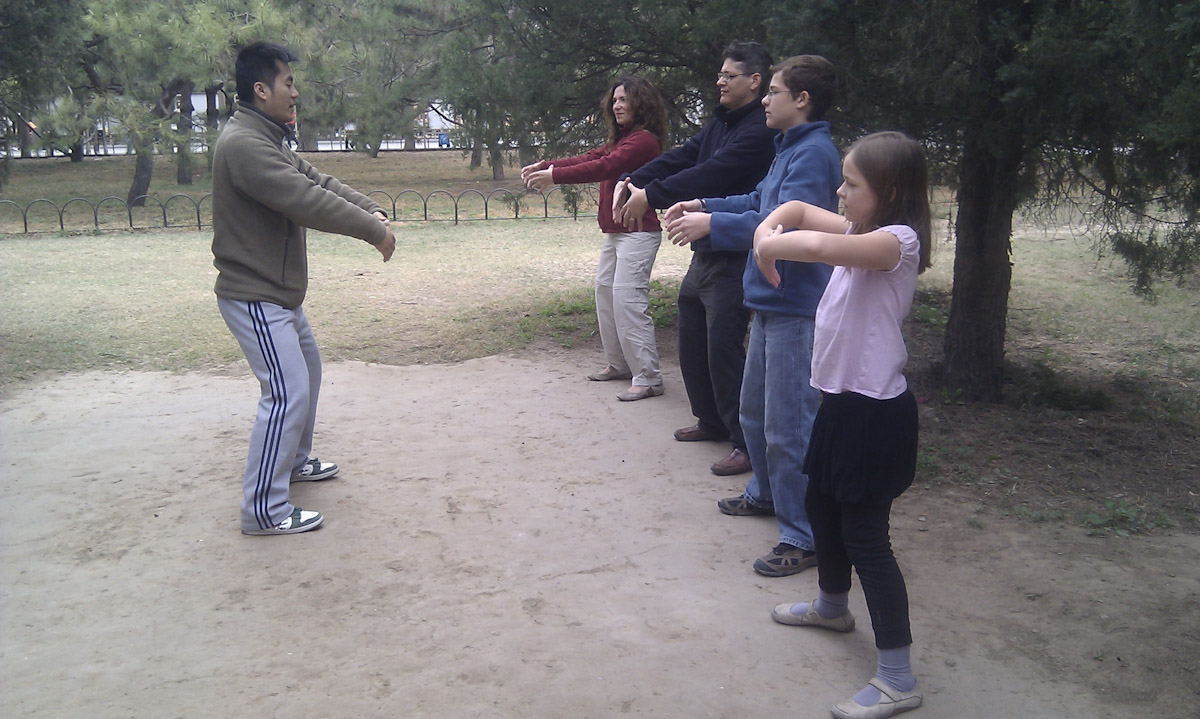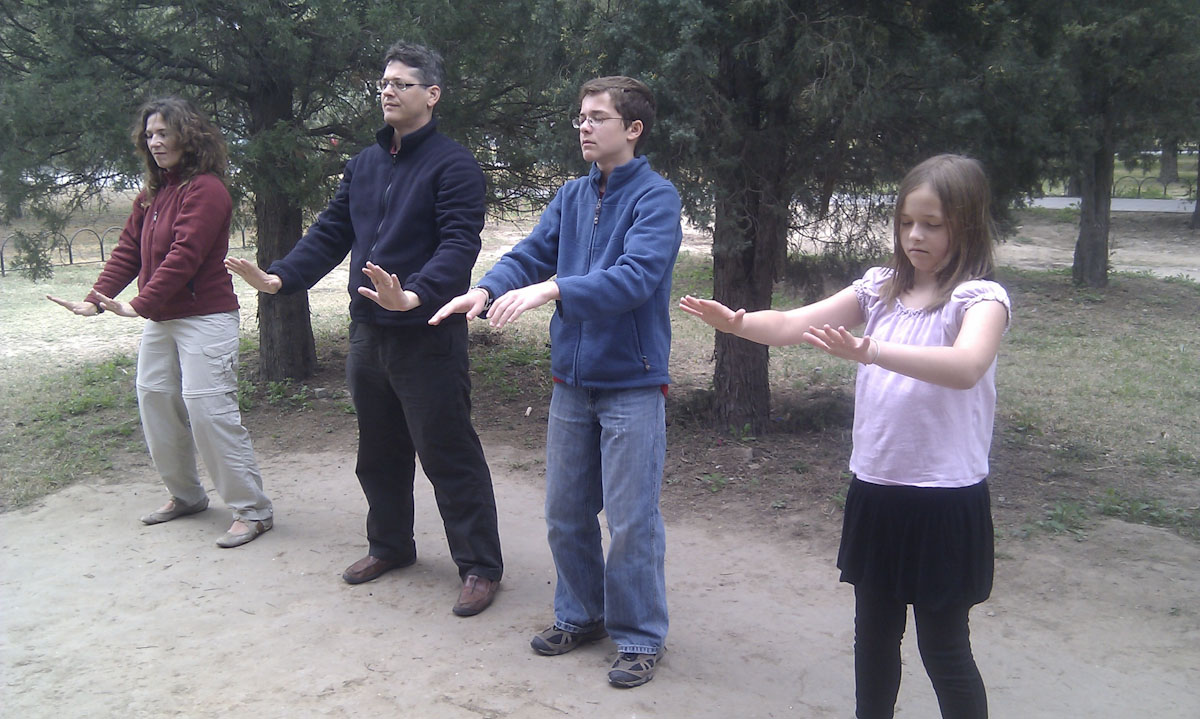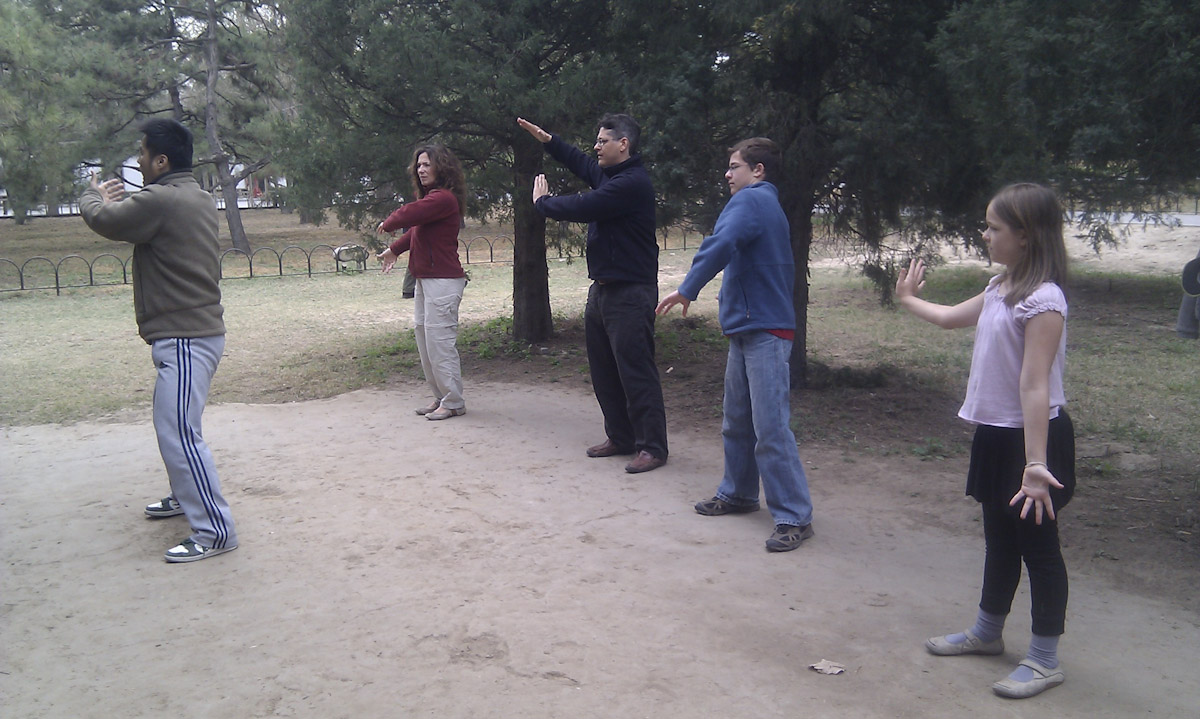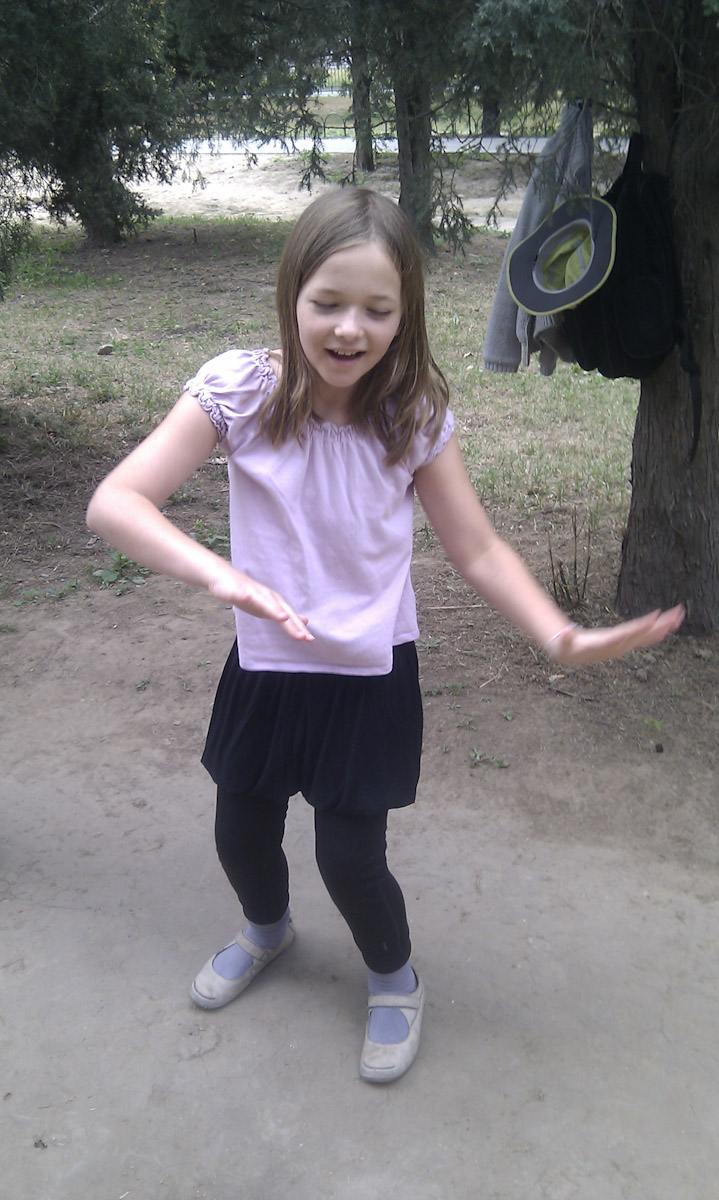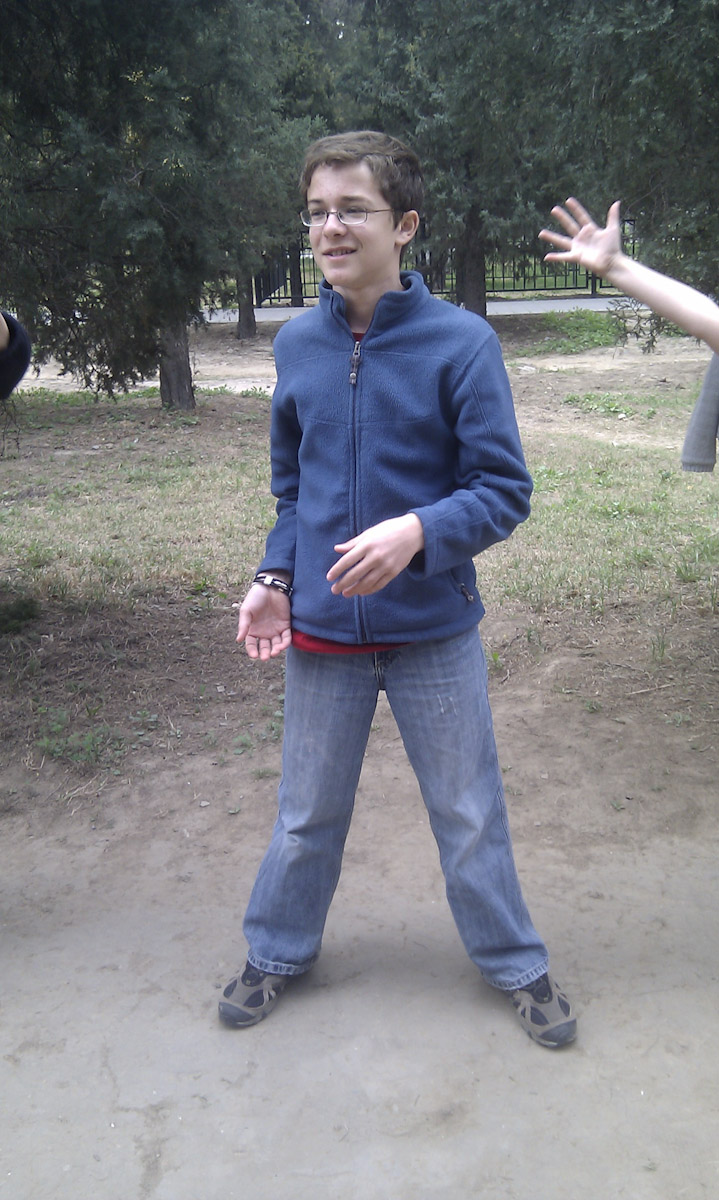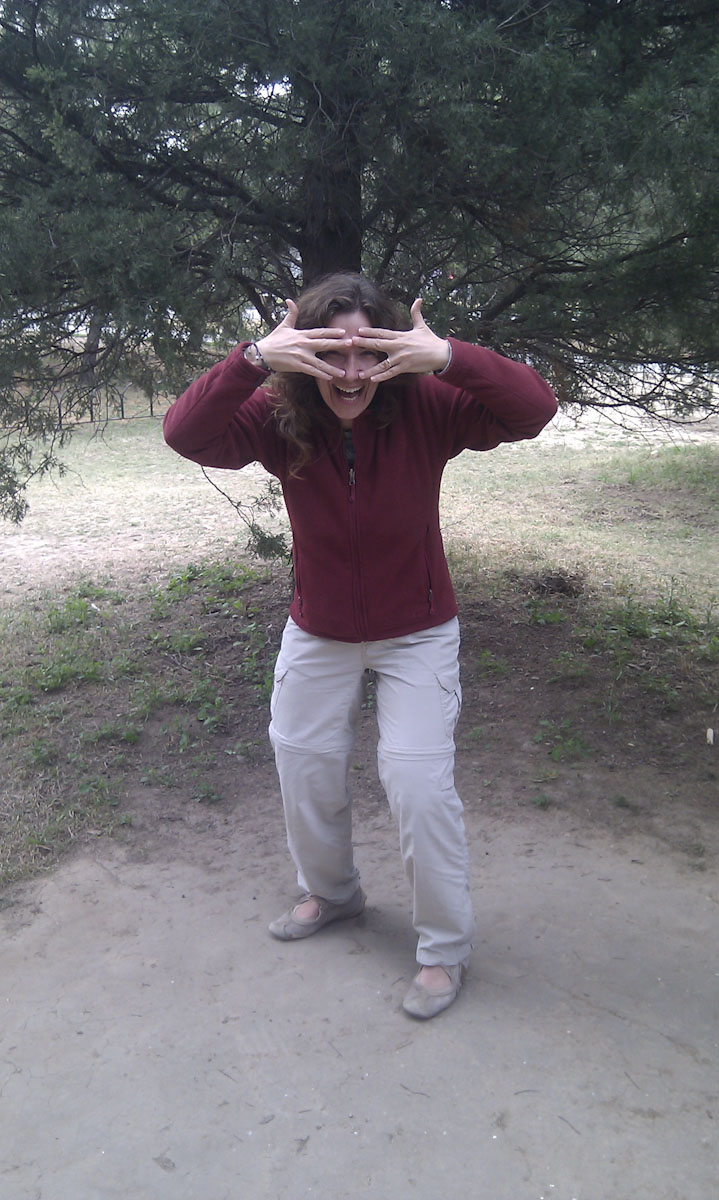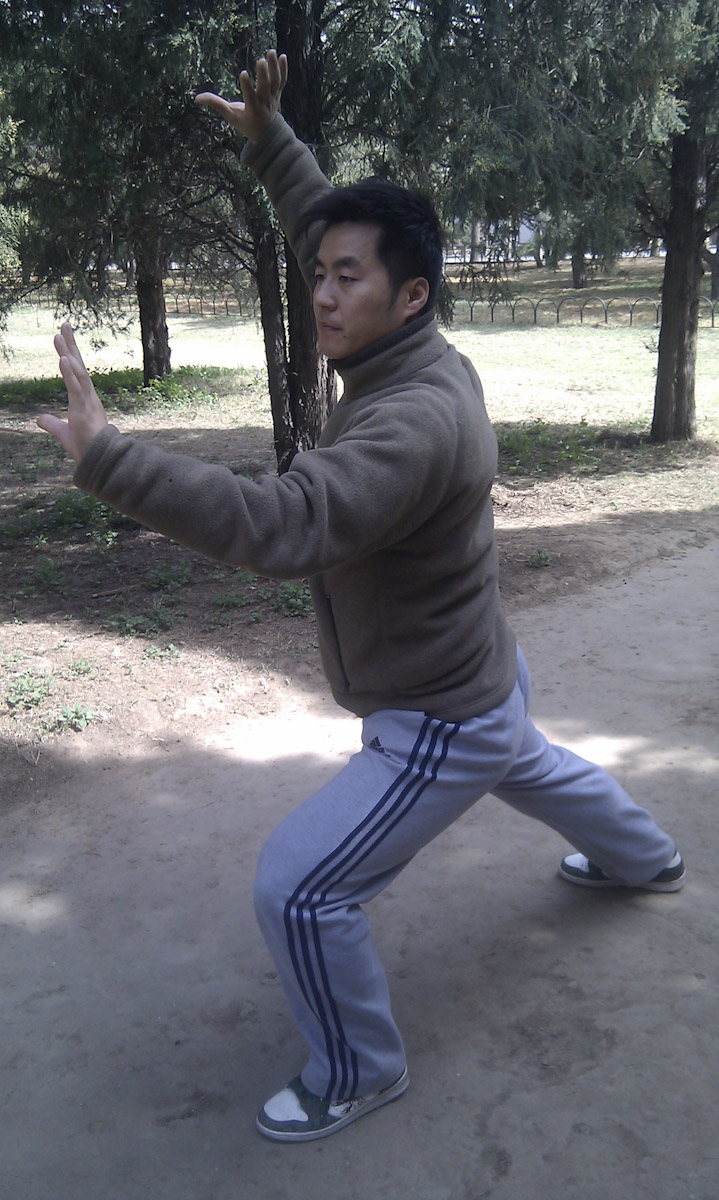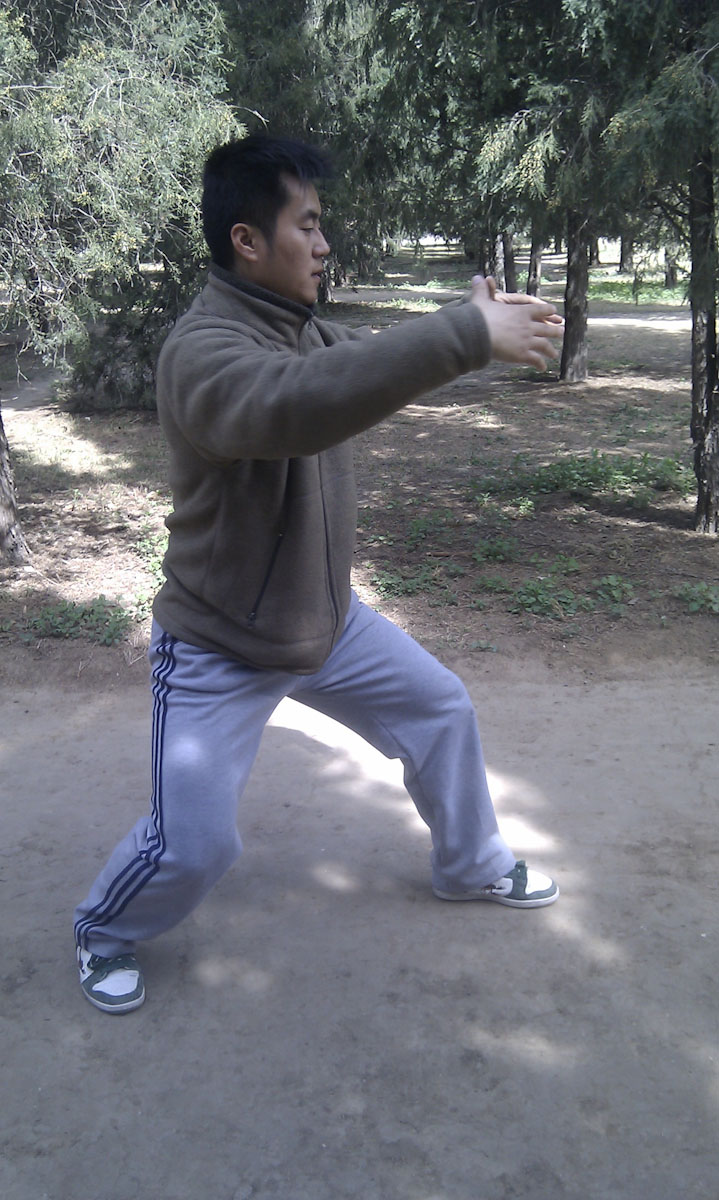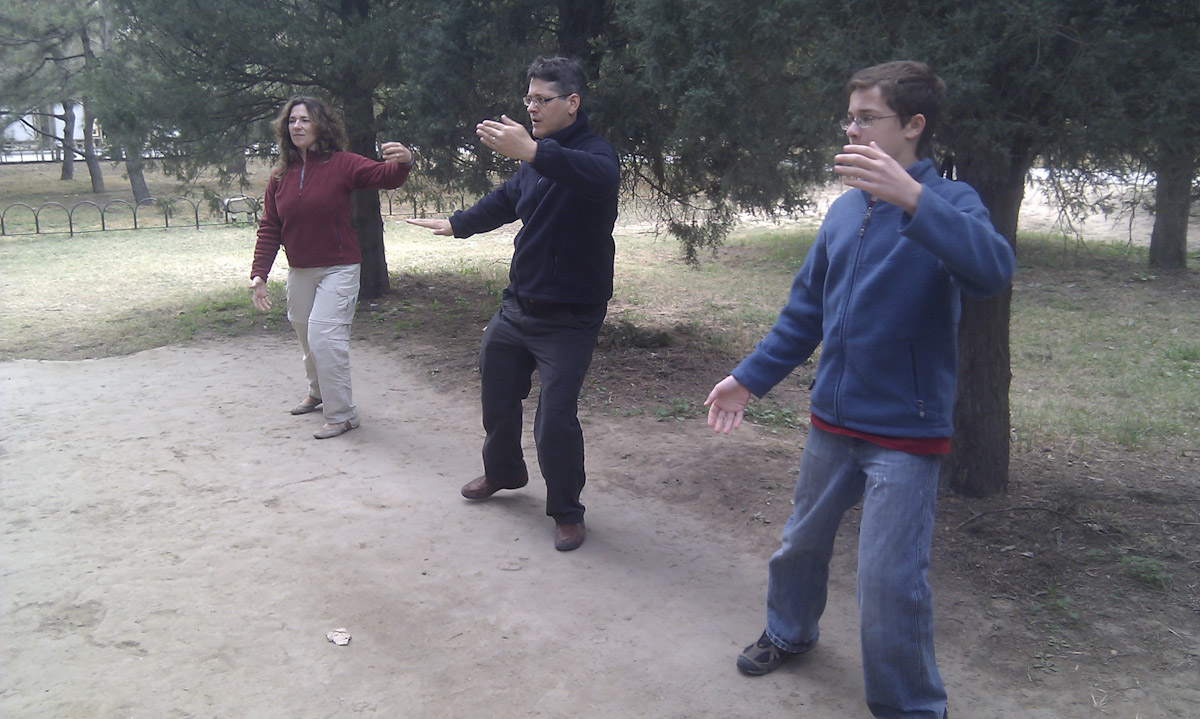
“Hold your arms out in a big ball. Feel that you are holding the heavens and the universe. Now, breath in as you raise your arms and the universe expands. “
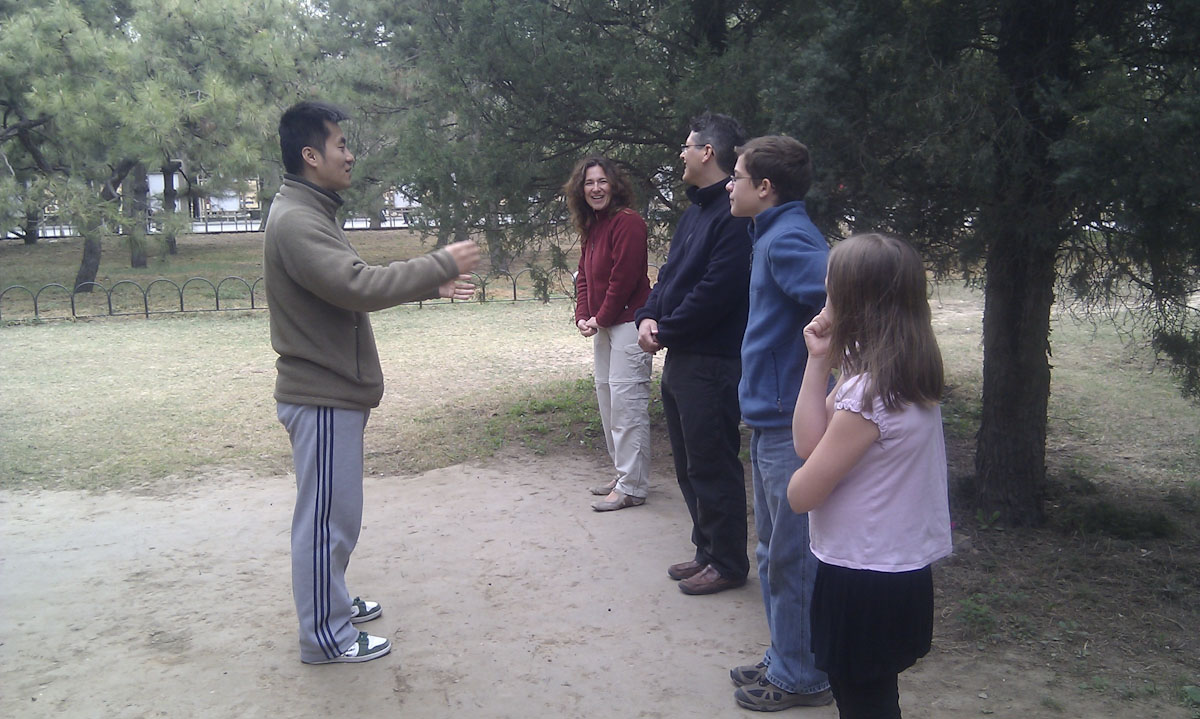
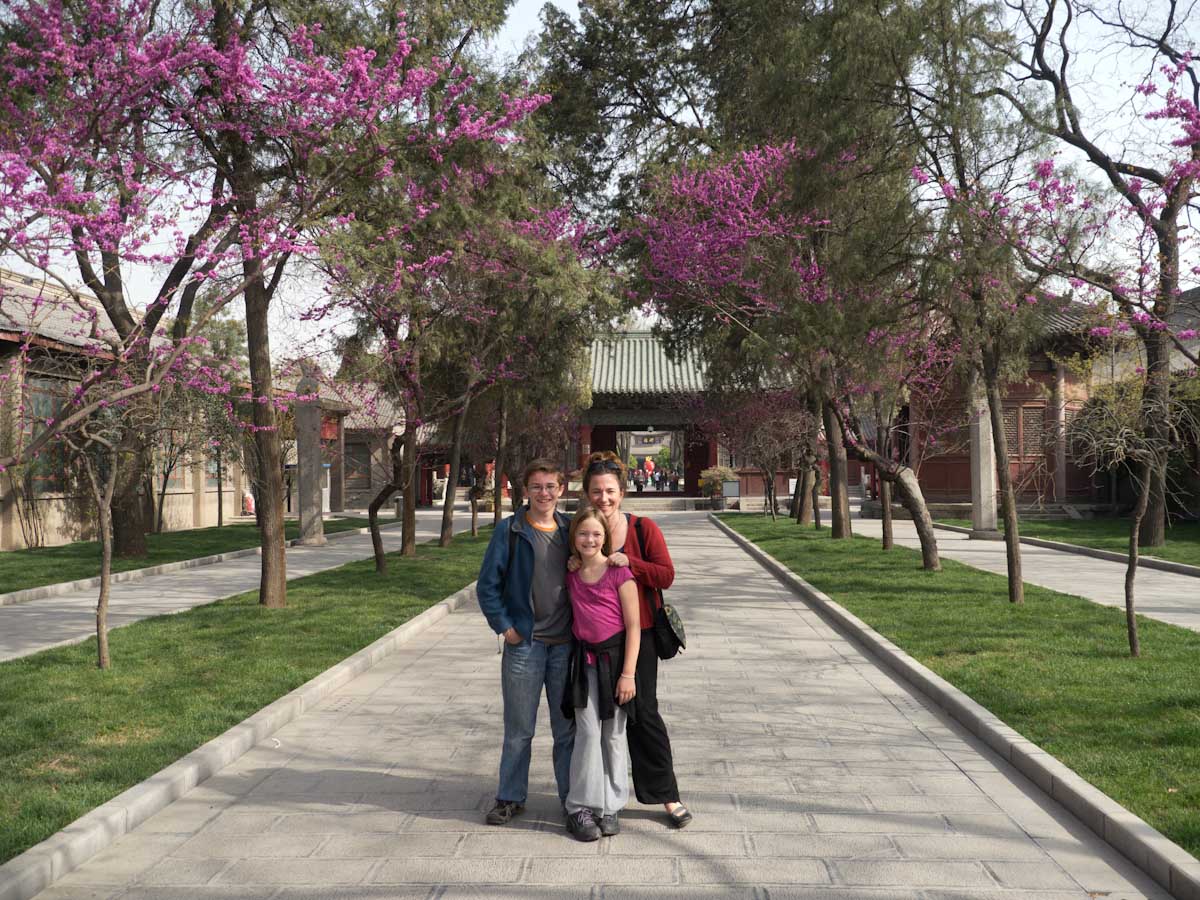
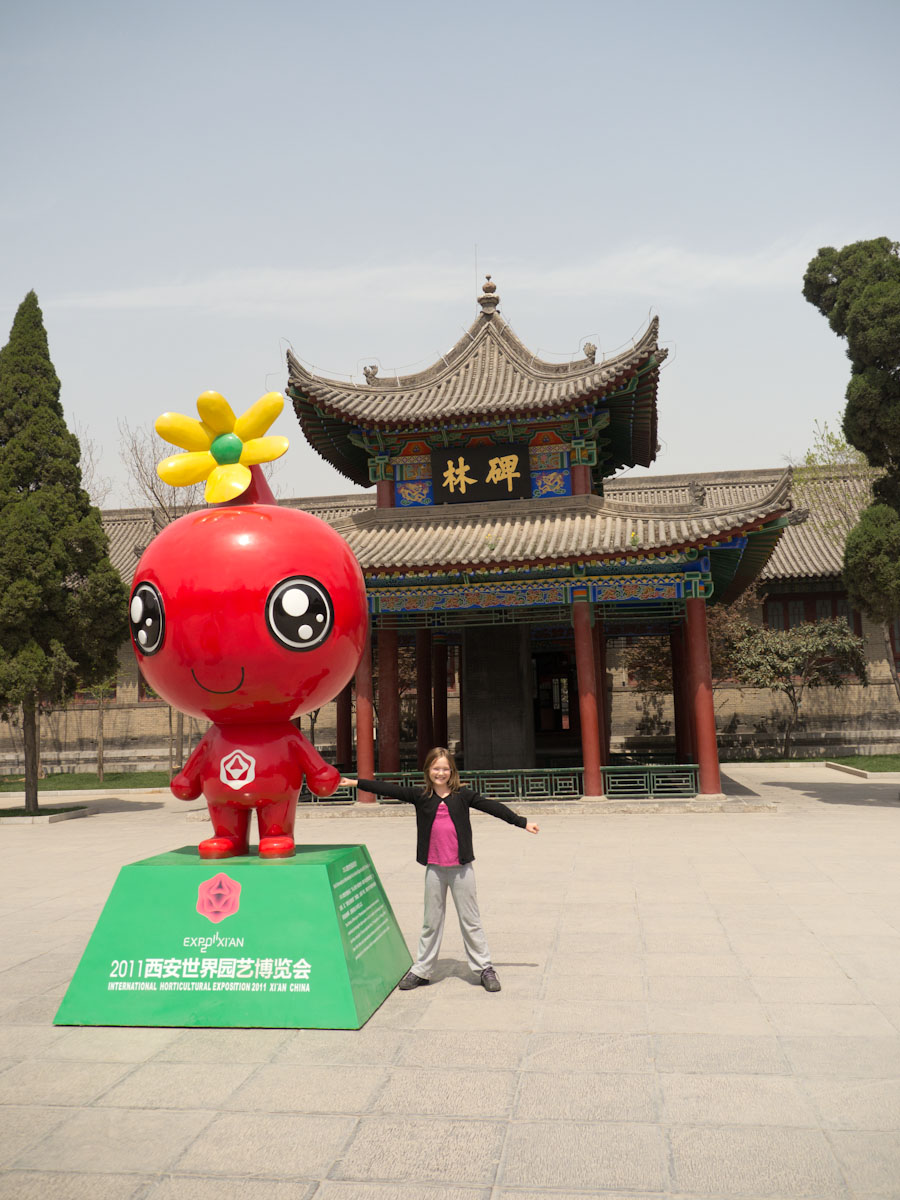
We listened carefully to the Tai Chi master. The family was secluded deep within the gardens of the Emperor’s Heavenly Palace, standing in a line underneath ancient evergreen trees. He taught us several beginner’s moves and poses, culminating in Waves of Heaven, which looked and felt awesome (pic above).
Tai chi is a slow style of Kung Fu. Every move is round, because the Chinese believe that the circle represents Heaven. Even very old or out of shape people like us can try these moves, and if practiced regularly they are excellent for strength and flexibility. What we appreciated even more is that the practice is very deliberate about breathing and that the moves must be accompanied by visualization. The mind must be fully in the moment and thinking of the move; there is no room for revisiting a conversation or planning next week’s party. Time slows. Breathe in and out. Move your body.
The adventures here included many opportunities to try our hands at Chinese hobbies. The fun included two cooking classes, the opera face-painting class (pictures in Katherine’s blog), a Kung-Fu show, an acrobatics show, two calligraphy classes, and of course this Tai Chi class.
All in all we were impressed. We left Beijing wanting more Tai Chi in our lives.
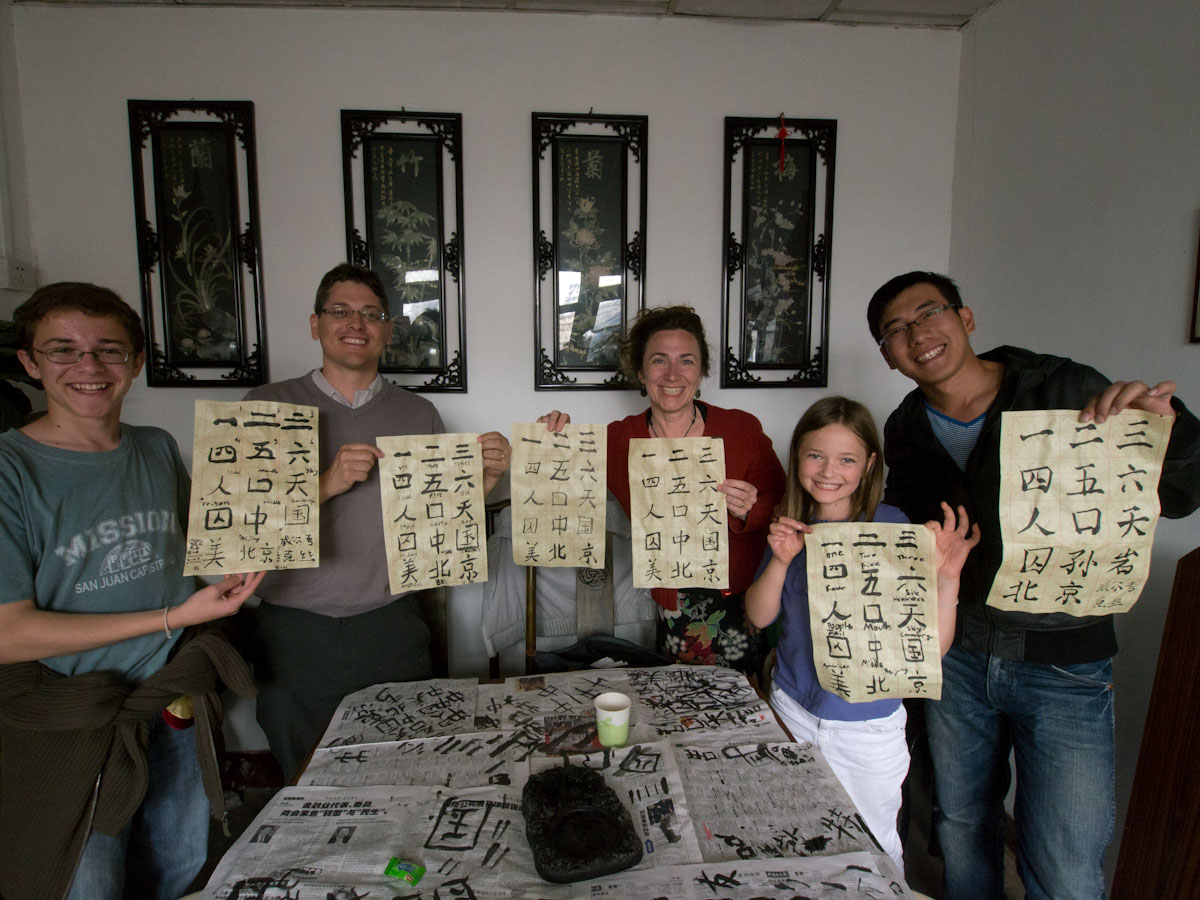
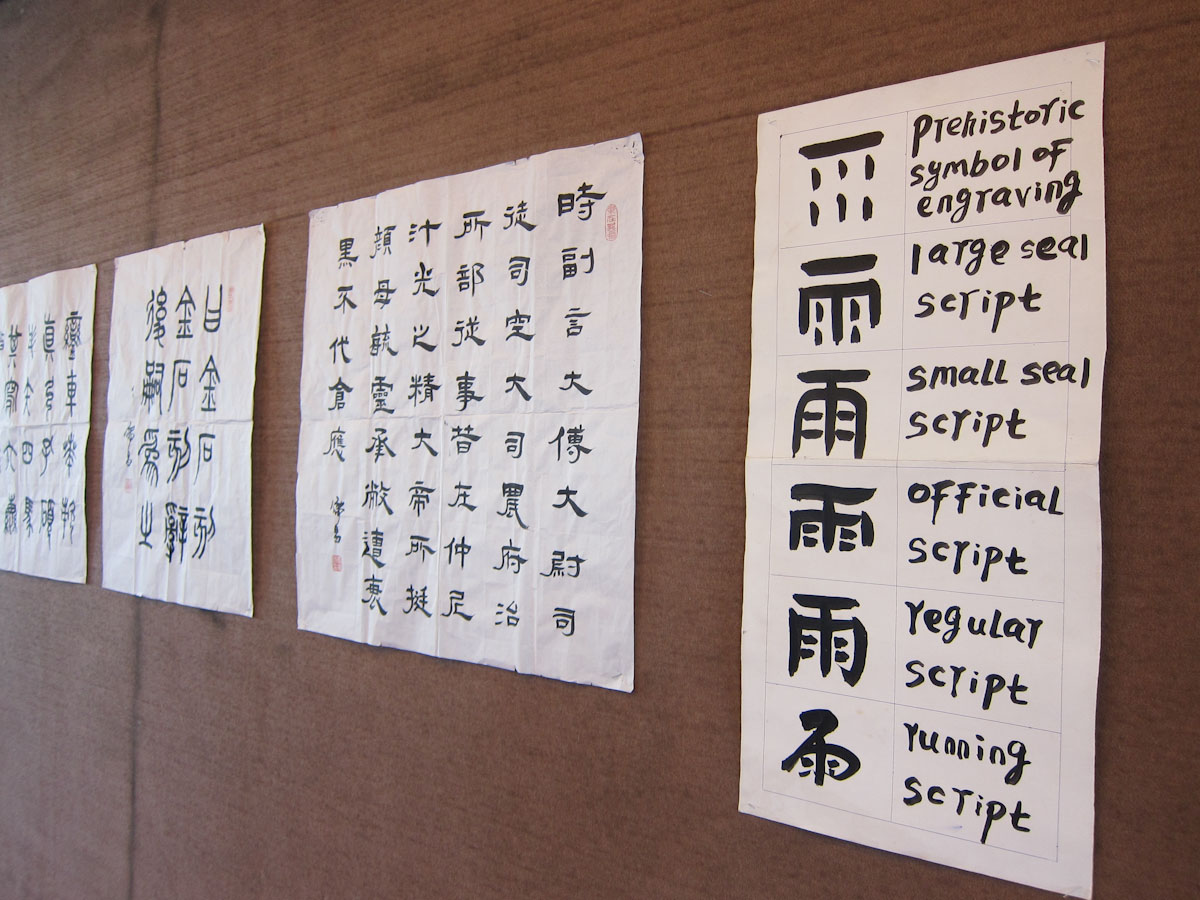
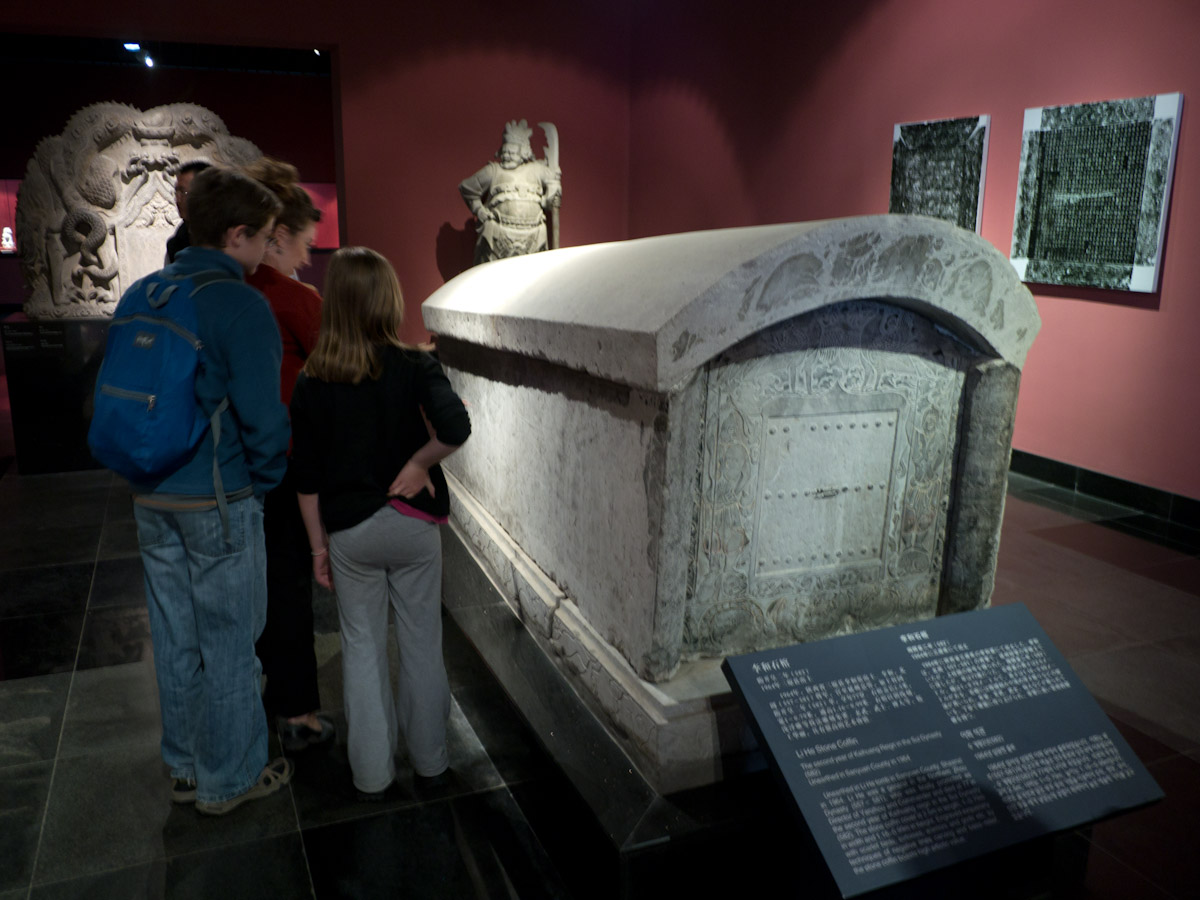
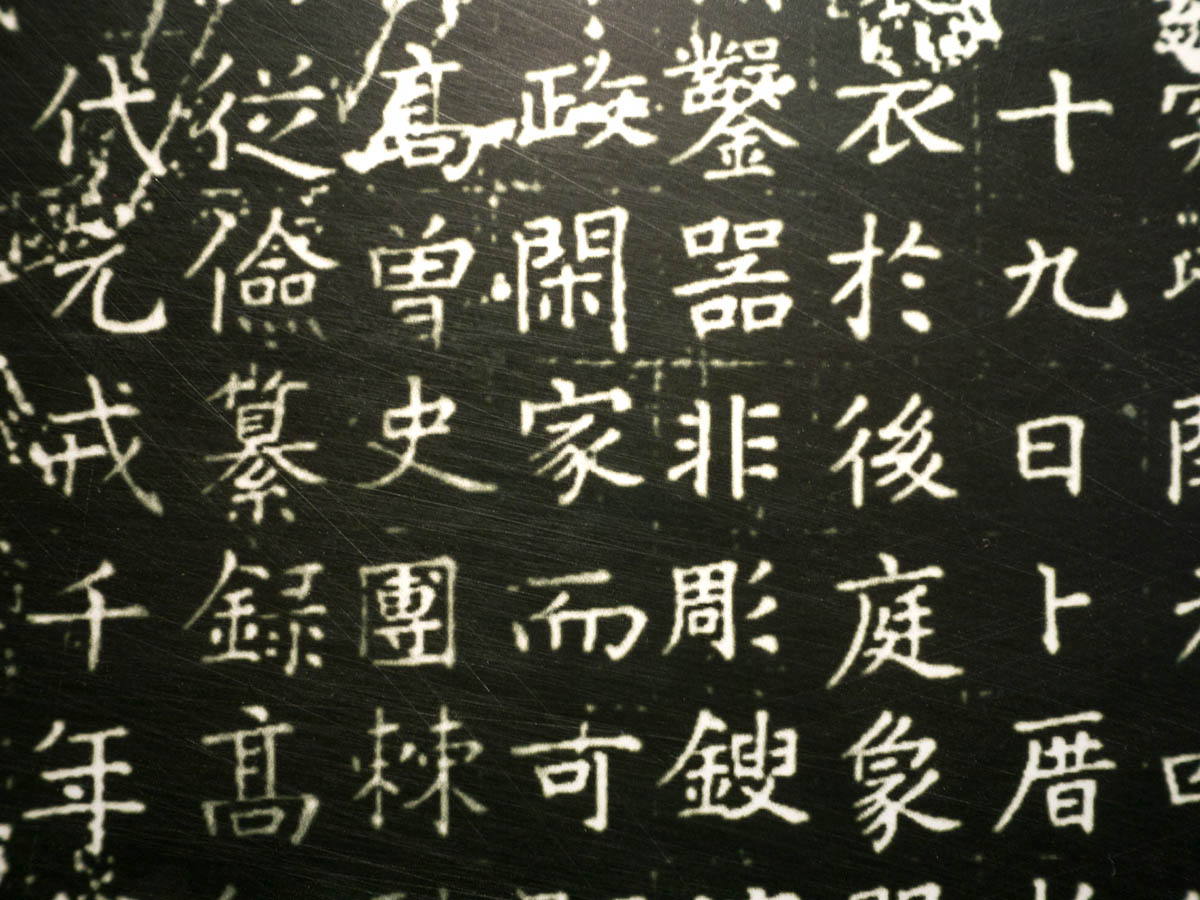
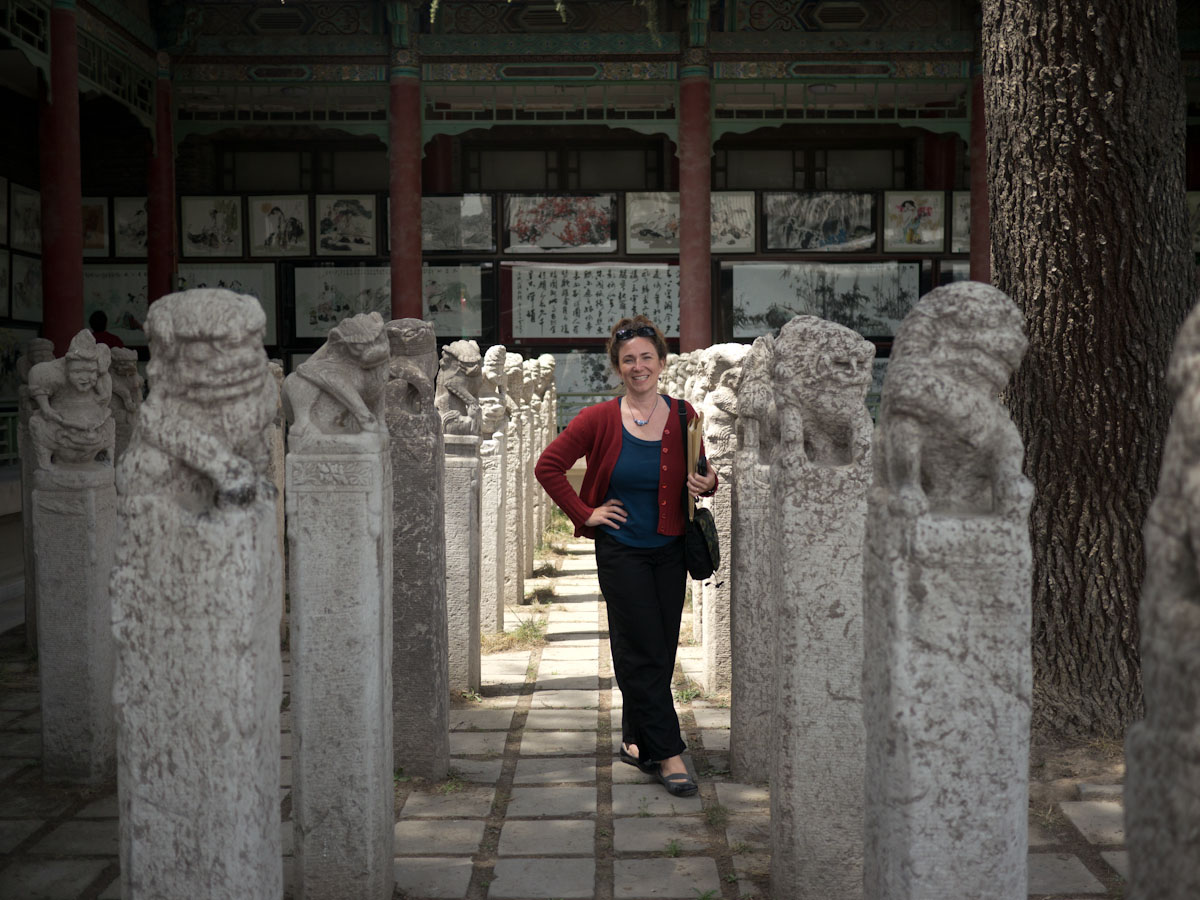
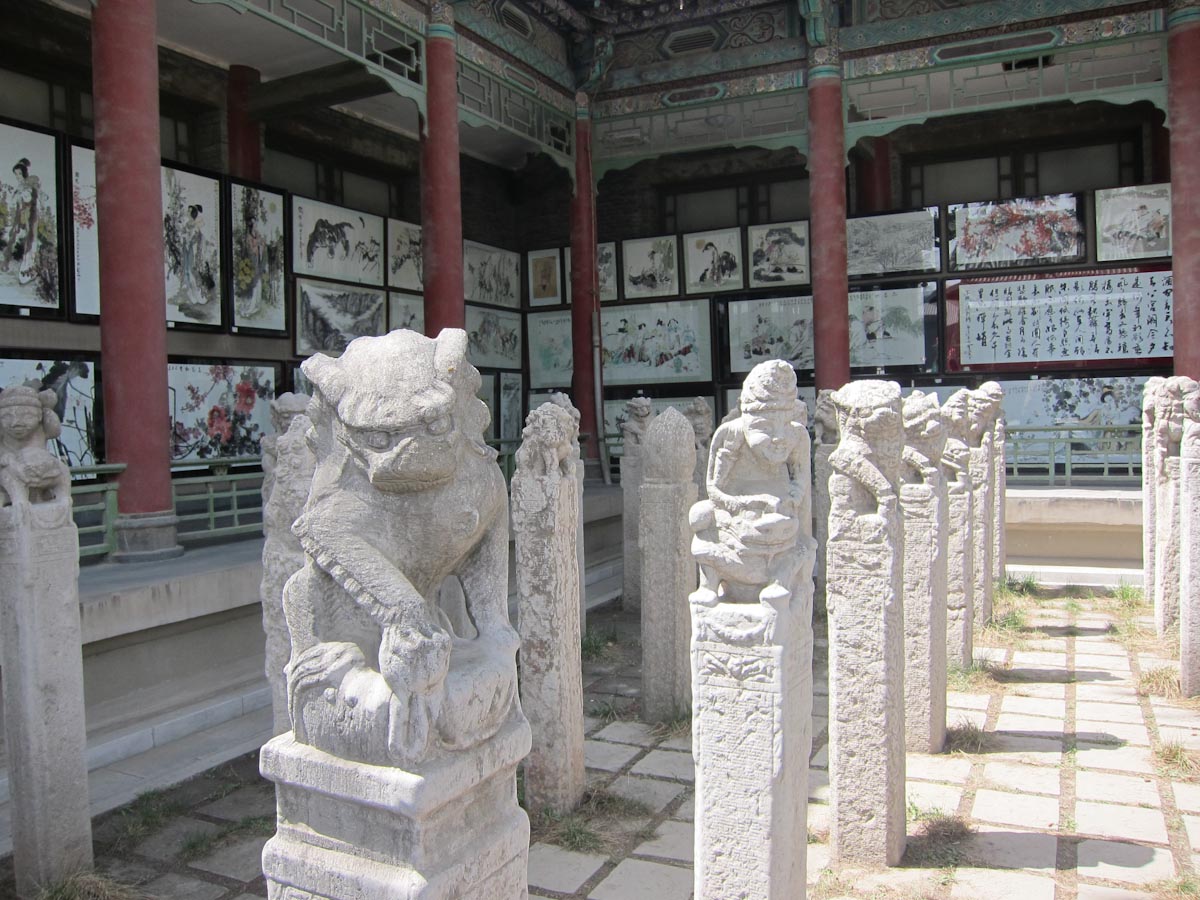
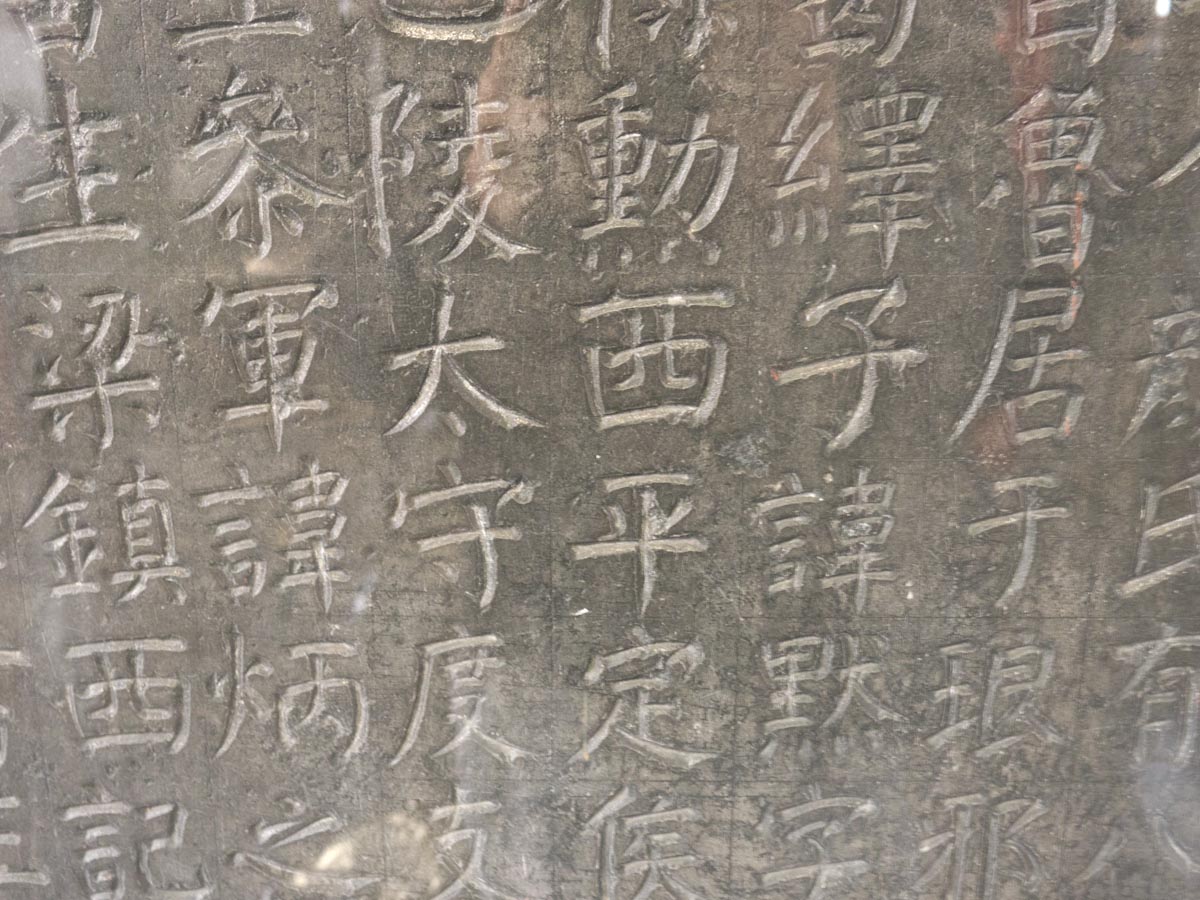
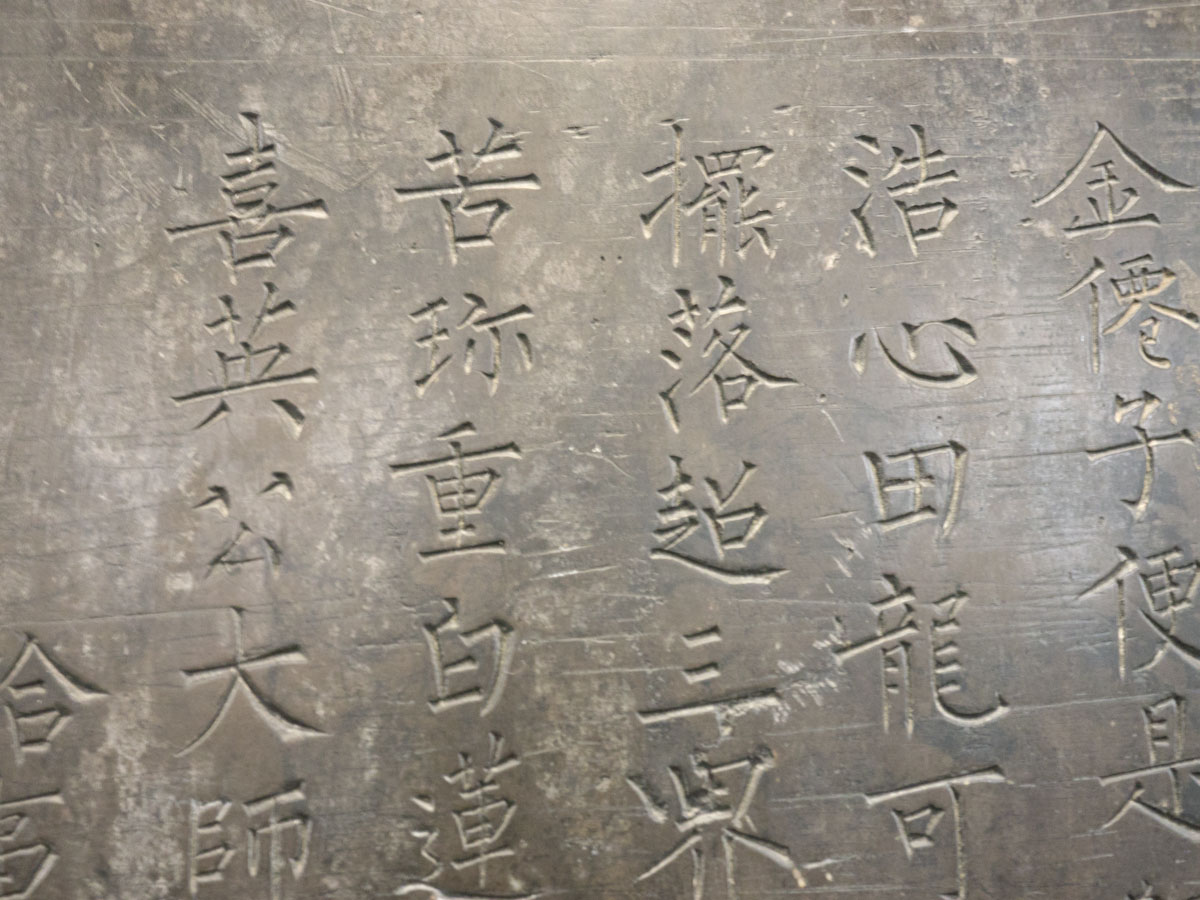
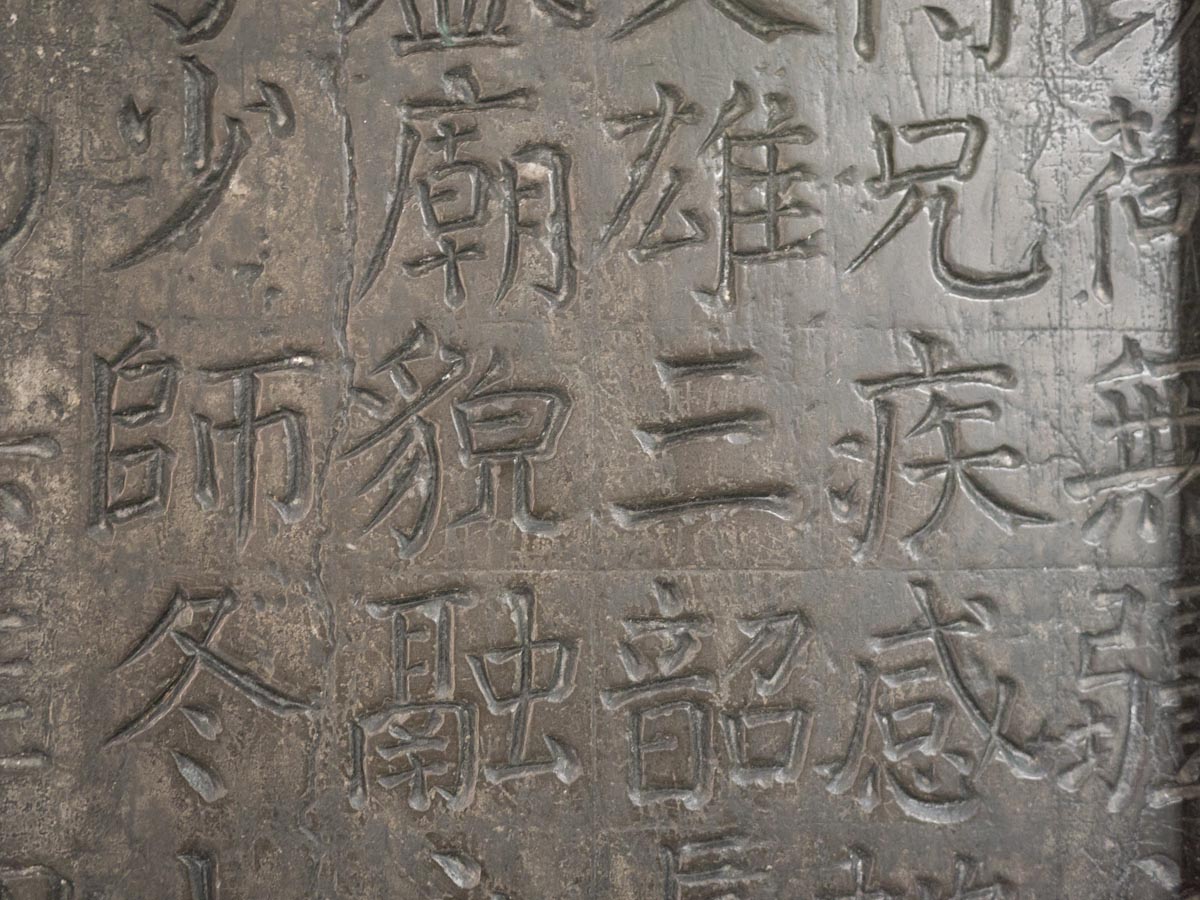
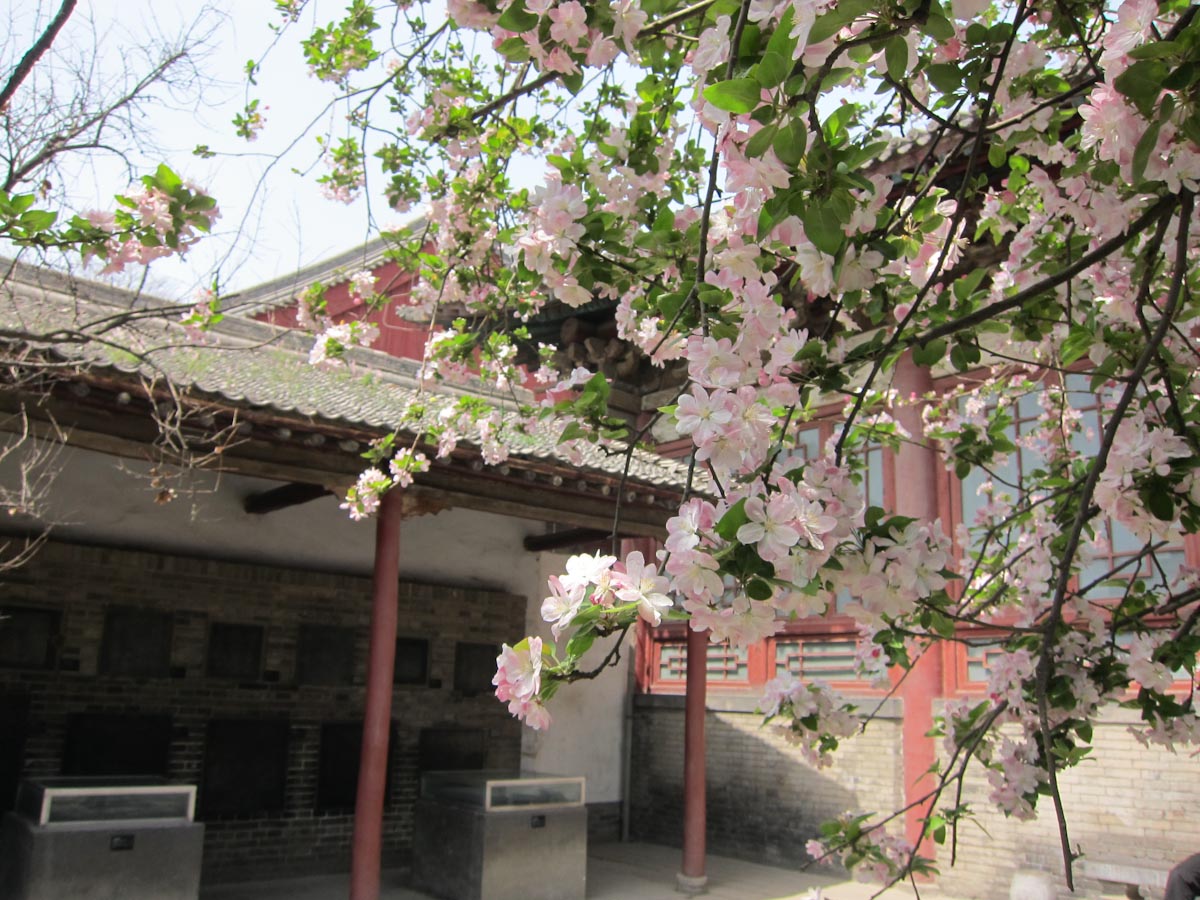
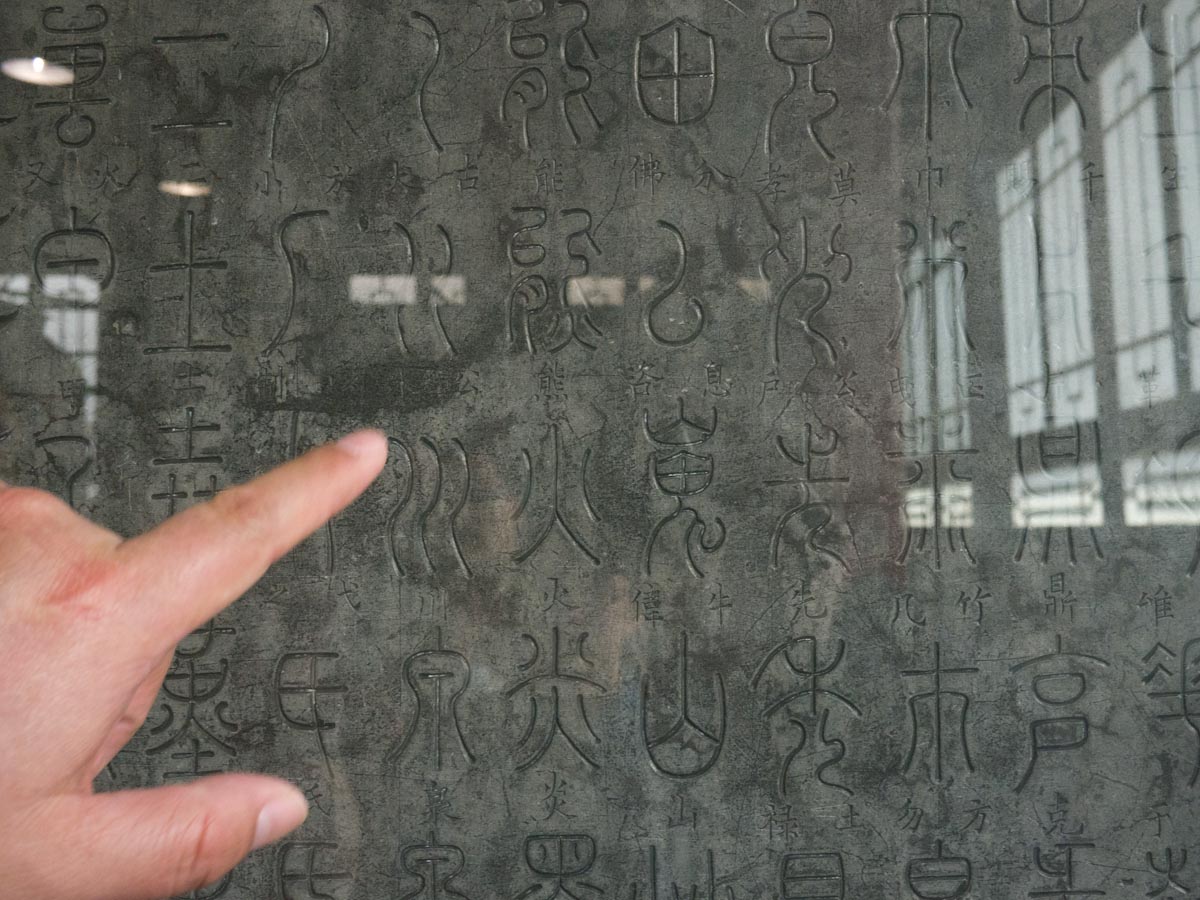
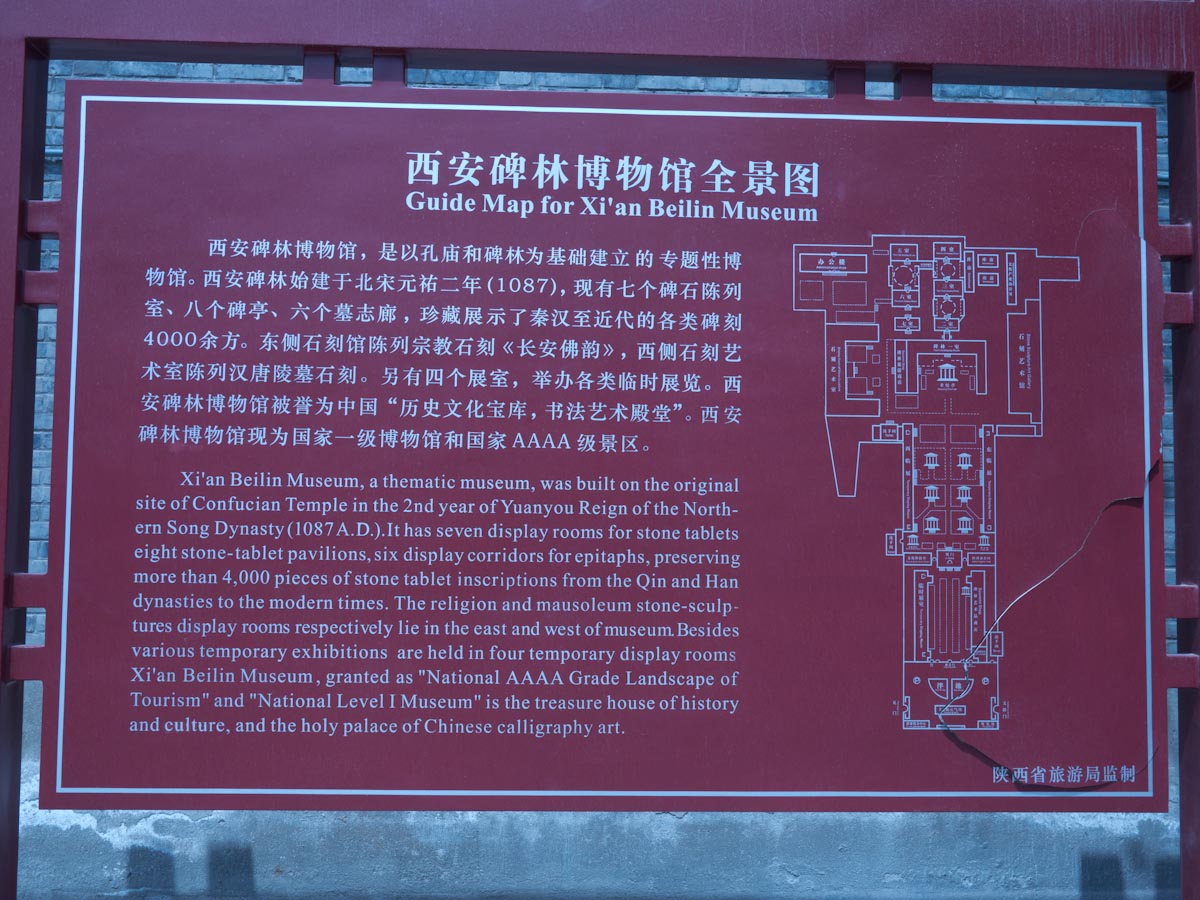
In Xi’an the cultural highlight was a visit to the Forest of Steles for a calligraphy lesson. This is regarded as the “Cathedral of Calligraphy” where all the most treasured calligraphic writings in China are preserved. These include a giant collection of two meter high stone tablets where the books about Confucius and other works have been carved onto stones by ancient calligraphers. These styles are studied closely today.
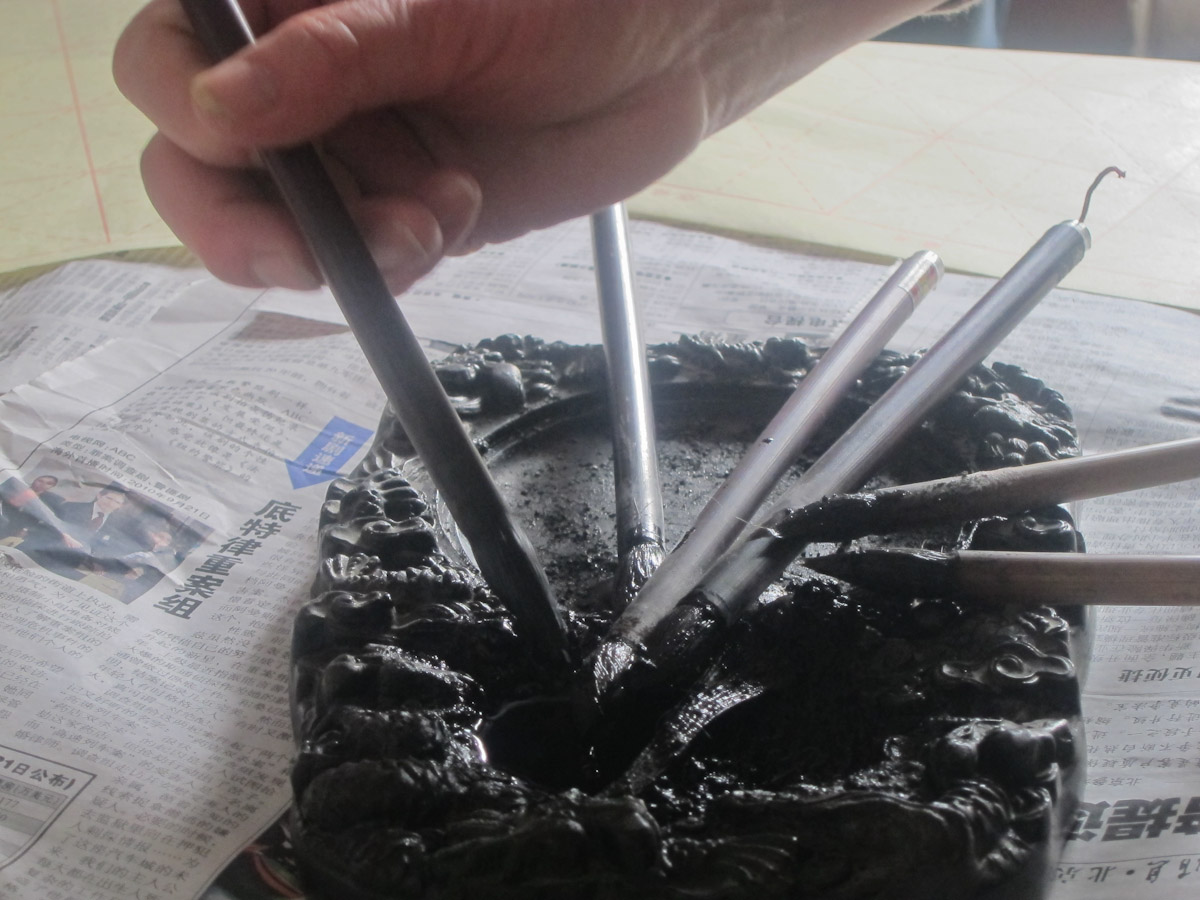
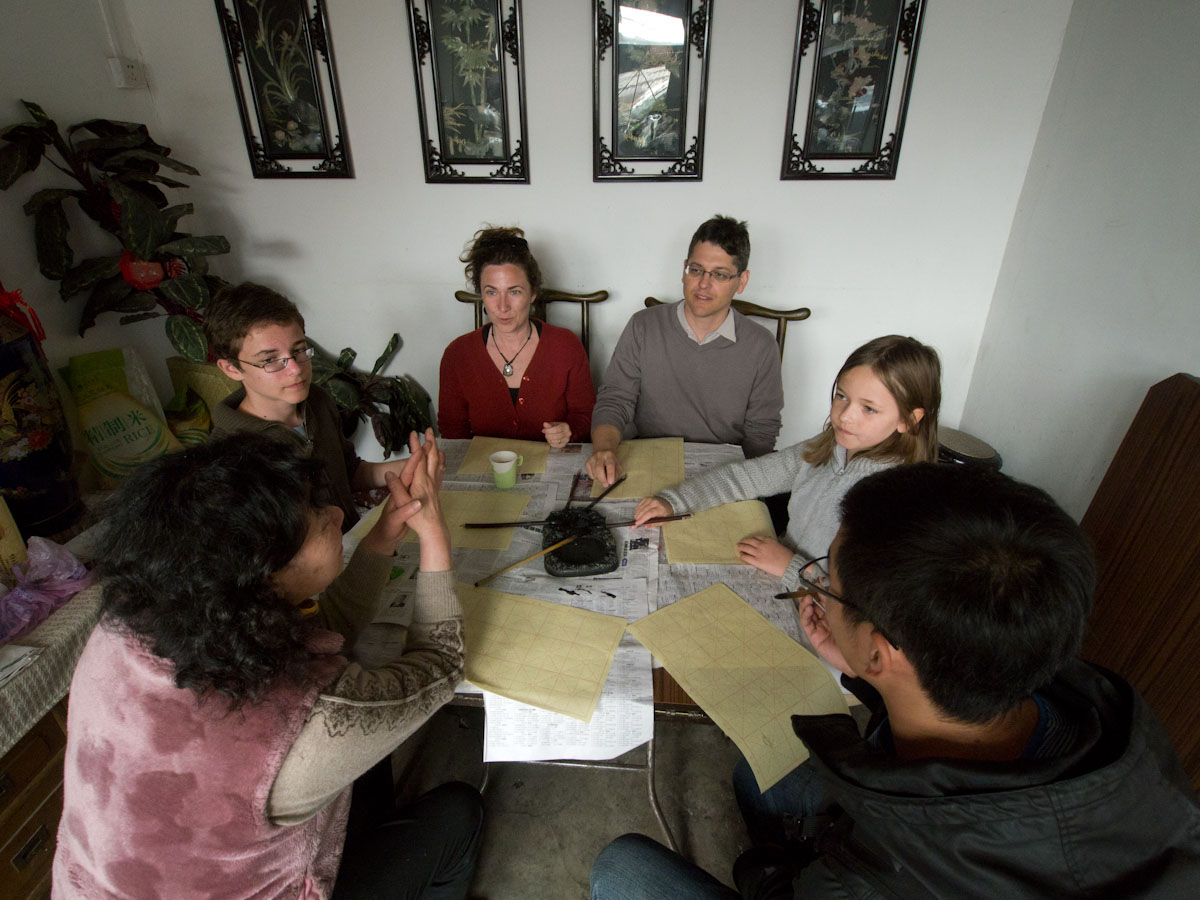
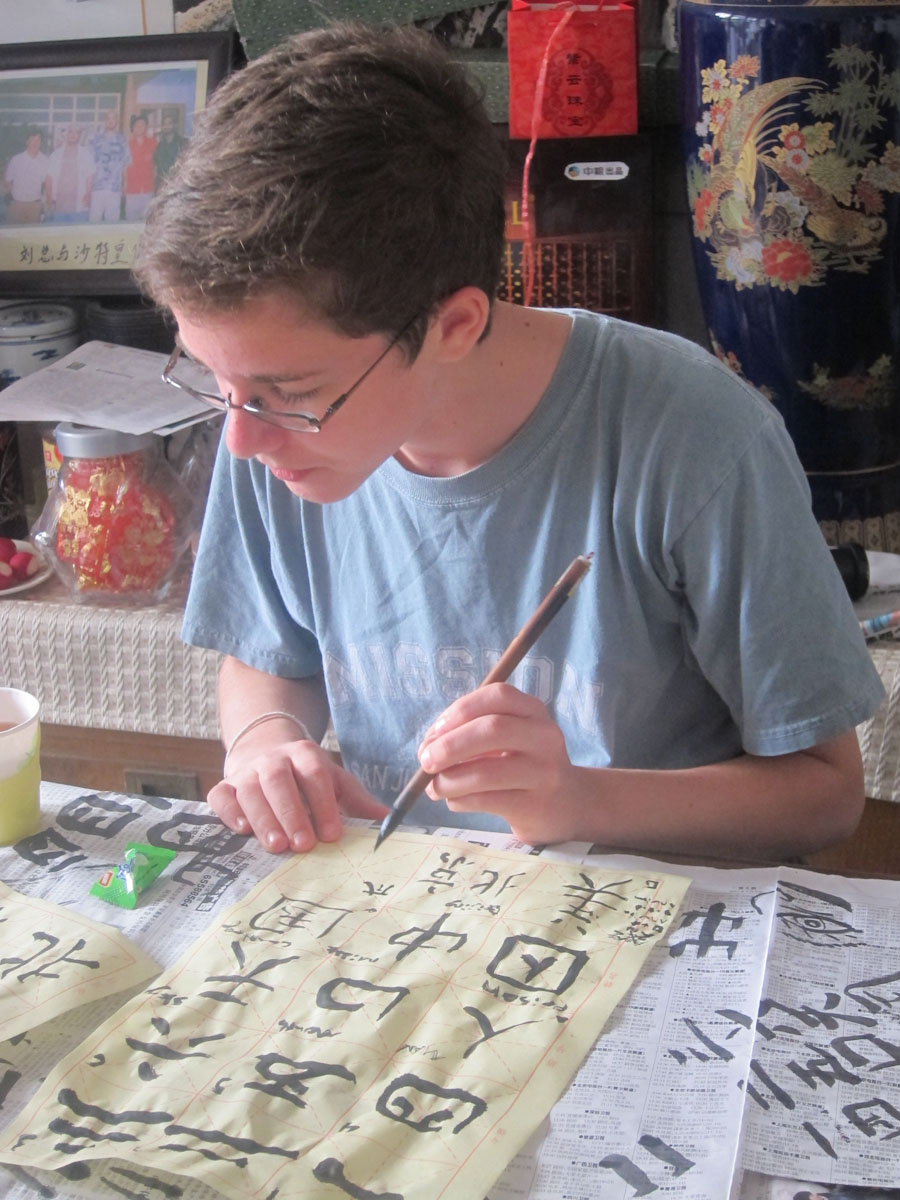
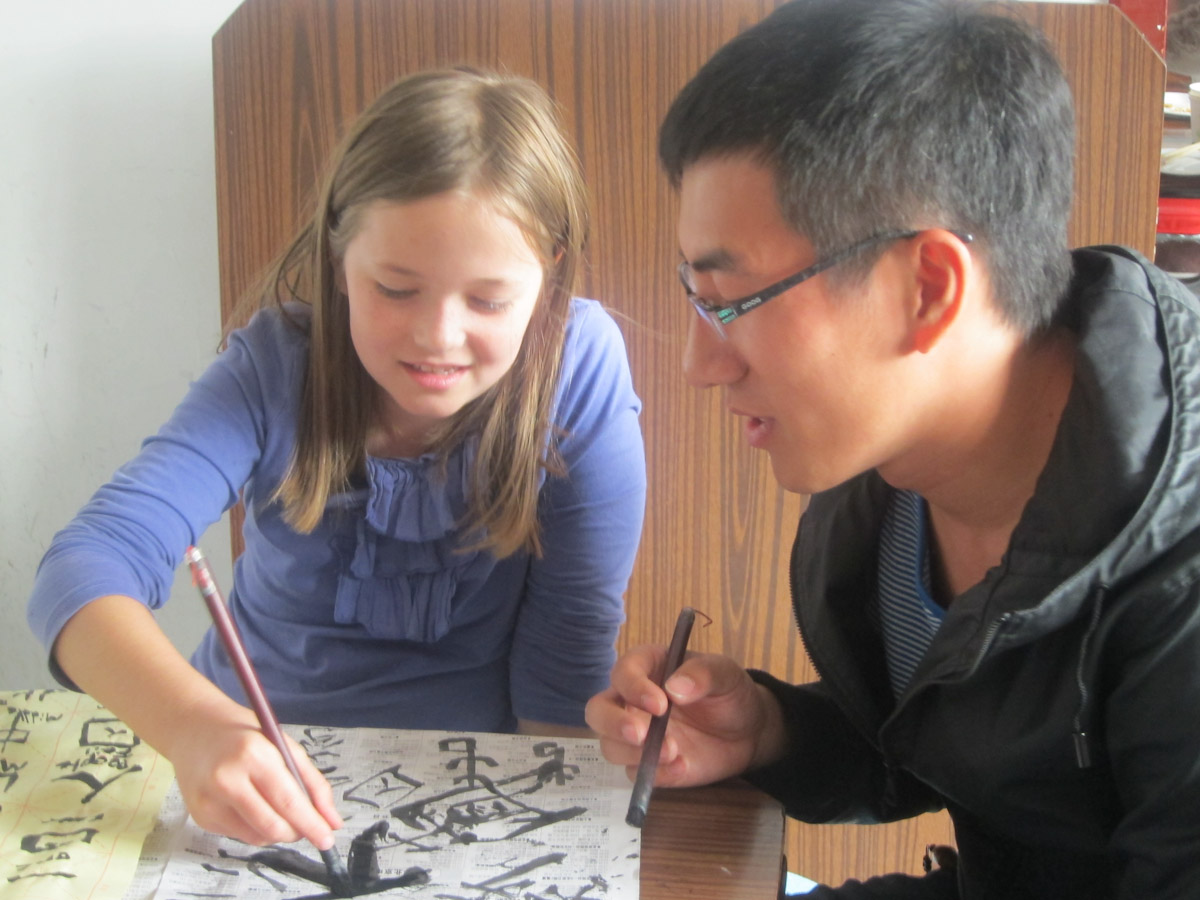
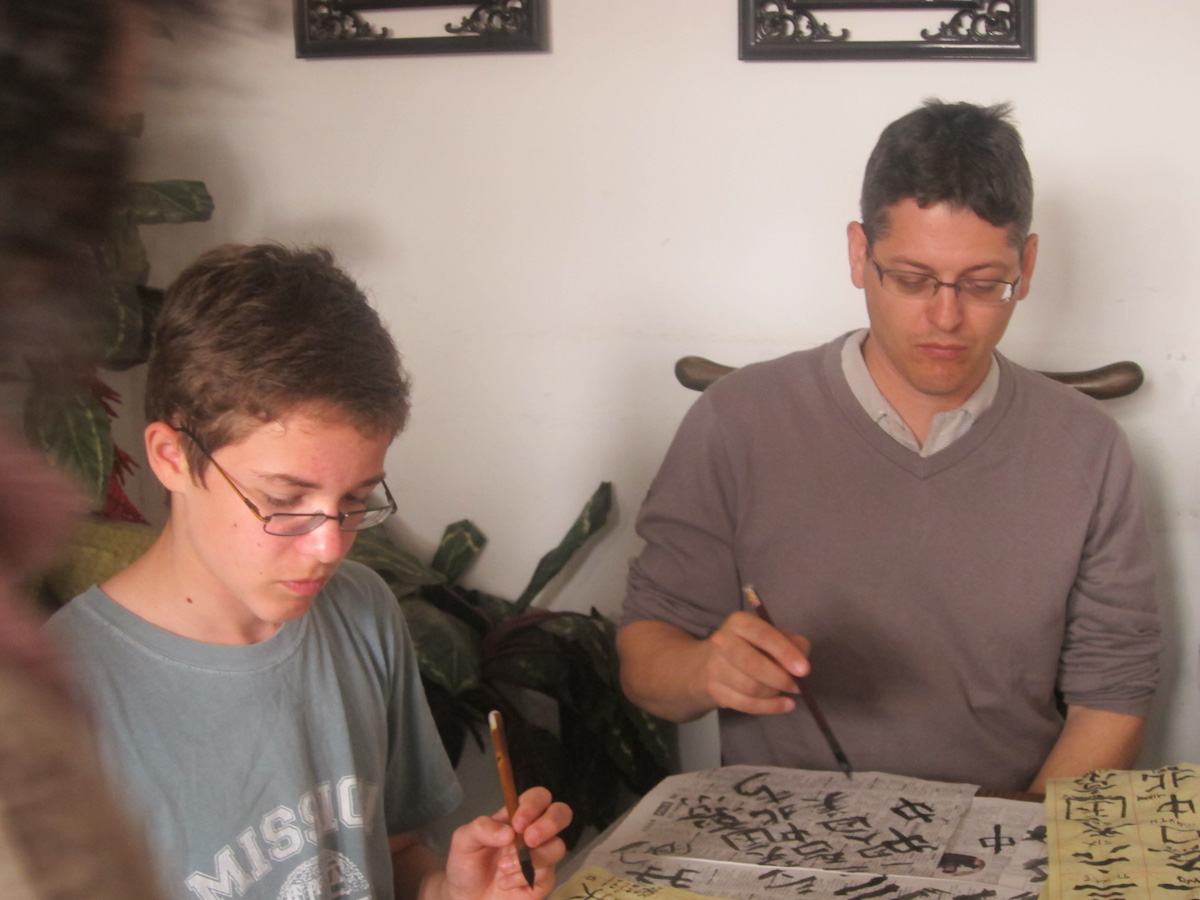
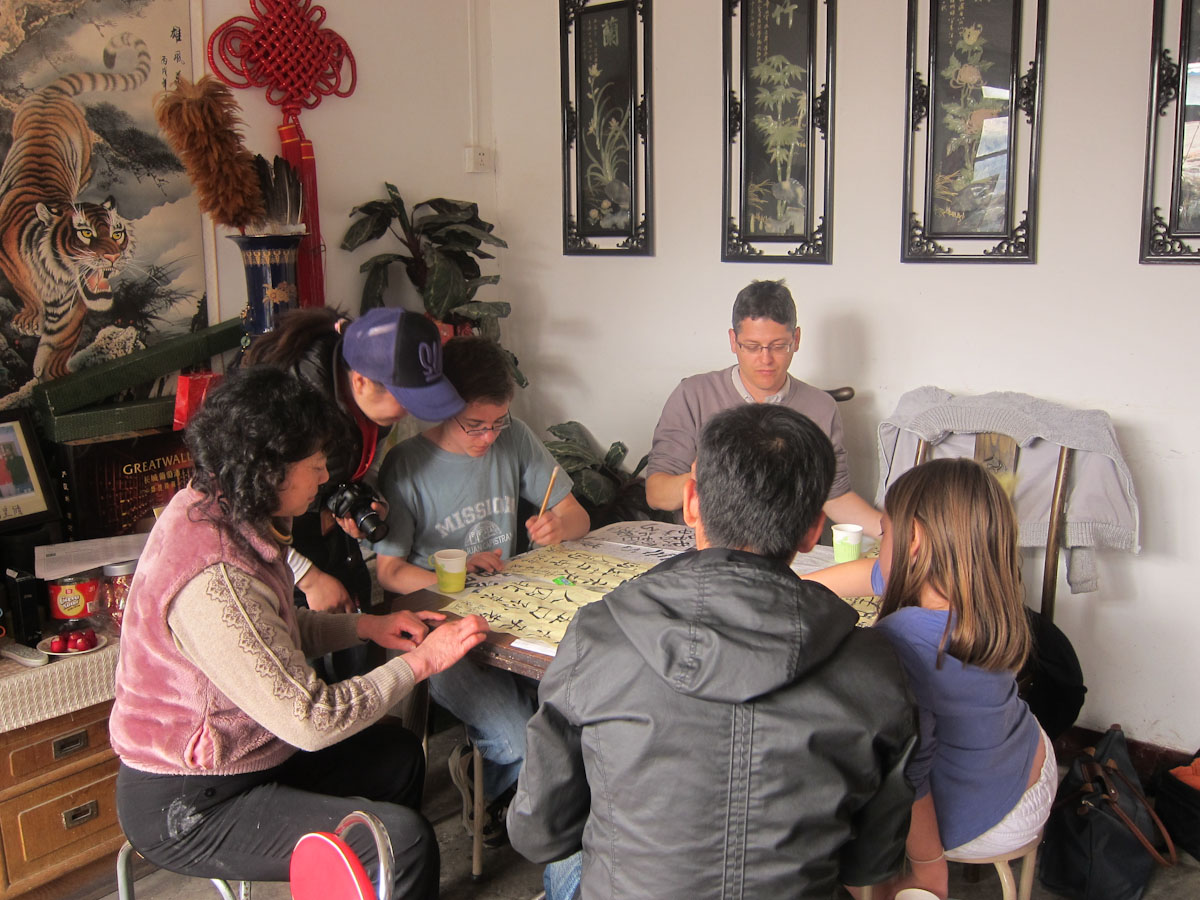
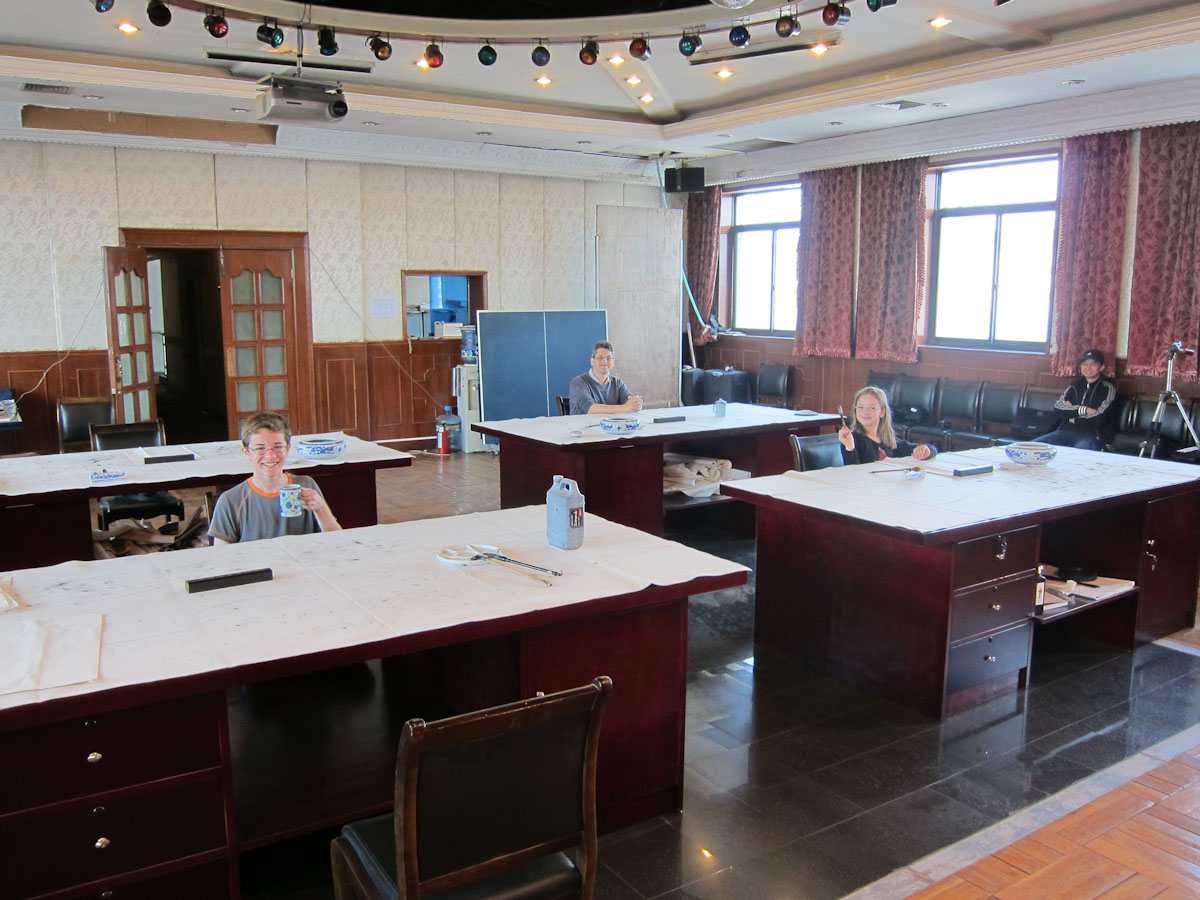
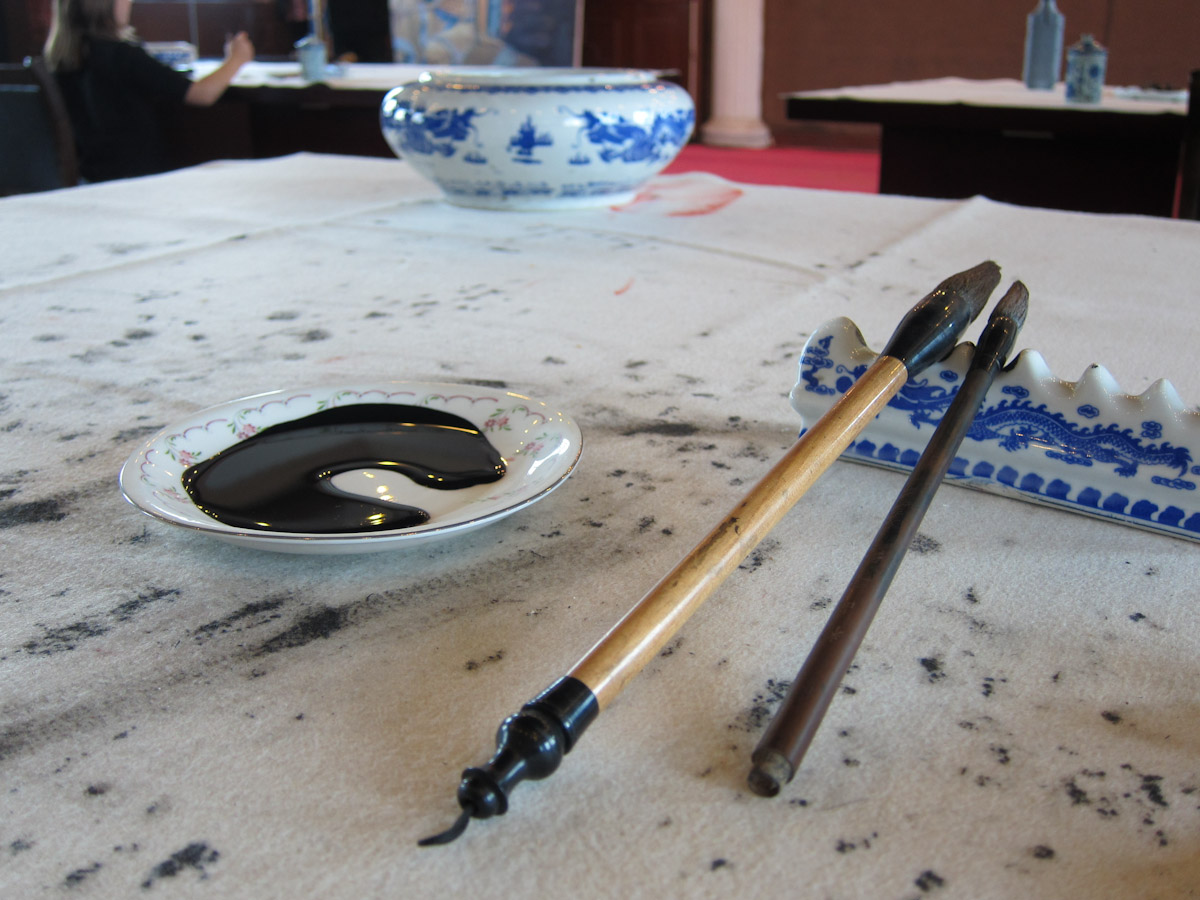
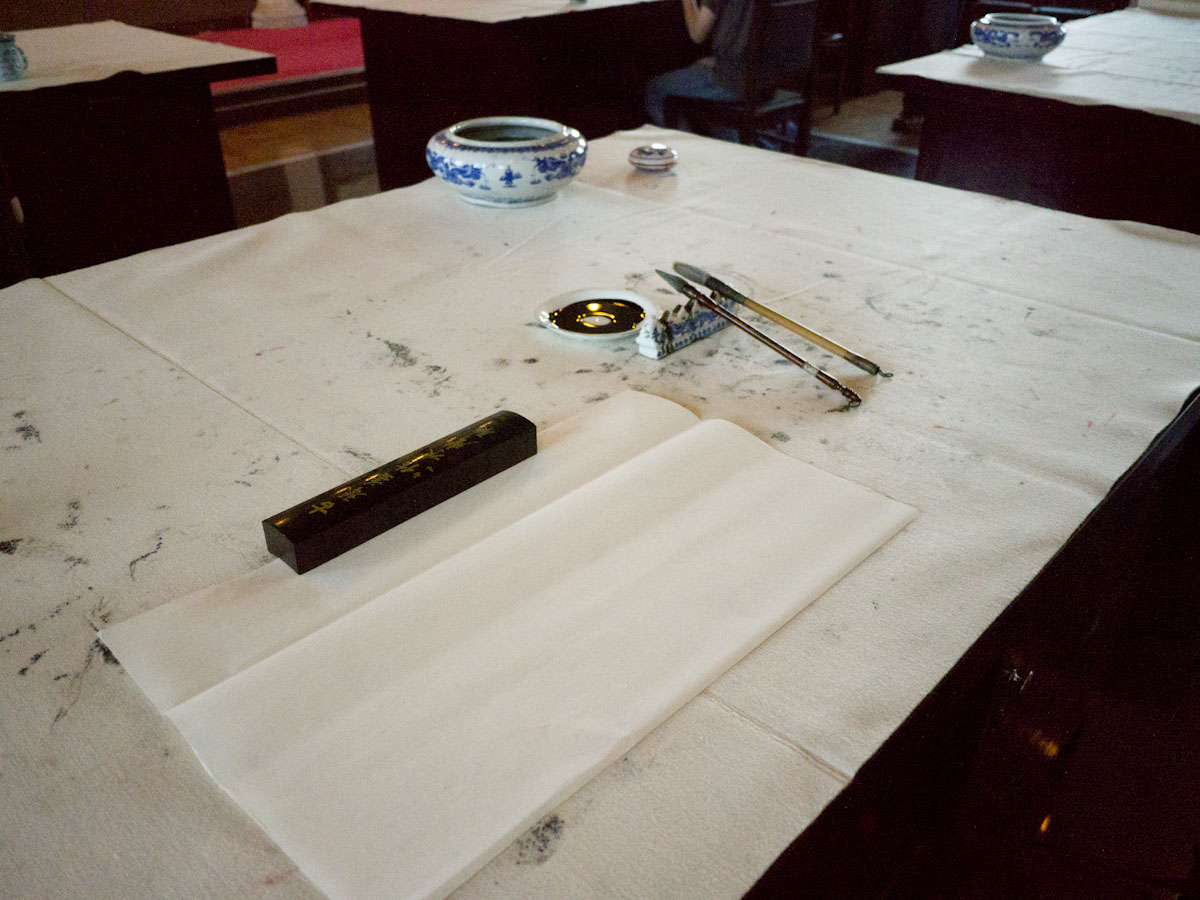
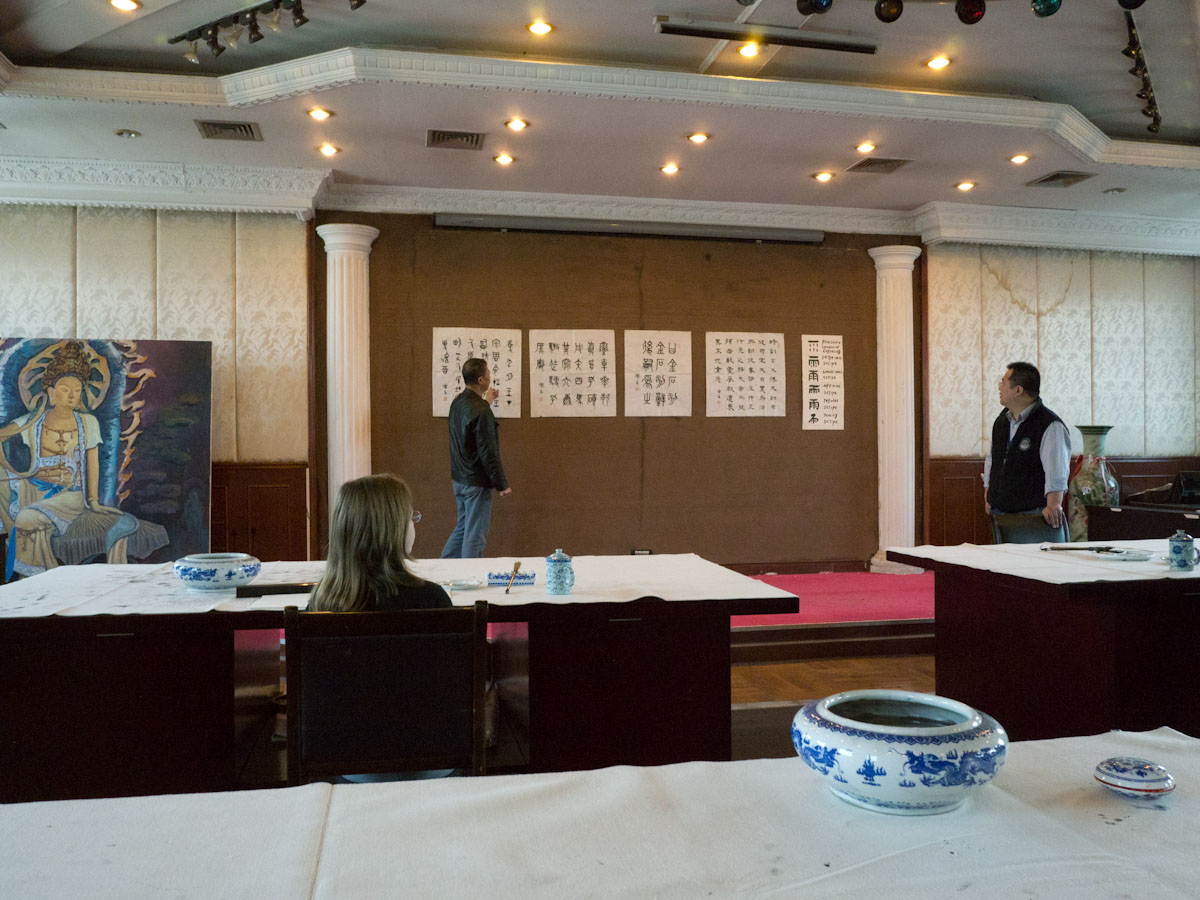
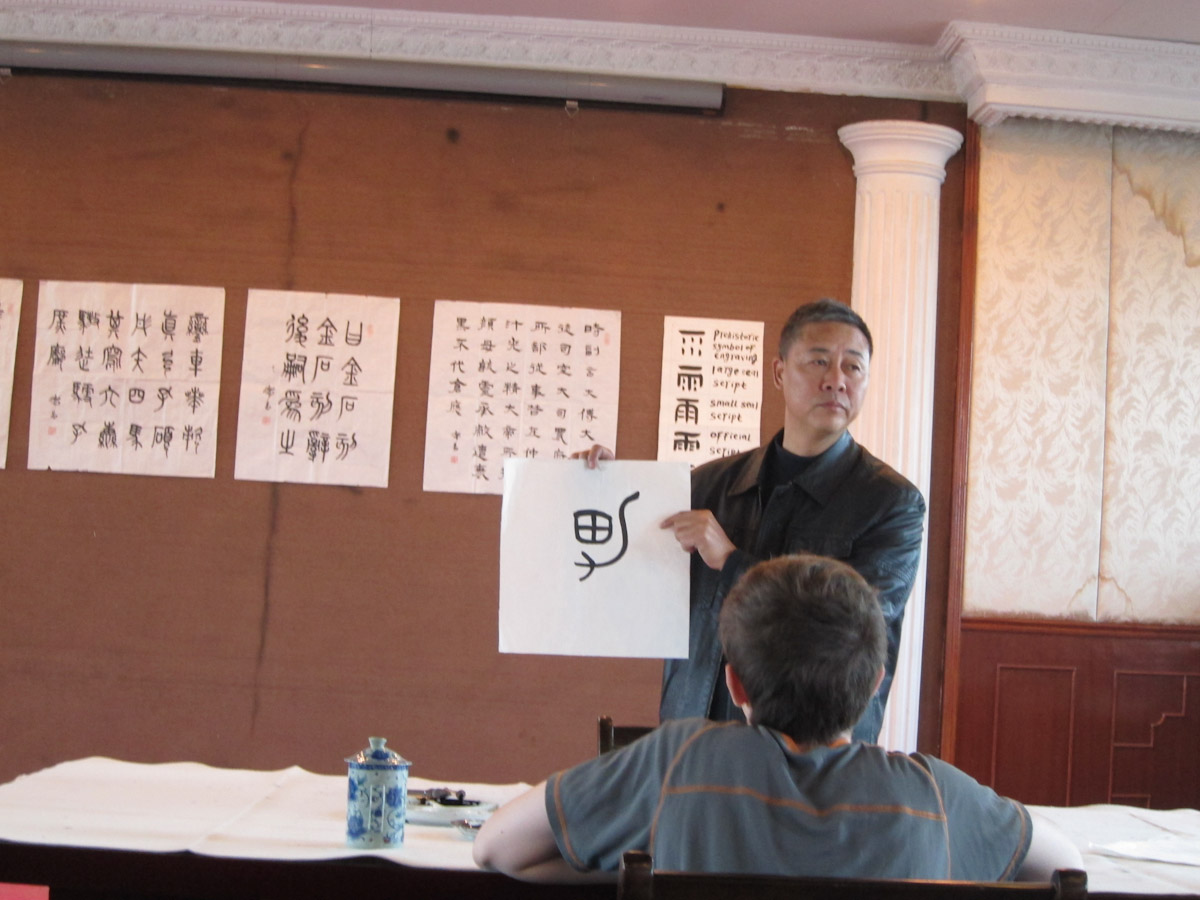
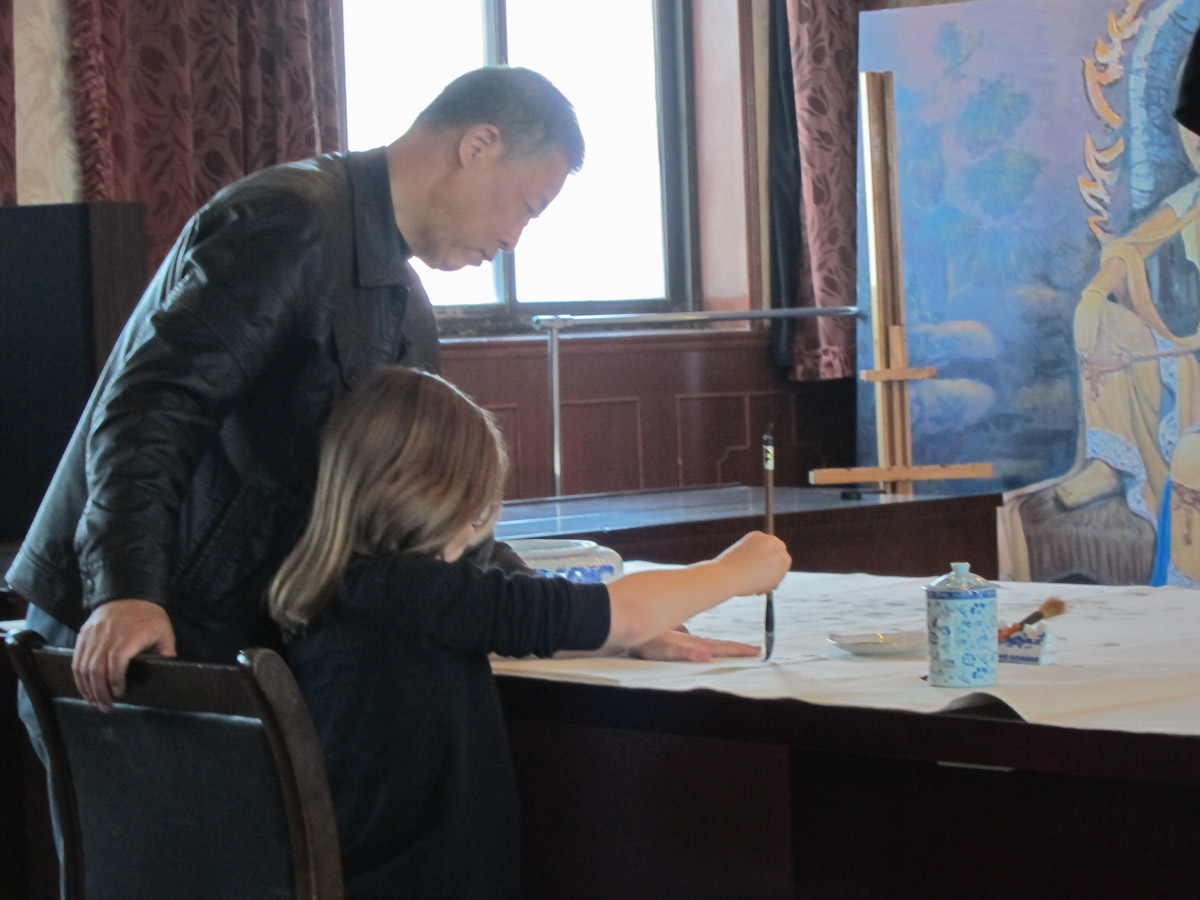
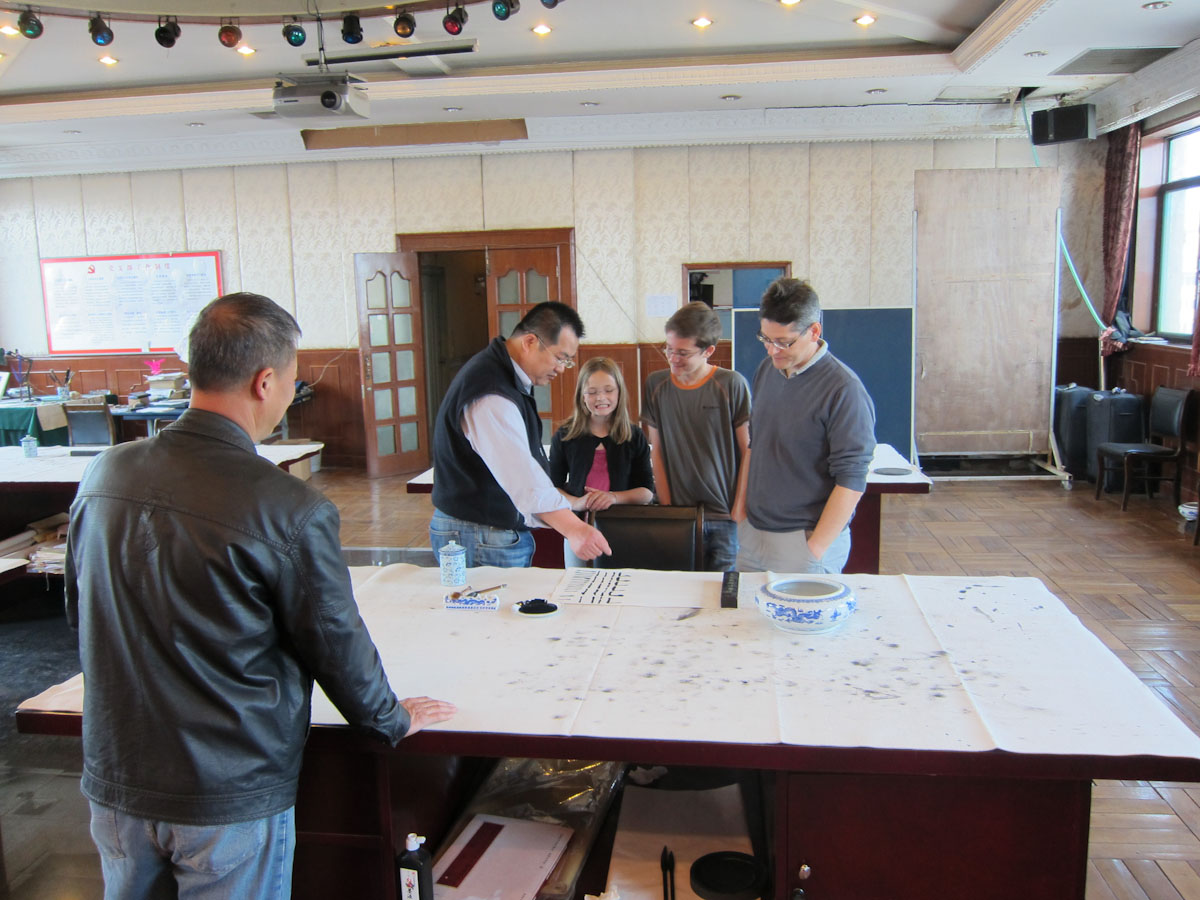
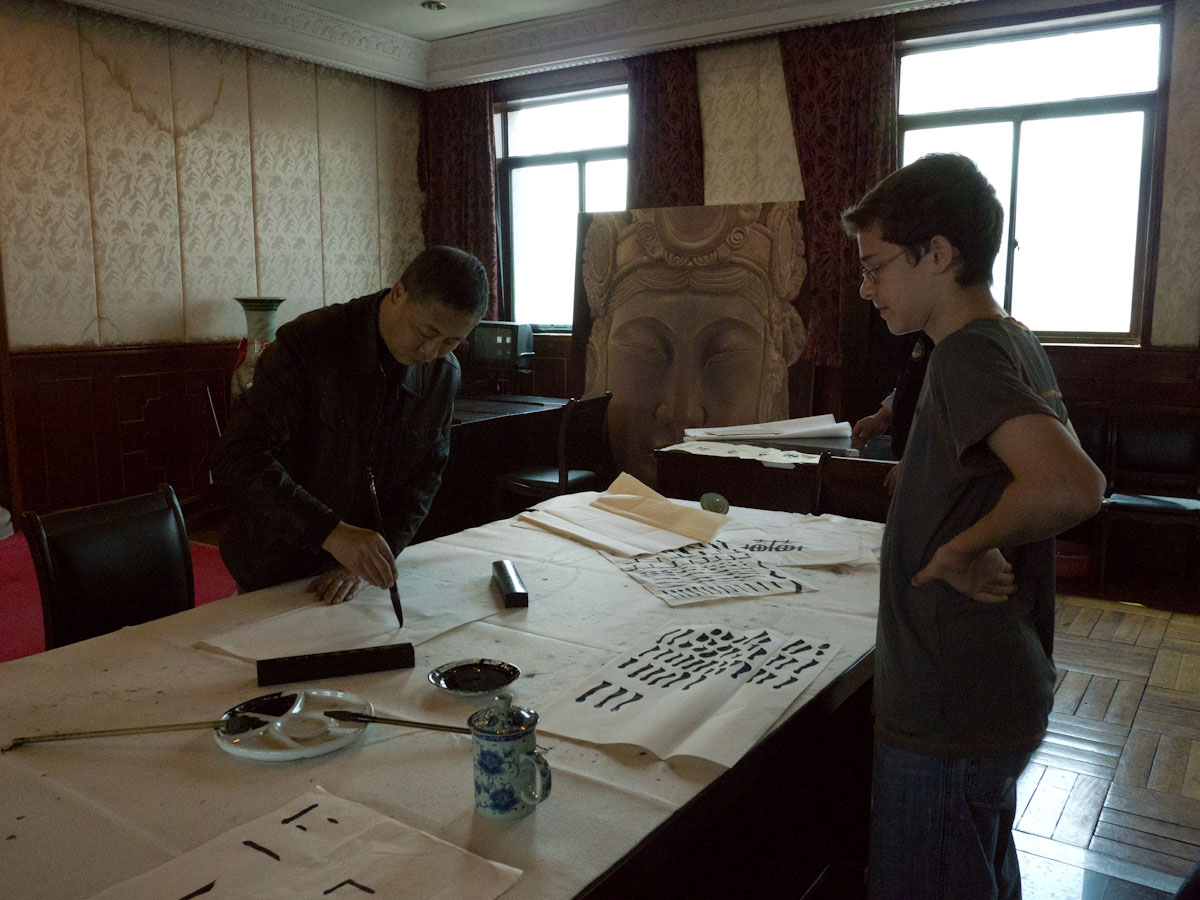
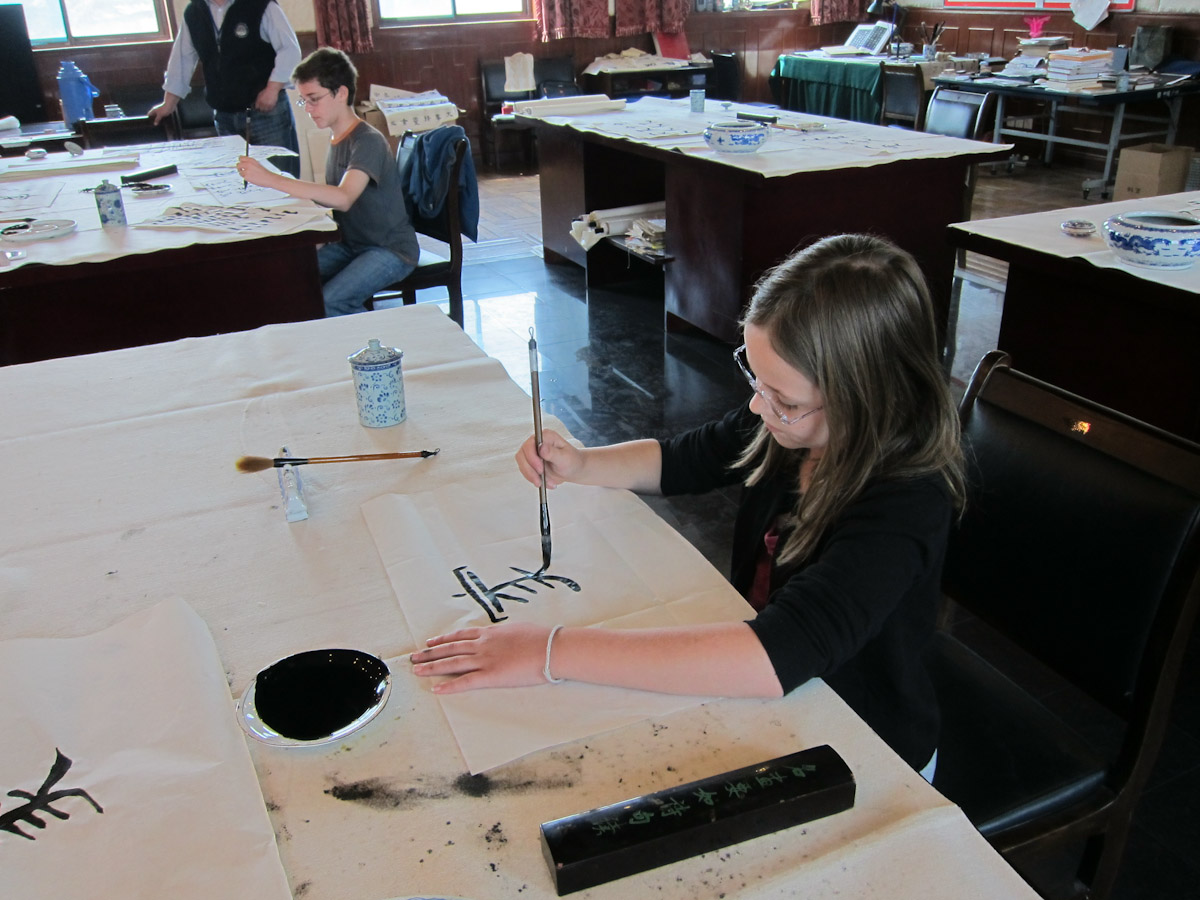
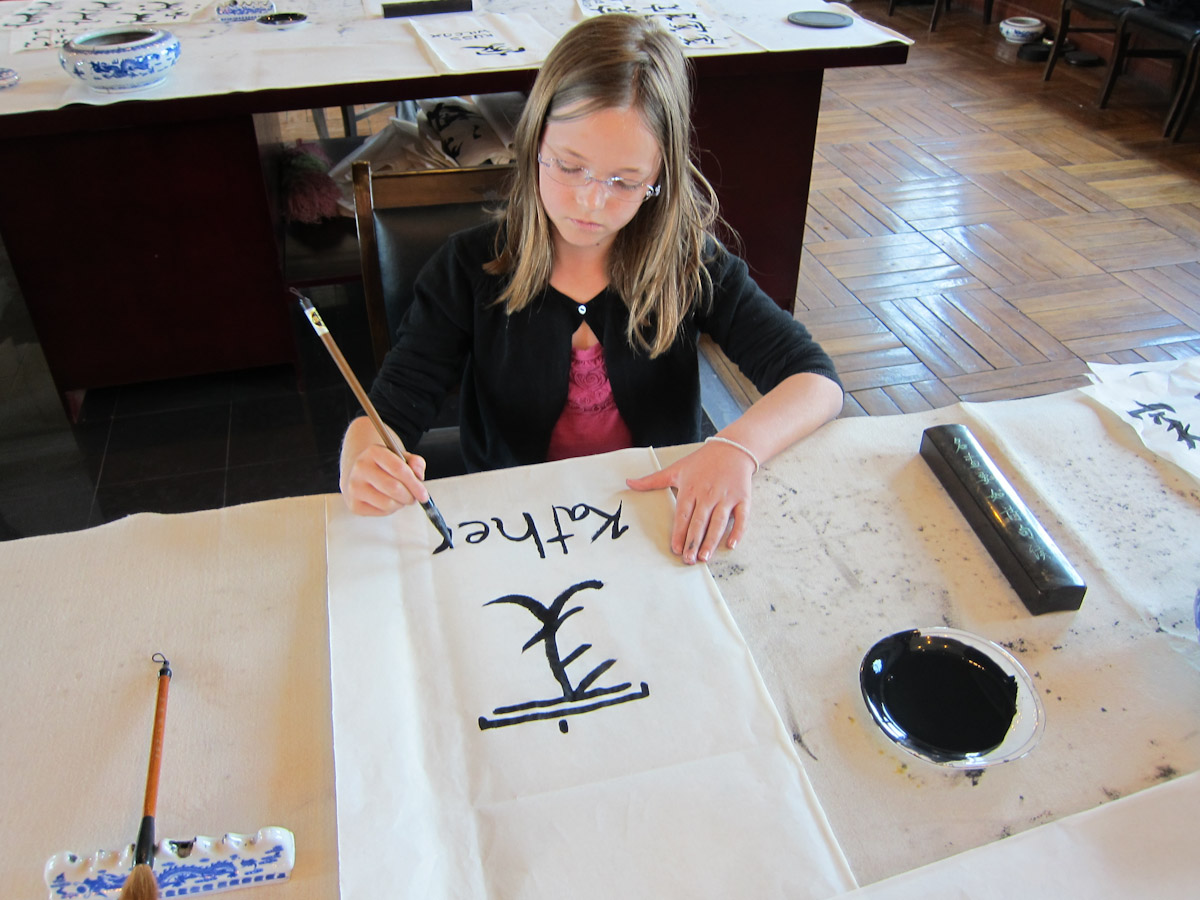
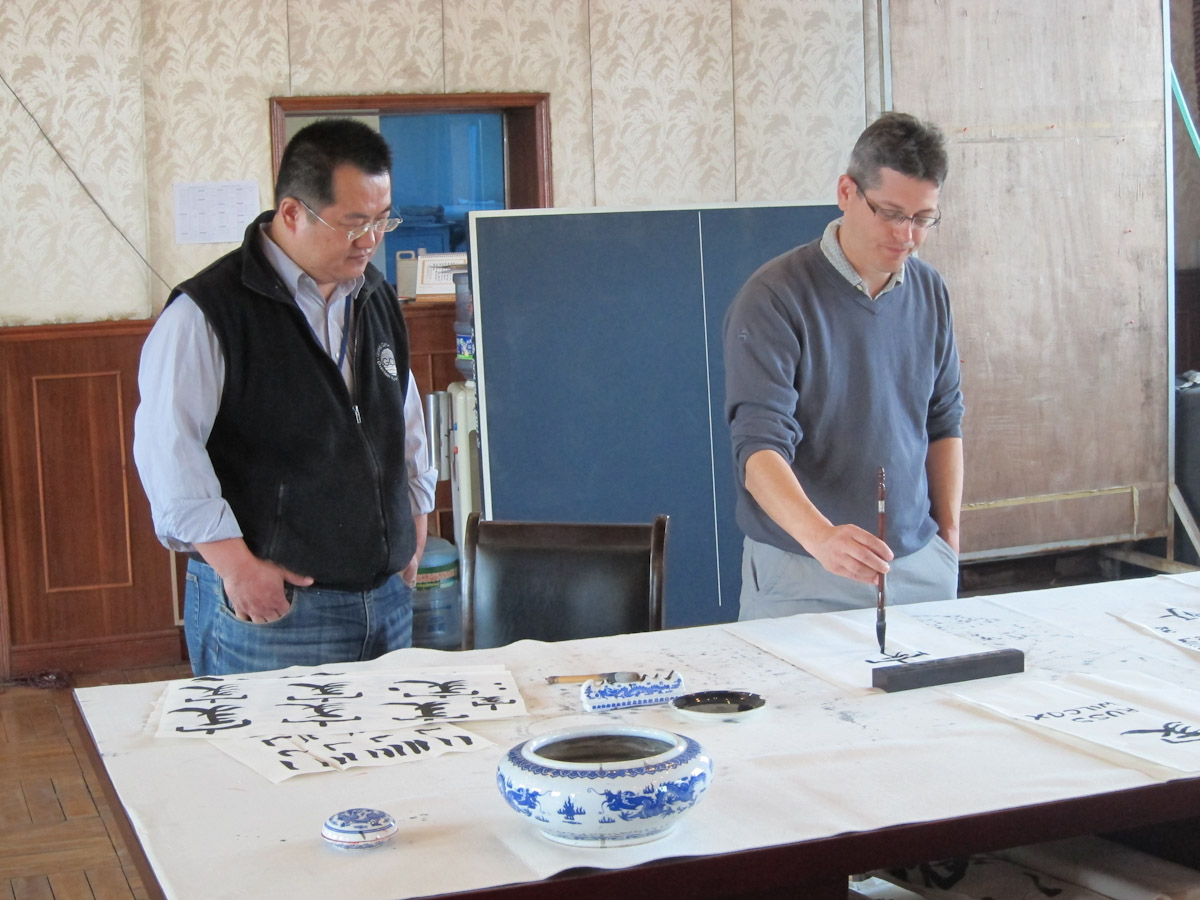
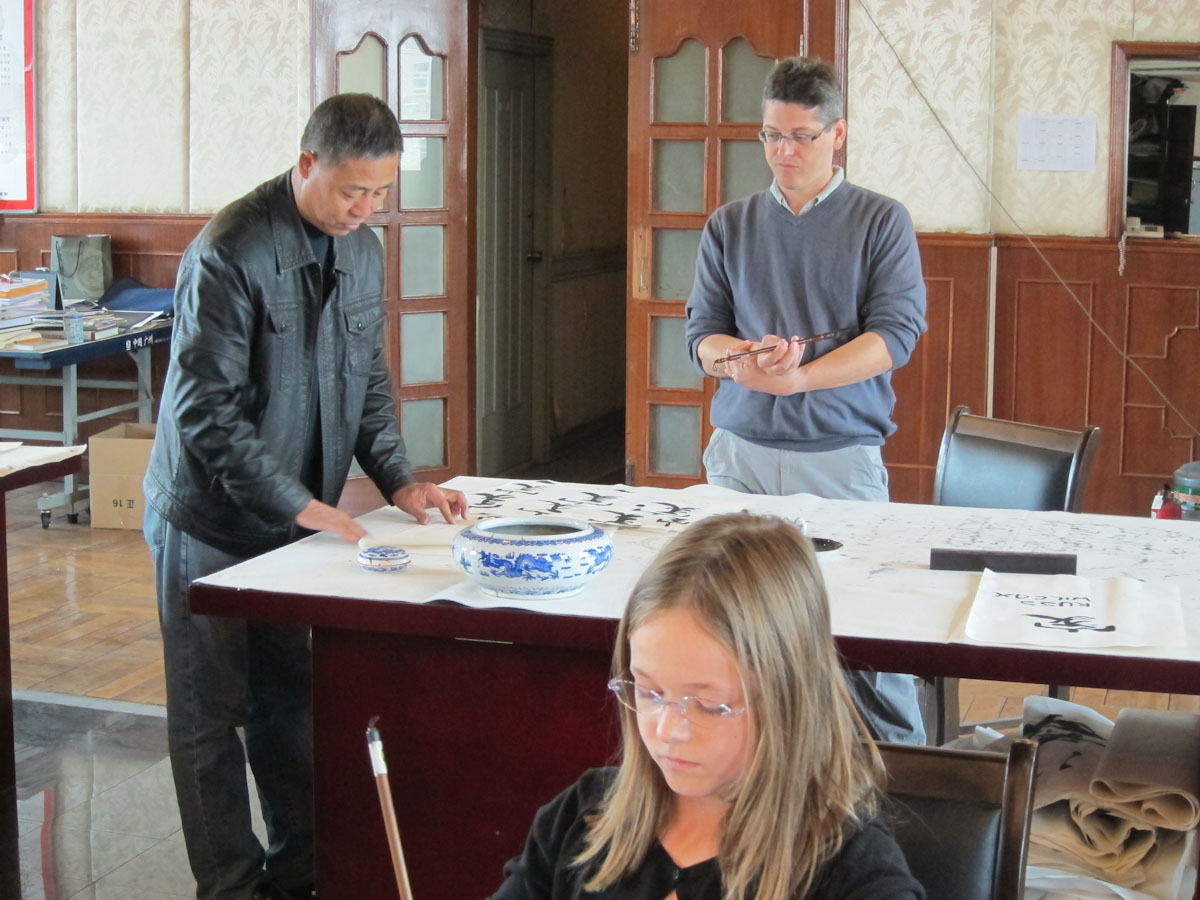
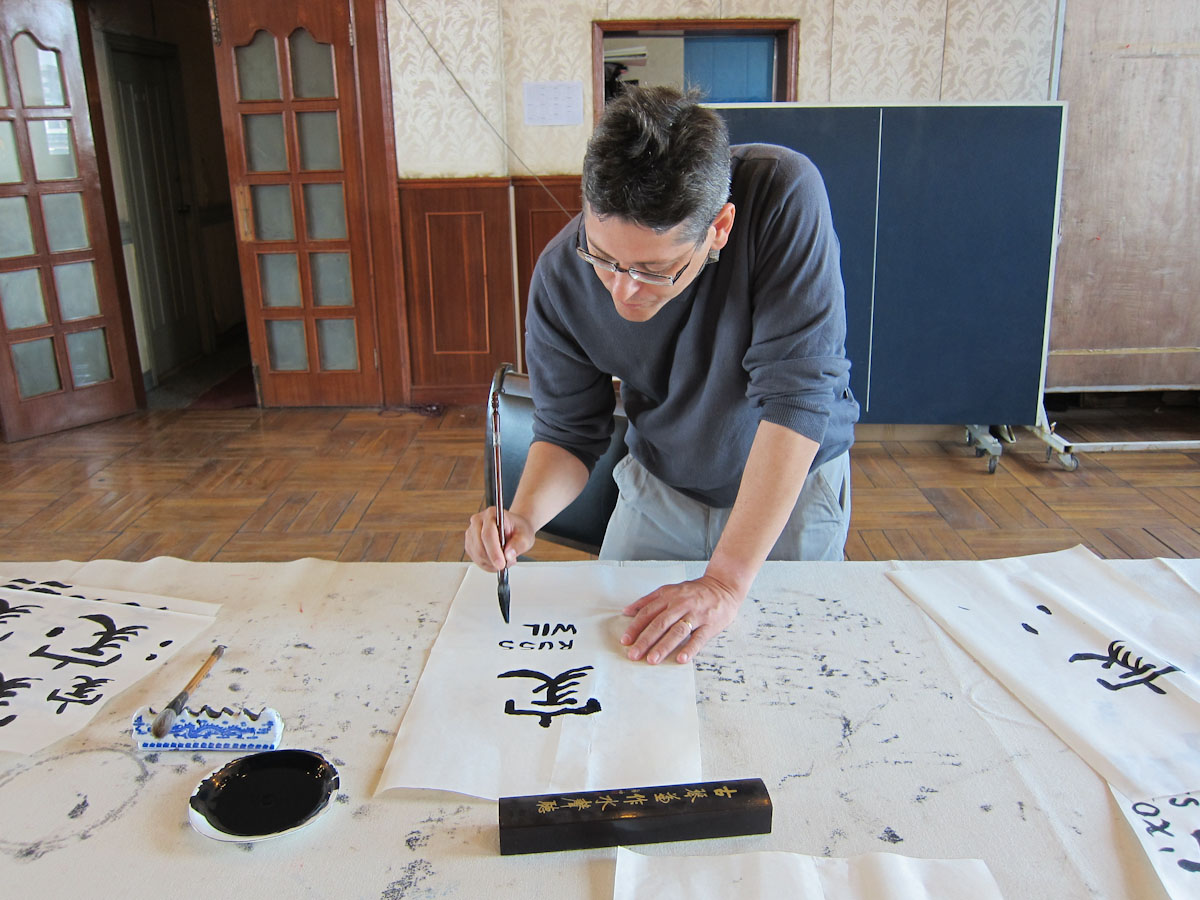
We walked right past the stones and into a classroom building where we met a master of calligraphy. We sat at beautiful desks and listened as he explained (and Gerard translated) how to hold a brush, how to take in the ink, how to breathe in as the ink fills the brush, and how to breathe out as the brush moves across the page until the breath is finally gone and the ink is gone too. Wait a minute – calligraphy is JUST like Tai Chi!?
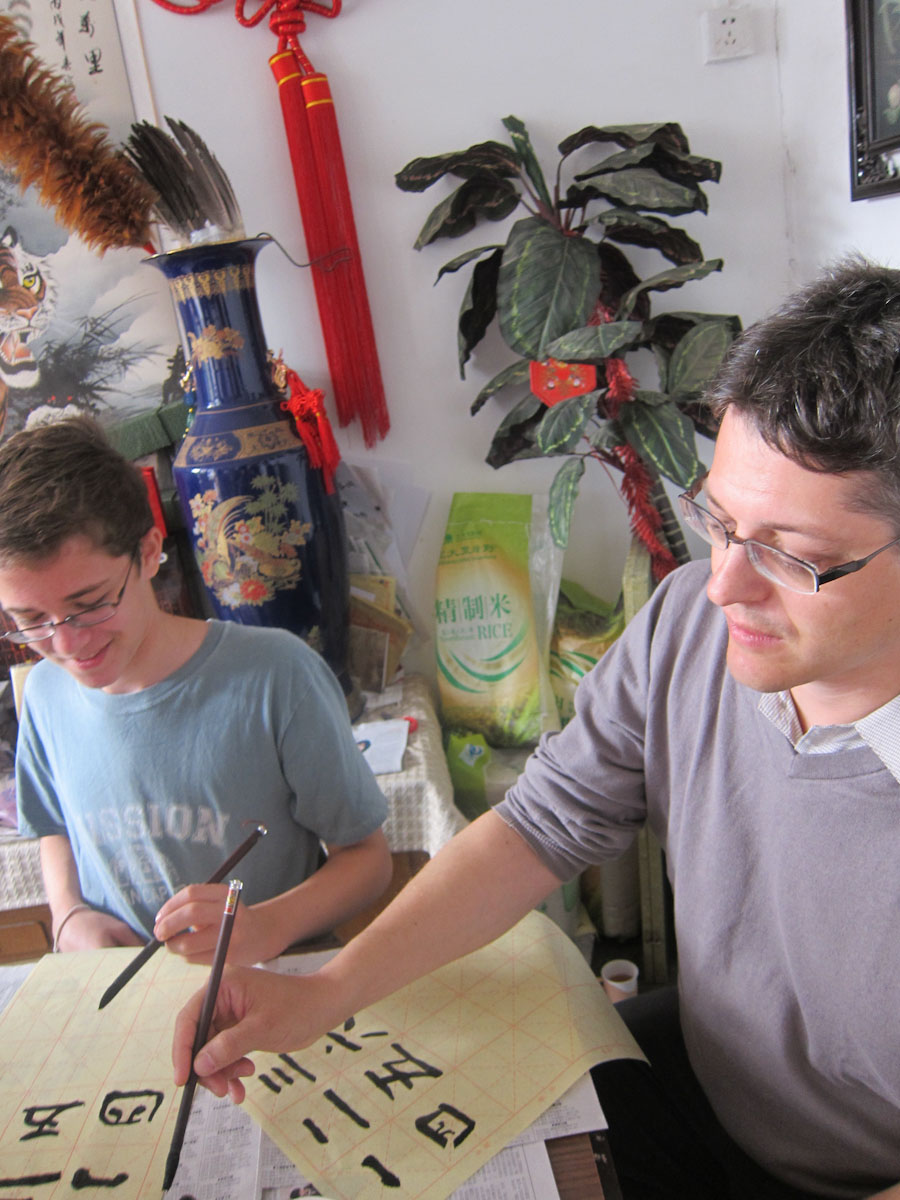
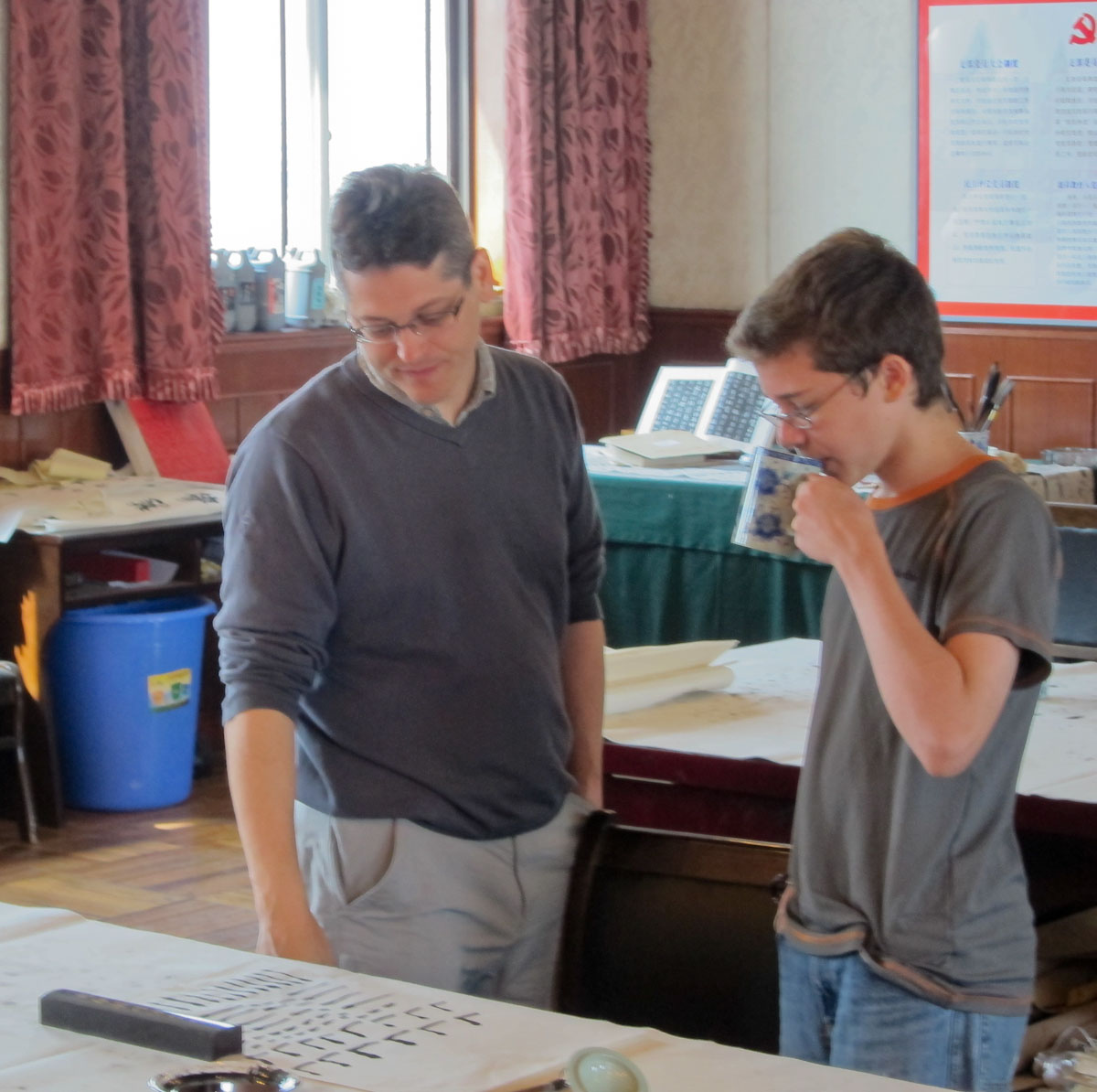
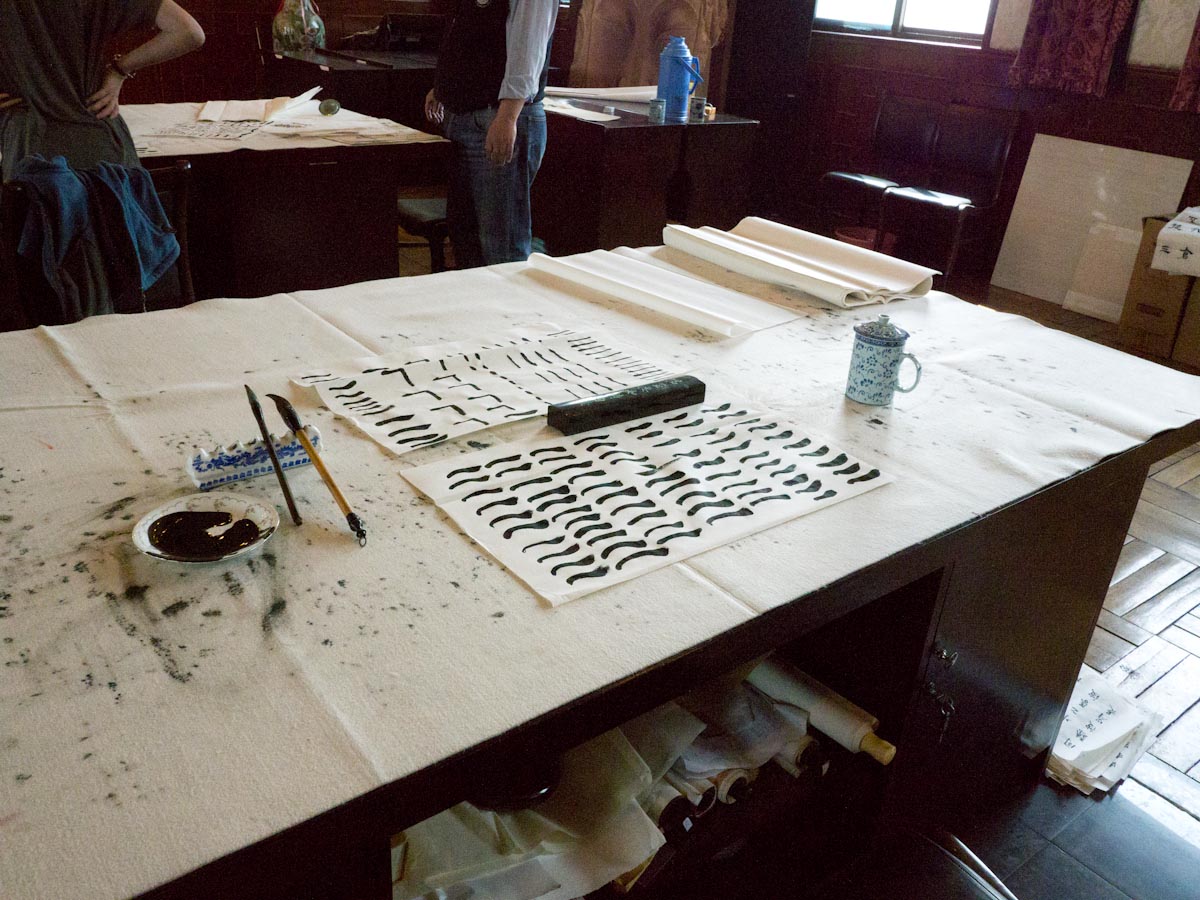
Step by step the family learned to make strokes (we had received an introduction to calligraphy in Beijing but the Xi’an master was something really special) up and down and corners.
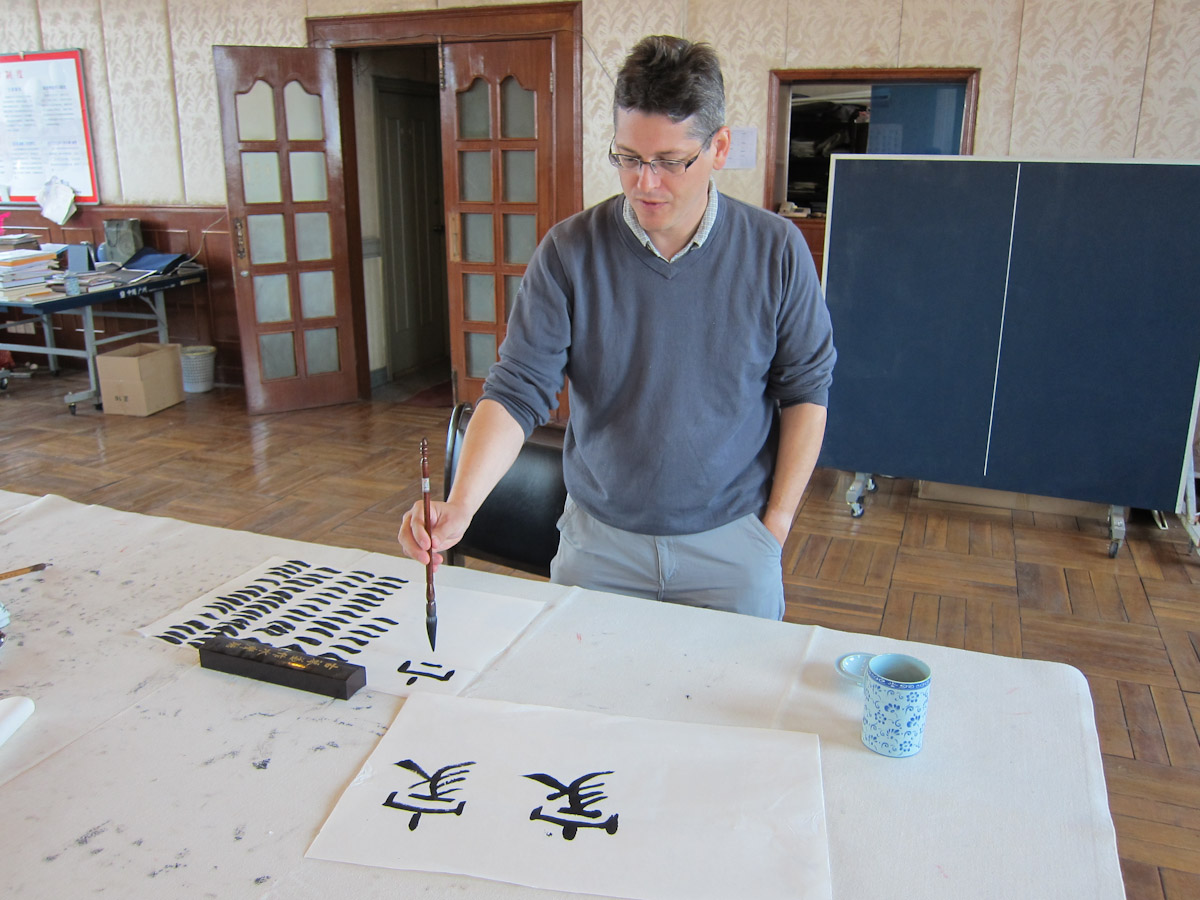
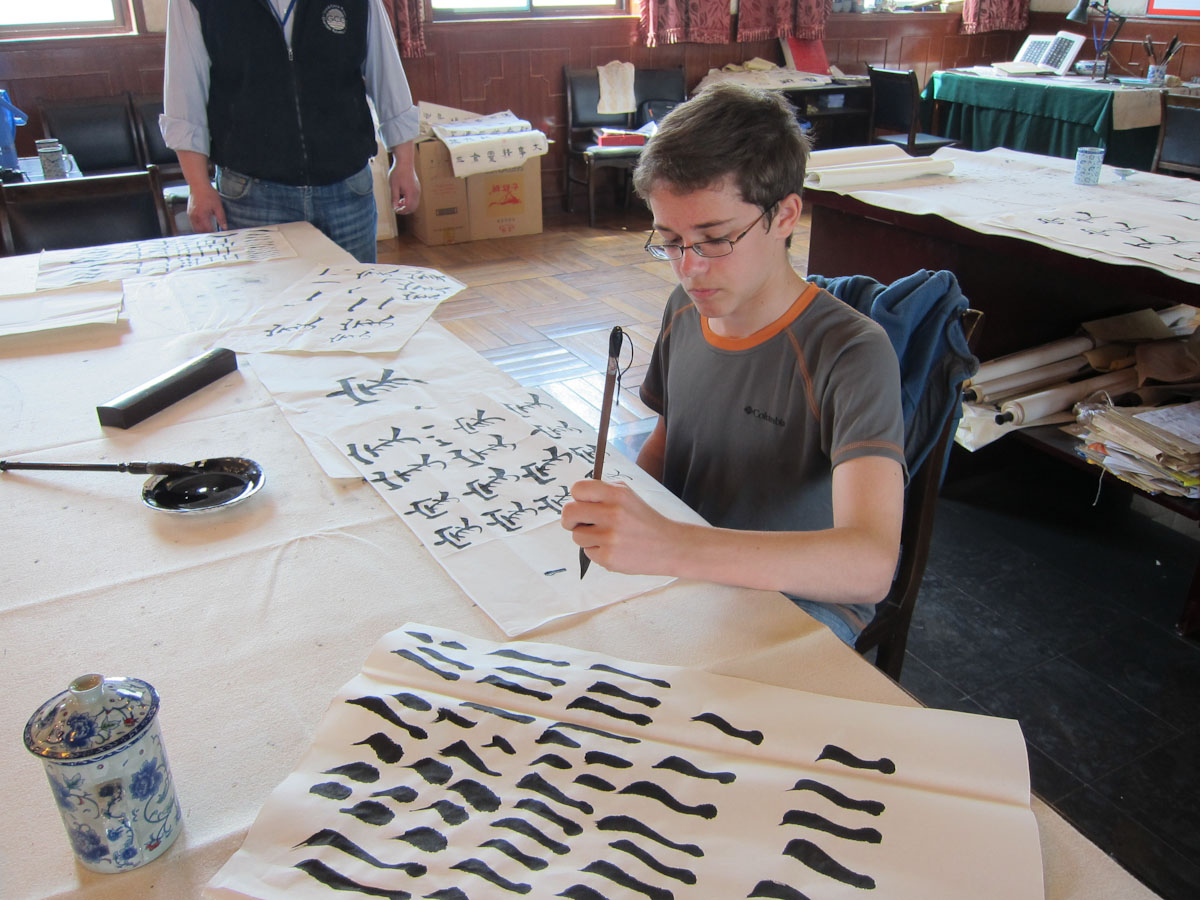
Once everyone had the basic lines down, he moved on to the bird’s tail, that beautiful sweeping curve from Chinese characters that looks like a delicately arched eyebrow. It took almost half an hour to learn that but it was glorious when we got it right. We wanted to keep going all day.
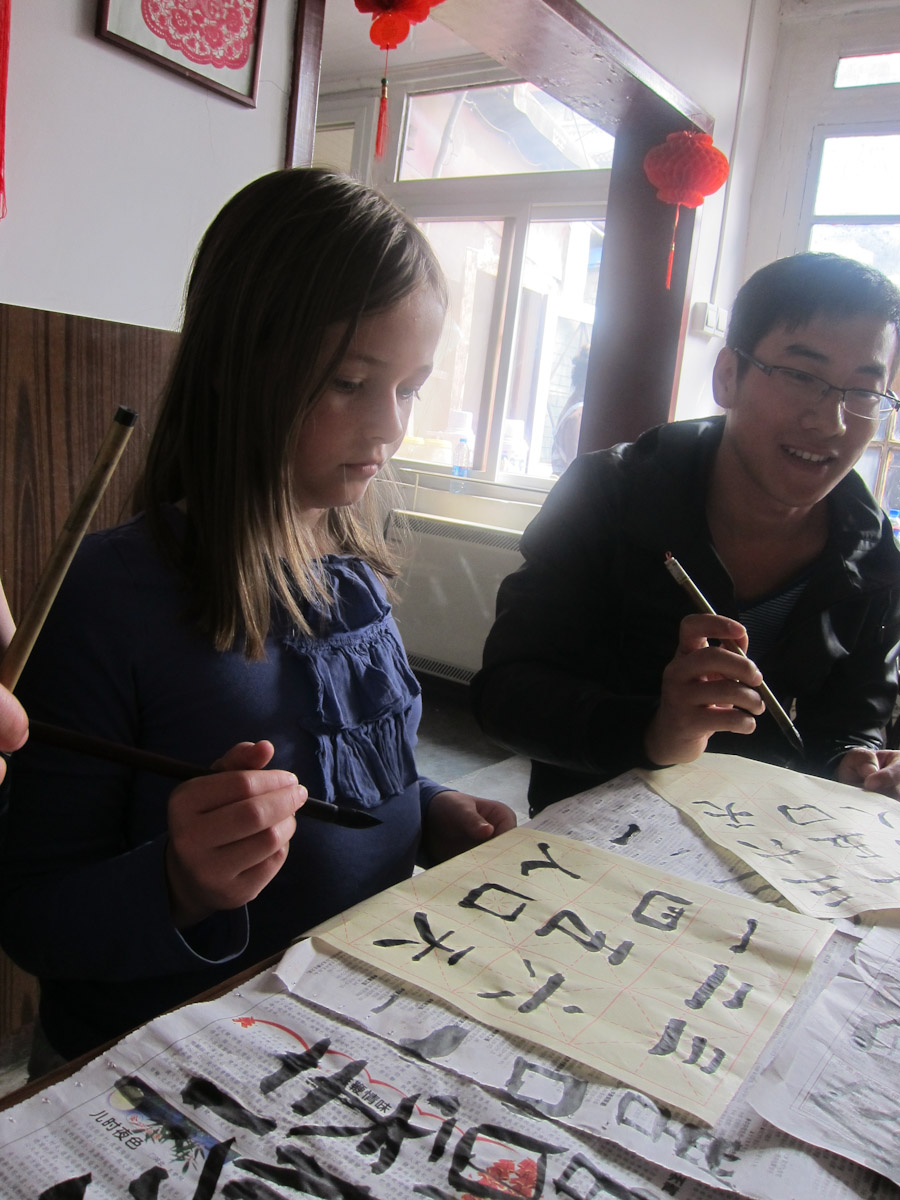
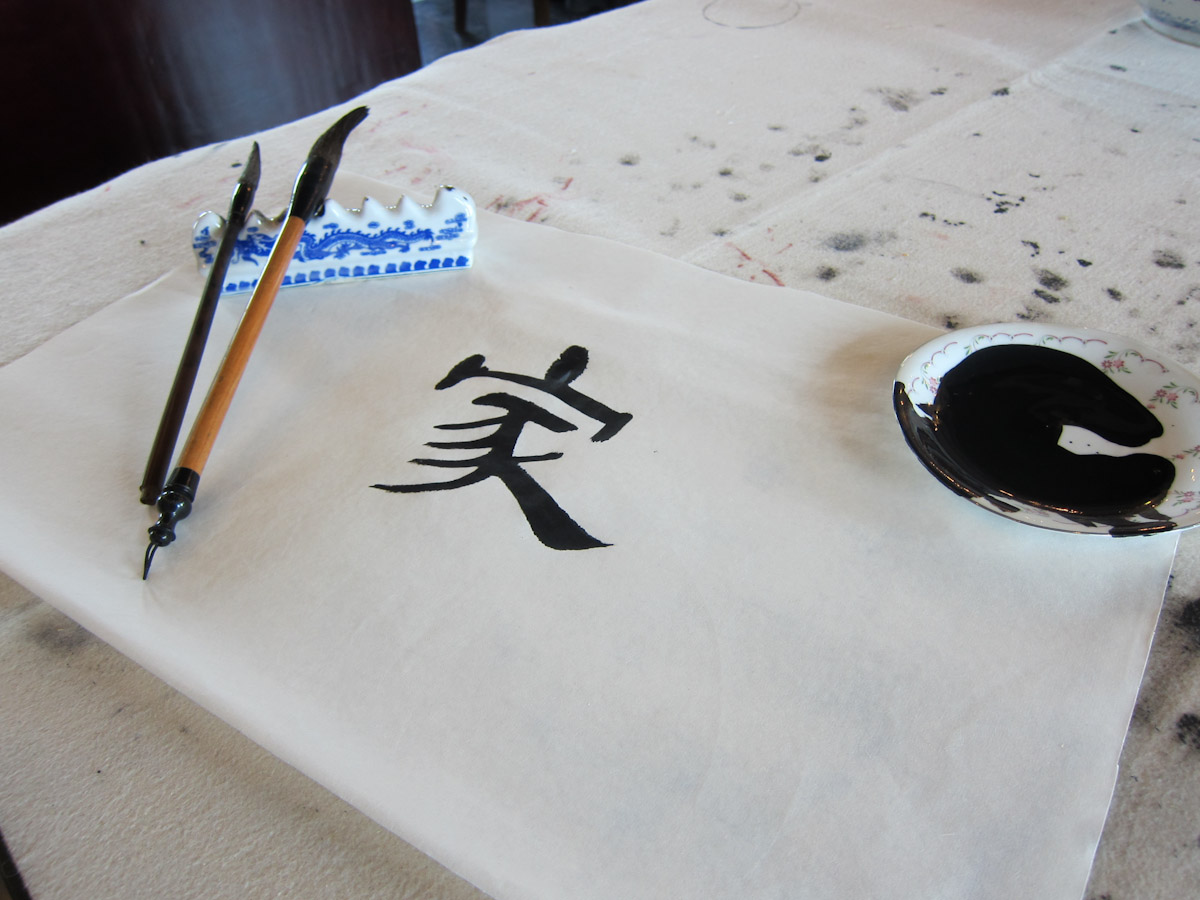
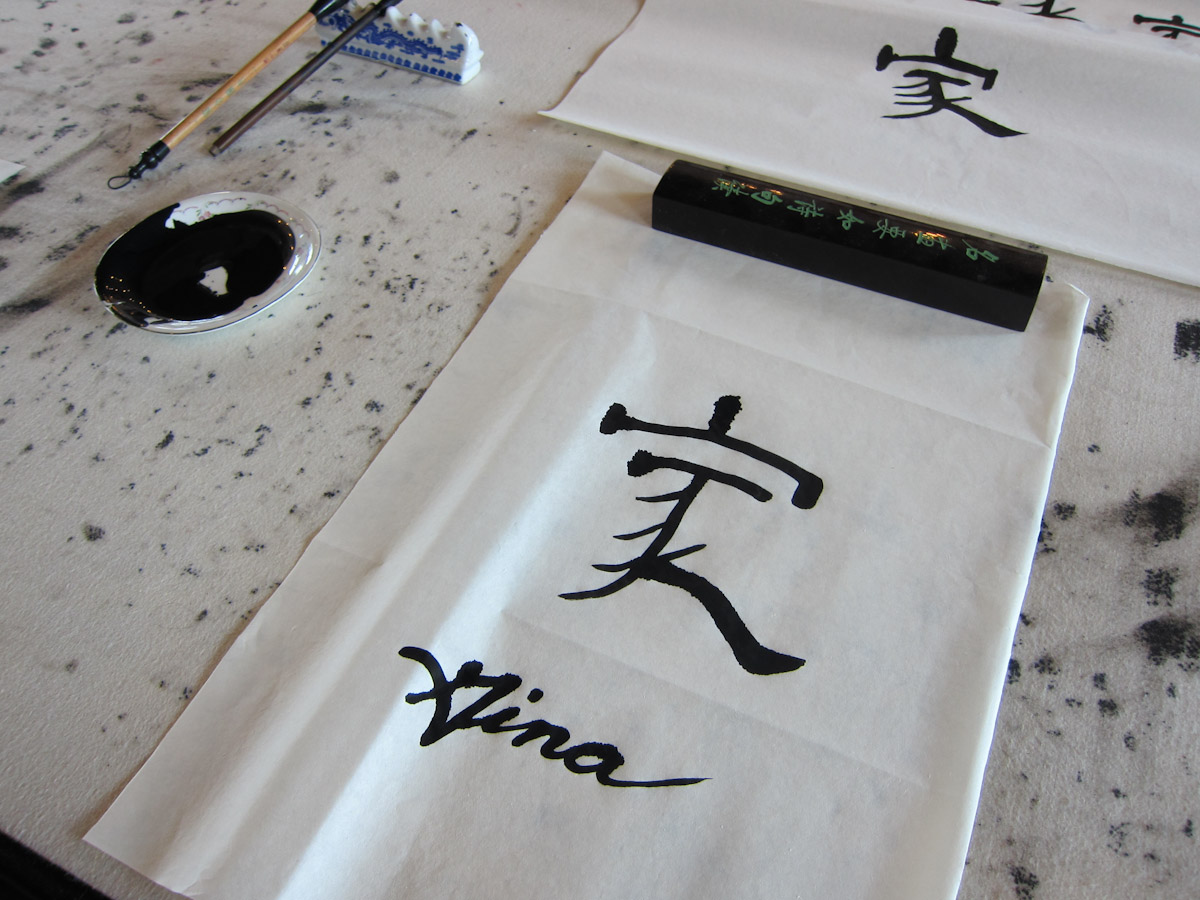
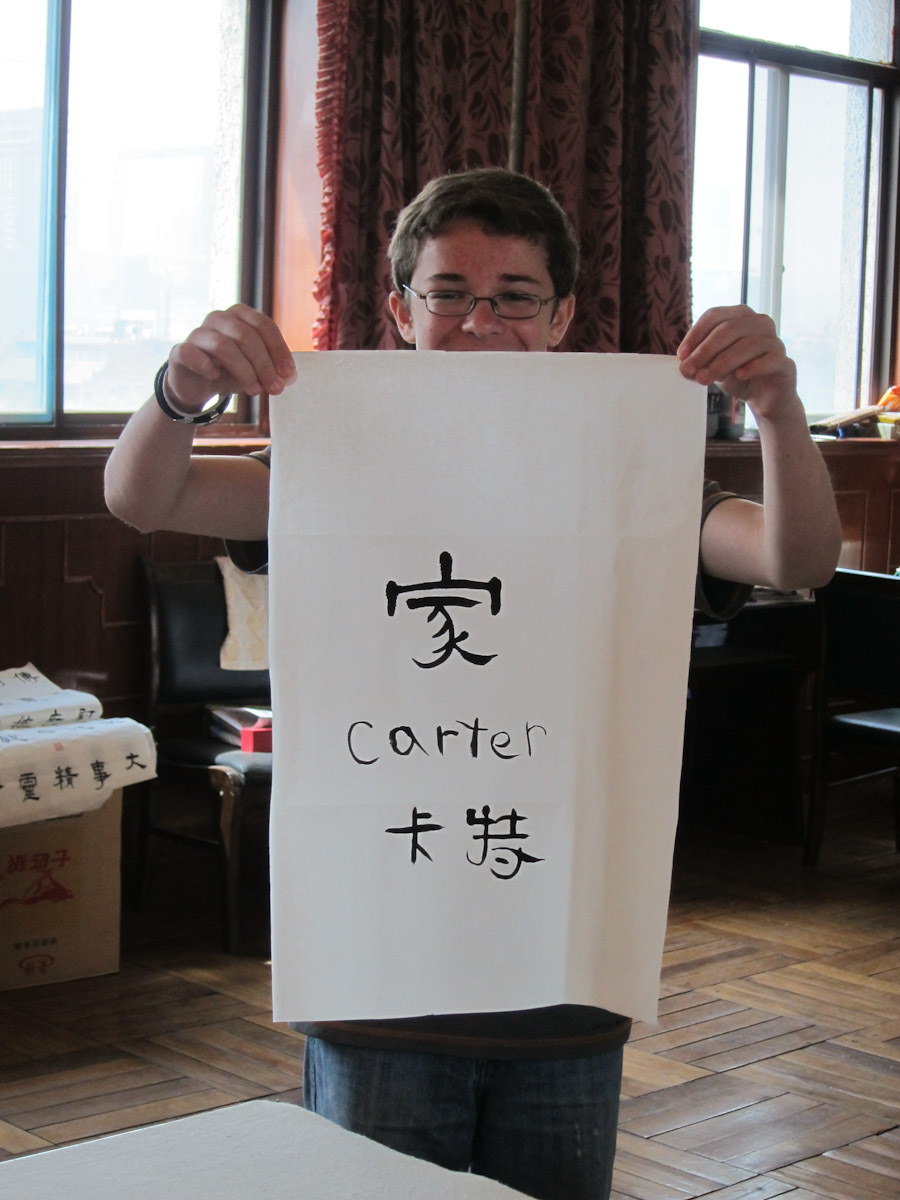
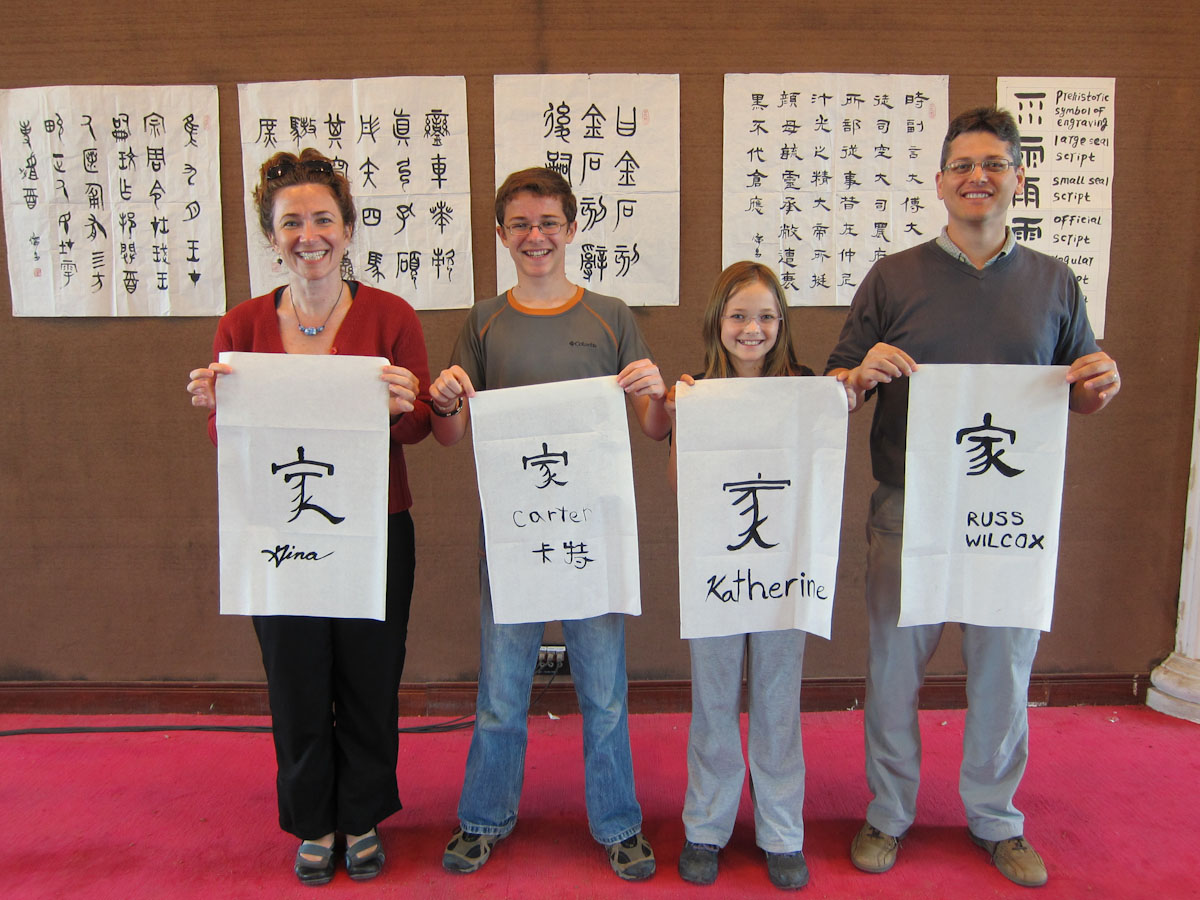
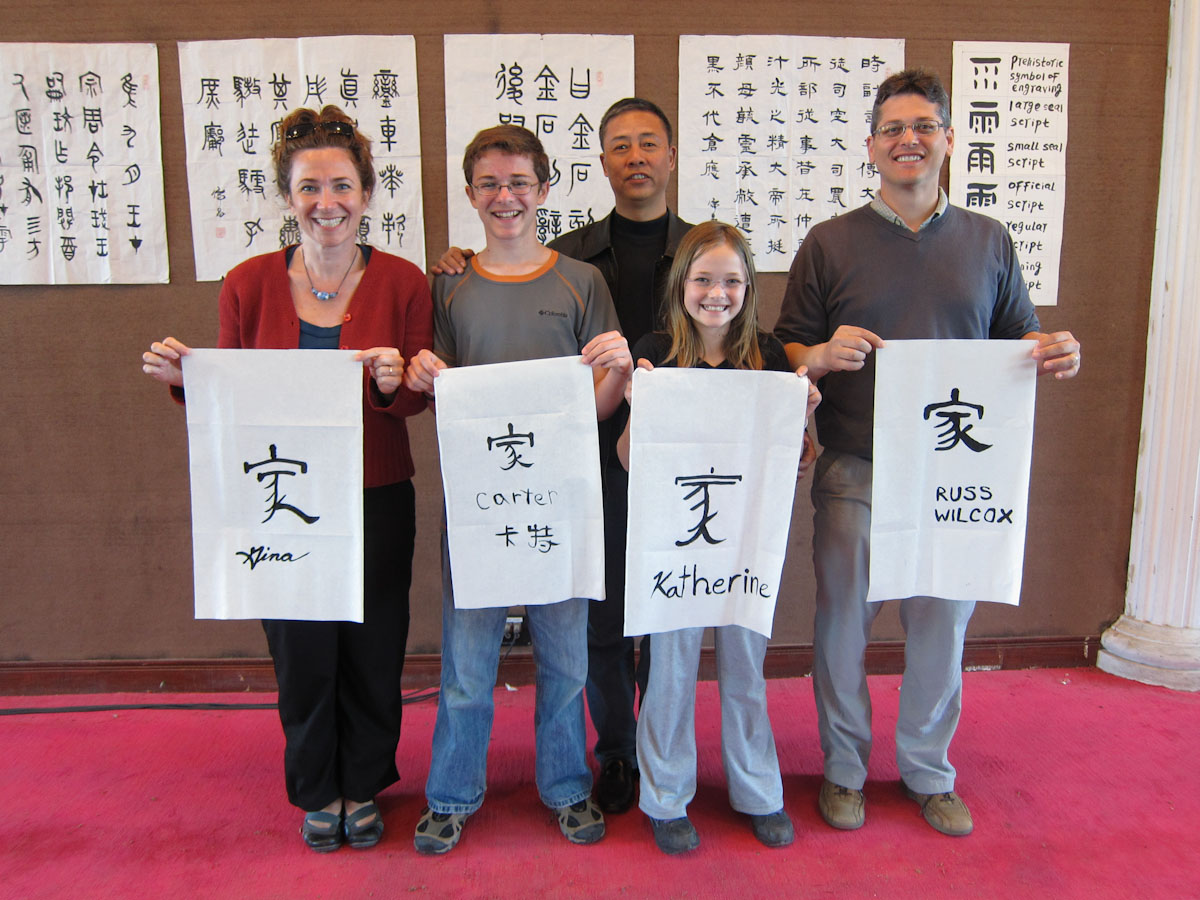
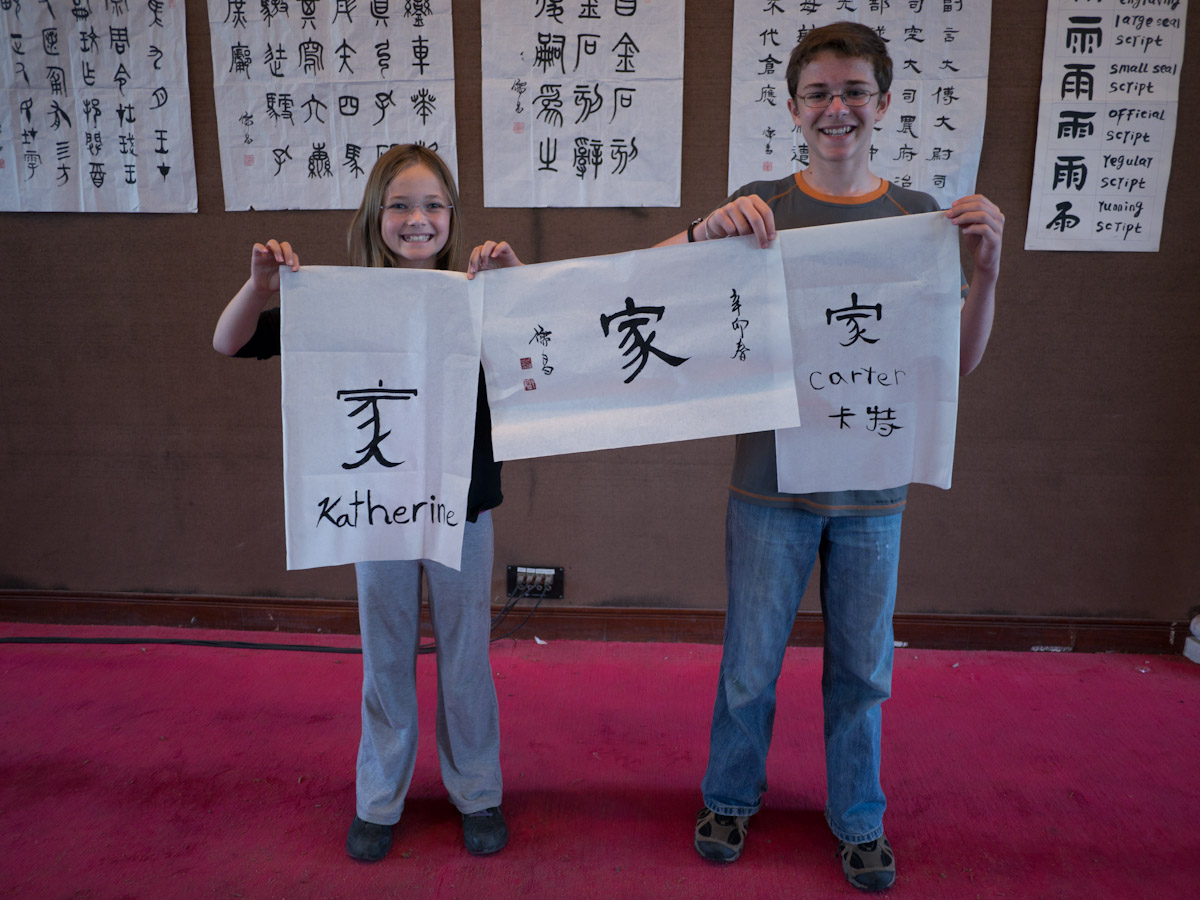
Finally the master gave us our challenge. Since we were a happy traveling family, he wanted us all to learn the Chinese character for FAMILY. The only problem was it is rather complex! He showed us again and again and we kept practicing and practicing until our fingers knew what to do.
Finally he gave us all one single terrifyingly clean piece of nice paper. He said “Do your best, and whatever happens sign your name below.” We trembled with fear and delight, but our minds focued and our hands moved into action as let our brushes glide across the paper. Done!
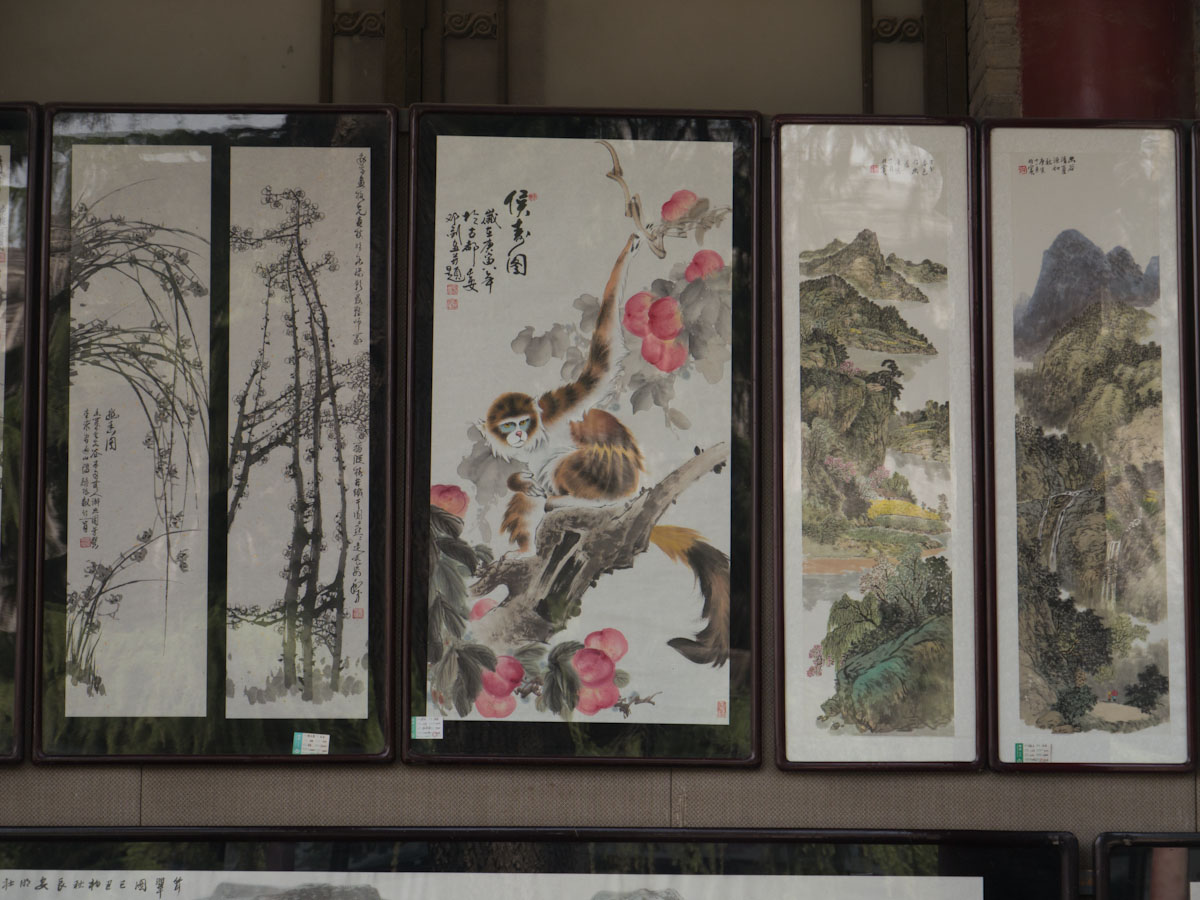
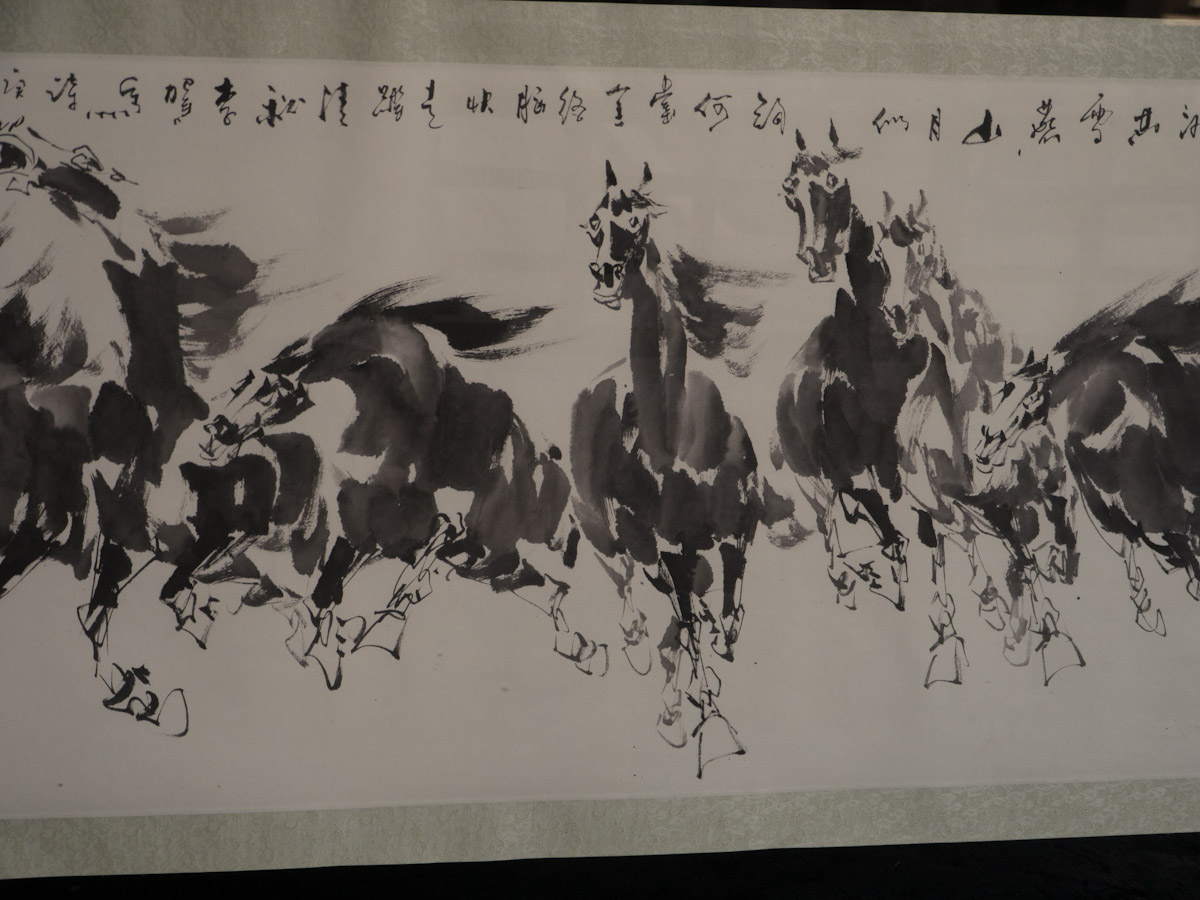
Why study calligraphy? It would take years to learn the Chinese characters, and more years to learn how to draw them with a brush. It all sounds terribly tedious but then we tried it and now we know. How restful and enjoyable it would feel, to devote one’s quiet time to practicing this ancient art.