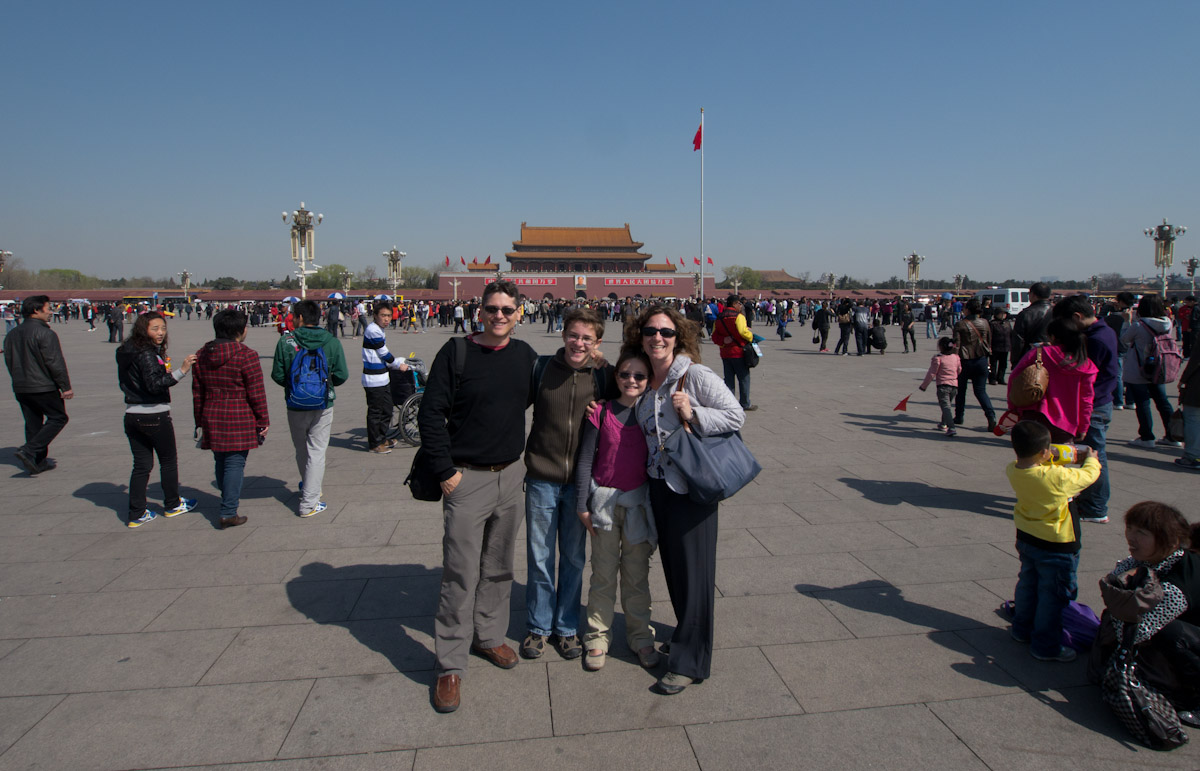
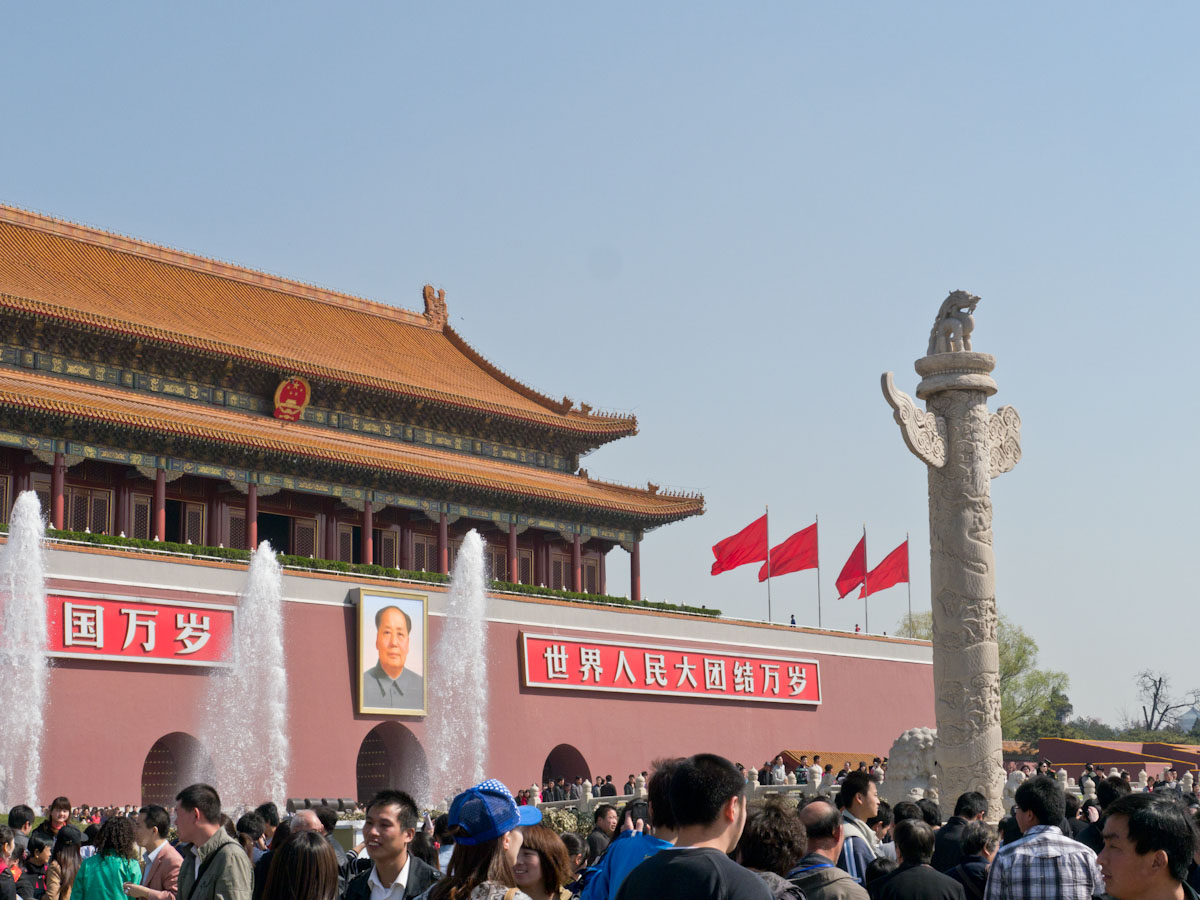
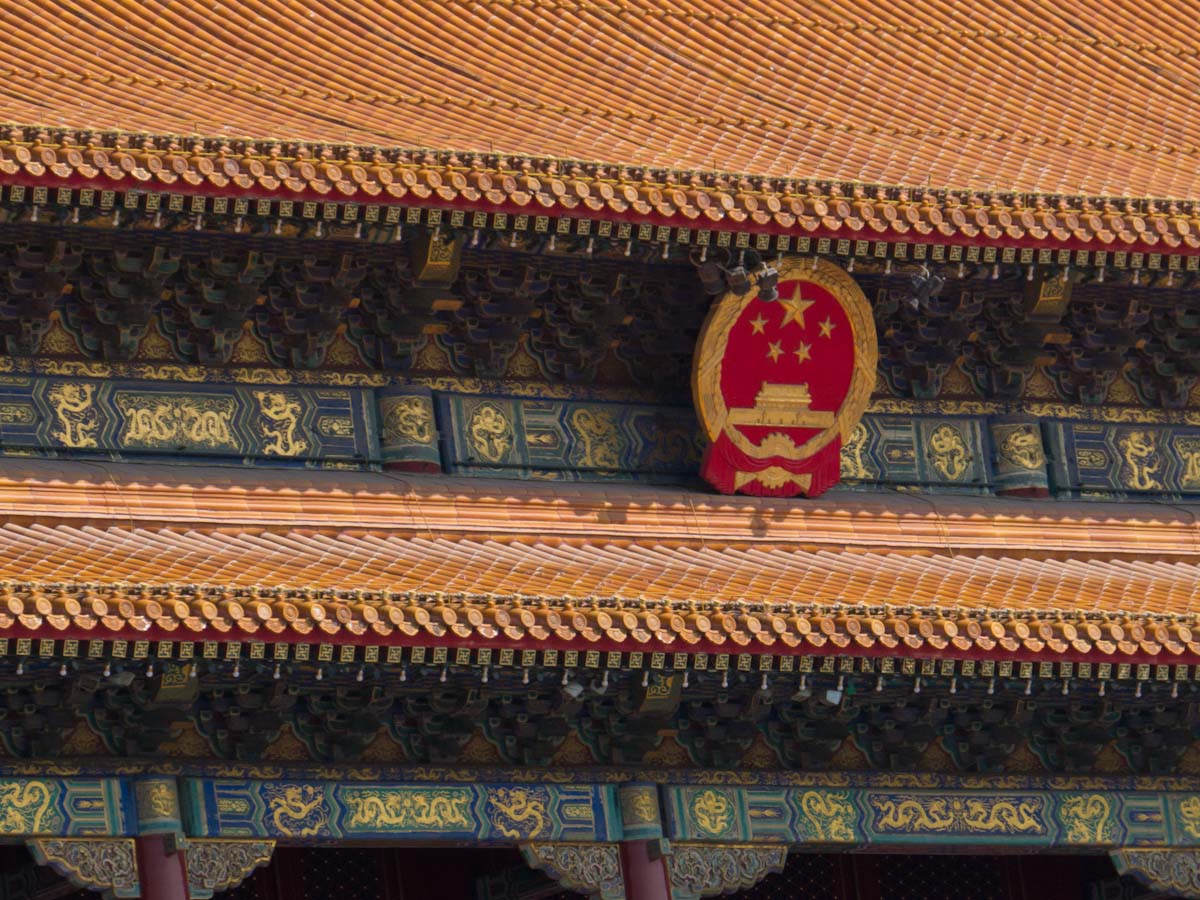
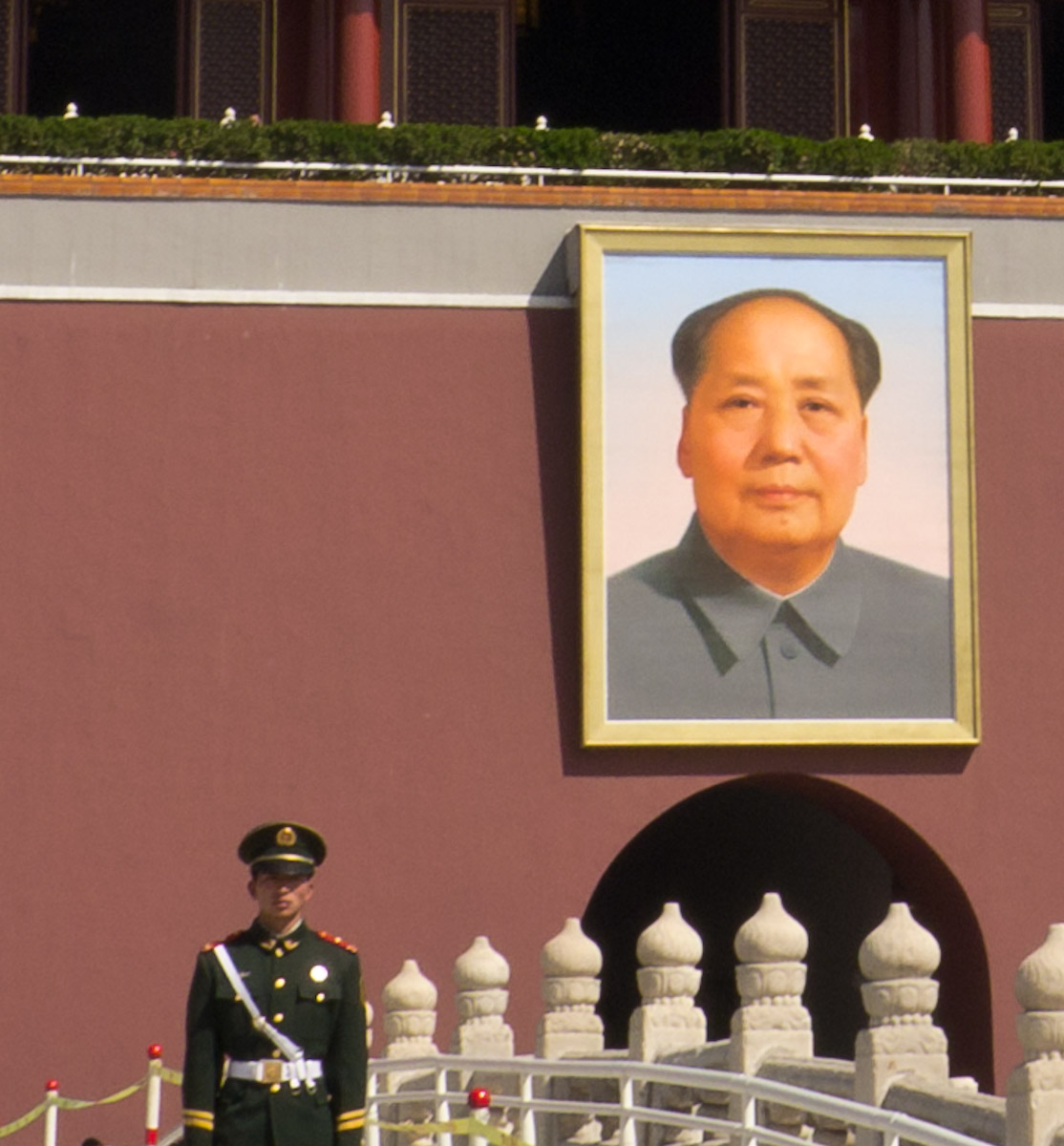
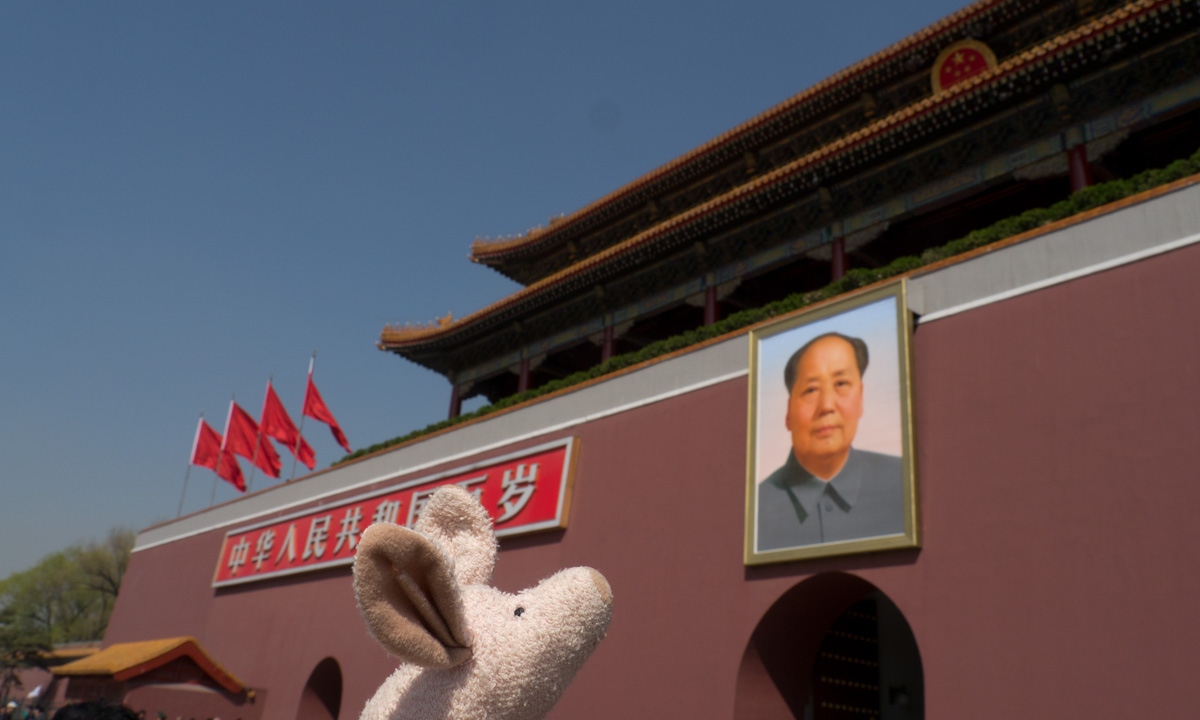
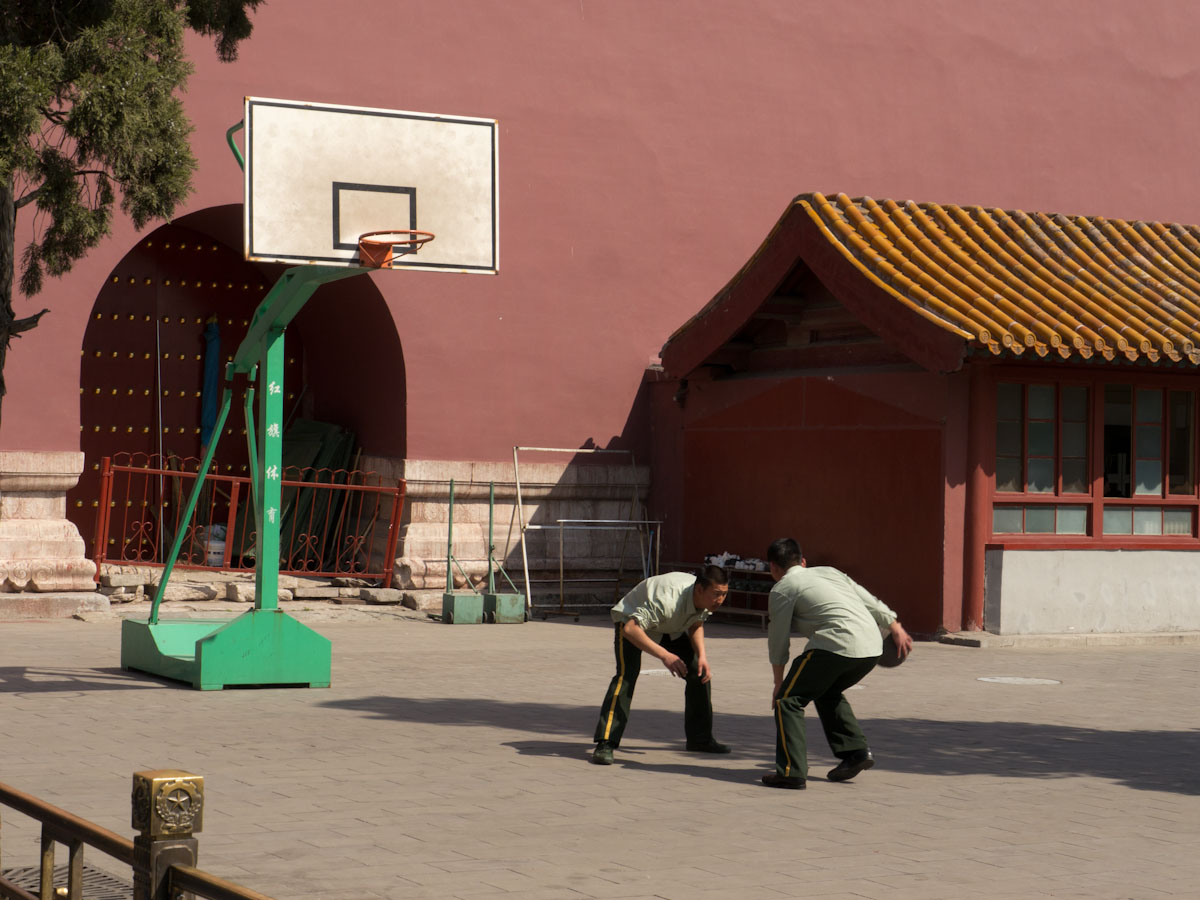
We started China in the capital city of Beijing, and started Beijing in its iconic heart – Tiananmen Square.
This is famous in the West as the place where Chinses students protested for democracy in 1989, and we have read in the Western press that there are some still seeking change in China inspired by the Arab Spring of 2011. So we arrived curious.
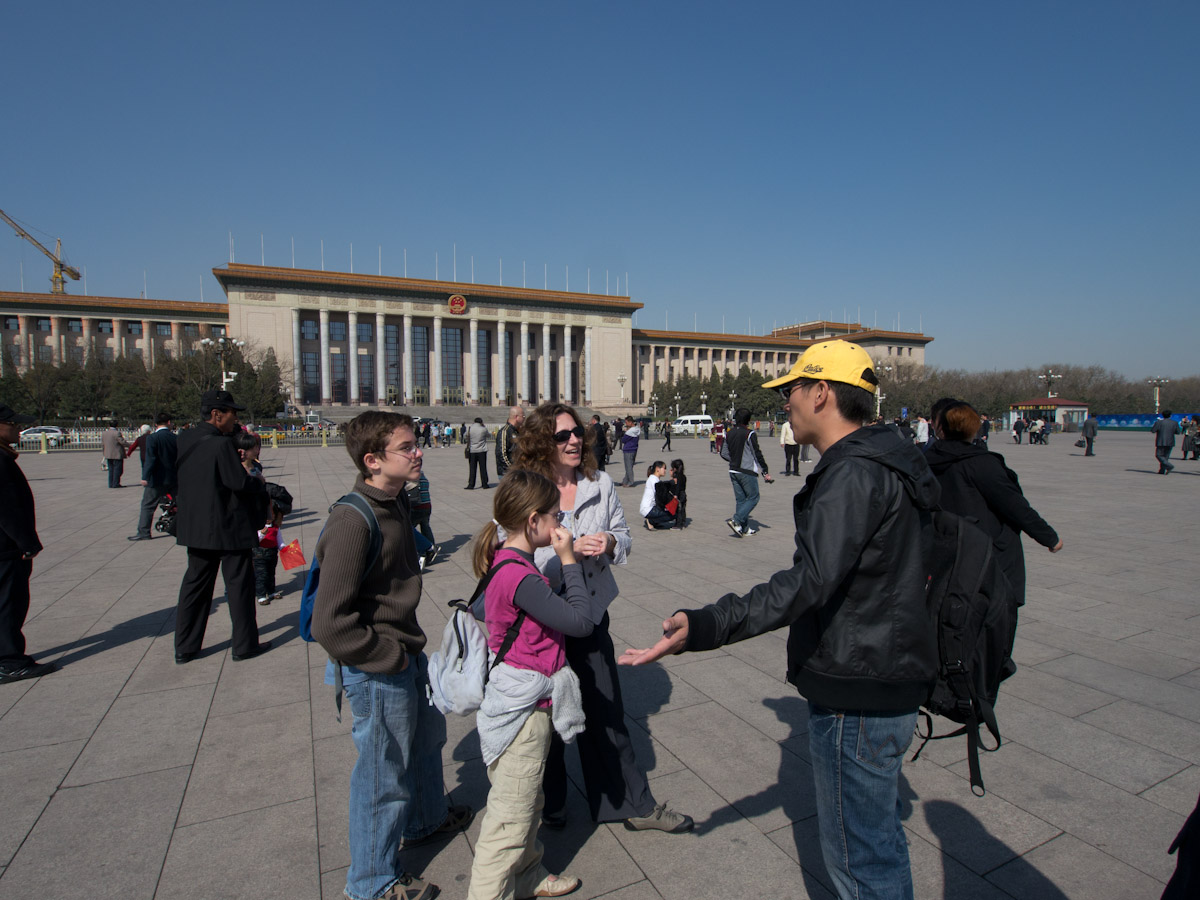
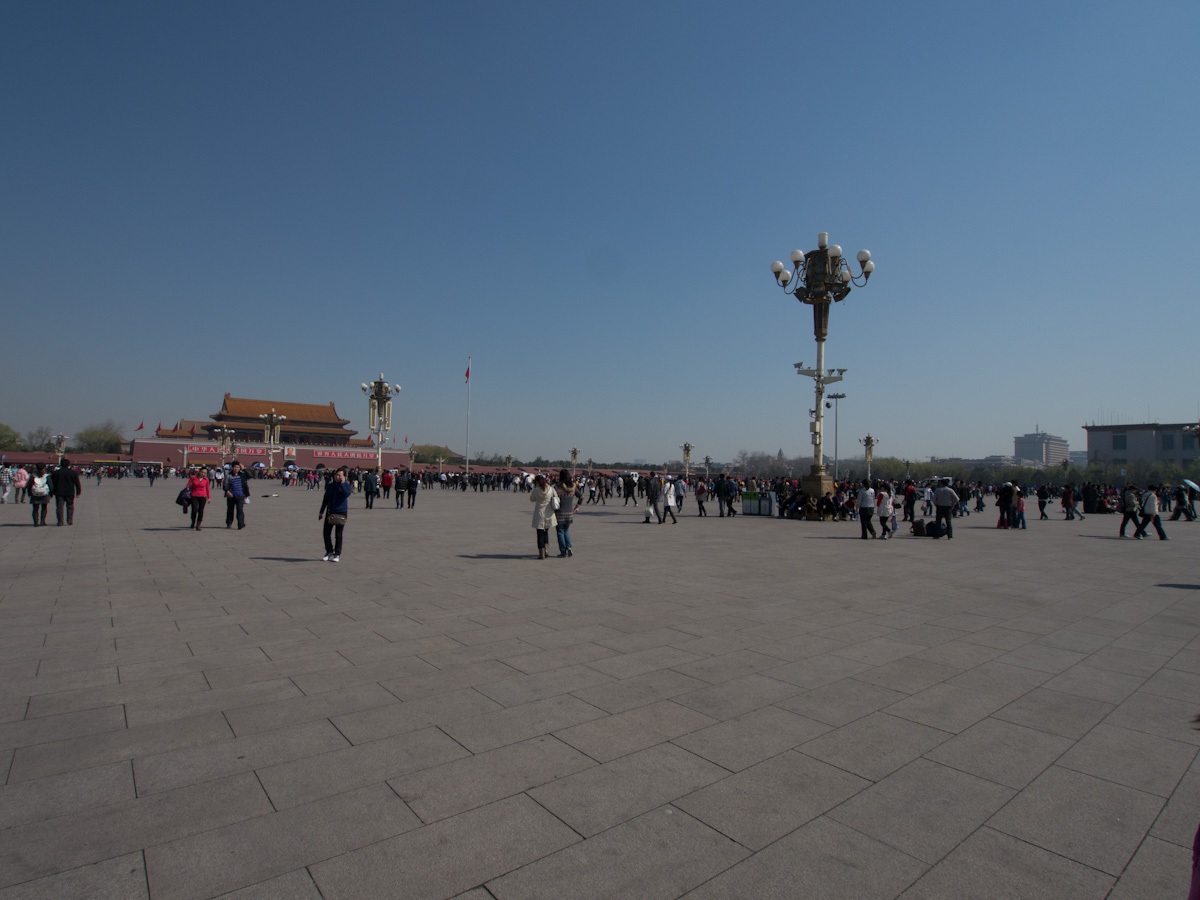
With plenty of military walking about, we found Tiananmen Square to be simply a broad, open and completely peaceful plaza. The only protests there were good-natured complaints between tourists and merchants as they haggled on price.
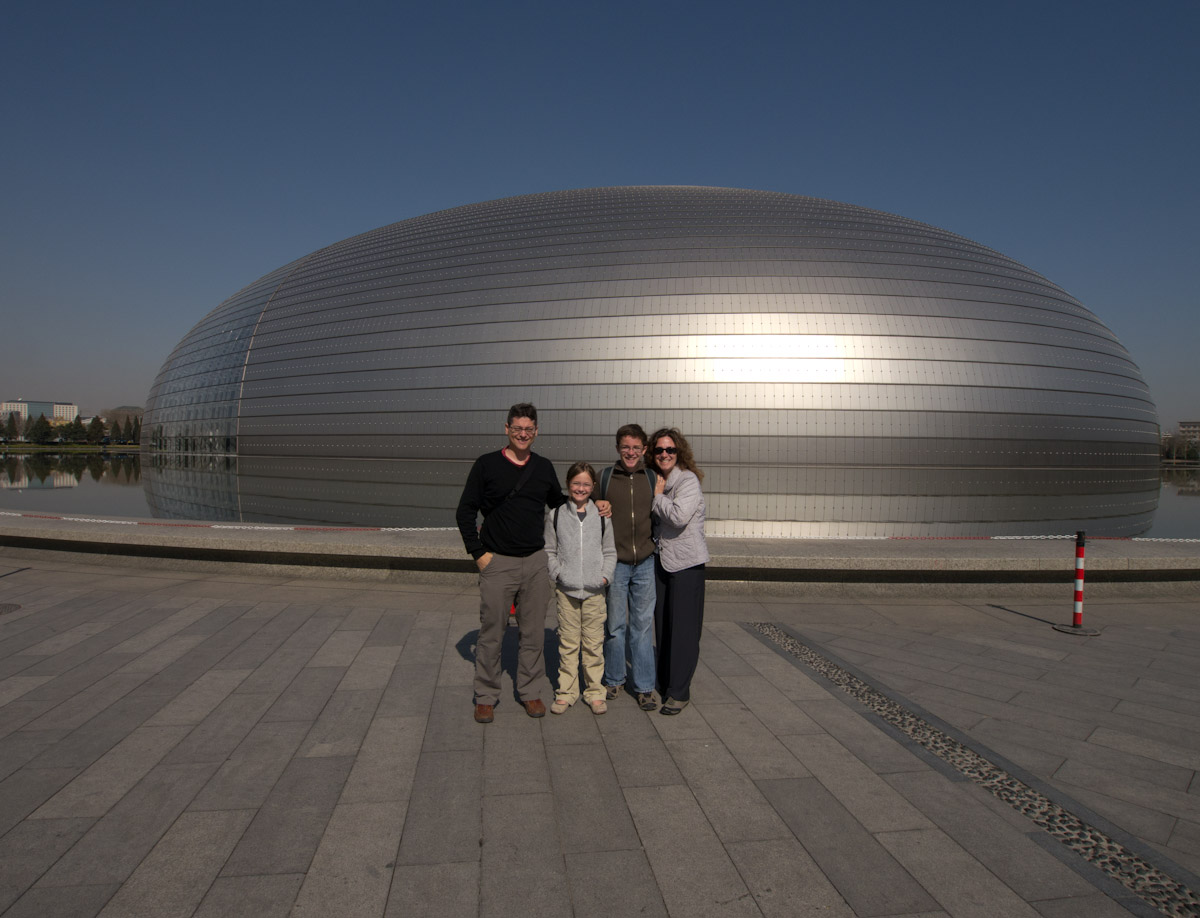
At one end of Tiananmen Square is the Forbidden City – palatial home of emperors. The left side is a giant history museum that contains the Communist Party’s version of history – a version that has been so subject to internal debate and revision that the museum has been more often closed than open. The other side is a park with lakes. Nearby there is an enormous performance center called the Bird’s Egg, inspired by the design of the Bird’s Nest stadium for the Beijing Olympics. At the far end opposite the Palace is a giant mausoleum for Chairman Mao, father of Communist China.
As the most powerful leader of the Chinese Communist revolution and the country’s Party Chairman from 1949 until his death in 1976, Mao’s stamp is still visible all over China. His portraits and statues of are supposed to be revered. But Mao also did great damage to China during the Great Leap Forward and the Cultural Revolution, disastrous programs that resulted in some 20 to 40 million deaths by famine. The national history museum contains many stories of Communist Party achievements, but there is just one sentence about the Cultural Revolution and no mention of the crisis. Nowadays the communist economic policies championed by Mao have been abandoned the world over in favor of market policies that Mao strongly resisted. China could have been perhaps 10 or 20 years ahead if Mao had been more open-minded, but then the Communist Party may well have been crushed without a strong and self-confident leader.
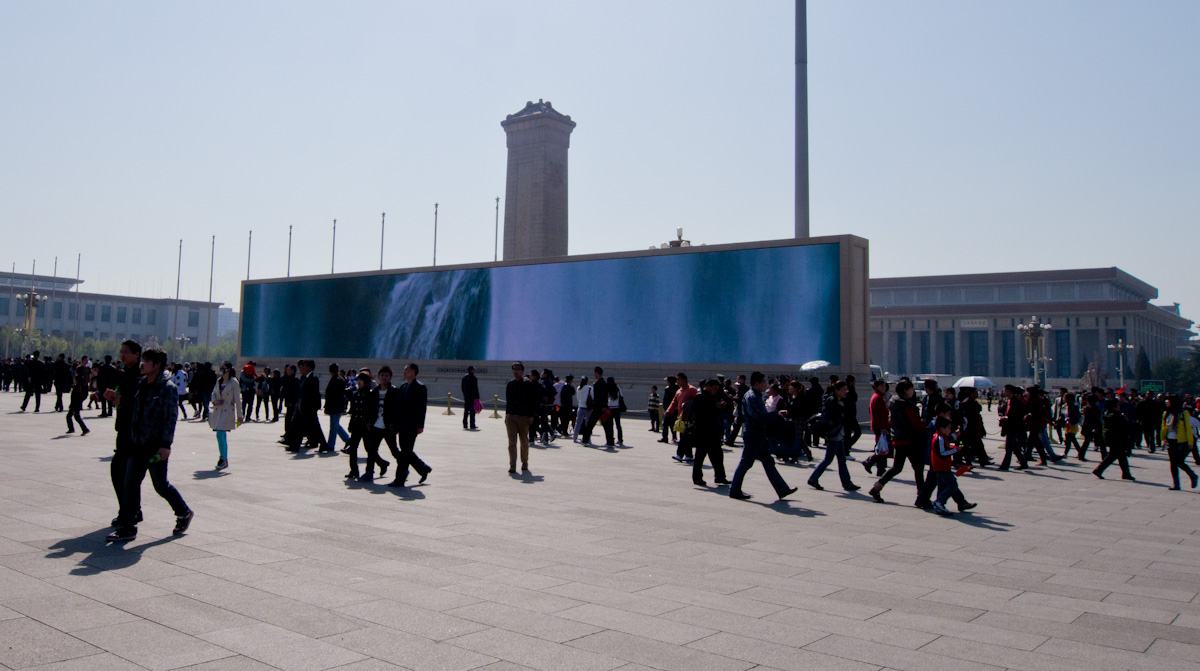
Perhaps that ambivalence can be seen in Tiananmen. Not long ago, a giant LED screen has been erected in the square. Intentionally or not, it creates a large wall between Mao’s tomb and the Palace.
In any case all this history remains largely invisible to casual tourists. After a brief gawk at the gargantuan size of Tiananmen Square, one heads right over to the Forbidden City.
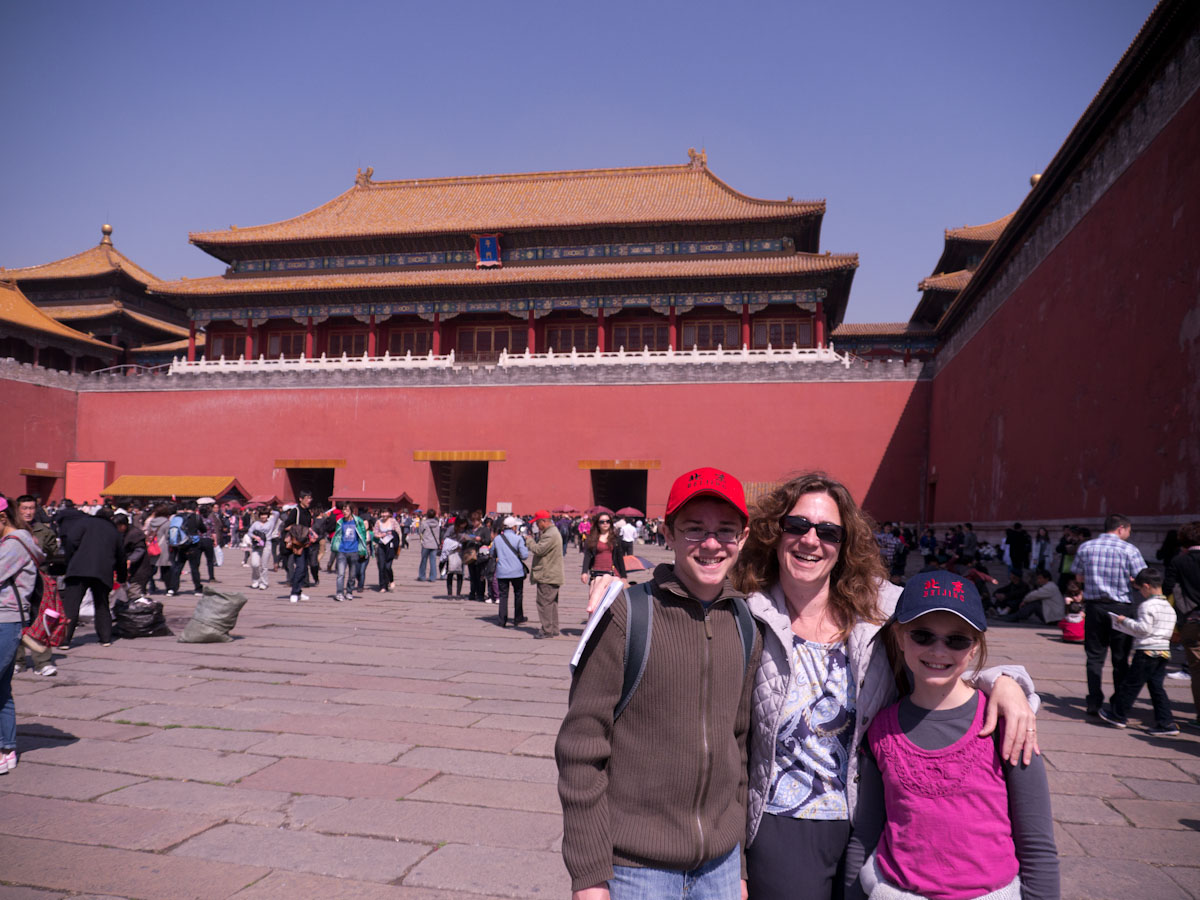
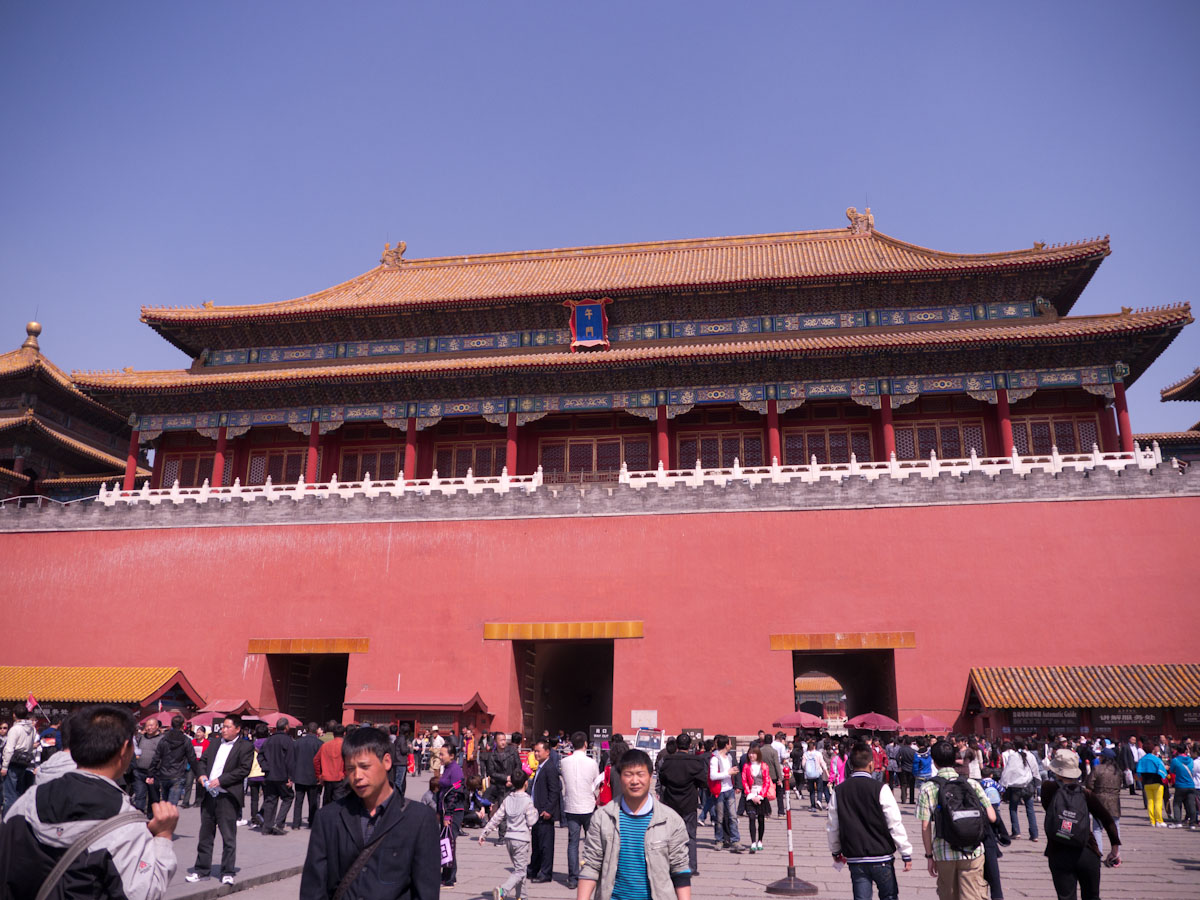
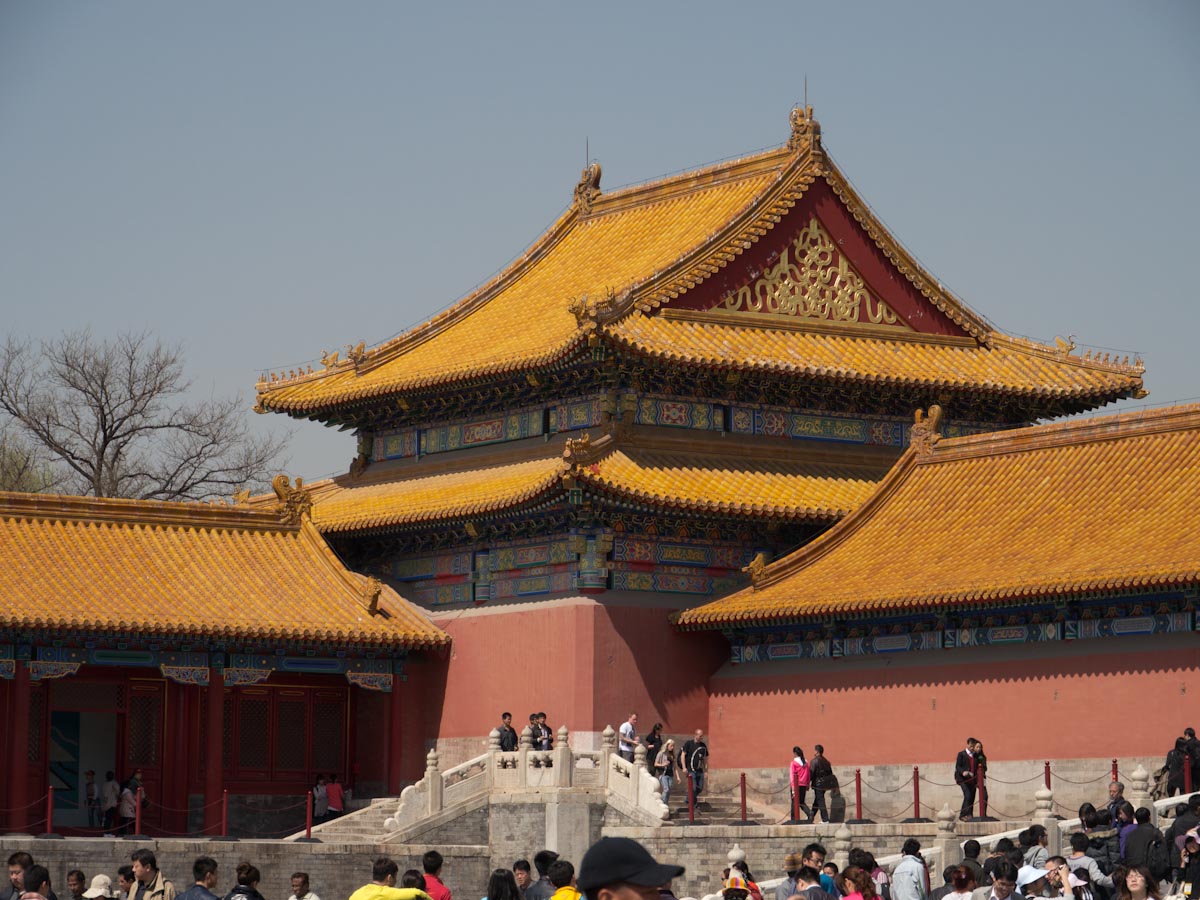
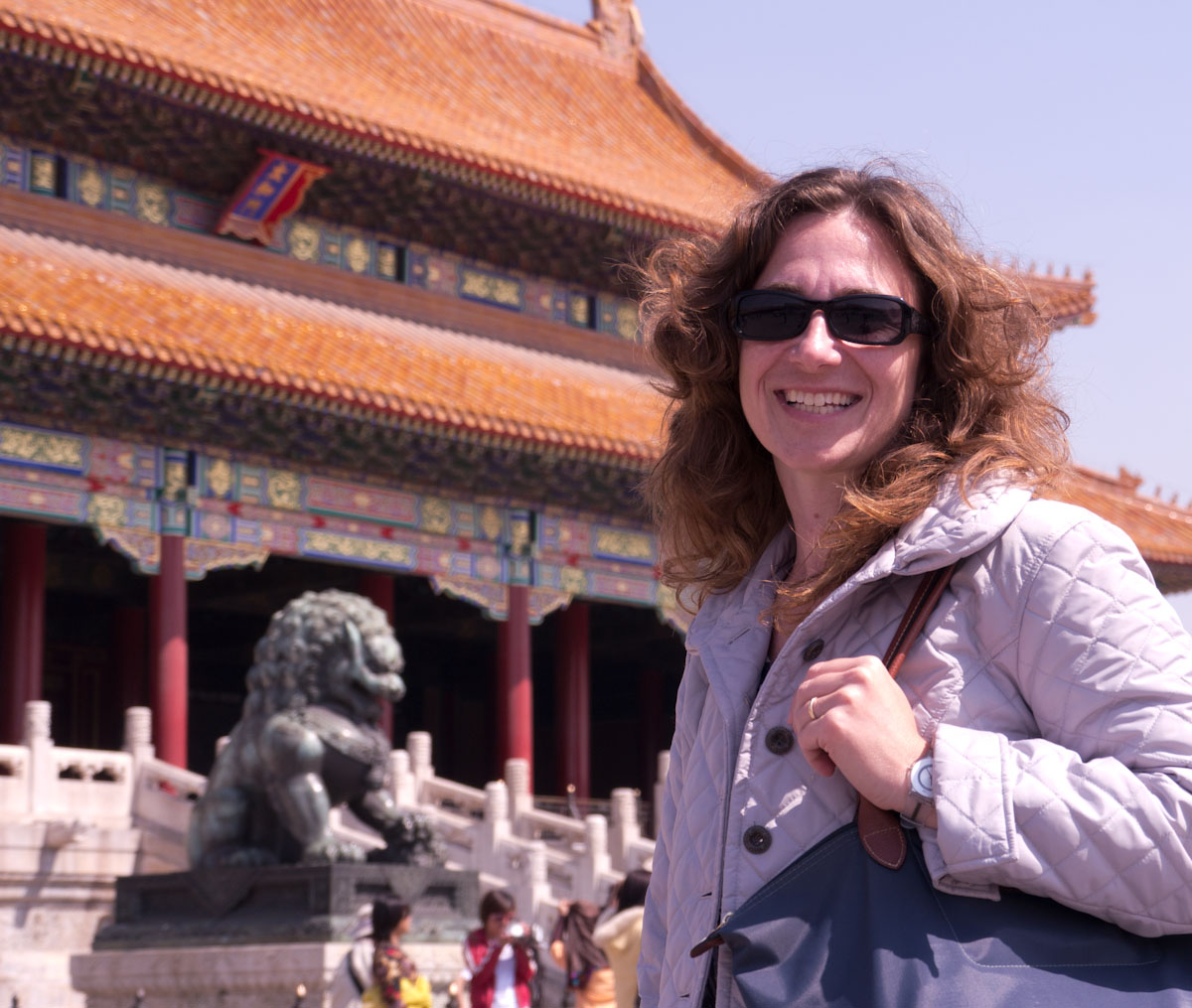
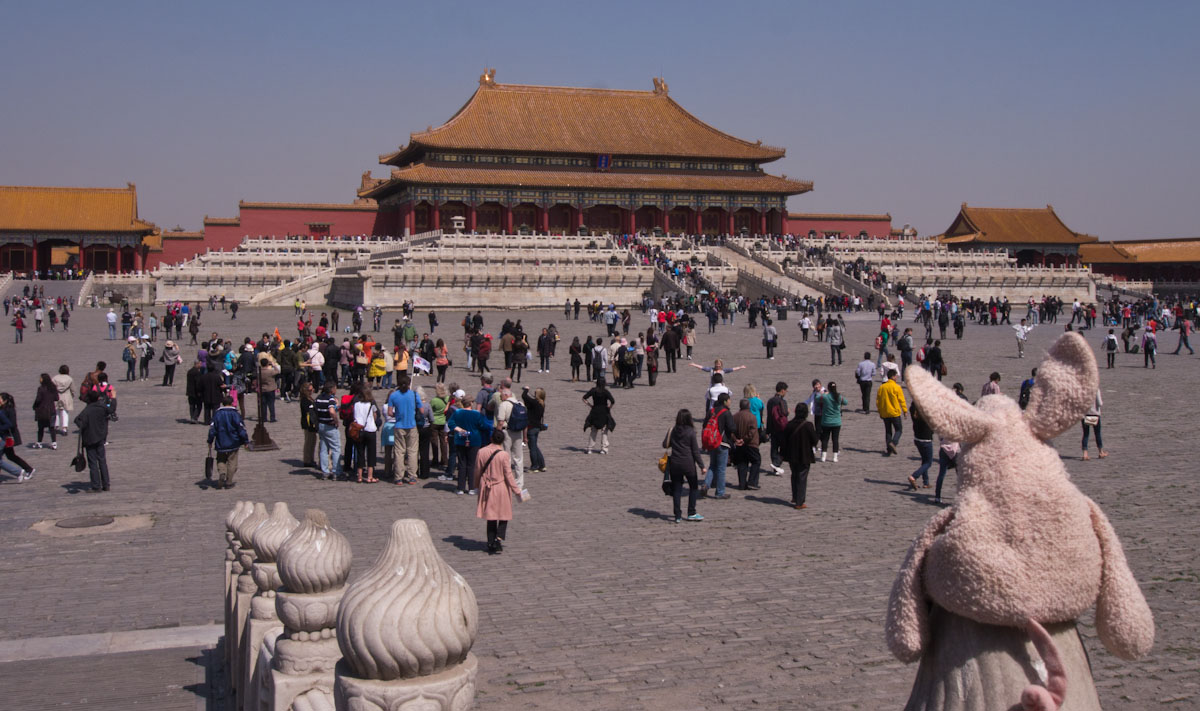
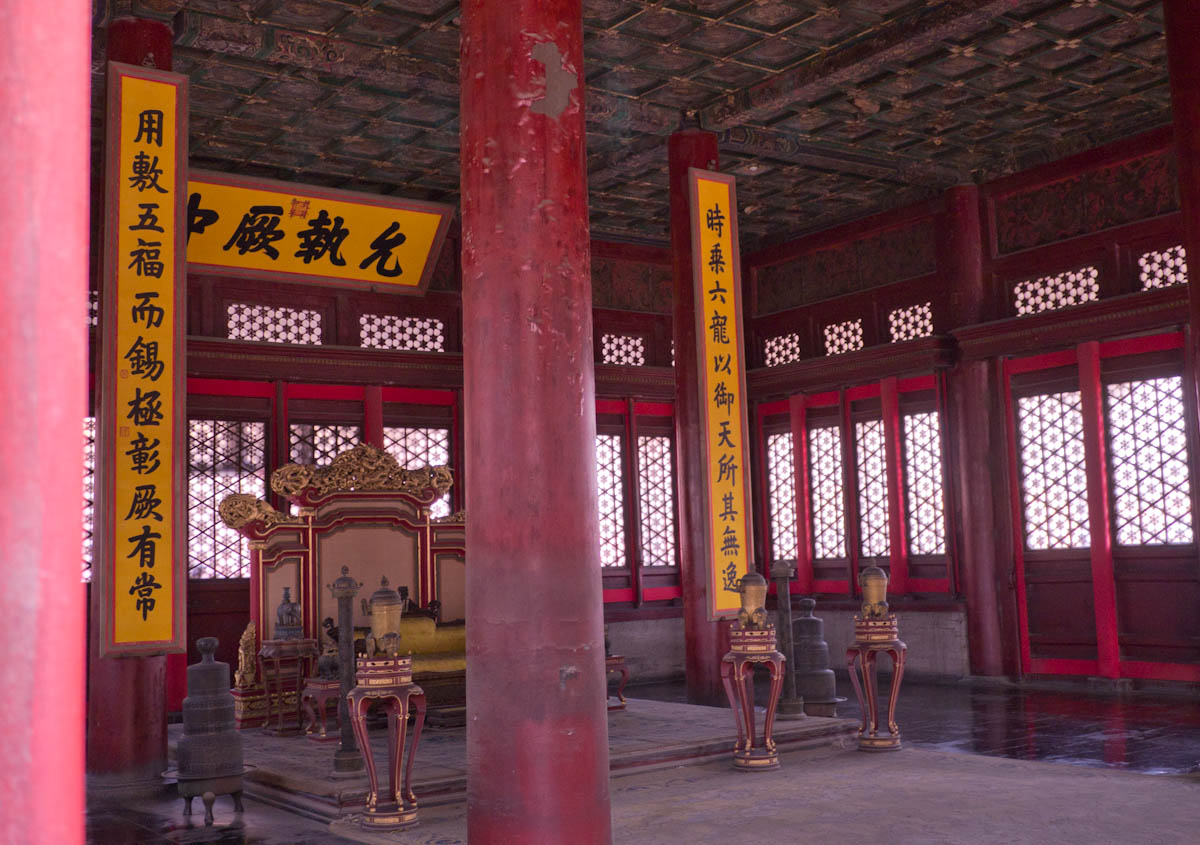
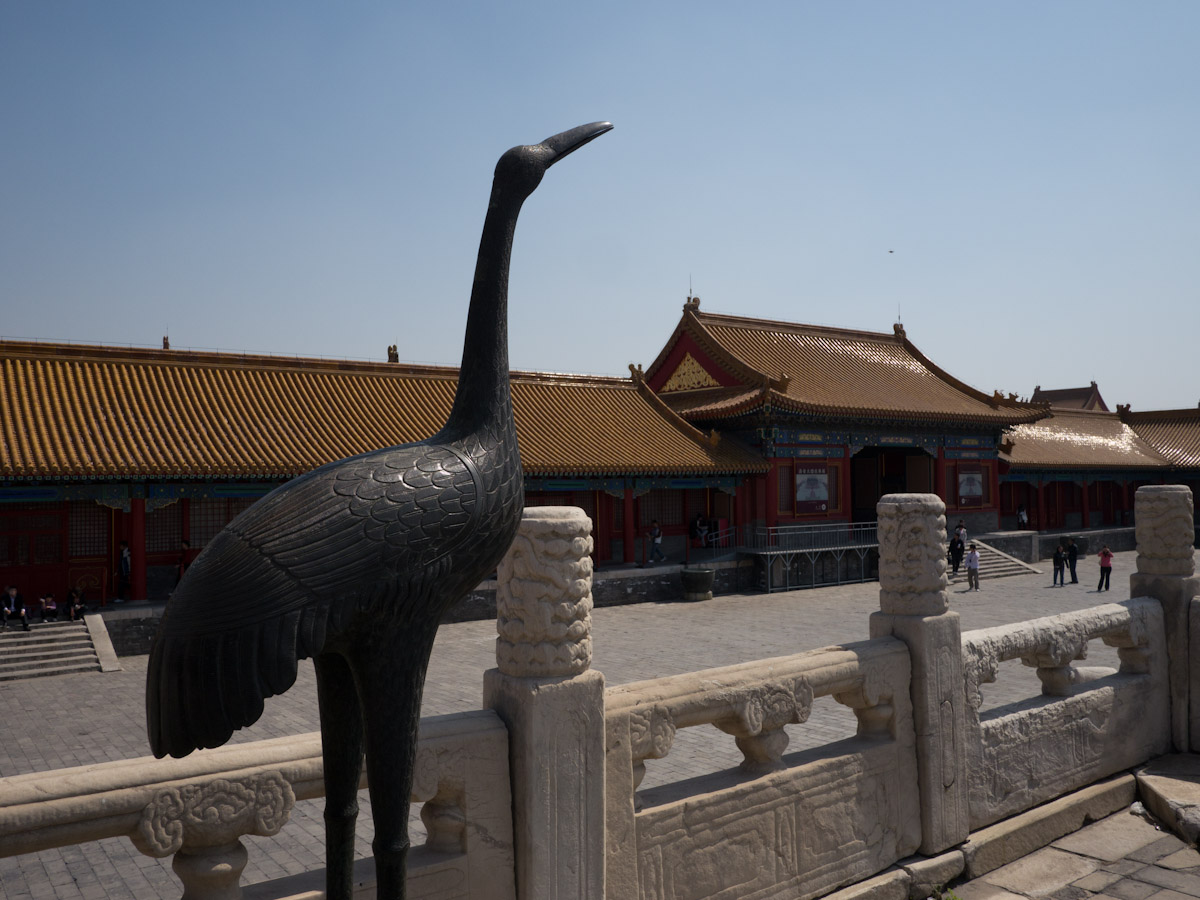
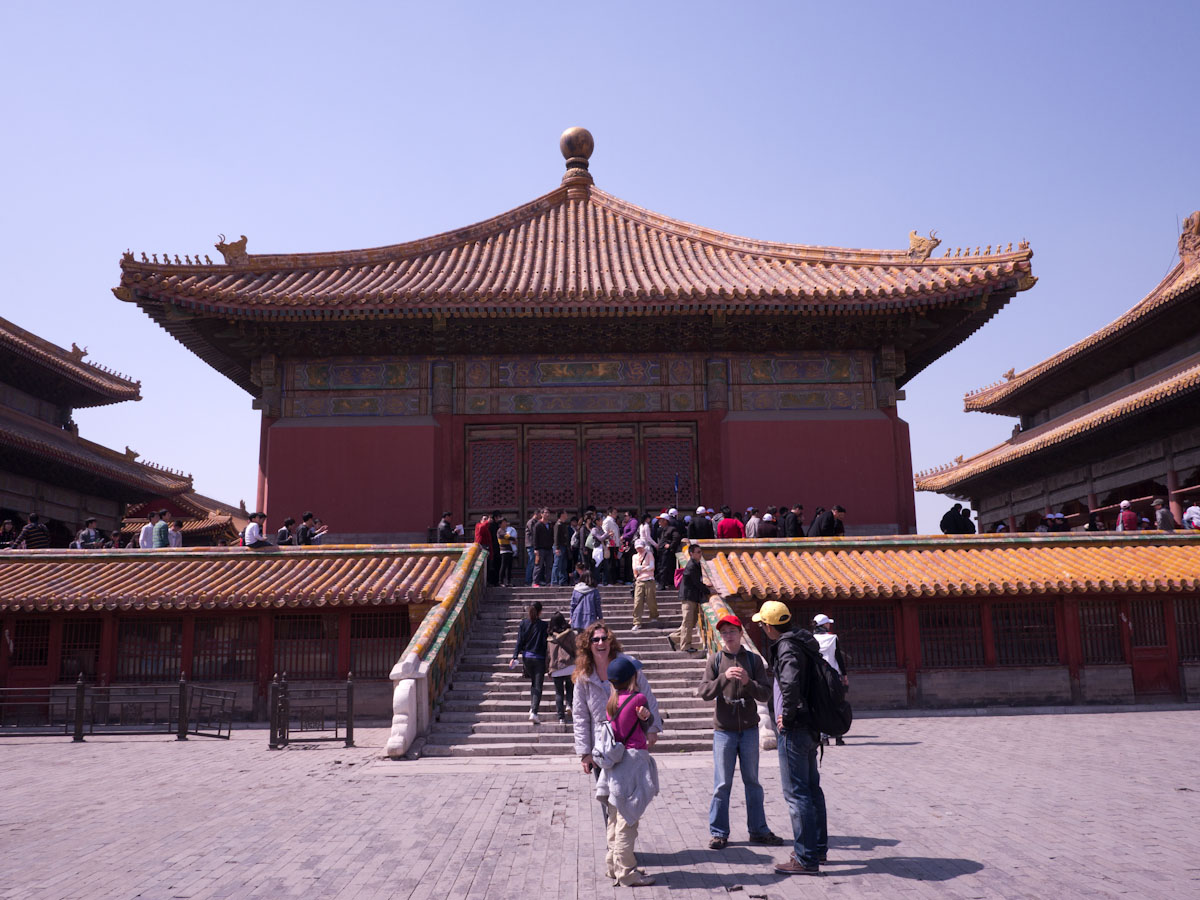
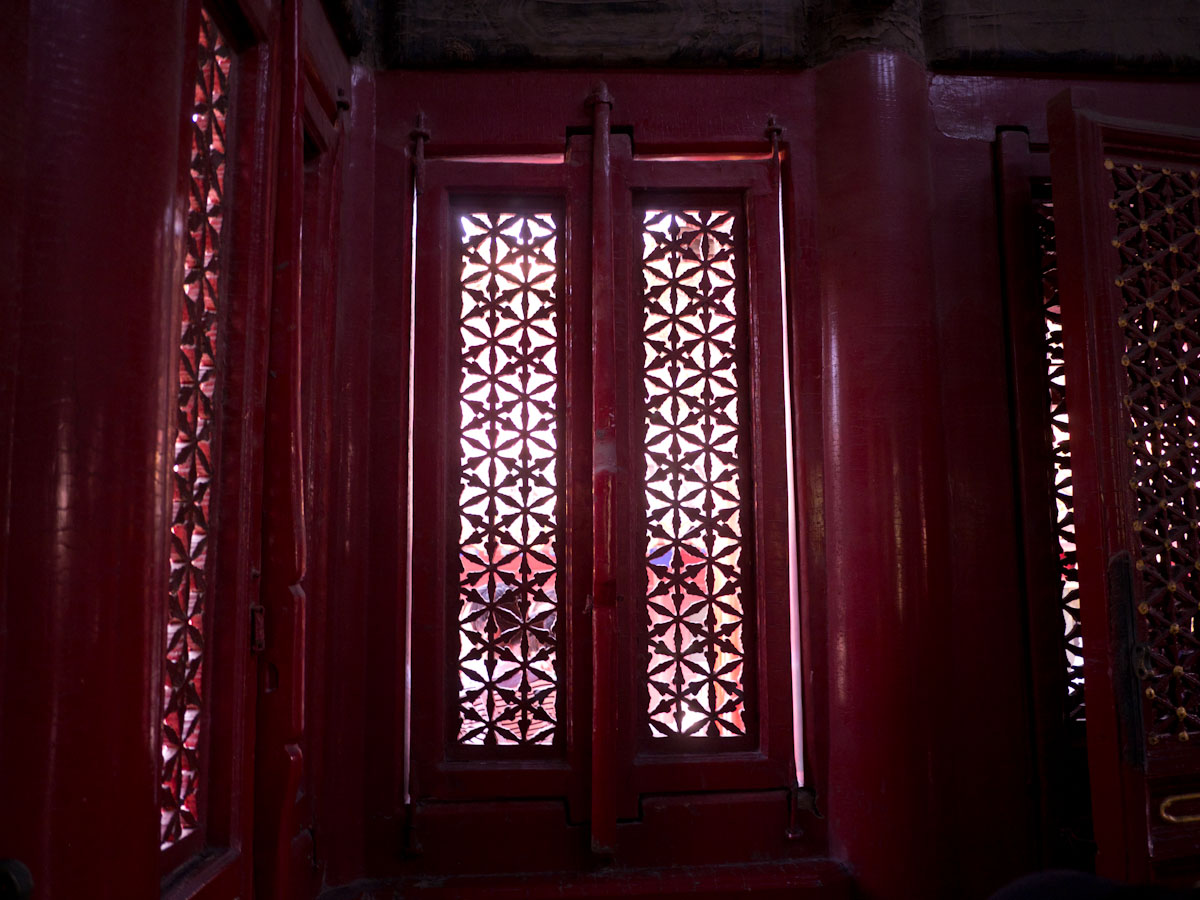
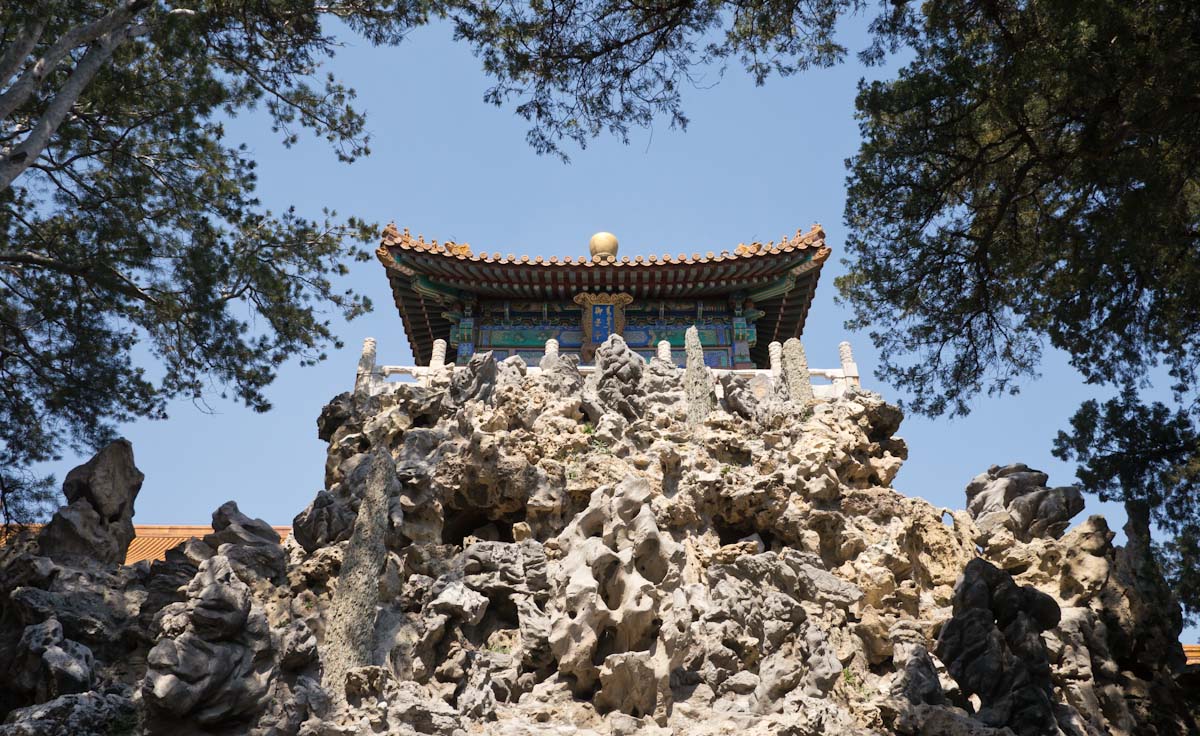
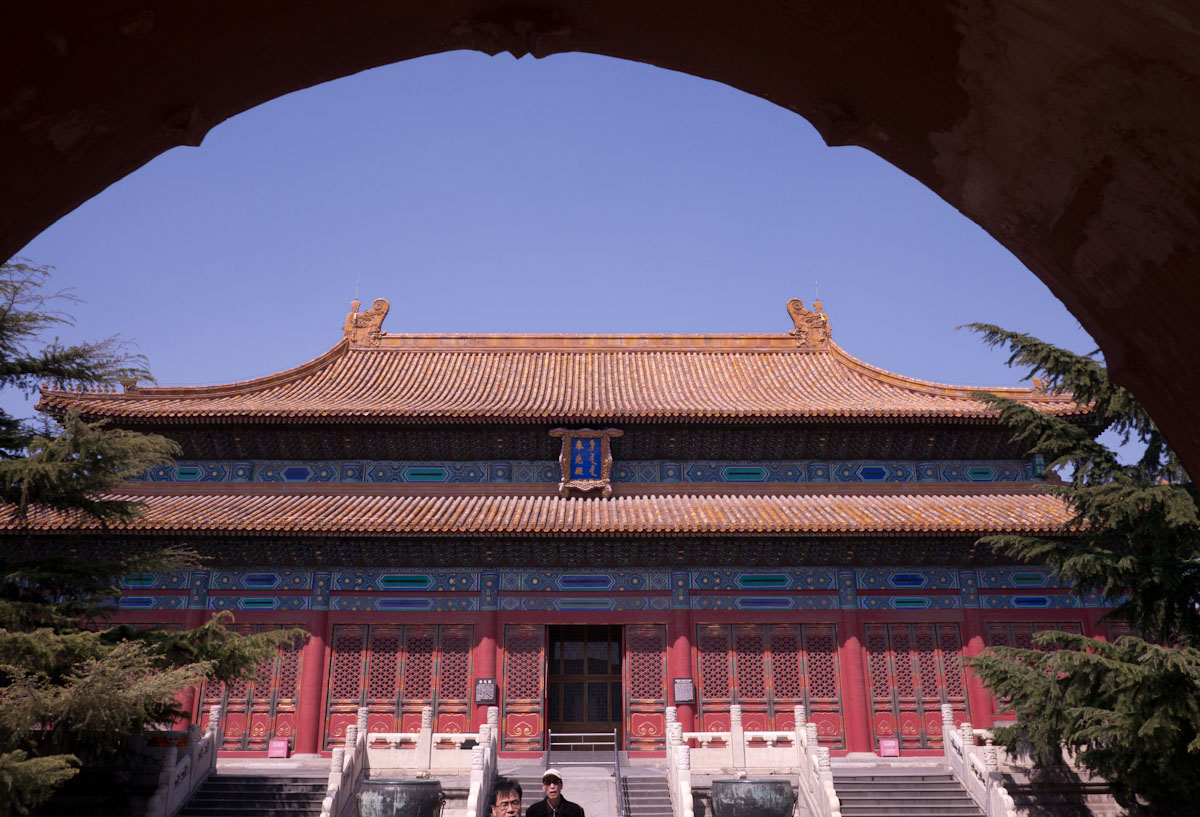
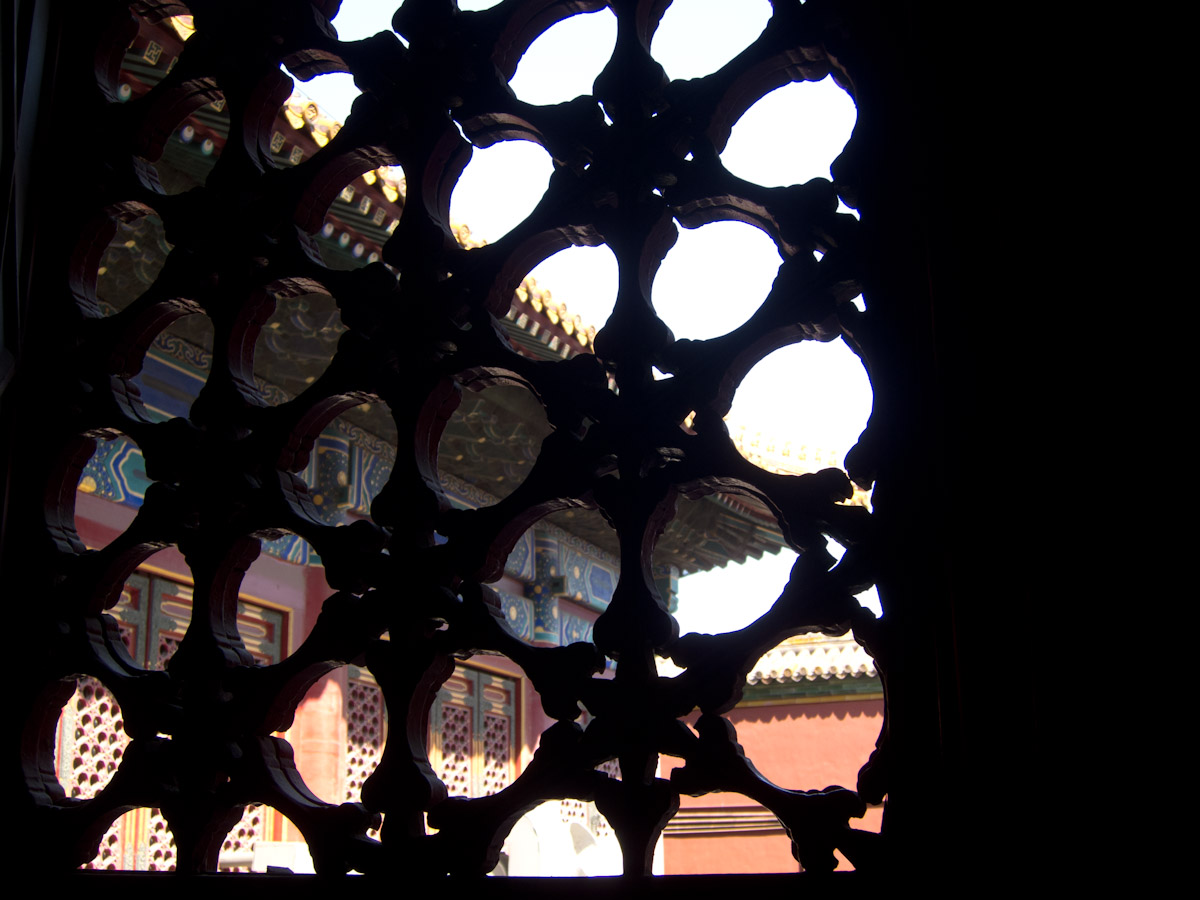
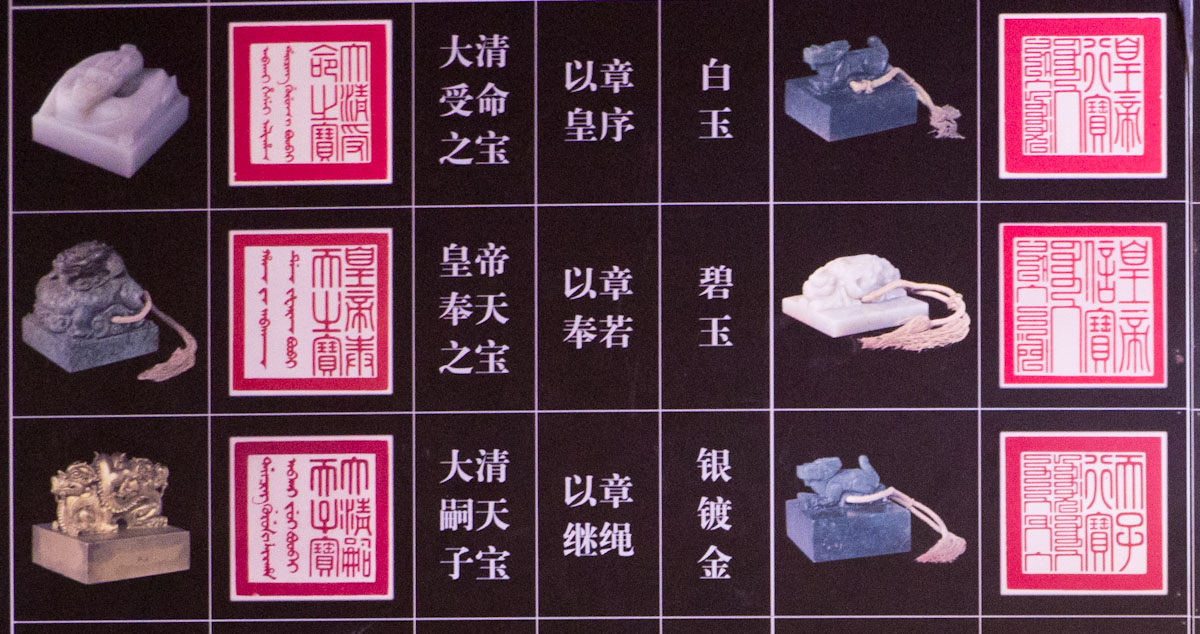
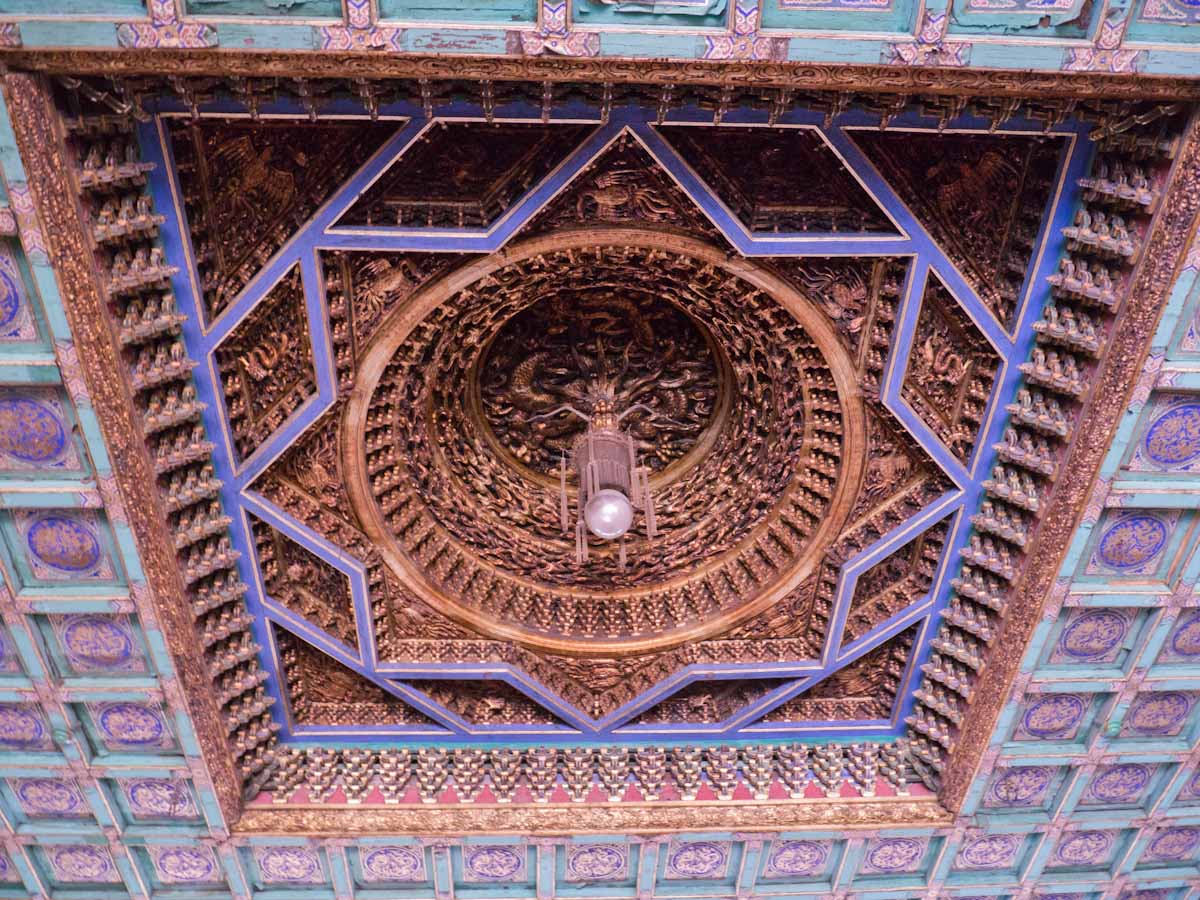
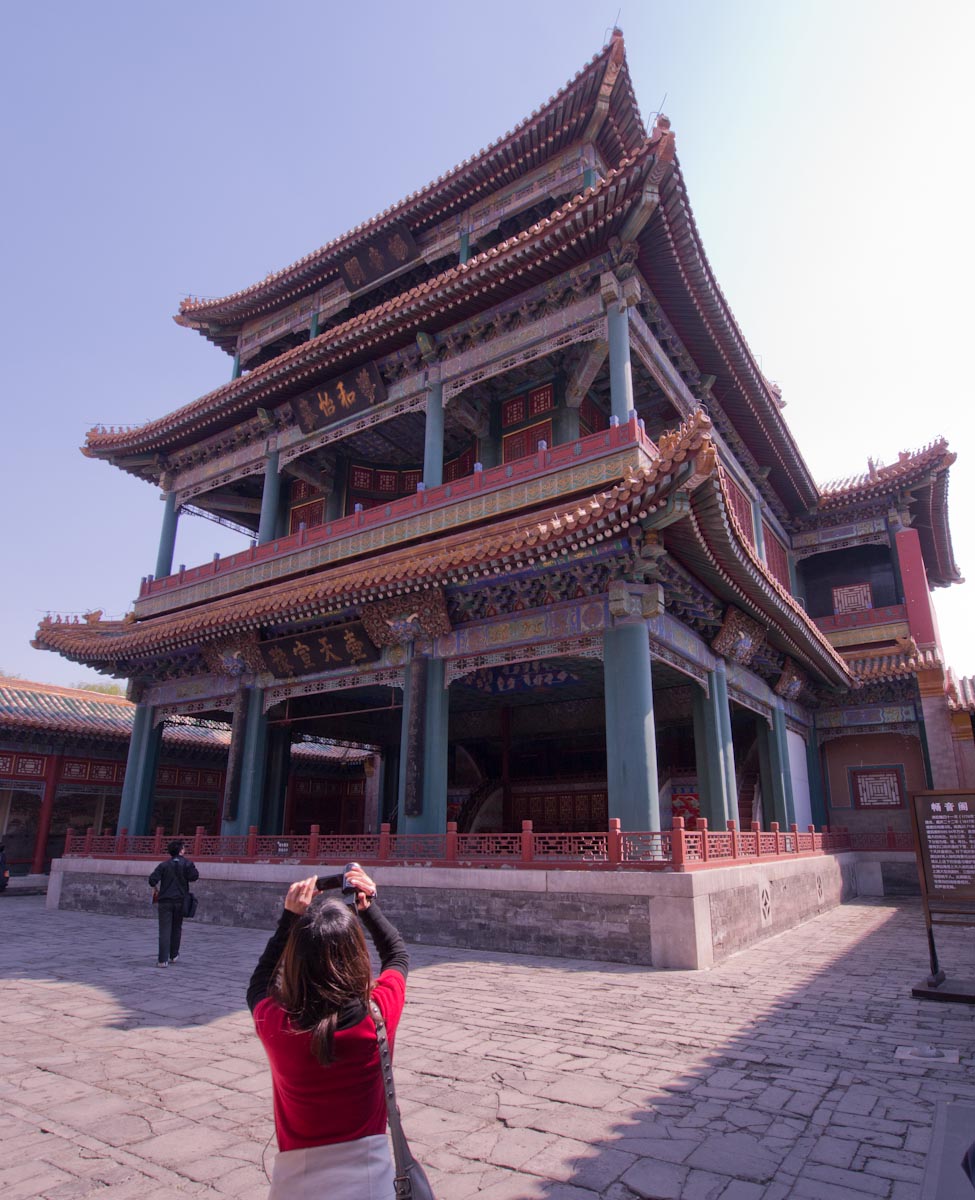
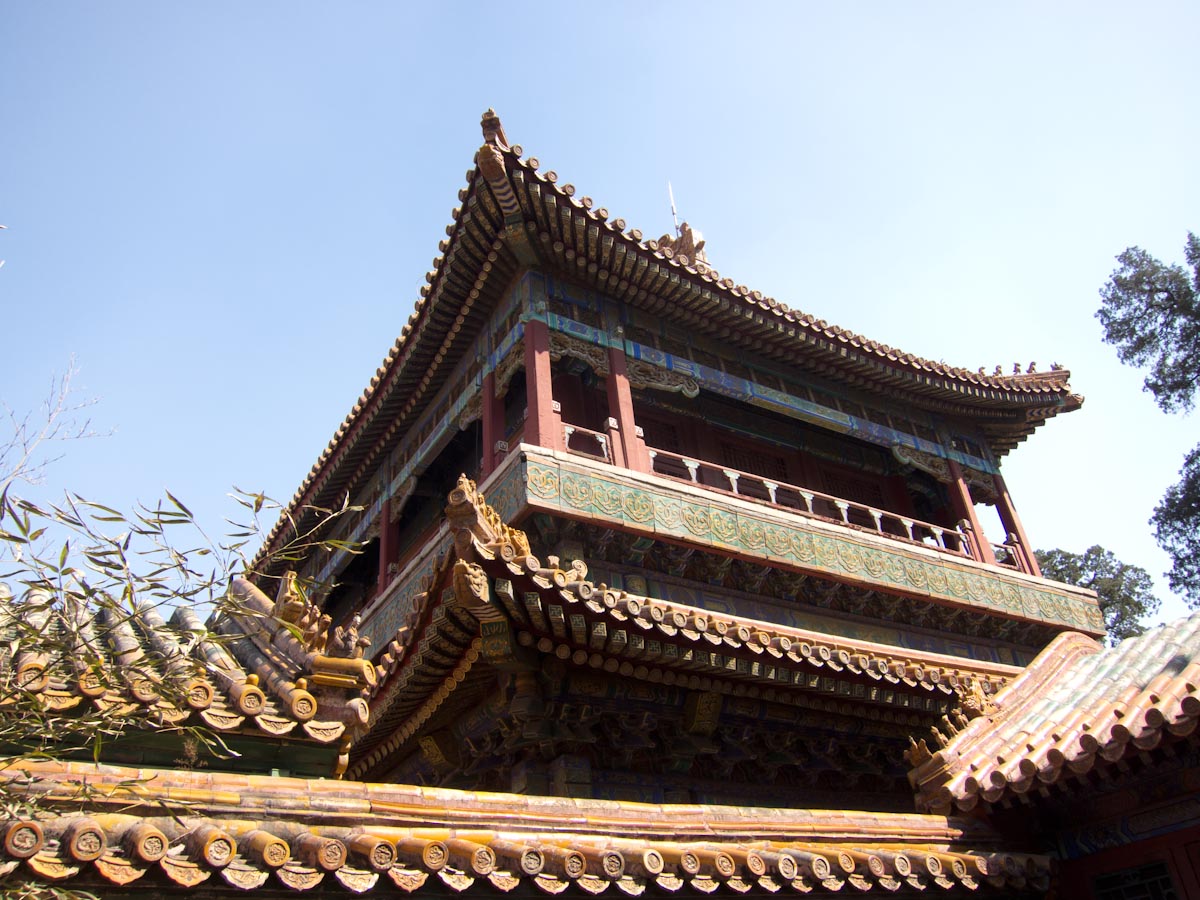
Dating back to the 1400s, the Forbidden City is an enormous complex of walls, courtyards, pavilions with nearly one thousand rooms. One million men worked for fifteen years to build this ornate wooden palace. The palace was home to 24 emperors, right up until Emperor Puyi, whose story is featured beautifully in The Last Emperor along with ravishing shots of the Palace scenery.
Three thousand concubines lived here with a squadron of eunuchs. Some would never see the emperor in their lifetimes, which must have been frustrating! On most days the emperor would enter a certain courtyard. The eunuchs would hold out a silver platter with nametags of recommended concubines. The emperor would pick a tag. The eunuchs would prepare the concubine, who would arrive at midnight already completely nude. As the birthing of a child was of national importance, most concubines were not allowed to carry a baby to term if pregnant.
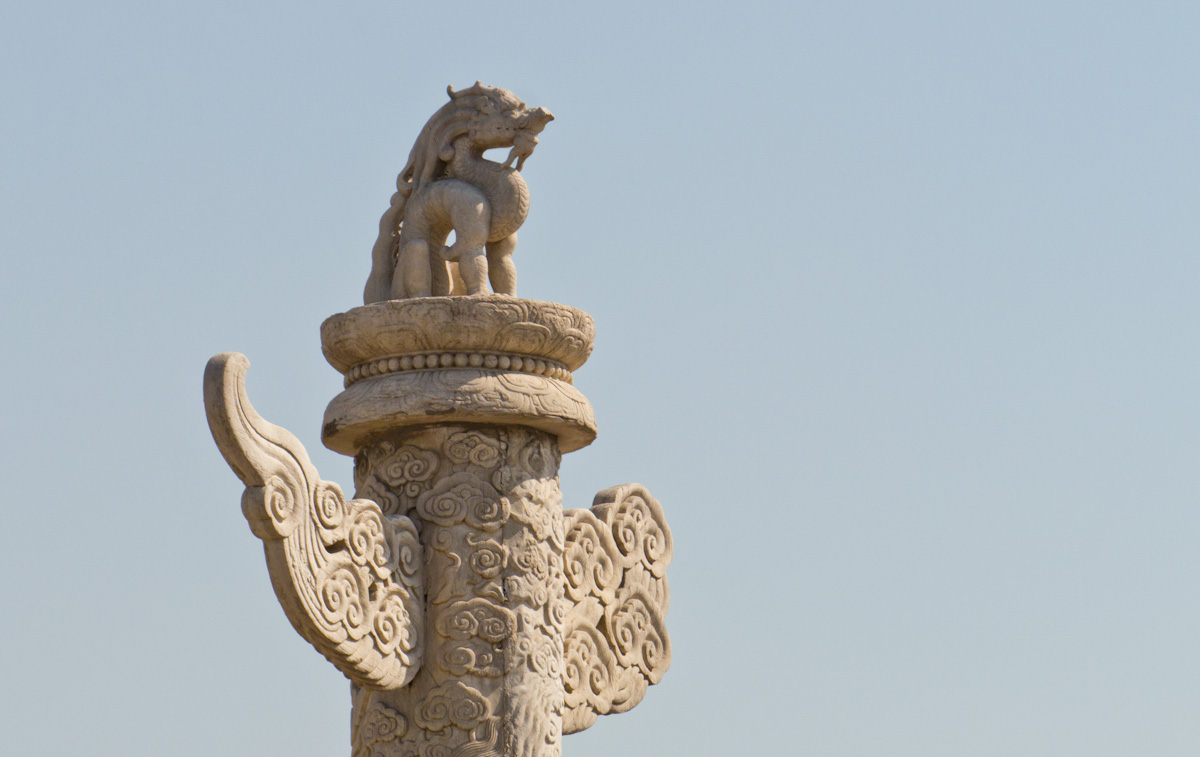
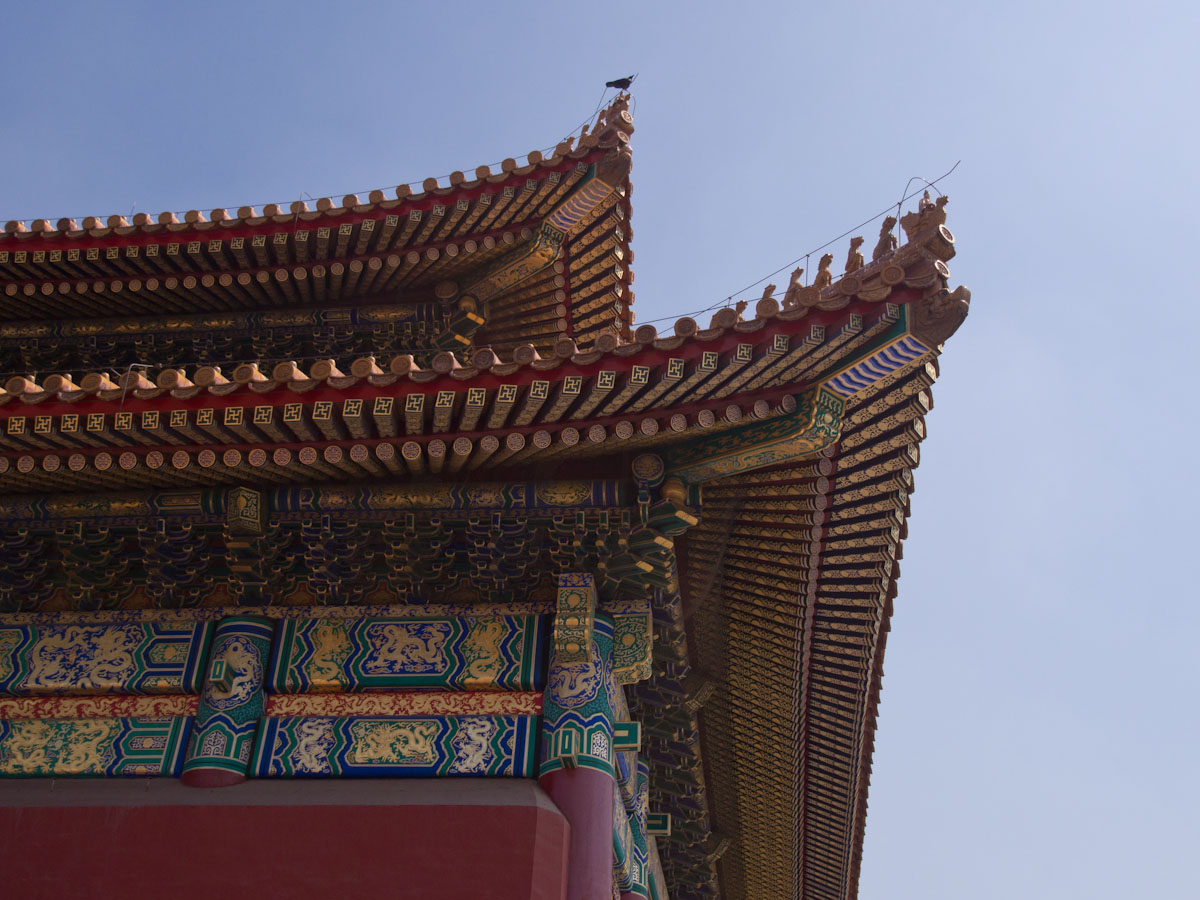
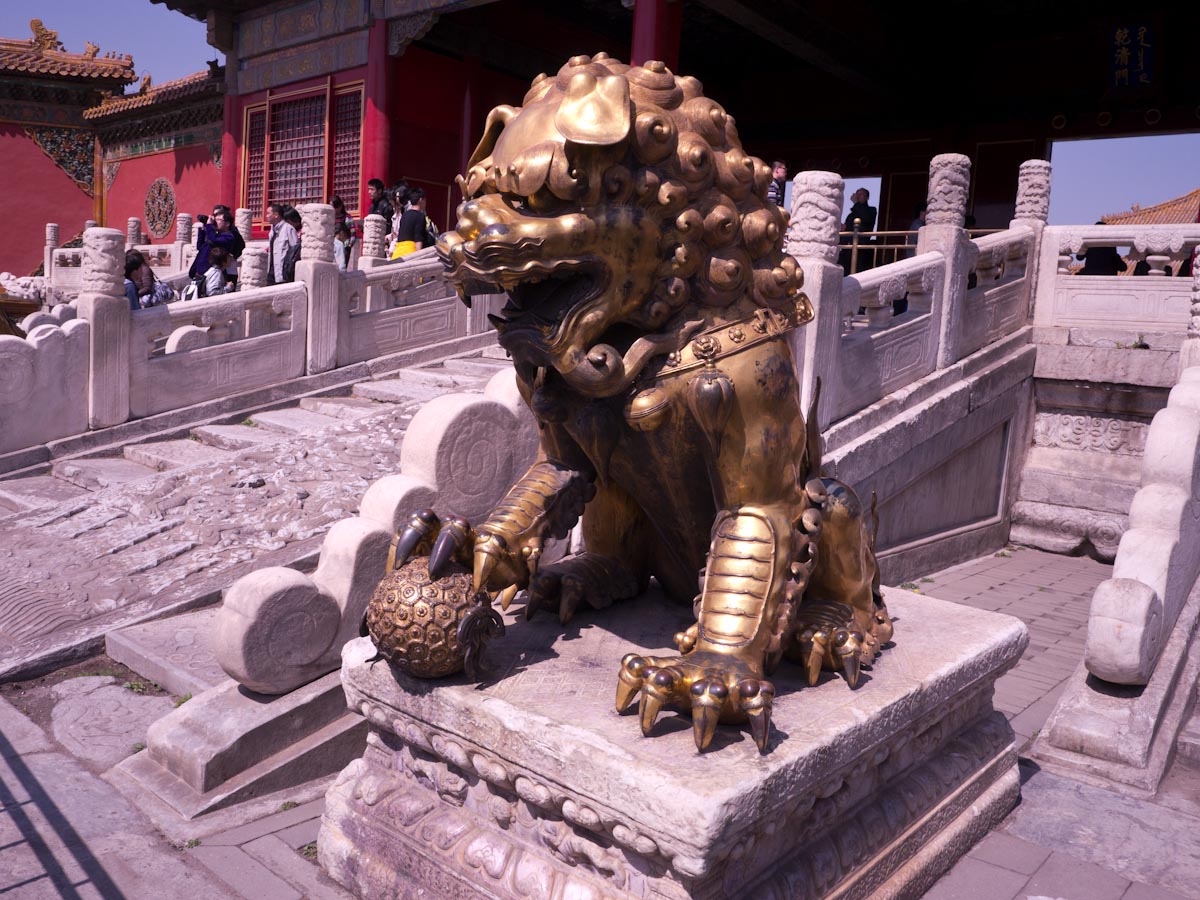
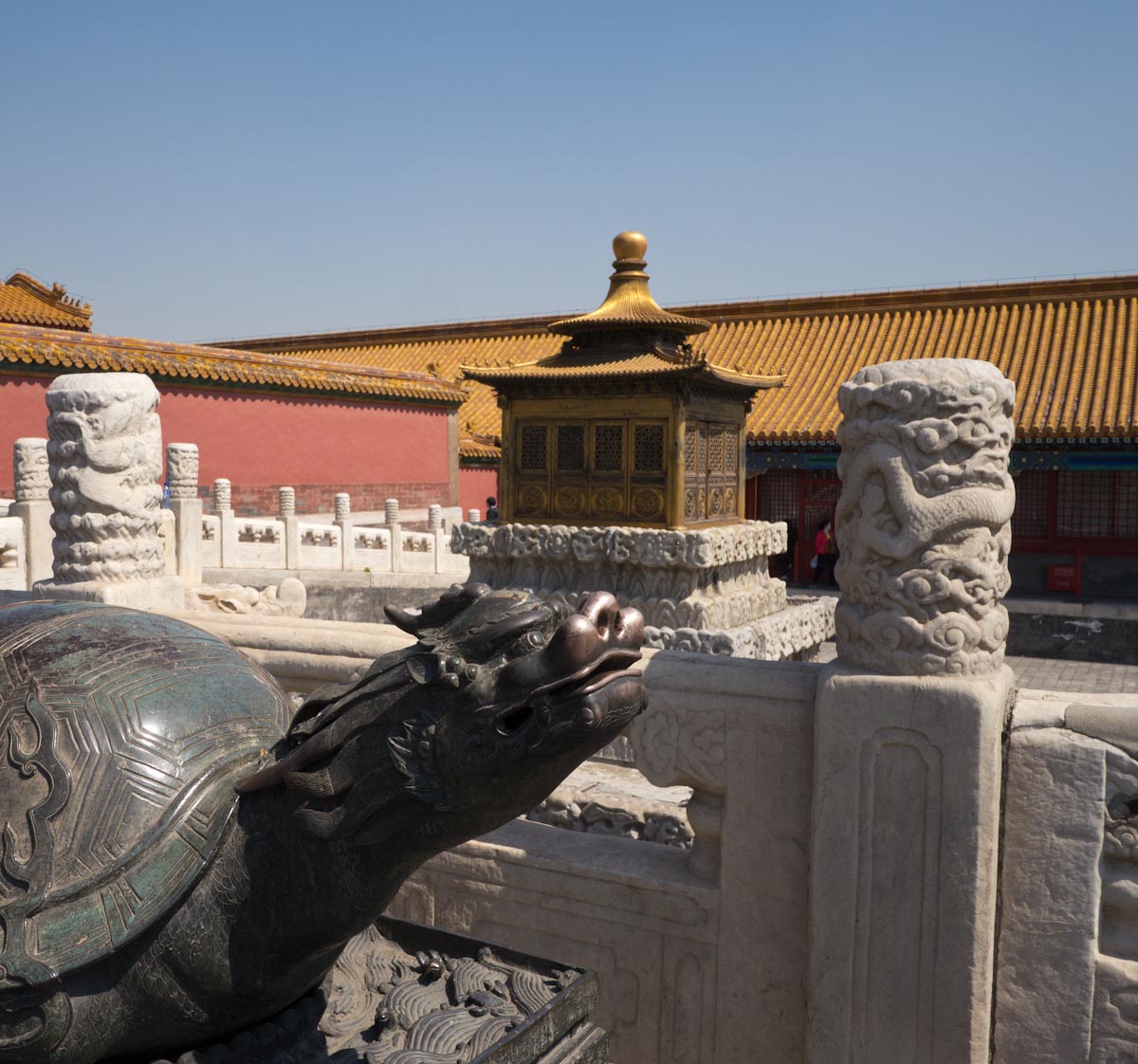
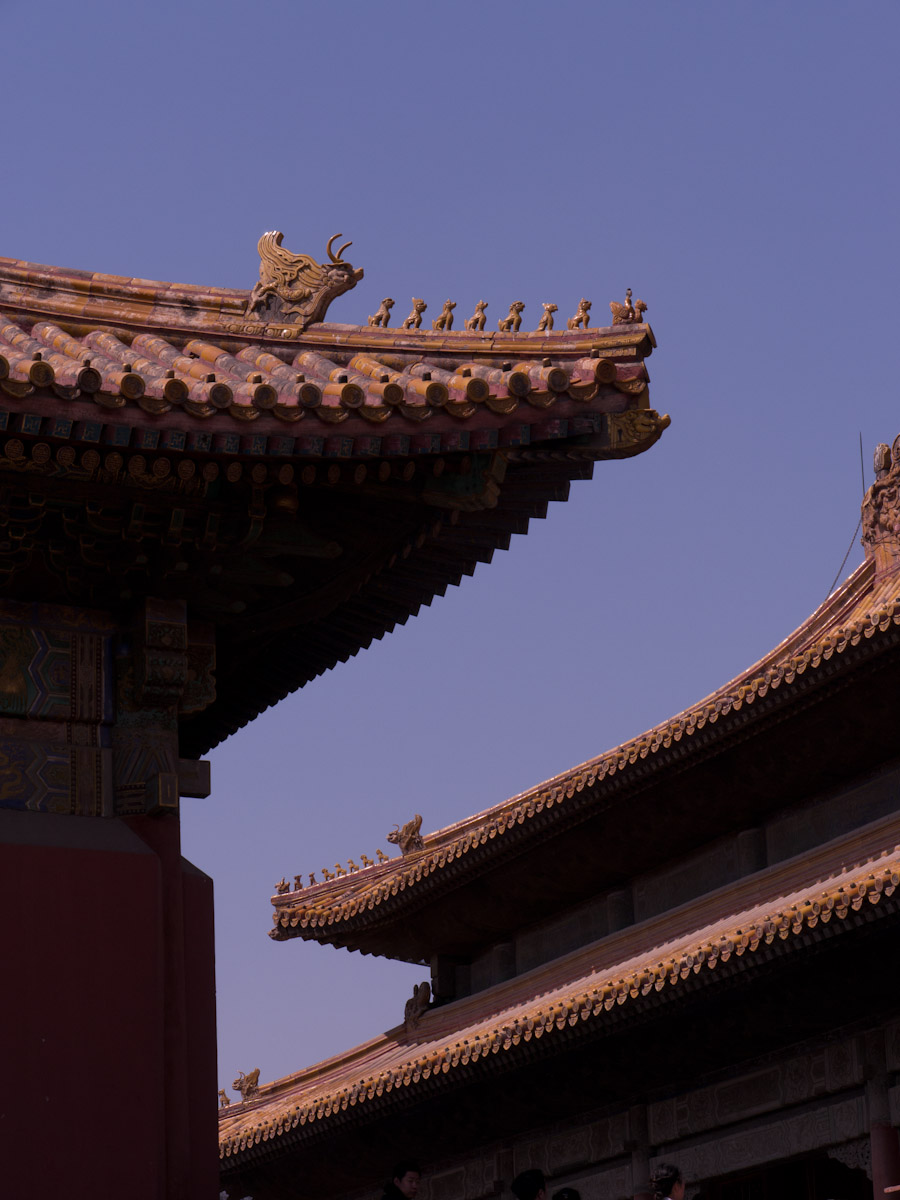
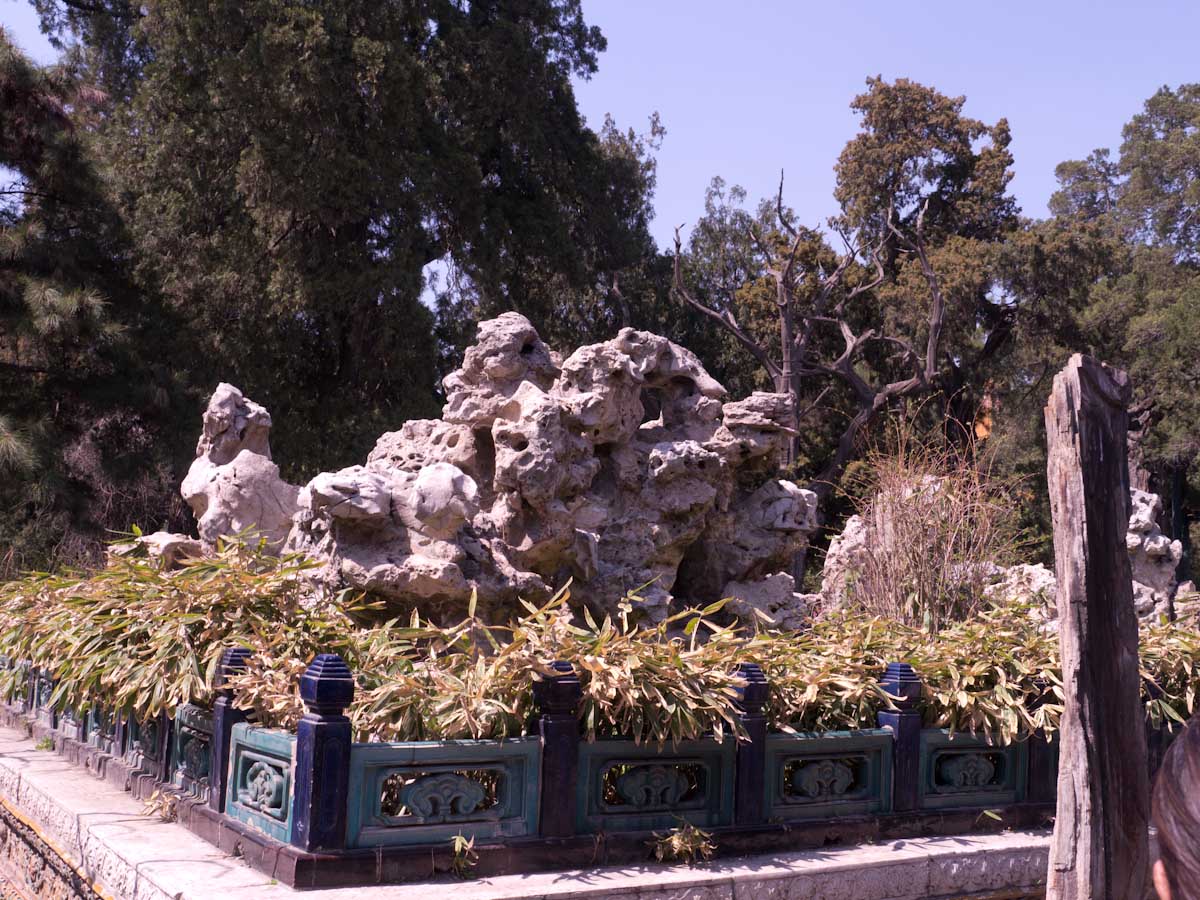
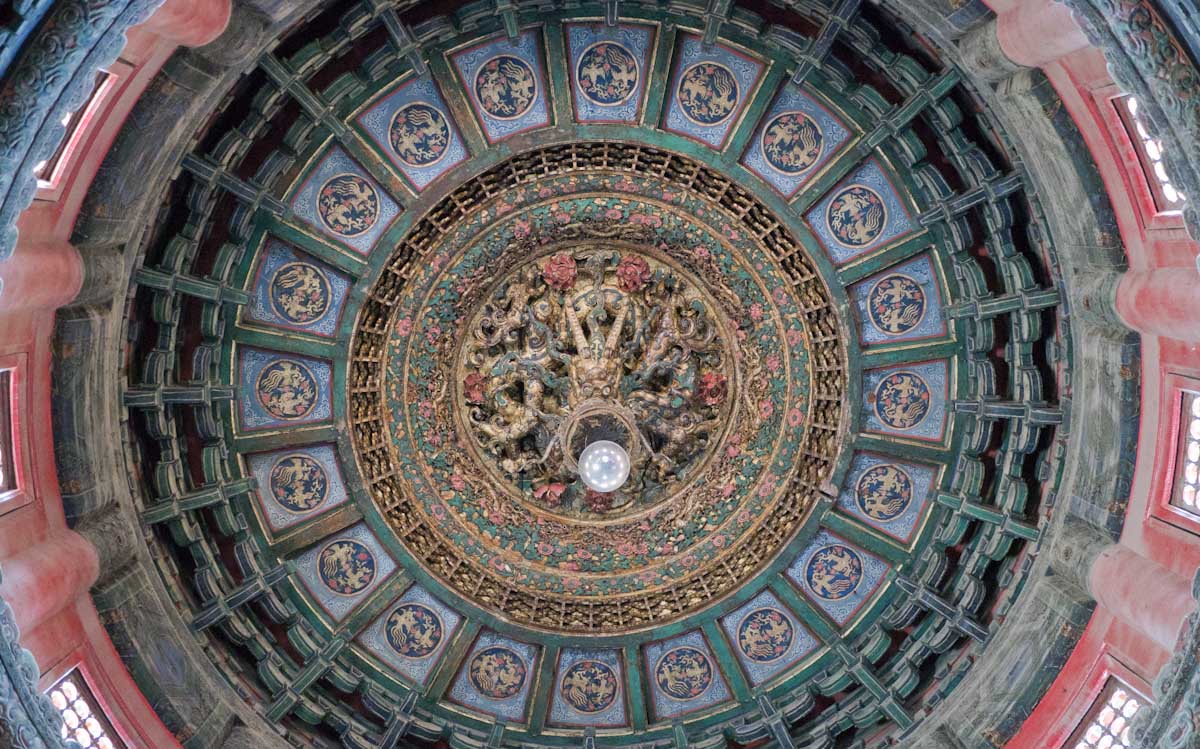
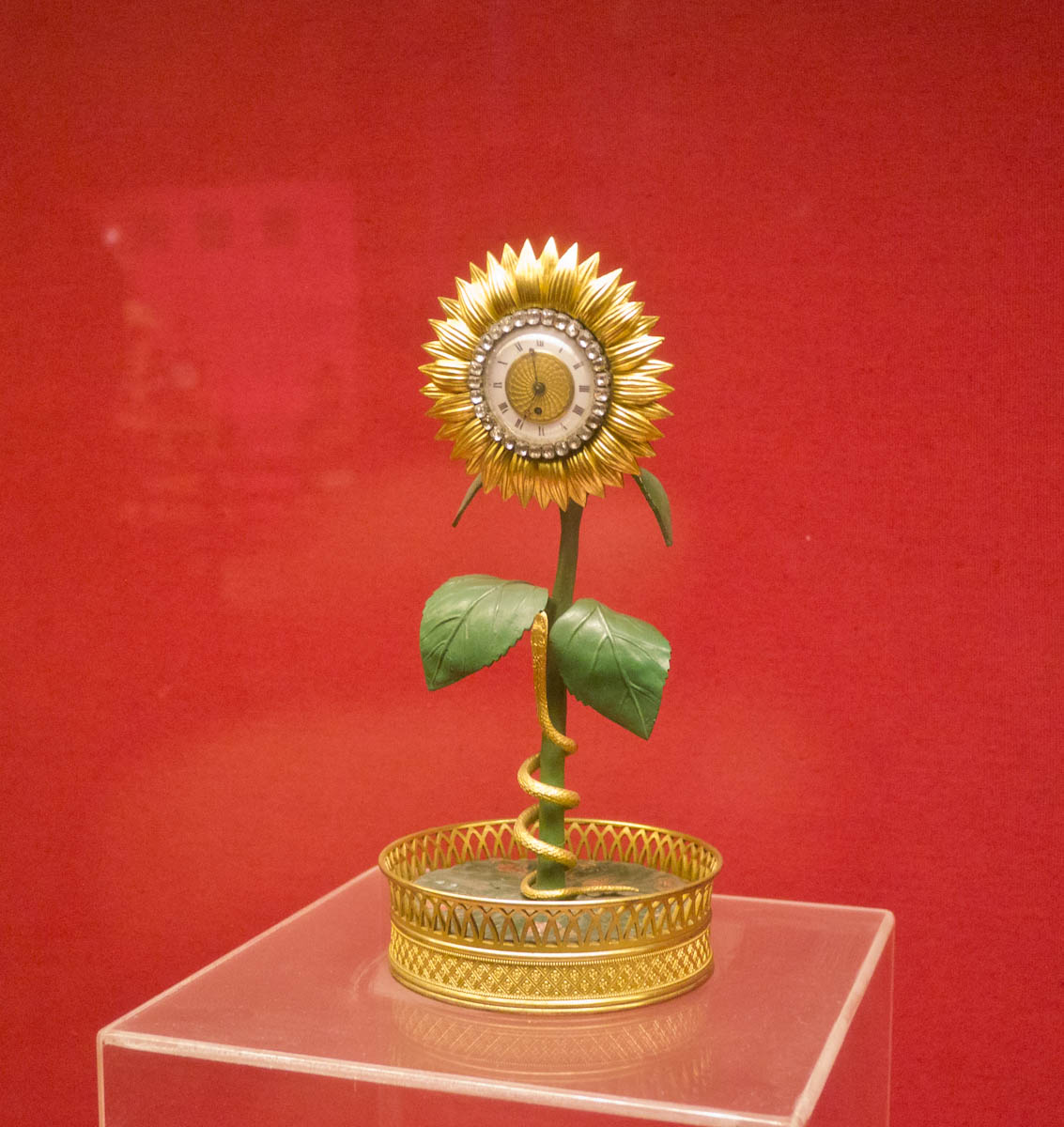
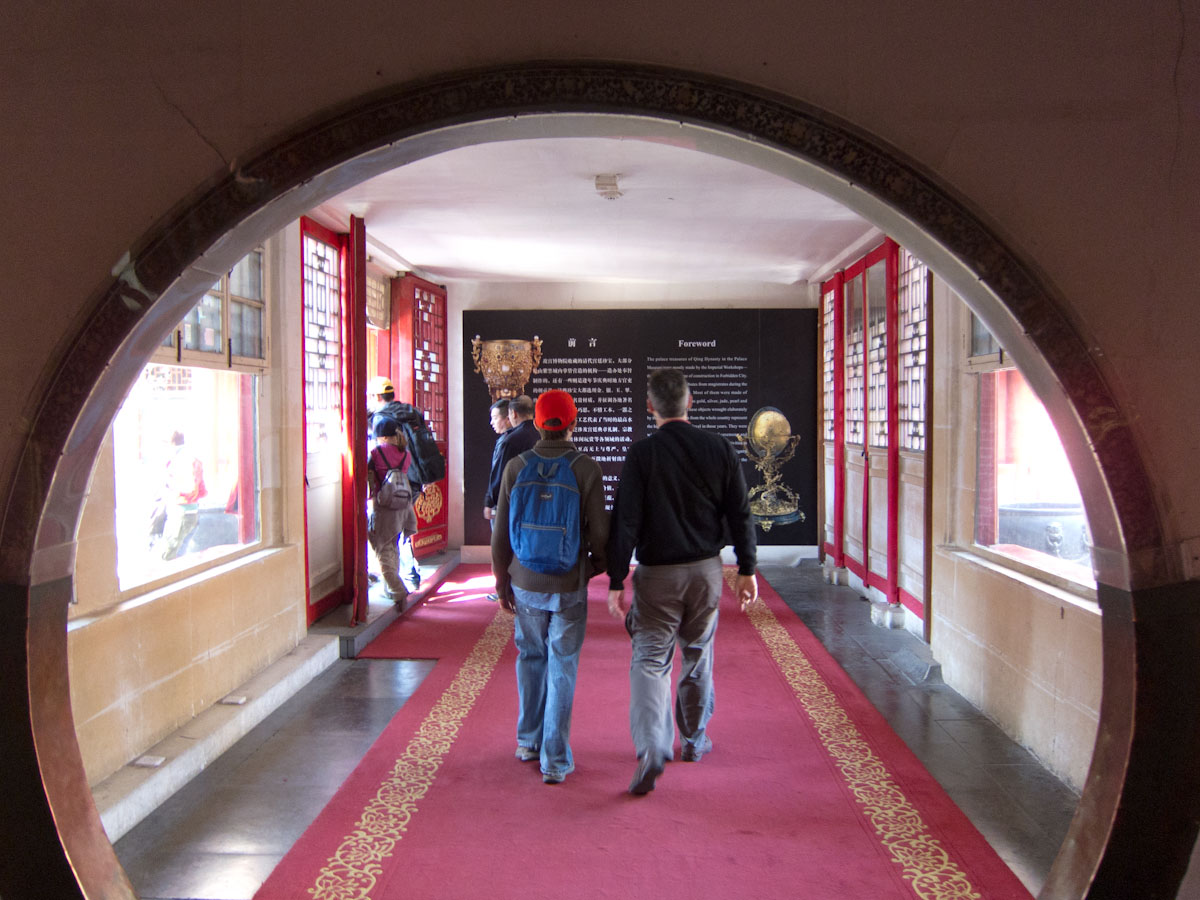
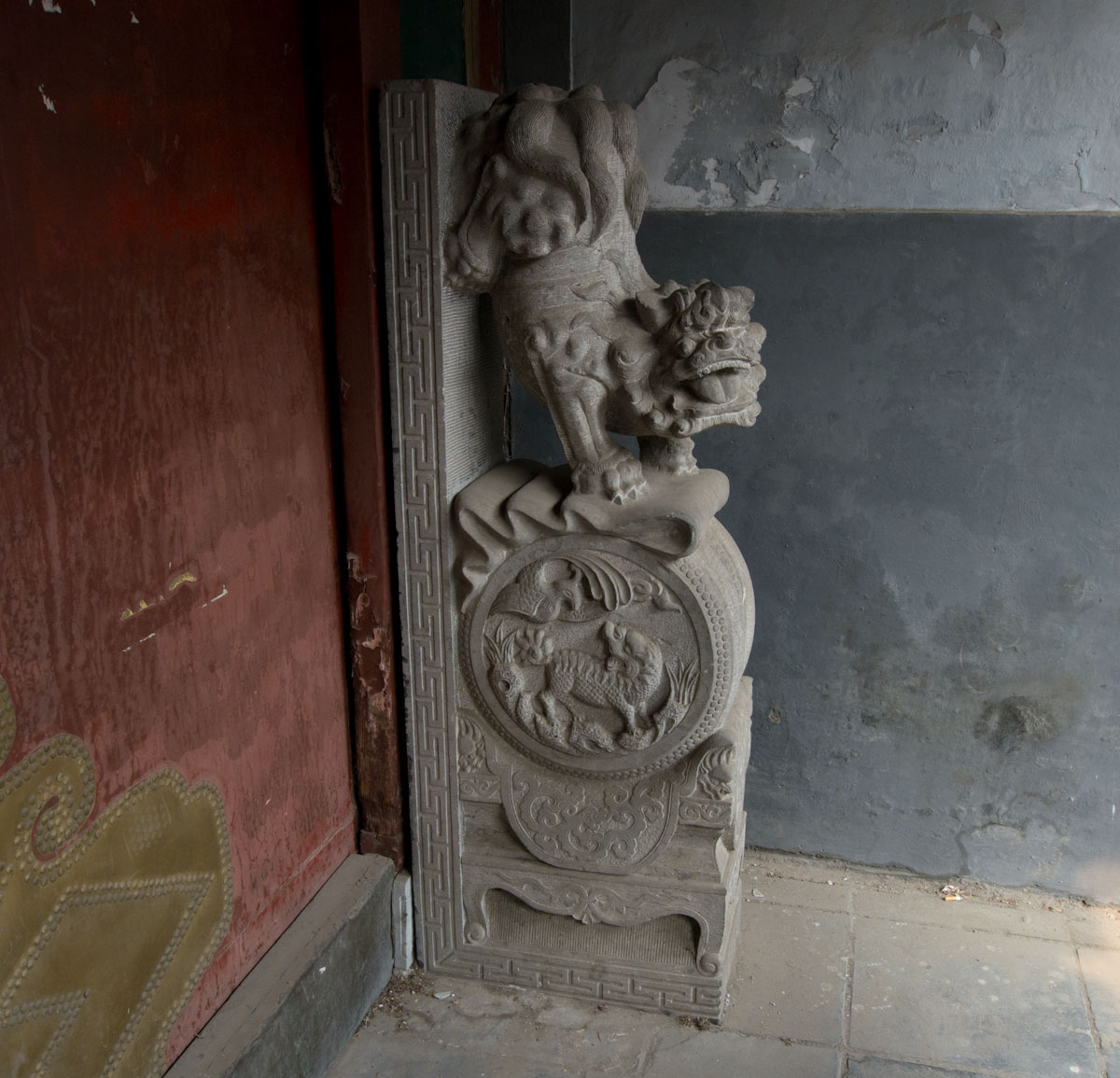
Like many palaces, the Forbidden City is laid out in a series of courtyards and grand halls that become progressively smaller and more private as one heads deeper inside. The spaces are vast and there are mythical creatures of many types spread throughout. At the back you can also find large collections of clocks (gifts of foreign powers) and enormous carved jades.
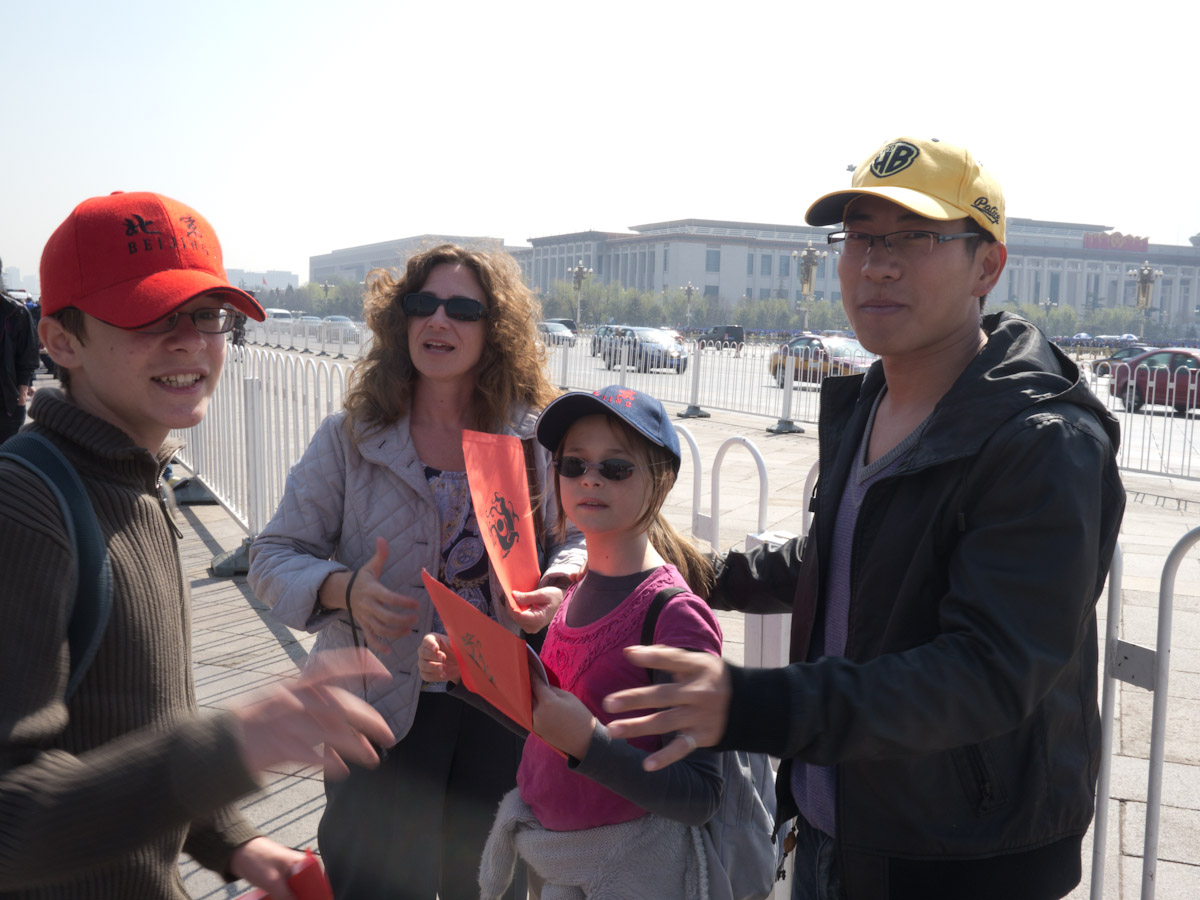
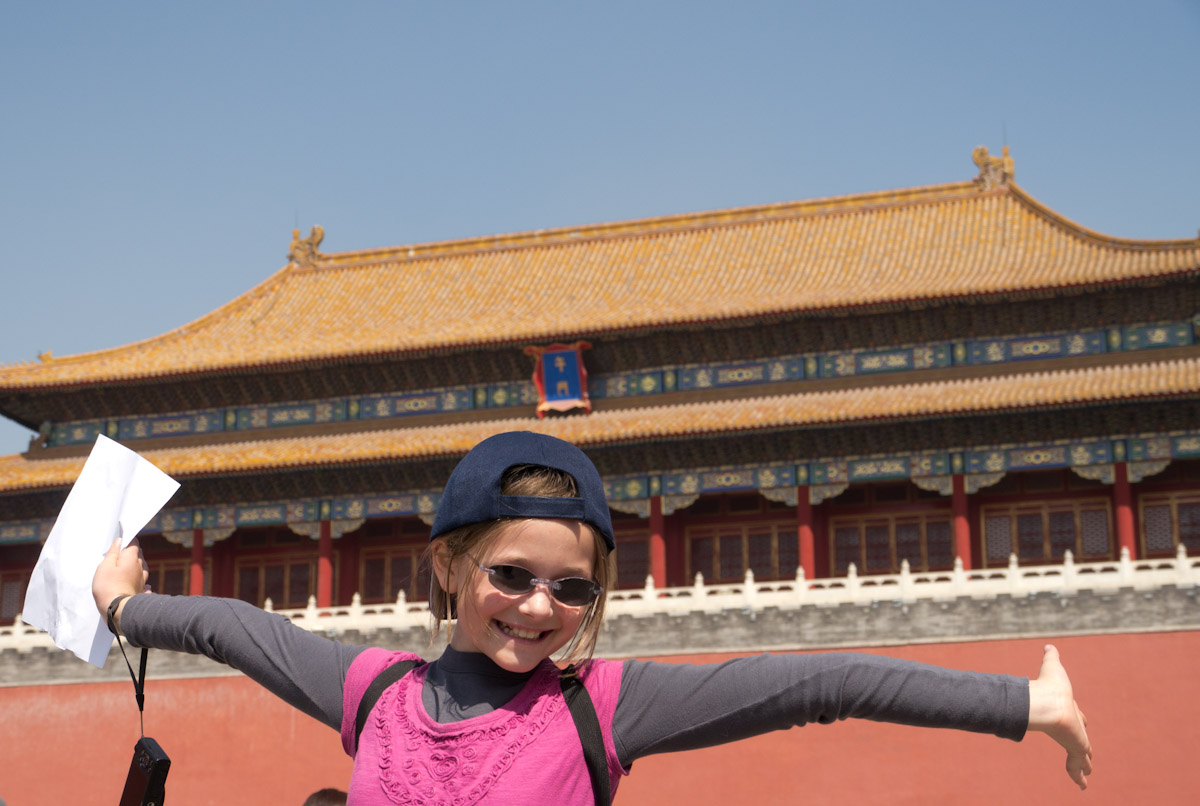
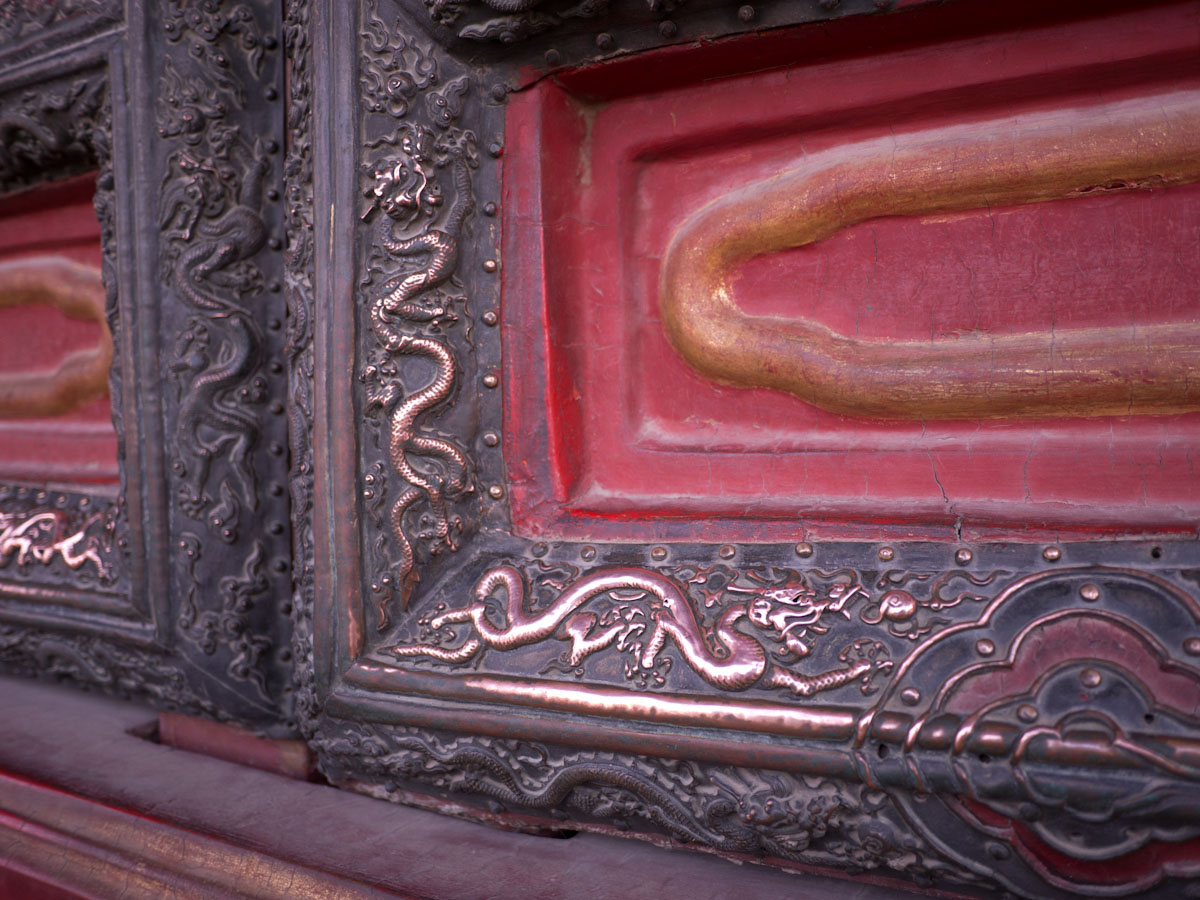
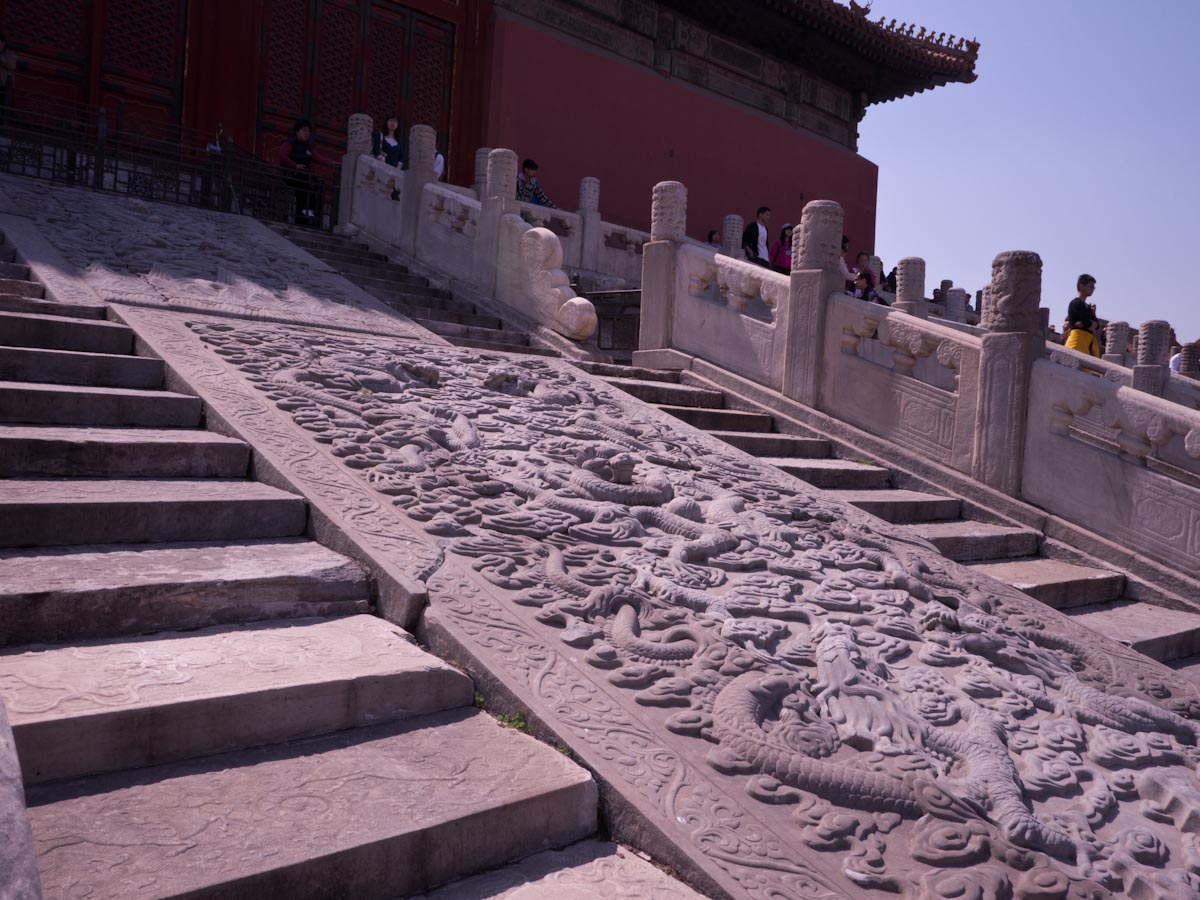
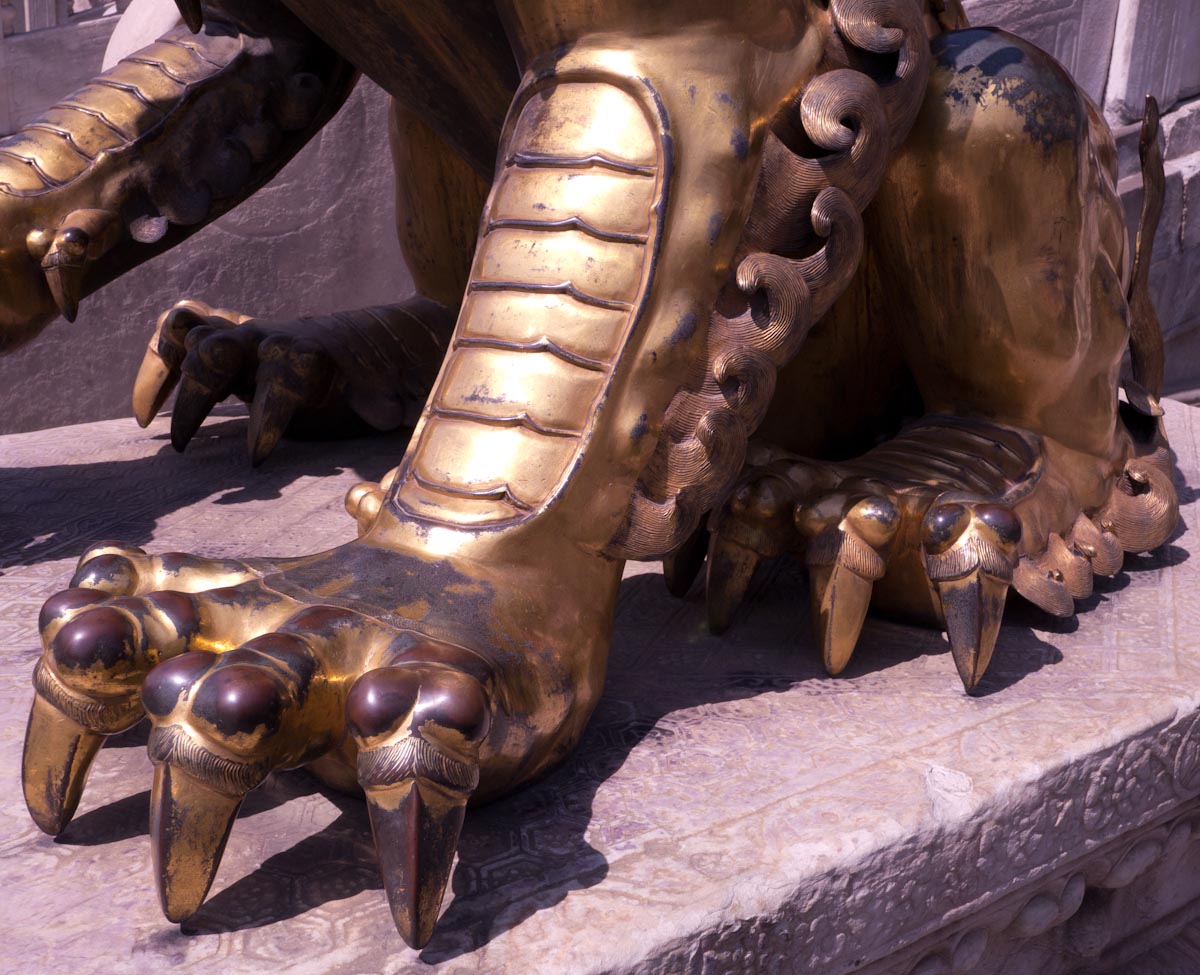
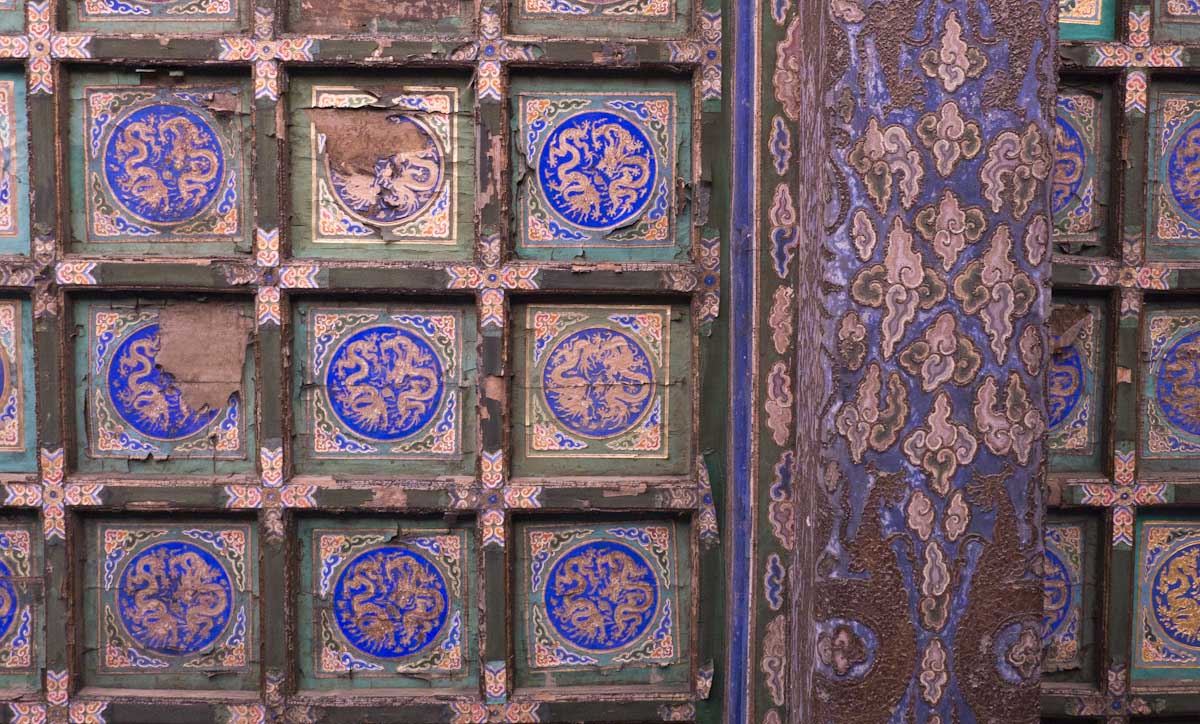
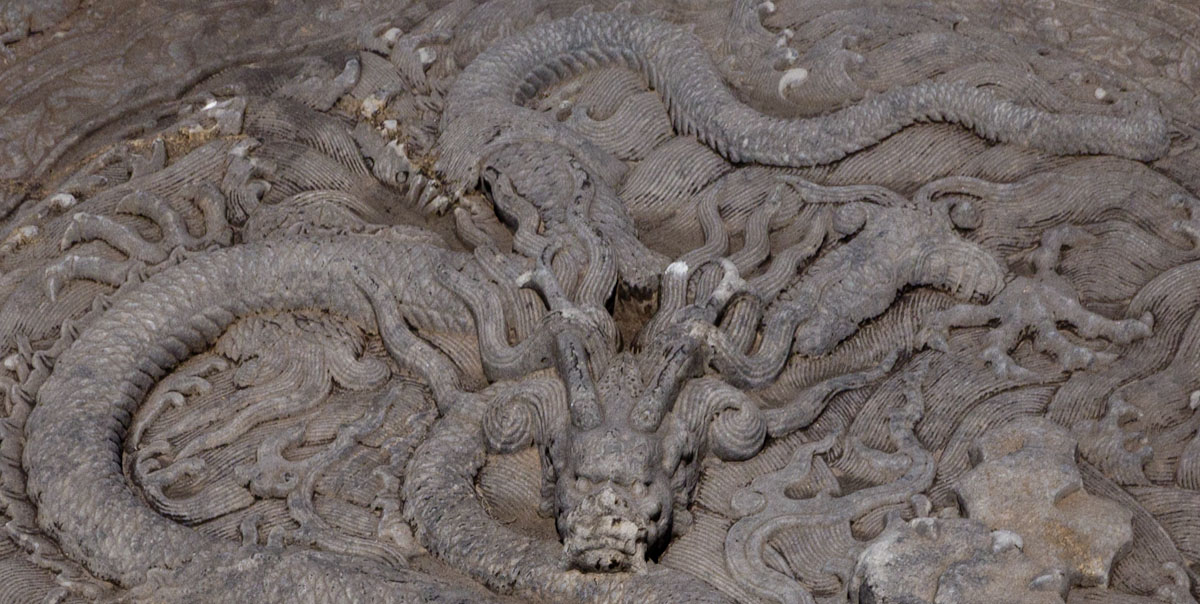
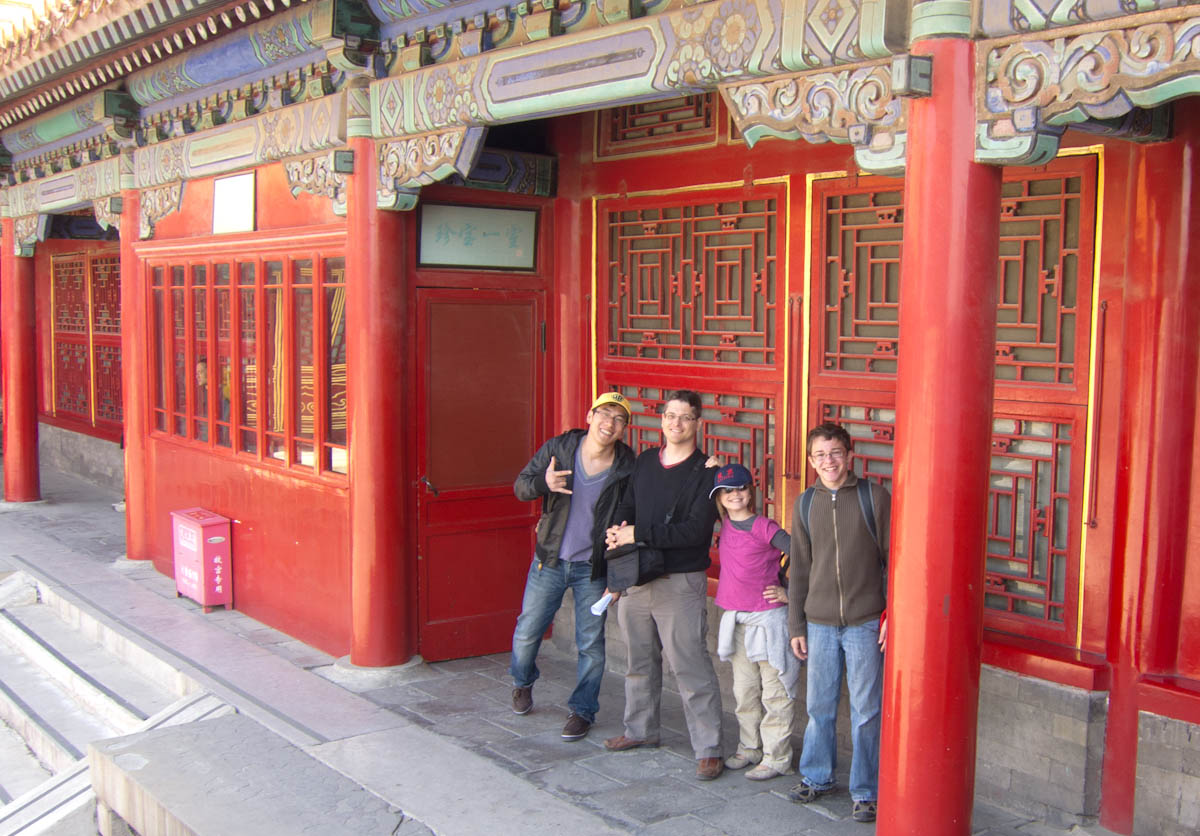
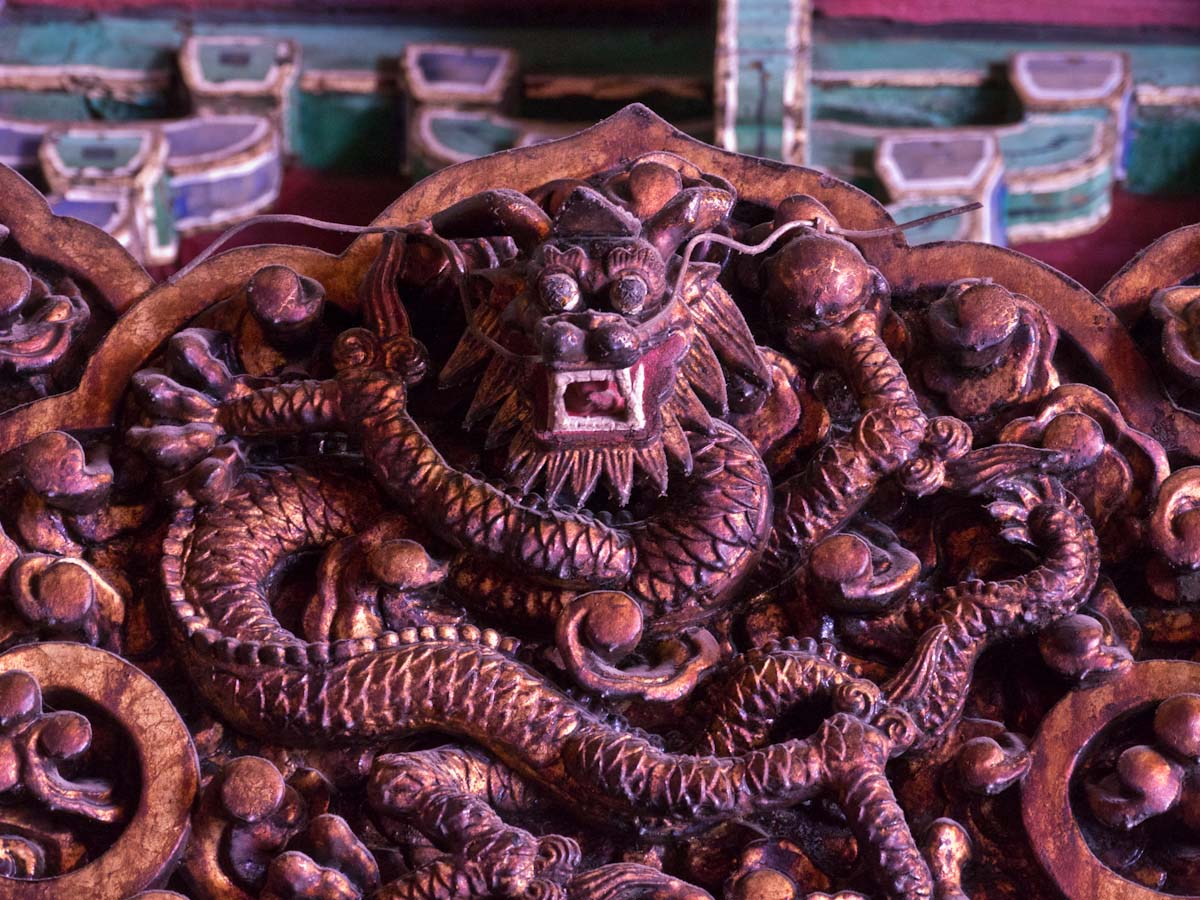
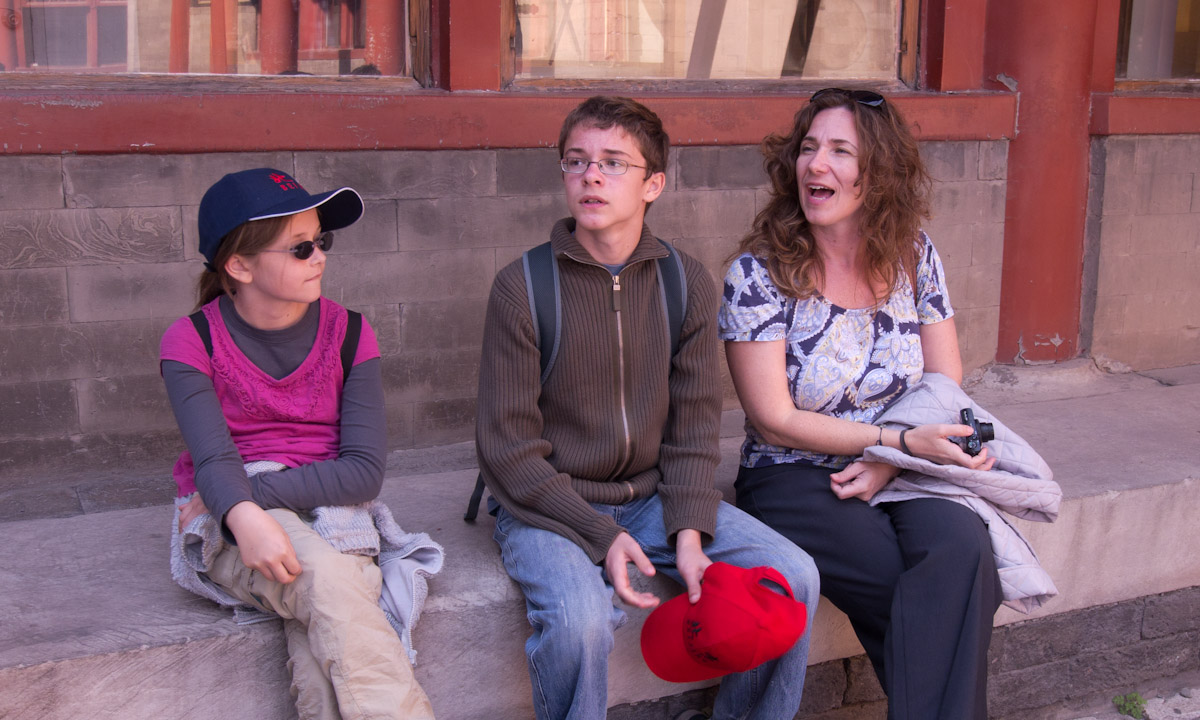
To give the tour some spice, our guide John Sun brought out a competitive game of kid vs. kid eye-spy. The main purpose was to spot Dragons! Carter and Katherine both did great.
The next day we visited the Great Wall (see Gina’s post).
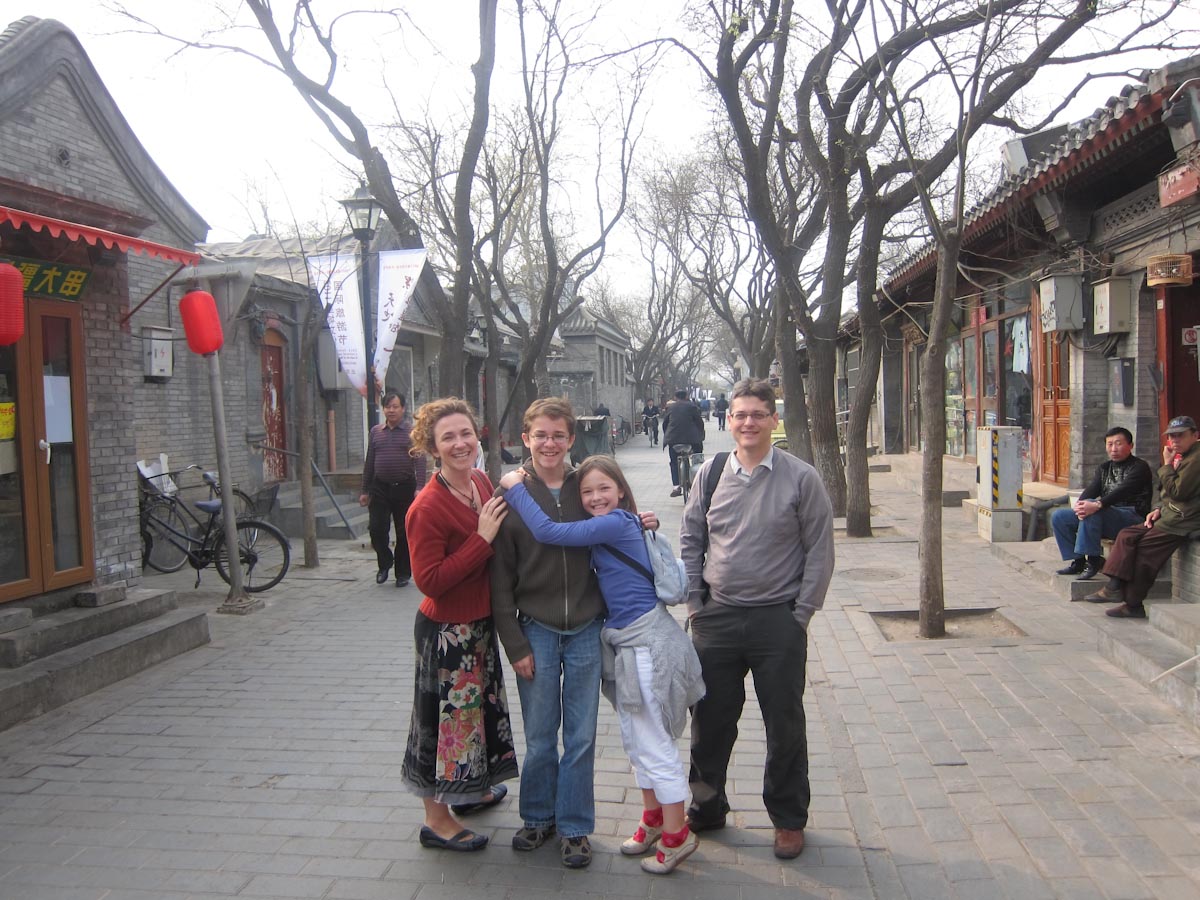
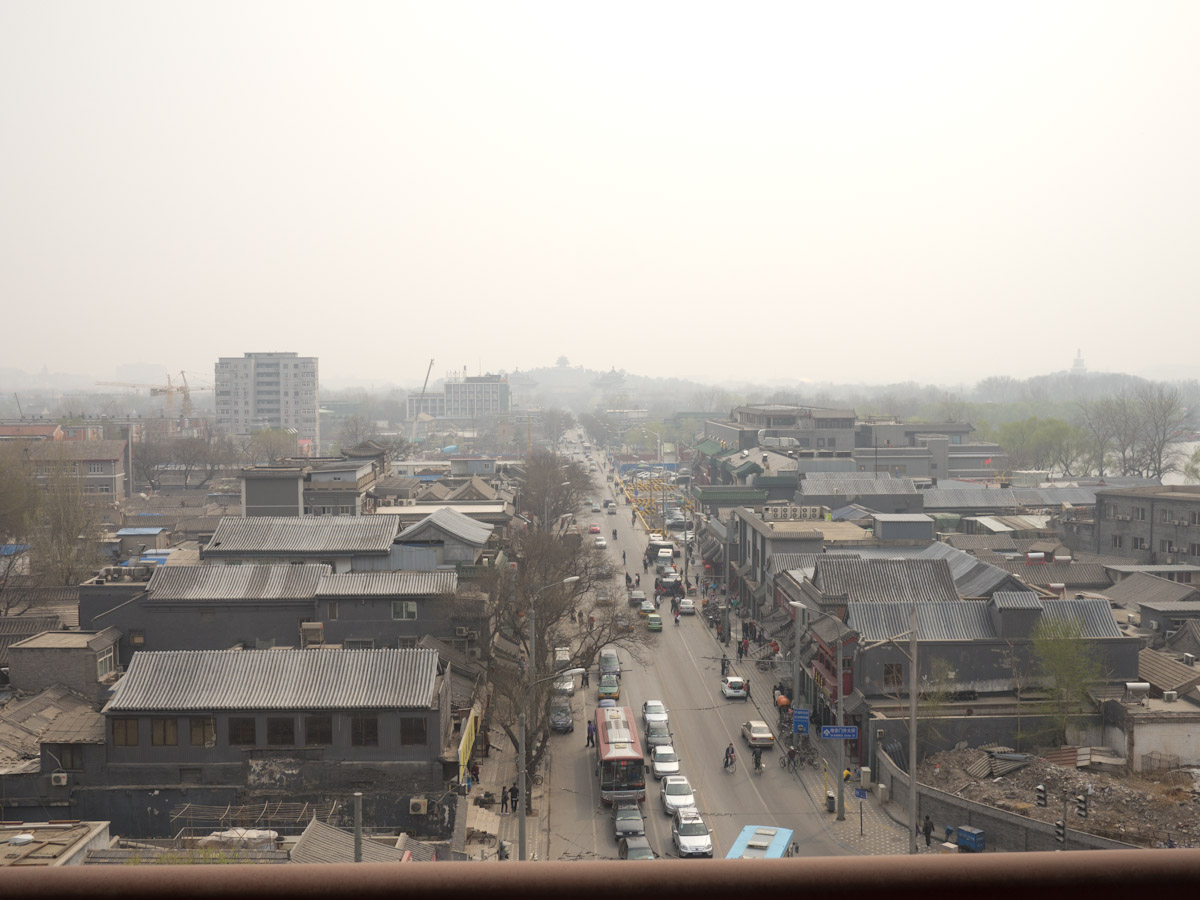
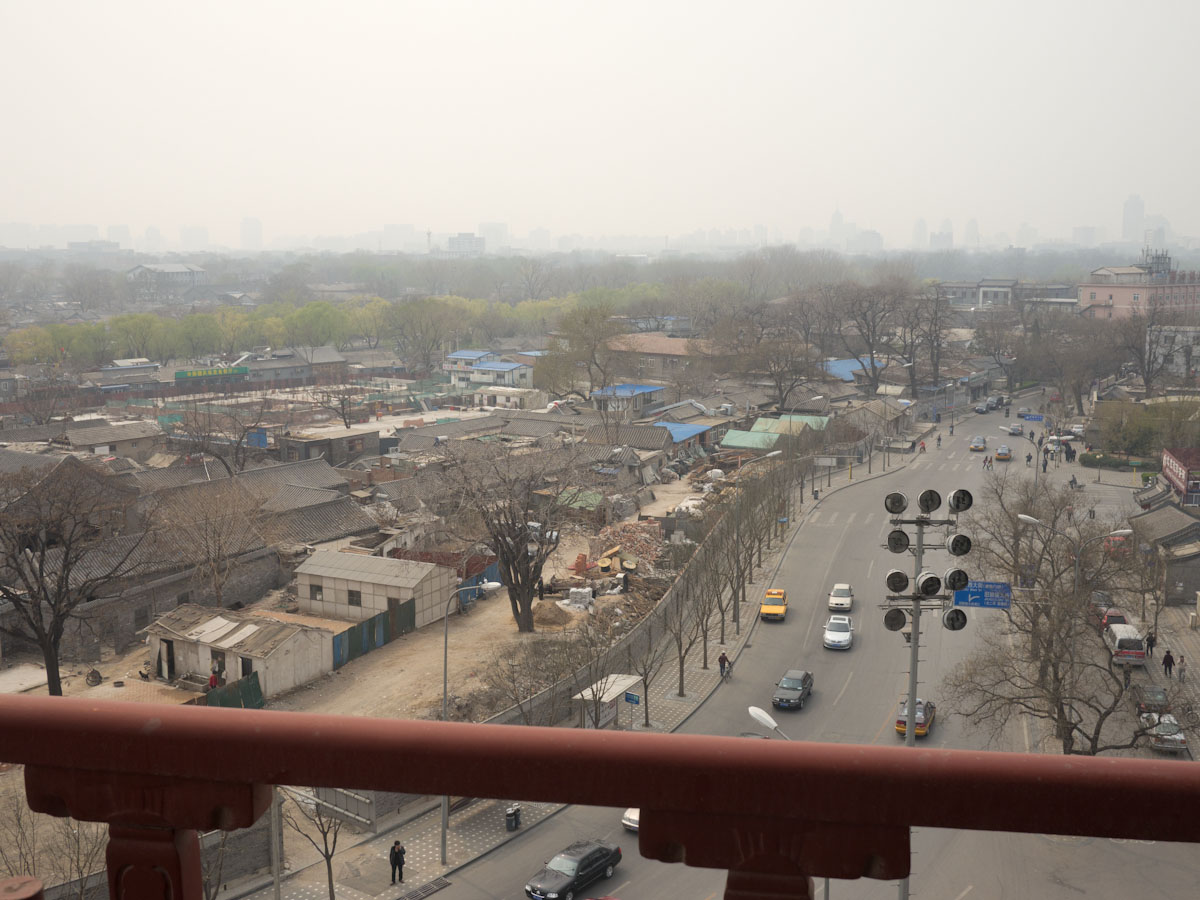
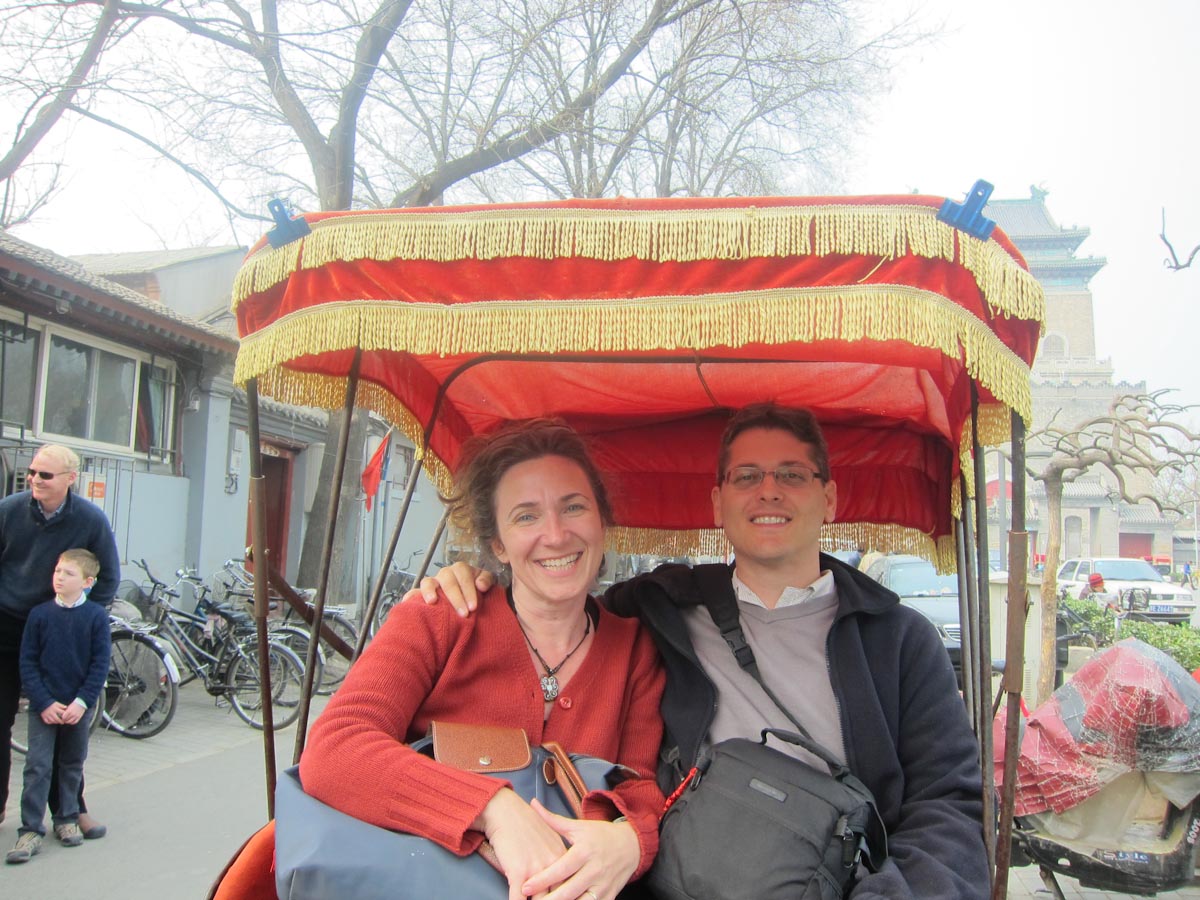
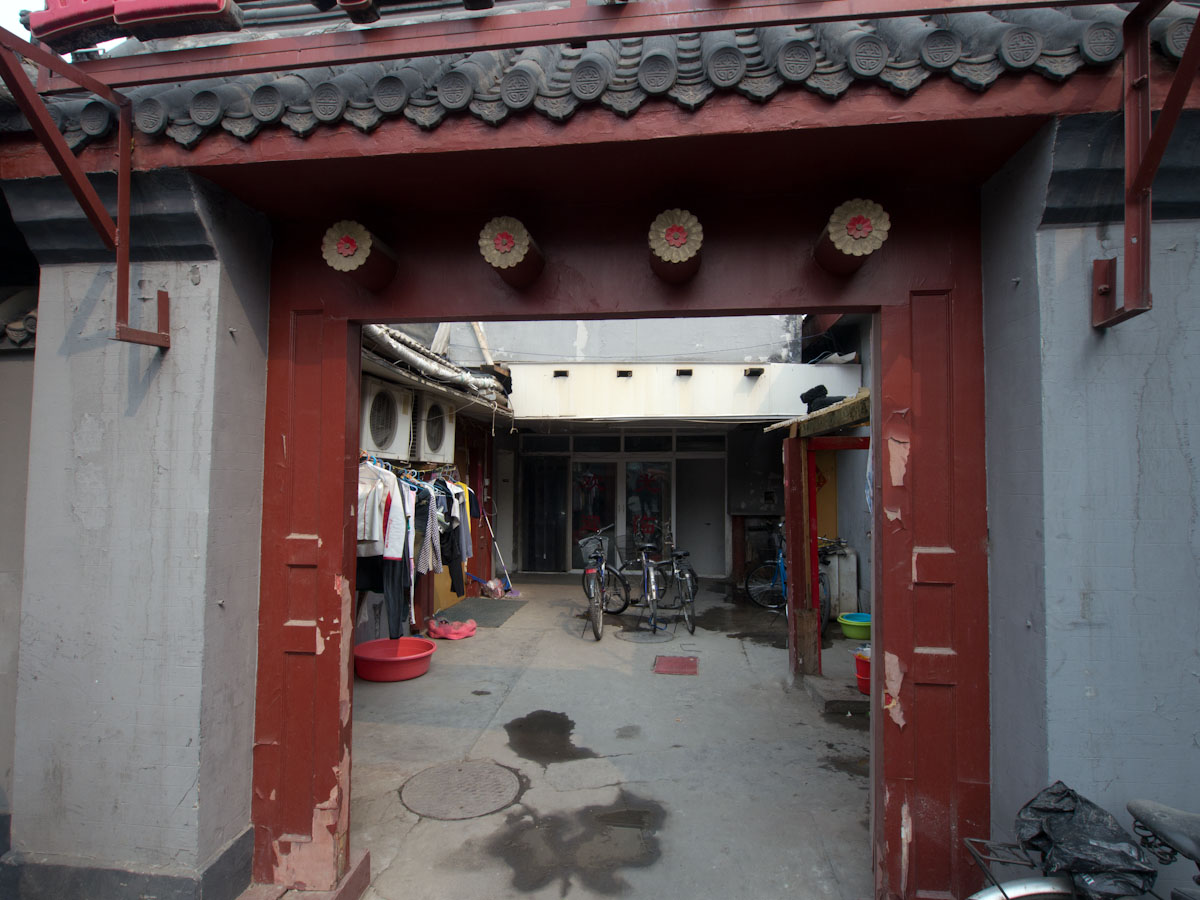
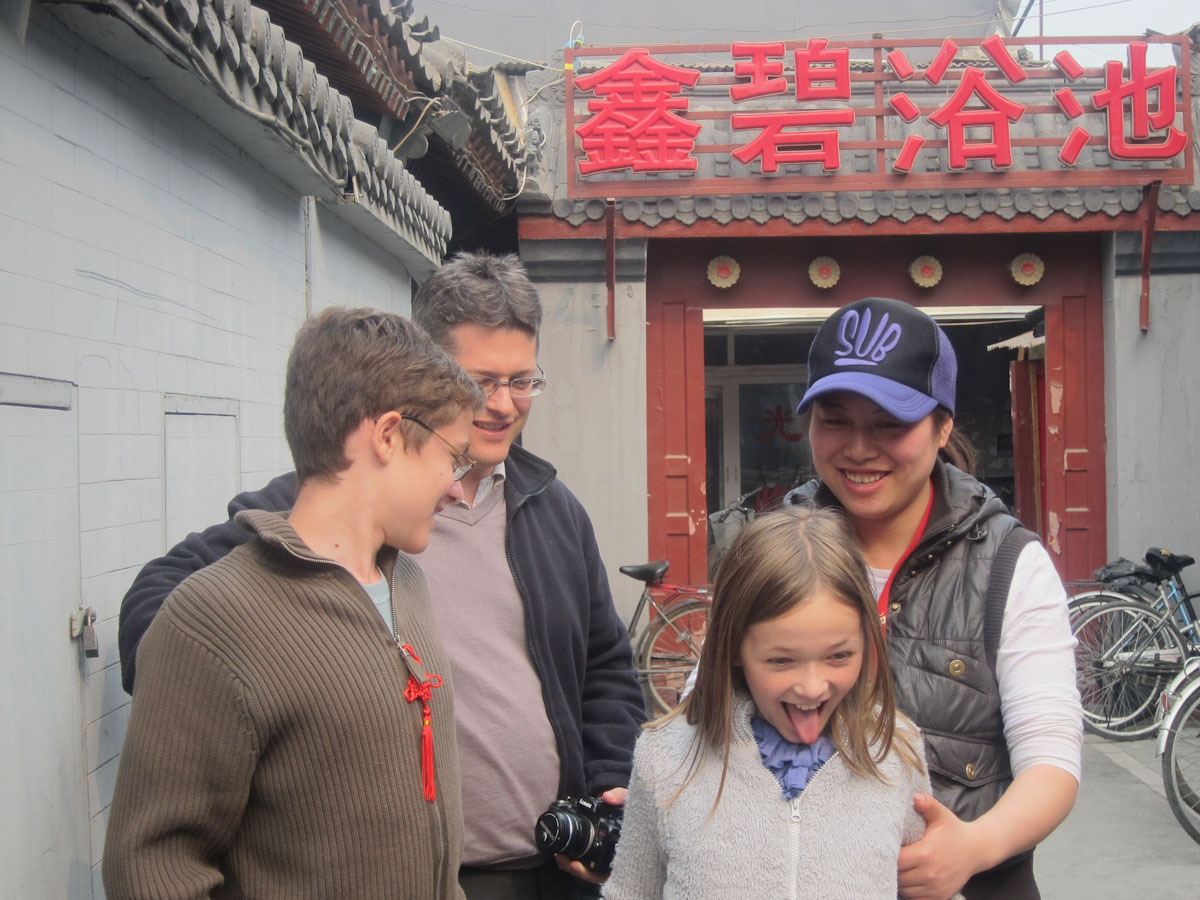
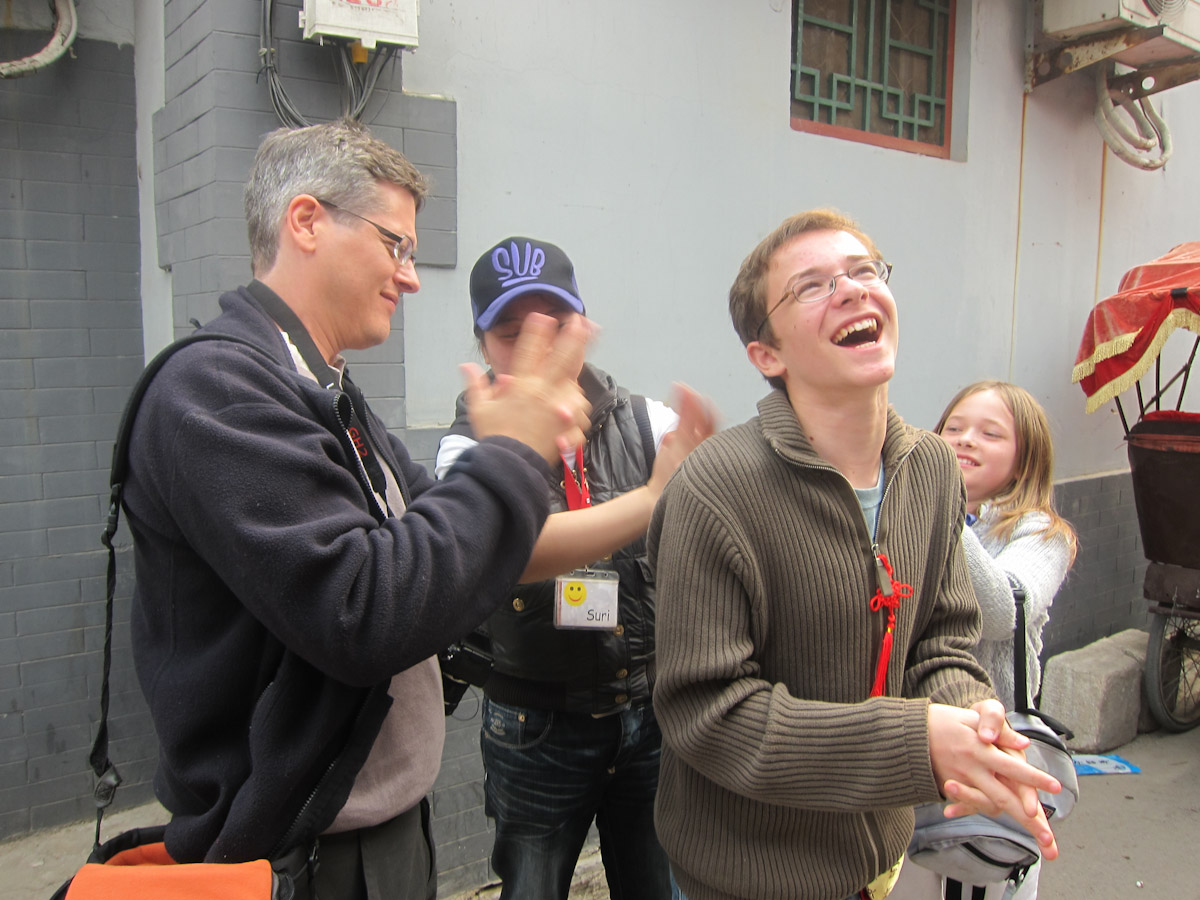
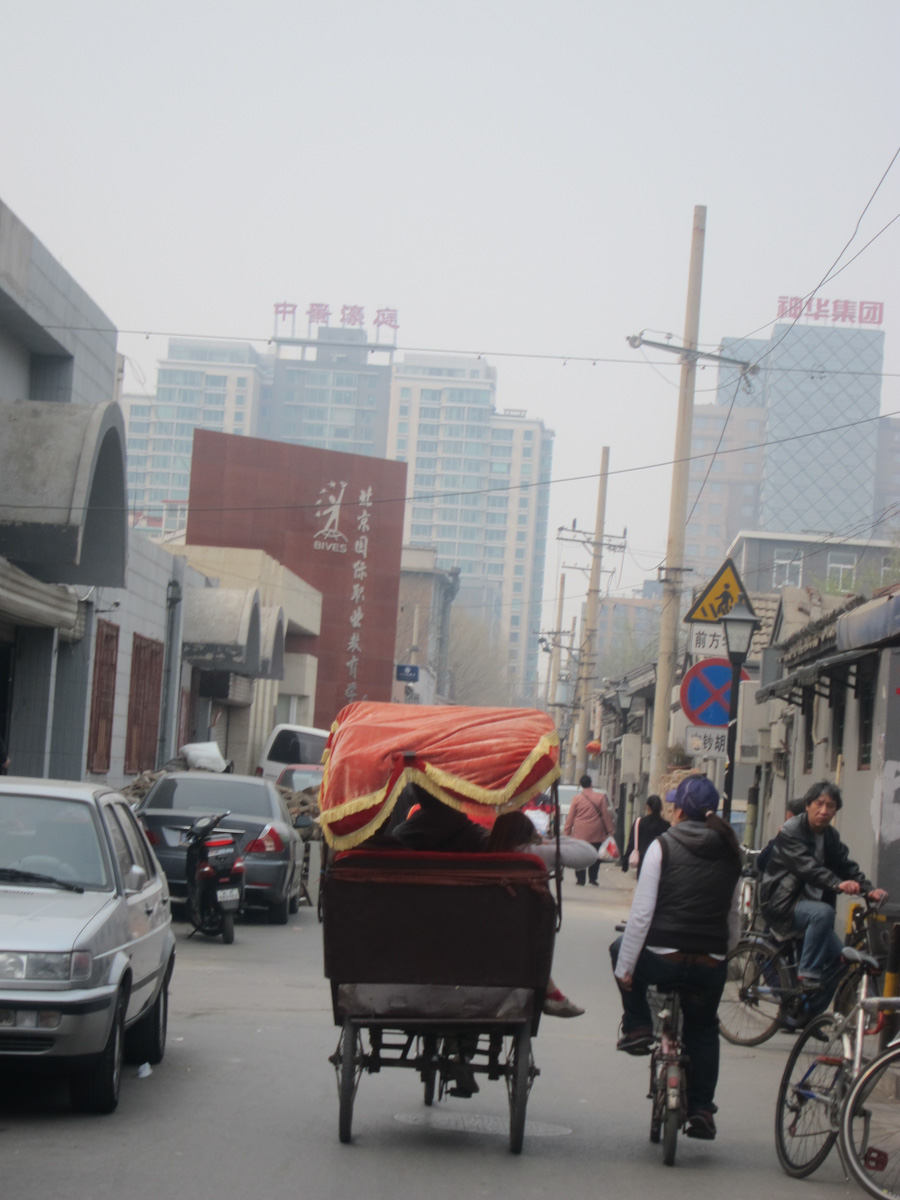
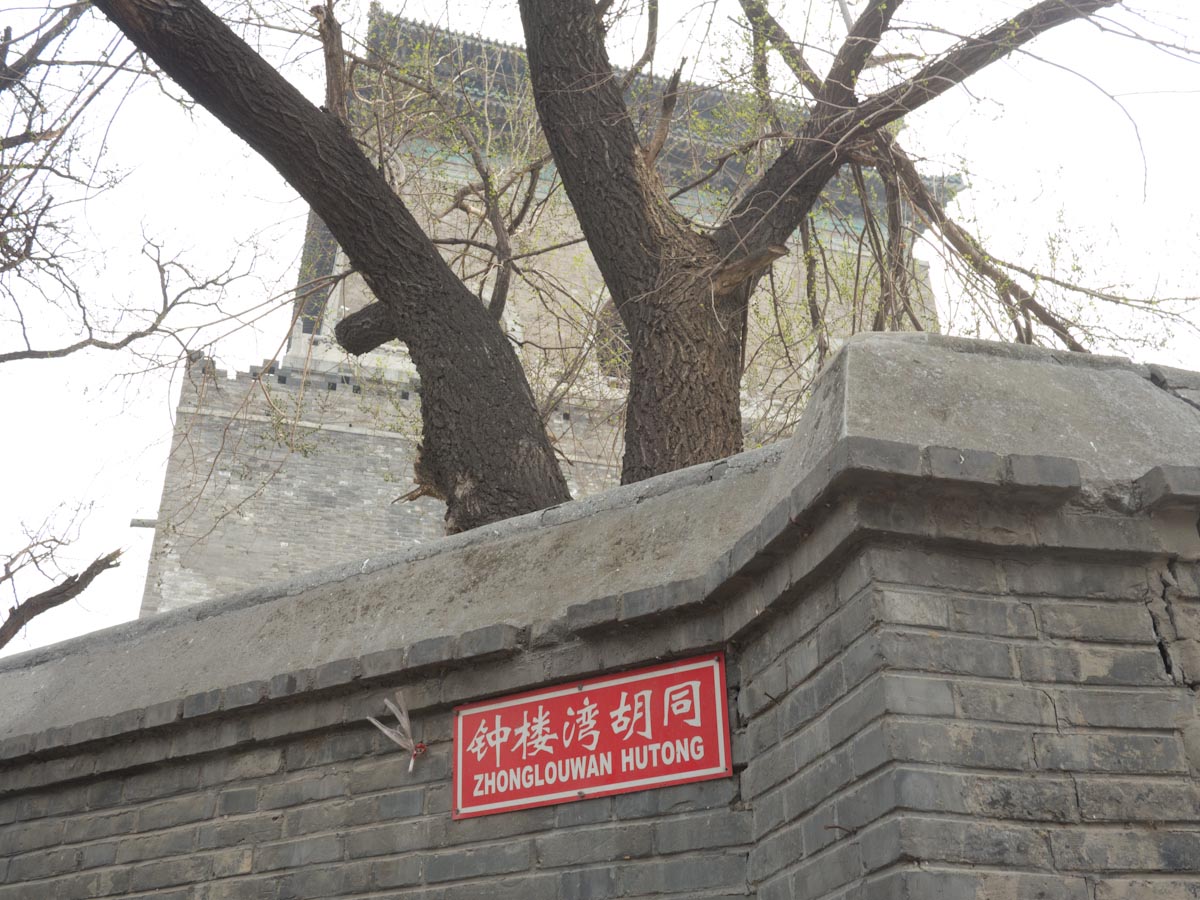
On another day in Beijing we toured a hutong, or old neighborhood. The hutongs date back centuries to when groups of Beijing residents would share a well for water and fire defense. The homes were owned by the wealthy and organized with central open courtyards.
During the Cultural Revolution, these single-family courtyards were seized by the state and divided into 12-15 tiny apartments. These days each courtyard can house more than 60 people. Several courtyards will share one set of public toilets and another set of public showers located in nearby standalone buildings. Our guide explained that she only uses the public showers in the winter; during the summer she showers in her kitchen.
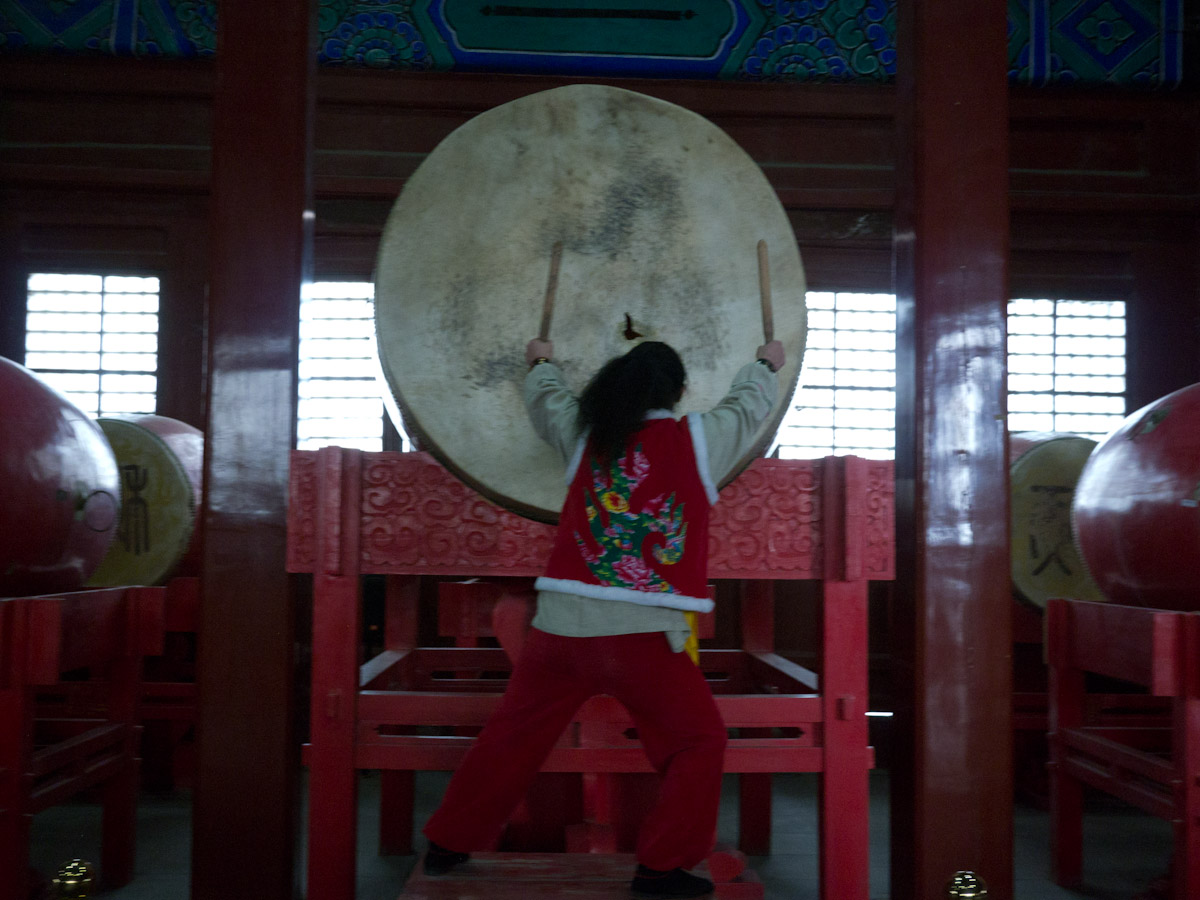
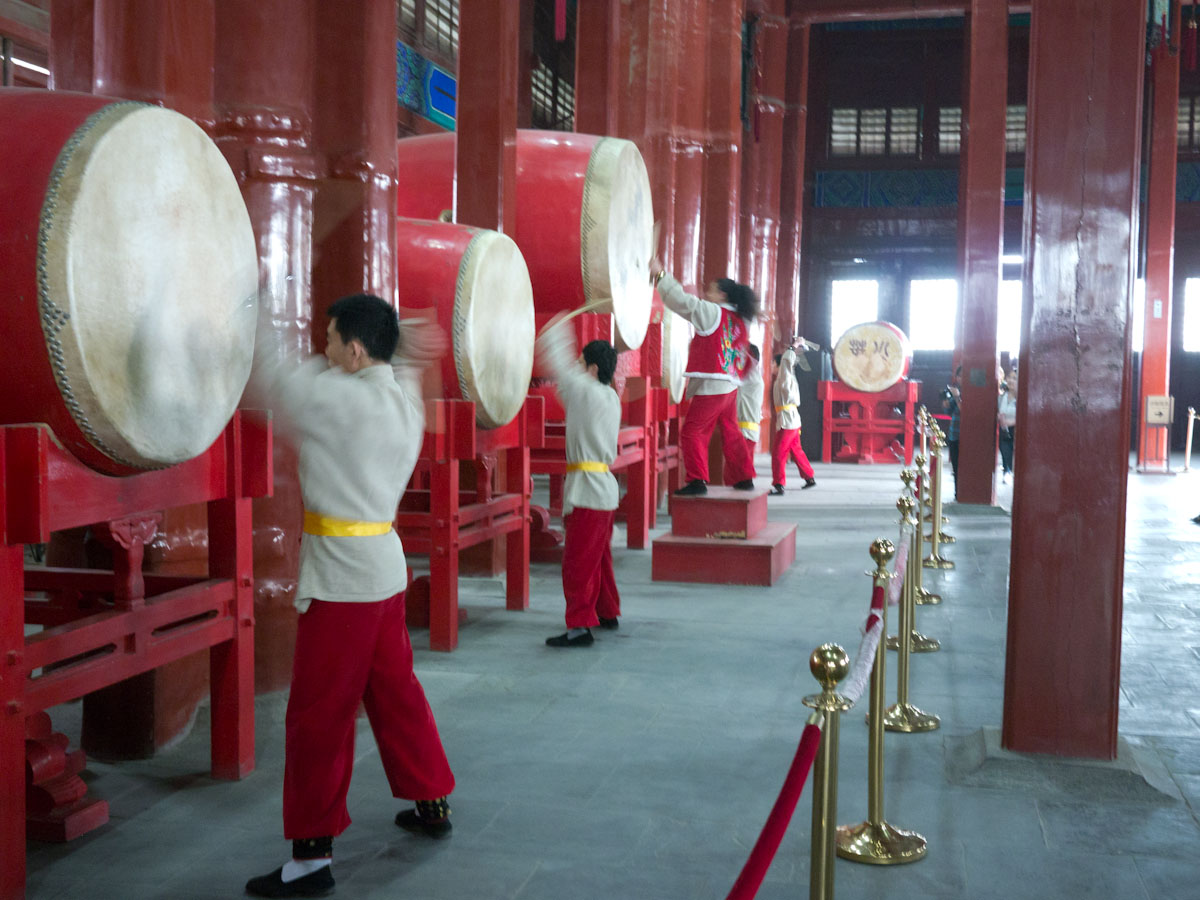
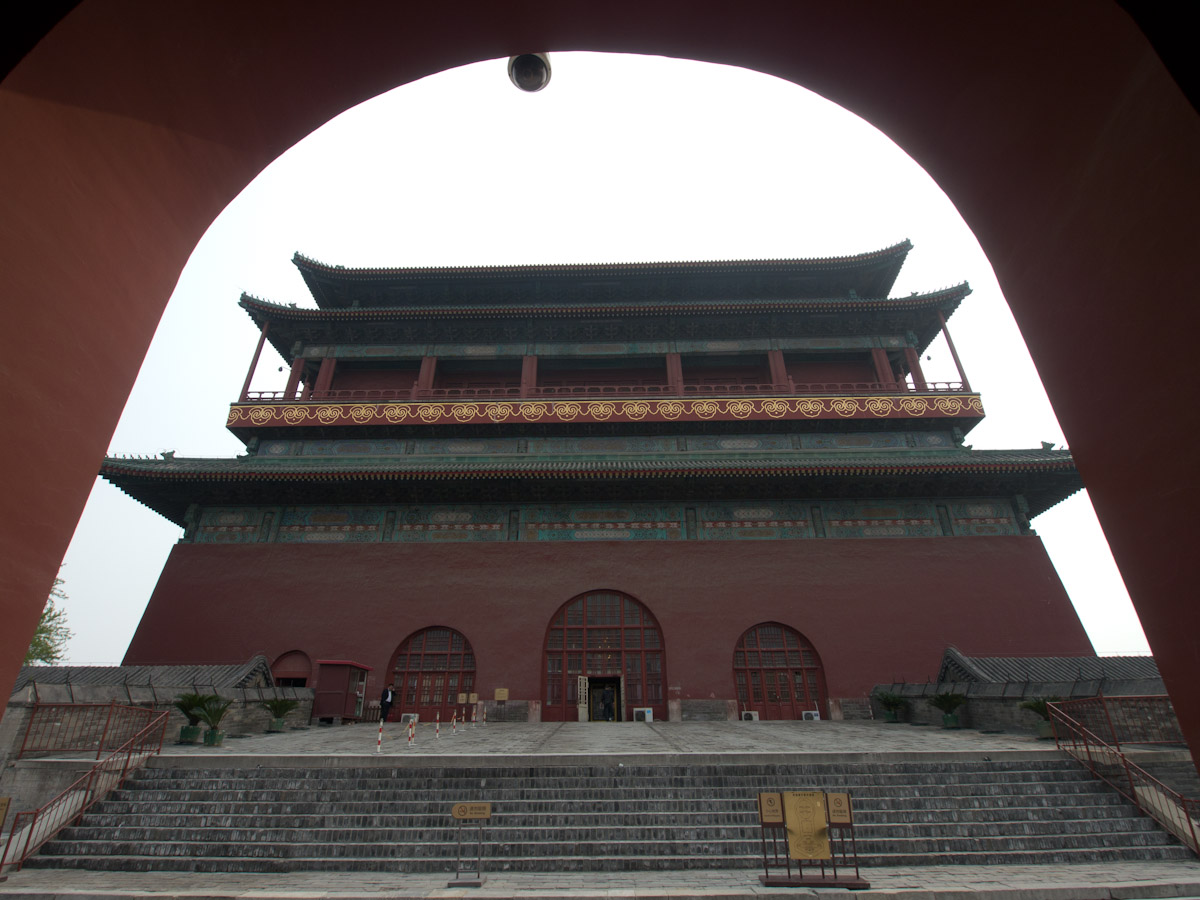
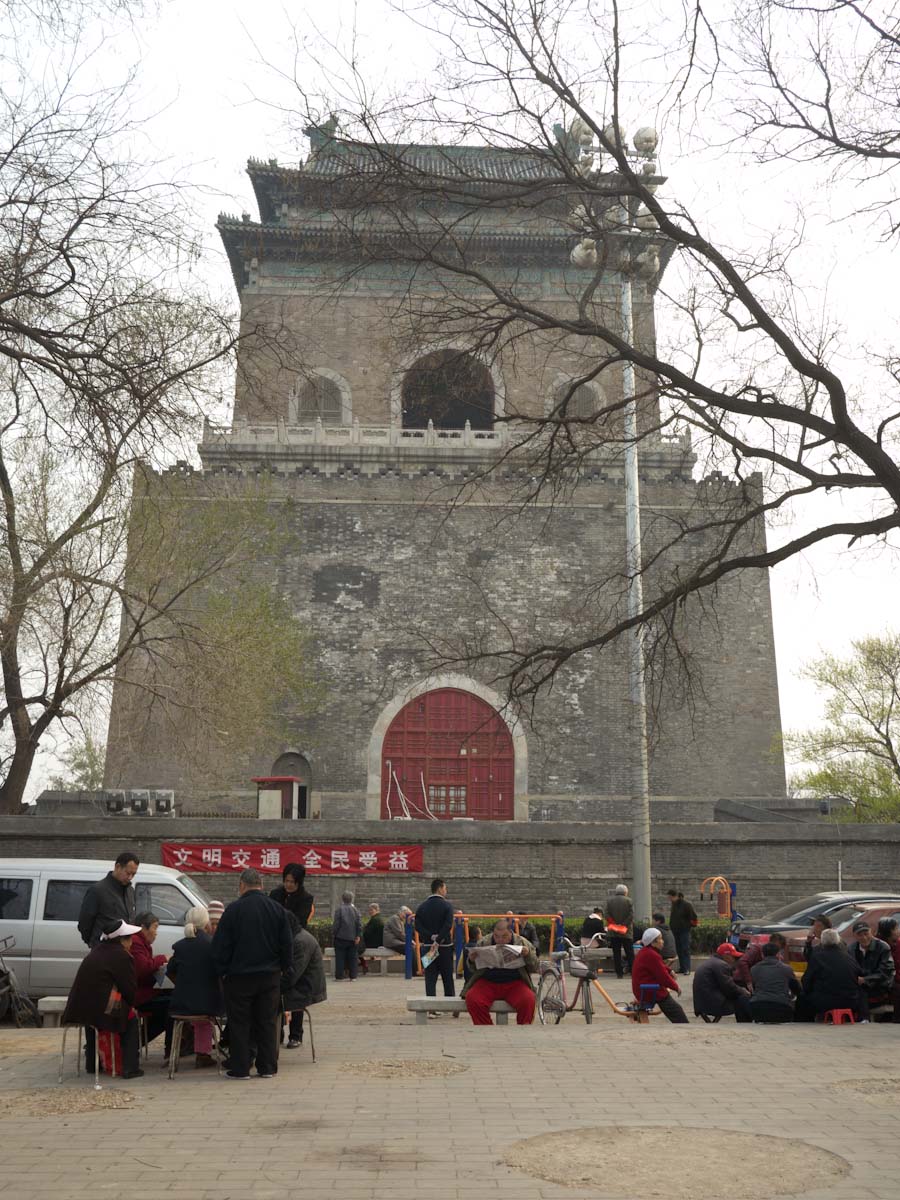
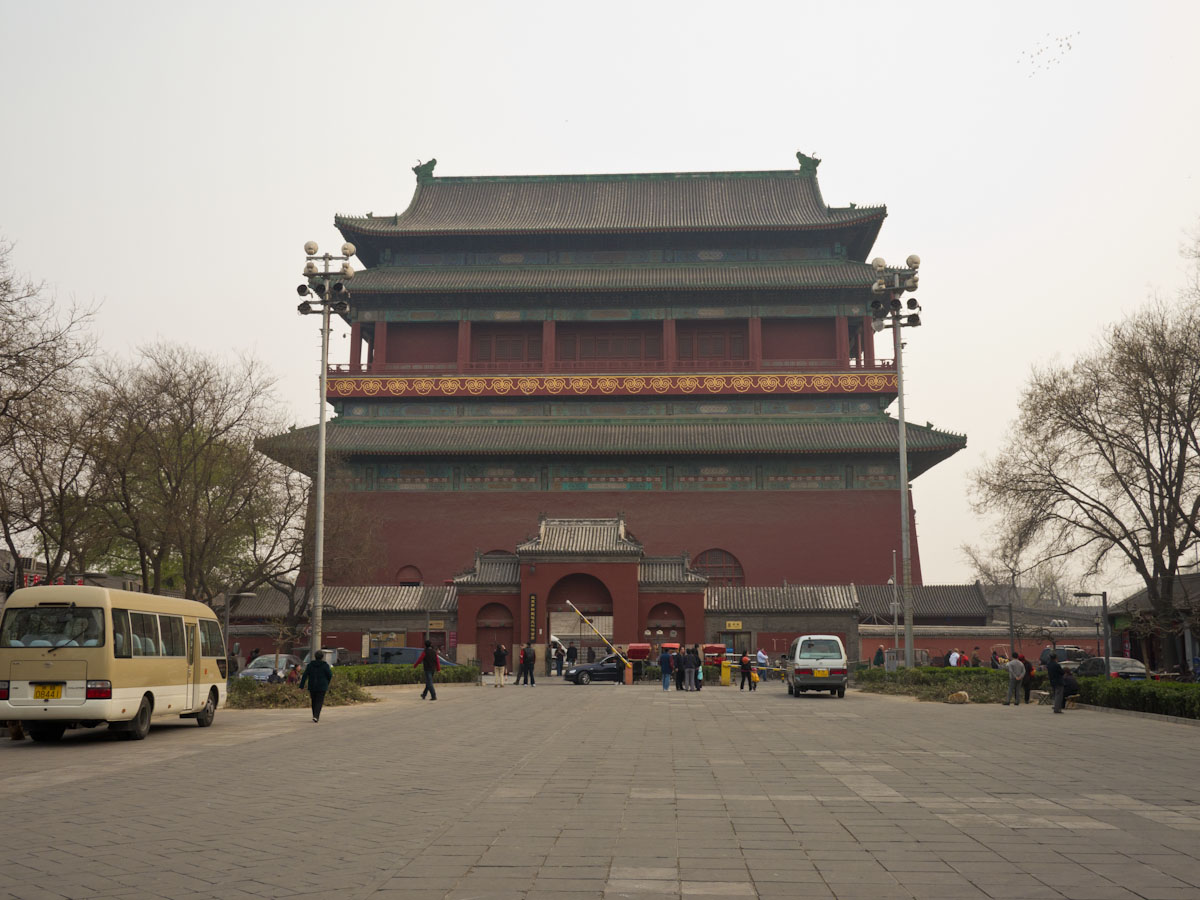
The hutong we visited was notable for still having a drum tower. This is where the time was “announced” hourly by the beat.
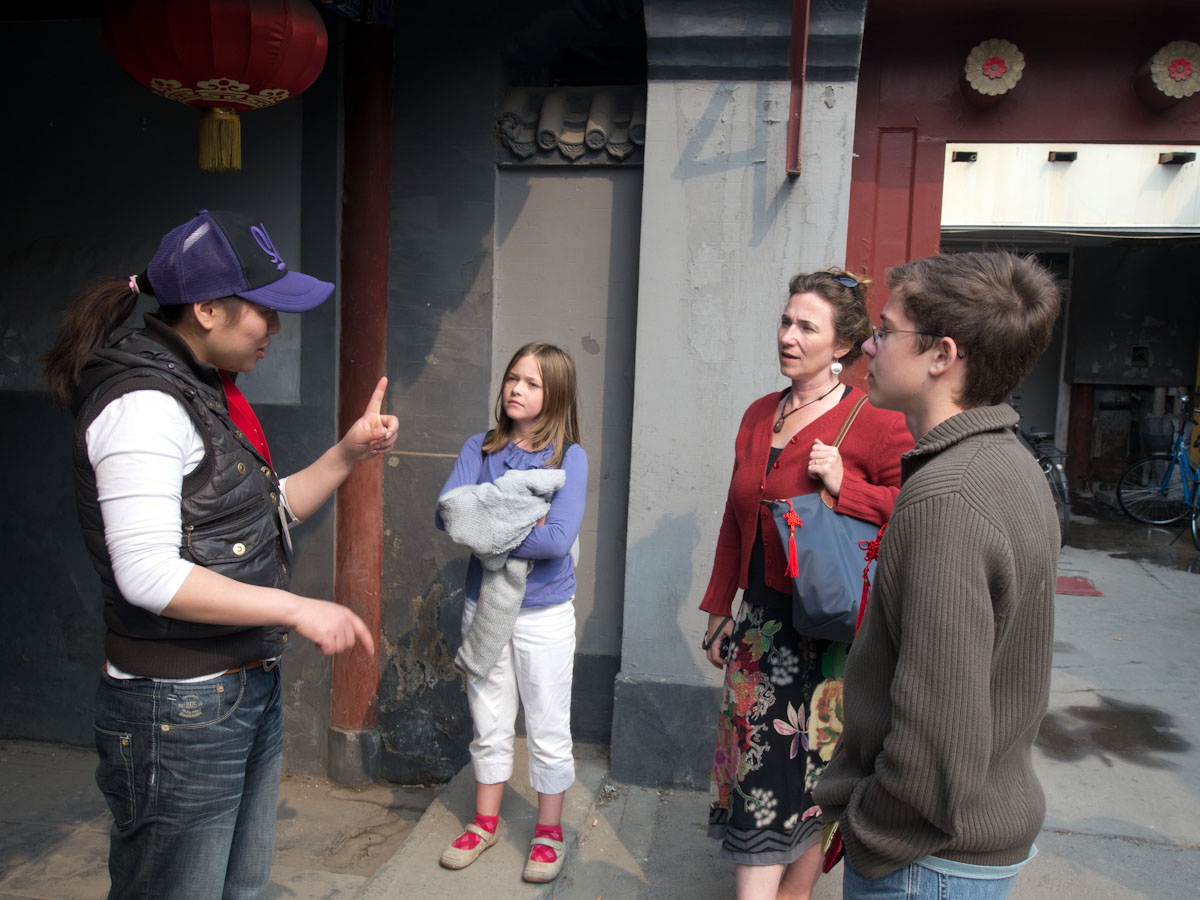
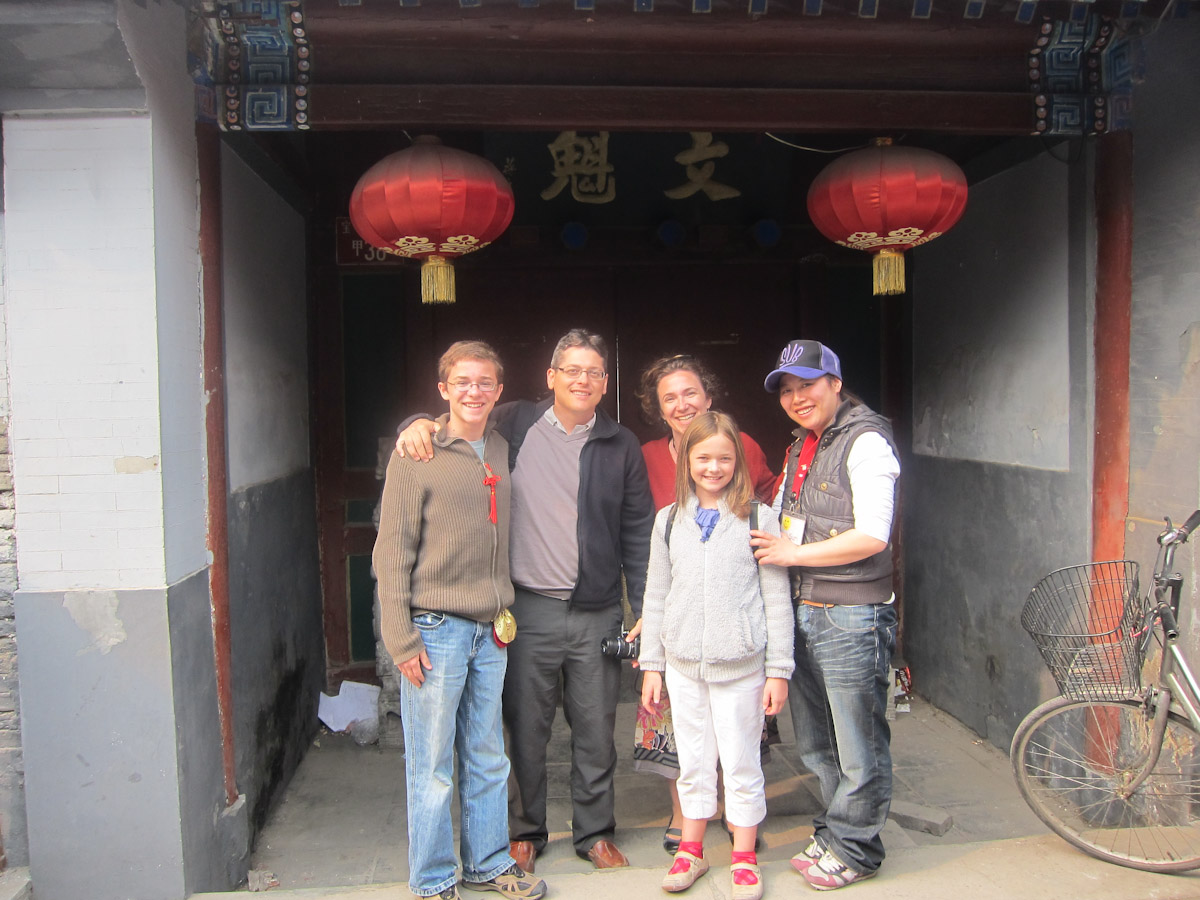
We visited the gateway of one of the few remaining single-family courtyards. The guide showed us the 4 posts across the top, which indicated a noble family in old times. The posts indicated the width of the door. The emperor was permitted 12 posts in his gate, nobles 4, lesser ranks 2, and the rest could have 1 or 0. Katherine asked ‘What if you were a merchant who wanted to build a gate with 4 posts?” The guide could not understand the question. “No 4 posts for merchant.” “But what if the merchant did it anyway?” “No 4 posts for merchant.” We asked until the guide understood. “What if a CRAZY merchant did that?” “Merchant killed! No 4 posts for merchant.”
Nowadays however, you can have as many posts as you want.
We also visited a Beijing corner market in the hutong. It reminded us of many of the markets we had seen throughout Southeast Asia. There were a few novel produce items – eggplants here are round and tastier than back home, new root vegetables that looked like grubs – and it all looked quite fresh. The Chinese apparently got used to eating in food halls during the Cultural Revolution and so they are still quite accustomed to stopping into restaurants for cheap meals, but our guide John knew how to cook and invited us to his apartment for dinner later that night. (It was great – more on that later)
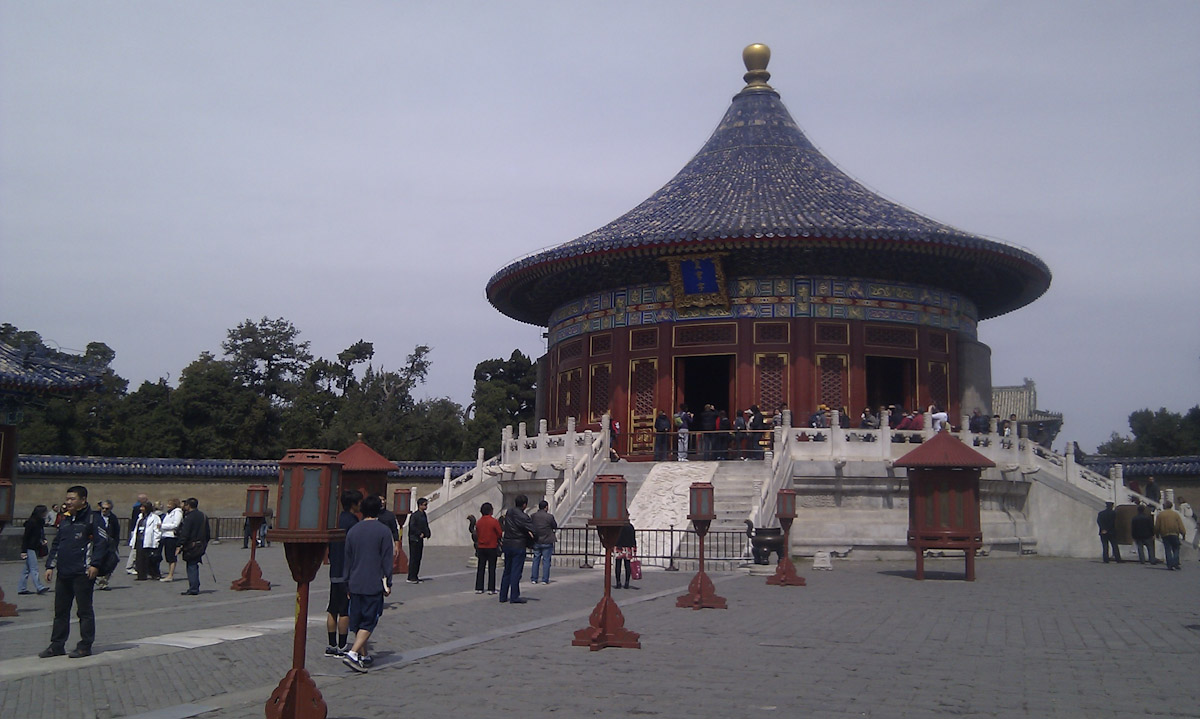
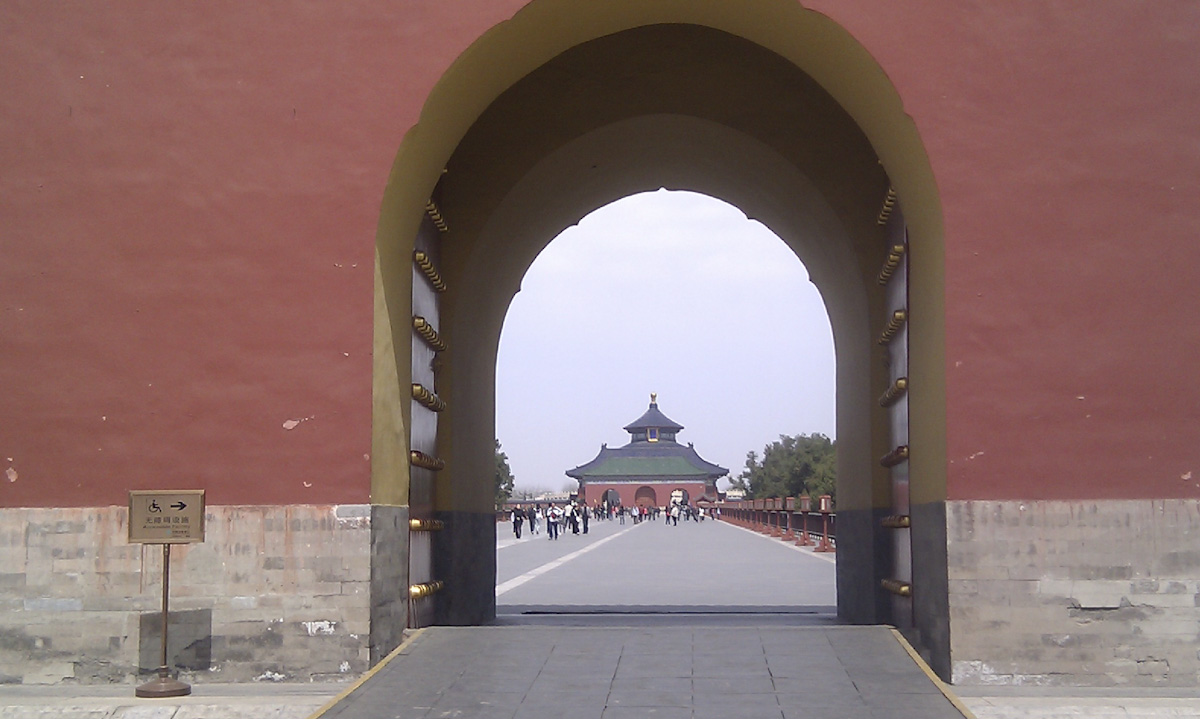
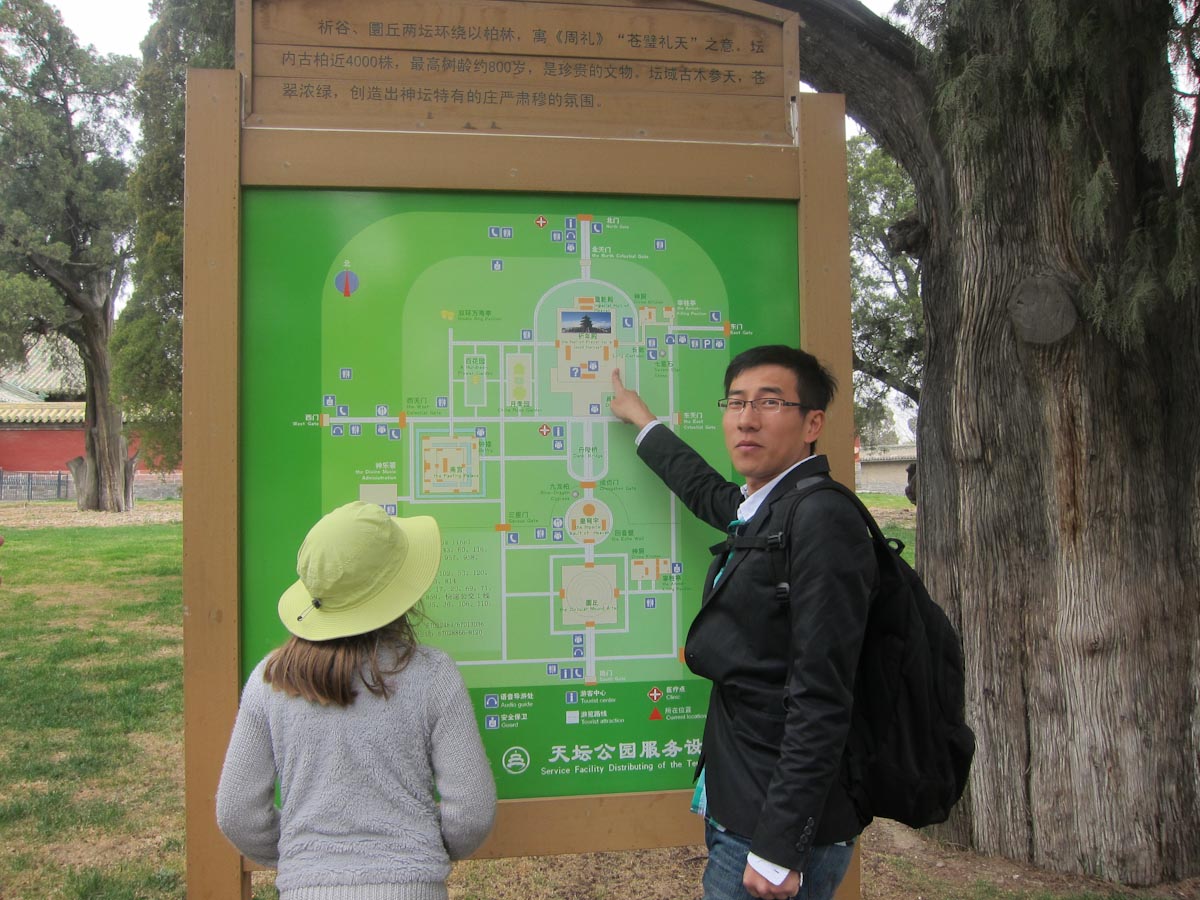
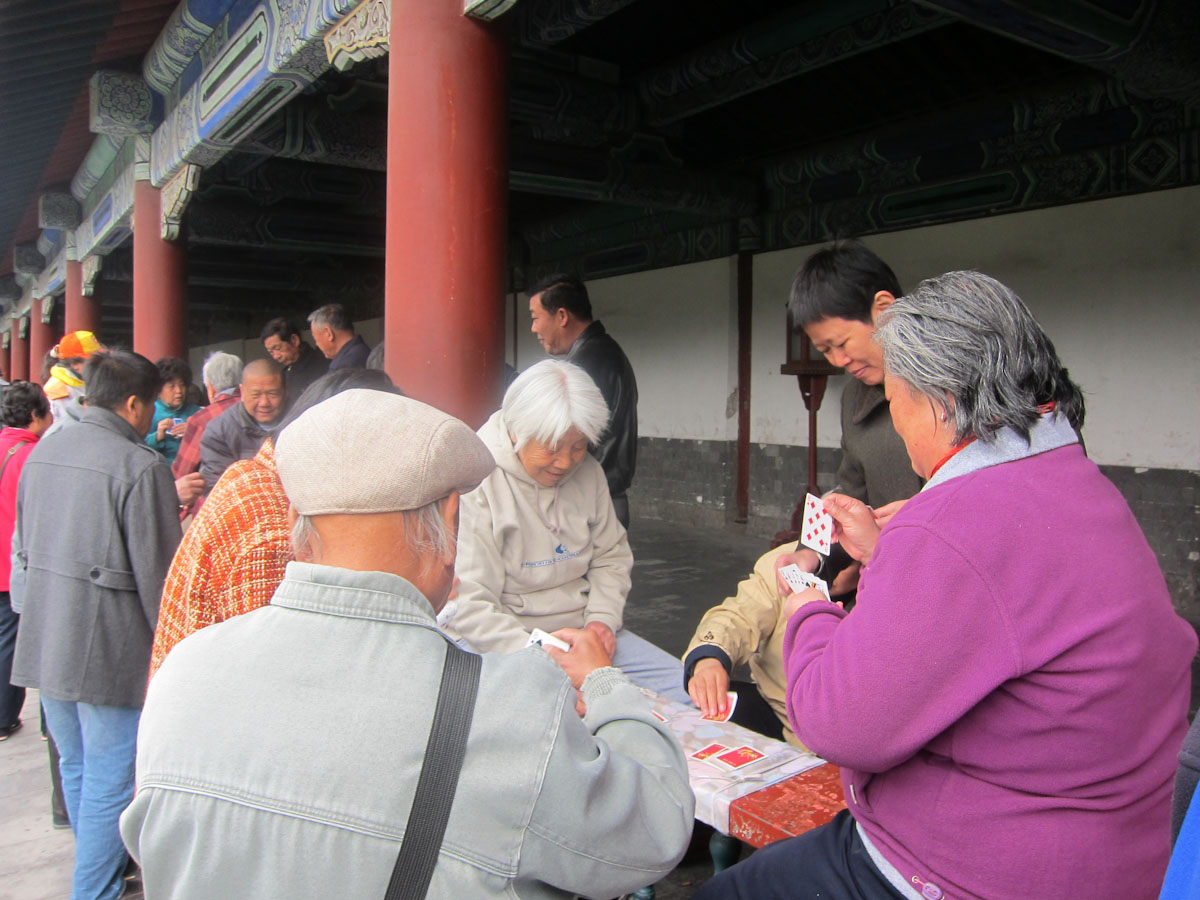
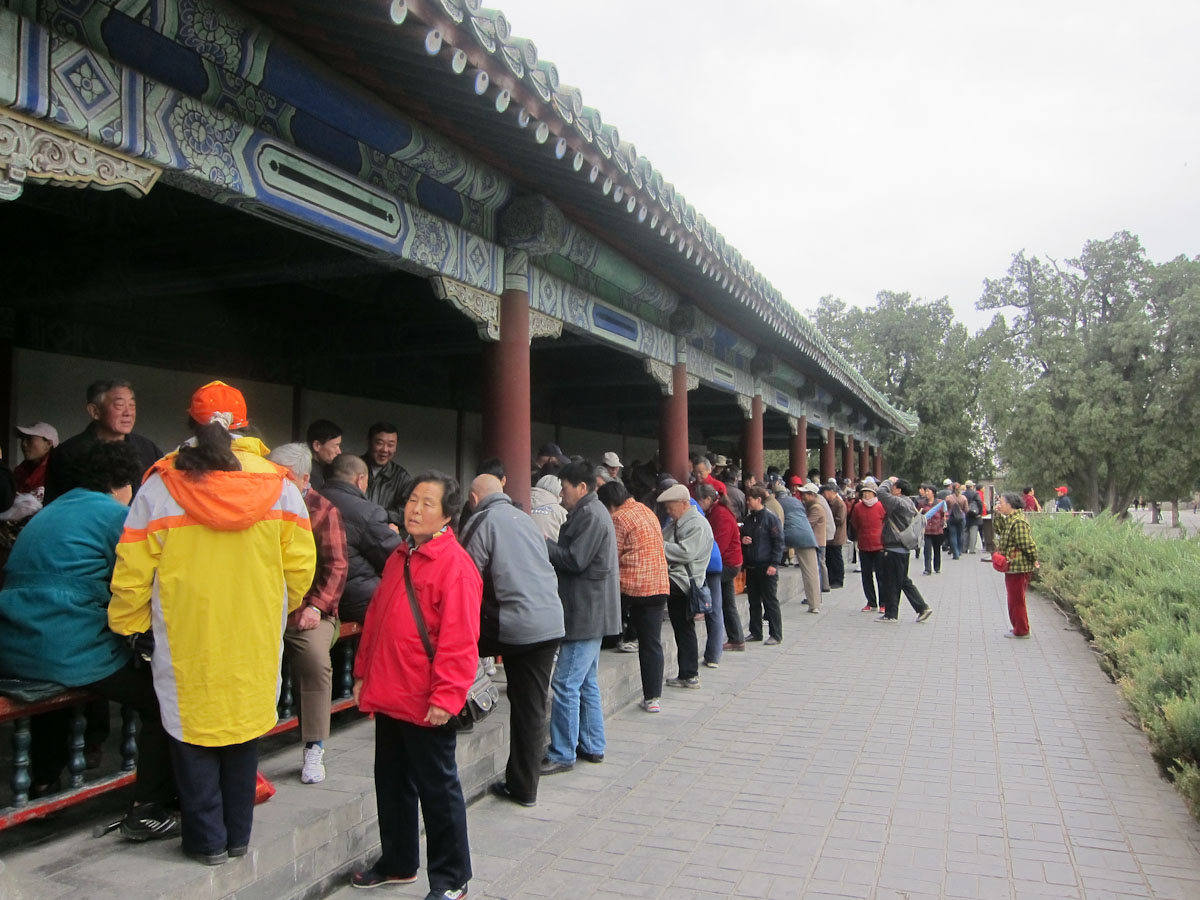
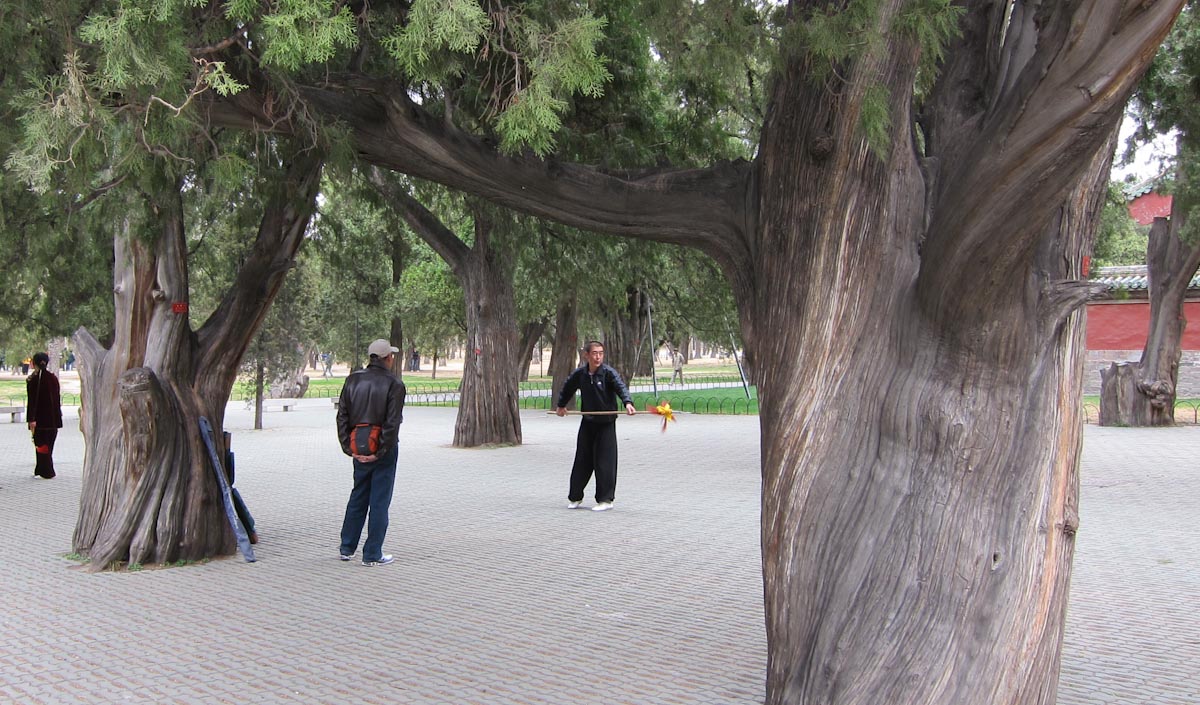
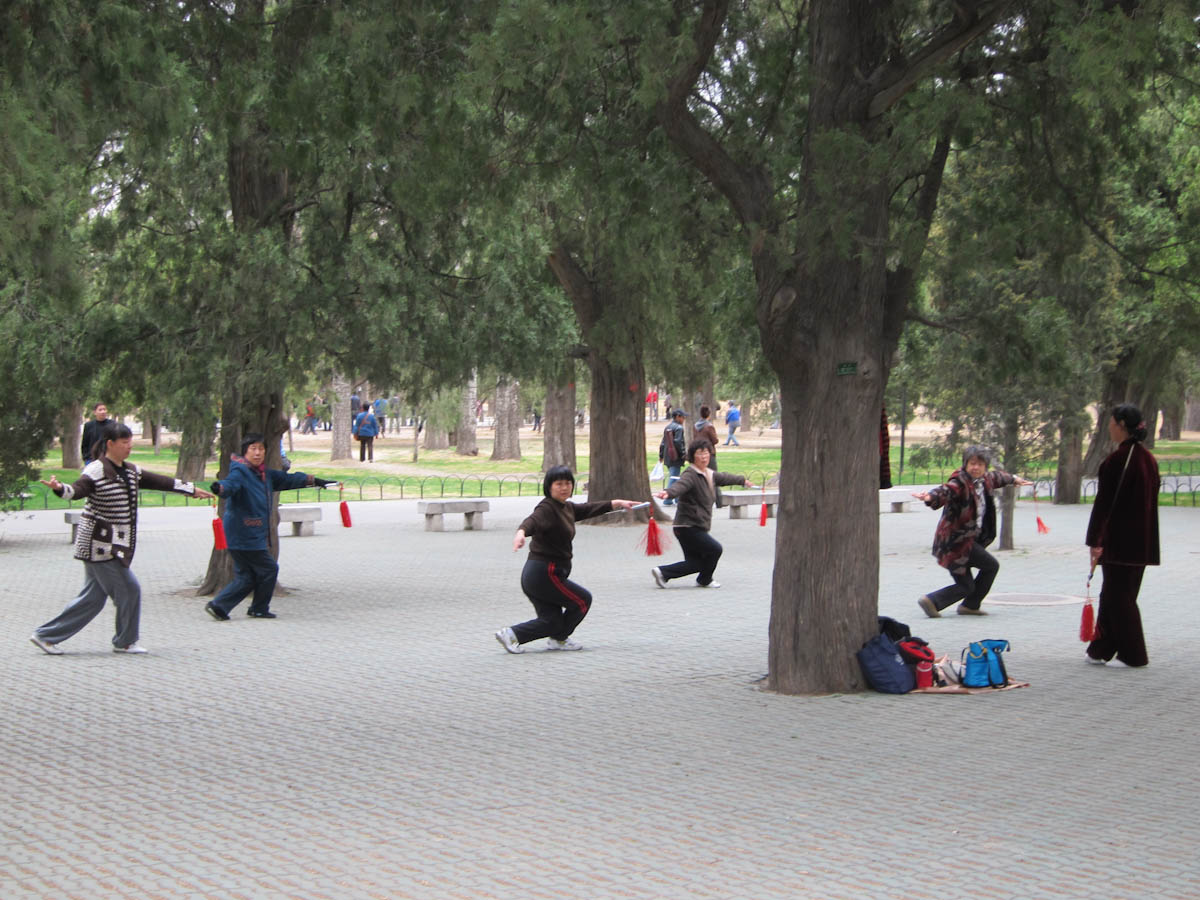
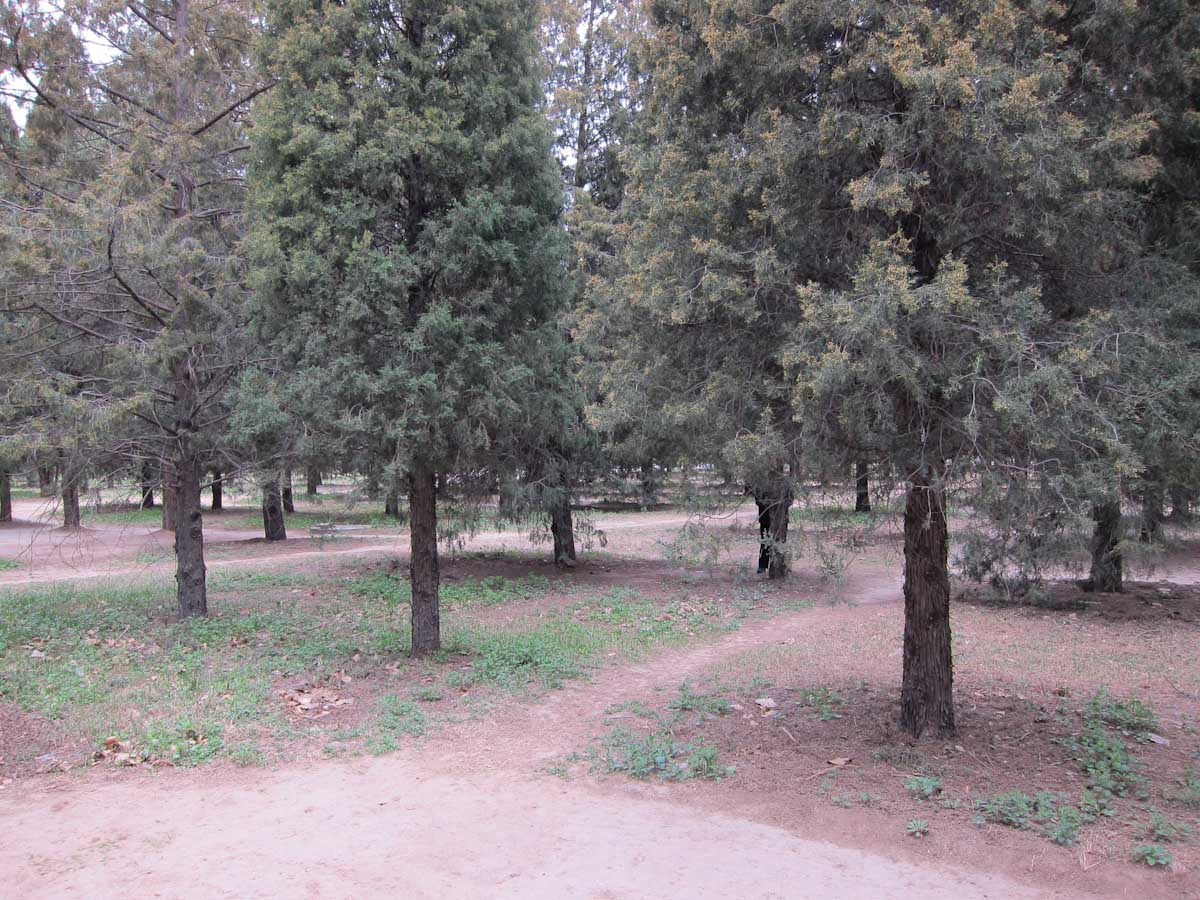
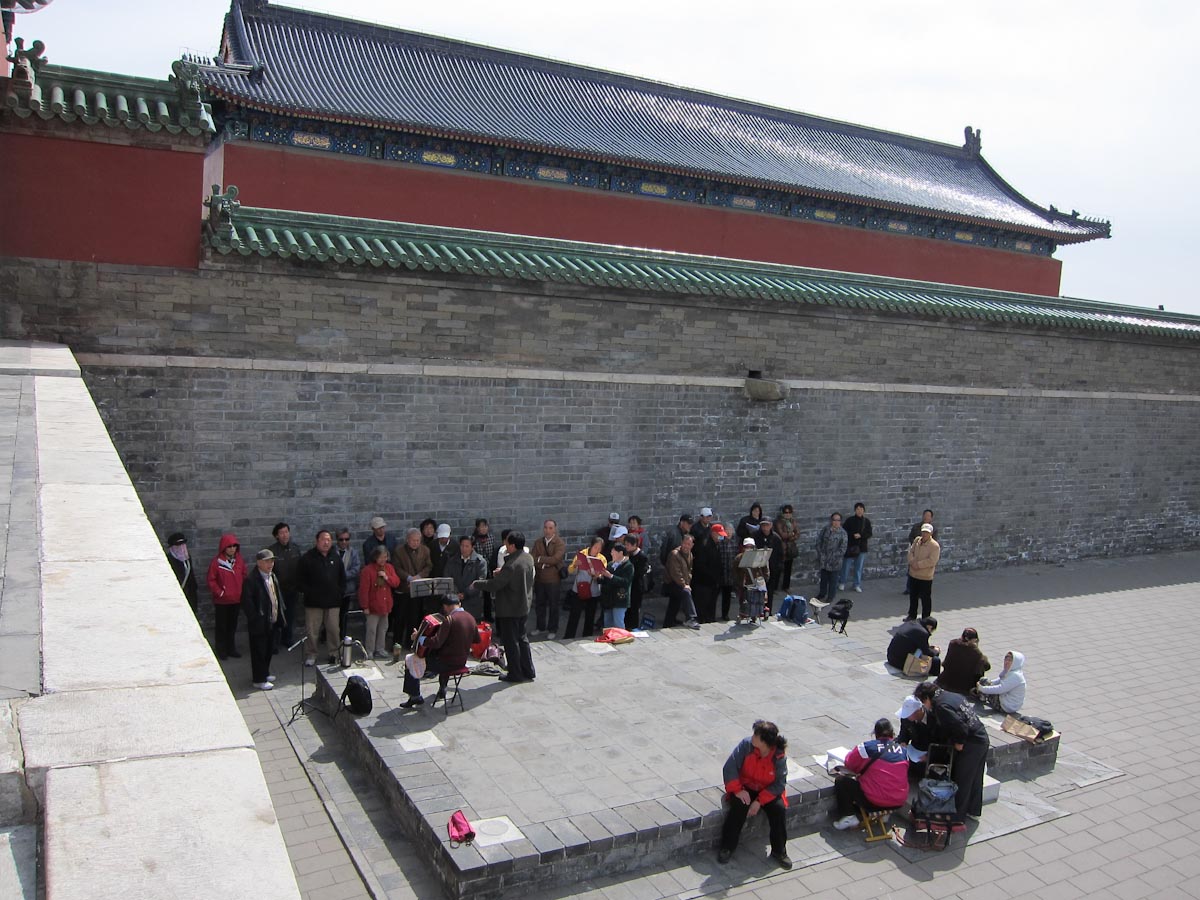
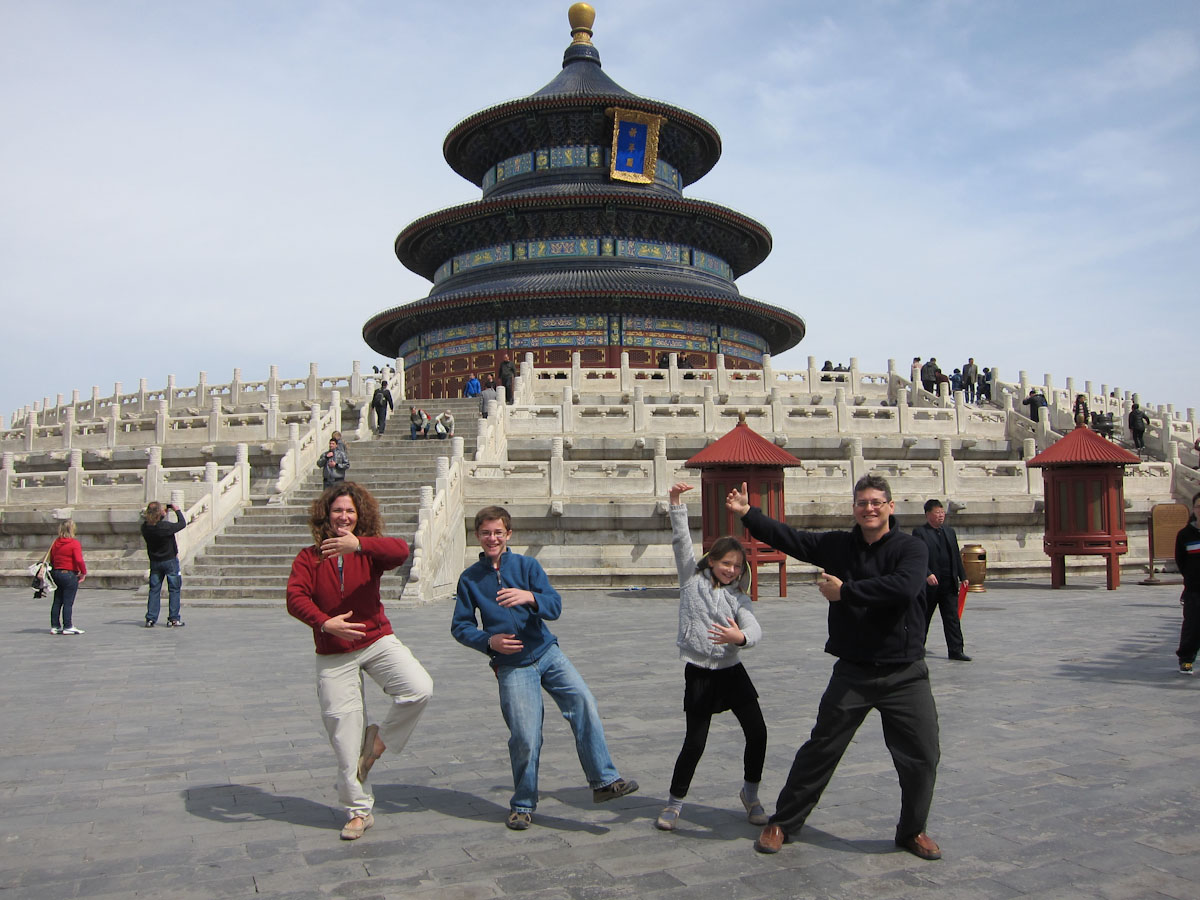
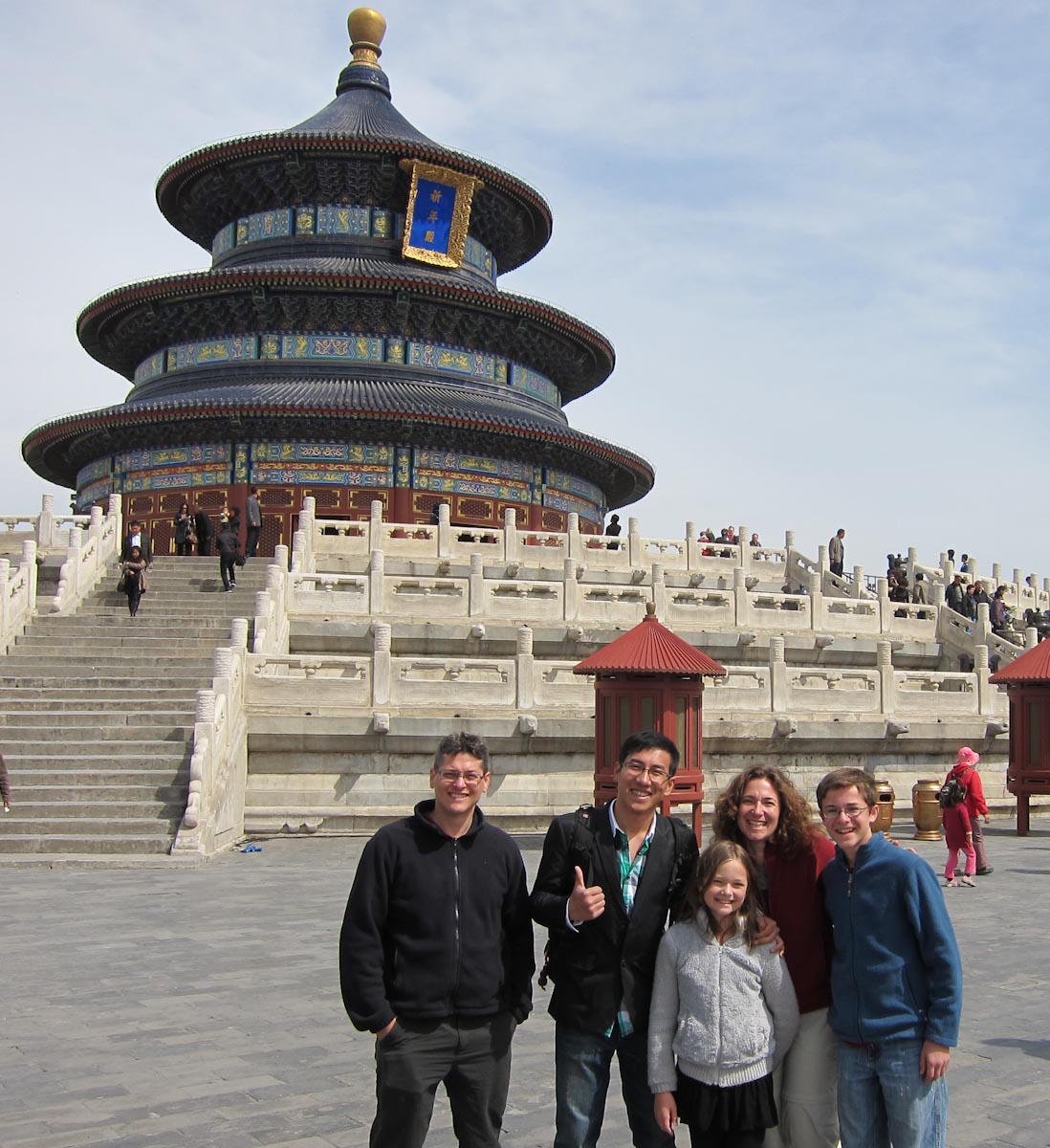
On our last day in Beijing, we went to the Temple of Heaven, where the Emperor came to pray. There was a special buildings for the winter solstice and a large set of parks with old cedar trees and a long hall. Today the hall is filled on a weekday by the elderly, enjoying their retirement with cards, dancing, Tai Chi, choral groups and gardens. We drank it all in and enjoyed this insight into modern Beijing. Then we headed out for the airport and a flight to magical Xi’an, the ancient original capital of China.