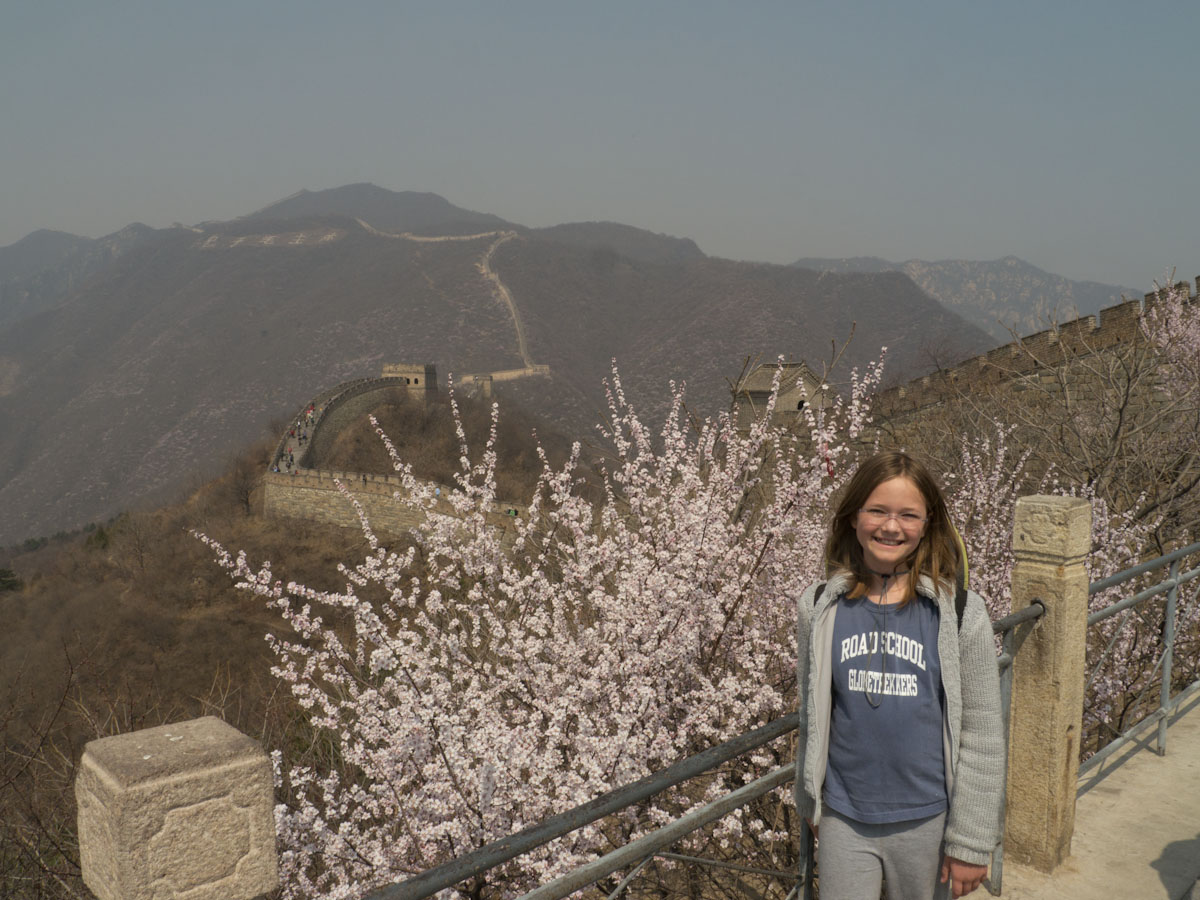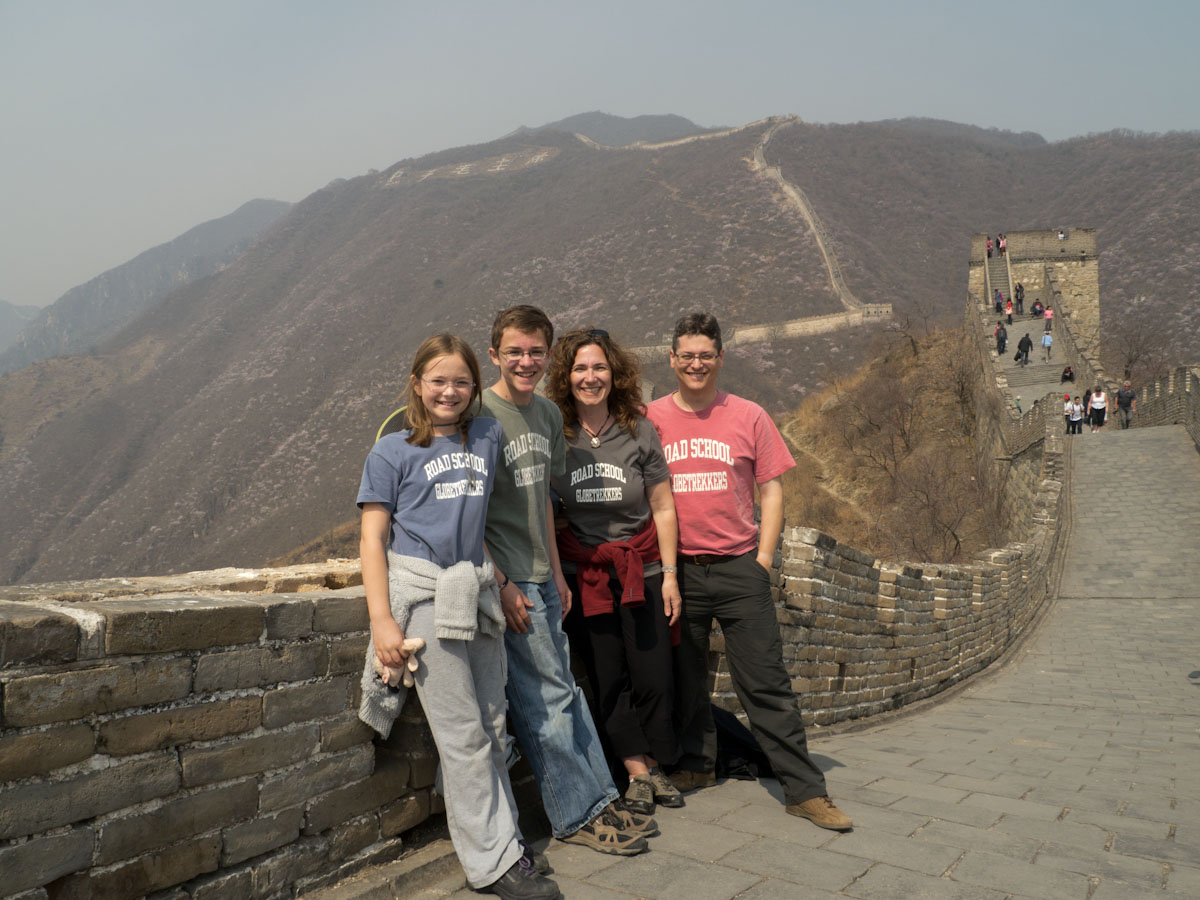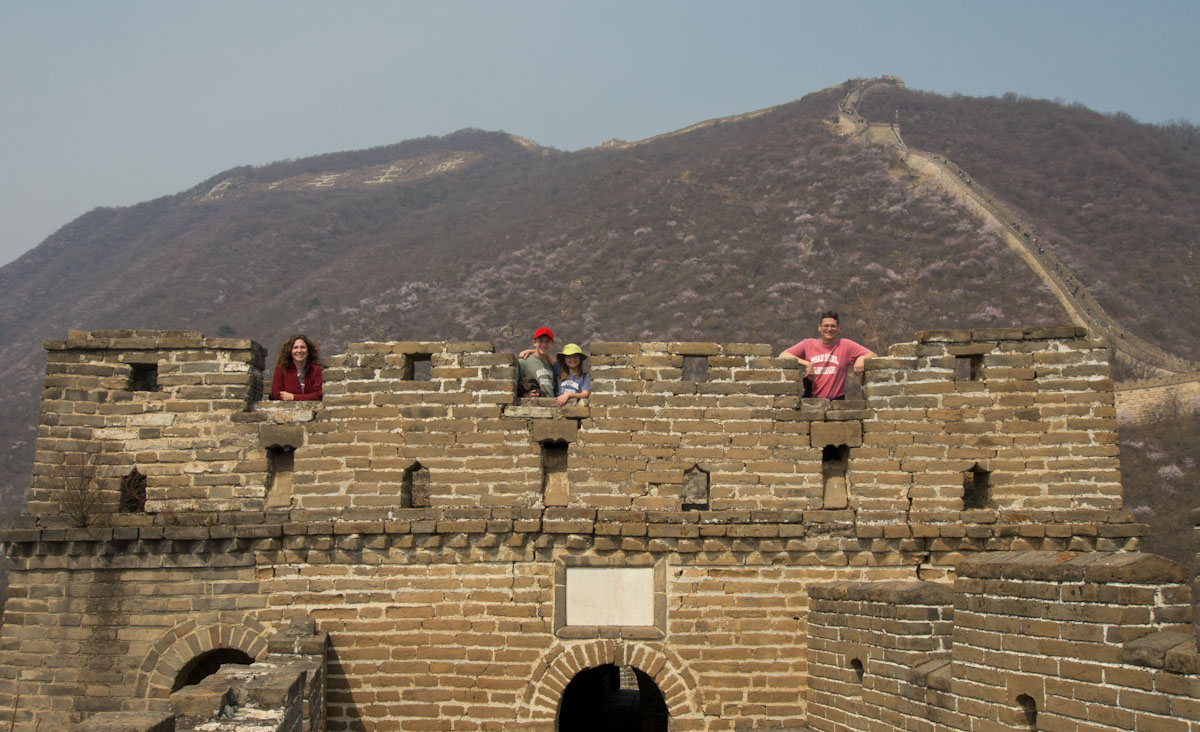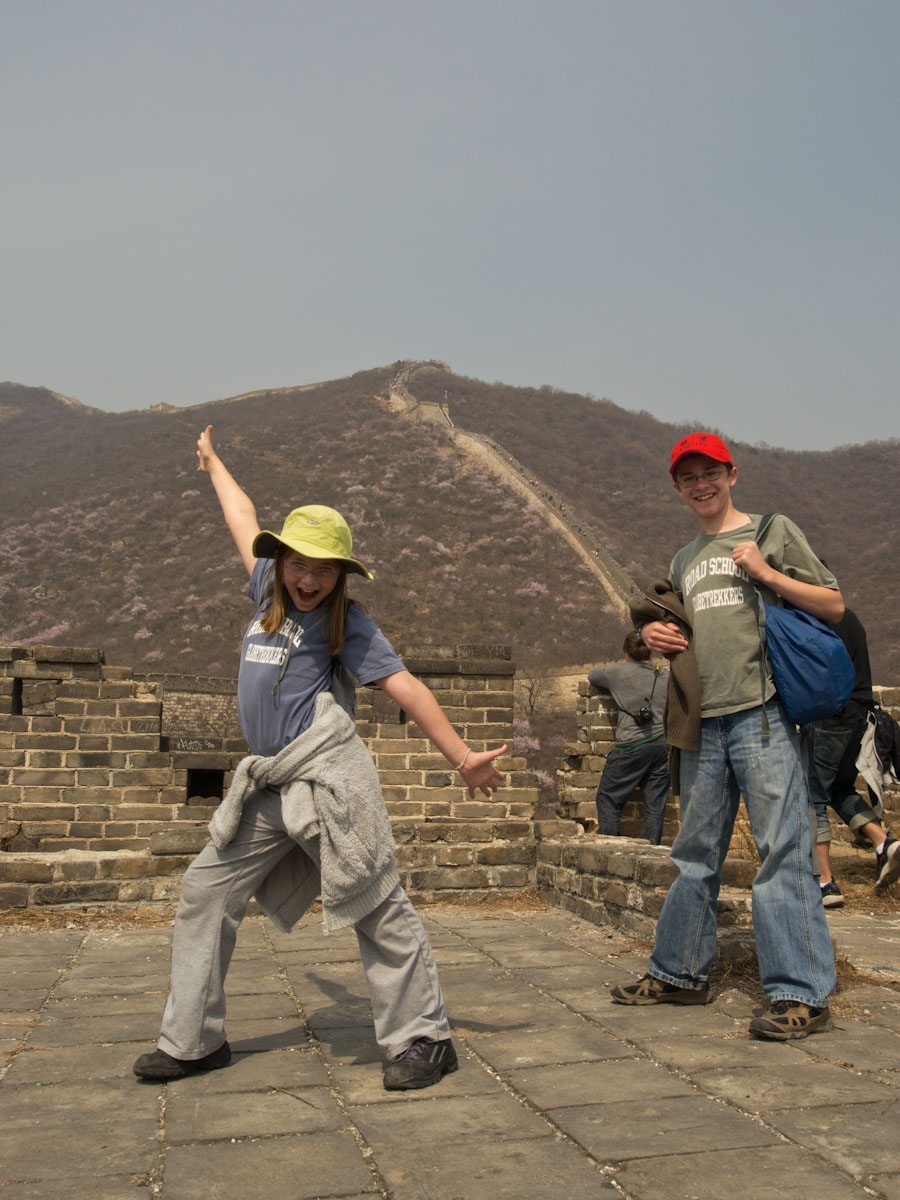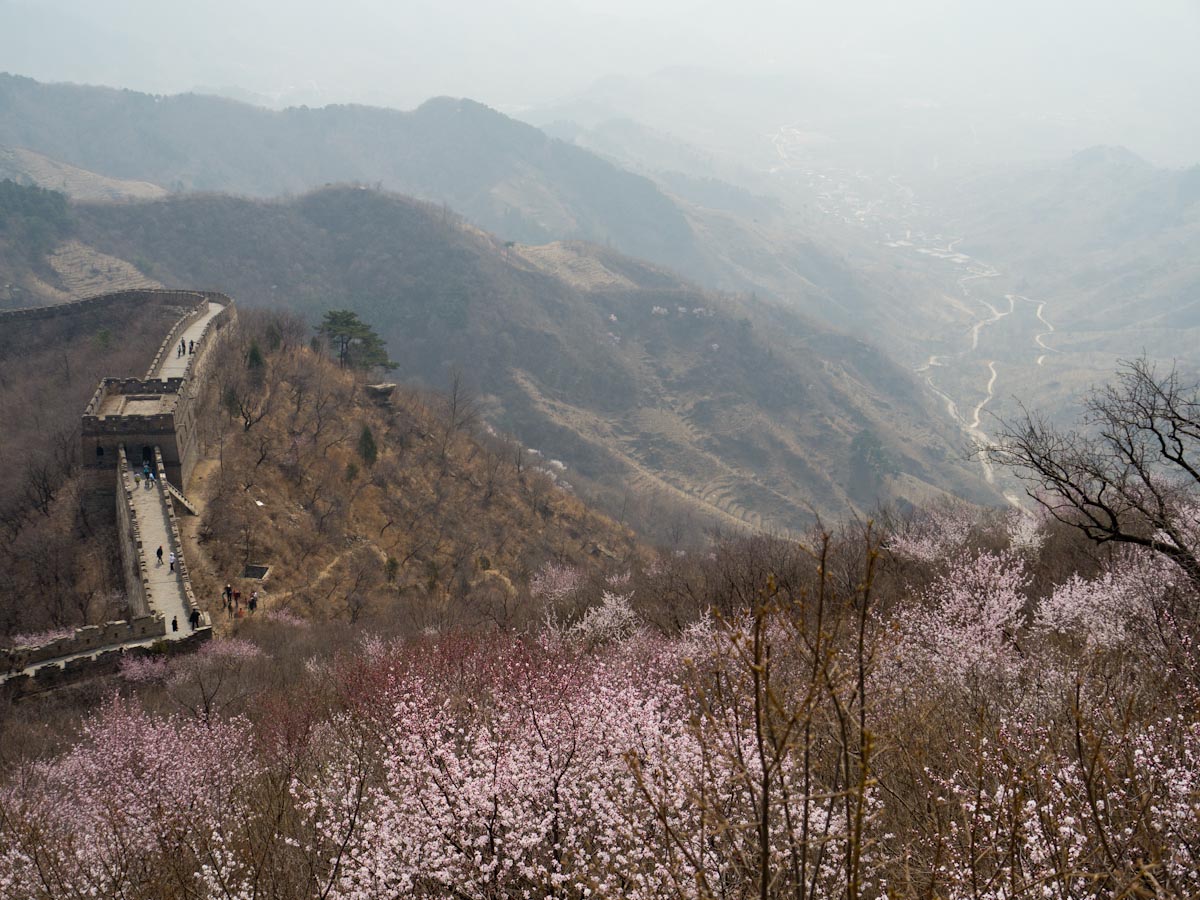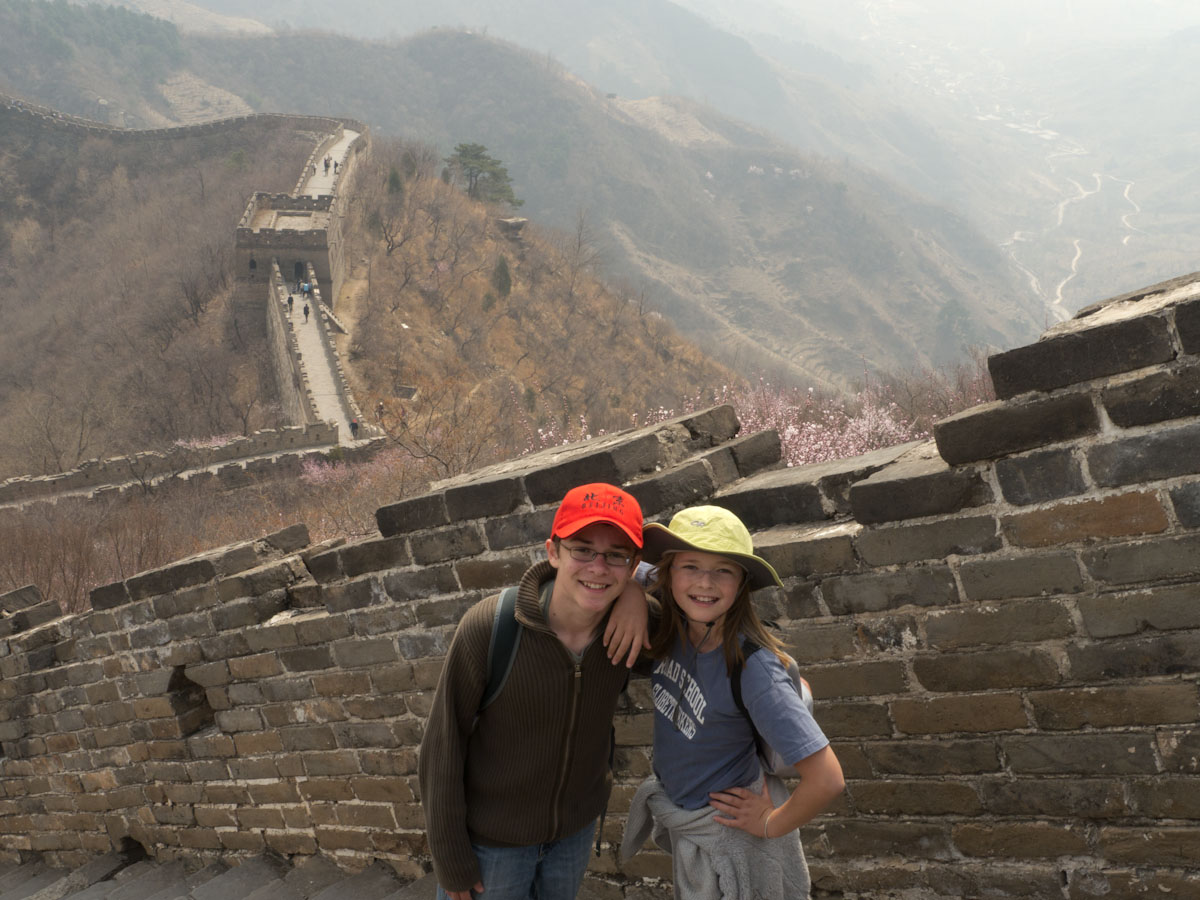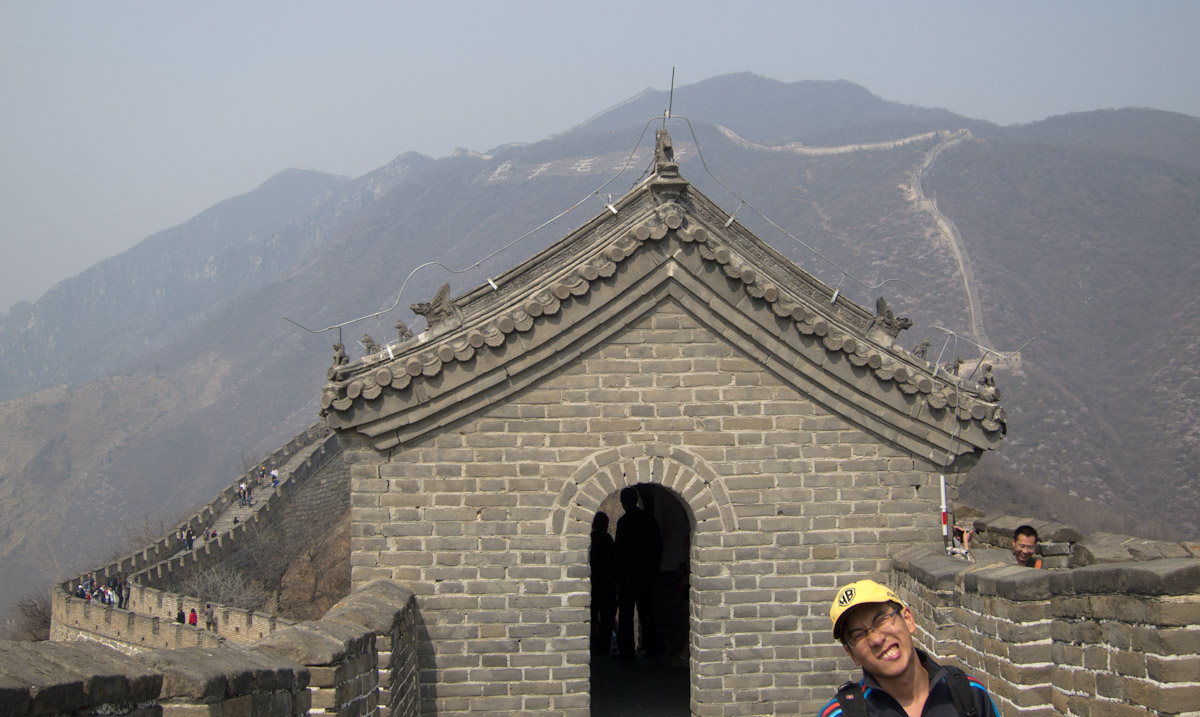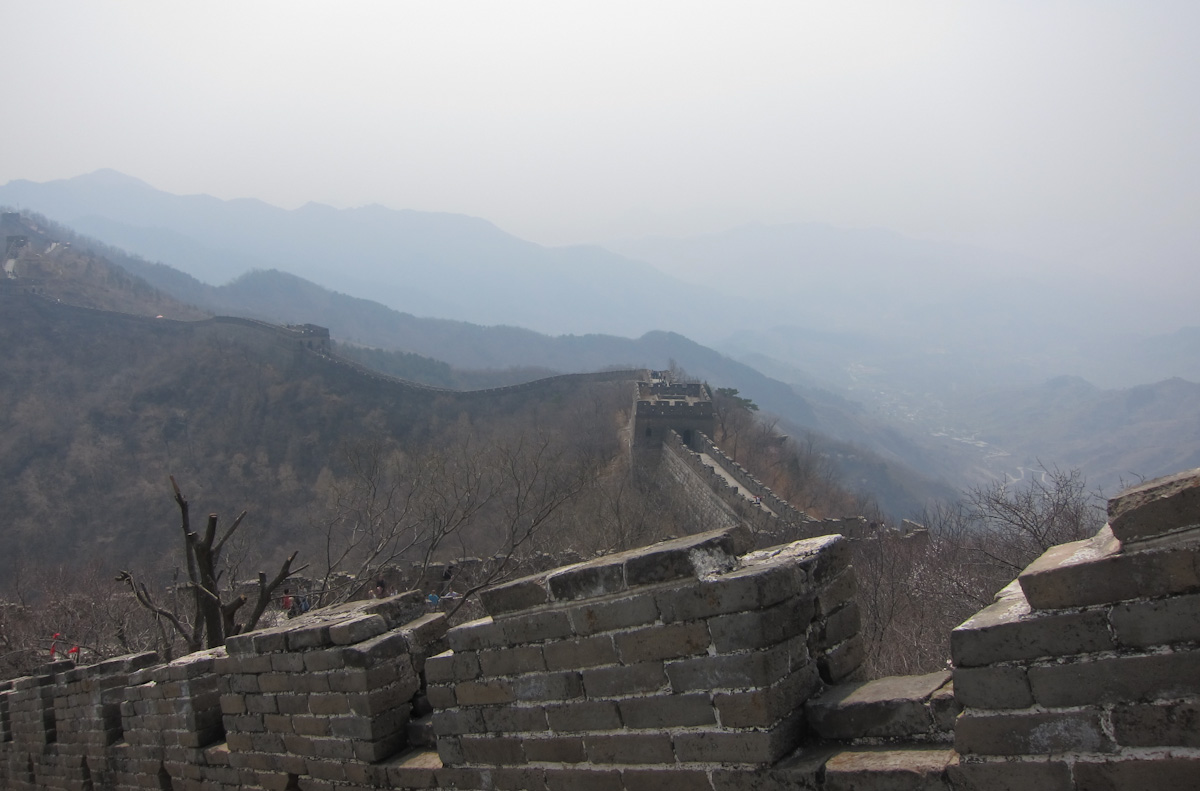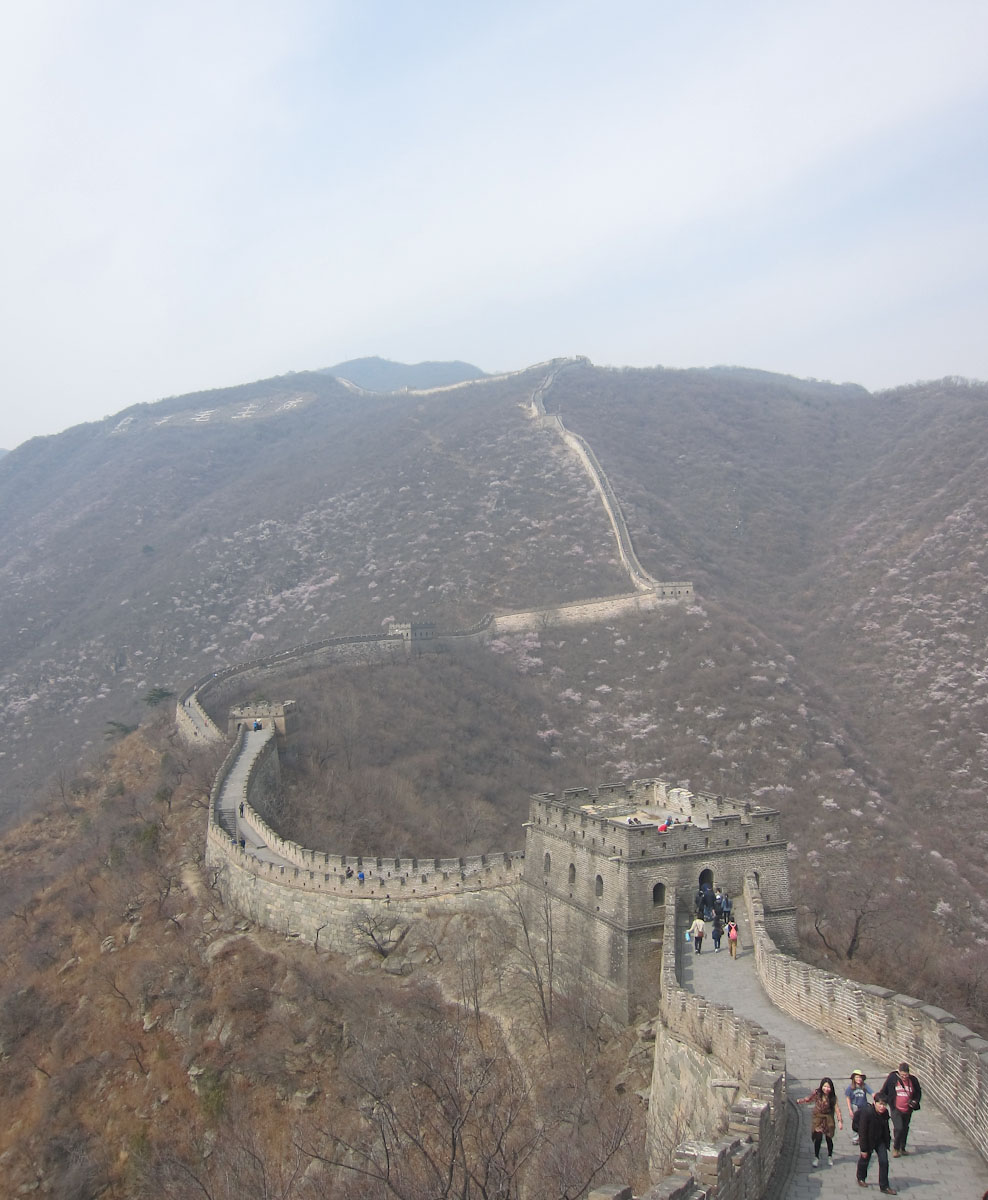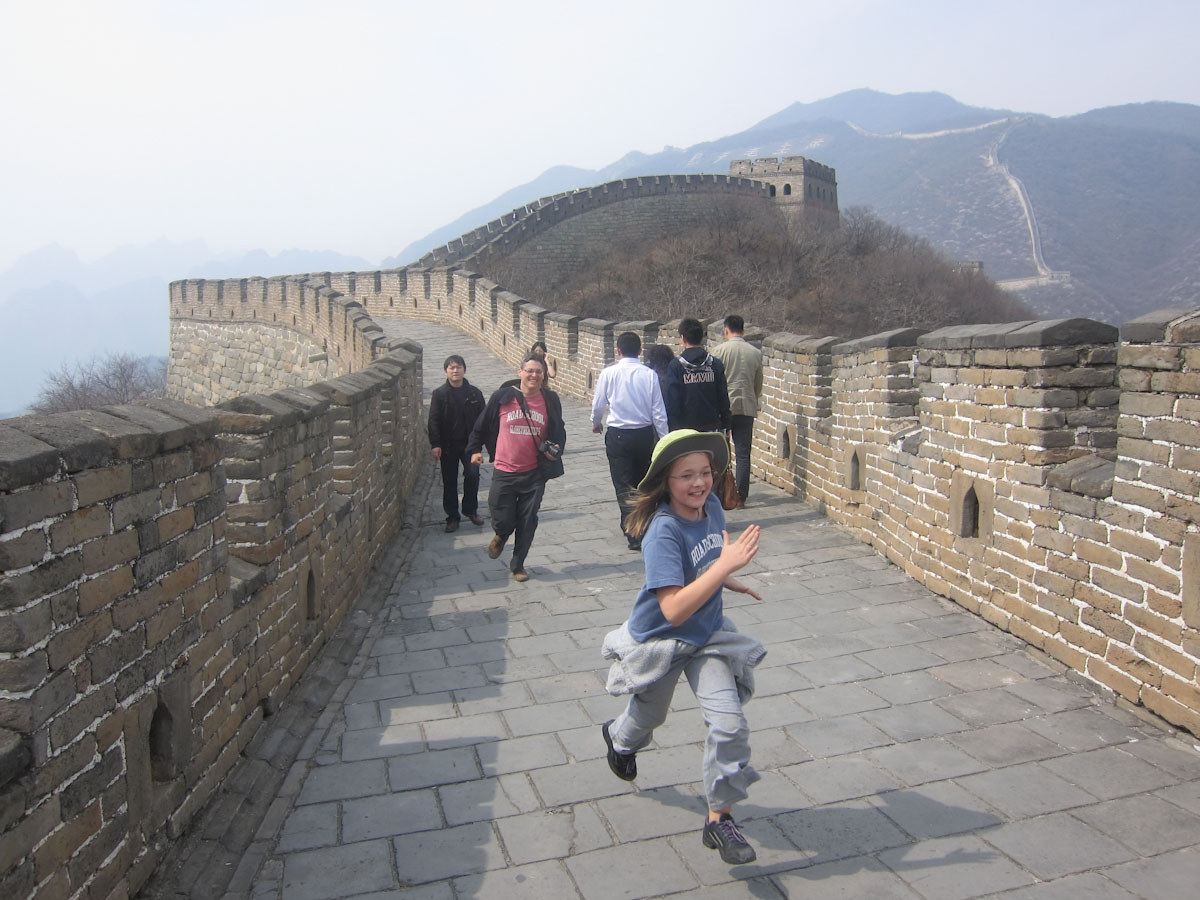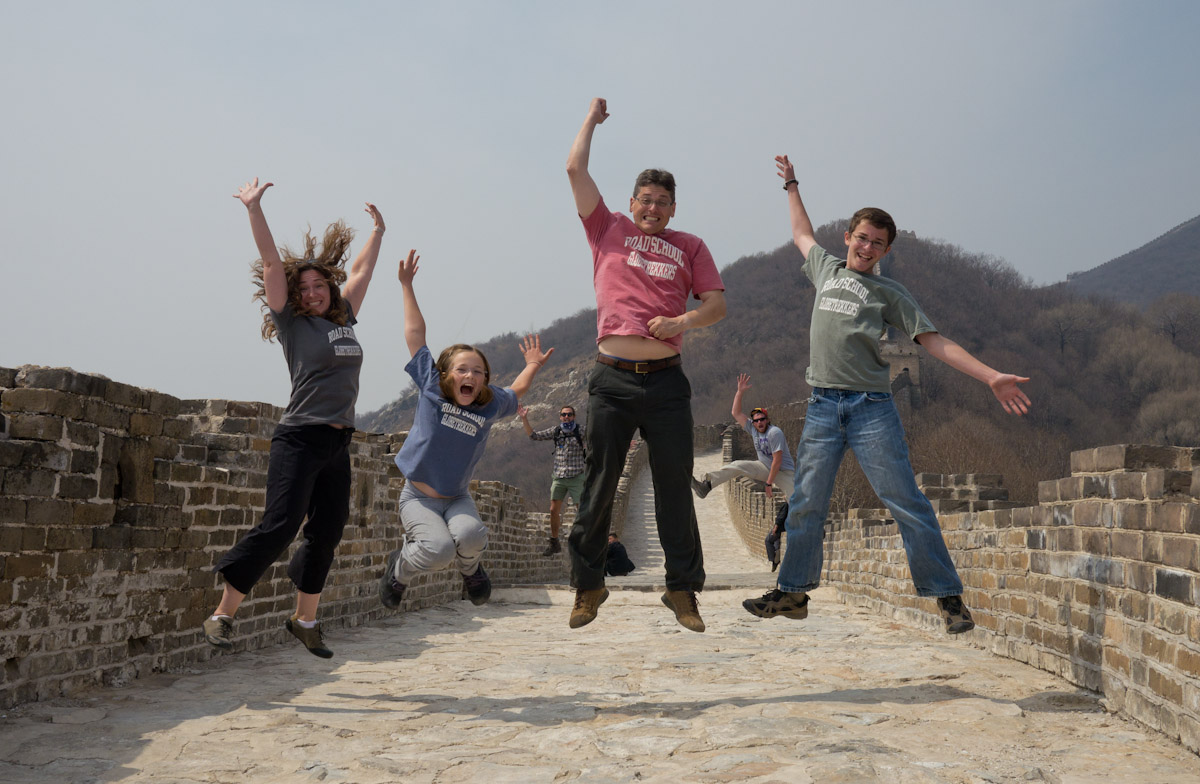
The Great Wall loomed large in my pantheon of must-see destinations. More than 2,000 years old, it is the single biggest man-made structure on the planet. Someone once told me you could even see it from the moon. While I believe that this assertion has been scientifically dispelled, having now visited, it remains larger than life and eminently plausible to me.
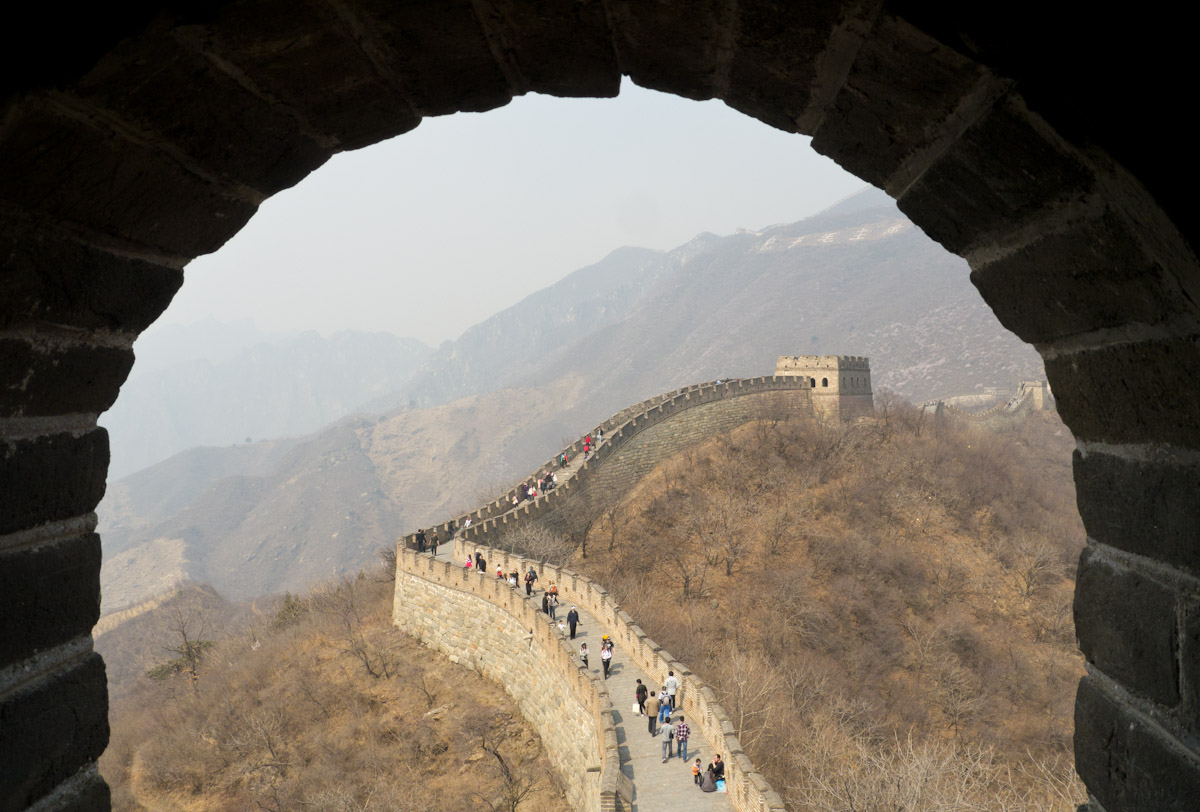
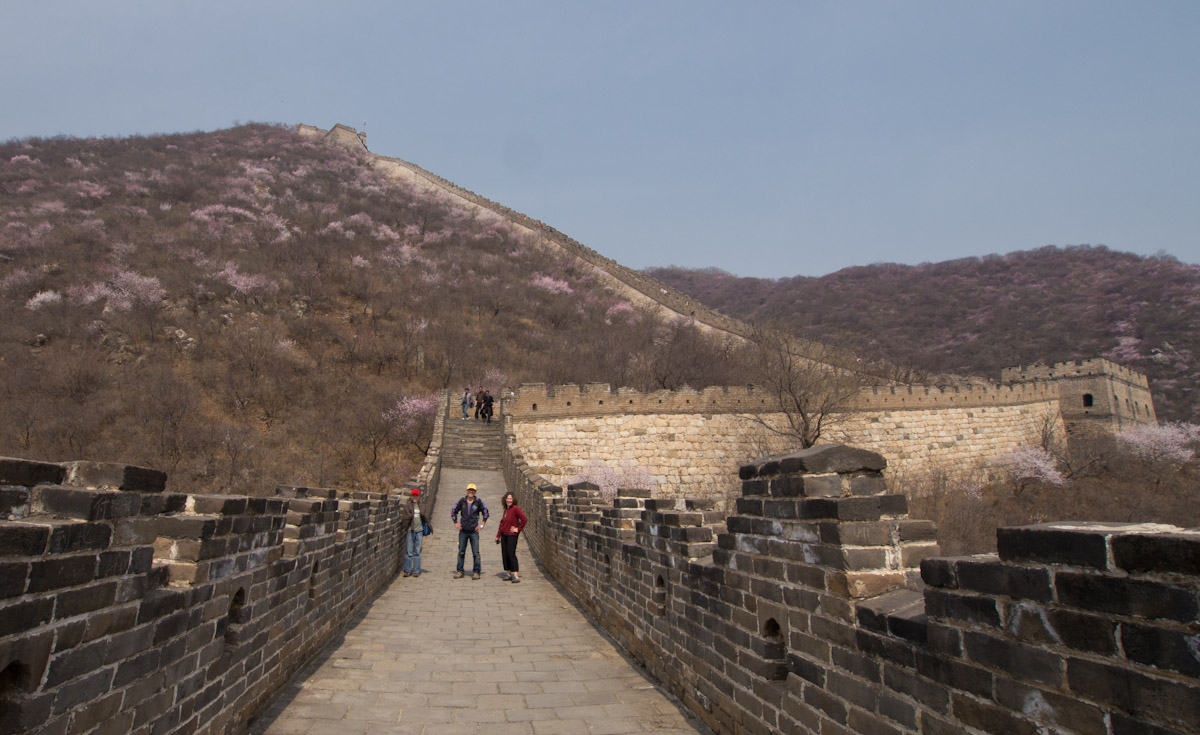
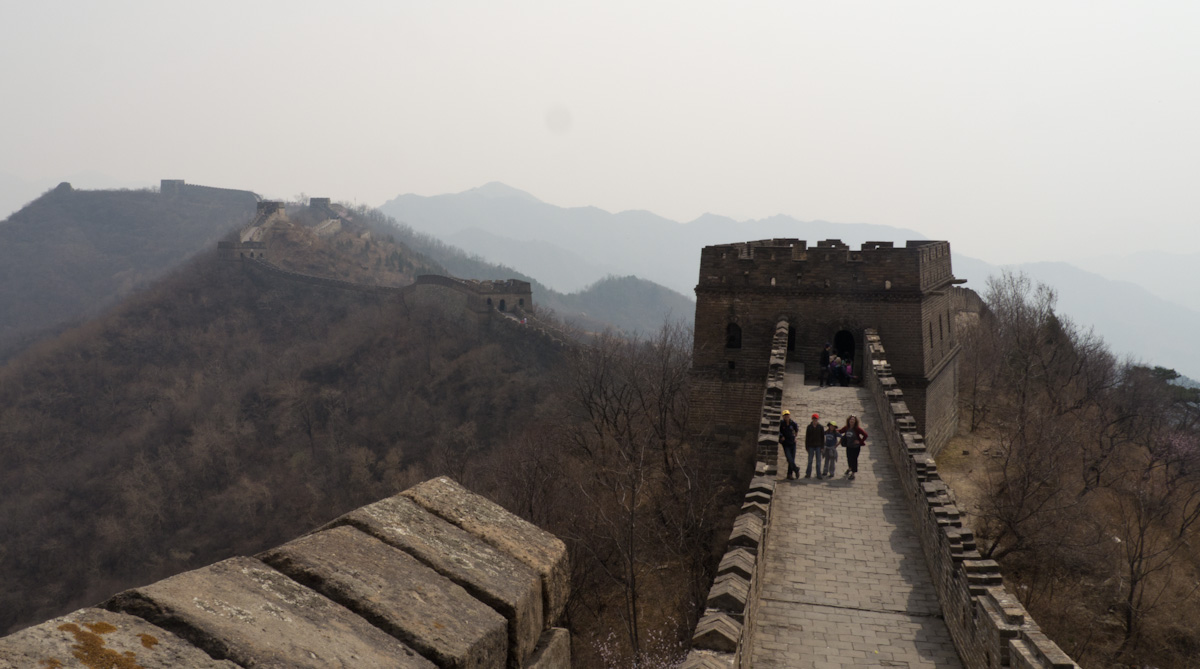
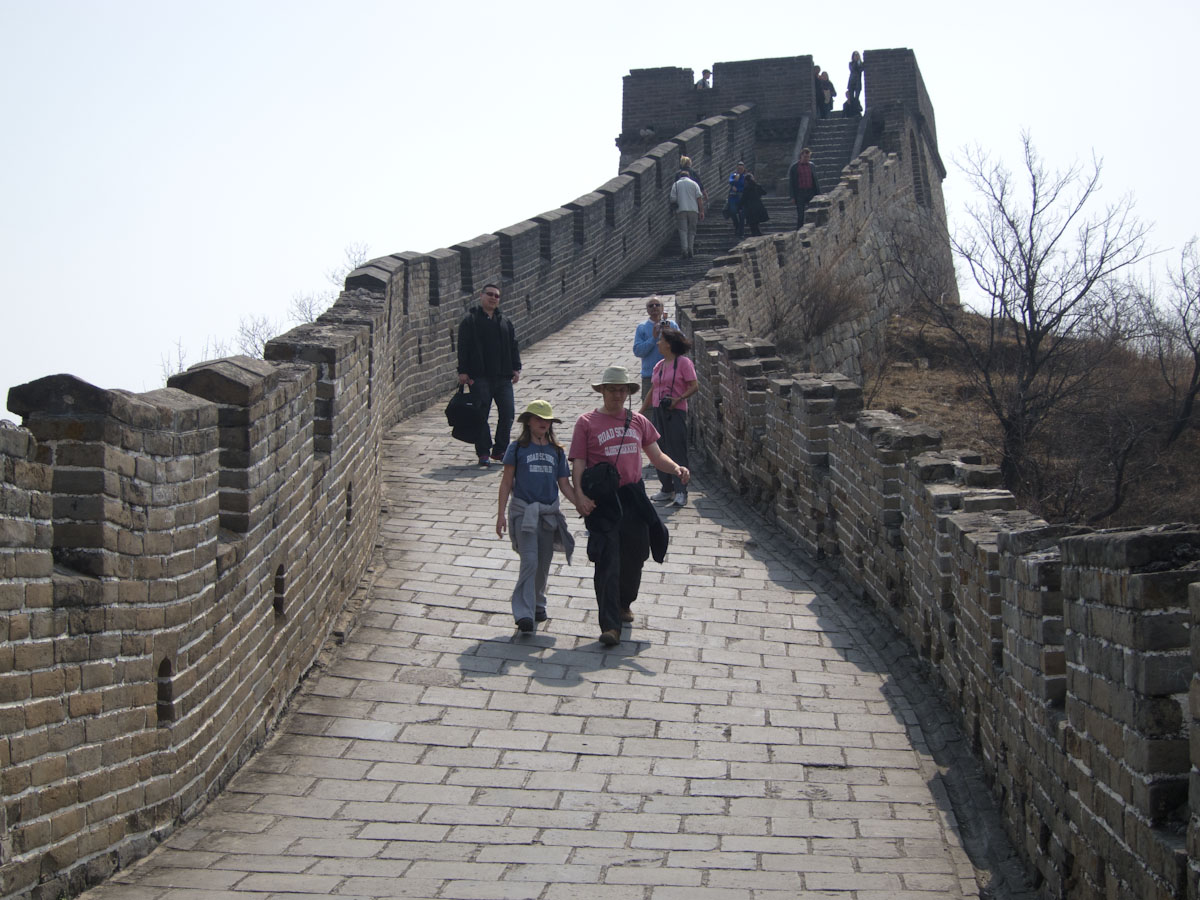
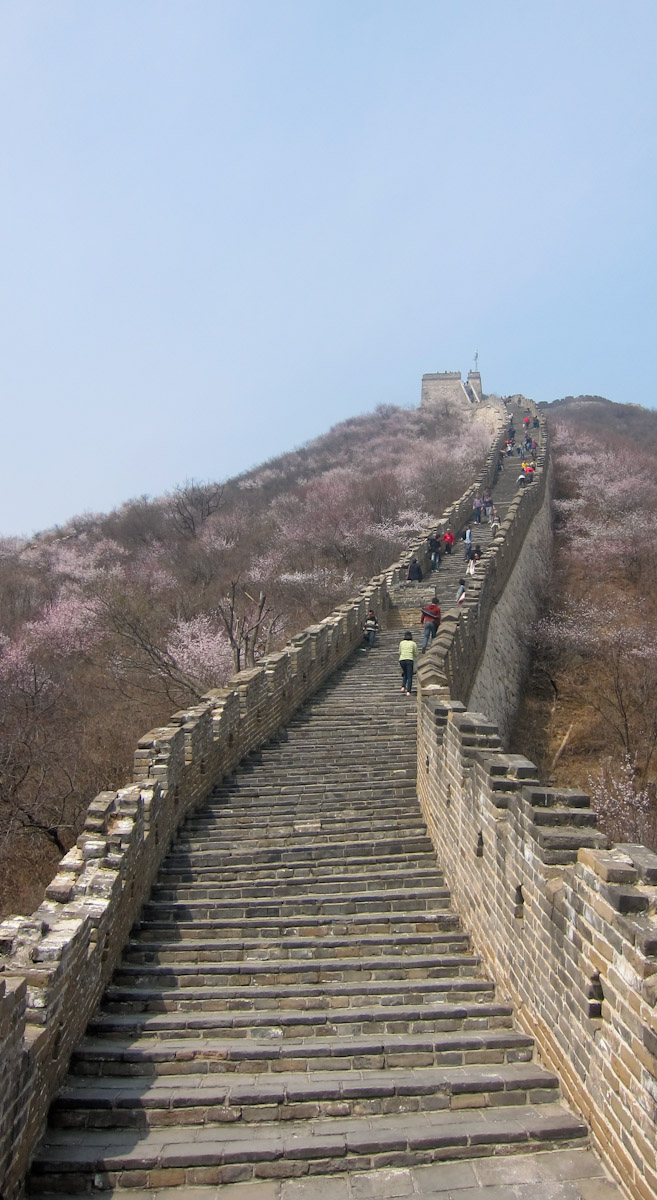
When I imagined walking the ramparts of the Great Wall, I envisioned a wide expanse with sweeping vistas on all sides, sort of like an elevated promenade deck. If I had bothered to think about the pavement underfoot, I am sure I would have expected broad even stones. I never once dreamt that there would be stairs nor did I fathom that I would work up a sweat.
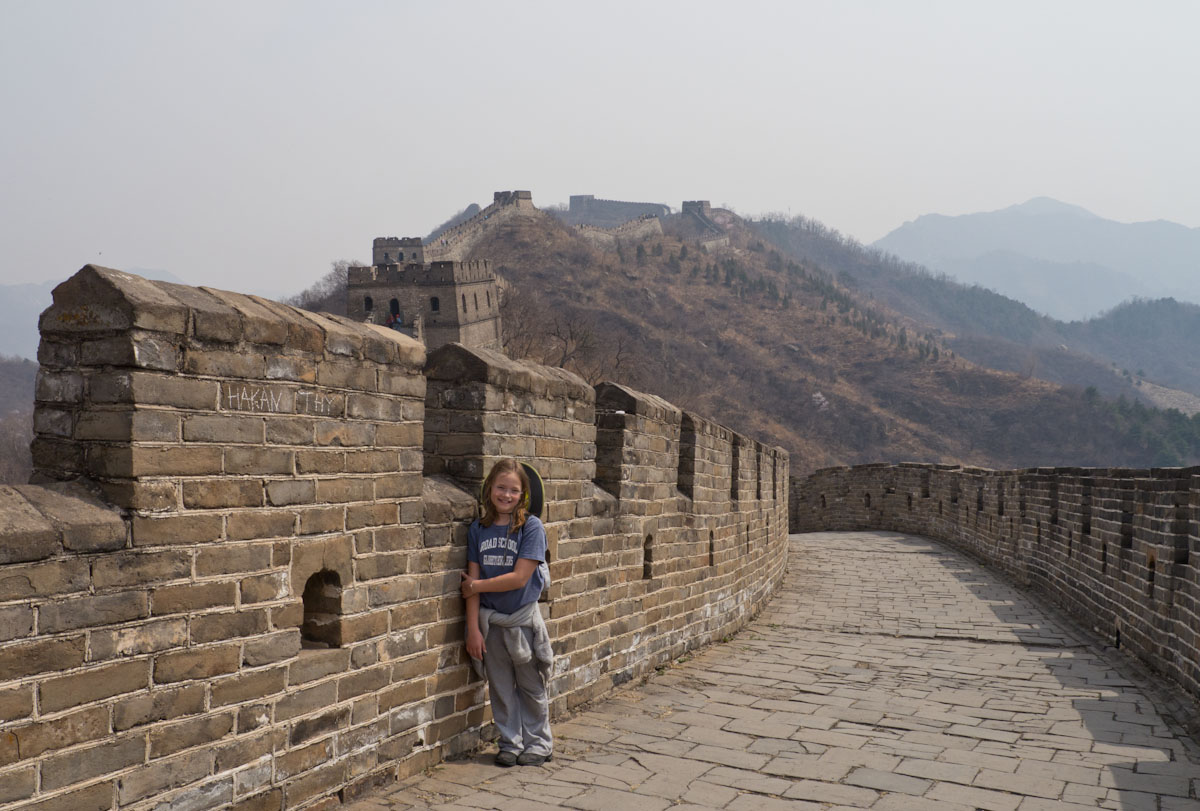
The Wall is not a place for heels, which did not deter some short-sighted but very stylish French visitors. I was prepared with my trusty Merrell’s, but was in no way psychologically ready for the rugged hiking terrain which awaited.
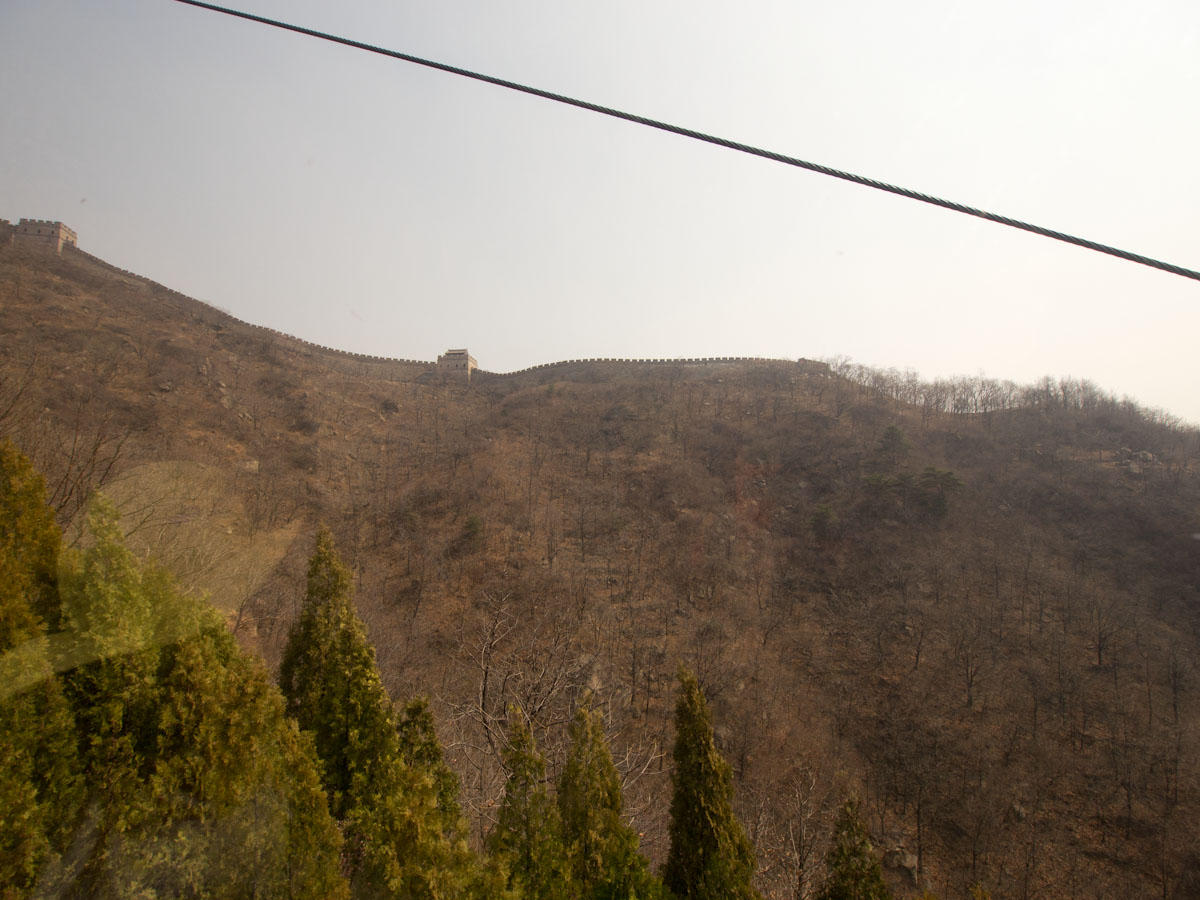
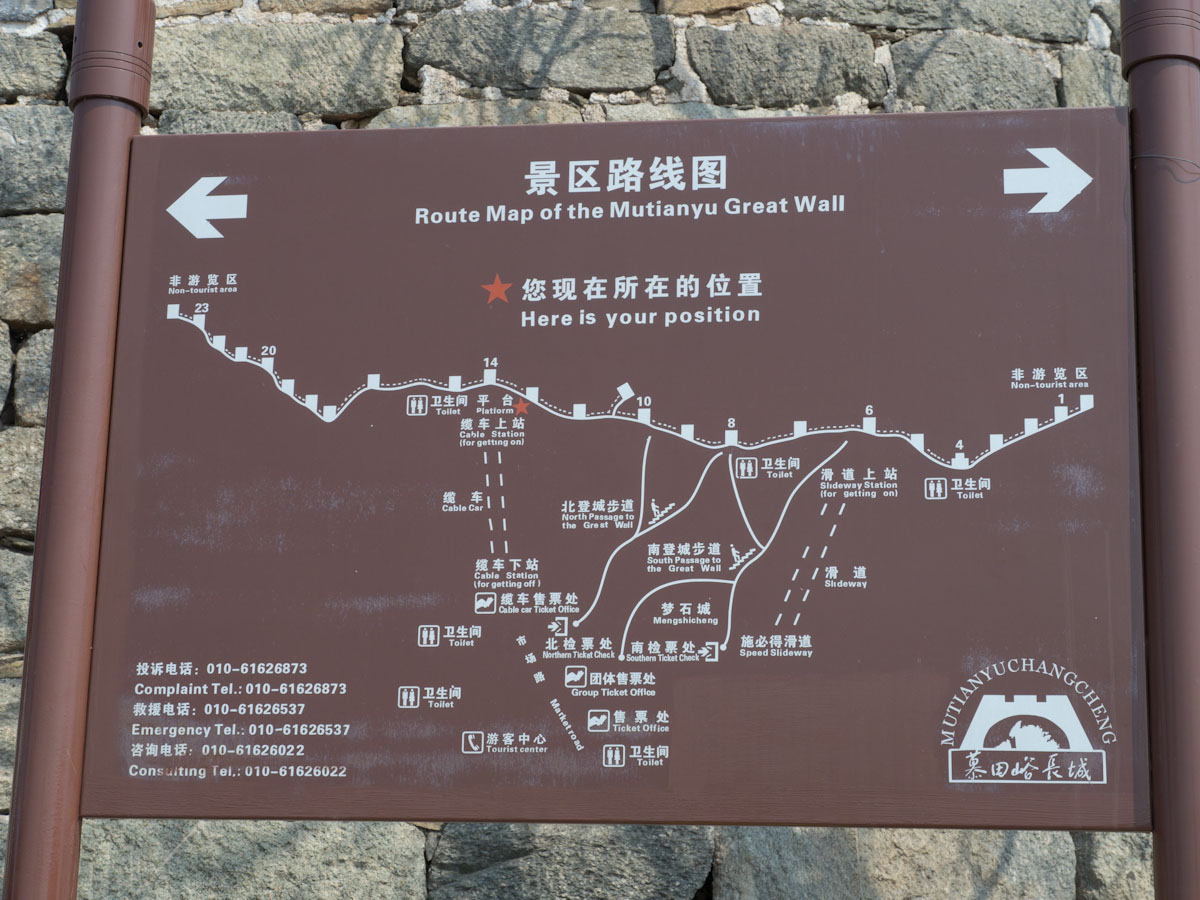
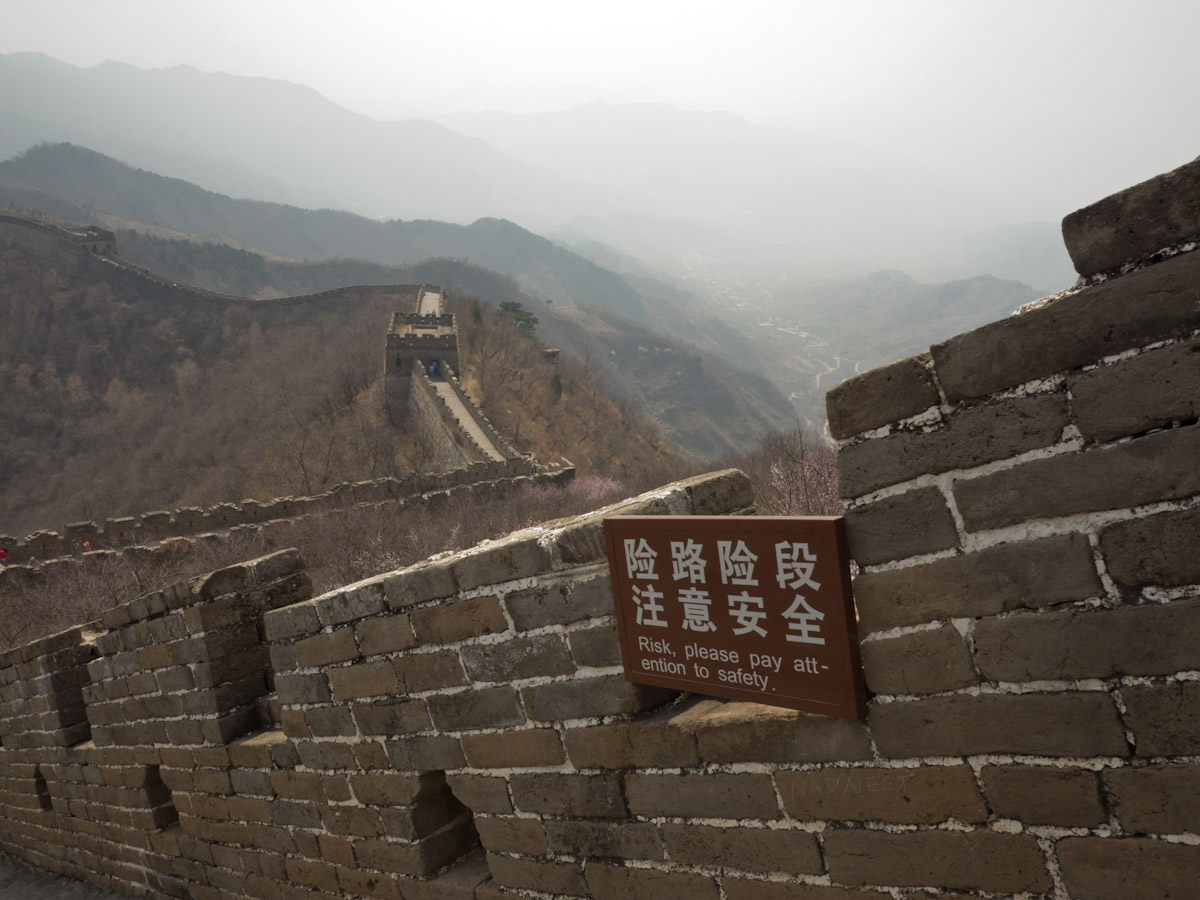
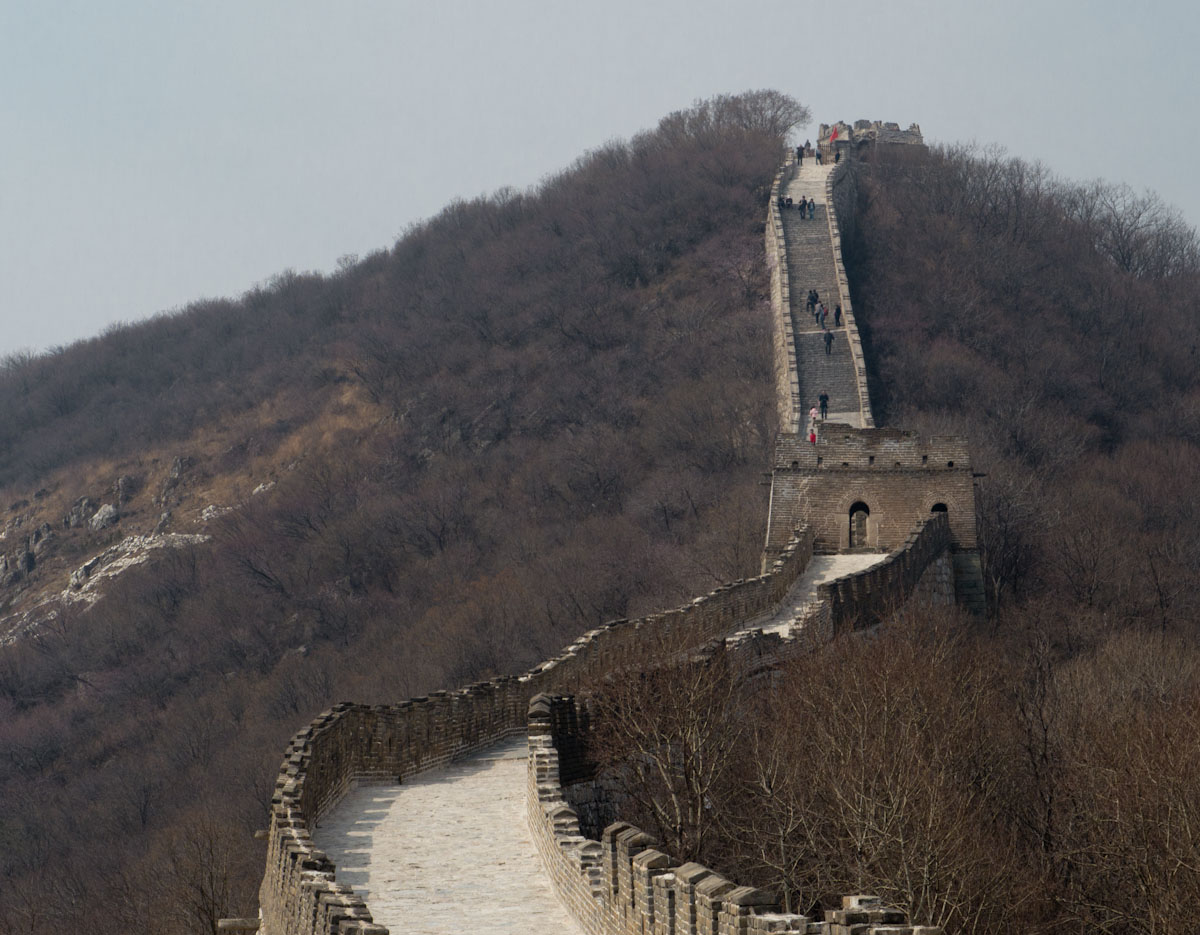
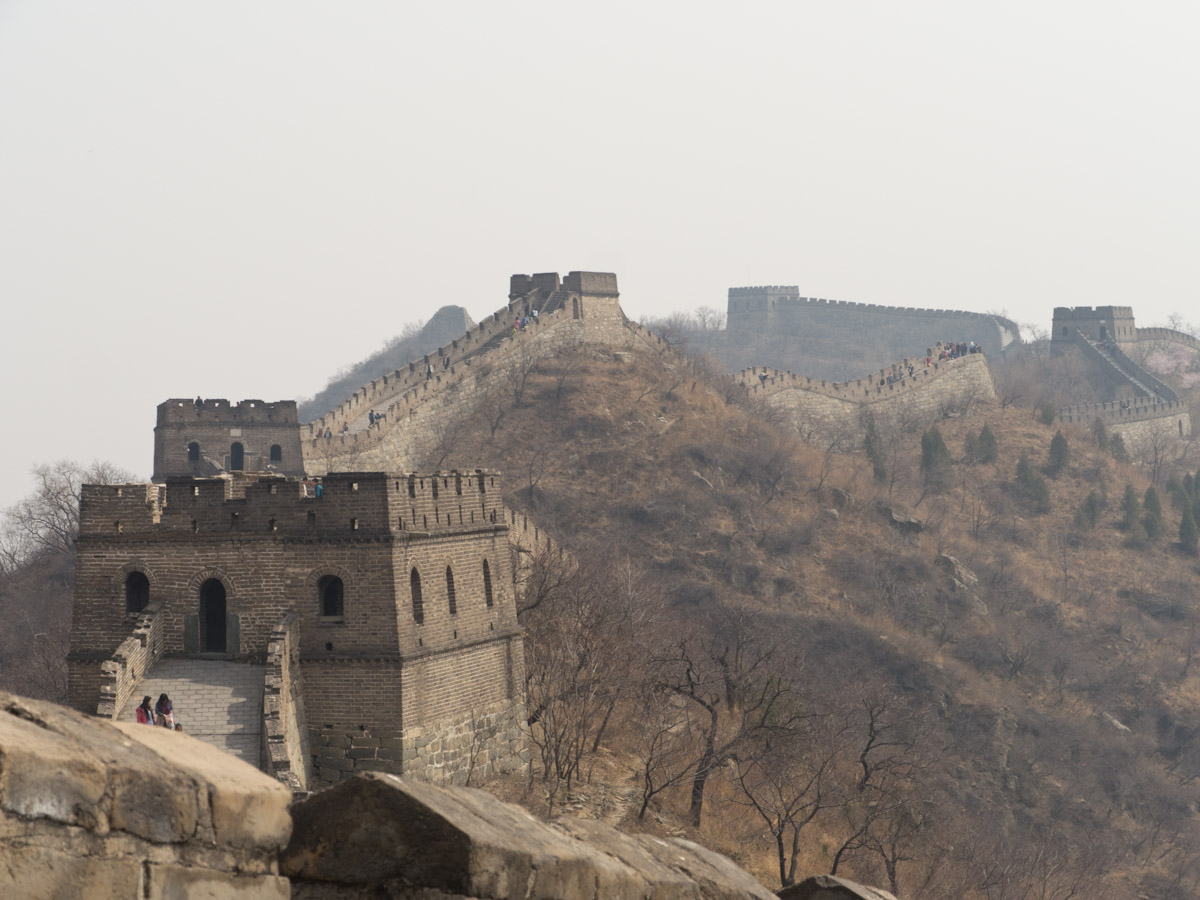
Our guide John laid out the plan: we drive to Mutinyu, an especially scenic access point approximately 2 hours north of Beijing, take a cable car 1800 feet up to watchtower #14, hike ~1.5 hours to tower #23, turn around, retrace our steps and, if we have time, scoot down from tower #14 to tower #1 before returning to tower #14 to take the cable car back down. Total projected elapsed time: 2.5 hours. The record should state that the towers are placed approximately 500 feet apart so the planned distance was only a couple of kilometers. The record should also state that John is 24 and an avid hiker. I am guilty of neither.
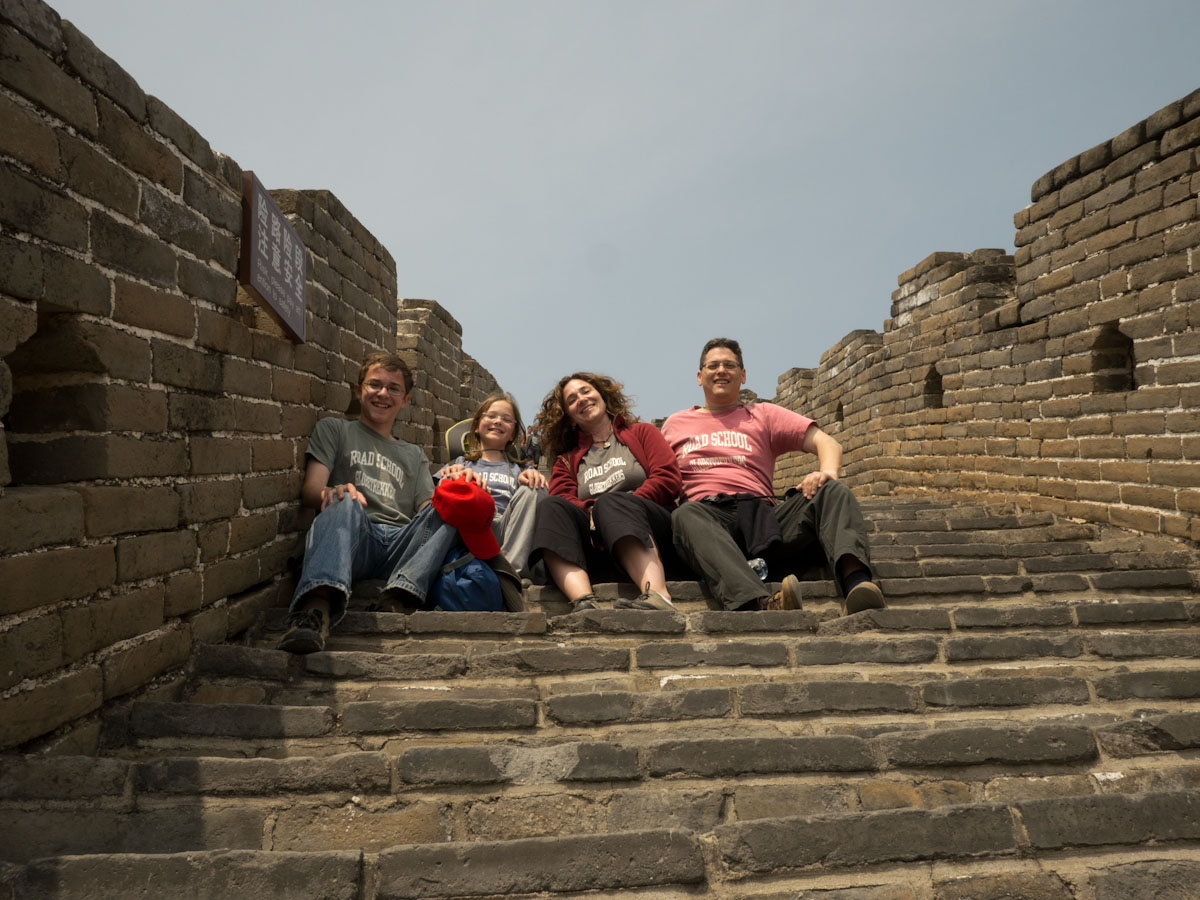
Optimistic as ever, we declared the plan to be excellent and started on our way. Two hours later, we’re only at tower #20. We’ve huffed and puffed our way past only 6 towers and we’re sucking wind. Time to revise the plan.
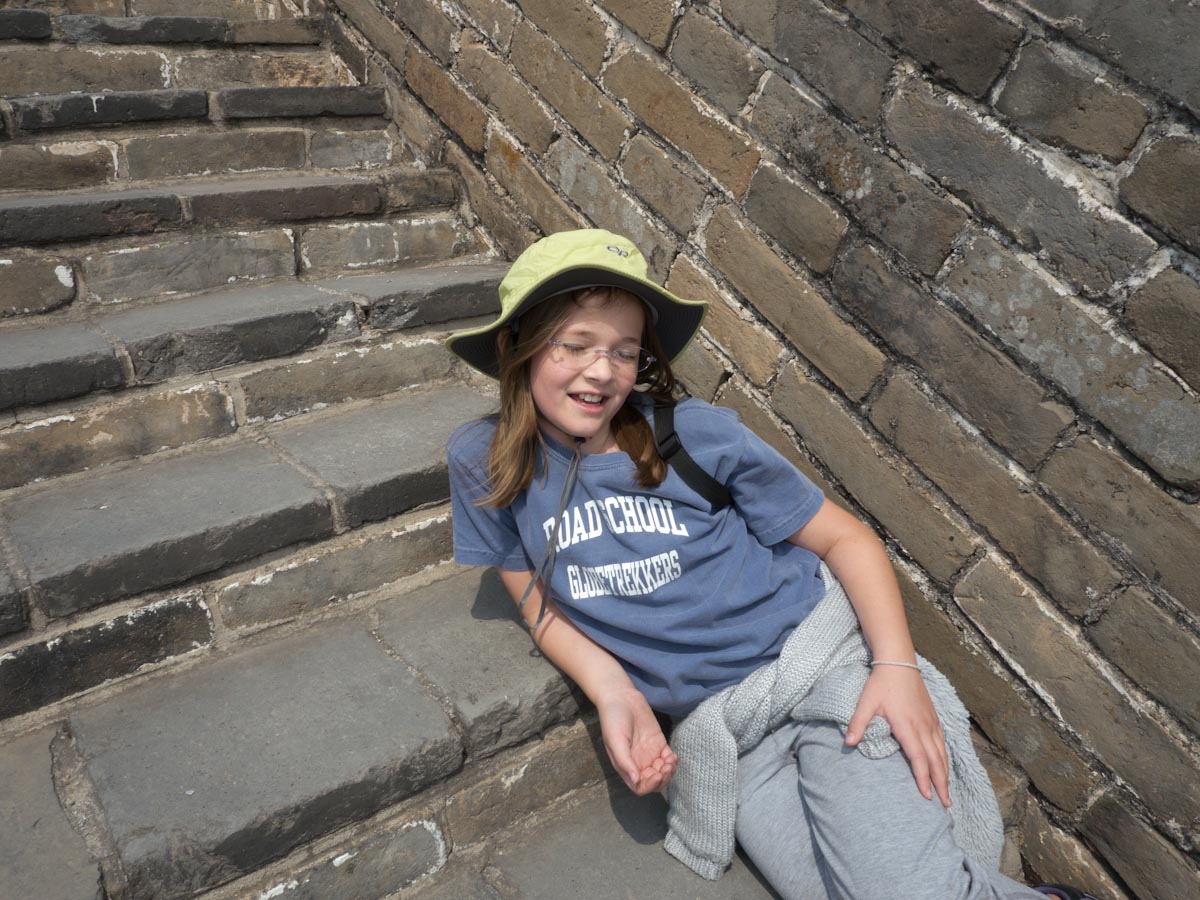
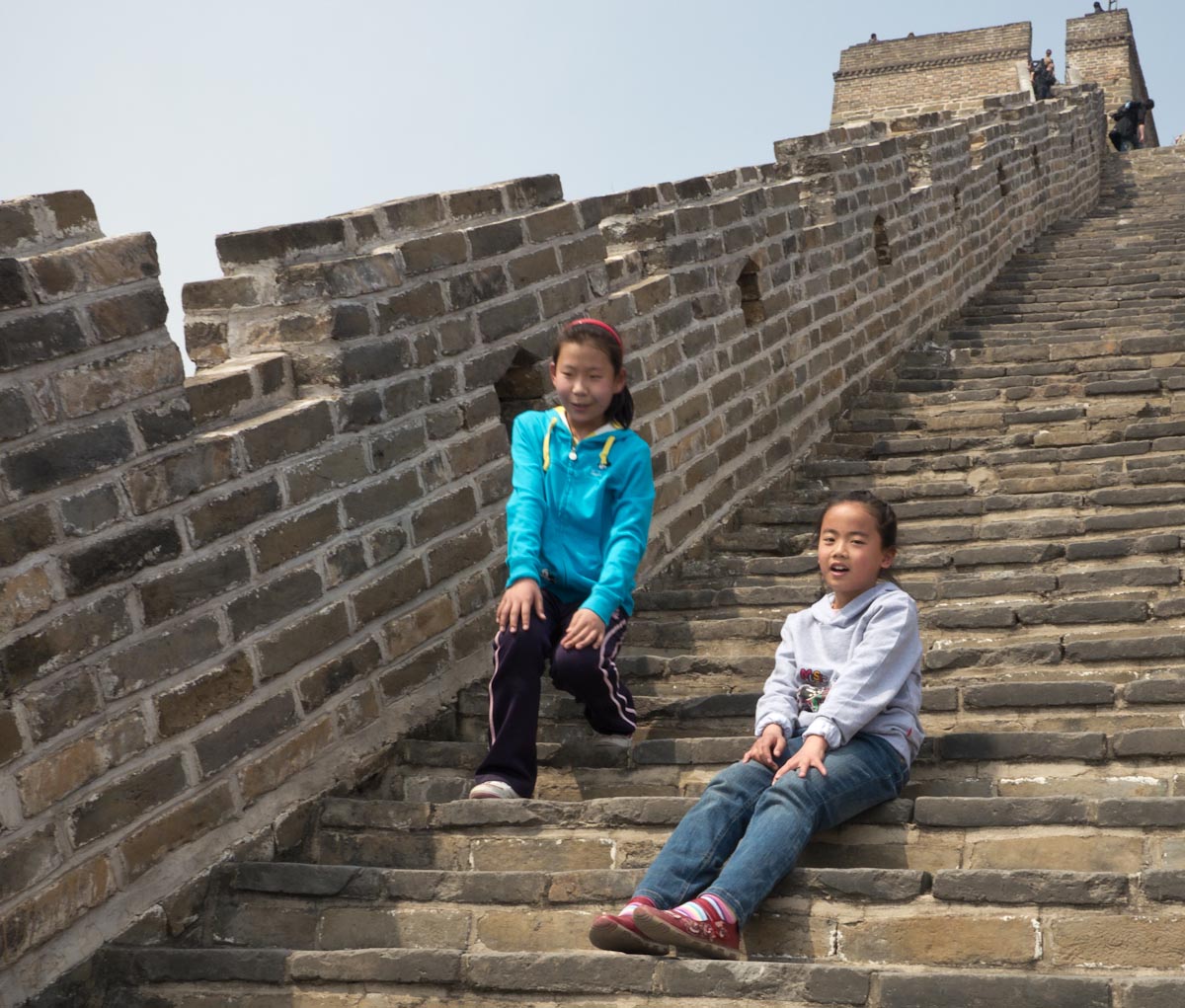
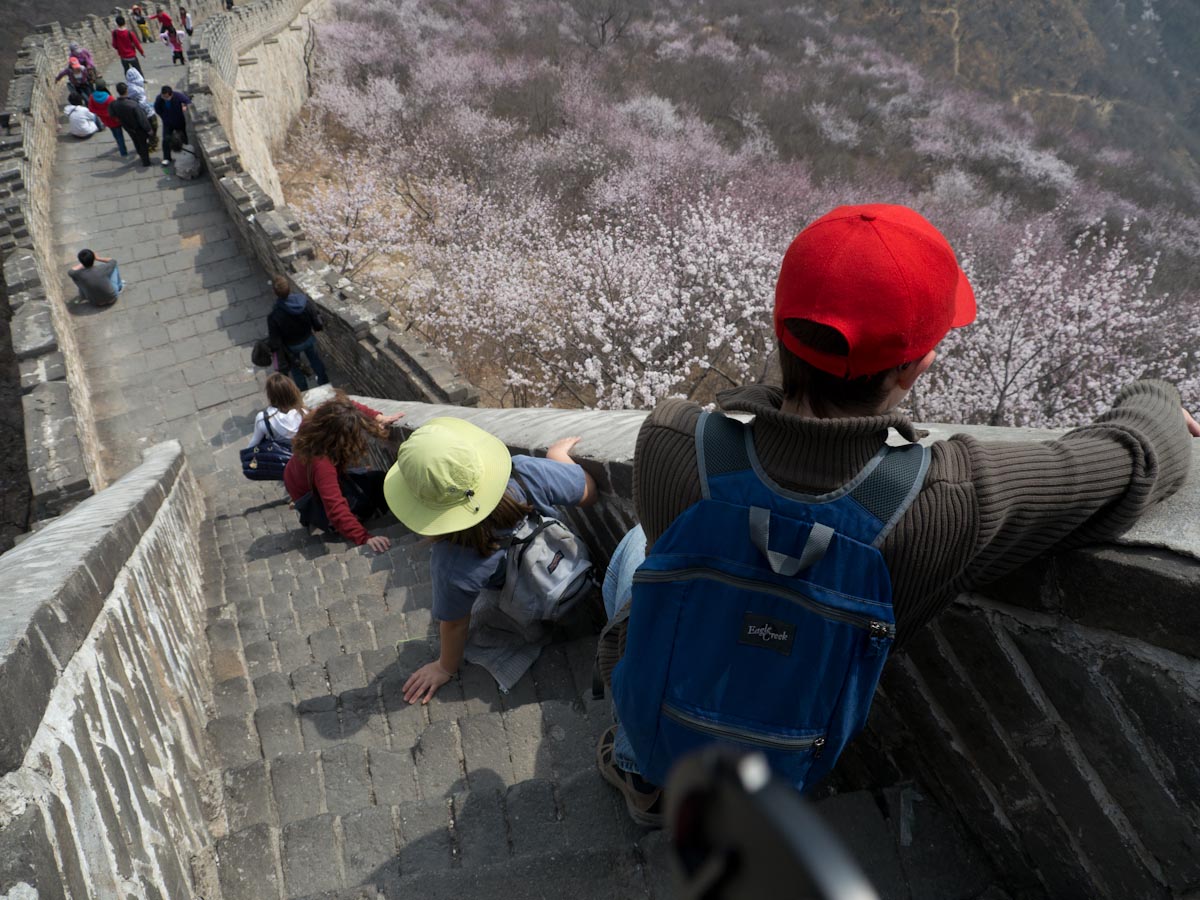
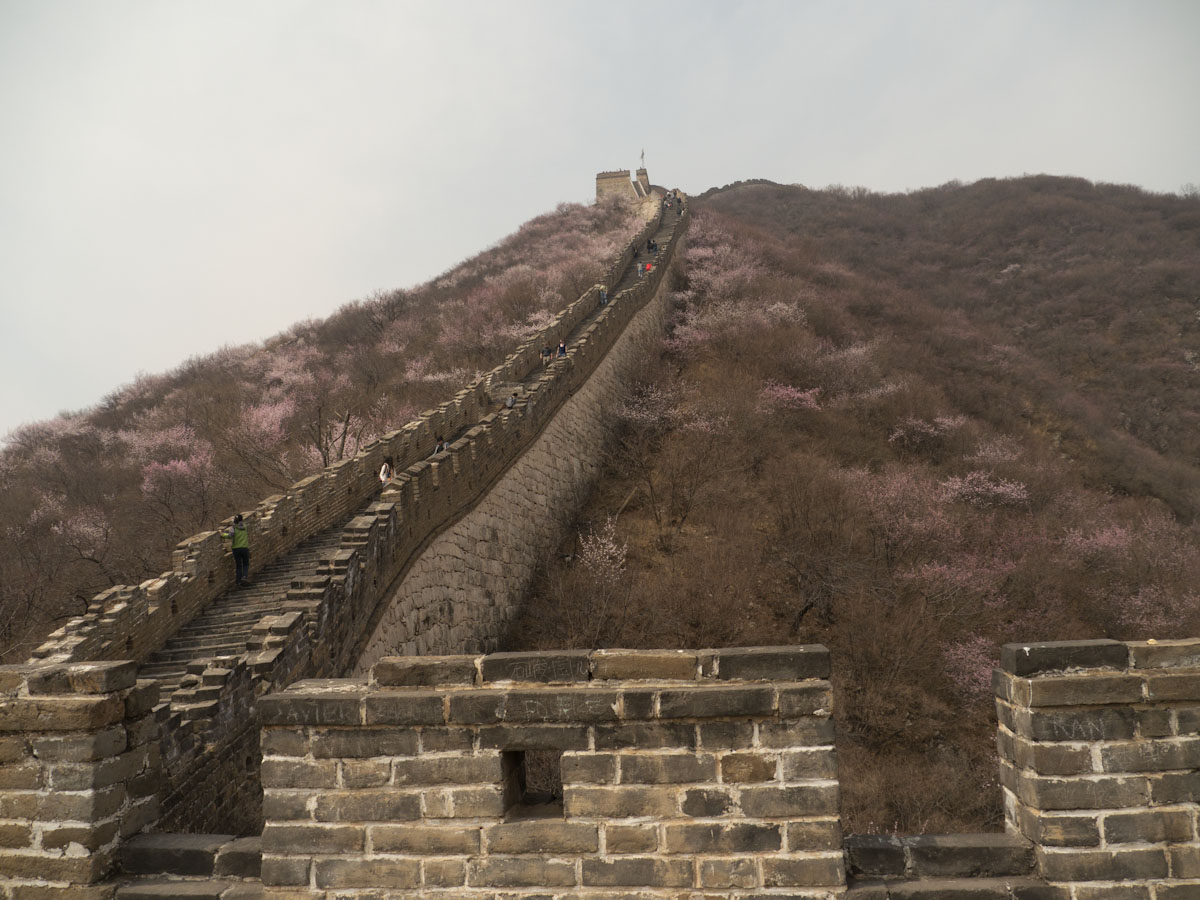
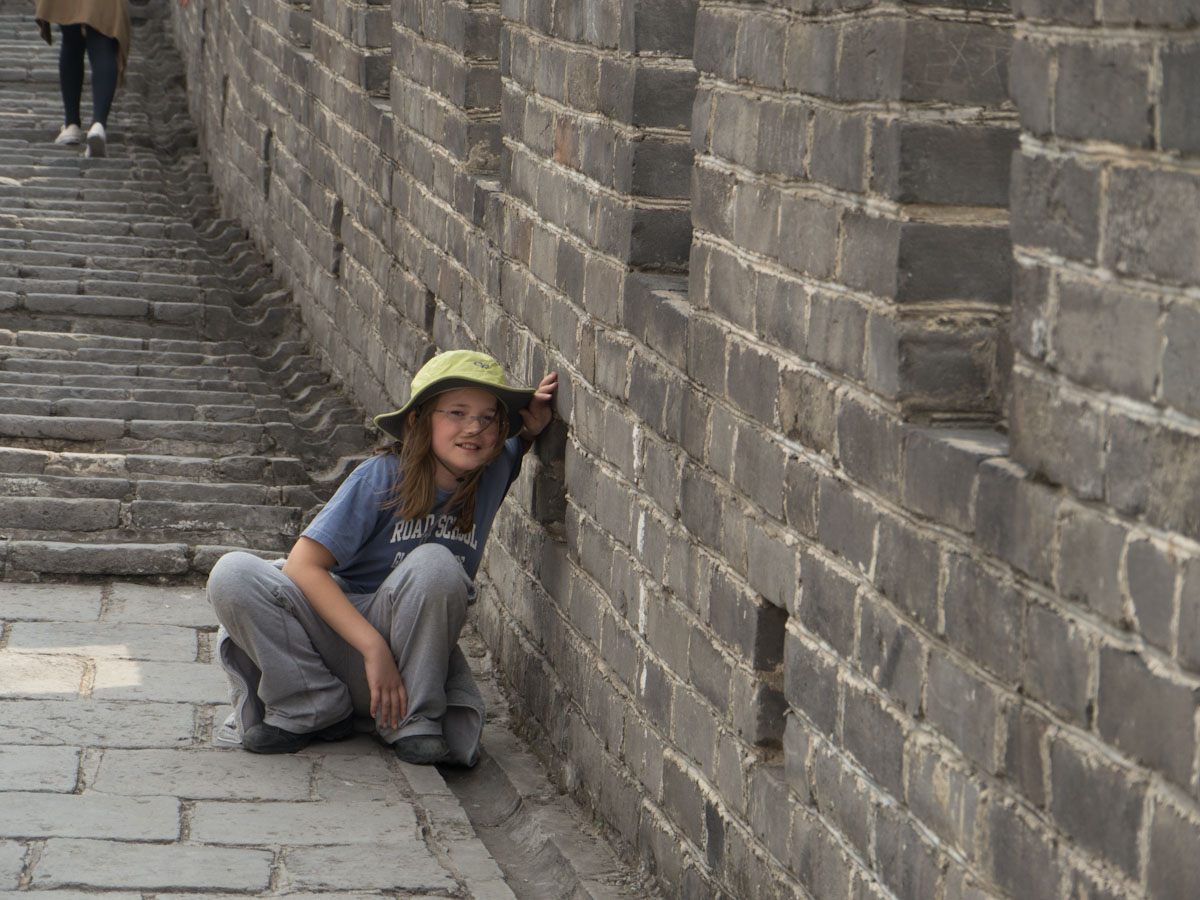
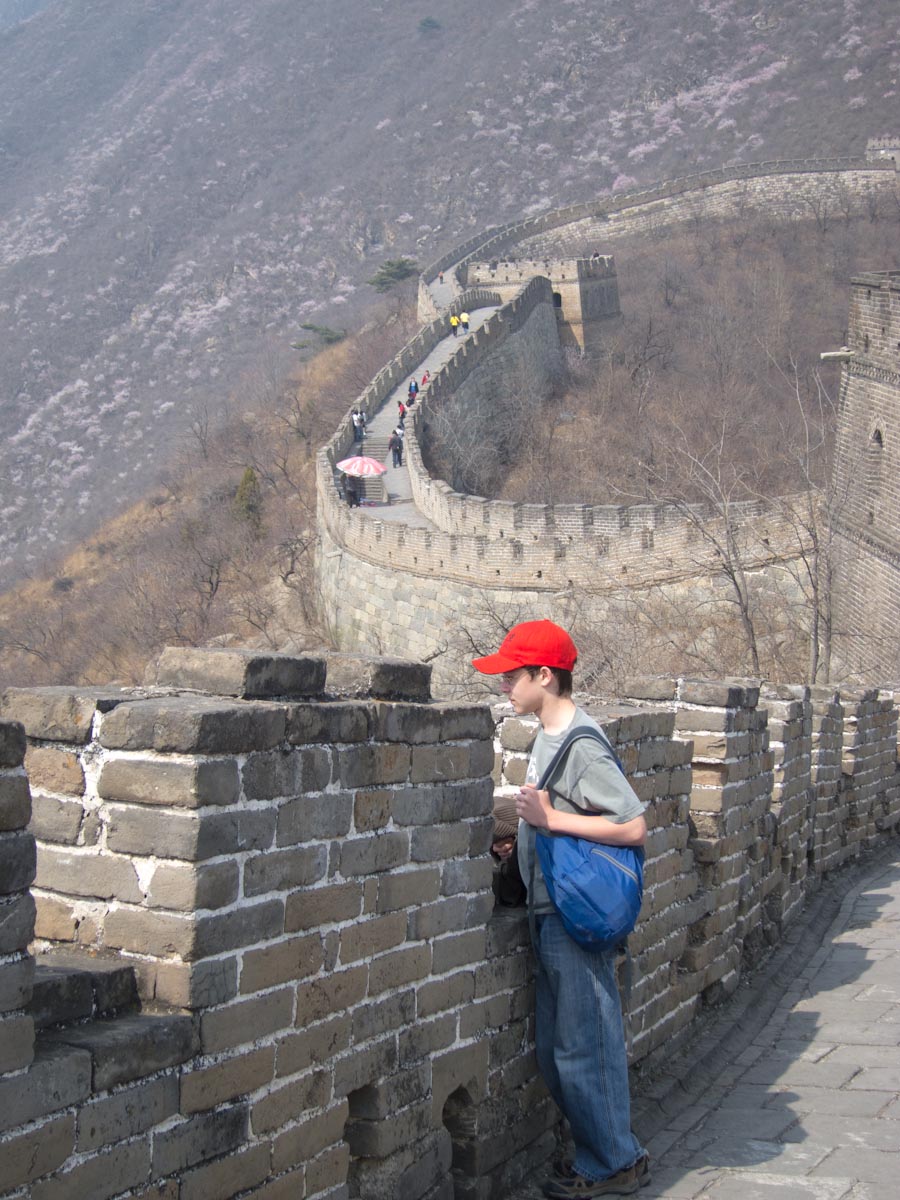
In an effort to defend our performance, I must report that the distance “as the crow flies” was nothing like “as the Wilcoxes walk.” For this, I blame the inclines. At one point, we were climbing “staircases” which were so steep we ascended as though on ladders, our hands gripping the stone steps as our feet sought solid footing. I did not dare look anywhere but the stone two inches in front of my face. I could not imagine an armed warrior racing up these steps under any scenario, let alone while under attack.
When we crumpled in a heap at the top, convinced that we couldn’t take another step, John smiled and said sagely “Ah, the eyes are lazy but the hands are strong.” Well, who could argue with that? Determined and inspired, we stood up and just kept walking, one foot in front of the other.
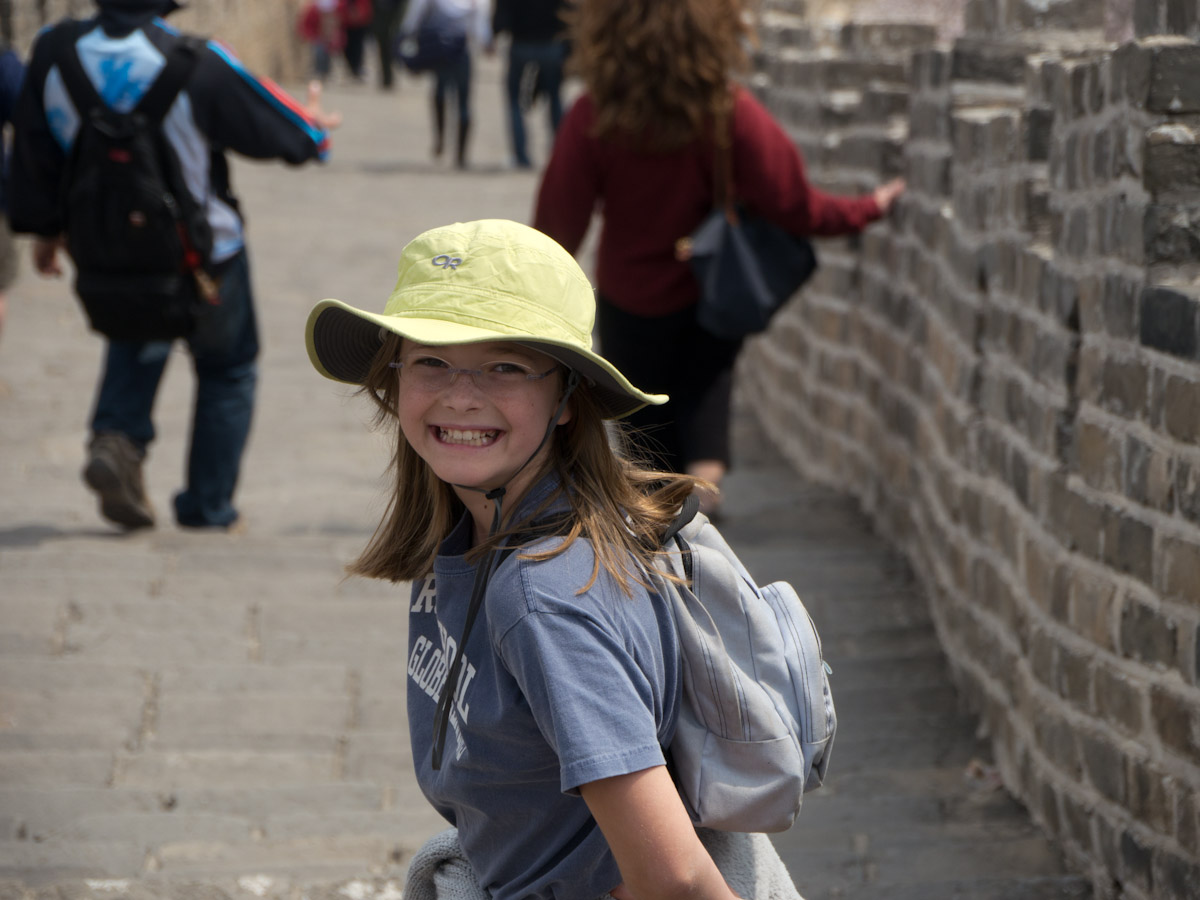
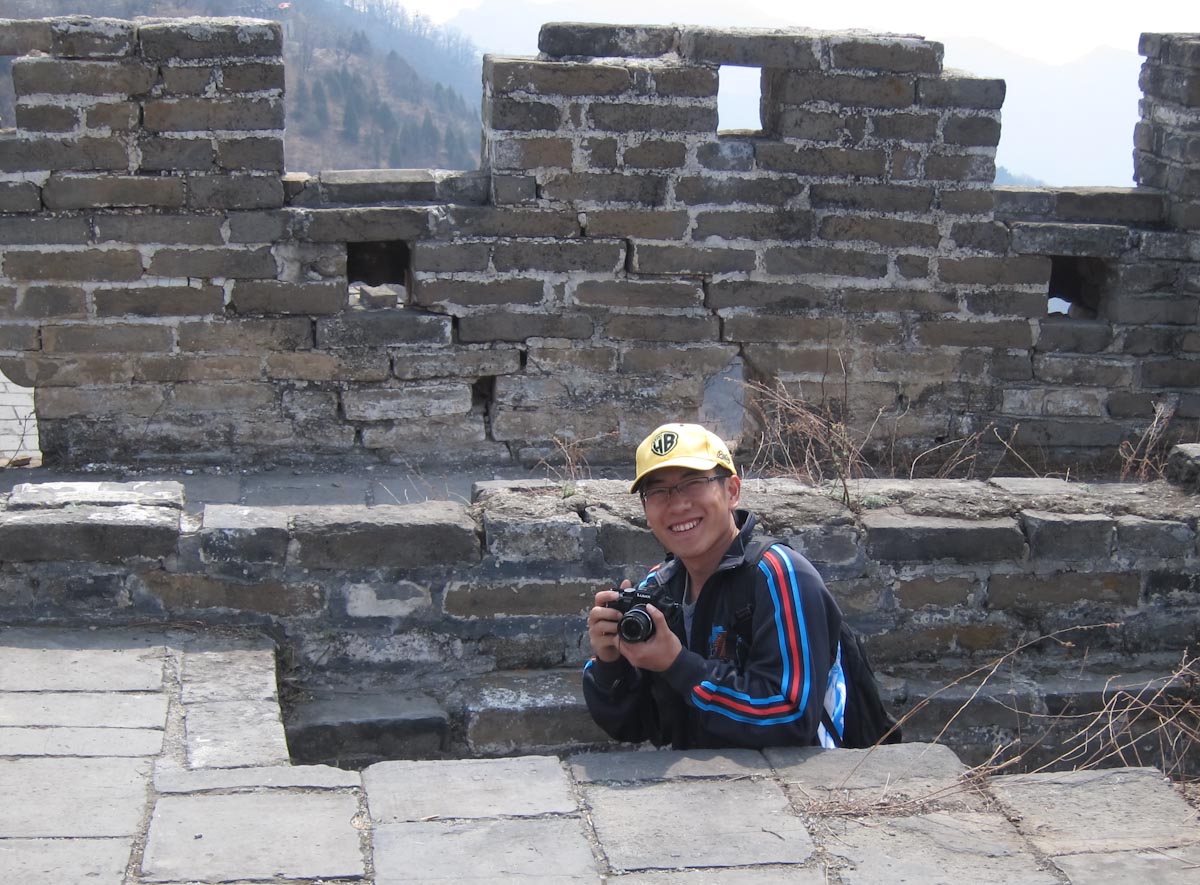
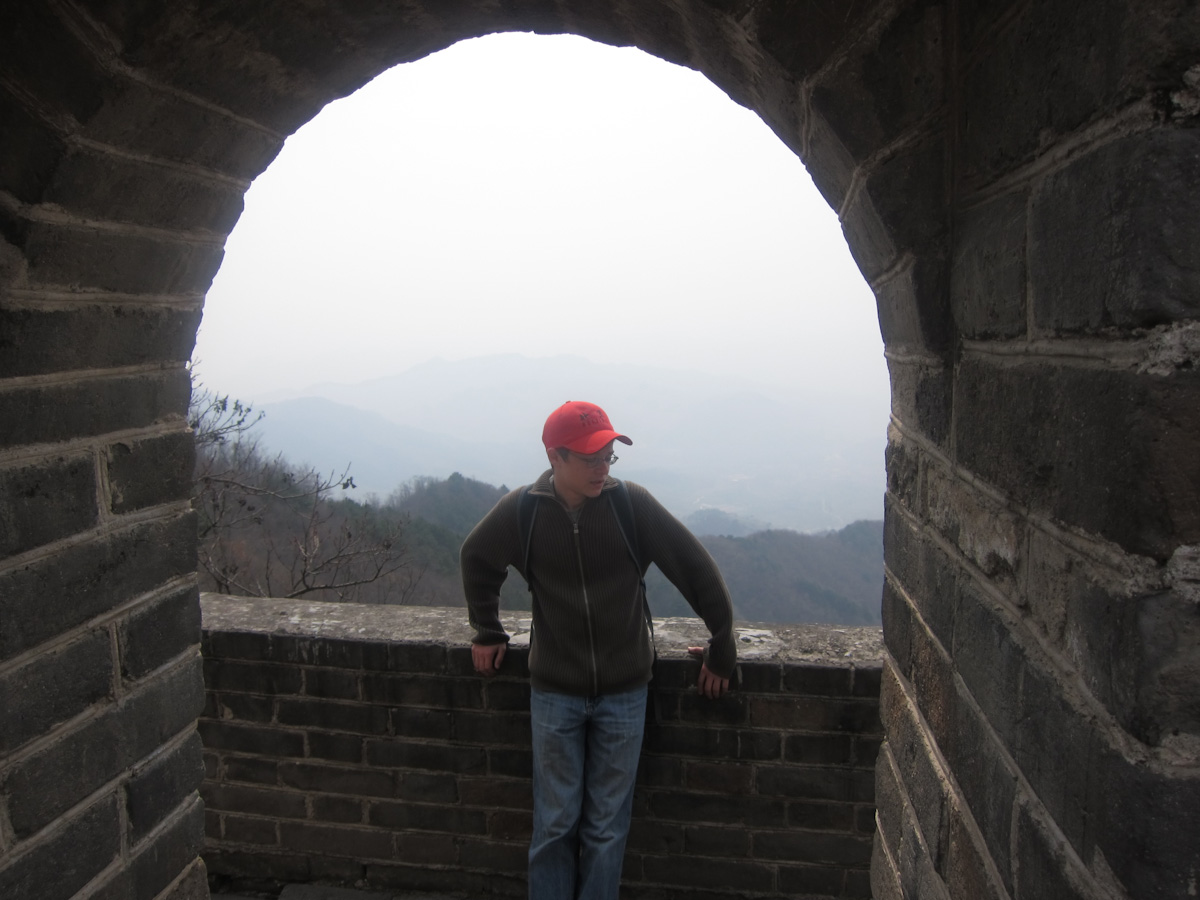
It took us over three hours to complete our climb. We ran out of time before we ran out of will. When we finished, our legs were trembling but we were grinning like crazy.
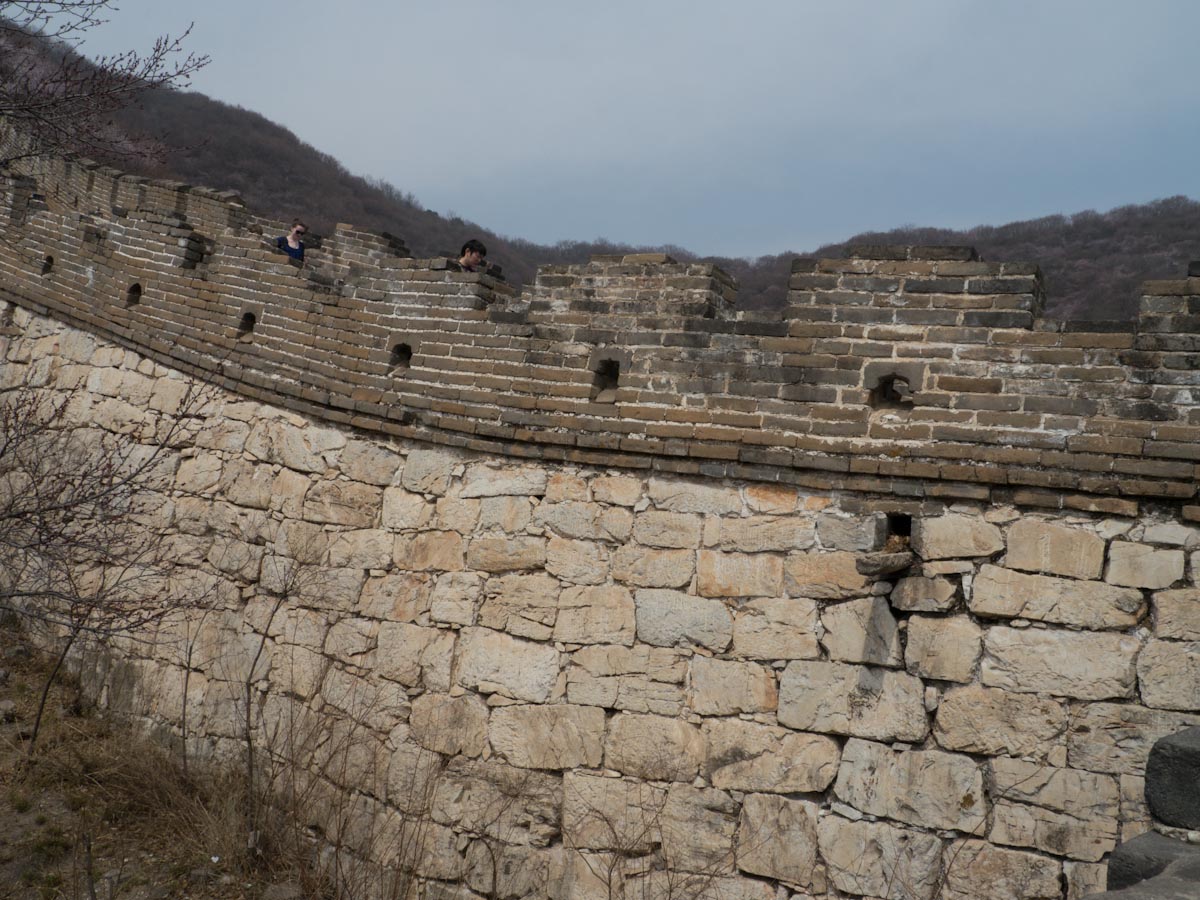
As we drove off, John shared more of the history. We learned that construction began under China’s first Emperor roughly 200 BCE but the part we scaled was built in the 15th century under the Ming rulers. The Wall was intended to keep out Mongol invaders from the north and each dynasty successively added to it. In the end, it stretches for more than 2,000 continuous miles. It also includes many offshoots or “spurs.” Including these branches, the Wall is almost 4,000 miles long which means it would stretch from Washington, DC clear across the country, out past the edge of California and into the Pacific Ocean!
Over one million men were forced into service to construct it; more than half died from exhaustion or starvation. Those who did were buried on the spot, often within the structure of the Wall itself thereby making the entire structure one of the world’s largest cemeteries. It was rumored that the Wall was held together in parts by cement made of men’s bones but no evidence of this has ever been found.
There are many legends and stories associated with the Great Wall but one in particular struck me. It is a famous love story and is widely told. It is about a young couple. One day, not long after their marriage, the Emperor’s troops came and took the bridegroom away to work on the Wall. He was brought far north and worked for two years until he died of exertion. Meanwhile, his young bride waited for him. One night, she dreamt that her husband came to her and told her that he was very cold. How he wished for warmer clothes! The next morning, she prepared clothing and set out to find him. She journeyed for more than a year and suffered many dangers and hardships as she searched for him. There were hundreds of work sites and she had to keep asking at each one. Finally, she reached his work site only to be told that he had died and his body had been buried within the Wall itself. When she heard this news, it is said that she cried a torrent of tears so vast and powerful that their force broke the Wall open and her husband’s remains were revealed.
This story was so incredible that it reached the ears of the Emperor himself. He came to see this young heartbroken widow and, upon viewing her beauty, immediately fell in love with her. He wanted her as a concubine. She agreed to come with him if the Emperor would provide her husband with a full and proper funeral. The Emperor did so and, as soon as the funeral concluded, the young woman threw herself into the sea where she drowned; a protest against the Emperor and a final act of love. Today there is a little temple built on this site but it was far from where we visited.
The story may or may not be true, but the epic romance and grandeur of it match the structure itself.