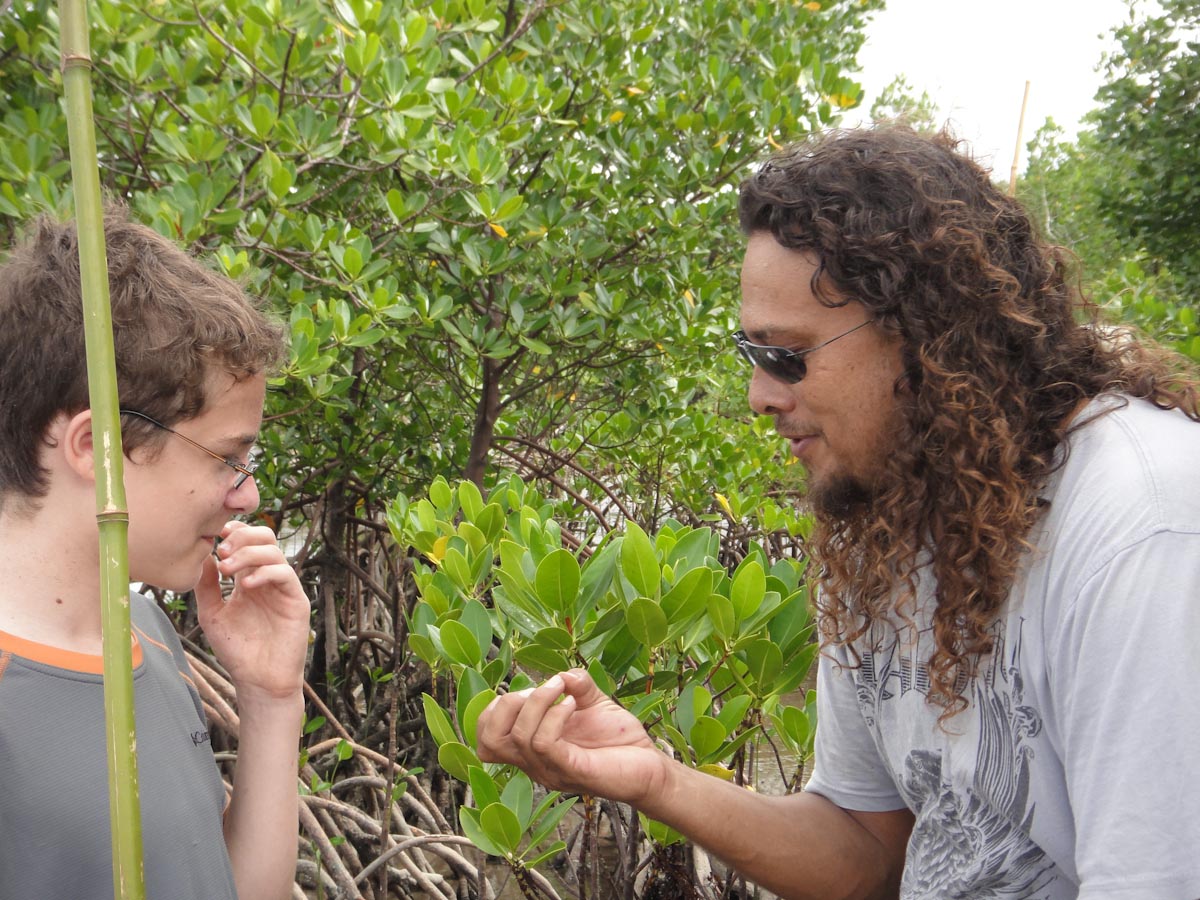
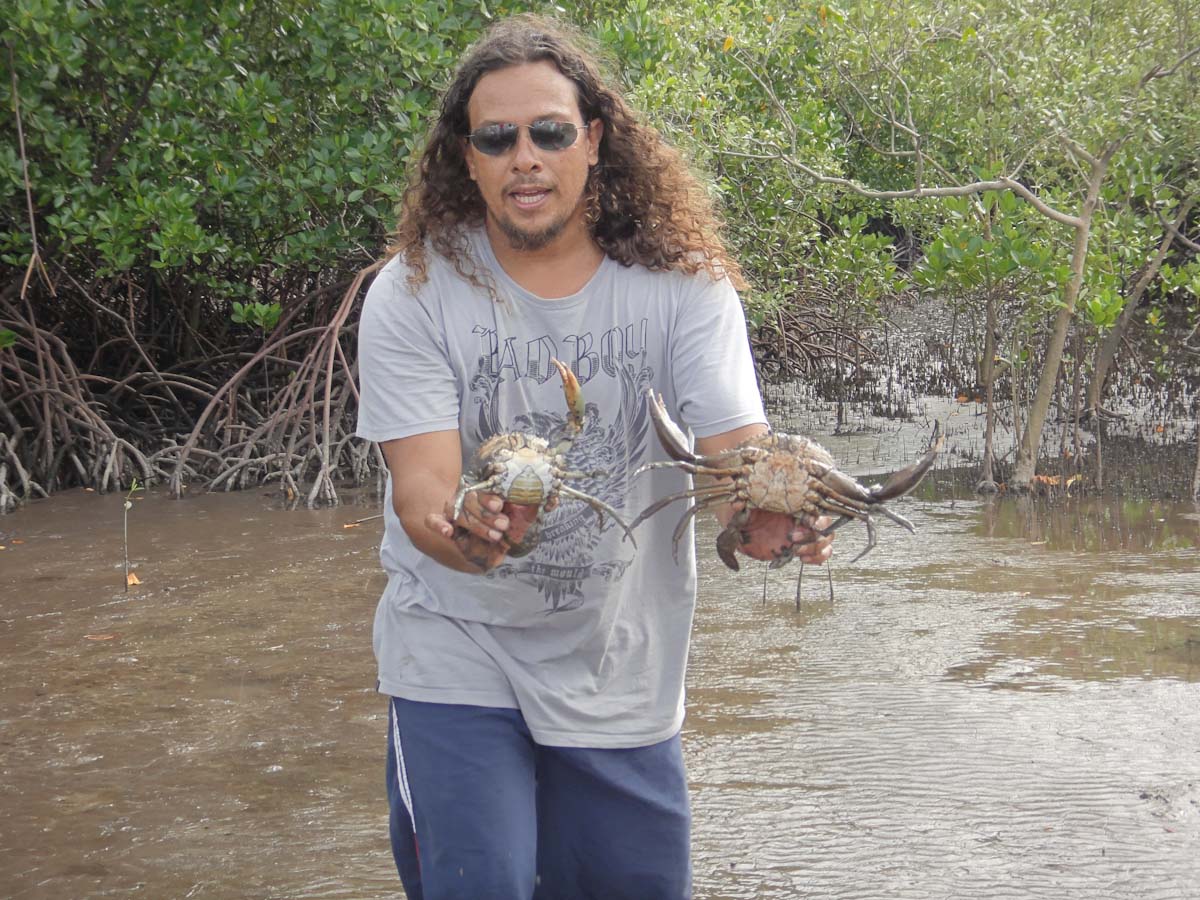
The car pulls to a stop. A tree with branches stretching almost straight out above us provides shade. Seed pods, rotten fruit and leaves are sprinkled over the dirt. There awaits a man; skin of coffee, curly hair down to the upper back, and dressed in shorts and a T-shirt. Sunglasses hide his eyes. Holding a lethal spear, he waits for us.
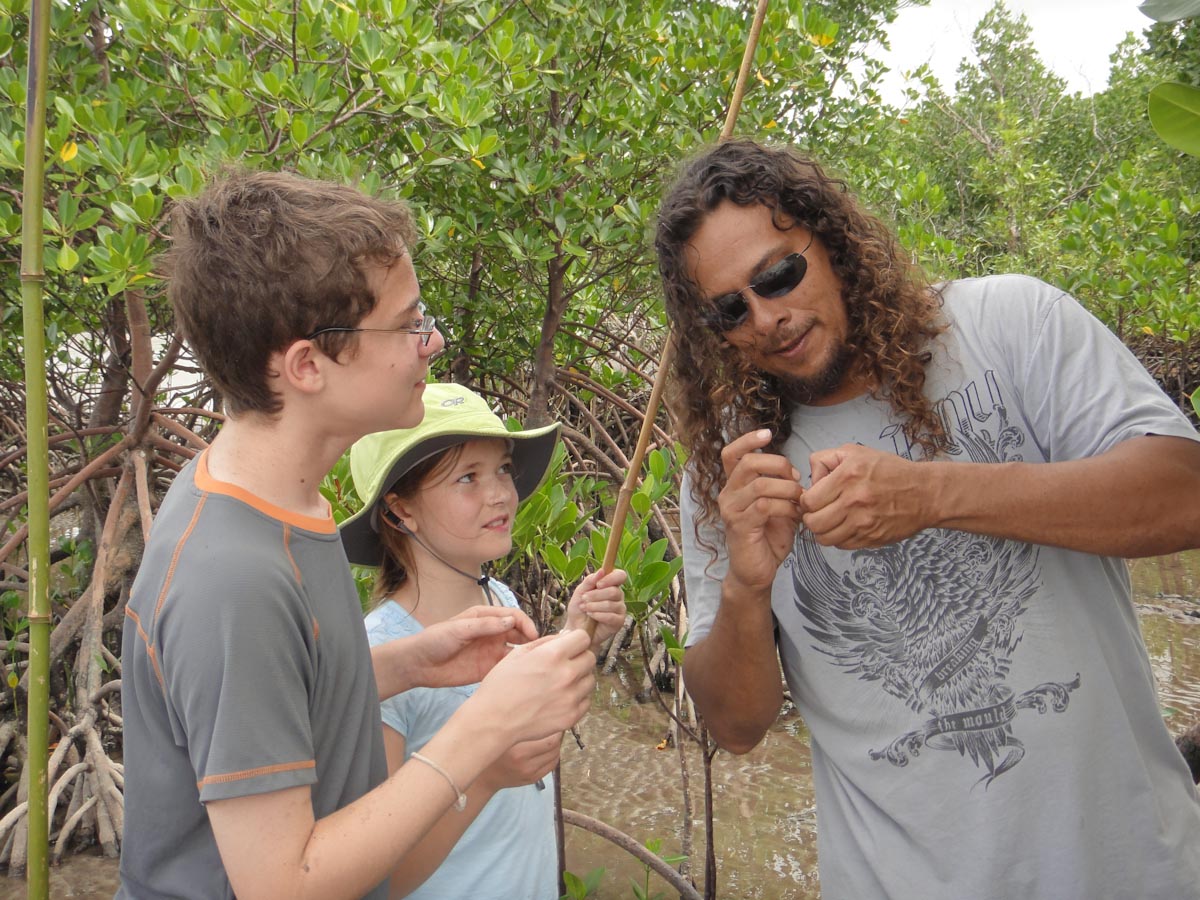
We step out of the car and his face lights up in a smile. We introduce ourselves to him. His name is Link, he’s a descendent of aborigines and he’s taking us out into the mud flats to catch dinner. This man is a warrior; broad chest and shoulders, easy confidence, perfect balance, clear muscle…nice to have him on OUR side.
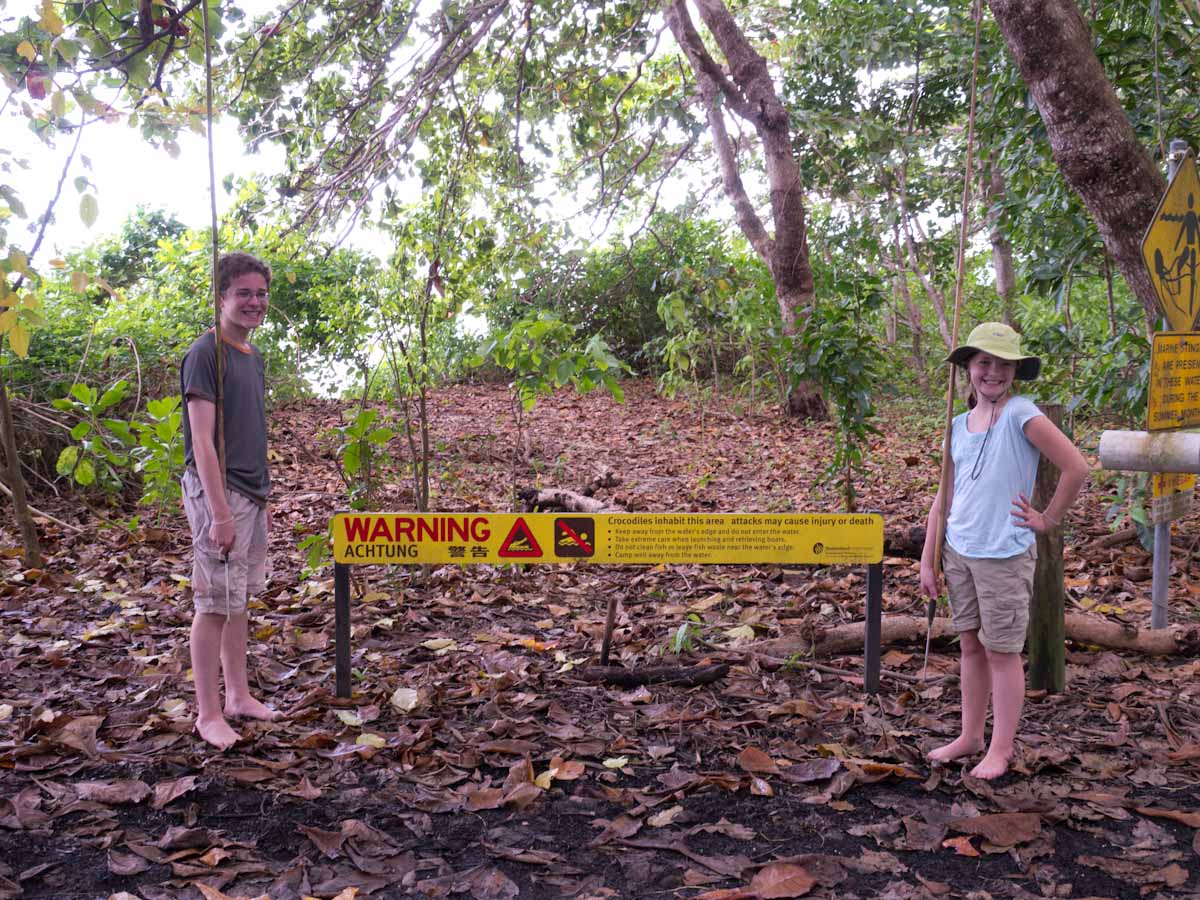
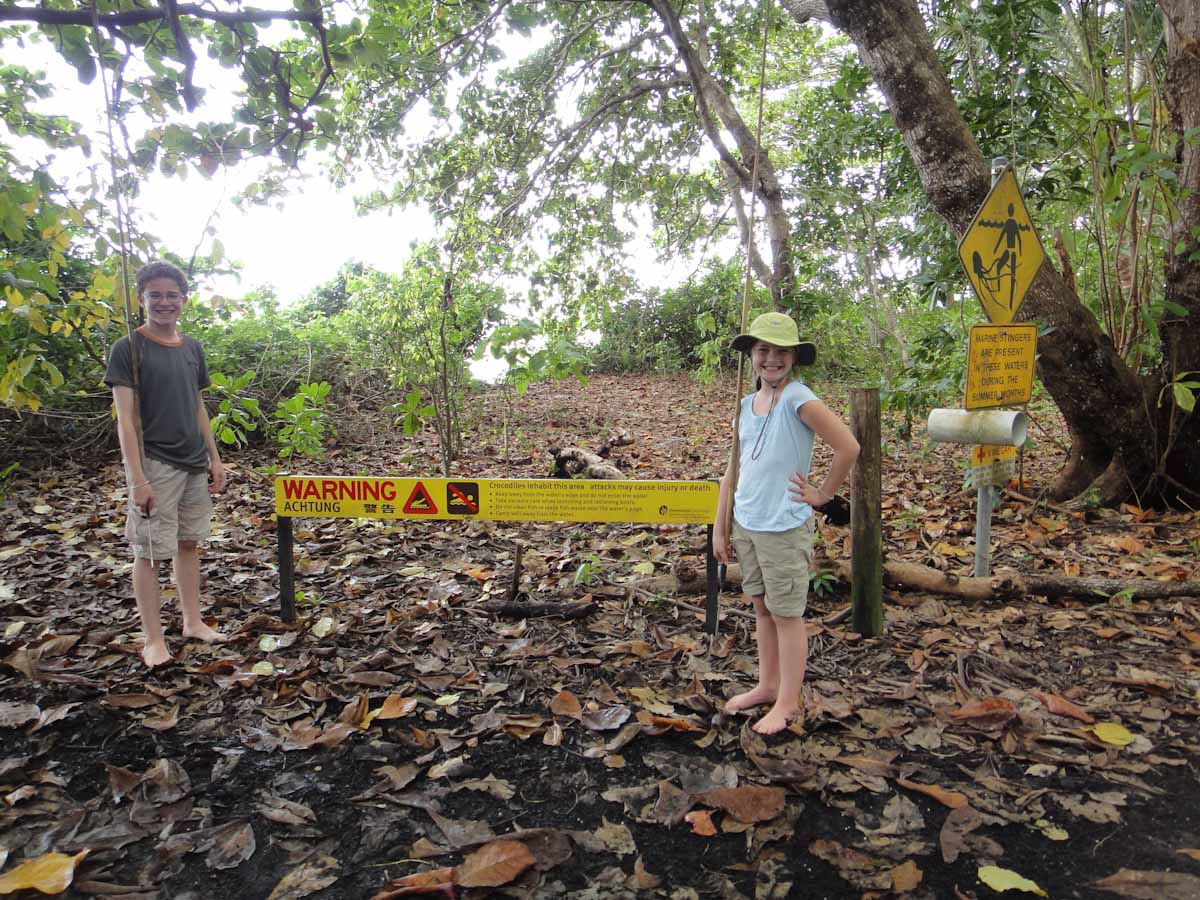
Before we begin, Mom takes a picture of us next to the “DANGER: Crocodiles infest these waters and bites may be fatal” and the “WARNING: Stingers infest these waters in the summer months, be aware of your surroundings” signs.
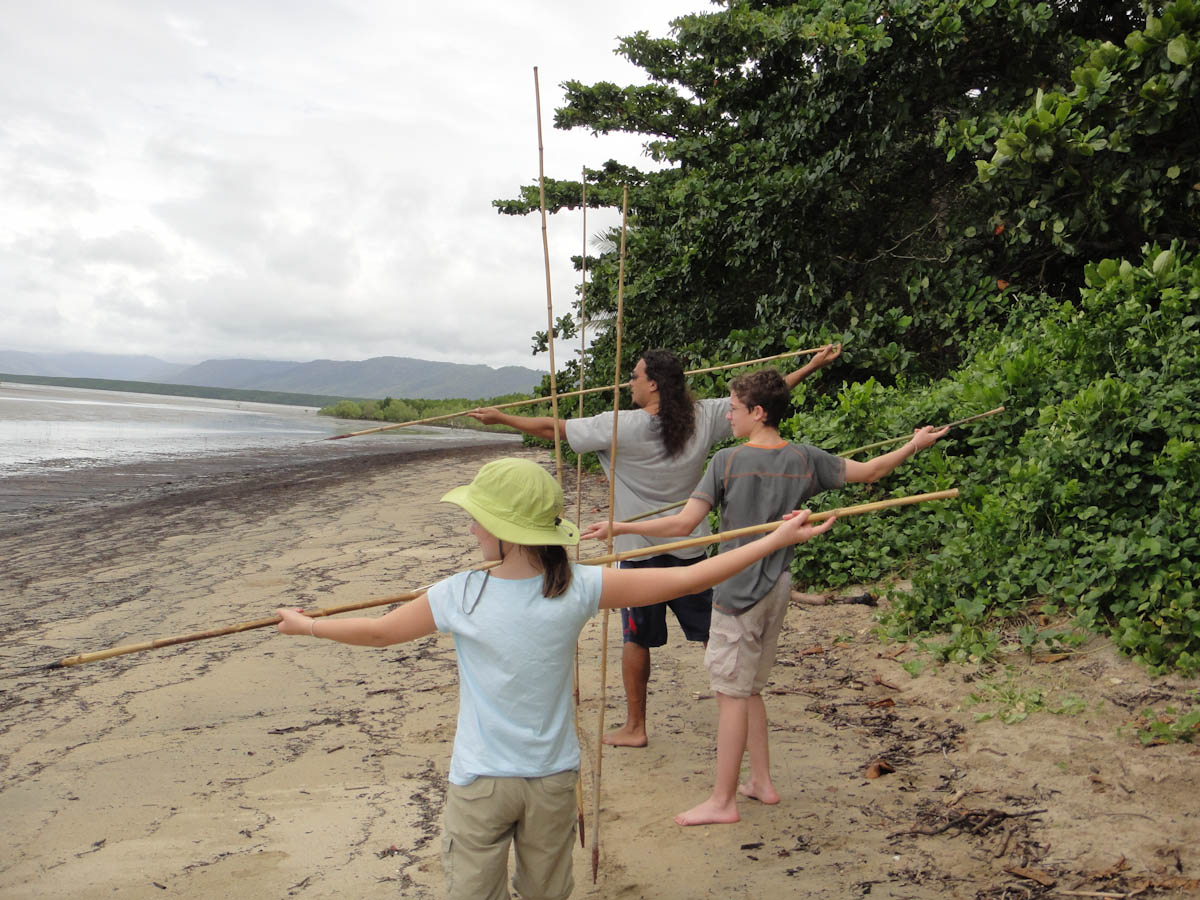
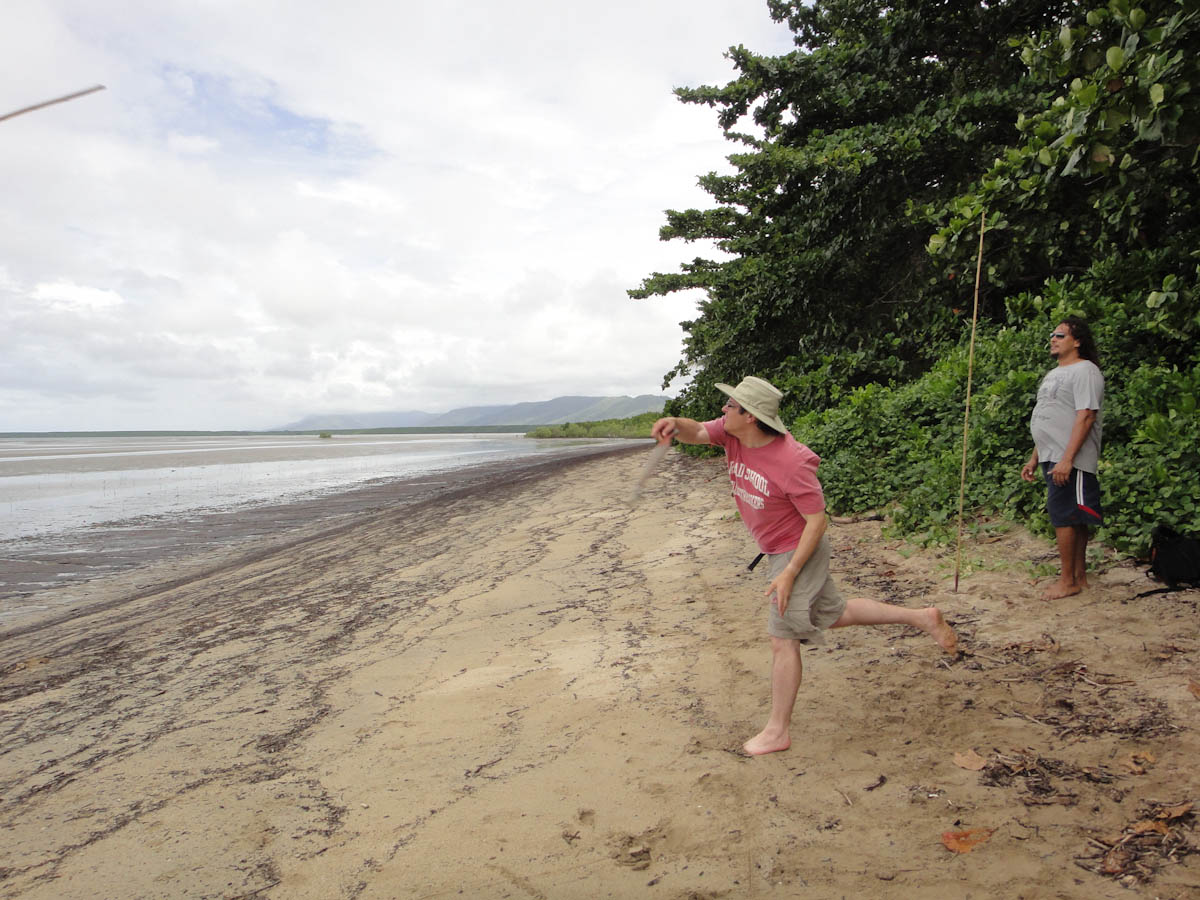
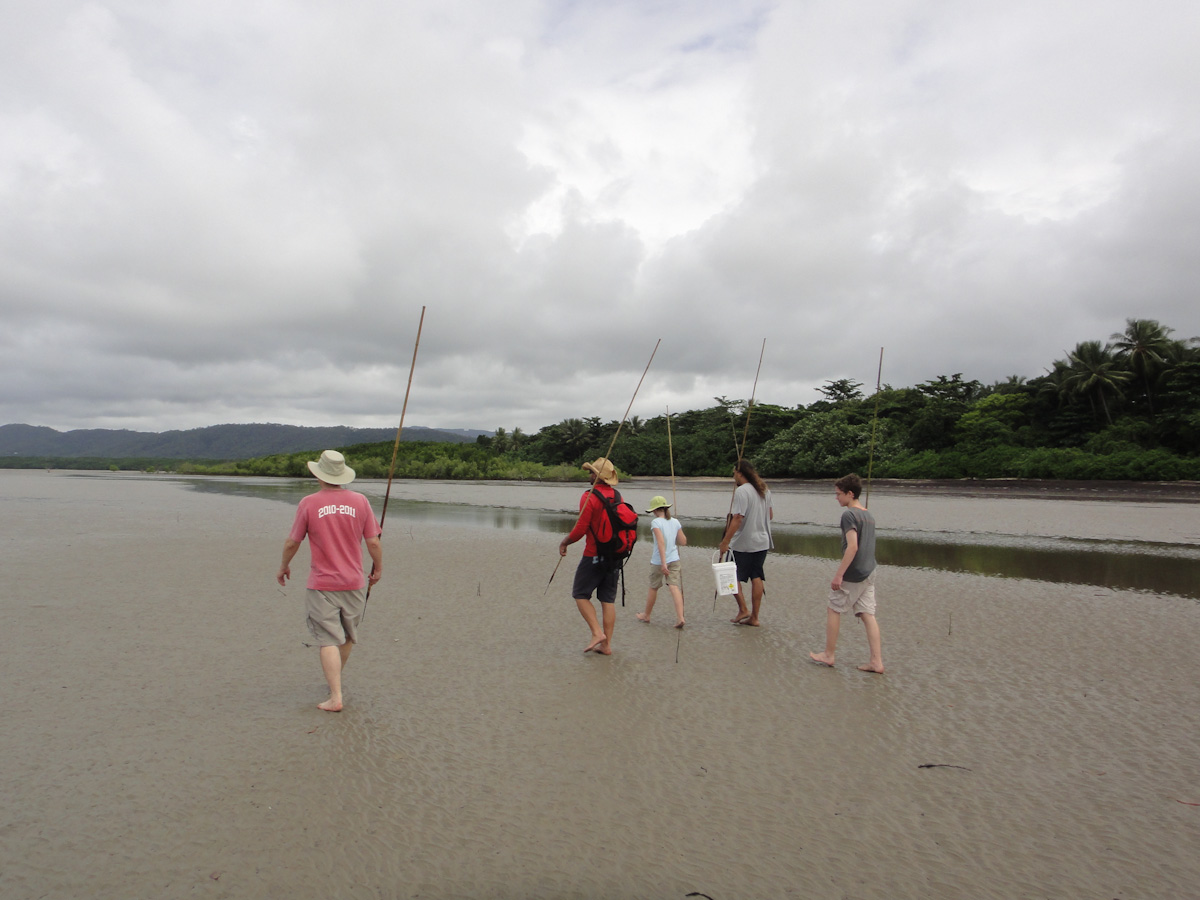
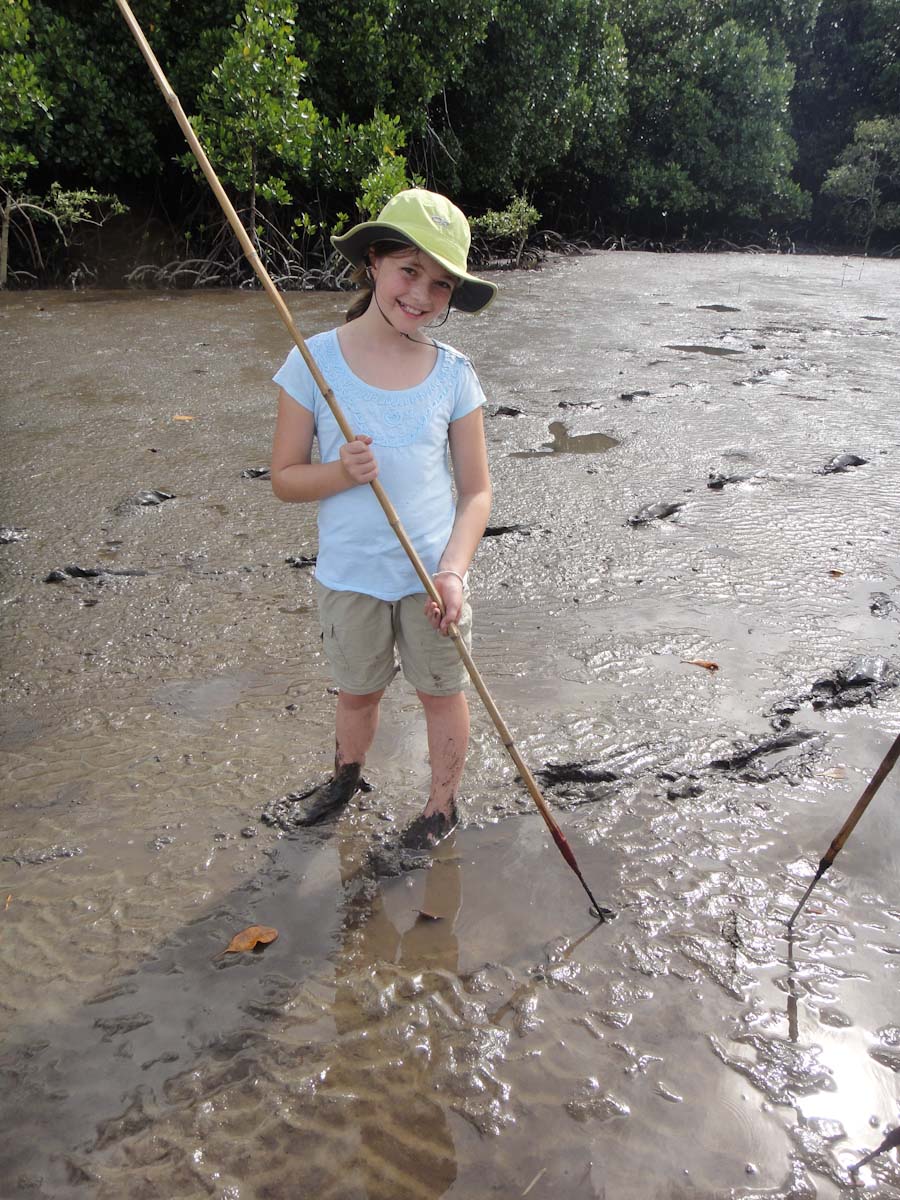
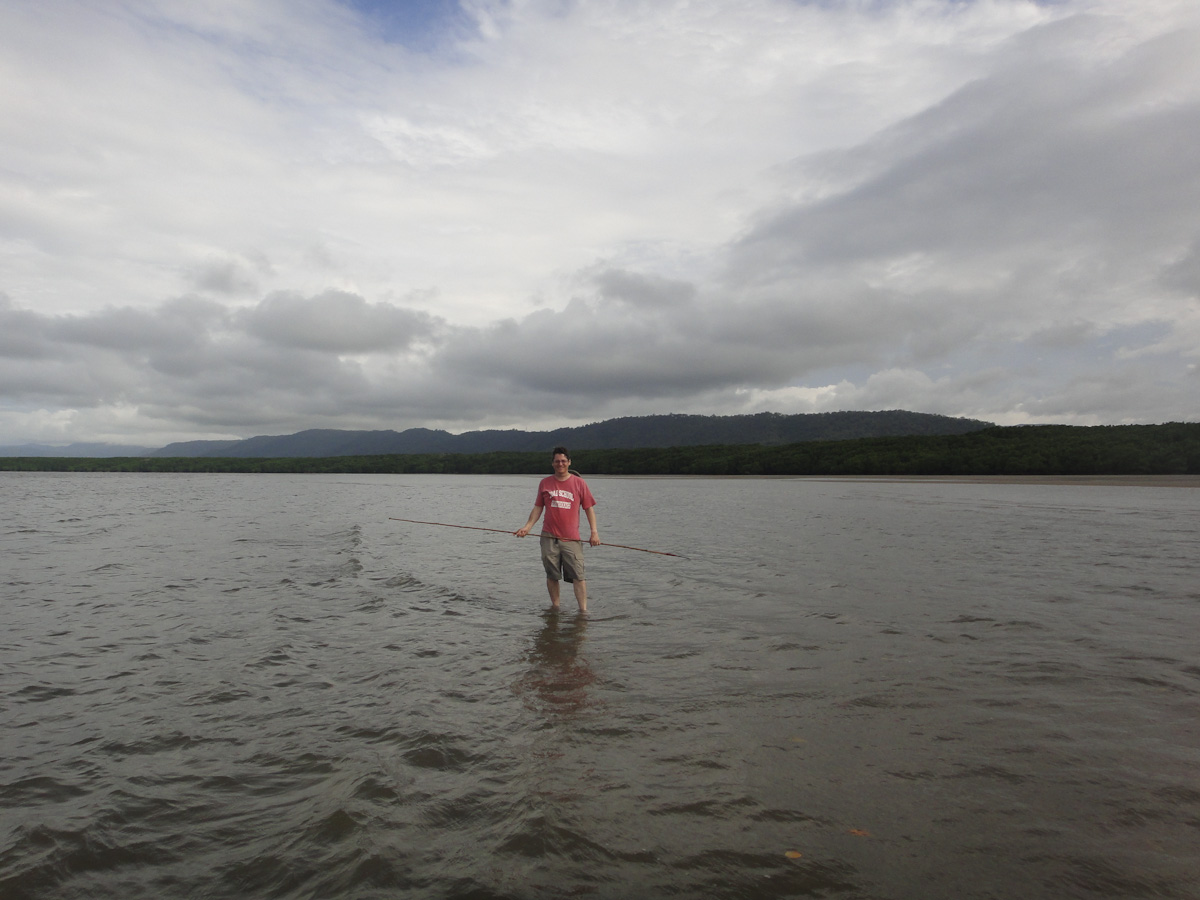
We each choose one of the spears that are stuck in the sand. They have long bamboo shafts and thin but sturdy metal points; like a fat nail. Further down the beach are two coconuts. Link throws his spear and nails the 2nd coconut, retrieving his spear he instructs us on how to wield ours.
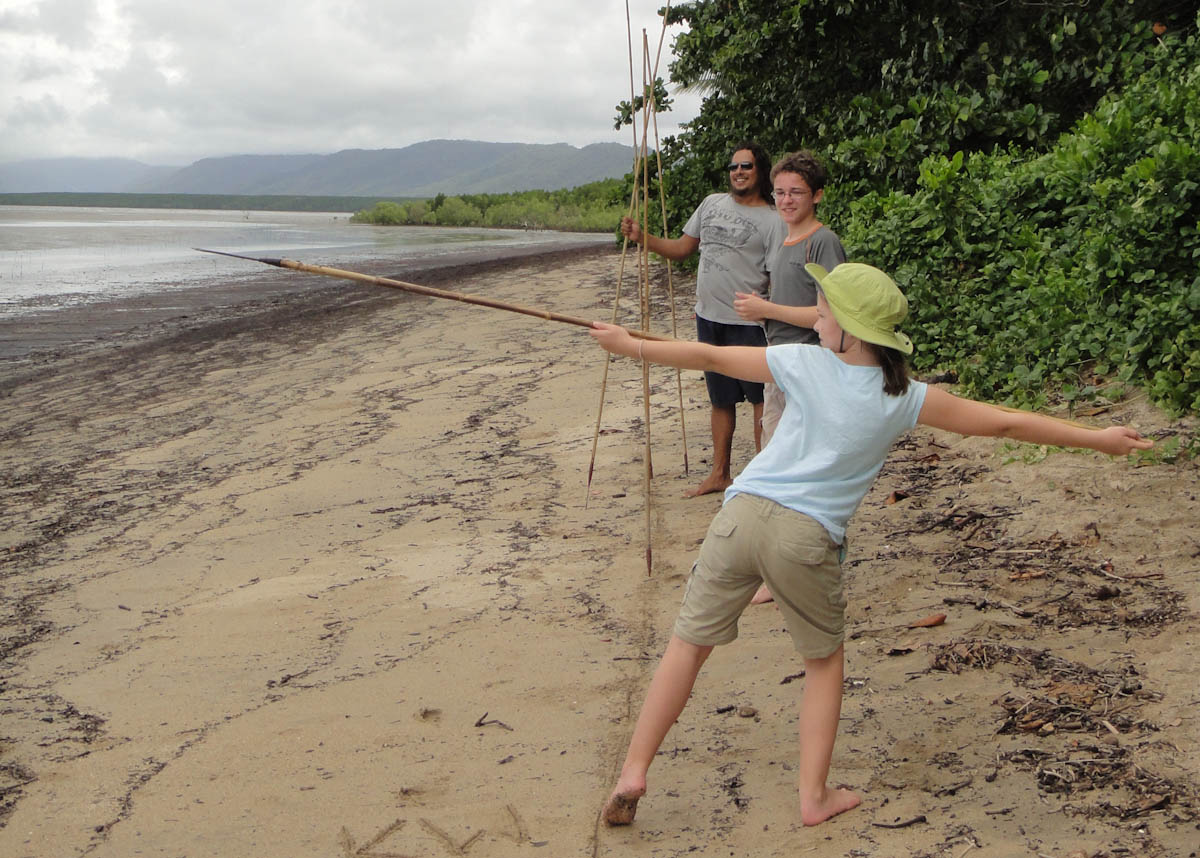
Facing sideways, all weight on back foot, writing-hand-side-foot forward, (the following instructions are for a righty) right arm stretched back as far as it can go, left arm stretched forward the same, right pointer finger on the butt of the shaft, left hand LOOSLY cupping the shaft. Push the shaft forward with your finger as you throw, aim slightly up, always follow through.
We practiced for a little while, but we only got close to the coconut, never spearing it. Link then showed us the Atl-Atl. A stout and 18 inch piece of wood with a blunt hook at the end. Your right hand holds on to the end of the Atl-Atl and the hook takes the place of your forefinger, effectively giving you a longer arm. Link launched the spear a very long way to prove the Atl-Atl’s capabilities.
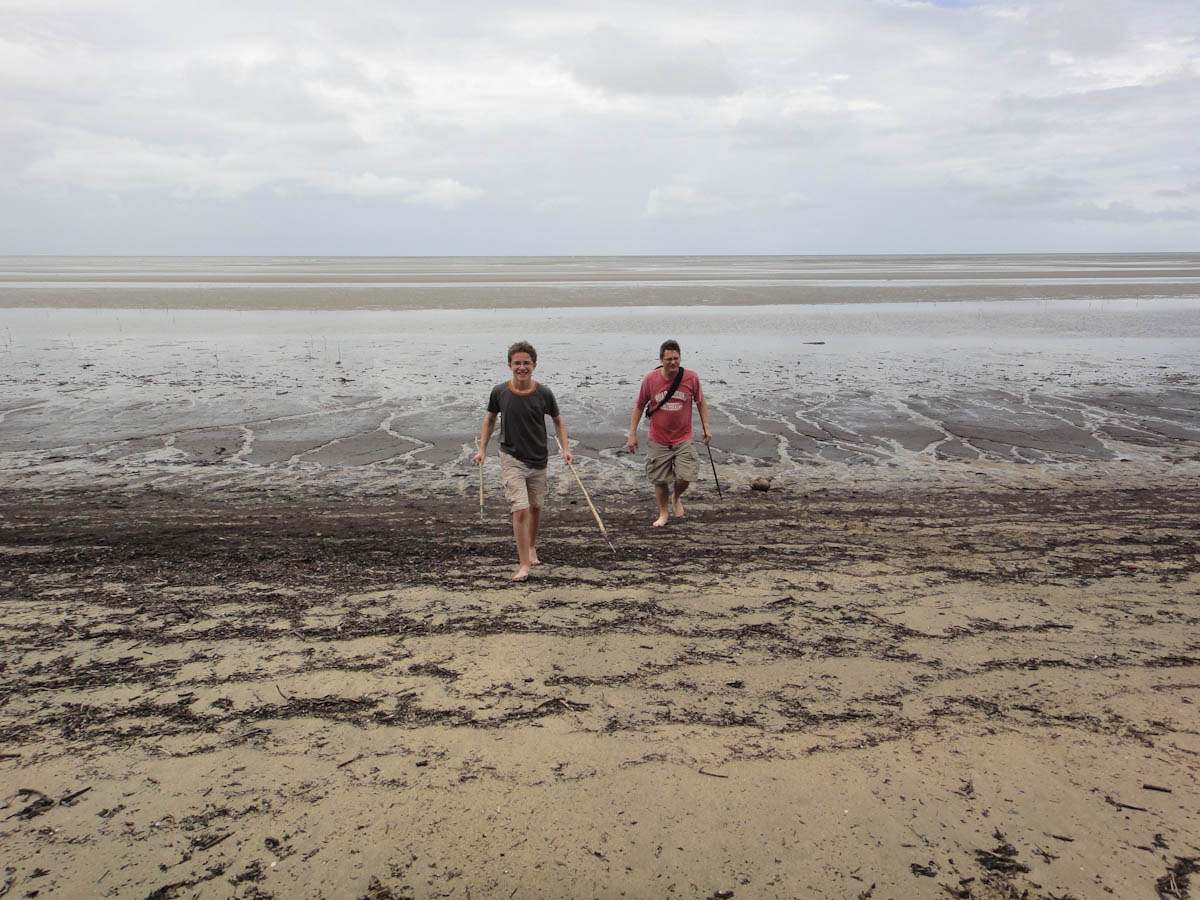
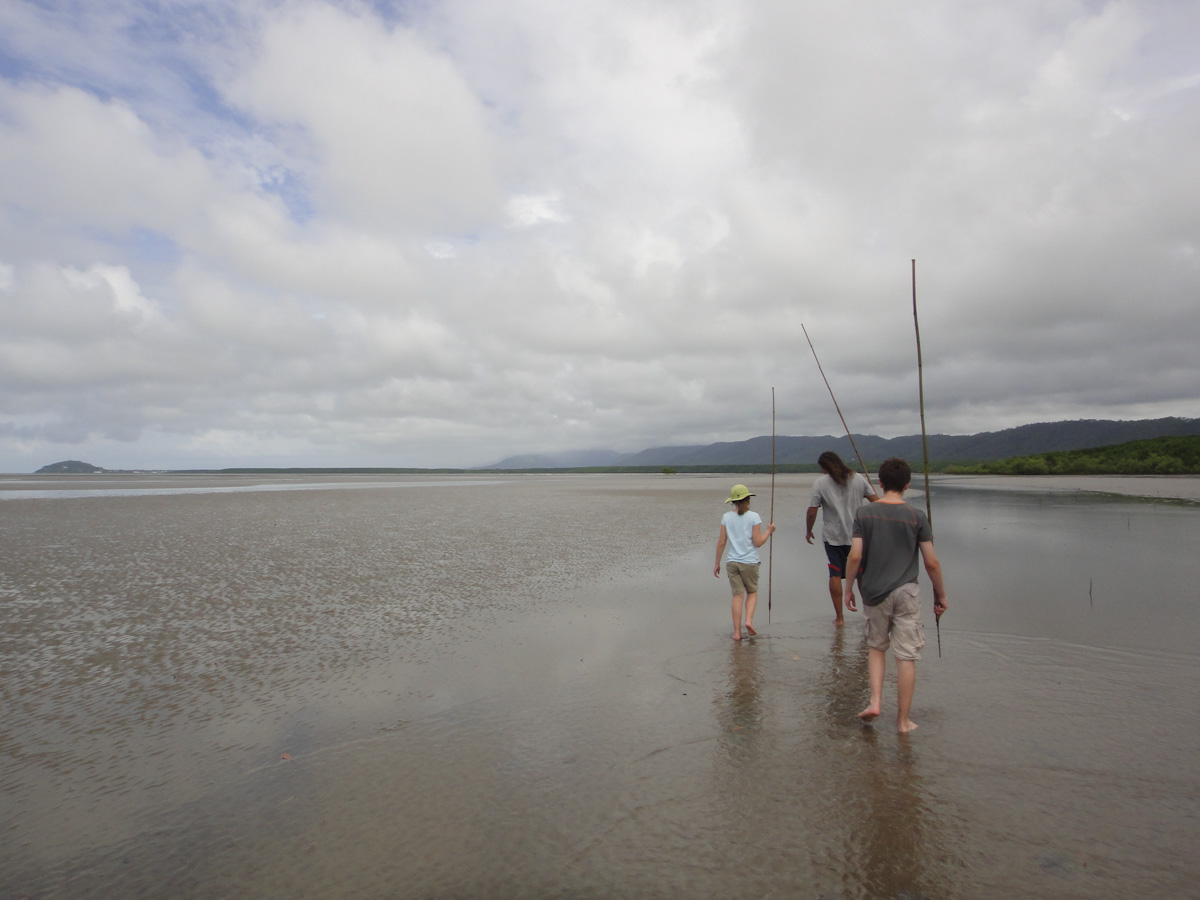
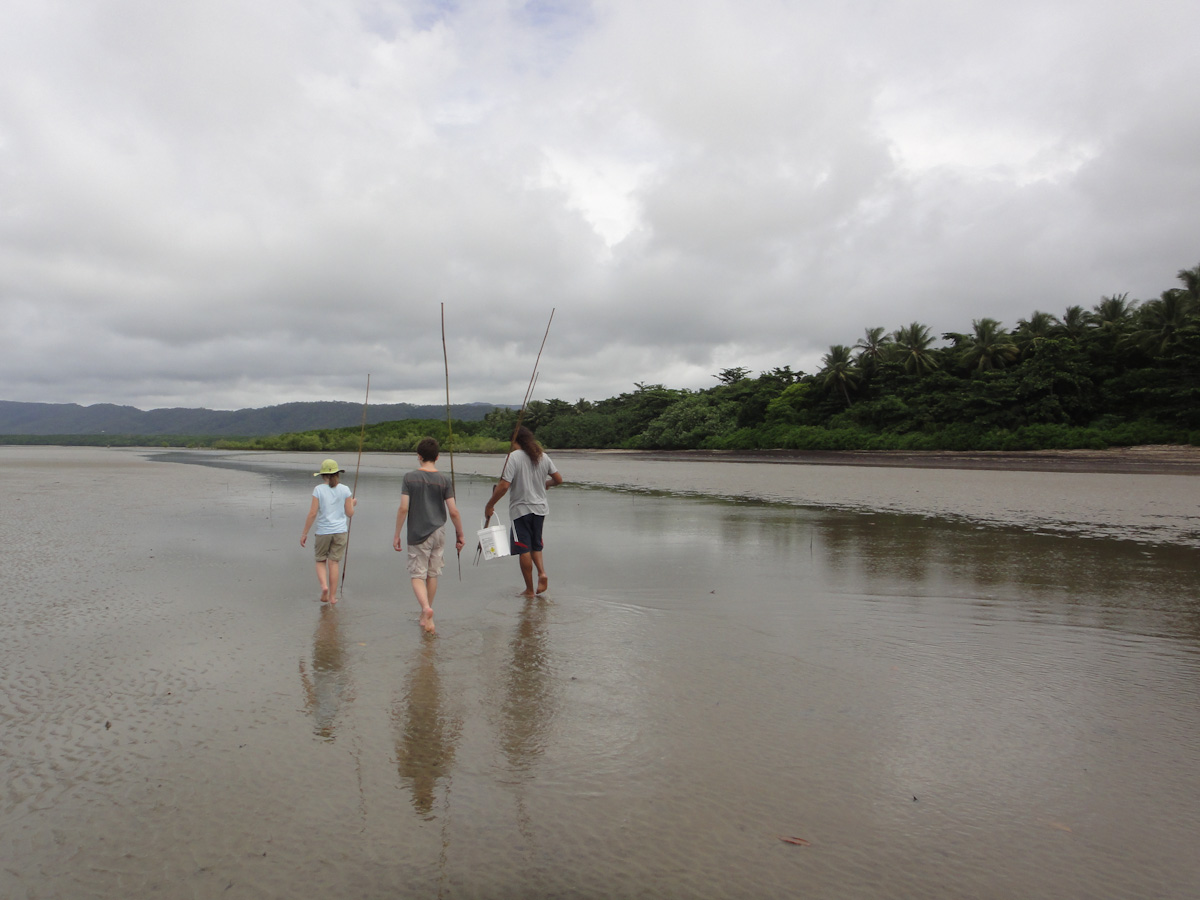
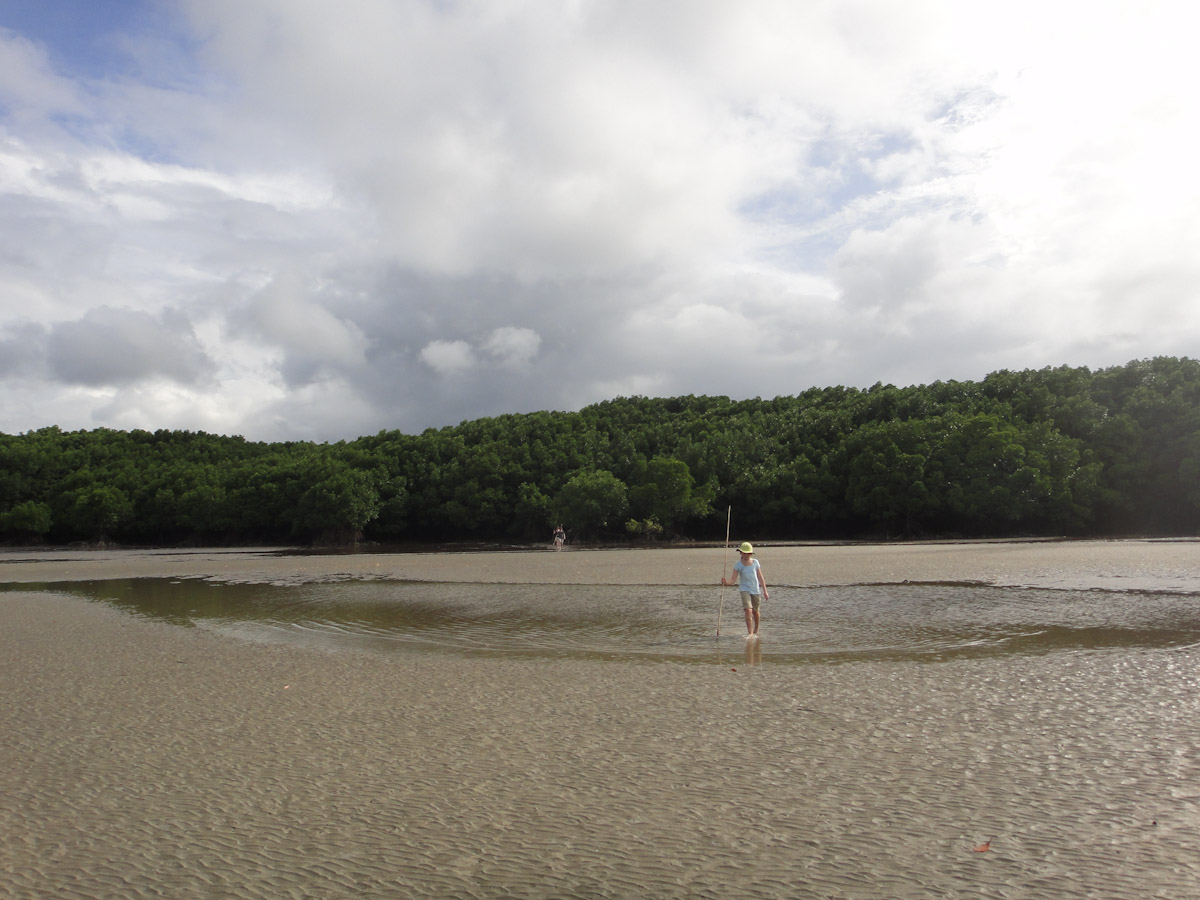
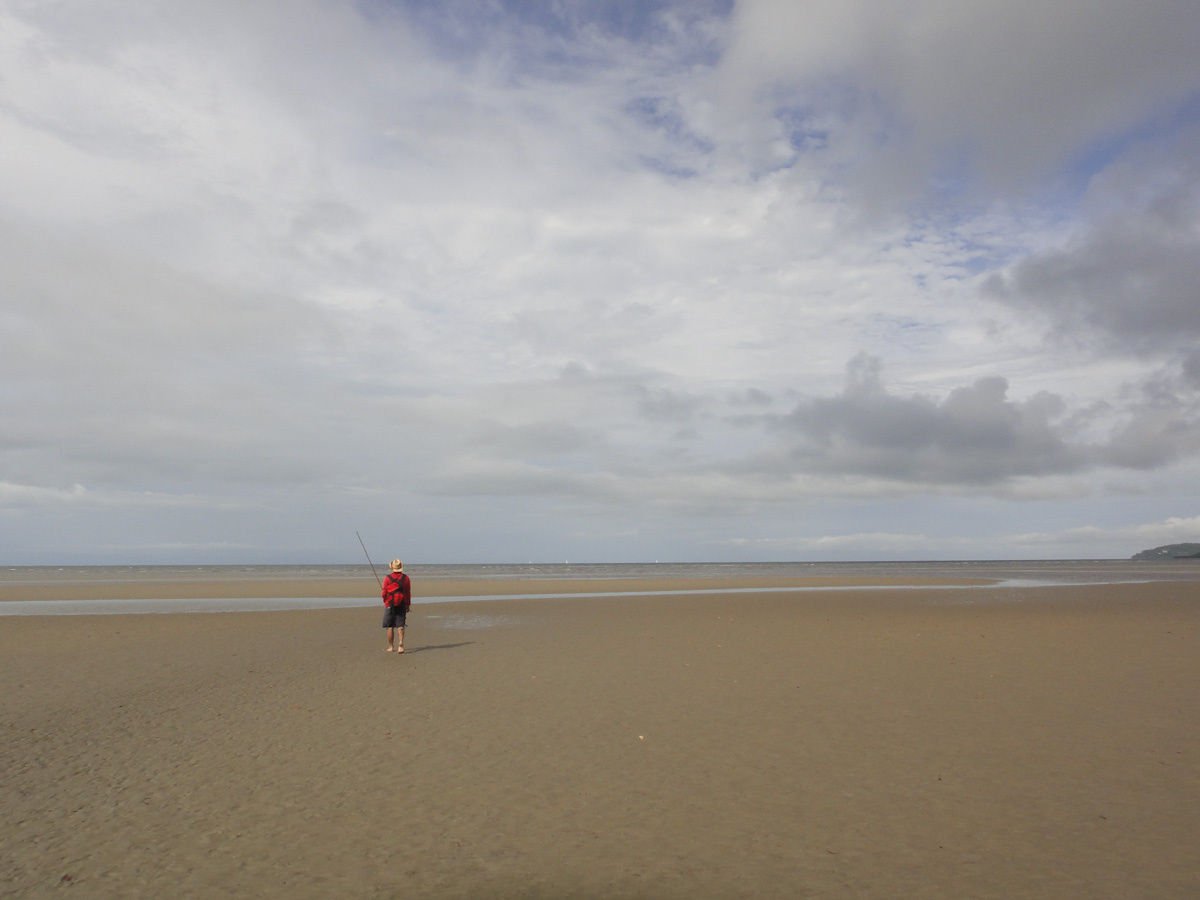
We marched out onto the mud flats. Mom would prove amusing, as she would provide the UN-limited edition “Eek! Mud!” ambient soundtrack. Released January 1st 197,989 B.C.E.
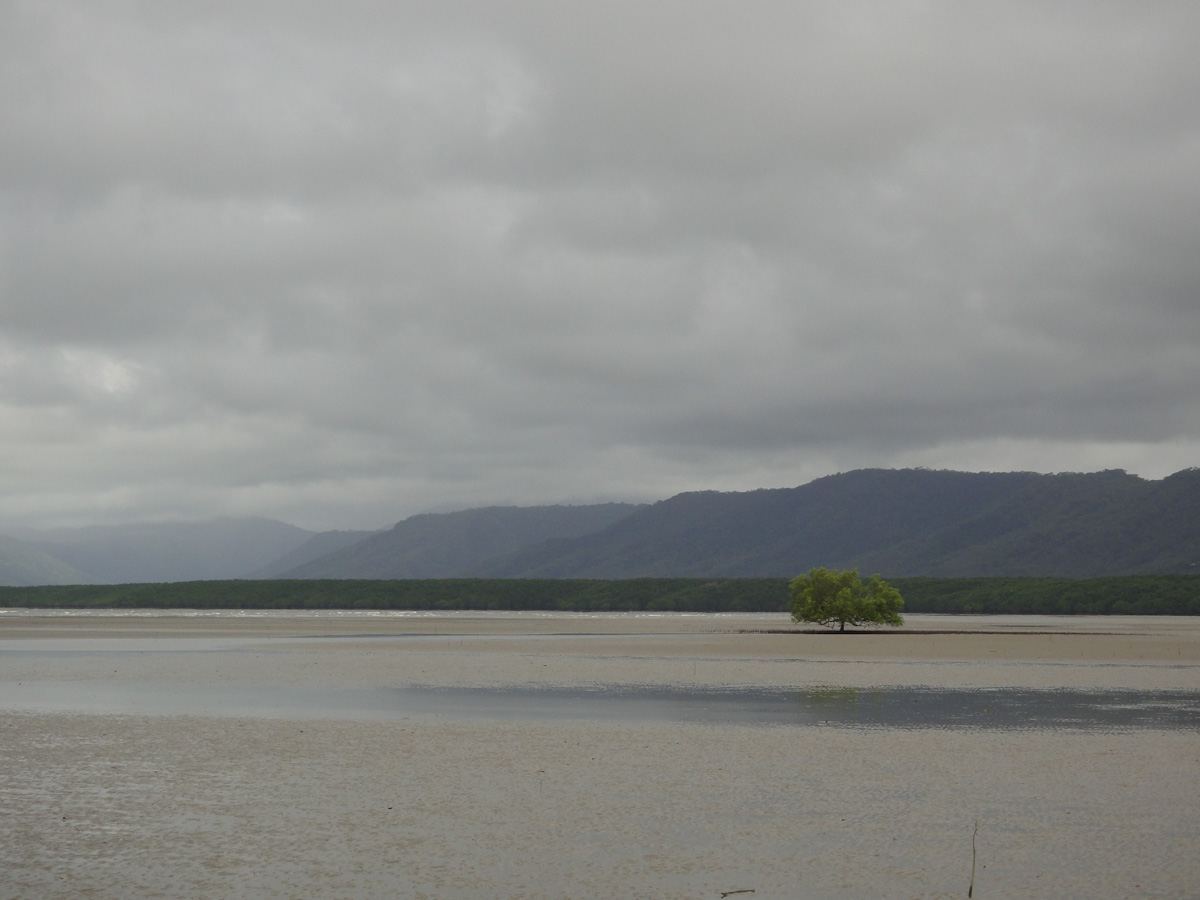
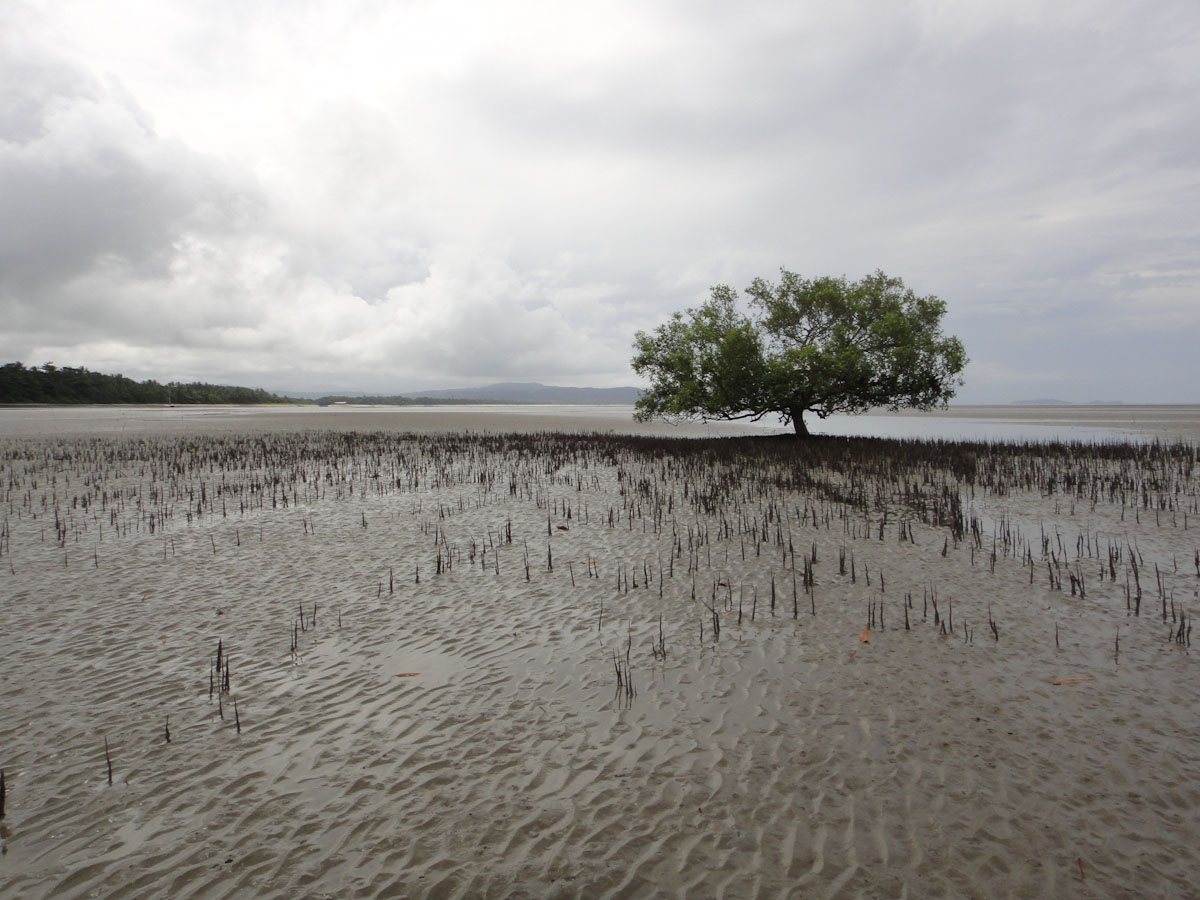
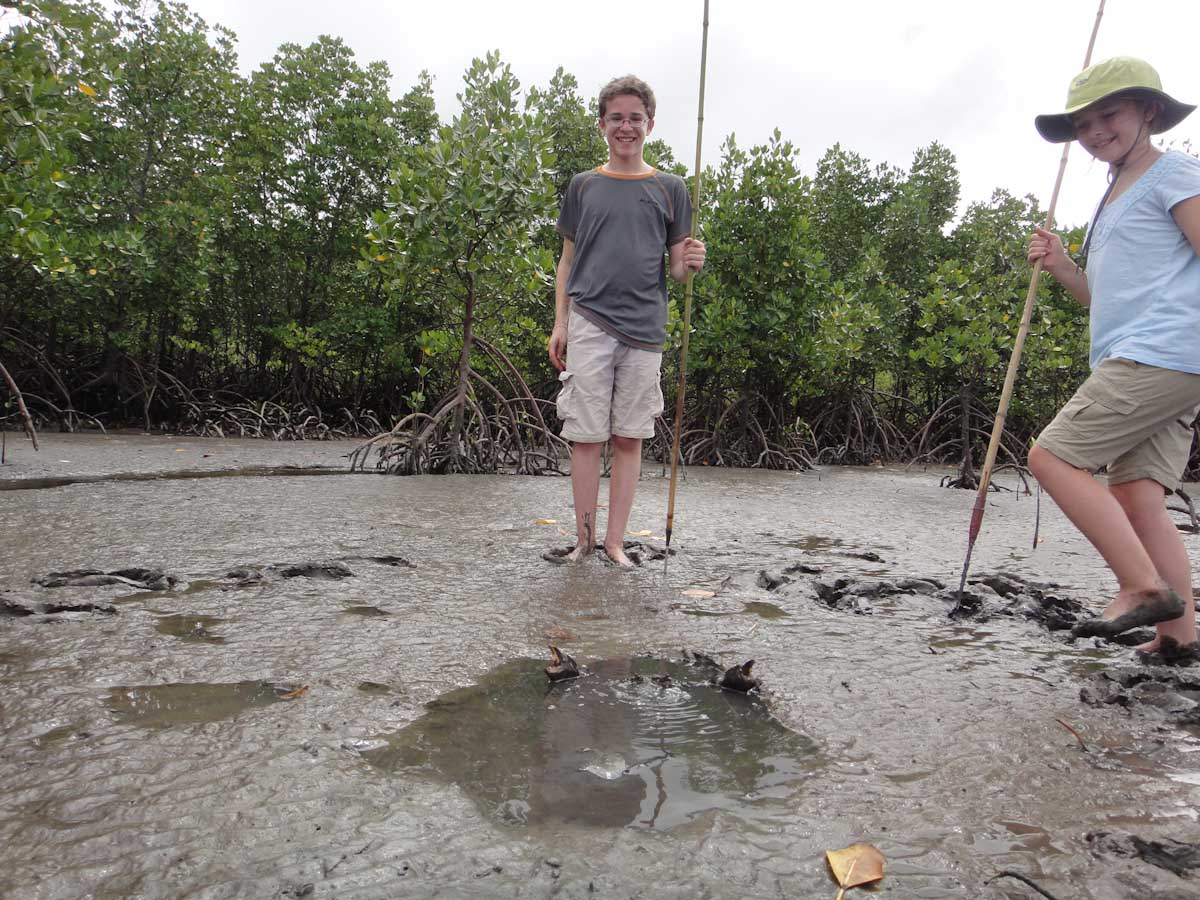
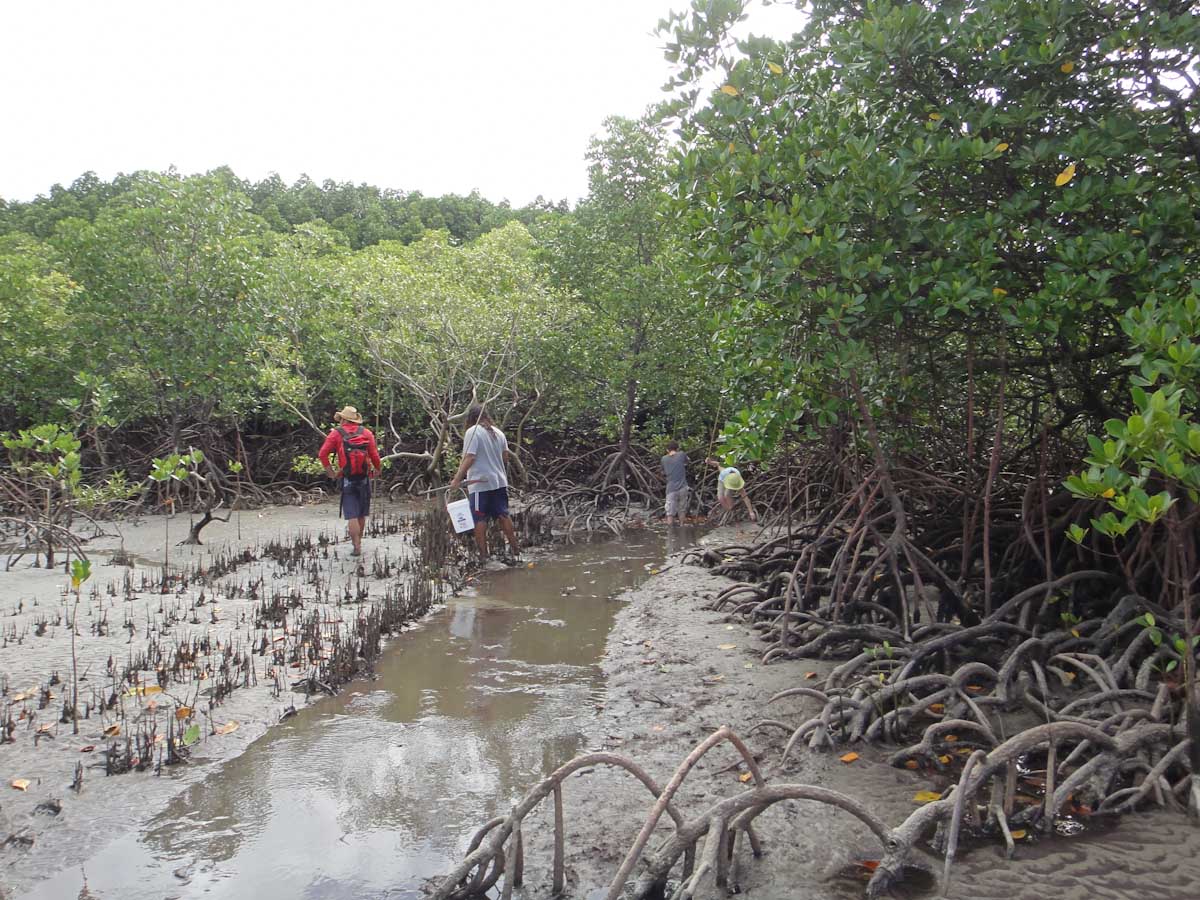
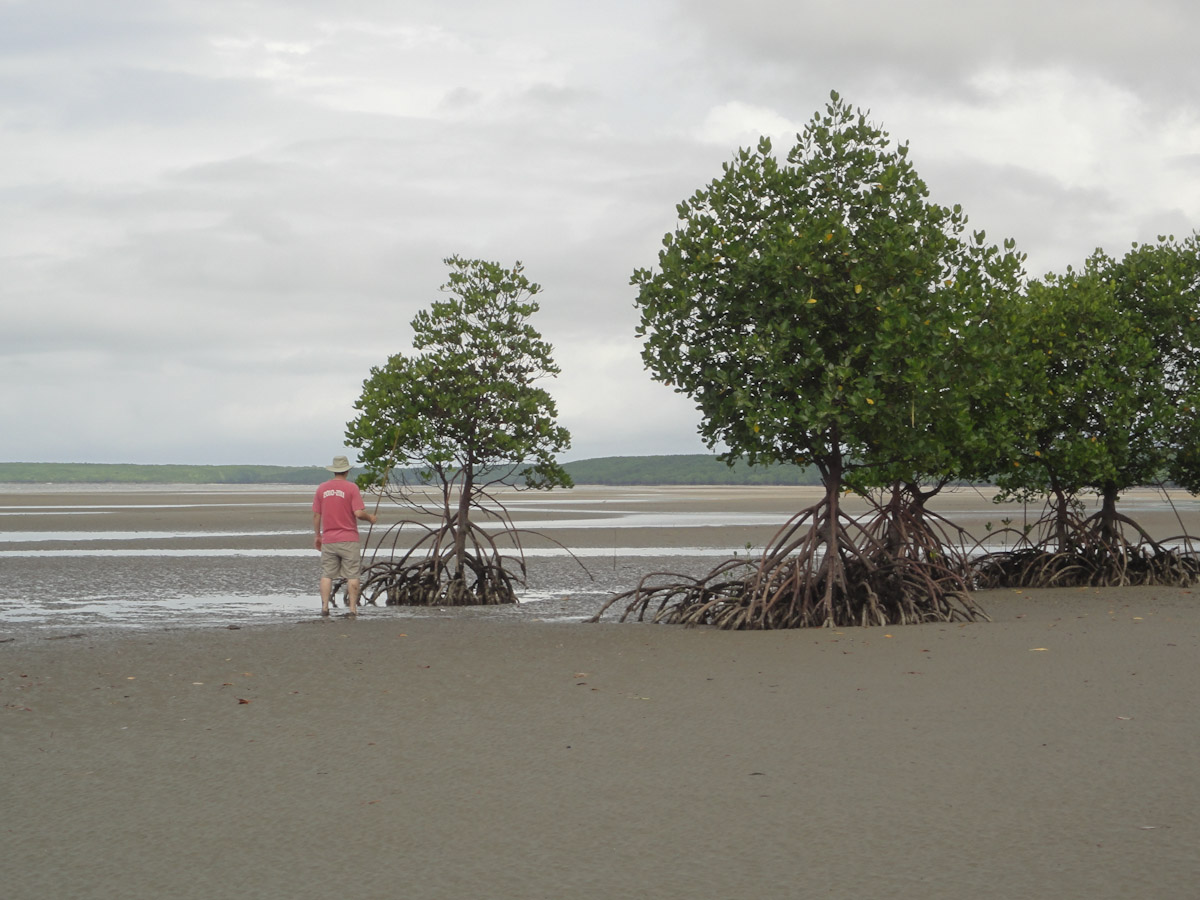
Link pointed out many small critters that lived on the mud flats. Actually the mud flats are like a desert of hard packed, ridged sand. When the tide goes out, the sand stays, hence the mud – really sand – flats. Anyway, there were thousands of little snails, tube worms and other cool things. Including camouflaged shelters for fish eggs, small fish that skipped about the water and could go on land, and mangrove trees.
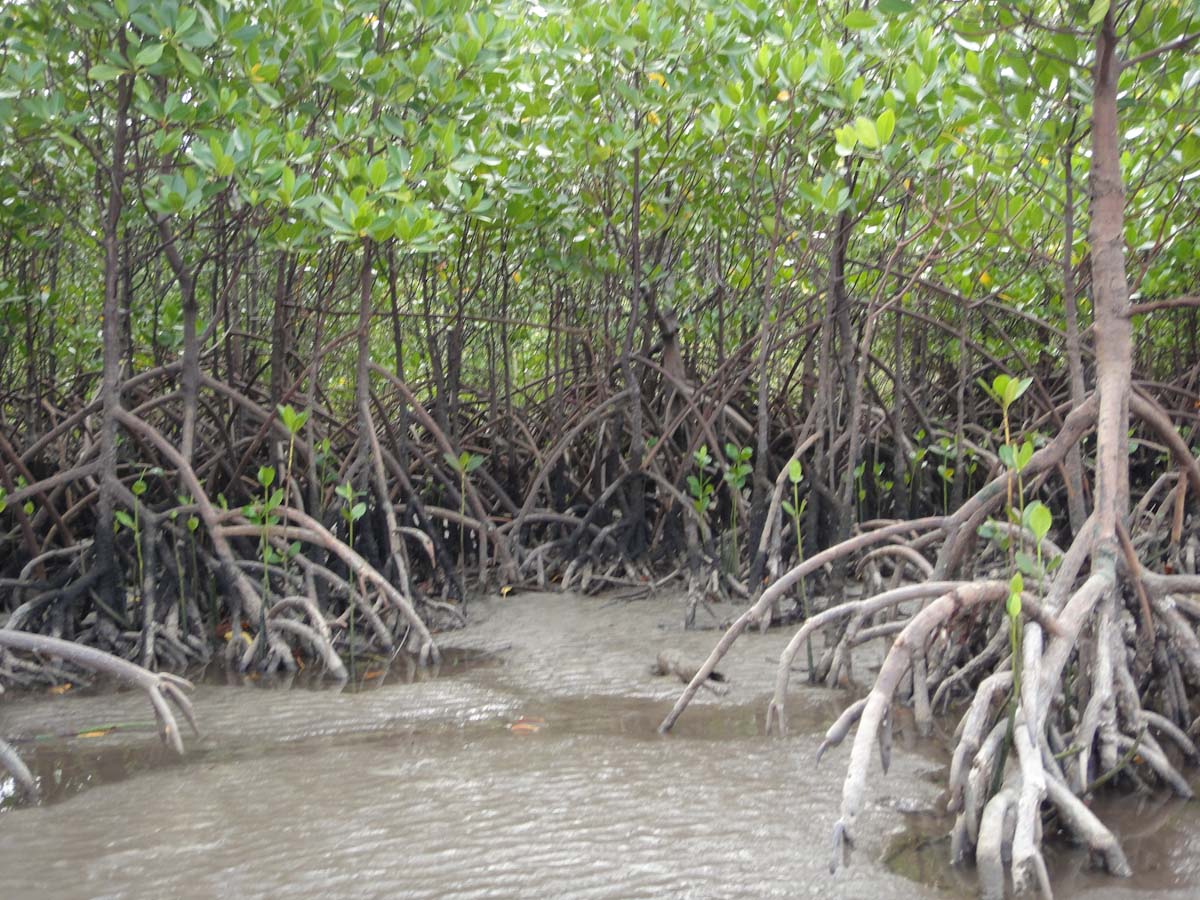
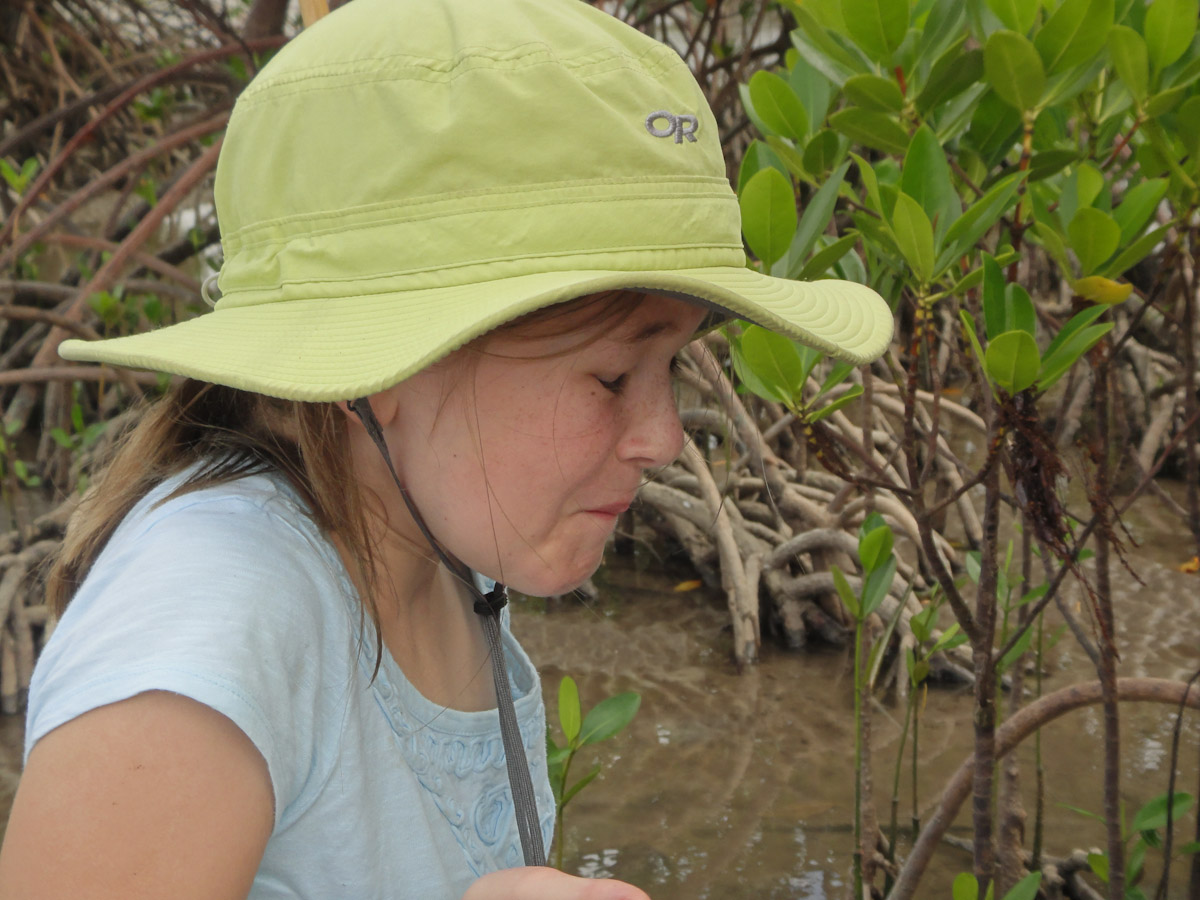
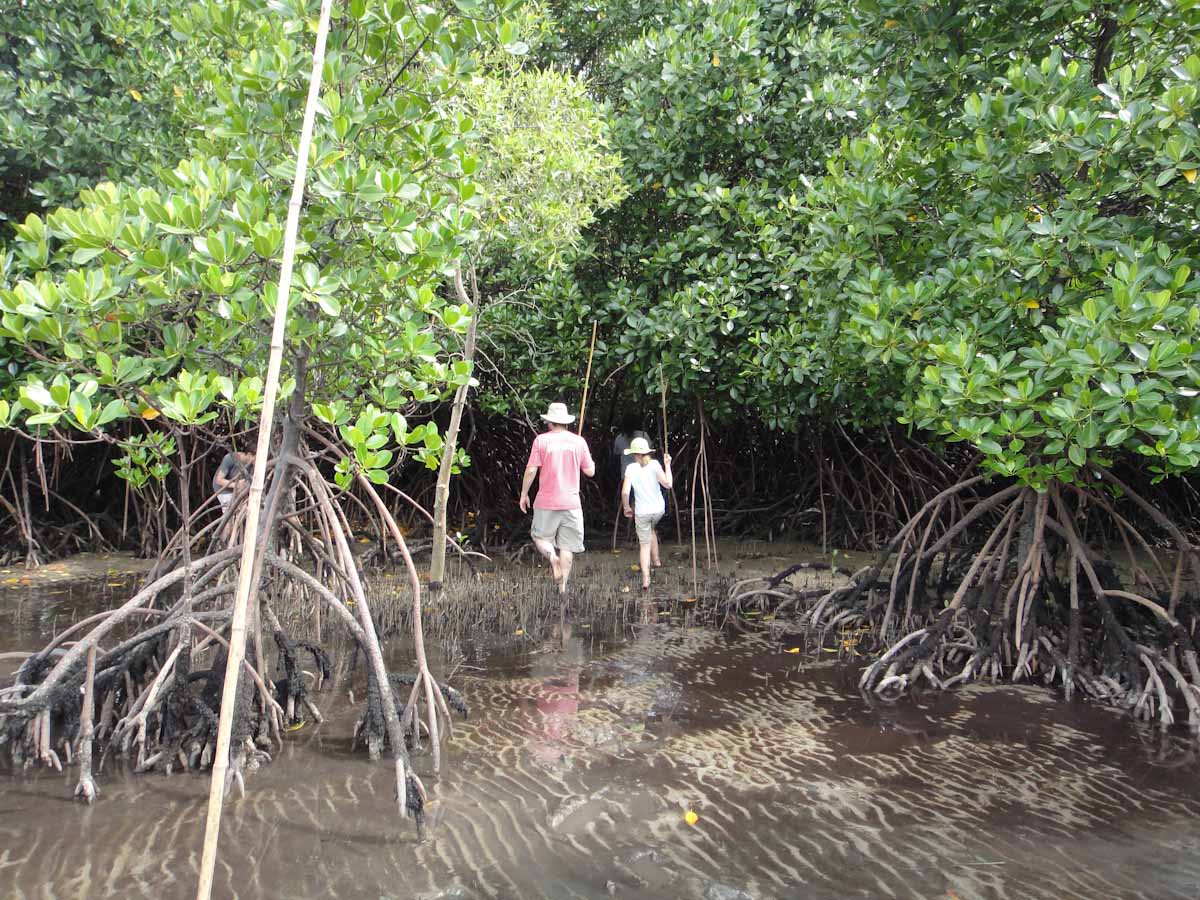
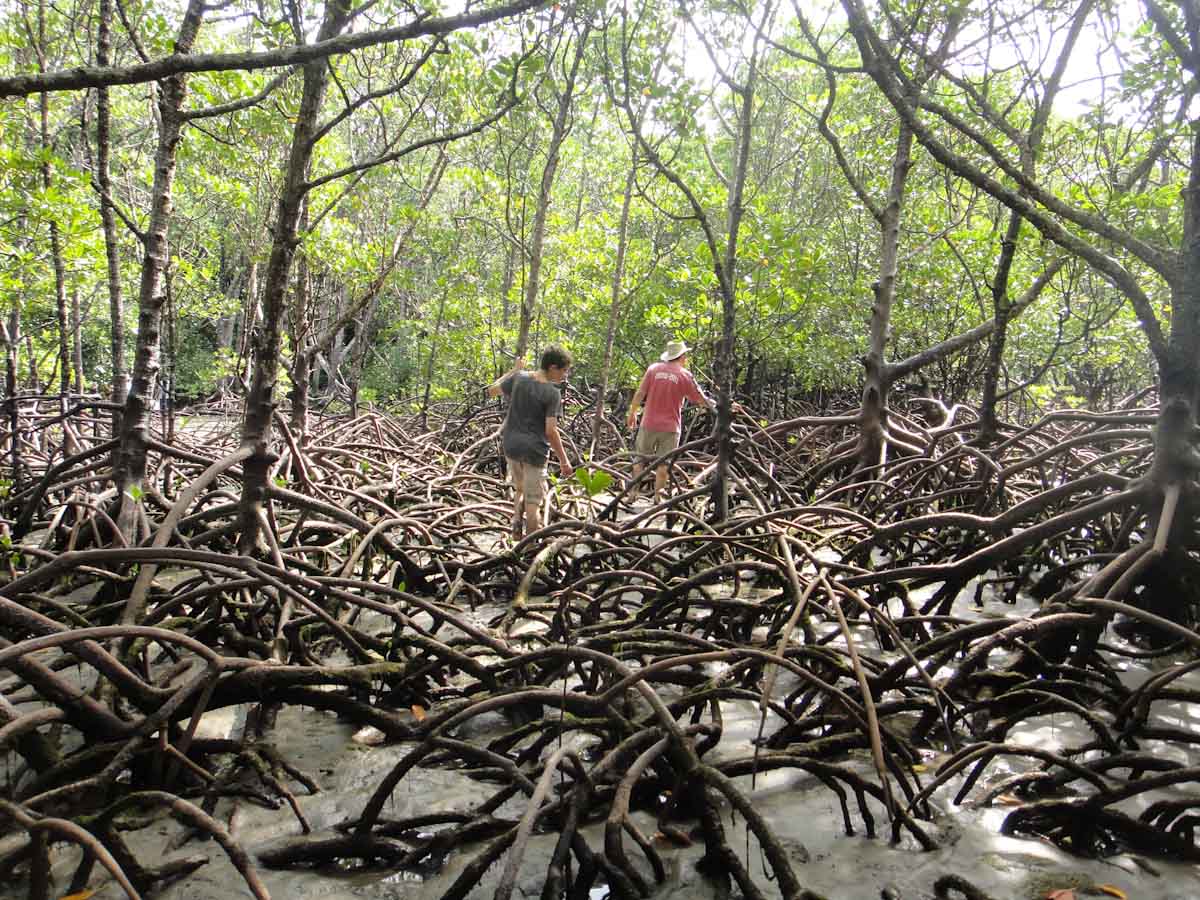
Mangrove trees are amazing. Since the mud is so thick, the tree’s roots grow out, and then up, popping up through the sand and stopping at about 6 inches above ground level. The roots are hollow, which allows the tree to breathe. When one mangrove dies, the next mangrove that grows there takes over the existing root system and makes additions. In this way, the mangrove root system is a never-ending communal breathing network, like how a new generation adds on to a city.
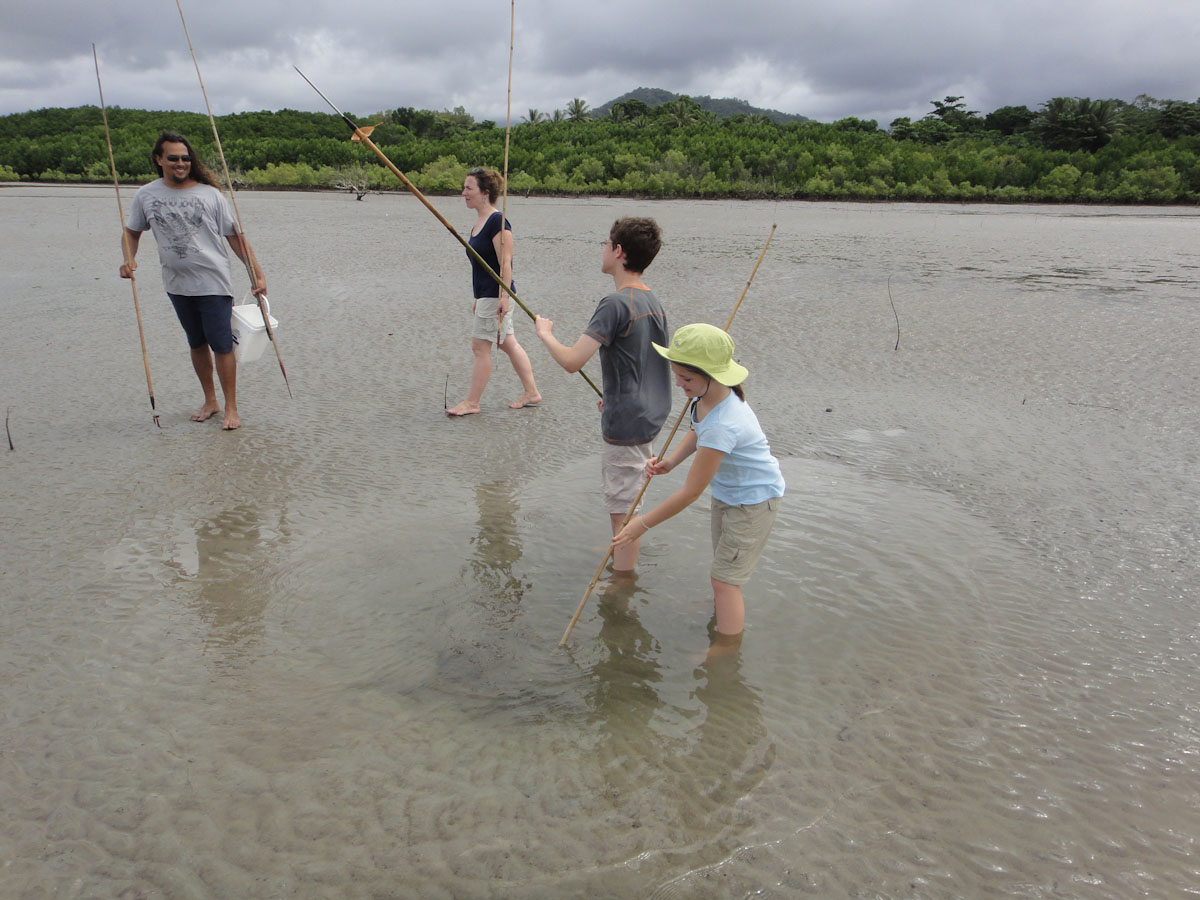
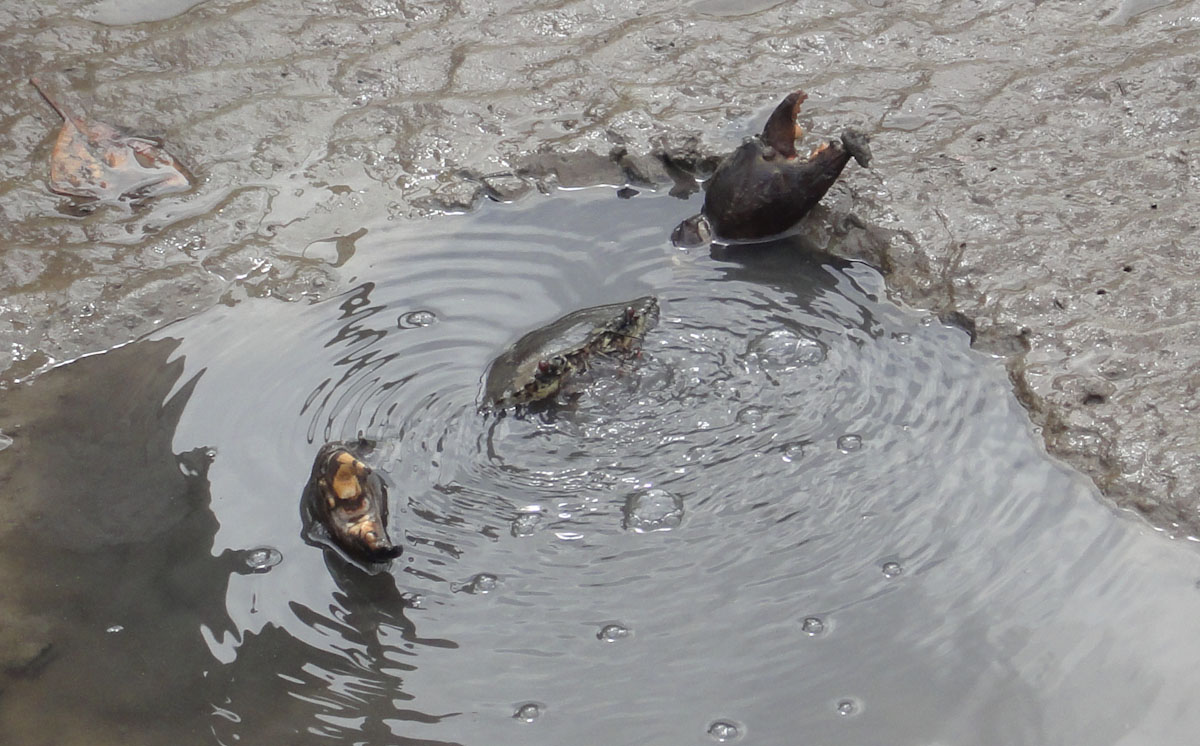
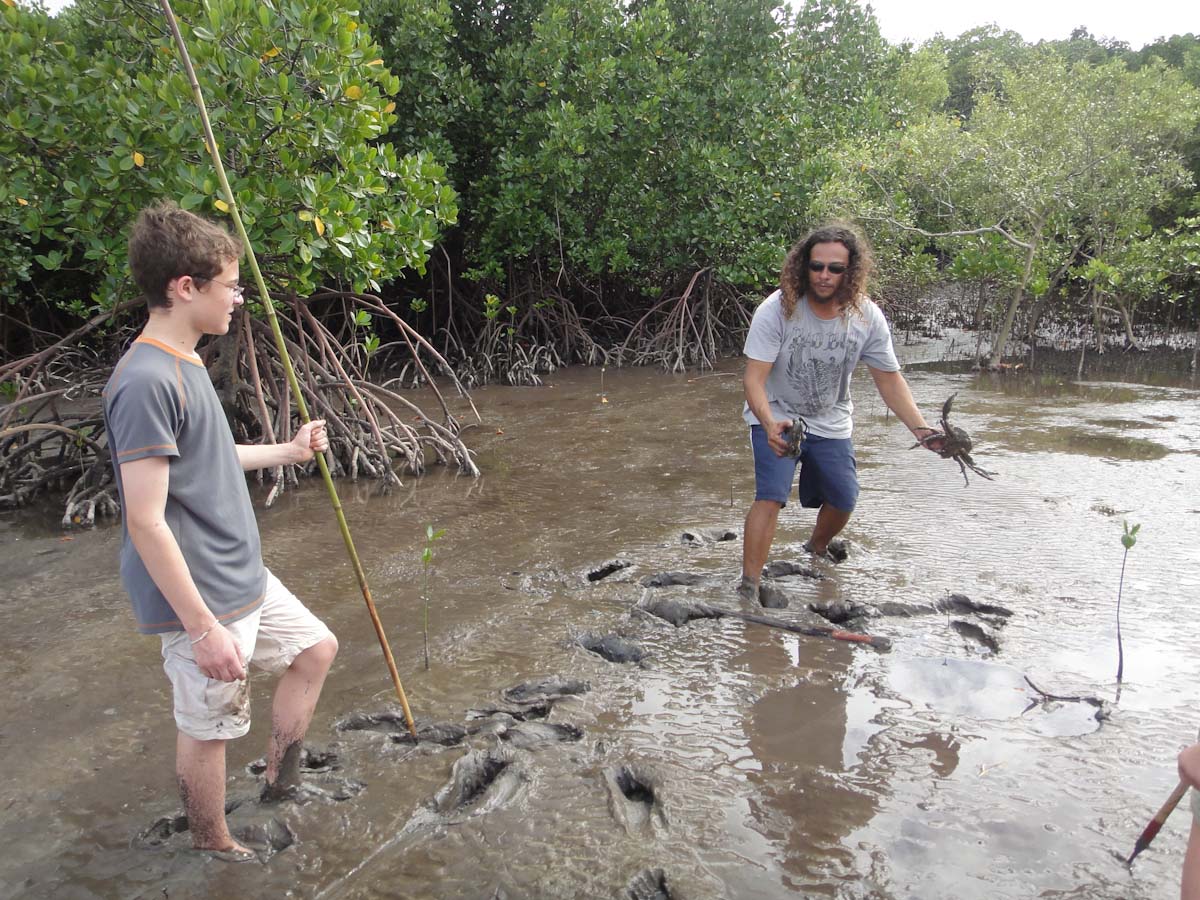
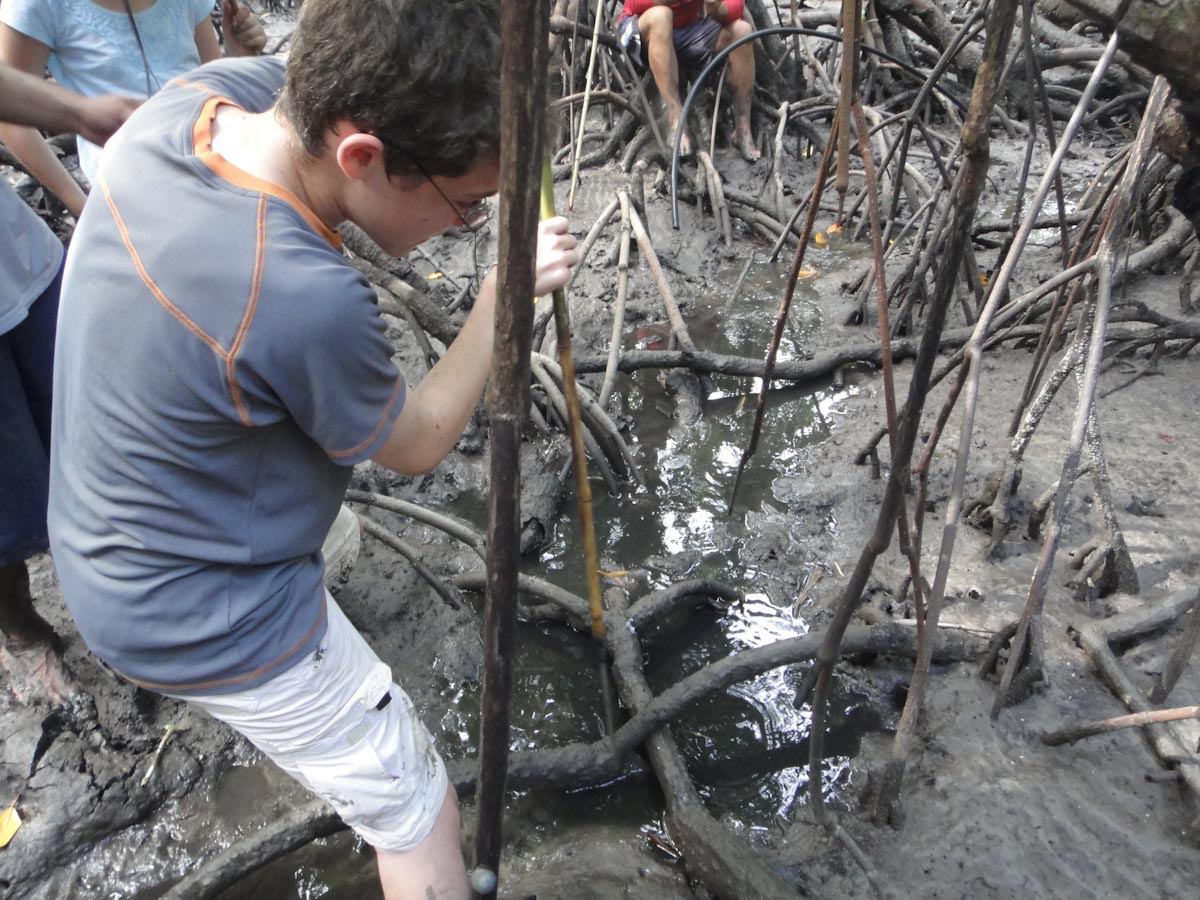
Link called our attention to some small to large holes. Though they appeared shallow, they were actually quite deep. The holes were made by manta rays which had settled down to feed; when the manta ray feeds, it sucks all the sand around it in to its mouth, eats the little organisms, and spits the sand out to the side. Link said that these holes were ideal resting places for the mud crabs we were looking for.
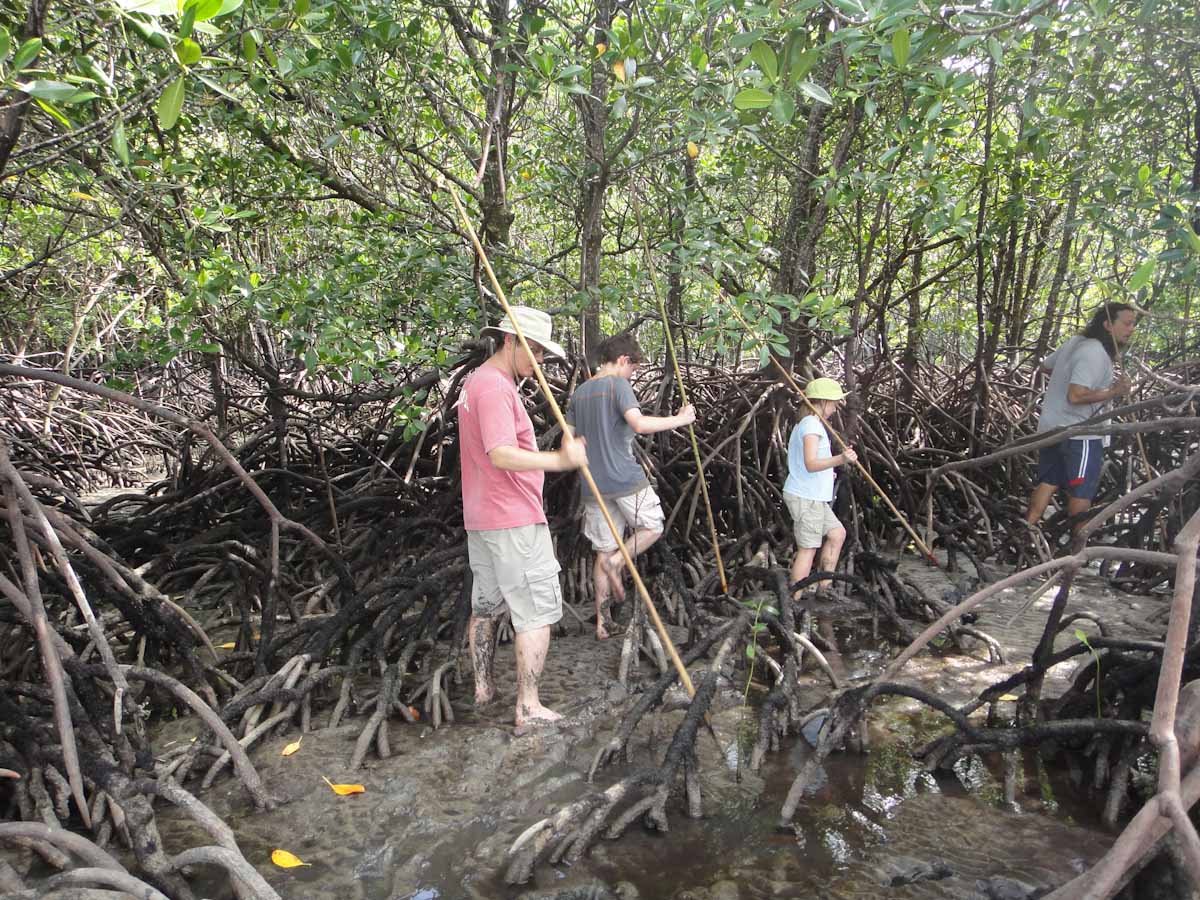
So we went along poking our spears into holes and following Link. Several times we saw tube worms with their tongues stretched out of their holes. We would touch them with our spear and they would shoot back in to their hiding place before you could say “look”. Also, Link confirmed what Barney had said about being able to eat the gold and green tree ant’s butts. I ate several. They’re actually quite good. They taste like citrus. Barney, our guide, said that you only had to eat three ant’s buts, and you had all your vitamin C for the day.
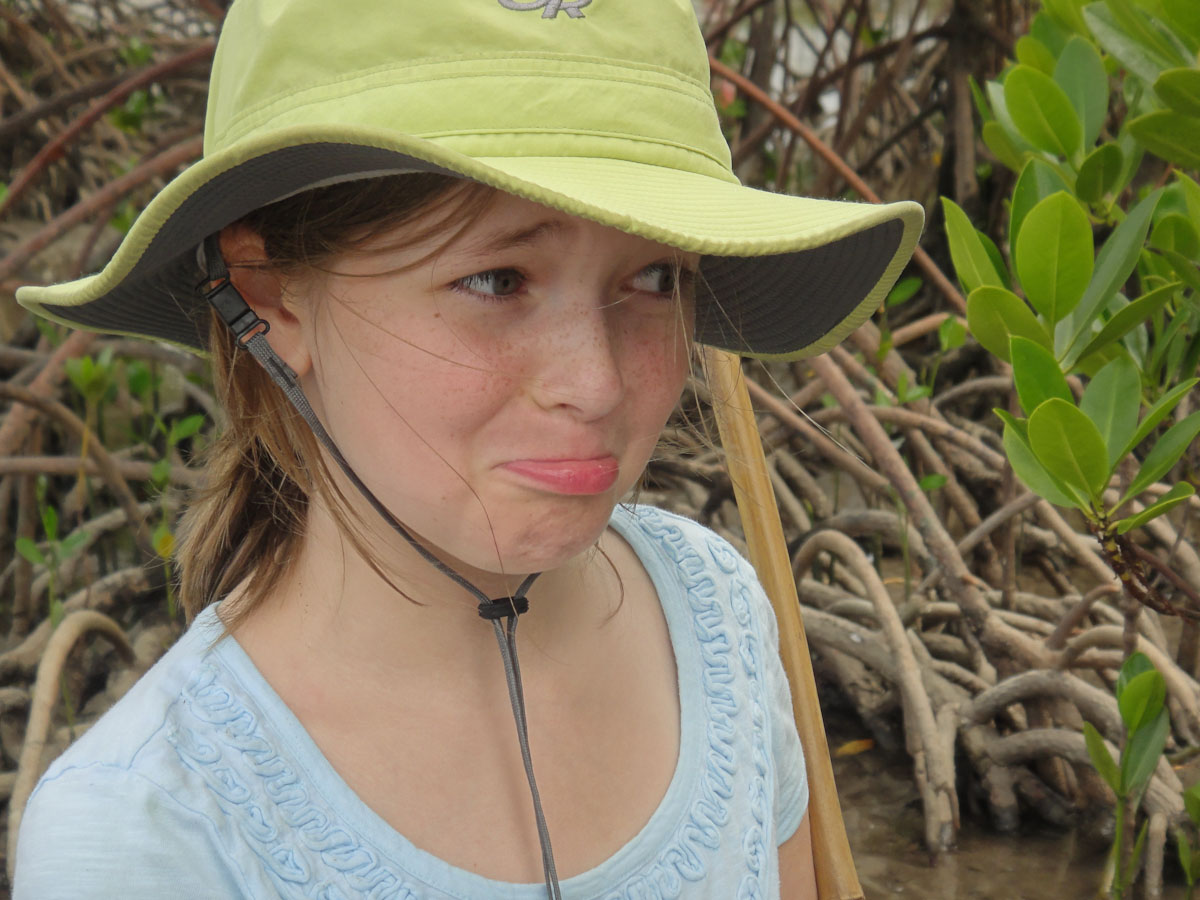
Mom was shocked by the children. “You seemed so nice! “ She would exclaim, as we viciously stabbed our spears in search of crabs, and plucked ants off of trees.
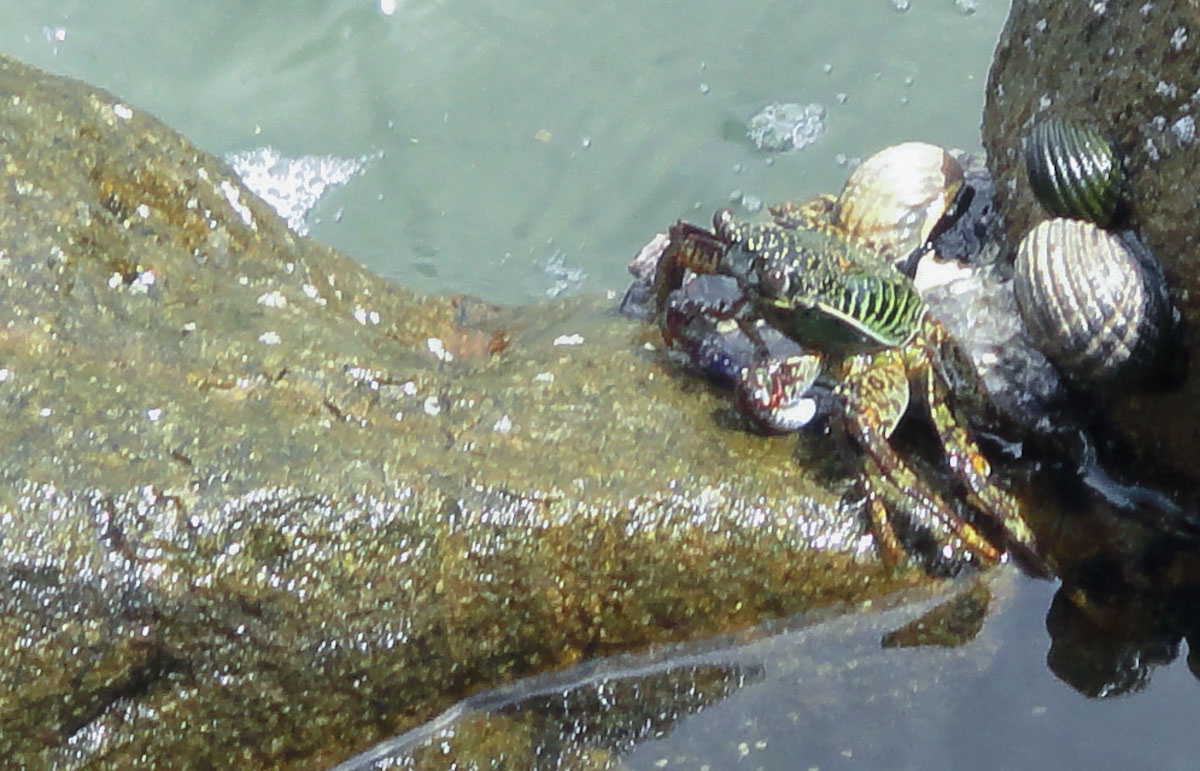
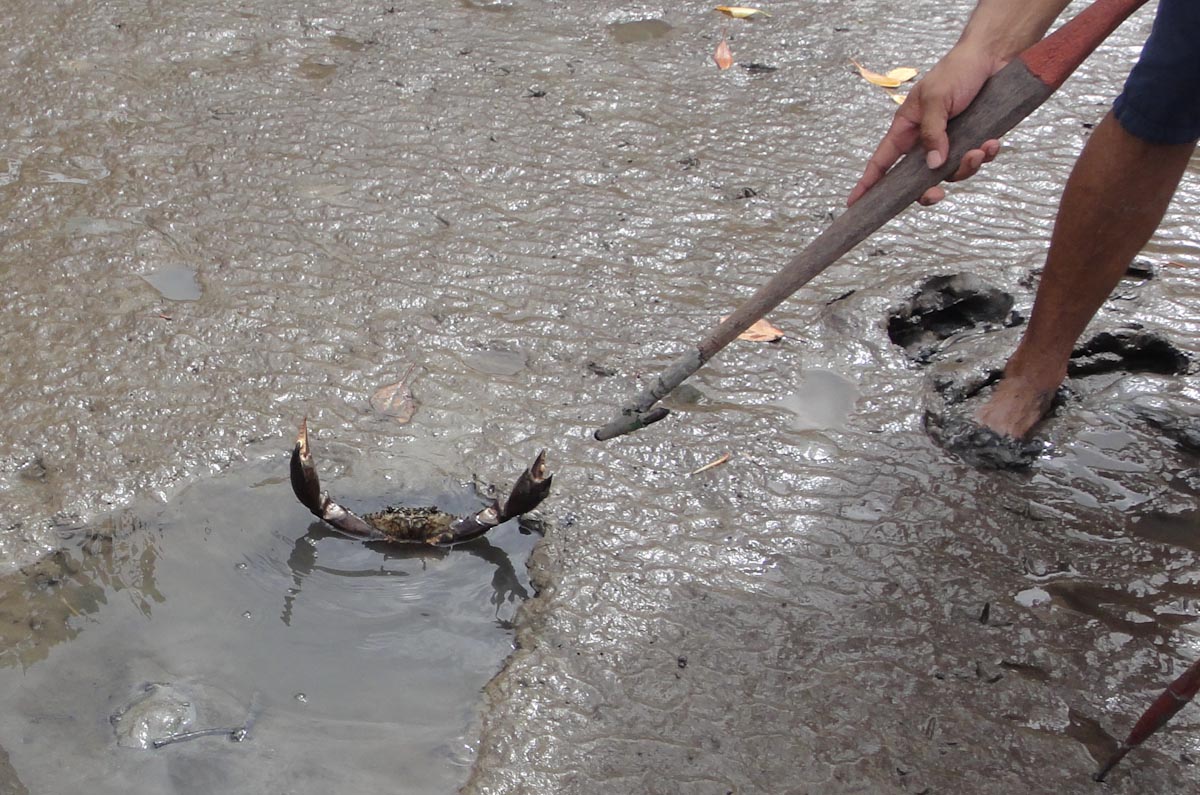
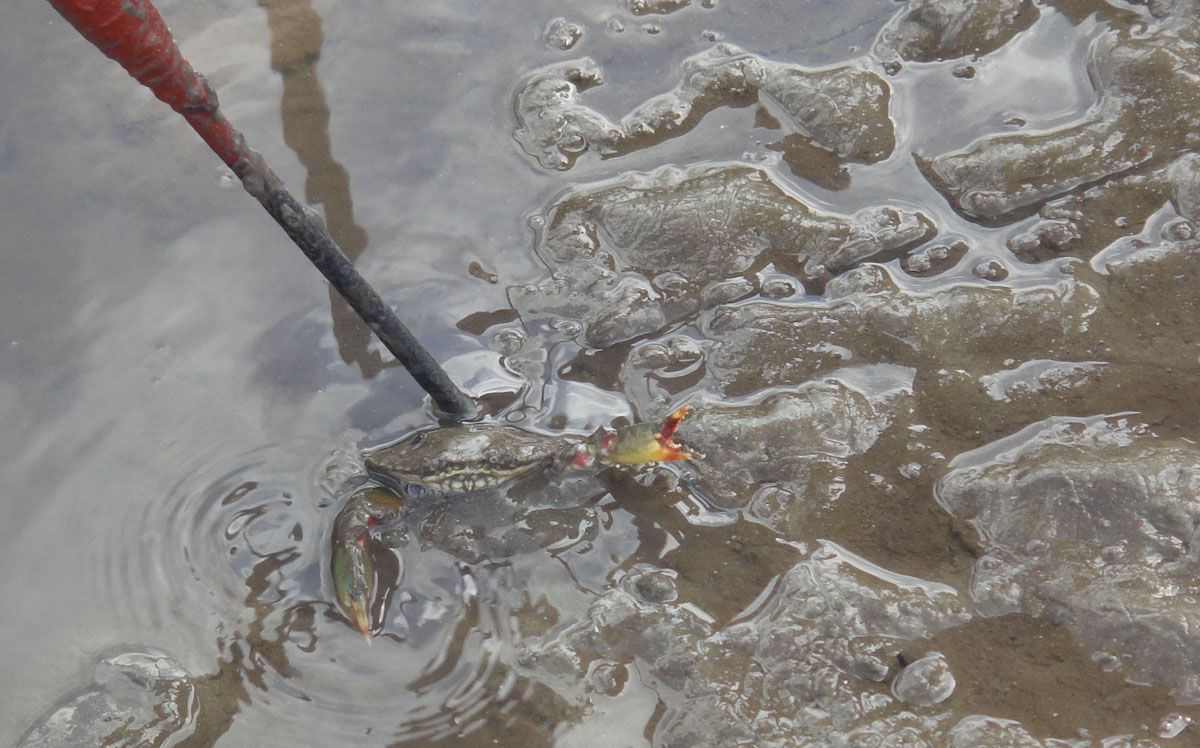
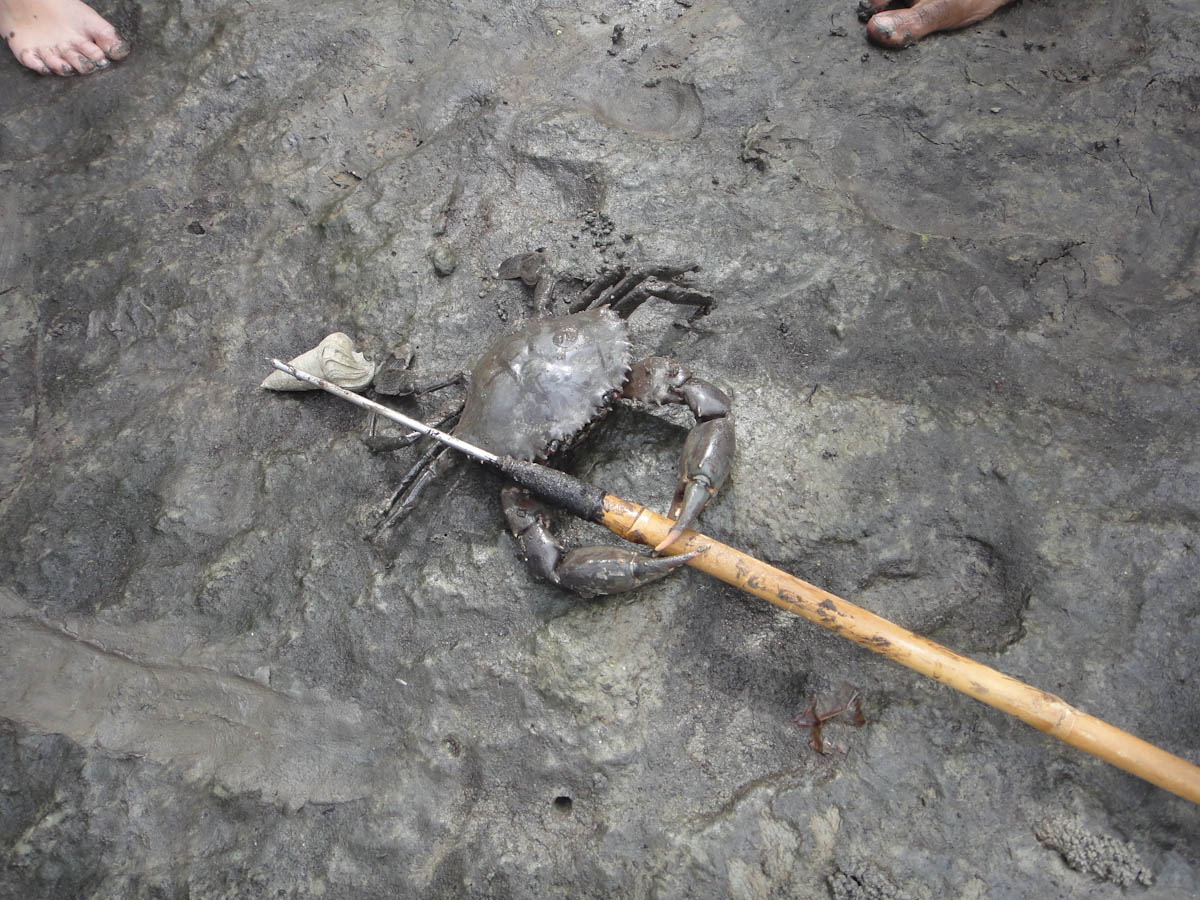
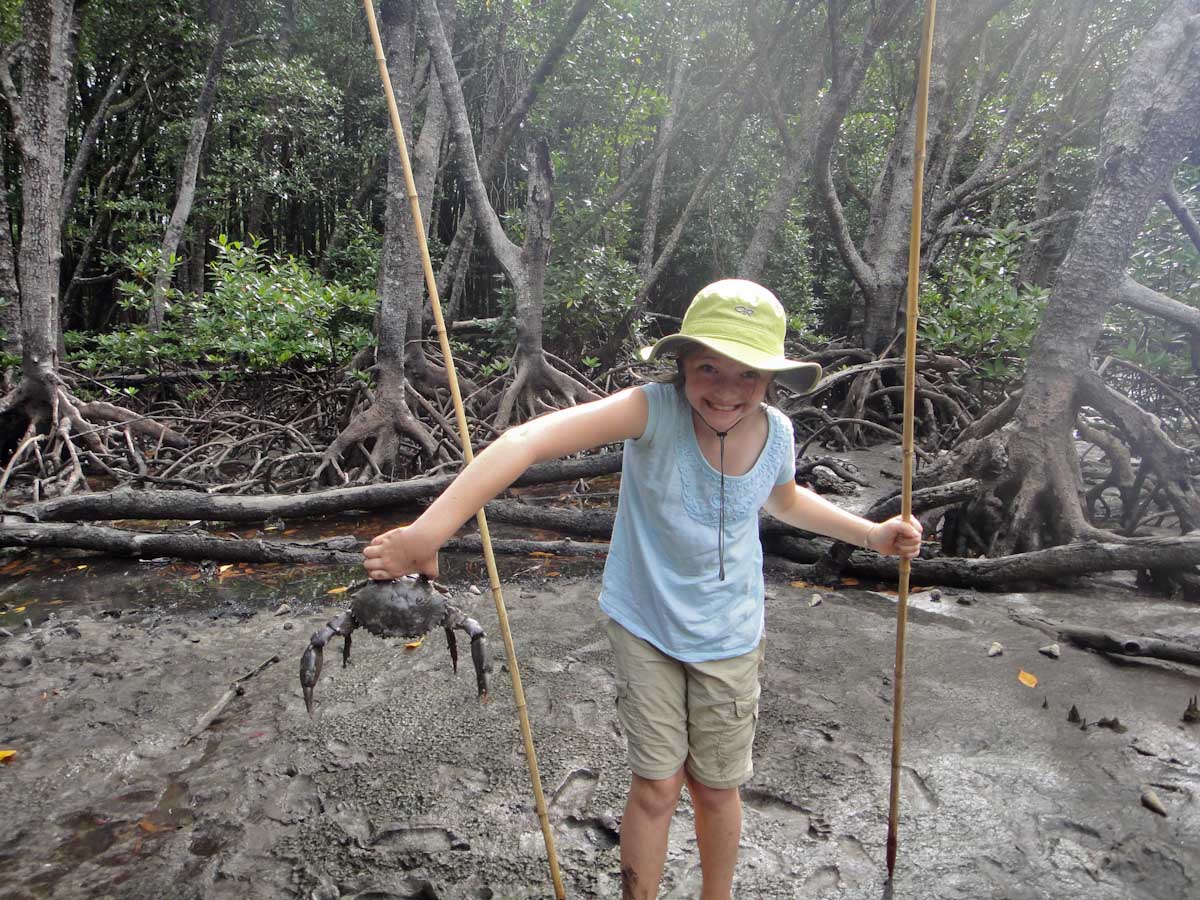
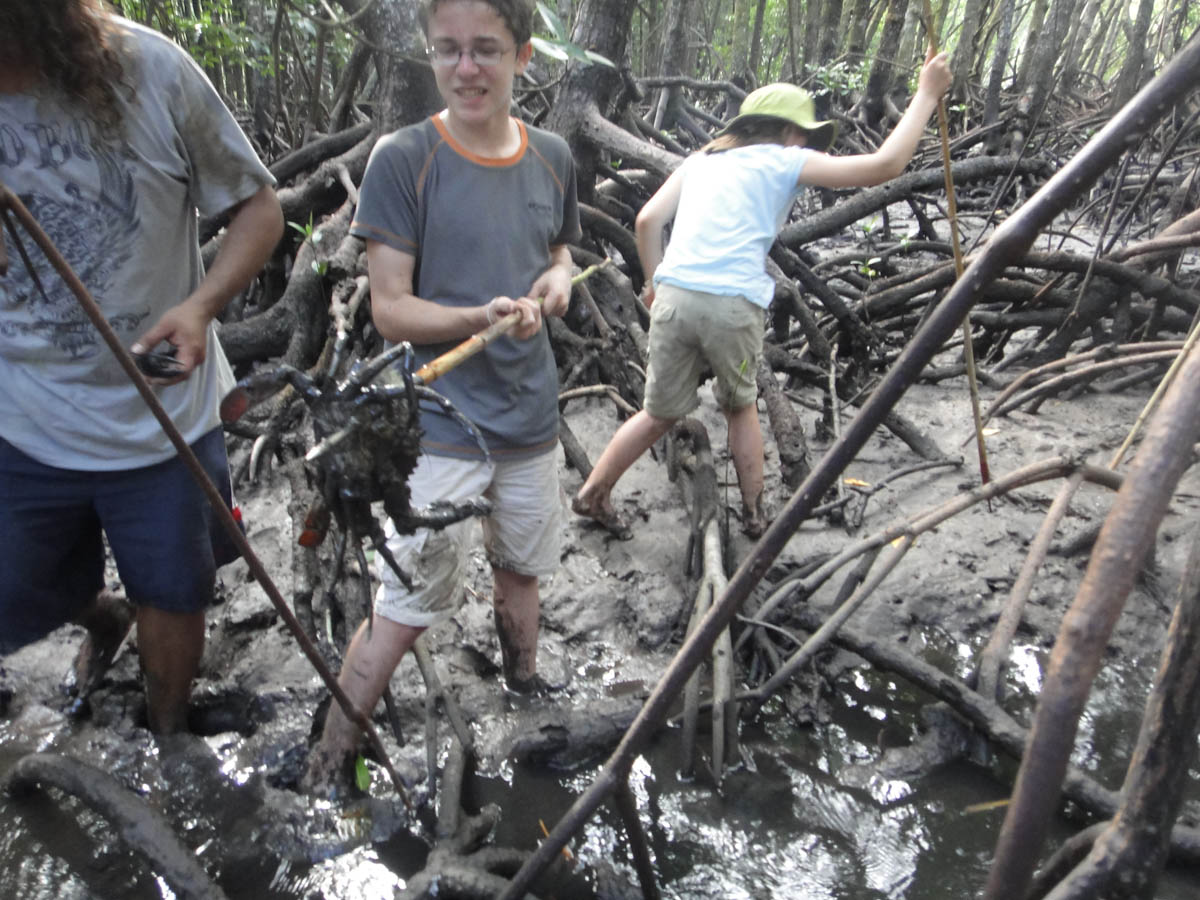
Eventually we found the first big mud crab. The thing was evil. It popped out of its hole and snapped its pincers and claws. Beady red eyes followed your every move, as the crab spun around as smoothly as a turret, never letting you out of its sight. If you lowered the end of your spear within its reach, it would grab it and try to break it; like it could do to your finger.
Link said, “Oh! Look, he’s mating. You see? Underneath him is the female, hooked upside down.”
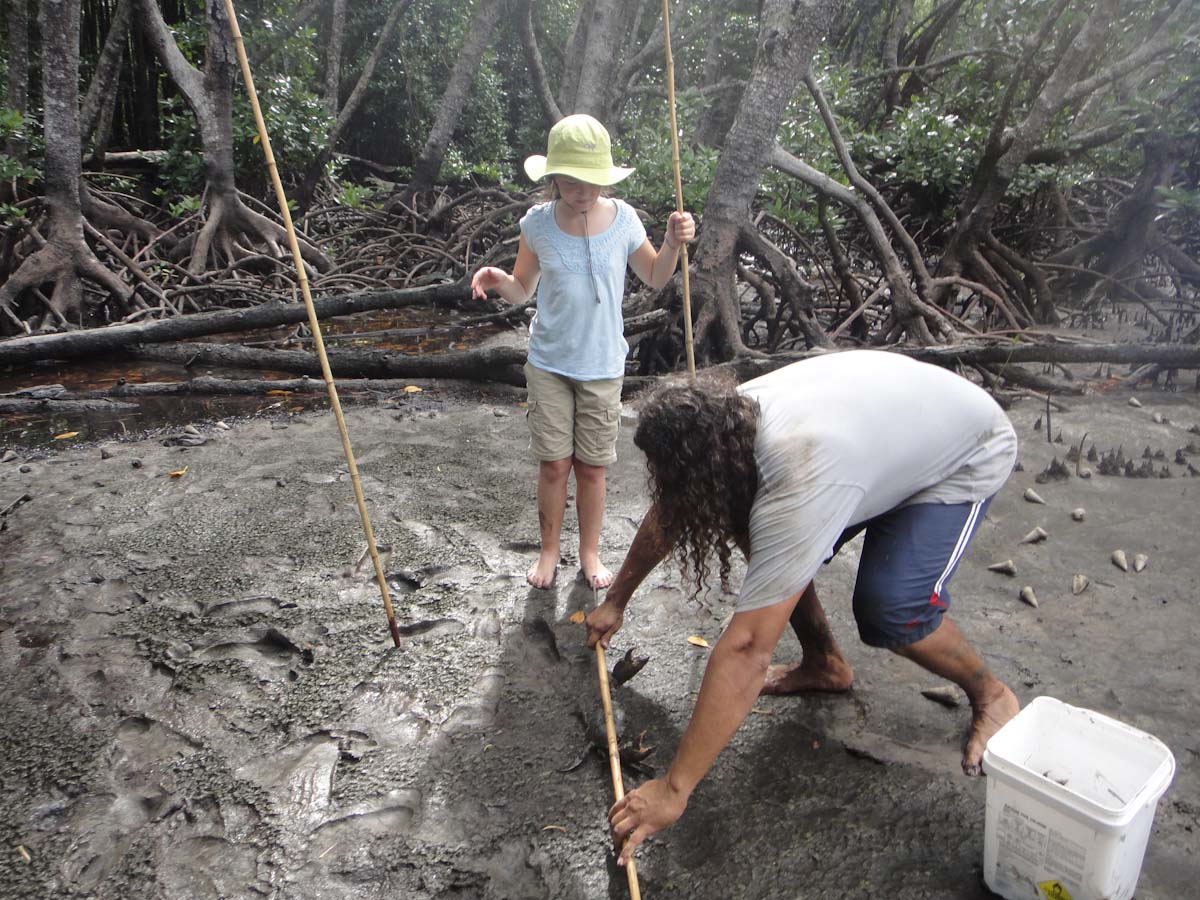
We distracted the crab while Link went around to the back, then he GRABBED THE CRAB! Apparently all you have to do is grab the back two pairs of legs or something and the crab is helpless. Link put him down and held him to the ground with the Atl-Atl, before backing up quickly. The crab scurried back to its hole and plopped back onto its female. GRUESOME FACT: Females are dragged in to the males’ holes and forced to reproduce, therefore many crabs are criminals.
We left the crabby couple alone; it felt wrong to take the male (you’re supposed to leave the female because she could have fertilized eggs). Then we learned the gruesome fact. Taking the male didn’t seem as bad after that, in fact, Link was probably only leaving it because he thought we would think he was cruel if he took the male.
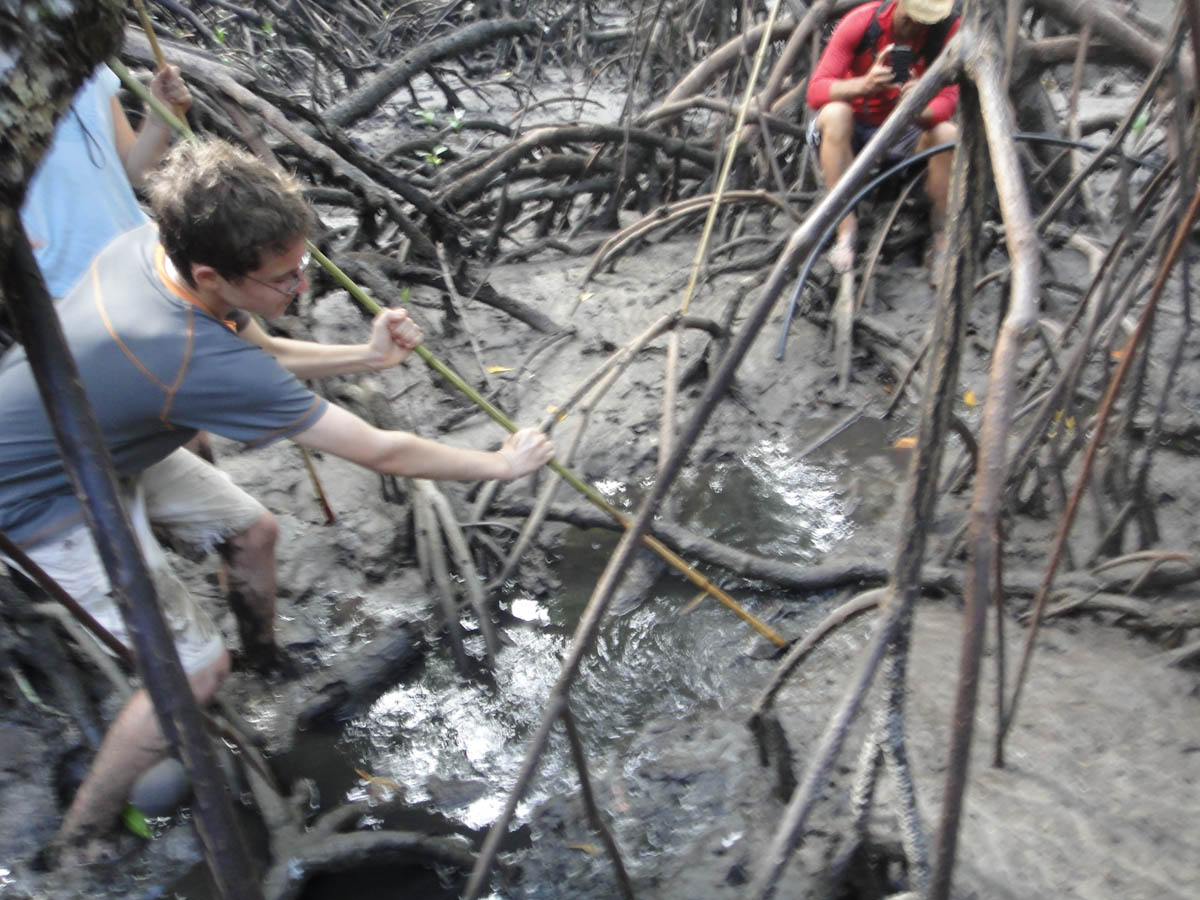
On the outskirts of the mangrove forest, Link stopped by one of the frequented holes. A place males competed over to see who was the alpha, top dog, the big cheese, the godfather, the boss, the dominant male. For many minutes Link struggled to trick, snag, and pull the beast out of its horizontal hole, trying to hook it with the Atl-Atl. Quite a multi use tool that thing is. When asked why we couldn’t just stab it from above, Link replied that then the crab would be stuck underneath the ground, with no way to get it out. Sadly we had to give up, even Link with an entire arm underground and shins in mud and shoulders braced against trees couldn’t get this clever crabby . Link said we would try again on our way back. Still, no wonder these crabs are worth $100 a kg., which is approximately $100 per crab.
Eventually we reached the depths of the mangrove forest, the place where everything lives. Small crabs darted this way and that. Eyes followed wherever we went. Movement caught your eye, and you would see something crawling away, under a root. Creepy. We hunted for more crabs and found another. My mom also accidently stabbed a tiny crab. As she apologized to “Mr. Crab”, Link said not to worry, you could just toss him back and he wasn’t hurt, “crabs have no pain receptors”.
I found a mussel.
I found the secret snail breeding ground. Home to hundreds possibly thousands of snails.
I saw small, black and red crabs, and small, extremely purple crabs.
Suddenly Link called for me. He had found another pair of crabs. (All the crabs we had found today were mating pairs.) I positioned myself above them, and prepared to utilize the third method of getting a crab: spearing it.
With the instruction of Link, I felt with my tip until it grated against something that felt like cement. I raised, and stabbed. A claw flew off as my spear severed it from the body. The crab scampered away from my spear. The female took the opportunity to make a run for it. I searched and stabbed, searched and stabbed, over and over. Eventually, Link pushed the crab on to the sand/mud/dirt and I drove my spear through its body once and for all. I was glad they couldn’t feel pain.
The shell is surprisingly hard; it actually took some effort to spear in to the meat. The female had the opposite shell though. It was molting season and she was growing a new shell. Her shell was not yet fully developed and hardened, and was soft like thin inflated pita bread with the texture of very fine sandpaper and with a crab inside.
Plopping the crab into our bucket of crabs, we continued.
GONE FISHING
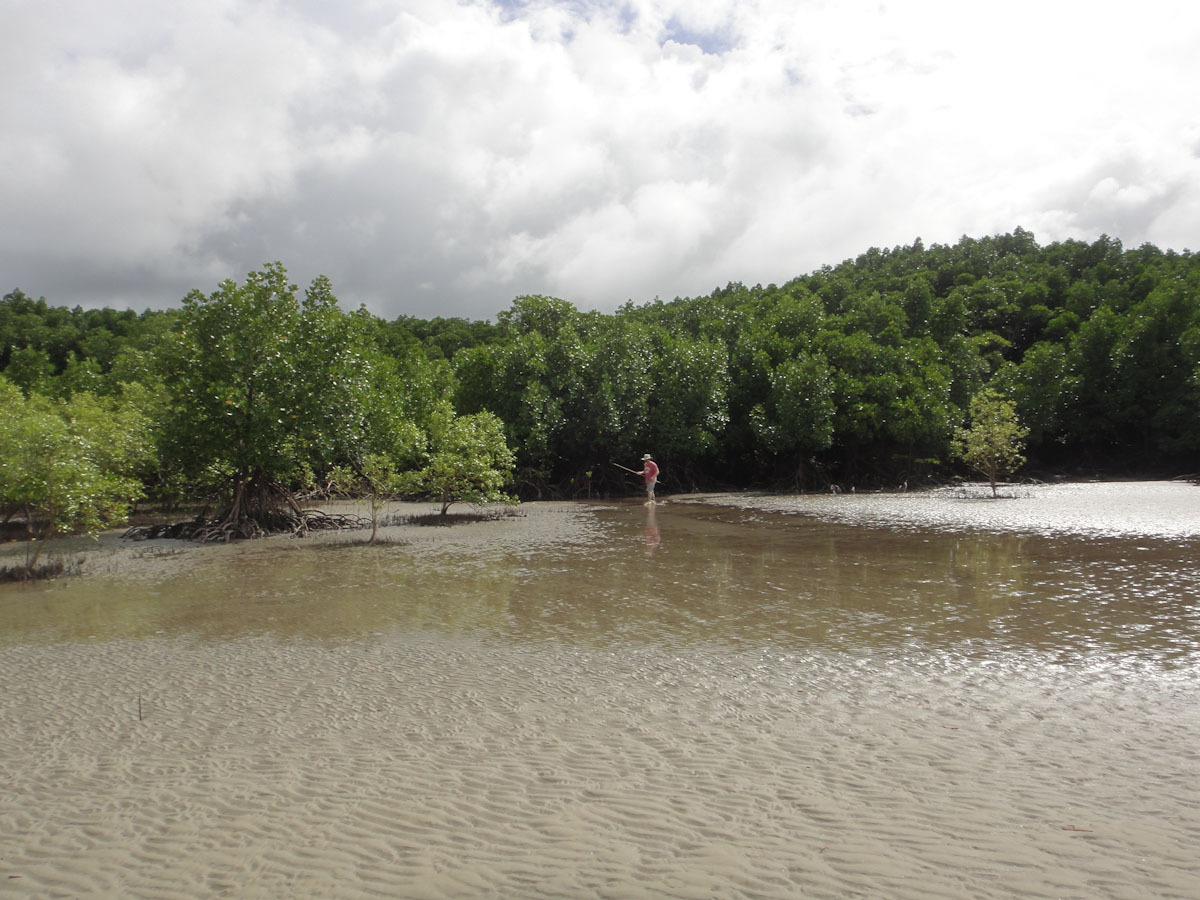
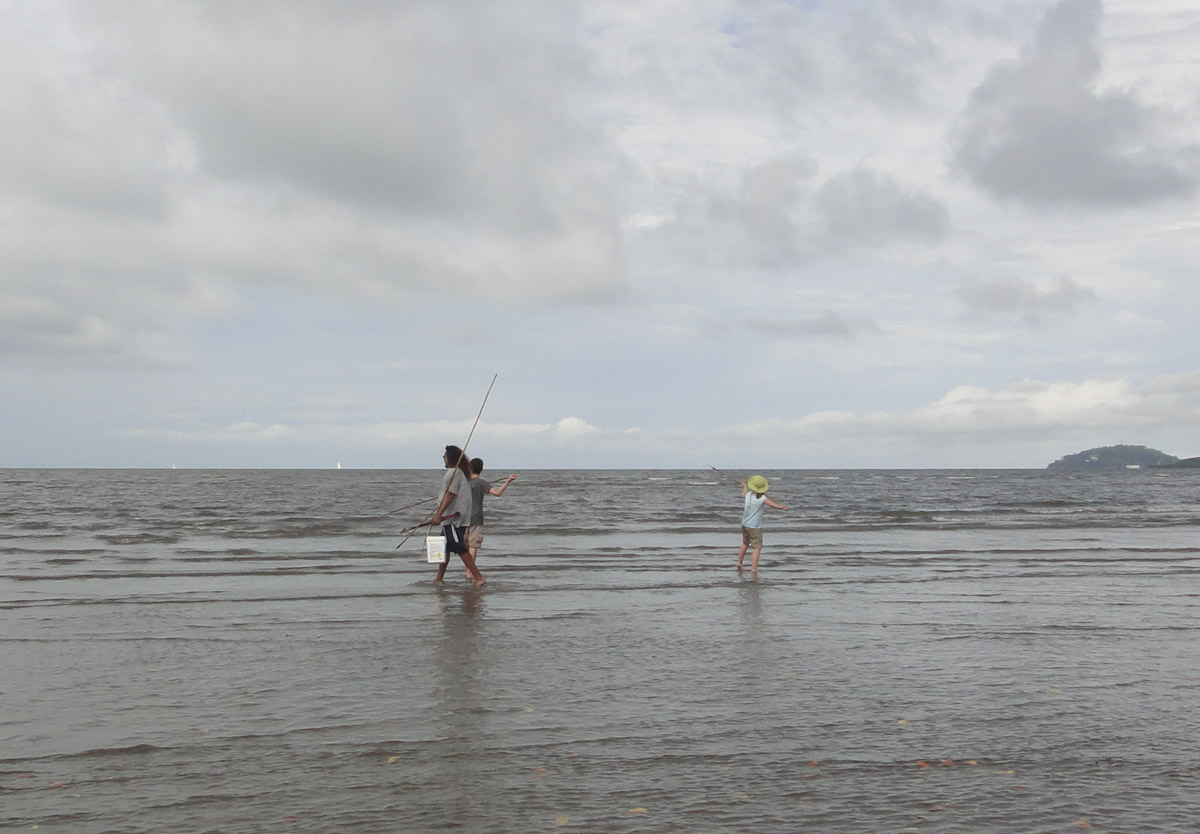
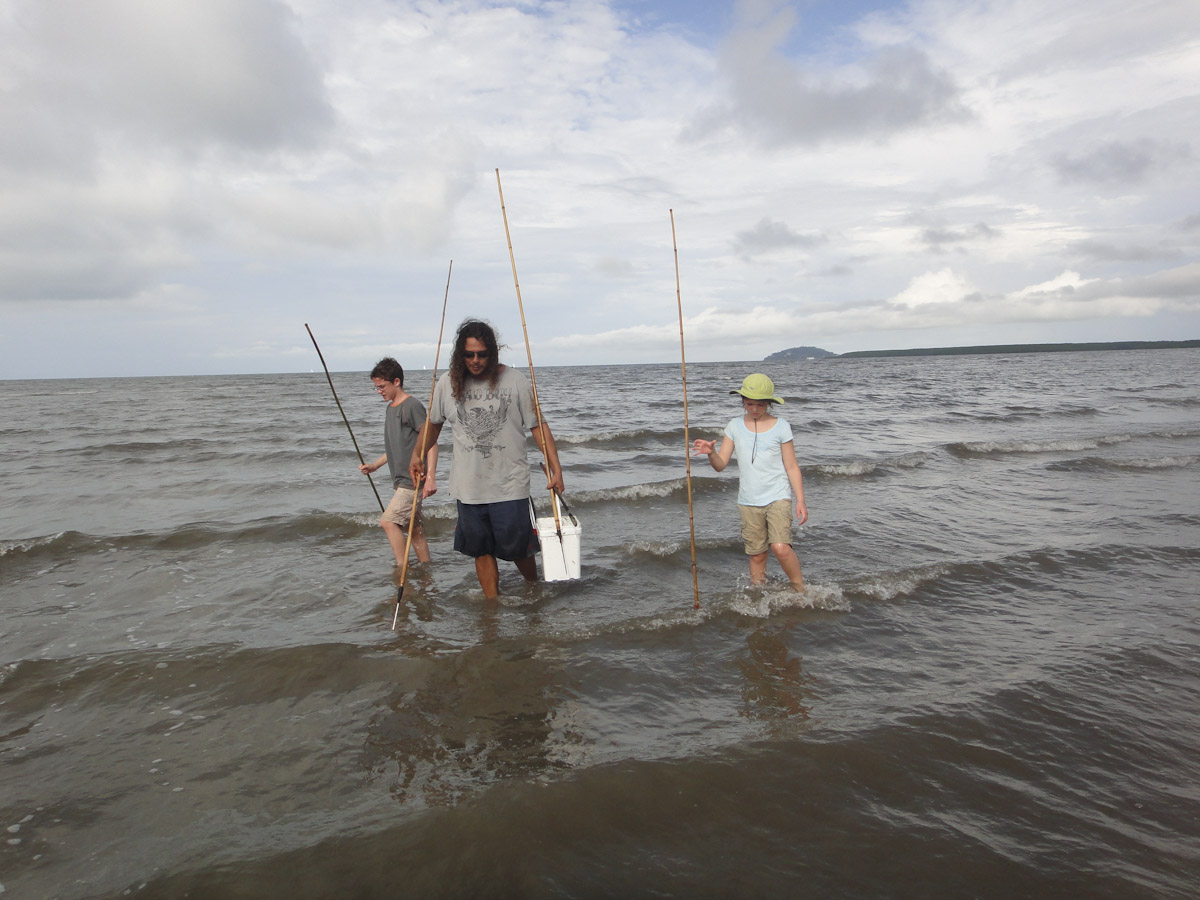
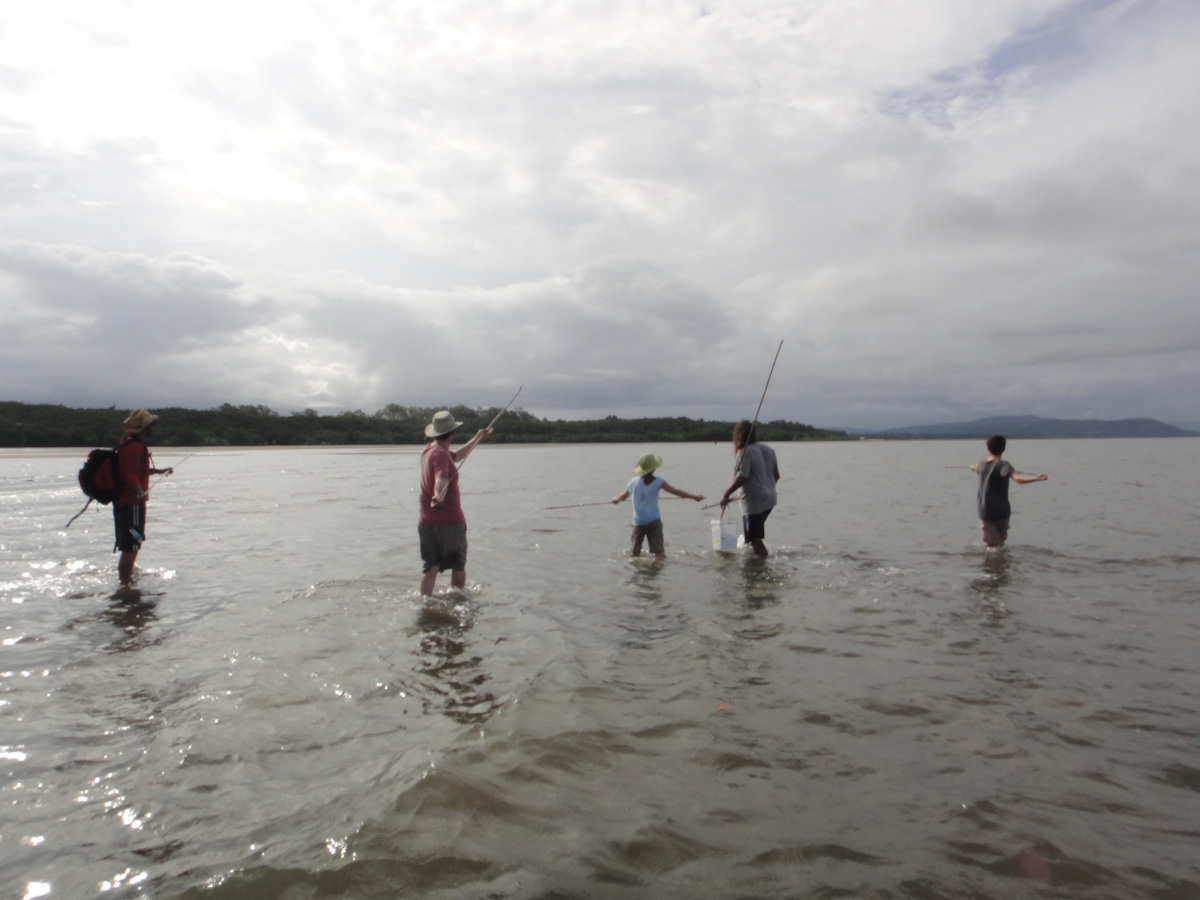
It was finally time to put those throwing skills to good use. We trekked over the mudflats to the water’s edge. The tide was coming in. Link said to look for bubble, motion, and ripples heading in the opposite direction of the waves. He also said that if we saw black spots on the ocean floor, to avoid stepping on them and try stabbing them with our spear, hard. They could be crabs, but these ones would scamper away if we missed or didn’t skewer them on the first go.
“BARNEY LOOK! MANTA RAY! THERE!” Barney and Link hurled their spears at some lump on a wave, and we followed suit. Fail. We would encounter several fish and one, maybe two more manta rays. We would catch none. Earlier on I had asked Link what was the most spectacular catch he had ever had. He said a barracuda-like fish the size of Katherine.
On the way back, we would continue to toss our spears ahead of us, practicing with what little time we had left. We didn’t go back for that tricky crab because we already had enough. Barney told us that when they actually go spear fishing for real, they use a wider, three-pronged end for a better chance of hitting the target.
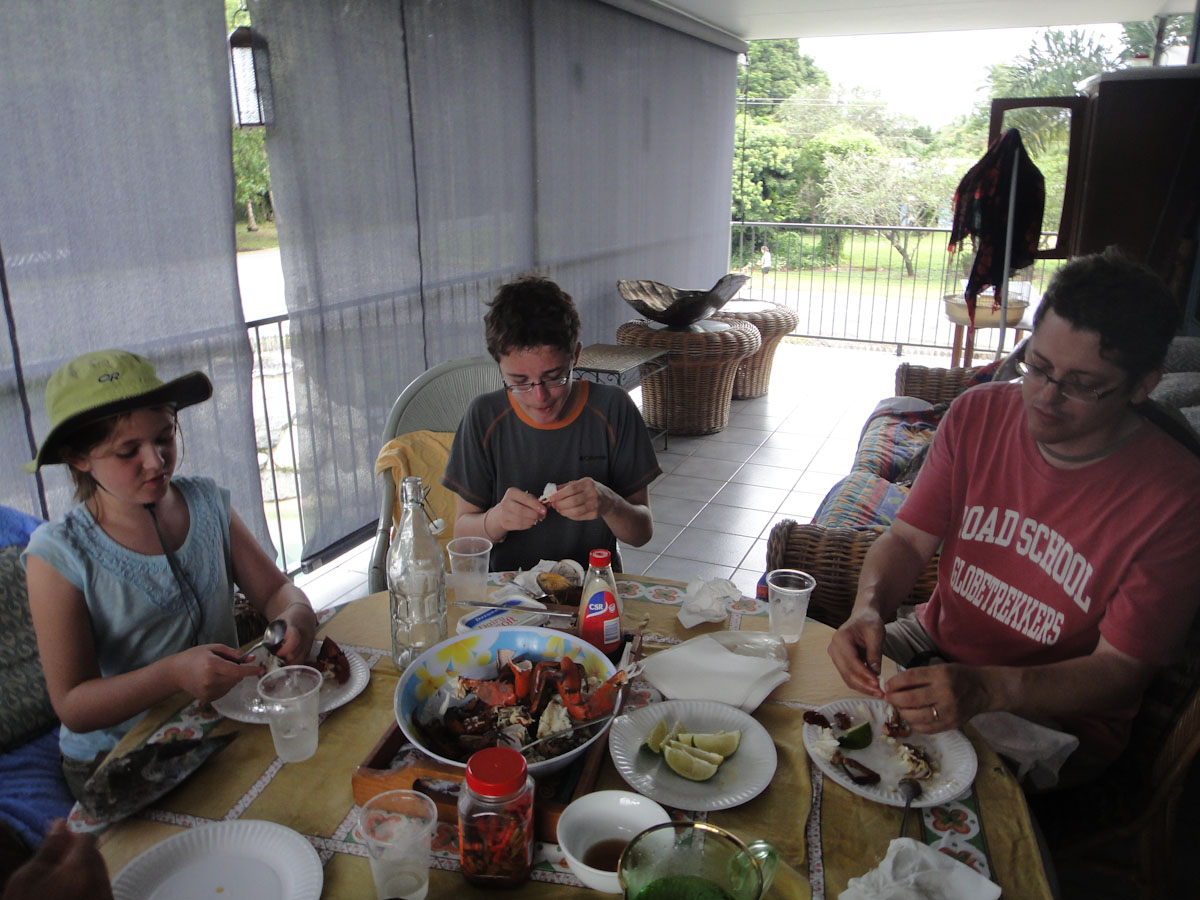
When we got back to the car, we washed our feet and walked across the street to Link’s house. There we talked while eating muffins, thick bread with butter or syrup (or nothing), and the crabs we caught. We also brought a few snails (which were like octopus) and the mussels. We used chili vinegar and lime for seasonings, though the crab hardly needed it.
Link showed us the most amazing thing: if you take a spoon, hold the very end, hold the very end of a bit of crab, and whack the crab with gusto and finesse, the shell cracks and falls away; a much easier method than trying to scoop the meat out at the ends.
It was delicious!
Link also showed us 4-5 gargantuan turtle shells; each being extremely heavy and almost the size of our table. Sometimes his family would bury the whole turtle in an underground oven and then dig it up and eat it; or they could take the bits they wanted and cook them one by one.
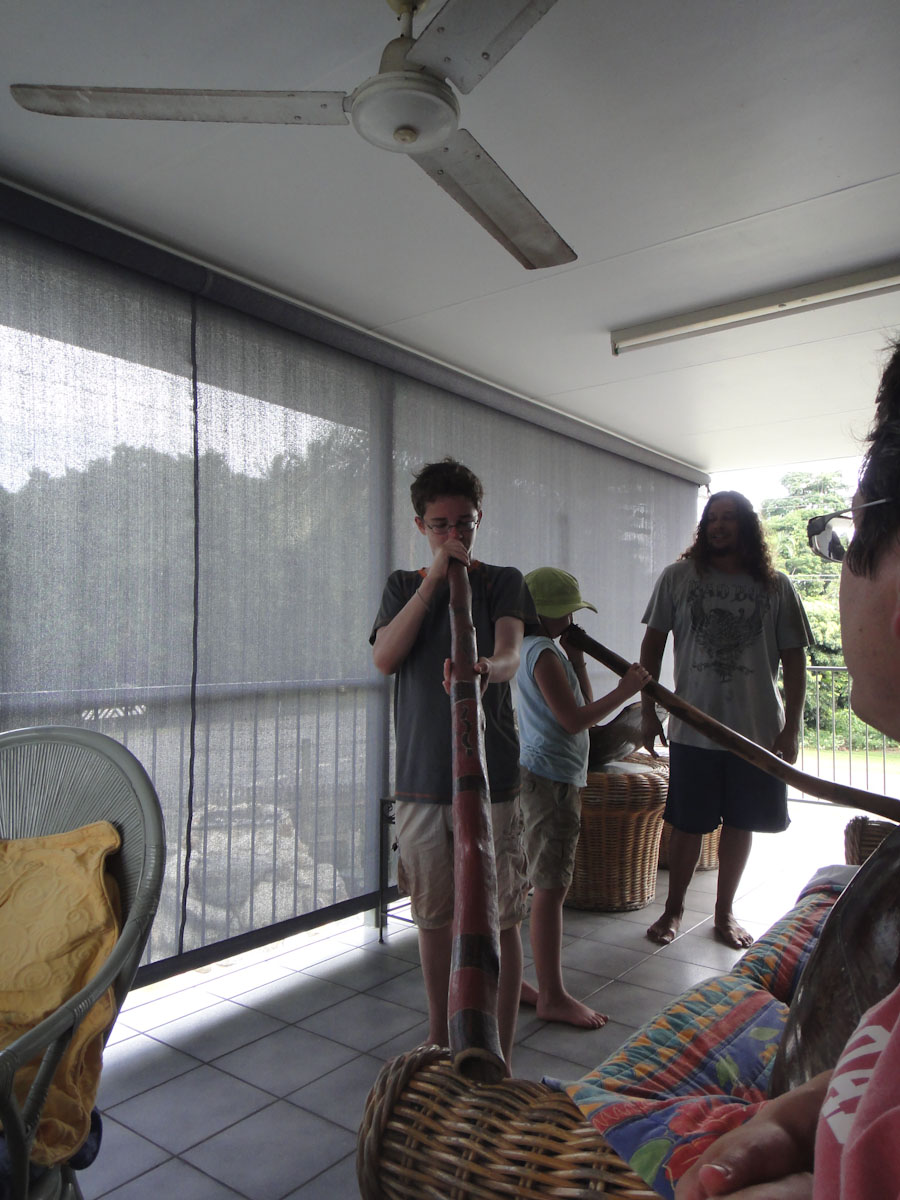
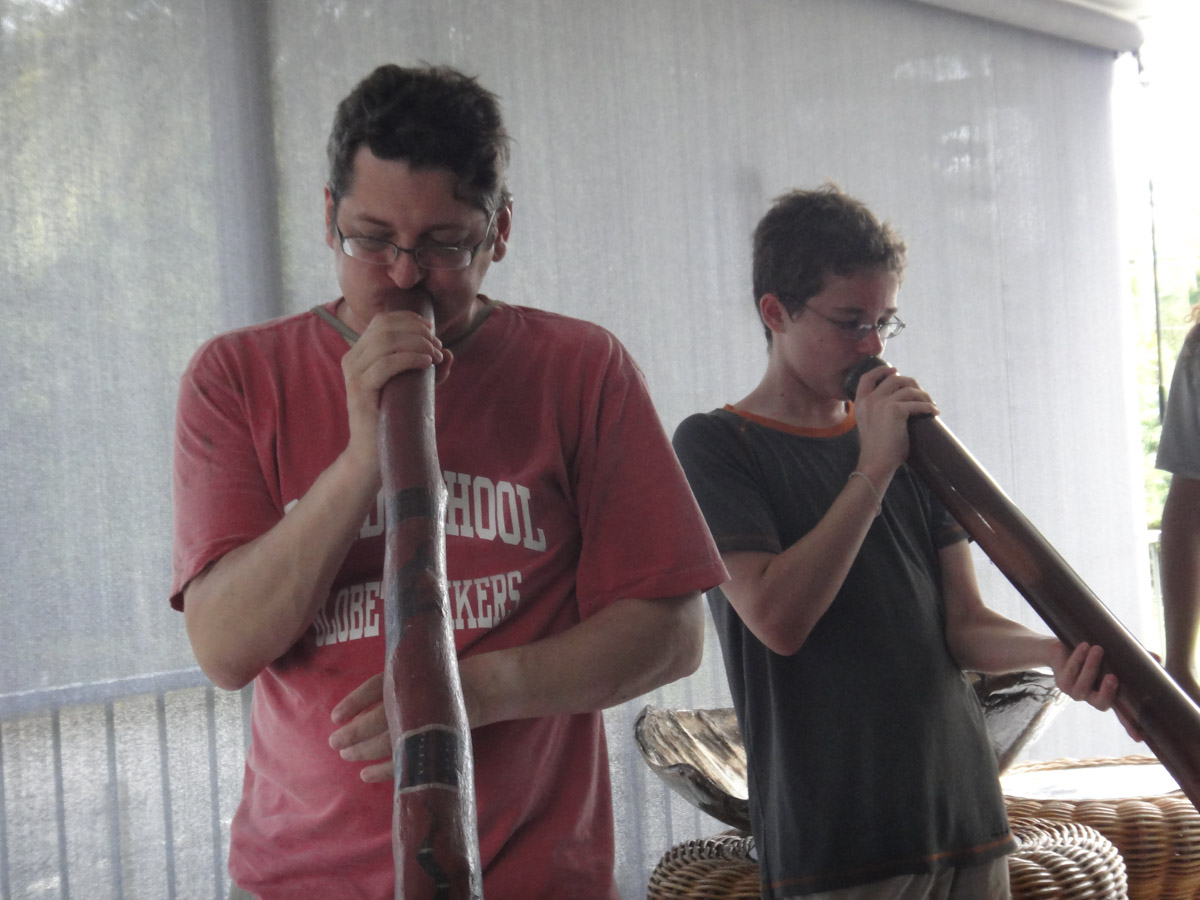
Link then brought out didgeridoos, and showed us how he could circular breathe, and let us try the didgeridoos. We started off with two, but then he brought out a tiny third. We could make blasts of sound, but not a bouncing kangaroo as could he. Before we left, he gave us a tiny pod, painted with beautiful designs. He rubbed it on the ground and told us to touch it. He made our fingers BURN! OW!
He said it was a hot pod, and it could be used to start fires in the wilderness. If we saw pods like these in the wild we could use them as afore mentioned. We were very happy with the gift and Dad said he was going to put it on his shelf.
Then it was time to go. We were seen off by Link, his mom and an almost four year old girl. We waved until the car pulled away and started moving down the road.
The whole thing was an experience I’m sure I want to remember for the rest of my life. Whether the crabs want the same is a very different matter.
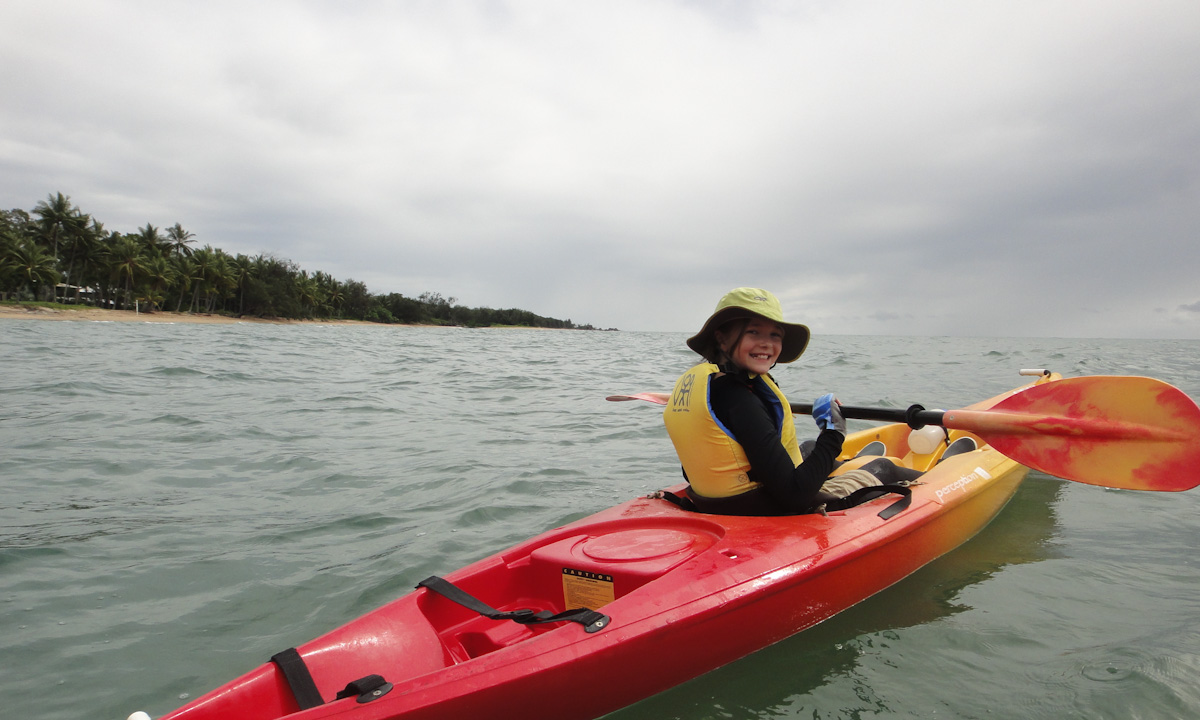
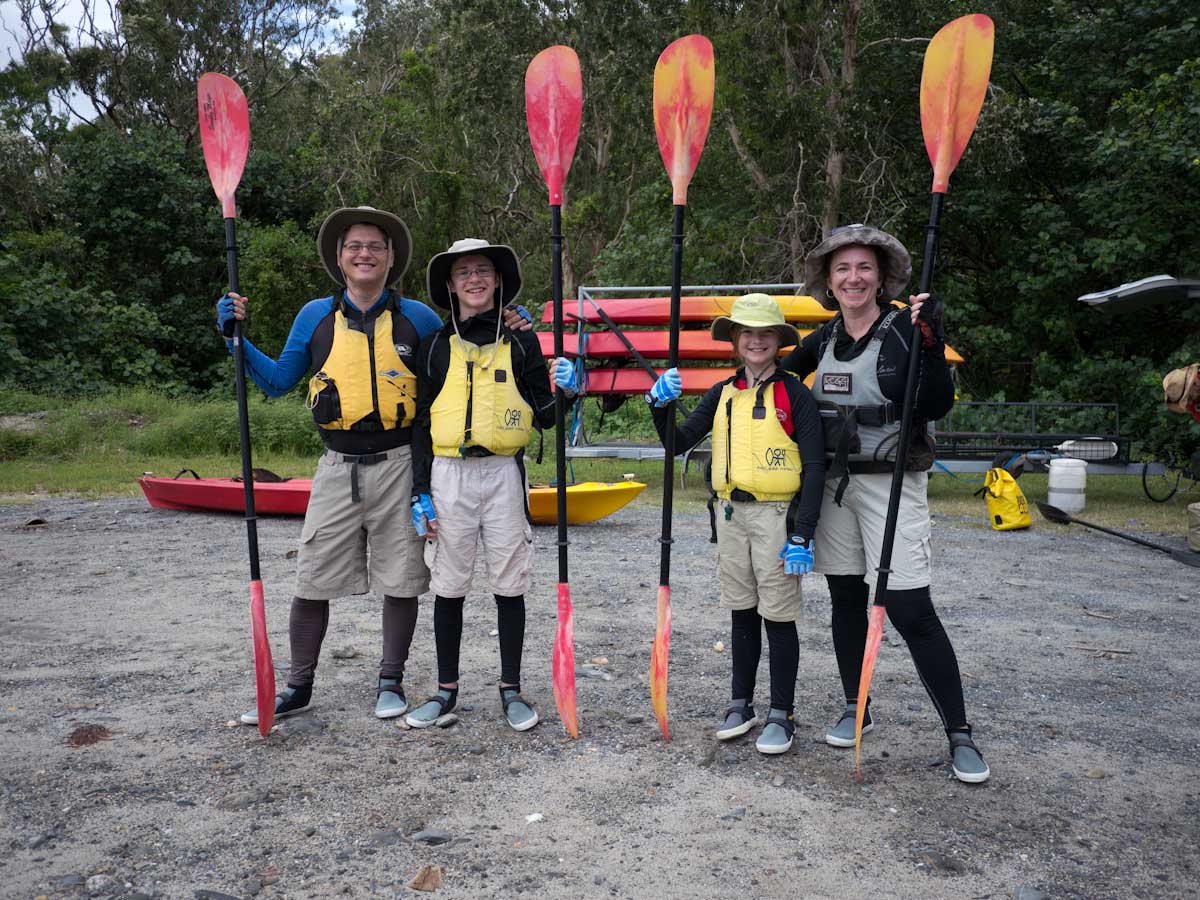
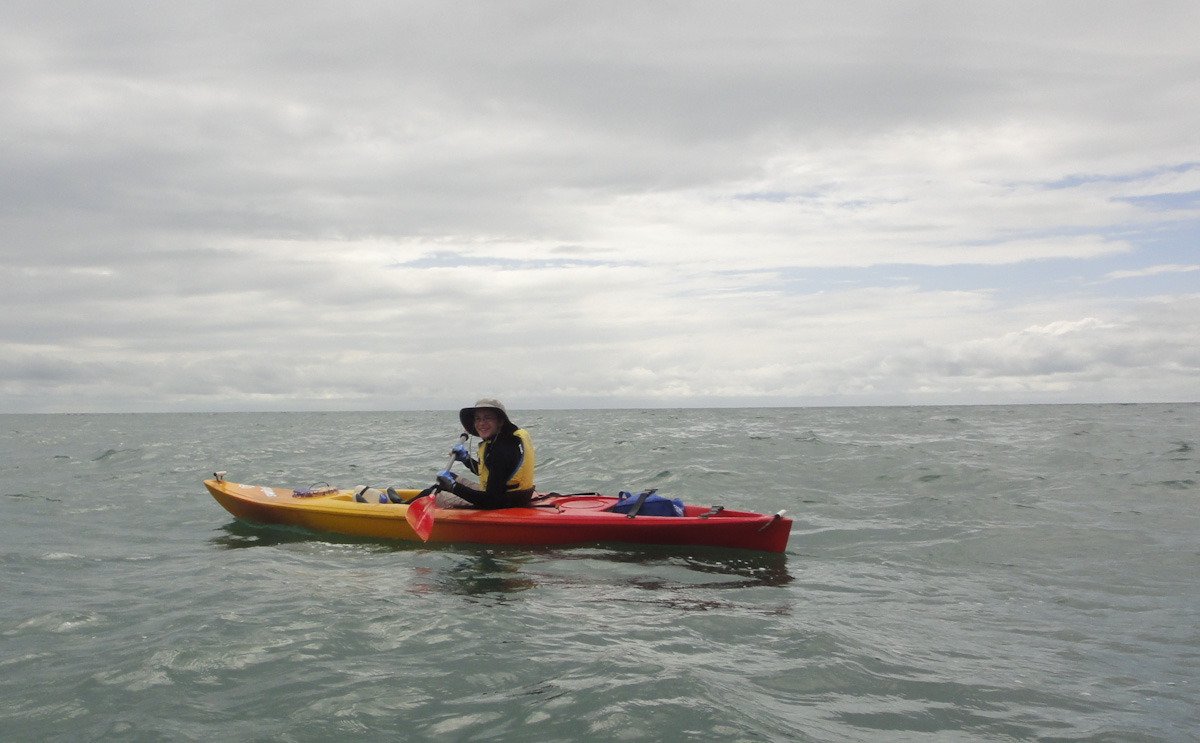
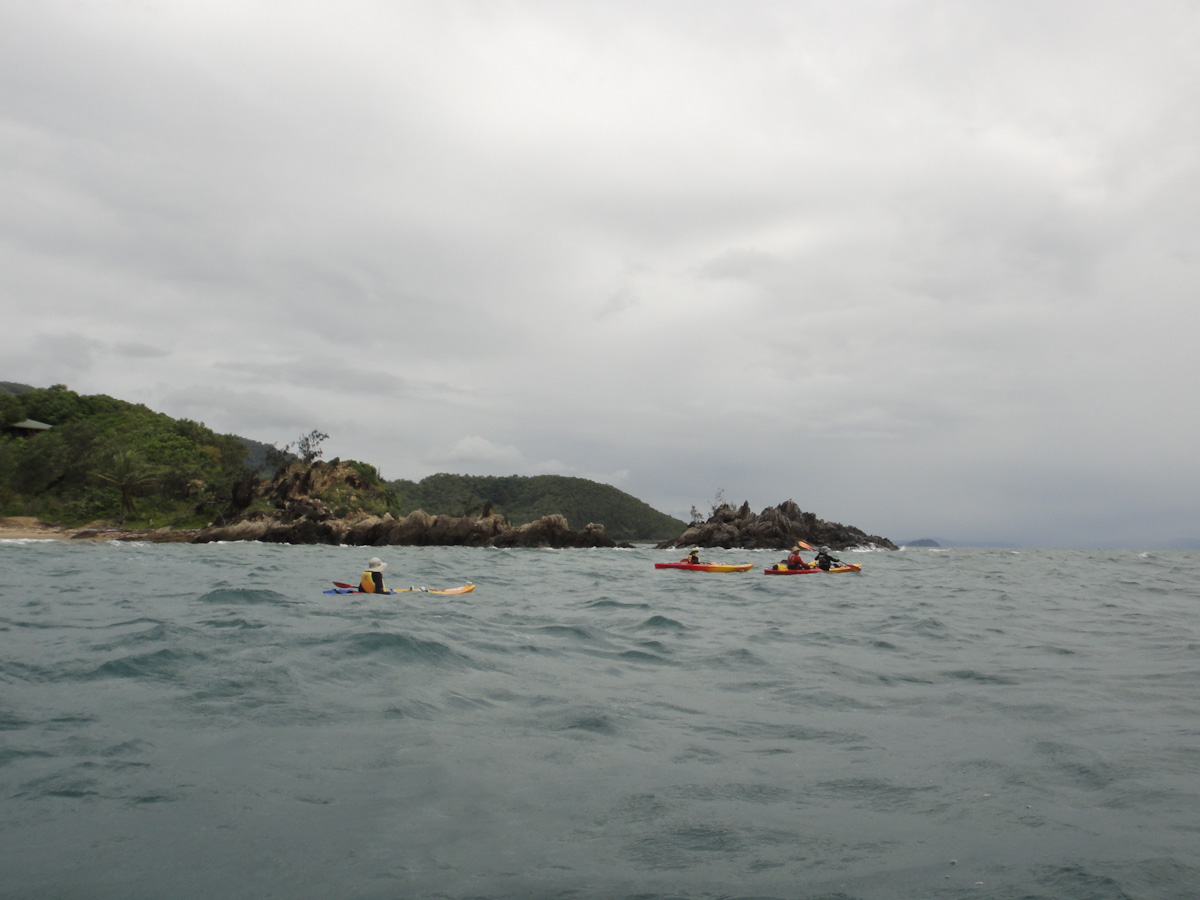
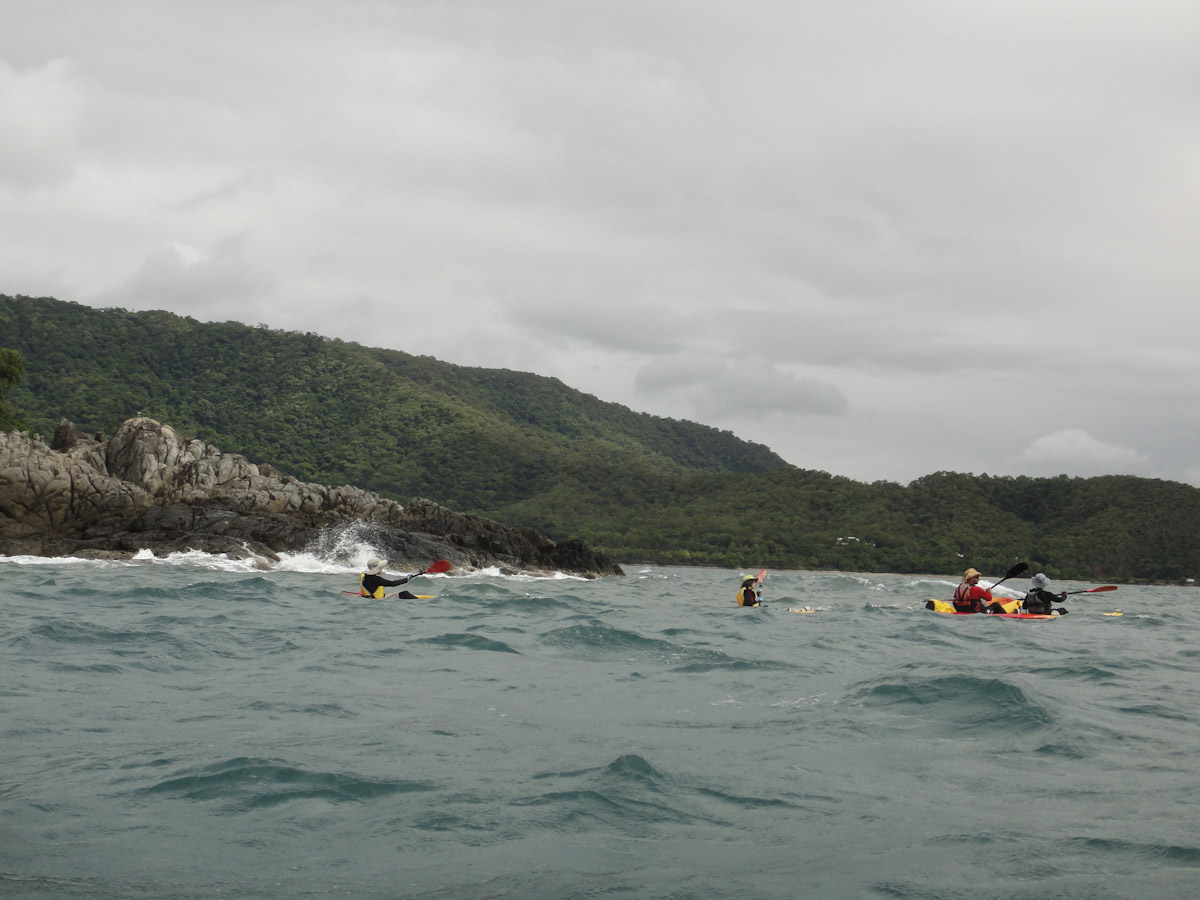
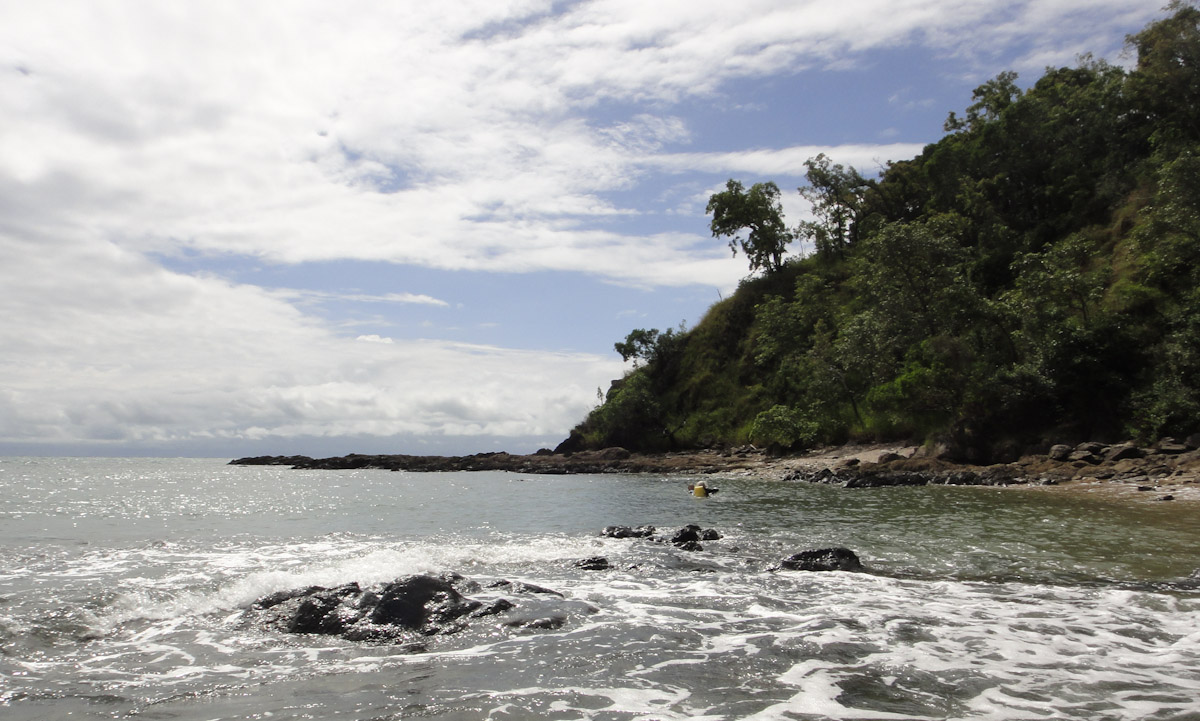
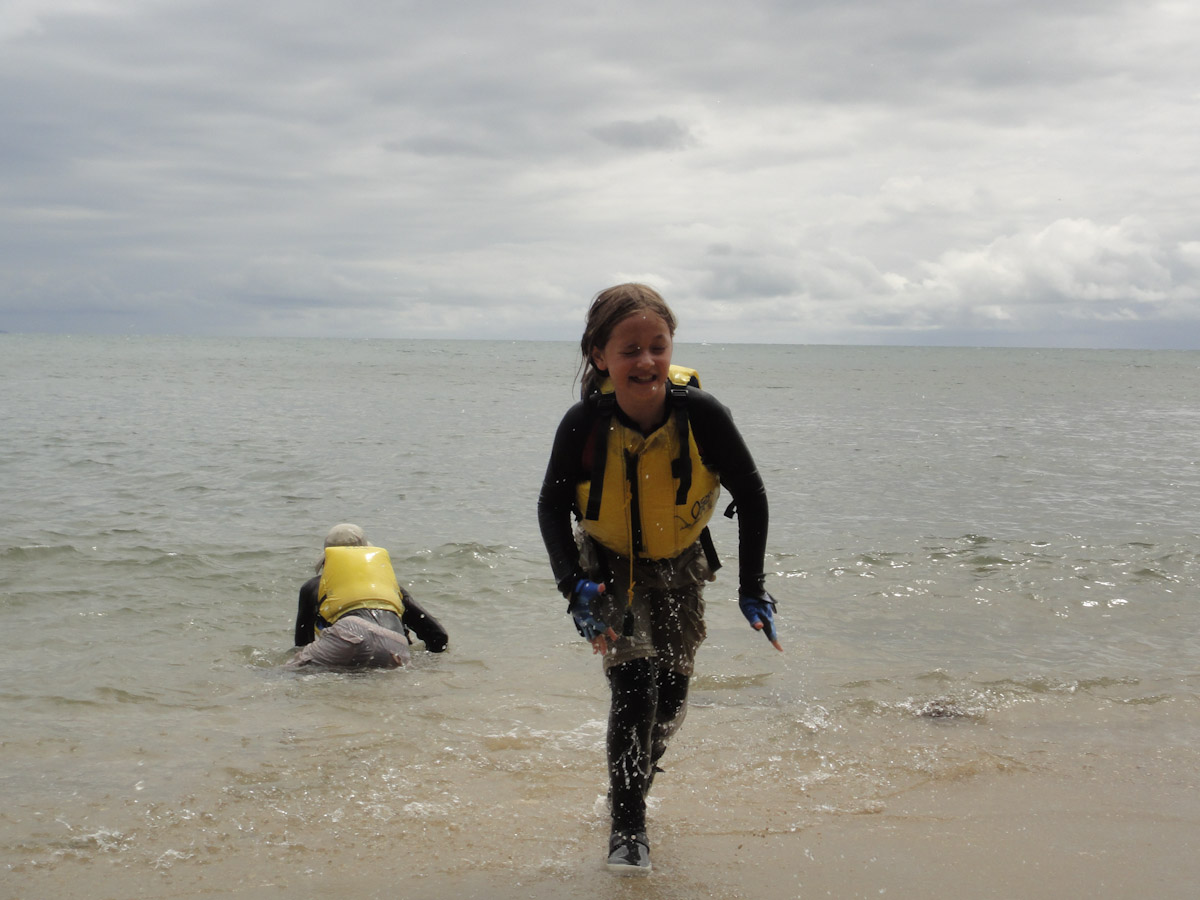
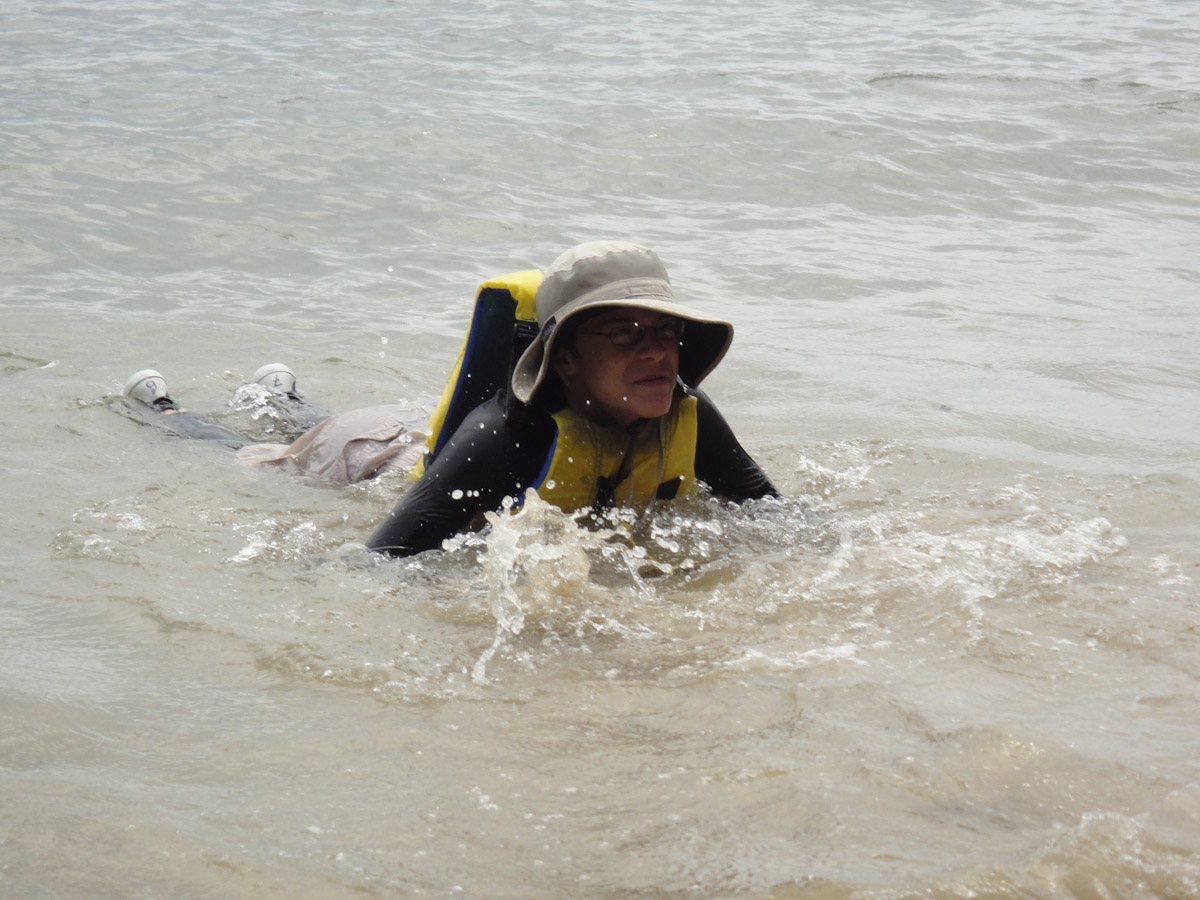
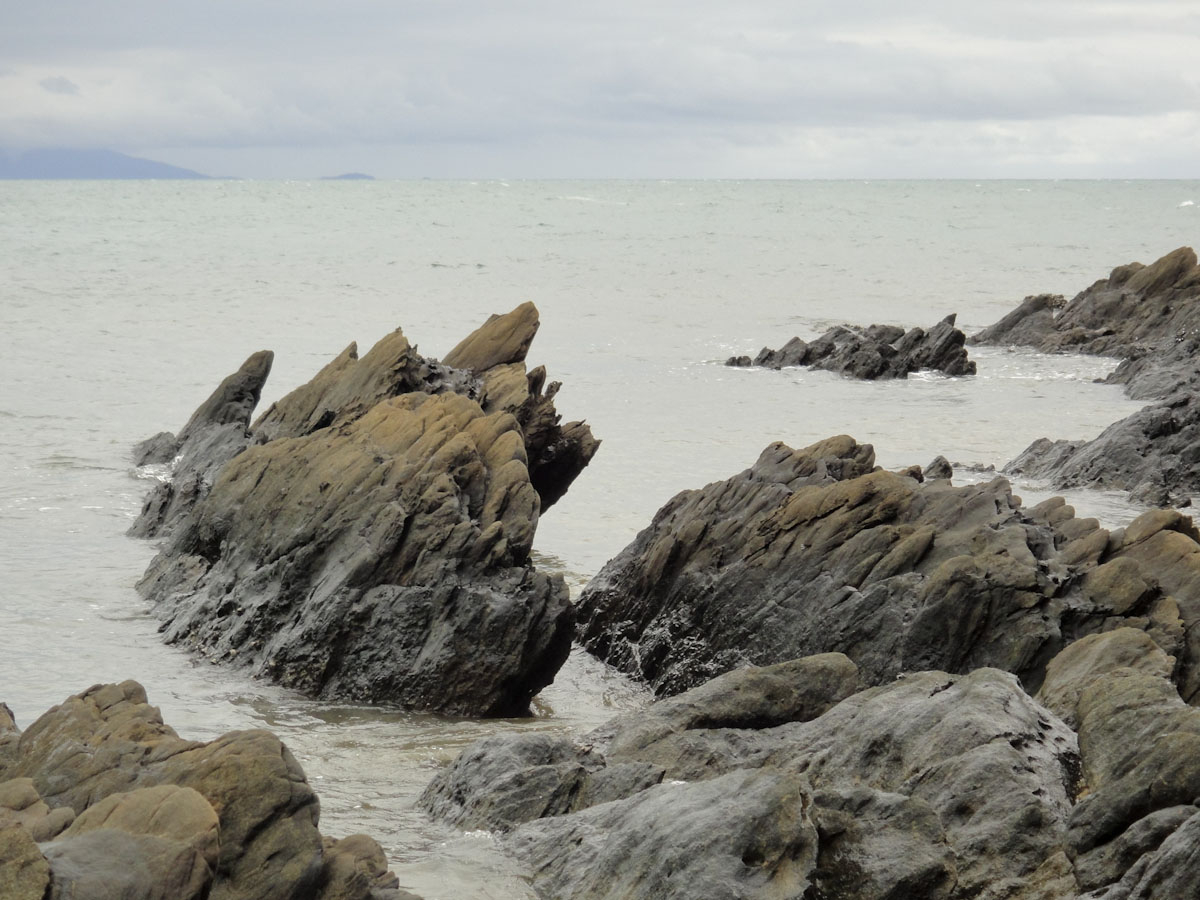
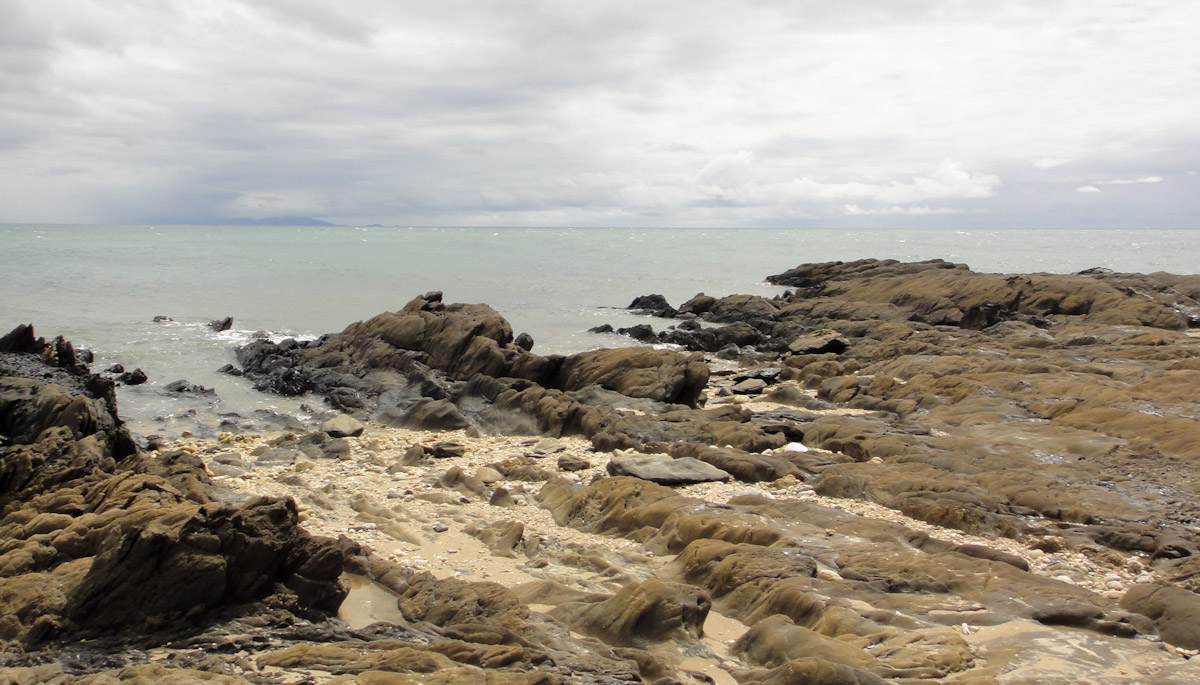
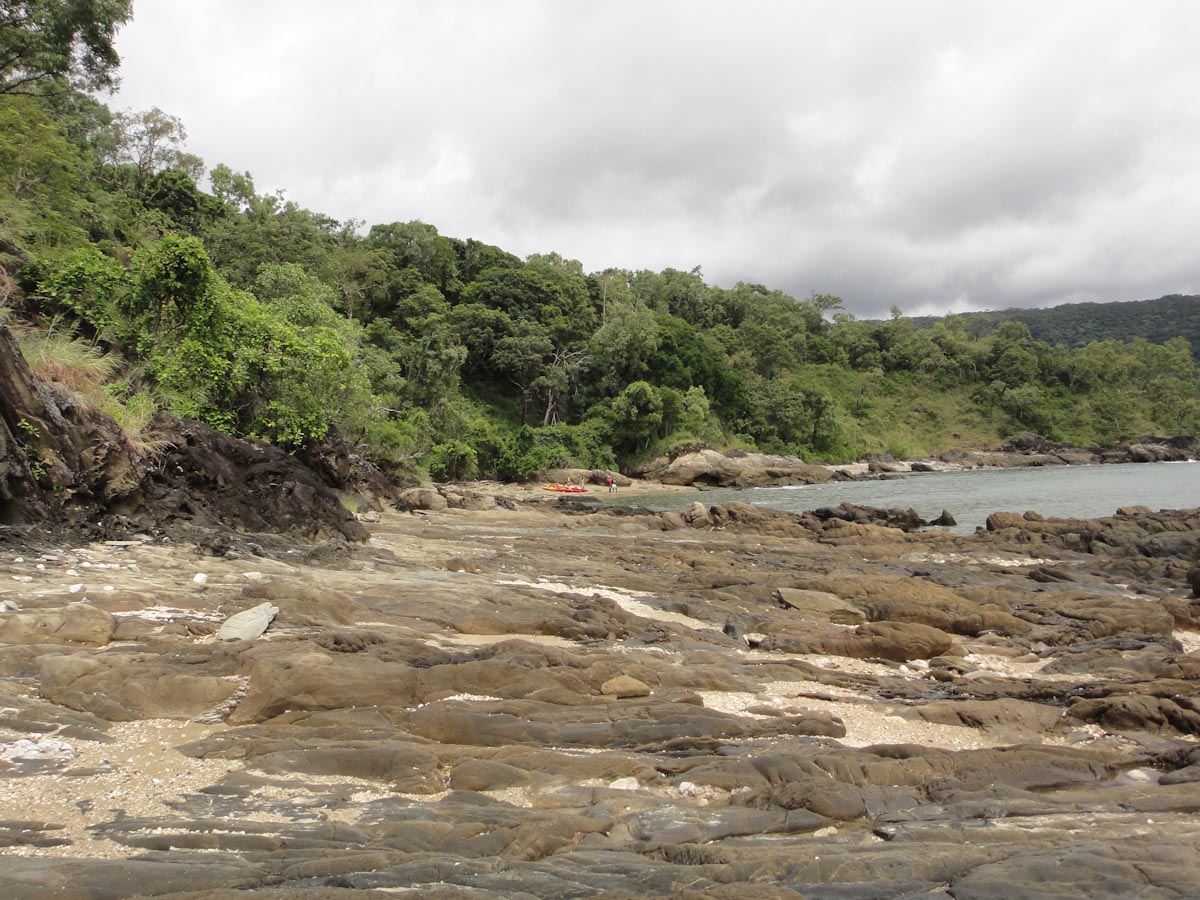
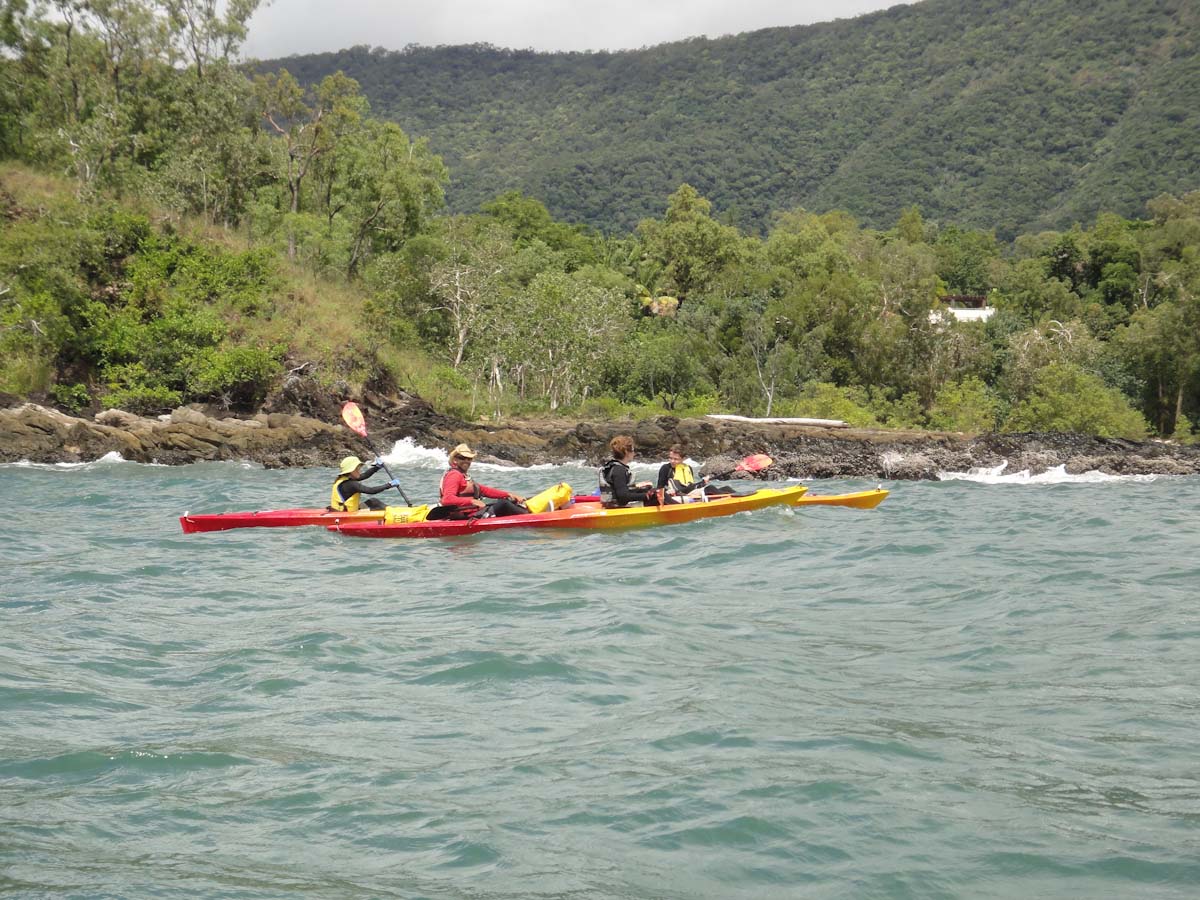
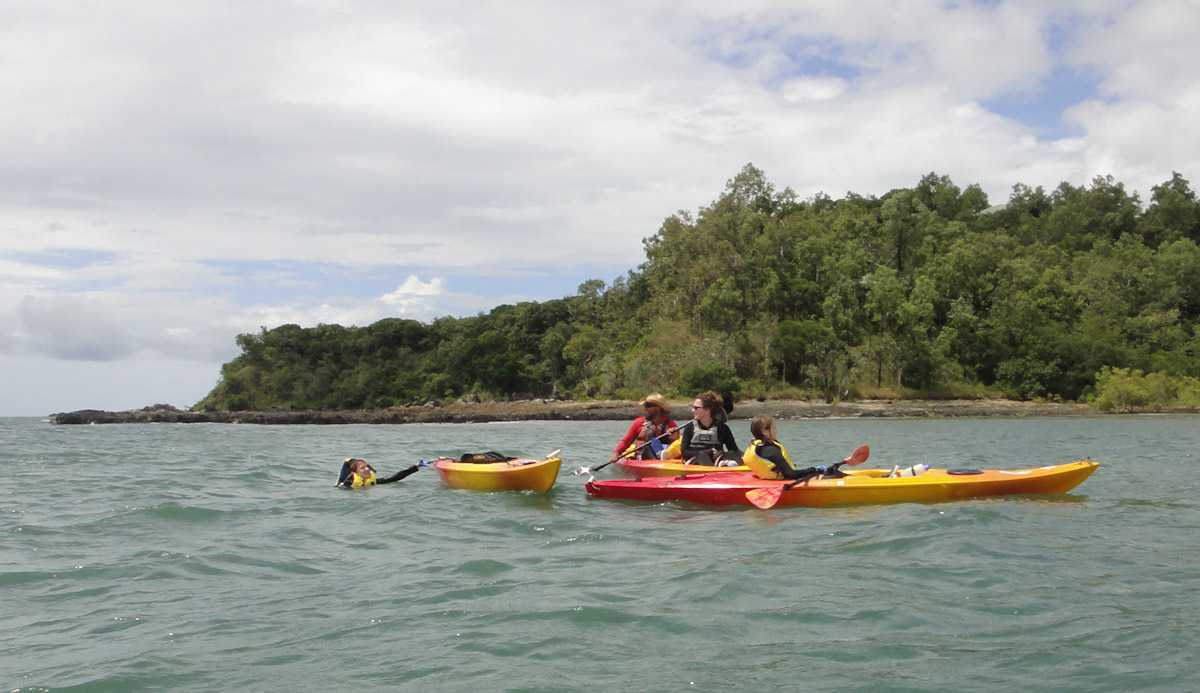
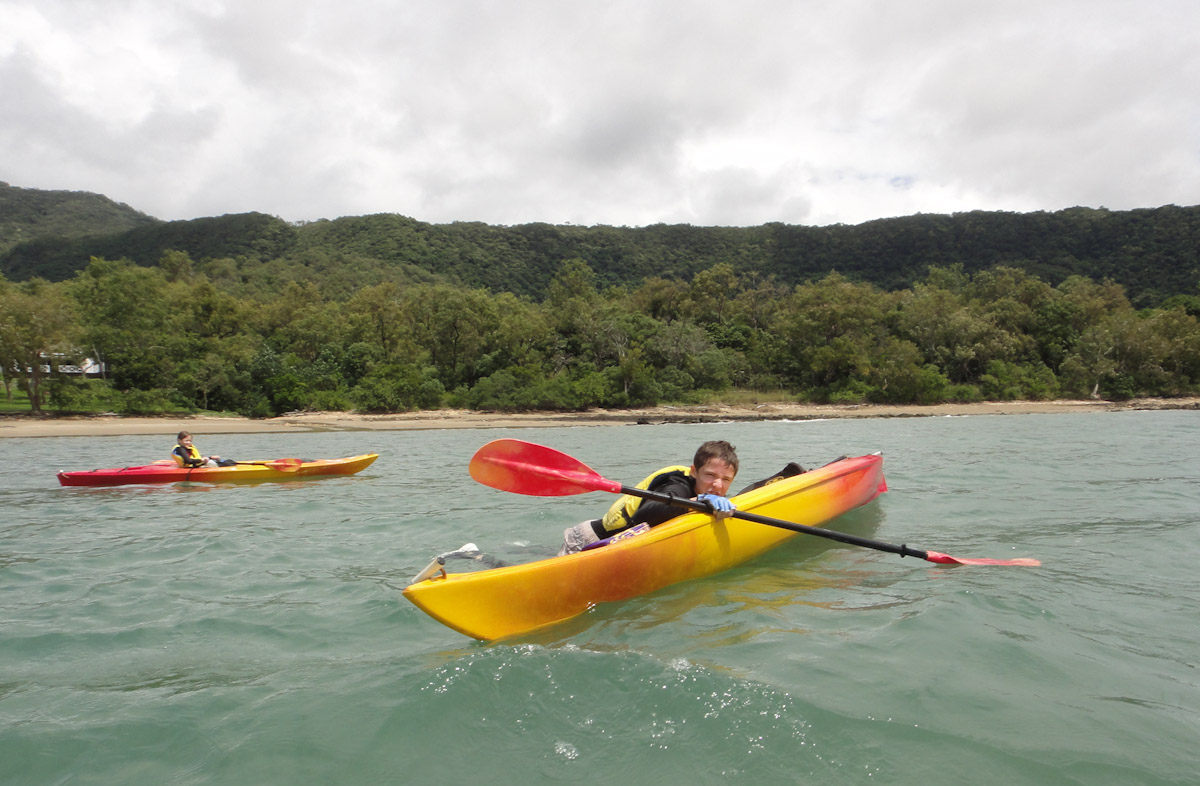
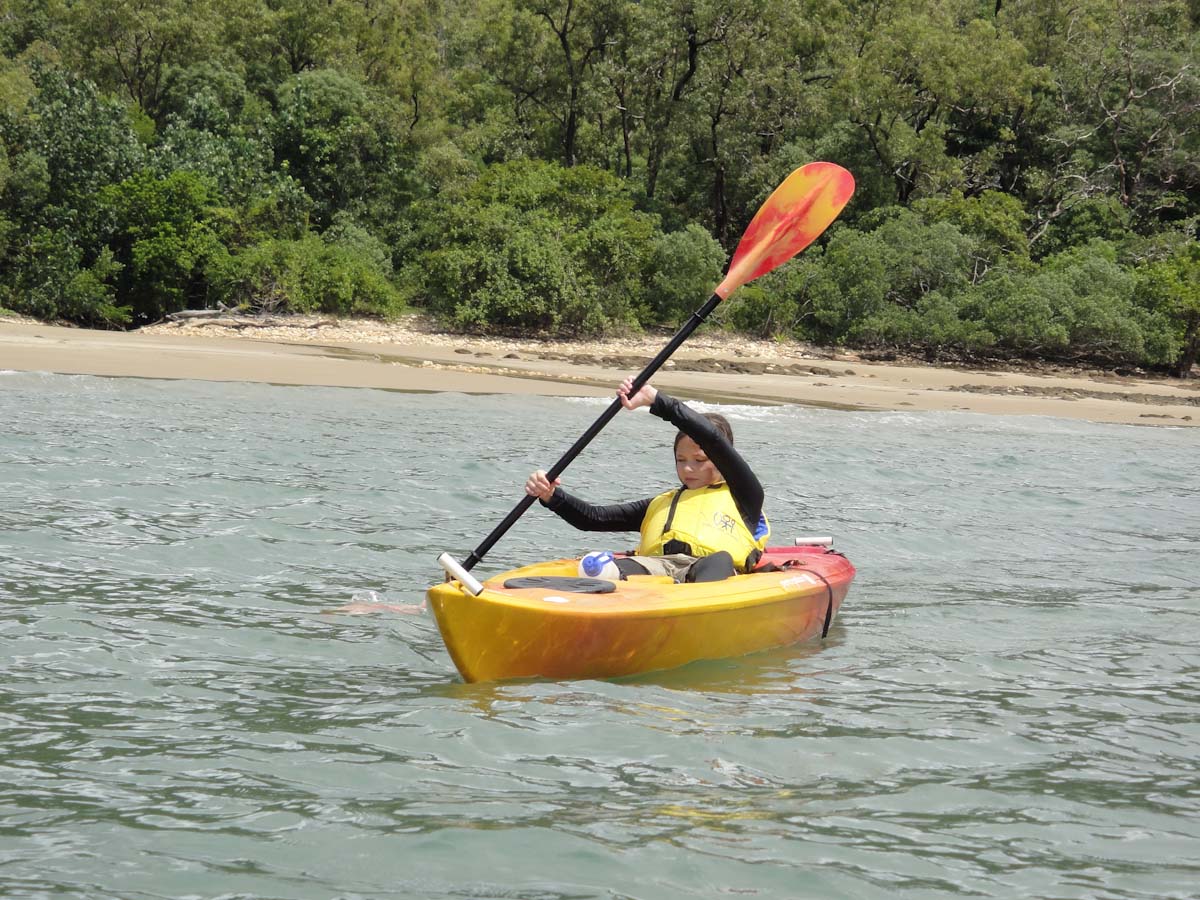
NOTE: the pictures below include the morning’s sea kayaking activity