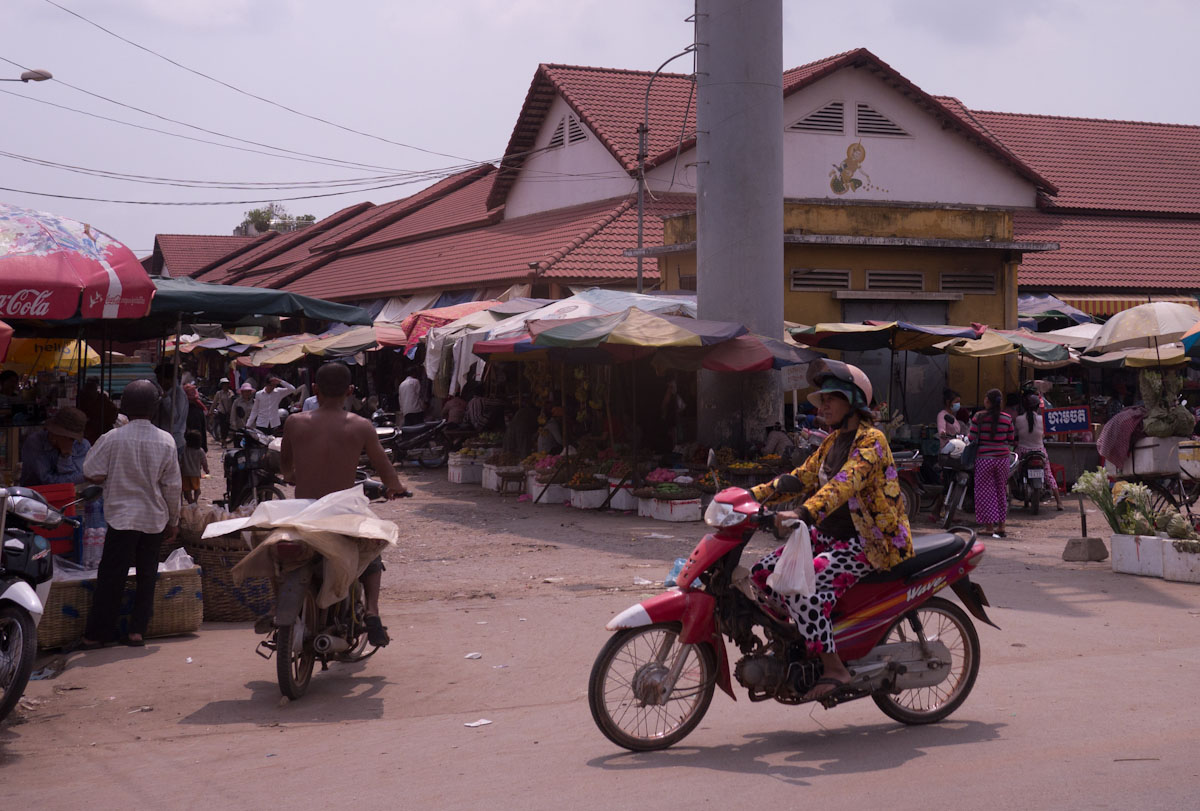
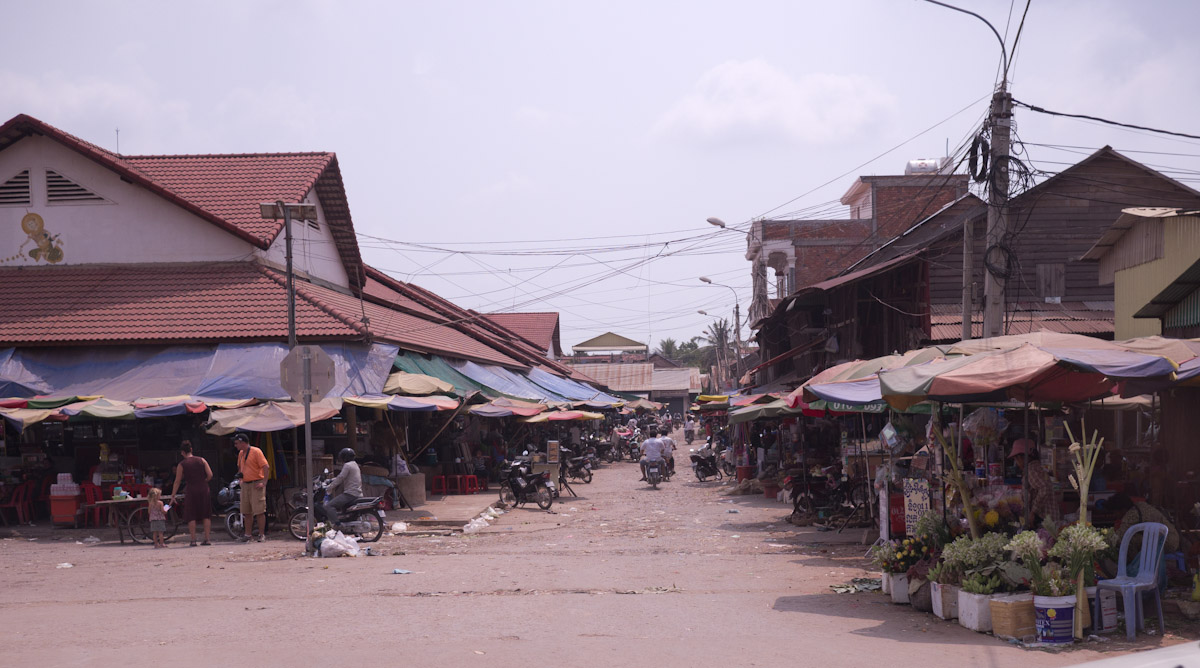
We exit the van and are hit by a wave of aggravating smells and surprisingly dry heat. We smell animal and human sweat, among other indistinguishable odors. We all wrinkle our noses. Then we turn our attention to the people. Women who chew the betel nuts have red teeth, thanks to the red minerals that accumulate on their teeth. At times their teeth look almost black, but the women can’t stop, betel nuts are essentially a drug.
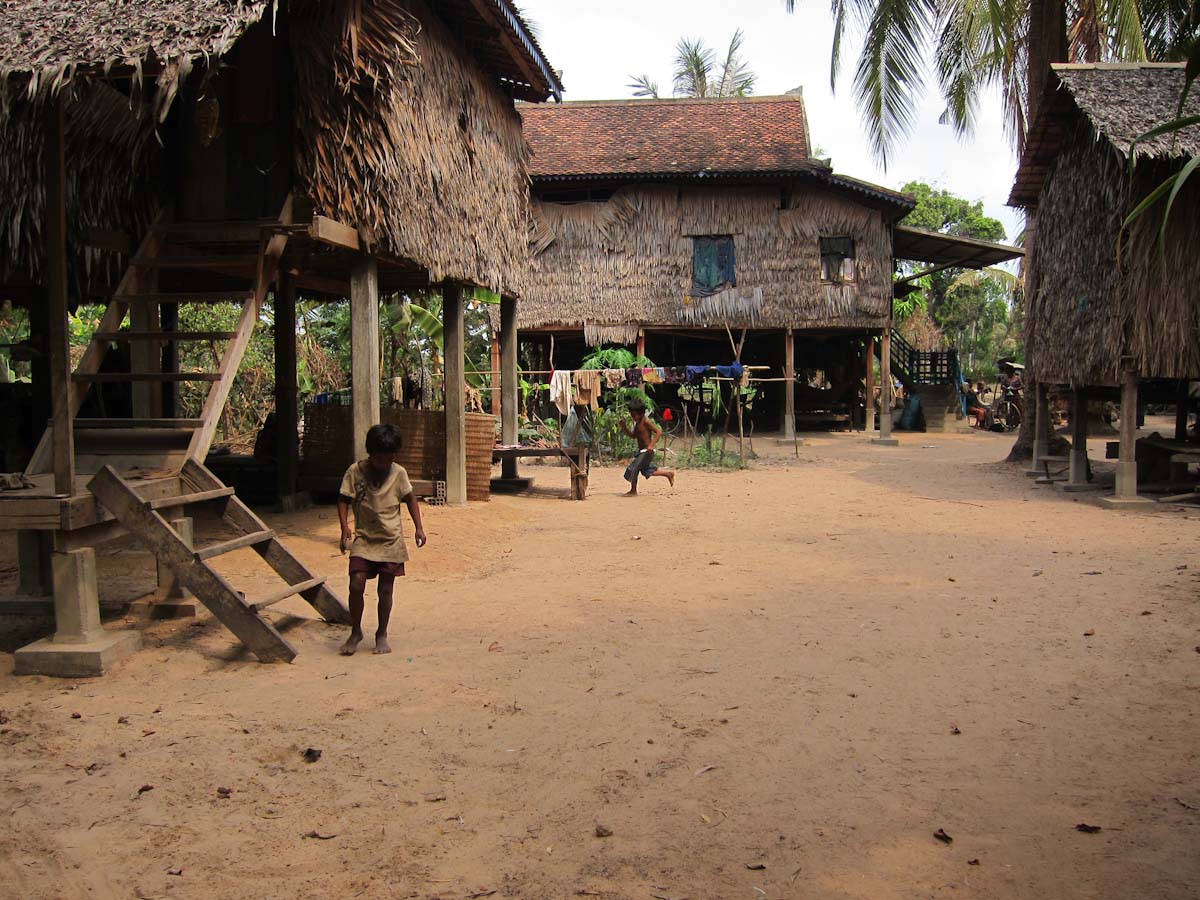
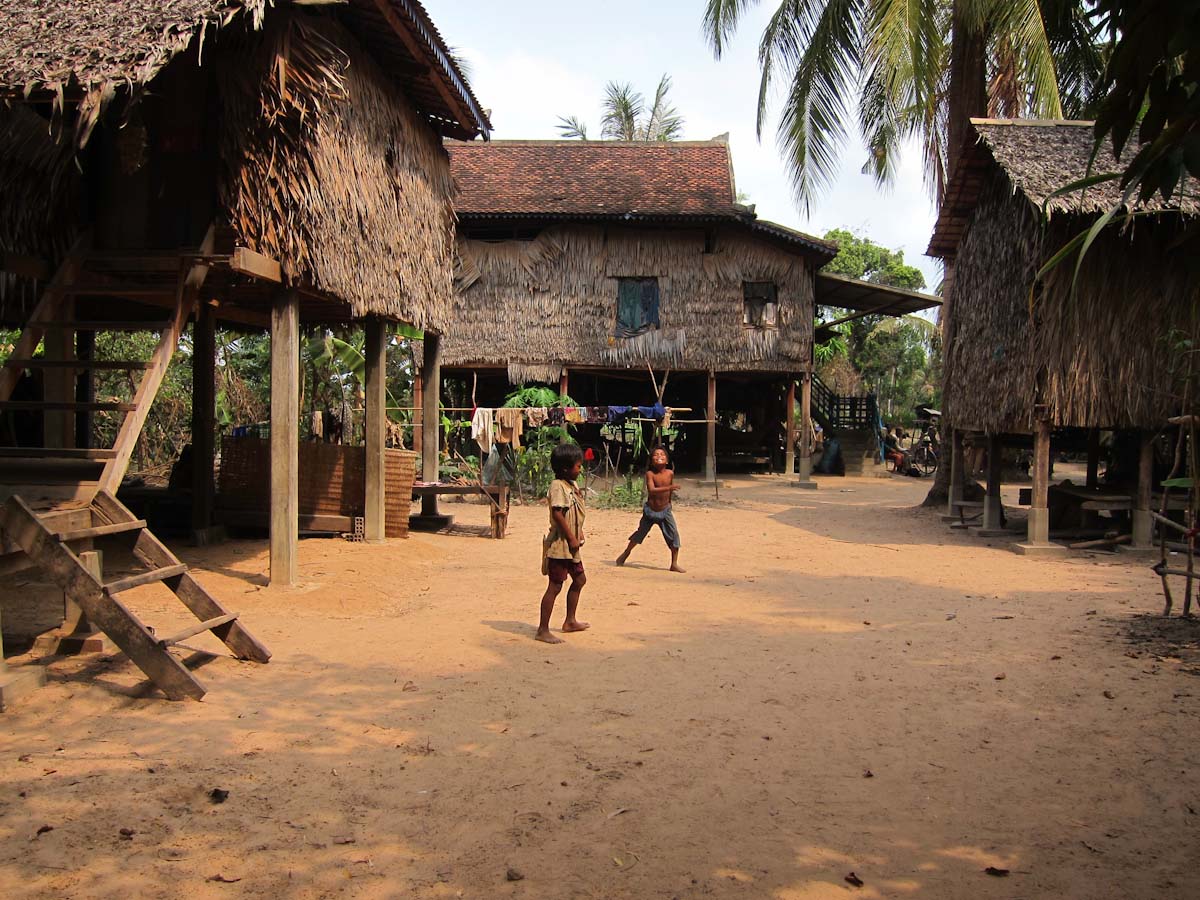
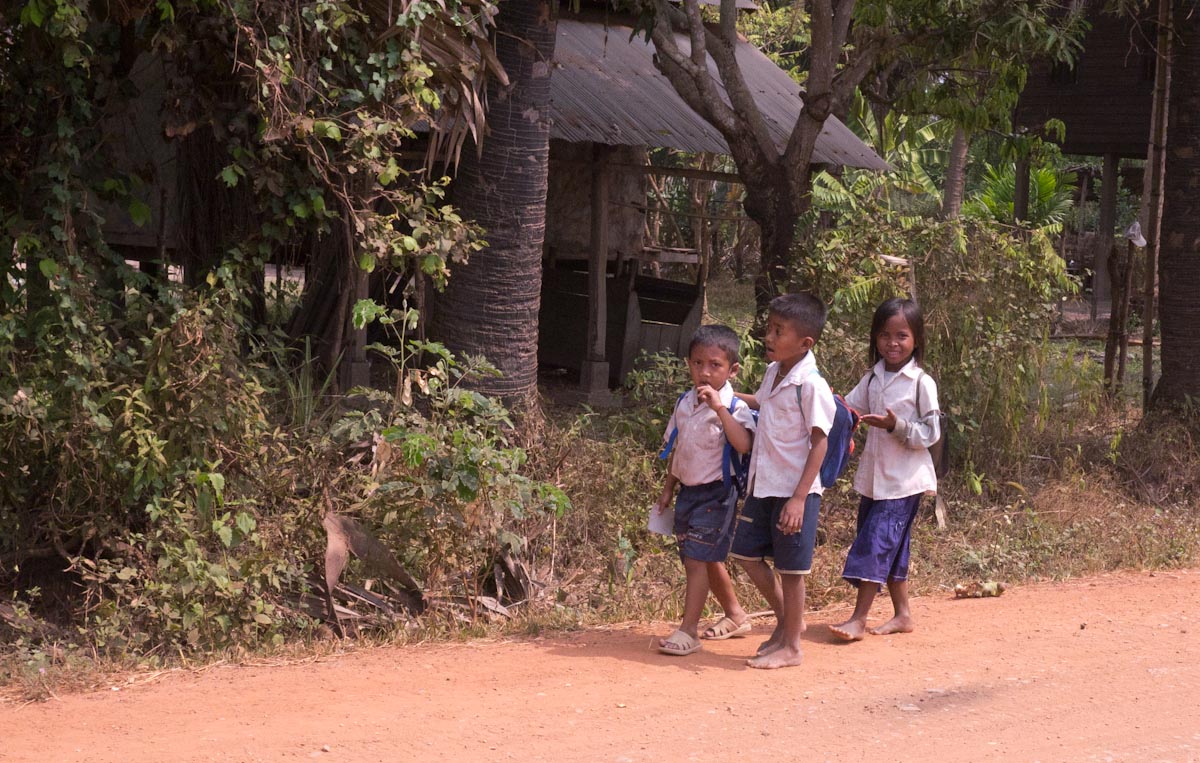
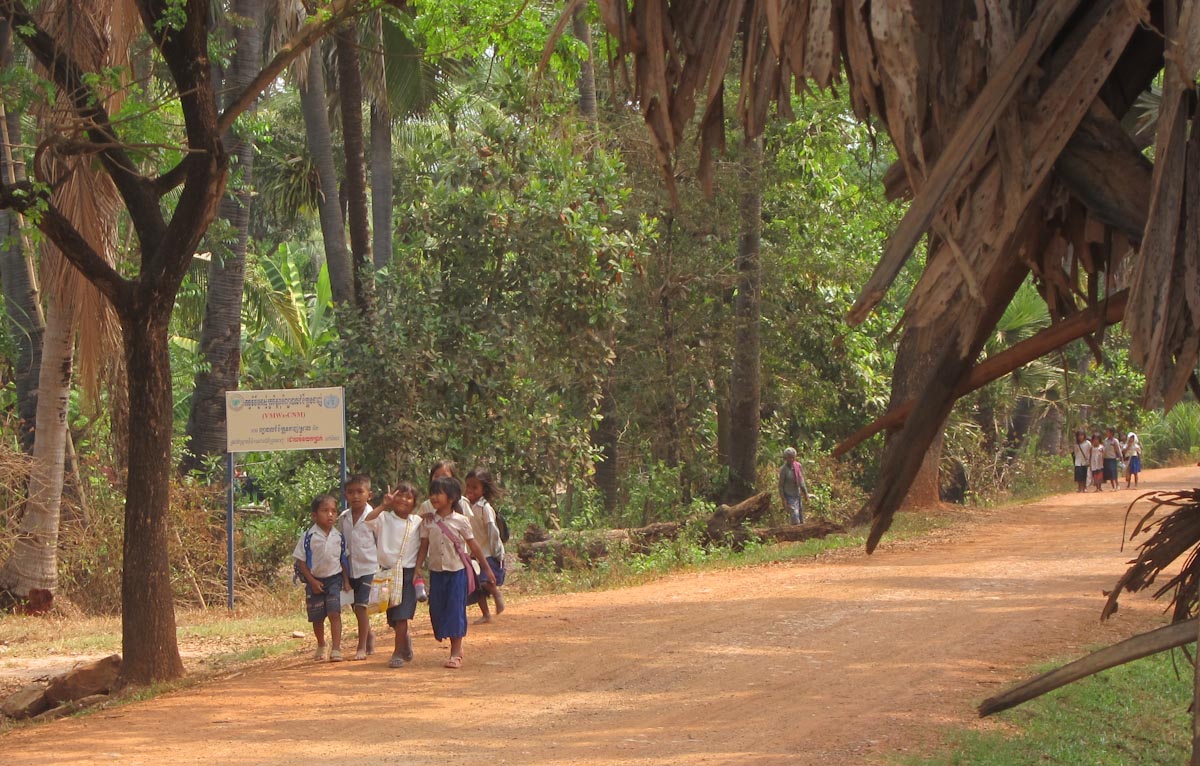
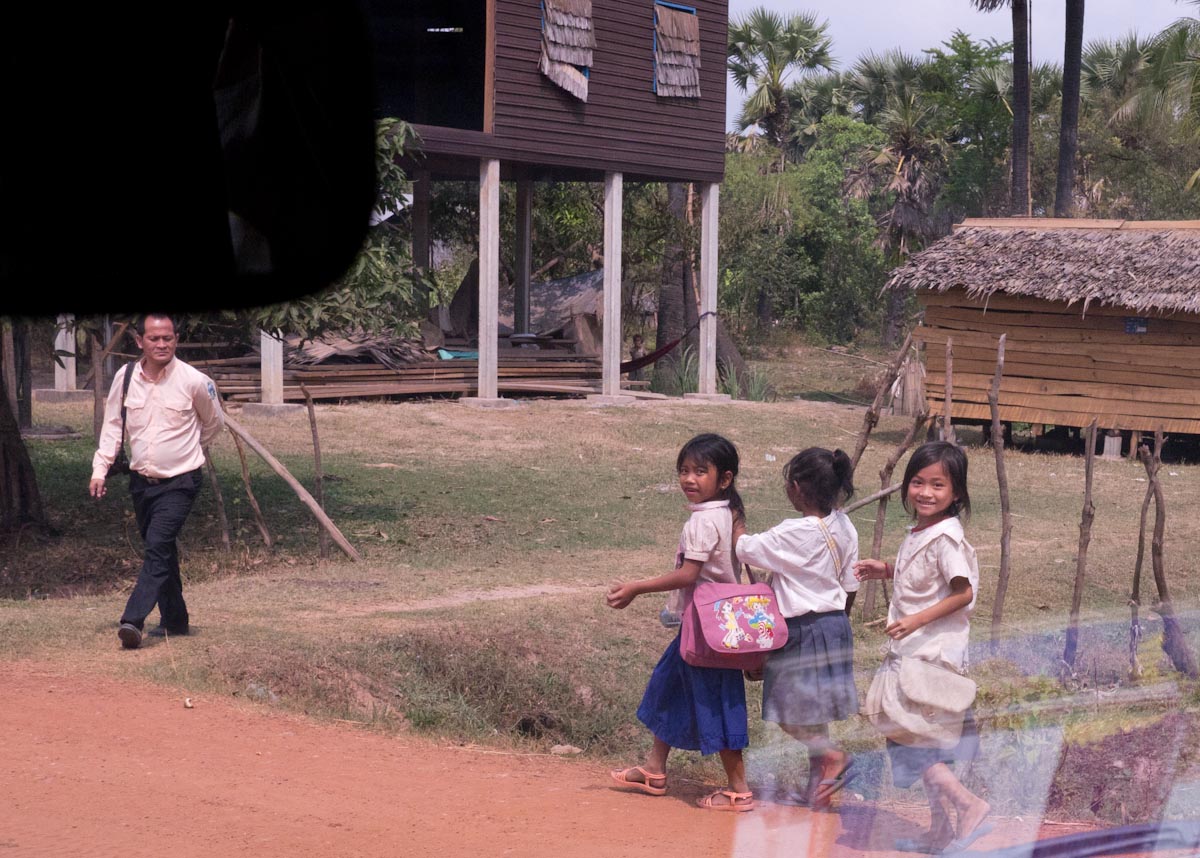
The children are covered with dust and smeared with dirt. Many of them wear “Ben 10” clothing or sweat pants and a t-shirt. They look at you with big, black eyes, unsure how to react to your appearance. In some villages, they will be manning a parent’s second stall, and will quietly say, “That is one dollar.”
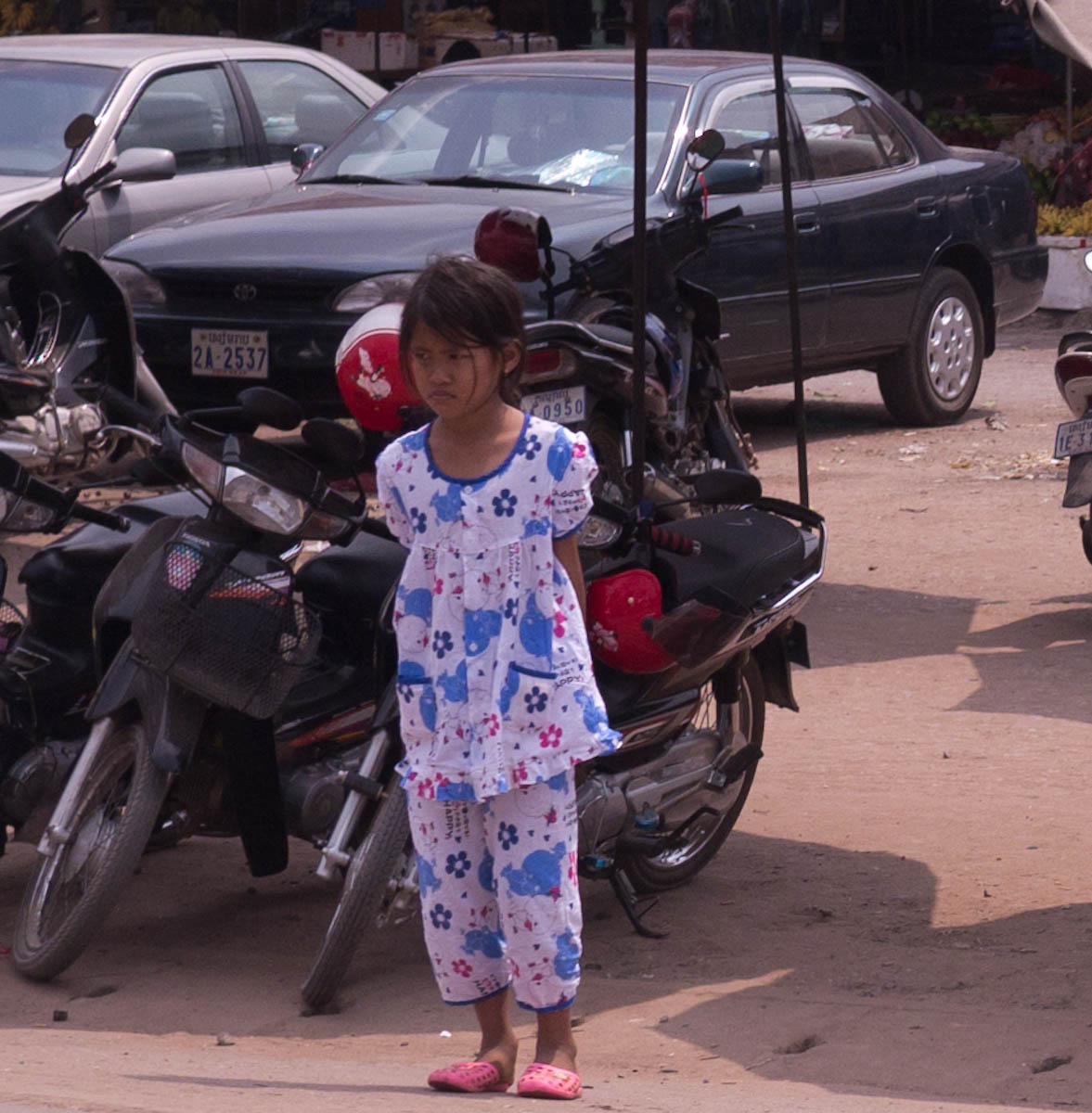
The smaller children wear nothing. They waddle around or are held in their mother’s arm. All of them begin to smile though when my mom brings out the toys, all except one girl, who would stare at us, unsmiling, for the rest of our stay.
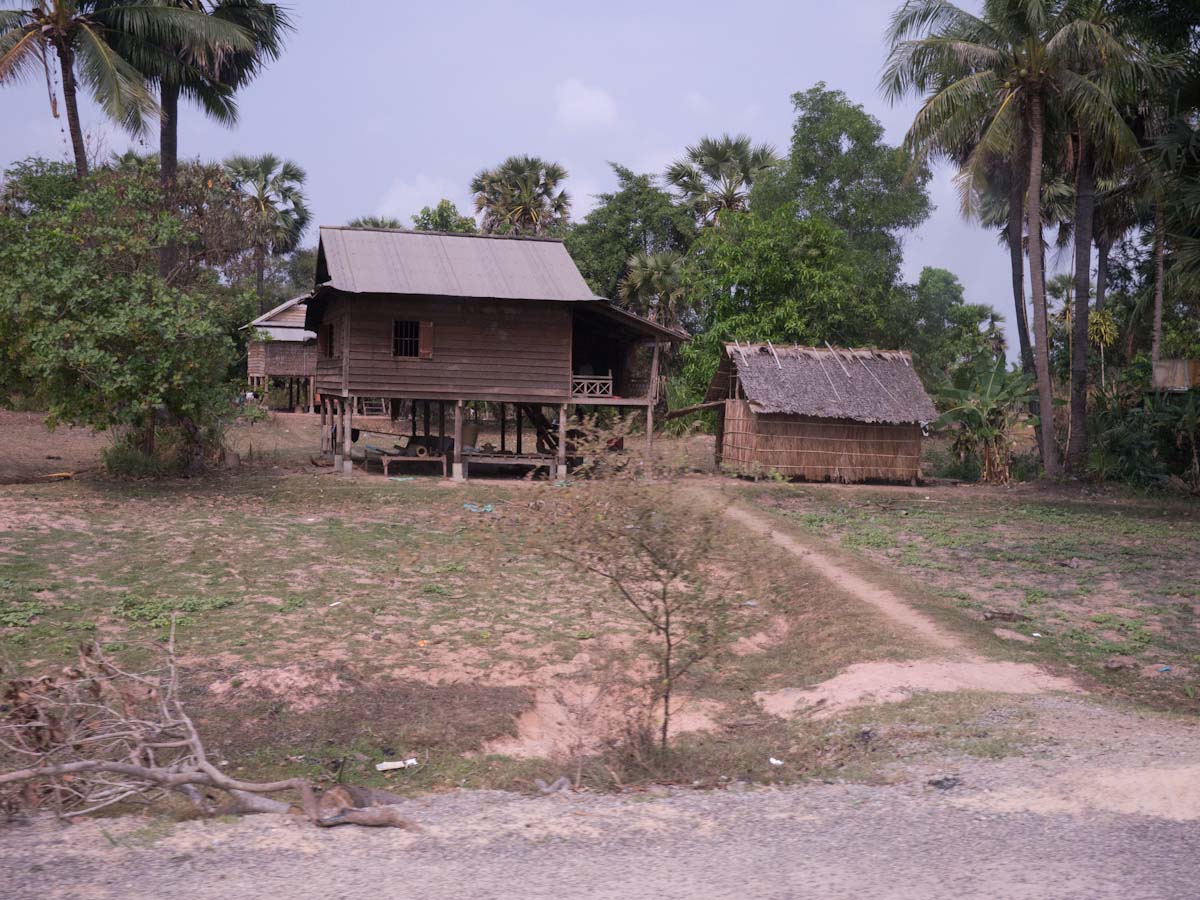
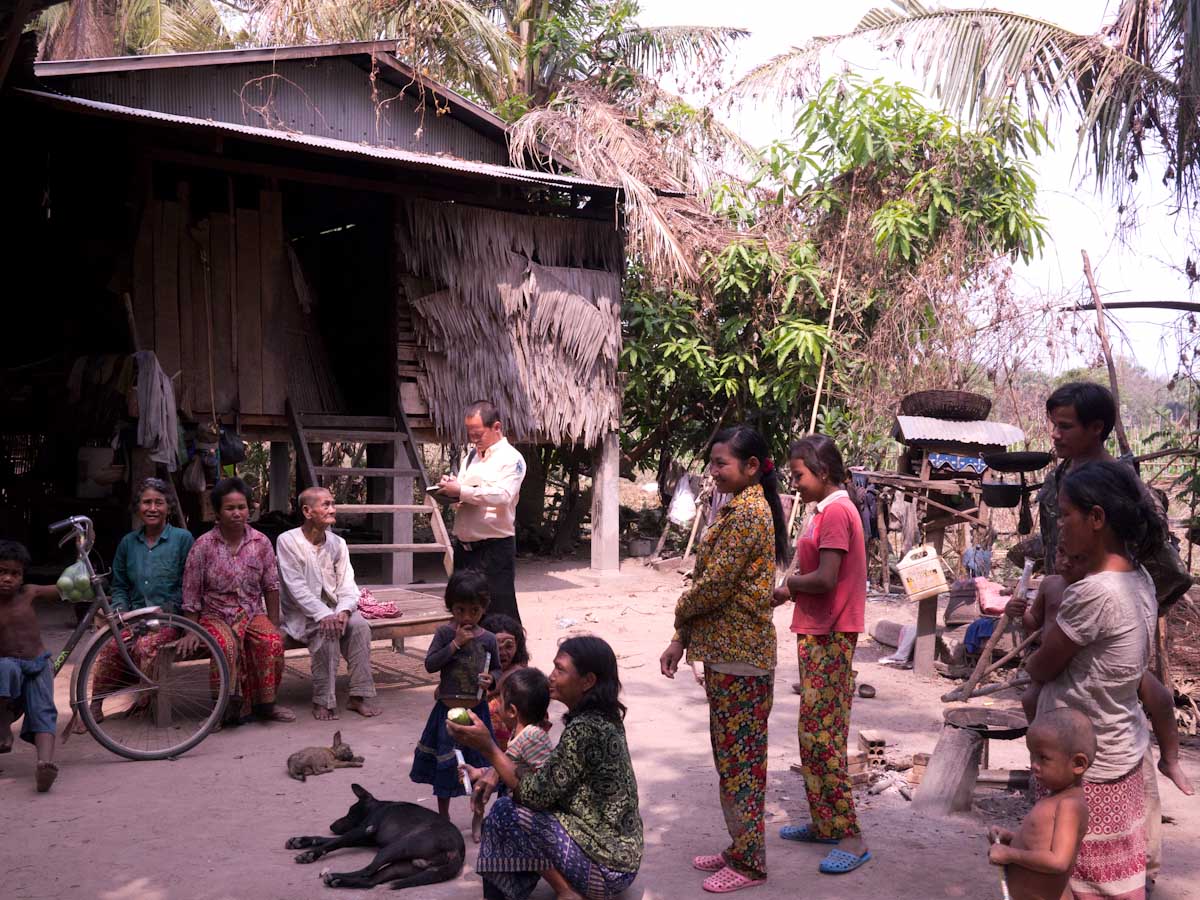
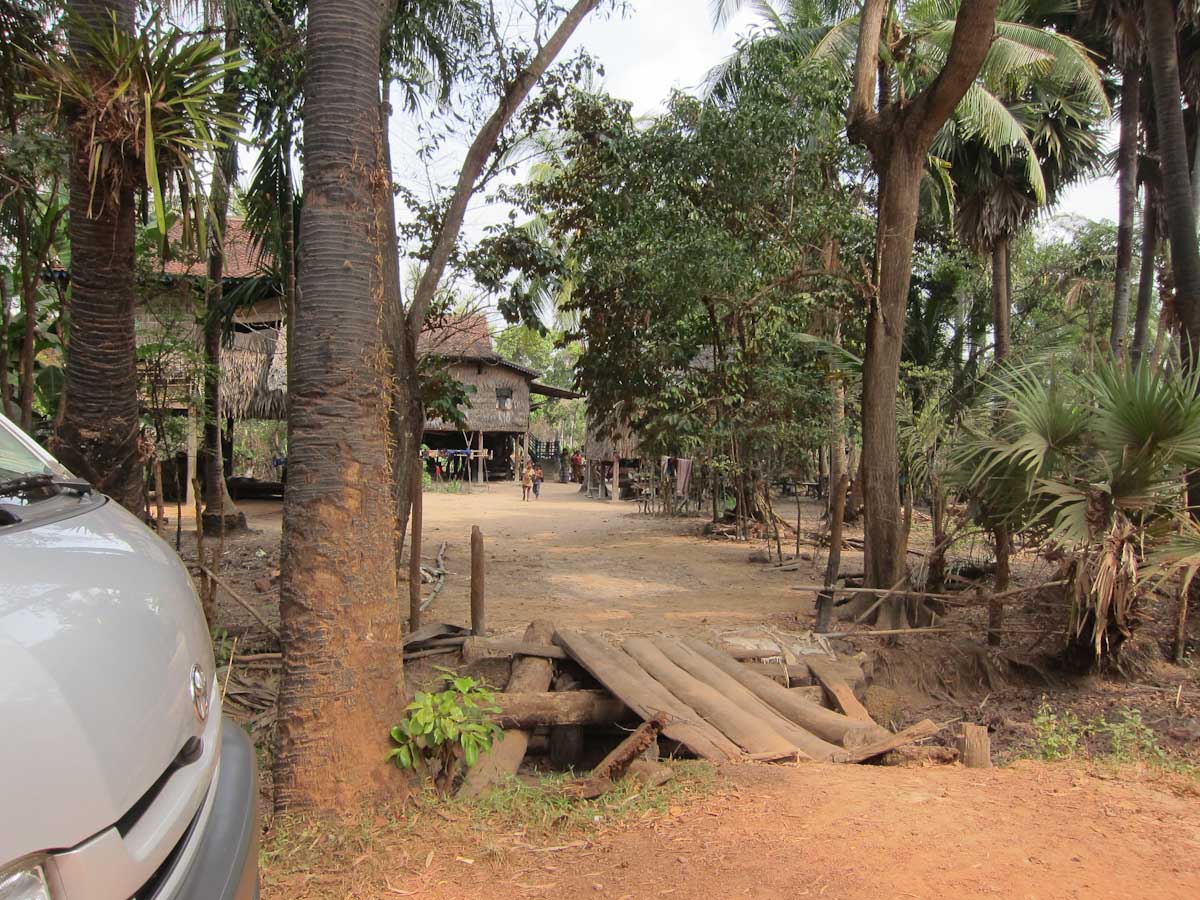
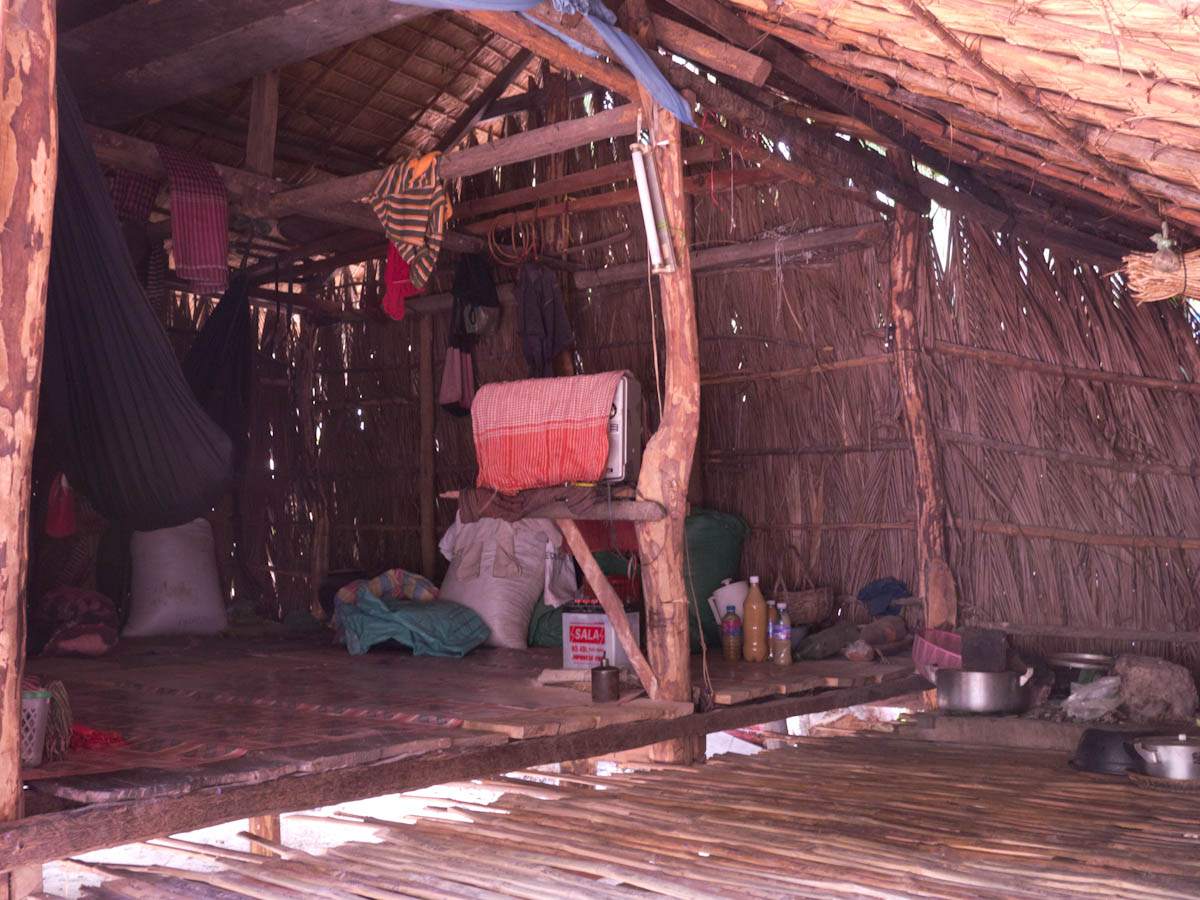
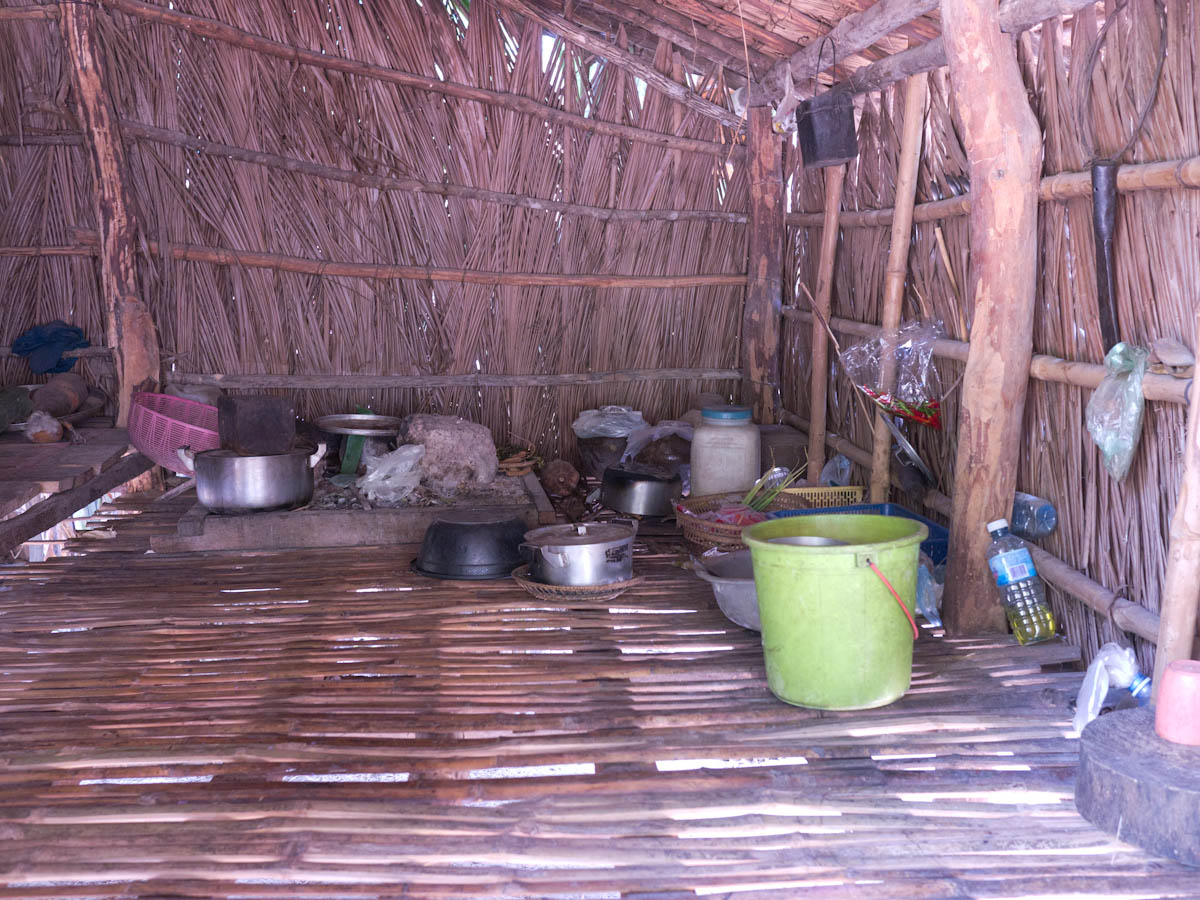
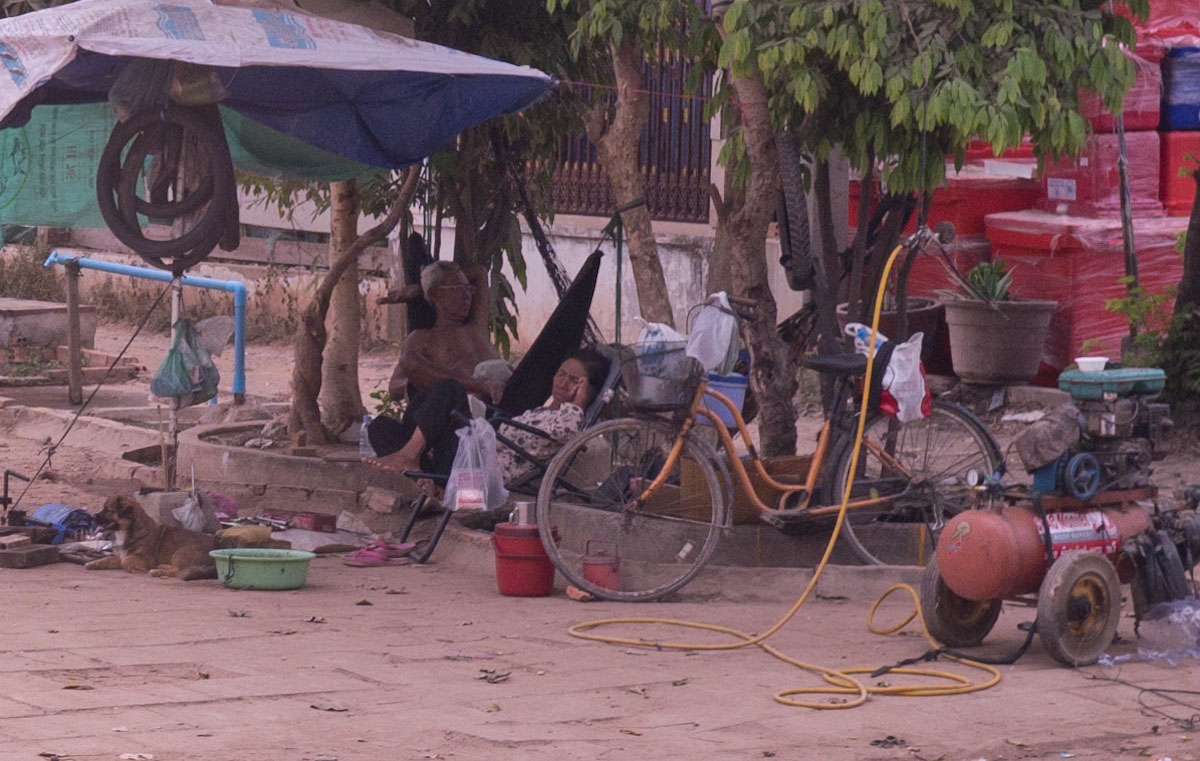
We look around at the homes of the villagers. Wooden and bamboo huts with thatched roofs make up a good portion of the home styles. We take a peek inside, as our guide explains. The huts have only one room, so how do they organize everything? On one side there are tools,toys and shoes. The other side has clothing and the kitchen. Other miscellaneous items are scattered in different corners, but in the far corner, the kitchen quadrent, lies a boxy, black-and-white T.V. Since there is no electricity, people and little businesses use car batteries and motors as their source of power.
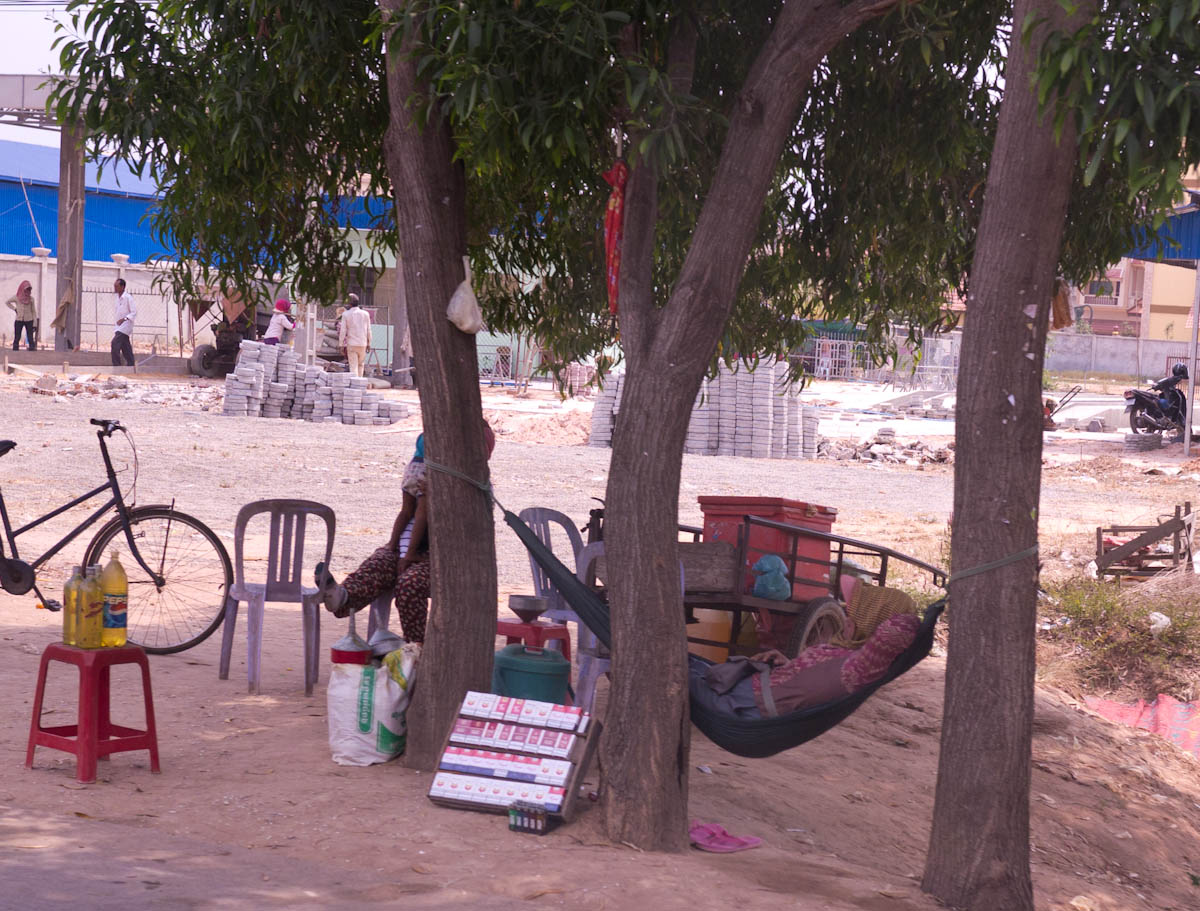
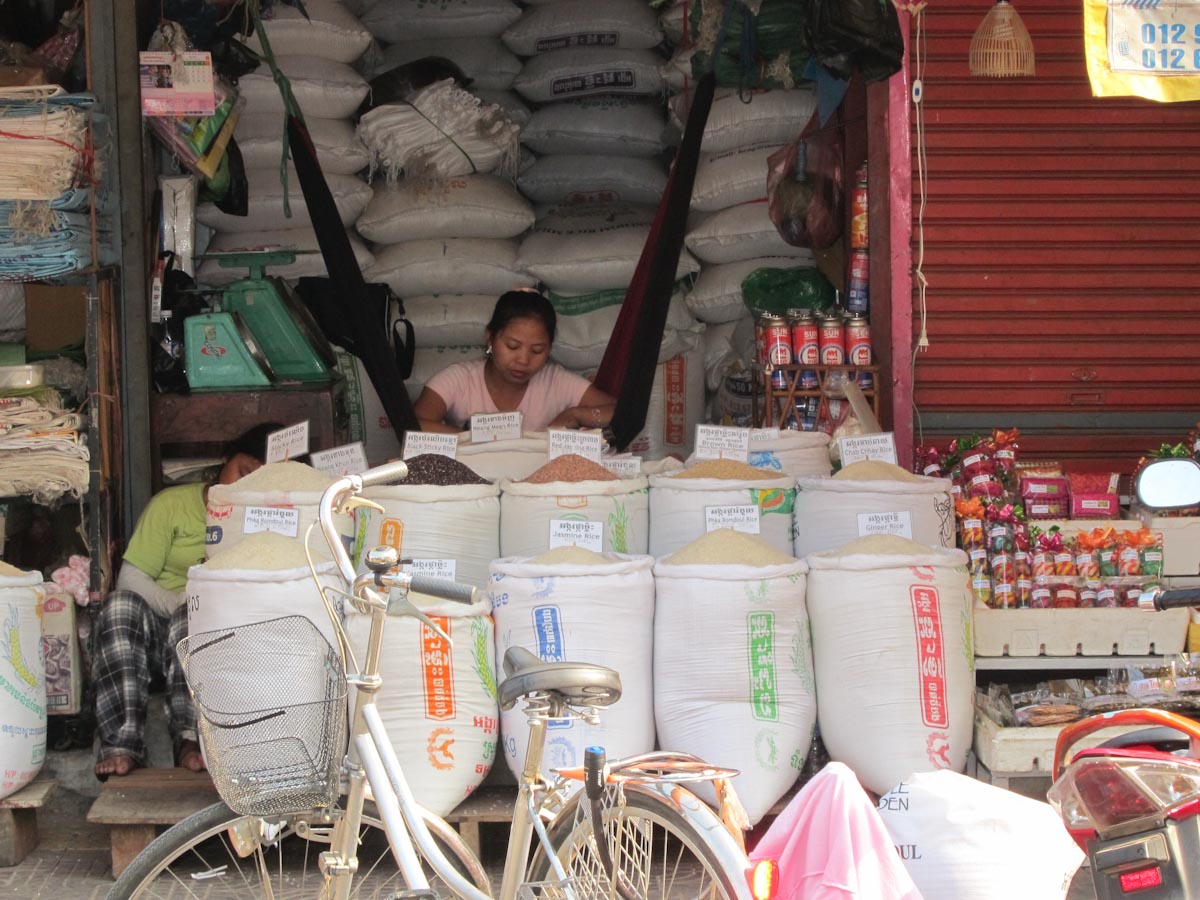
As we walk back to the neighborhood center, we notice that hammocks hang behind many of the store counters, cooler and cheaper than mattresses for a nap in the middle of the day.
Soon we reach a cluster of houses in the countryside where a group of people gathered to greet us. My mom, always wanting to bubble with happiness, laugh, and talk, brings out a perfect icebreaker.
Out of my mom’s purse comes the glow-in-the-dark bouncy balls and the candy necklaces. We show how to wear the candy as necklaces and bracelets, and instruct the children not to eat the bouncy balls. Then we have our guide repeat the warning in their own language. Everyone here about 12 and above has to work, so when the children take a break everyone gathers and rests, watching us and thankful for an excuse to take a small break.
Even with all of the hardships they endure people don’t seem sad or depressed, quite on the contrary. People seem happy and content; simply enjoying the gift of life itself.
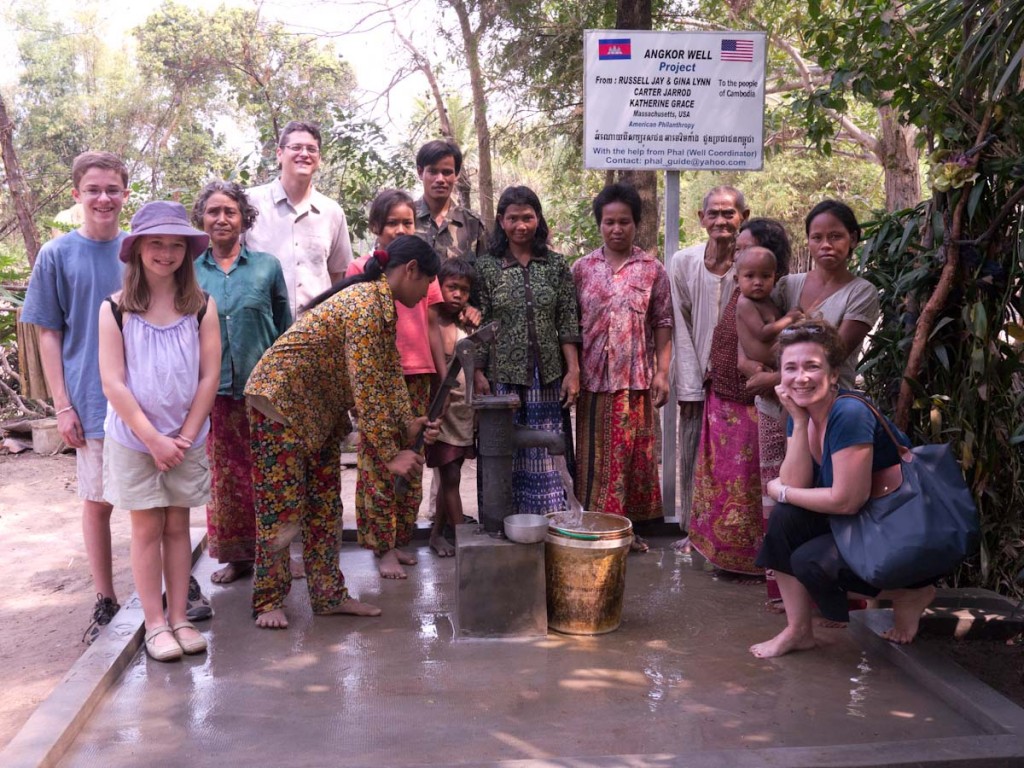
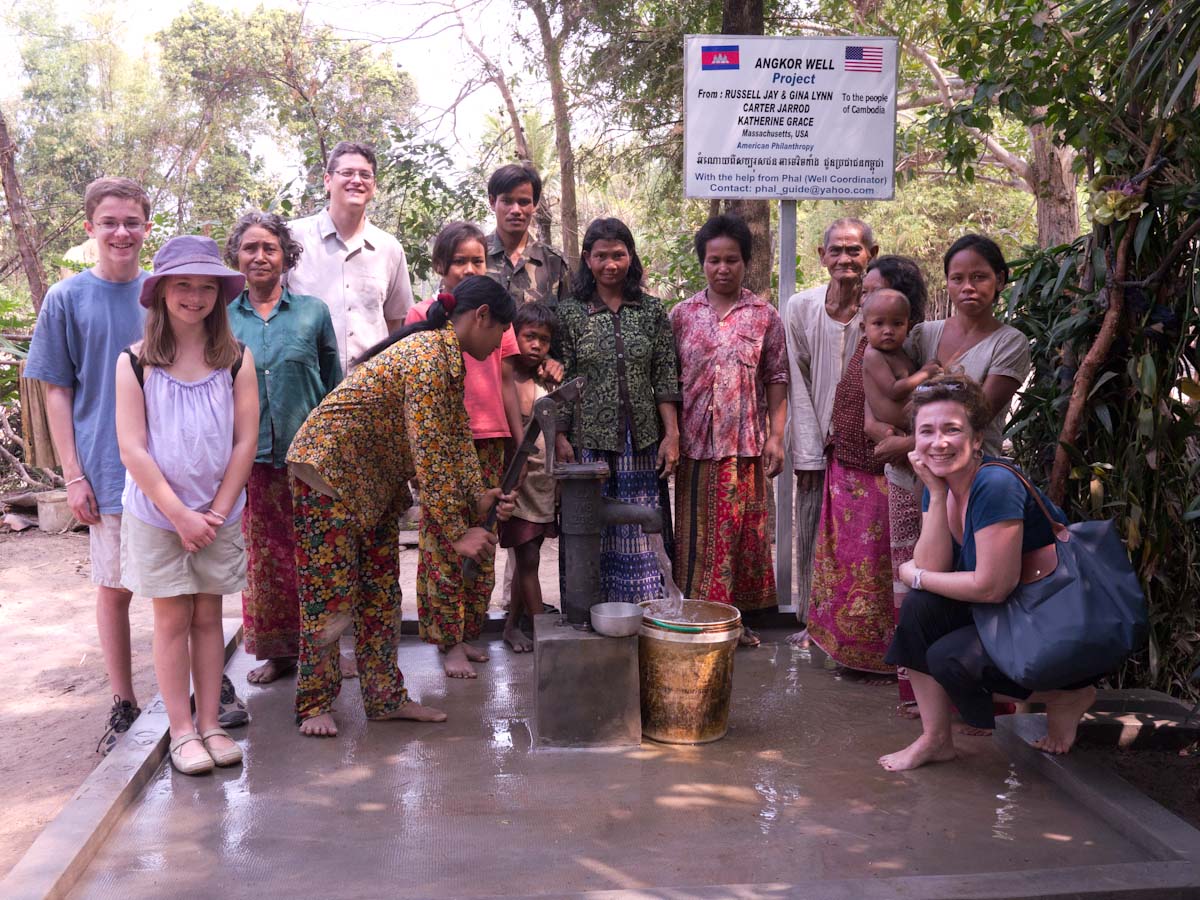
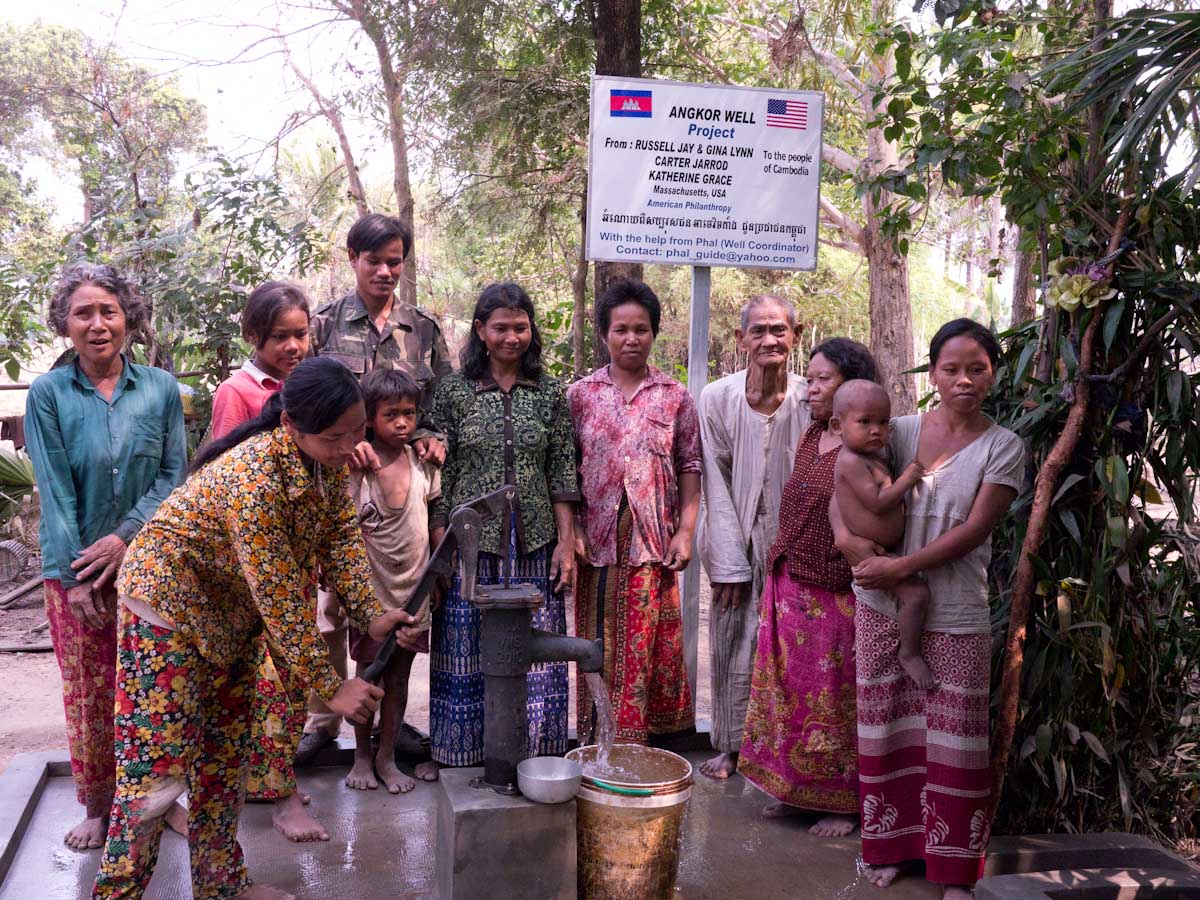
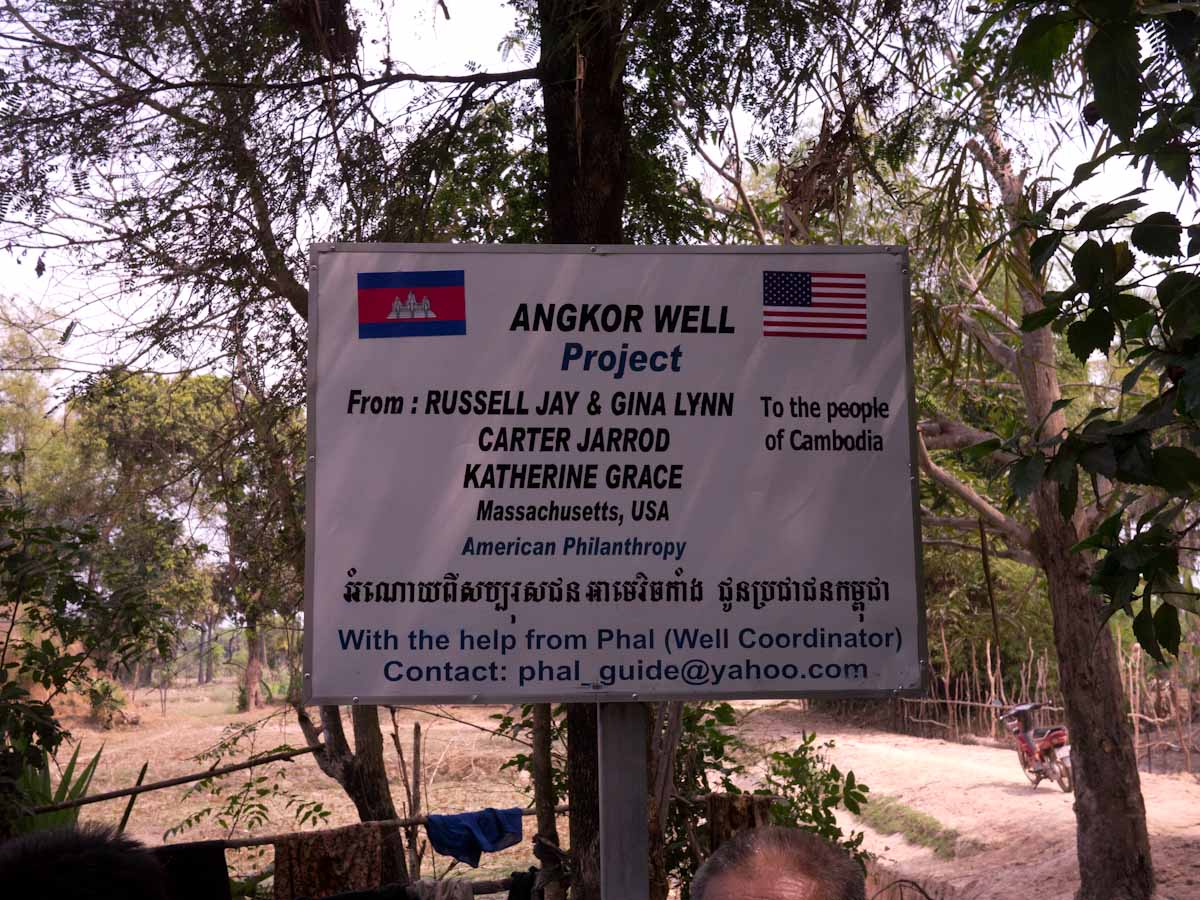
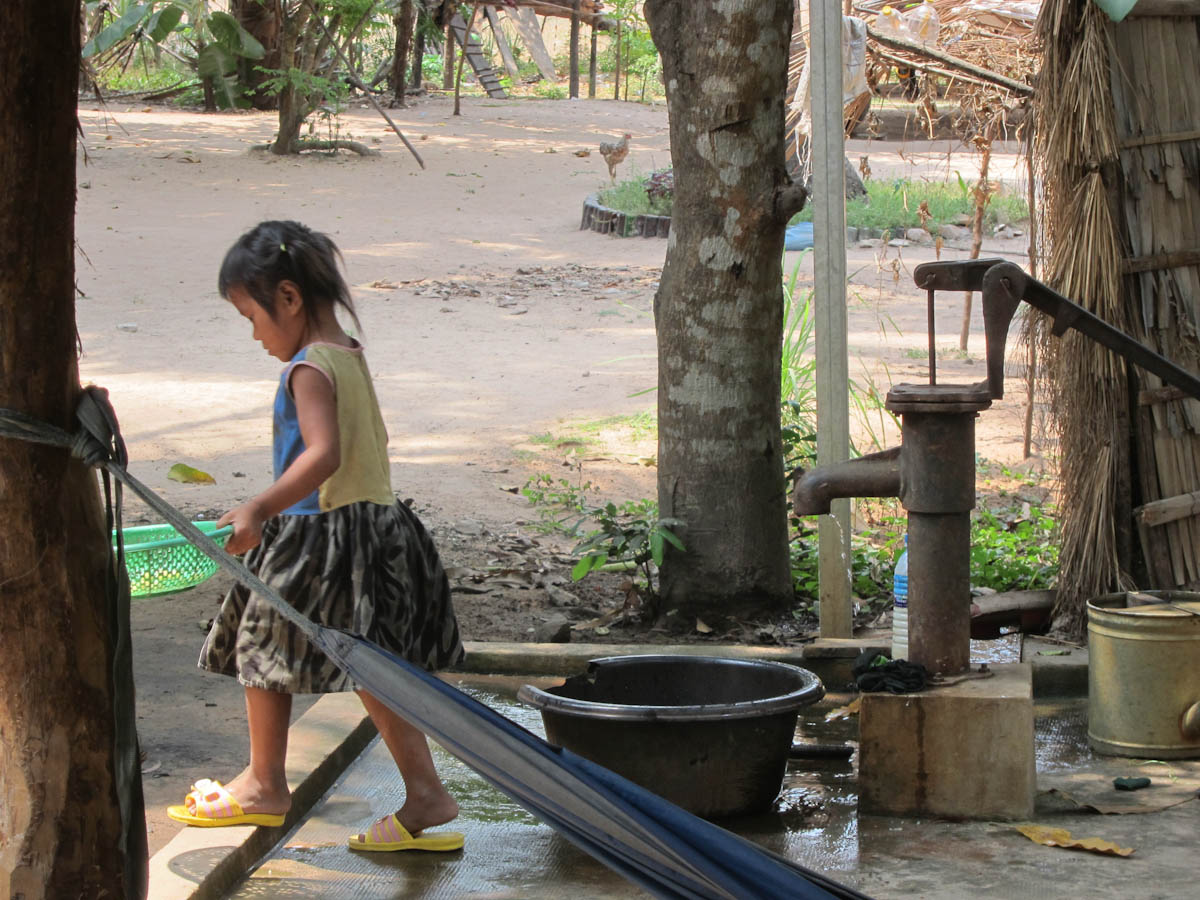
Our guide Pahl (Pronounced Paul) was the head of the Angkor Well Project, an organization that allowed people to sponsor the installation of a pump well. We paid a small amount of money and they choose a small neighborhood without a well. Then they spent several days installing, before dating the well and placing the sign that reads:
THE ANGKOR WAT PROJECT
SPONSORED BY
RUSSELL JAY GINA LYNN
CARTER JARROD
KATHERINE GRACE
We took a picture with the neighborhoods inhabitants before going back to the van. Behind us, two boys of about 9 years play with their bouncy balls, laughing and squealing as they chased the evading globes. They were coming right behind us, and my mom and I turned and smiled broadly. The kids saw us and stopped, but my mom said in a high pitched voice,
“Do it again! Make it go high!” Both kids smiled and laughed and slammed down the balls trying to get them to go higher and higher. My mom took pictures and we all smiled.
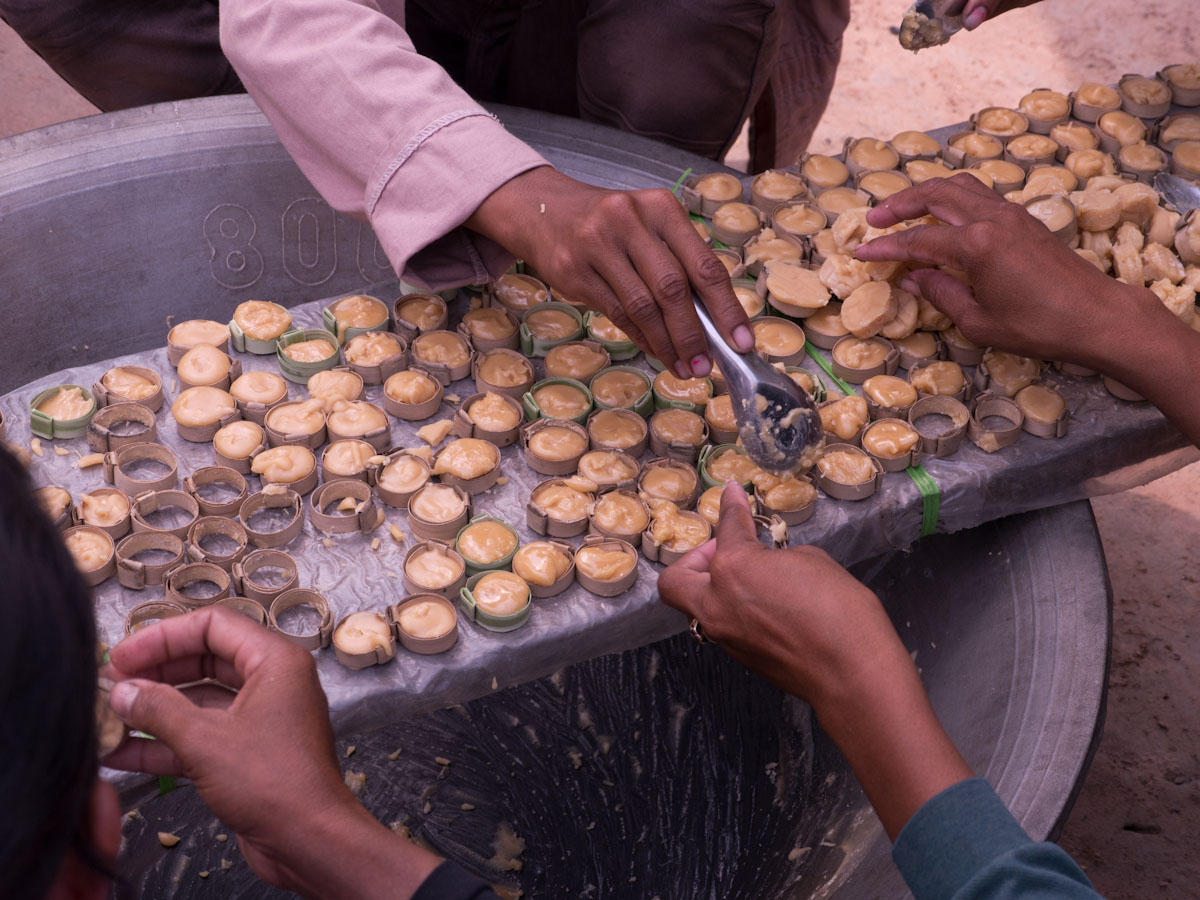
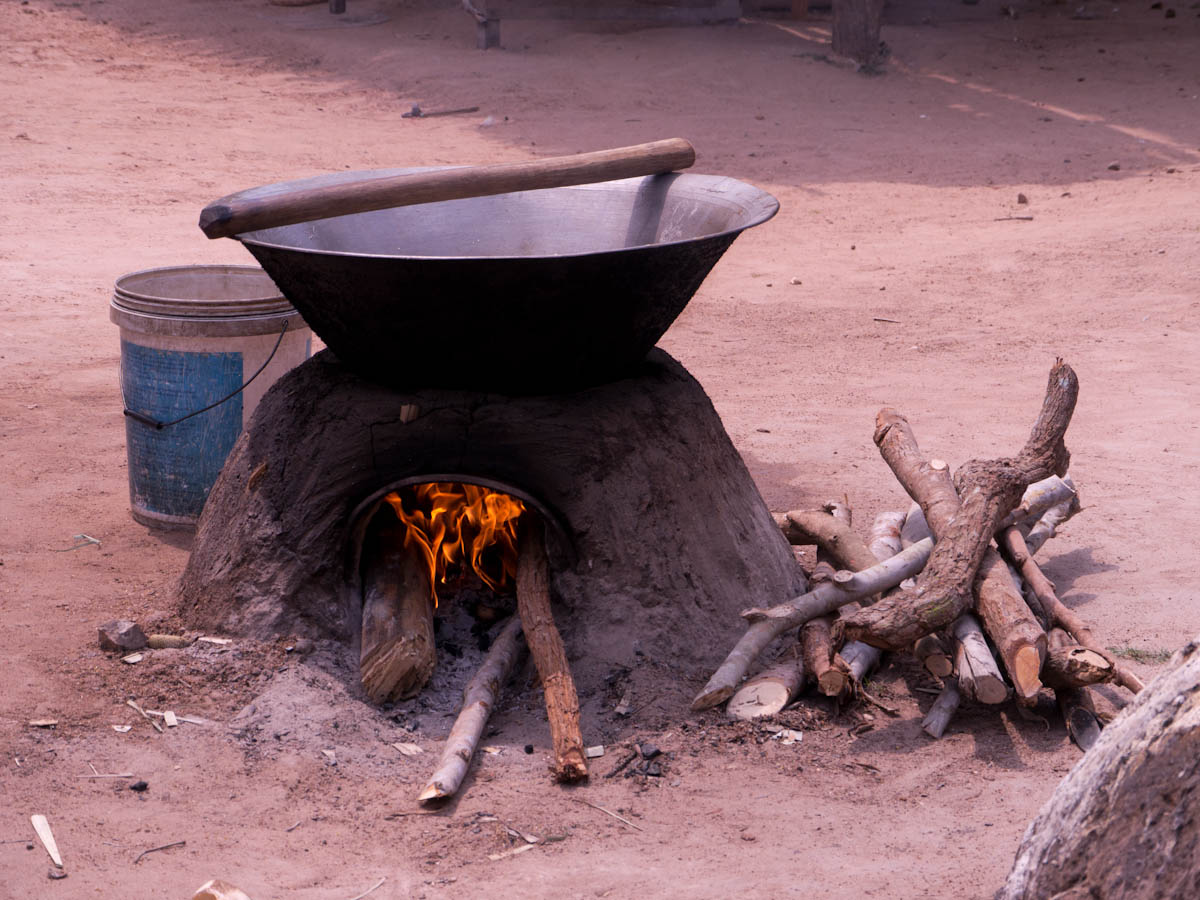
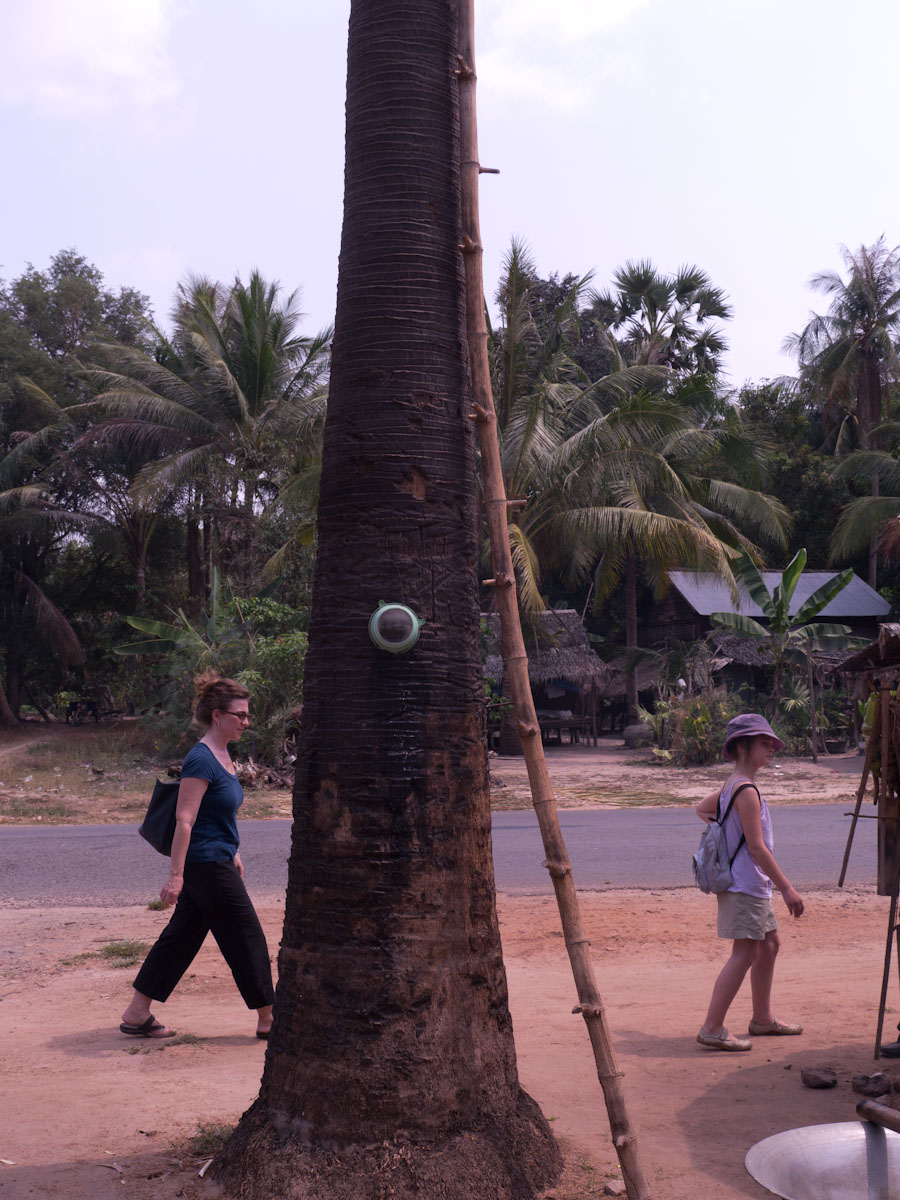
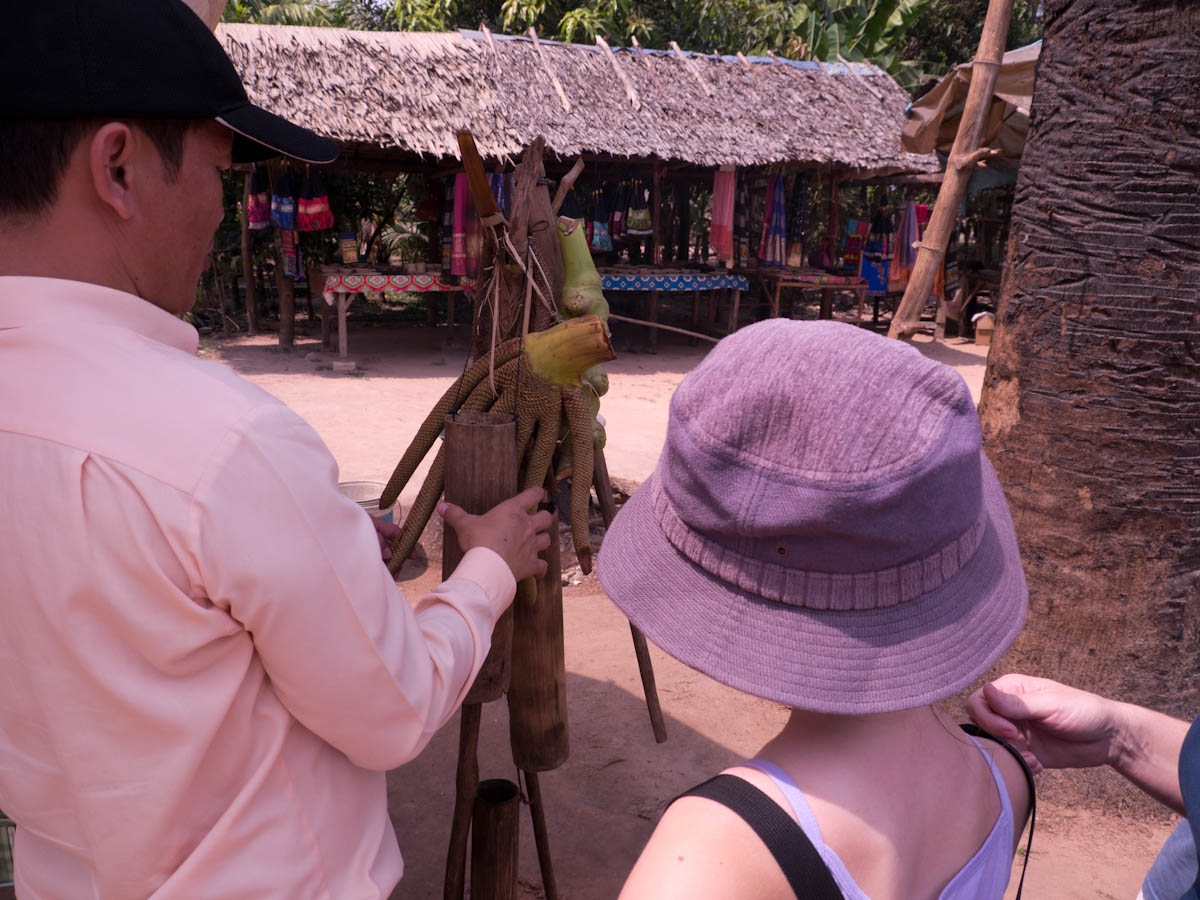
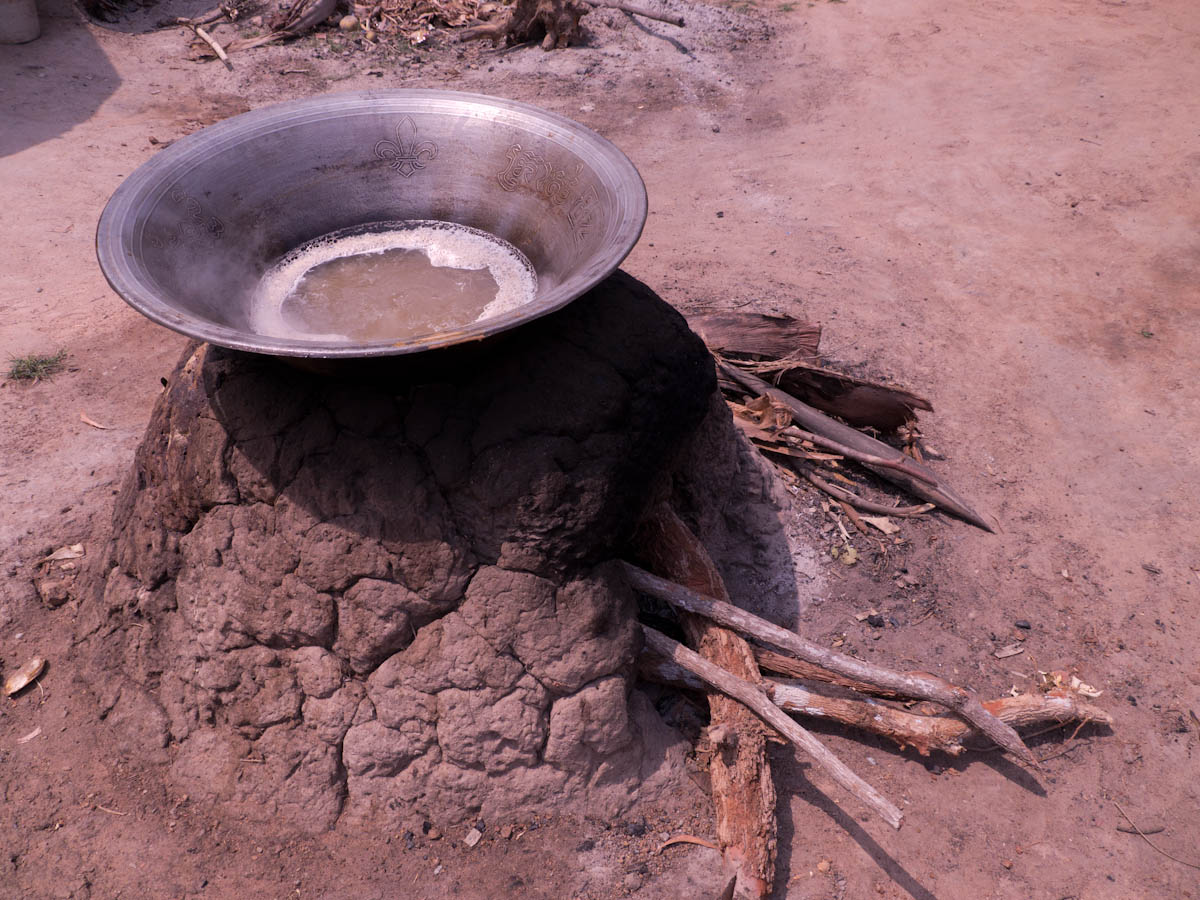
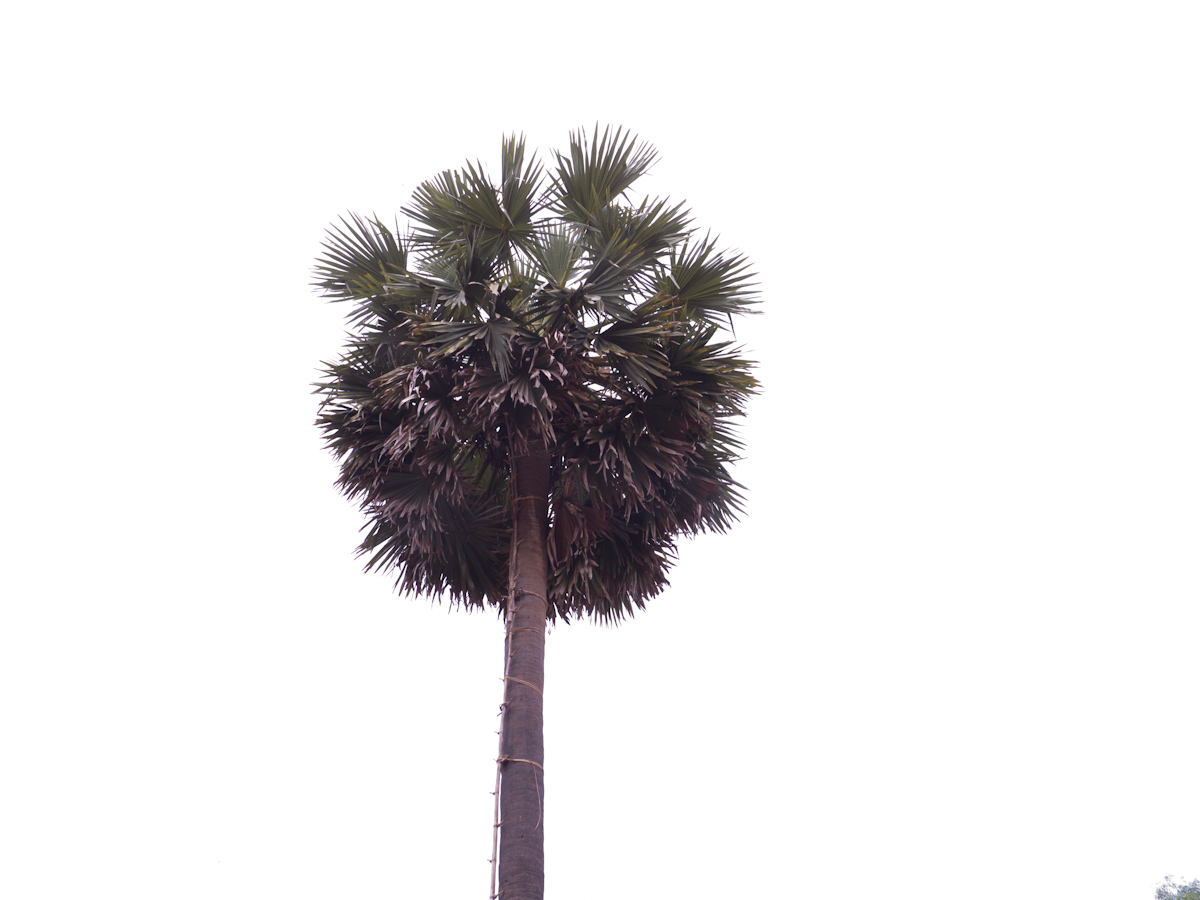
In another village, we saw women making palm sugar candies. They have hollow bamboo cylinders, and they use bamboo ladders to climb up palm trees. Then they drill holes and hang the cylinders below. They leave them overnight. The next morning, the cylinders are filled with sap, and they take them down and pour them all in a big, wide, metal pot. Already they had prepared a small clay mound. The mound was hollow and had almost no top. In the kiln (mound) they place firewood and light a fire. Then they place the pot on top of the kiln and the sap begins to cook.
A woman will take a wooden pole and constantly stir the sap, making it whiter and more pure. When the sap is finished, it will either be put in a jar as palm sugar or put aside for making candy. Perhaps both.
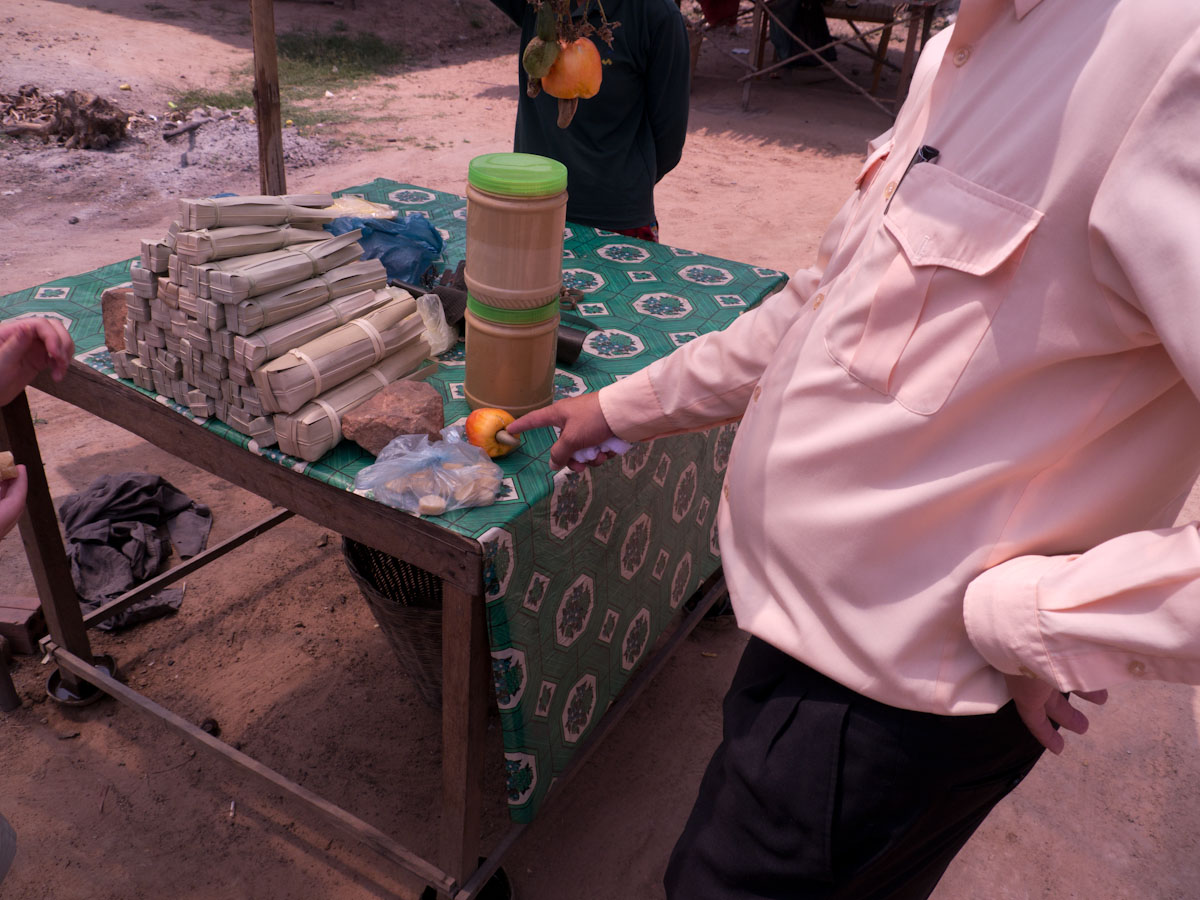
The candy is made by taking dollops of the batter-like sugar and ladling it into hard, leaf rings. The sugar quickly cools and hardens, when this happens it it pooped out put on a tray and the ring is refilled. When they are finished and have used up all the sugar in the bowl, they package them in groups of about a dozen. The package is made of what looks like bamboo leaves, and the candies are stacked like a stack of coins, only the candies are considerably thicker. You can get 3 packages for one US dollar.
We had some questions about Cambodians, and I did some research. The results are not good.
How much does the average Cambodian make a year?
A: An average Cambodian makes $792.86 a year
What percent of Cambodians in rural areas have clean water?
A: 42%
What percent of Cambodians live in rural settings?
A: 90%
So how many Cambodians have access to clean water?
A: 37.8%
What is one of the more dangerous water diseases?
A: Snail fever. Caused by parasitic worms, this disease damages your vital organs. A female worm can lay up to 200-2,000 eggs a day for a period of up to five years! Strangely it is the eggs, not the worms that do the most damage. Snail fever is transmitted through infected water contact. That means touching the water can infect you. “
Among human diseases caused by parasites, schistosomiasis ranks second behind malaria in terms of its social, economic, and public health impact in tropical and subtropical regions of the world. One hundred twenty million people have symptoms, and 20 million suffer severe consequences from the disease.” Luckily there is an easy cure, but only if you get your urine, feces, or blood tested. If you get a blood test, then you must wait 6-8 weeks. The reason it is called snail fever, is because when the larvae from human poop emerge, they find a freshwater snail and infect it, multiplying their cells over and over again, The snail excretes them in to the water, and they are on the hunt.
It only takes a few seconds for these worms to penetrate human skin.”
I hope everyone we met is and stays o.k.
OTHER FACTS ABOUT DAILY CAMBODIAN LIFE:
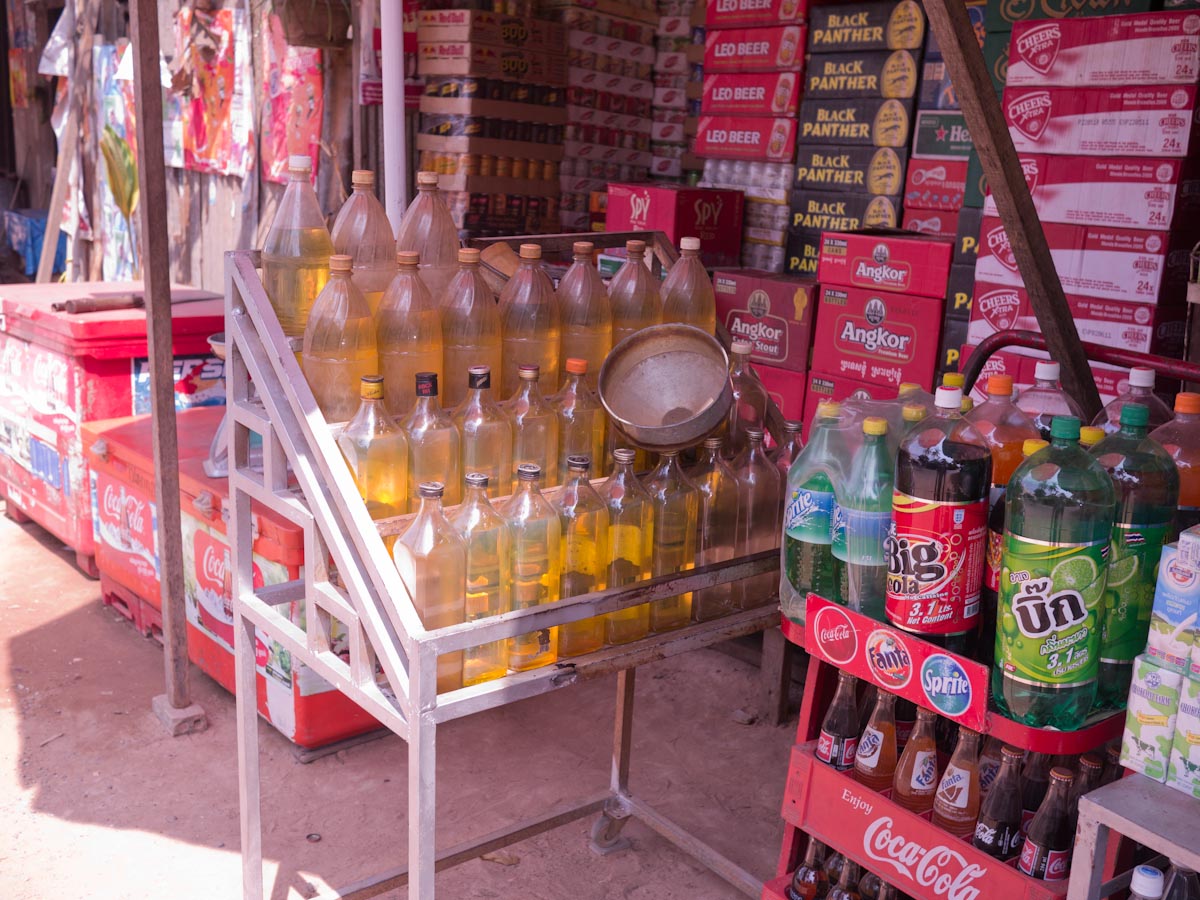
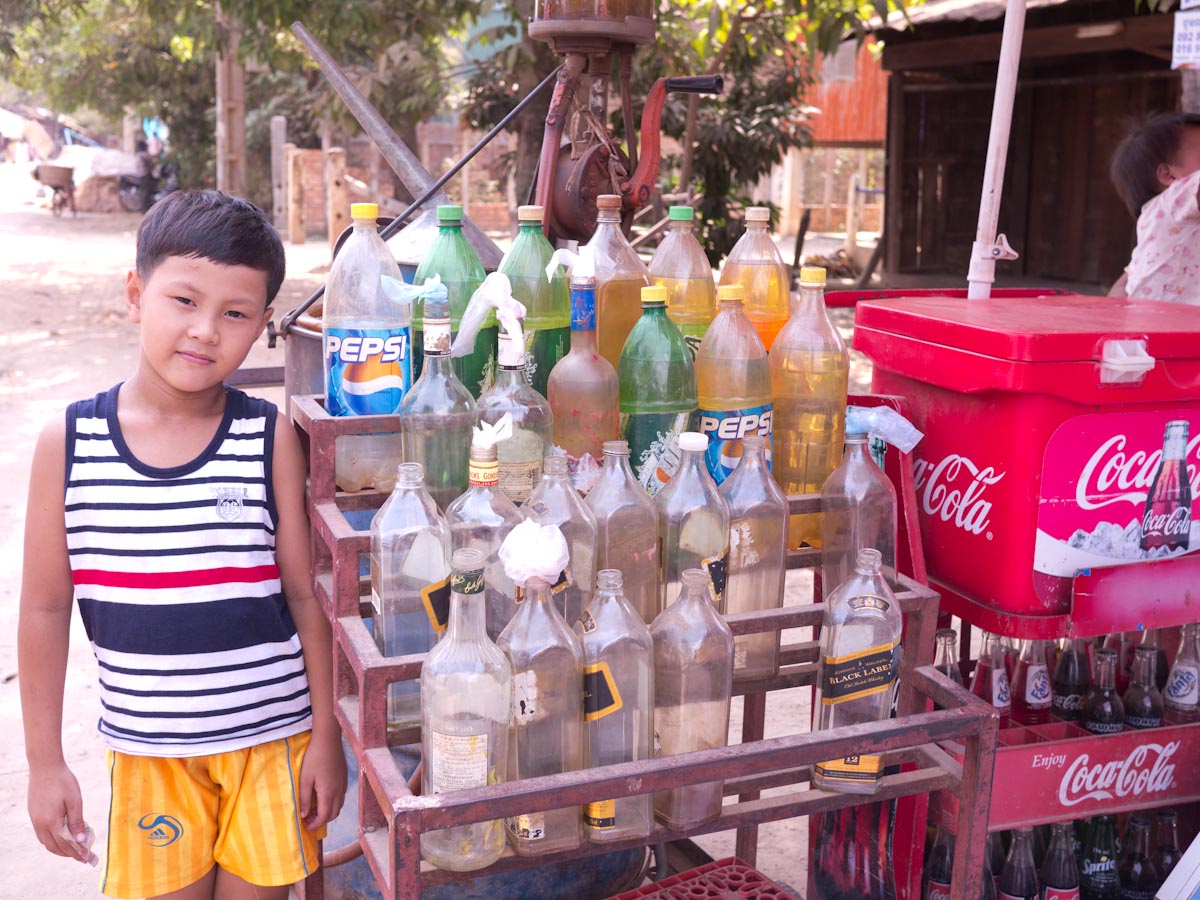
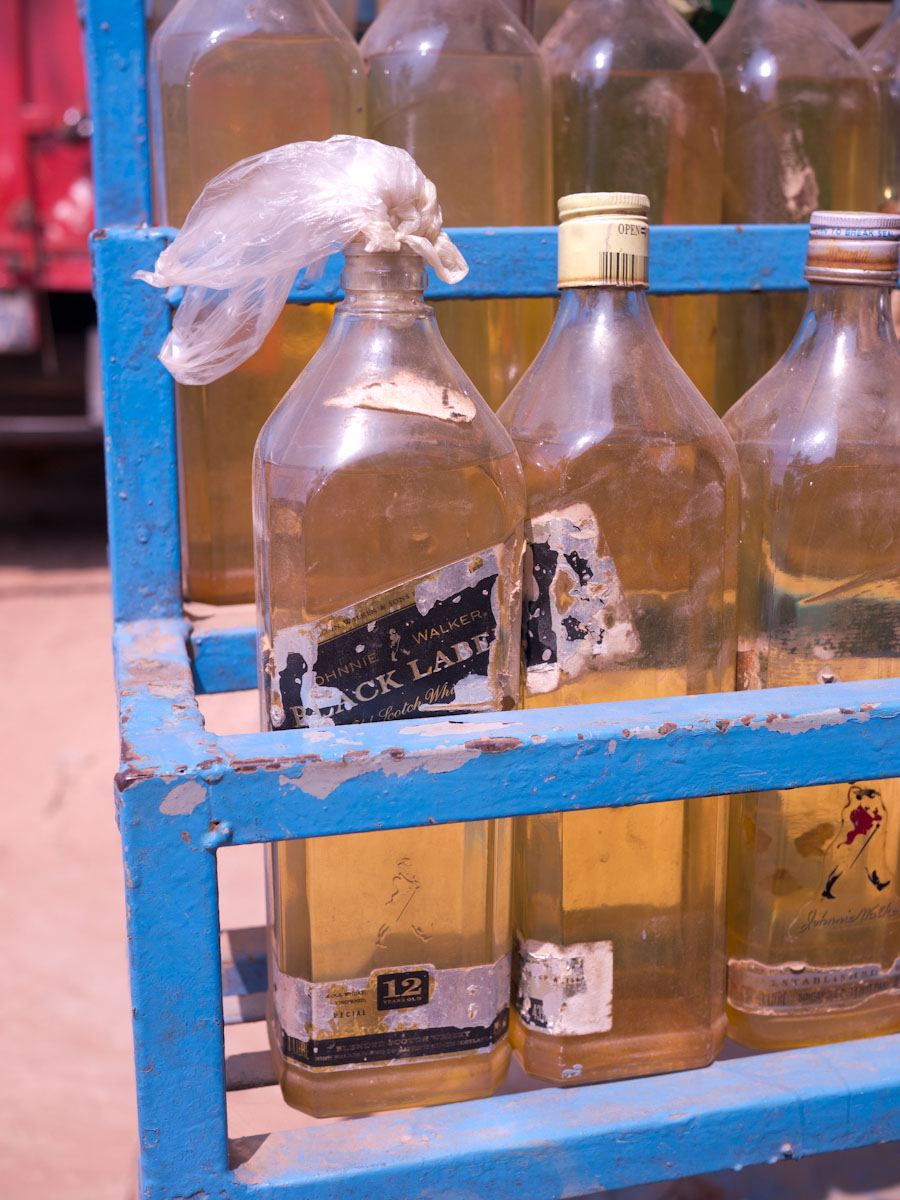
- Gasoline cannot be afforded in the big containers we use at home. Instead, gasoline is sold in bottles the size of the big Coca-Cola bottles. Very often they will use Jack Daniels bottles!
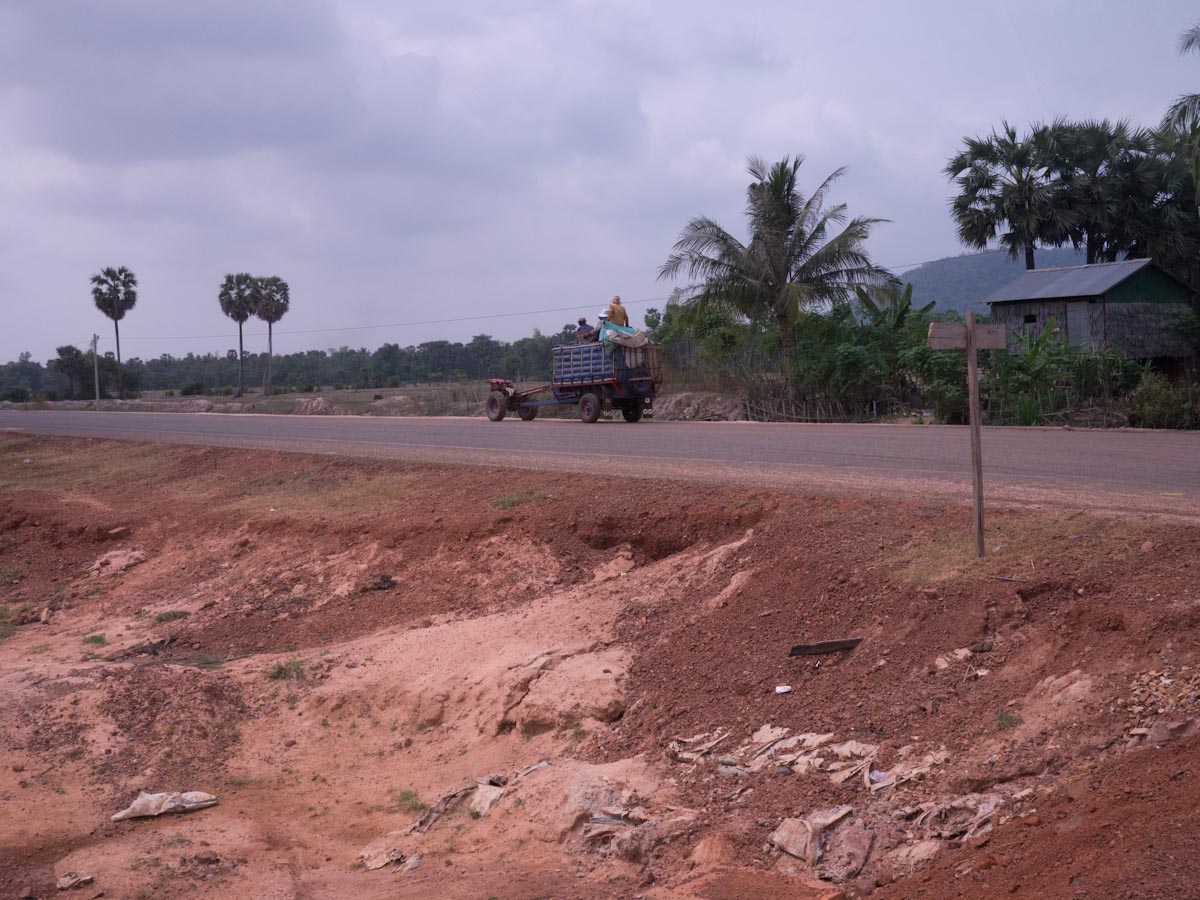
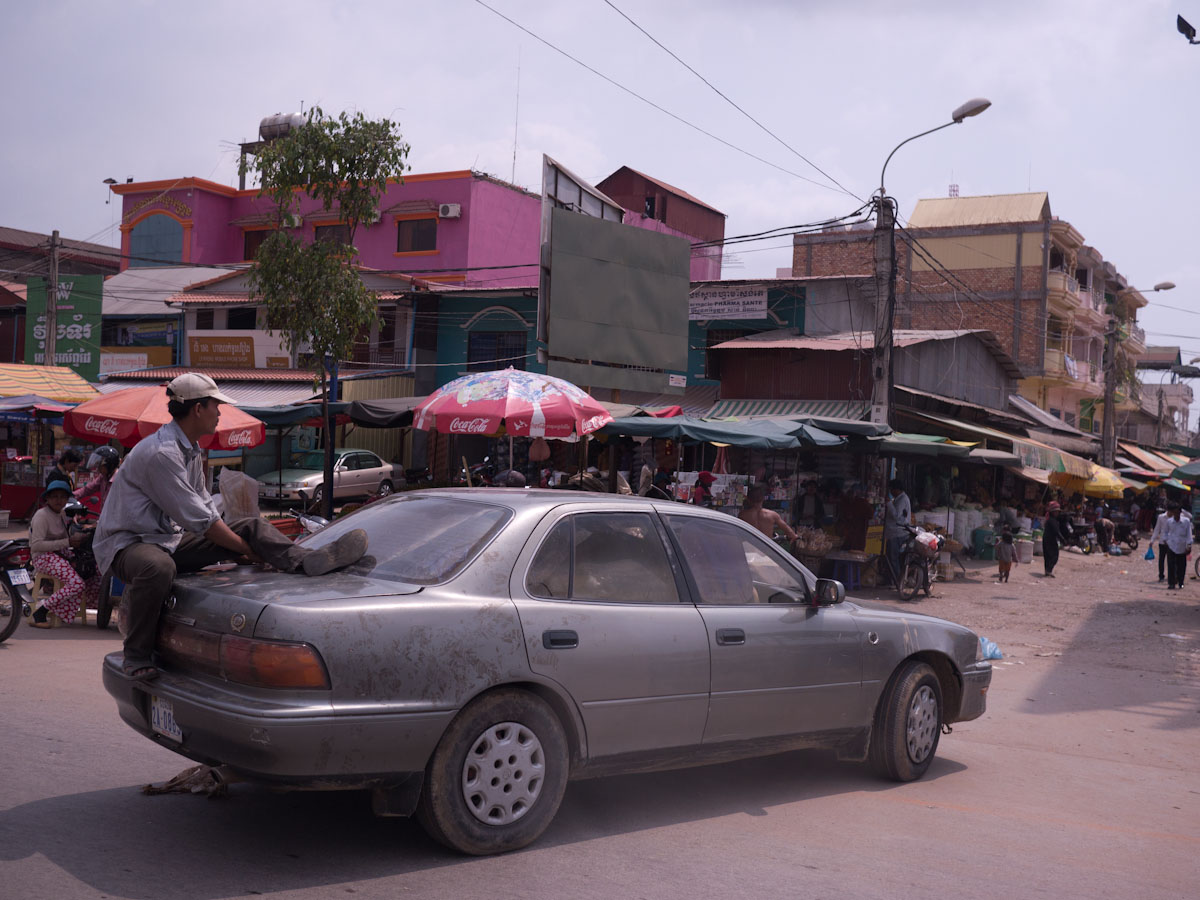
- People usually drive on motorcycles/scooters instead of cars. Cars take up a lot of room and are far more expensive, they cost more and you need more gasoline to go the same distance. If people do have a car, it can almost be expected to be old, or a used Lexus. Some of the Lexuses had the word “LEXUS” painted in big letters, sort of like a boast and an advertisement combined in one.

Error thrown
Call to undefined function ereg()