Could one tourist site account for nearly 10% of a nation’s economy? If the nation is Cambodia and the site is the extraordinary Angkor Wat, then by our admittedly rough calculations the answer is yes.
Cambodia only has a national GDP of $11 billion, ranking 124th in the world. Some 2.5 million people per year visit Angkor region to see grand and exotic temples that fire the imagination. We figured that if they spend $400 in Cambodia on average, then the temple is responsible for $1 billion of GDP!
Angkor is a jungle region in Cambodia that was the capital of a large kingdom from the 8th to the 12th centuries. These “Khmer” people were animists who worshipped their ancestors and later the Hindu and Buddhist religions.
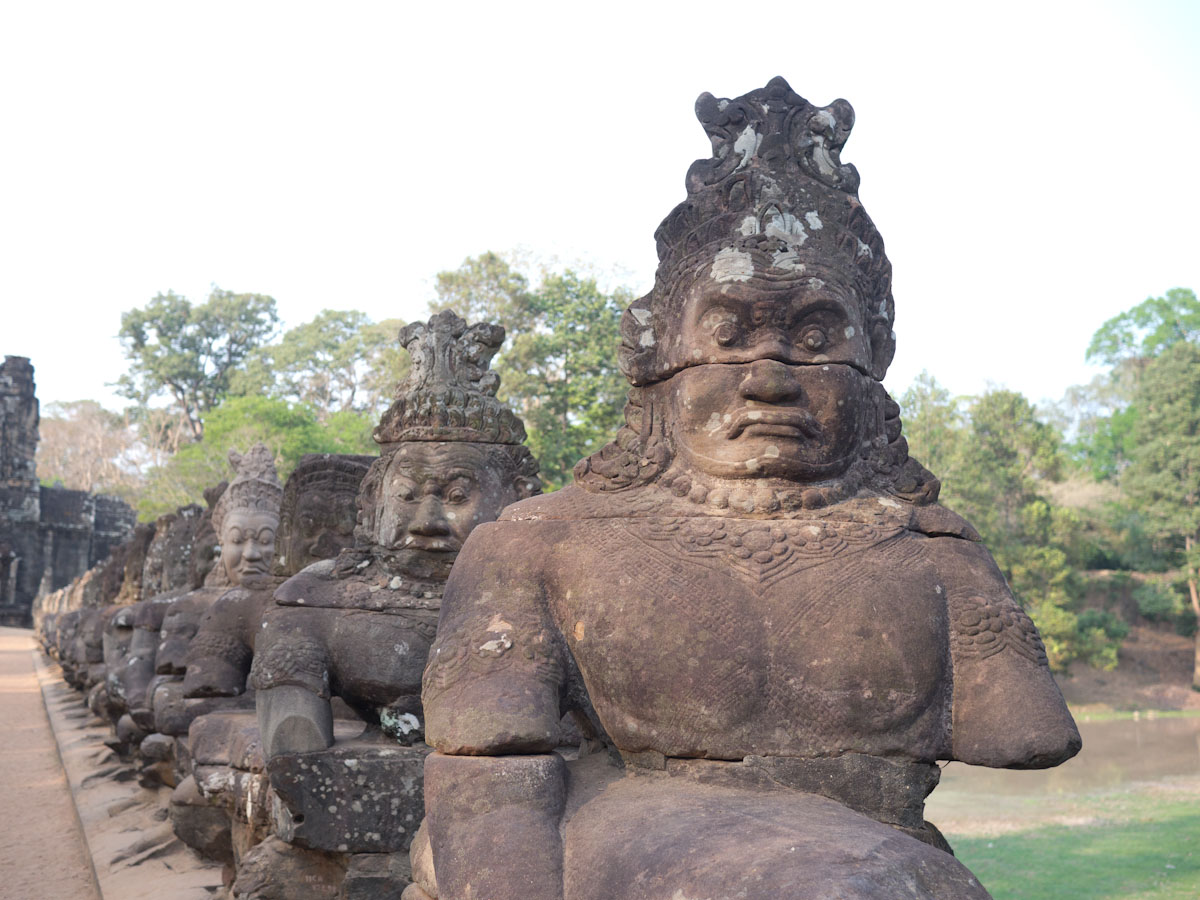
During successive reins, the Angkor kings built over a thousand temples. Angkor is estimated to have been the largest preindustrial city in the world, the center of a large region of a hundred square miles supporting as many as one million people at its peak.
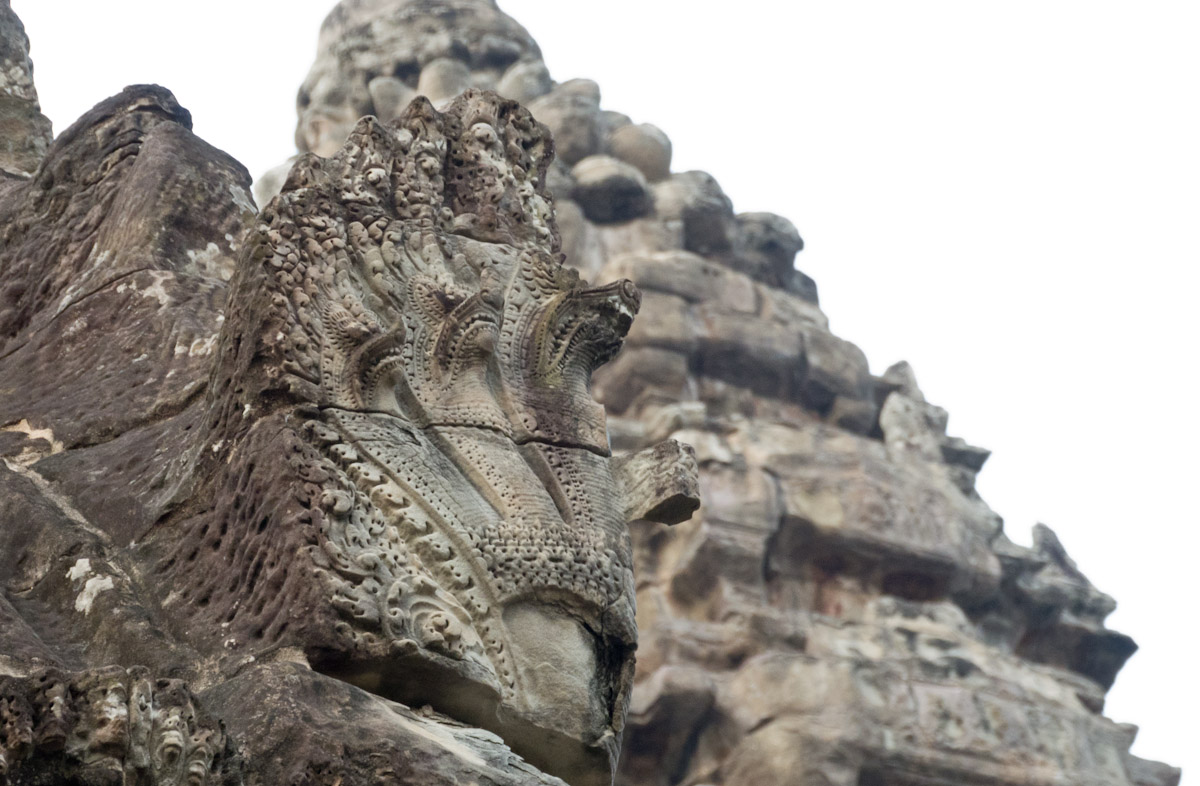
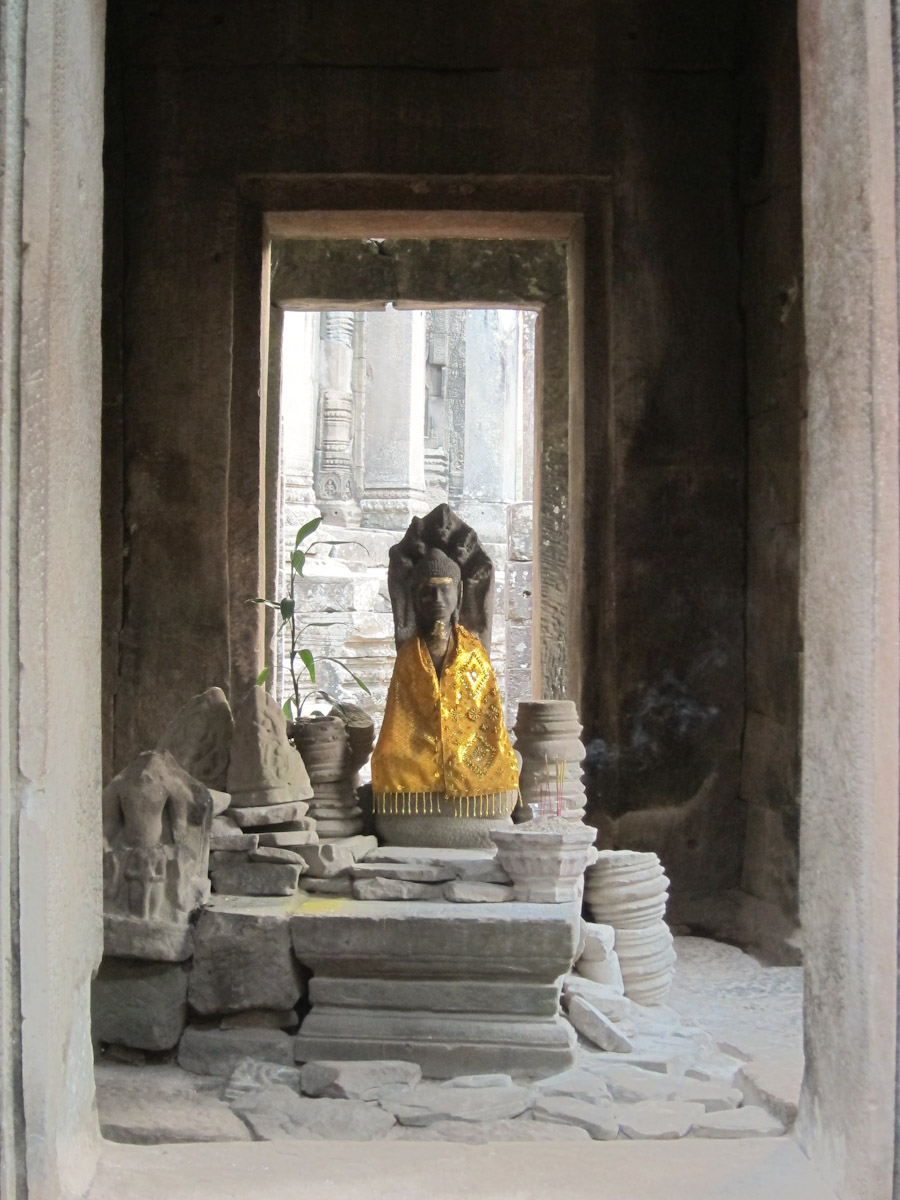
Snakes and dancers and Kings are dominant in their temples. Buddha is here as well – usually shown seated in meditation under an umbrella of snakes. The story goes that when Buddha was seeking enlightenment and seated under the Bodhi tree, a great rain storm came up and his body was punished severely. The snake god rises up just behind him, yet Buddha remains rapt in concentration. The snake god takes pity and spreads his hood, shielding the Buddha from the rain.
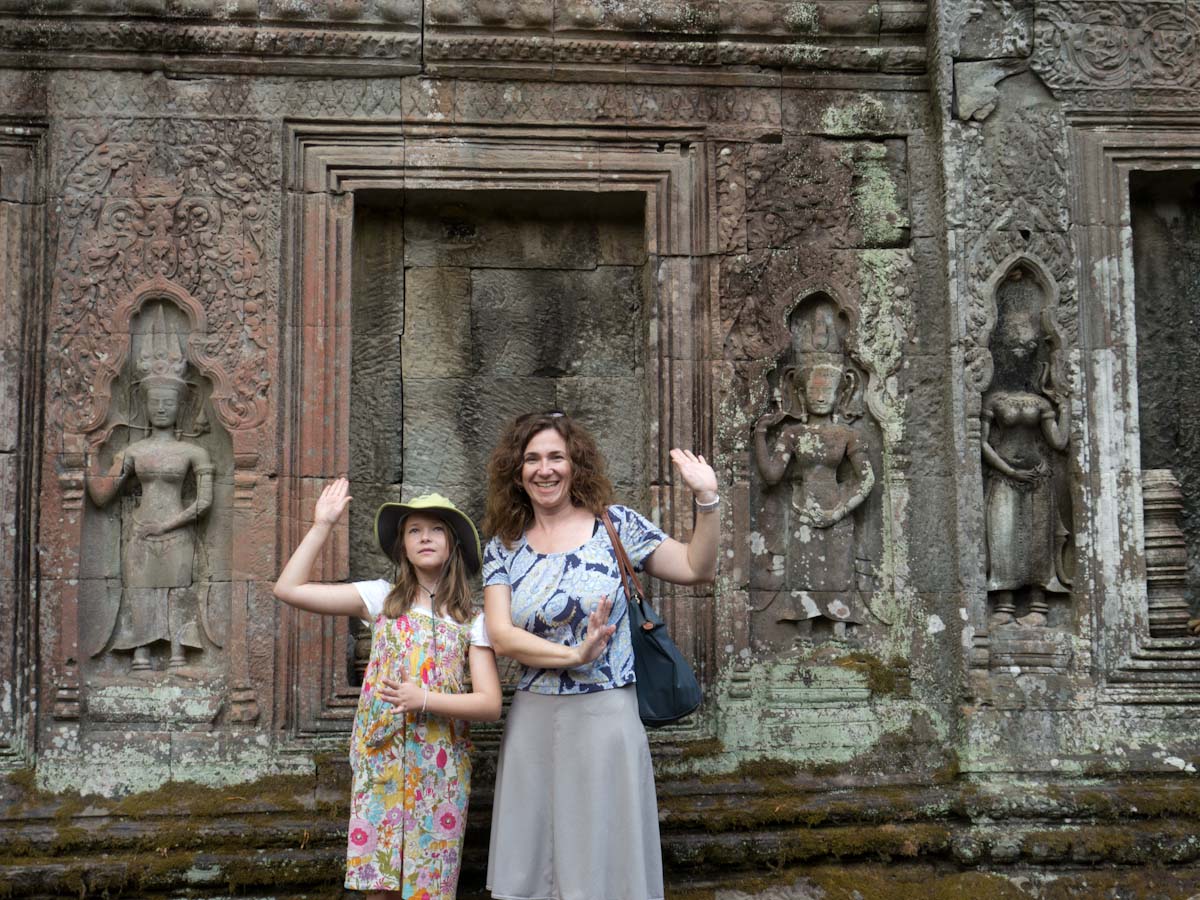
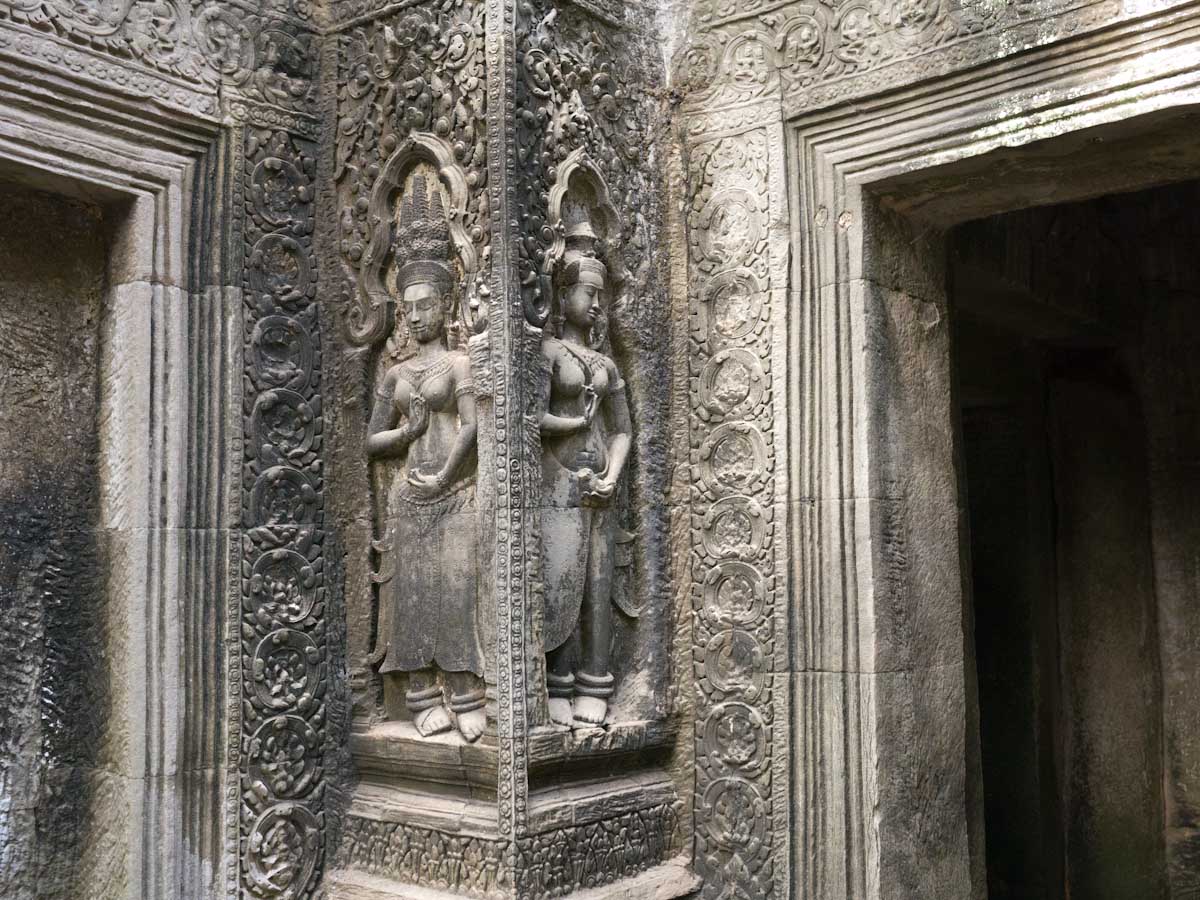
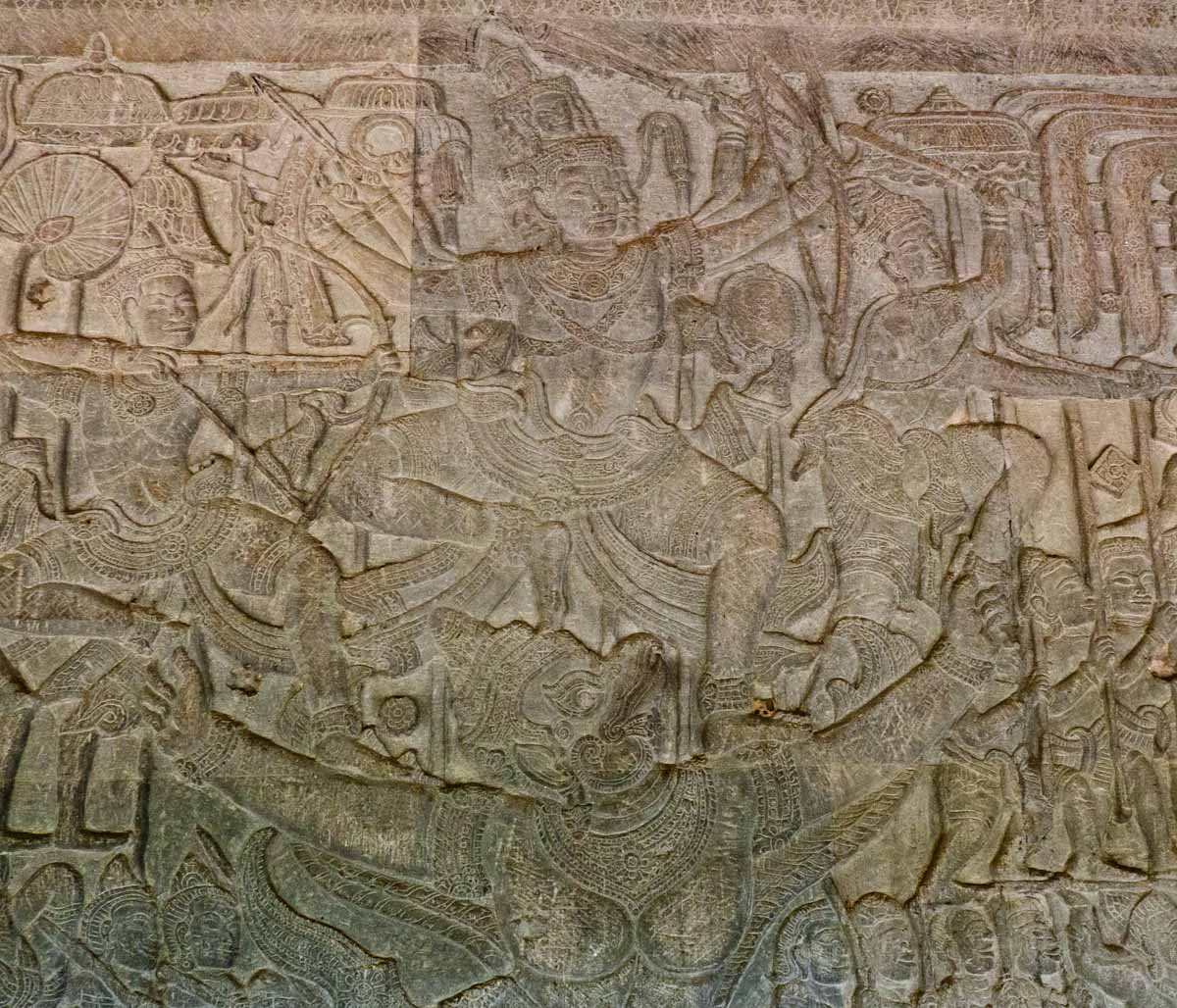
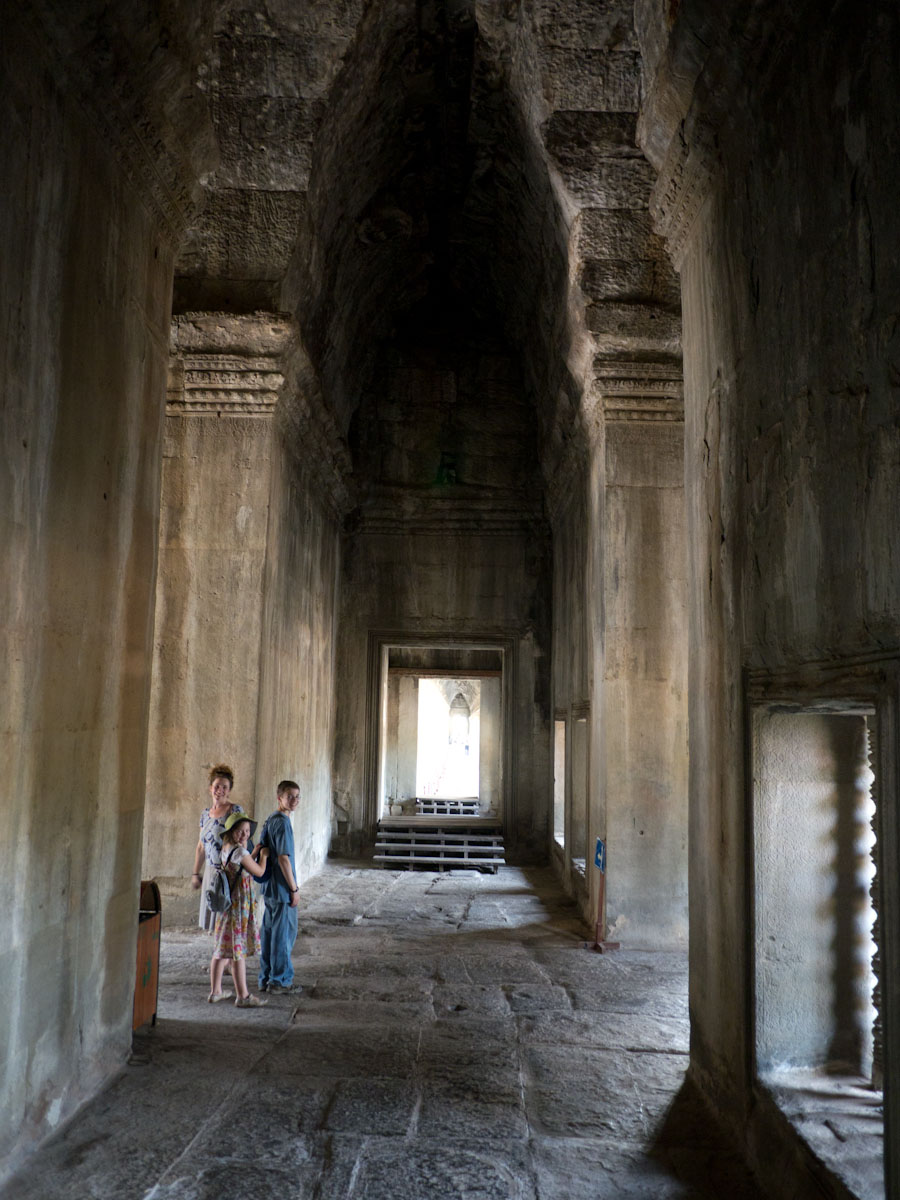
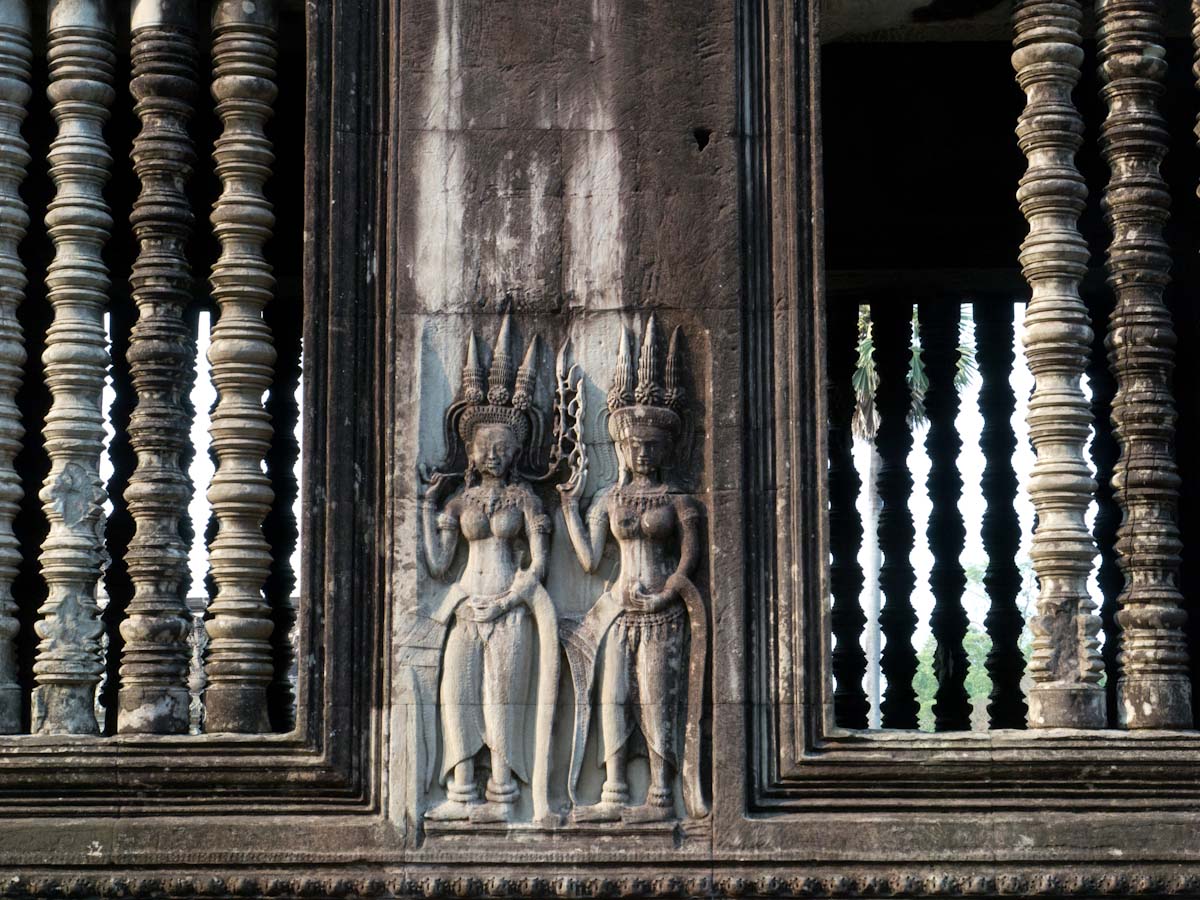
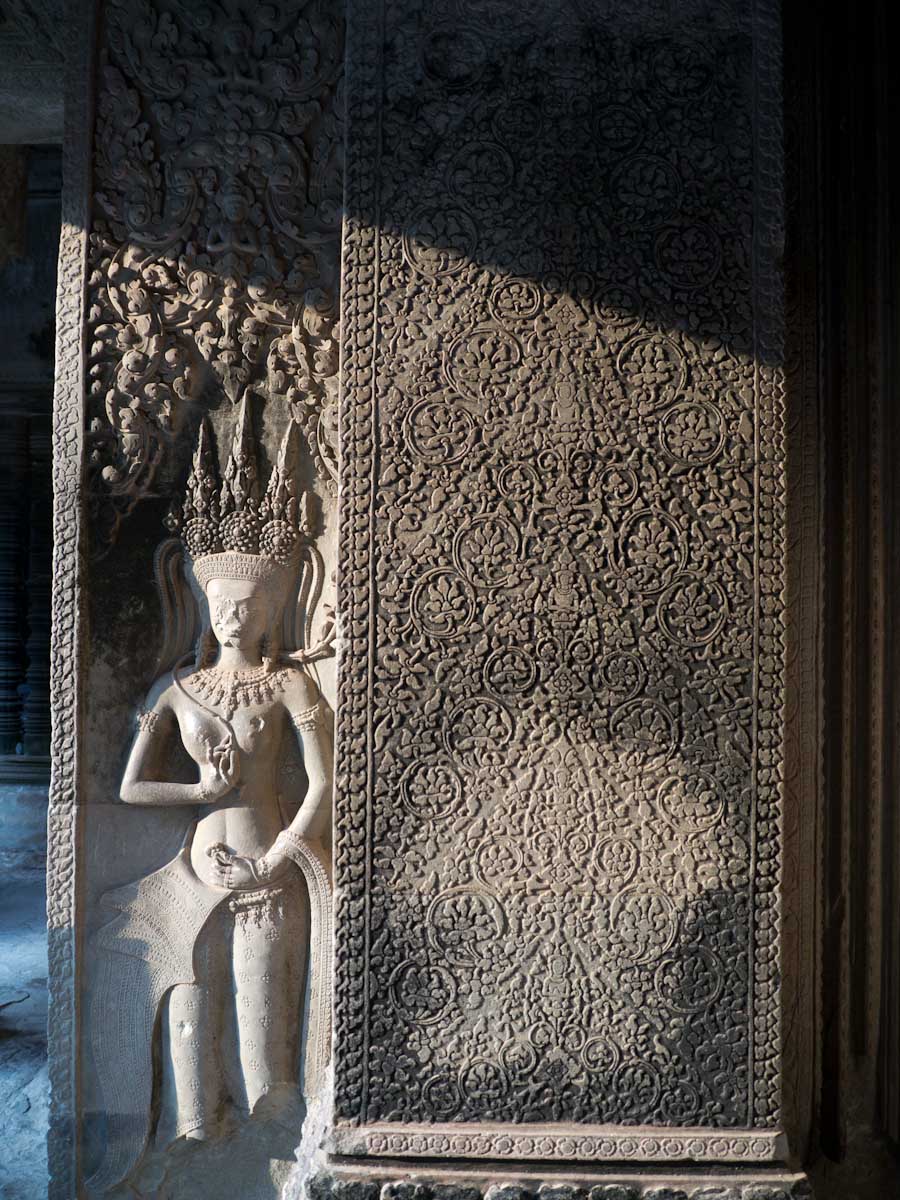
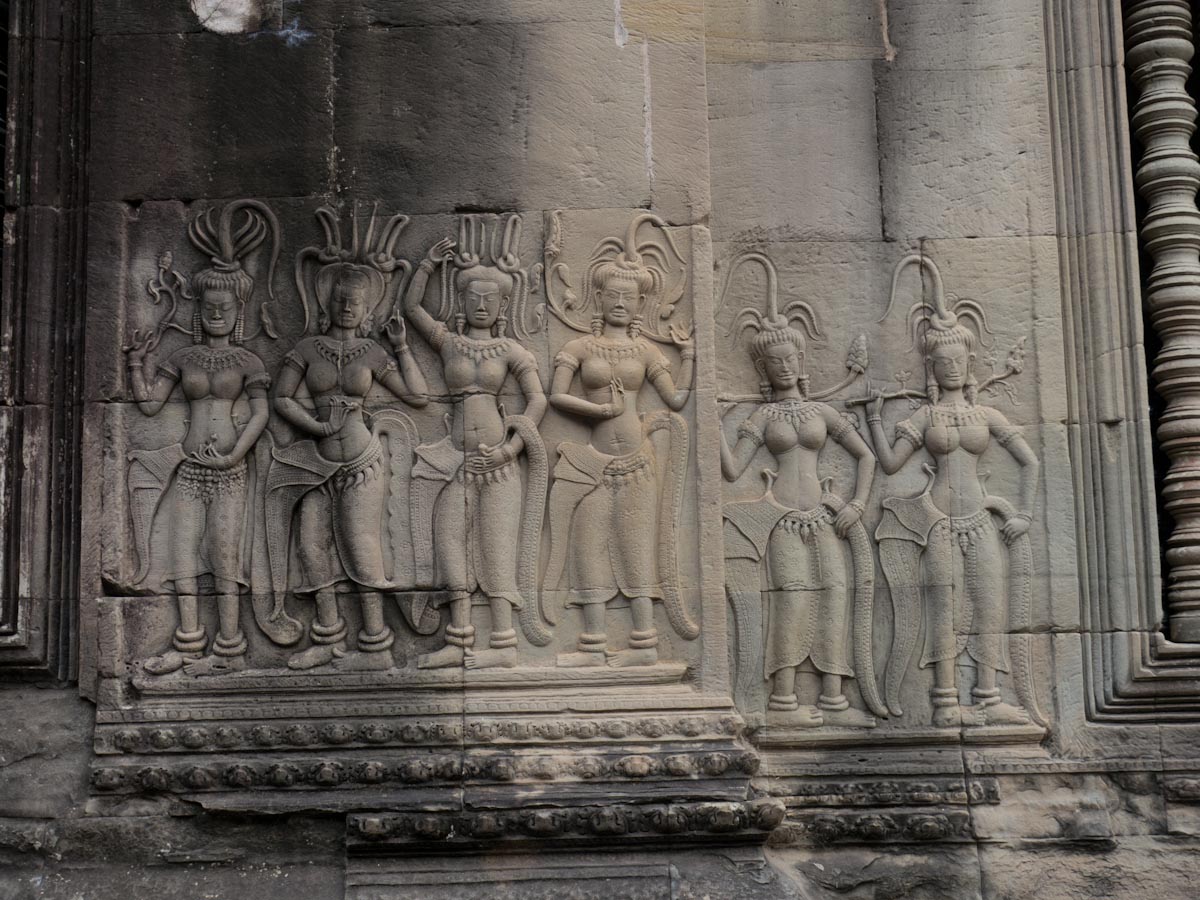
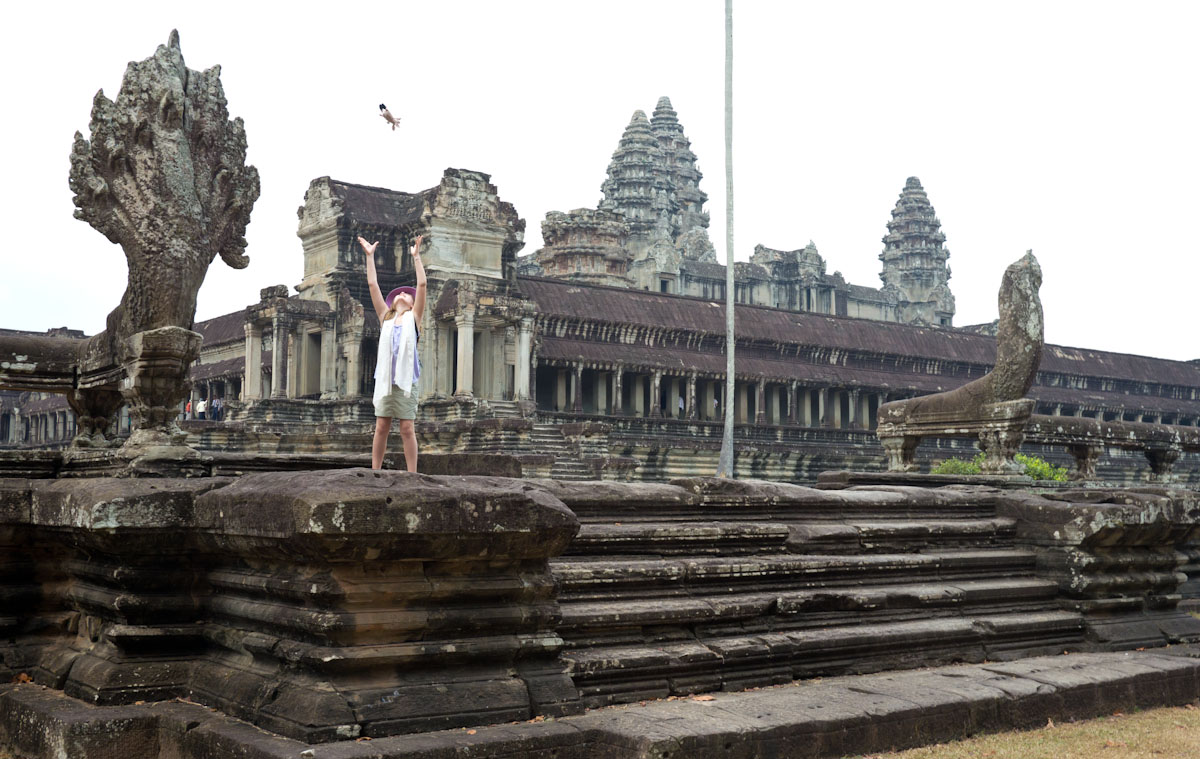
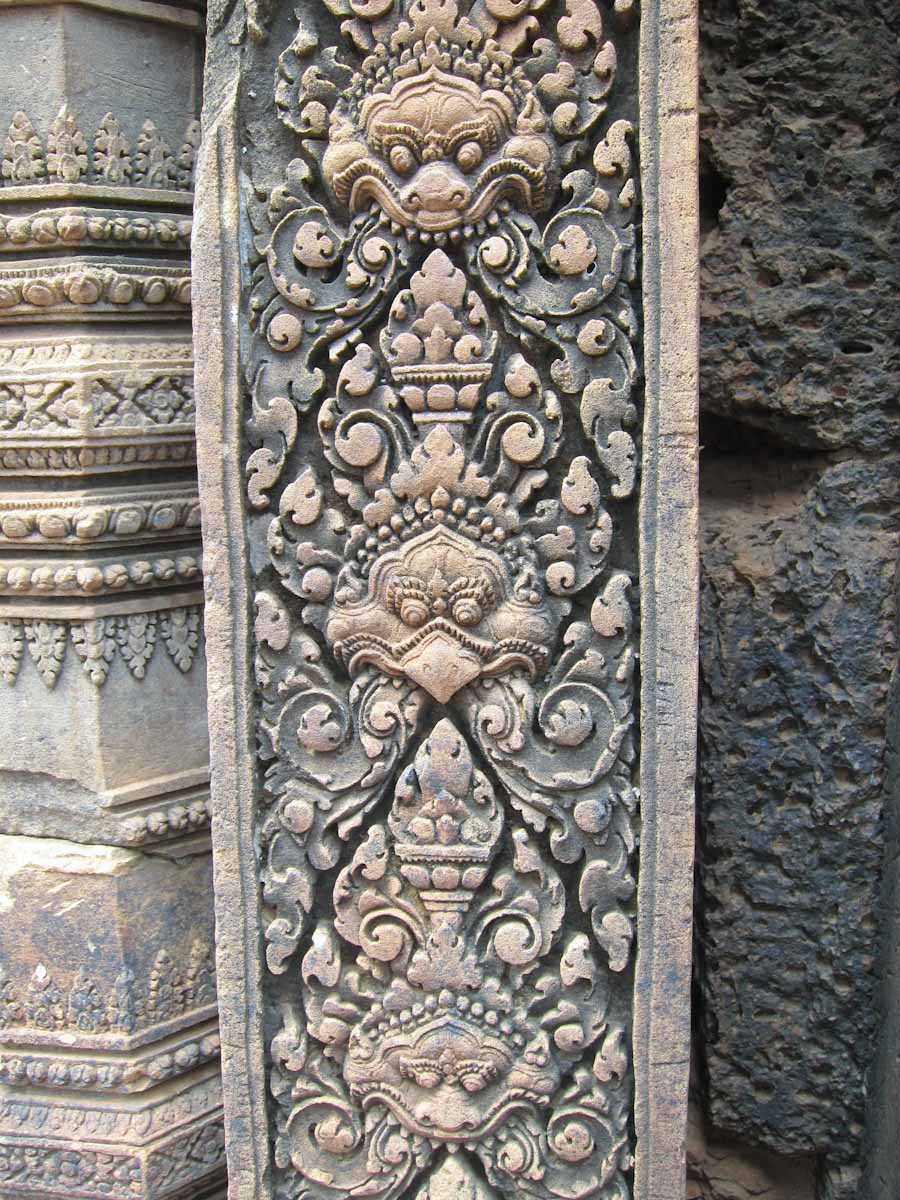
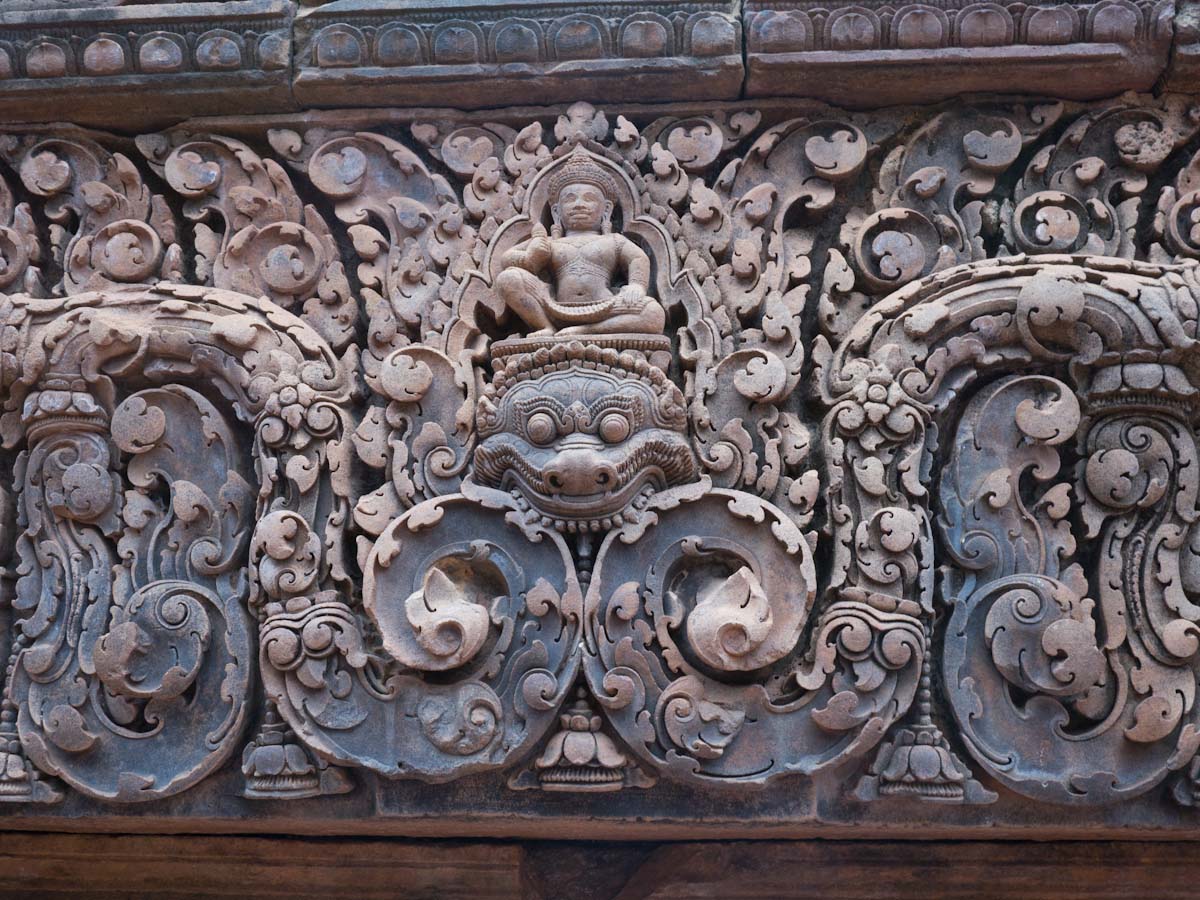
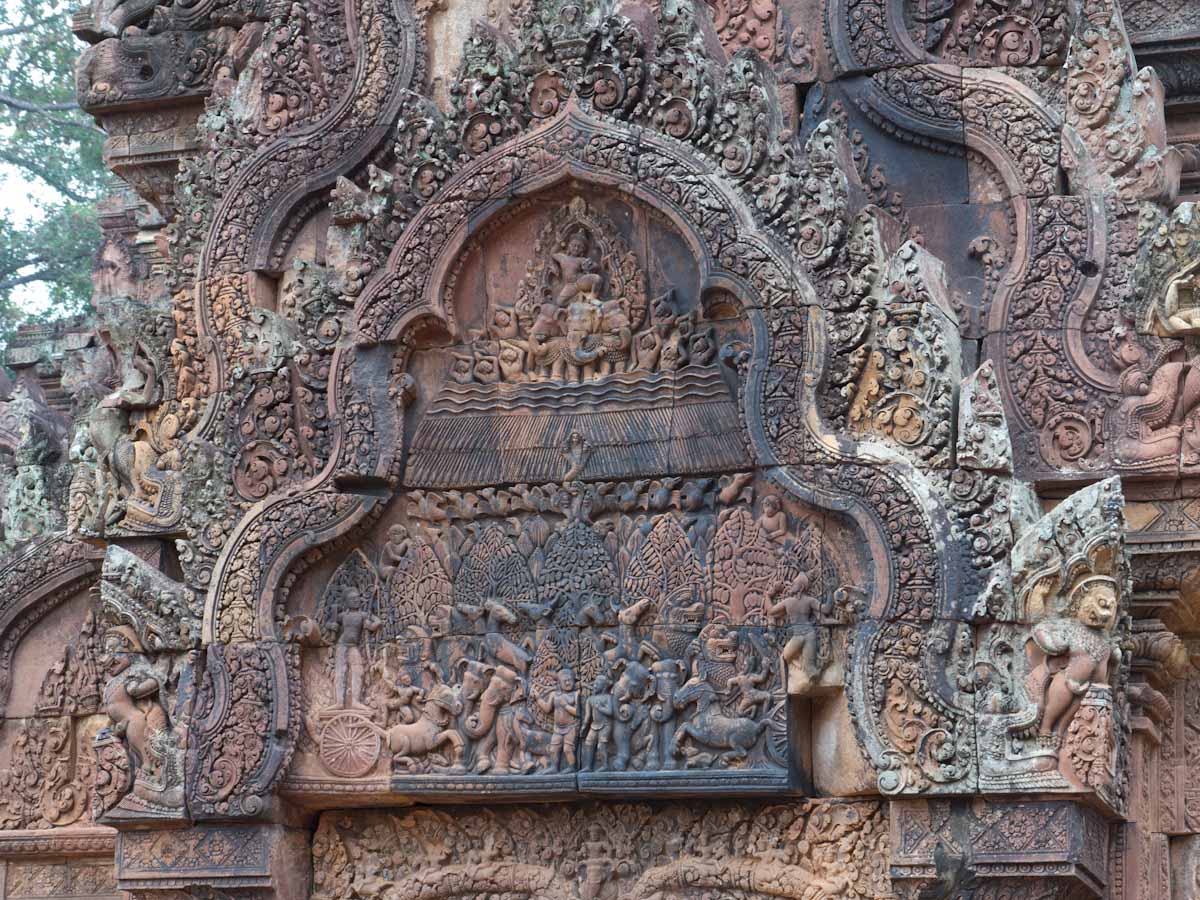
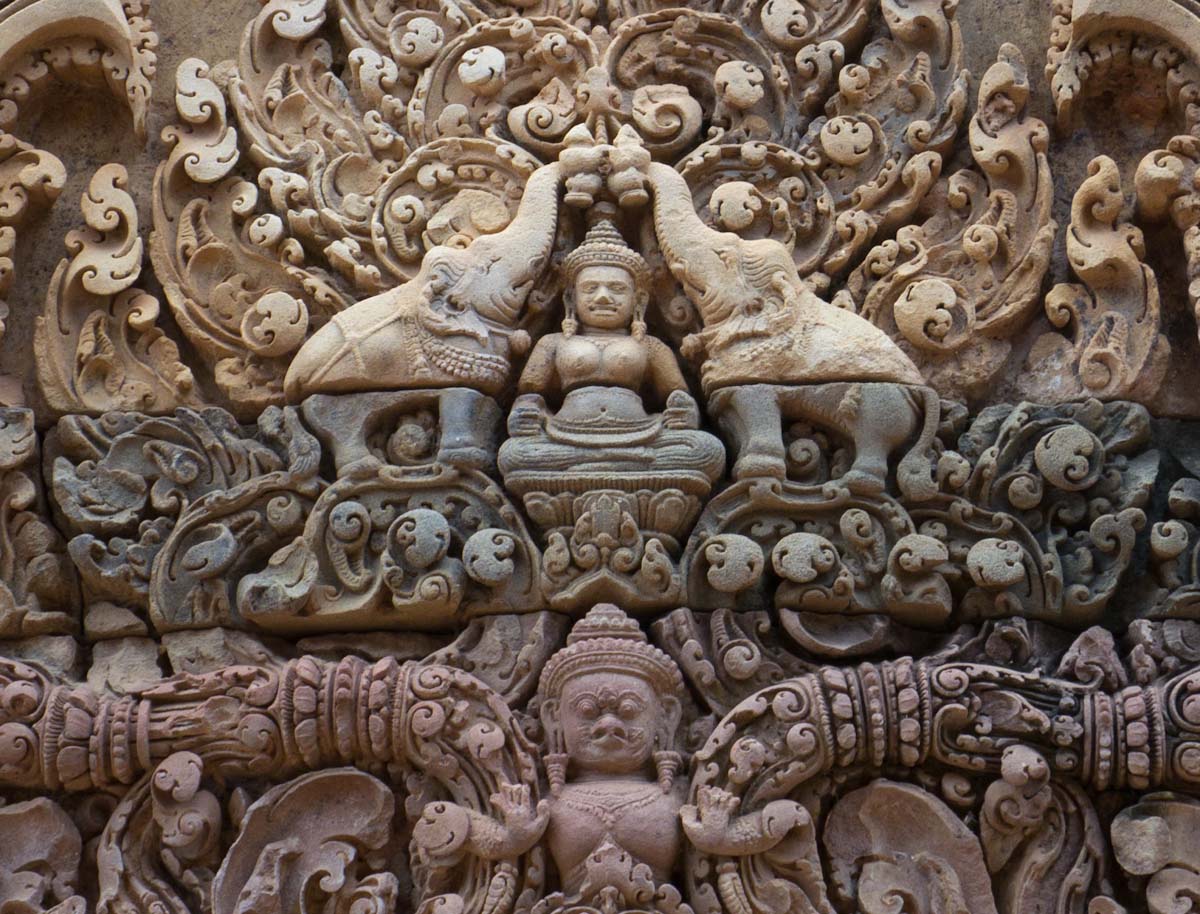
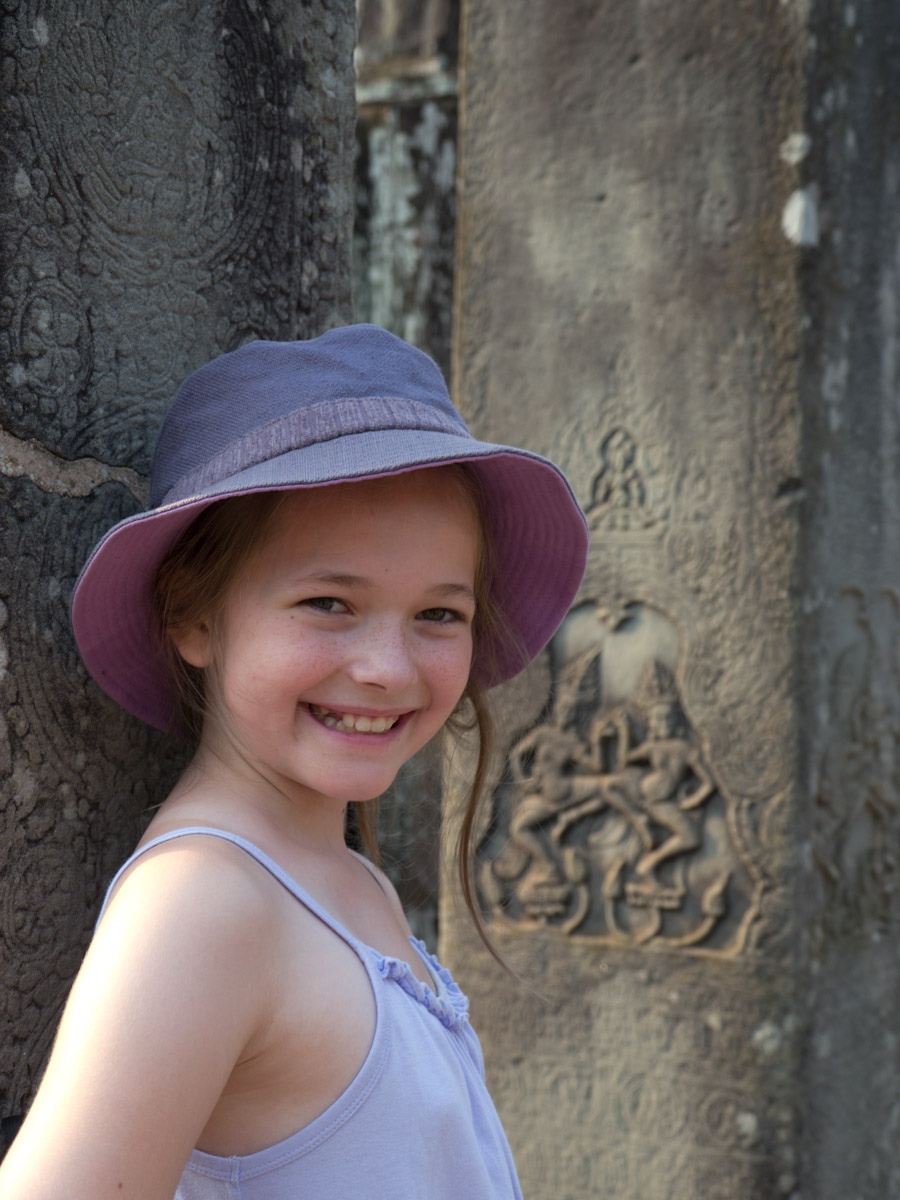
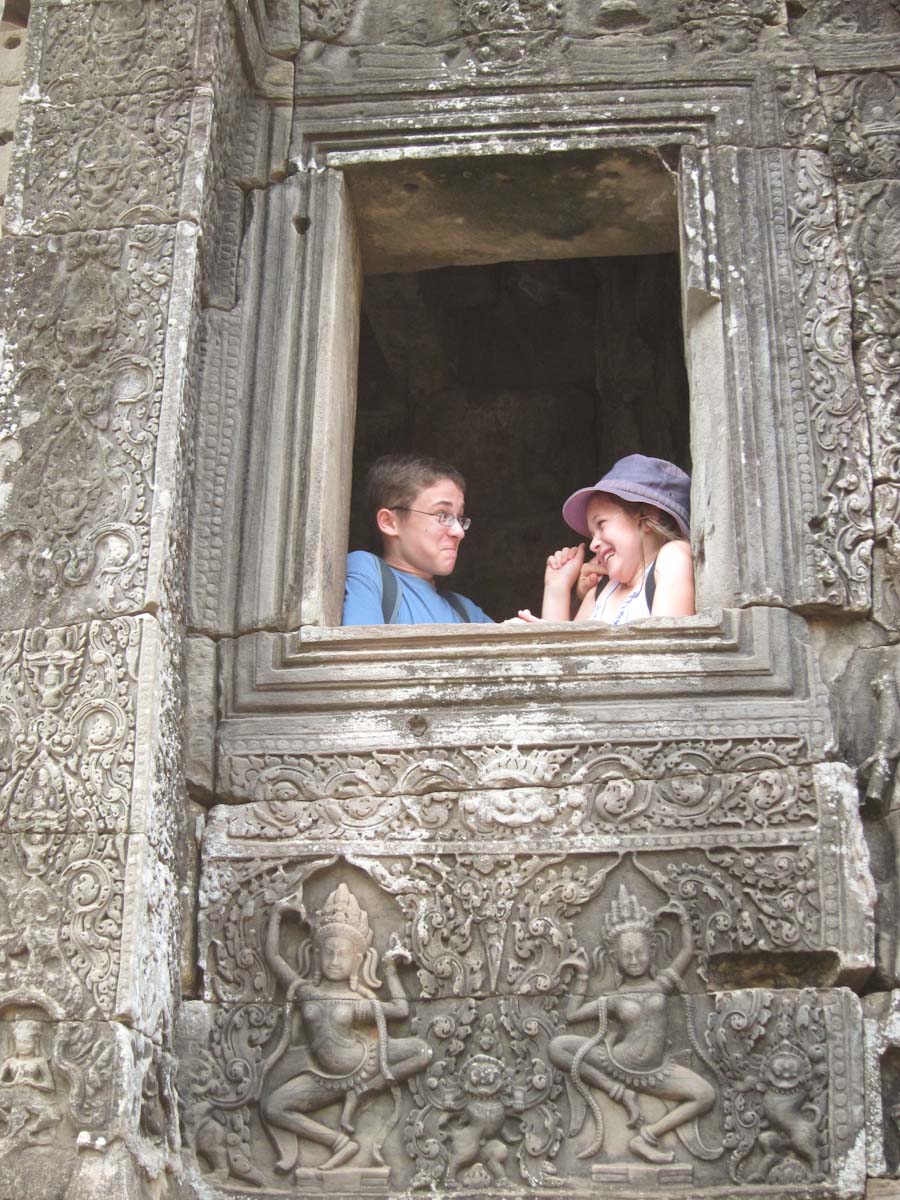
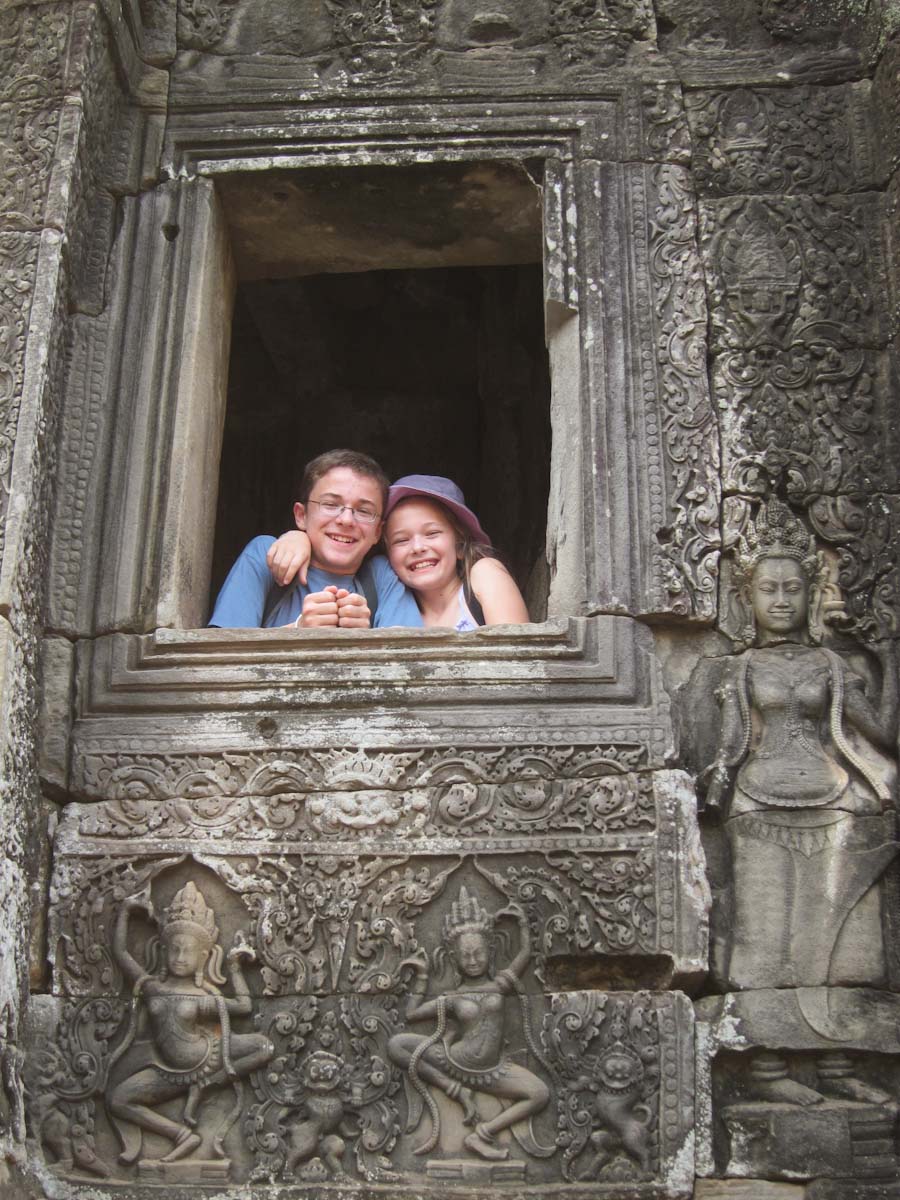
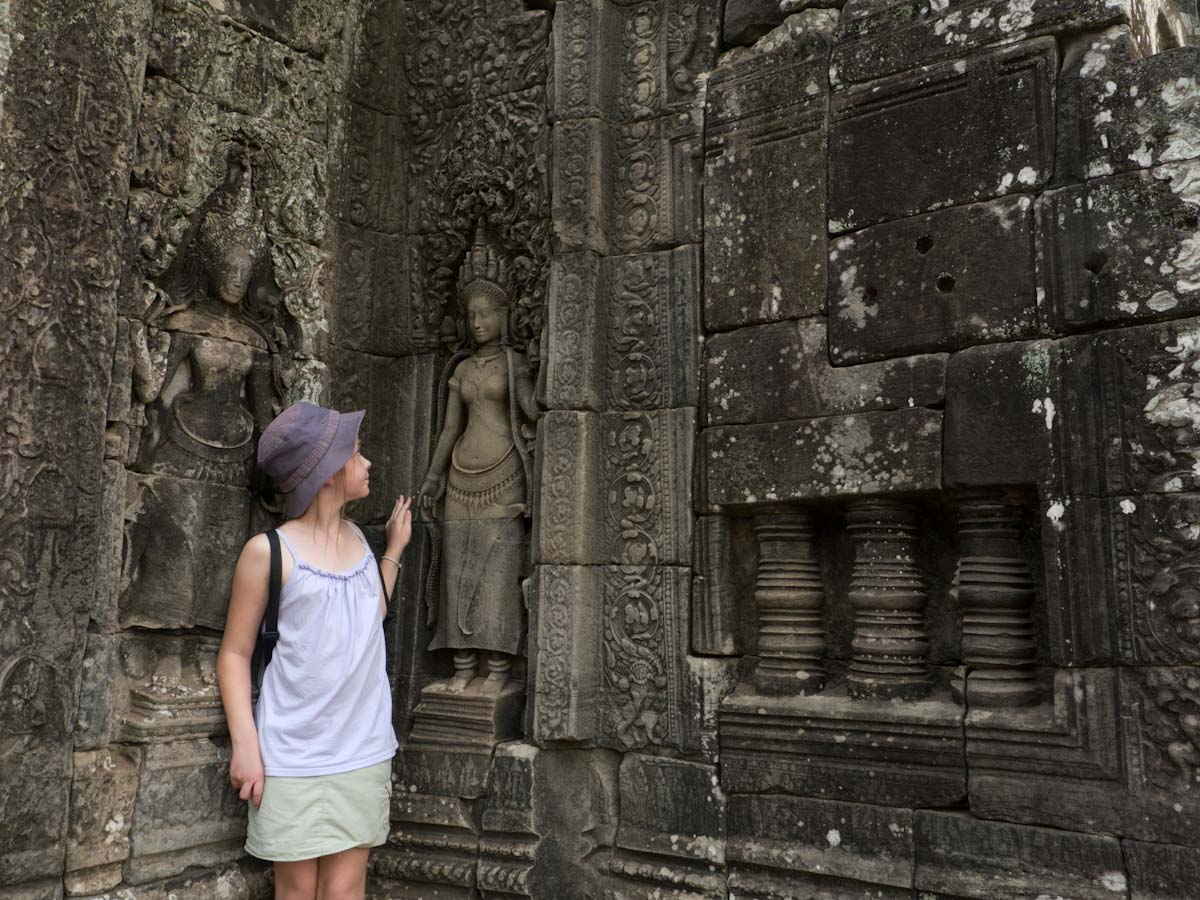
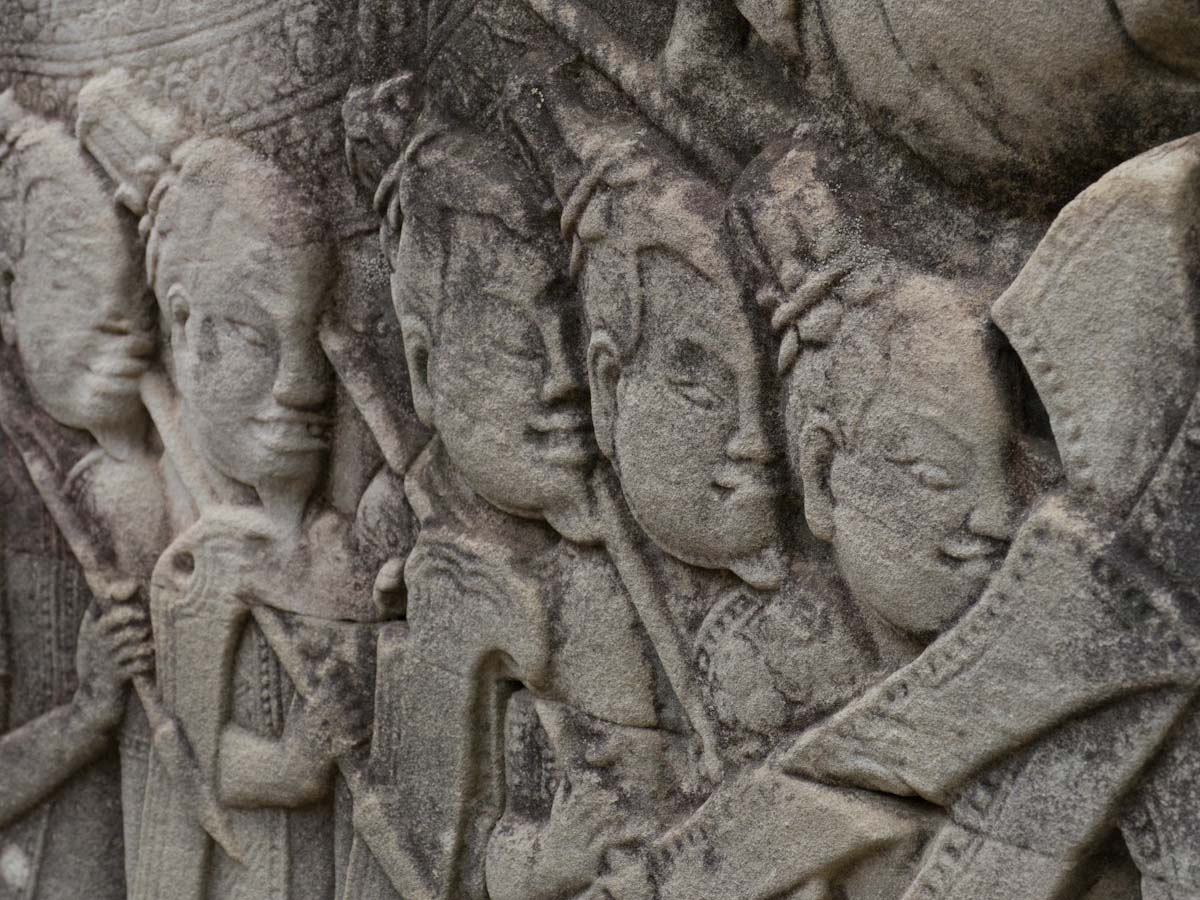
The temples are generally dedicated to Shiva the destroyer – the god with ten arms and a trident. It is easy to tell when a temple is dedicated to Shiva because they put a big stone bull – his steed – out in front. Some later temples are dedicated to Vishnu and he is fighting demons on the back of his eagle-headed friend Garuda. You can also see Ganesh, Shiva’s son and various Ramayana figures. As we saw in Egypt and Rome, at times the King’s likeness is placed onto statues shaped like one of the gods, to show he is a deity or to unite the King with a god in the eyes of the people. Then there are pediments headed by Indra the Hindu god of war riding his three-headed elephant, and the decorative carvings reveal strange lion-elephant and lion-bird creatures. Intricate lotus petals are carved into many pillars. Interior walls have modern windows with detailed frames, some filled left to right by elaborate geometric rods. Courtyards hold tables that were once topped by lingas – phallic totem poles a meter high dedicated to the Hindu lords. Many corners and walls are decorated by beautiful dancers – the Apsaras – who hold eternally graceful poses underneath elaborate hairpieces. As you admire them, they gaze back at you, with amused half-smiles.
It is all so glorious. But what I am really thinking is “you had me at snakes!”
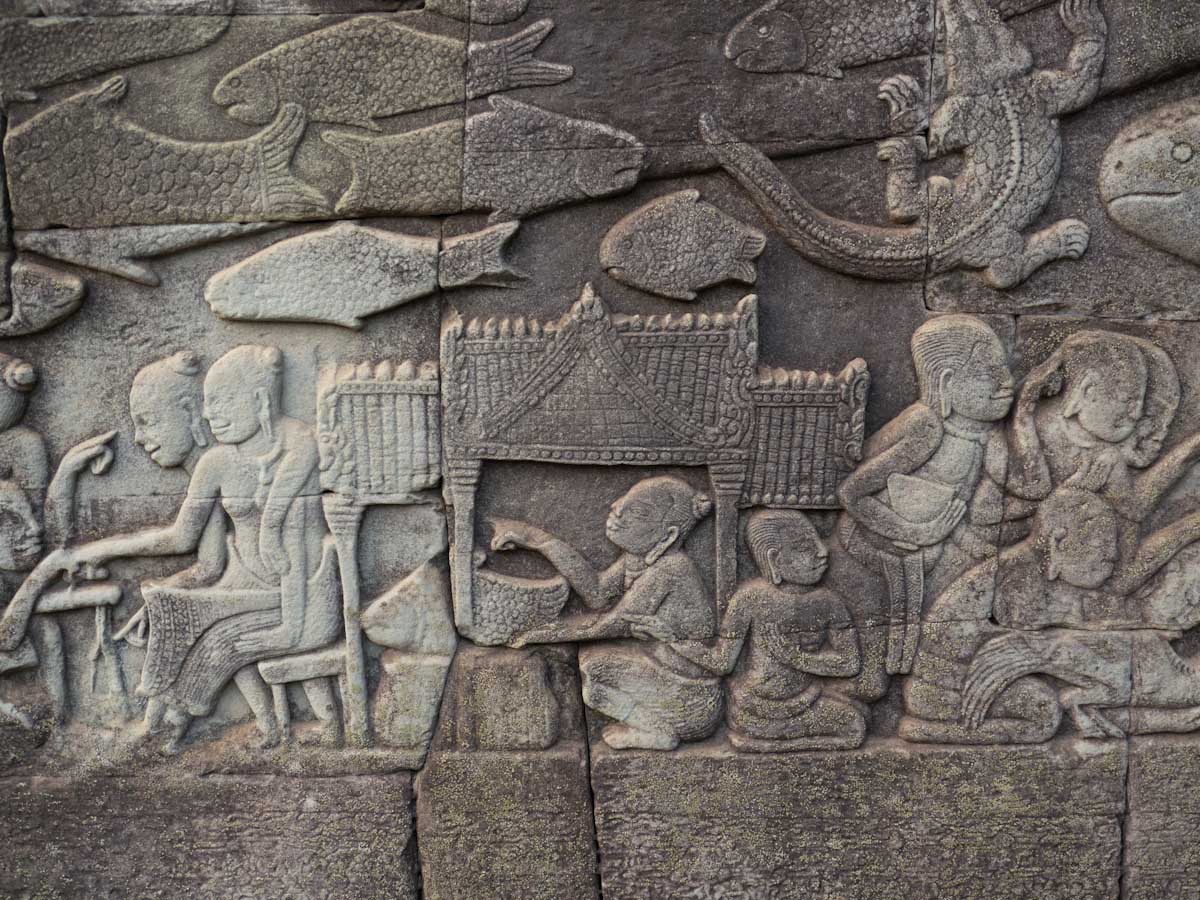
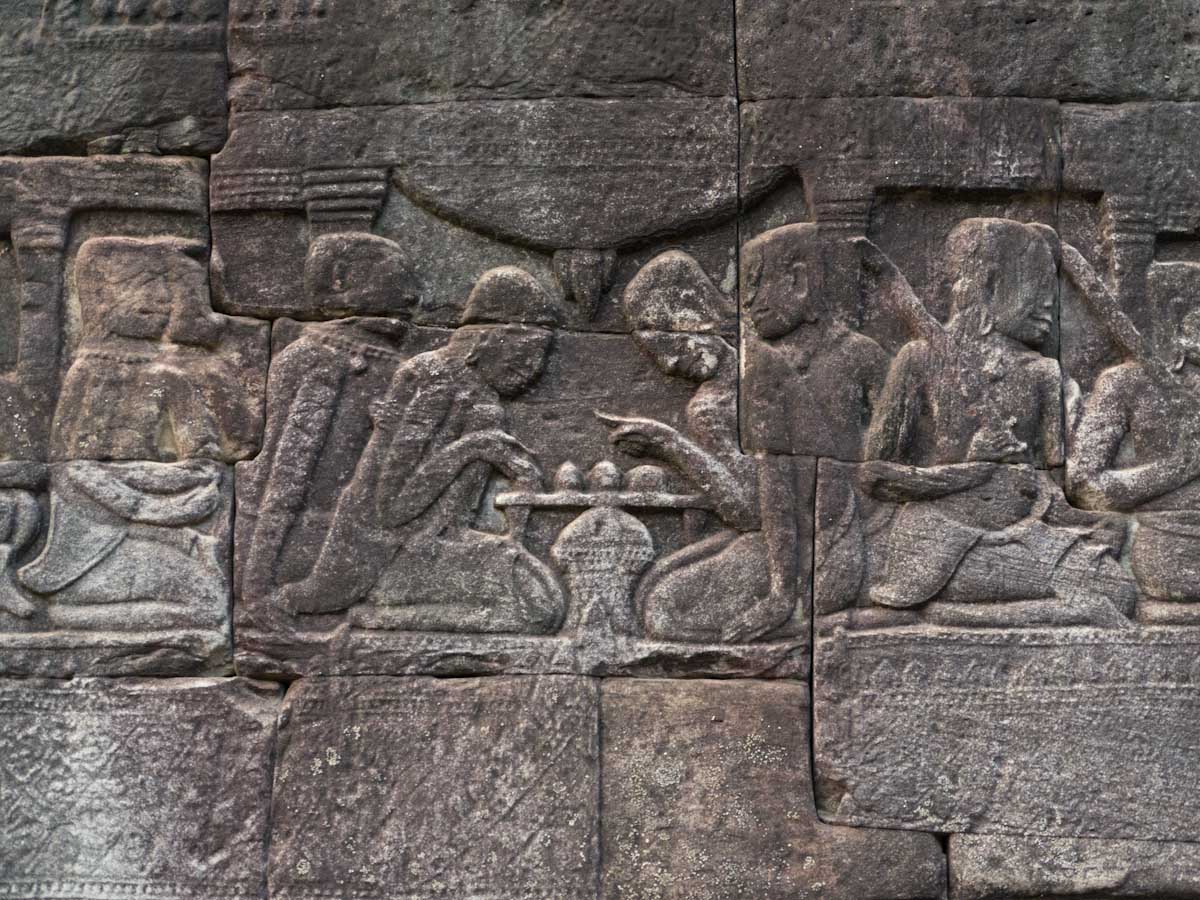
In the middle ages the Khmer fought frequently with the nearby Cham people who lived between Cambodia and Vietnam. They organized themselves aggressively after a major Cham invasion and established roads and hospitals and a military. Most of the time though they fished and farmed and hunted and played games just like many of the peoples of Southeast Asia.
There are four major temples to see here:
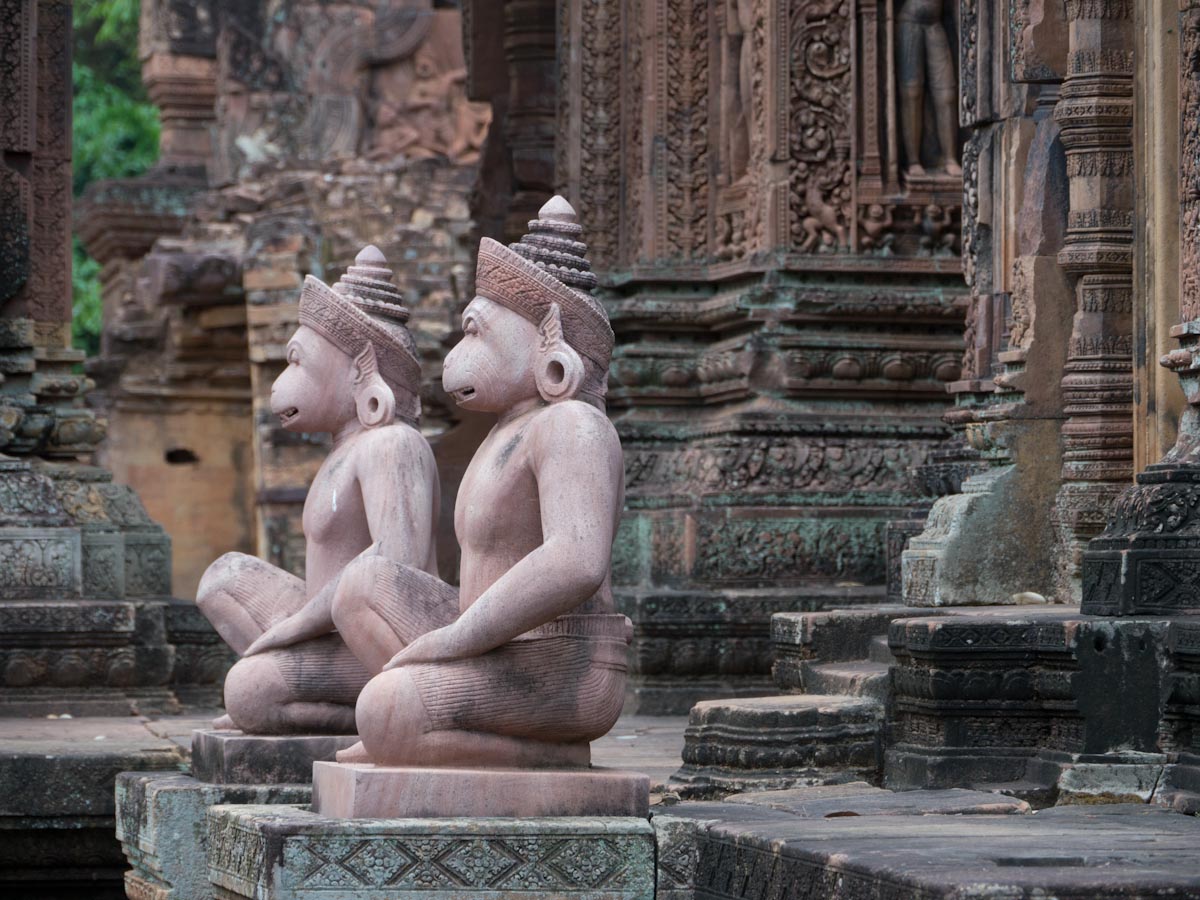
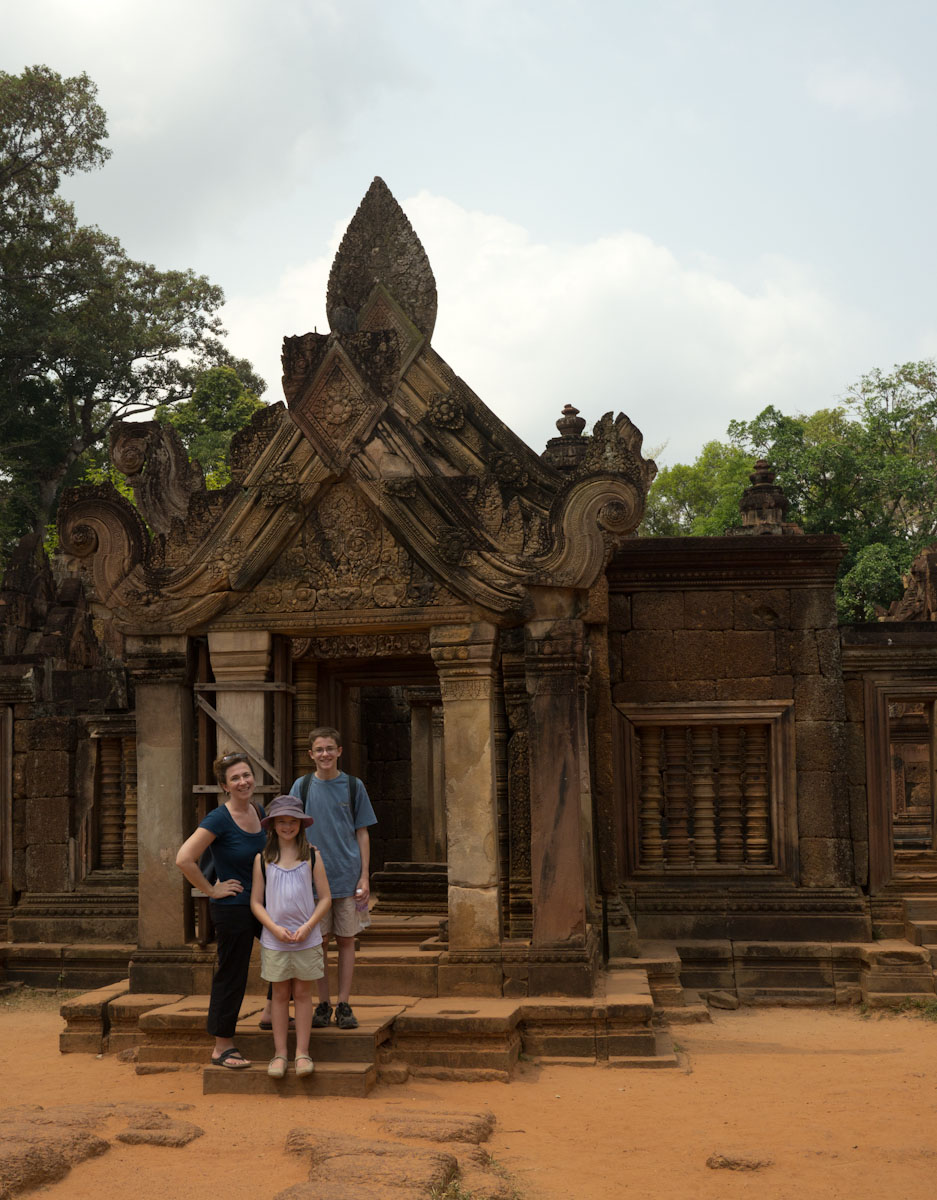
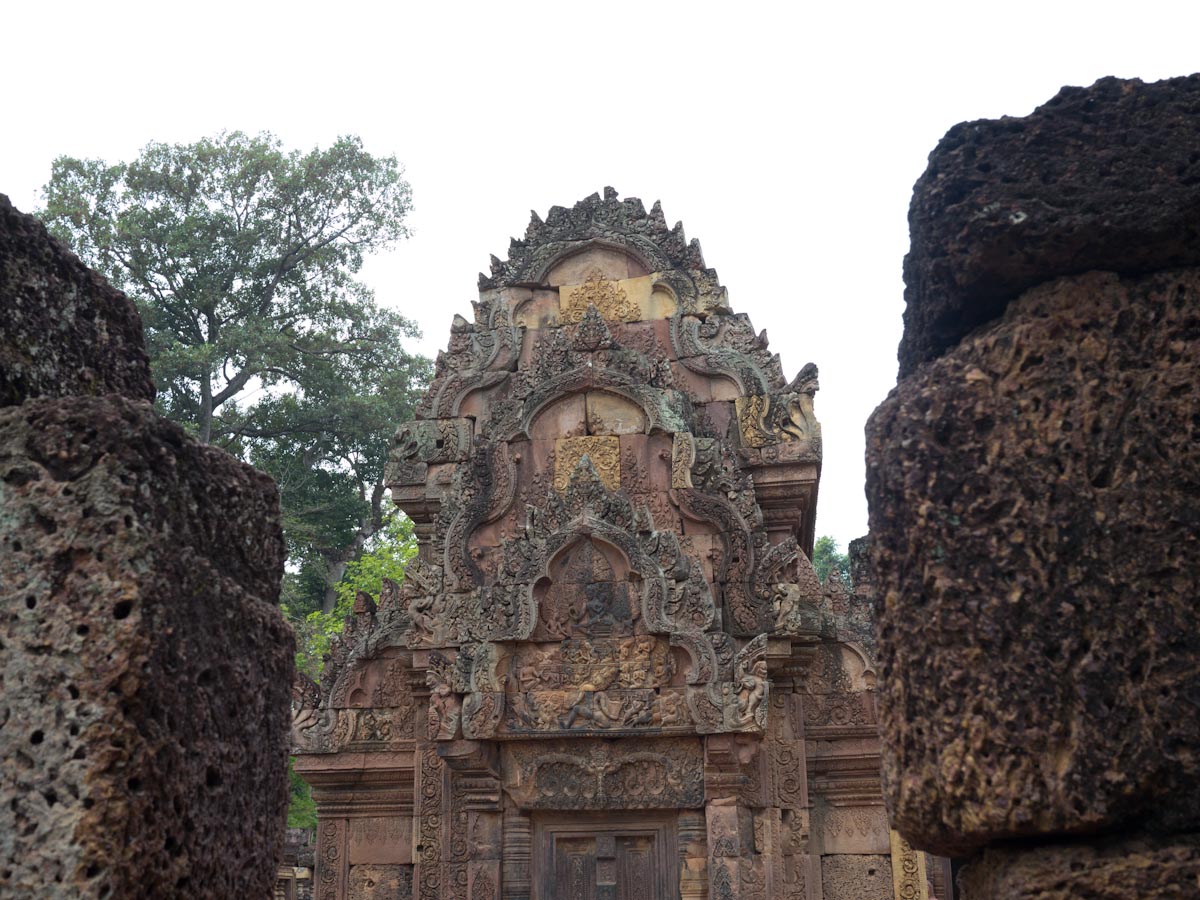
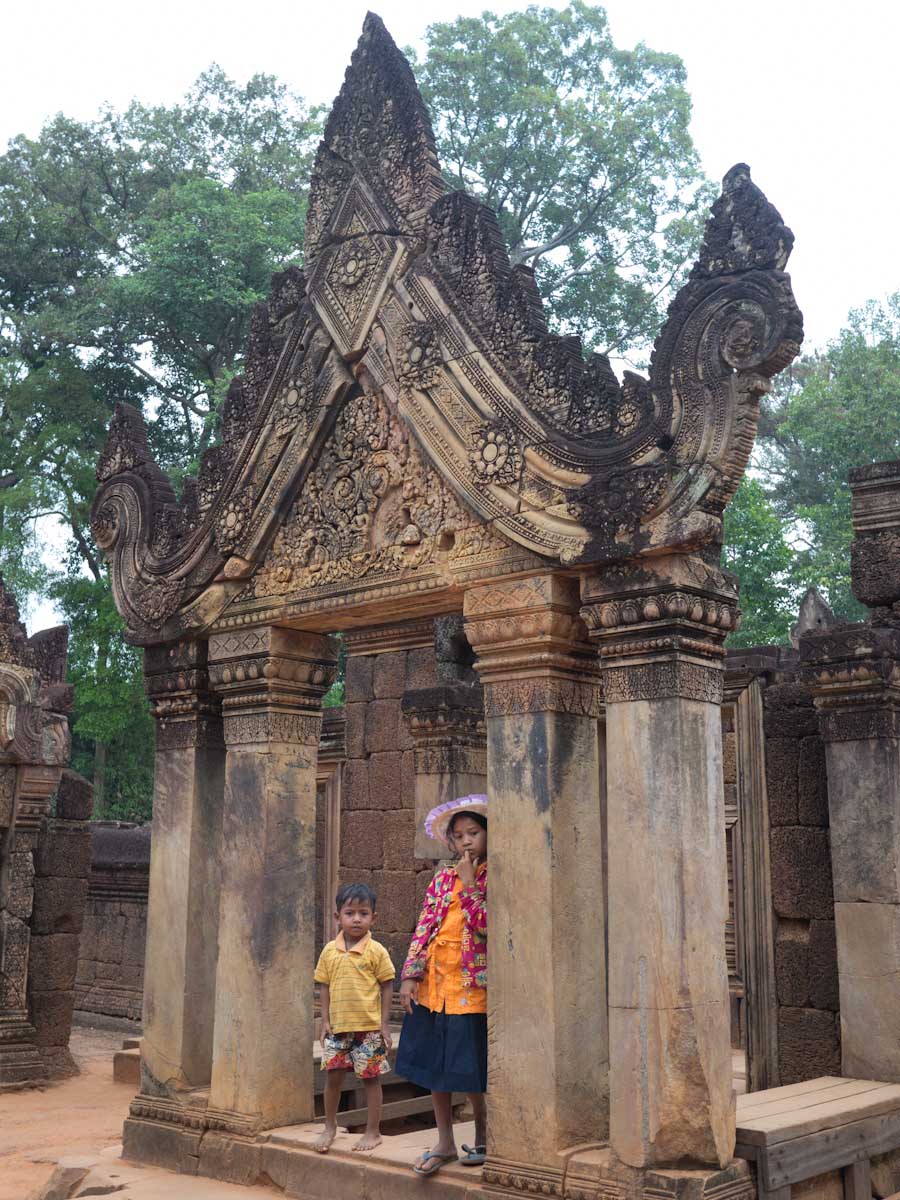
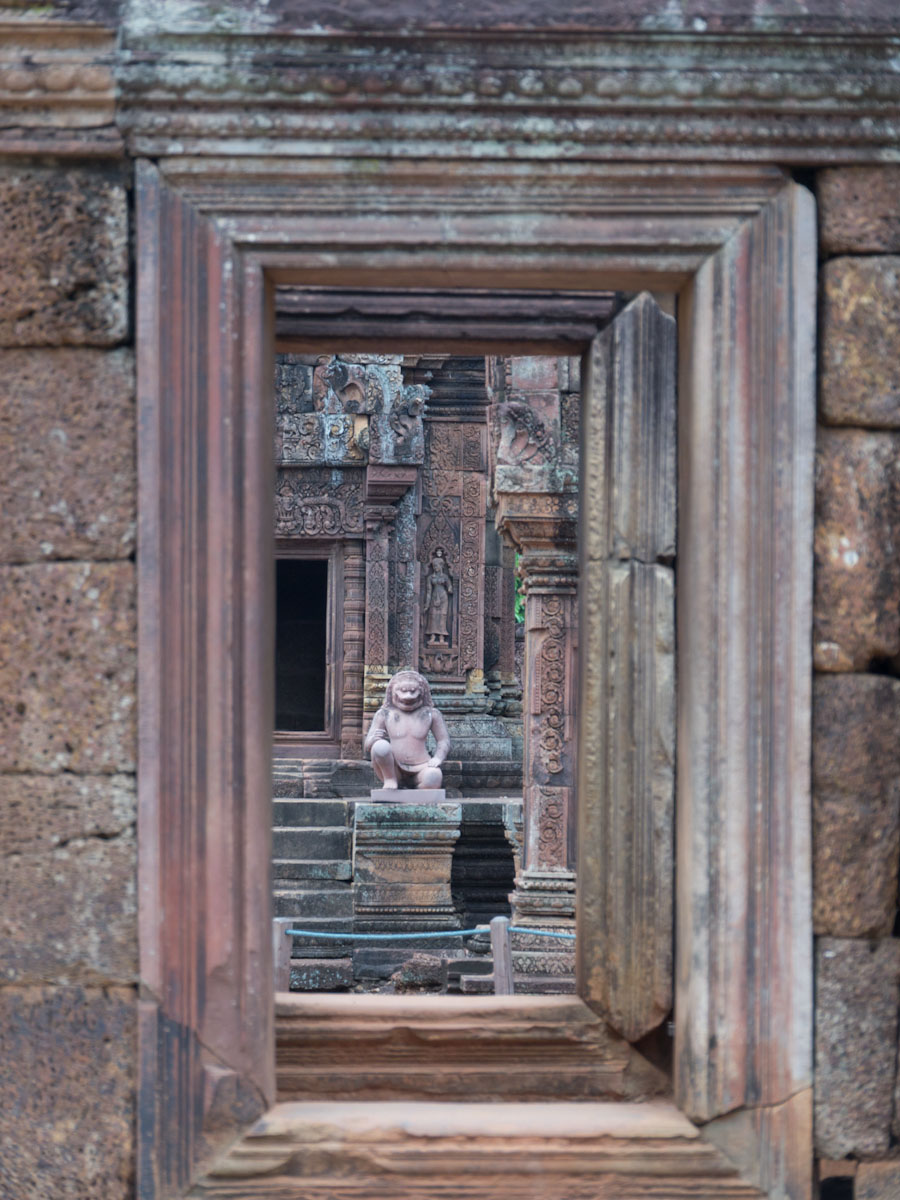
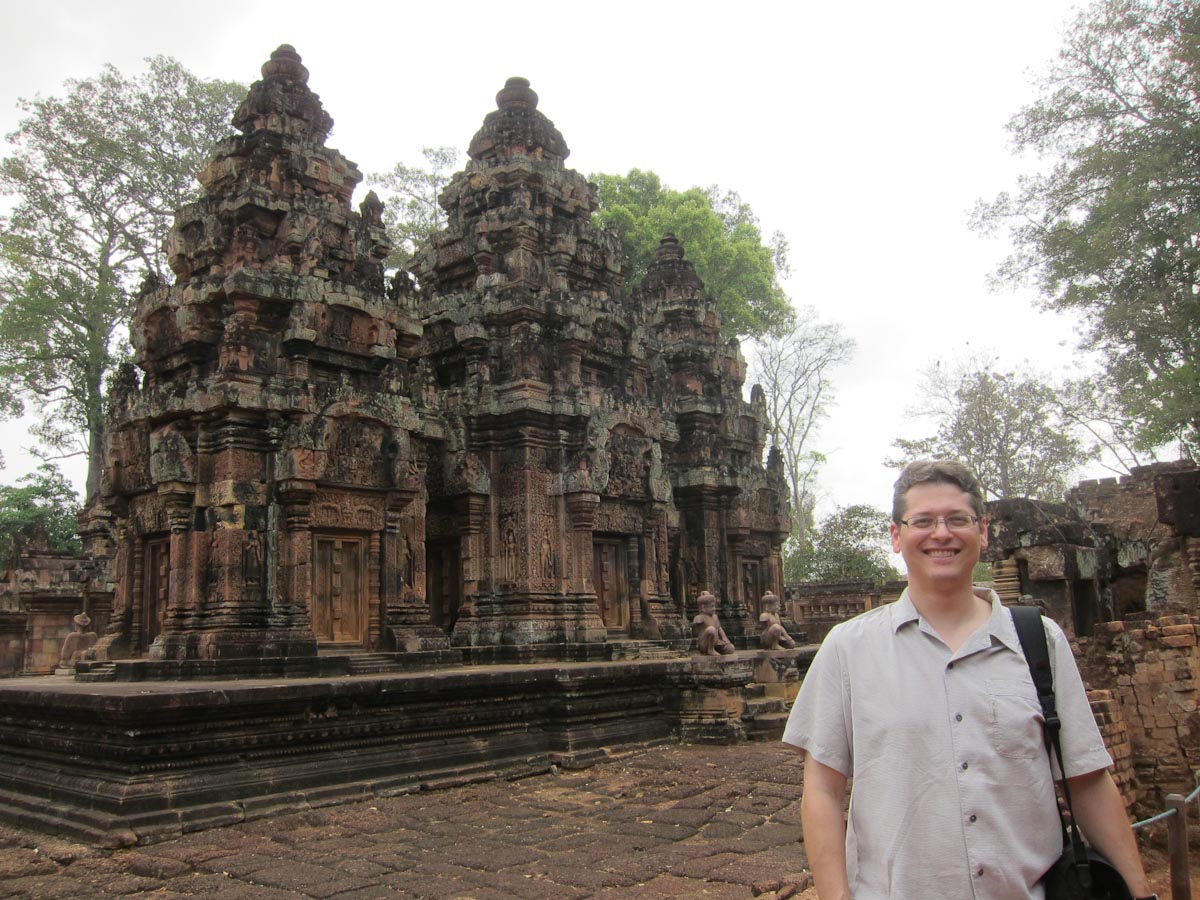
The Woman’s temple is a 10th century compact red-stoned temple that retains many beautiful carvings of Apsoras – female dancers — and Ramayana monkeys.
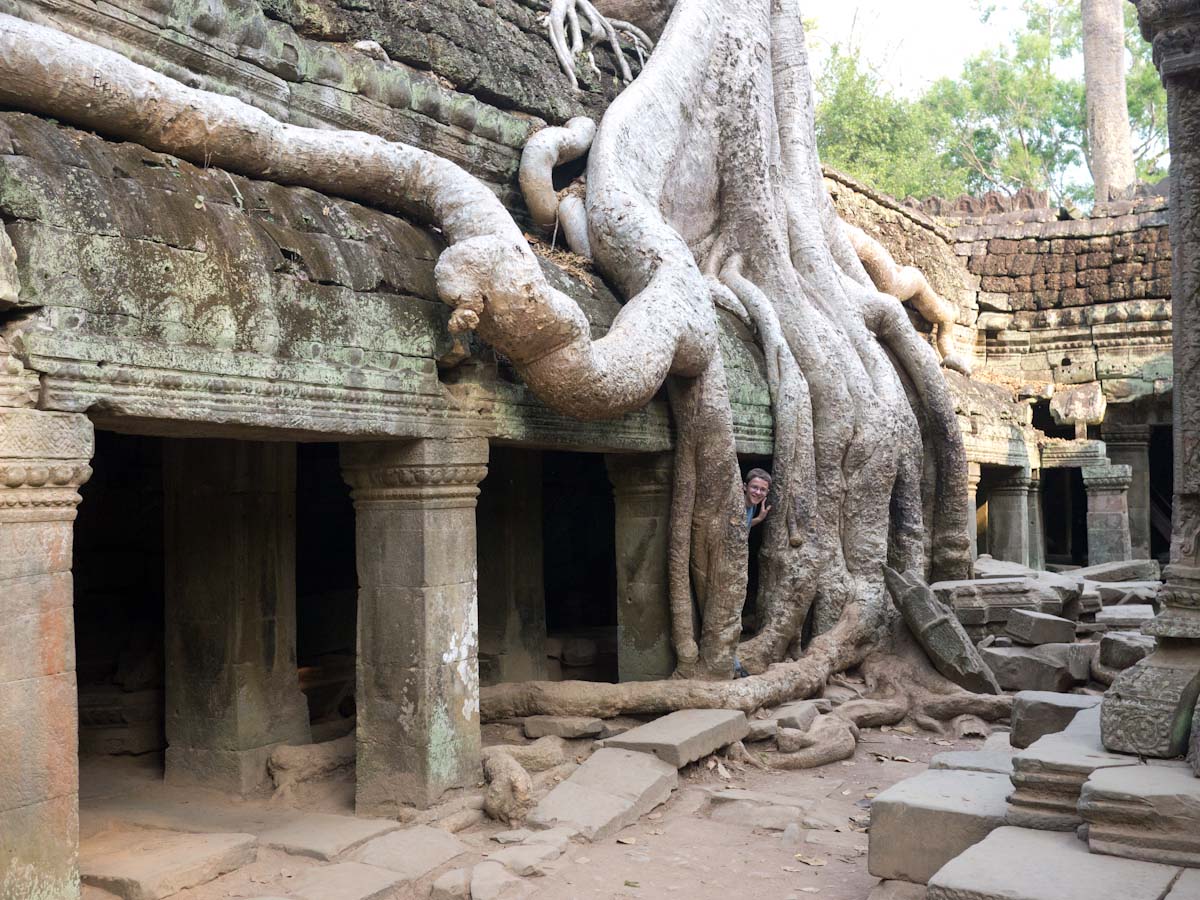
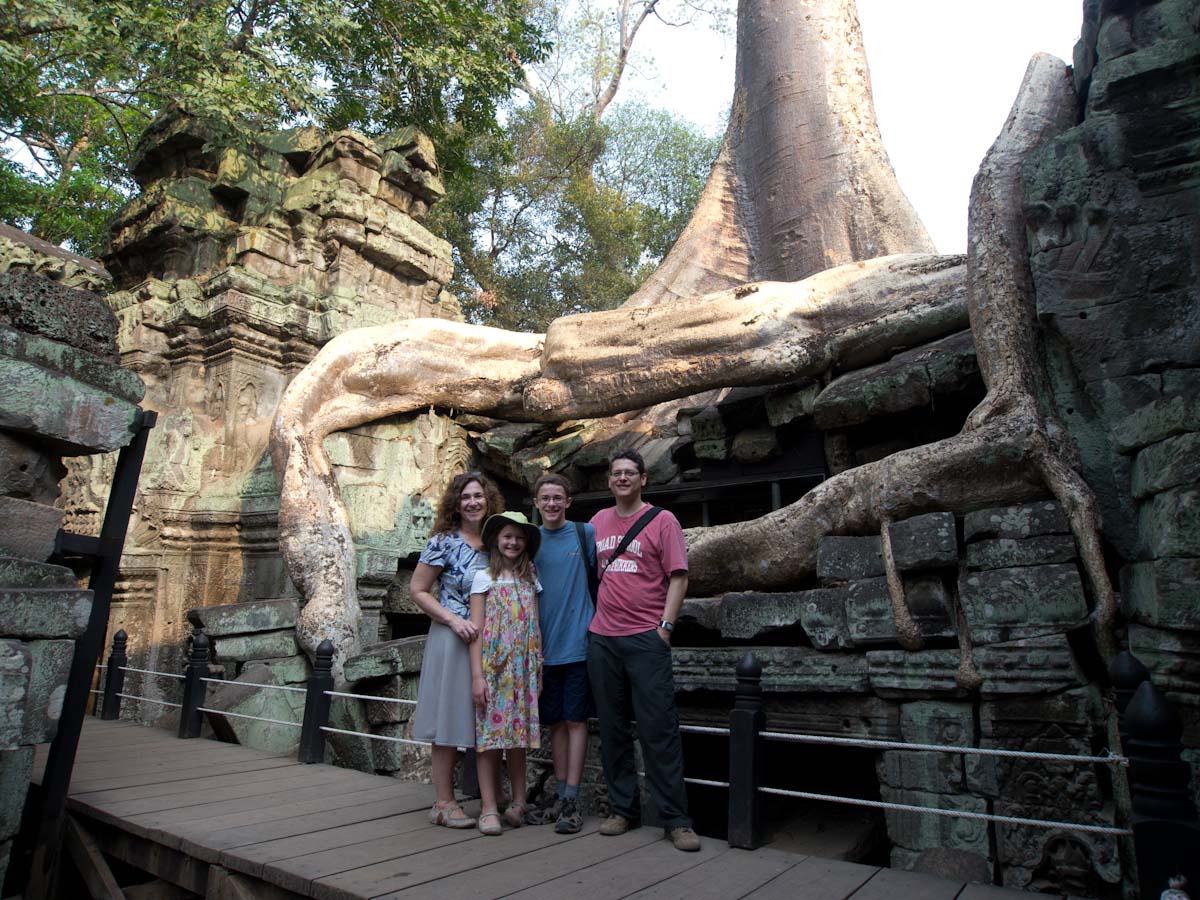
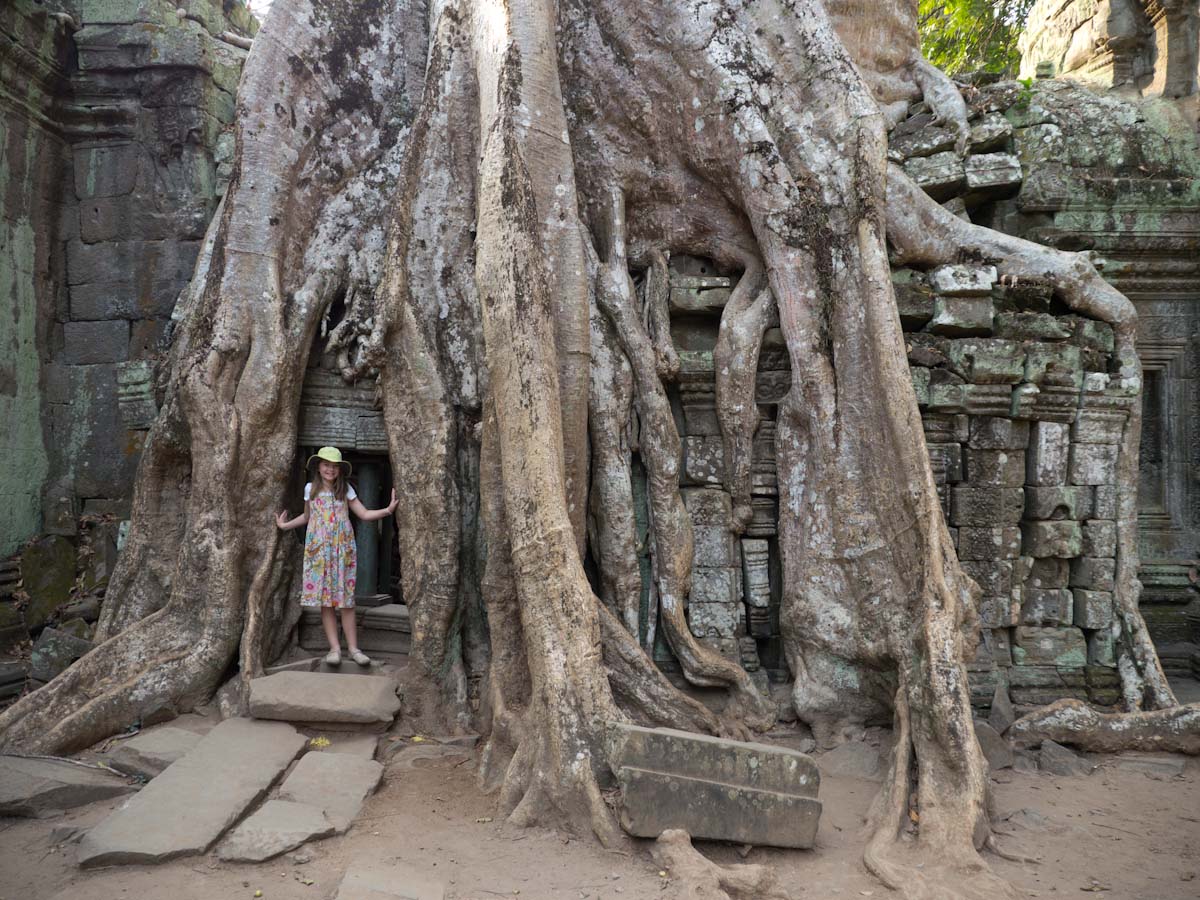
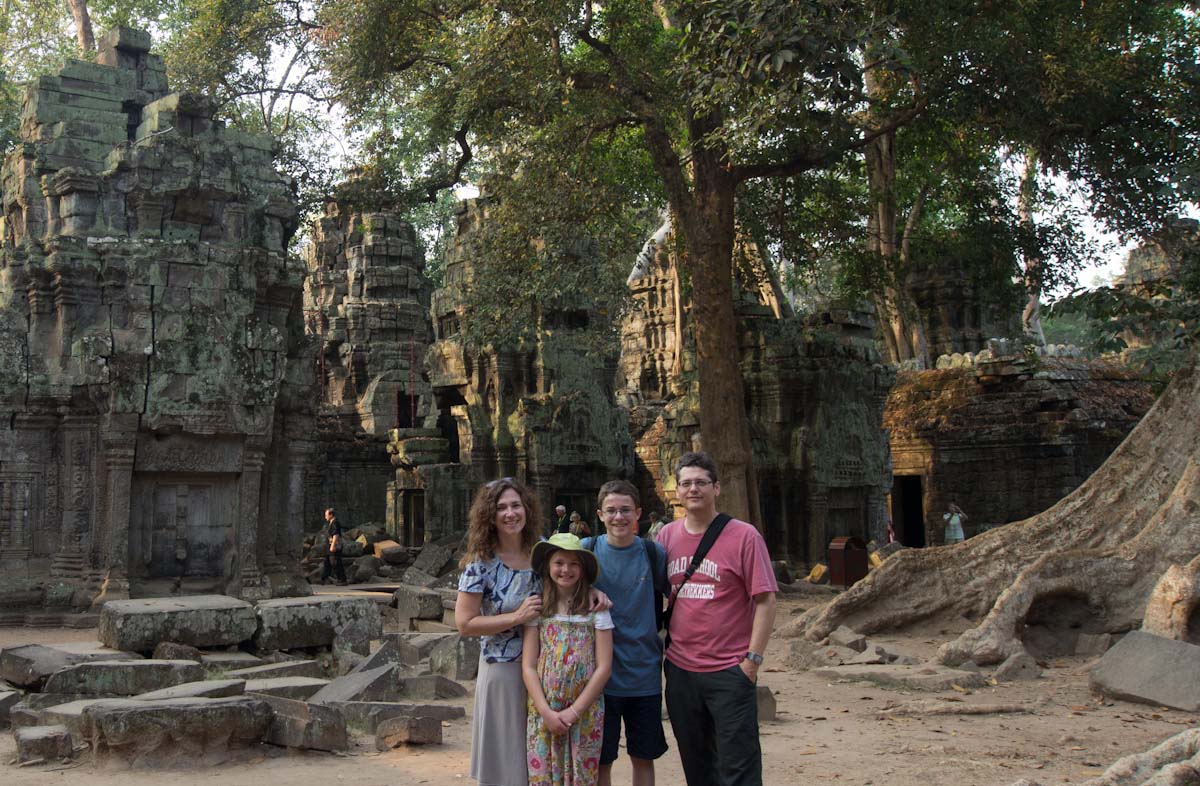
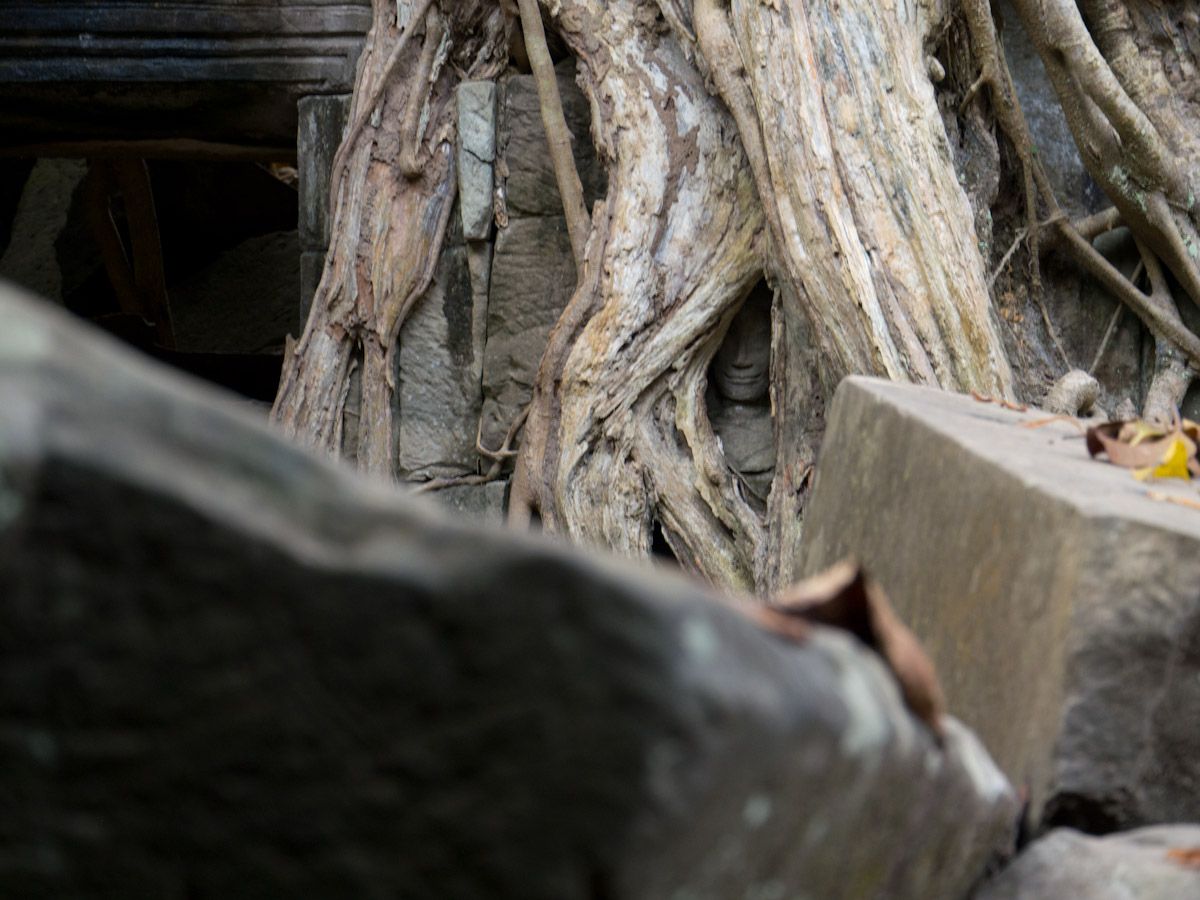
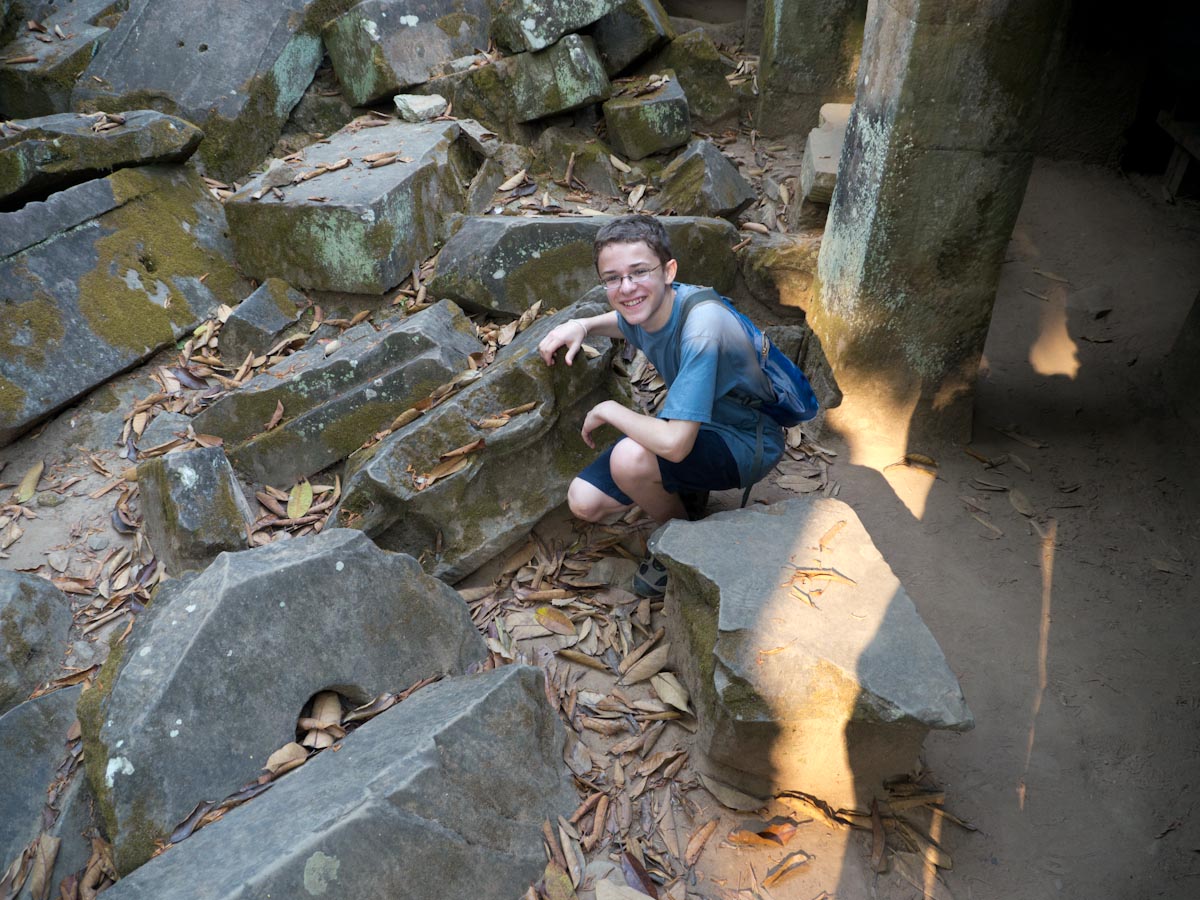
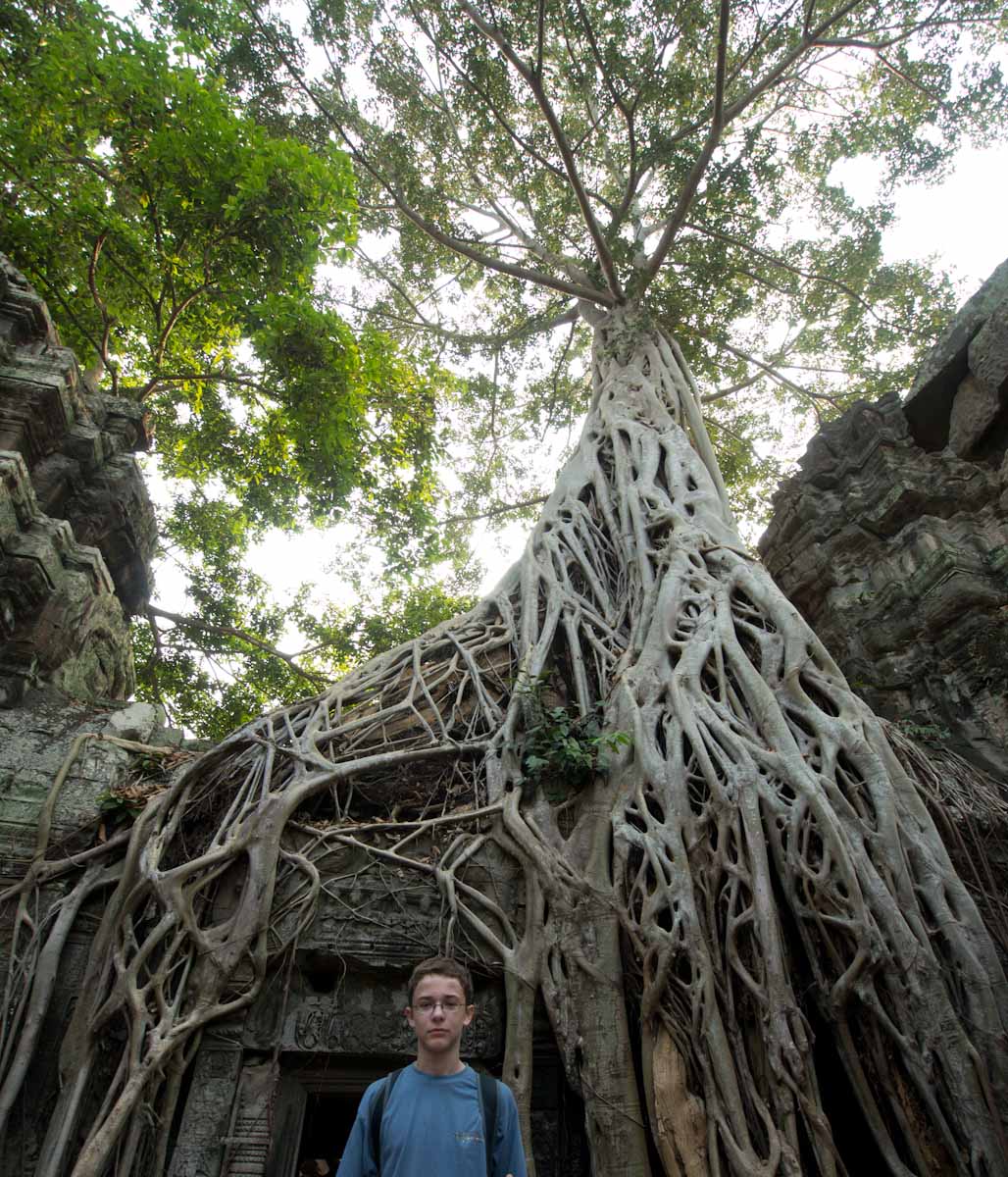
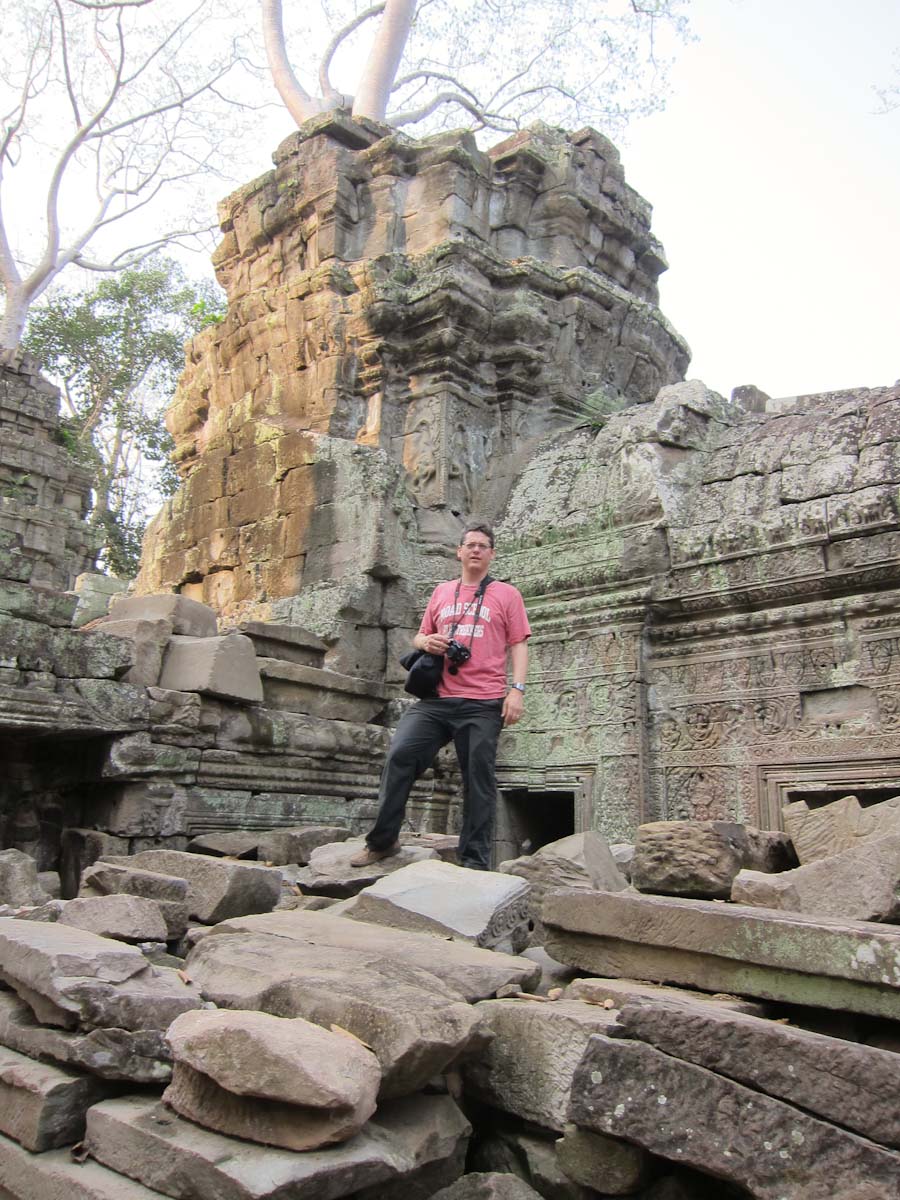
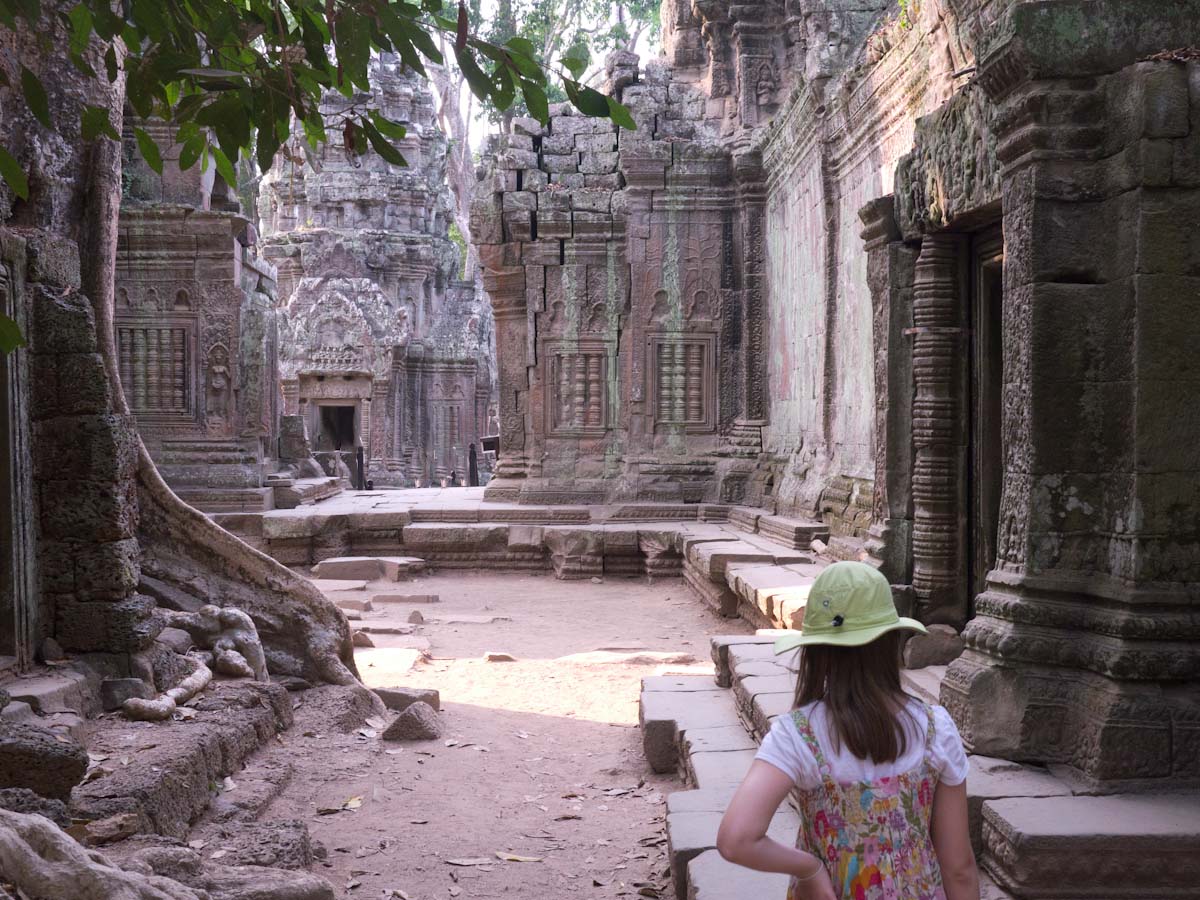
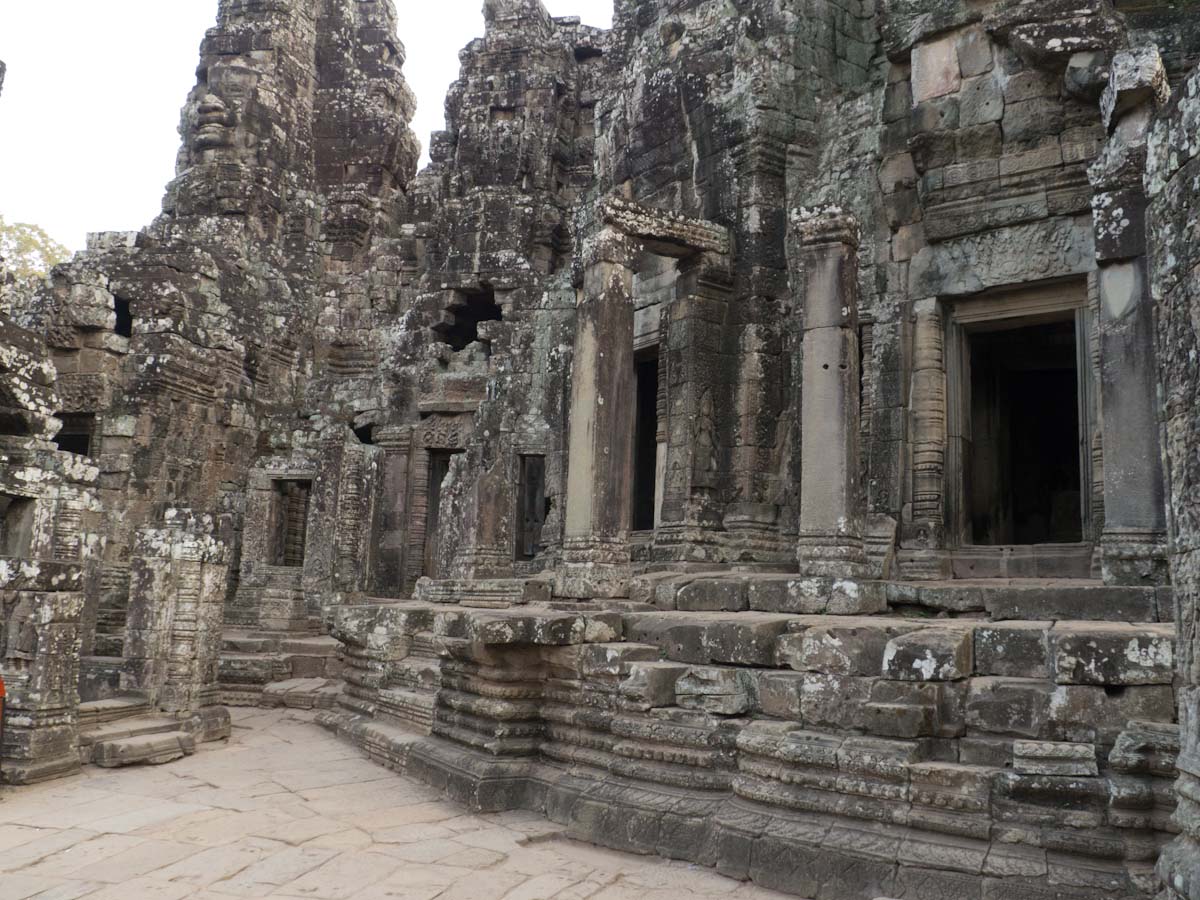
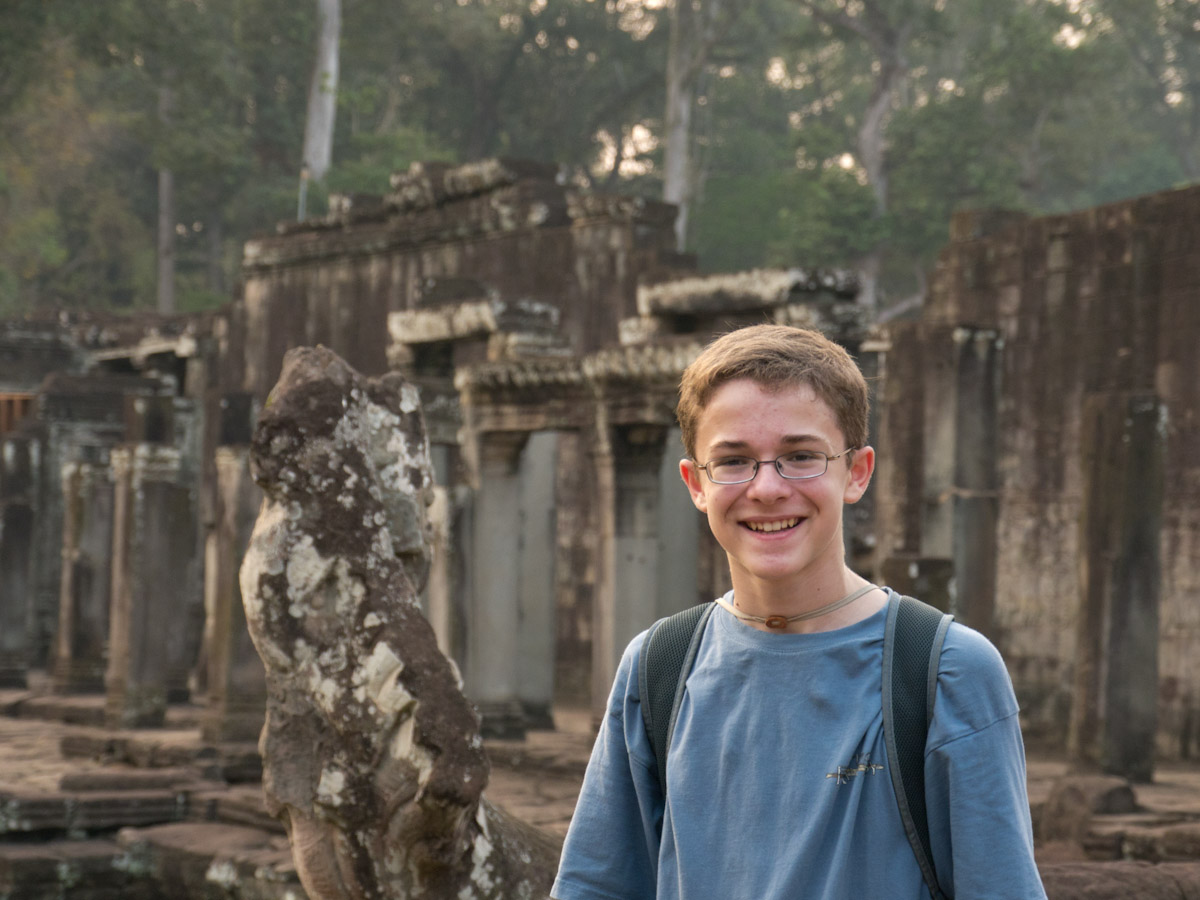
The Jungle temple is a large 12th century temple that was overrun by the forest and only re-discovered in 1860. Incredibly, this find was made by a British naturalist who was hunting butterflies when he stumbled upon one of the entrance gates camouflaged by vegetation! Today, the temple has been left in a largely crumbling state. Walking through these courtyards is an exercise in vanitas – one feels that man’s works are temporary and can never infinitely survive the ultimate power and creativity of nature. The trees have grabbed and split the rocks here, like angry Ents. Angelina Jolie came to this temple to film Tomb Raider and adopted one of the children who lived in the village outside the gate.
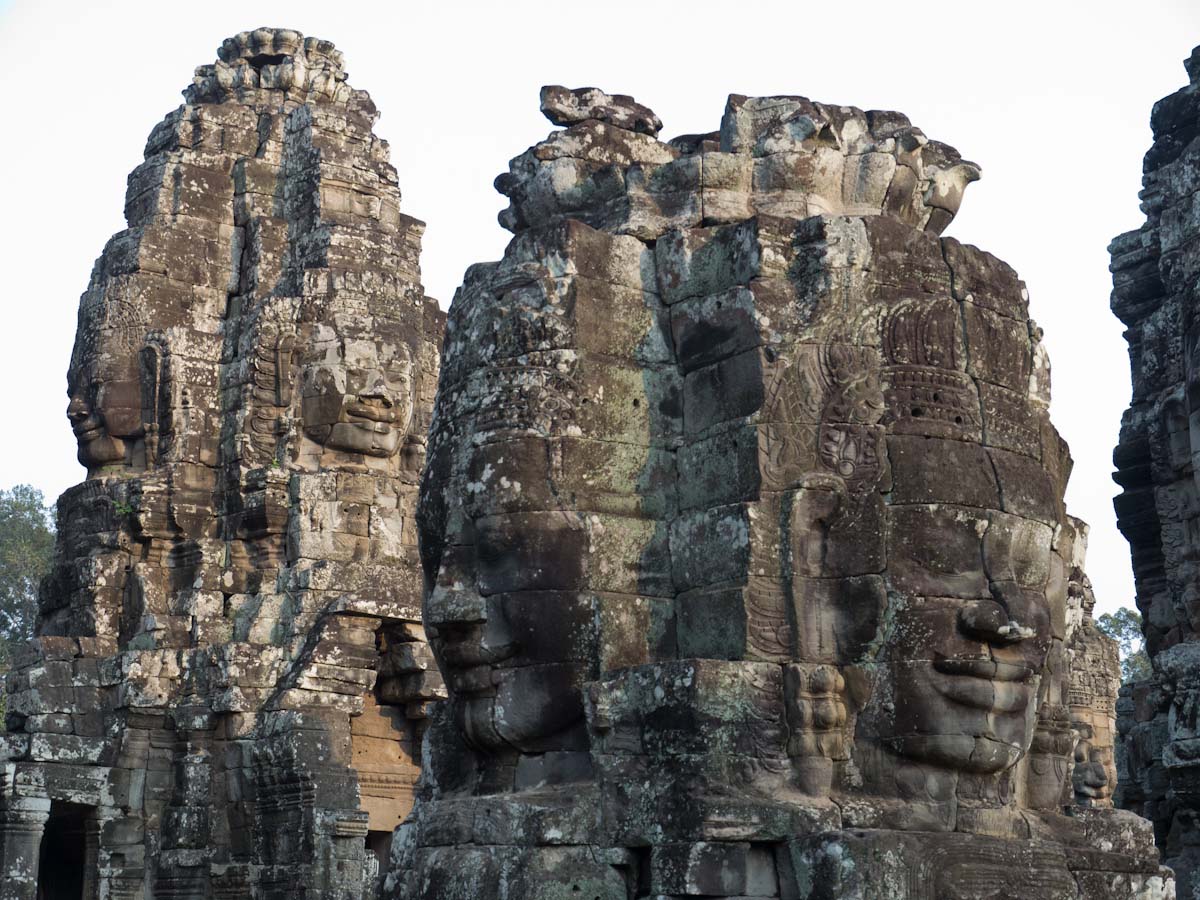
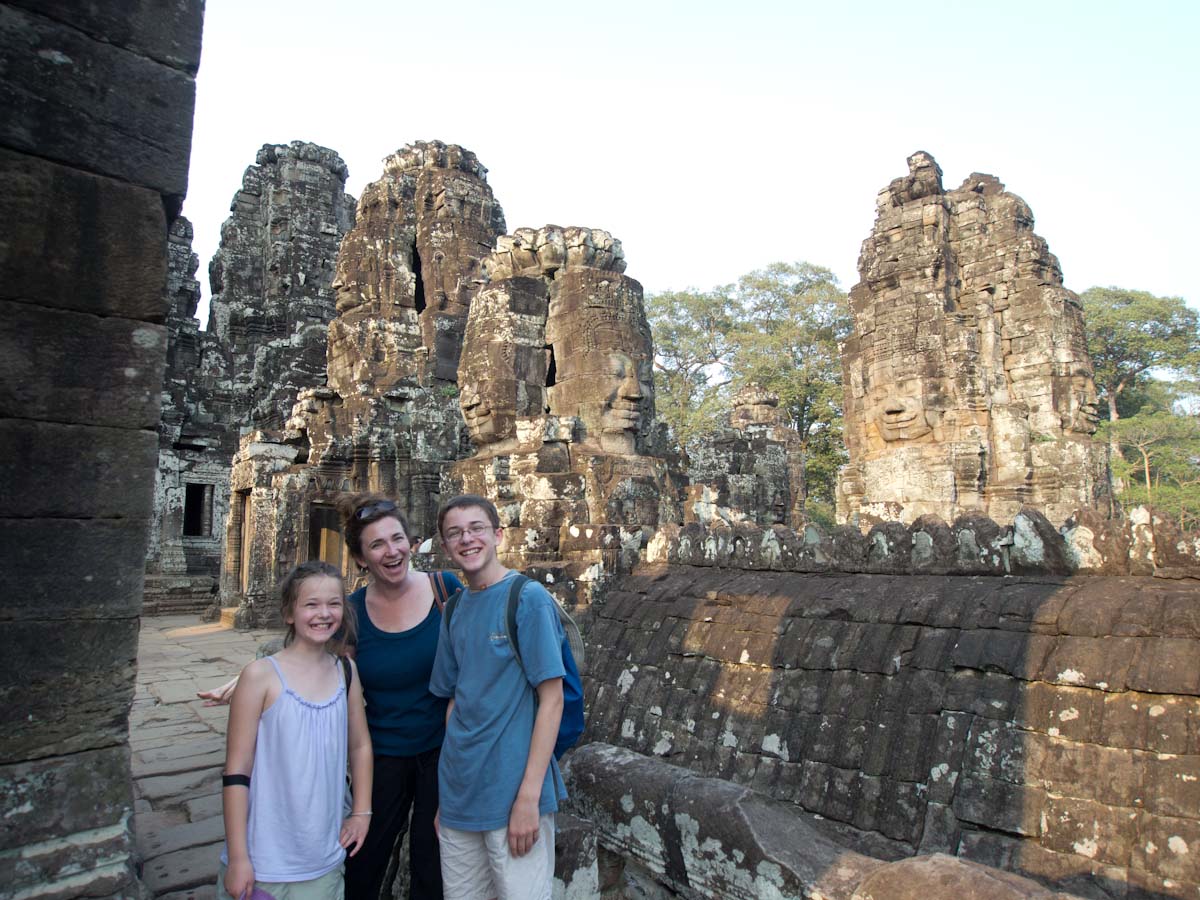
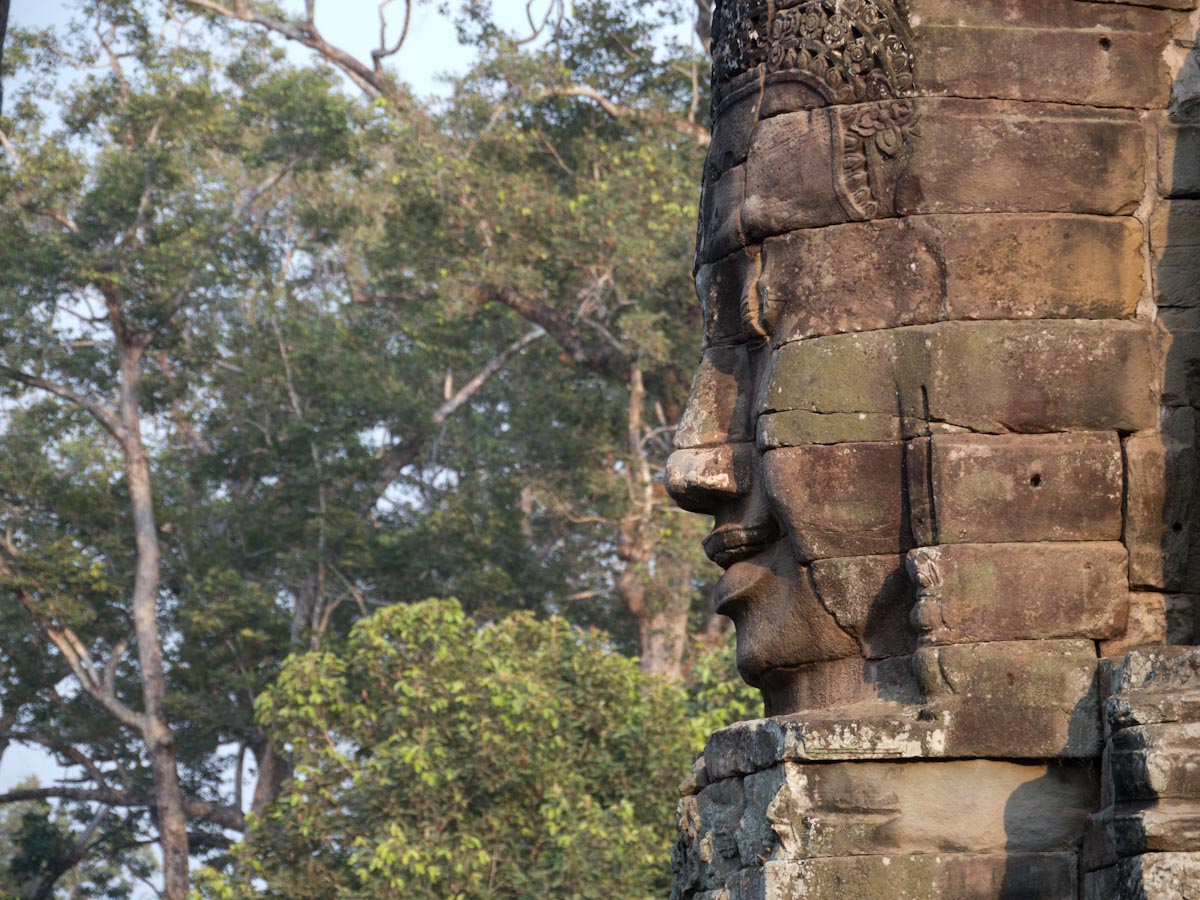
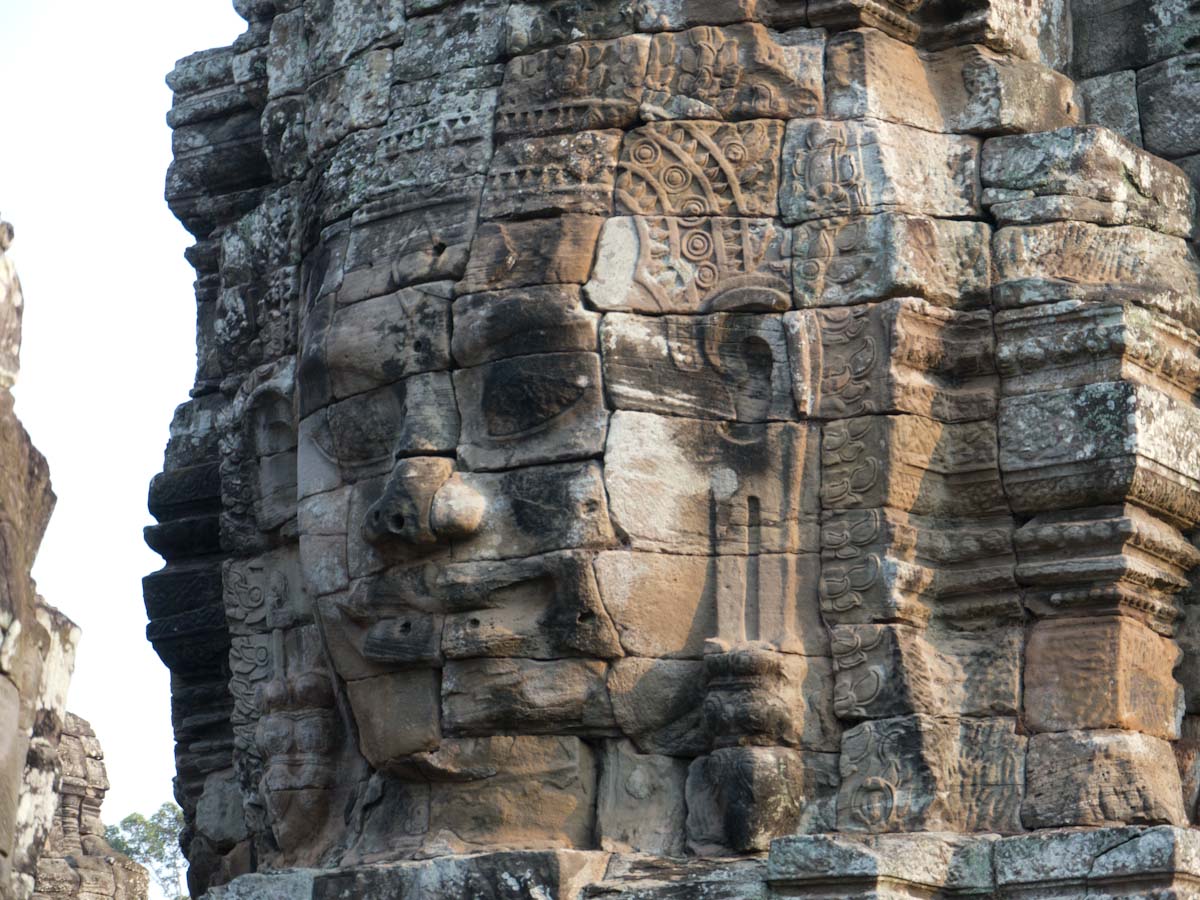
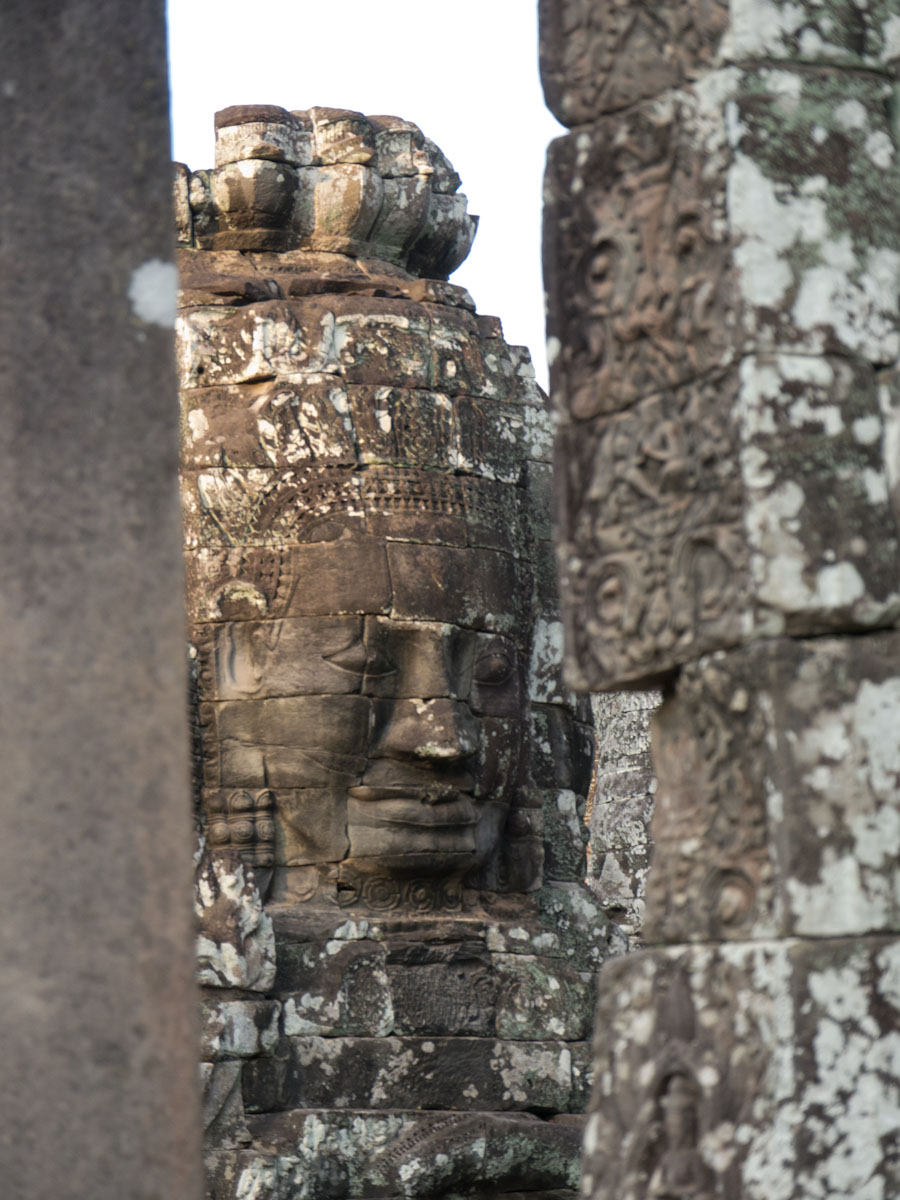
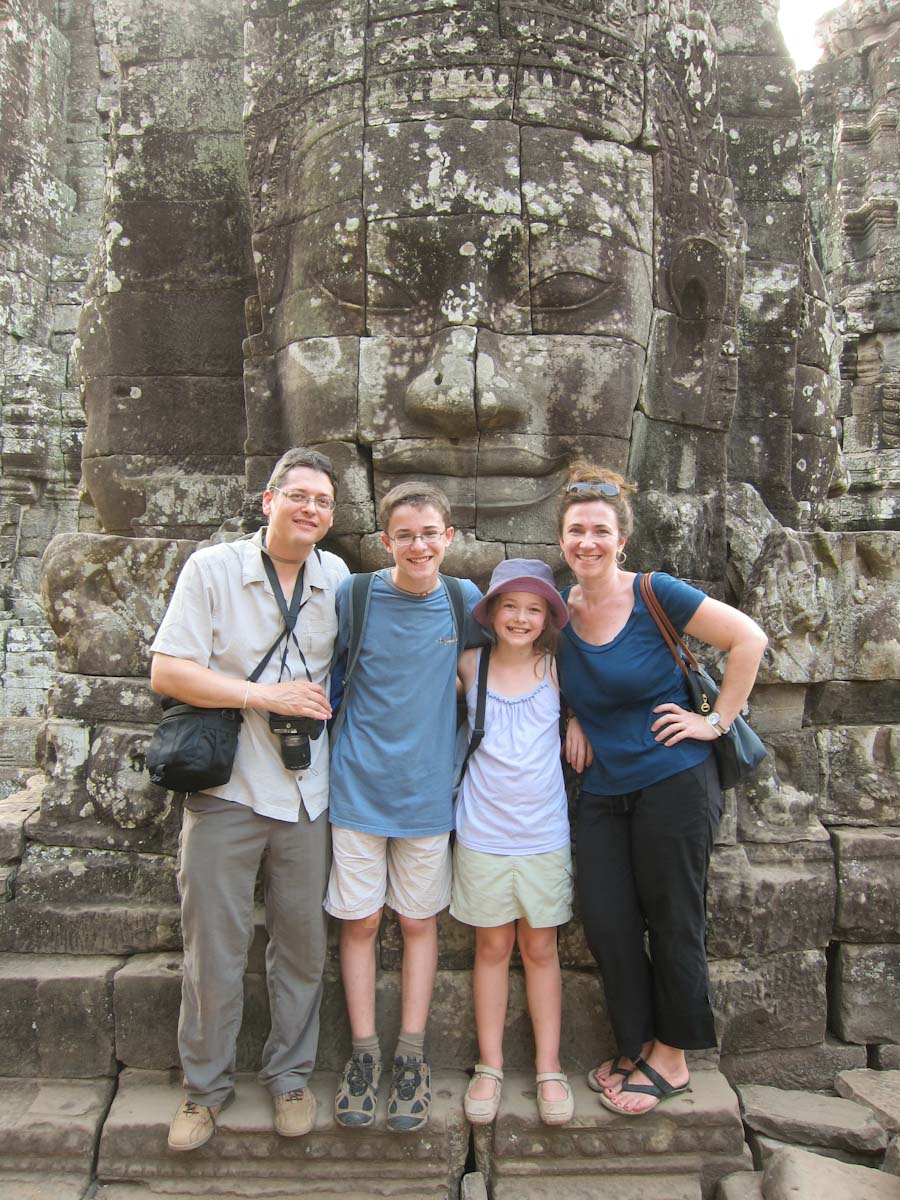
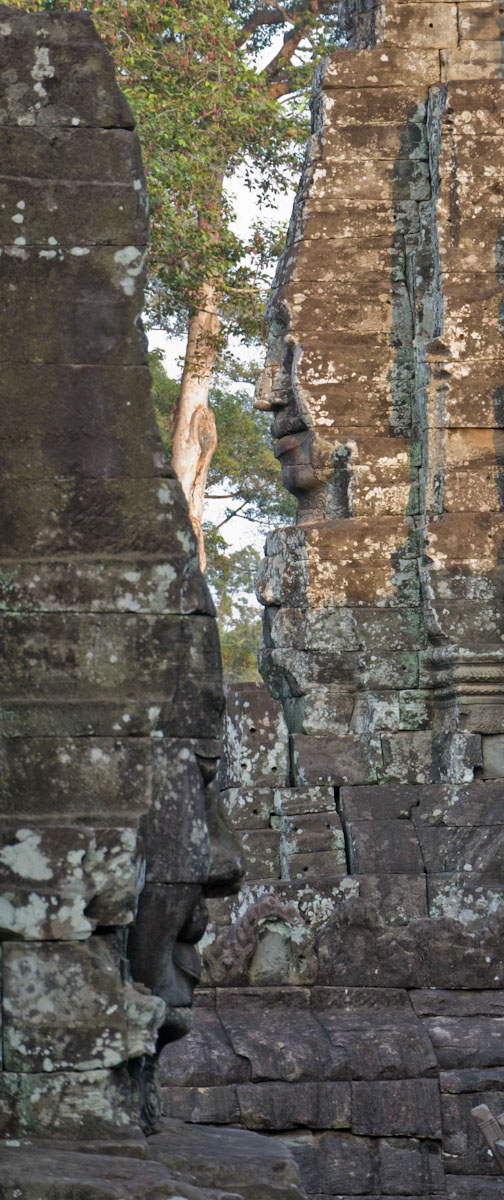
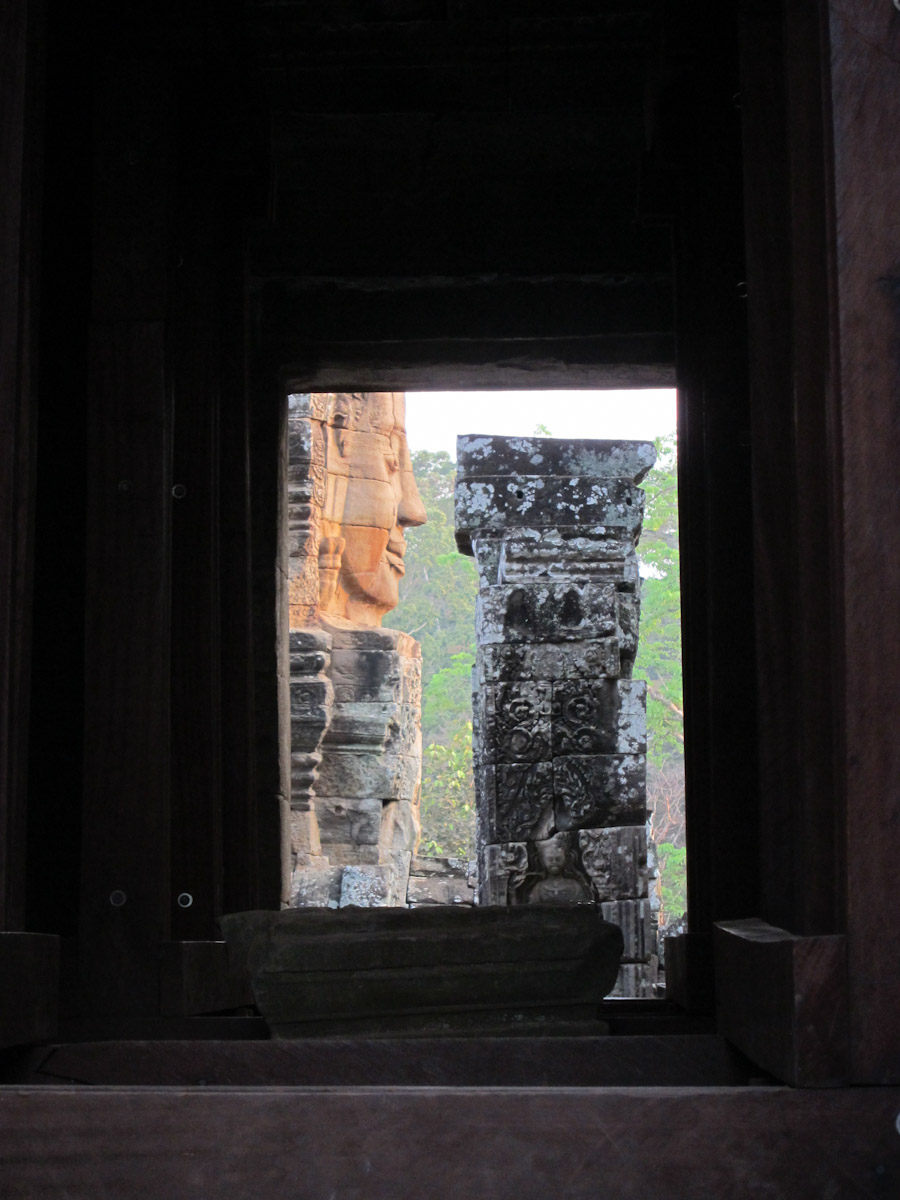
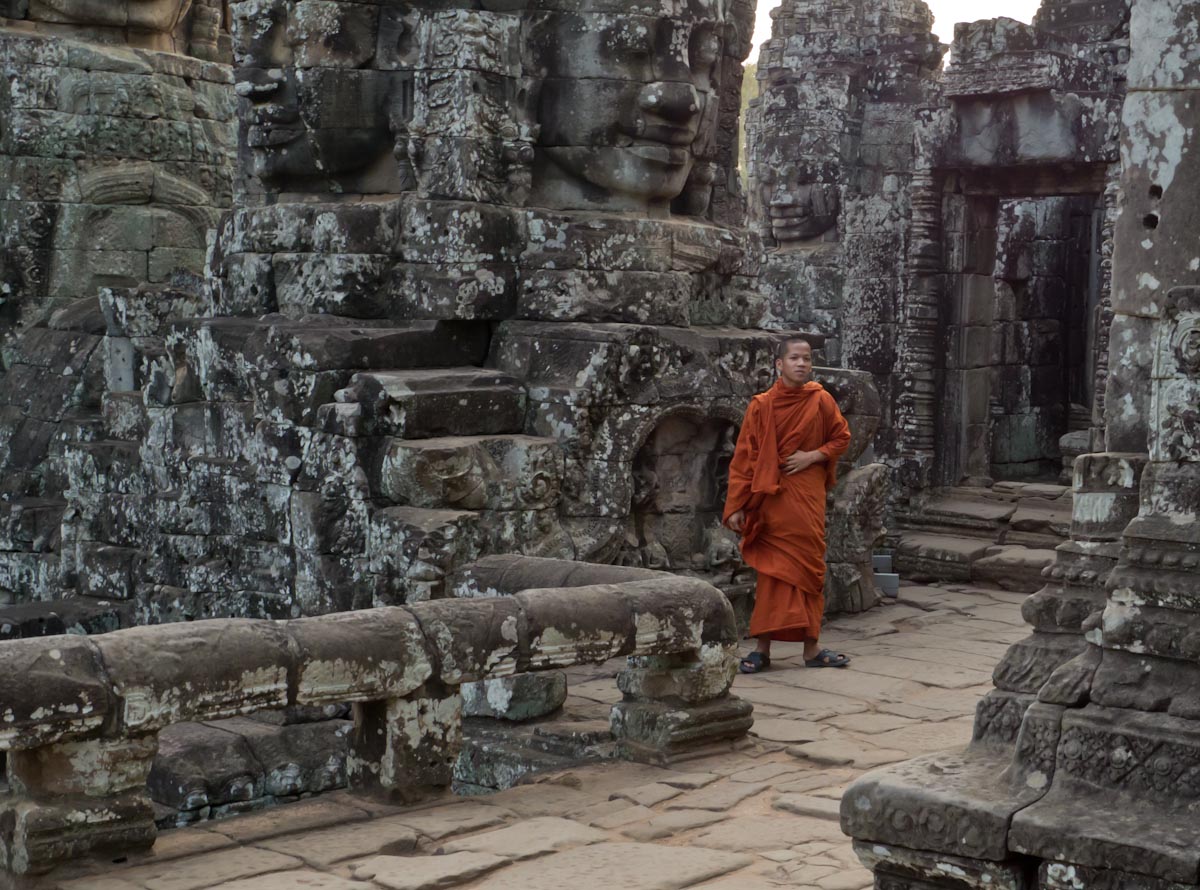
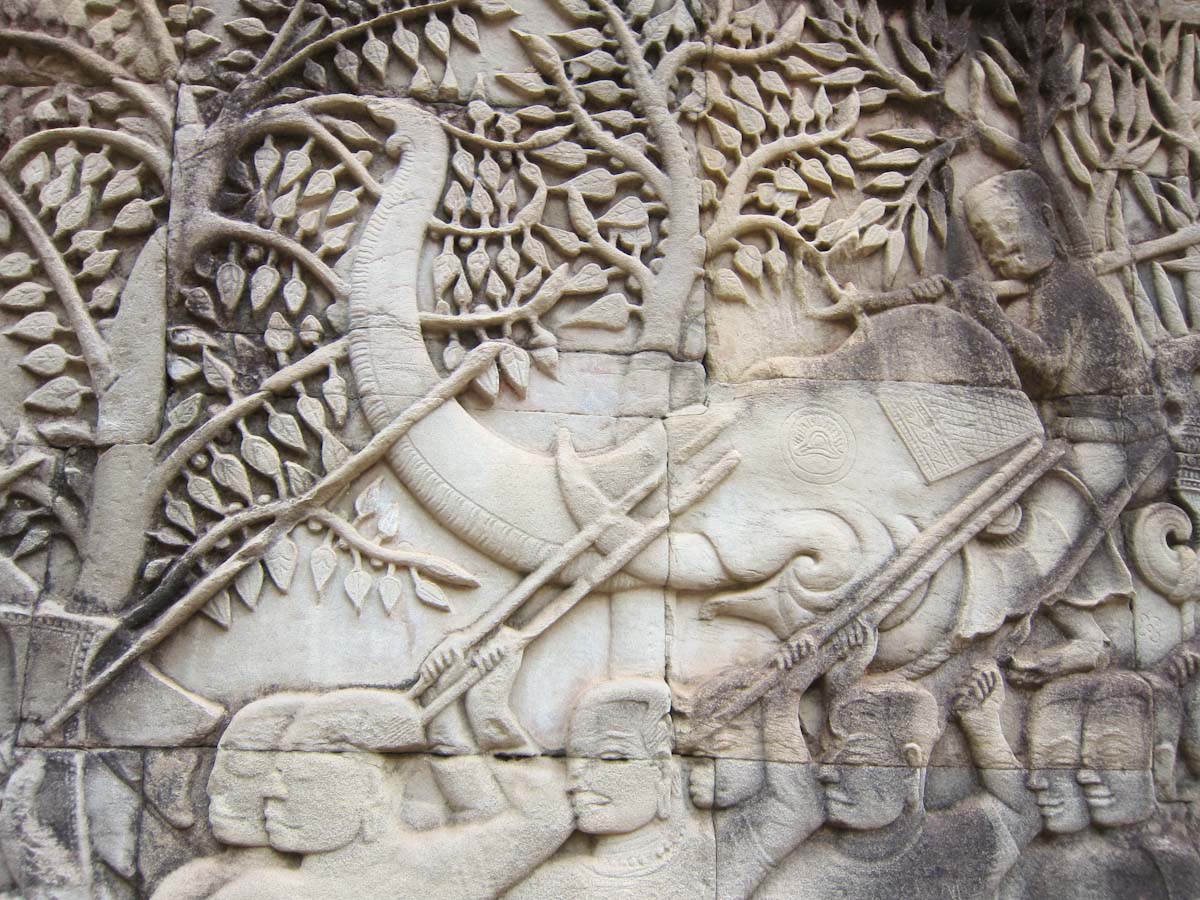
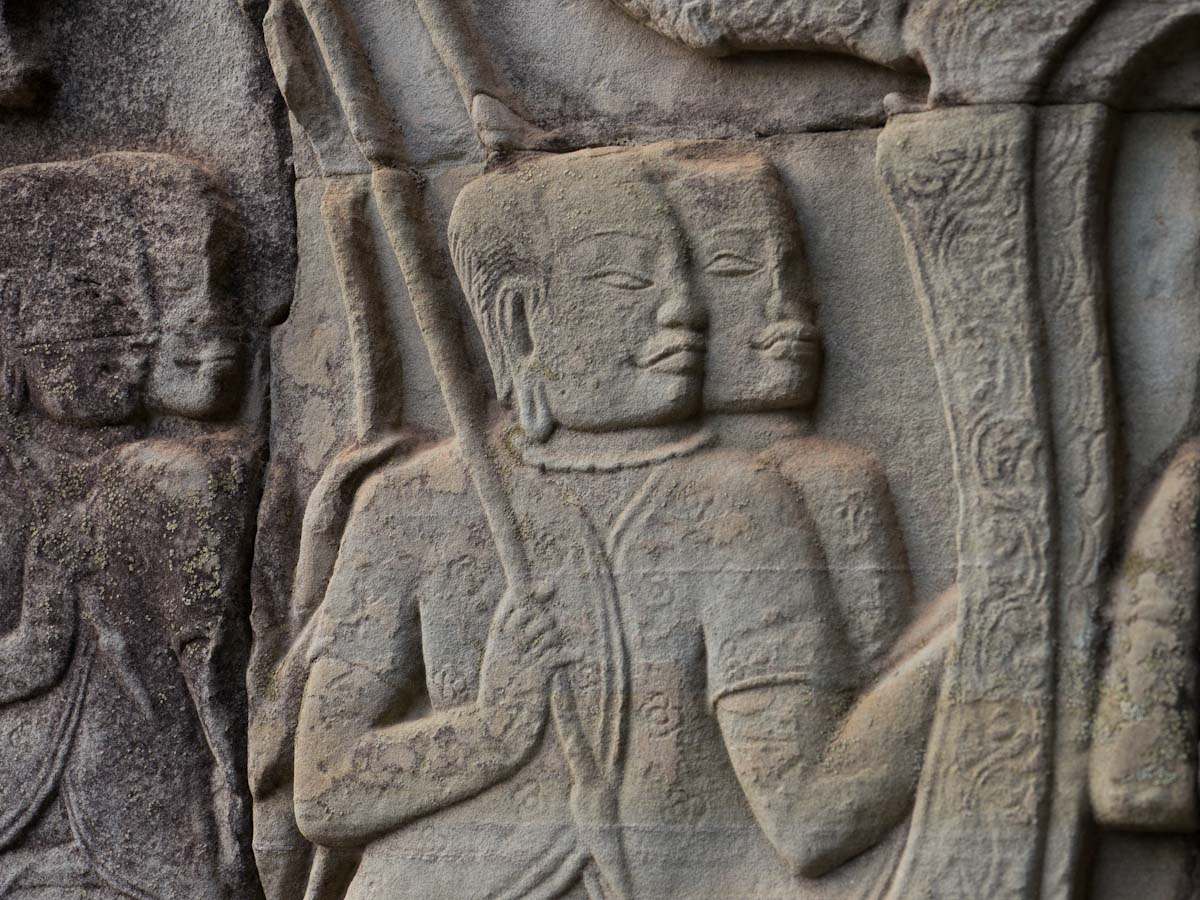
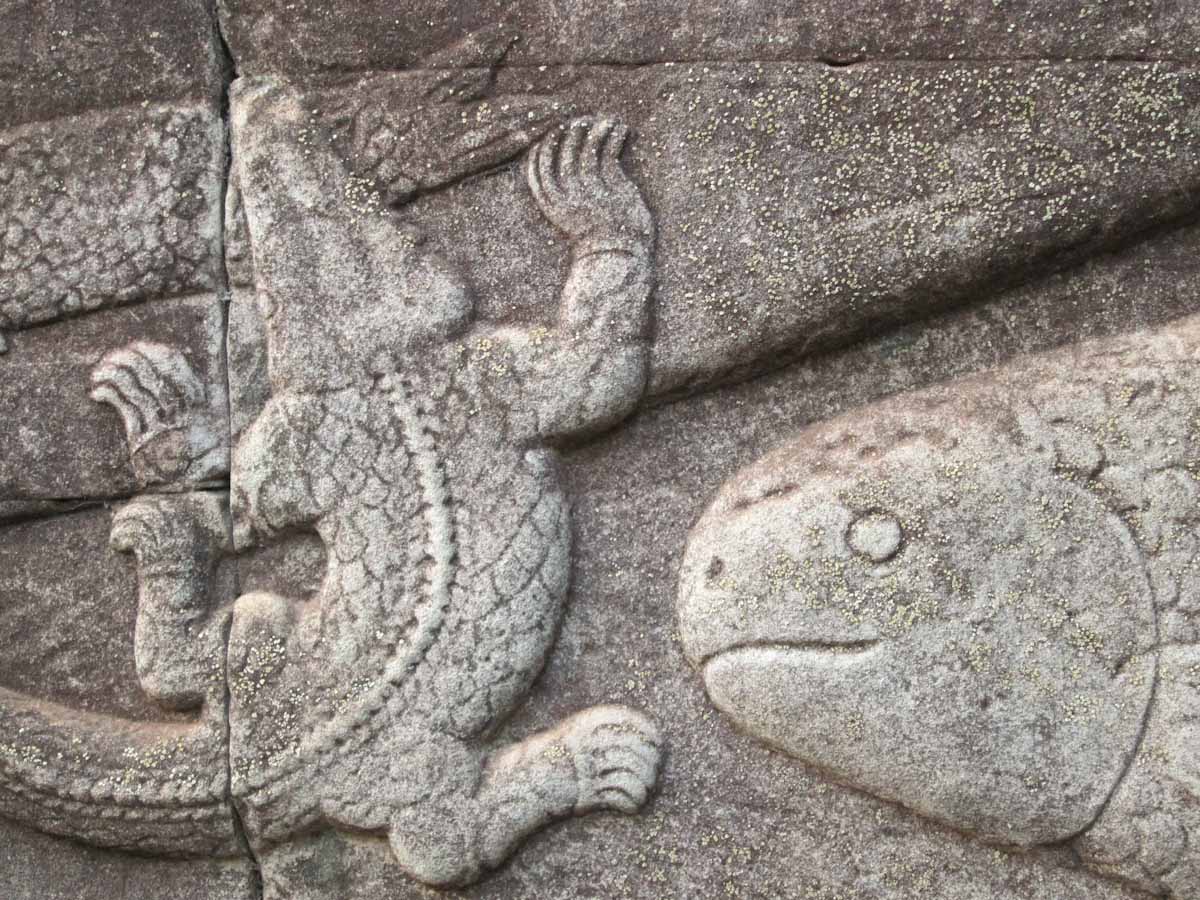
The Bayon temple, also 12th century, is relatively secular and was located in the middle of the old town (Angkor Tom). The architecture is whimsical and clever, with over 200 giant heads carved onto the towers. They each have a different expression. The outer walls have more wonderful bas-reliefs showing the historical accomplishments of the king and the fights with the Cham and many humorous scenes from daily life.
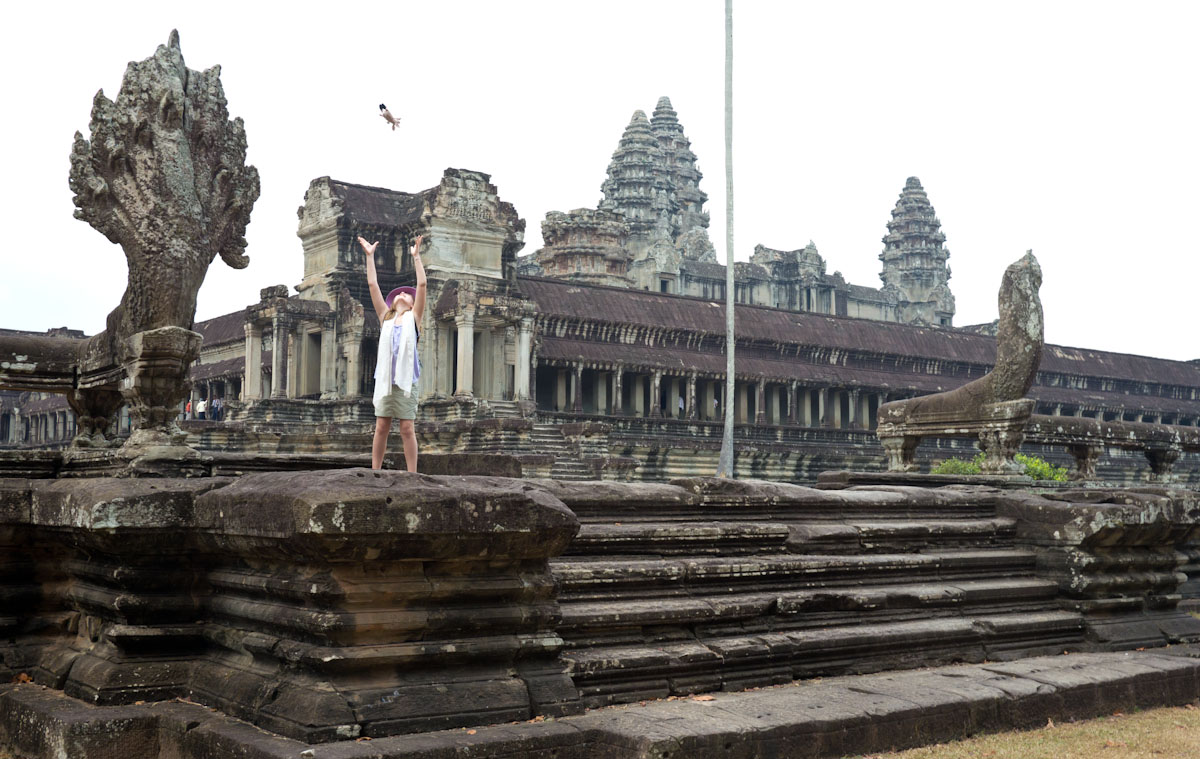
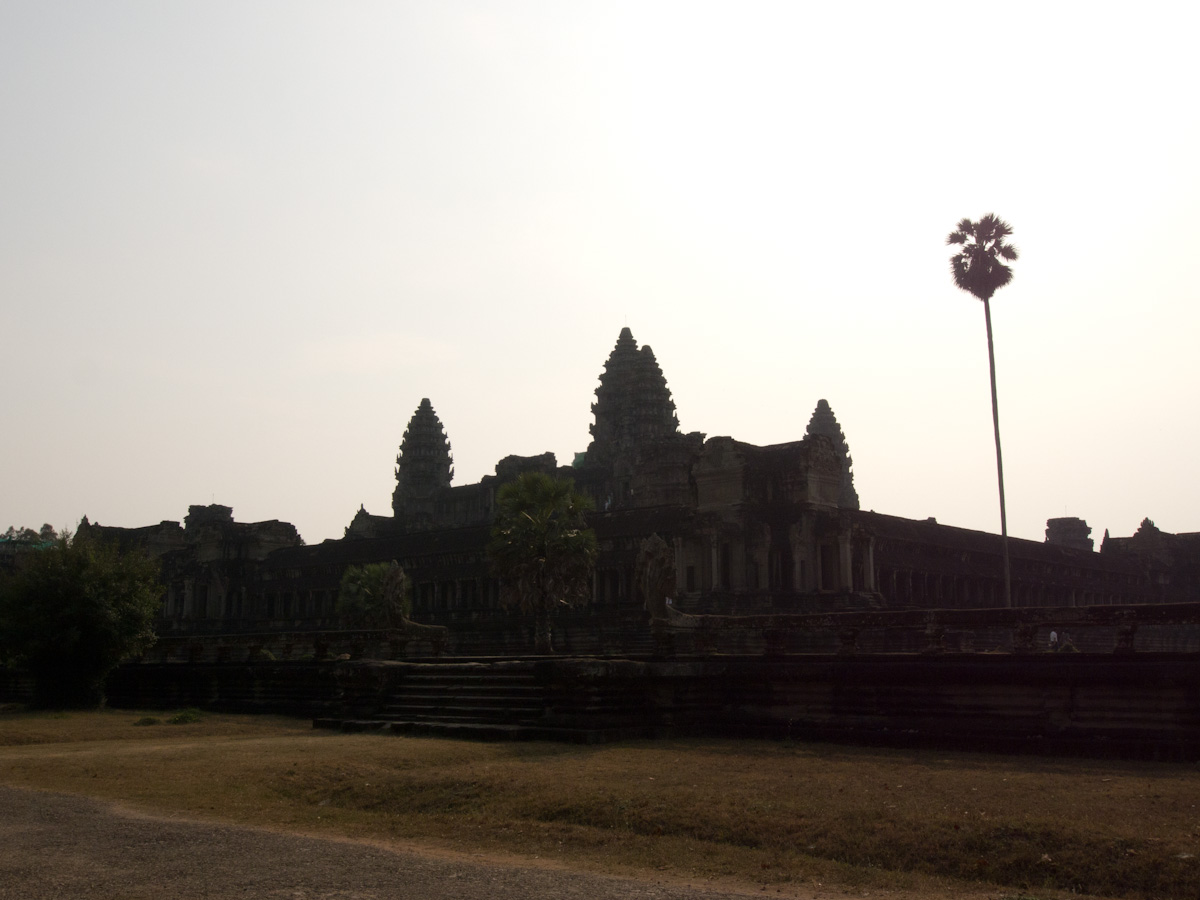
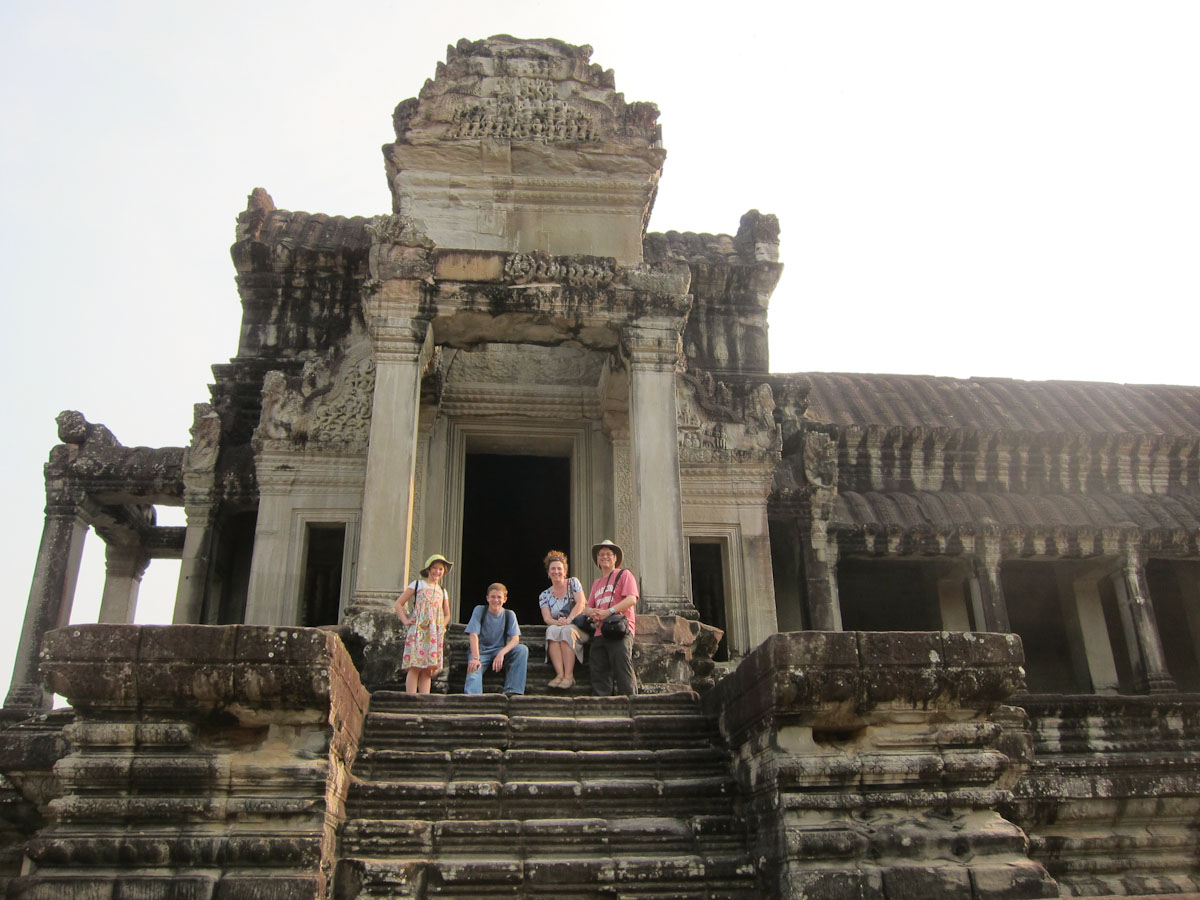
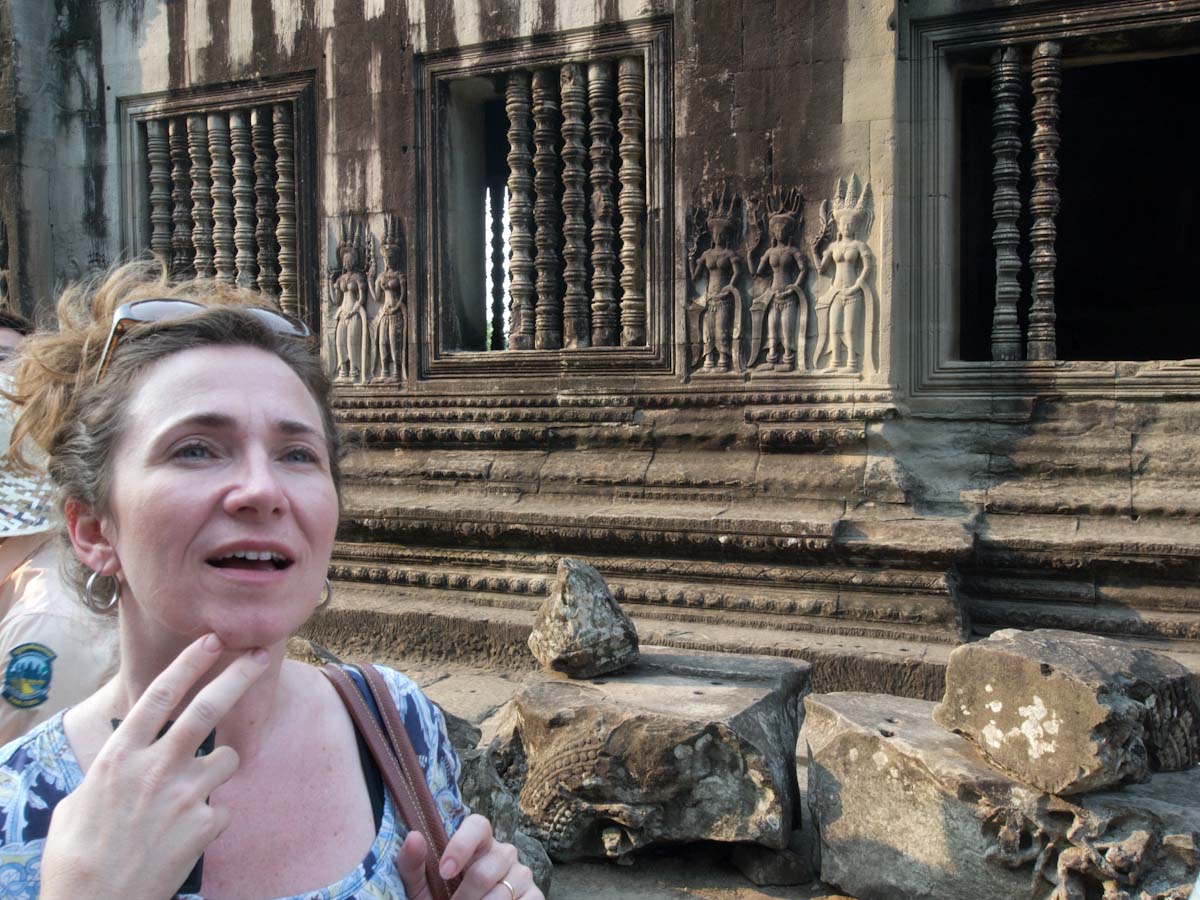
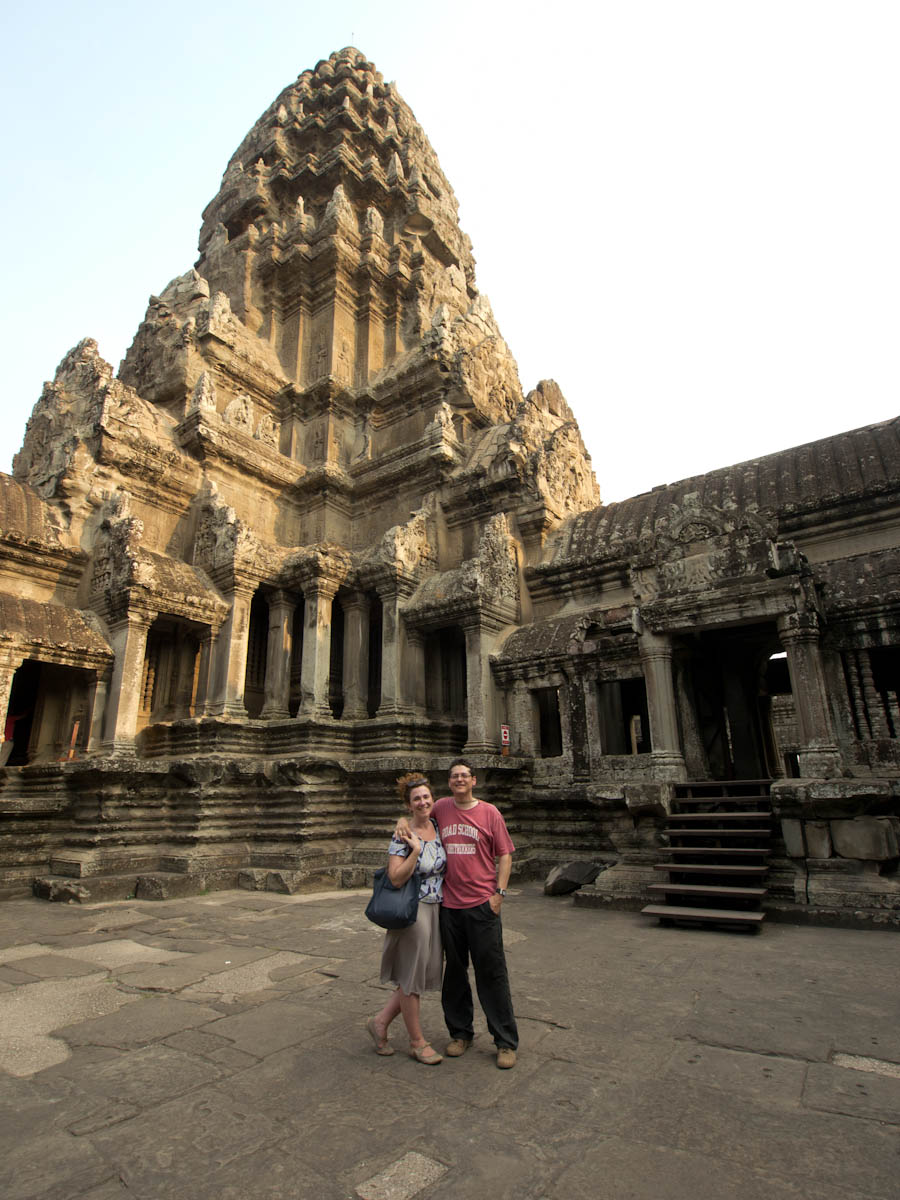
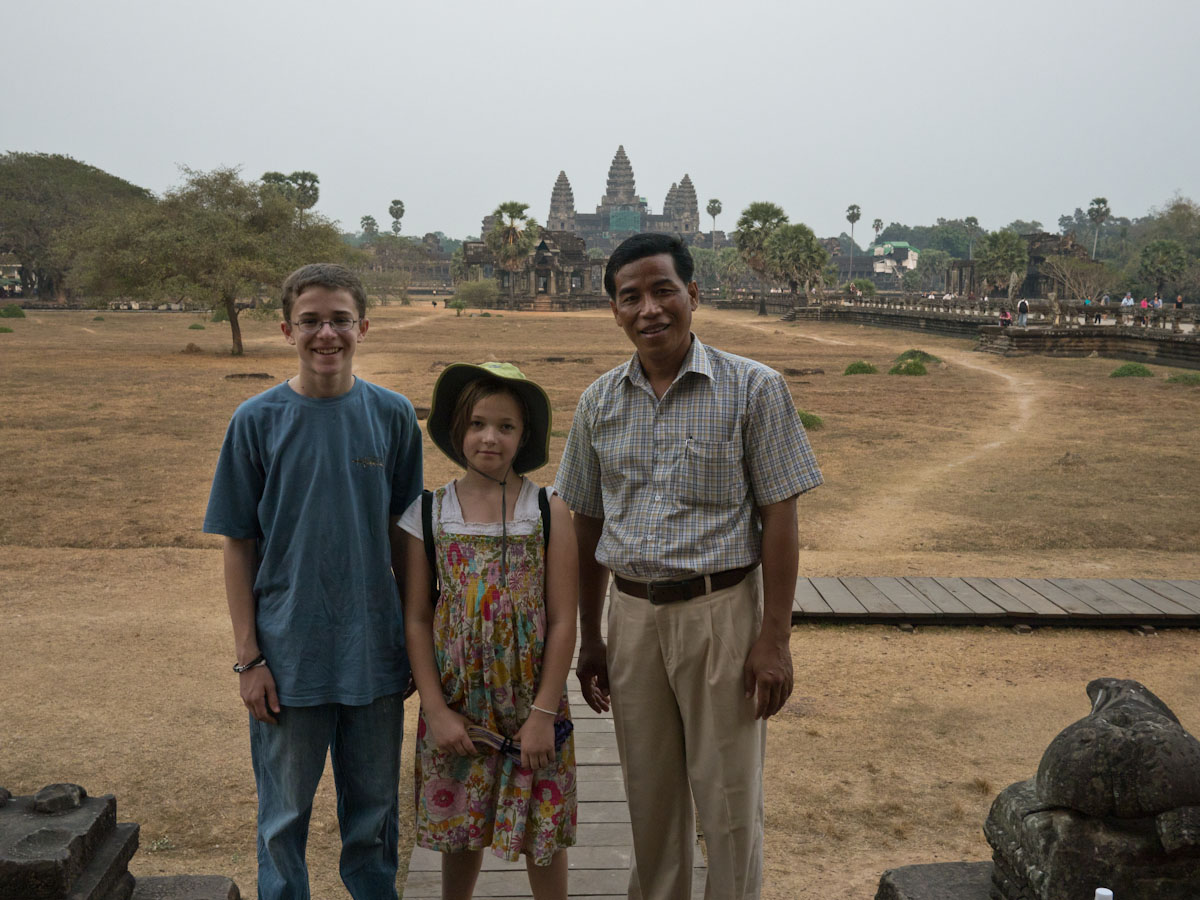
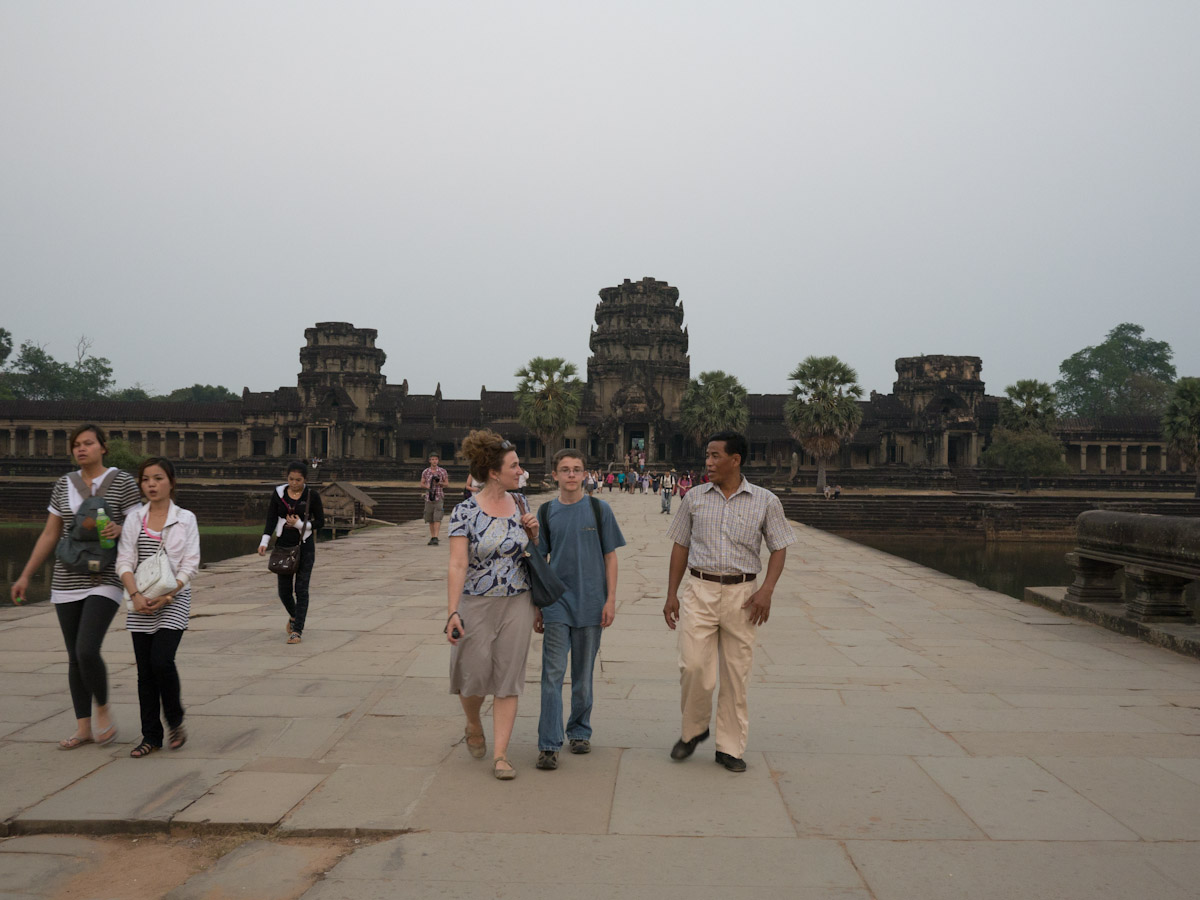
Angkor Wat is the granddaddy and the most famous – the “world’s largest religious building”. It dates back to the early 1100s. We had a special guide here – a Khmer scholar named Mr. Bunat – who had worked personally on the excavations and restorations over the years.
This temple was dedicated to Vishnu rather than Shiva. However it faces west and contained a crematorium and the ashes of the King and his family, so it may rightly be called a mausoleum or a temple to the “King as deity”, as much as a temple to Vishnu.
The complex is laid out in a miniature form of the Hindu idealized conception of the cosmos – the sea surrounding a mountain with the Gods living on top.
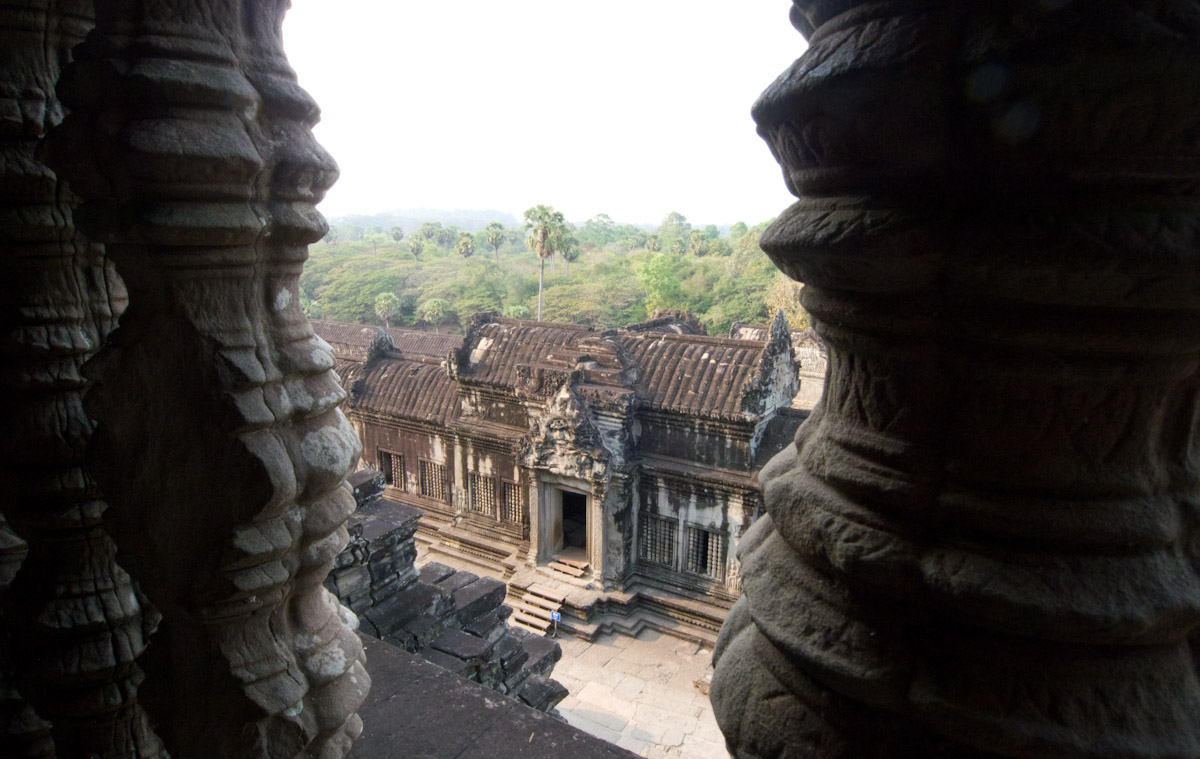
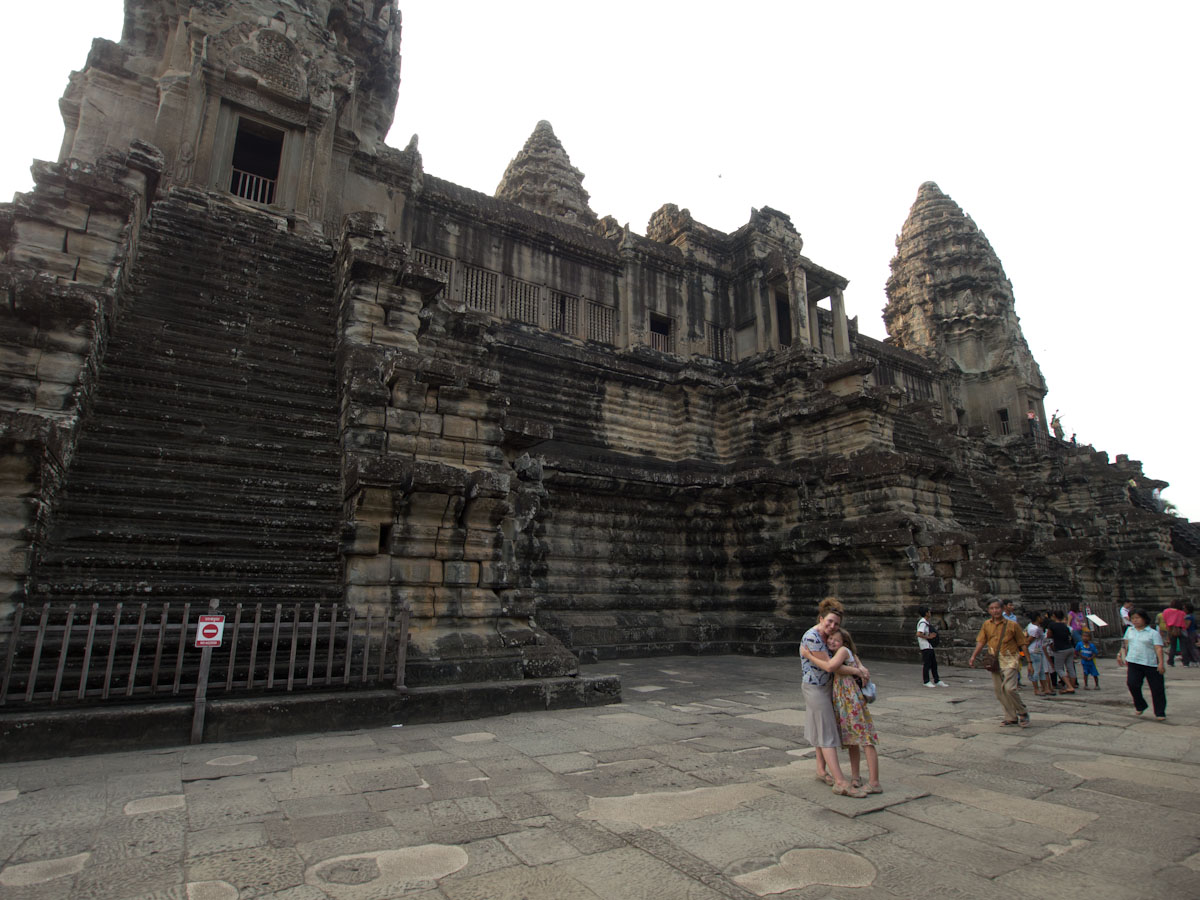
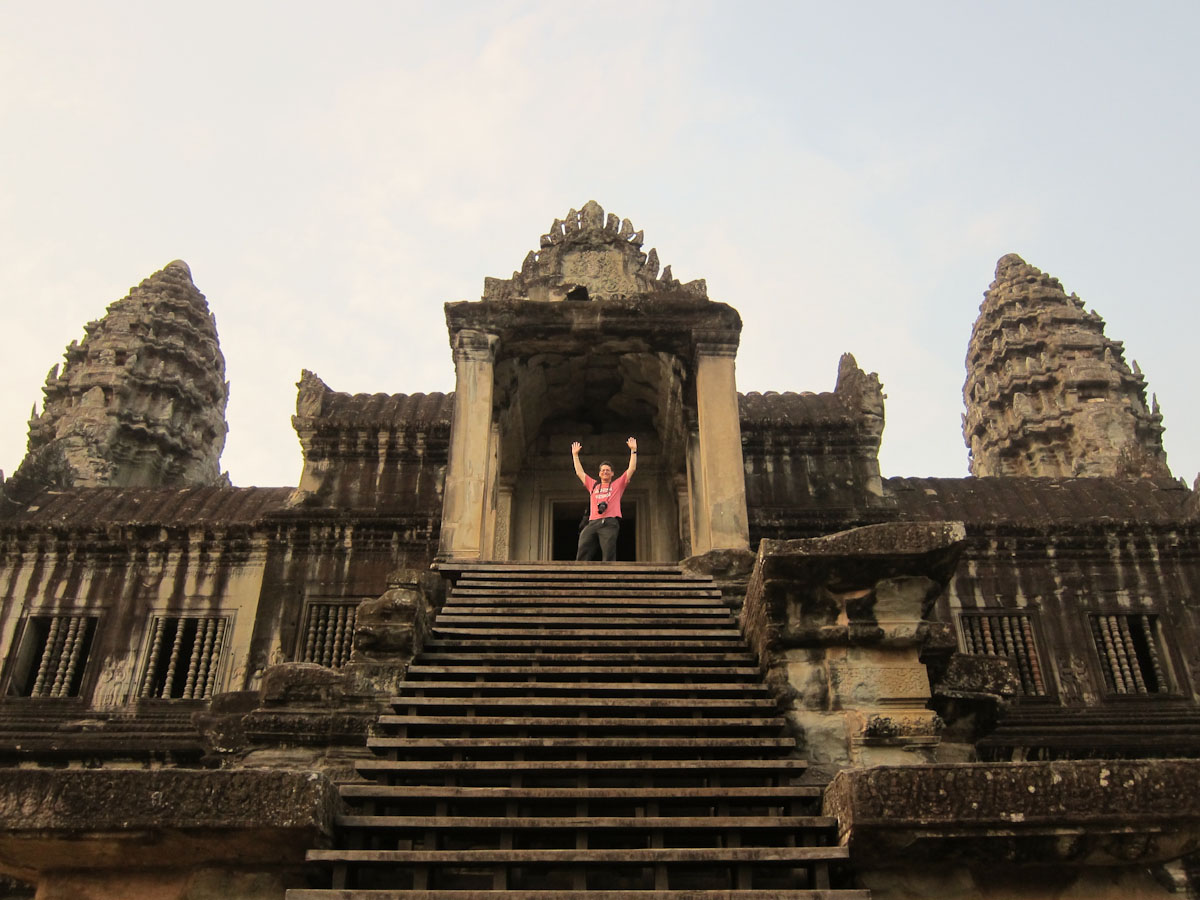
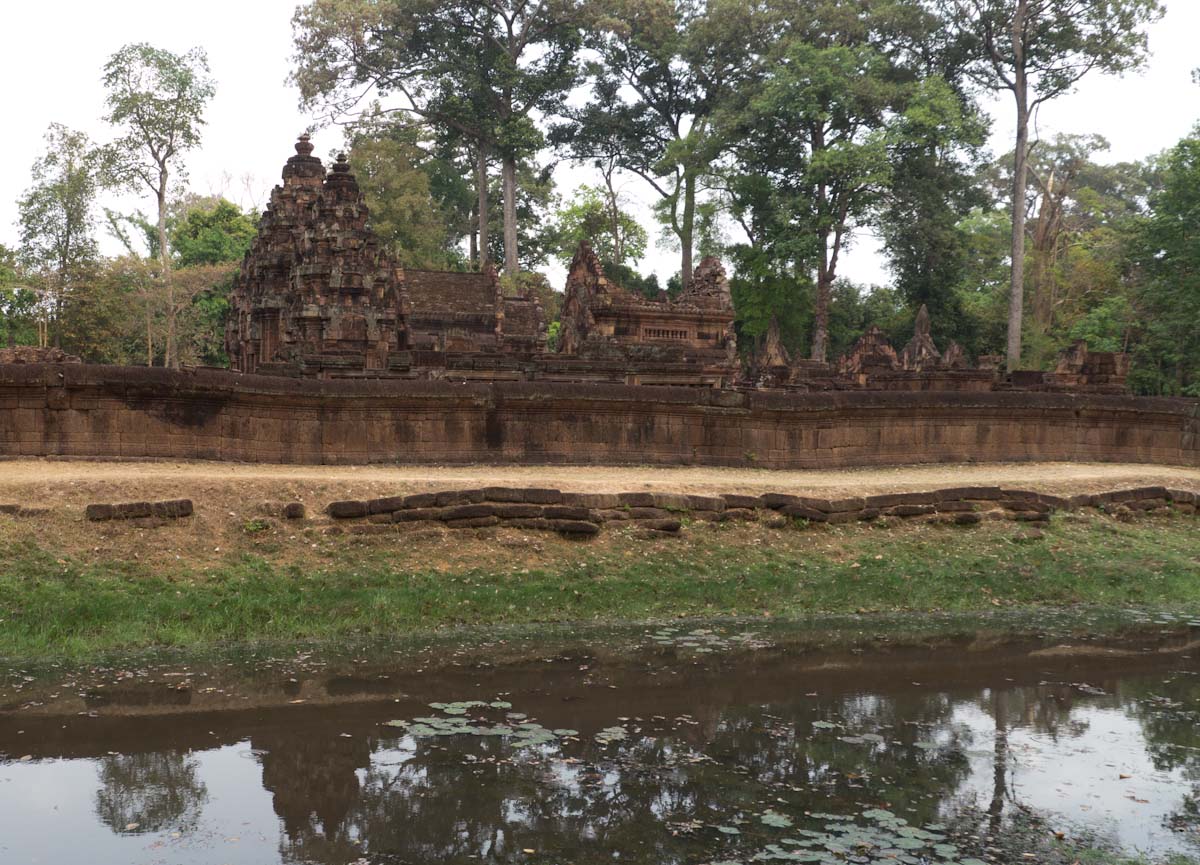
Here you encounter an enormous hand-dug moat, surrounding an outer wall that is 2 miles long enclosing 200 acres. The moat used to be filled with crocodiles for defense but now only has leeches. Inside the wall is a large area with library buildings and then a temple complex with two more inner walls and five towers shaped like lotus petals. The towers are arranged like the five spots on a die, with the central tower soaring overhead to a height 210 feet above the ground.
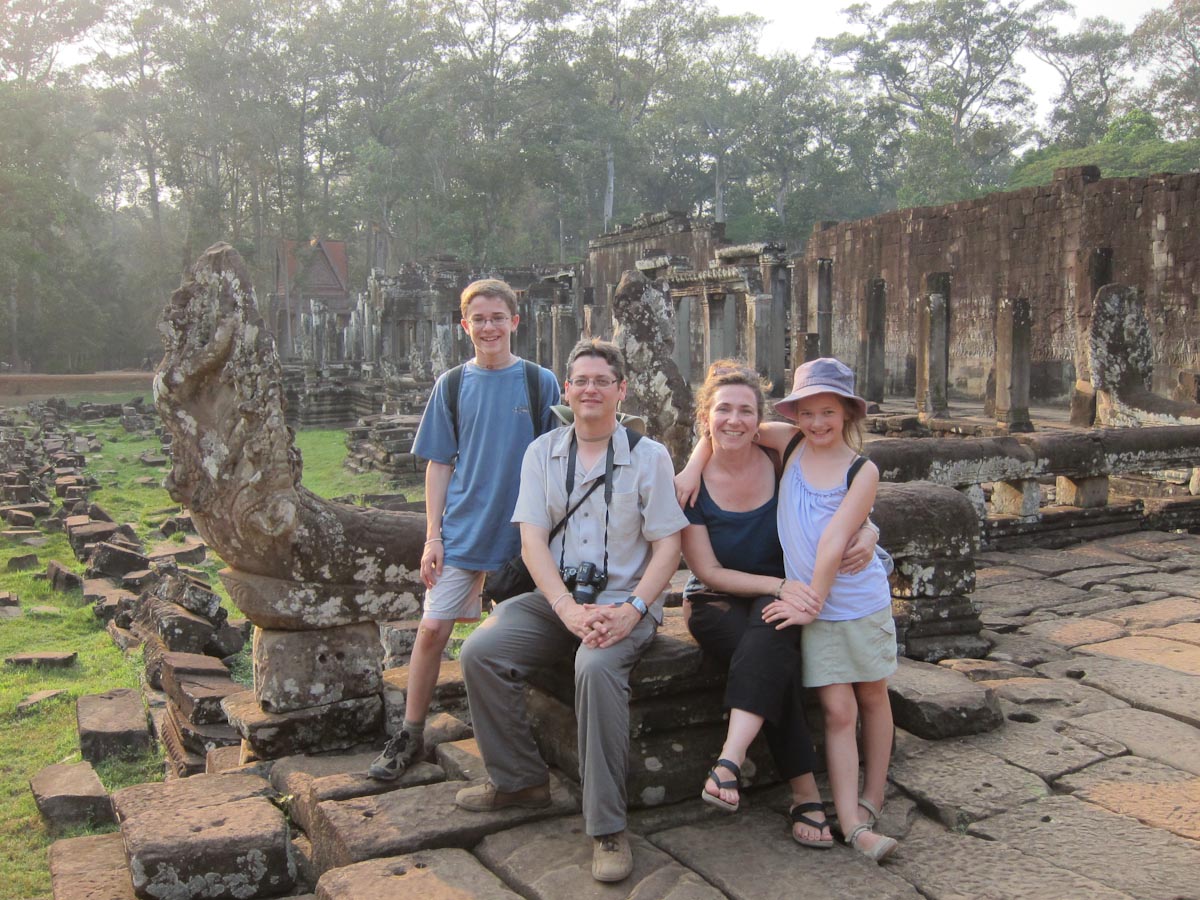
The Khmer built all of this using stone from twenty miles away and they did it without knowledge of the keystone arch. They just laid flat stones on top of flat stones walls to form a clumsy triangular ceiling, like pushing the tops of two high piles of quarters gradually together.
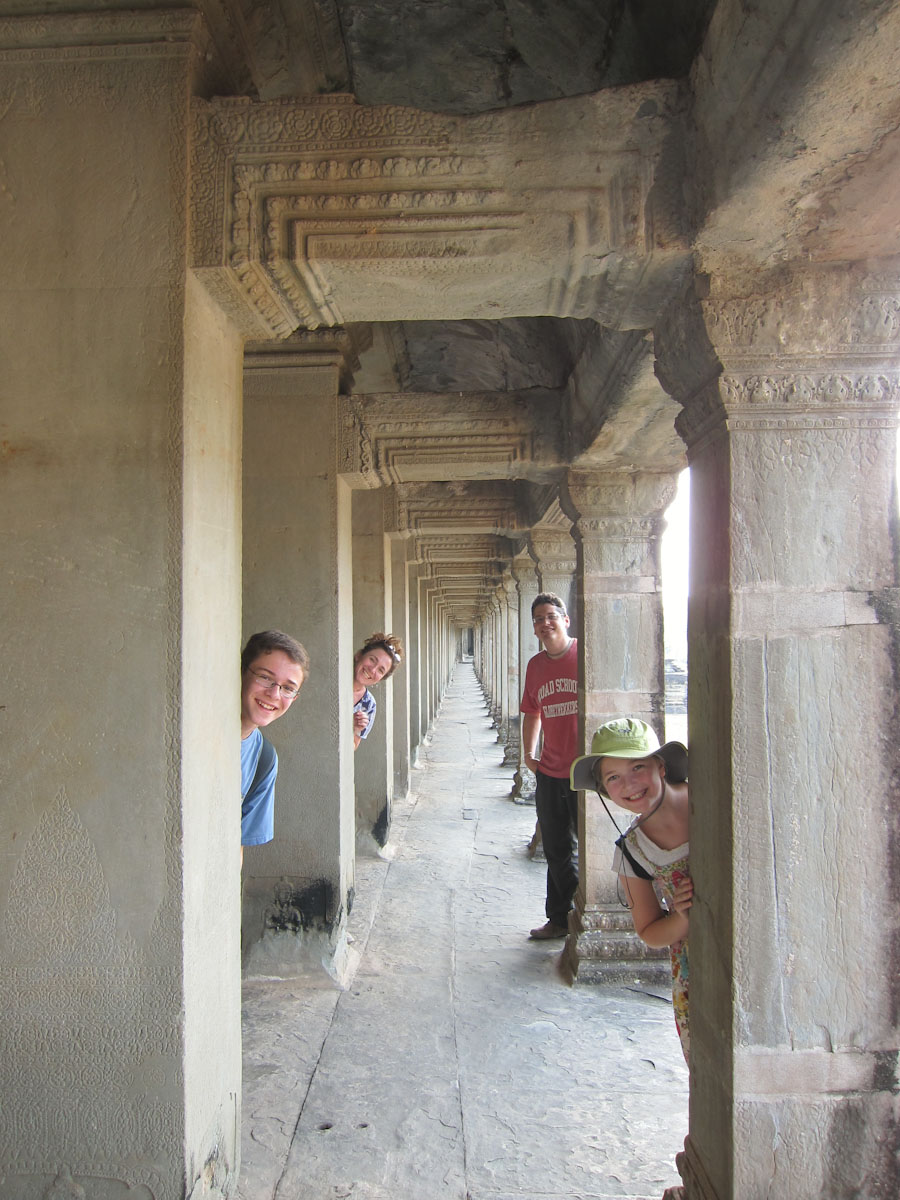
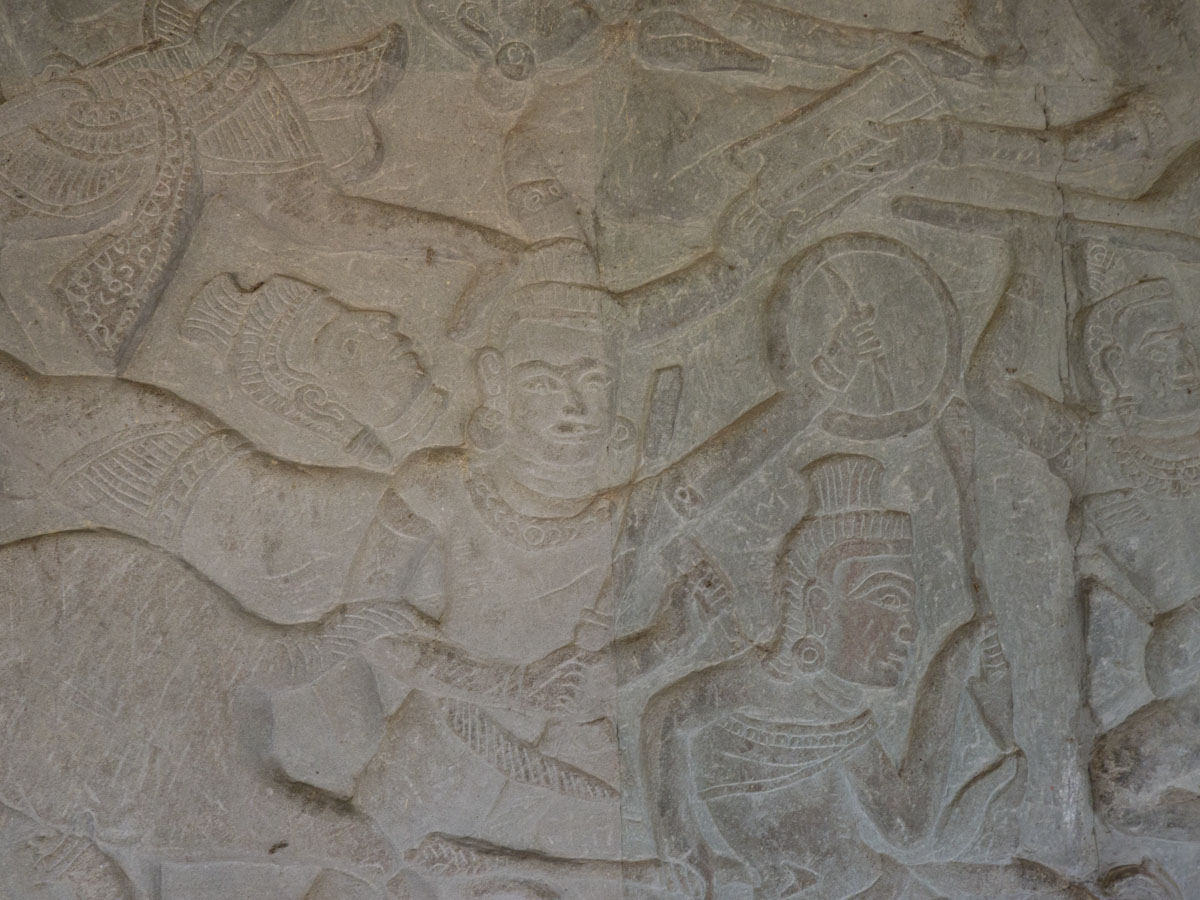
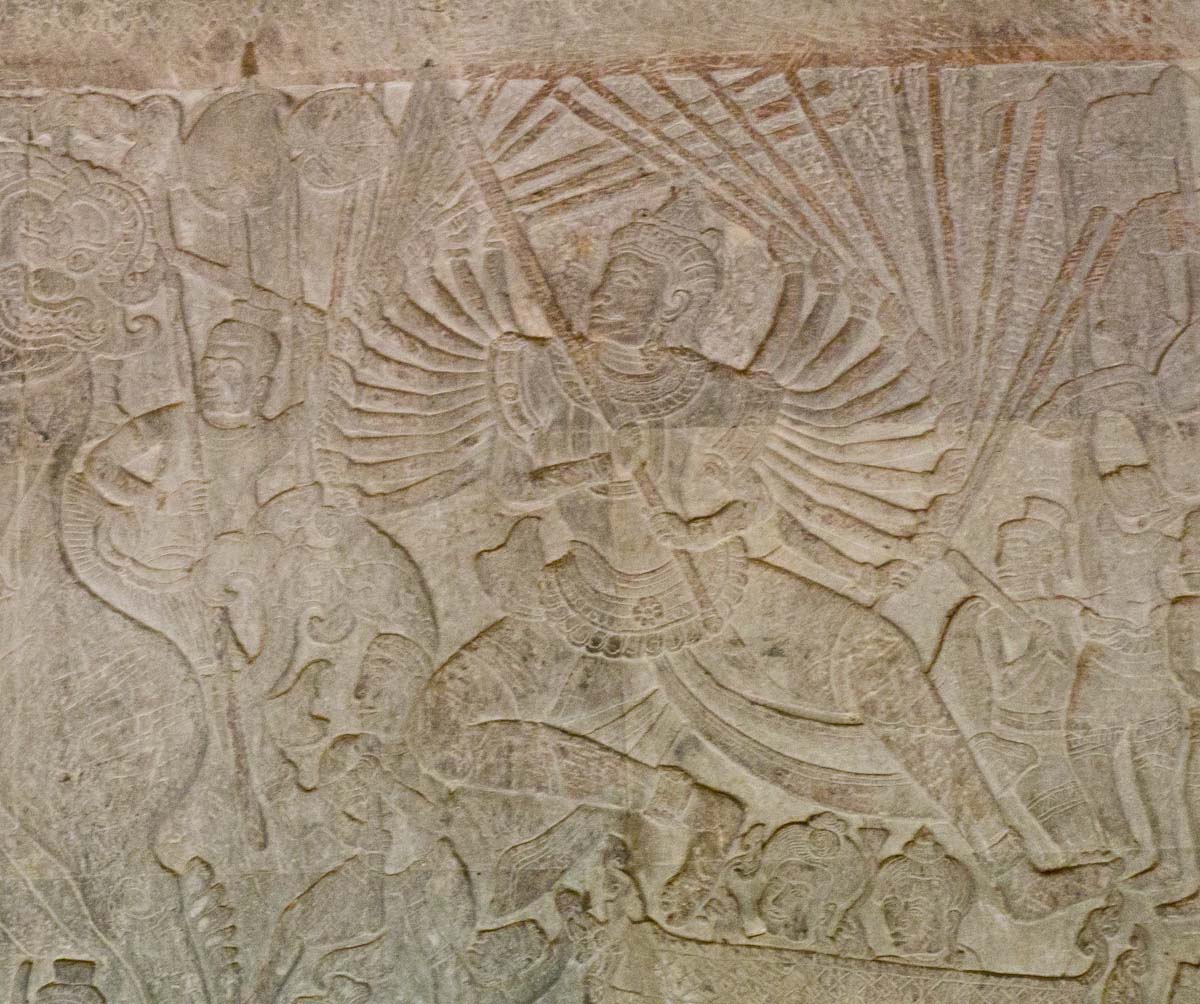
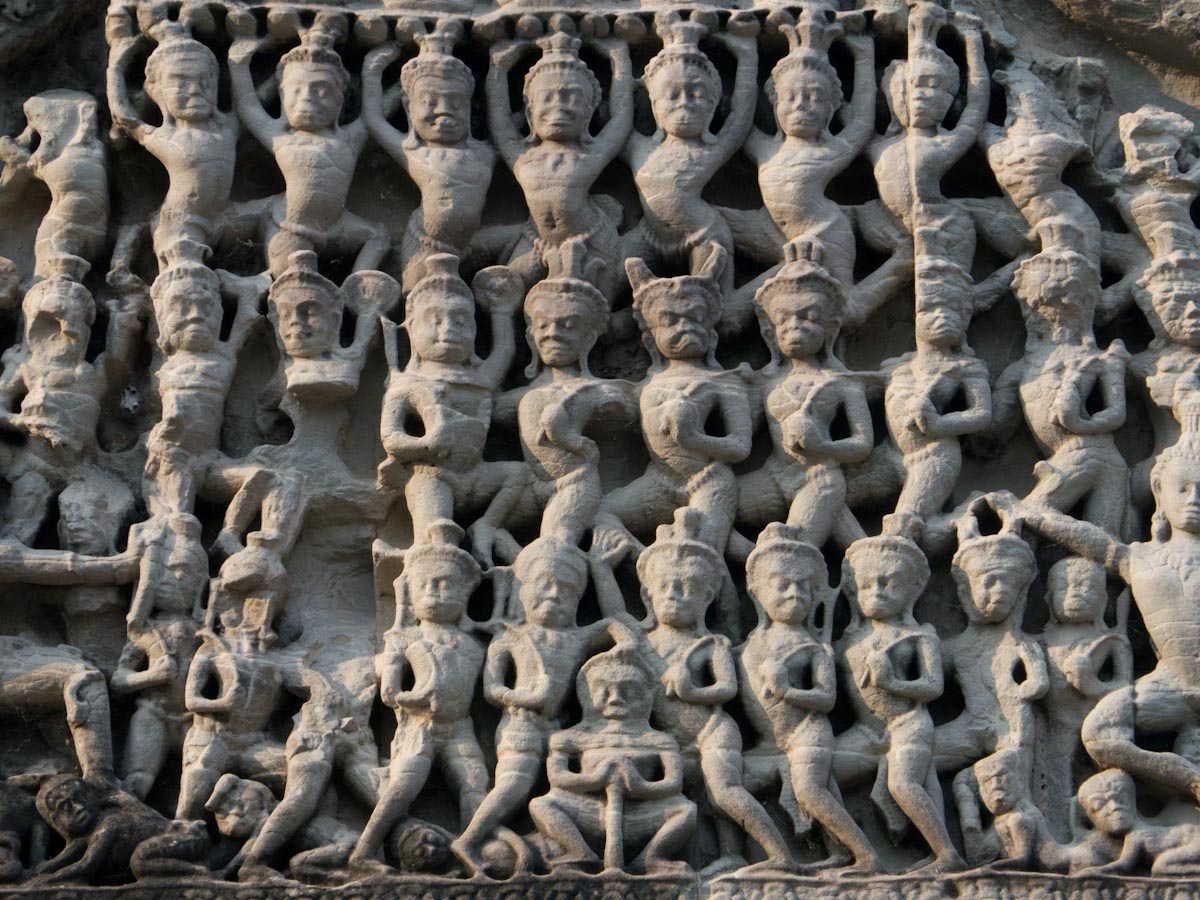
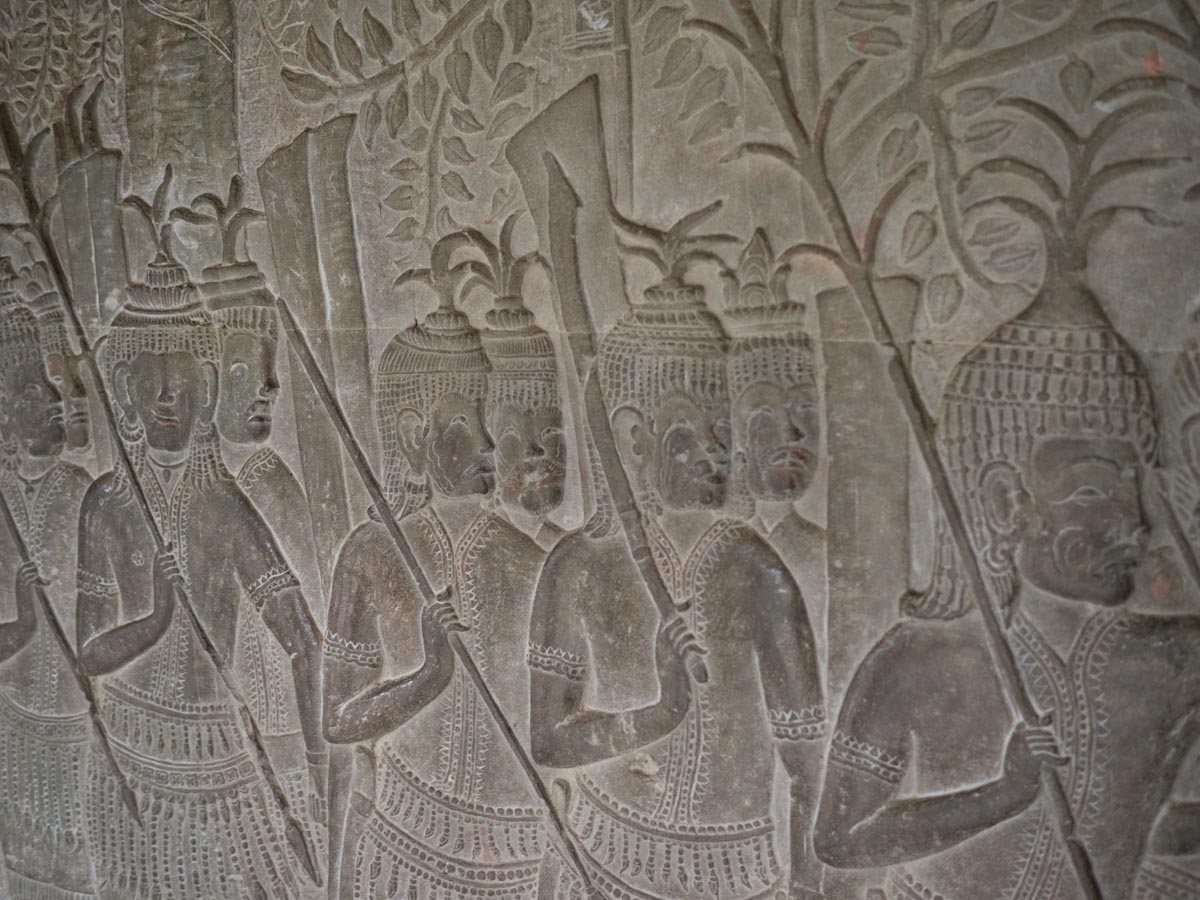
Walk inside and you see carvings everywhere. We spent a lot of time examining the cartoonlike bas reliefs along the inner walls. One major sequence shows Hindu stories from the Ramayana and the Mahabharata (we explained the former fun story in a separate post; the latter is an incredibly long text that is the basis for much of Hinduism). We learned a new story here from the Mahabharata that is called the Churning of the Milk Sea that involves all the gods and all the demons working together to create the elixir of life (Amrita) by pulling on a giant snake until it churns up an ocean. Vishnu changes into a turtle to help keep the operation from sinking into the sea. After one thousand years of churning the Amrita was formed. The demons try to grab it, but Vishnu manages to prevail and get the Amrita for the gods. The banisters are all snake form and the tiles on the roofs of the hallways look like snakeskin.
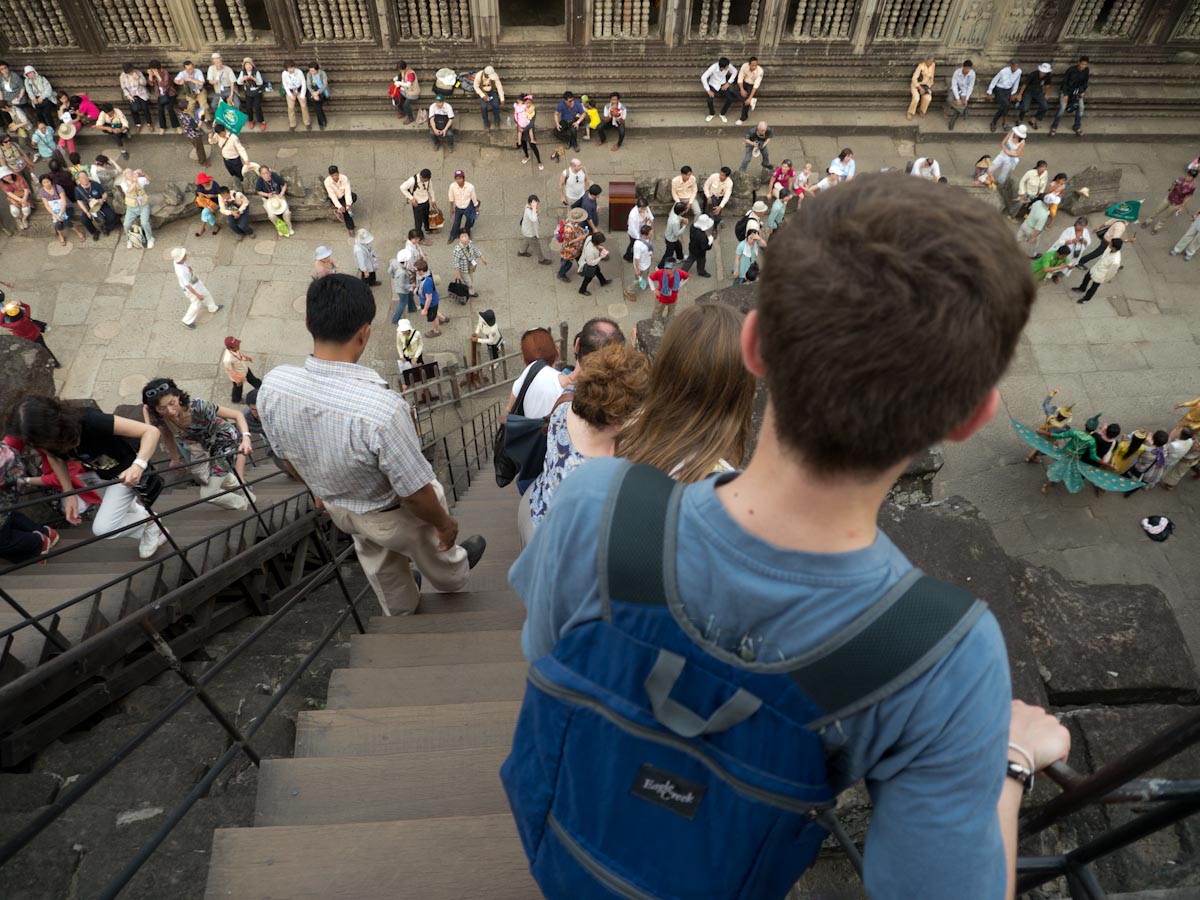
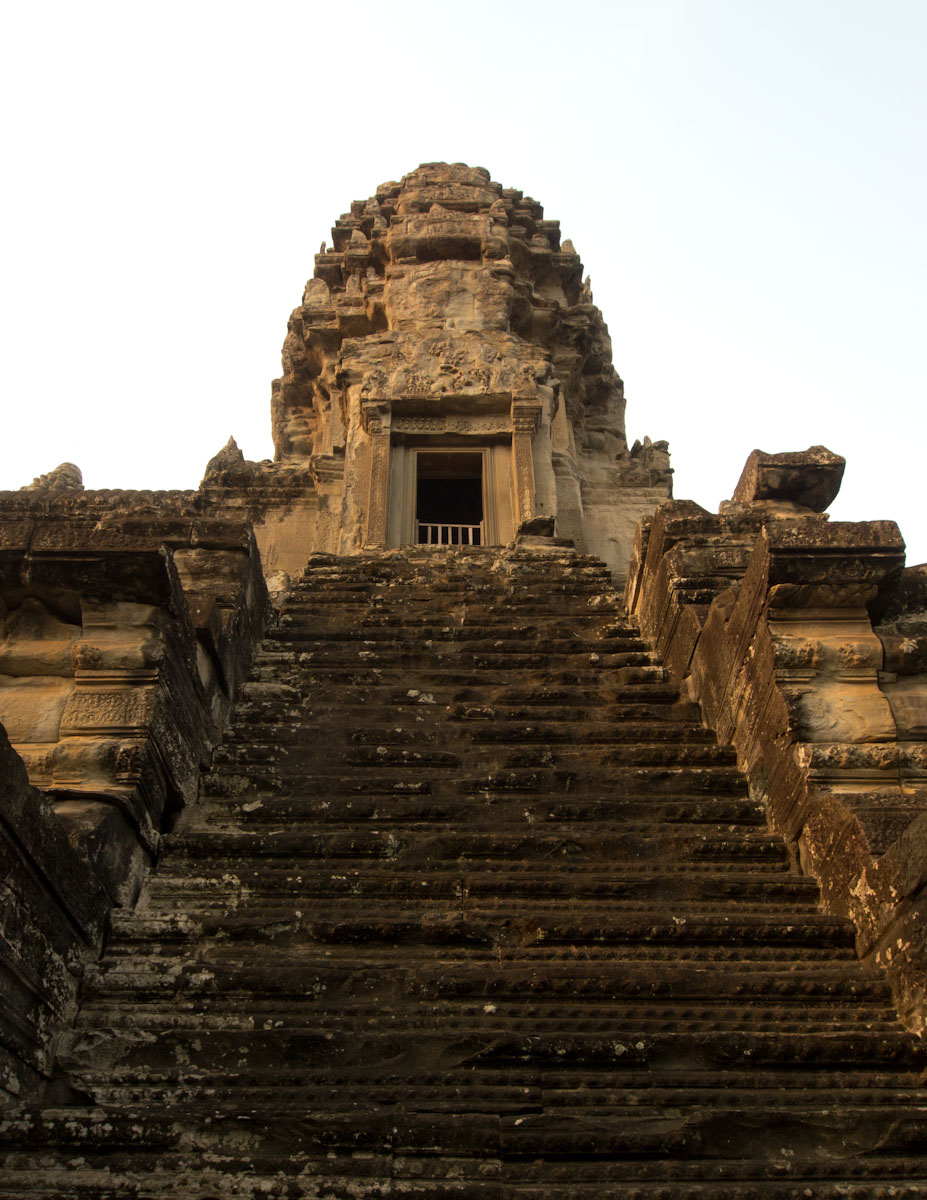
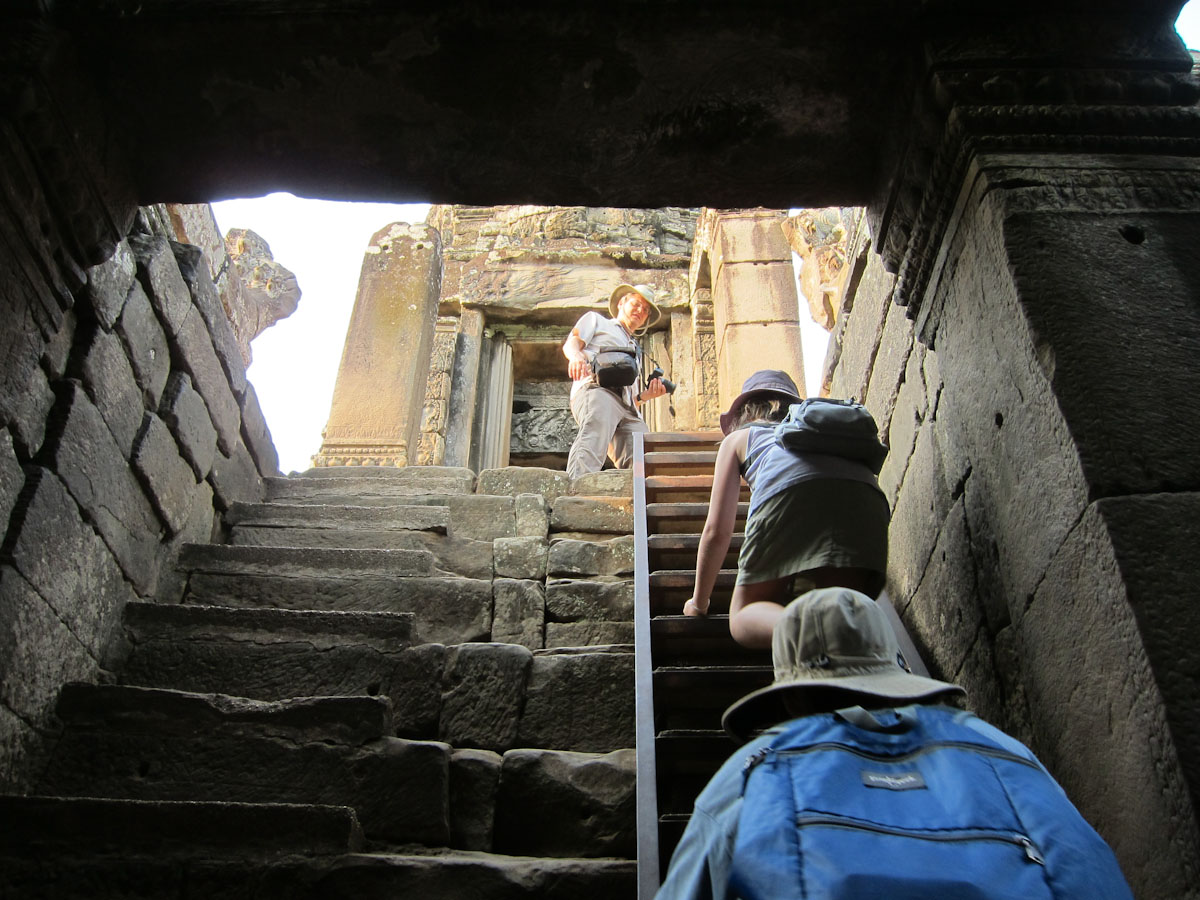
Looking up the steep stairway to the central tower, if you have seen the movie Conan the Barbarian then your mind is drawn inexorably to James Earl Jones. It was an eerily cool sensation to realize the Kingdom in that story was drawn closely from life.
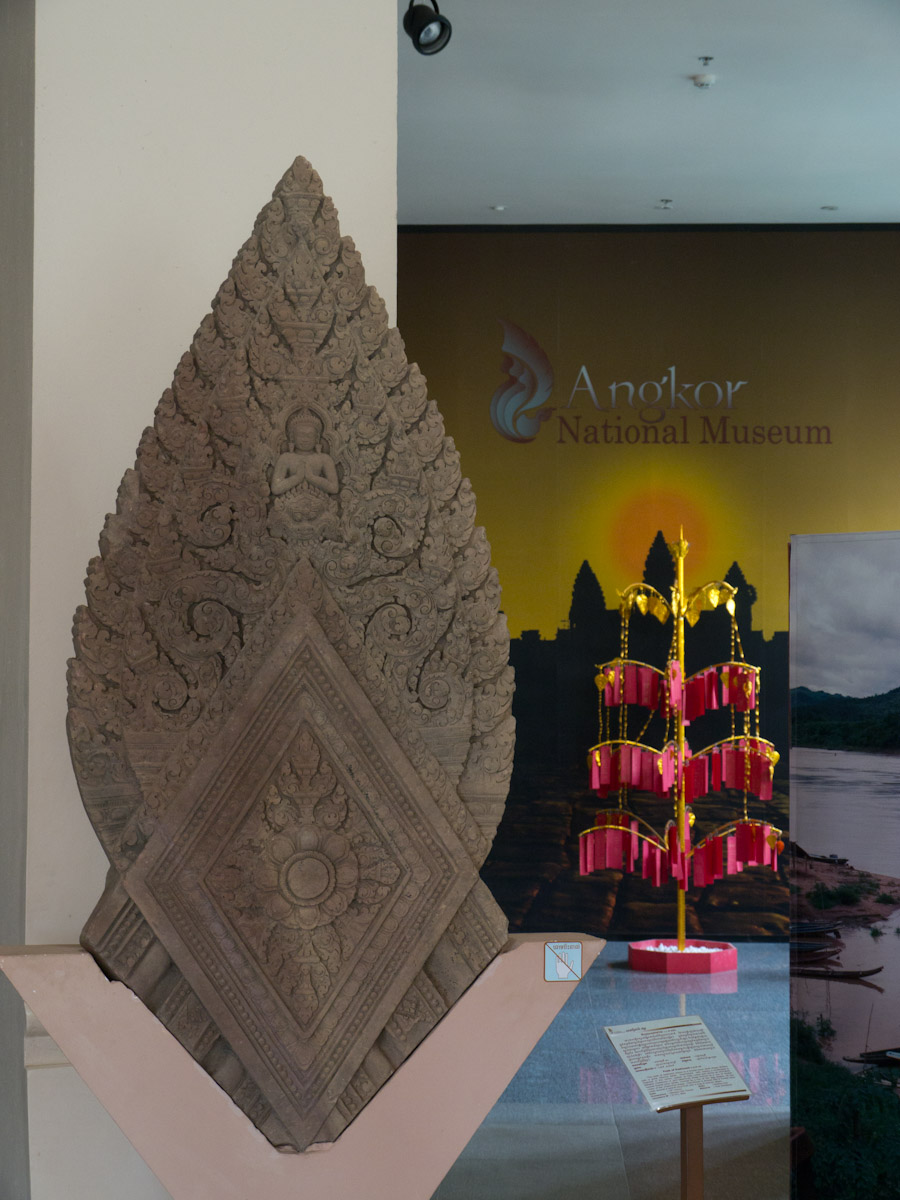
During the Angkor period the Khmer Buddhism was the Mahayana form, but they also practiced a lot of Tantric Buddhism (a rated X religion). The national museum theorizes this was a recruiting tactic to help combat the continued invasions by the pesky Chams.
We asked, what happened to the Chams? One day the Chams attacked the Vietnamese. The Vietnamese had a weaker army and lost at first. Then they made plans and built themselves up. They retaliated persistently and steadily, without mercy, across the years. There are only 100,000 Chams left today, and none who remained in the region. But back to Cambodia.
Following the decline of the Angkorian kings, Theravada Buddhism became more important and Angkor Wat became a Theravada Buddhist temple and monastery. Cambodia is 95% Theravada Buddhist now. Plenty of people are still lighting incense sticks at Angkor Wat today.
In short, Angkor Wat packs a powerful punch for just a few days of touring. Taken in combination the Angkor region offers a staggering collection of stonework, stories and art. These places were the work of a hundred thousand men and the focal lens for a hundred billion prayers spanning a full millennium. You must marvel at this. We certainly did.
ADDENDUM: Pol Pot
One of the oddities of Angkor Wat is that the halls are filled with sad, headless Buddha statues. When we asked about this, Mr. Bunat explained that boy soldiers from the Khmer Rouge had chopped off many Buddha heads with chainsaws and sold them for cash.
We realized we were not very familiar with the story of the Khmer Rouge and the Killing Fields of Cambodia. Mr. Bunat grew very sad, but looking at Carter and Katherine he said the story needed to be remembered and he sat us down afterward to tell it. His super-simplified version went roughly like this:
“Back in the 1930s, there was a boy named Saloth Sar who was not very good in school and failed his exams. He went to his brother who worked for the King of Cambodia, and he persuaded his brother to ask the King to overturn the exam results and give him a scholarship to study in Paris. The King did this and Saloth went to Paris, where he became a communist. He changed his name to Pol Pot to stand for “political potential”. He came back to Cambodia and was there in the 1950s when the country gained its independence. He tried to get a lot of peasants to join his party and he told them all kinds of lies about how great their lives would be if the Communists gained power. By the 1960s he was hiding from the government and stirring up discontent while trying to make deals with the North Vietnamese for help. The Vietnam War caused a lot of chaos in this region. Soldiers buried millions of landmines along the borders of Cambodia. The people of Cambodia became angry with both the Vietnamese and the Americans and their government was unstable.
Pol Pot said our nation must be completely independent from other countries and stand alone. In the early 1970s his group – called the Khmer Rouge – was able to take control of the country.
Although Pol Pot was the leader of Cambodia for only 3 years 8 months and 21 days, they were horrible times. He recruited peasant boys as soldiers and forced them to shoot their own families, so the army would be their only family. One time he told the educated people in the city that the Americans would bomb their homes that night, and they should evacuate without taking any possessions. After they left he seized their property. He sent them to the rice fields to work in forced labor. They received the worst jobs and worked long hours without enough food. About 2 million of them – nearly all of the country’s educated people – died in the “killing” fields. At that time Cambodia only had 6 million people. (Today it has 14 million). There was no longer anyone who could oppose Pol Pot.
The country sank into bloodshed and poverty. After almost four years of this, one of Pol Pot’s inner circle decided that he was out of control and fled to Vietnam. Then he returned with soldiers from Vietnam and they chased Pol Pot into the jungle. The Vietnamese departed and the Cambodian government began to rebuild the country. But Pol Pot kept fighting a guerilla war and he also laid millions of landmines. Finally after 20 more years, Pol Pot died and the government reconciled and pardoned his remaining men (although some ringleaders are held for trial). Cambodia also benefitted greatly from Princess Diana’s charity program to remove landmines, which has safely disarmed millions of these bombs and left Cambodia a safer place.”
Everyone in Cambodia lost someone close in the early 1970s. Very sadly, we learned that Dr. Bunat’s father, a professor of mathematics, was a victim of the killing fields. Dr. Bunat honored his father’s memory by pursuing a strong education and has become a highly respected Khmer scholar. In addition to his archeological research at Angkor Wat, he works as a teacher, retelling the stories of an older, prouder ancient Cambodia.