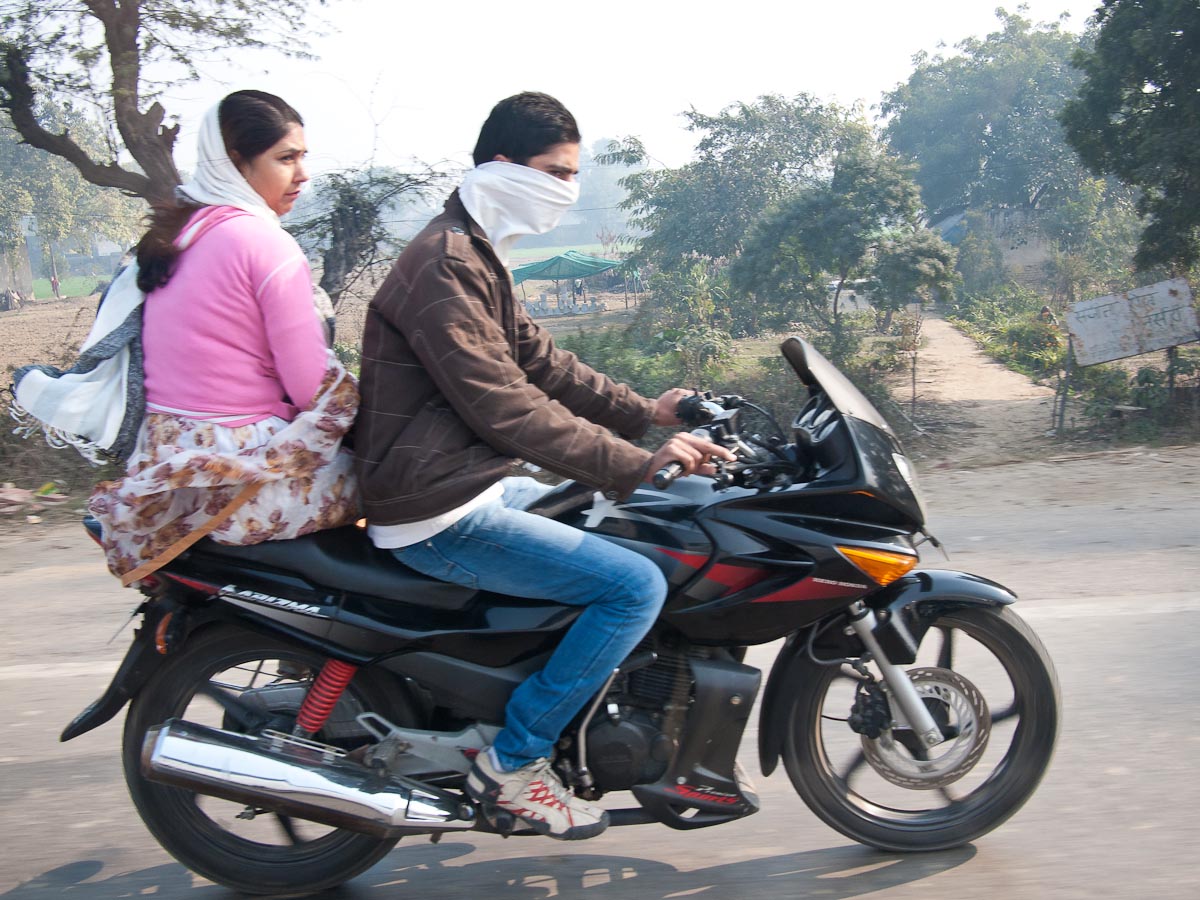
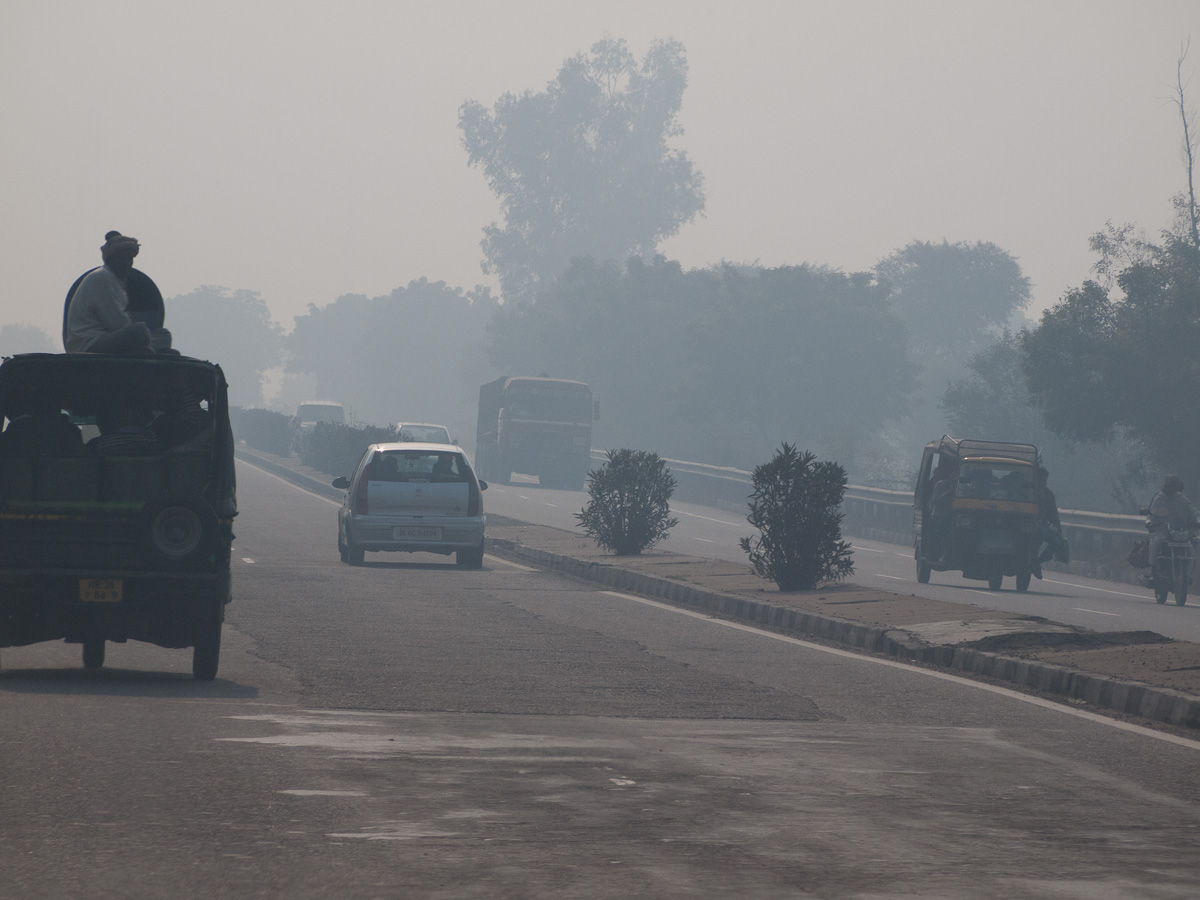
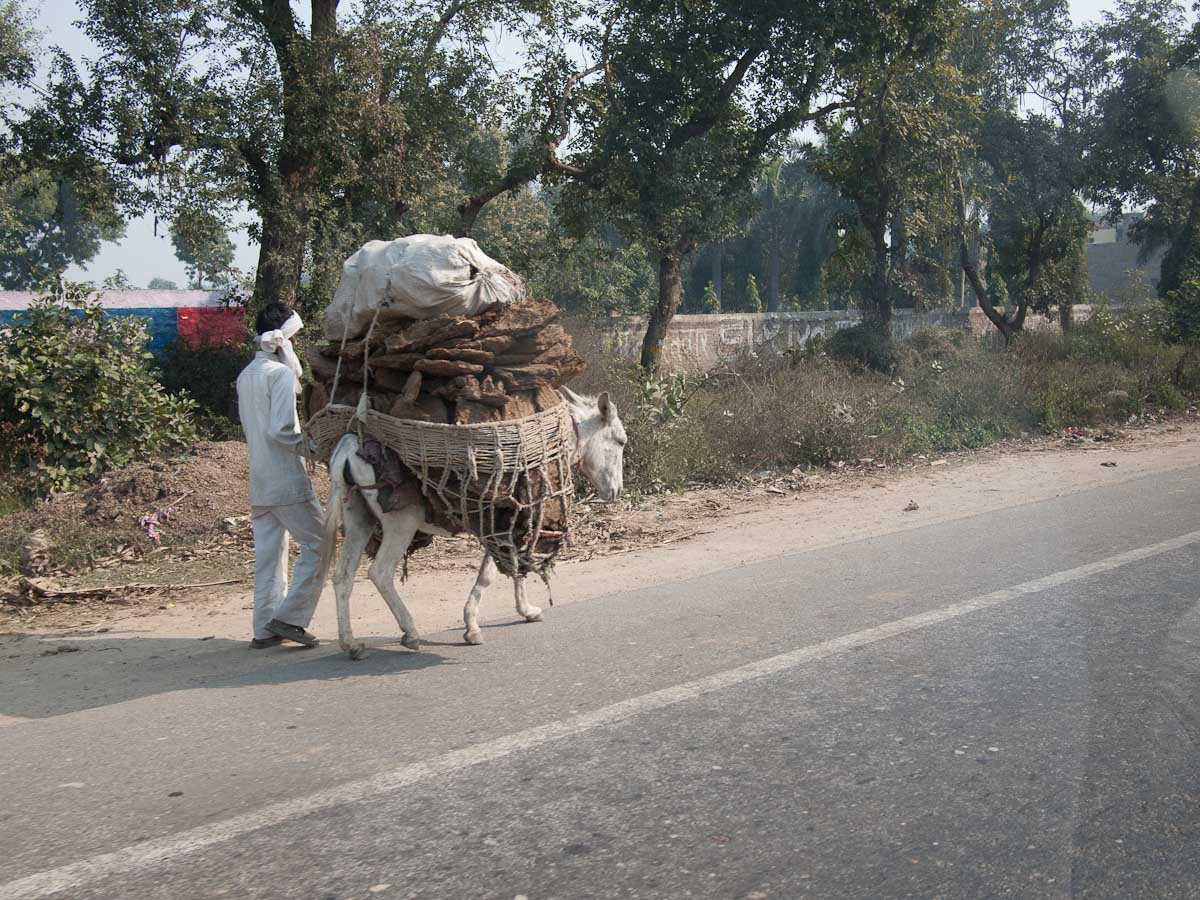
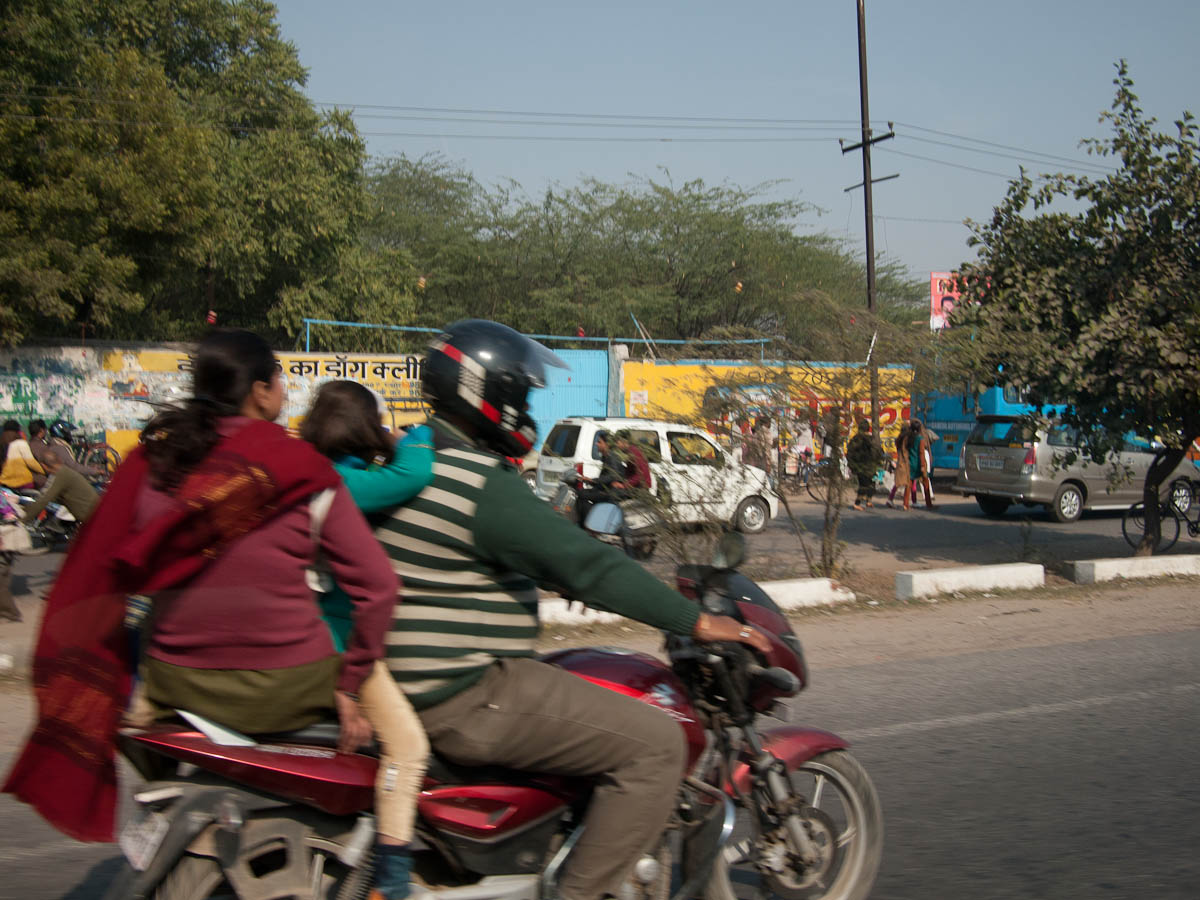
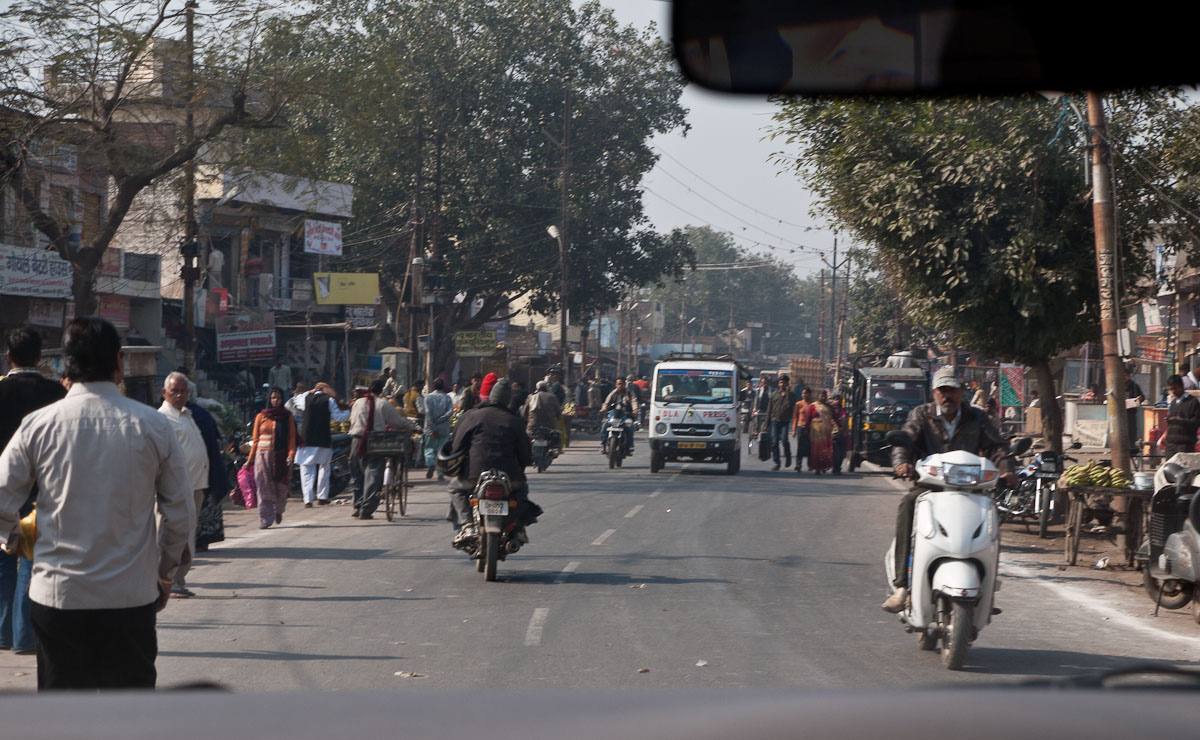
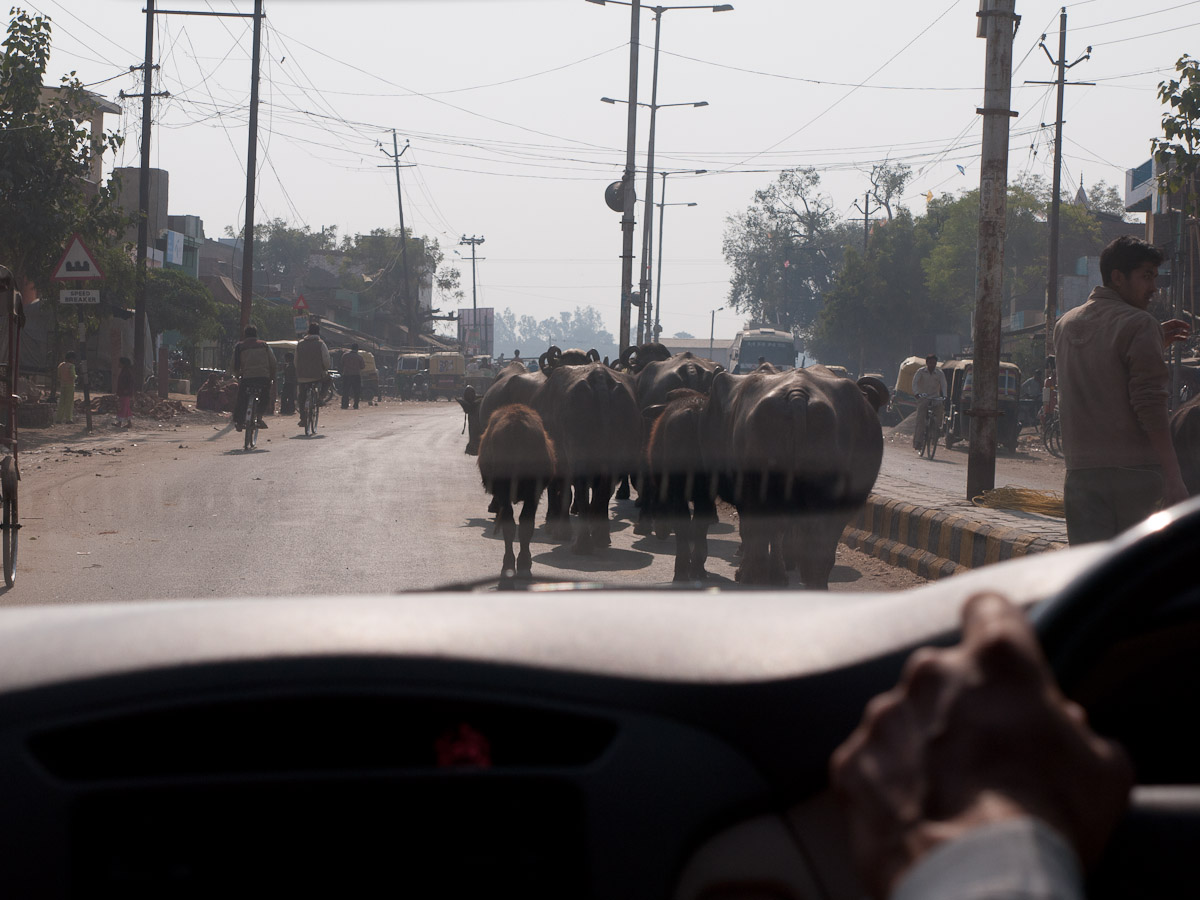
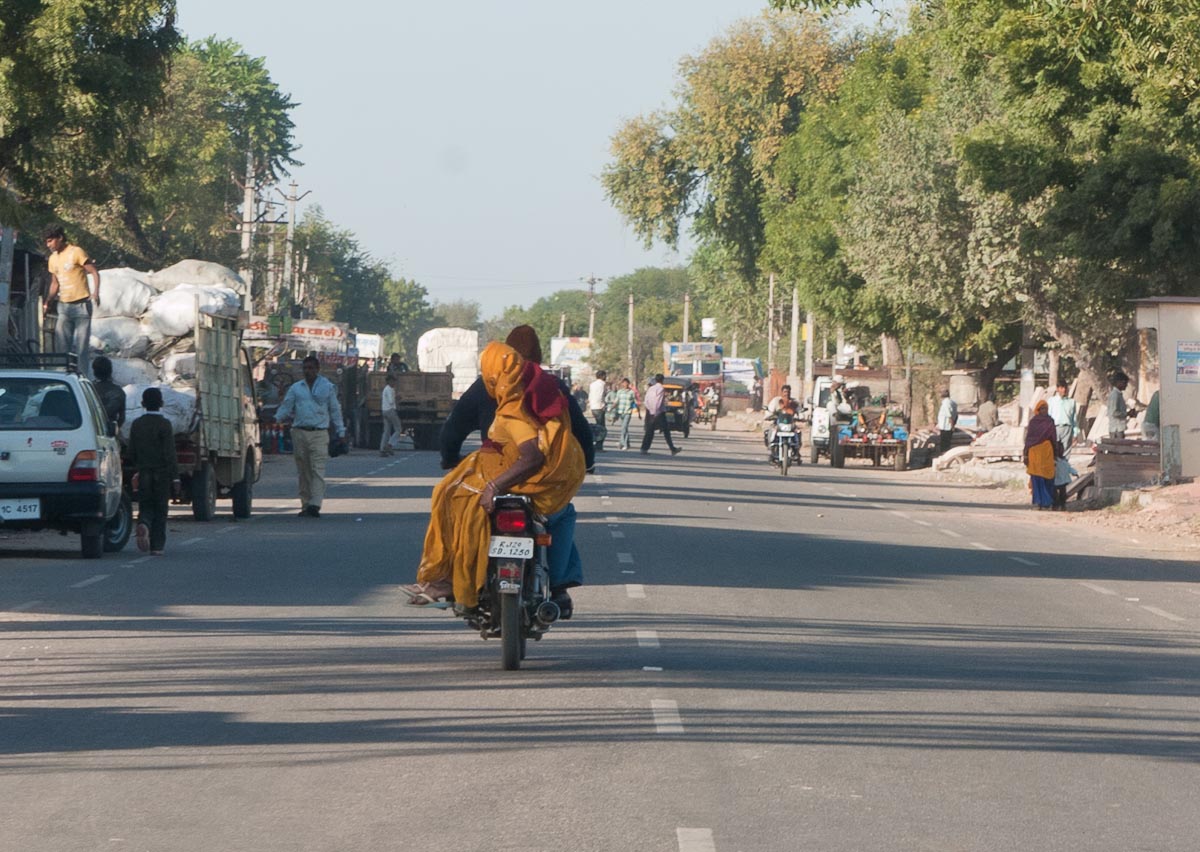
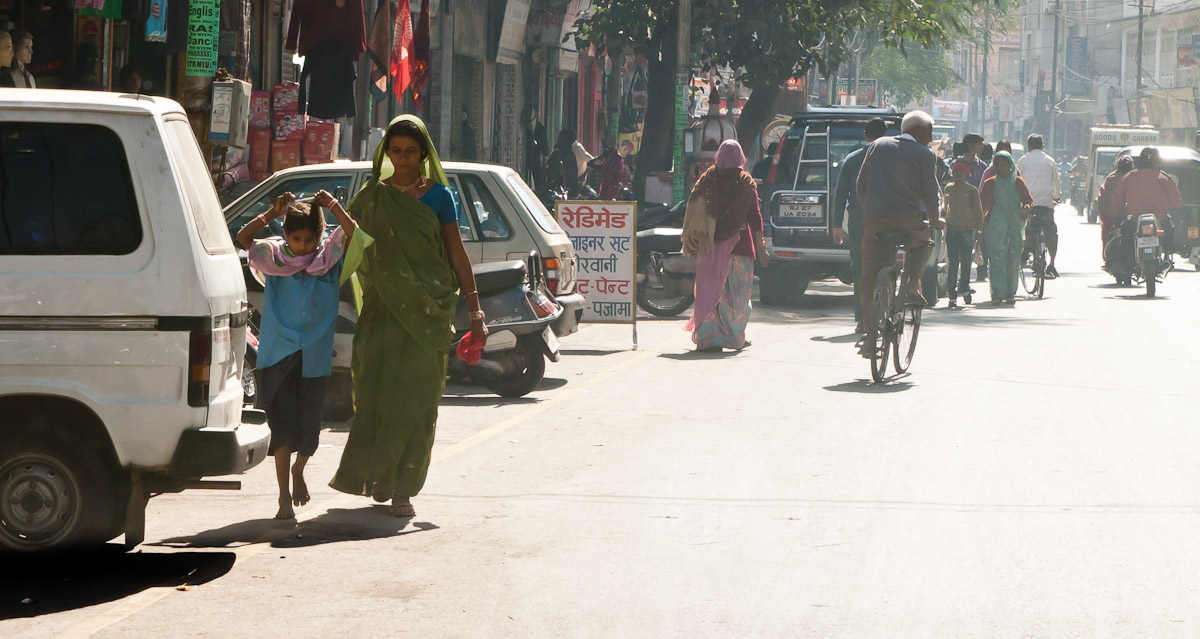
We swerve to the left around a herd of cows, not too far because there is a grey horse lumbering just beside us, straining to pull a metal-wheeled cart stacked eight feet high with cow dung patties. No matter that there is just one lane going our direction – the cows, the horse and our car are three abreast. Then loud beeps from behind – a man zips past the car on his motorcycle, his wife in colorful sari riding behind him side-saddle – does he see the herd? Yes. He is weaving through the cows, heedless of the sharp horns. They are through.
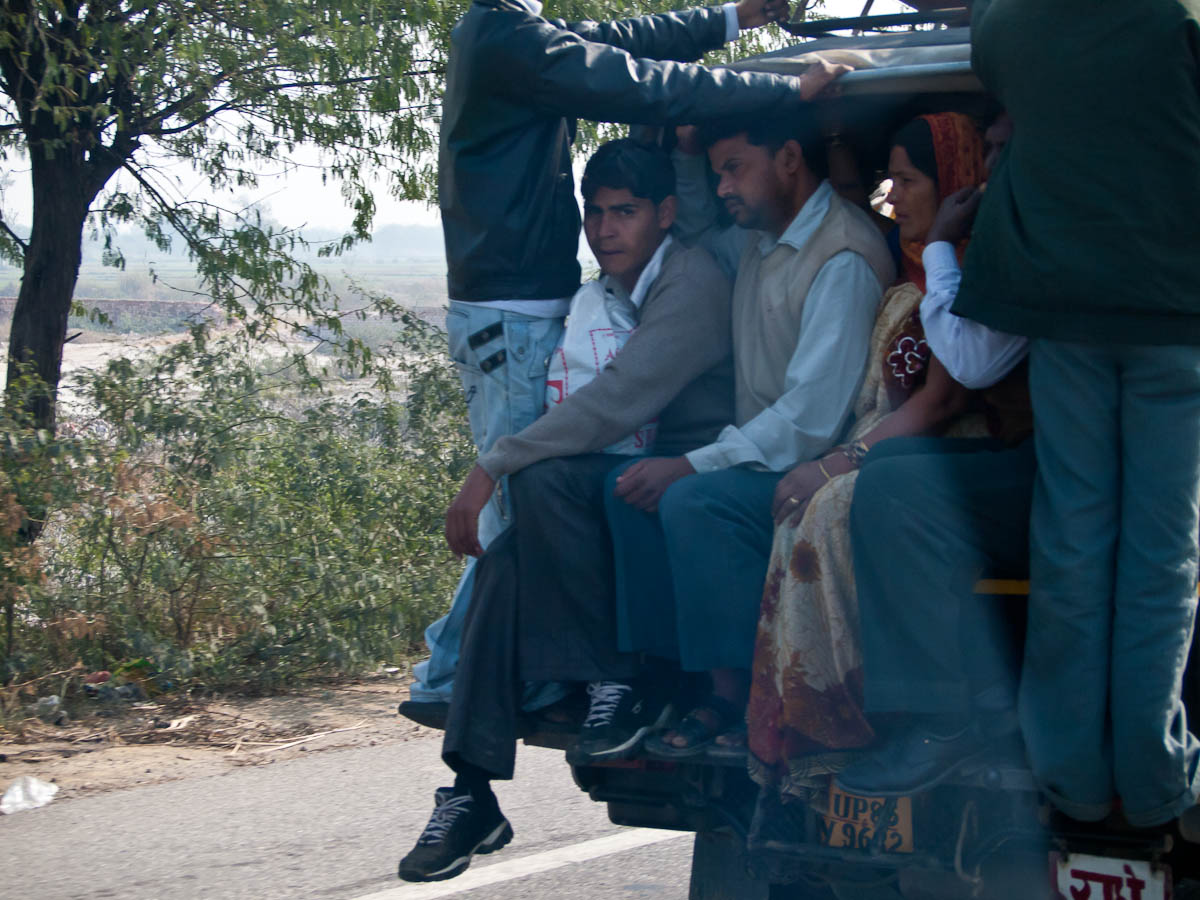
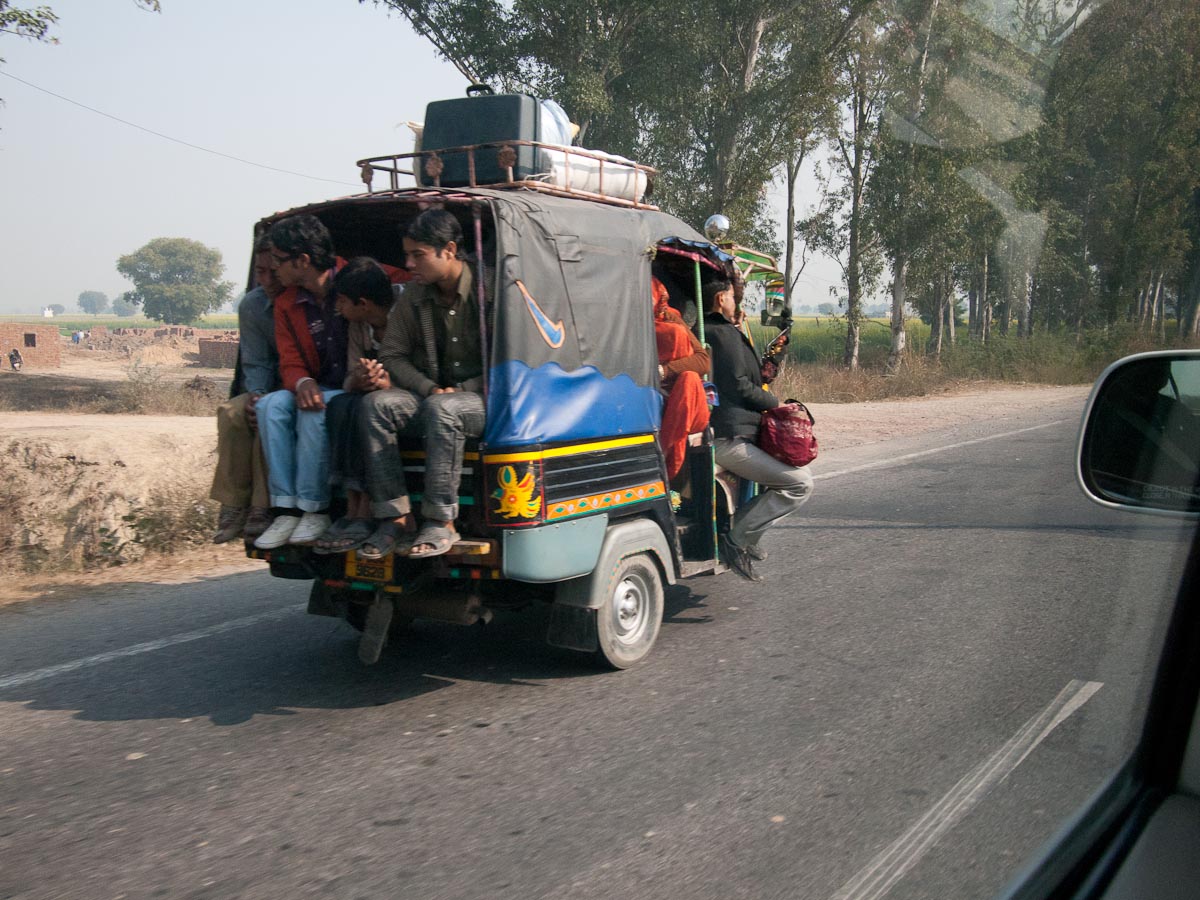
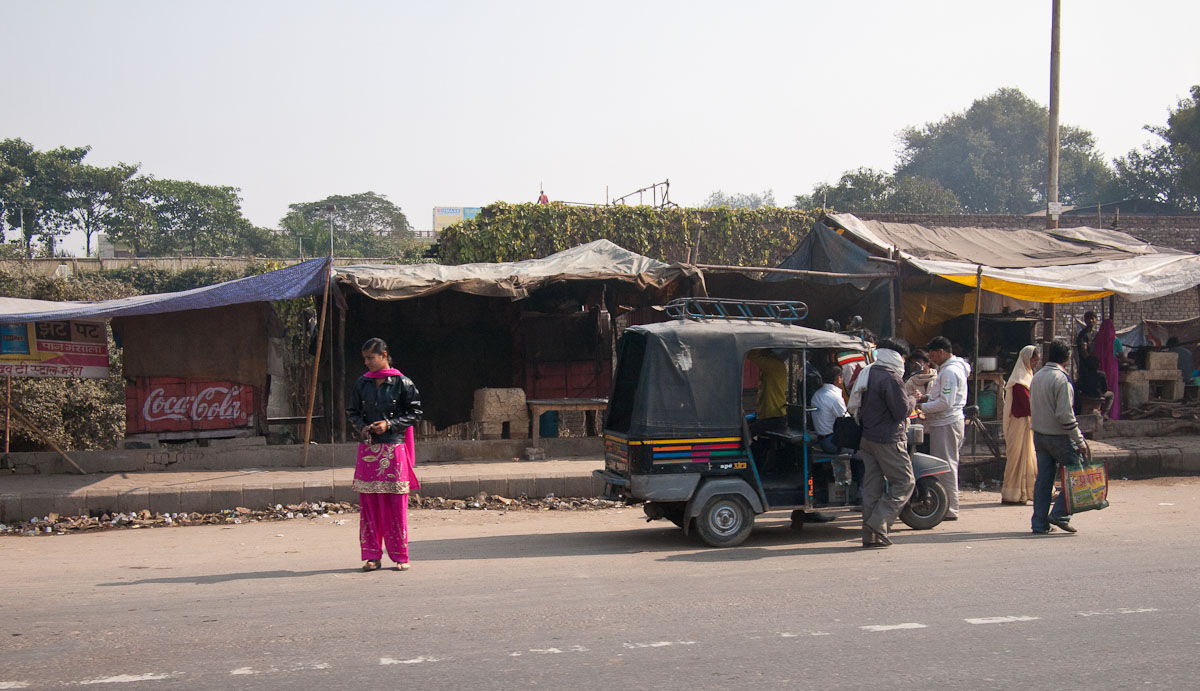
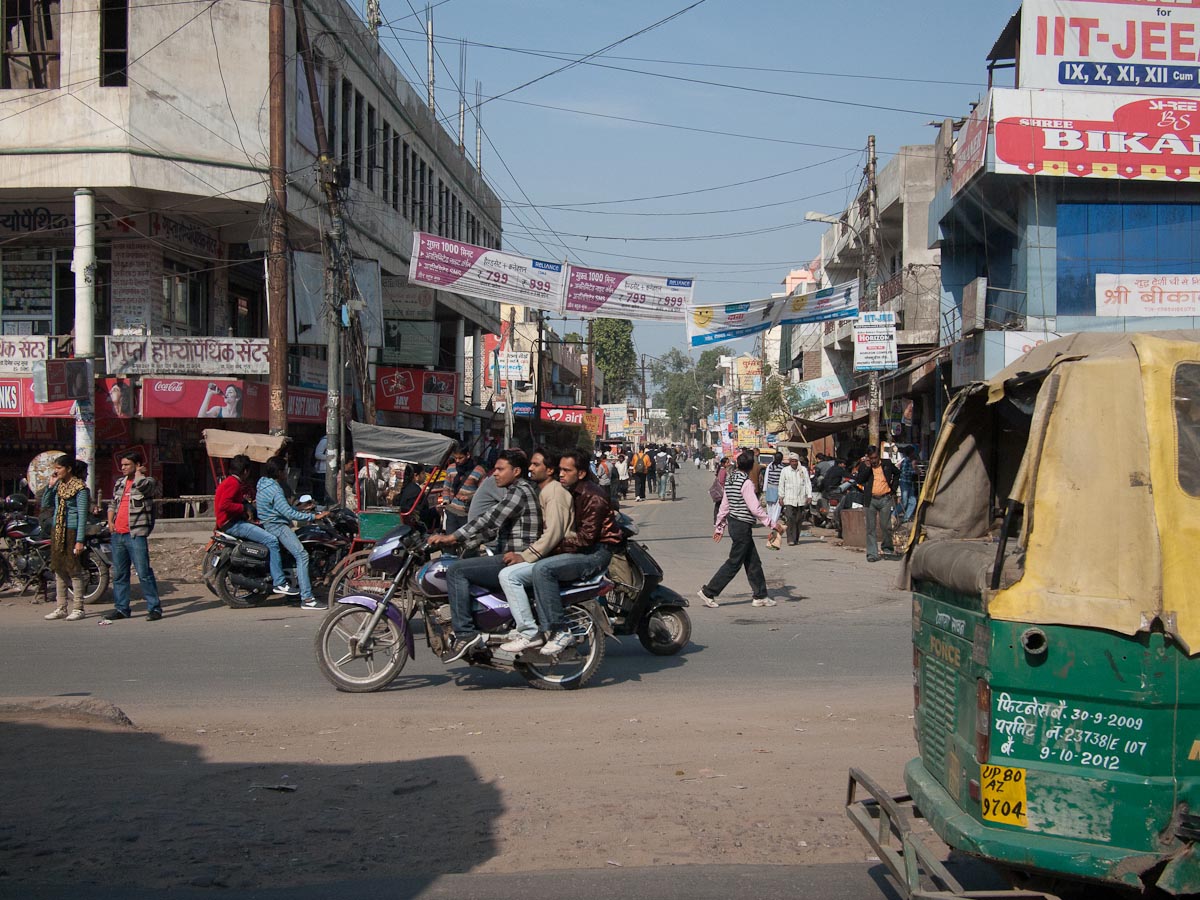
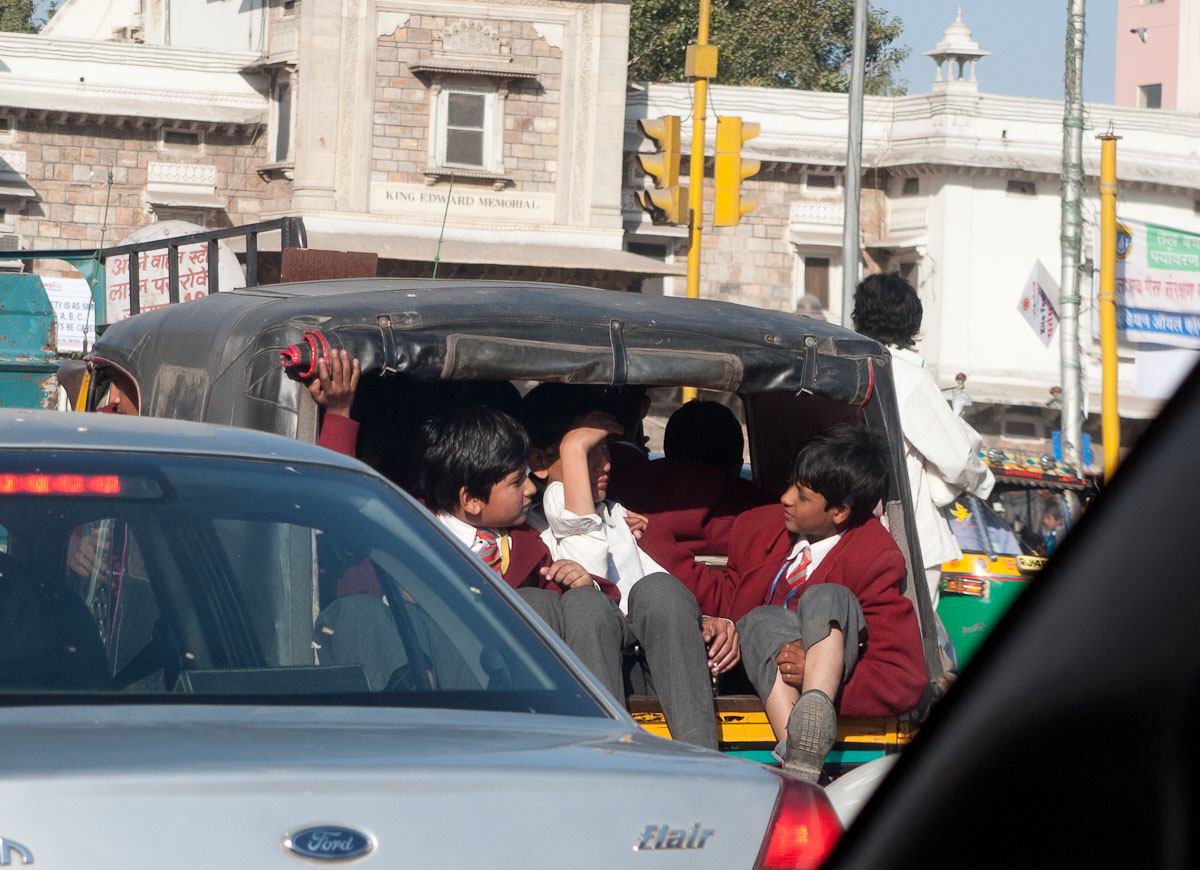
Now a truck way up ahead veers into our lane and accelerates straight for us, belching black smoke. He is trying to get around a Tuktuk – India’s traditional taxicab. The Tuktuk is the size of a golf cart and runs on a small compressed natural gas engine yet drives on highways as well as city streets. Although built for 3-5 passengers, with people sitting on laps, and people on THEIR laps, and so on, and others sitting in the rear cargo compartment, and still others on the running boards gripping metal handles, a full complement of 20 experienced riders can share one Tuktuk. We saw many like this trundling through the streets.
But a truck has no patience for following a Tuktuk and so now there is one in our lane coming right at us. Like all Indian trucks, it is painted a dozen colors and this one also has silver beads and purple and orange LEDs on the grillwork. The oncoming cab grows larger in the windshield. The carnival of colors is soothing because nothing on earth looks like that and this cannot be reality.
Suddenly, a new motorcycle appears. It has come from behind the truck and veers around HIM even further into our lane. There is absolutely no way he can pass the truck and get back in time.
Our driver jams down the gas pedal and beeps. We zip past the cows, swerve back to the right. The motorcycle passes us – still going opposite the traffic in our lane – and avoids the horse cart by verging onto the sidewalk. The pedestrians have sensed the danger and somehow step back at the right moment. The crazy truck gets past the Tuktuk and swerves nimbly into its own lane. We avoid a massive head-on collision by a split-second.
Our driver is wearing sunglasses, but by all outward appearances, he has not noticed any of this. He has been chatting with our guide the whole time. Gina and I can sheepishly release each other’s hand.
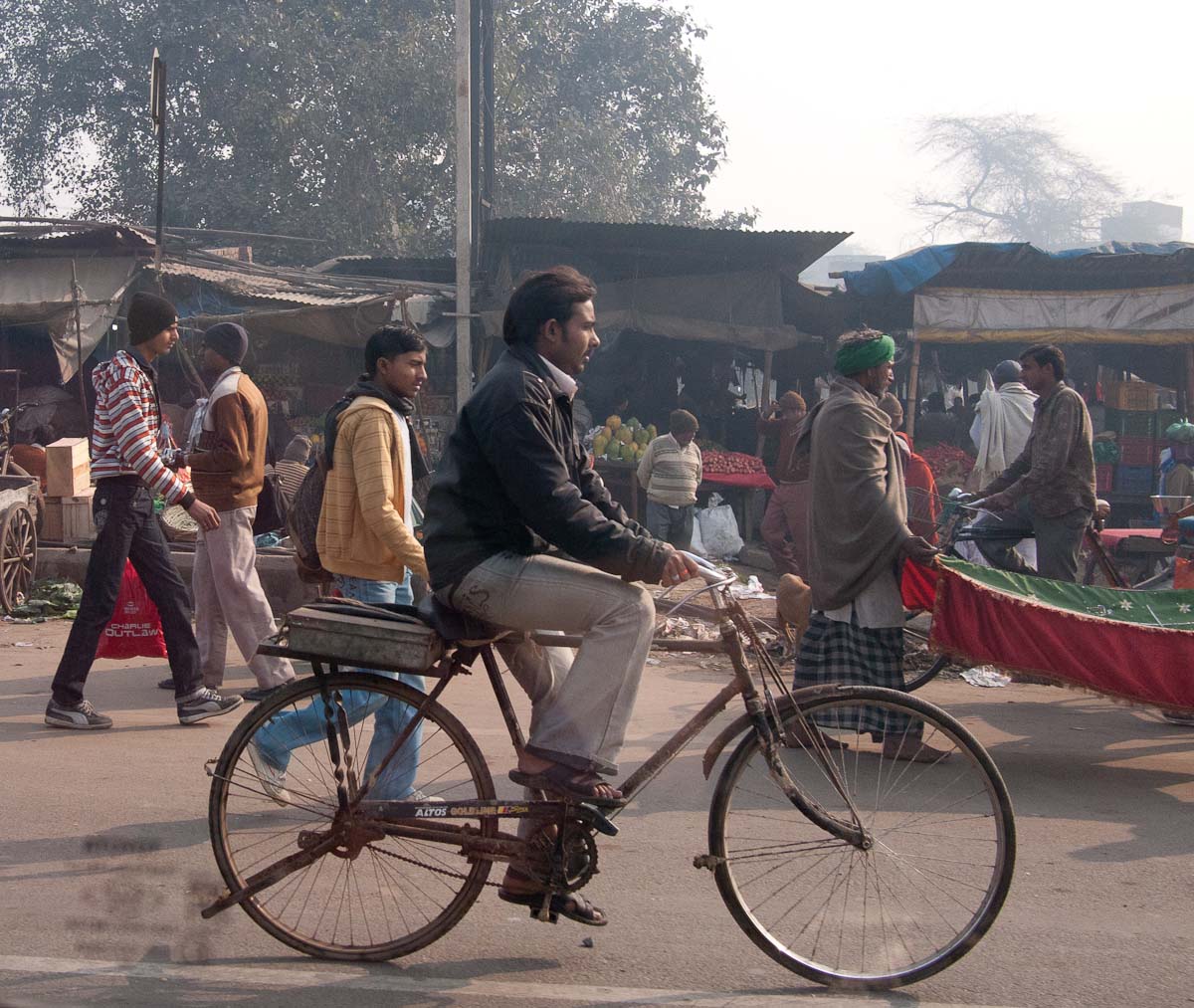
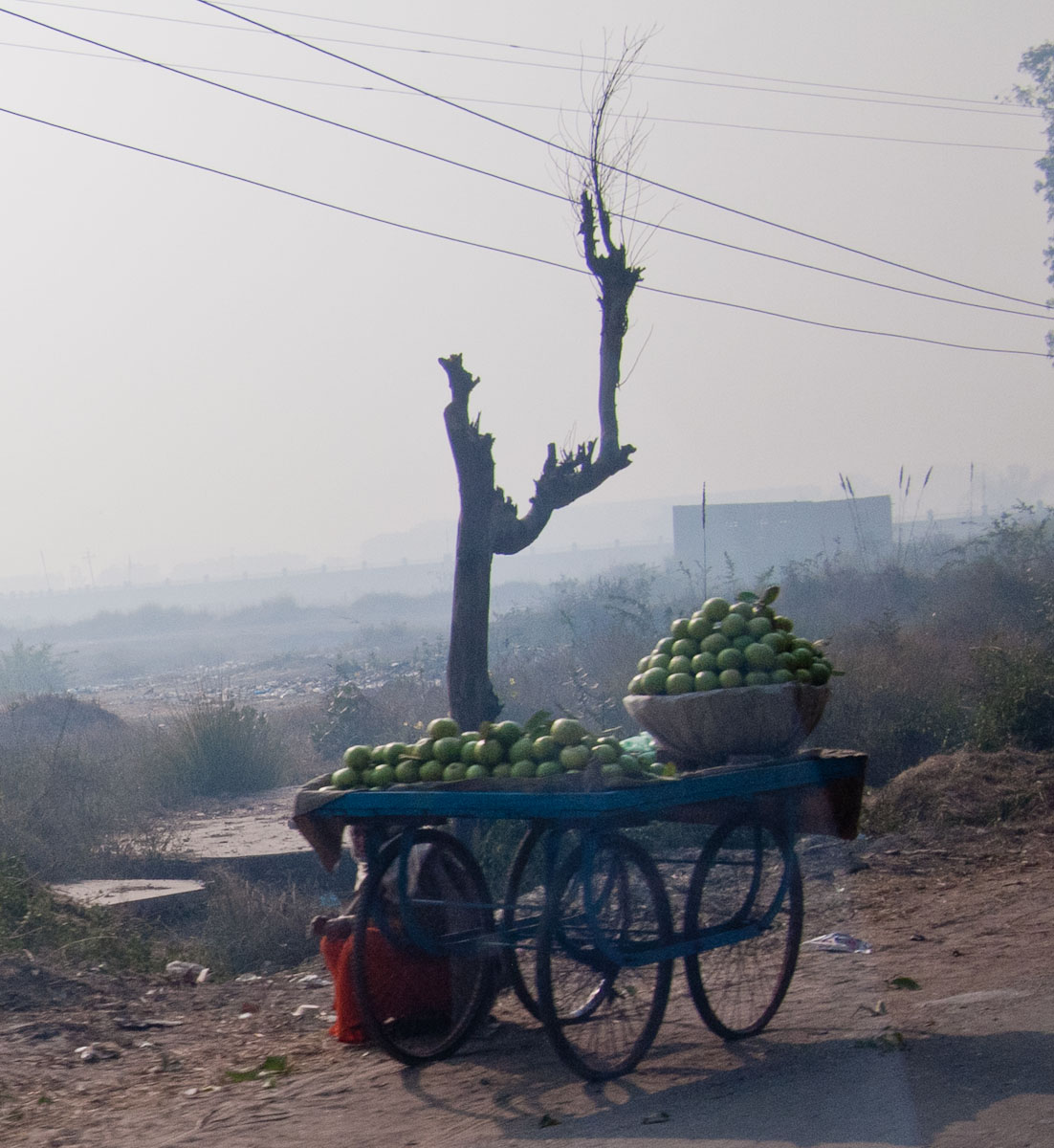
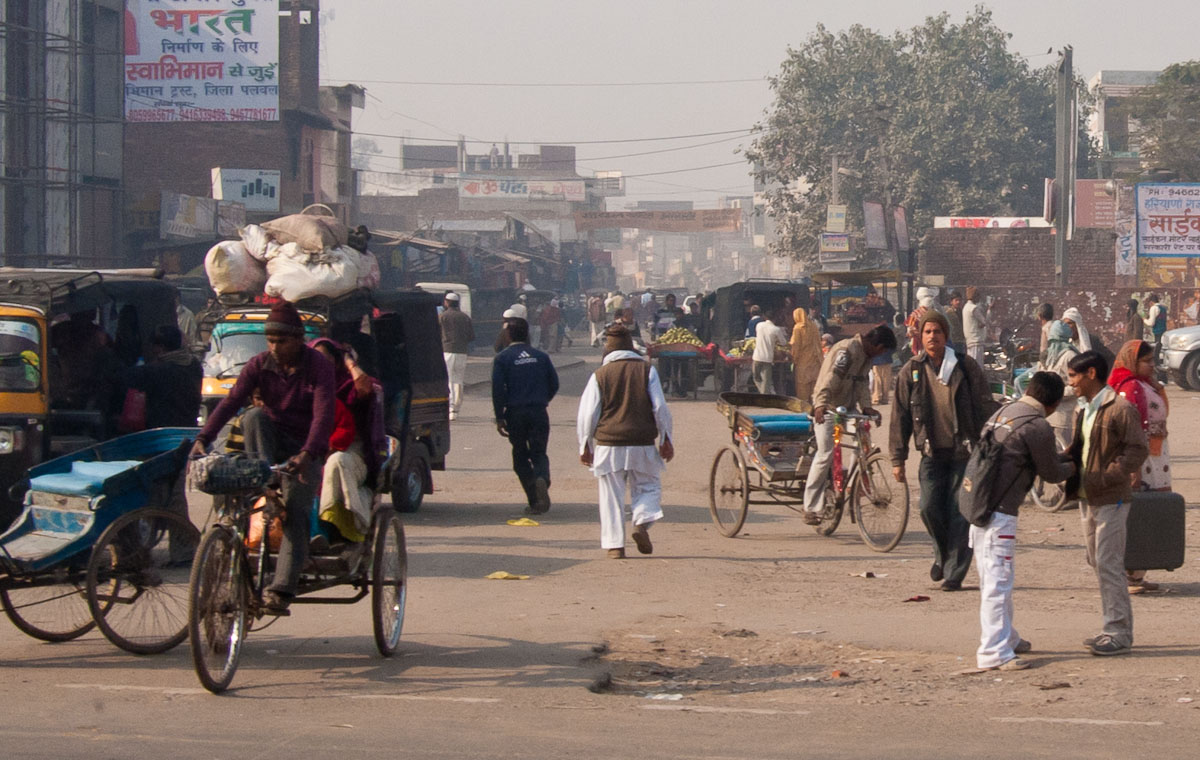
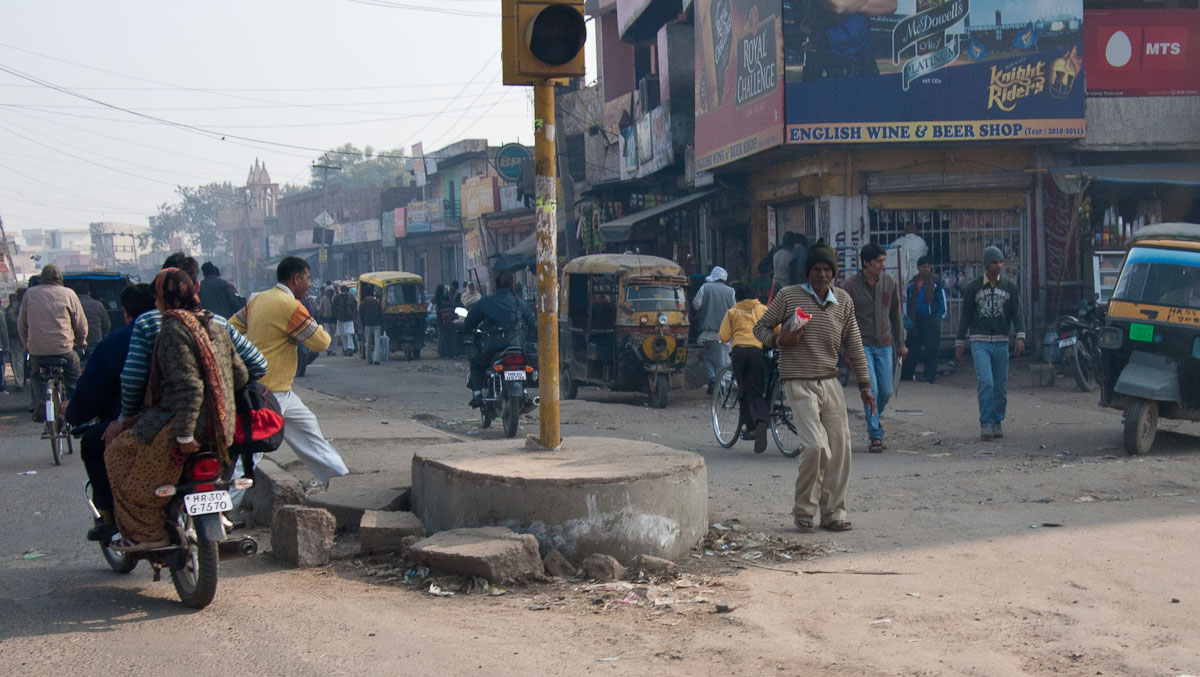
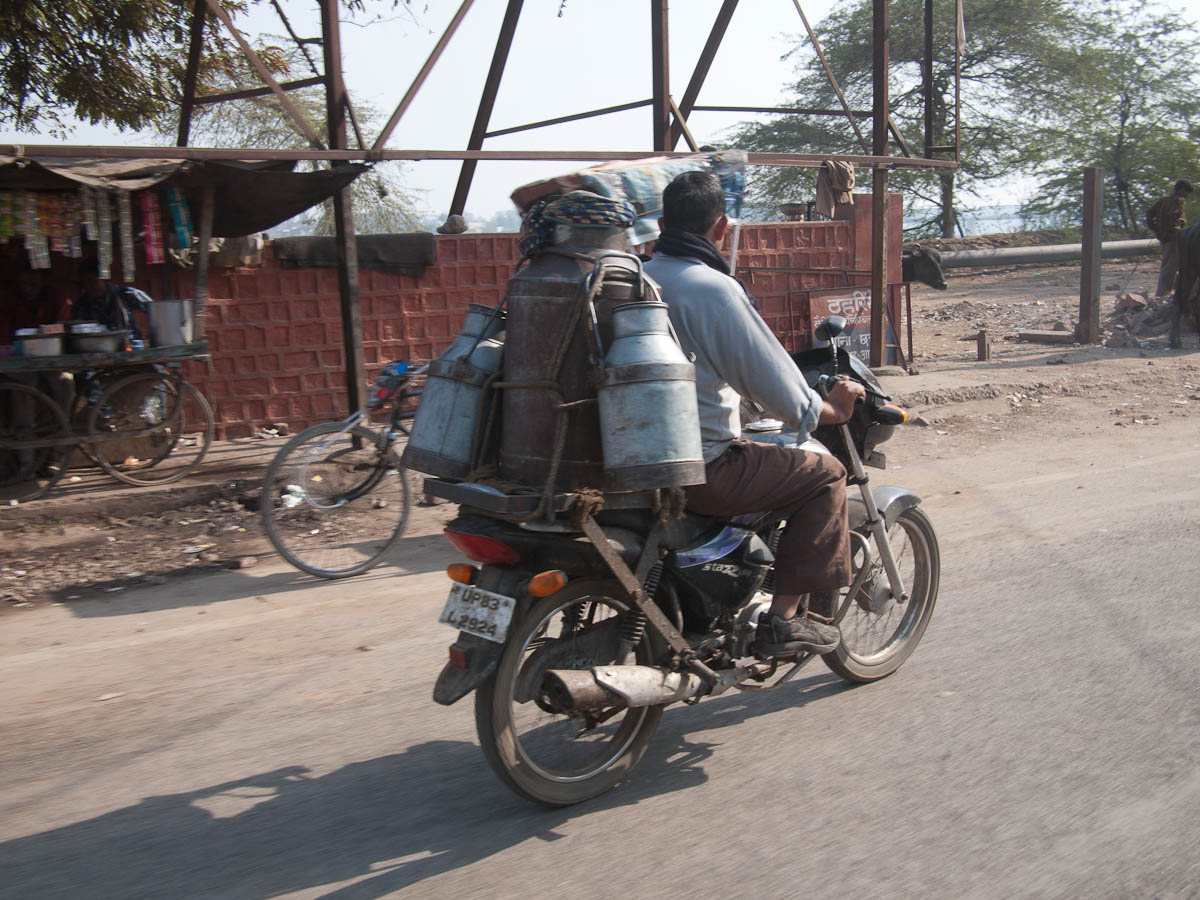
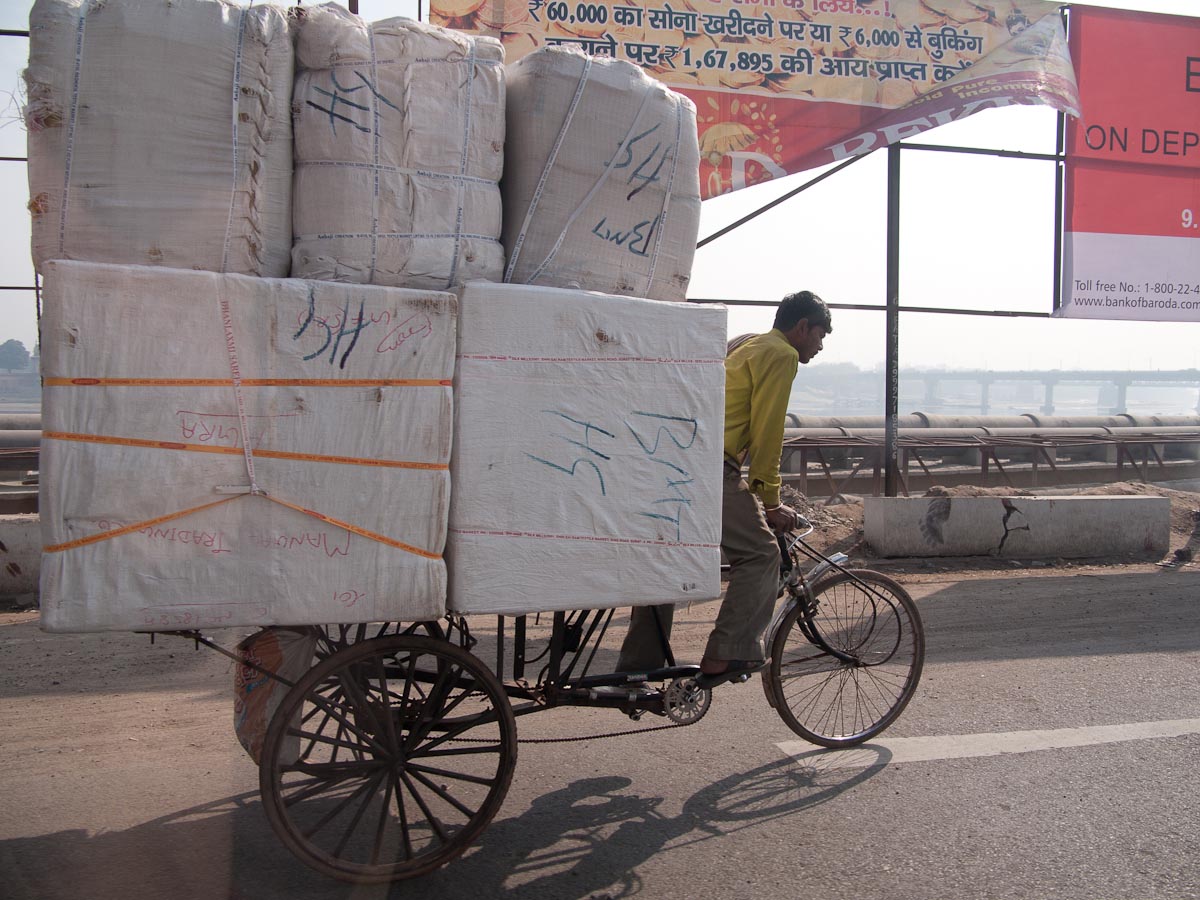
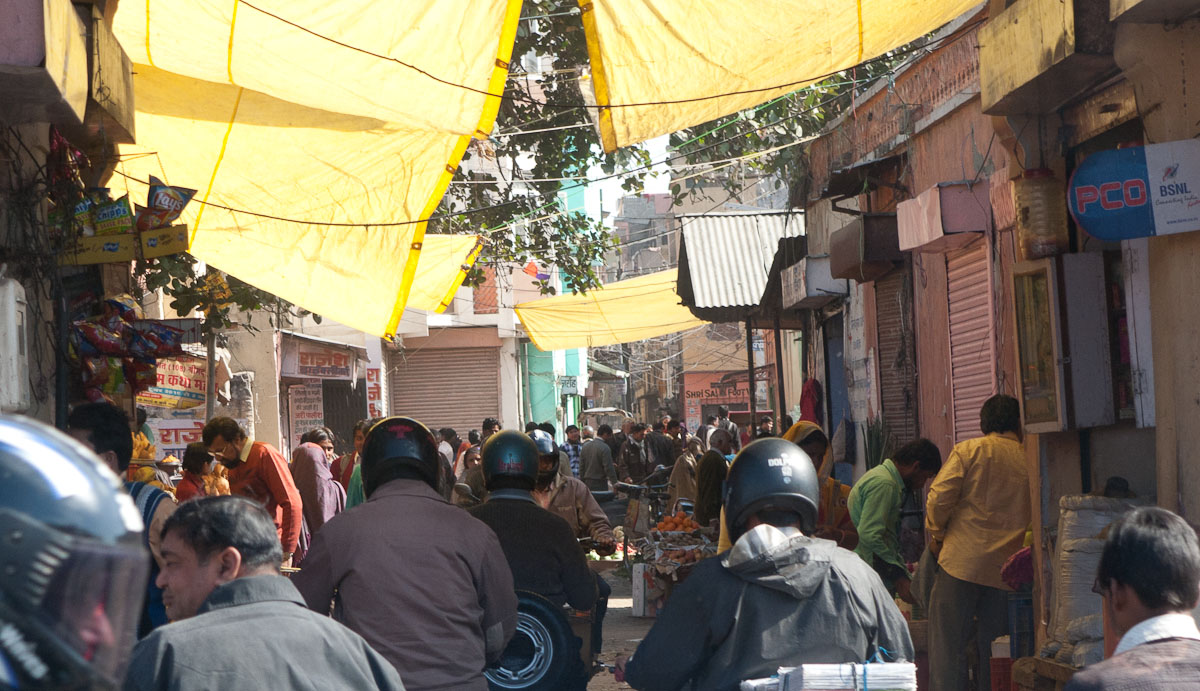
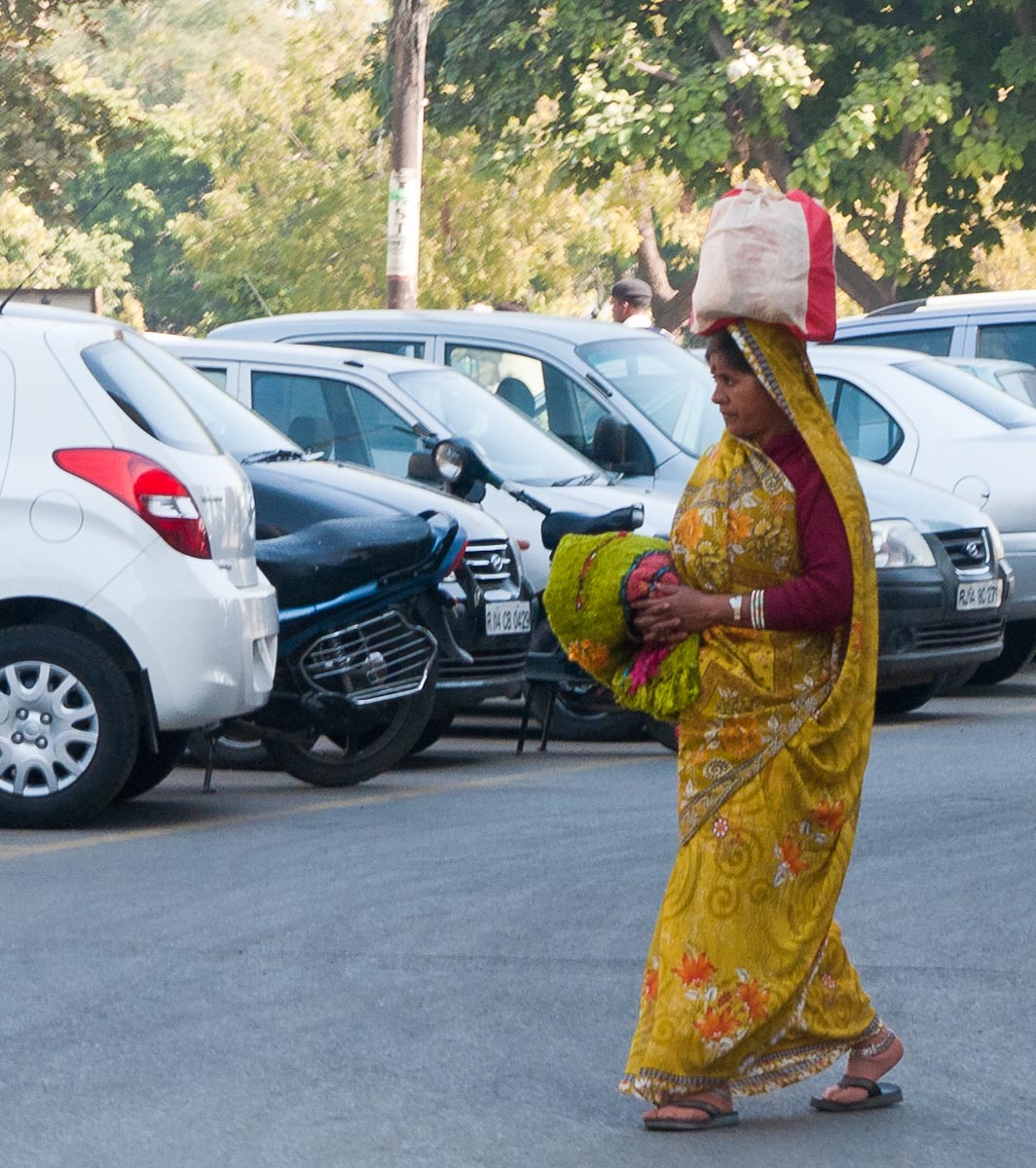
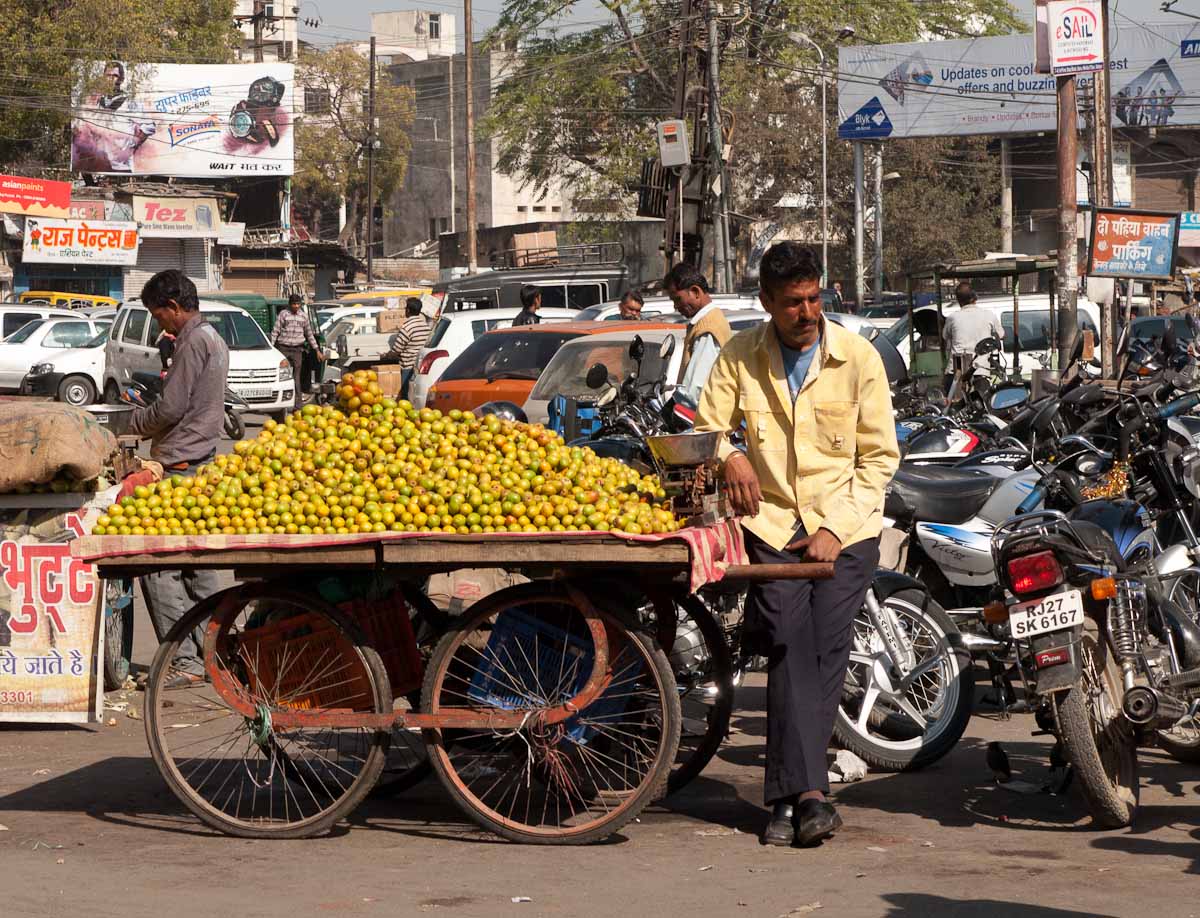
Traffic in India is worse than Egypt. Egypt traffic is insanely heavy and slow, with a 3 hour commute for many. India traffic is just insane. There is no regard for the painted lanes. Cars will go opposite to the intended direction – even on highways. Cows can step in front of you at any time and pedestrians cross four-lane highways. There are all manner of moving objects – bicycles, horse-carts, goat-carts, camels, elephants, cows, bulls, water buffalo, women with heavy bundles on their heads, push-carts stacked precariously high with green mangoes, buses jammed with bodies, sidewalks full of monkeys, policemen impeding traffic, and of course the occasional white tourist car with locked doors and A/C.
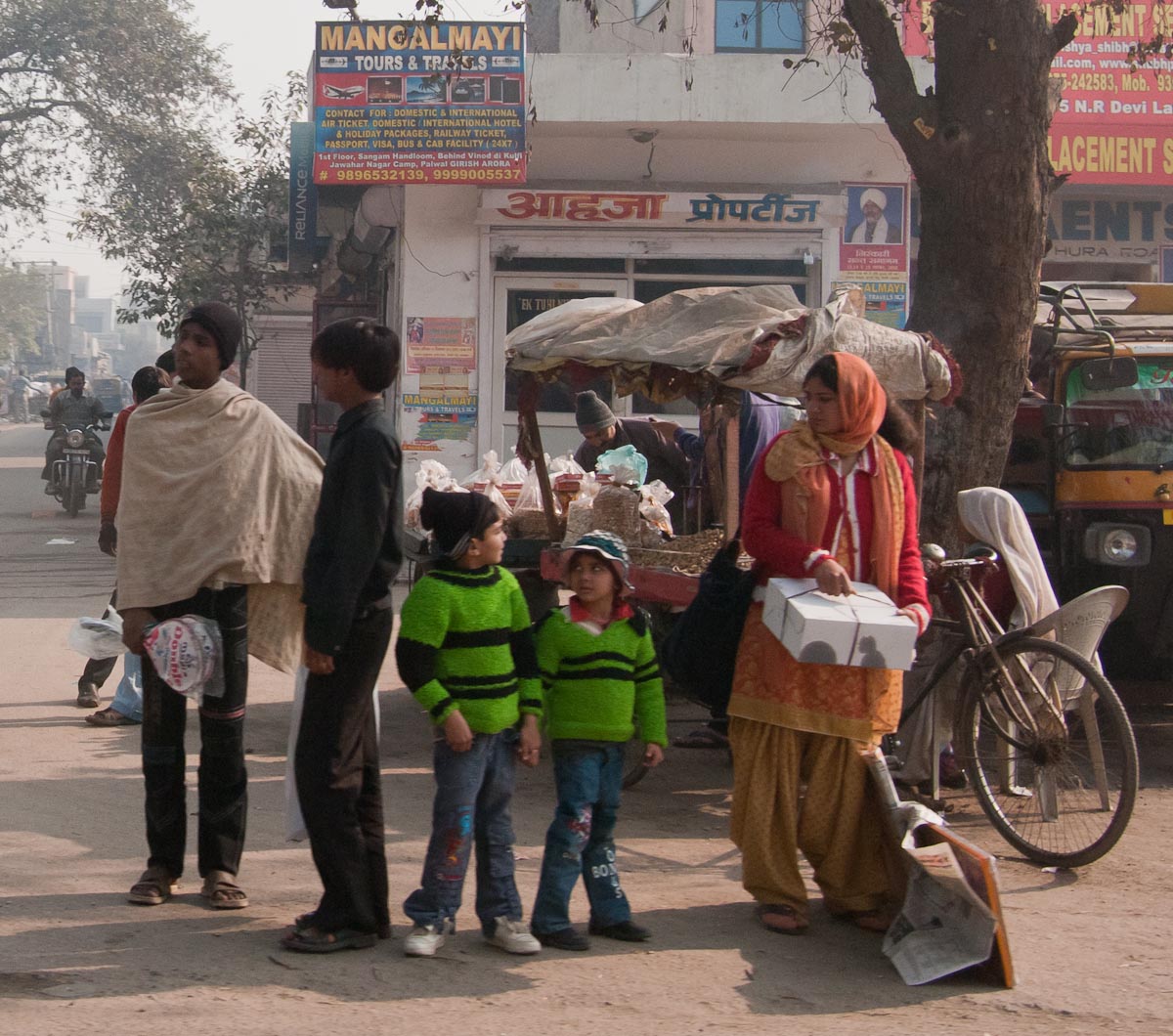
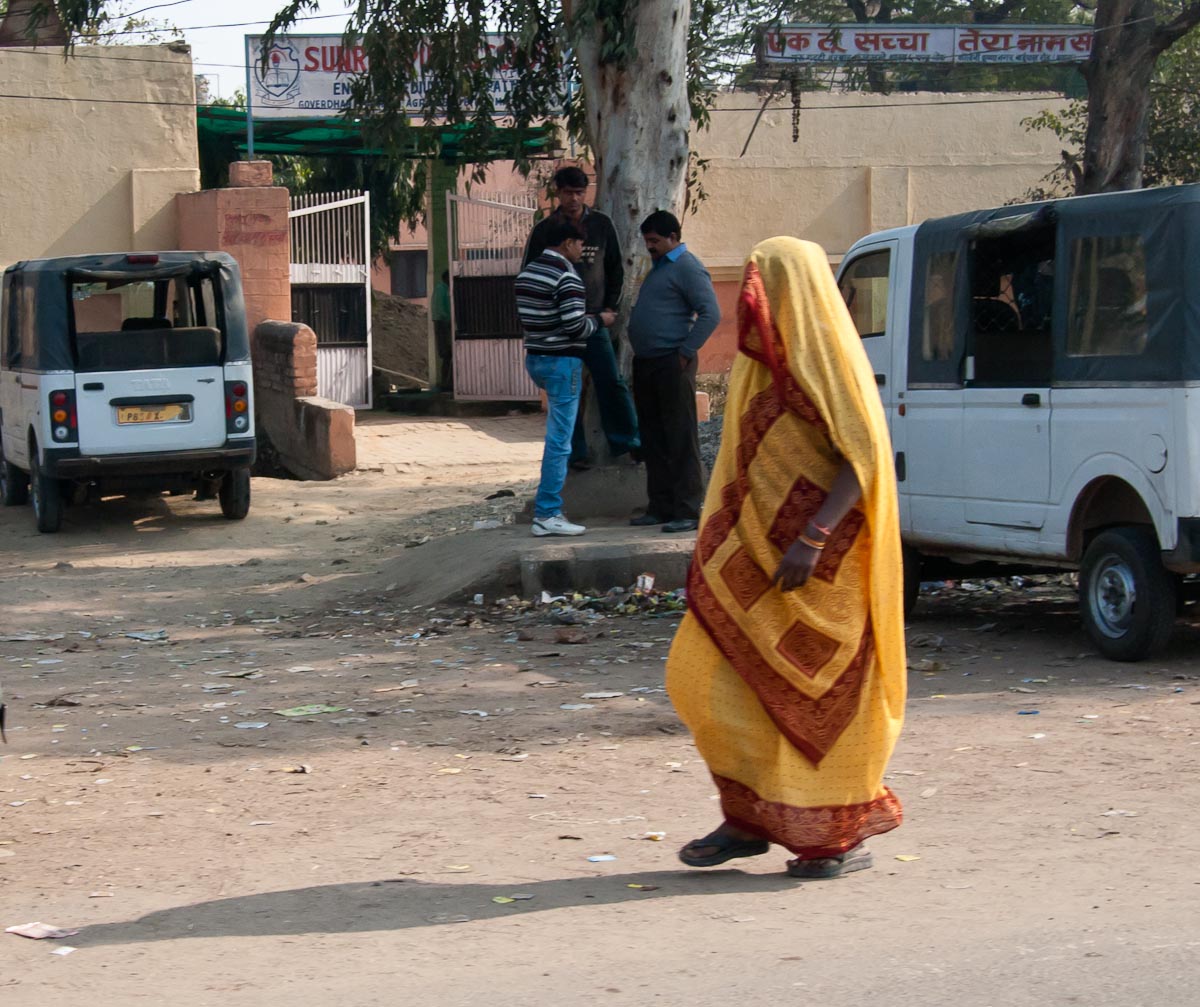
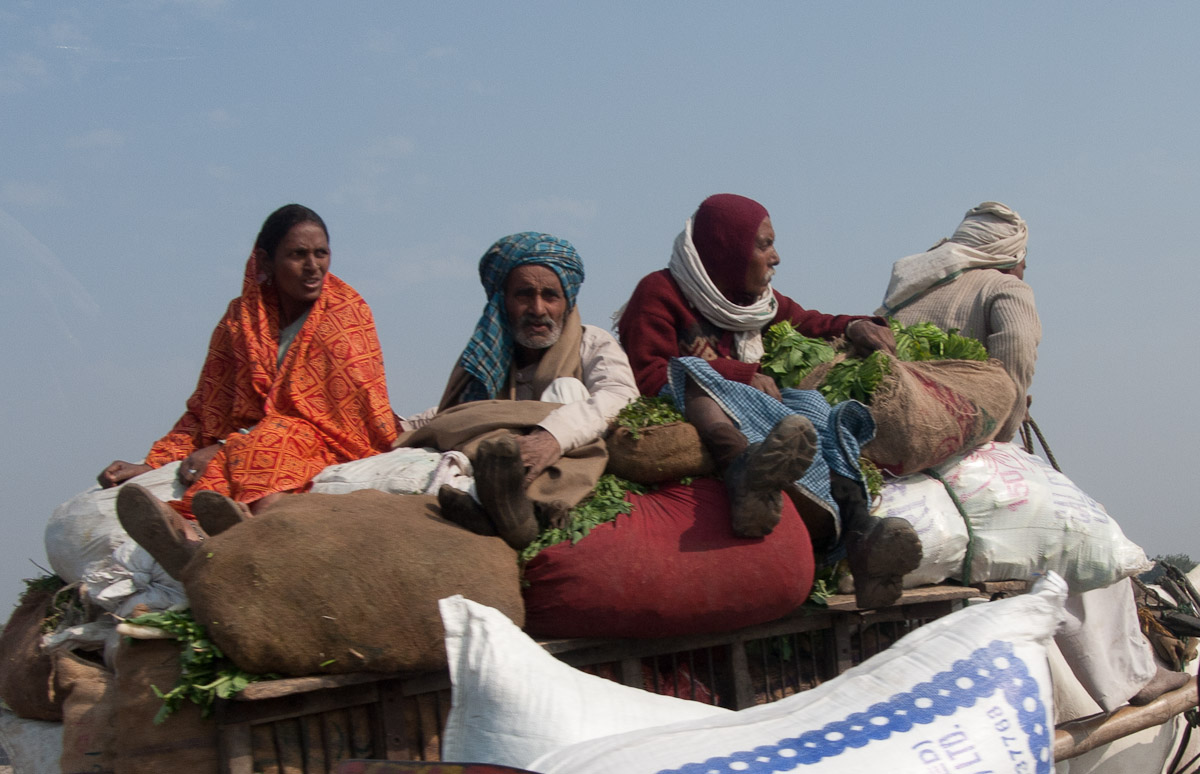
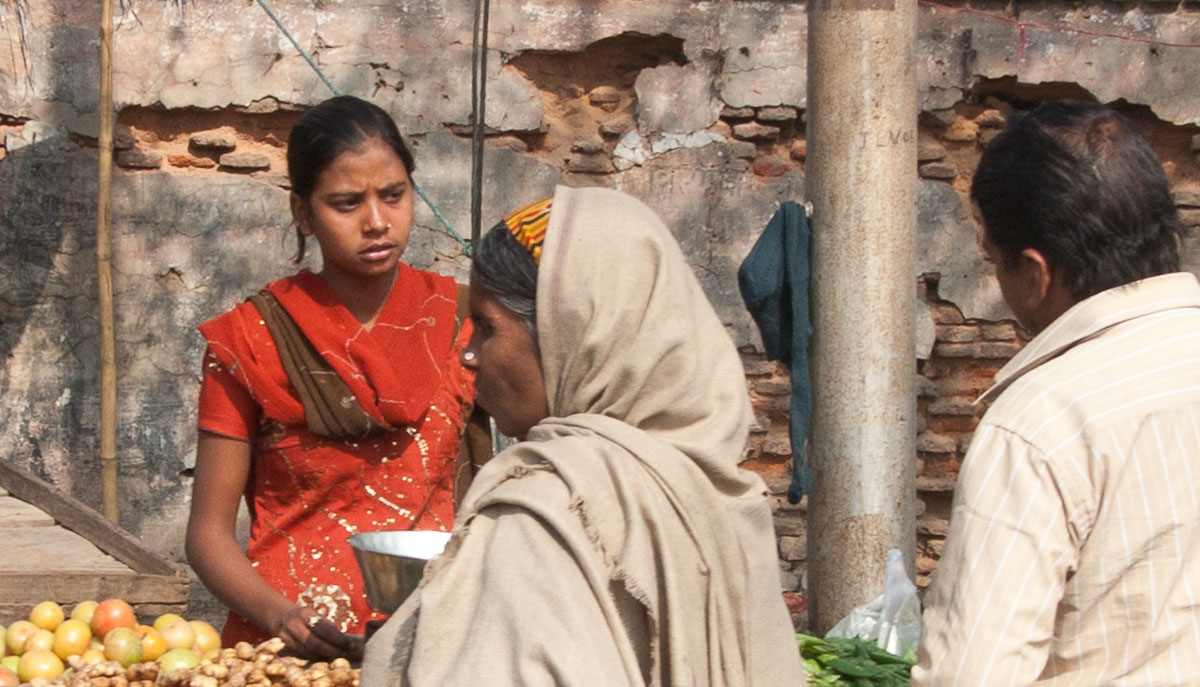
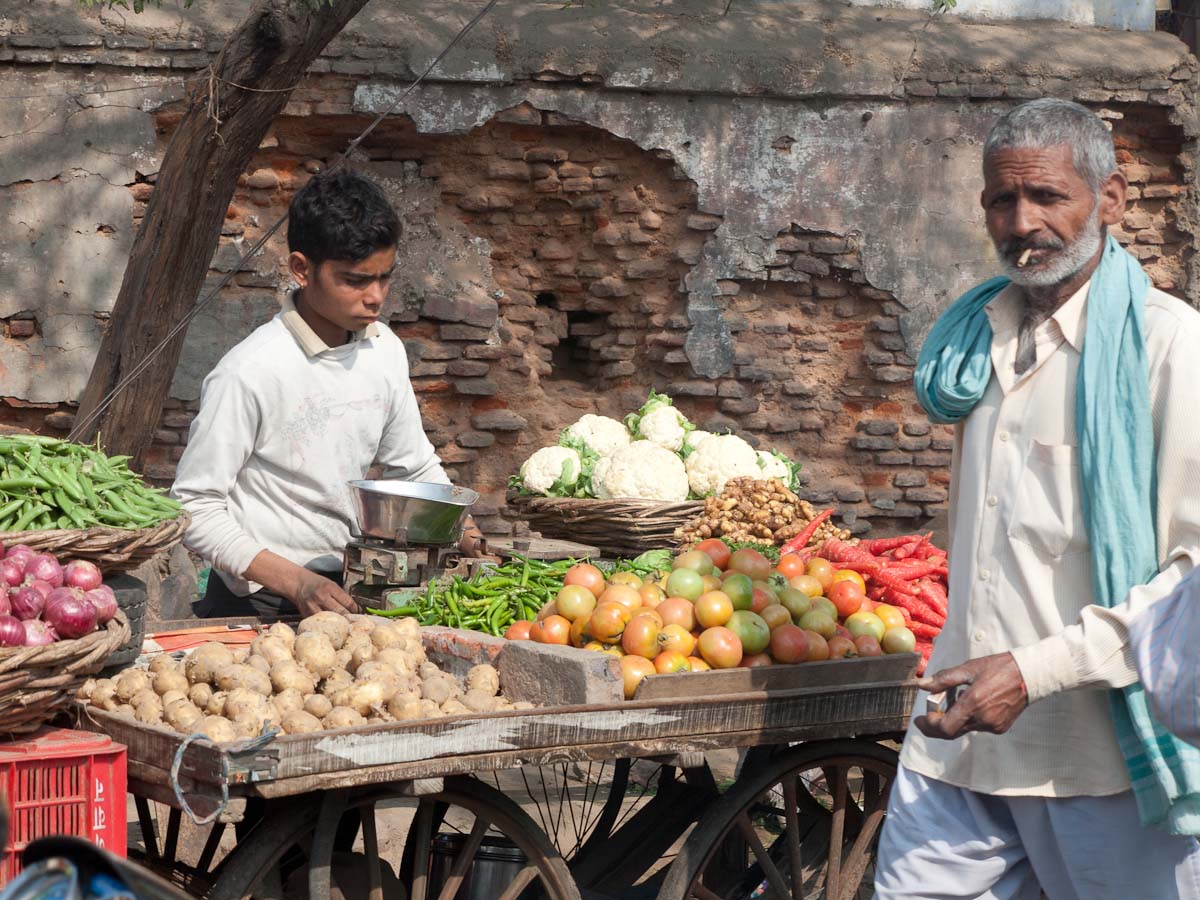
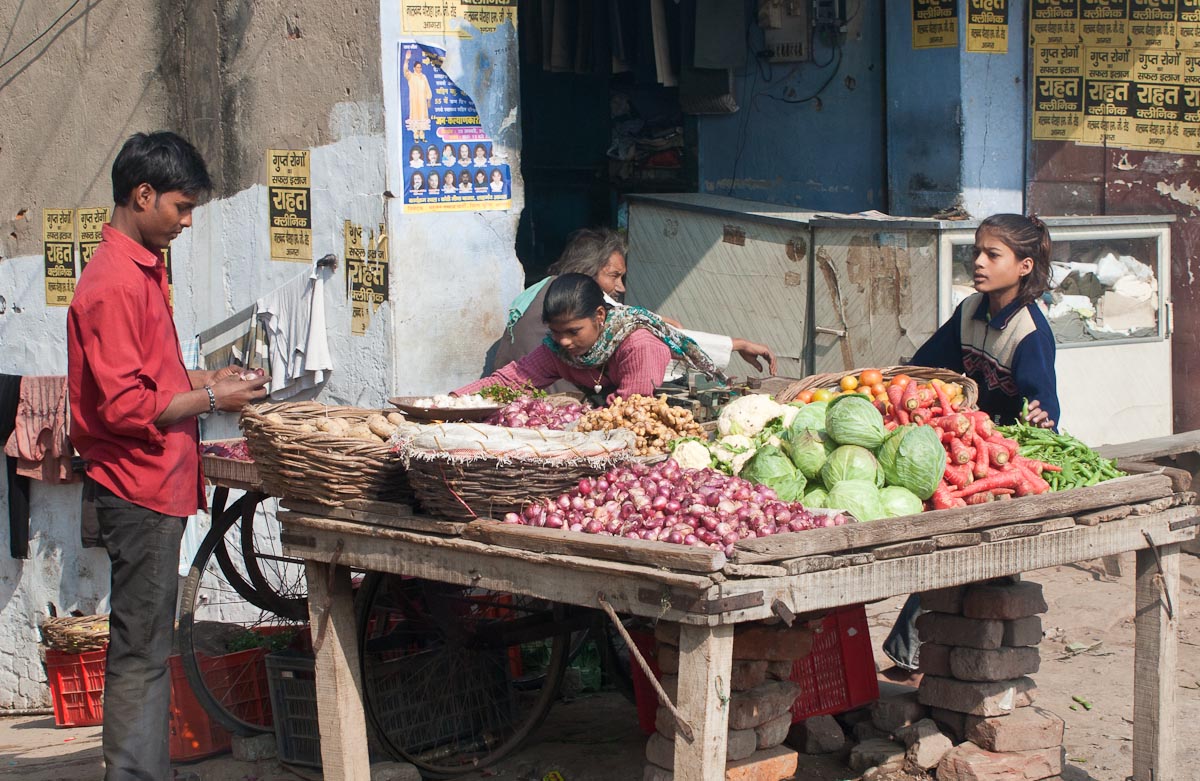
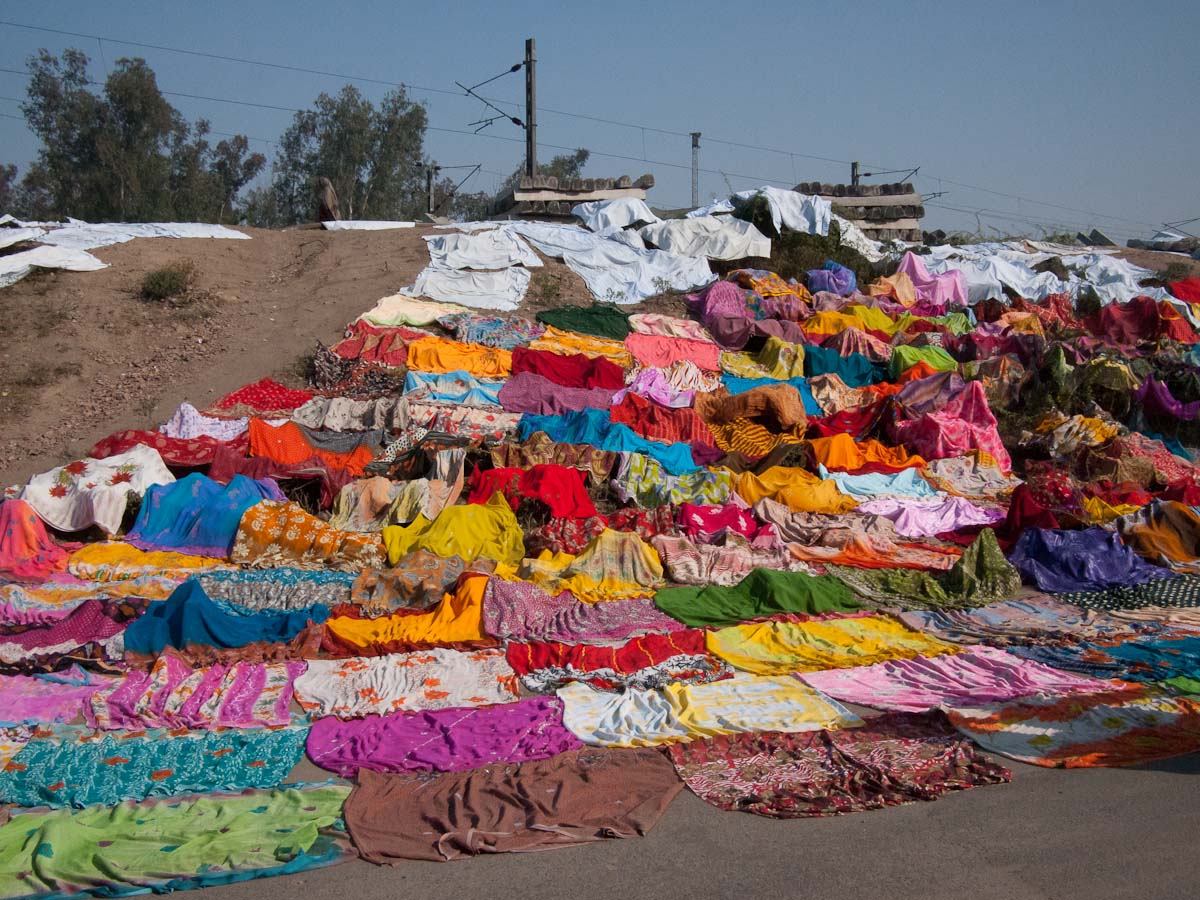
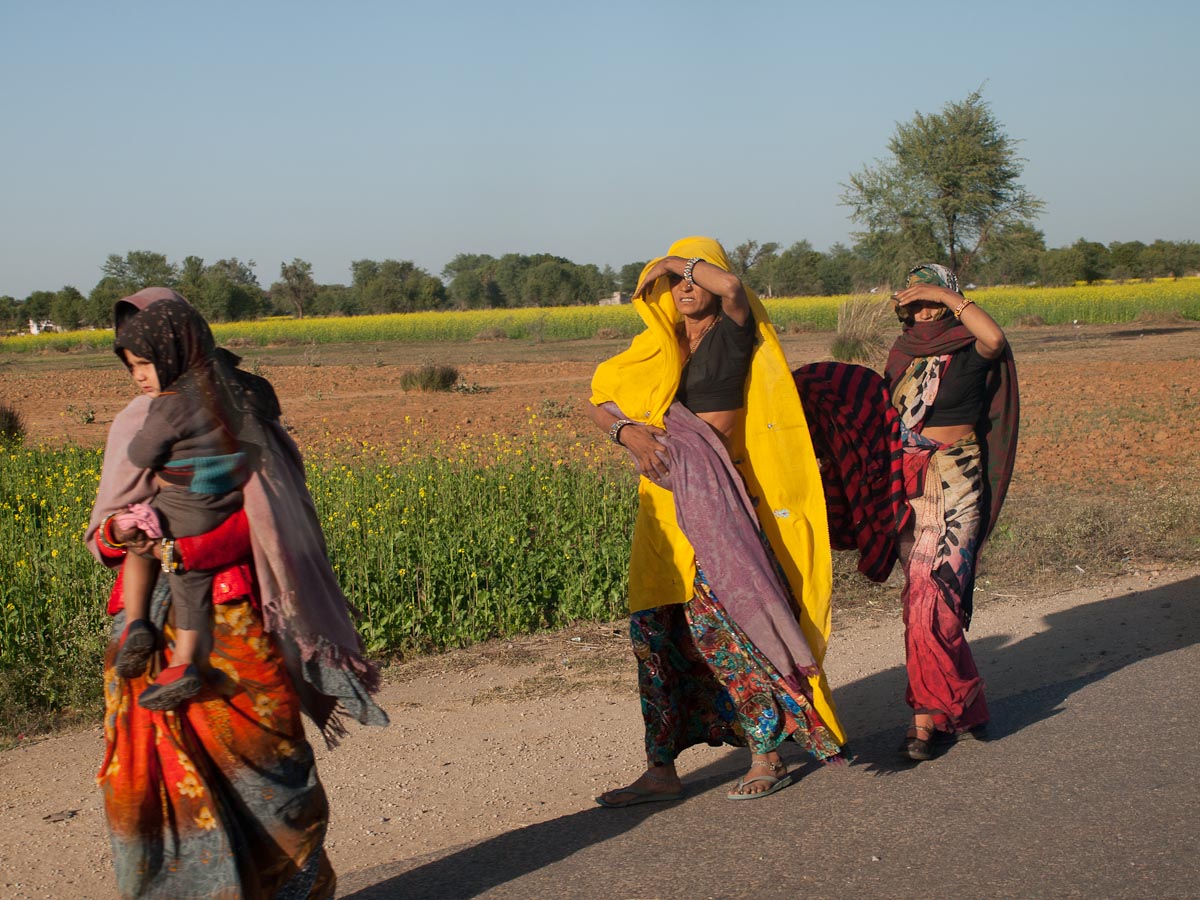
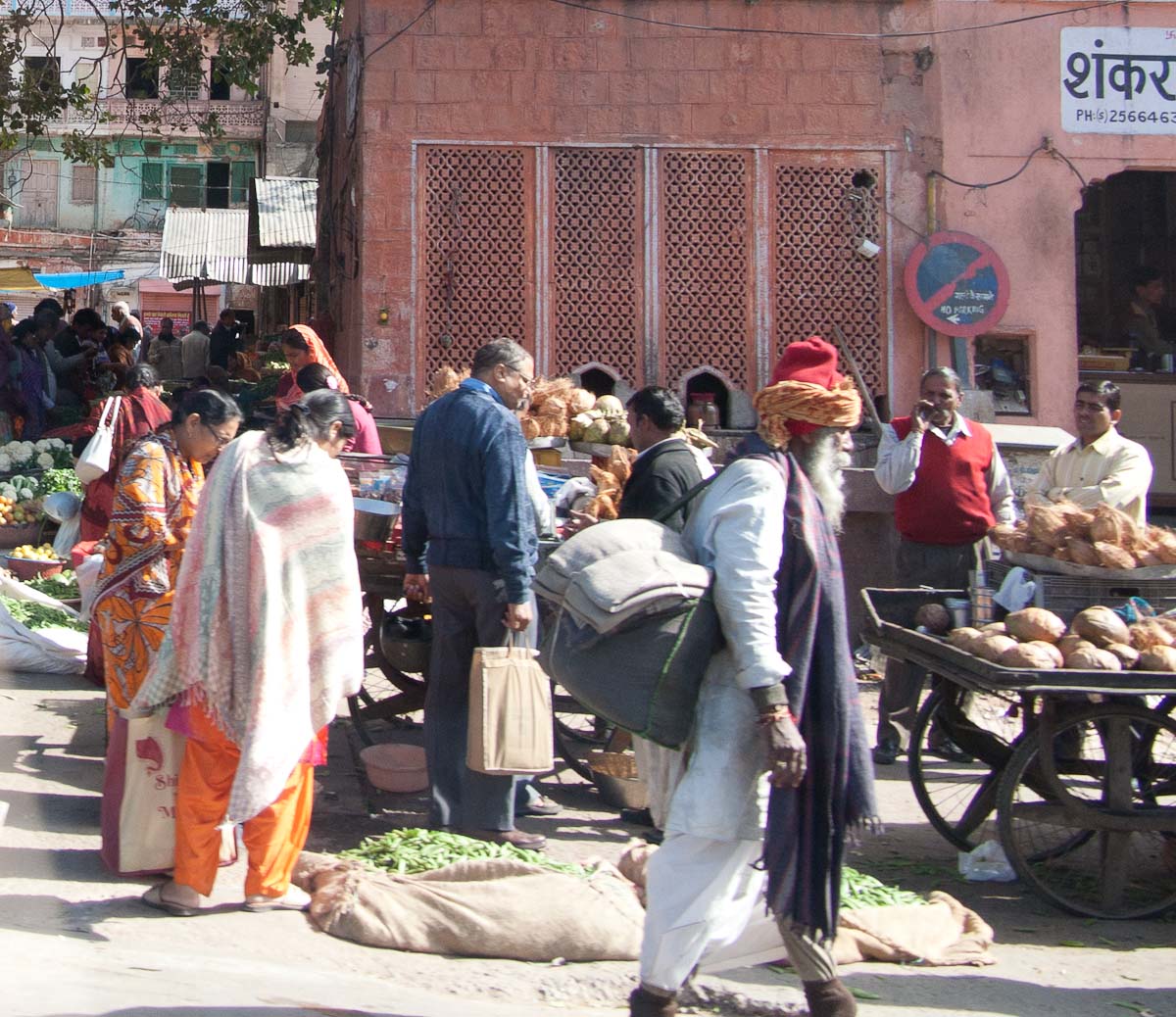
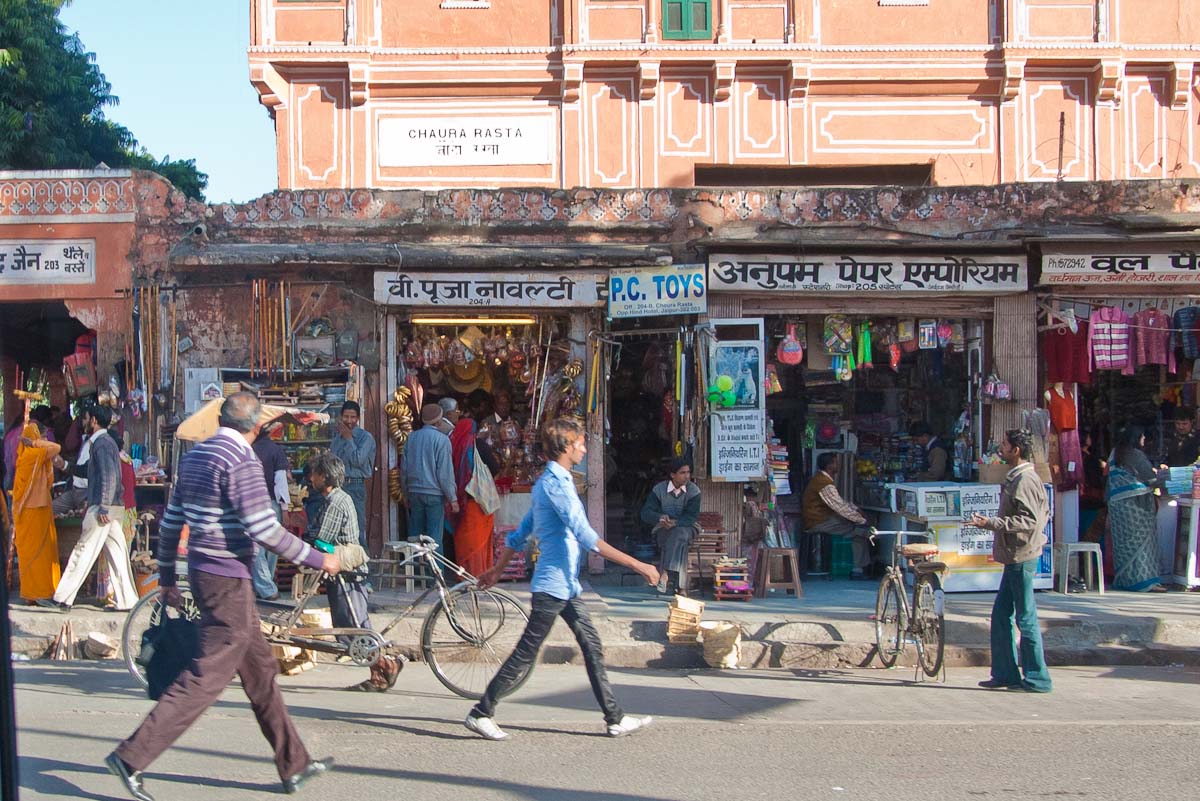
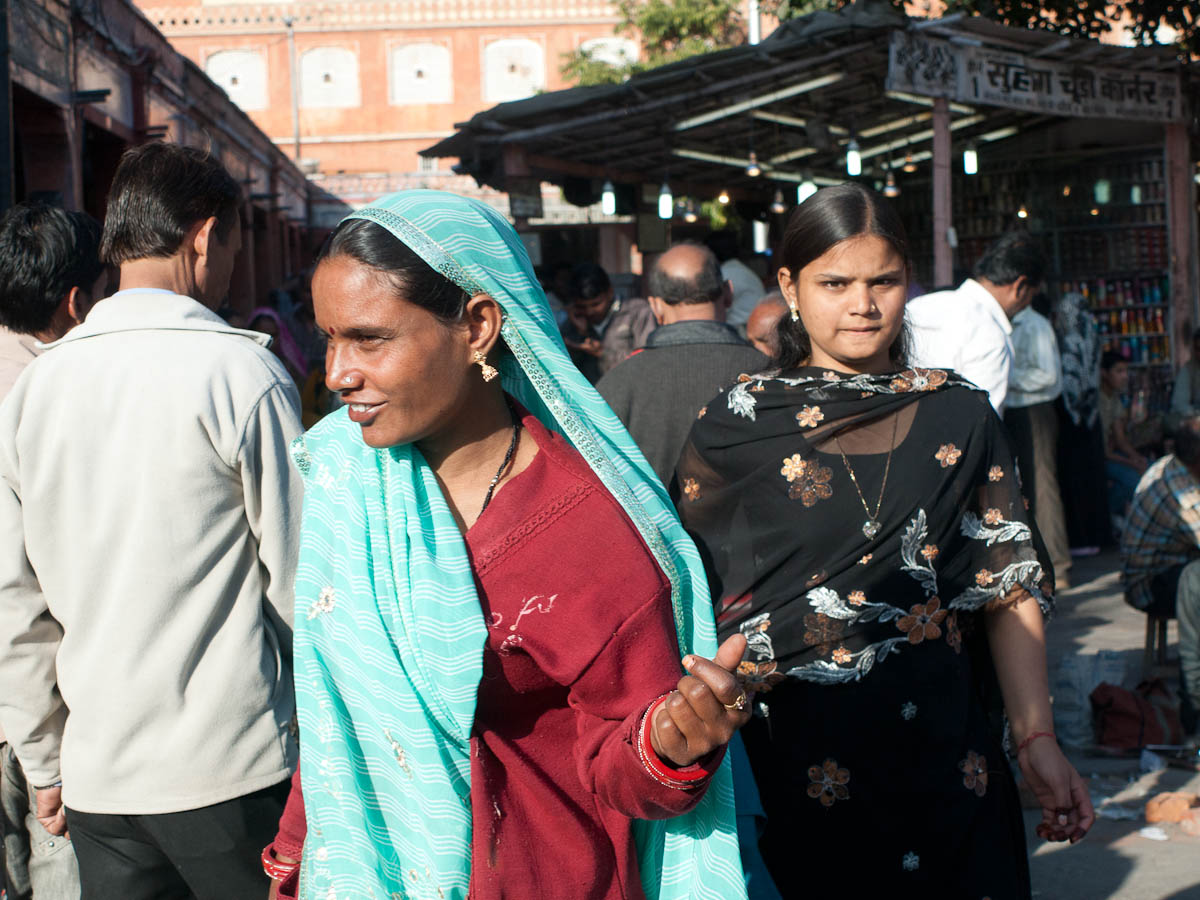
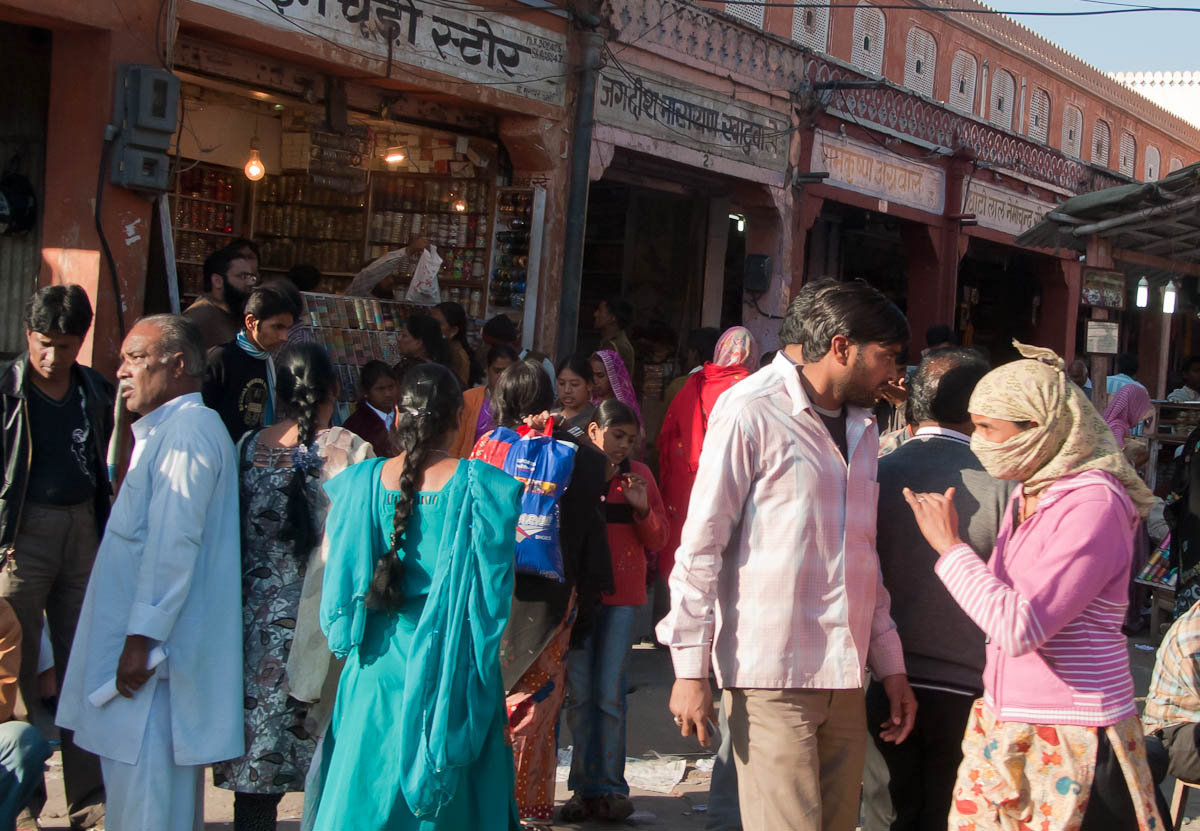
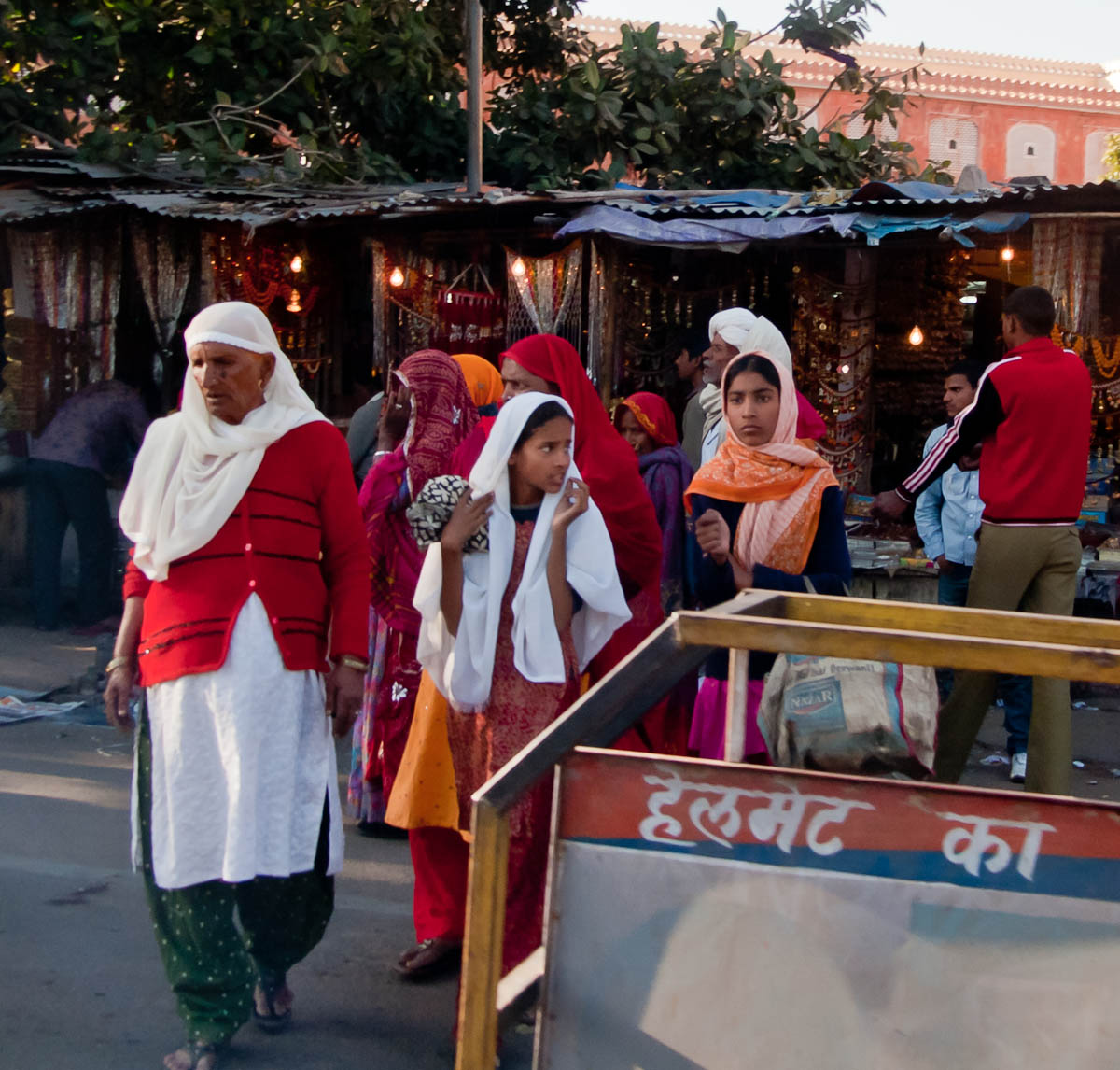
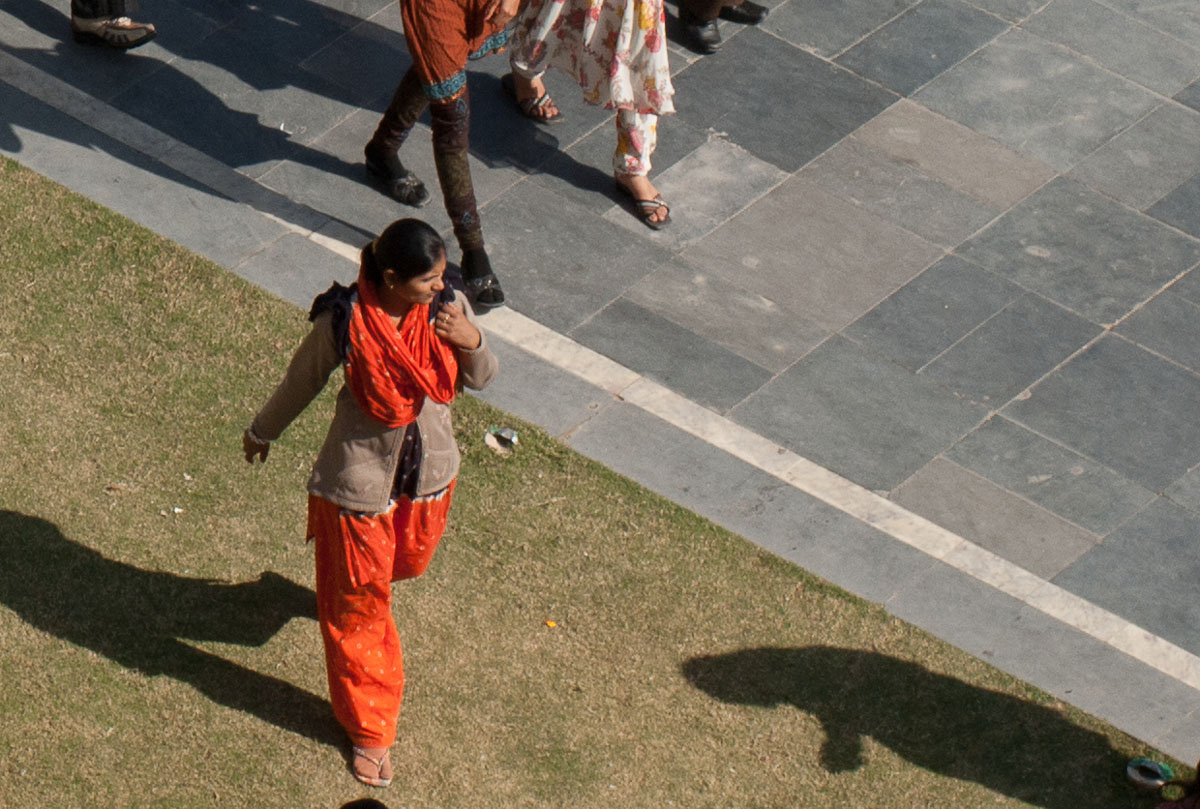
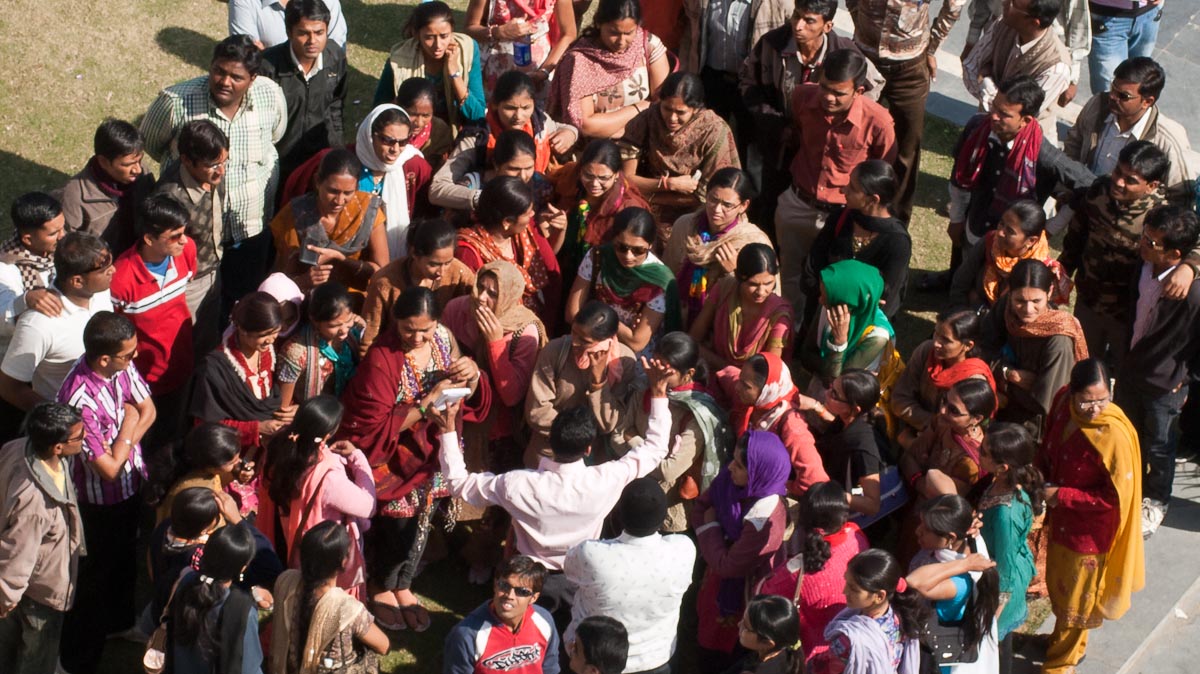
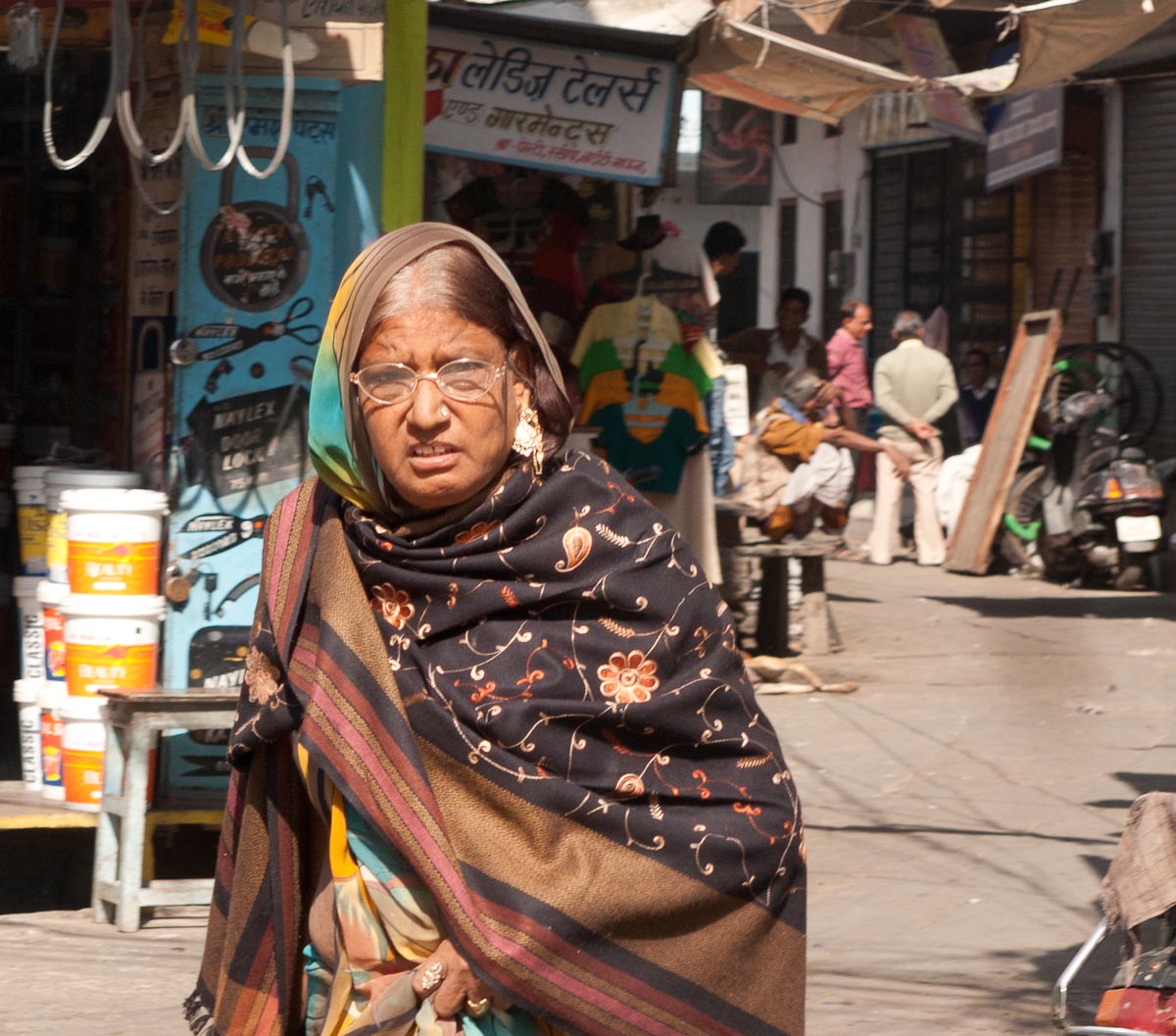
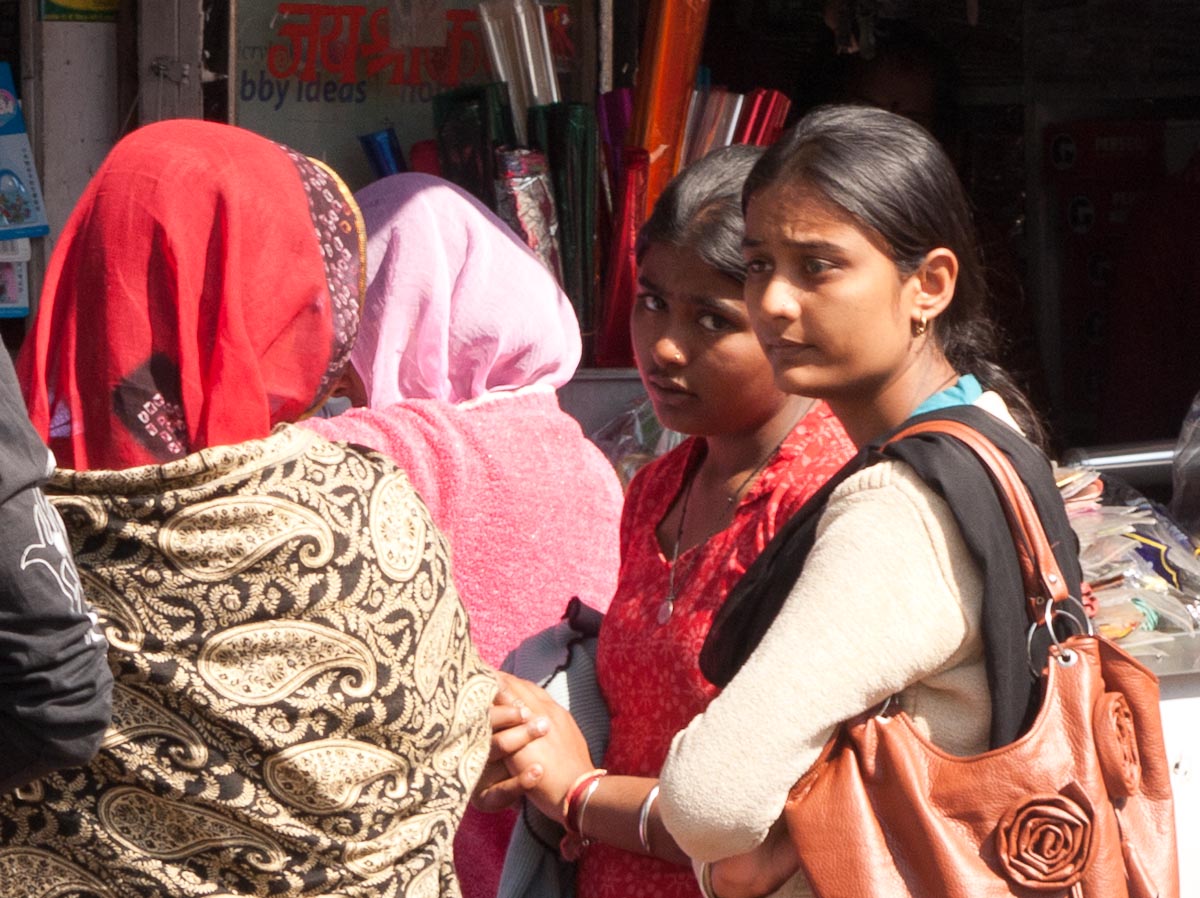
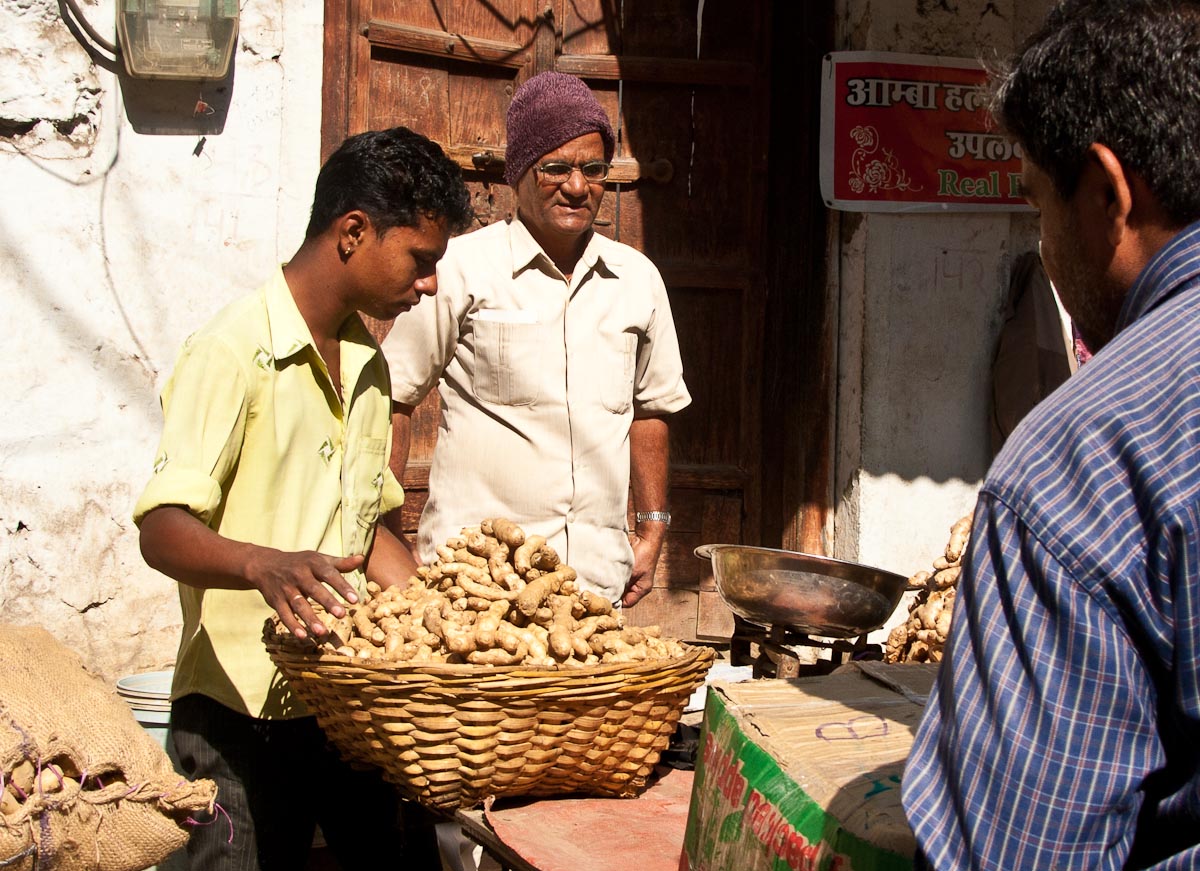
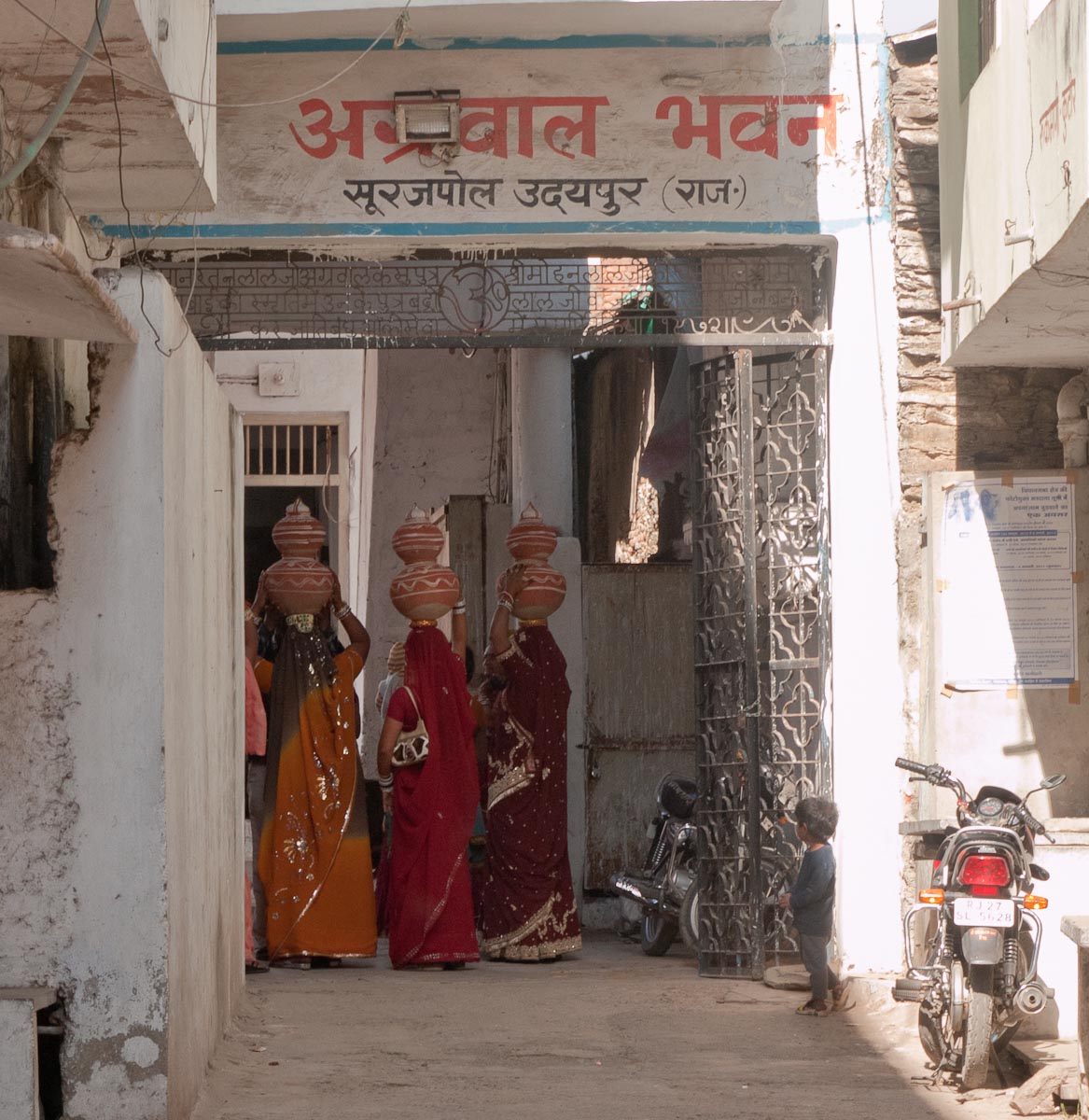
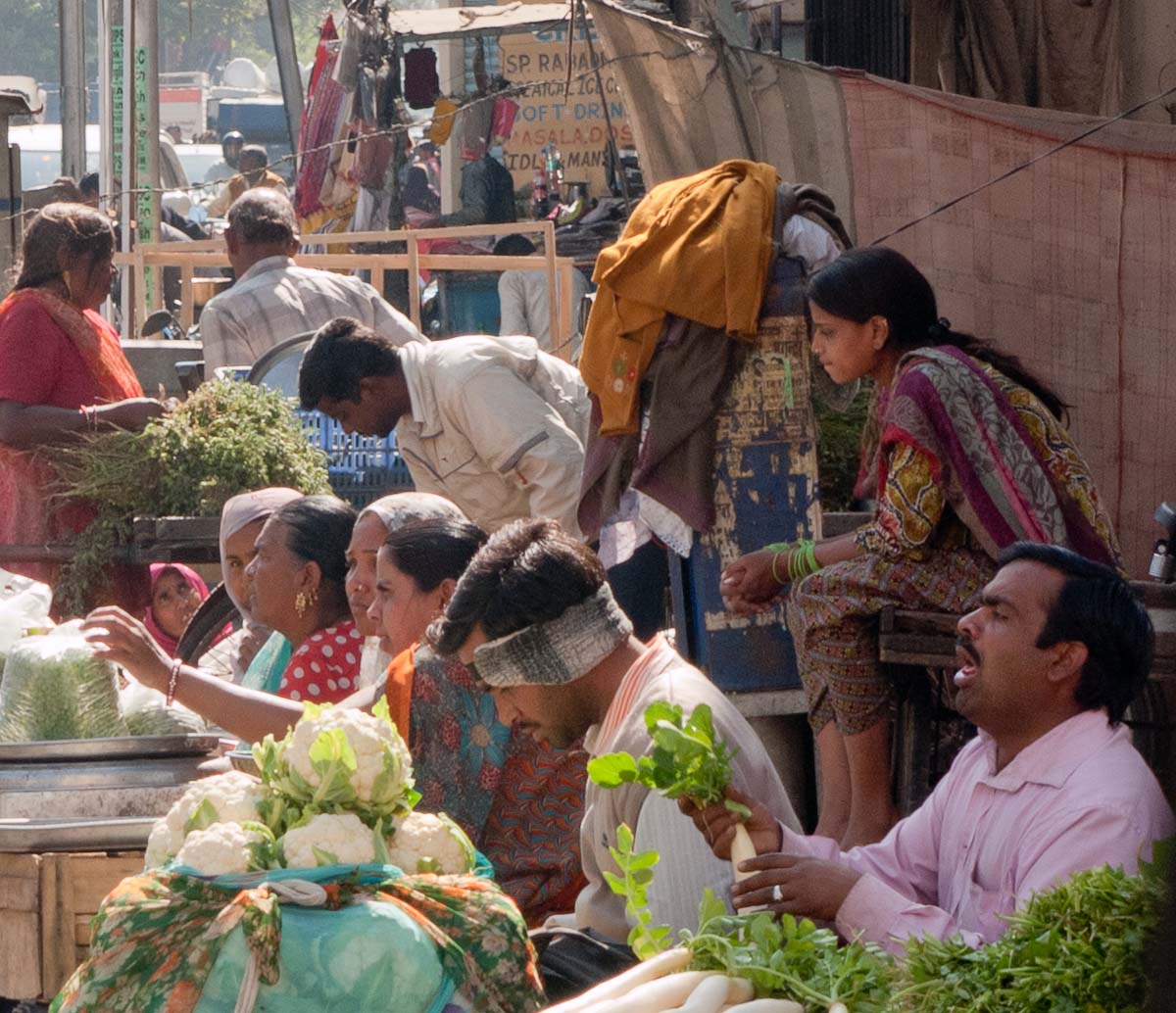
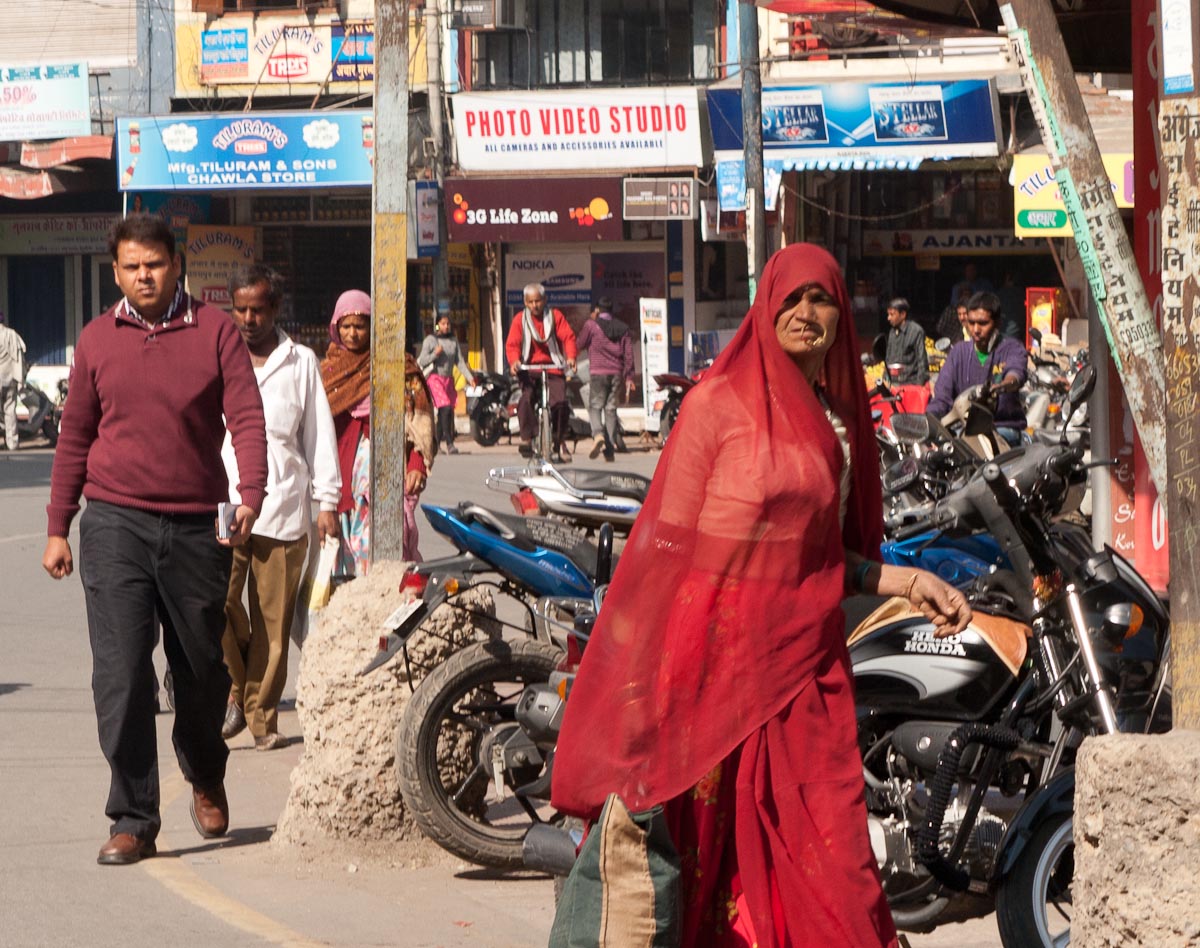
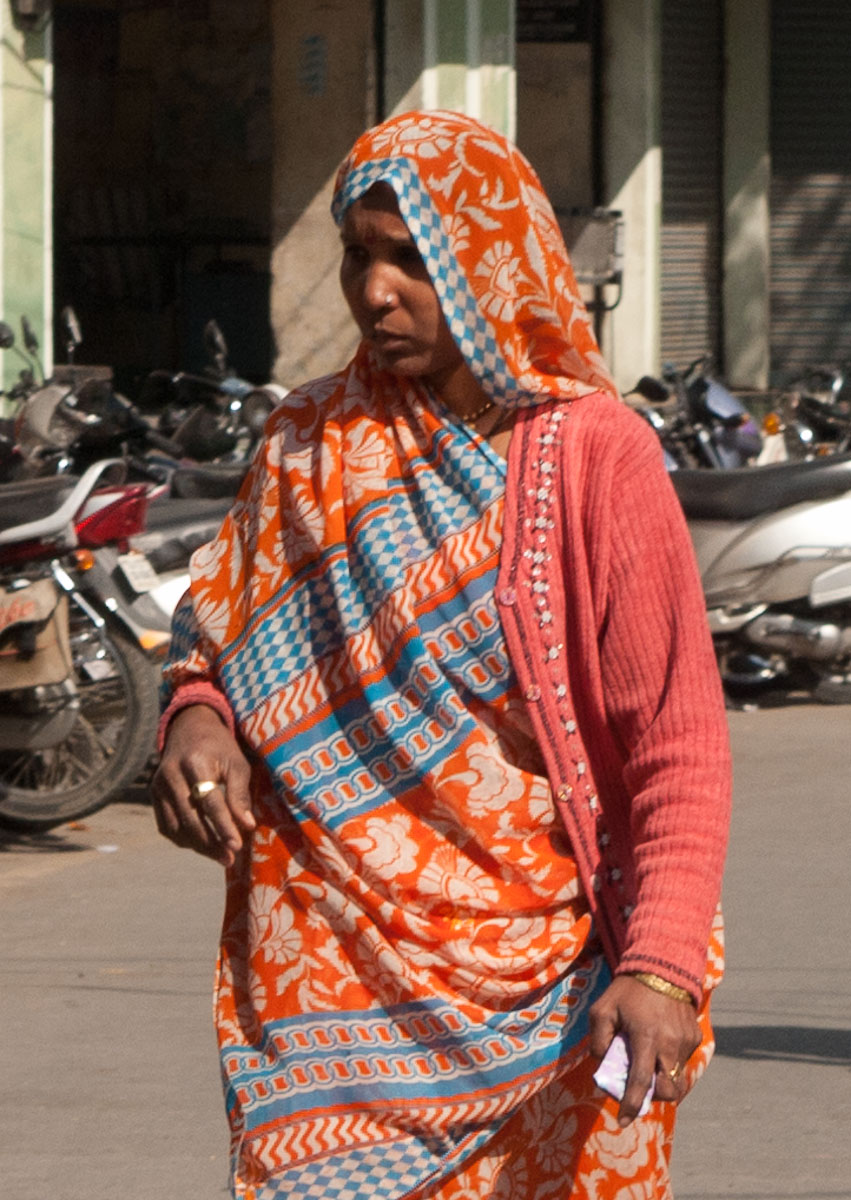
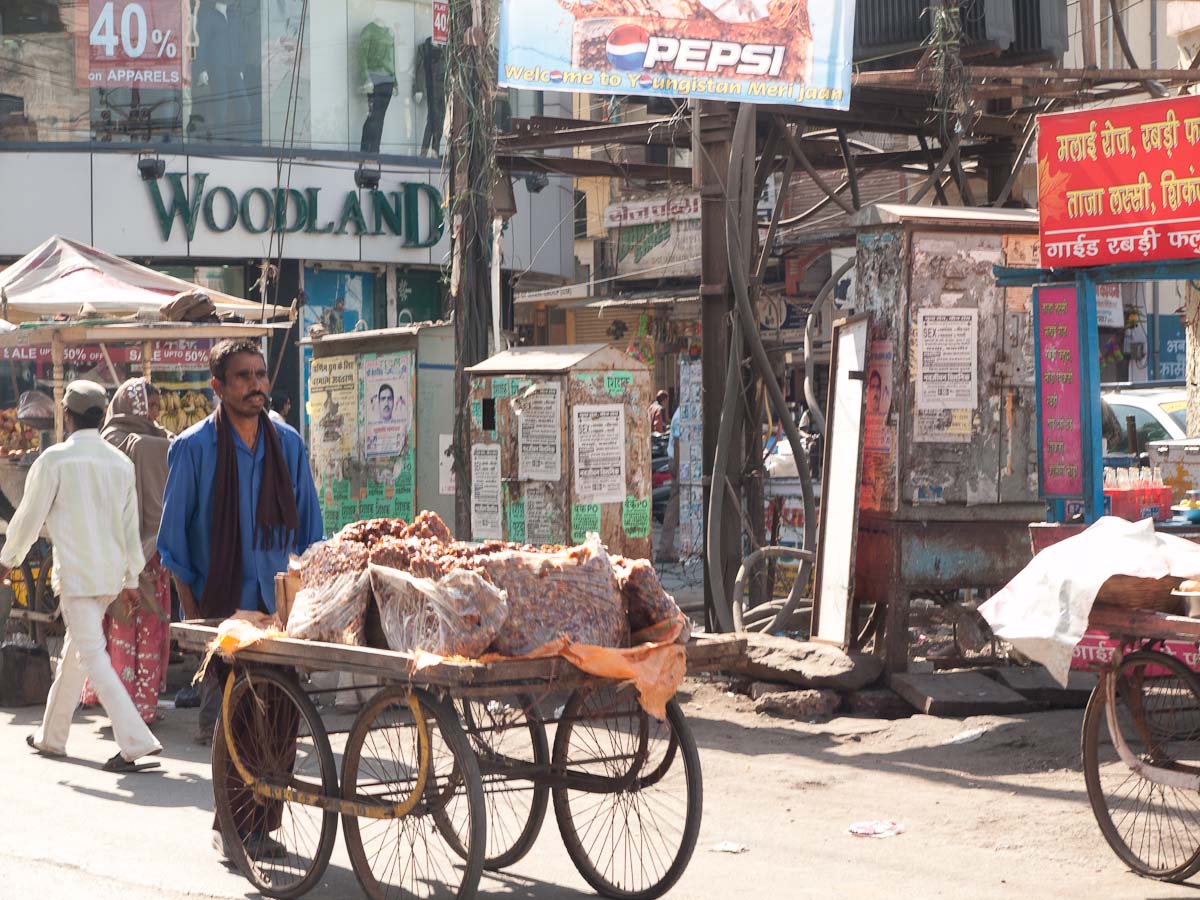
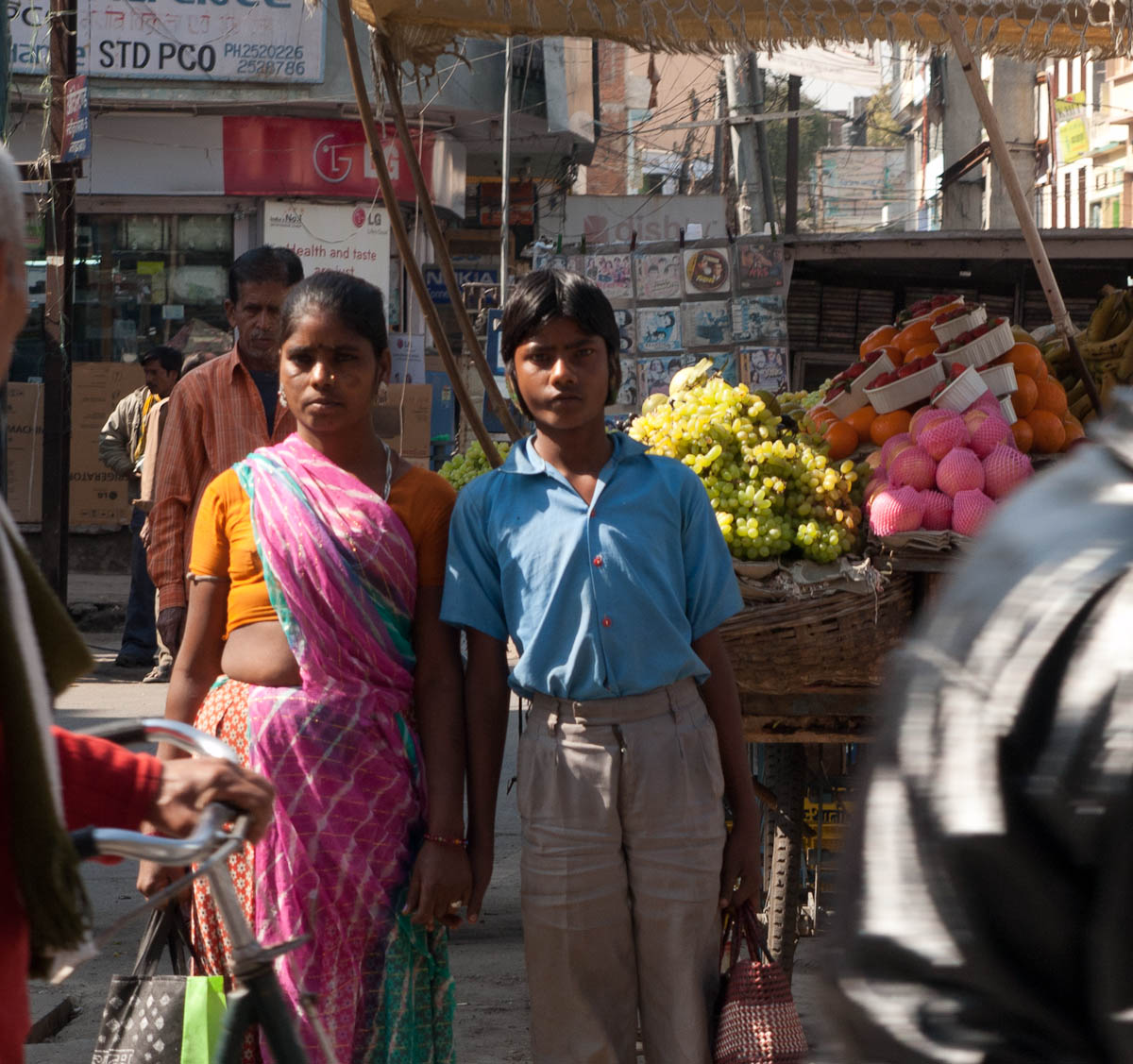
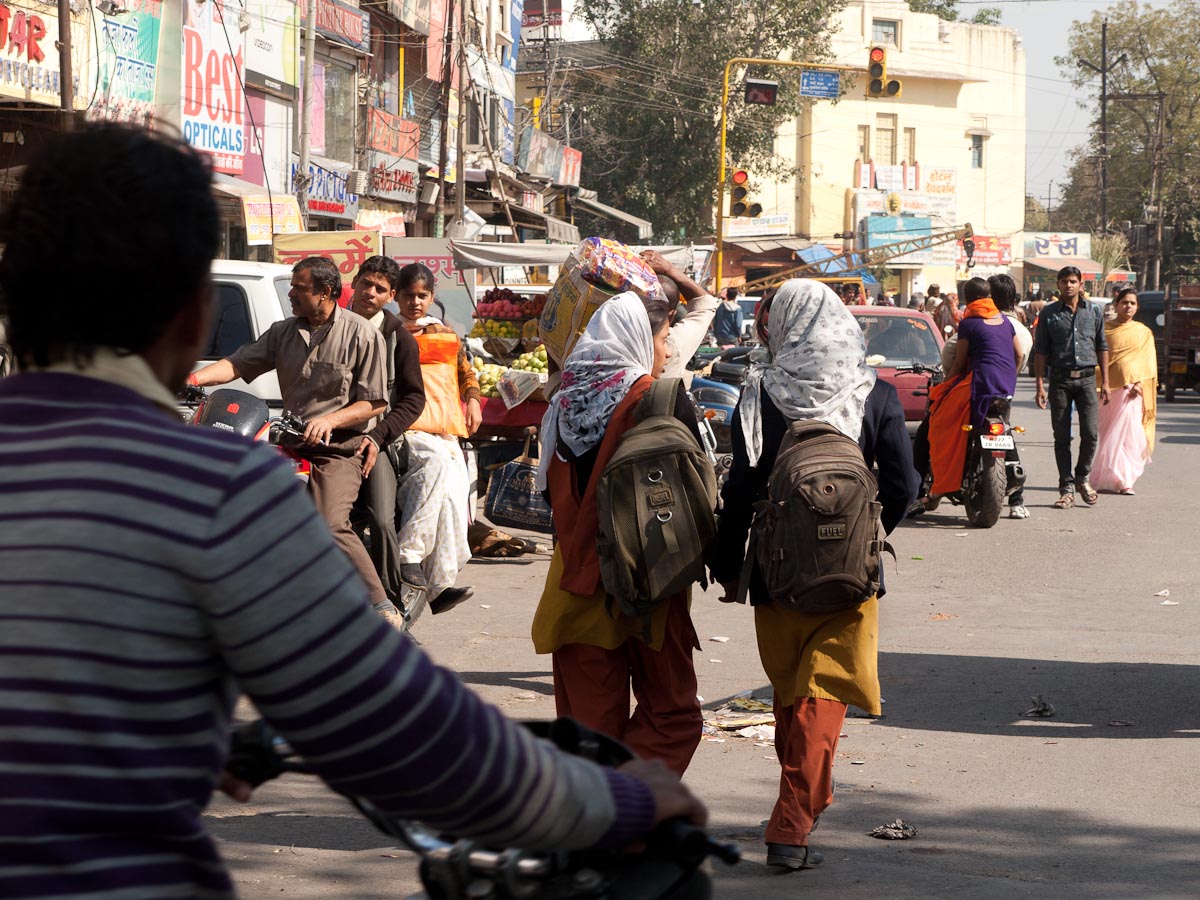
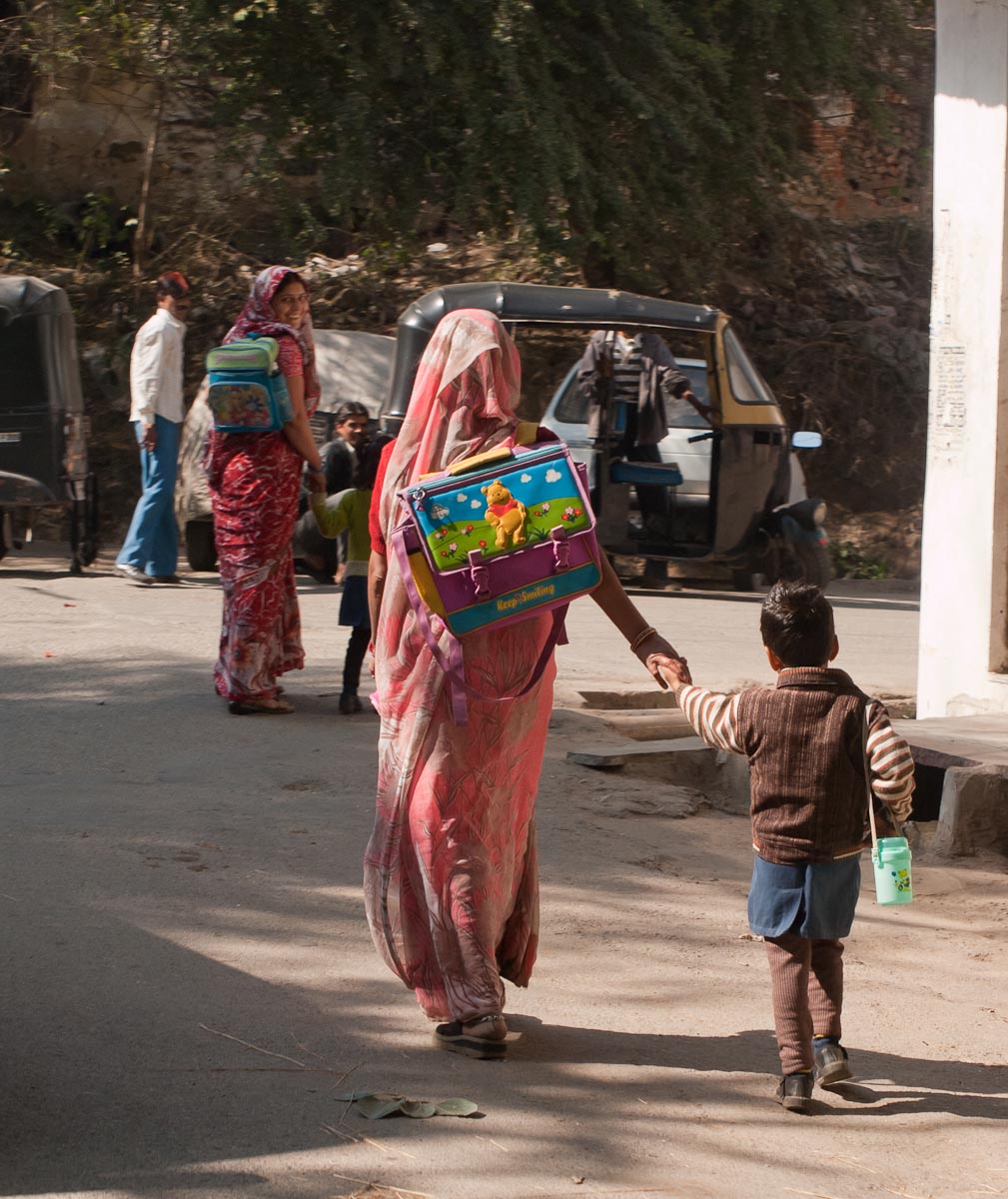
One of the toughest parts about driving here must be the distraction. Every street in India is a visual riot. The infrastructure has no straight lines; much masonry is crumbling or adapted from other purposes. Except in the city, you see grey or black dirt along the side of the road and you are never far from fertile dirt. Against this monotony, vibrant stickers and signs and paint decorate every surface. Even the vegetables here are more colorful – ginger root and onions and white-green lettuces, but most amazingly the carrots, which are candy-apple red both inside and out. Most colorful of all are the women, dressed in dazzling saris and shawls. Their patterns bewilder and beguile the eye – stripes and wild paisleys and florals of all descriptions and cut in many fashions. They come in brilliant lemon yellows, dusky red-browns and bright orange sorbets, coral blue kerchiefs, electric lime, deep red ruby shawls. Point the camera out the car window, and the lens is drawn hypnotically to these colors.
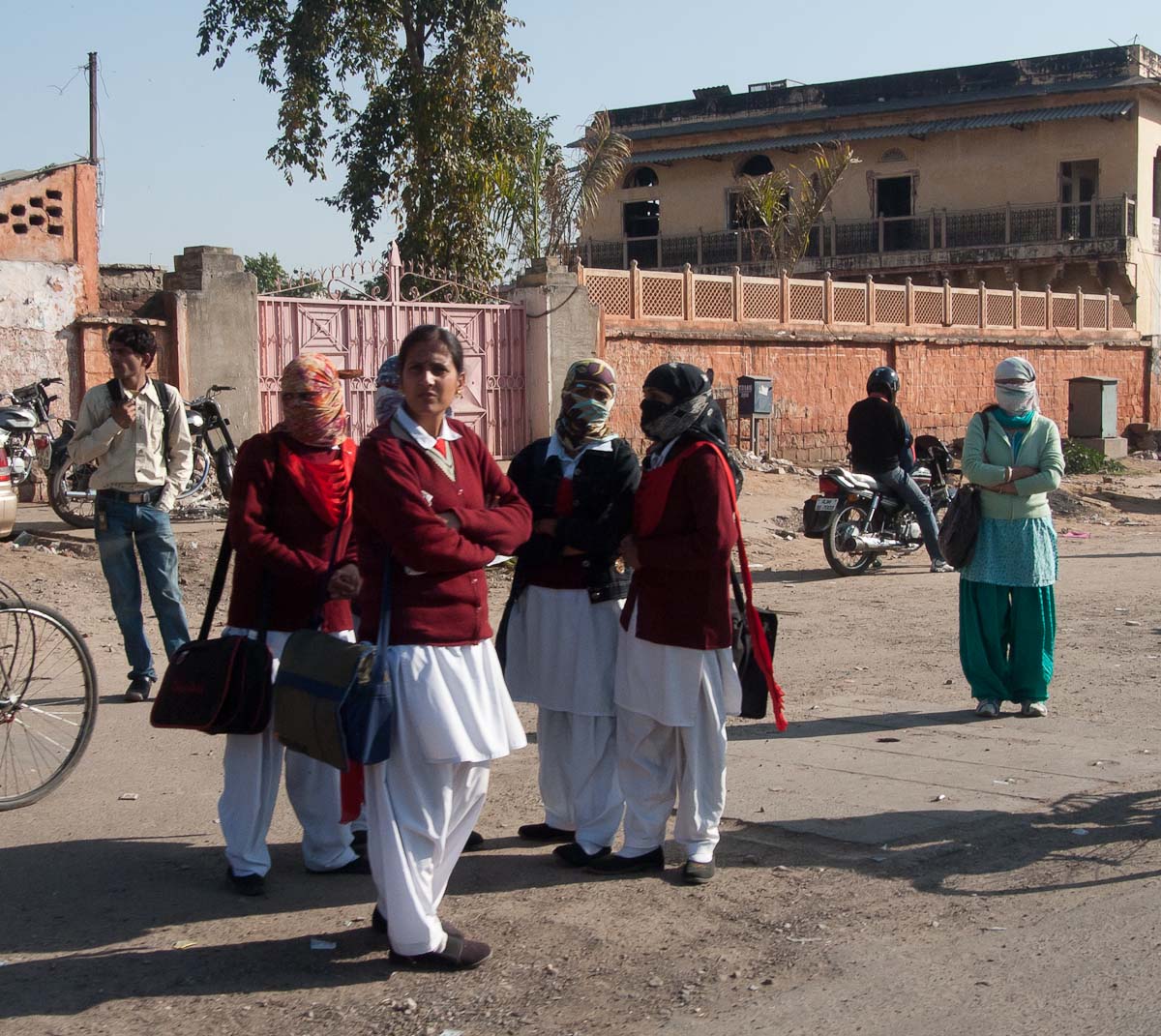
We saw many women wearing kerchiefs and veils – and some of these women did not even show their eyes. Apparently if you marry into a new village and move there with your husband, as a village outsider you are never to show your face. For these women, the color of the veil is the sole face they have.
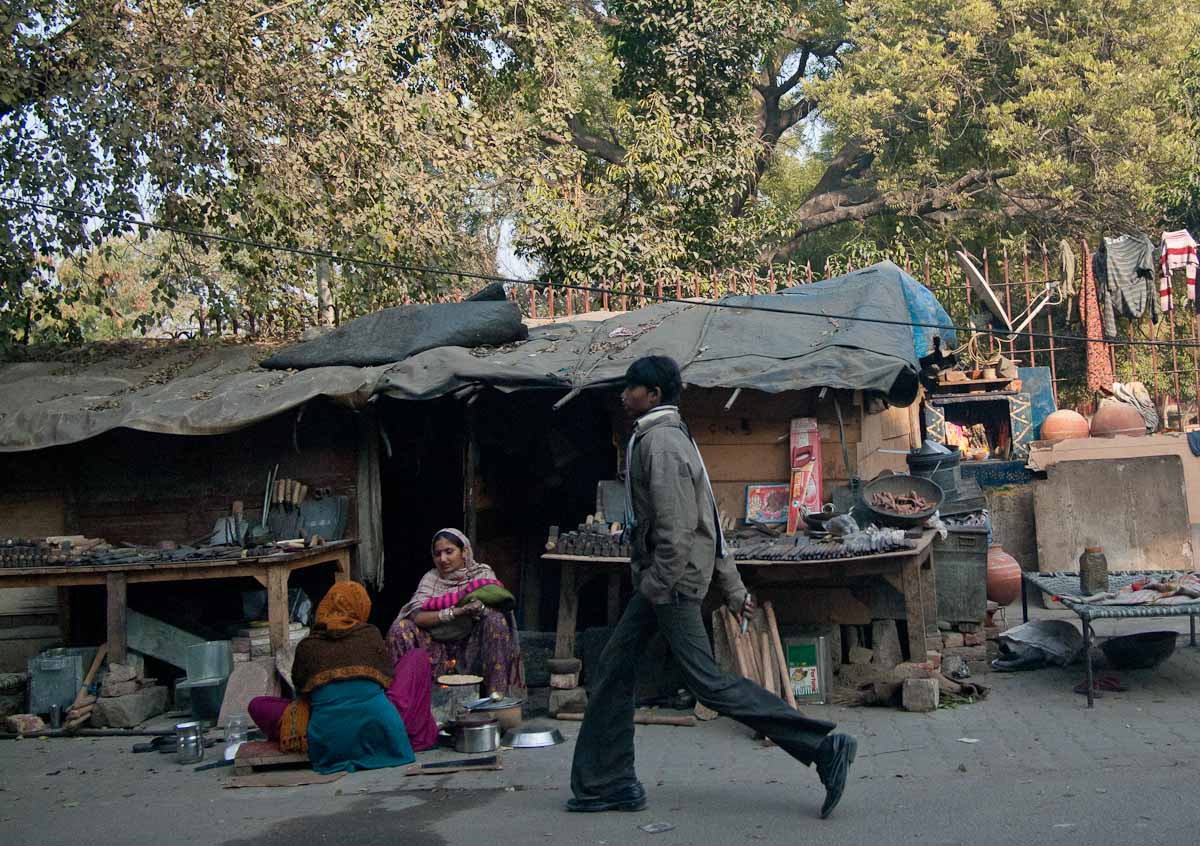
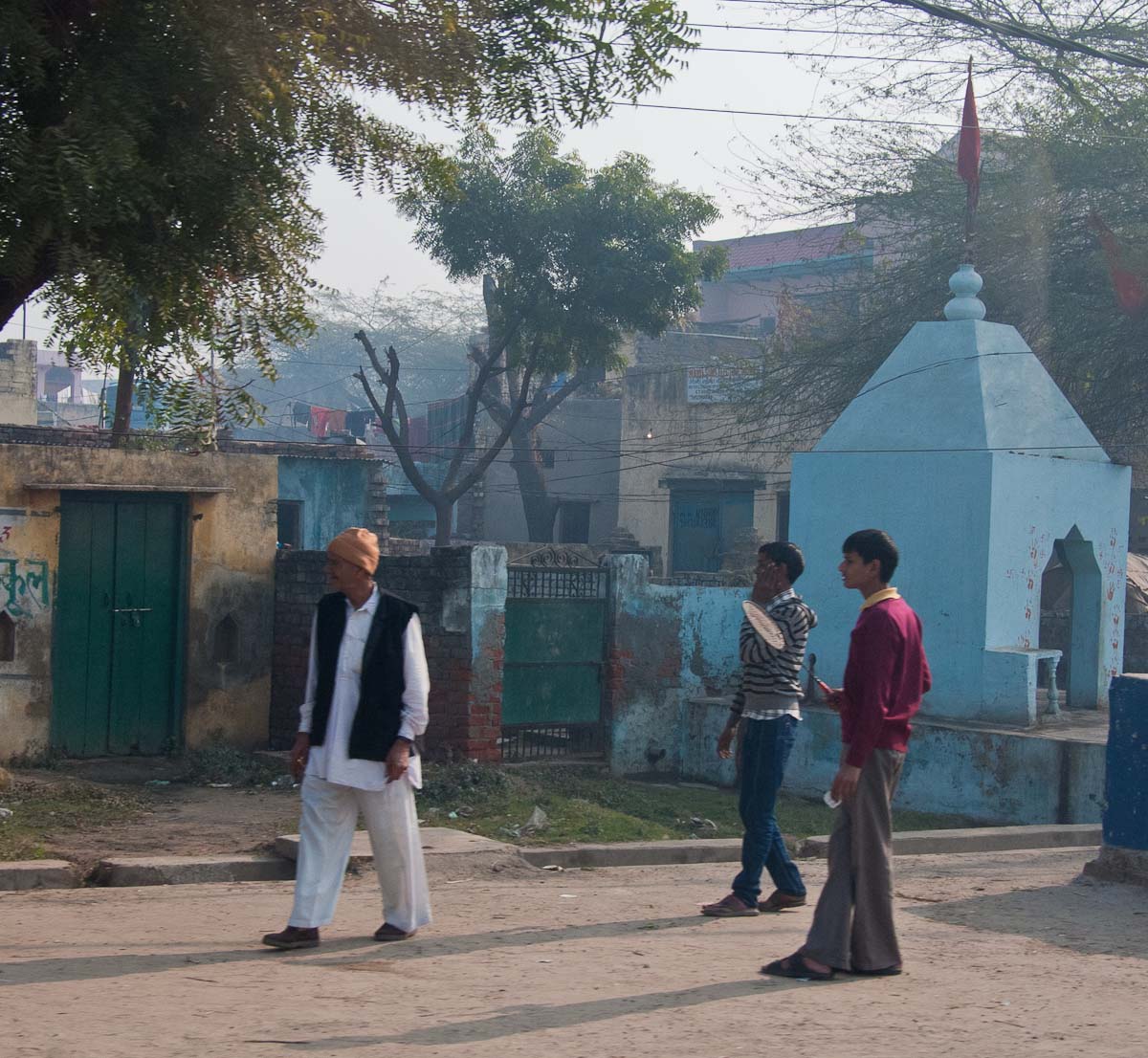
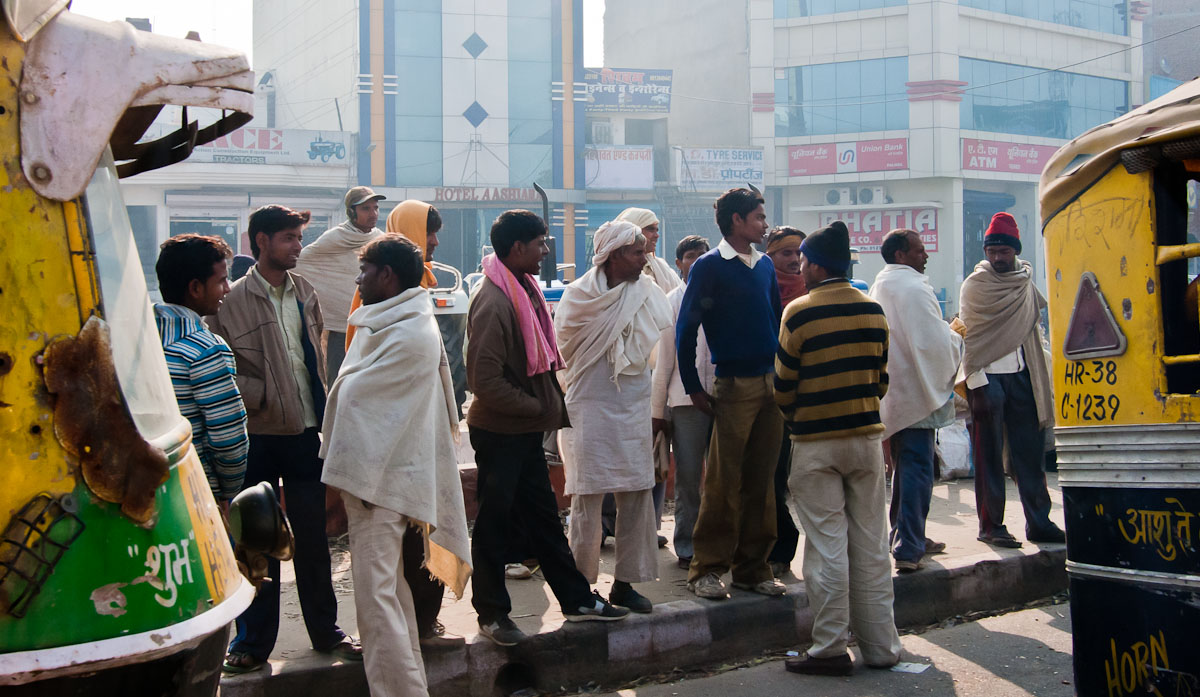
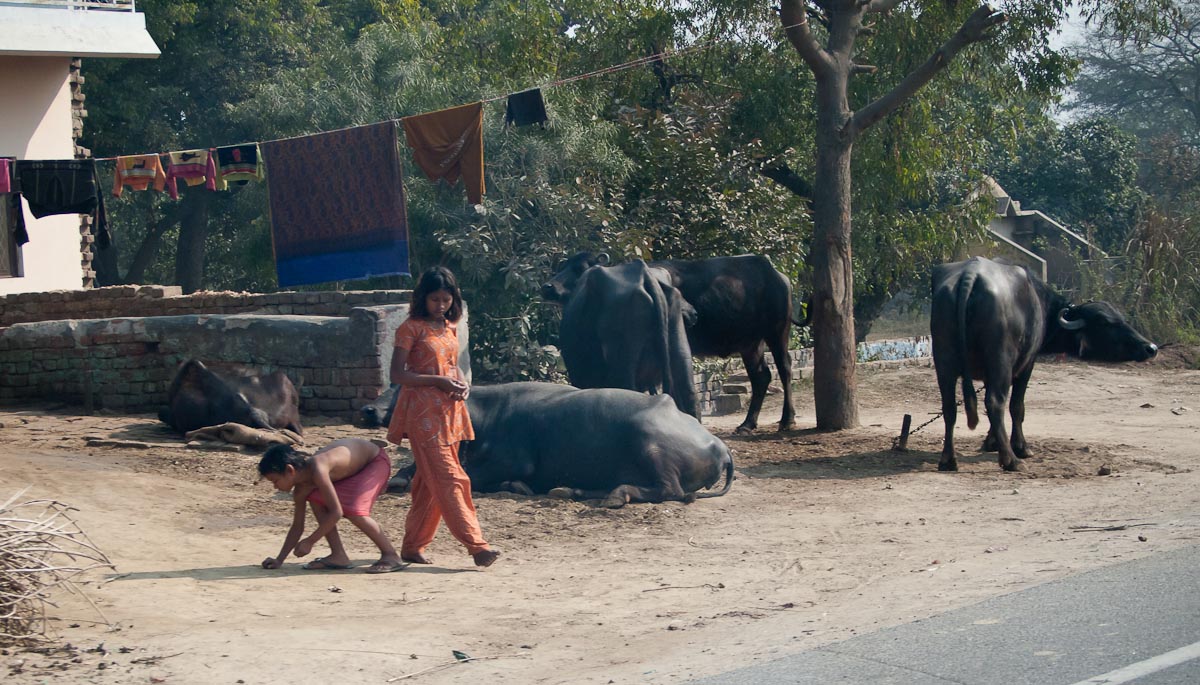
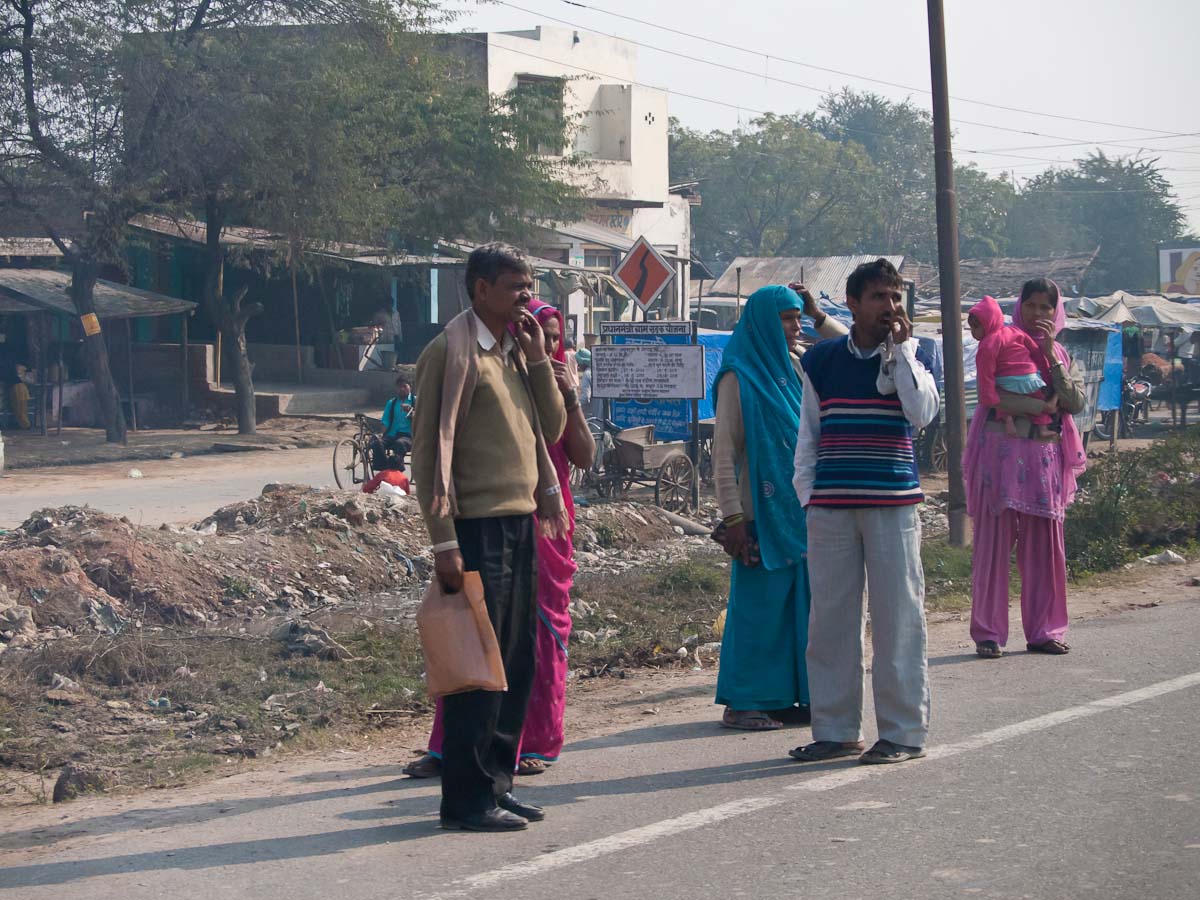
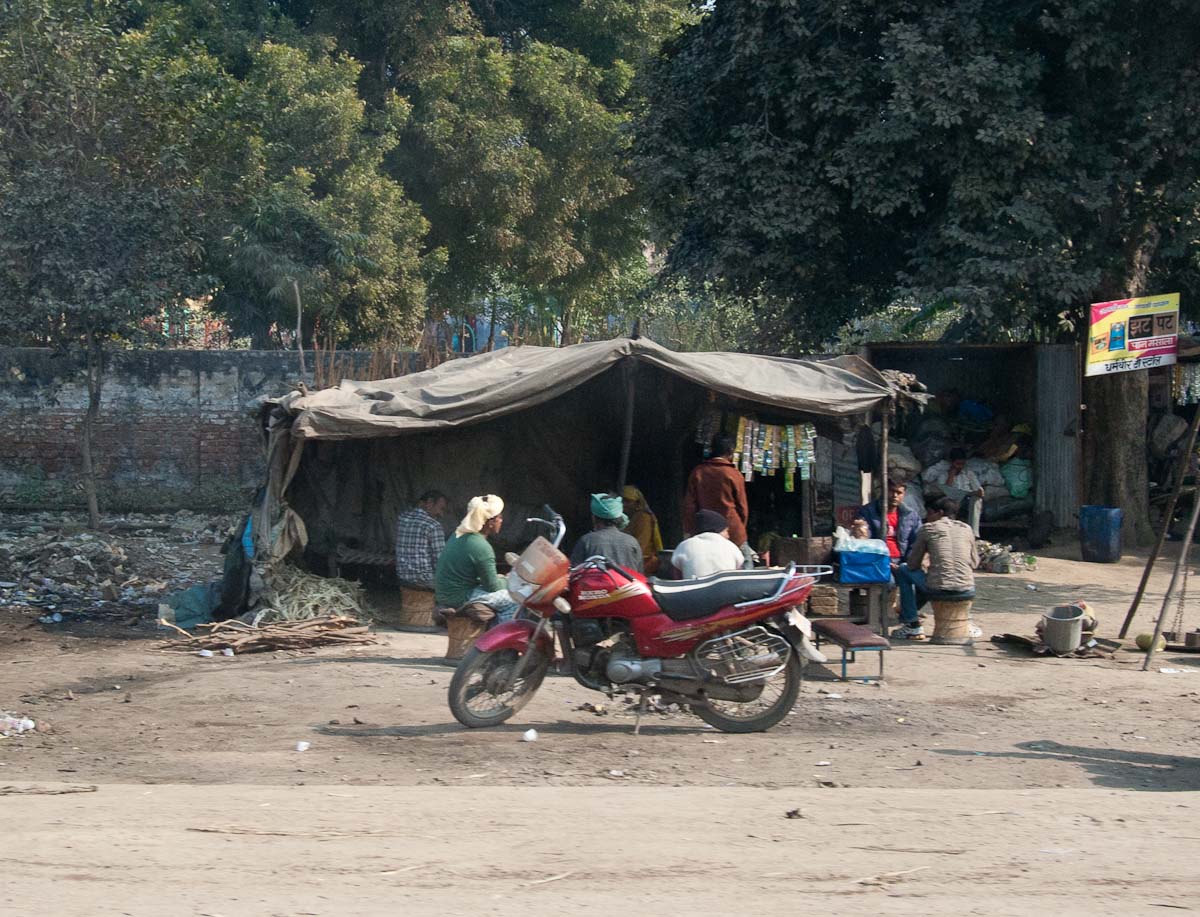
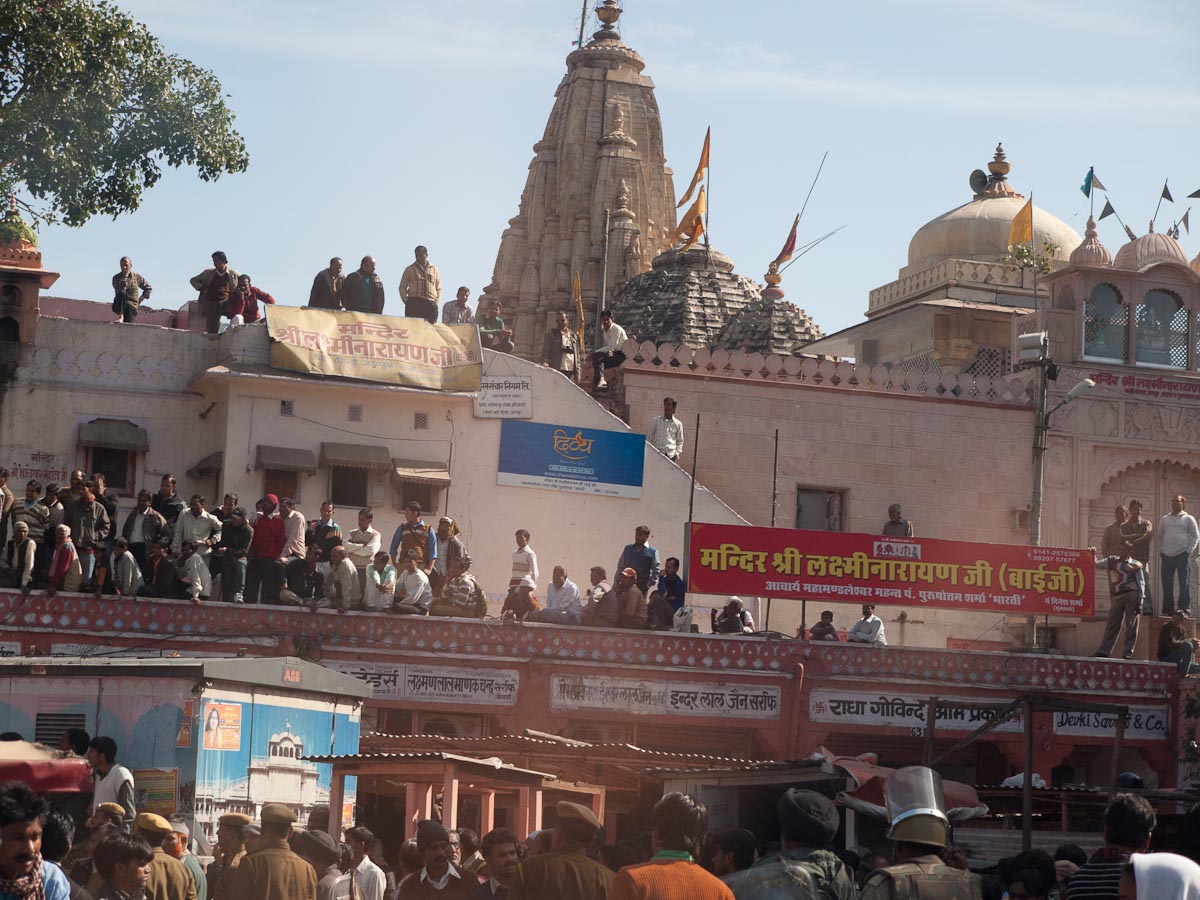
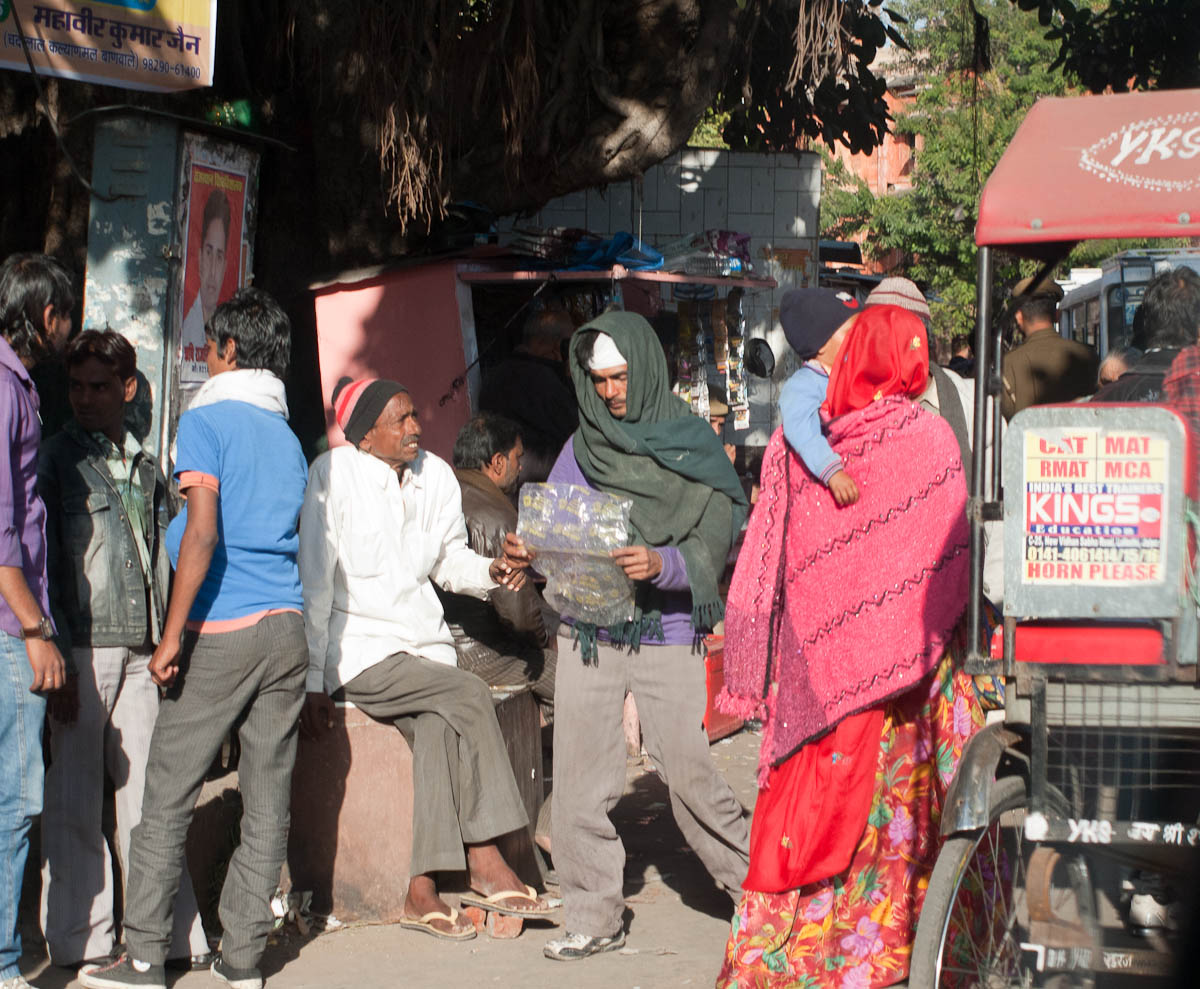
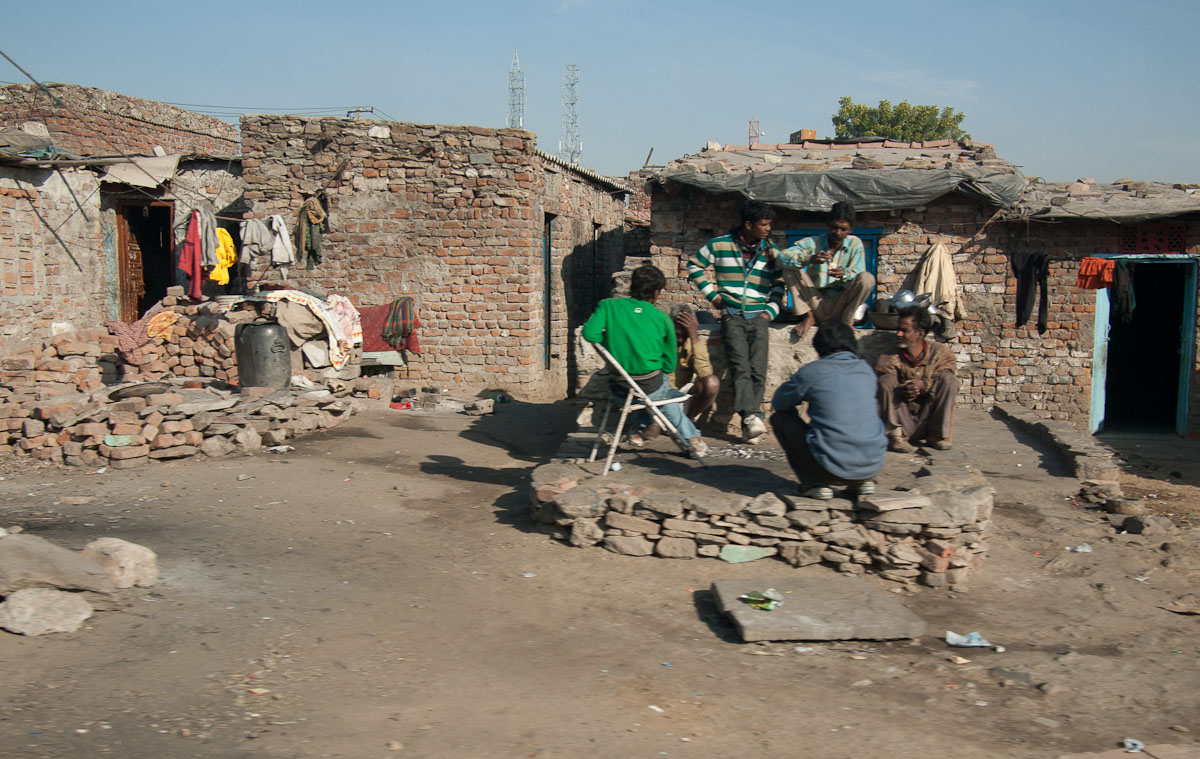
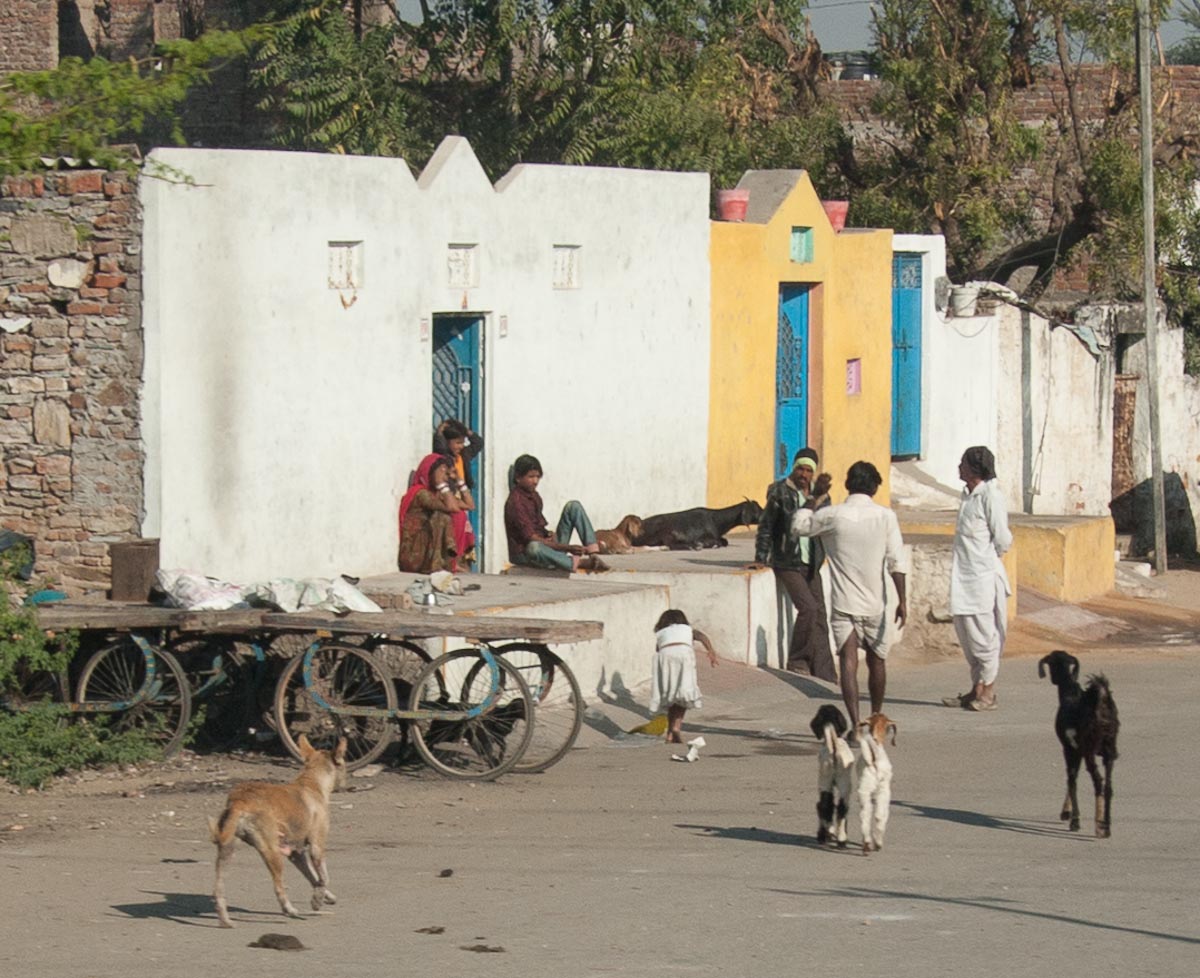
Look past the colors and you see every aspect of life in the streets. Many people are born, live and die in the streets, or in tiny dwellings so small that they spend all their time in the streets.
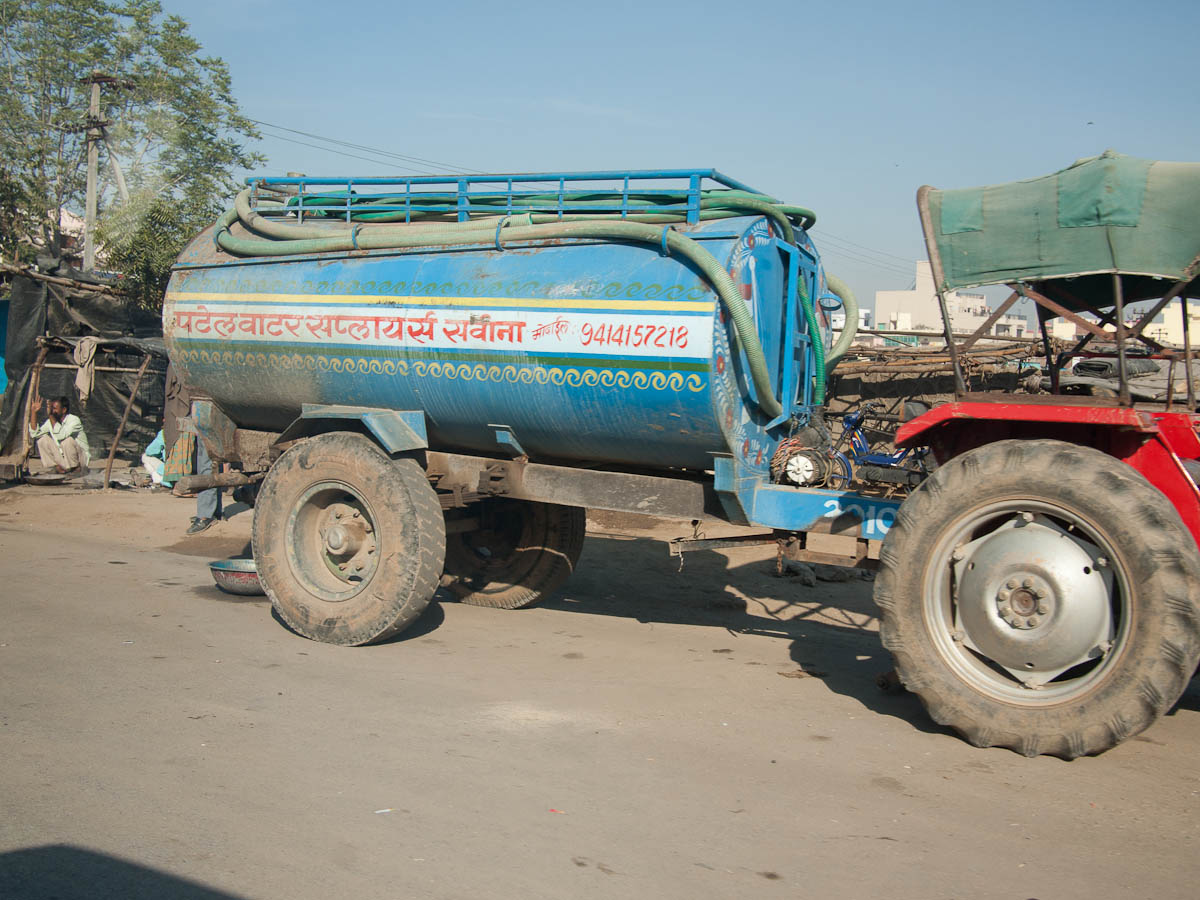
Water is a big issue with so many dwellings in such a hot climate. The lucky have running water. Wealthier Indian families will pass the kitchen water through filters before drinking. Others have no plumbing, just water barrels. Big blue water trucks roam the streets, filling up these water barrels once per day. The neighbors all share the same barrel. There are some manual water pumps on street corners that people can also use to fill their buckets, with vigorous effort. And the unlucky people have neither plumbing nor barrel. They simply walk over to the street drains, where a milky brown liquid flows, and they use the water from that. We can expect water here to become an even worse issue as the population grows. Our guide Manjeet told us that in some places the water table has dropped from a few yards below the ground to 300 meters.
There are steps you can take to improve your water quality. Store the water in a terra cotta urn and it will be filtered to a degree. Just replace the urn every three months. Store the water in a silver cup, or drink it in silver cups, and the silver kills bacteria without harming human health. This is the origin for why Indian families often drink water and serve meals on silver. You can boil the water of course, which may be one reason the British were so keen on tea, a custom that stuck behind when they left. But you need fuel for that. Add citrus juices to kill bacteria – we read that the custom of rubbing a lime around the rim of beer bottle or glass originates from a desire to kill germs. And of course adding spice will kill bacteria and this – along with the hot climate – is an underlying reason the cuisine here is so spicy.
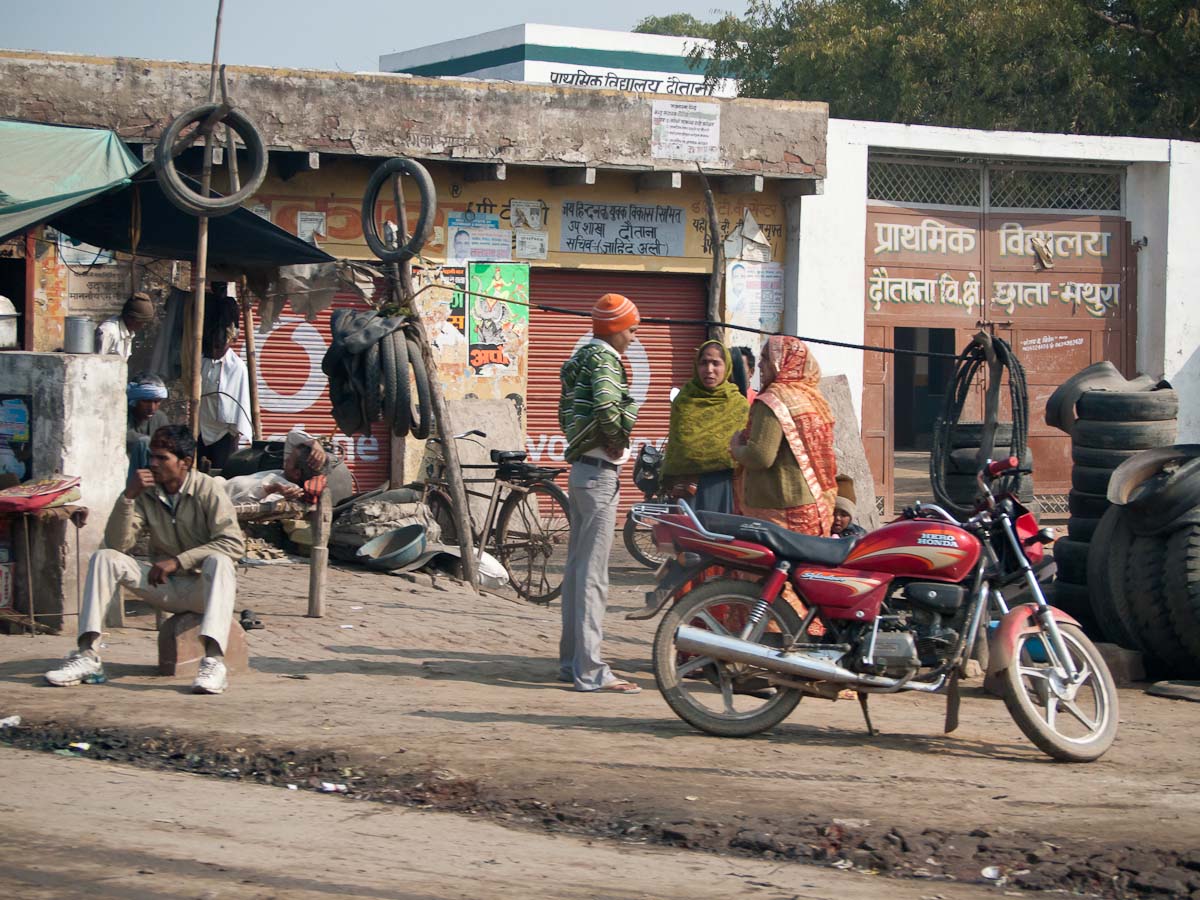
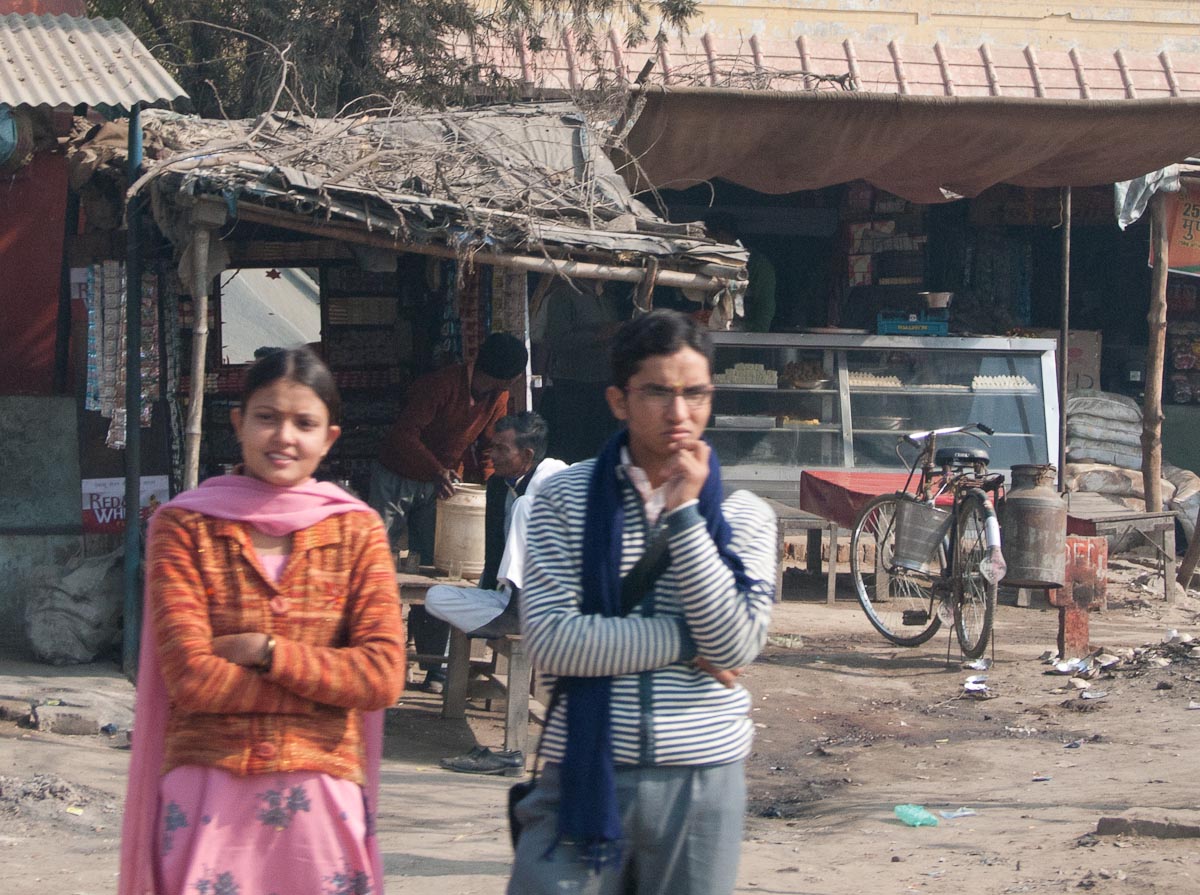
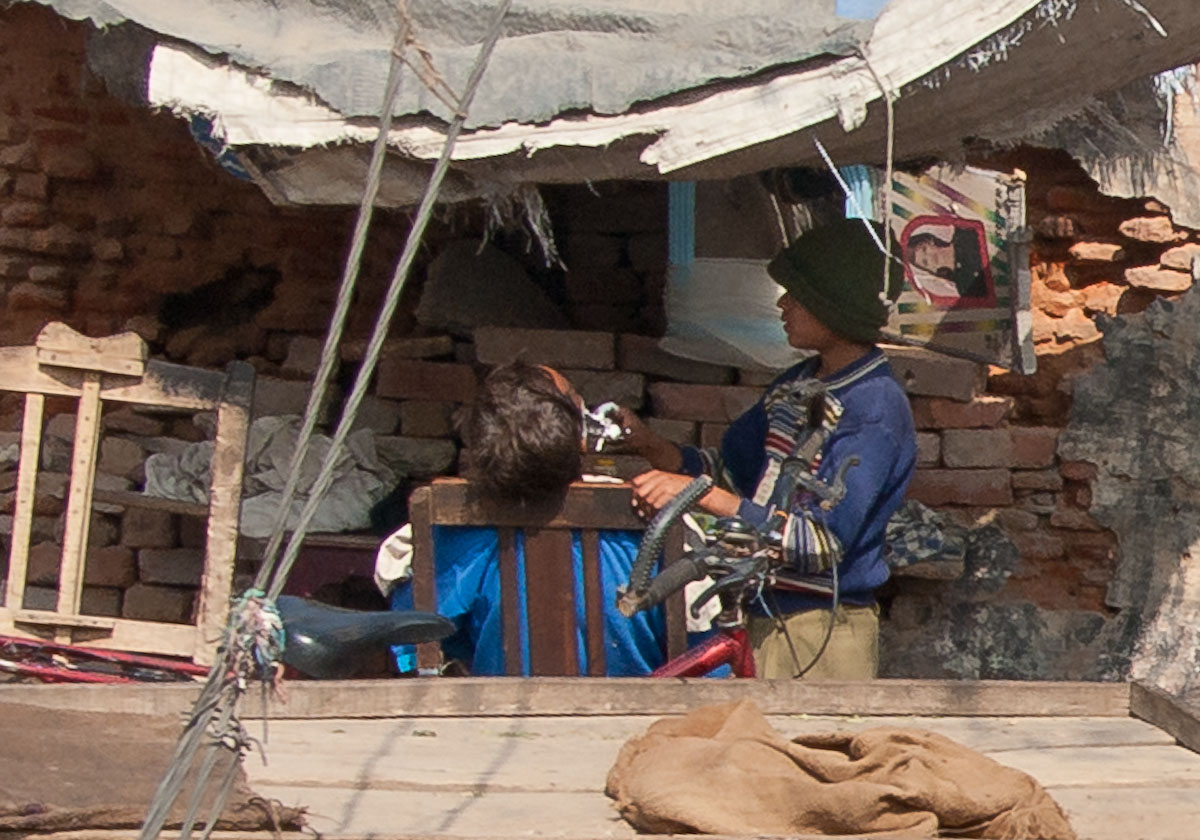
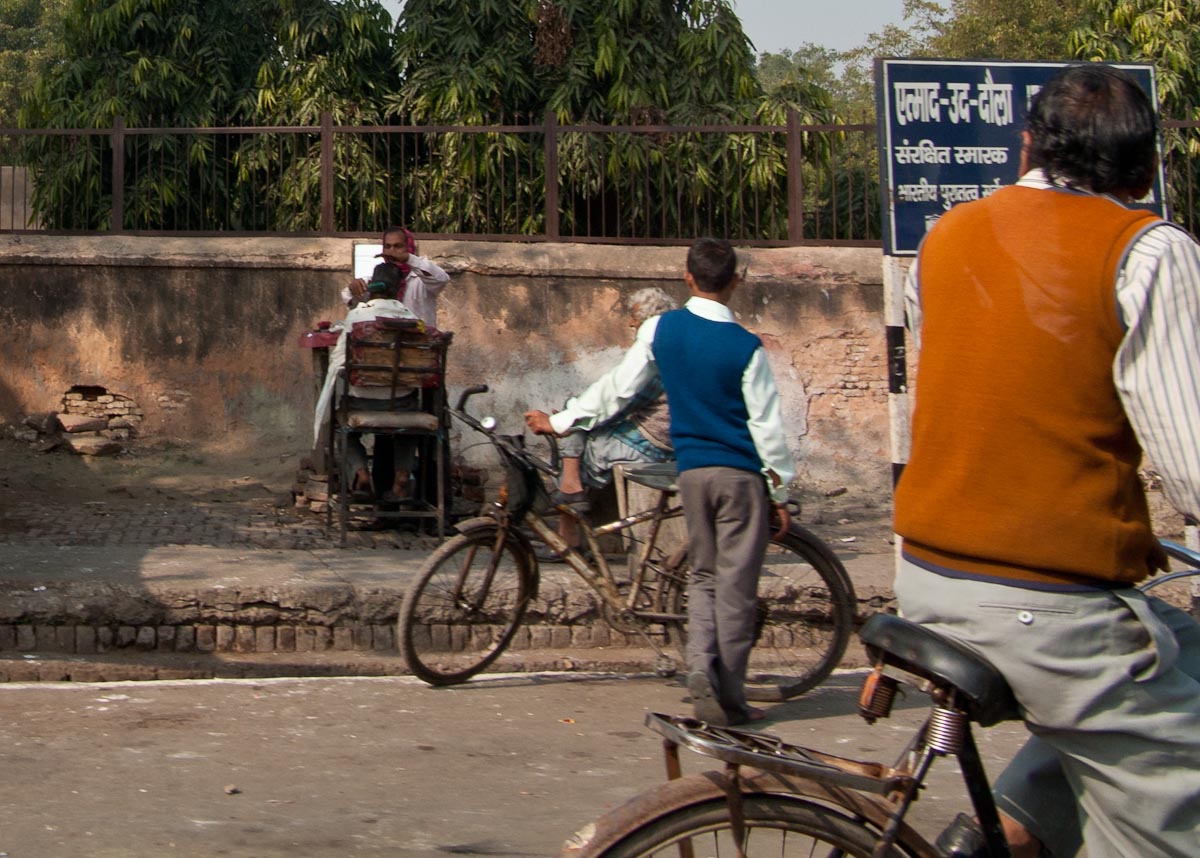
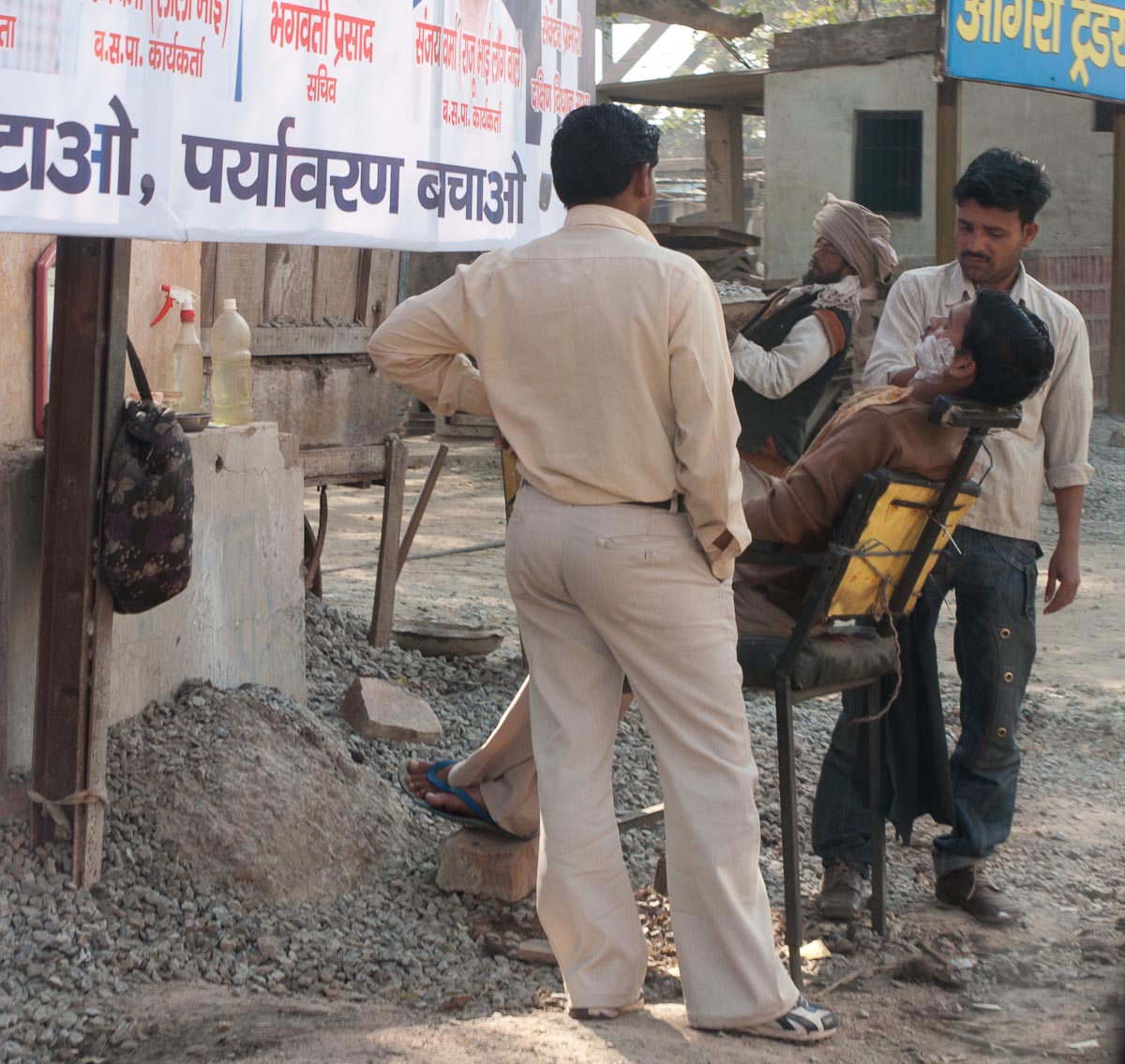
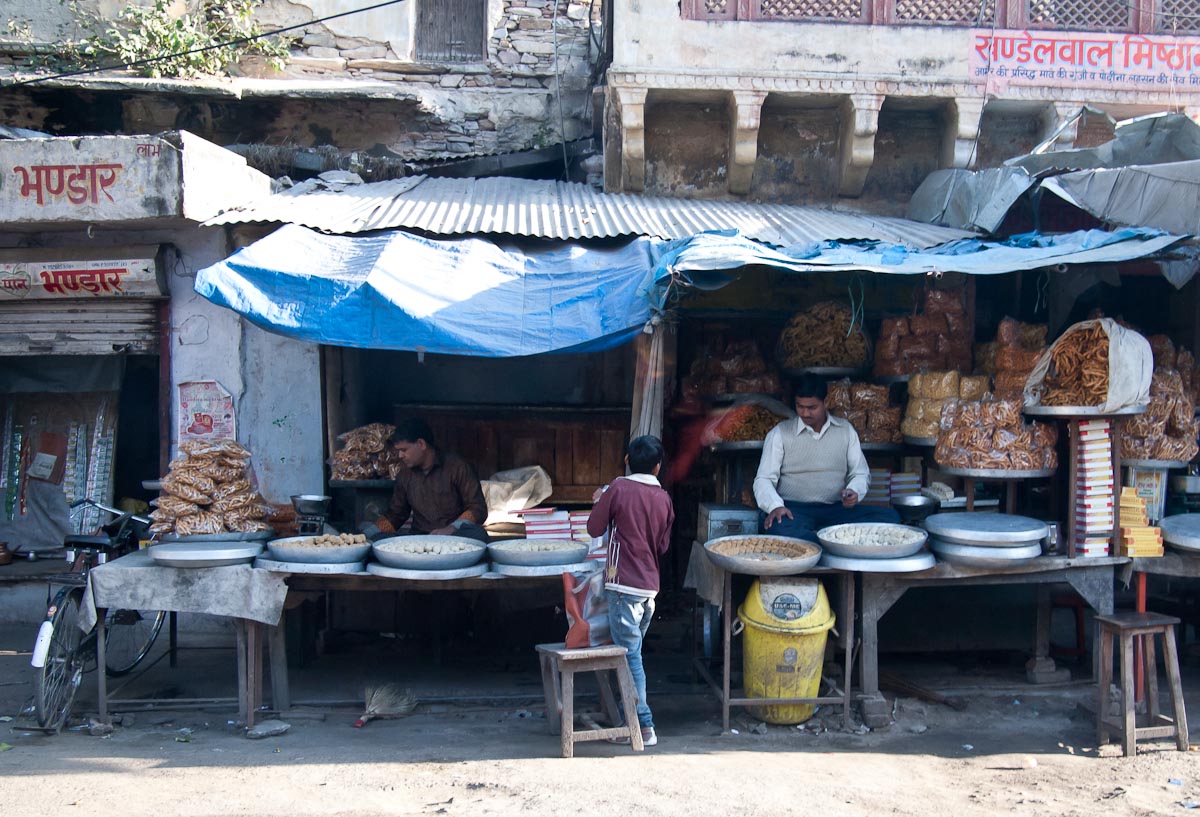
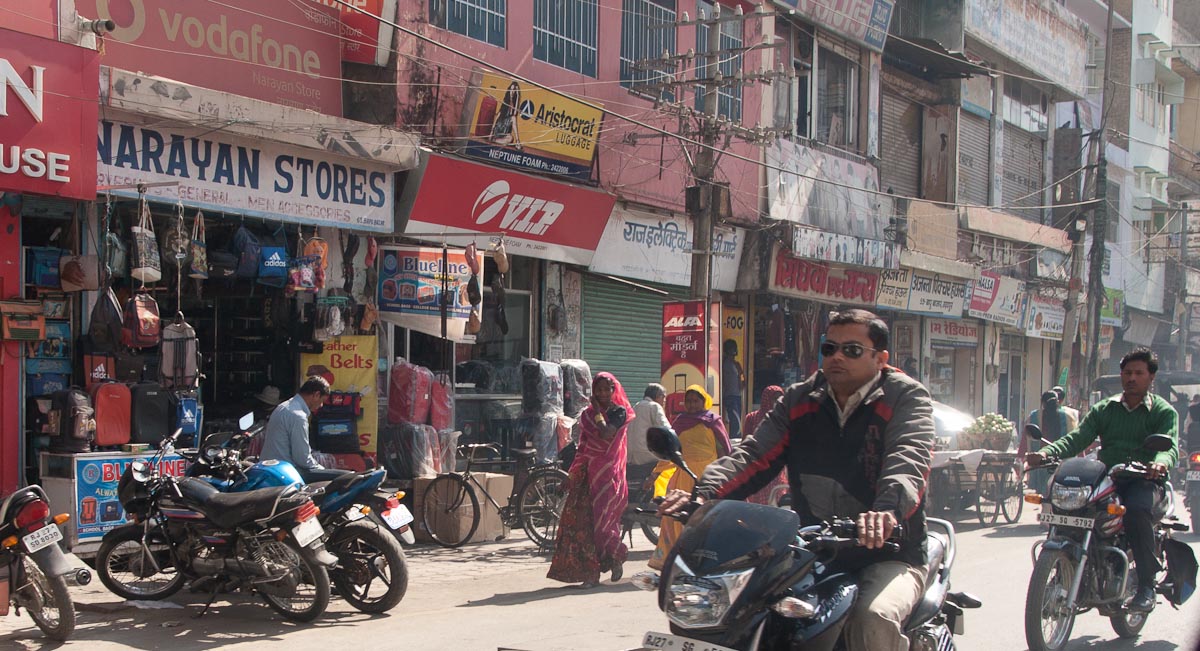
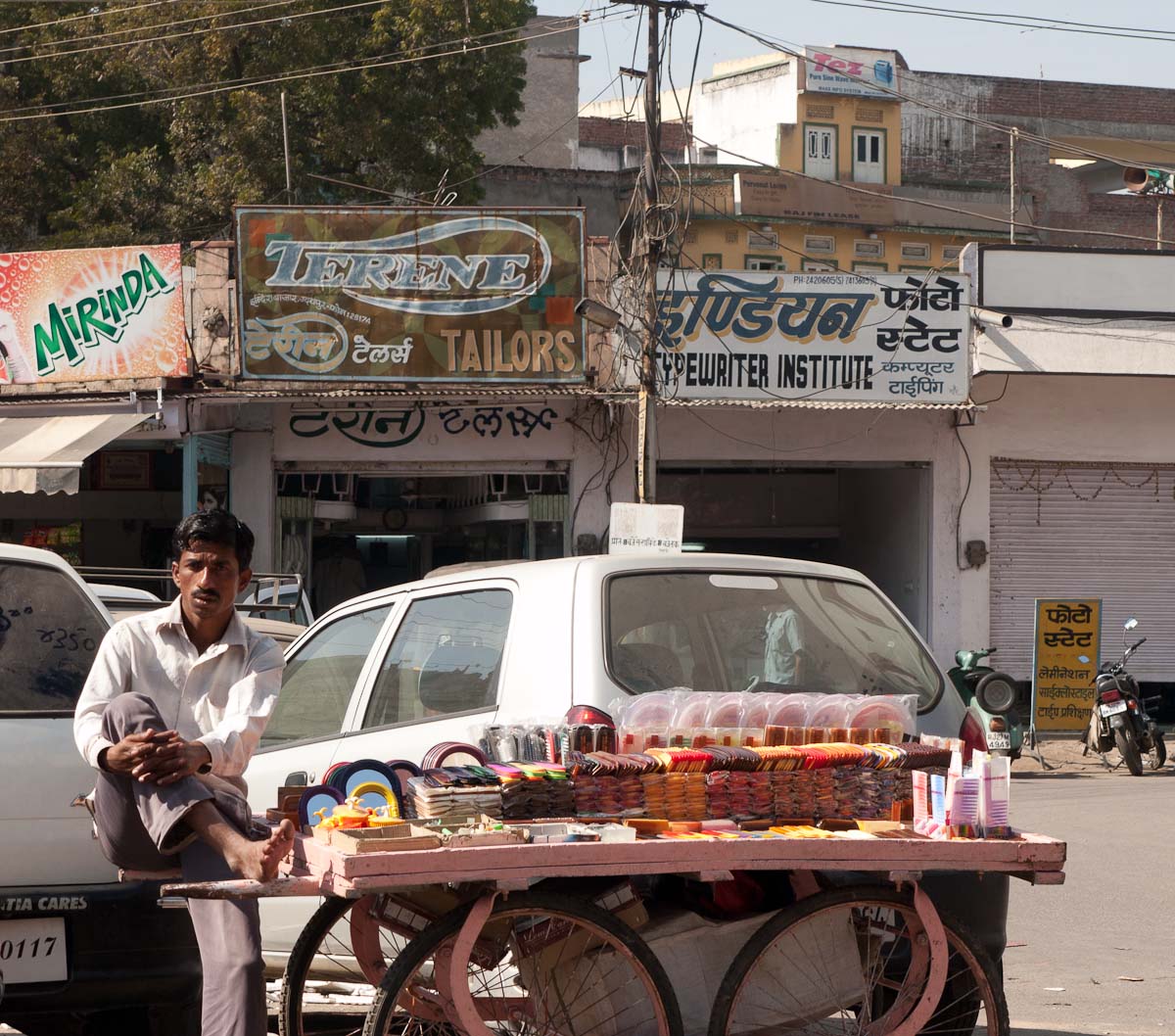
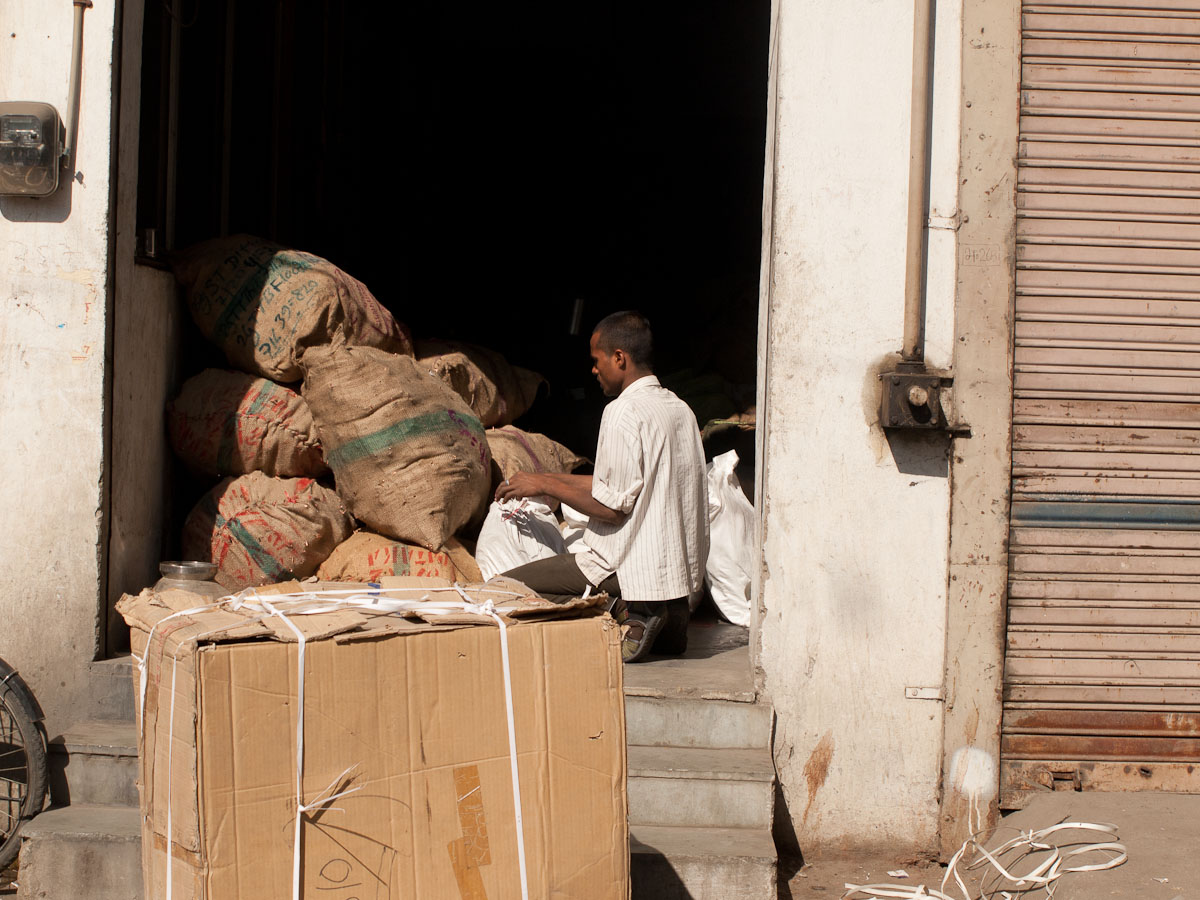
Some of the retail stores here are as tiny as cupboards. As we travel around we start to see that you can relate the size of the typical retail store to the average population income. The simplest store is a blanket on the pavement, or a chair next to a cooler or box. We saw “barber shops” along the streets as simple as a chair, a mirror, and a bowl with shaving water. They were mostly full; frequented by men who pulled over from riding their bicycles.
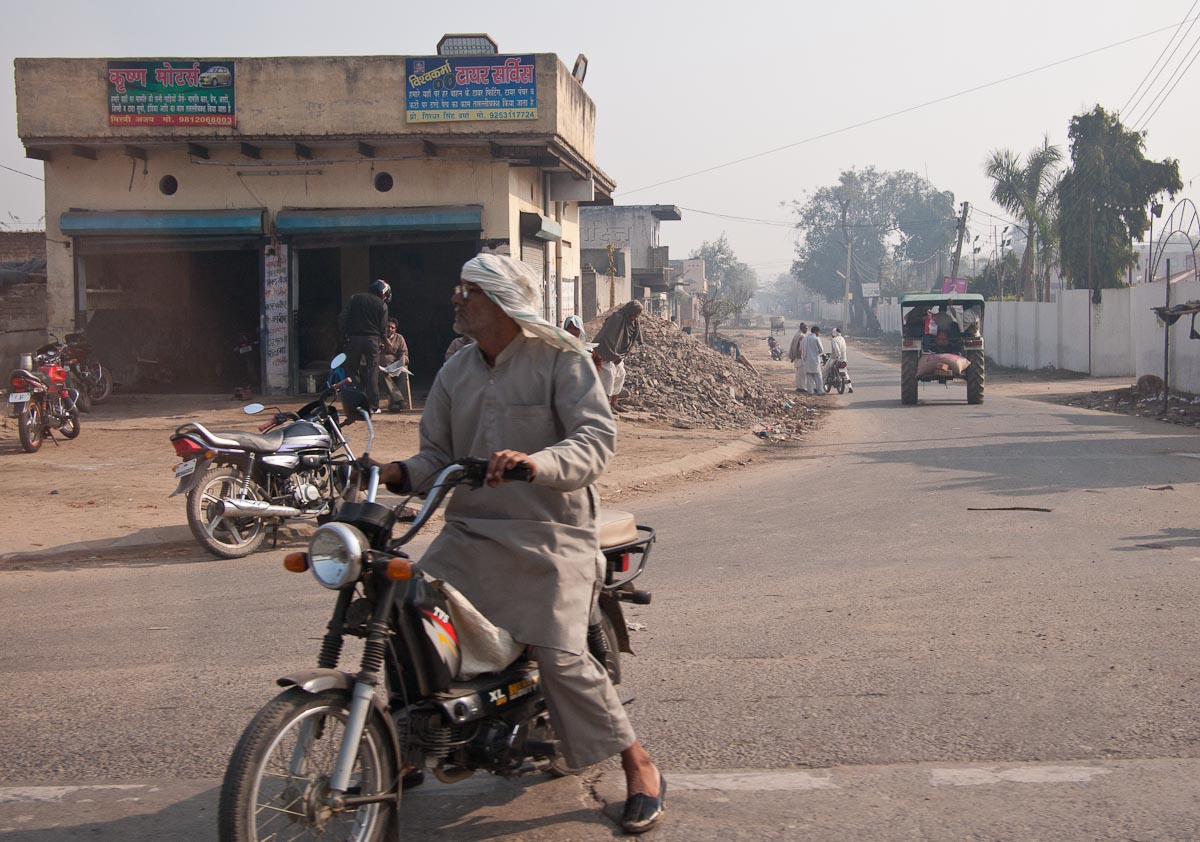
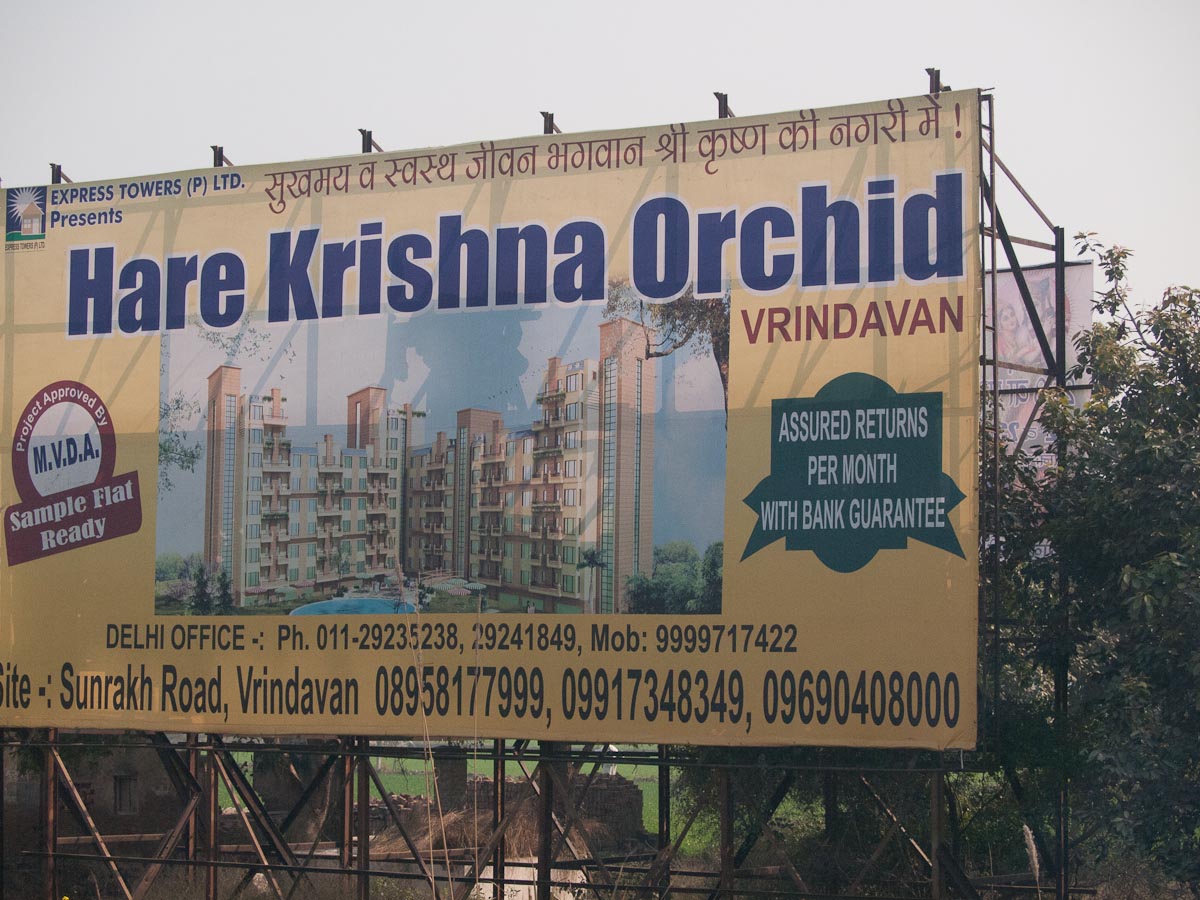
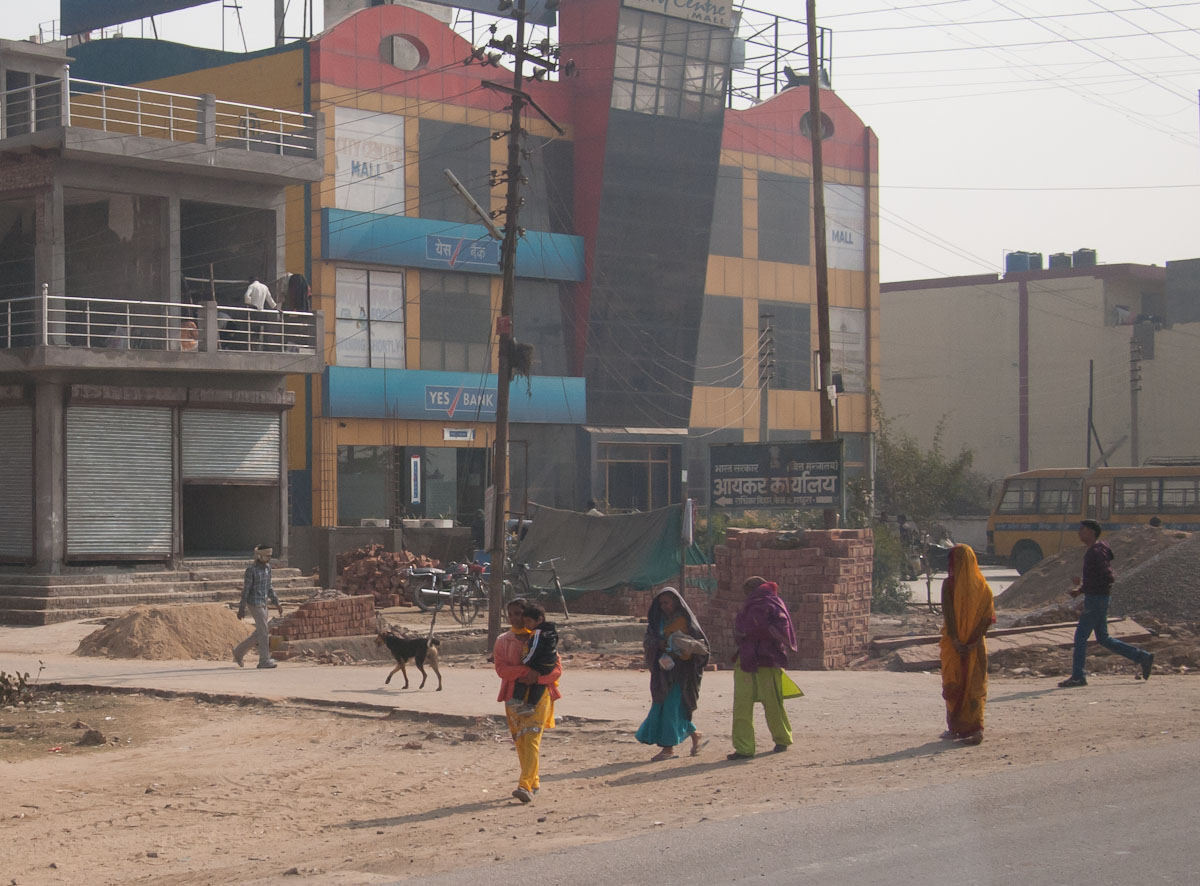
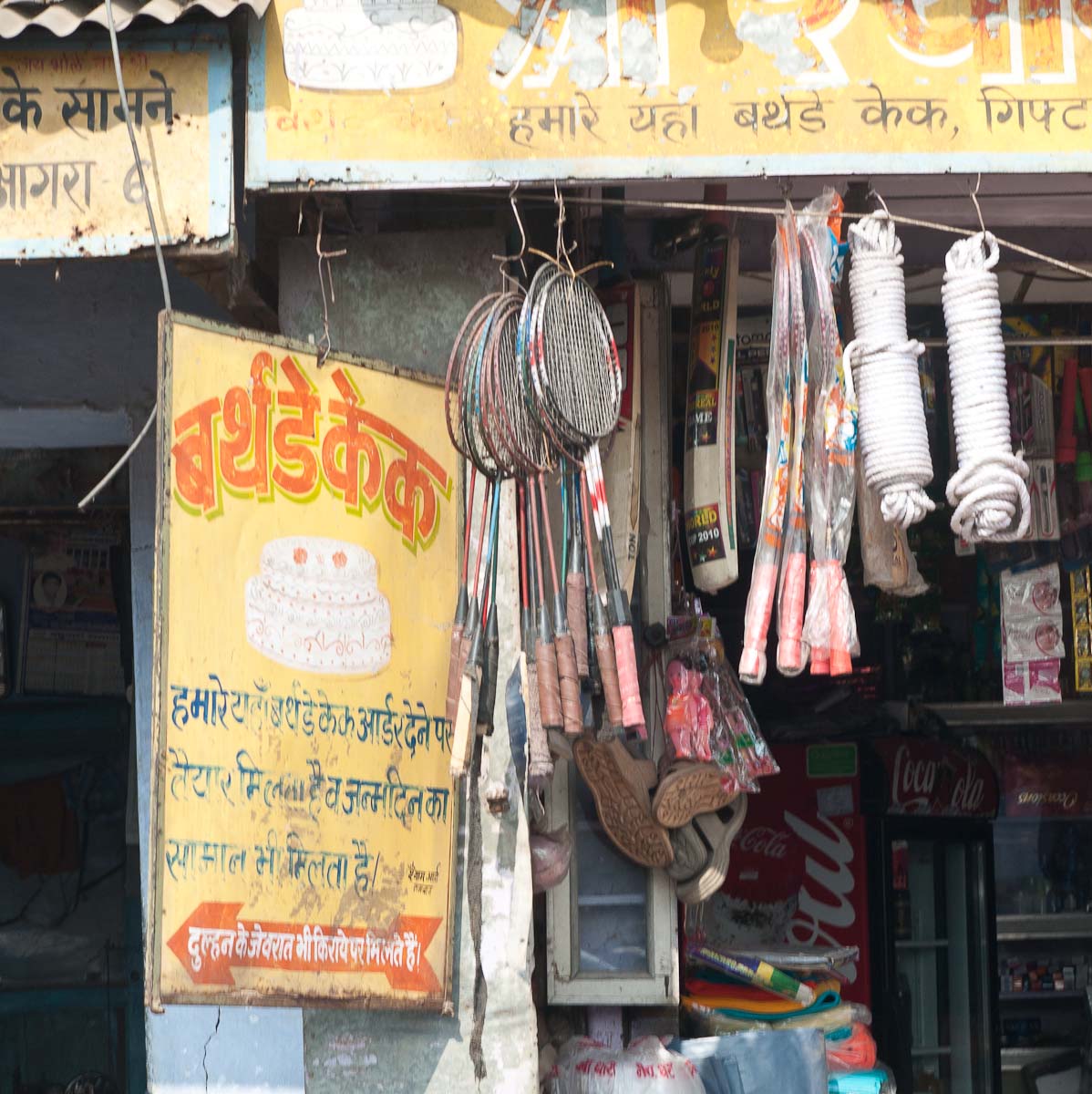
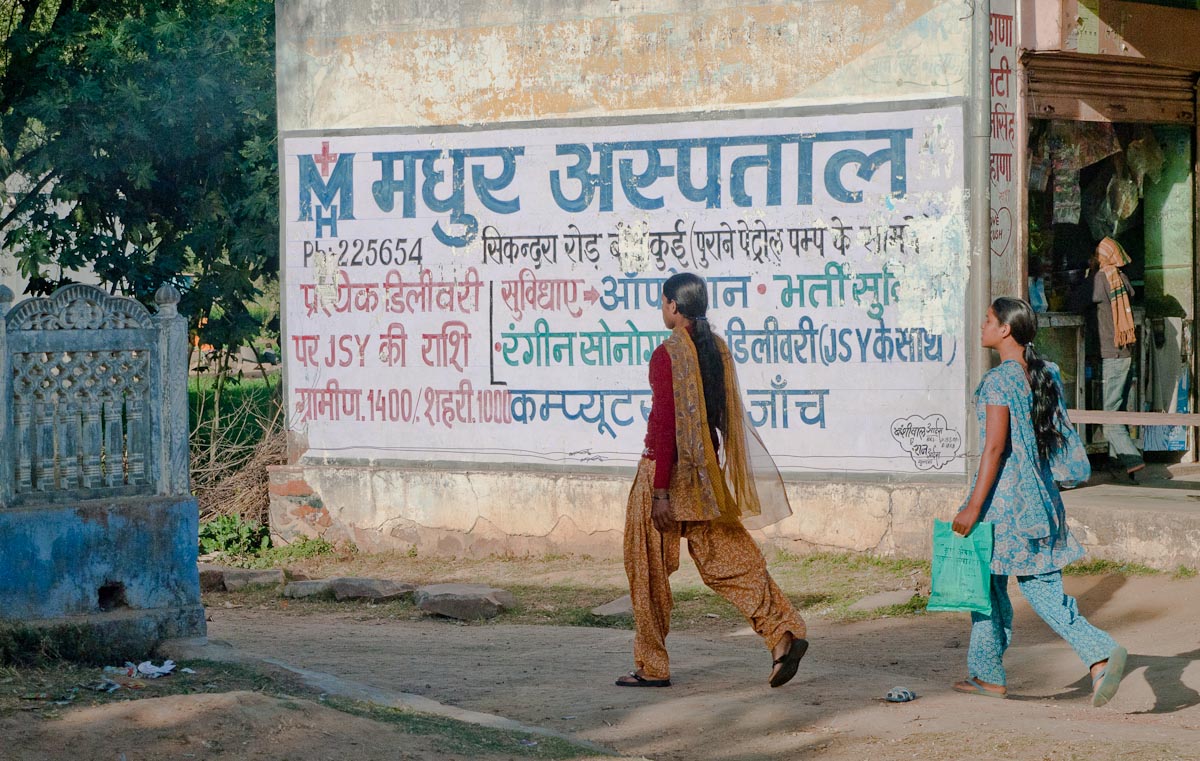
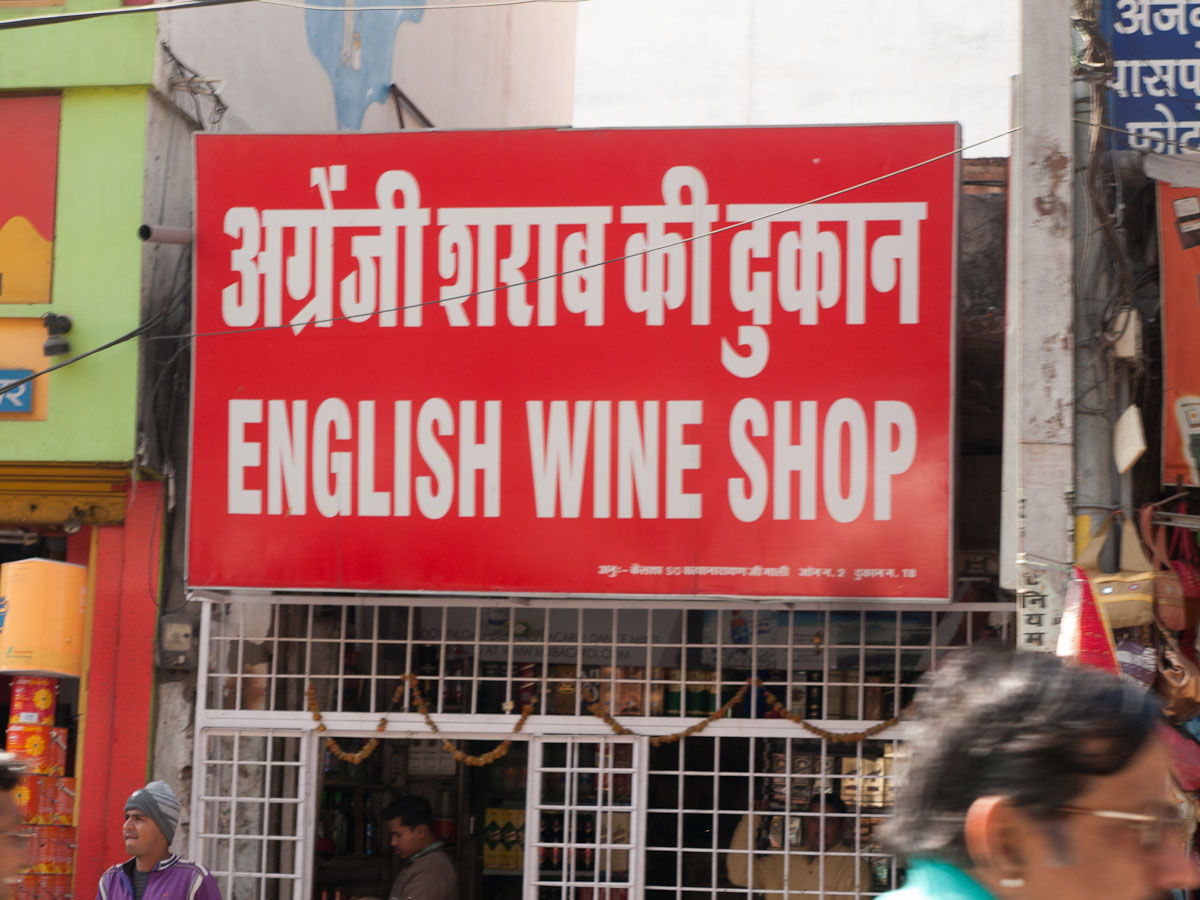
An impressive amount of signage is in English. India is so huge that it recognizes 36 different official languages. English – left behind by the British – is still the most reliable way to communicate nationally. After four months in France, we were amused by advertisements we saw for English Wine Shops. Surely not? We also saw so many signs for colleges and universities. Education is clearly a high priority here. Lastly, we saw a LOT of signs for real estate developments. There is a boom in real estate, with Delhi prices up 80% over the past few years. When one kindly person told me – with all good intentions and absolute certainty – that “$1M invested in Delhi real estate today would become $2.5M within 36 months” a shiver ran down my spine.
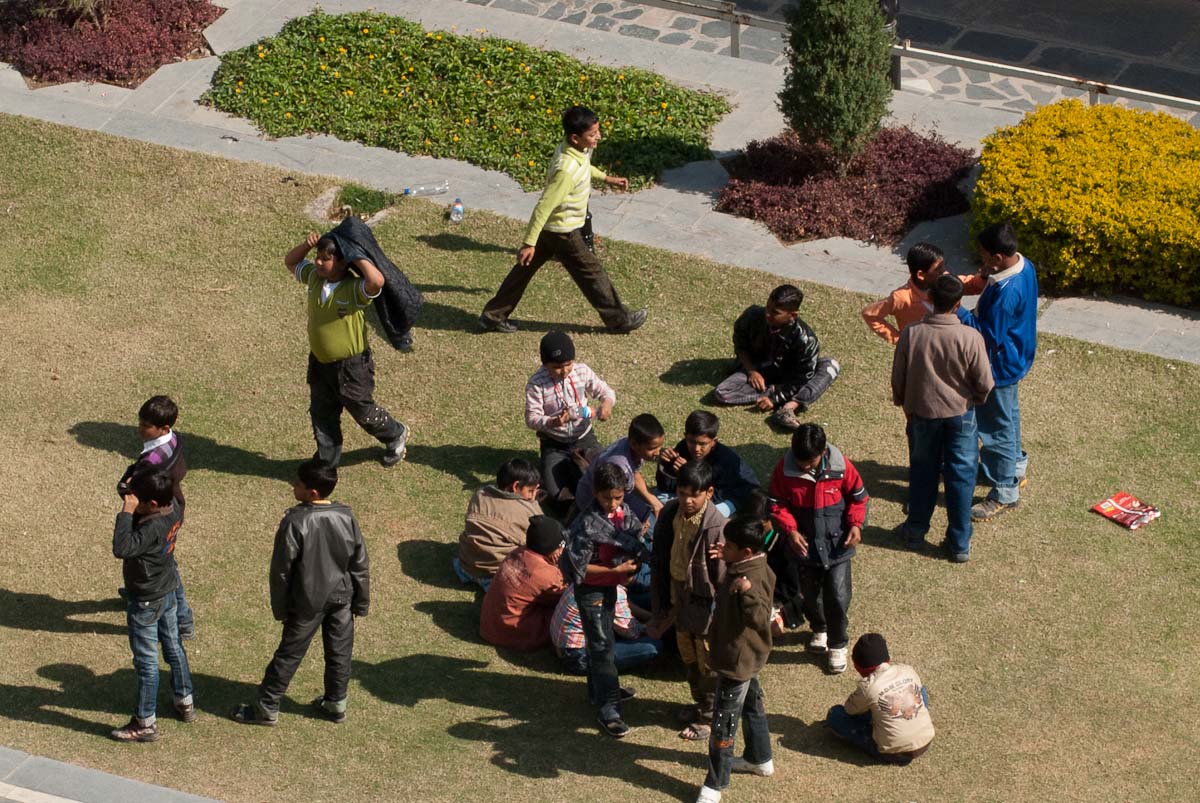
You can see sports in the streets and fields of India. The most evident is cricket – played with a simple board by gangs of young men in every town. We also saw badminton – and thought of our friends the Wallers!
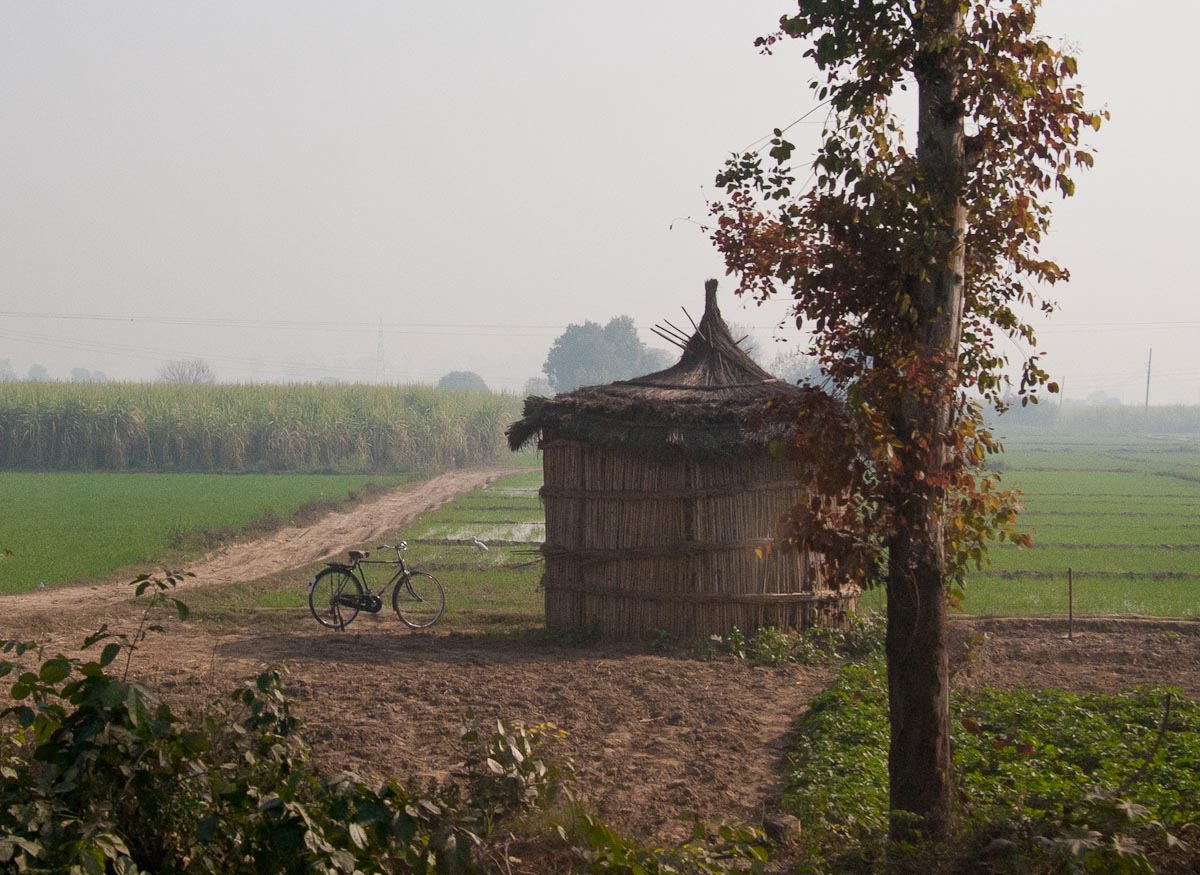
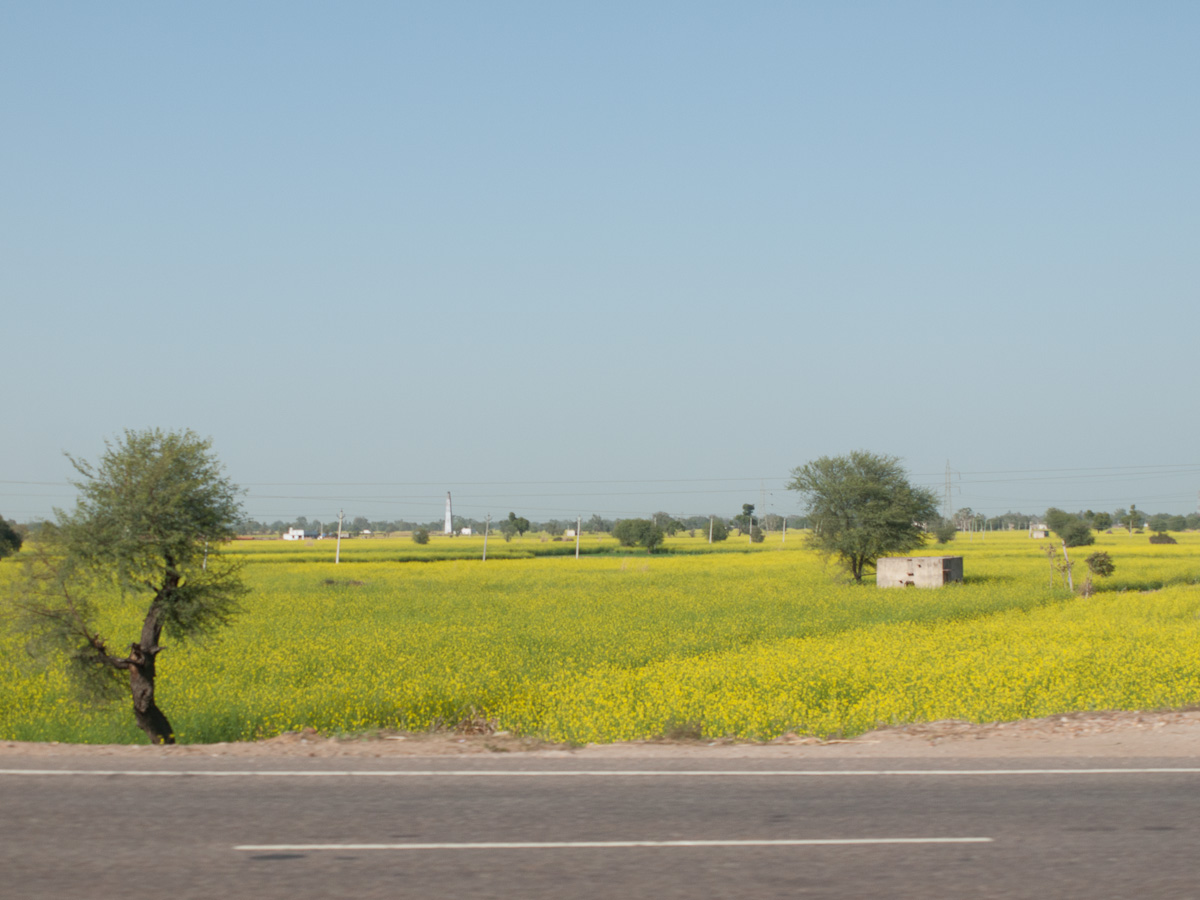
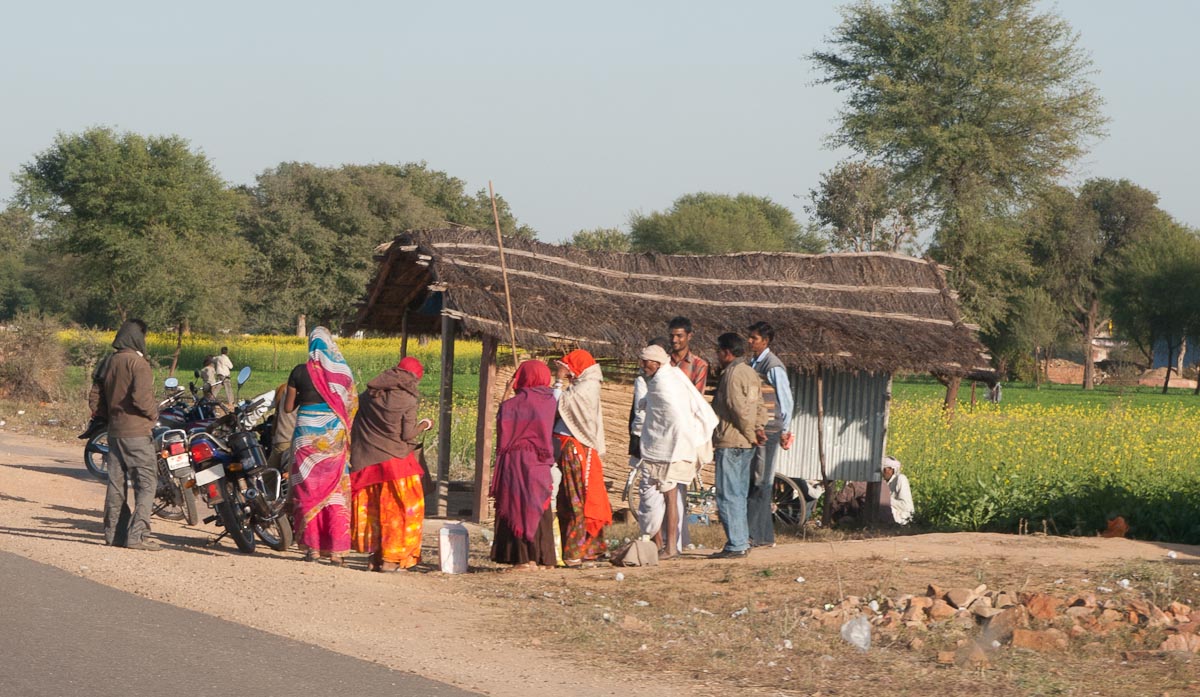
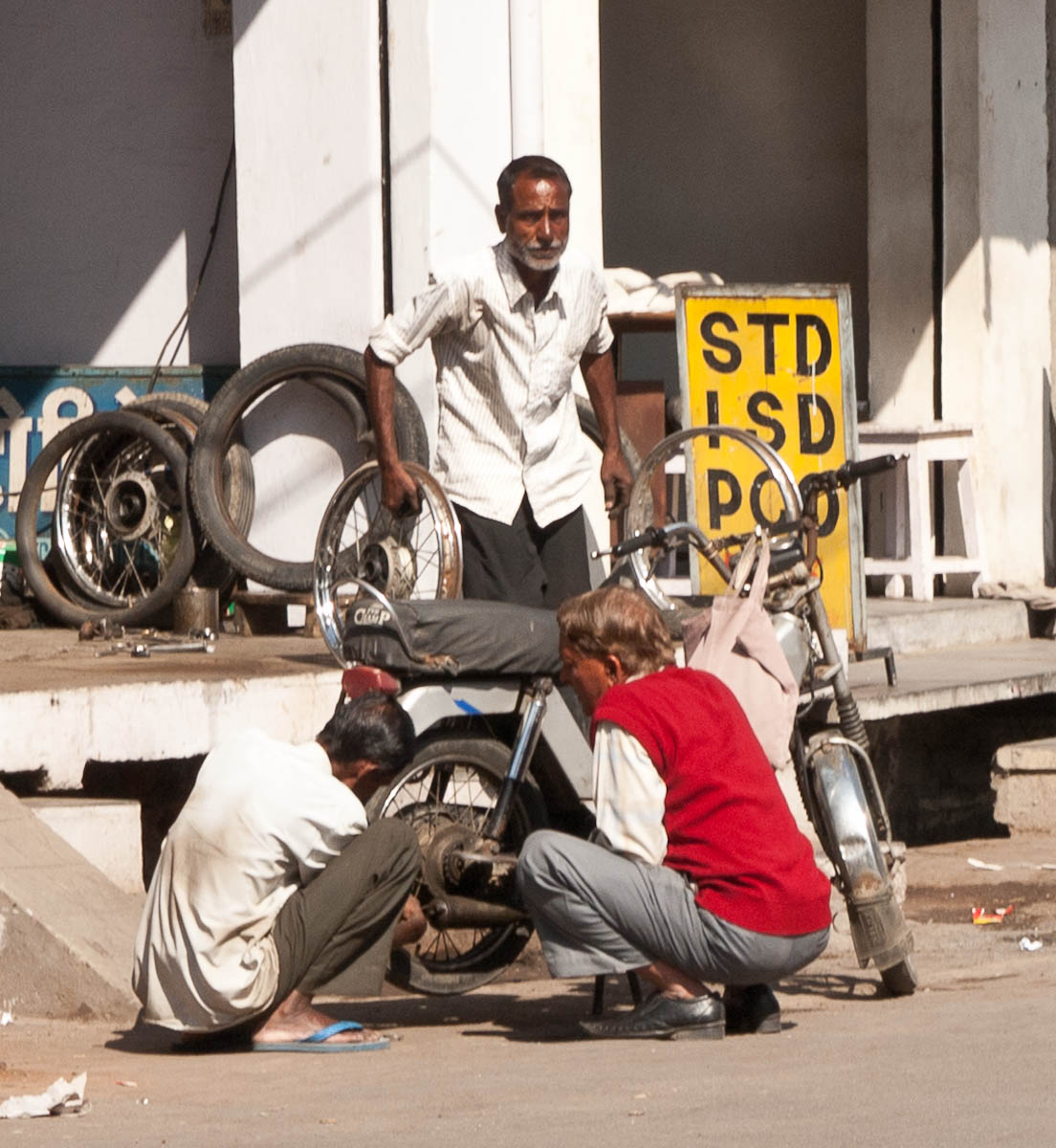
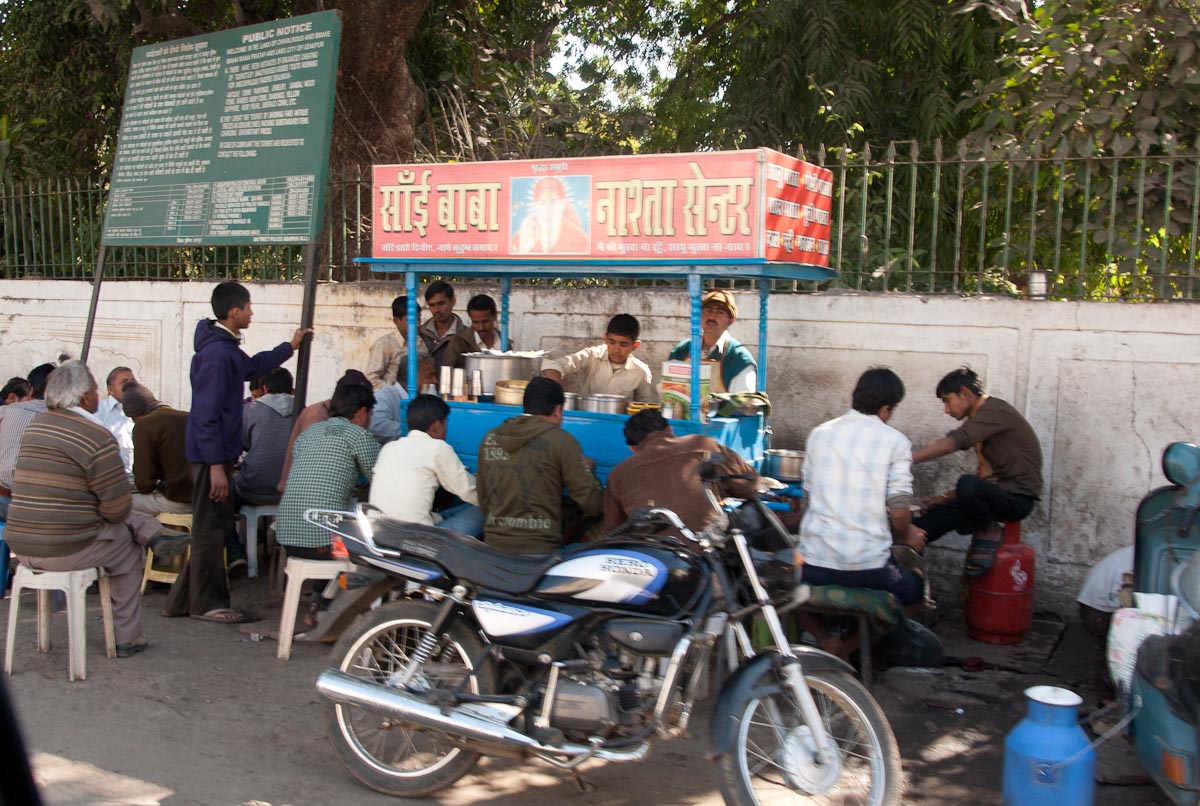
Go outside the city and time runs backward. Here we see an agricultural village society. The soil is rich and black, the fields right now are filled with the yellow blooms of mustard plants. Wooden circular sheds hold farm tools and cover stacks of manure. Women – and it is largely women – are bent over in the fields. The young babies run around with bare bottoms. The cows and water buffalo are placid. The vistas stretch to infinity. When we drive through the villages we see groups of men huddled around stands with steaming pots of food or chatting in cafes or crouching to fix some mechanical device. Notwithstanding the lack of air-conditioned malls, people seem pretty happy.
You do see poverty. Beggars rapped sharply on our car windows at street intersections or implored that we buy their trinkets many times. You see people motioning for food but they seem well fed; they really want money. At one stop, a child asked Gina if she had a pen or chocolate? She dug into her bag for a pen. Instantly ten more children ran over, and they dogged us all the way back to the car. Our guide said such groups are organized by a boss to beg from tourists and that the pen request is simply a ruse to open conversation.
Despite poverty, we did not see starvation in the streets. Indeed we saw food everywhere, mostly fruits and vegetables and breads. Compared to Americans, the populace of India is generally thinner yet this is arguably a positive for them. Where the poverty is clearest and irrefutable is in the hard-bitten skin of the poor, who are outdoors so much.
We met several families who had live-in boys as servants. Our guide estimates about 5-10% of families in India have a situation like this. Parents of a poor family may send a boy to live with a wealthier family, perhaps when they are as young as eight years old, in return for one less mouth to feed and a small monthly stipend. The boy essentially becomes part of the wealthy family, although there is always a line as they are the ones doing the kitchen work and cleaning. The people we met saw this as a way they could assist with the poor in their villages. In some cases a poor family may act as servants for a wealthier family going back several generations.
There is no restriction on birth control under Hinduism. Why do the poor families have 8 or 9 children when they cannot afford to keep them? The answer we consistently heard is that the poor believe more children means more hands to help, which means more income. They themselves are illiterate and uneducated and so some speculate they do not realize the cost of a child can exceed the benefit – in reality the ‘return’ of a child is only positive these days if the child becomes educated and gets a good job. They do want hard workers, so people in India badly want boys and there is a problem with female termination. It is now illegal to get an ultrasound without a serious medical reason.
The vast majority of marriages in India are arranged yet the divorce rate is quite low. Open a newspaper and you will see something unusual – a section where families advertise to find other families to arrange alliances for marriages. (I counted three pages of families seeking women and three pages seeking men, so that seemed balanced enough.)
The high growth of Population is one of the “Big Three Problems of India”, according to our guide. The other two are Pollution and Corruption. We saw both of those in broad daylight as well.
We could see the Corruption most obviously at the toll booths. Some were simple affairs where something would partially block the road to slow down the car and a man would wave at you to pull over and pay a toll. Our drive ignored them and kept driving. Turns out they were simply thieves who preyed on people too ignorant to realize the toll was fake; the authorities looked the other way. But whenever you cross state (Indian region) lines, there will be official tolls and men with guns. Our driver would pay at each of these. We learned that a big percentage of this income is diverted directly under the table and into the pockets of the state governors. More broadly, we were hearing every day about cases of fraud. In one example, a state governor would buy statues of herself for $1.02 million. Vendor A would pay Vendor B to make the statue for $520K. Vendor B would buy the statue from an artist for $20K. Another example was the Commonwealth games, were reportedly only 5-10% of the budget was actually spent on the sports event; the rest was funneled to friends.
India is a democracy so can’t they just vote out the corrupt politicians? We heard that they can and they do. It’s just that the next batch is corrupt as well. Anyone honest who makes trouble is manipulated out of politics by the incumbents. In short the people we met were bitter about corruption and saw no end in sight for it. This is one area where I think China has pulled ahead – China may be controlled by a single party whose members receive favored status rather than a democracy BUT the Chinese have been militaristic in the past two decades about improving the quality of government and have made great strides in this area.
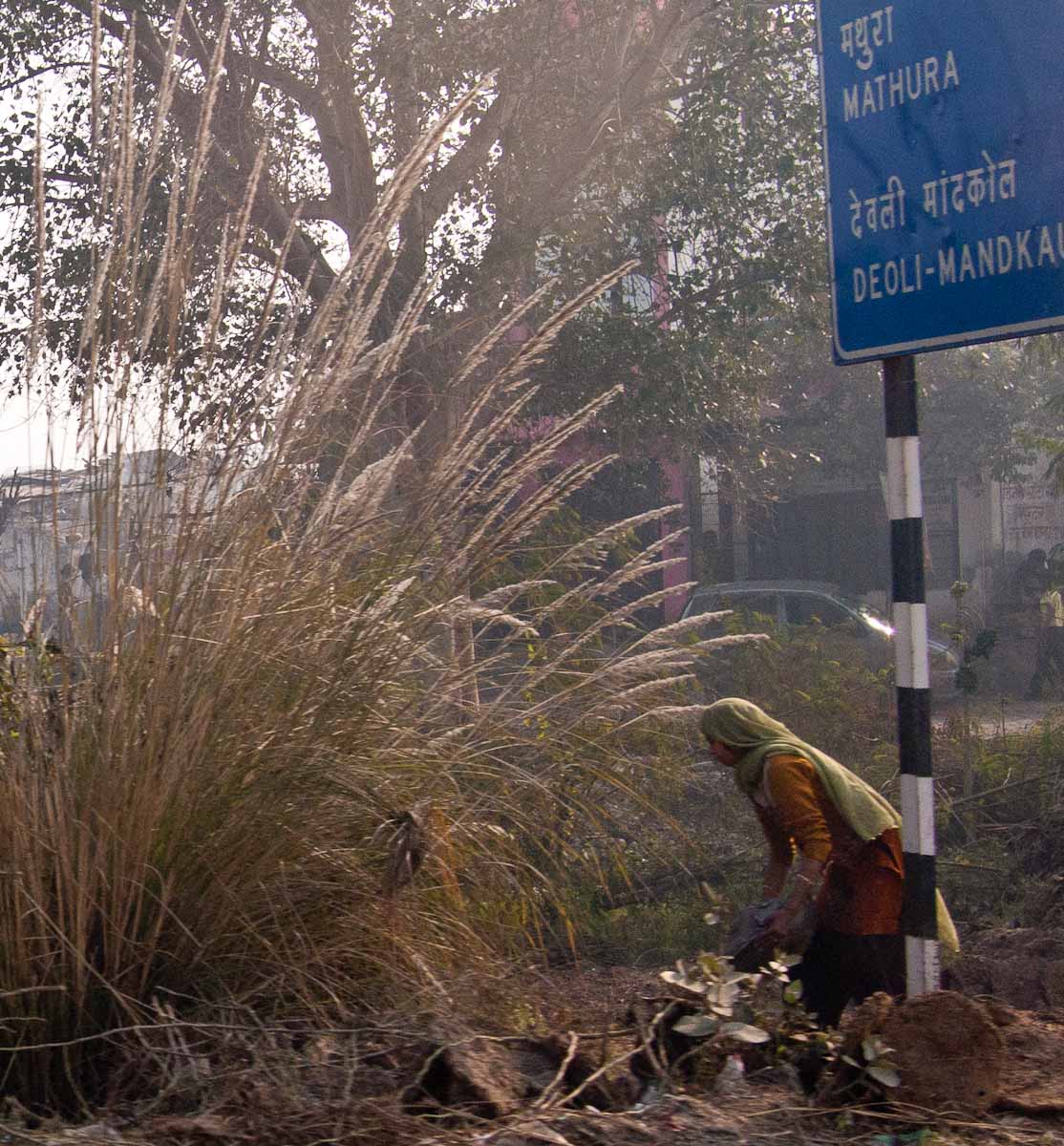
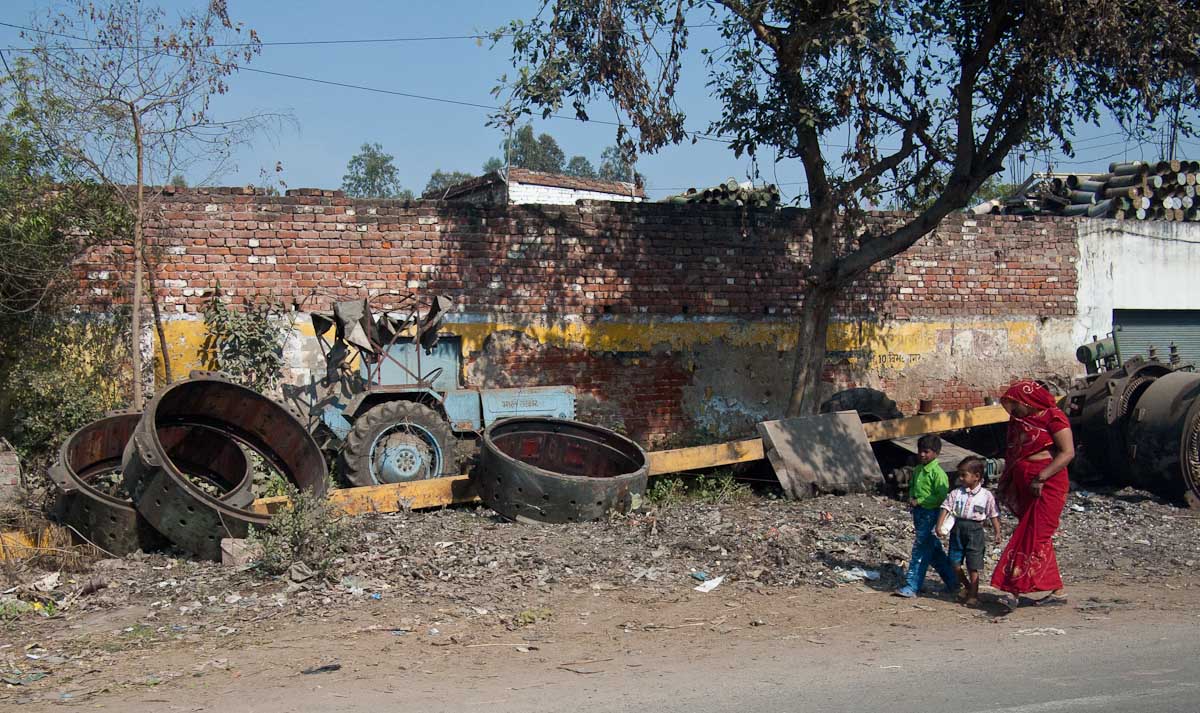
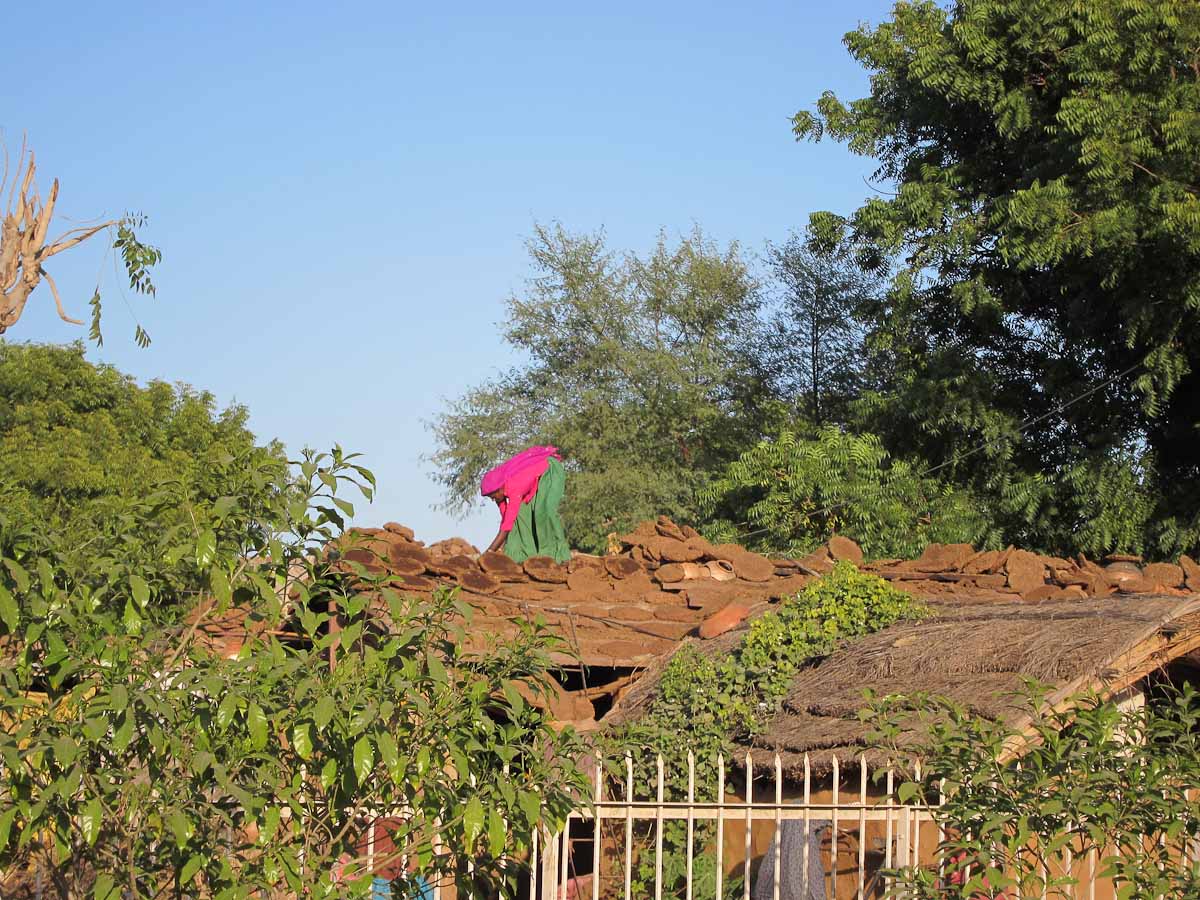
The Pollution is evident the moment your airplane braves the fog to touch down in New Delhi. The door opens and in comes the tarmac air with a sour smoke odor. You get used to this smell when you are inside, but you can scarce forget it when the city streets and parks are so hazy. People here say the city is actually much improved and that part of what we are seeing is winter fog. I can report the air is better than Beijing circa 2008, and we will see about Beijing 2011 air in a few weeks. Beyond air, as you can see on many streets there are piles of garbage and even people who stand and openly pee. Fascinatingly, one of the reasons that pigs, goats and cows are welcomed in the streets of India is that they help eat the trash. There is an industry in collecting the manure and using it for insulation and heating fuel as well. On the up side, to my eye products are sold with less packaging than the USA. Laws are growing stricter on pollution yet the best way to fight this is to get the population growth under control. People say this in turn comes down to the right education, but that the government is letting people down here.
One of the results of the poverty and pollution is that tourists and indeed many times Indians cannot eat safely. We were warned multiple times to drink and brush teeth with bottled water and we did. We avoided unpeeled fruits and vegetables in almost all cases, and we chose cooked foods wherever possible. On the other hand, you cannot always control these factors or the hygiene of the kitchen. To the maximum extent possible, we approached this by eating in top hotels or in the houses of people who were well aware of the issue and prepared the food as cleanly as possible. Ultimately if it looked good and smelled good and it was cooked in a reputable kitchen, we went ahead and ate it. That worked quite well for us. We did have one bad night where Gina and Carter were vomiting for hours after sharing a bad lamb sandwich from a very fancy hotel. Perhaps it sat out too long? They were never in medical danger but they were pretty miserable. Katherine breezed through with nary an issue (as Gina did otherwise) and Carter and I had only mild digestive troubles. These all worked out in the end.
If there is a fourth big problem of India, I would have to say it is geopolitics. India has a war zone to contend with in Kashmir. Pakistan may be smaller than India, but is a nuclear power and a frightening enemy. What worries the Indians in particular is that Pakistan has stayed poor and was left behind during the years that India grew and enriched itself. Now Pakistani society is splintering under religious and tribal forces. The Pakistani authorities have nothing to lose, which makes them the worst kind of enemy. India is really isolated on all of its borders except with Pakistan, so they are always concerned about that country.
India is also worried about its eastern neighbors. The growing concern is with China. China describes itself as peaceful, but it is reportedly sending settlers to occupy towns across the border with India. China claims these lands are Chinese, and the Indians can see a fight or shadow war brewing here. There is little trust across this border. Another problem is Nepal – so poor that it is now a lawless country. When thieves in India head for the border they choose Nepal. This is where all the stolen cars end up and the authorities there do not care.
Let us come back to India as a vacation destination. What is the verdict? From a safe distance, we loved it. We loved the noise, the chaos, the staggering visual confusion of everyone doing everything at once and no rules. There are stories playing out in all directions wherever the eye will look. But this is not a place to rent a car and drive yourself around, or even to walk through the streets alone anywhere near a tourist destination. You need to see tourist sites with a guide and driver. Having a travel operator manage all the details is essential to glide over all the hassles and simply enjoy, so with this proviso, you will have a super time. Here you find sweeping new history, a pantheon of cool gods, amazing new architecture, lavish service and jaw-dropping hotel properties, Eastern mysticism, a completely unique and delicious cuisine, myriad tiny shops, good prices, a zoo outside your door, and amazing objects and arts. We are sure to return soon to see more of exotic India.