The classic touring trip to India is called the Golden Triangle, which is exactly what we signed up to do for our first exposure to the country. It all takes place in Northwest India, right around the capital city and then to the immediate south in a desert area called Rajasthan. You fly into New Delhi, drive to Agra to see the Taj Mahal, and then drive into the Rajasthan area, an ancient desert kingdom to visit Jaipur where there are old palaces and strong jewel-cutting and rug-making traditions. See the big red triangle below (map from Internet):
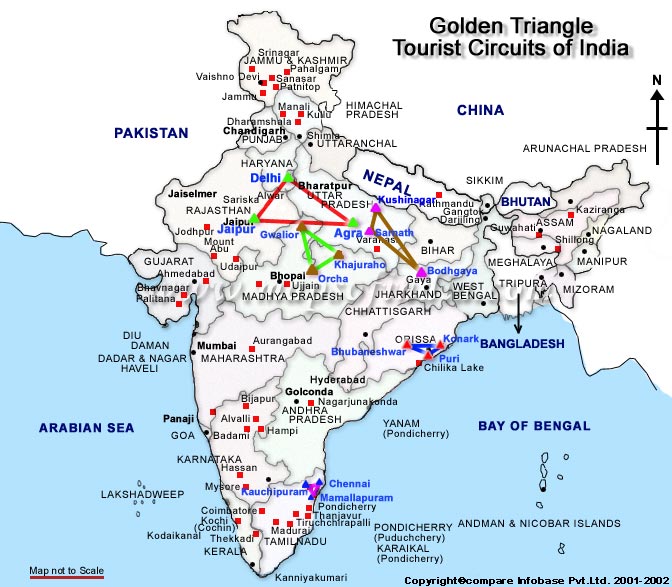
That all takes 7 or 8 days. Since it is a process to get out to India, you may want to add another few sites. If you are there in the summer you can add an excursion into tiger country and easily see the tigers swimming in the lakes to cool off; in winter the tigers are hidden so we did not do that. Instead we took a short flight deeper into Rajasthan to Udaipur, an ancient city that is located in a bowl of mountains and becomes a lake city after the monsoon rains. With more time, one can also add Mumbai, or go down to South India which is a different country entirely. But in our case we will finish with Udaipur and return to Delhi and then head out to Hong Kong as the next stop.
India’s predominant religion is Hinduism, which goes back to the iron age and incorporates many gods rather than coming from a single prophet. There are something like 1 billion Hindus in India now. The country itself is so large that it is called a subcontinent – a small continent attached to Asia. India is shaped like a diamond and is walled off on three sides – with seas on the southeast and southwest and the Himalyas on the northeast. The main path in and out has been the Northwest and Delhi has always been the gateway to controlling India. That is why the history of the country was heavily influenced by Muslim invasions from the Northwest.
In the 1200s the Afghani Muslims invaded and conquered large parts of India. In the 1500s the Moghuls, a group of Muslims from Persia who had blood ties back to the Mongols, invaded with 100,000 horsemen and elephants led by Akbar the Great. They controlled the area up to 1700, whereupon the Indian populace invited the British to help kick them out, after which the British settled in to stay until the end of World War II.
After India became independent Muslims were a minority but a big part of the Northwestern portion was predominantly Muslim, and that split off into Pakistan. After it was formed, Pakistan ejected some 20 million Hindus who streamed back into India and a number of Muslims left India to move to Pakistan. The two sides committed religiously motivated atrocities and then became embroiled in a border dispute over a third region called Kashmir, which brings us up to today. You can see that Hindu-Muslim relations have a thorny background that goes back for centuries. Nevertheless there are plenty of Muslims in India and particularly in Rajasthan, we heard the call five times per day.
In short: because we were interested in ancient civilizations and because we were in the northwest, almost all the old palaces we saw were commissioned by Muslim rulers – typically the Moghuls – and designed by Hindu architects. The blend is highly ornate and visually absorbing and often ingenious.
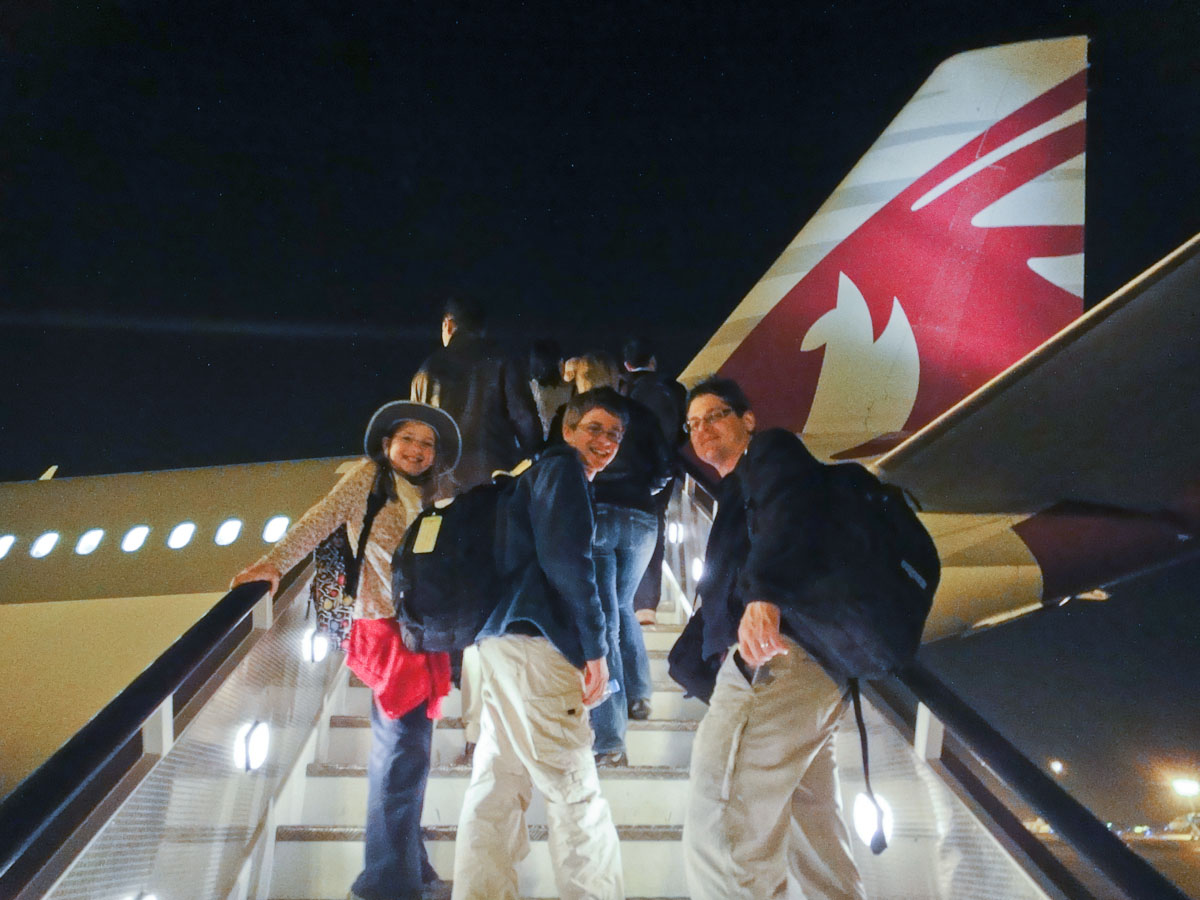
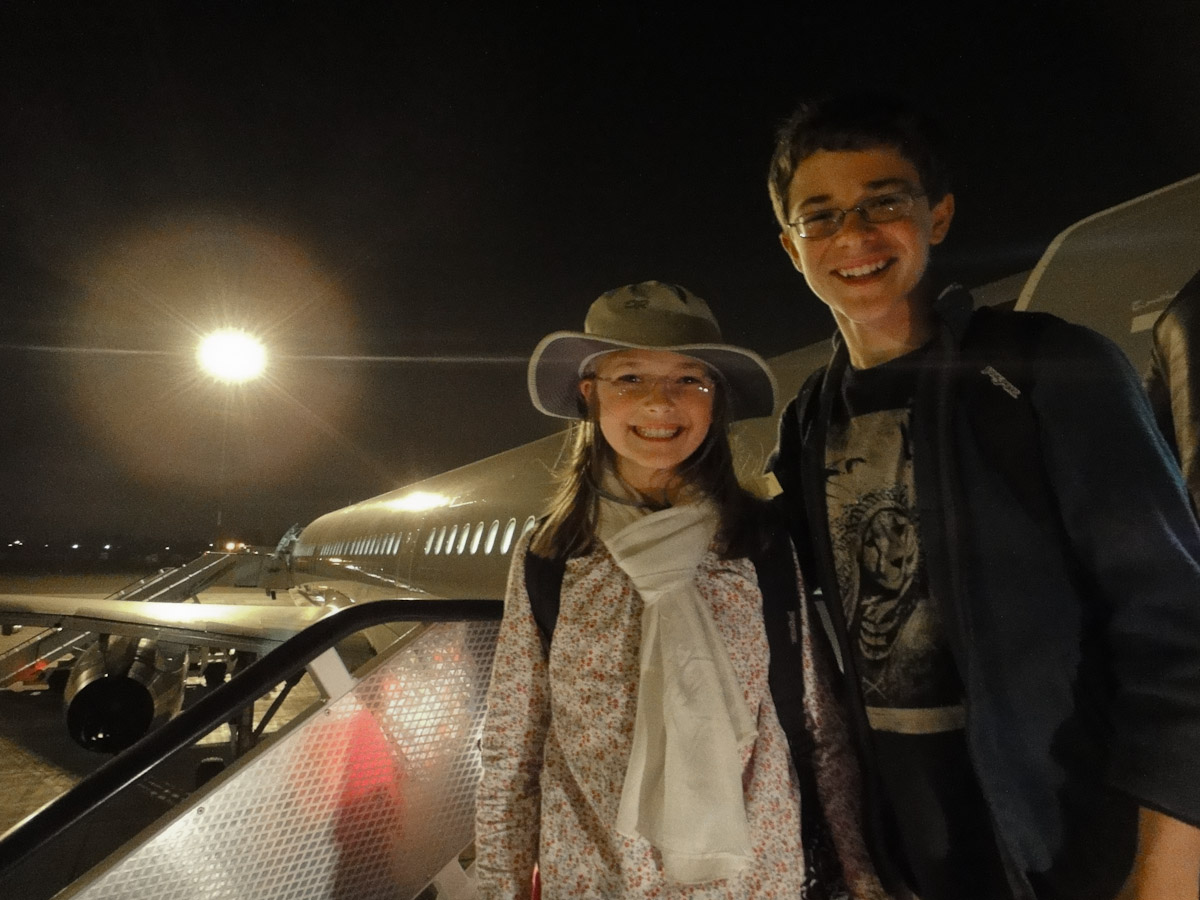
We got off the plane after an all-night flight from Luxor. The red-eye included layover from 11pm to 2am in Qatar Airport, which was unbelievably packed with travelers even at those hours. So we were perhaps a bit overtired for the first impression of New Delhi – it was hazy, chilly and the air smoky, and we were overwhelmed by the traffic and crowds. The local tour operator, Anil from Banyan, explained he had been injured in a traffic accident himself when driving a motorcycle that collided with a Tuktuk (a golf cart taxicab). We were reminded of a story we heard about a couple who visited Cairo. The first night they got there, they left their hotel to find a restaurant. They walked outside and waited to cross the street. Thirty minutes later, they gave up and returned to the hotel for dinner! New Delhi was notably crazier driving than Cairo.
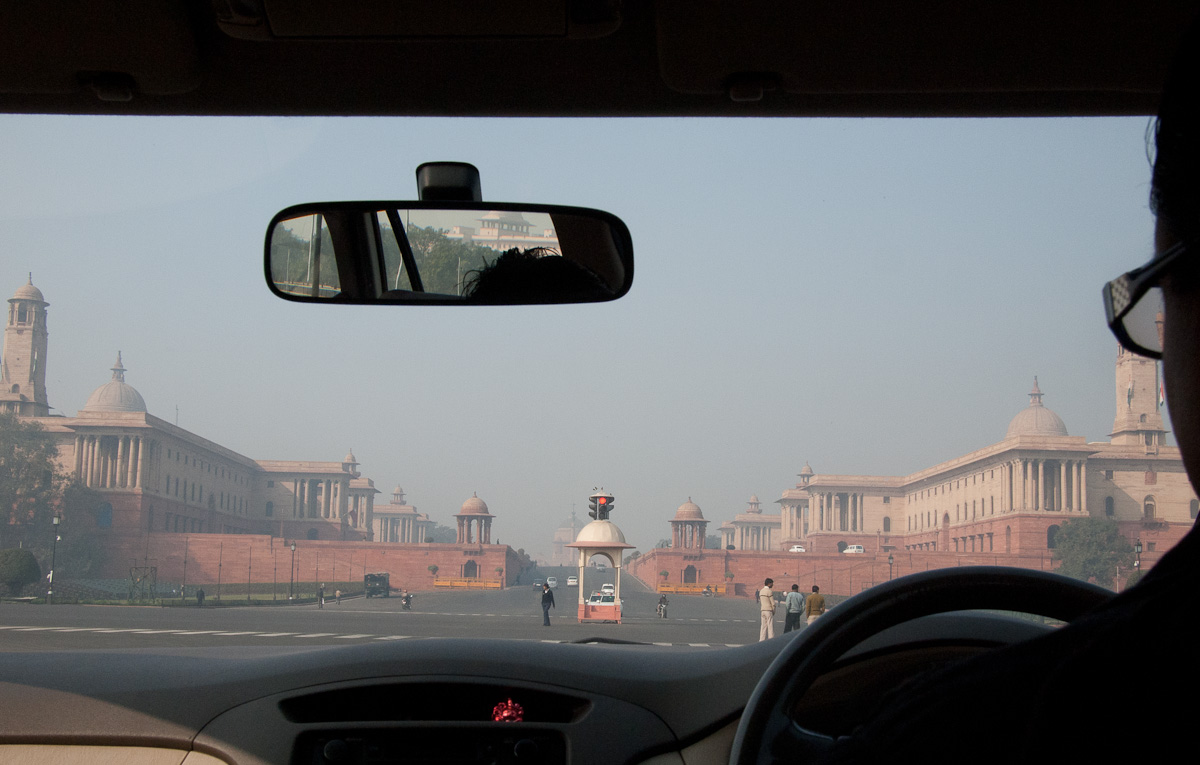
Thankfully for this leg of the trip Small World Travel had arranged a full time guide and driver who knew exactly where to go and how to get there at all times. When we met him, our guide Manjeet explained that New Delhi has actually done quite a bit to become green and that the haze we were seeing was winter mist. Furthermore, he said New Delhi has well organized traffic compared to the rest of India. At the time, we thought this was hyperbole – it was not! However the weather warmed up and we acclimated. The skies turned sunny and clear with temperatures in the 70s and we found ourselves enjoying some of the most glorious weather days of our journey so far.
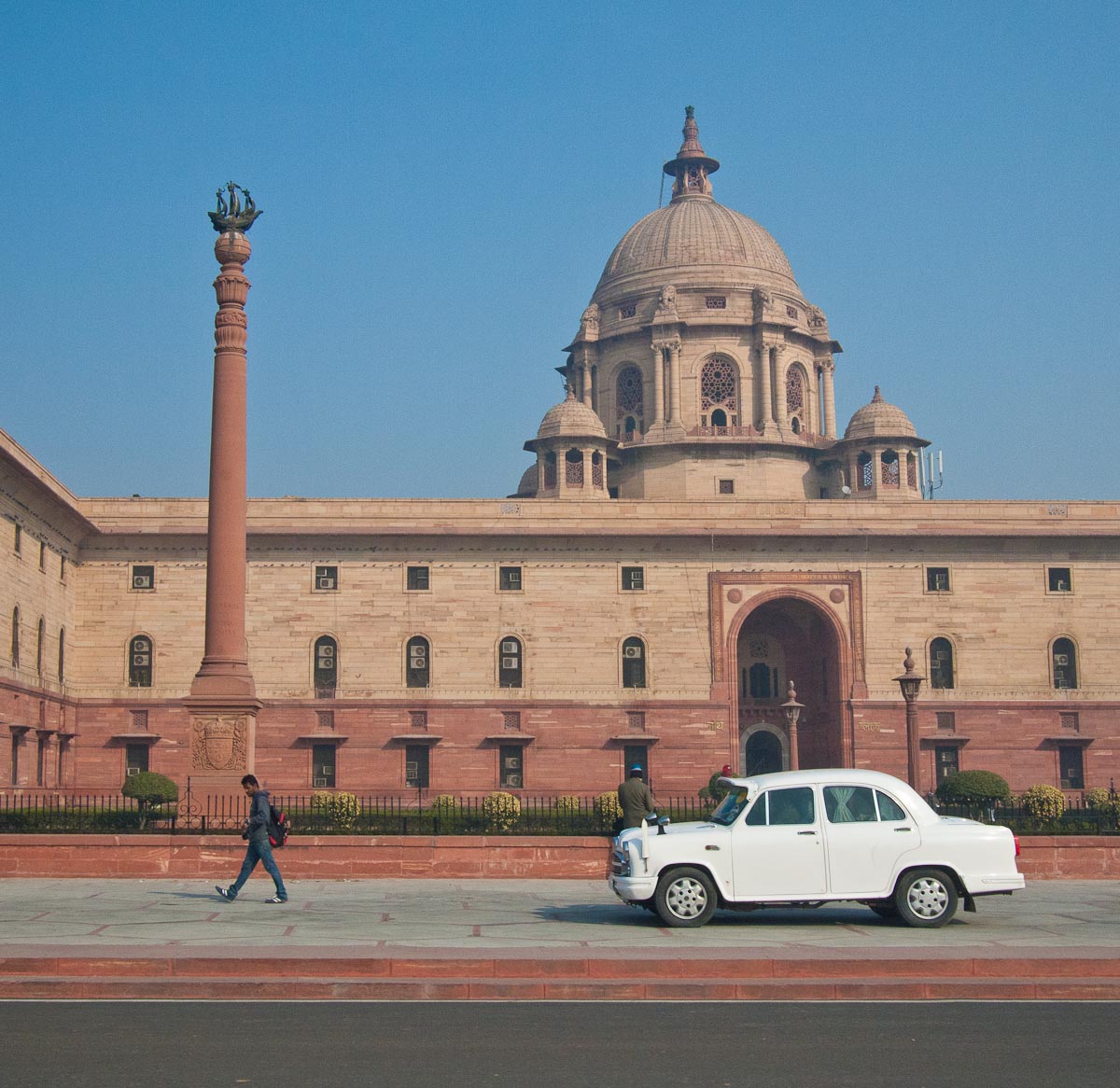
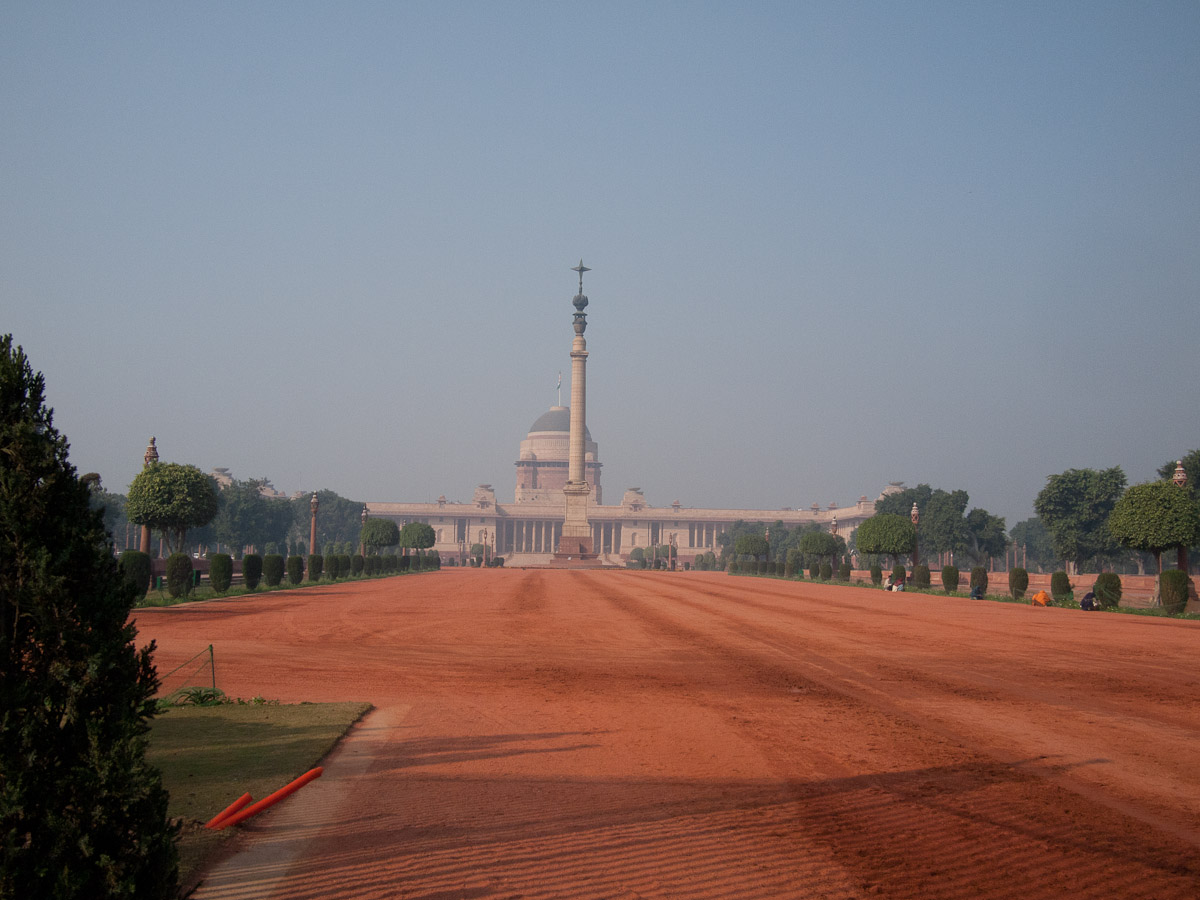
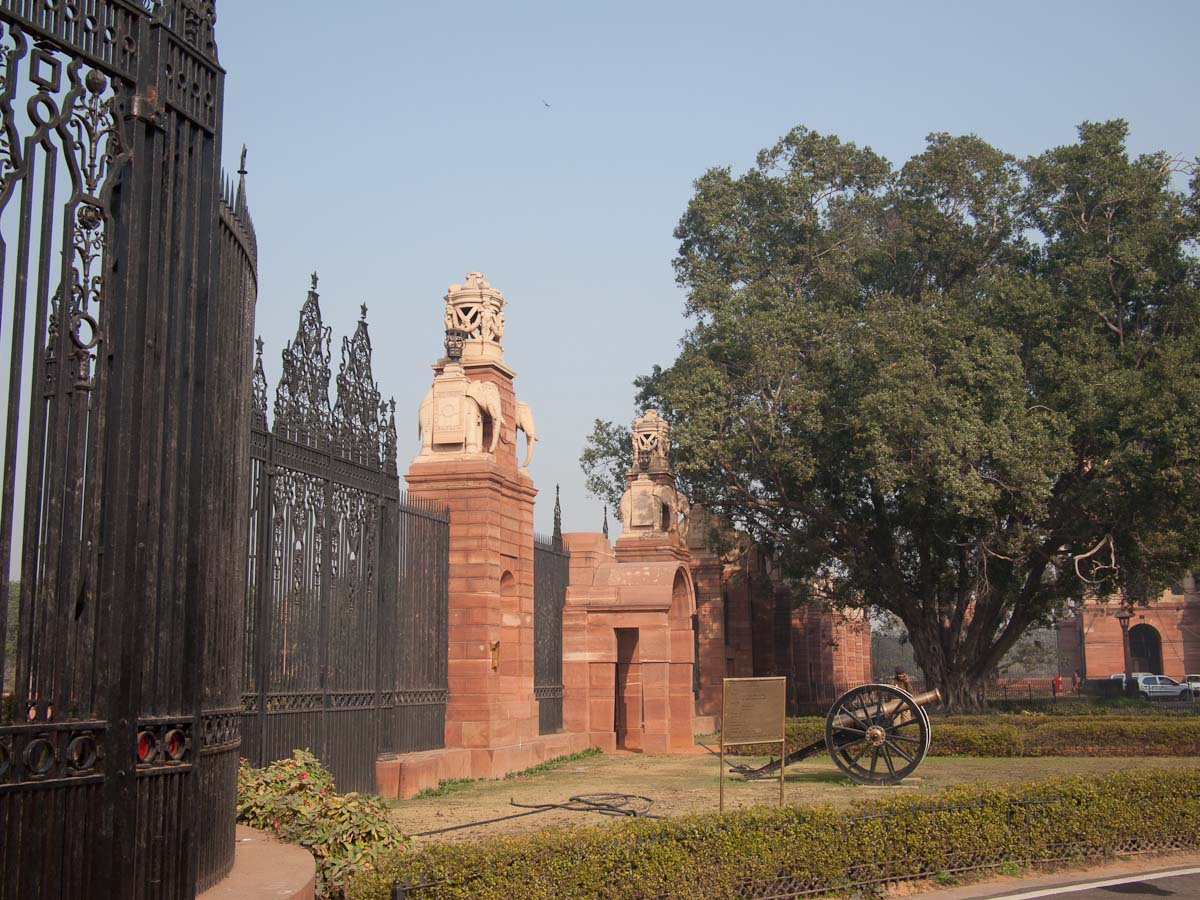
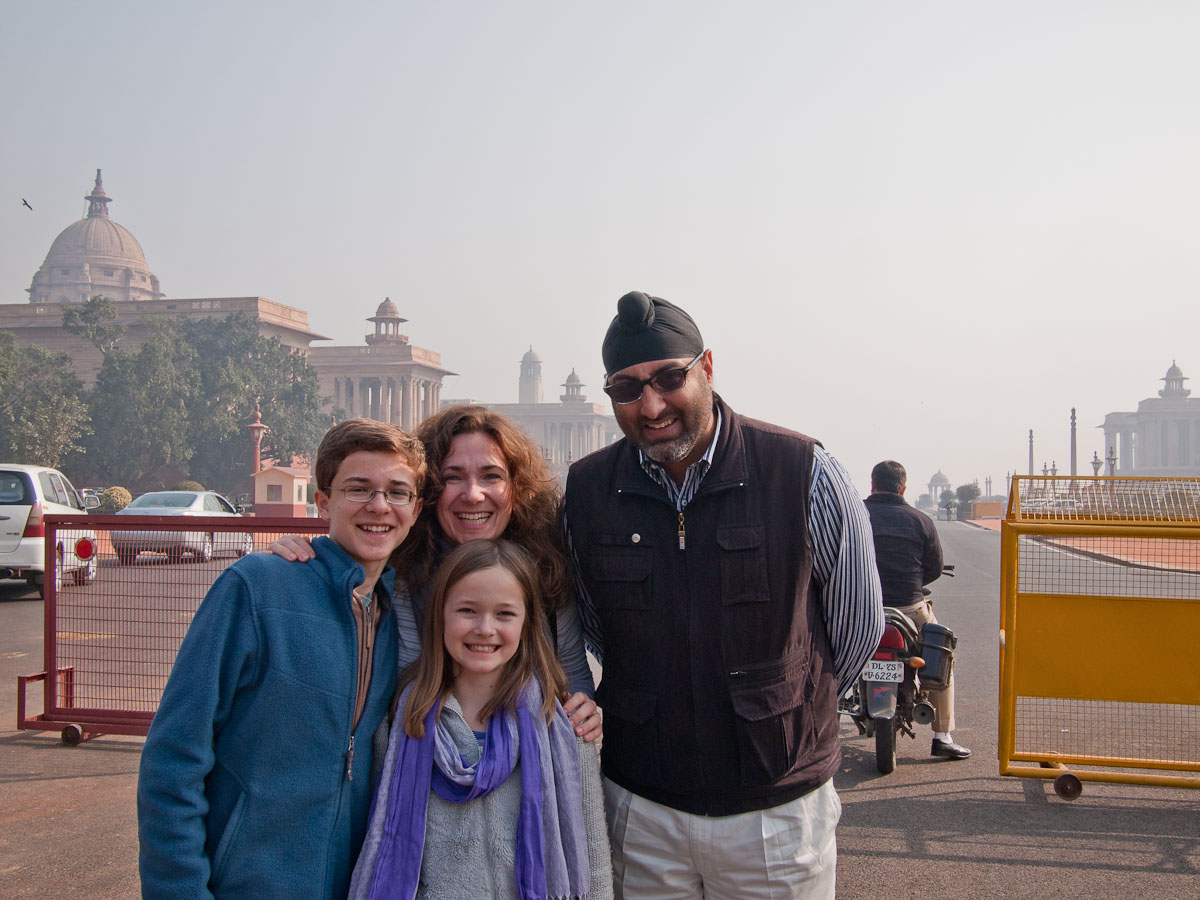
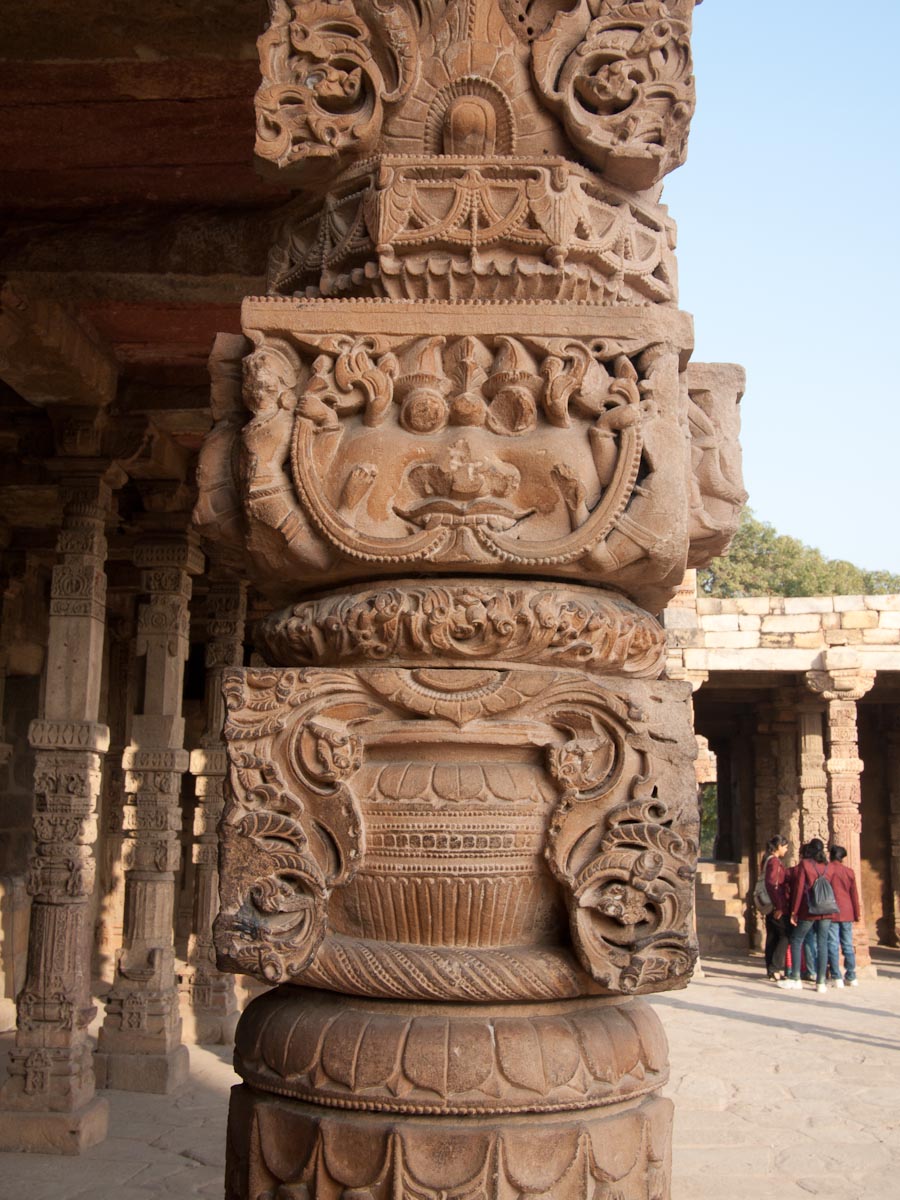
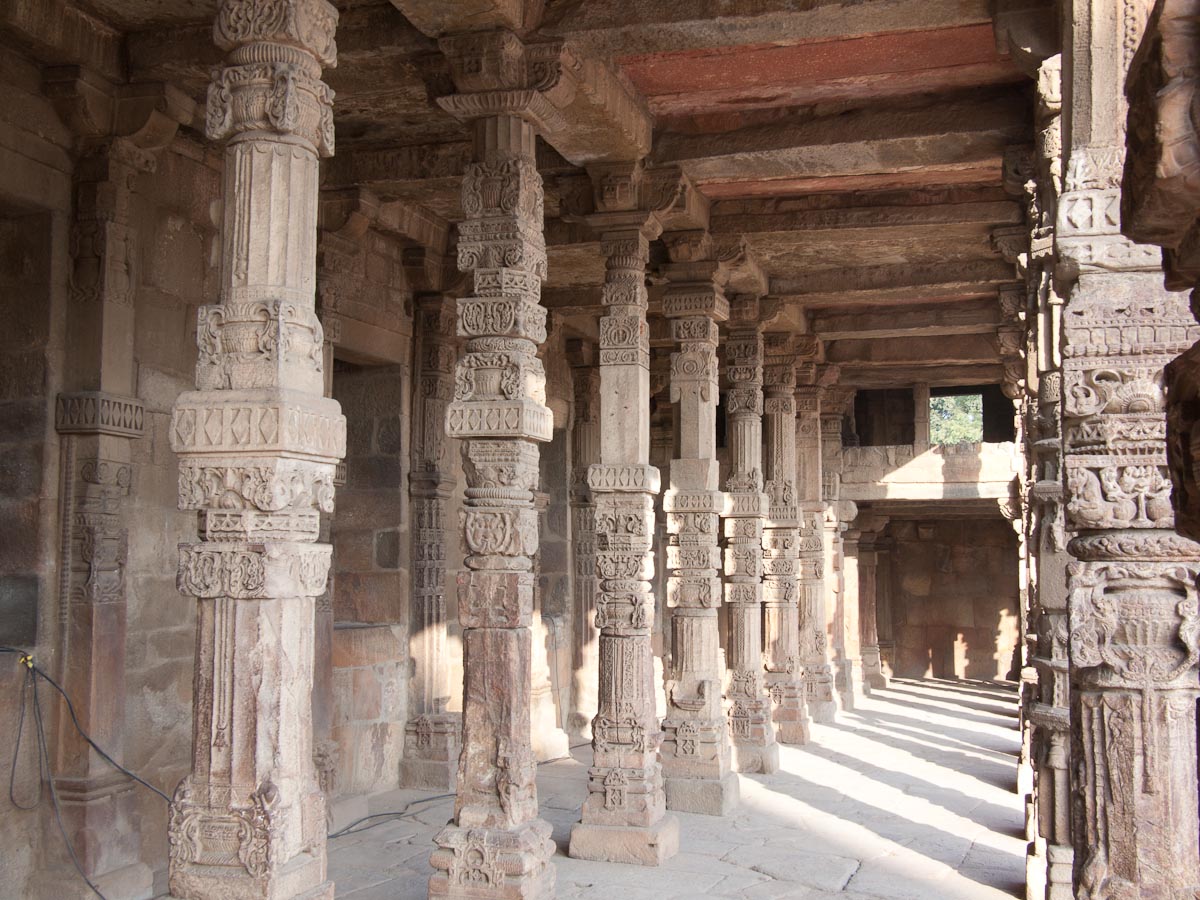
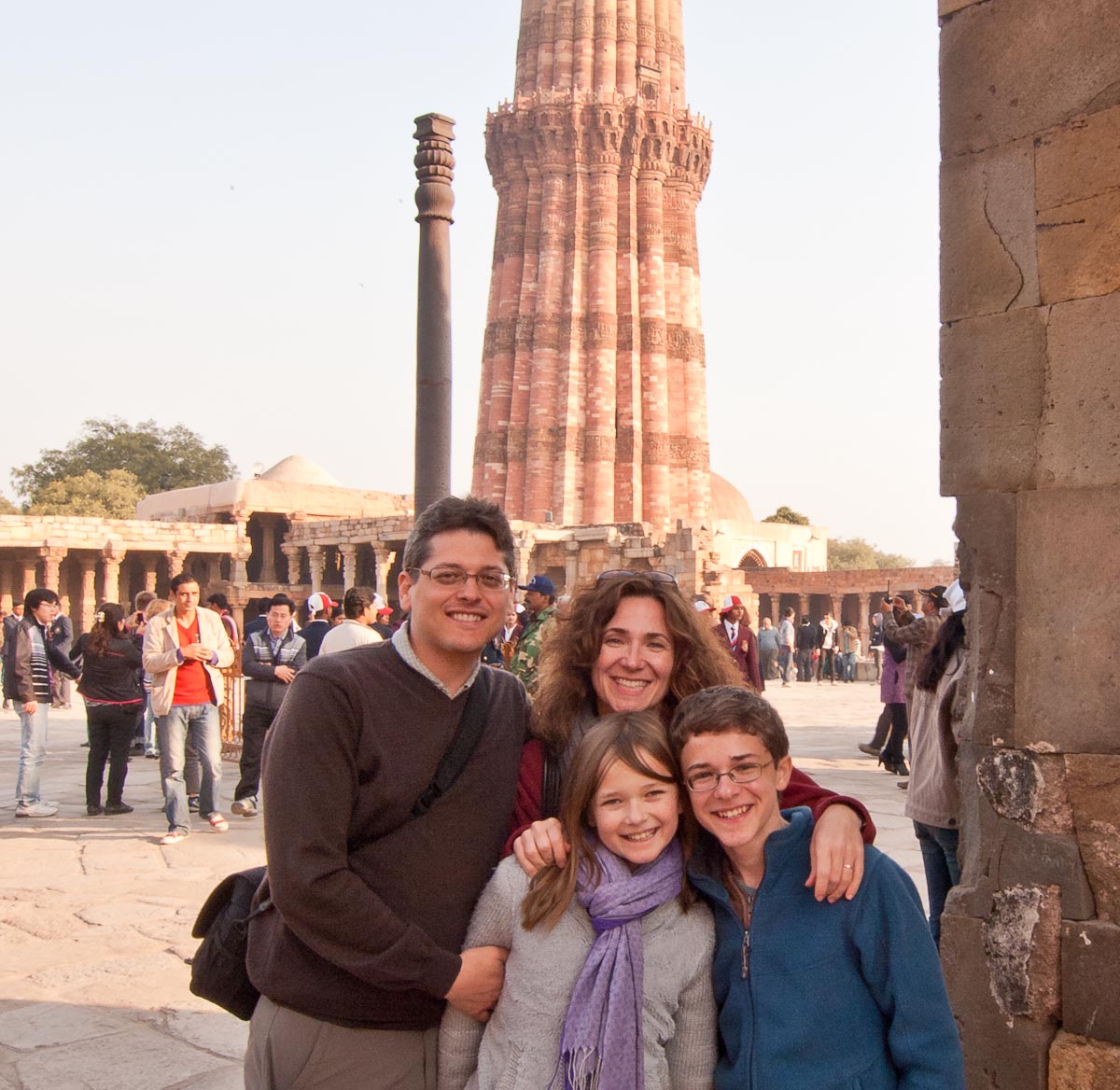
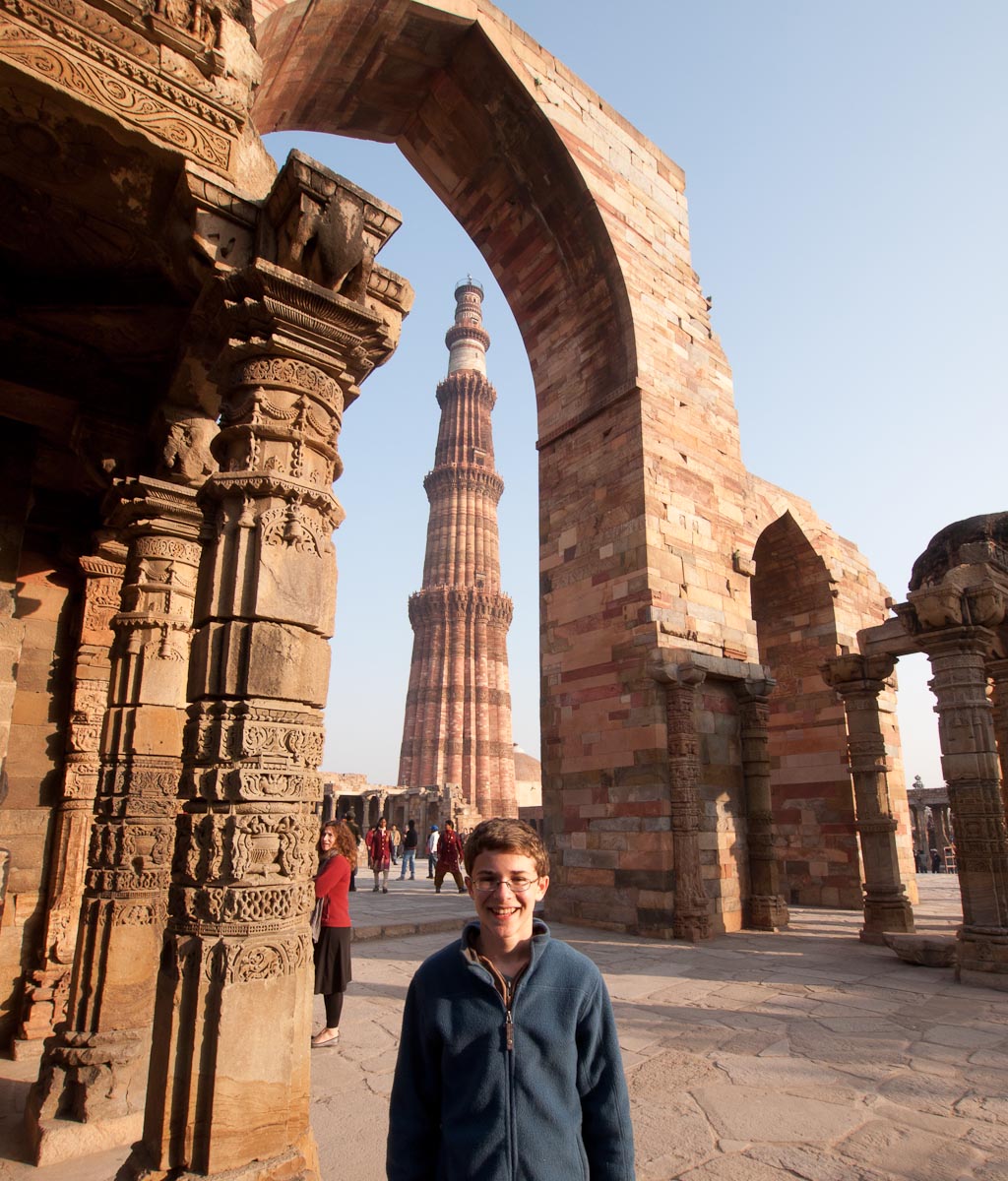
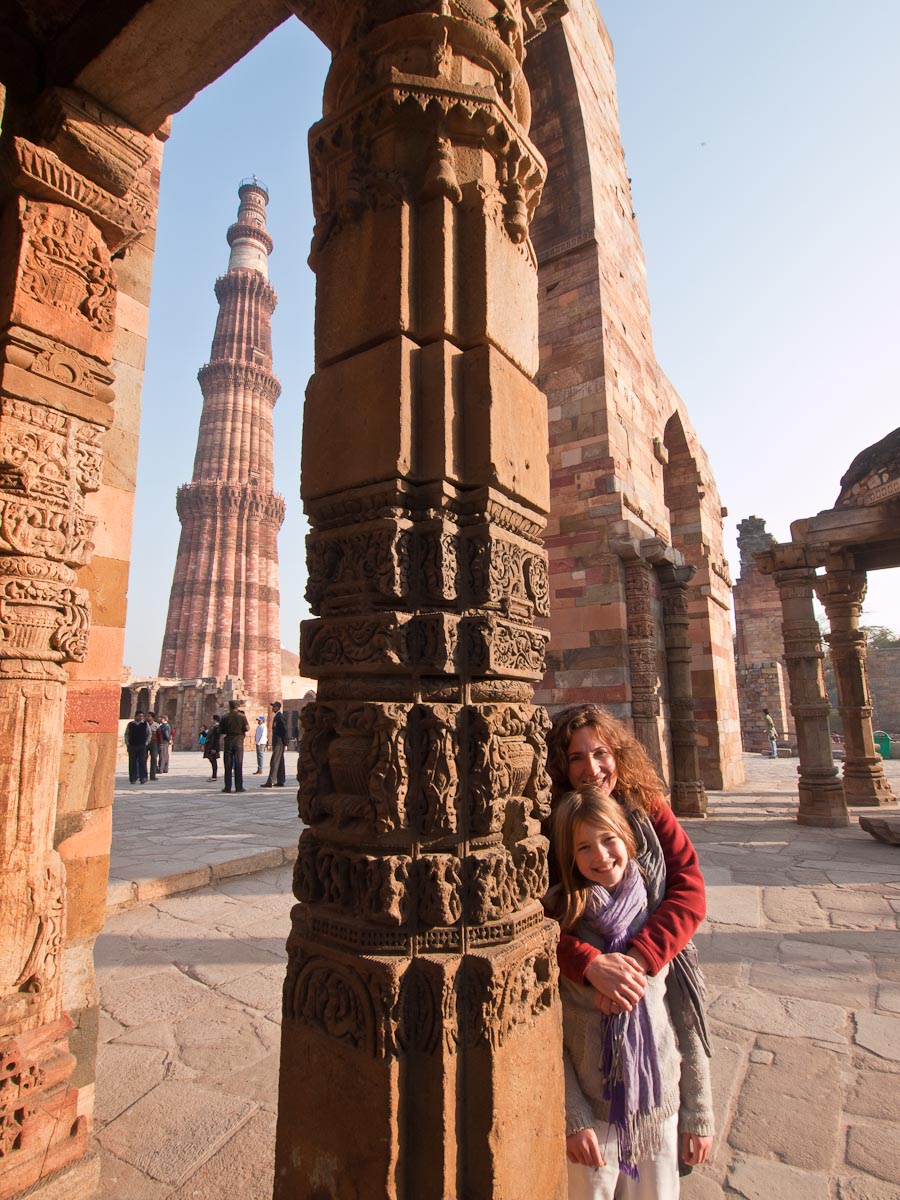
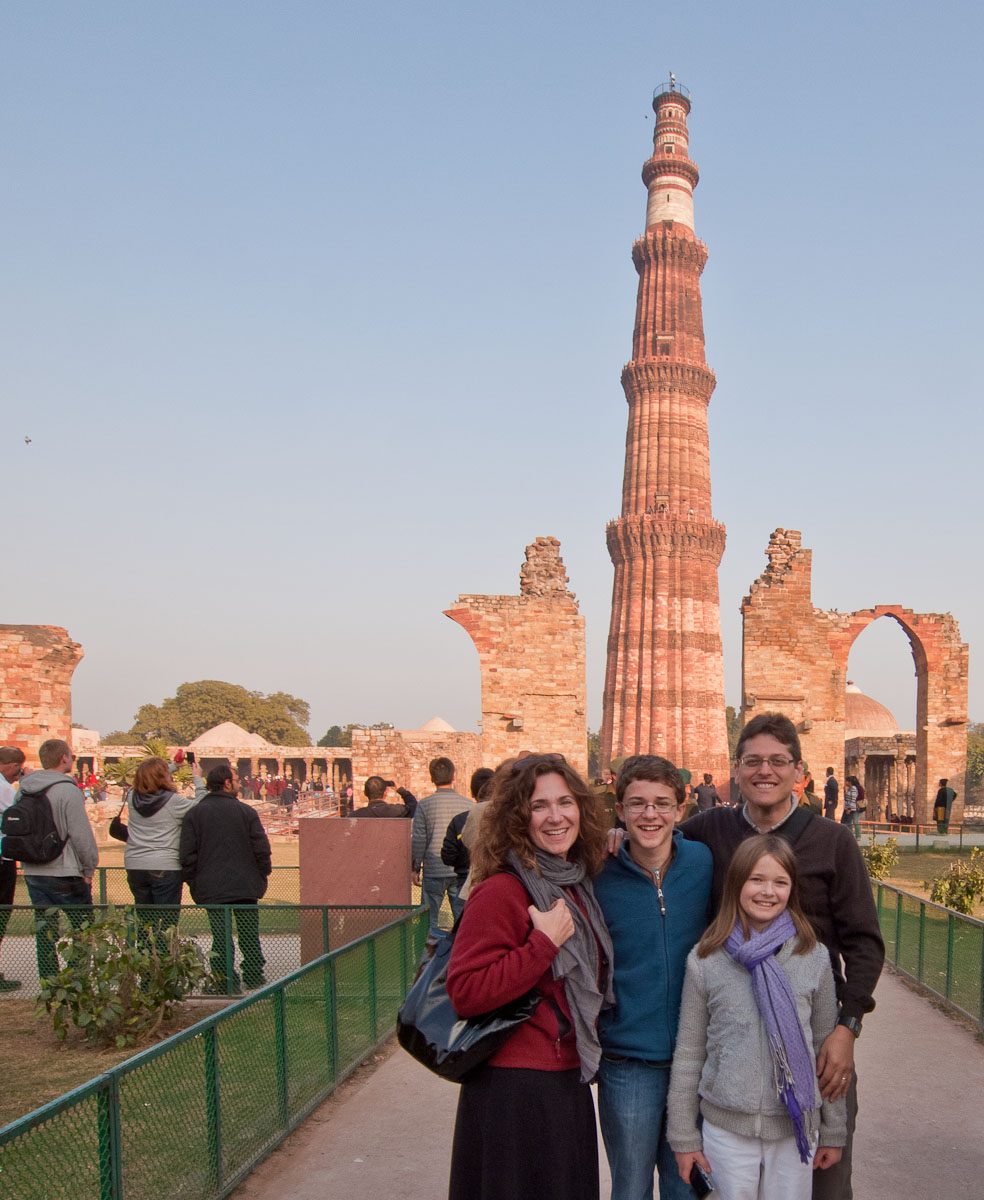
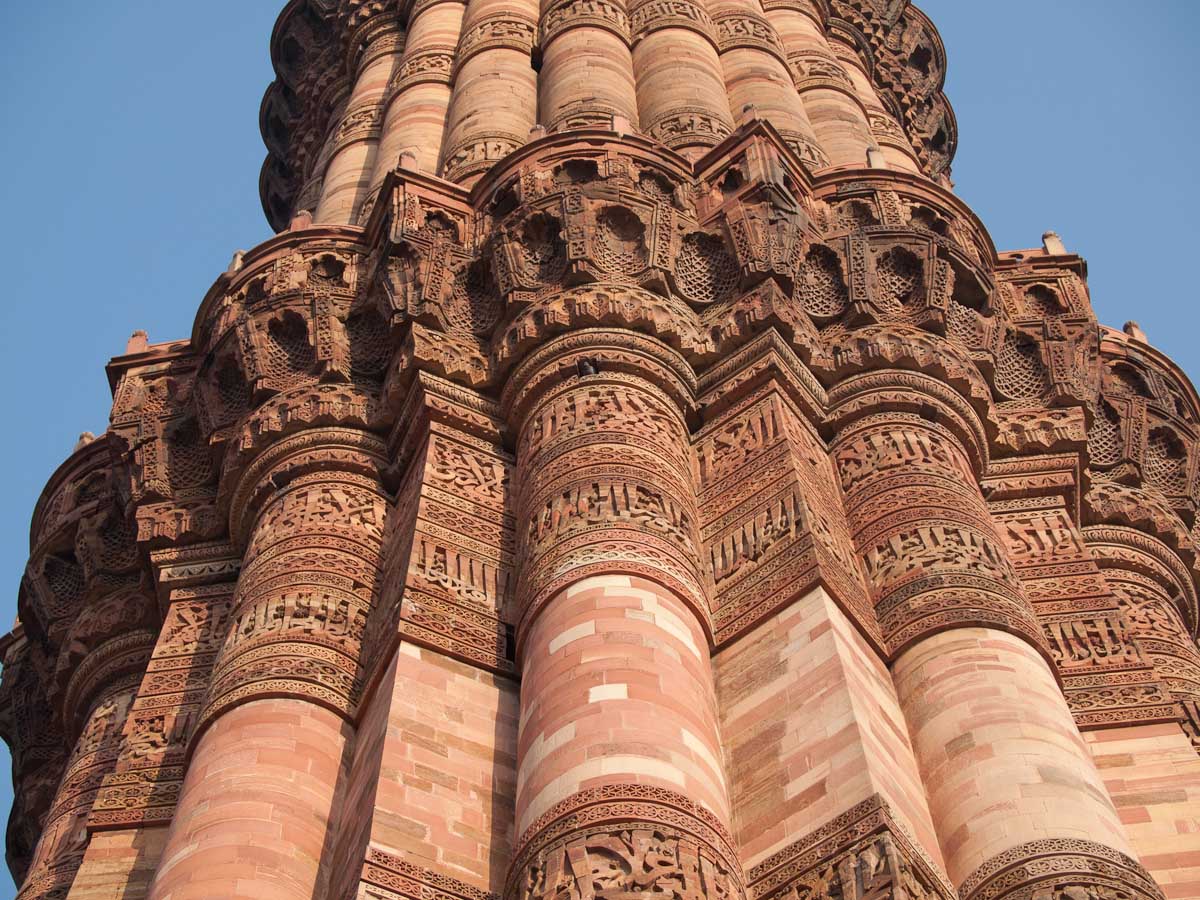
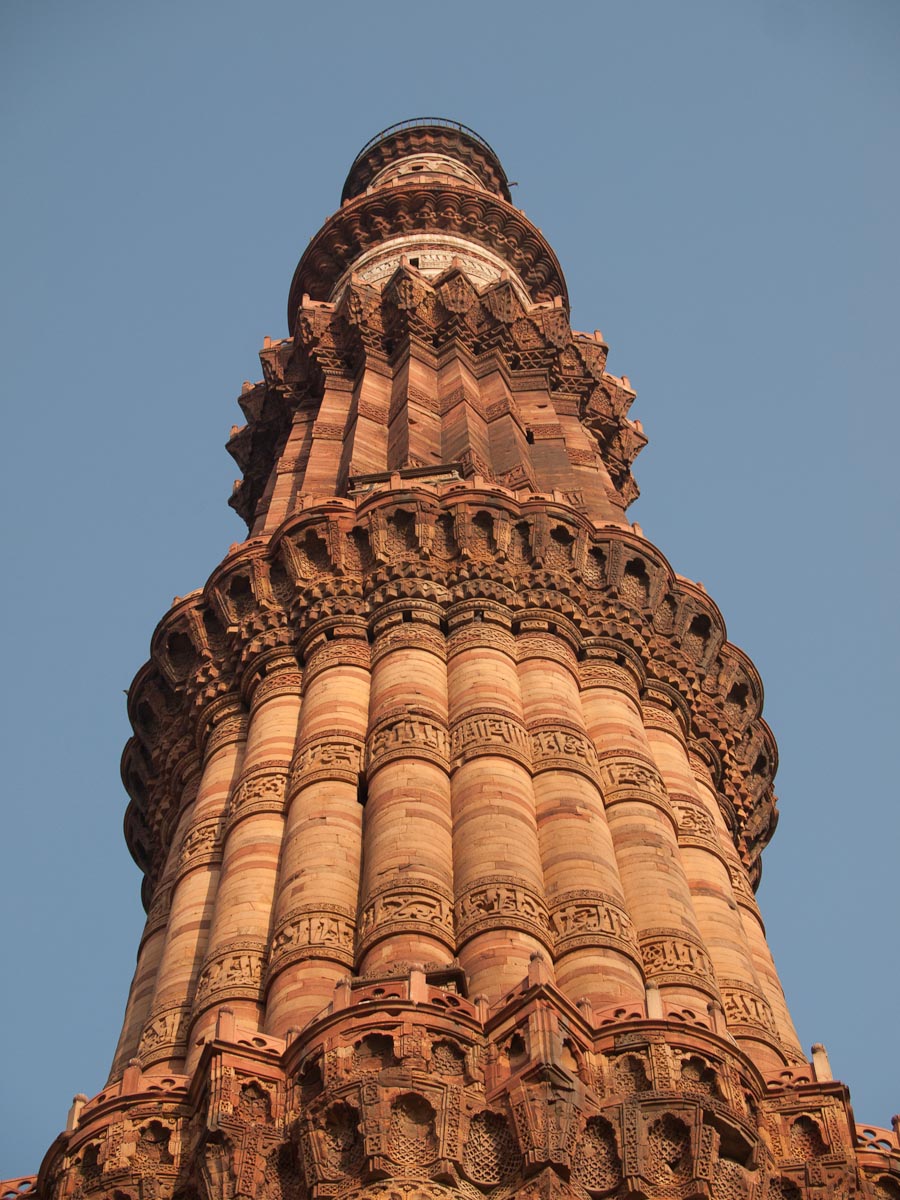
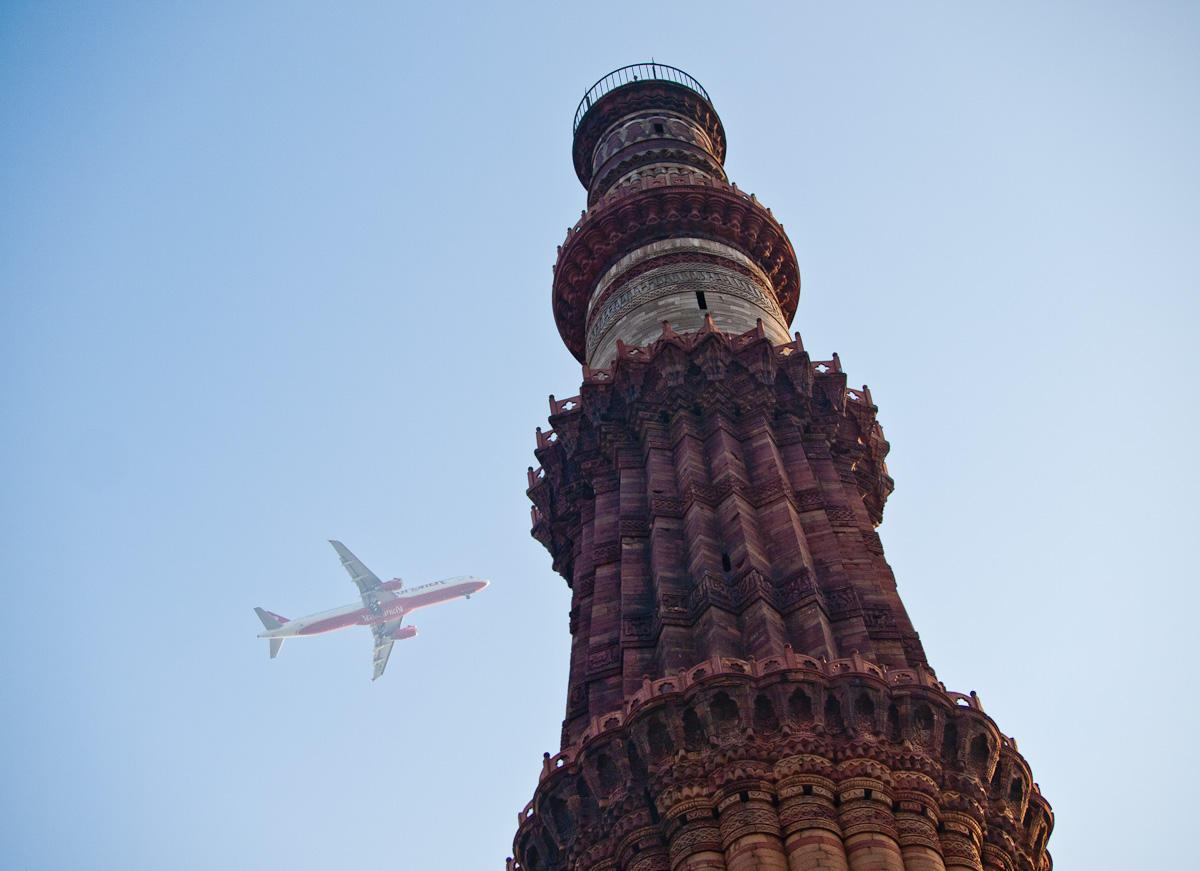
With that background, we can turn to New Delhi where we had allocated one day of pure rest and then one day of tourism. We visited the Presidential Palace (built by the British) and headed to a nice part of town for an outstanding cooking lesson (Gina can best describe). We then toured the Qutub Minar, an ancient 240-foot tall minaret made of bricks. The minaret is Islamic and dates back to about 1200; the bricks came from Hindu temples torn down by the Afghani invaders. This tower is the icon most associated with New Delhi. The buildings around the base contains many original ancient Hindu pillars from Jain temples. There is also an iron pillar here erected in the 4th century that has somehow never rusted. It is amazing to metallurgists and it was amazing to us as well because the pillar was dedicated to Vishnu. In Hinduism, the three major male gods are Brahma, Vishnu and Shiva. Brahma is the creator and Shiva is the destroyer/transformer, but Vishnu is the one who is the maintainer and preserver.
After that we visited the Sikh temple as Carter described, then headed home for rest. We would begin the next day early for the long drive to Agra and the Taj Mahal.