To be entirely honest, I was a bit apprehensive about visiting Jordan. The country is, after all, situated in the heart of the Middle East, a place I had never been and had only heard about in the news. I was extremely conscious of being an American in a region where I imagined Americans were not extremely popular or welcome. I took great comfort in the fact that Queen Noor, widow of King Hussein, was American and therefore concluded that perhaps Jordan would be more open to us. In my heart of hearts, I knew that we could not make this trip without visiting this area. To overlook it would be a sin of the greatest omission. I am so happy we came: it was the ancient history that drew us, but it will be the people I remember most and with the deepest of affection.
It is difficult and probably wrong to generalize an entire population based on a small number of interactions, but I can’t resist asserting that Jordanians are some of the warmest, most welcoming, and generous people we’ve ever encountered. And their cuisine is among the tastiest.
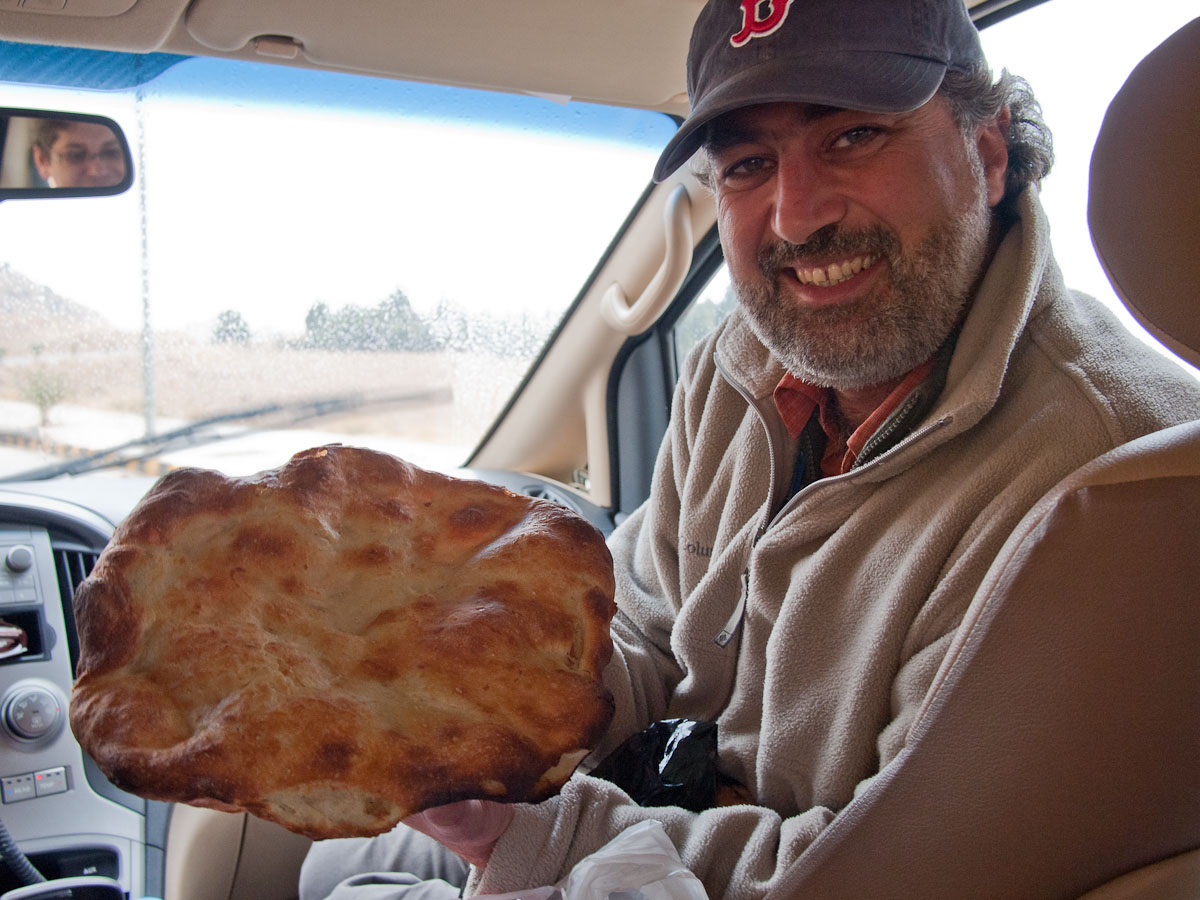
Again, being honest, I had very low expectations when it came to the food. In fact, I was counting on a couple of weeks of eating less to make up for my weeks (ok, months) of overindulging in French cafes. However, my anticipated forced food march never materialized. We ate like kings on a cuisine filled with traditional ingredients: olive oil, lamb, hummus, pita, tomatoes, cucumbers, feta, haloumi, halwah, baklava. The foods were familiar but of an amazing quality. We smiled when we were told that the Jordanian olive oil was the best in the world as every place we’ve visited so far has asserted the same. However, the claim became more credible when we learned that at a recent international tasting held in France, the Jordanian oil claimed both first and second prize. Then we tasted it and were hooked. The oil is rich in color, texture, and fragrance and is generously served at all meals. We never missed a chance to sample it and began to look forward to breakfast where we would spread our pita with oil and then sprinkle it with za’thar (a thyme-based spice mixture). I was delighted when Ra’ed, our guide, presented me with a bottle to take home.
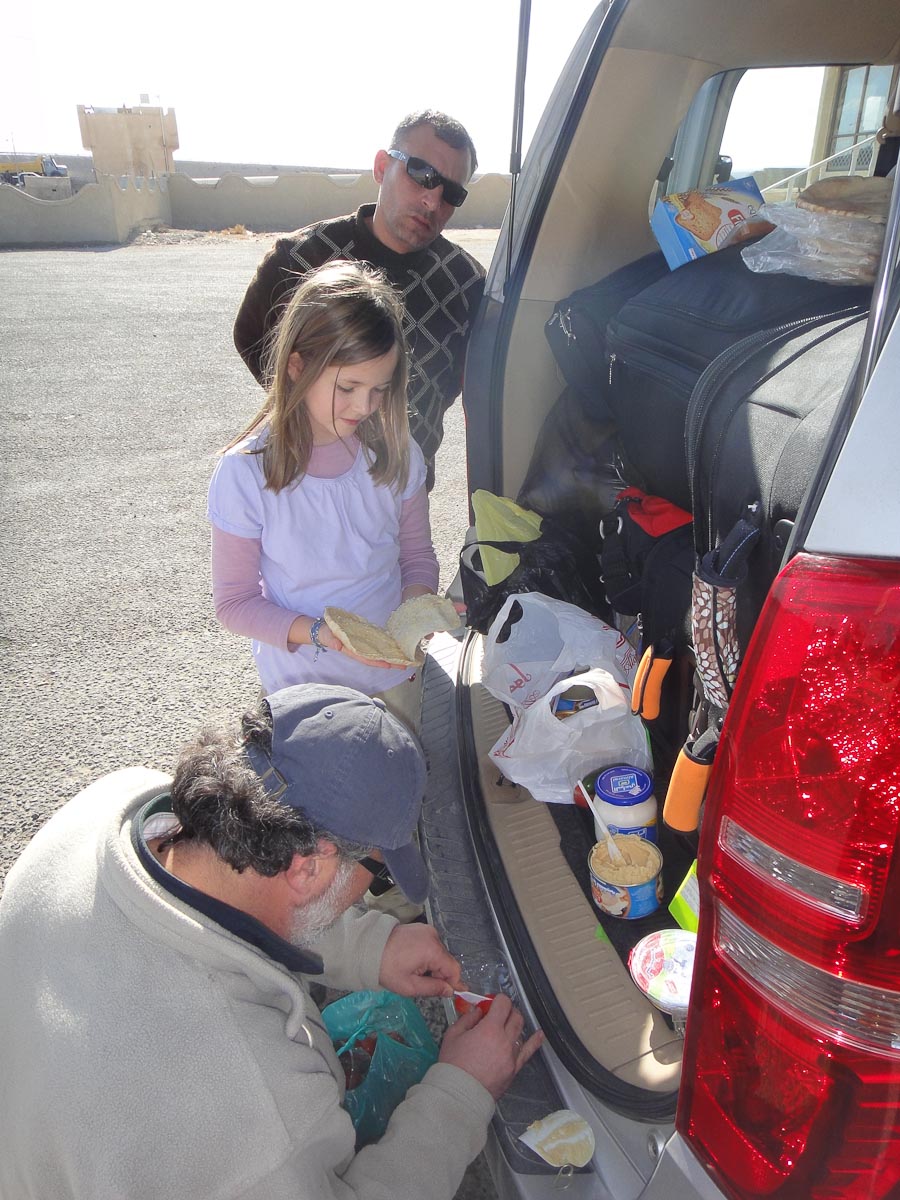
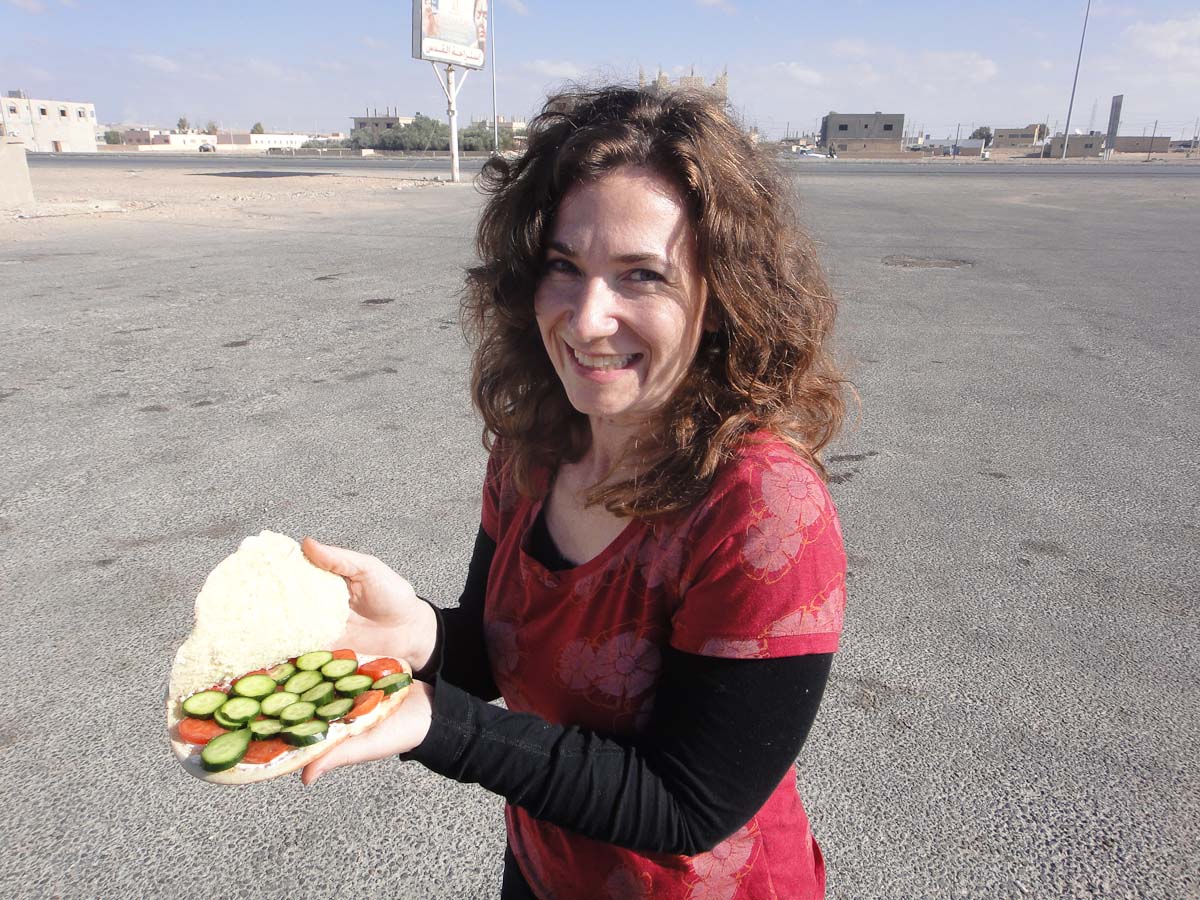
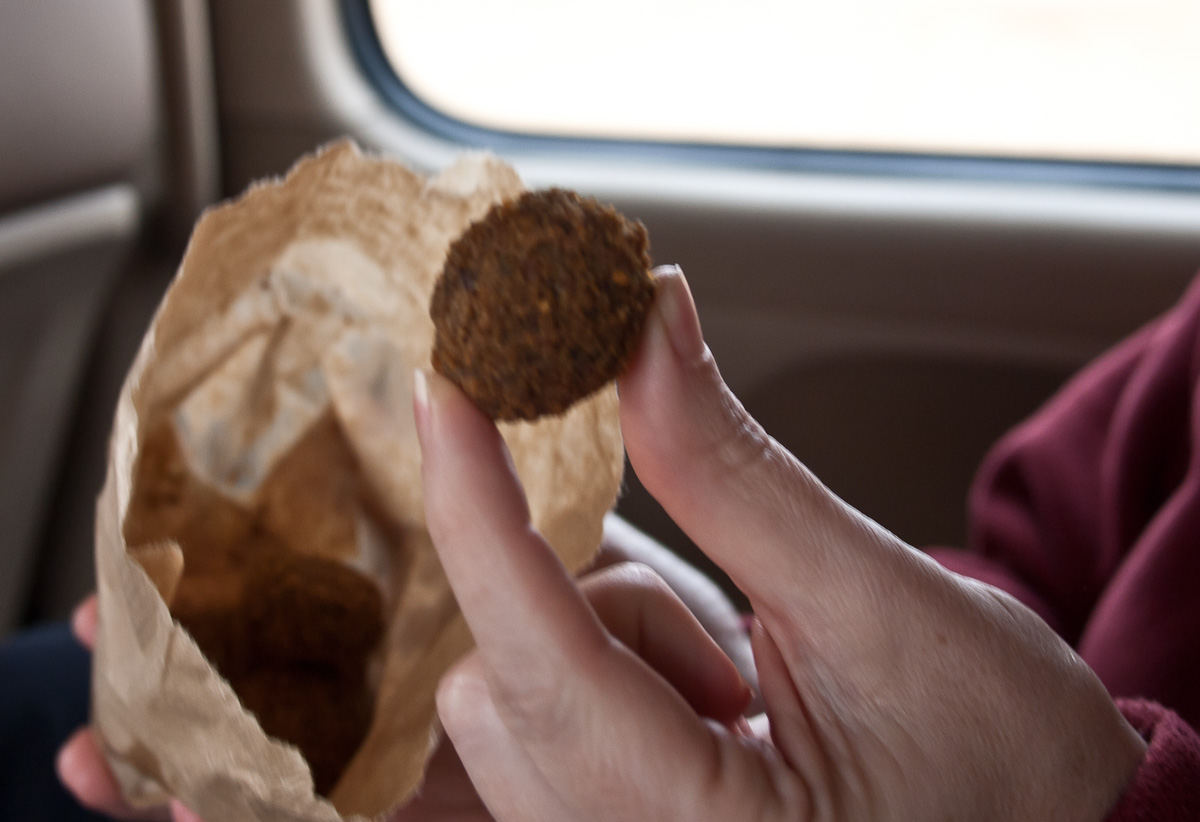
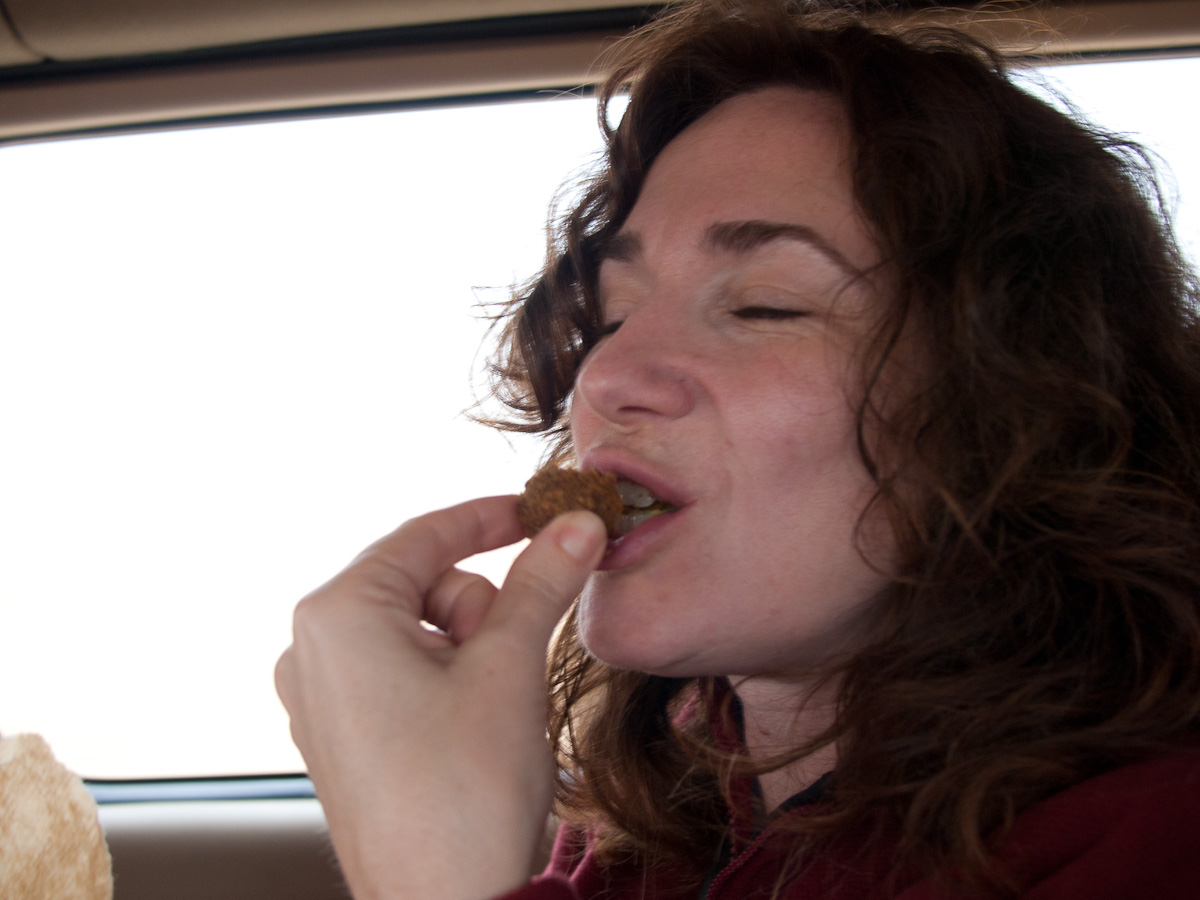
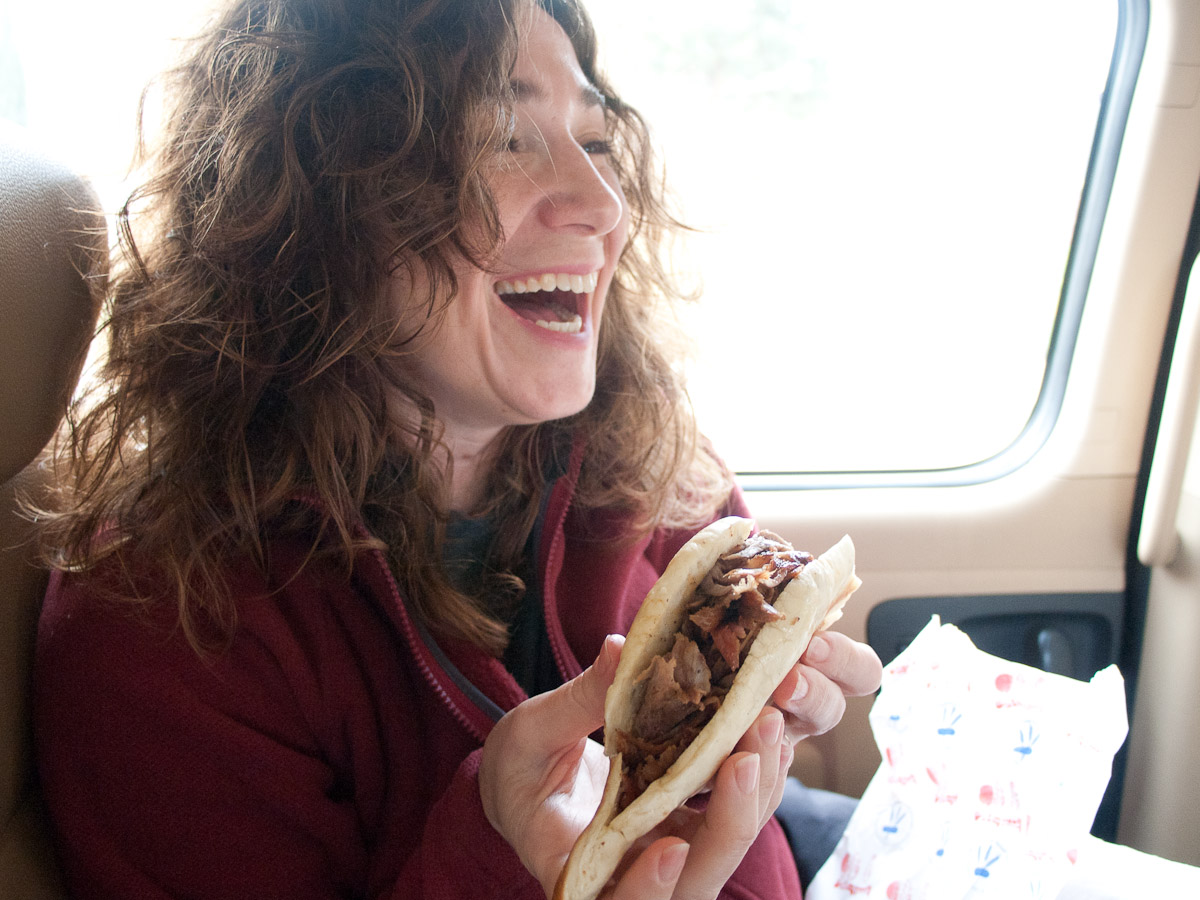
For lunch, we sampled falafel sandwiches. Falafels are tiny croquettes made of seasoned chickpea and parsley batter which is deep-fried in oil. When they are well made, they are extremely light and fluffy and you feel as though you could eat a million. We also tried the shwarma sandwiches, which are pitas stuffed with roasted shaved lamb, sesame tahini sauce, onions, and tomatoes. Amazing.
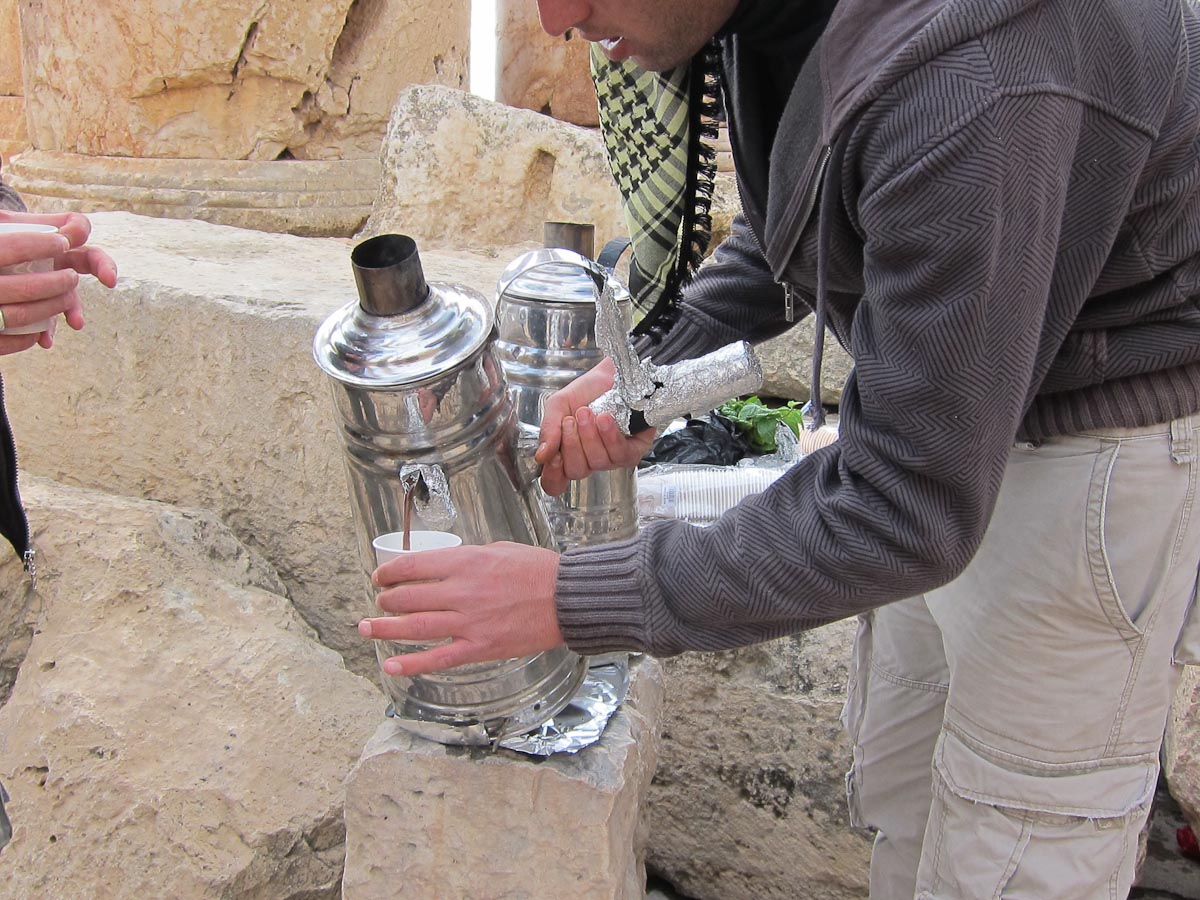
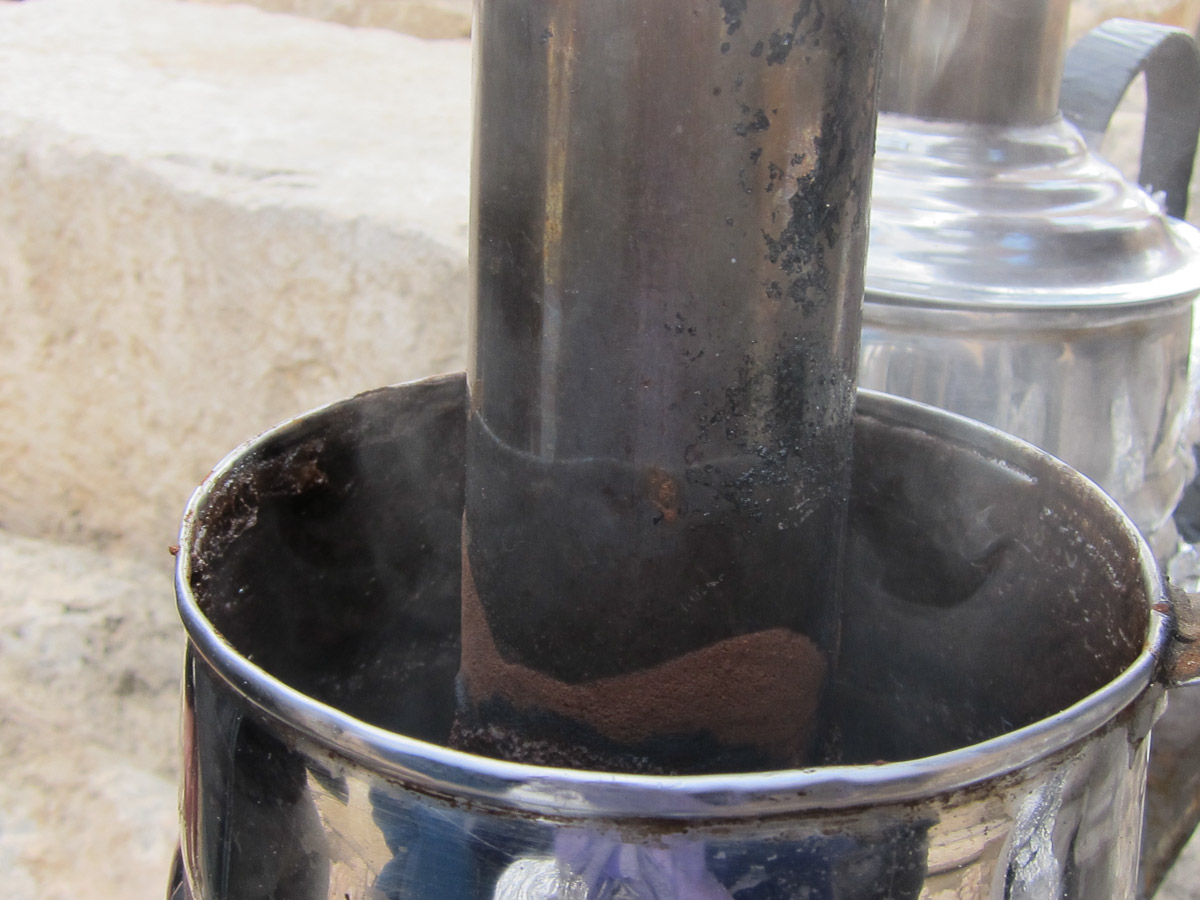
Delicious treats continuously seemed to surface and catch us by surprise. In Gerash, nestled between the columns of the ancient Temple of Artemis, we spotted a vendor selling coffee and tea. Ra’ed assured us the coffee would be great and he was right: it was piping hot, thanks to the glowing chunks of coal which were continuously fed into the pot’s inner core, and laced with whole cardamom pods which bobbed along the surface of the cup. The coffee smelled and tasted divine; Artemis herself would surely have approved.
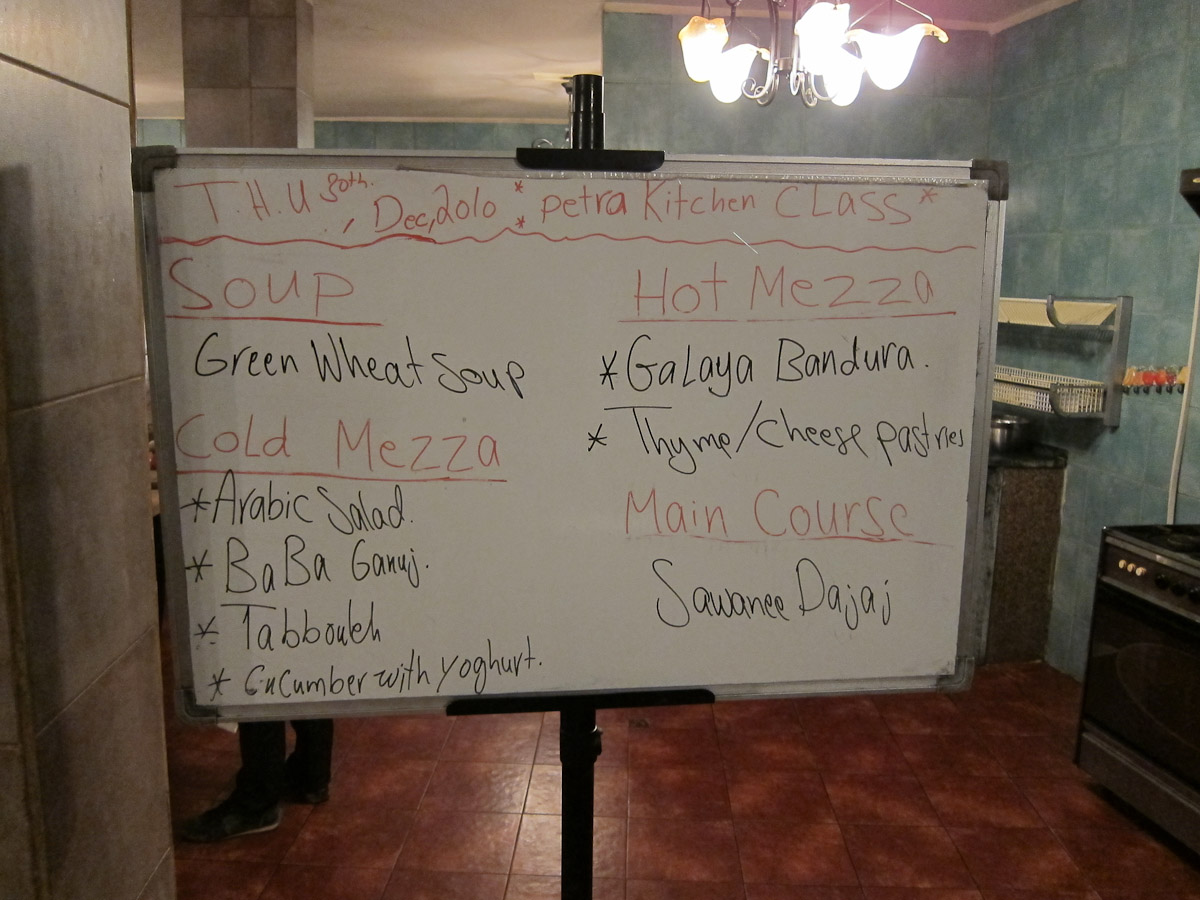
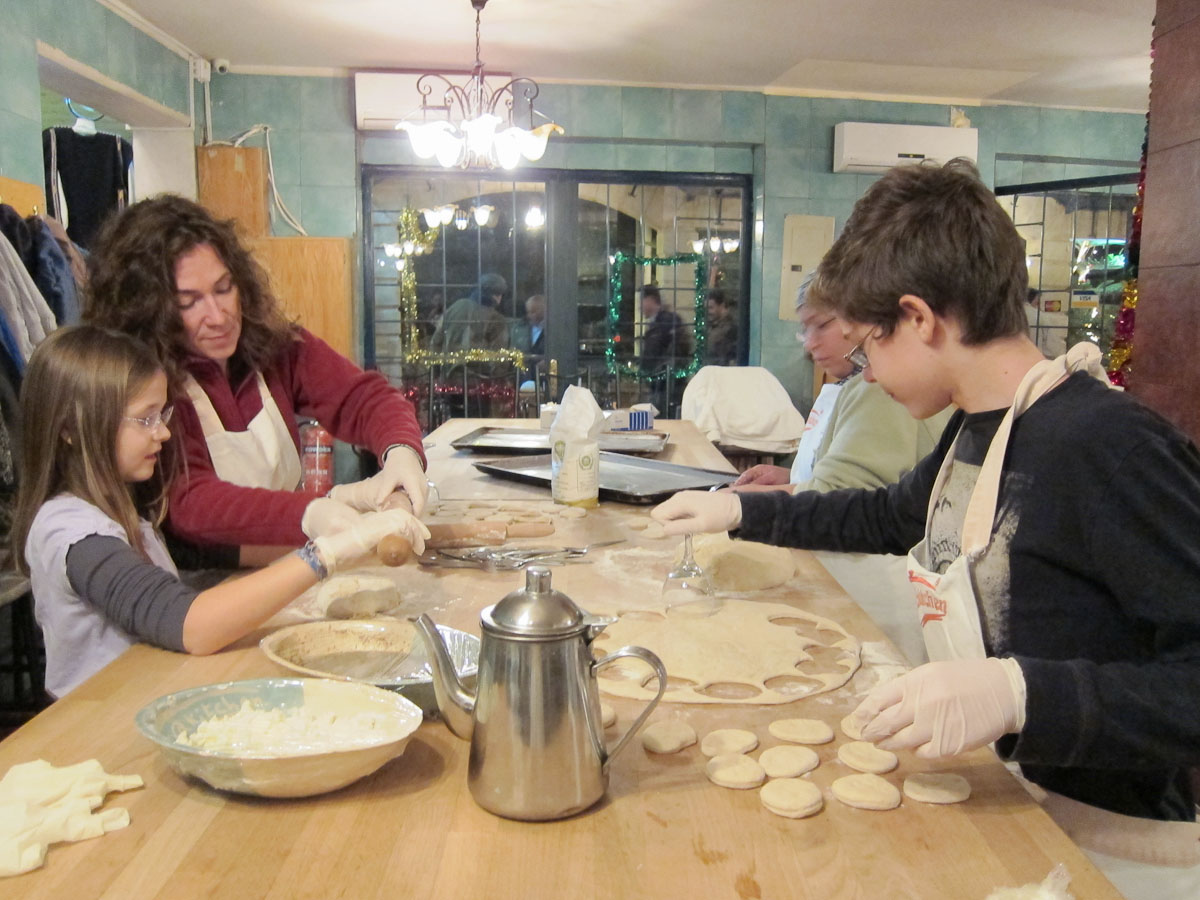
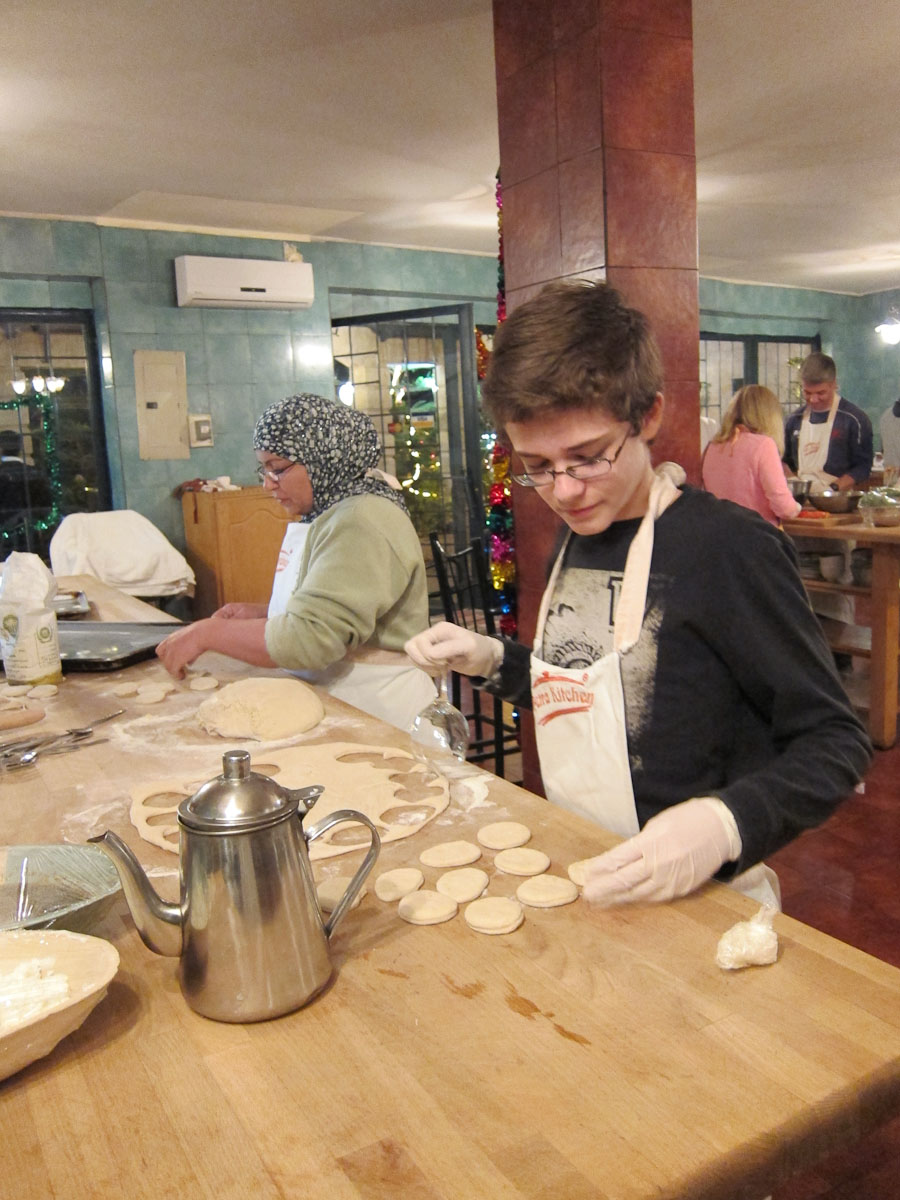
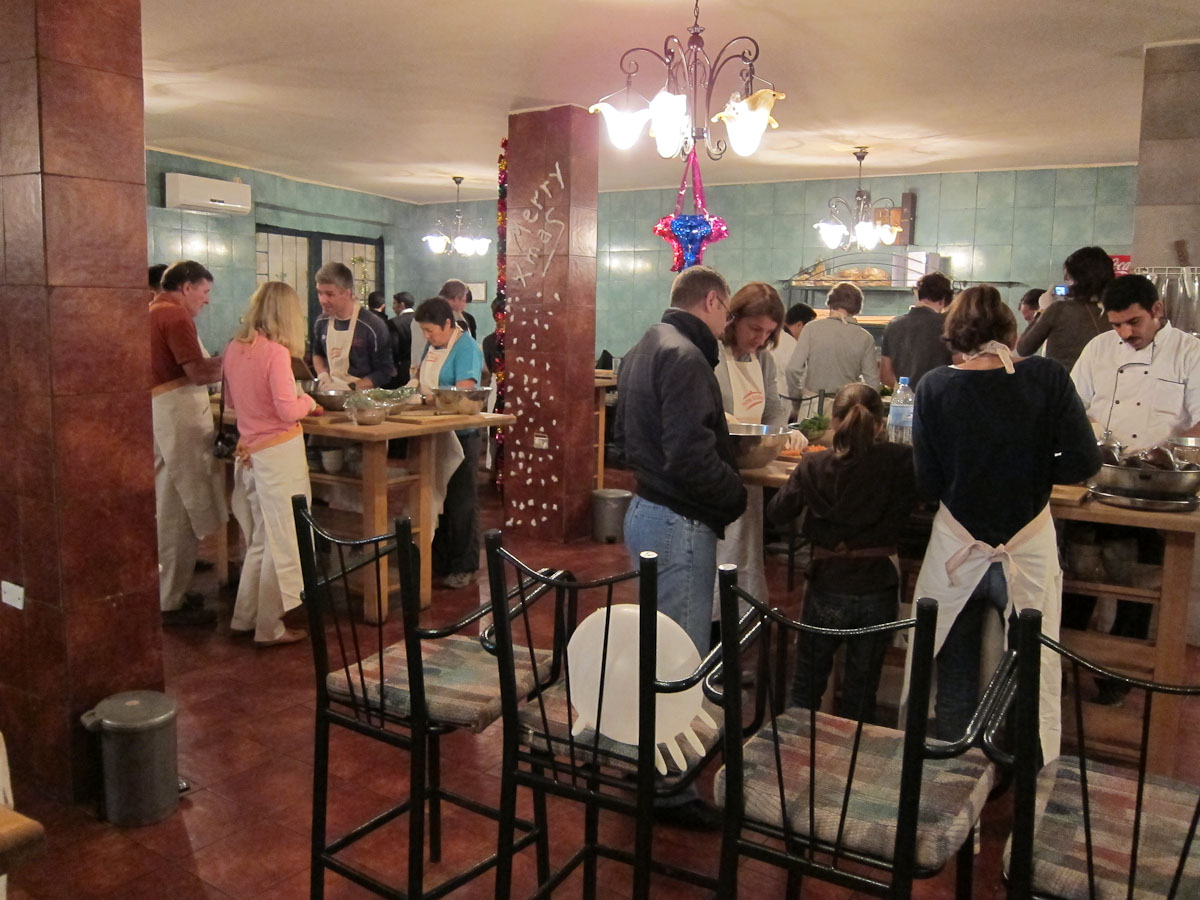
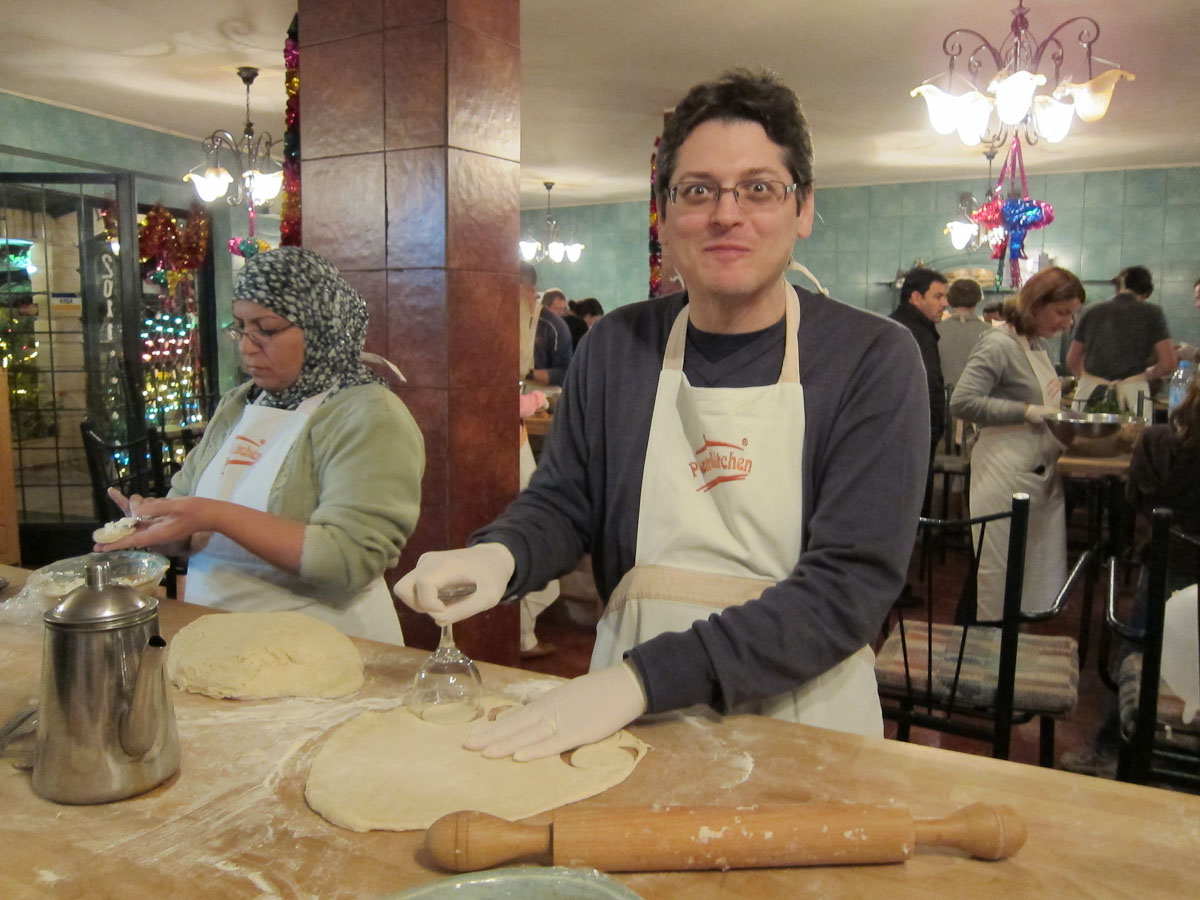
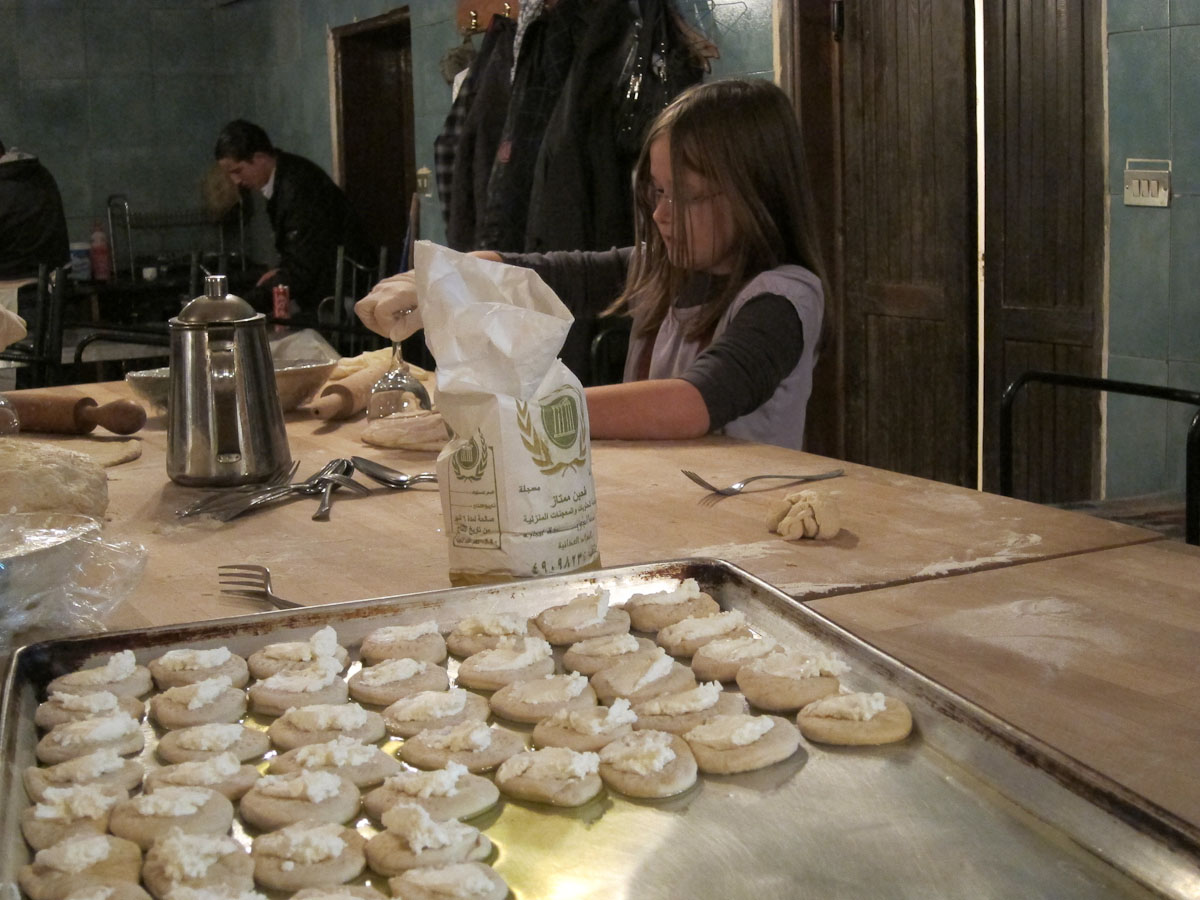
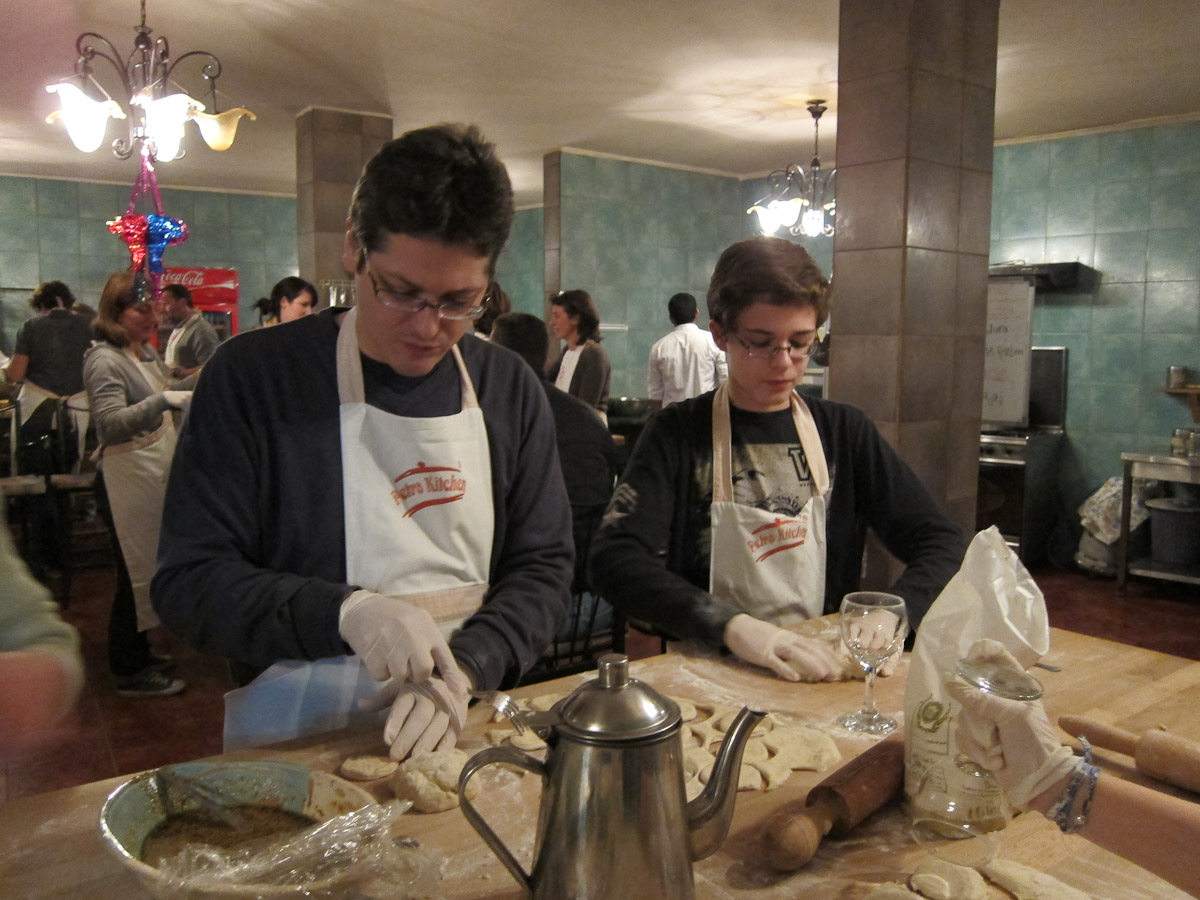
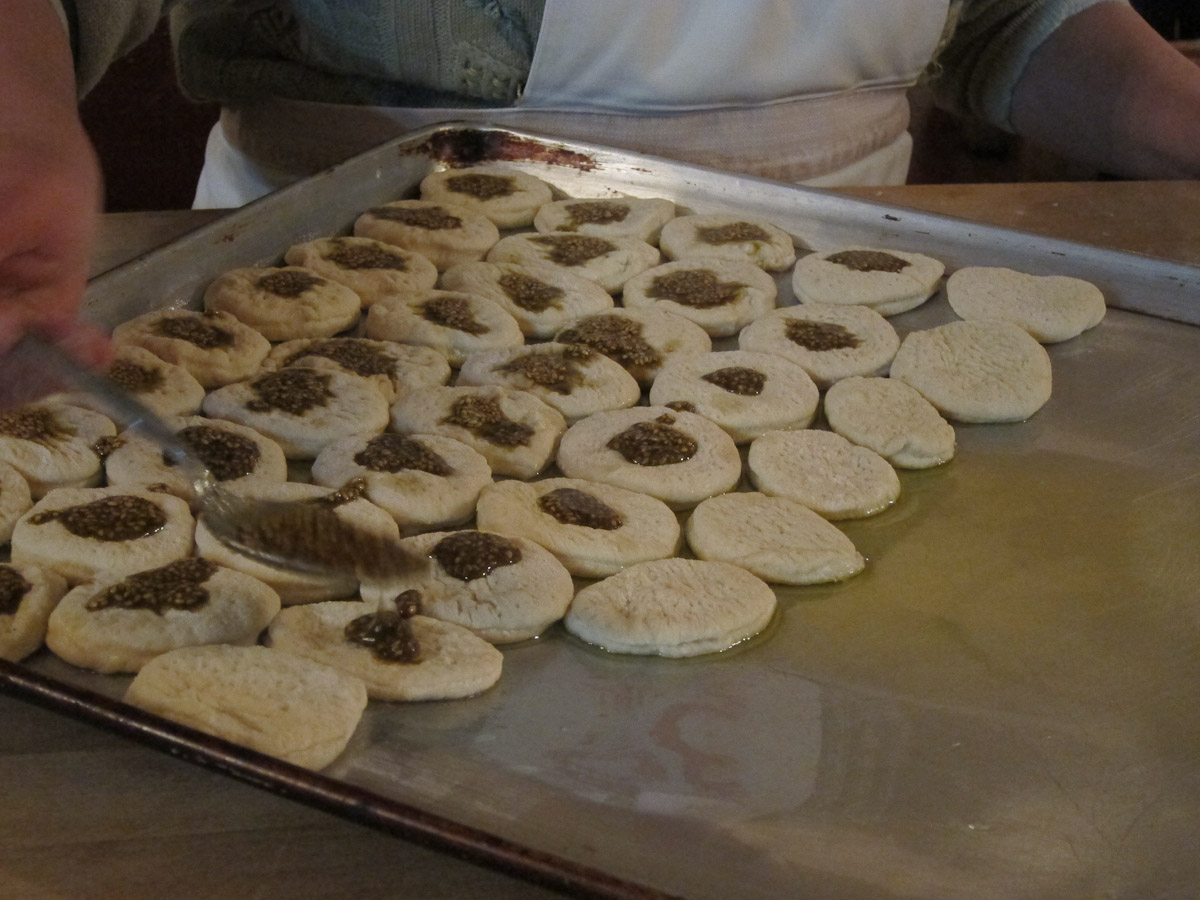
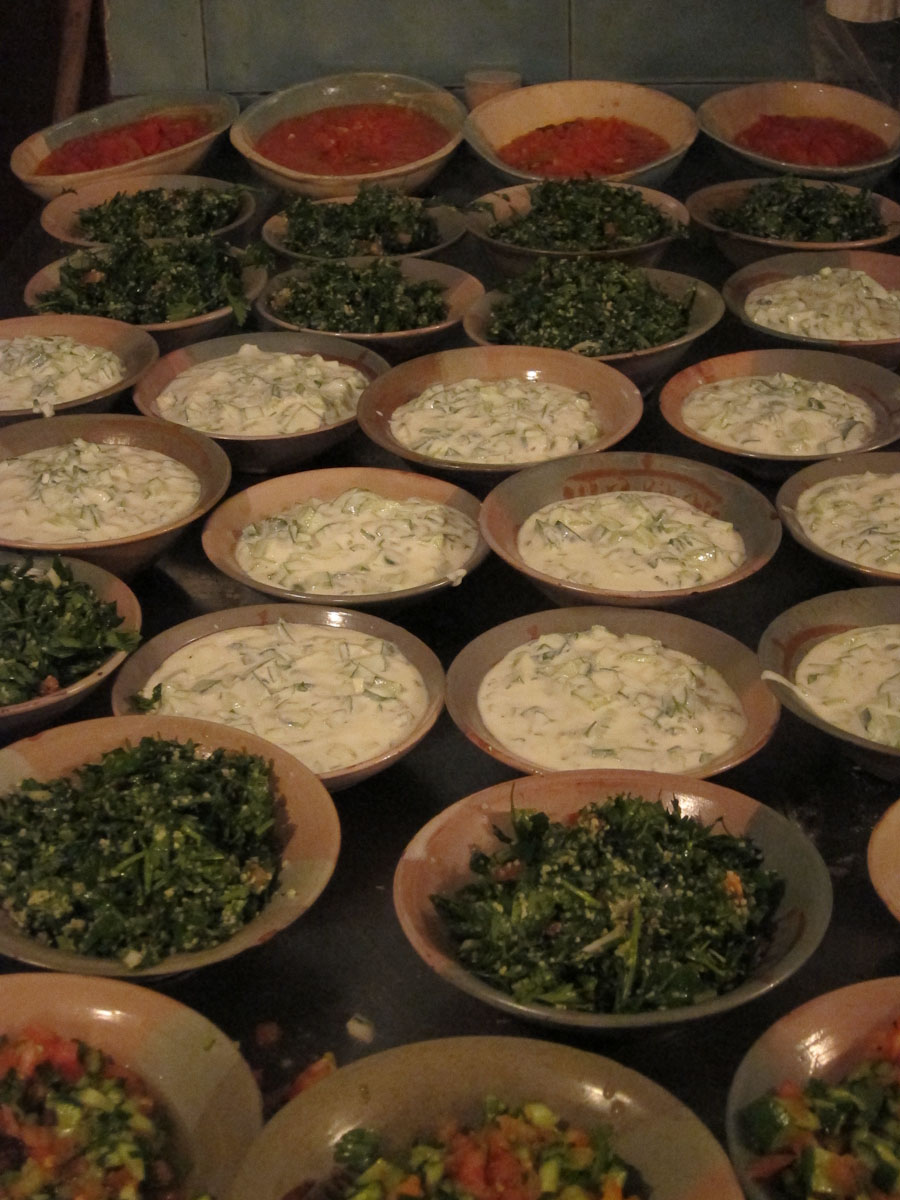
After a couple of days of eating as spectator sport, we decided to get hands-on and made our way to the Petra Kitchen. This is a fascinating venture where local men and women provide cooking lessons to visitors, who then share a complete traditional meal together. Even Russell got in on the action as we made short work of rolling and cutting dough for hot cheese and herb pastries, just one of the many mezze plates the group prepared.
Perhaps the most notable culinary and cultural highlights of our visit, however, were two meals we shared with local families. The first was a dinner which Katherine described in detail in a separate post. It was delicious. The second was a lunch we had in a small village ninety minutes north of Amman. We were served a dizzying array of sumptuous dishes.
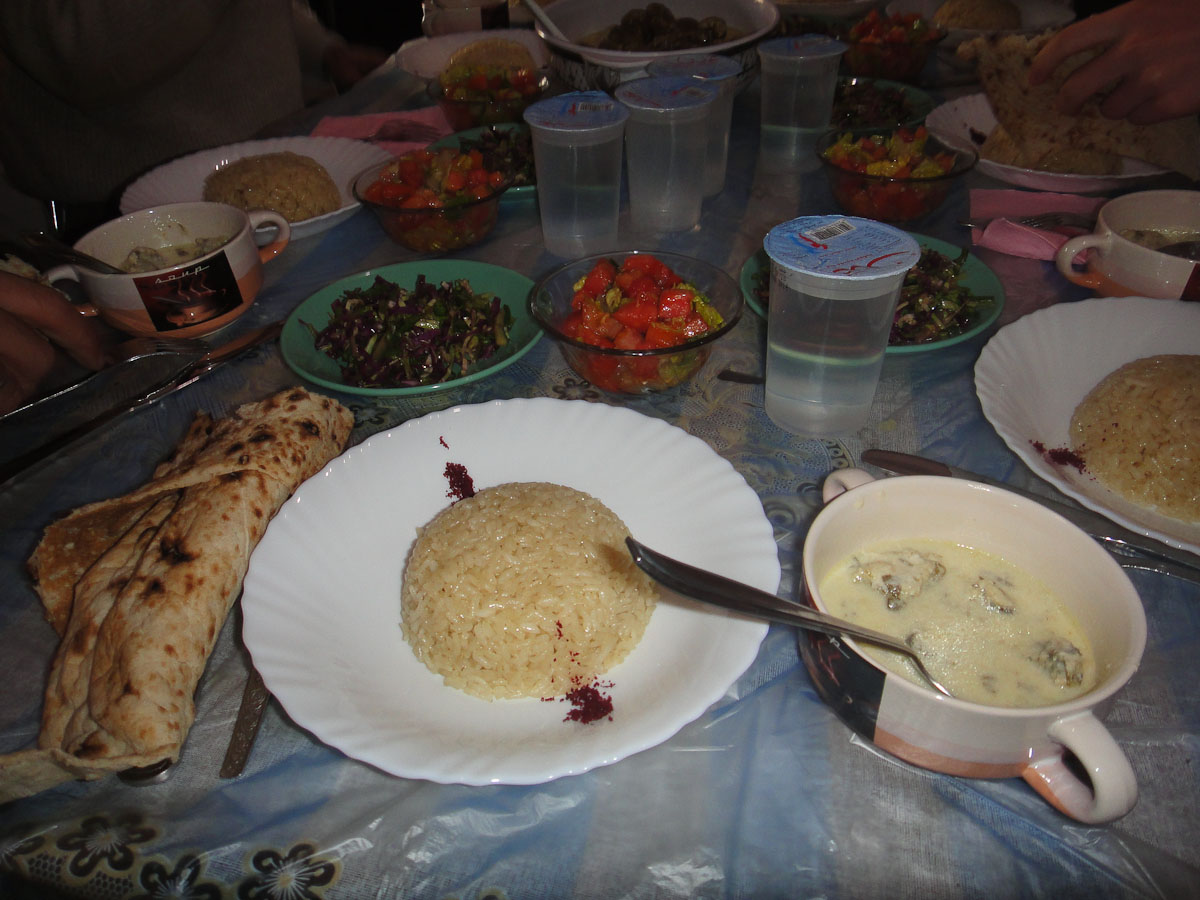
We started with cha’a cheel, a local dish of herbed dumplings in a rich tangy olive oil and yogurt broth. This dish was such a local specialty that Magdy, our driver and a native of Amman, had never heard of or tasted it but Ra’ed, a native of the northern region, was clearly excited when he heard it was on the menu. And for good reason, it was incredible. Then we were offered mukkashi, tiny zuchinni stuffed with meat and served in a lemon yogurt sauce, along with fasslia, a dish of stewed lamb and green beans.
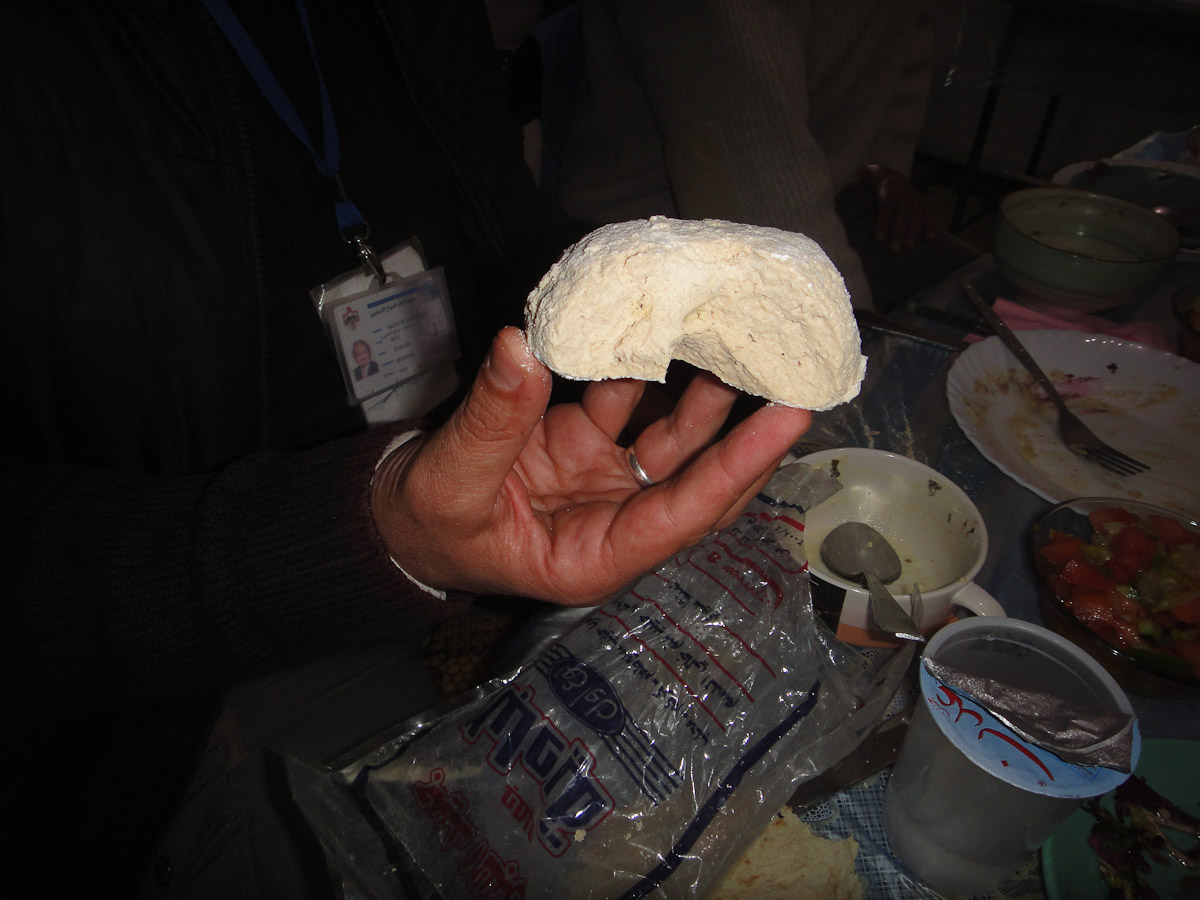
We observed that yogurt played an important role in the cuisine and were fascinated when Ra’ed described how it would be sun-dried into “white stones” so that it could be stored and used during the winter. Our host excused himself and came back a short while later with a lump of the hardened yogurt. Ra’ed explained that you literally use a hammer to smash it to pieces and then dissolve chunks in water to reconstitute it for eating or for use in recipes. We tasted a tiny morsel: it was salty and dissolved easily on your tongue.
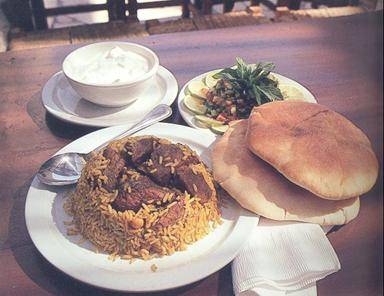
In addition to the hot dishes, we were offered two gorgeous salads: one made of tomatoes, cucumbers, and olive oil and the other comprised of shredded purple cabbage, cucumber and lemon juice. We also each had a beautiful mound of rice on our plates which was perfect for soaking up the yummy sauces. The rice itself was garnished with a deep purple spice I had never tasted or even heard of before: it was sumac. In addition to its gorgeous color, the spice has an intensely fresh tangy flavor I loved. We learned that women made their own spices—as in, they grow, dry, and grind almost everything they use. I praised the flavors and was shocked when our hostess returned with her jar of seasonings and presented it to me as a gift, complete with the little silver measuring spoon inside. I said that I couldn’t possibly accept her kind offer. With a flurry of Arabic and an enormous smile she insisted as she closed my hands around the jar. I was deeply touched and ashamed that all I had to offer in return was my thanks.
As we drove away from the village, I again began to extol the amazing flavors we had savored and to speculate as to whether I would be able to find sumac at home. Ra’ed rapidly began speaking in Arabic and Magdy pulled the car over. He darted out and returned in a second, explaining that we would just be a moment. We drove a few hundred meters and pulled down a tiny, dark residential street. We watched as Ra’ed jumped out and began chatting with some men standing outside. Seconds later, he came back to the car and handed me a bag filled with a kilo of sumac. I was stunned. As I inhaled the deep purple spice I asked him how in the world he found this. He simply replied that his family was from the area and all he had to do was ask for help. The villagers were happy to direct him to the nearest “little old lady” who made great sumac.
I laughed in amazement and hoped that I would have the chance to cook for my new friends one day. If so, I would surely make something with sumac.