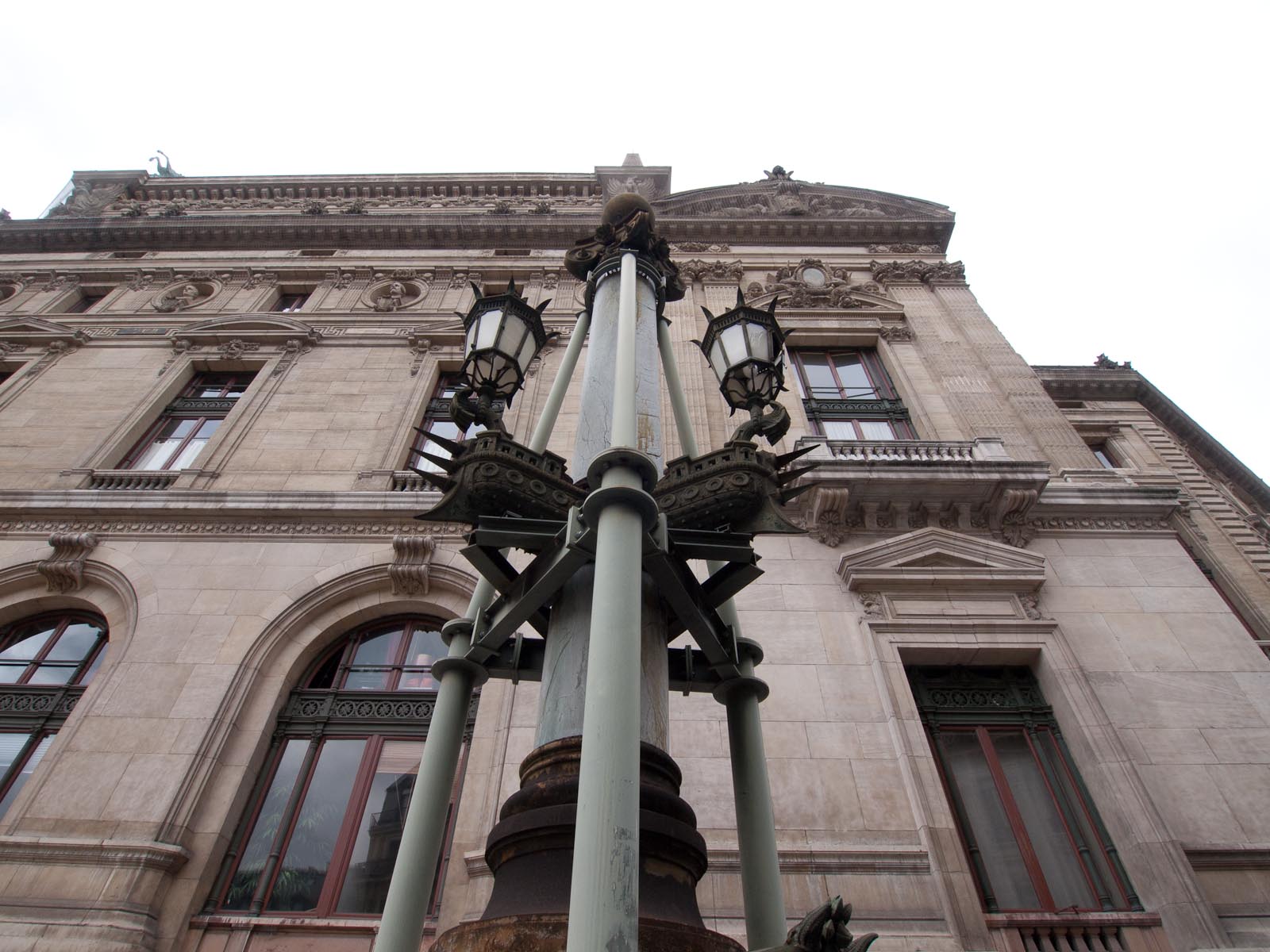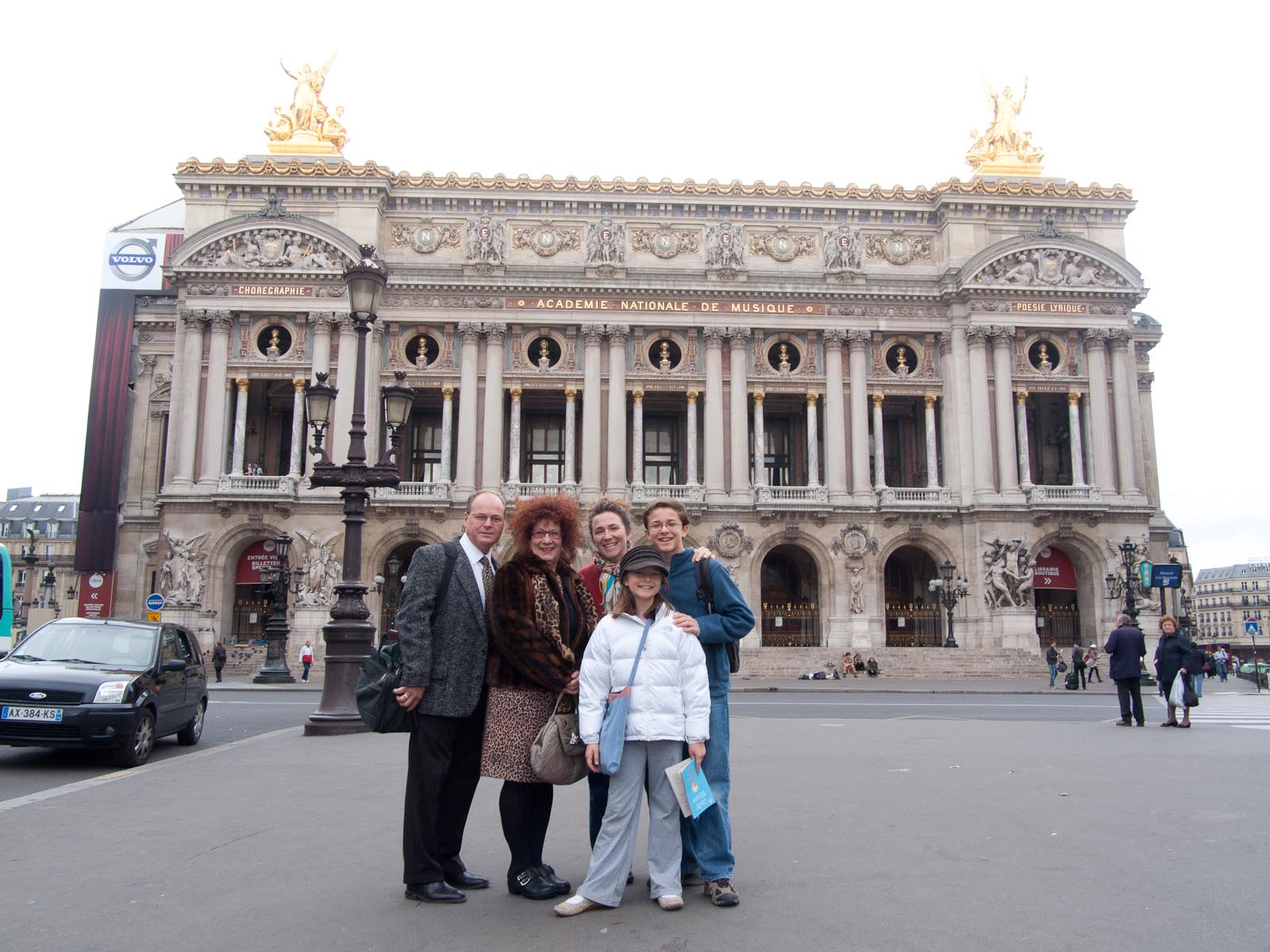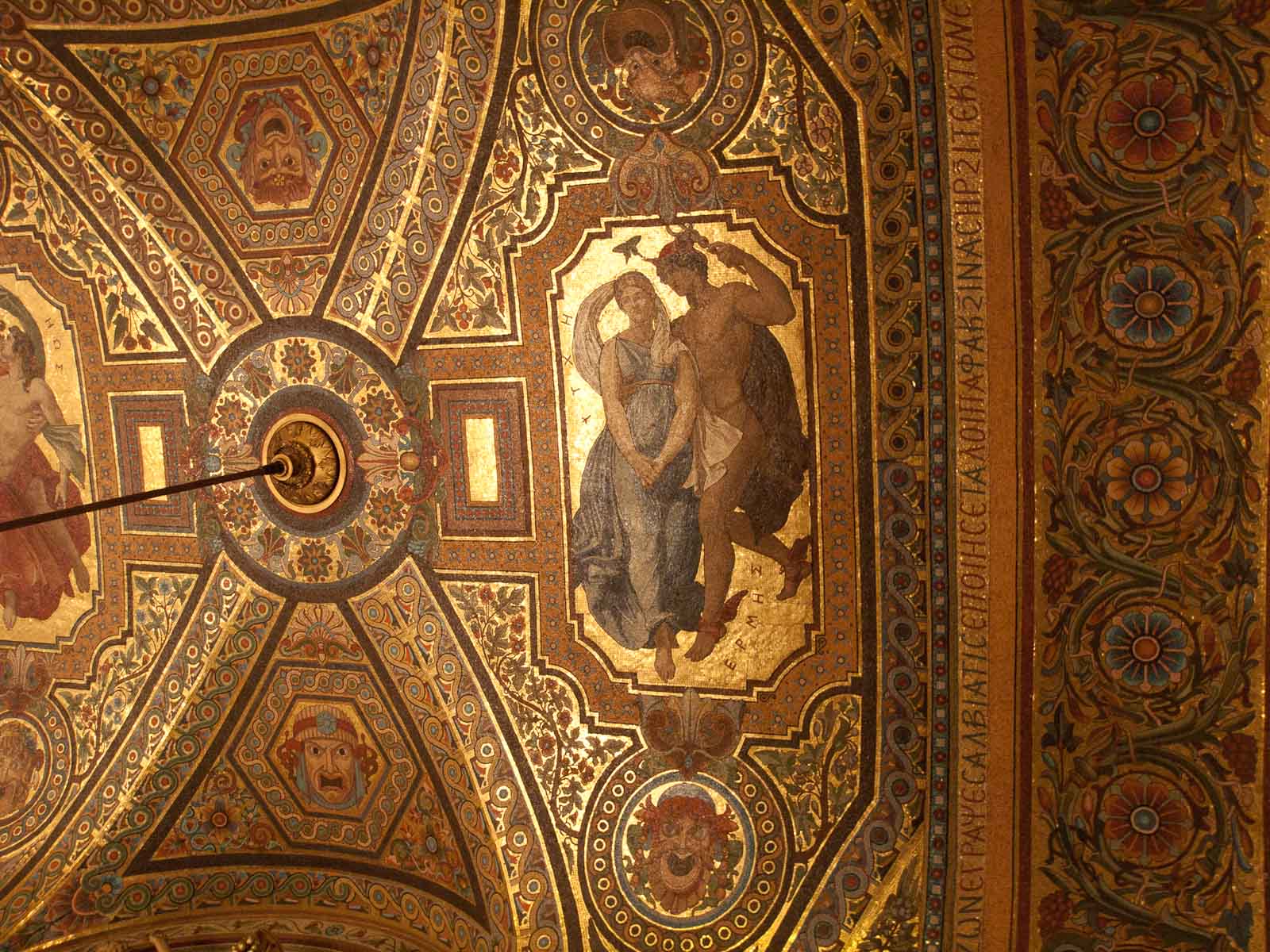
While Linda and Hugh were visiting us we had a chance to take the tour of the Paris Opera house. This was far more interesting than we had expected.
This is the opera house that was the inspiration for Phantom of the Opera. There really is an underground lake, which is a water reservoir in case of fire, and a chandelier really did fall and kill someone here. There have also been rumors of a ghost haunting the opera house since the time of its construction when strange lights were seen at night. One of the best balcony seats is reserved for the ghost by tradition.
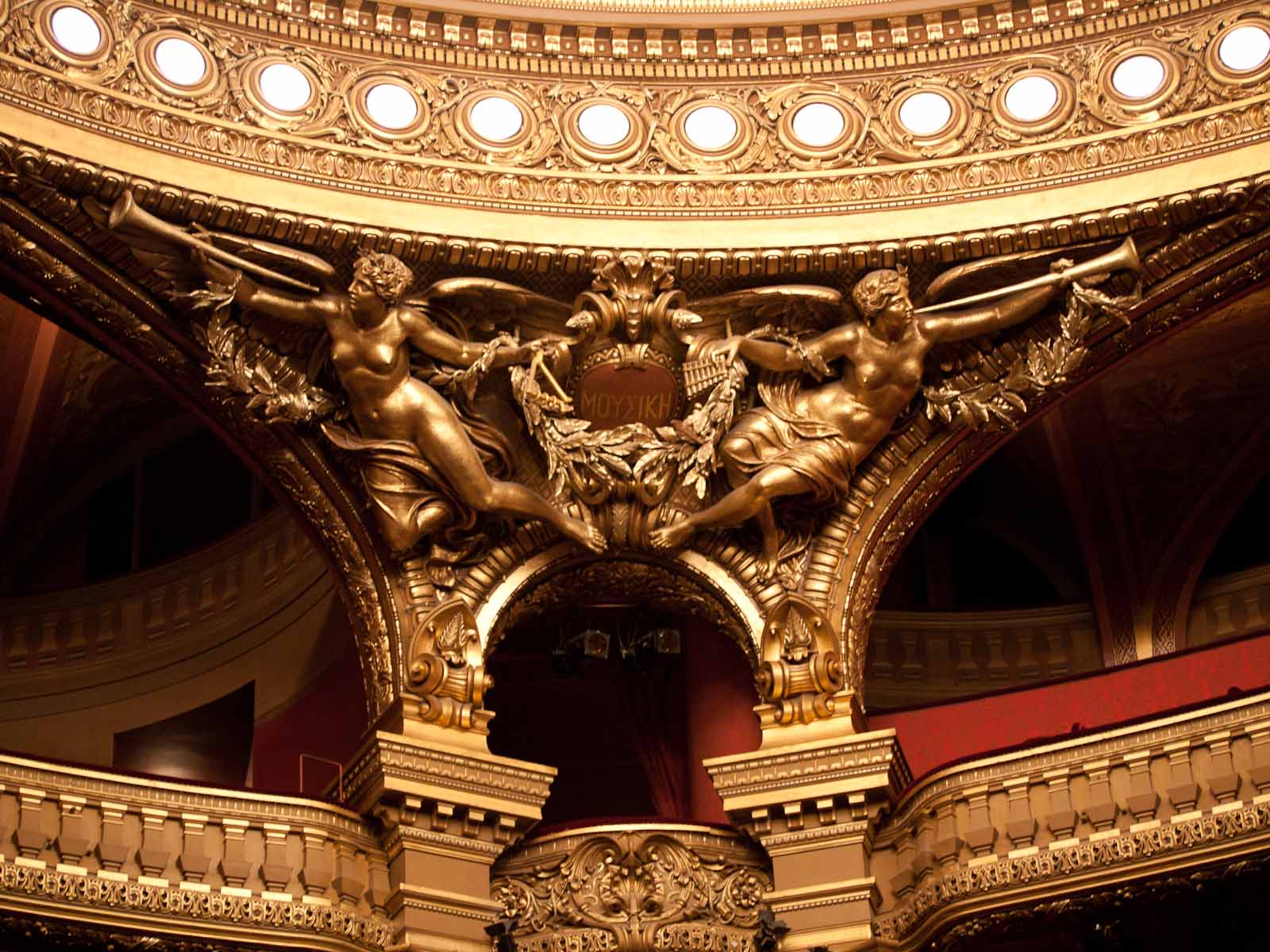
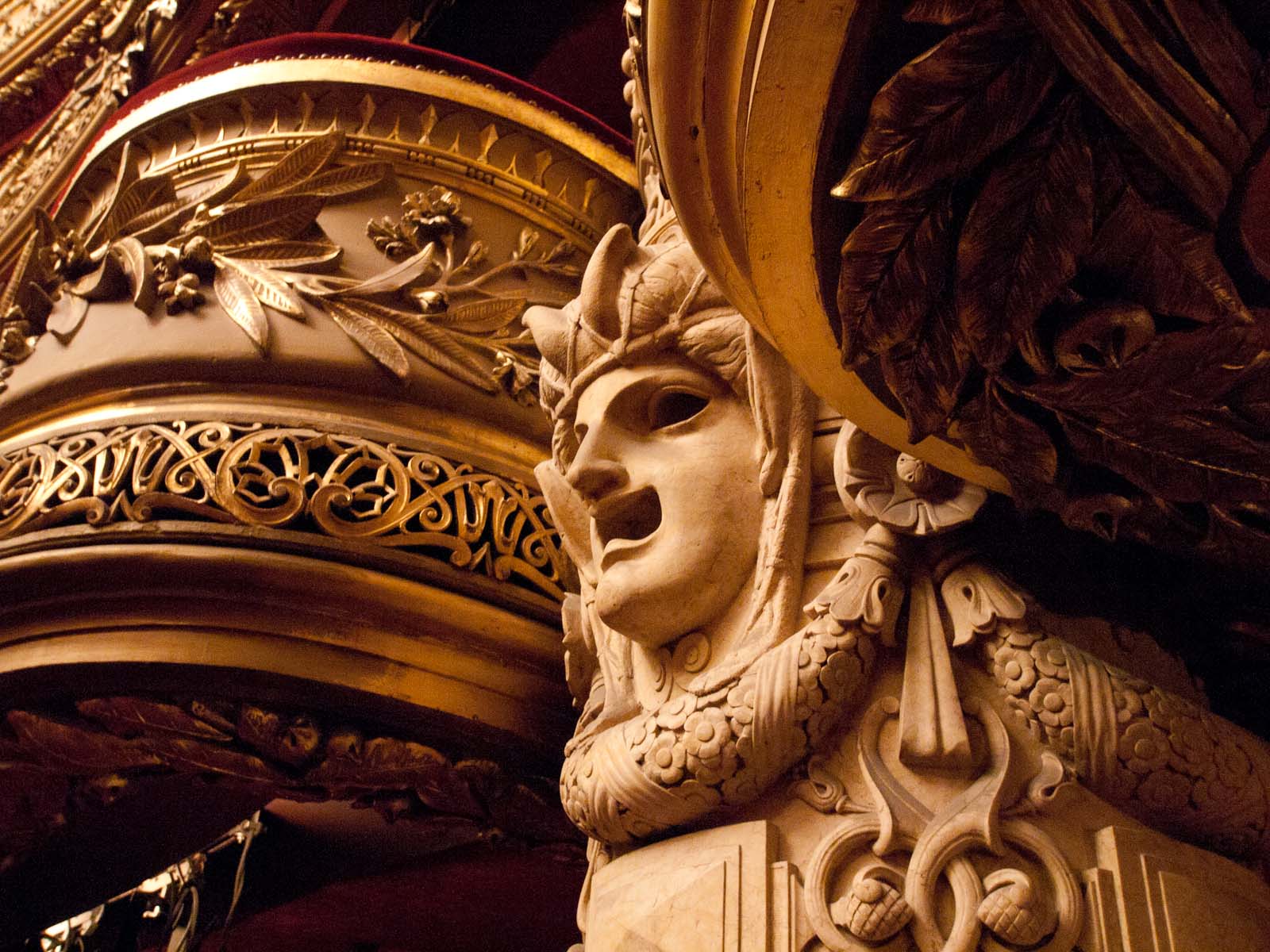
The building was built in 1875 under Napoleon III. The up-and-coming architect Charles Garnier designed something exceptionally lavish that drew from classic Greek stories (Apollo is everywhere) and updated it with cherubs, nymphs and busts of great composers. It cost a fortune to build – something like 300 million in today’s Euros all for a theatre – and caused a stir at the time because of its ornate design. When Napoleon III’s wife demanded to know which period style had been used, Garnier replied “Madam, it is not the Roman style or the Greek style. It is the Napoleon III style.”
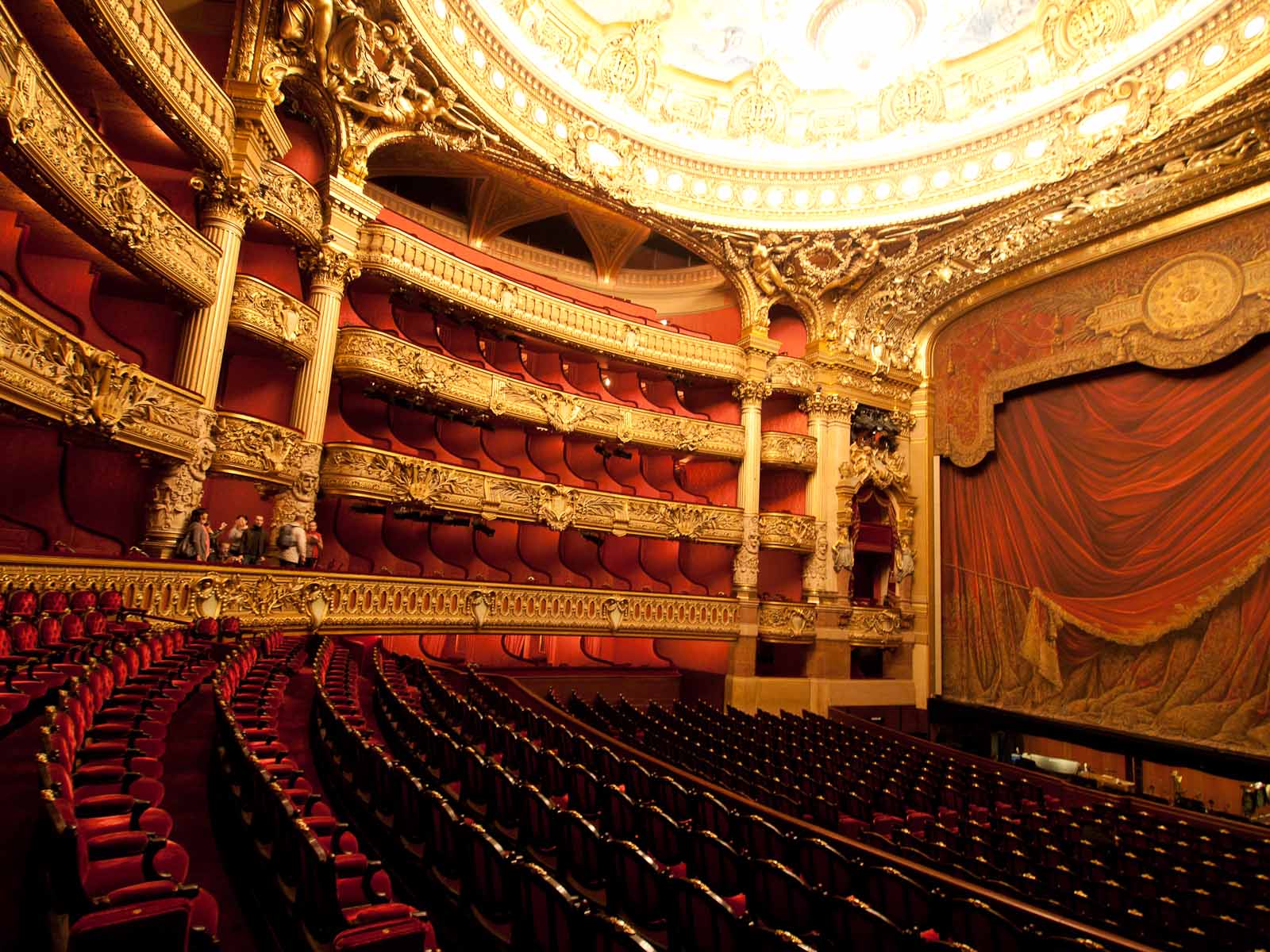
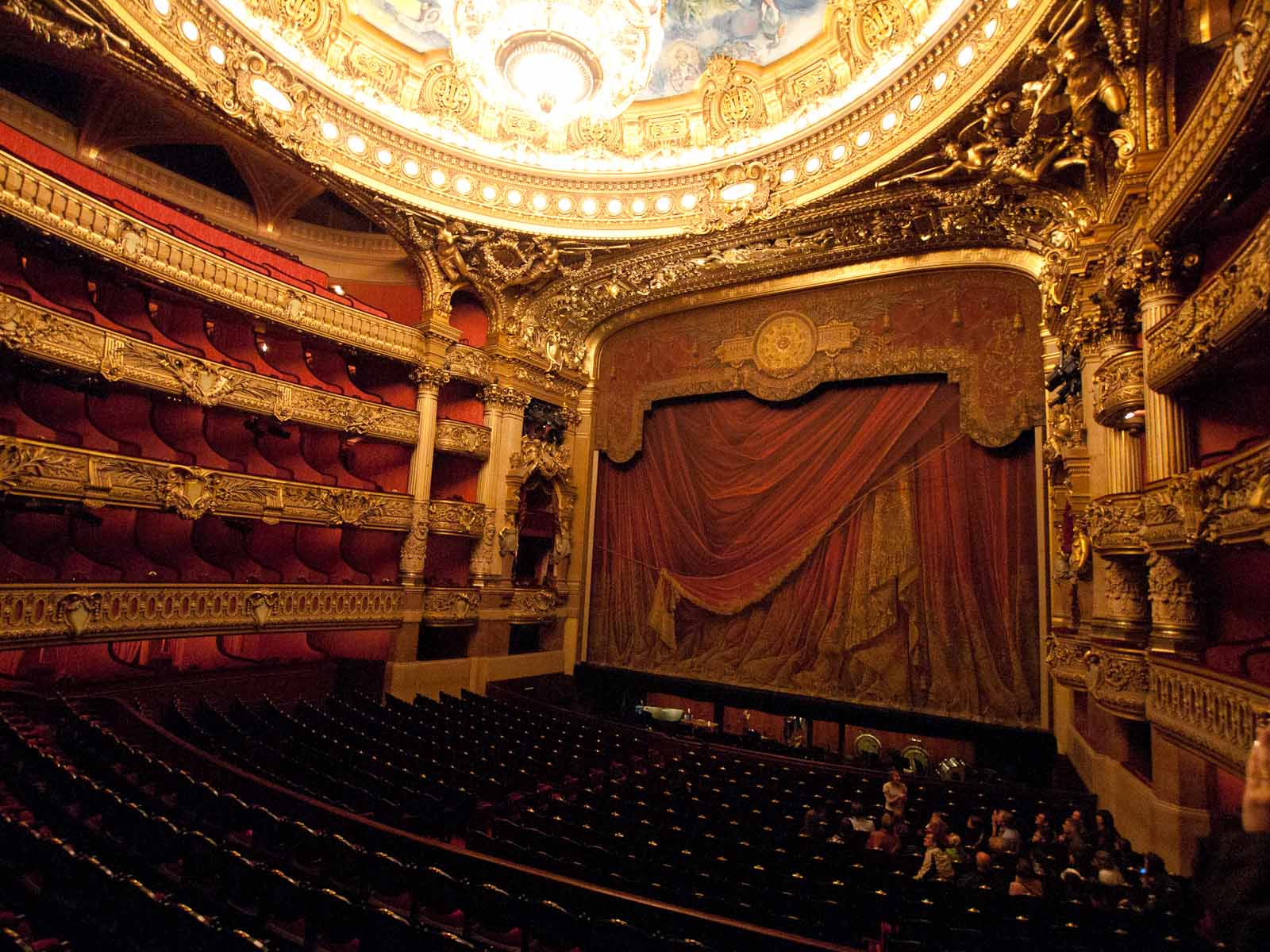
We were fascinated by the role of opera in society. The opera house was a social center in the late 1800s and early 1900s. The same opera would play night after night, and the same people would come. However they came to see and be seen, to look at the king and nobles, to dine and to discuss. Few paid attention to the show – they had all seen it before. The most valuable seats were not in front – the people in those seats could not see anyone and only their heads were visible. The most visible seats were in the back and the balcony seats – which looked like little stages themselves and opened up into hallways allowing ease of access both for attending the show and receiving deliveries such as catered food. The one on the left was for the King, the one on the right for the Queen. Only the aristocrats were permitted to own the seats in the middle of the opera house, and their names were engraved on the seats so that everyone had a fixed place. Opera glasses were most often turned toward the audience.
The tour guide showed us that the seats on the outer edge had built-in wooden screen that could be raised for privacy. This permitted priests and others for whom an opera was not an “appropriate” setting to attend and it allowed for privacy when needed.
With all the conversations going on and because of the superb acoustics, the noise was fearsome. The theatre was nearly empty when we toured, but we could hear the people across the hall perfectly well. Now we know why opera signers had to be so loud!
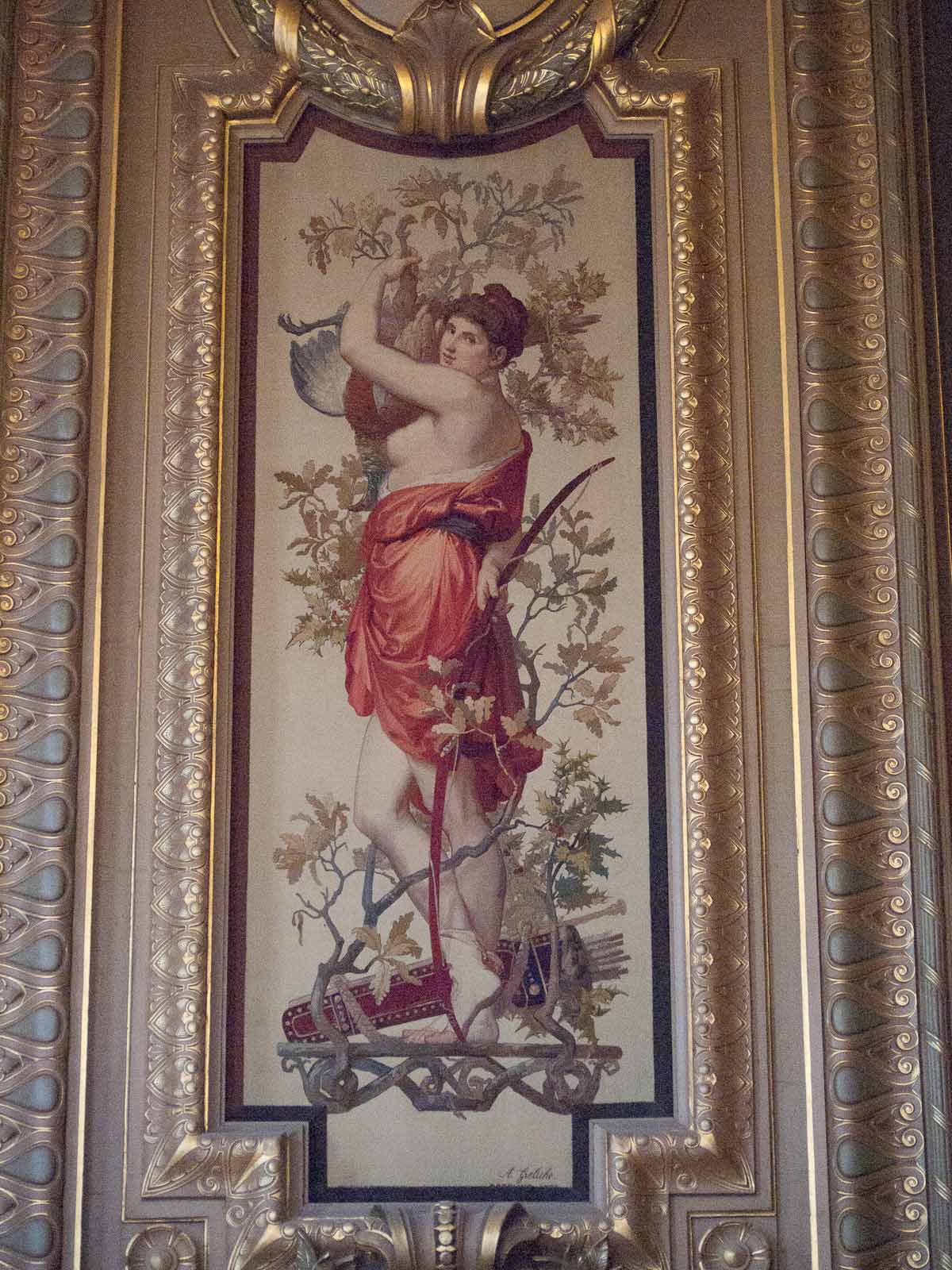
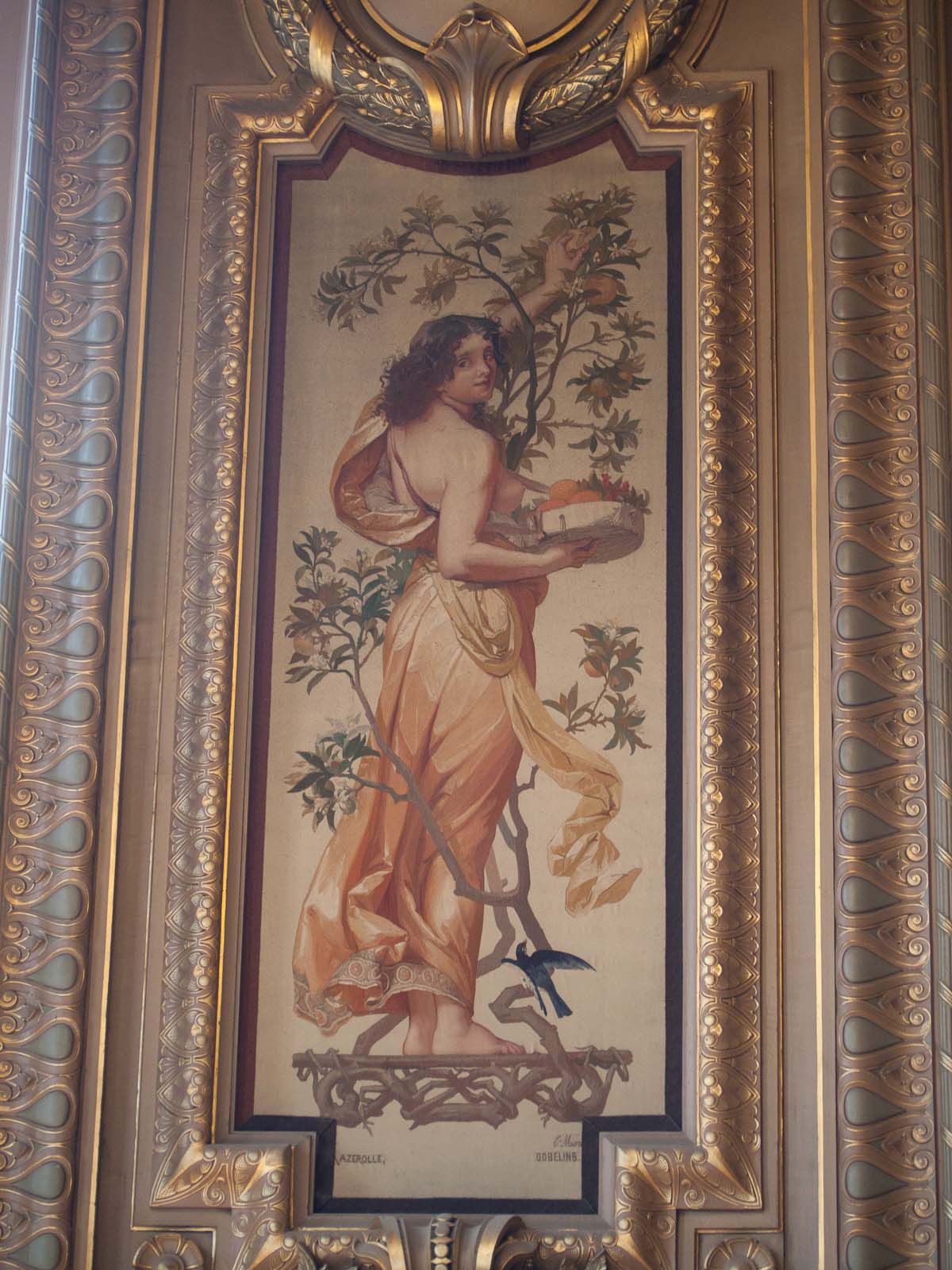
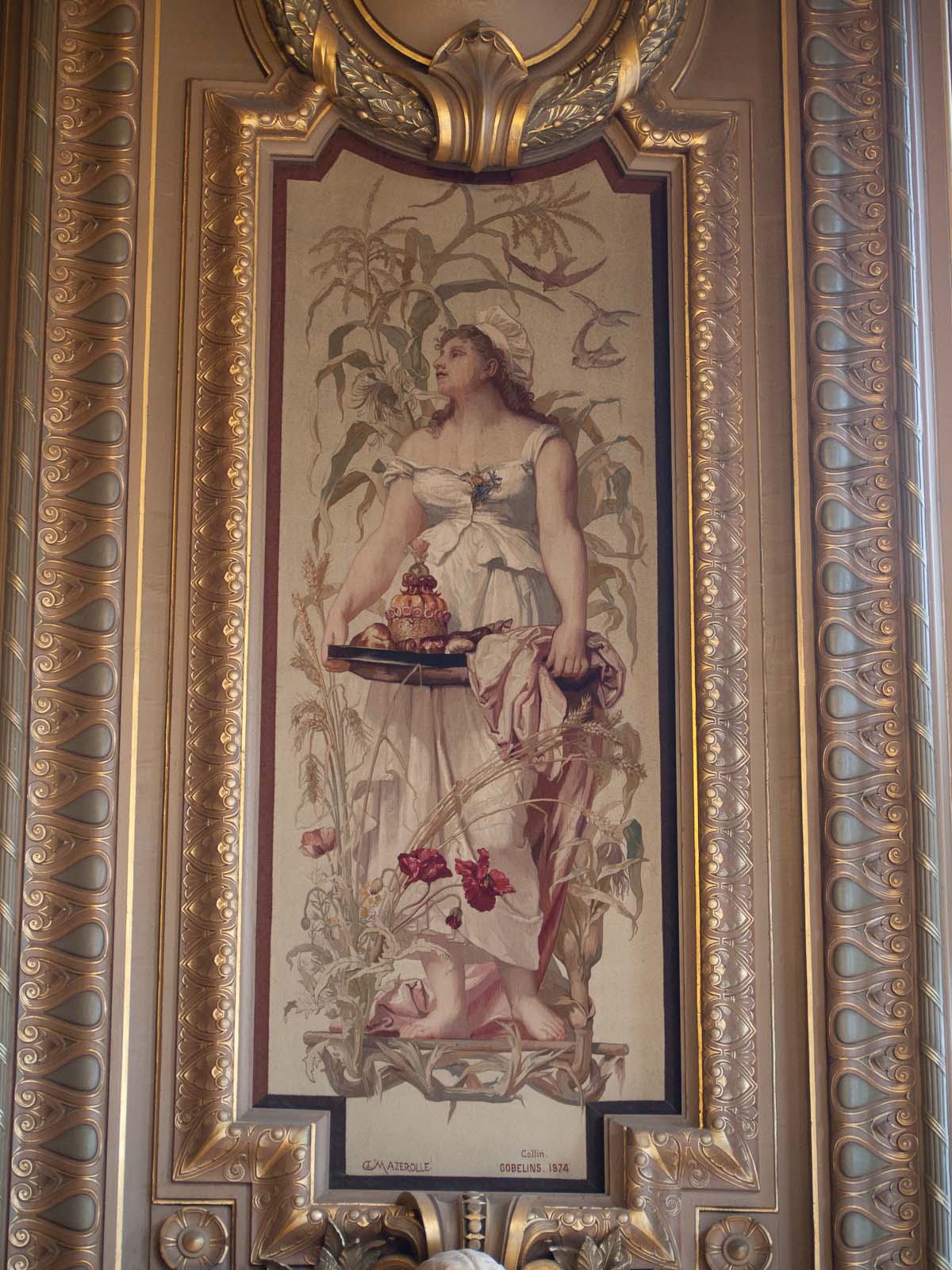
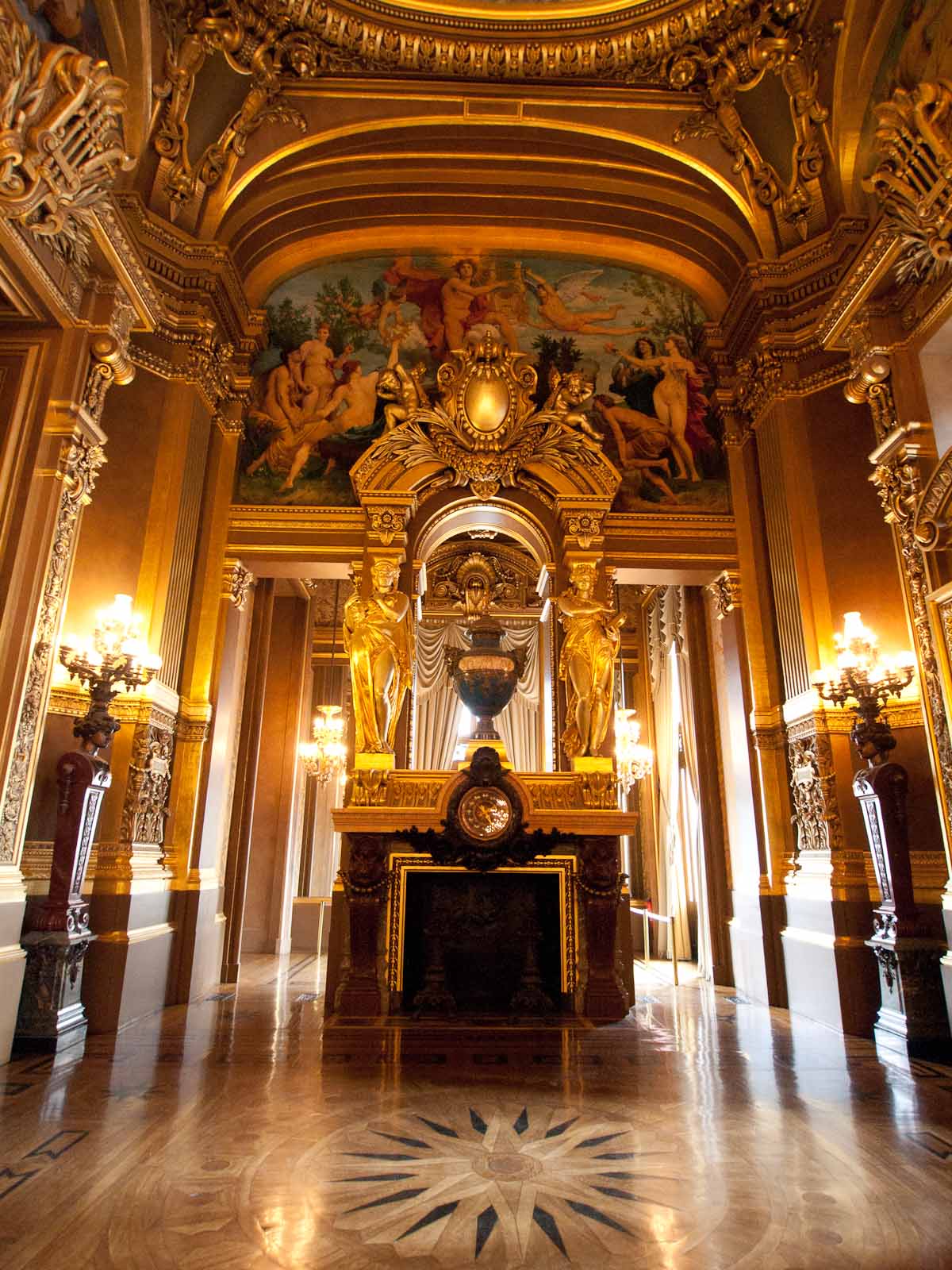
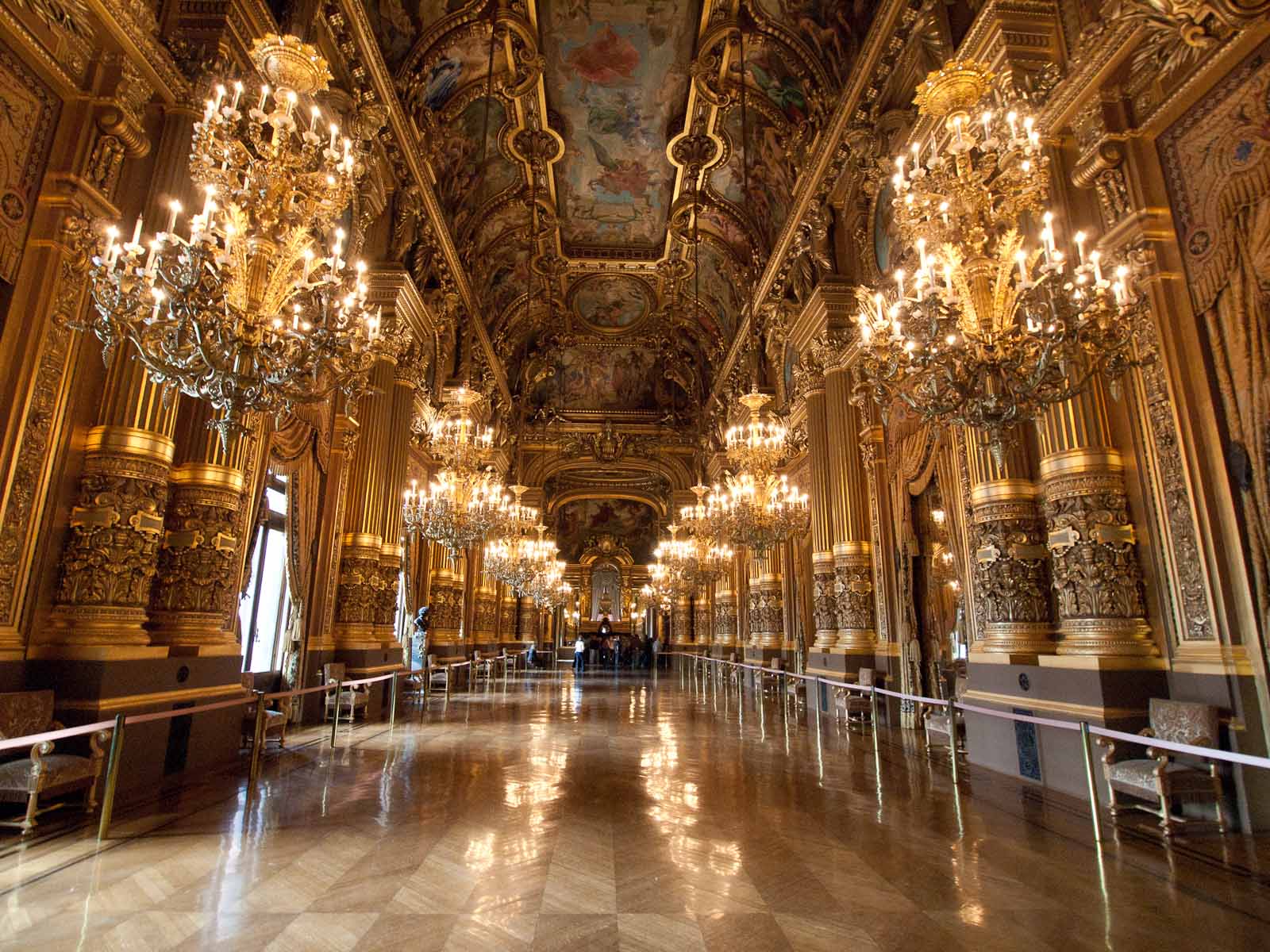
Outside the theatre itself, we toured the lavish hallways and dining rooms. As you can tell from above, this was where a lot of the action happened. We were delighted to spot a room full of Gobelin tapestries, this was a master workshop for tapestries whose work was so precious and spectacular that much of the output was reserved for state gifts from France to other countries. These decorated a dining hall with scenes of different types of food and drink. Ice cream and oranges were highly desirable at that time – especially oranges, whose perfurme would linger on the fingers and show off the luxury of eating them. This is one reason the king traditionally had a private orangerie, places we can find today at the Louvre and Versailles.
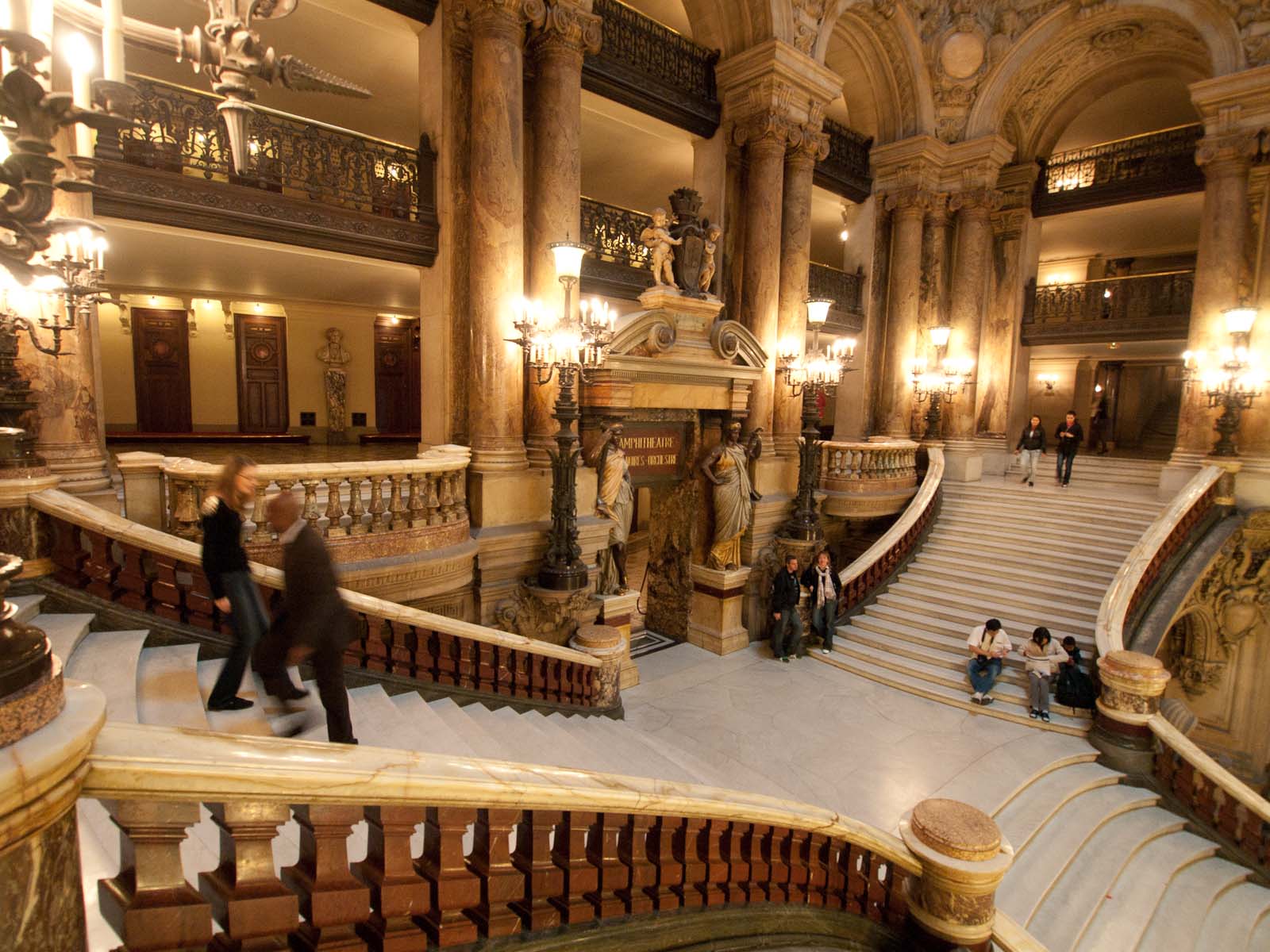
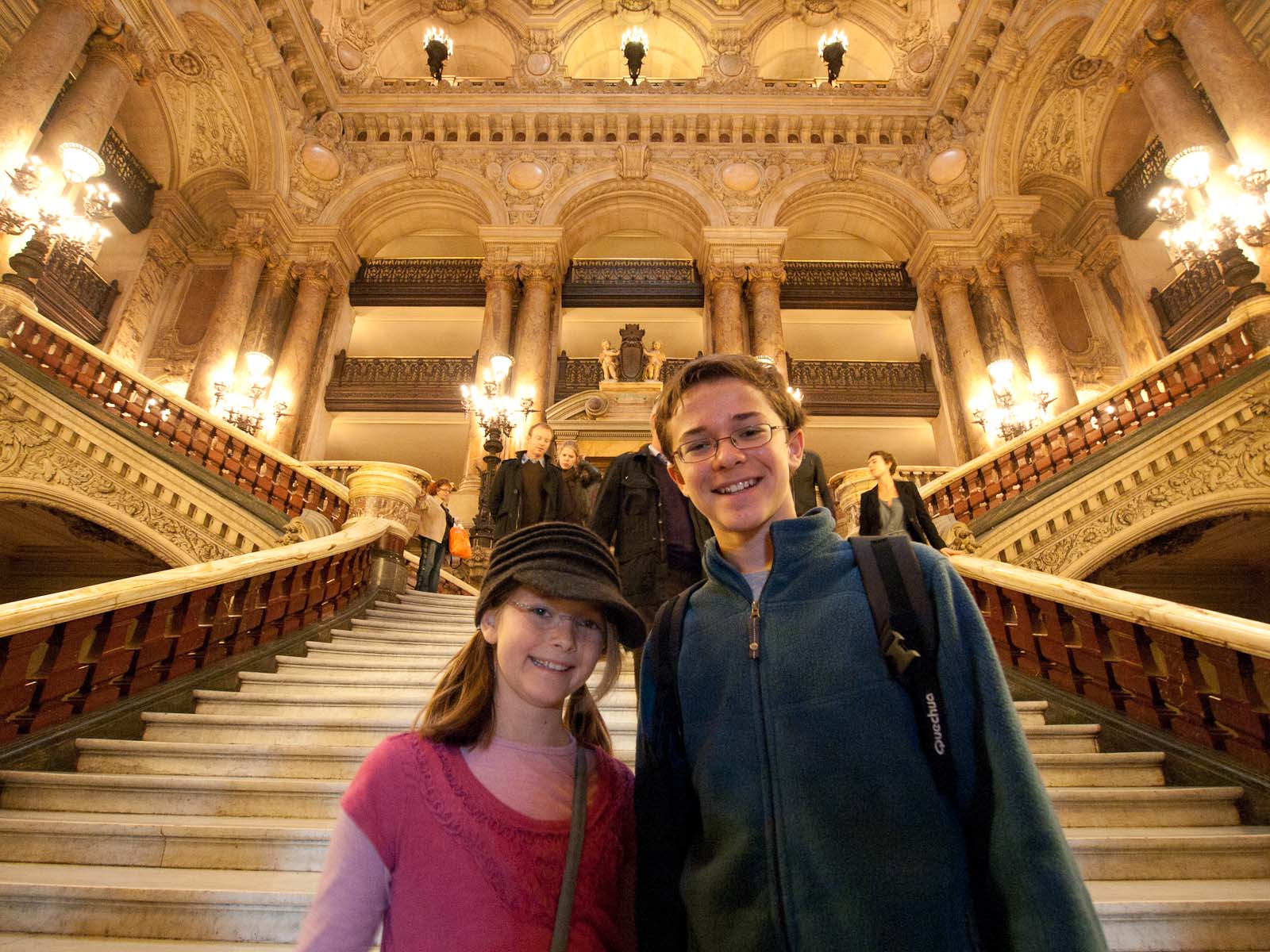
Finally we reached the entry hall with its staircases all sweeping to a central point. Here the lesson continued as we learned that making an entrance to the Opera was a critical part of the evening. The king had a private entrance built so his coach could pull right into the building. Only aristocrats were allowed to use the main staircase, which as you can see from the pictures, allows each couple to pause for a moment, dramatically backdropped by the staircases, so that everyone in the hall could see them. Different social strats could see each other from this entrance hall but could not mix. The less expensive the tickets, the higher up the entrance and the less decoration on the railings. It was a perfect reflection of the theatre seating preserving social status. The newspapers would often cover happenings in the entrance hall. Garnier was said to complain that as far as the newspapers were concerned, he had built a grand staircase – no one cared about the theatre itself!
During the intermission, gentlemen would frequently go behind the stages. It was the custom for an aristocrat to sponsor a danser and even to take them out on the town. An old French expression for someone with a ruinously expensive hobby is “he has his danser.” Since the fashion favored plump ladies (see the tapestries!) and these sponsorships were important for funding, the dancing was apparently not very good. However later the Parisians brought in the Russians to run their ballet training and the cast changed; the dancing became serious and athletic as it is today. And no one can go behind stage any more.
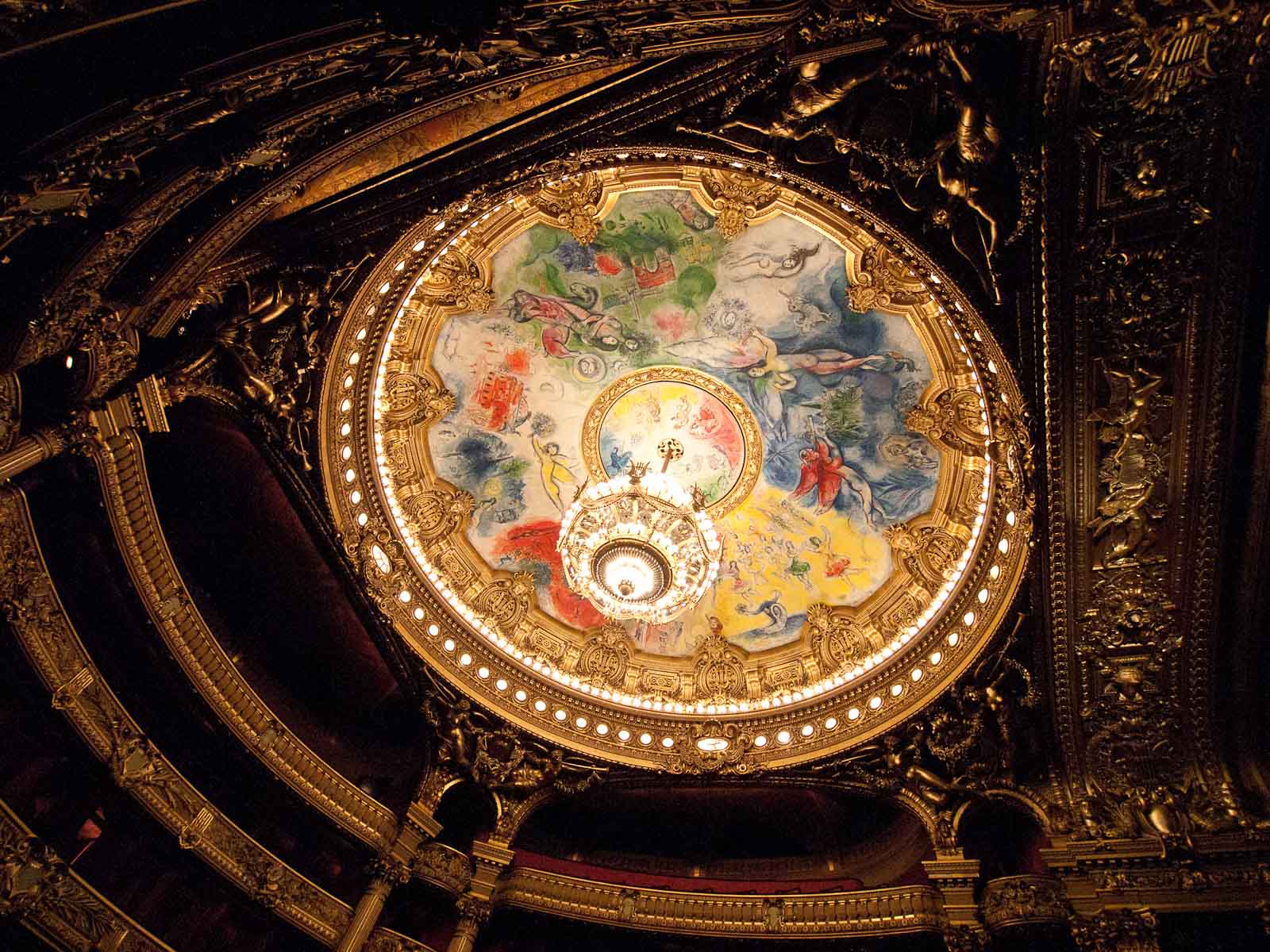
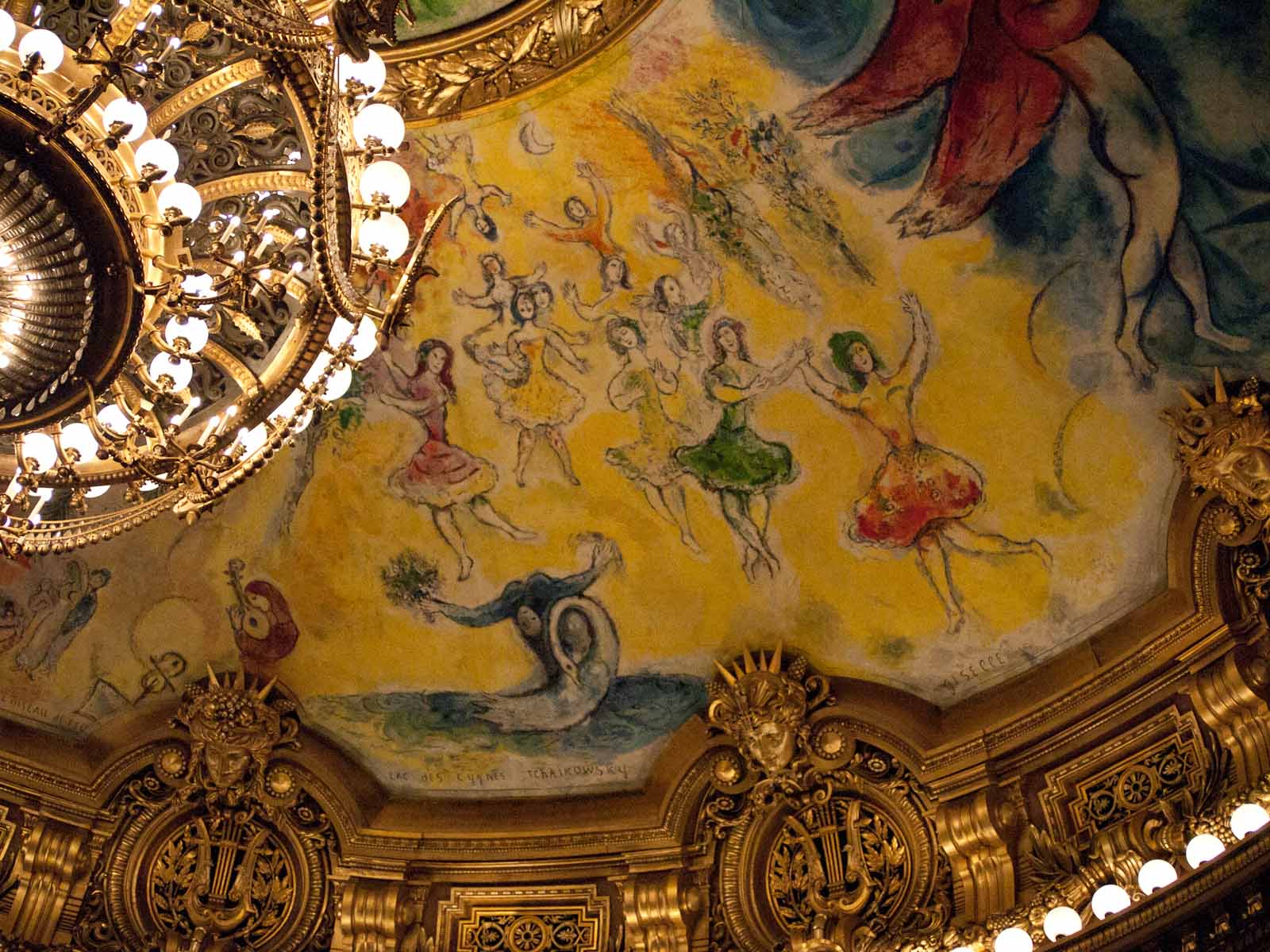
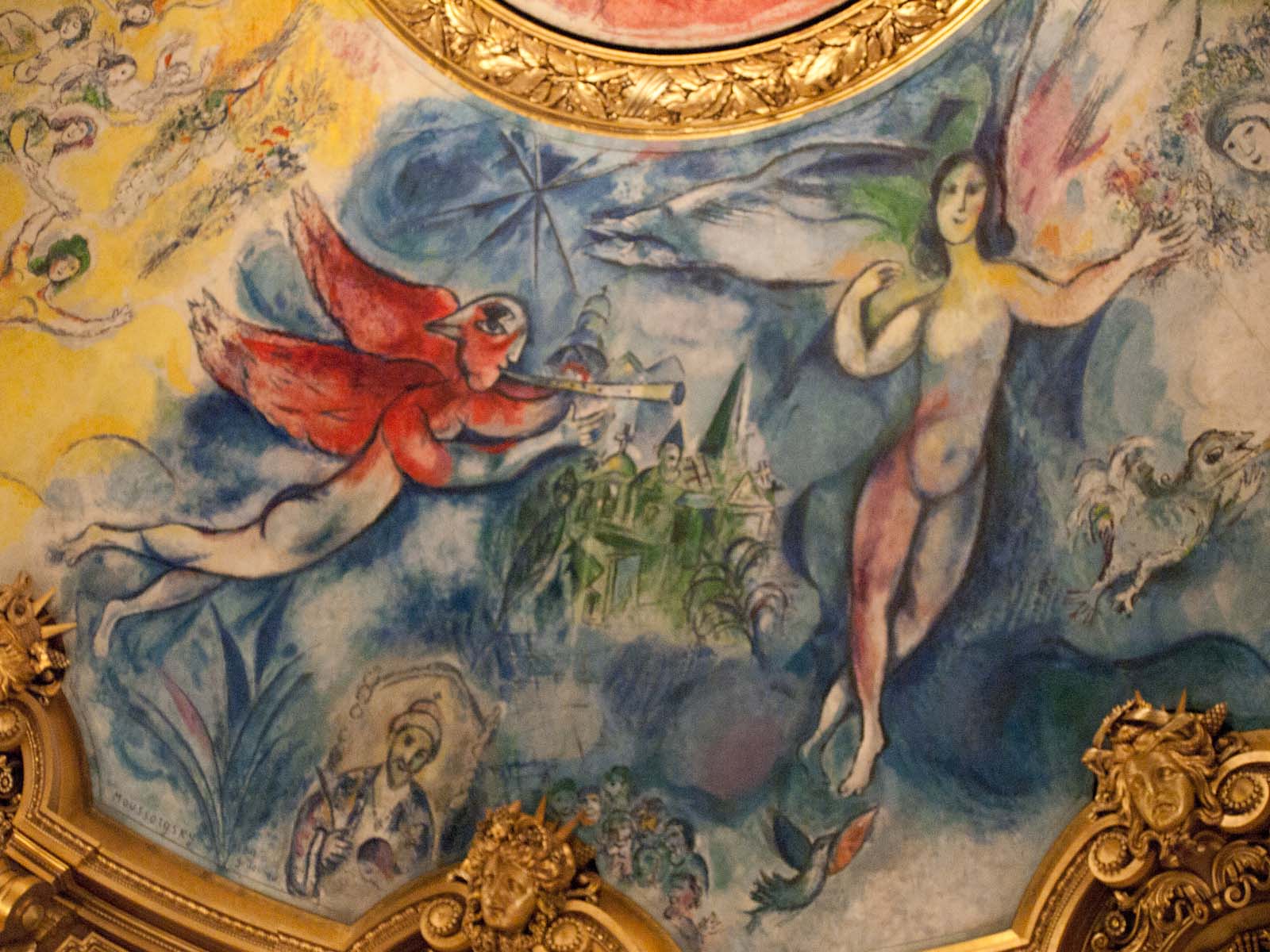
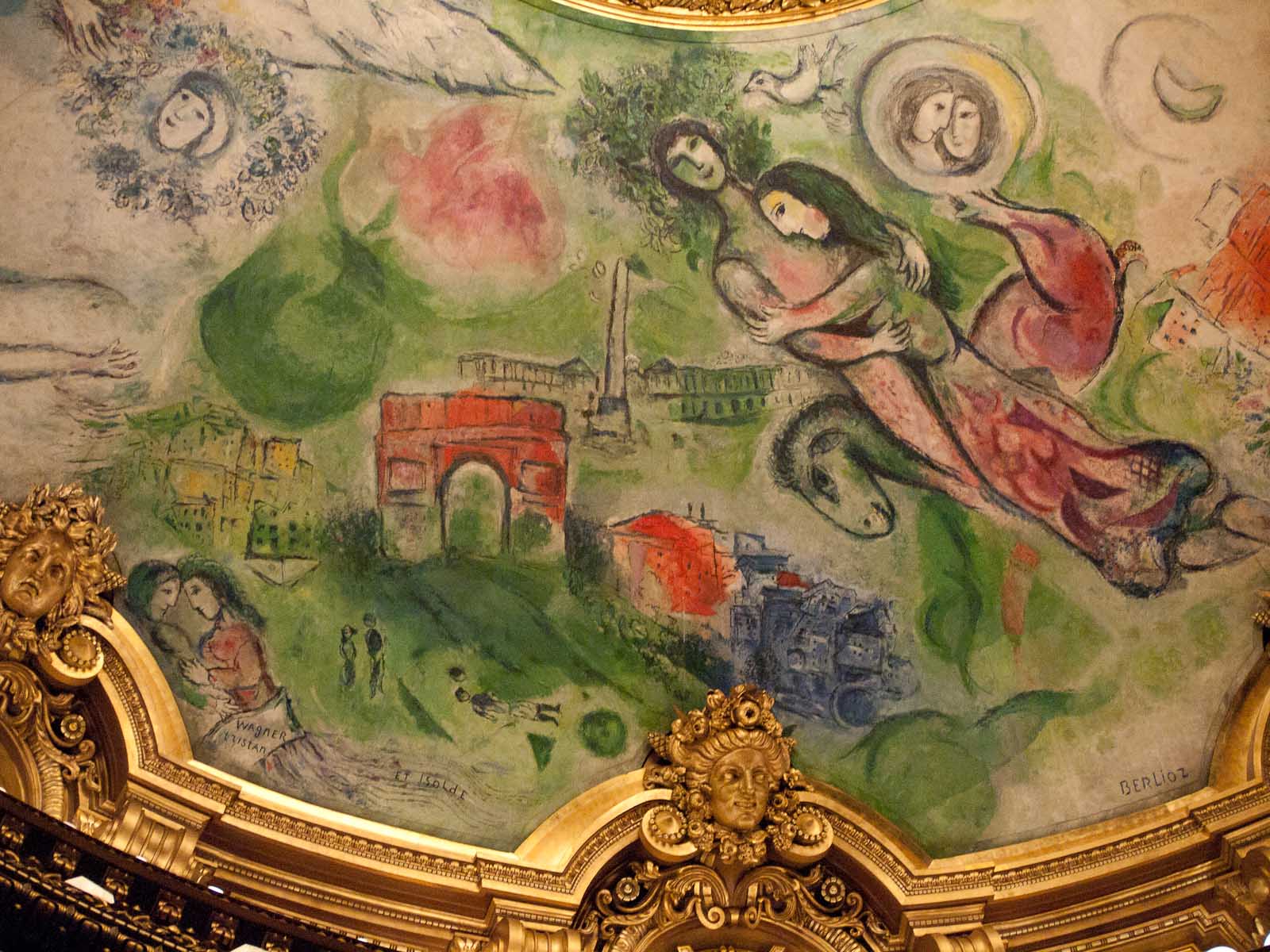
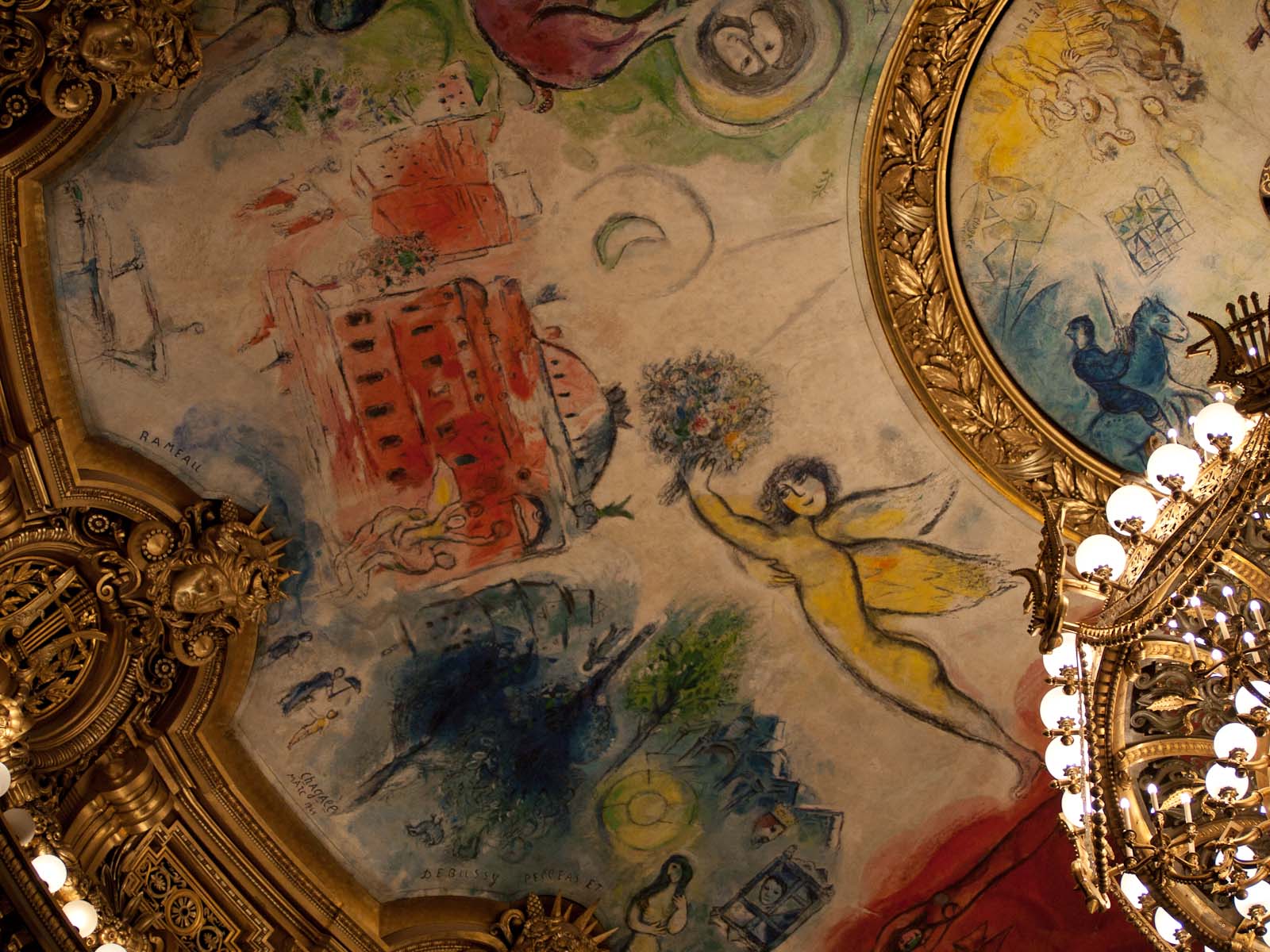
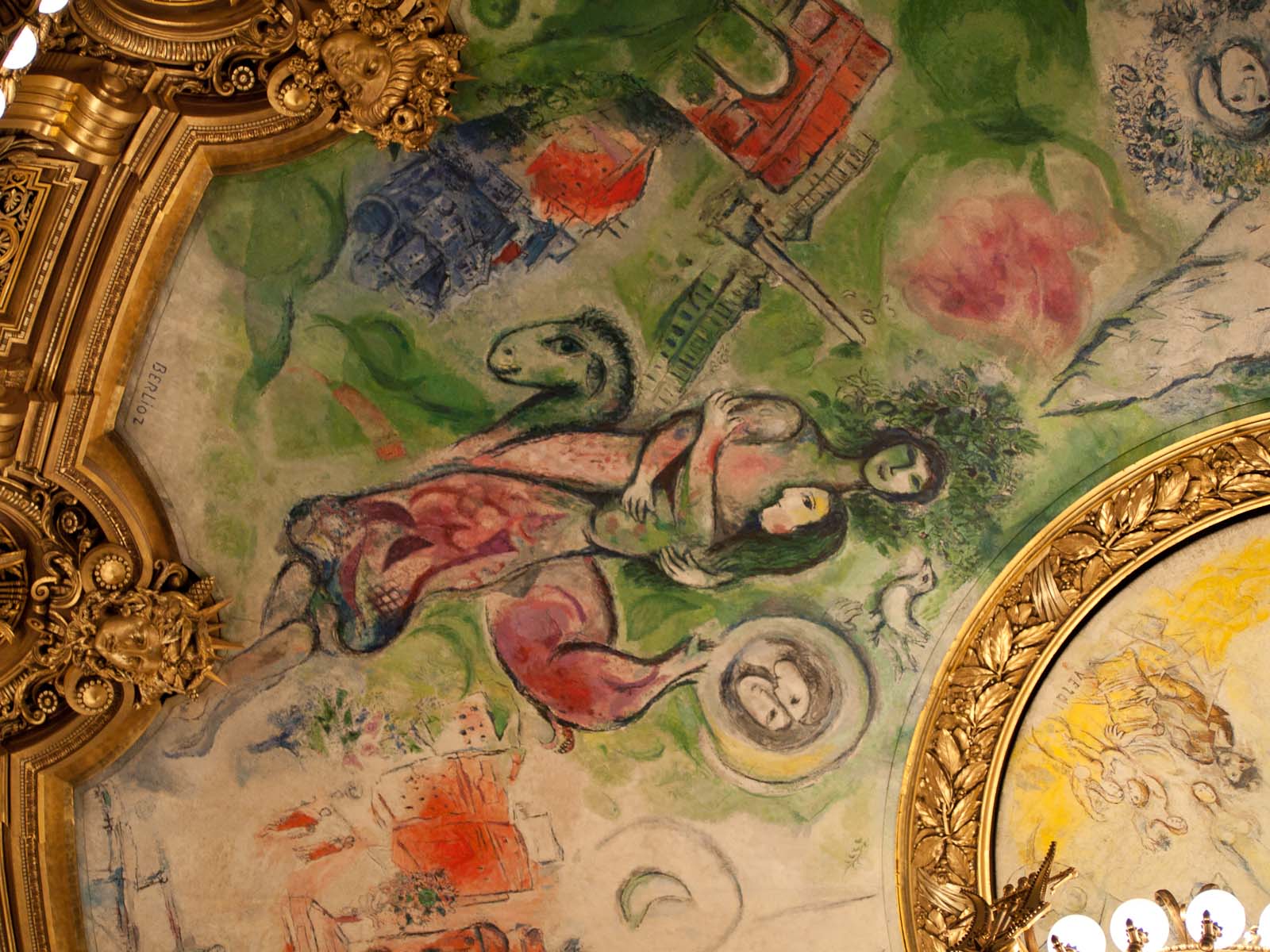
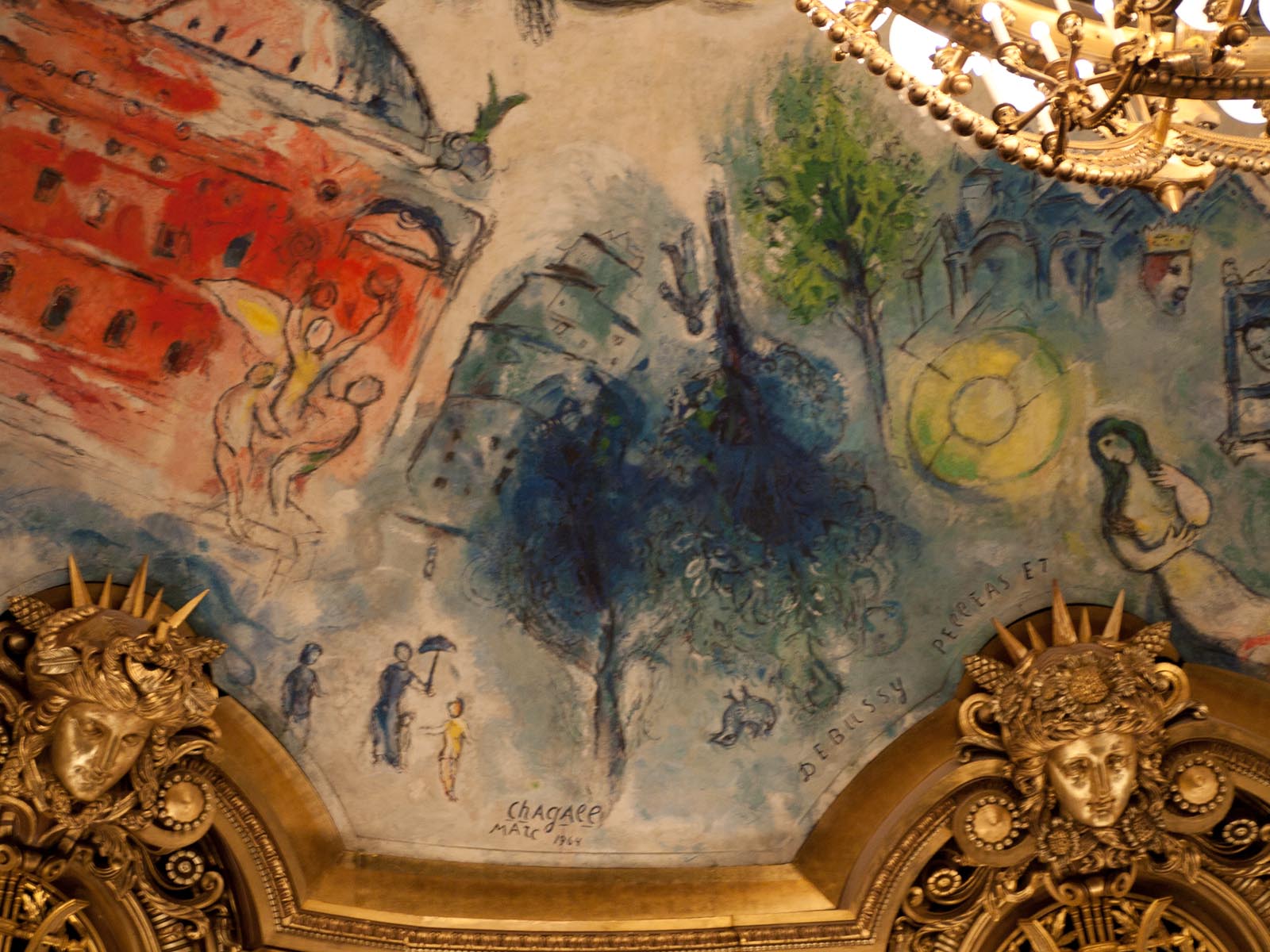
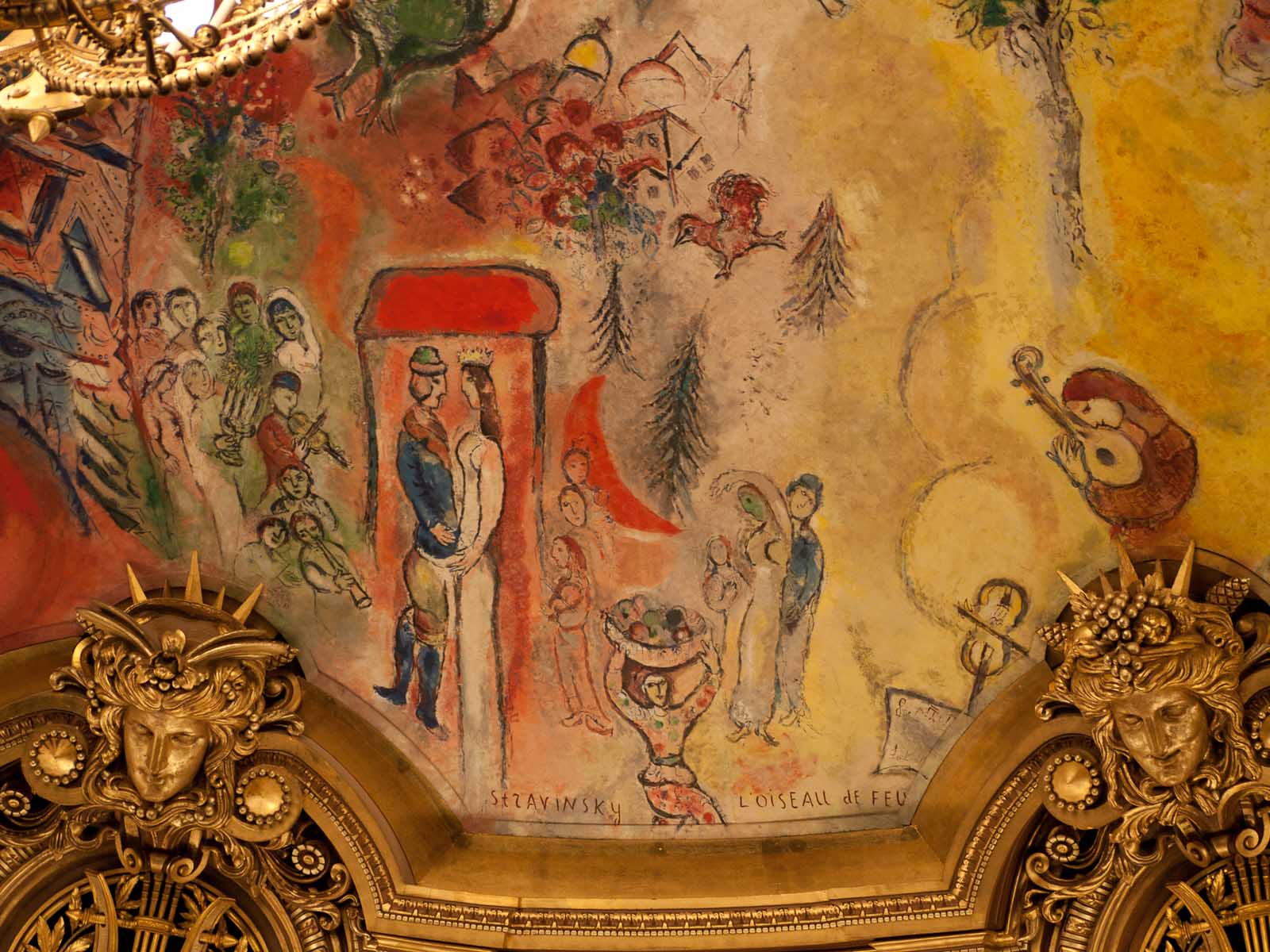
In 1964, the ceiling was repainted by Marc Chagall, a famous Jewish surrealist. We had not really known Chagall before the trip, and we encountered him first when we were in Zurich, where he had designed modern stained glass windows for a Protestant church. The windows were so gripping and provocative in their color and their symbolism that we left the church moved. So imagine our surprise when we walked into the theatre and looked up to see an enormous painting by Chagall. We were once again inspired and impressed. Although some people have criticized the design as too modern, we could not agree. The bright colors, lyrical figures and glowing light made a stunning contrast against the ornate gold and heavy velvet of the interior. I really loved the detail of this painting. Chagall wrote in by hand the names of the famous compsers whose works would be played and if you look closely at the composition you can see that the scenes are famous ones from the major operatic works. Chagall felt flowers and flight captured the best of the human spirit and you can see both here.
We briefly inquired about tickets and learned all the near-term shows were sold out. Ballet is quite popular in modern Paris. As with many professional sports, by the age of 40 a dancer generally must retire. In a few cases they are so talented that they continue to dance or tour, and these dancers are called étoiles, which means, stars.
Today opera-goers want to see the performance. Yet we are re-living the old traditions when we go to our American ballparks and football stadiums. Now as then, the audience repeatedly watches the same show, sits by price point, dresses to be seen, and eats and drinks prodigiously. Next time you head to the game, think of the Paris opera house.