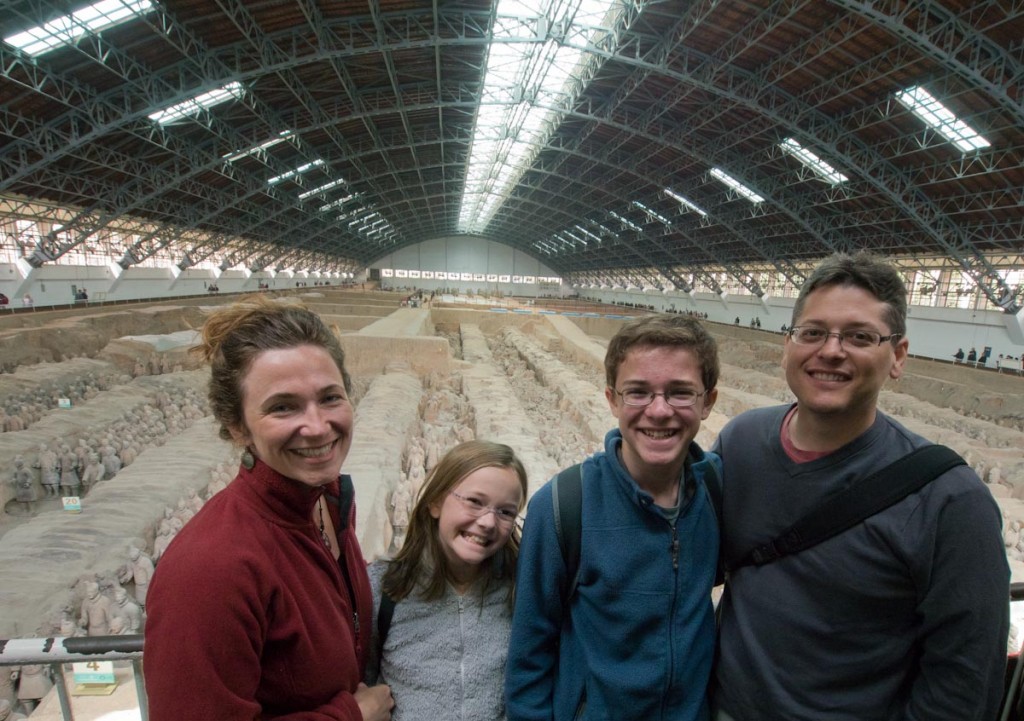
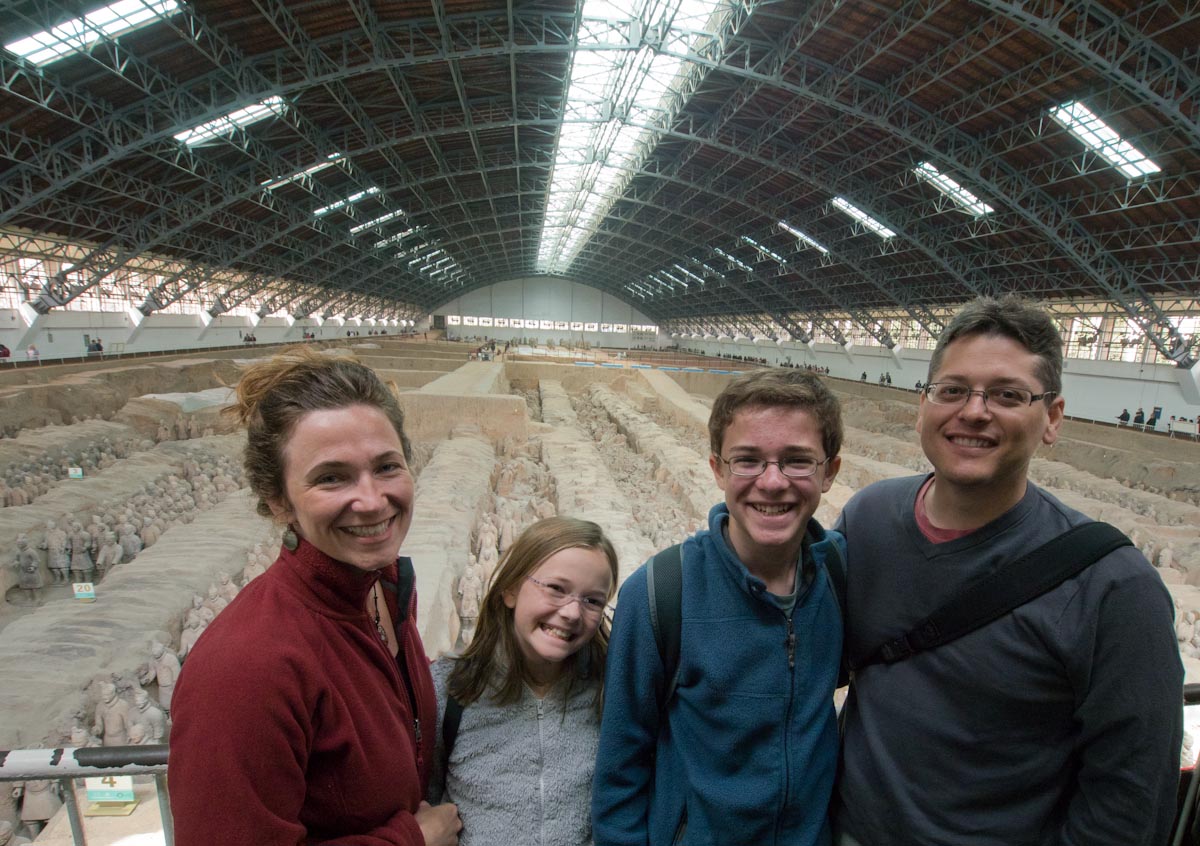
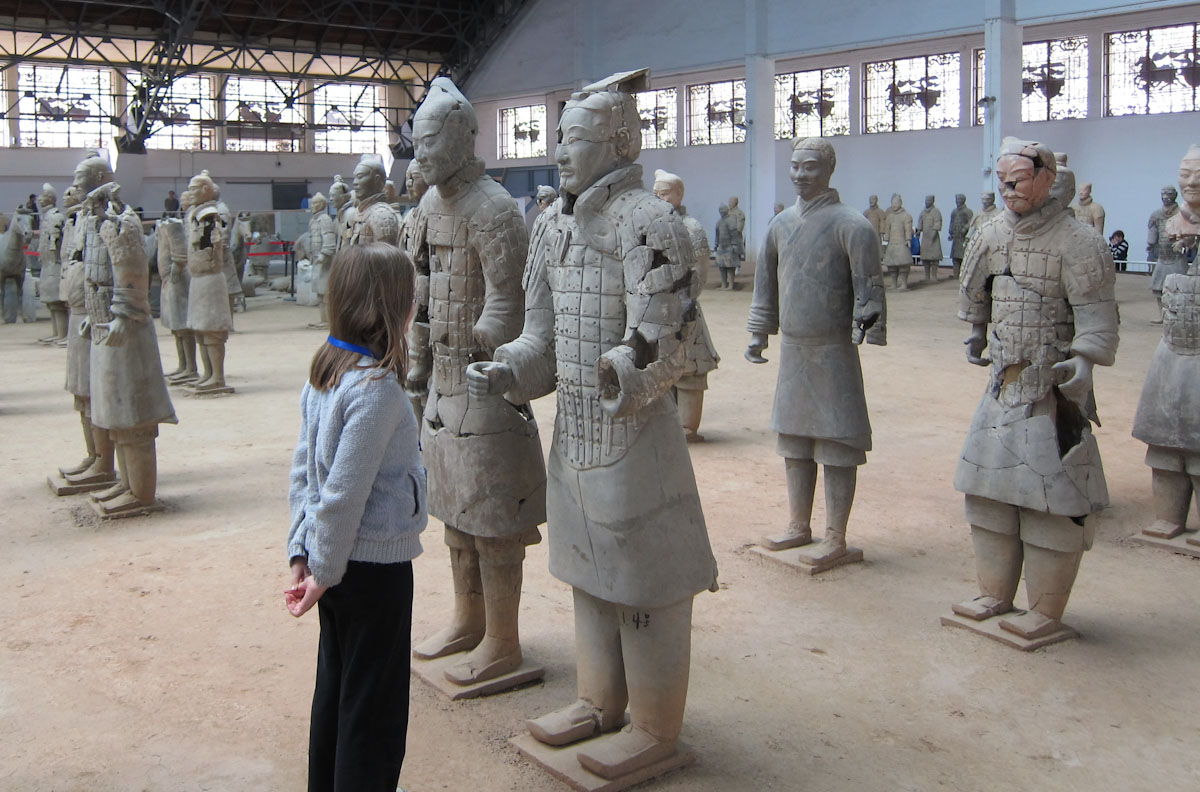
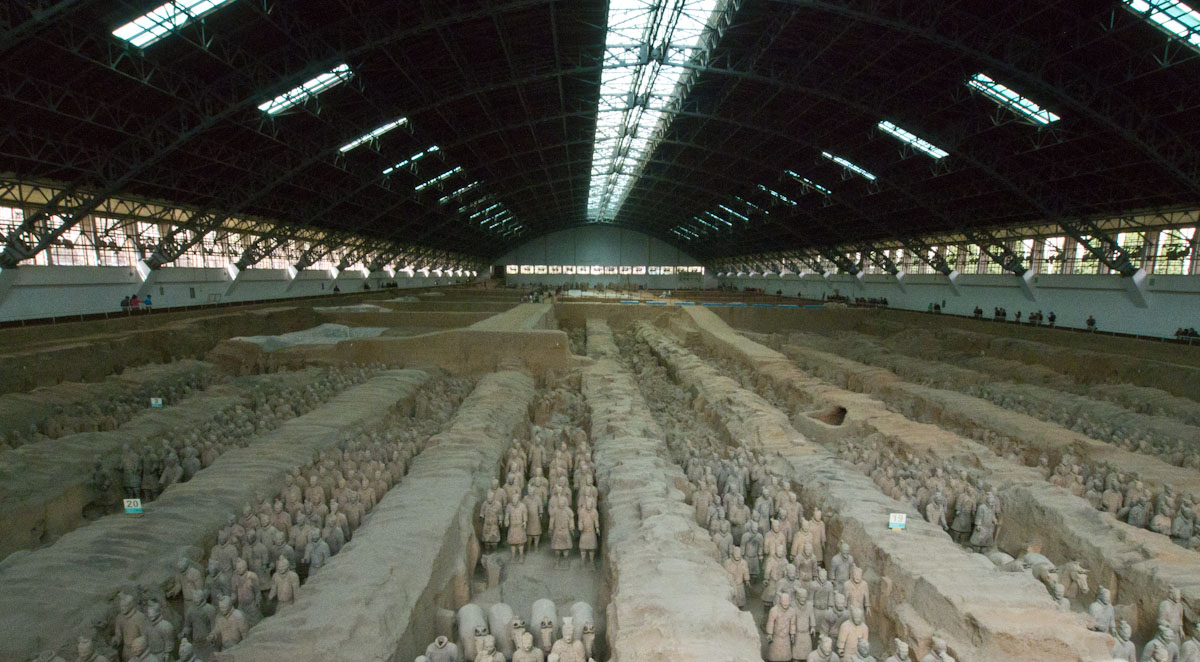
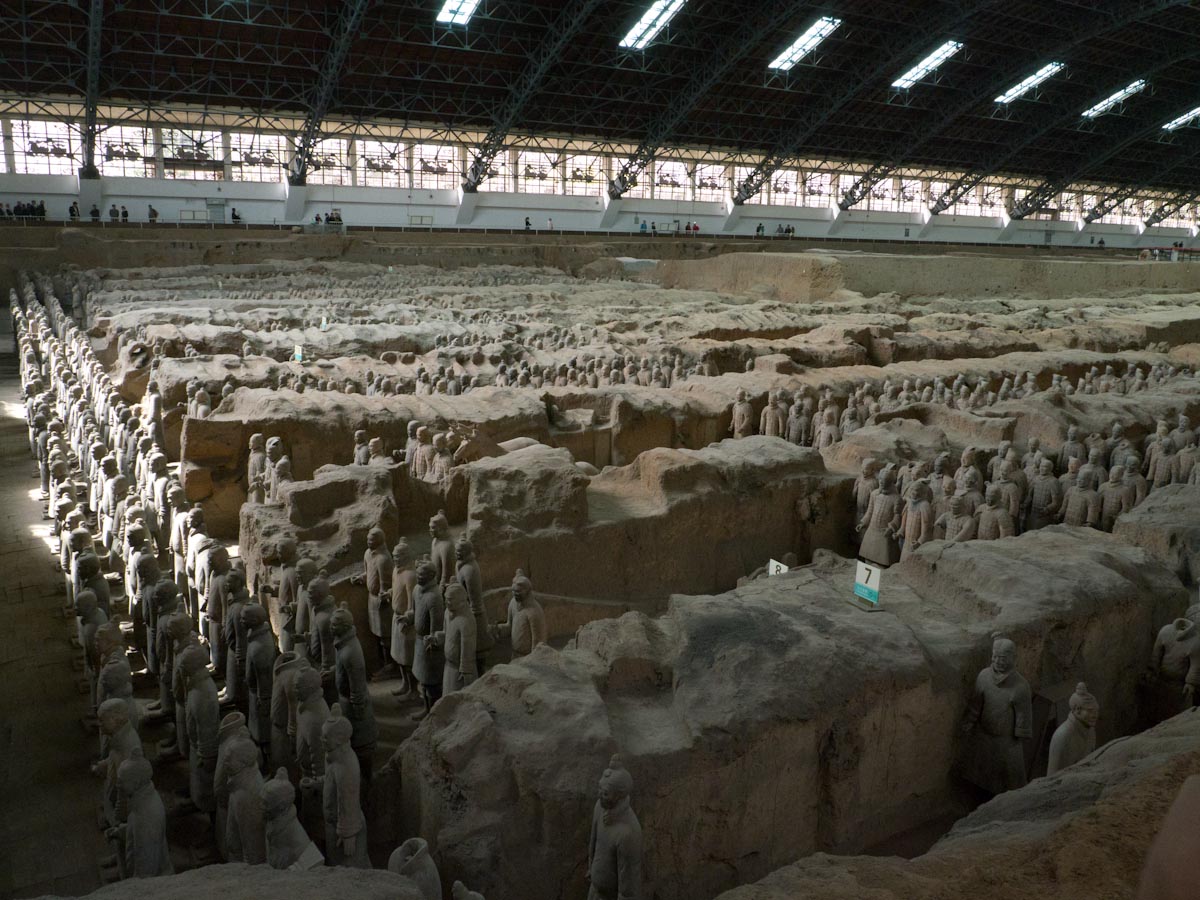
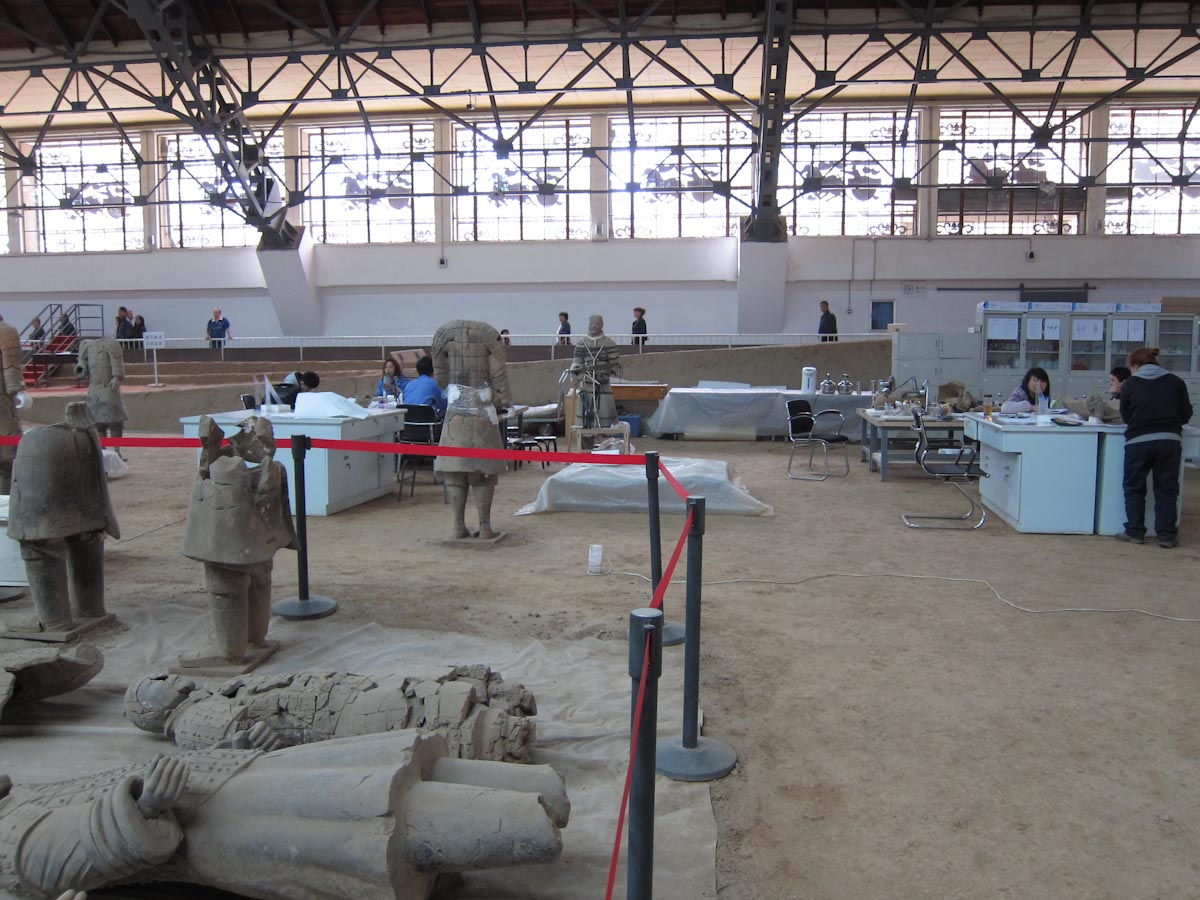
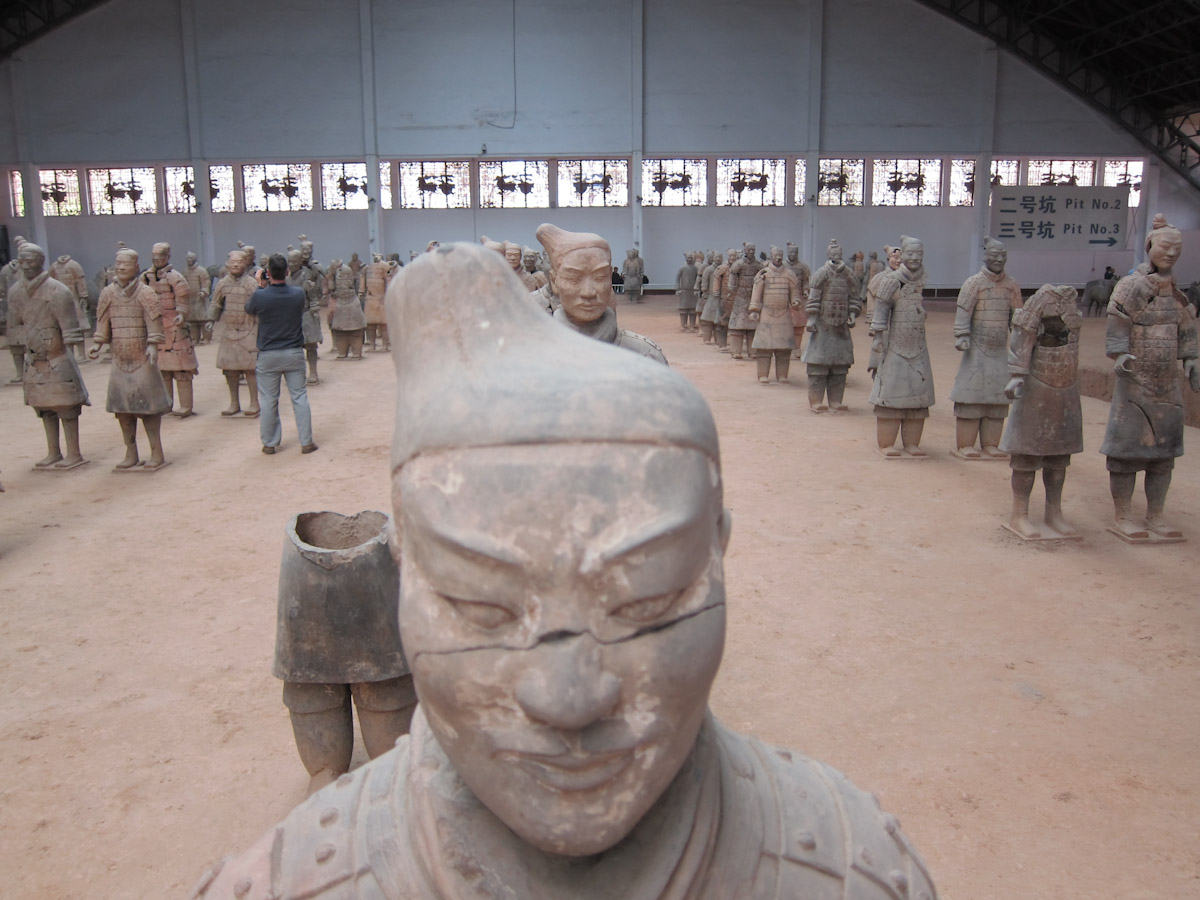
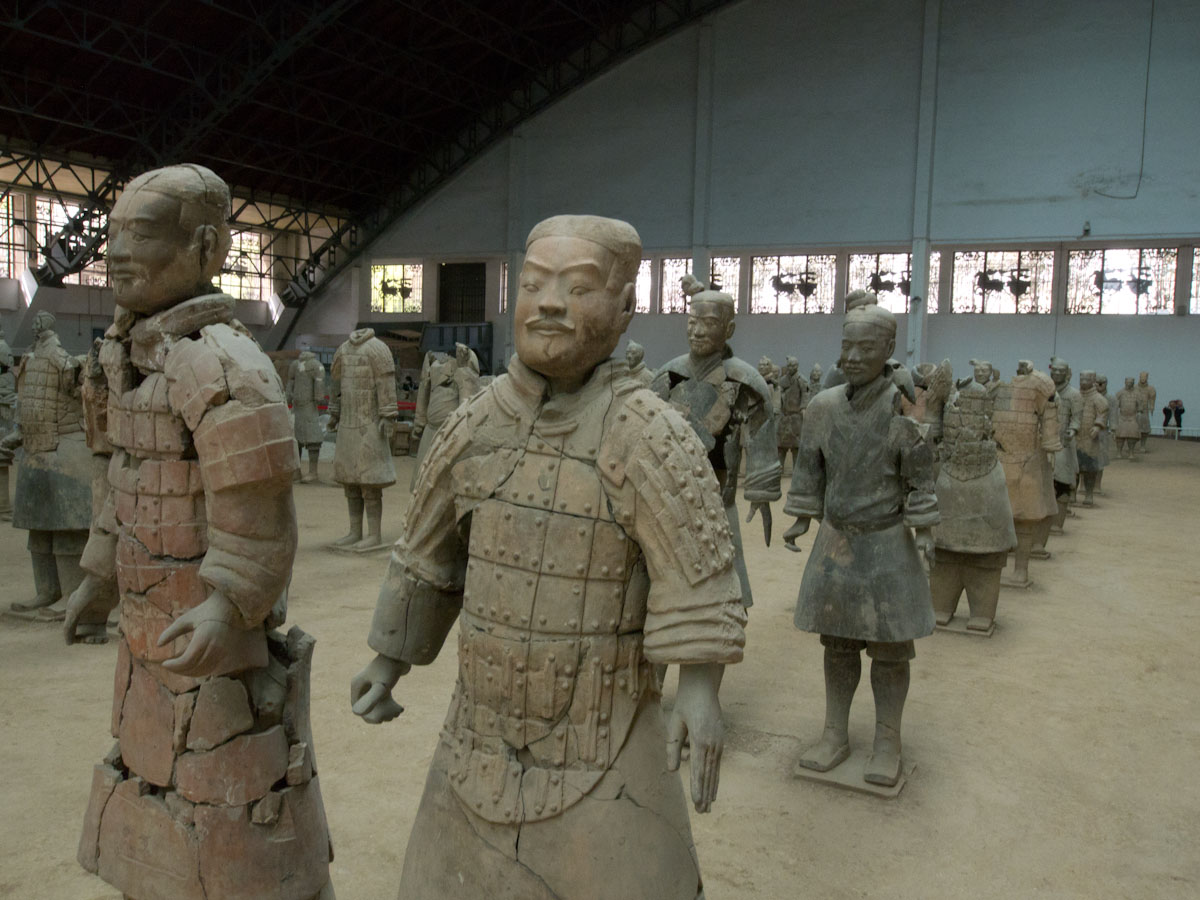
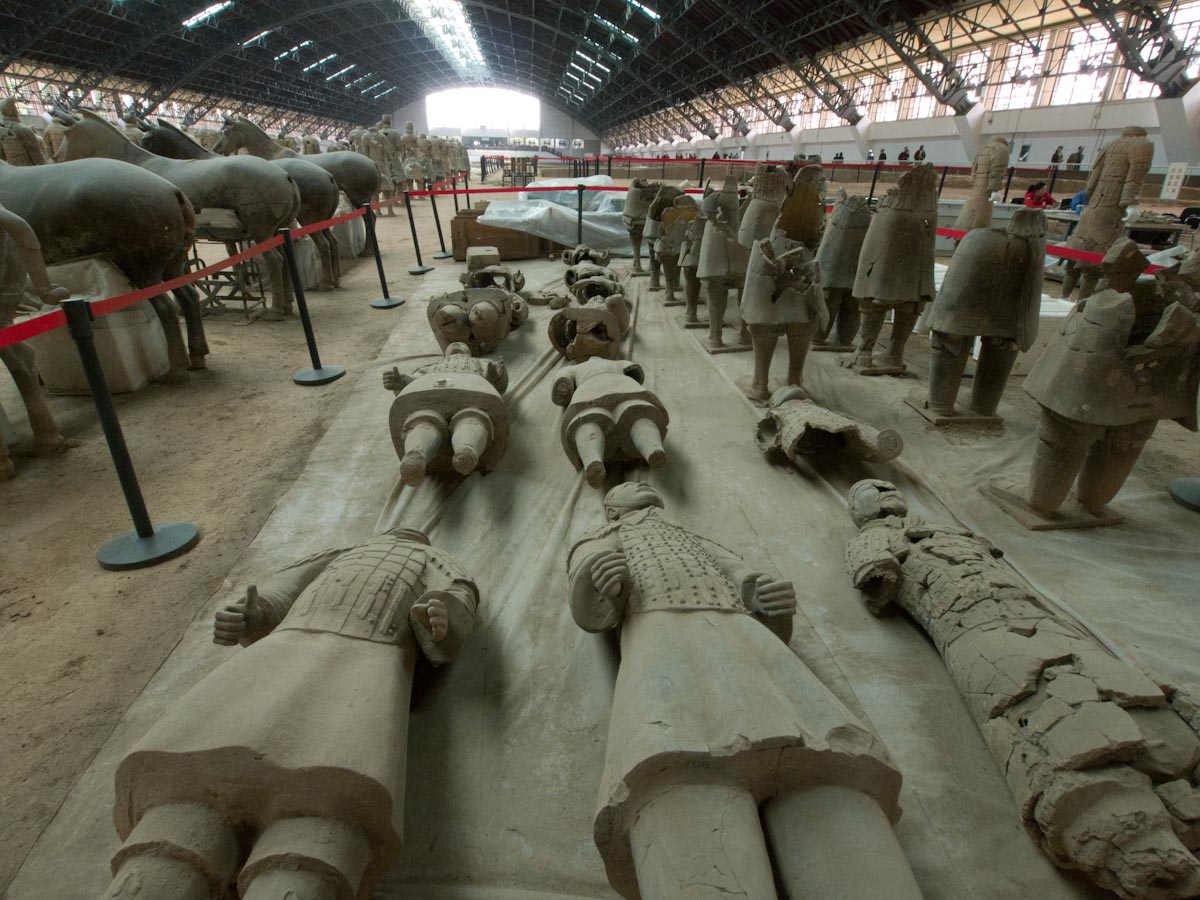
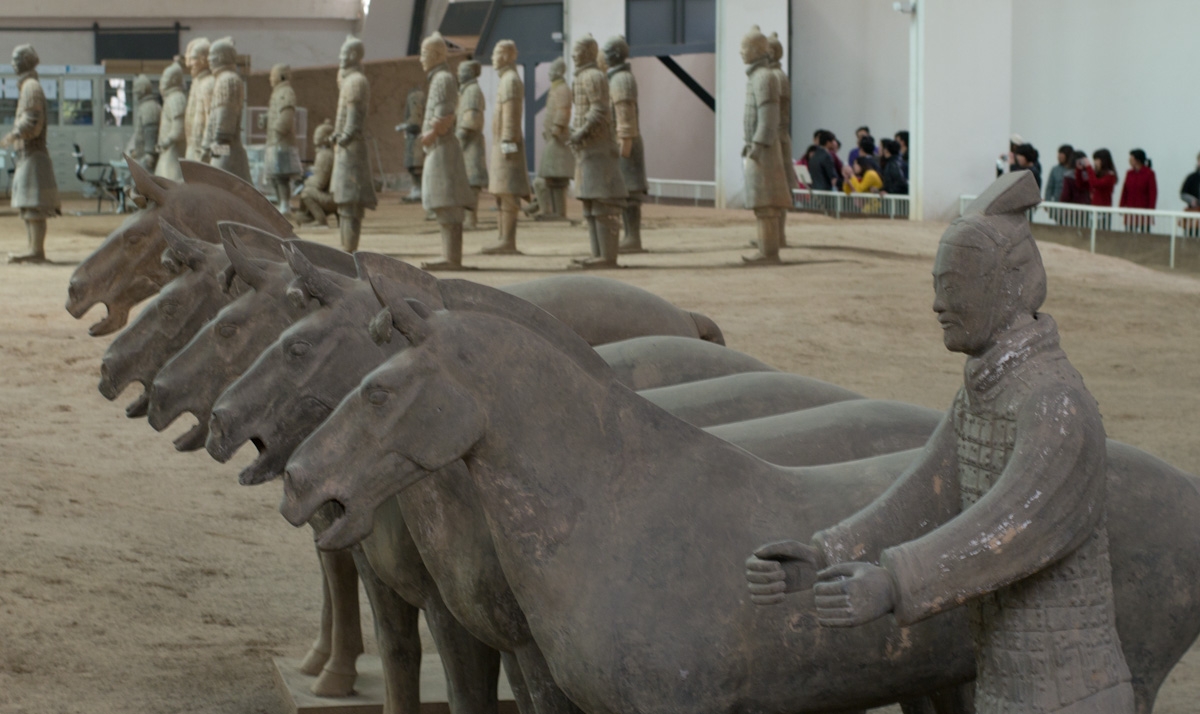
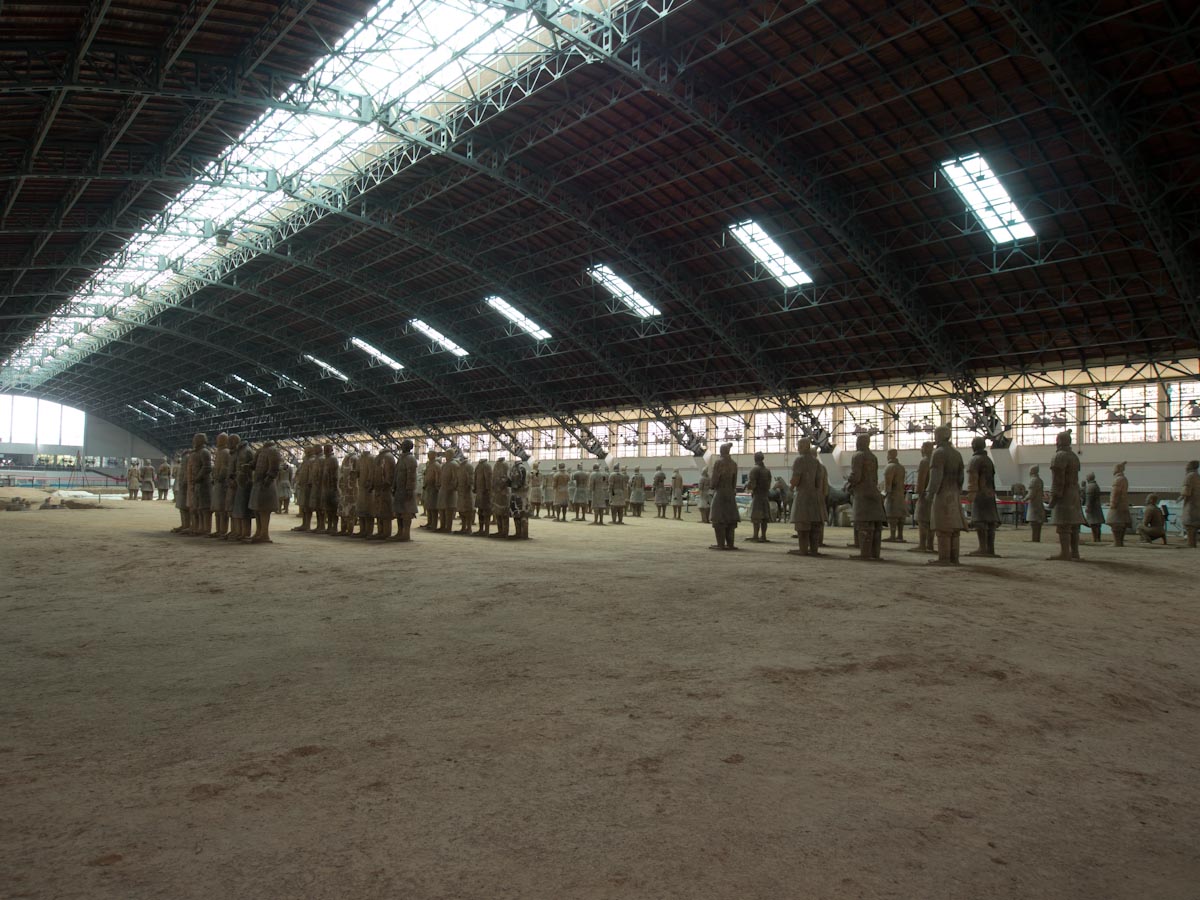
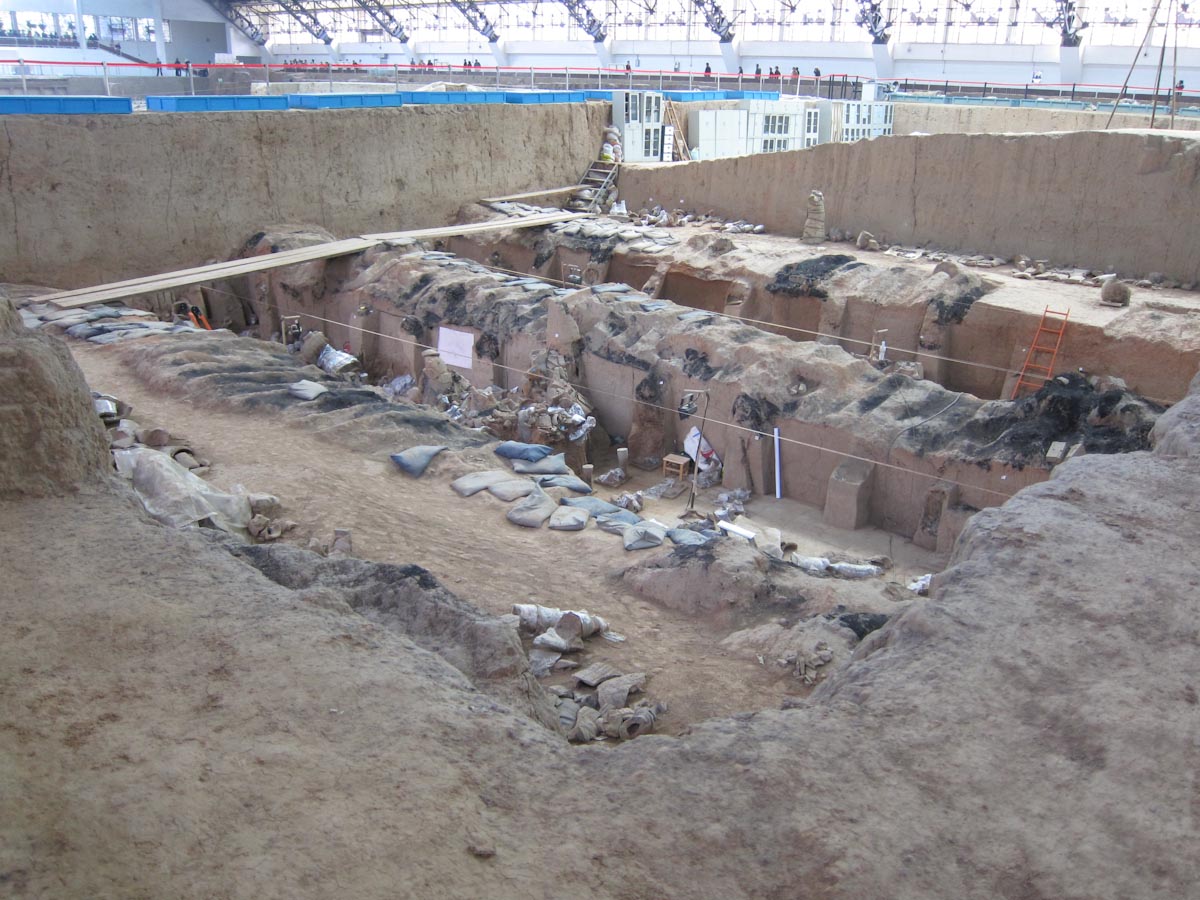
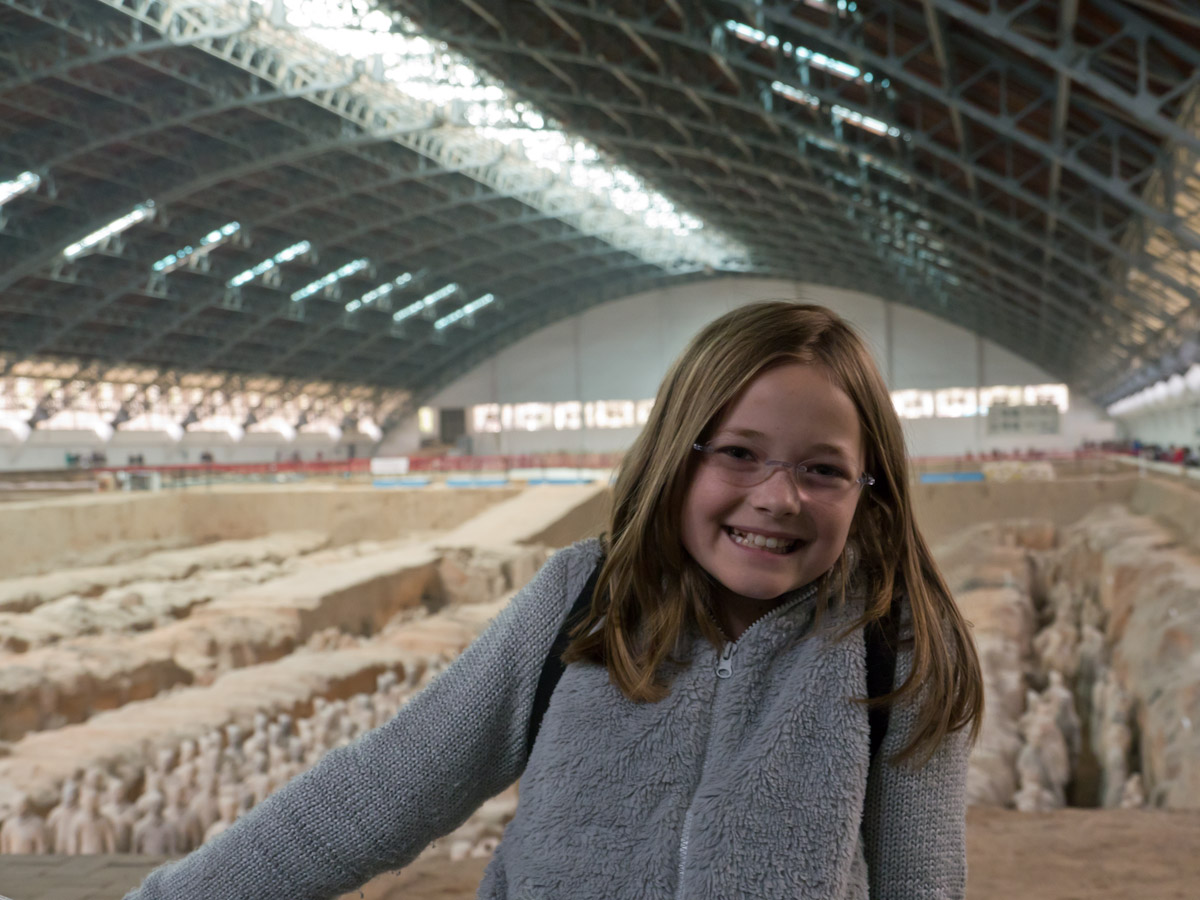
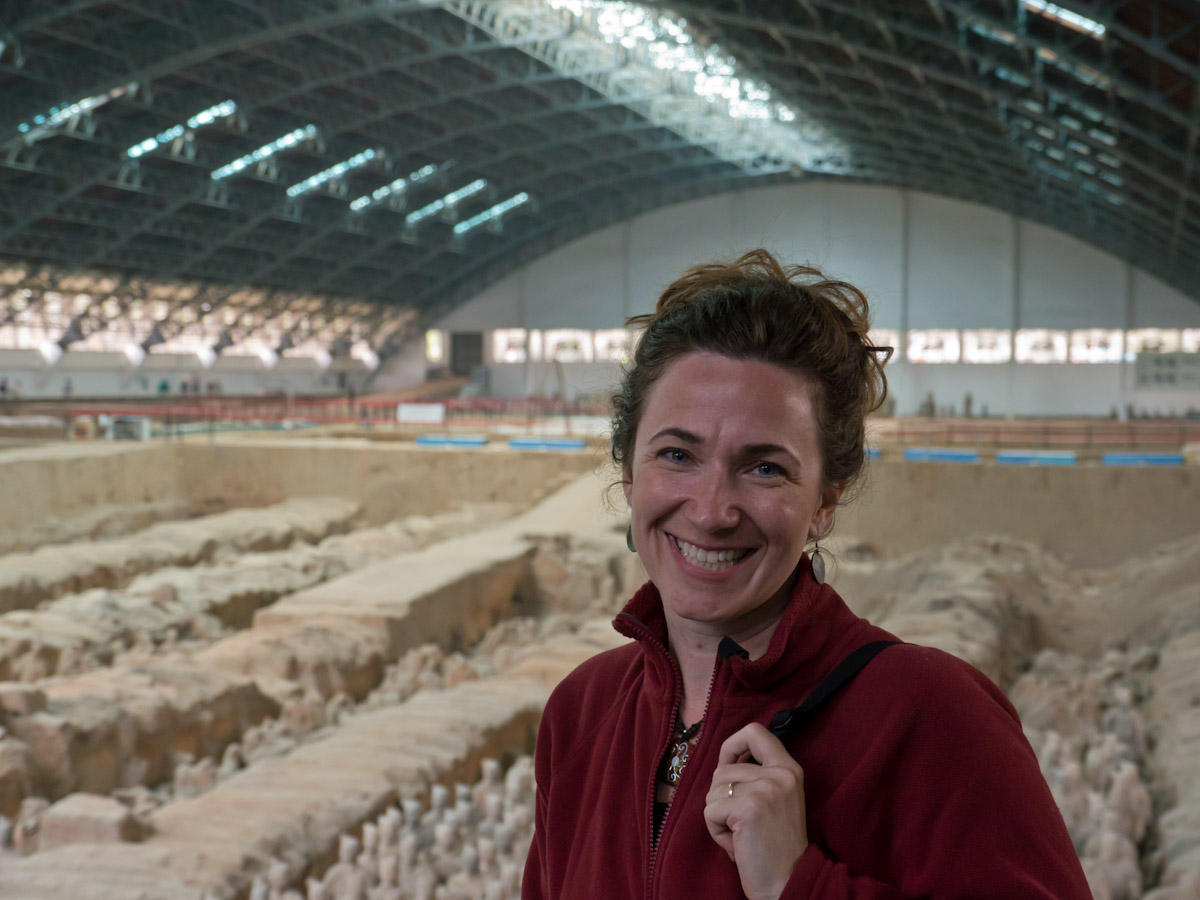
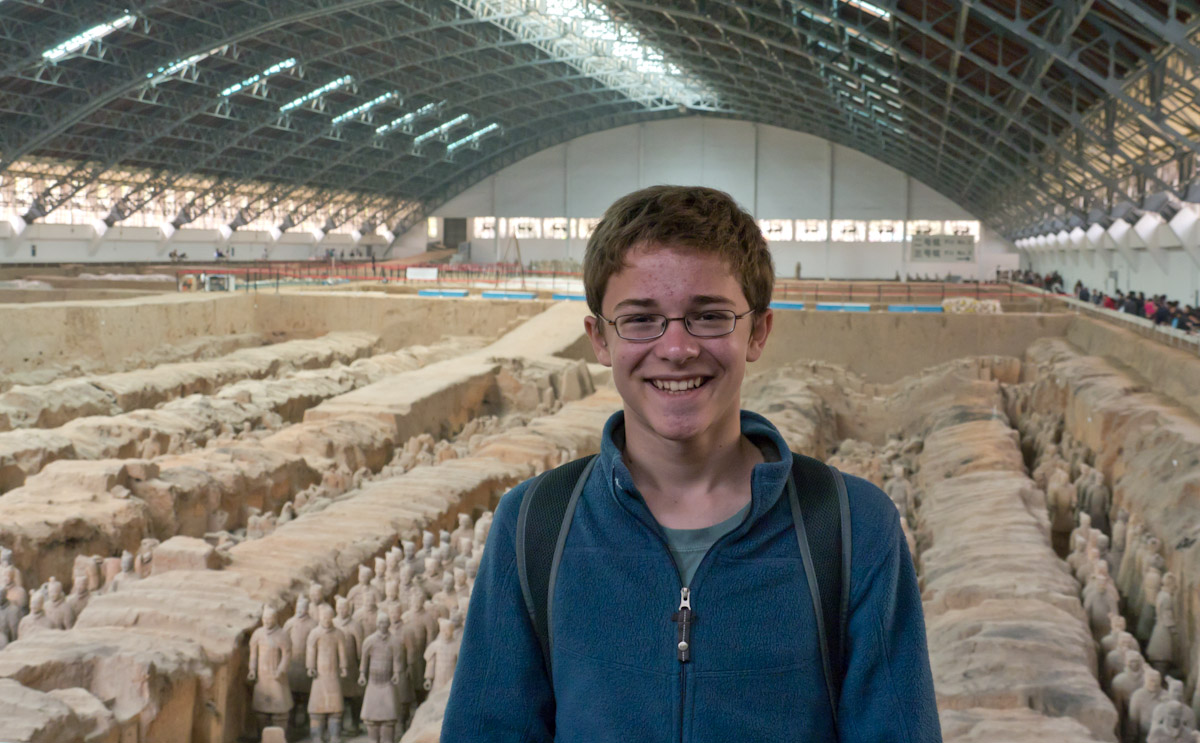
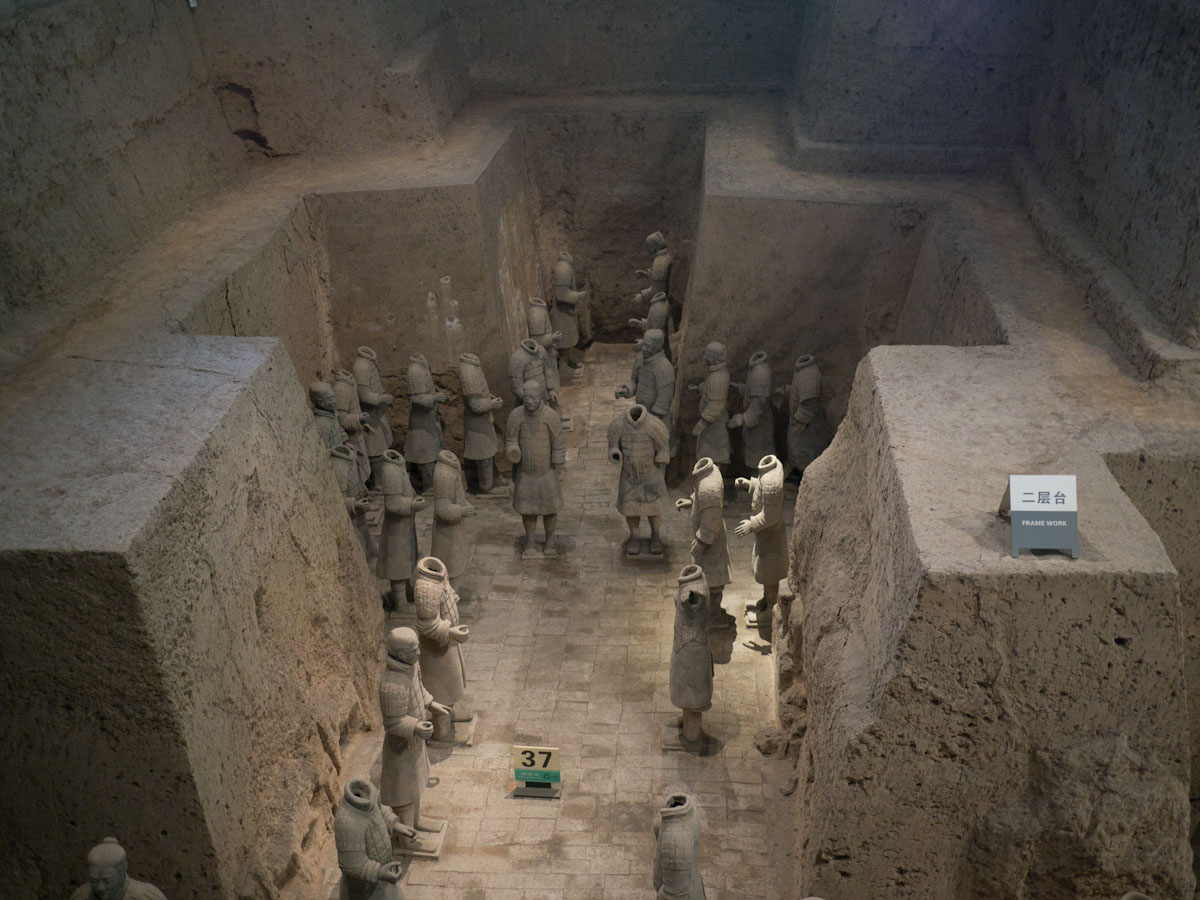
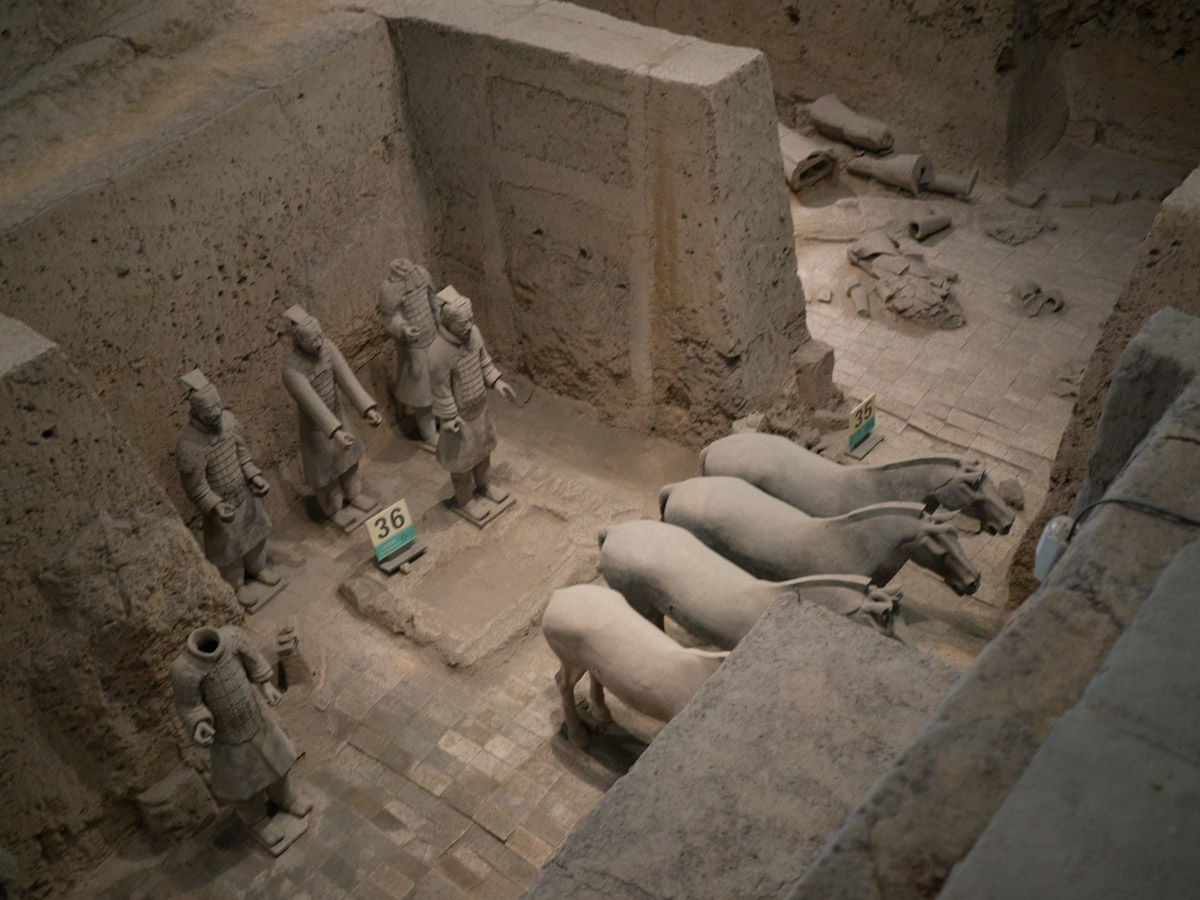
We stepped in to a long glass and metal building, built around one of China’s treasures. Before us lay deep trenches running in a vertical direction. Inside these trenches there were hundreds of soldiers. These soldiers stared straight ahead, not giving us a second glance. There had clearly been some sort of attack, as smashed body parts lay everywhere once you got past the initial formation. The soldiers had no weapons but they still had some horses and their armor. Yes, these were the Terracotta Soldiers. We were getting the rare opportunity to actually walk down on the floor with the soldiers! I was so excited!
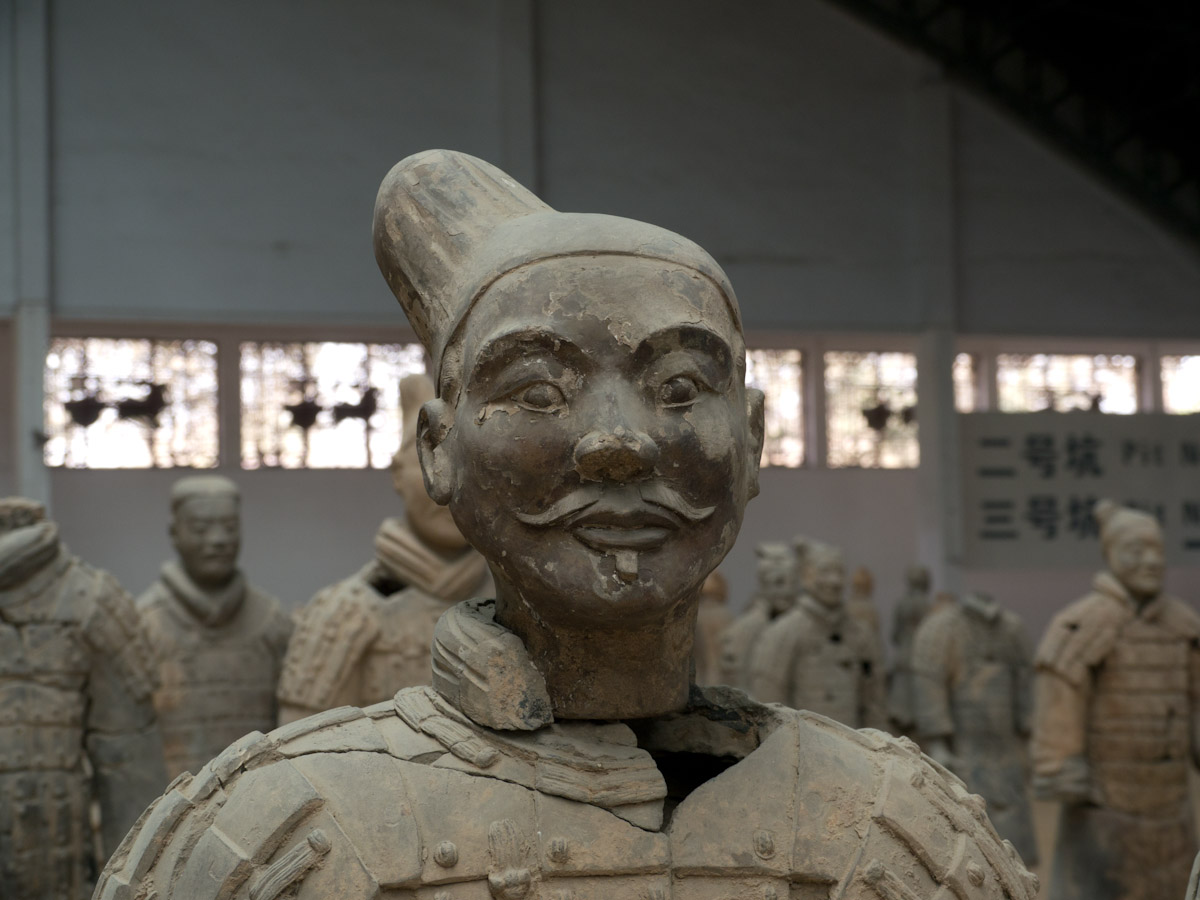
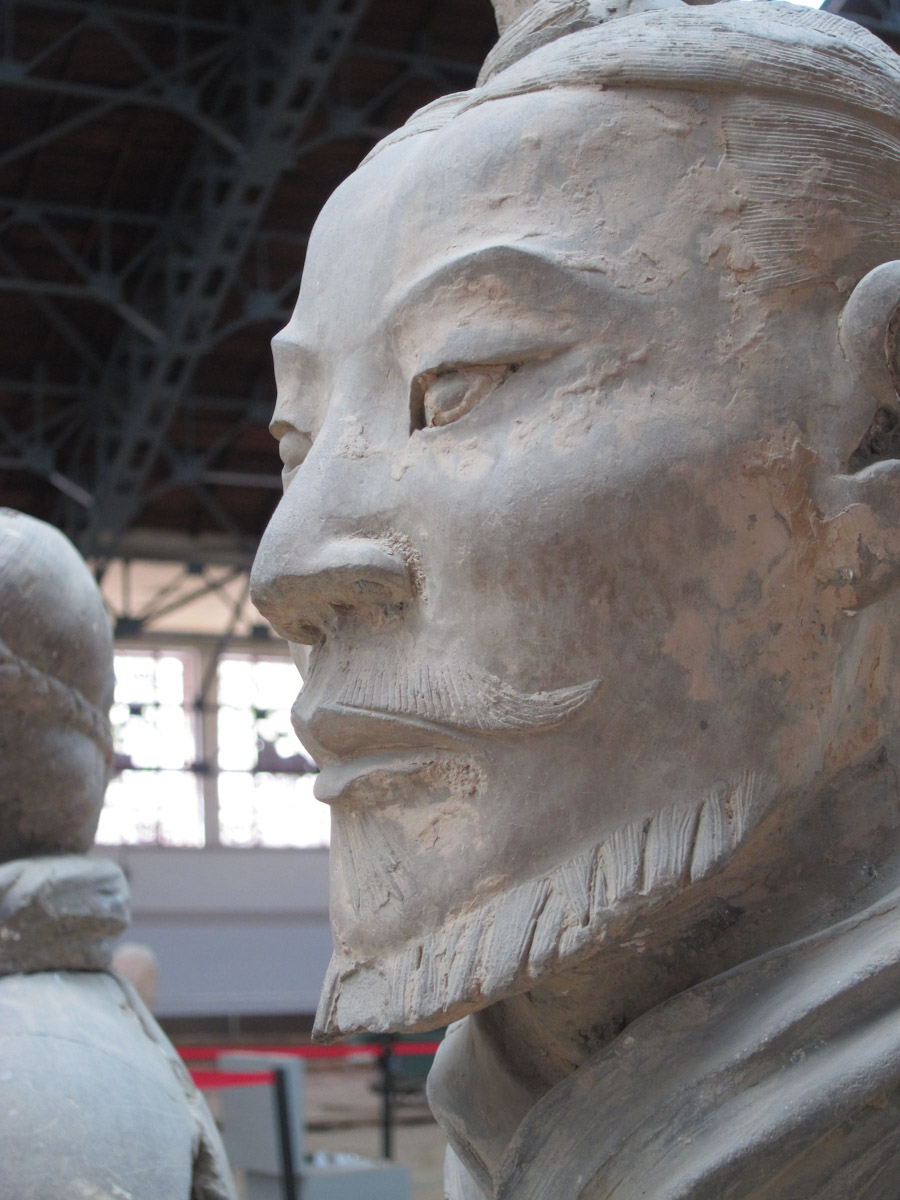
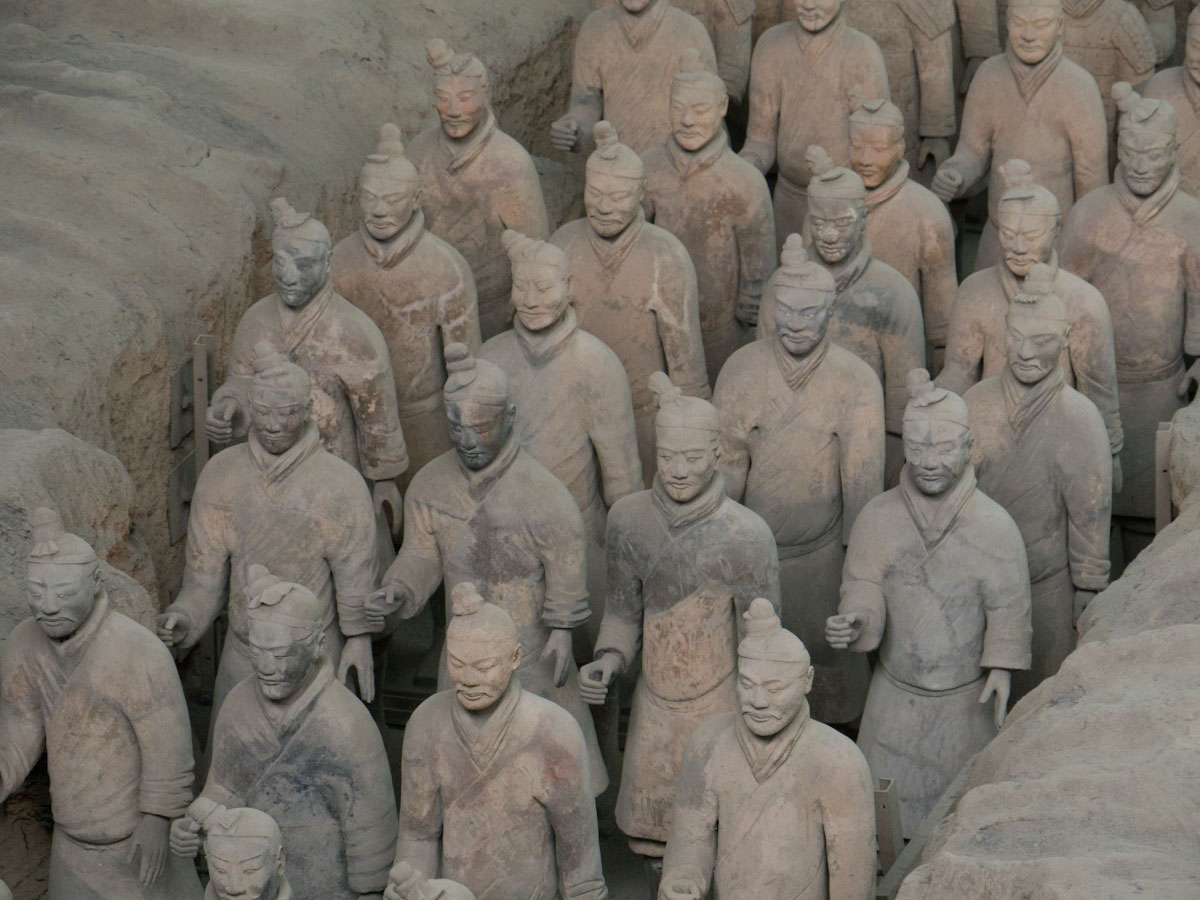
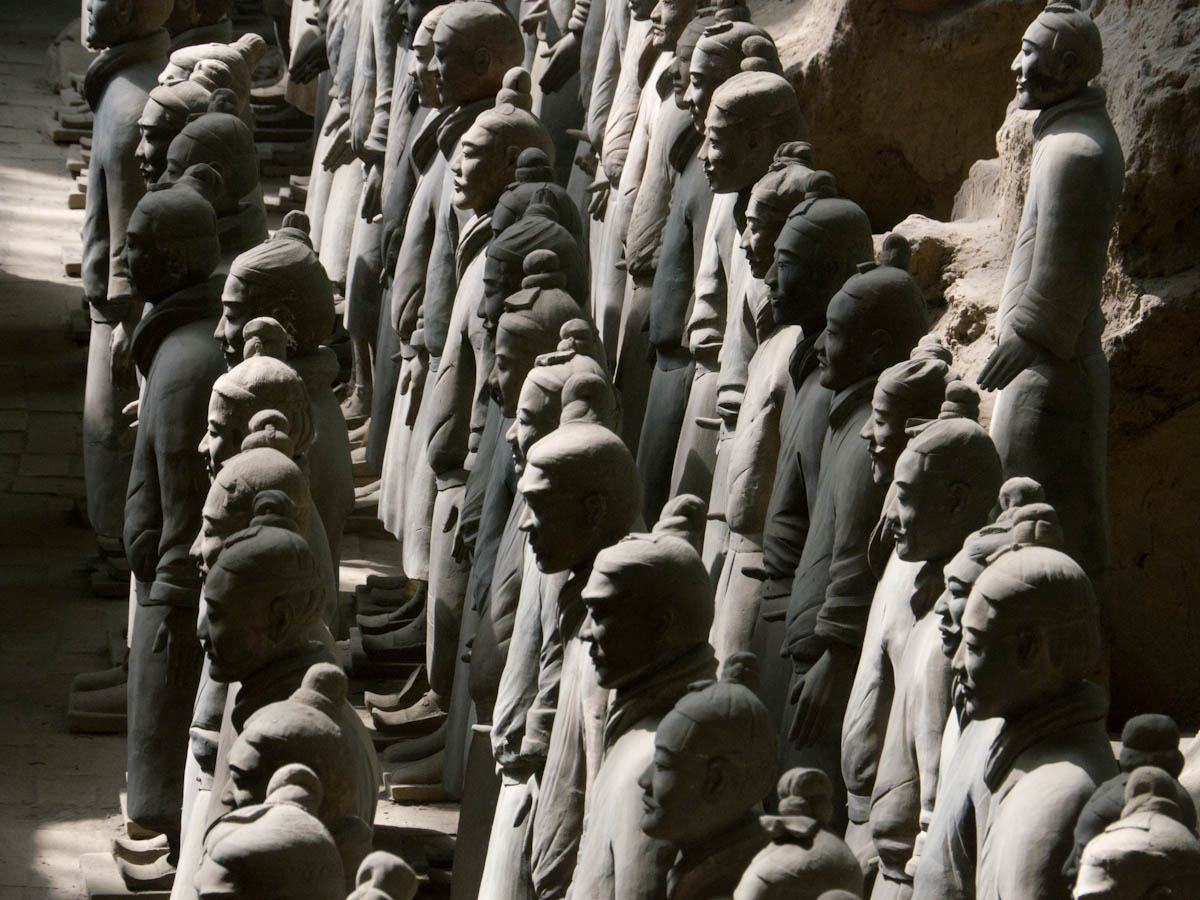
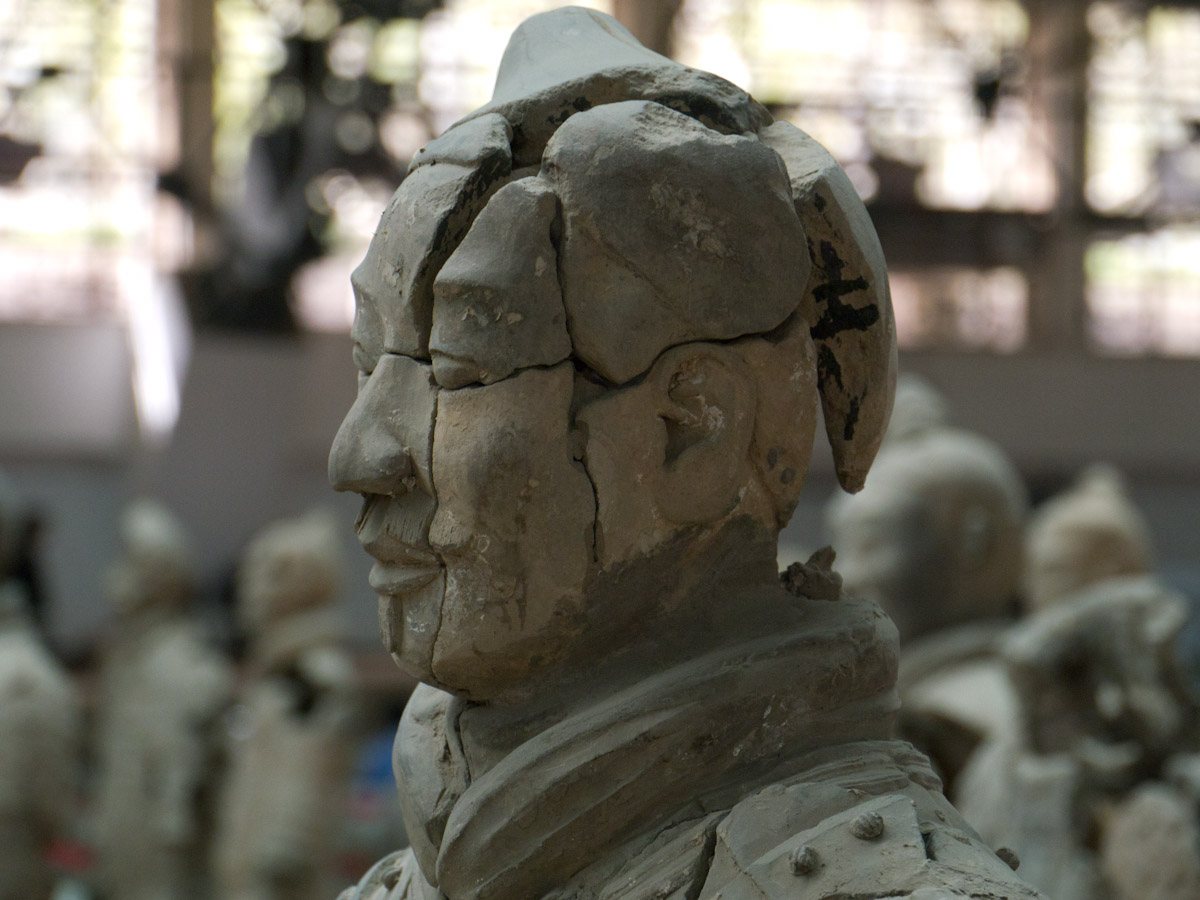
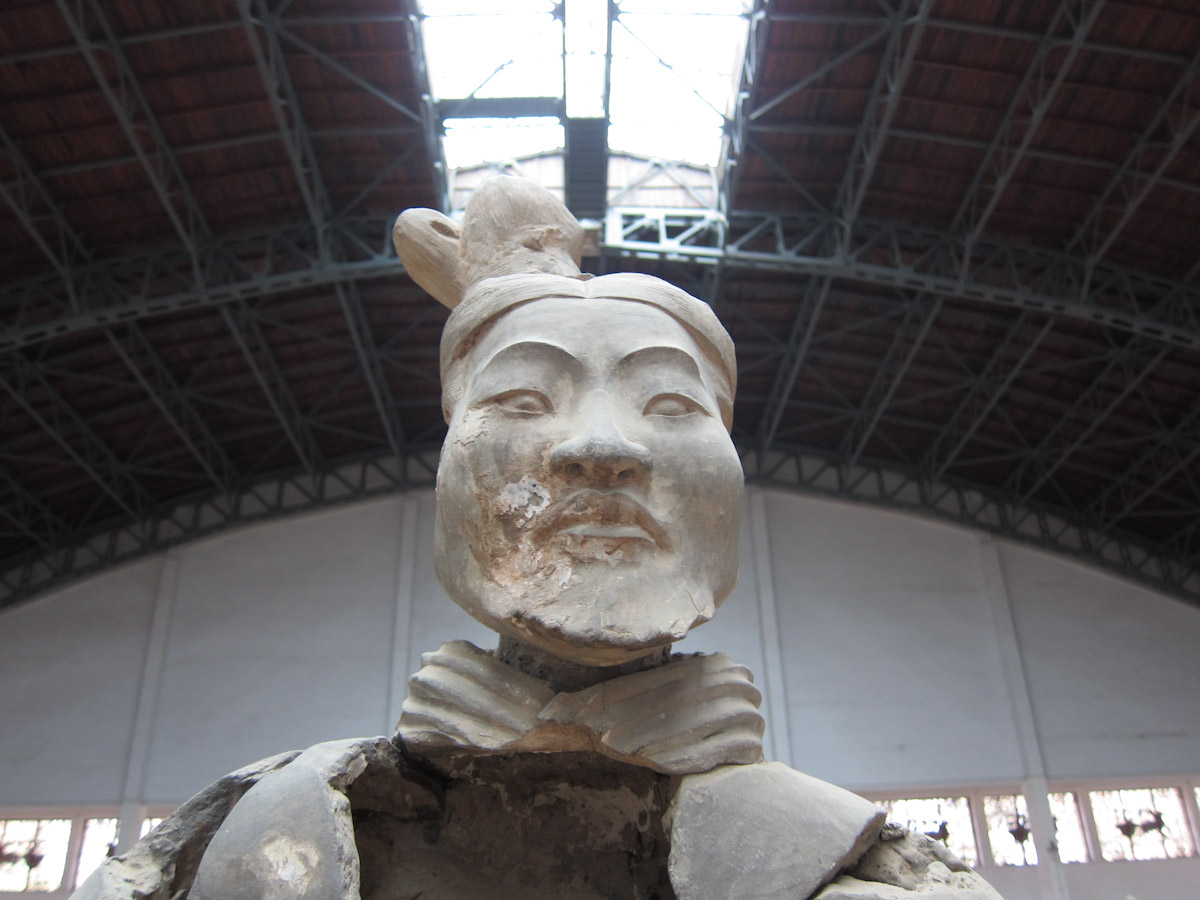
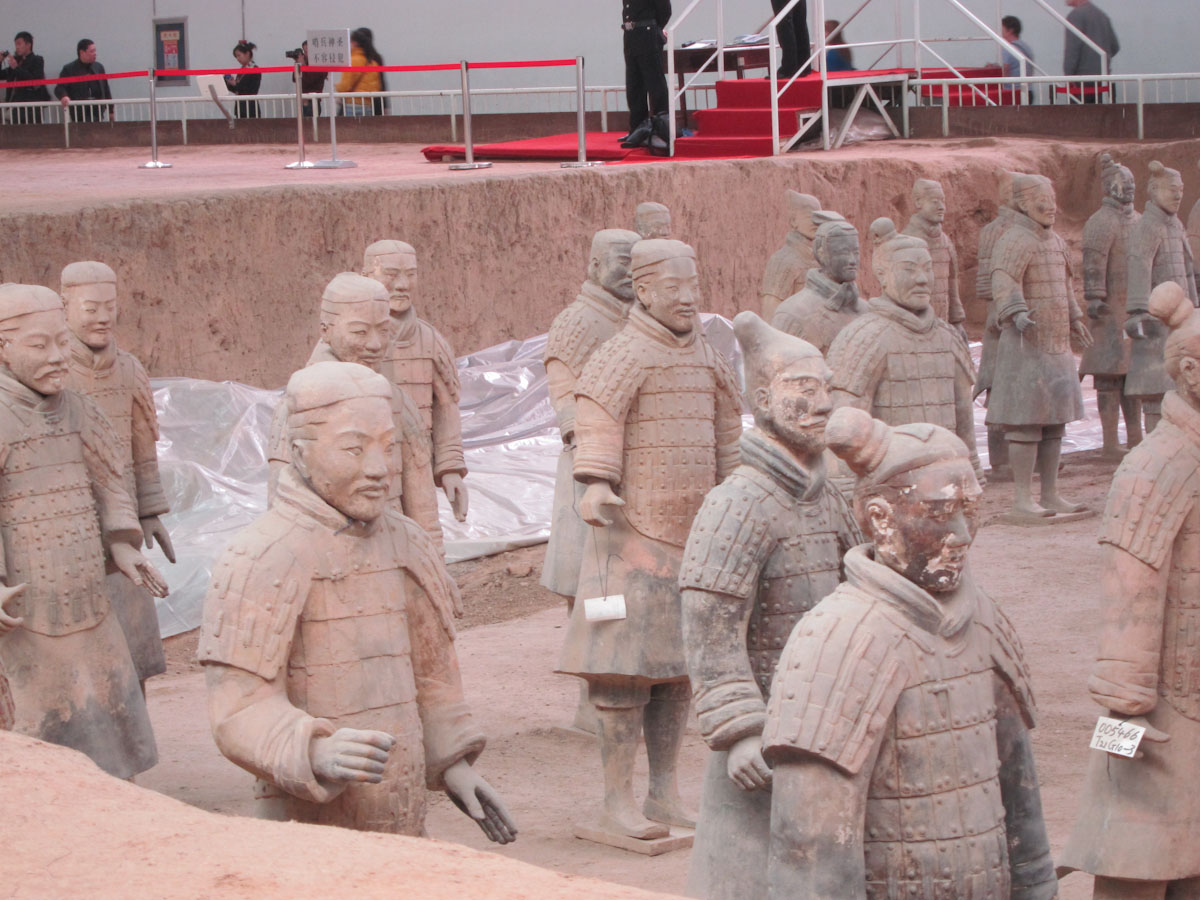
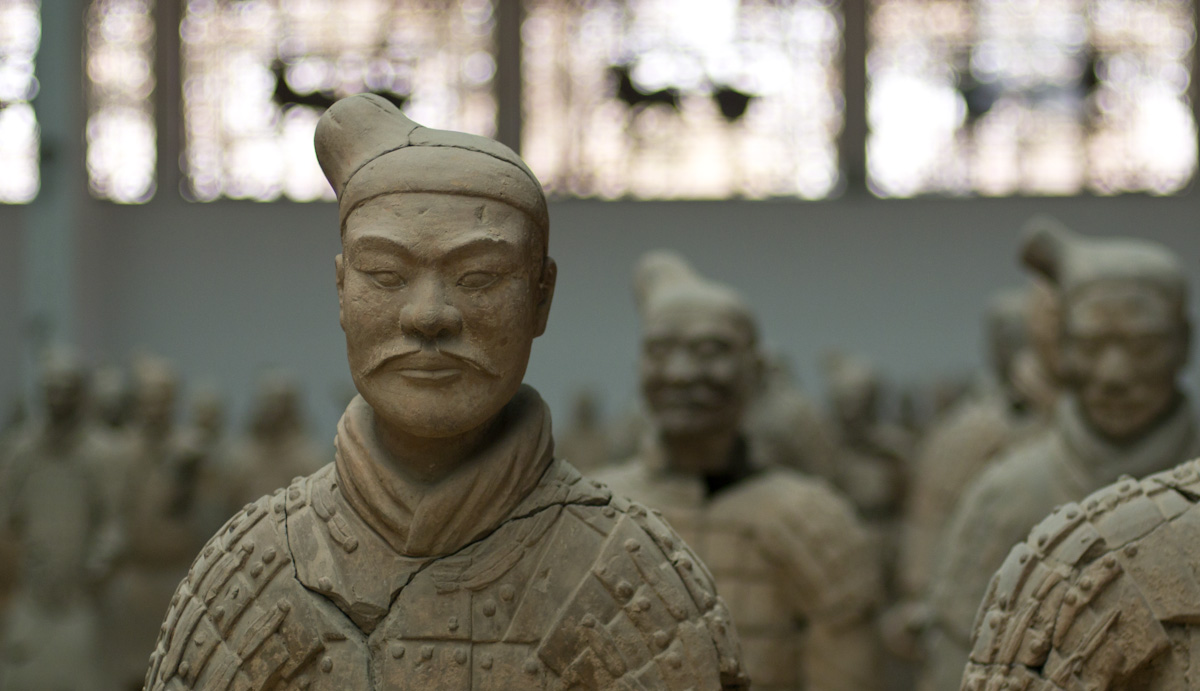
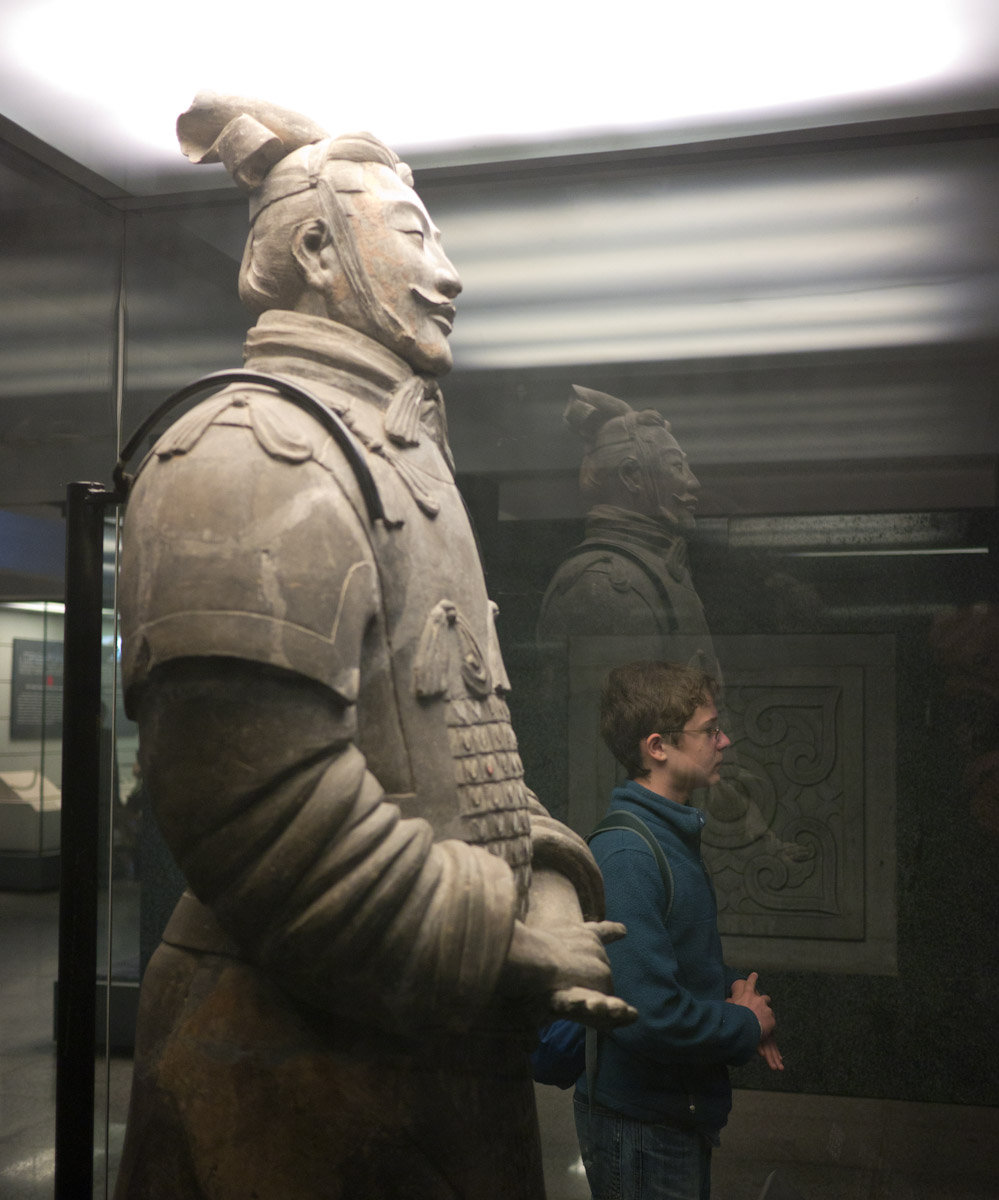
The Terracotta Soldiers were discovered in 1974 by a farmer and his buddies. Found near the tomb of Emperor Qin, this masterpiece took 720,000 workers and 38 years to complete. Buried for 2,200 years, archeologists have uncovered 1,868 soldiers so far; they believe another 4,000 are still. Each warrior is unique. He has his own hairstyle, clothing, hand position and facial features. The Terracotta Army was a perfect replica of a real life one. It is thought that real soldiers were the models for the artisans.
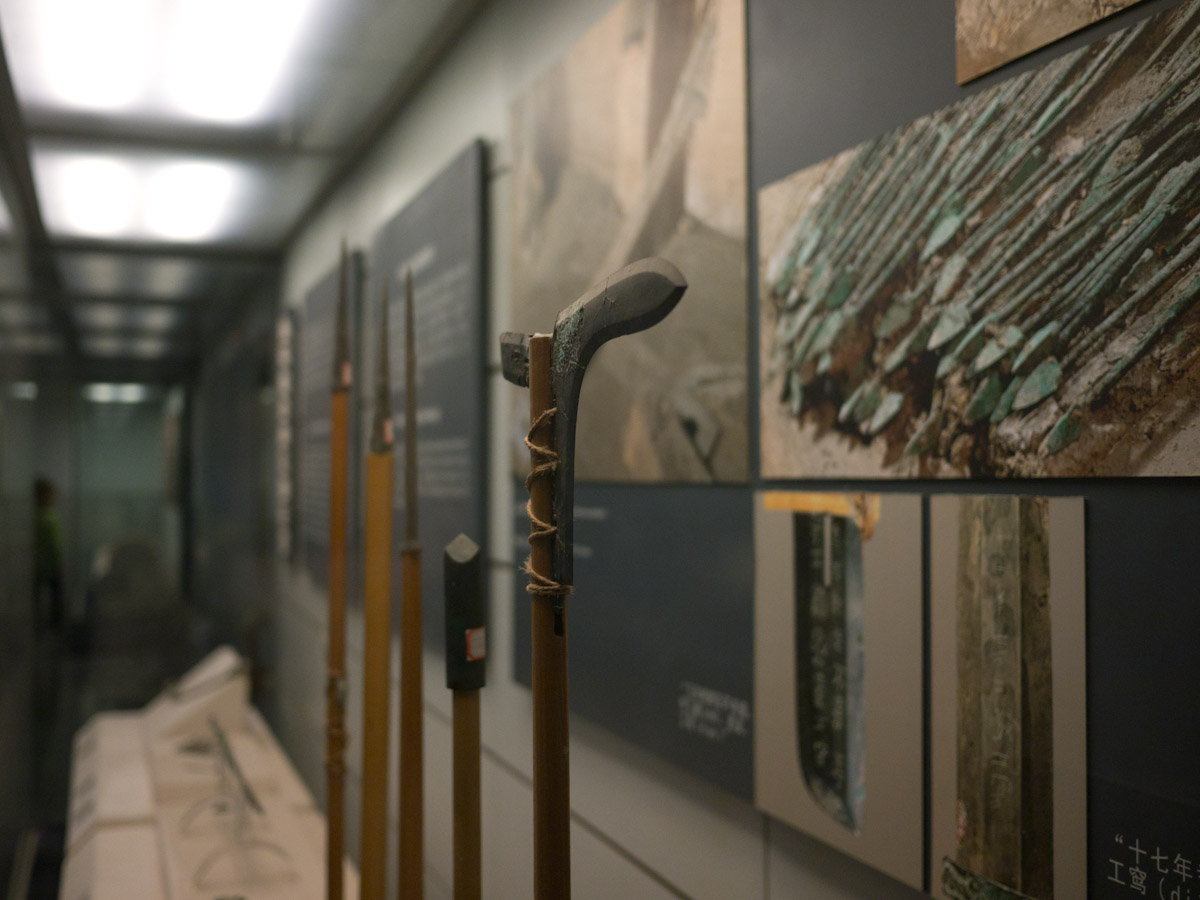
The Terracotta Warriors were built to accompany Emperor Qin in to the afterlife. Therefore they couldn’t have rusting and decaying weapons, right? So, a thin layer of chromium was spread over their weapons protecting against any corrosion. That is why the weapons are still sharp today
. Called
Chrome Plating, or just
chrome, this process was claimed to be invented by an inventor named L. N. Vauquelin about 2,000 years after the Chinese.
The Terracotta Army has different classes of soldiers, just as we do today. Below, I shall describe each class and their modern equivalent.
Slave: Prisoner of war or criminal, the slave was dressed in nothing but a robe. They were given a weapon though and told to fight. Then they were placed in the front lines, the worst spot to be, period; even more so when you have no armor and the crossbow guys are looking at you. If the slave managed to somehow kill five enemies, he was granted freedom. If he managed to kill TEN enemies, a feat difficult for even a professional soldier, his family was given a plot of land and he was considered a landowner.
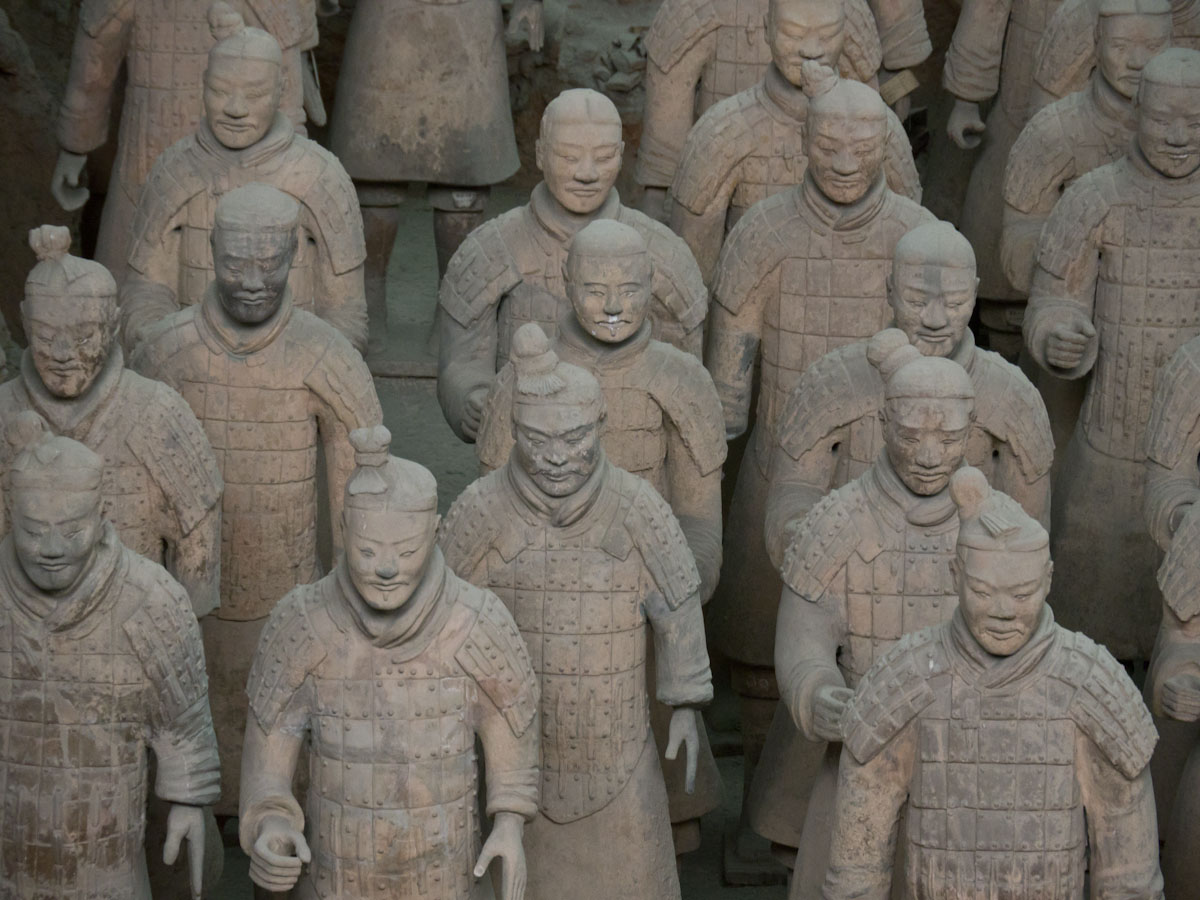
Long spearman: The next line of soldiers after the slaves, the long spearman’s job was to ram into the enemy with his several meter long spear; creating obstacles and staying out of reach while wreaking havoc. He had shingle-type armor.
Short spearman: Following the longs, these guys finished off any missed soldiers and then slammed in to the enemy to reinforce the battle line. Shingle-type armor.
Swordsman: Ahh, here we go, the backbone of the army. These guys used only a sword but were much better in the thick of combat then a spatially restricted spearman. Note: I would think that almost everyone had a sword, or close range weapon as a secondary if not primary weapon. Shingle-type armor.
Longbow archer: An archer with a longbow; nothing really special except for the fact that their arrows could perform arcs. Shingle-type armor.
Crossbow archer: Deadly, feared, titan of the battlefield, the automatic crossbow wielding archer could wreak destruction on the most heavily armored veteran. Their bolts were usually used for straight firing though, which is why both kinds of archers were needed. Shingle-type armor.
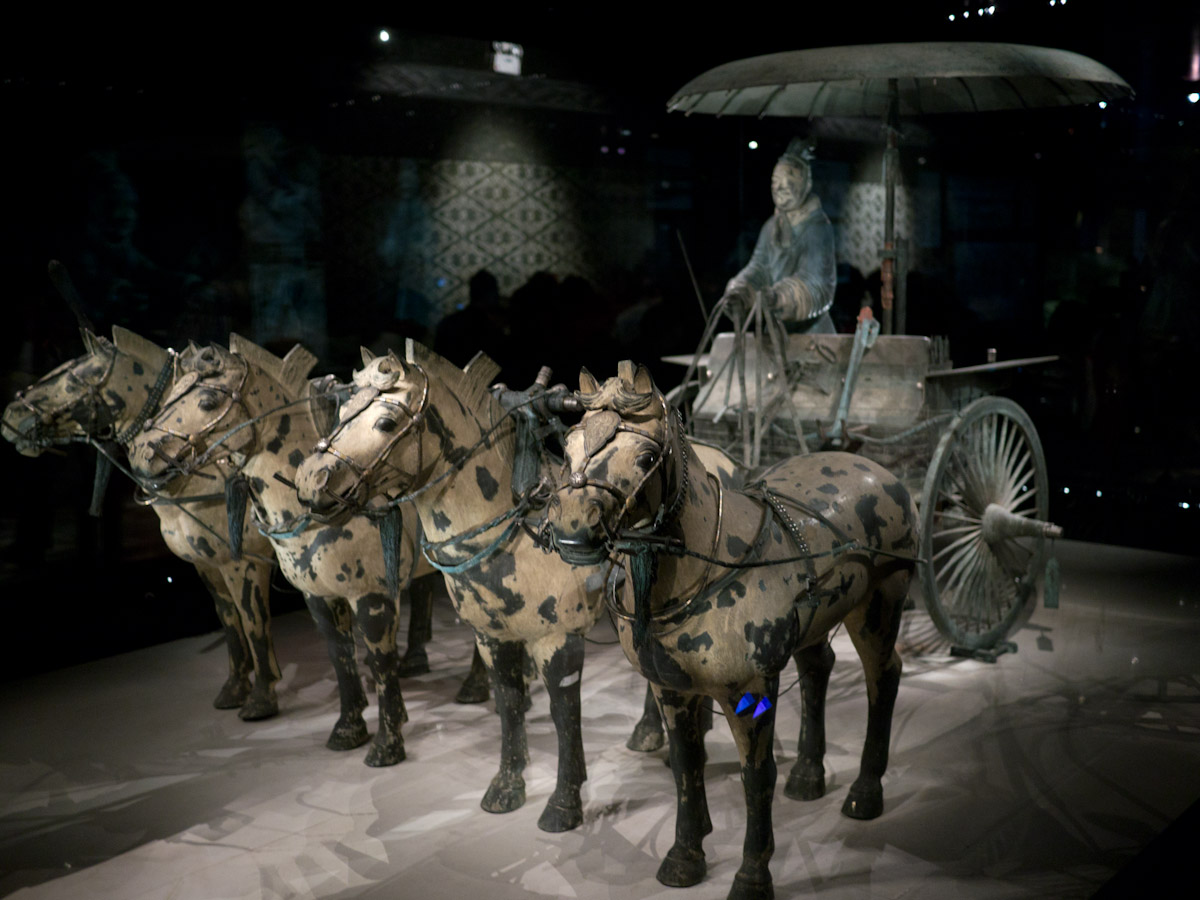
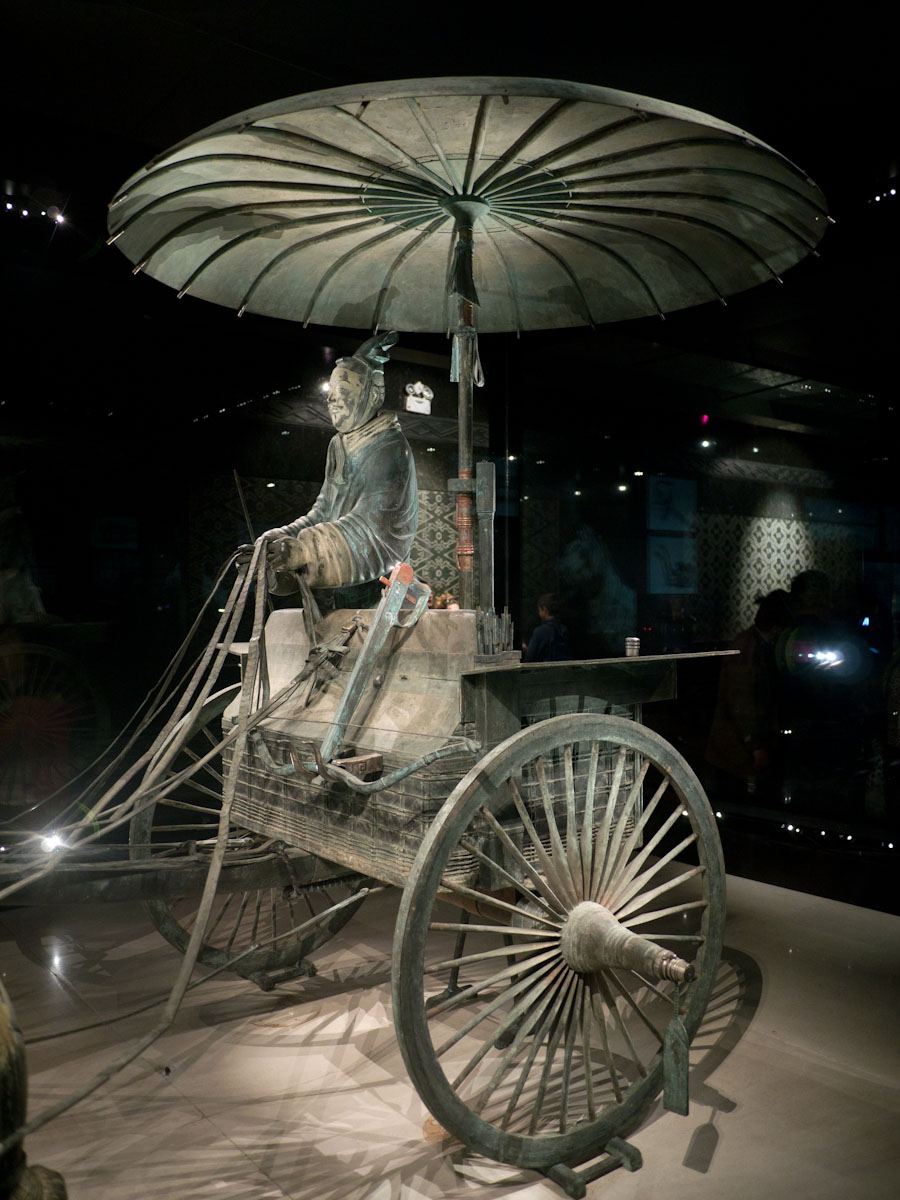
Charioteer: Fighting your enemy is all good and swell, until from the corner of your eye you see charging horses and a guy with a spear poised to strike bearing down on you. Doesn’t help that your opponent stabs you while you’re distracted, too. Chariots broke battle lines, but they were easily stopped after the initial charge, they couldn’t maneuver and any who hadn’t been shot coming in would find that they and/or their horses wouldn’t be getting out. The chariots were also used for gathering weapons from the dead. Shingle-type armor.
General: I don’t know whether or not they fought alongside their men, but I do know that they were the masterminds behind the battle. Fish scaled armor.
(Probably almost never happened) The Emperor: Whoa! Is that the emperor?!
Slave---------------------Kamikaze robot
Long spearman--------Tank
Short spearman-------Light tank/armored car
Swordsman--------------Marine
L. Bow archer----------Mortar
C. Bow archer----------Machine gunner
Charioteer--------------We now use grenades to blow up formations
General------------------General
Emperor-----------------Just imagine Barrack Obama standing on top of a tank and you would see the enemy’s shock.
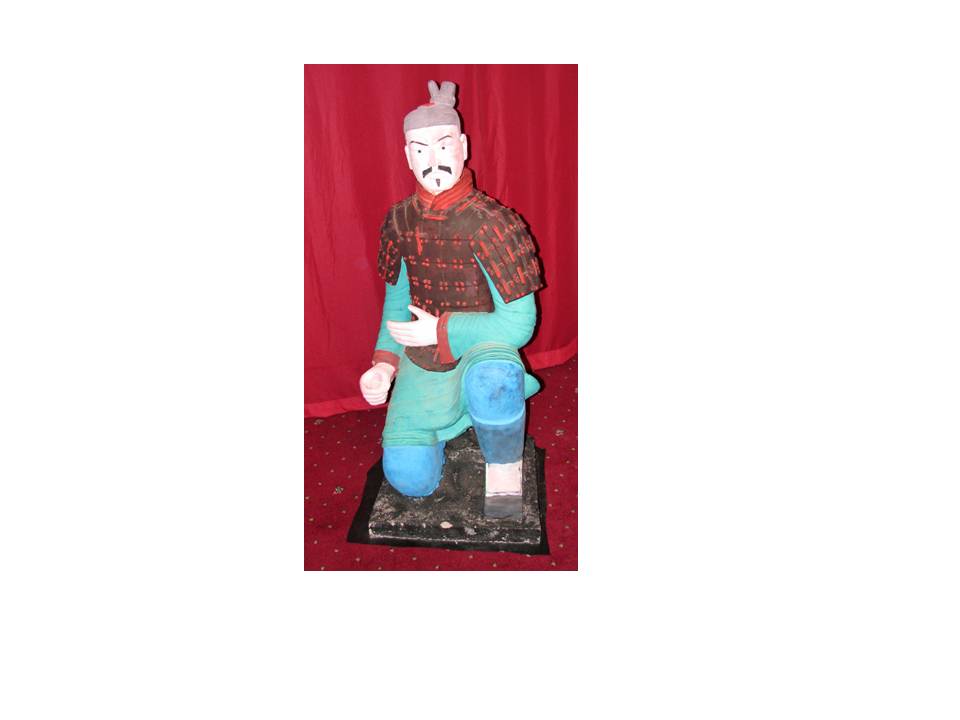
Cool fact: The original Terracotta Warriors were painted like real life soldiers. Maybe like this:
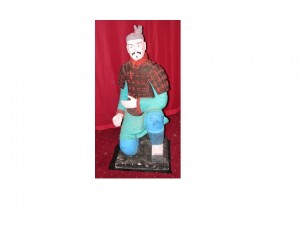
Now for a brief history on Emperor Qin, the man who had the Terracotta Warriors created, and was known for killing all who opposed him, allowing him to conquer all of the China area. He was one of the greatest leaders in China’s history. He also had a soft spot for suppressing knowledge. He was a cunning and ruthless man.
Emperor Qin or Qin Shi Huang’s personal name was Ying Zheng. Born in 259 B.C.E., Qin unified the warring states and created what we now know as China, named after him. Note that the letter”Q” in Chinese is pronounced “ch.”
Qin started many projects; foremost among them are the Great Wall and The Terracotta Warriors. To make sure that his position was stable, Qin outlawed many books and even buried some scholars alive. Before his unification, the China area was divided up into many smaller states. Including the state of Qin.
Qin became a king at only 13 years old when his father died. A man named Lü Buwei took over as the Regent Prime Minister of the Qin state. As Qin grew older, Lü Buwei feared that he would discover his relationship with his mother. He distanced himself and looked for a replacement for the queen dowager. He found a man named Lao Ai. Lao Ai plucked all the hairs from his chin, and was so disguised as a eunuch. He and the queen mother, Zhao Ji, clicked so well that they had two secret sons. Lao Ai was then ennobled as Marquis Lao Ai and given many riches. Lü Buwei’s plot to switch Qin and one of the two sons was ruined when a drunken Lao bragged about being Qin’s stepfather at a party. In 238 B.C.E. Qin was traveling to the ancient capitol of Yong, when Lao Ai seized the queen’s seal and tried to make a rebel army.
Qin responded by putting a reward on Lao’s head of ONE MILLION copper pieces if he was brought back alive, and 500,000 if he was brought back dead. Lao’s supporters were soon killed, and Lao was brought to the King, tied up, and torn to pieces by 5 horse carriages. His family was then executed to the third degree; the two hidden sons were also killed. Zhao Ji was placed under house arrest for the rest of her life, and Lü Buwei drank poison and committed suicide in 235 B.C.E. It was then that Zheng assumed complete control of the Qin state. Li Si took Lü Buwei’s place but as chancellor. King Zheng, soon to be Emperor Qin, was recognized as the true man in power.
King Zheng began to take over different states. The first to fall was Han state, in 230 B.C.E. Then in 229 B.C.E., Zheng took advantage of the Zhao earthquake and quickly conquered Zhao by 228. He had been born as a child hostage in Zhao, and he took this opportunity to get revenge over his poor treatment and hunted and killed all of his enemies. Yan and Wei soon met the same fate. The biggest state and greatest challenge, Chu, was also defeated in 223 B.C.E.
The only independent state left was the far eastern state of Qi, now known as the Shandong peninsula. Qi’s terrified young king quickly sent 300,000 troops to defend his western border. Zheng attacked from the north; Qi’s king was captured and Qi was joined with the rest of Zheng’s territory.
Zheng had now unified all of the states for the first time in history, and he proclaimed himself
Qín Shǐ Huángdì (The First Sovereign Qin Emperor) {秦始皇帝}.This was often shortened to Qin Shi Huang.
Now Emperor Qin, Zheng reformed China, as it was now called. With the help of Li Si, Emperor Qin standardized measurement, built a canal between the Xiang and Li Jiang rivers, enforced legalism, started the Great Wall to keep out Mongol invaders from the North, and before he died in 210 B.C.E. at age 49, he gave orders for the Terracotta Warriors. He was one of the greatest emperors and is known as
The First Emperor, a title that makes complete sense.
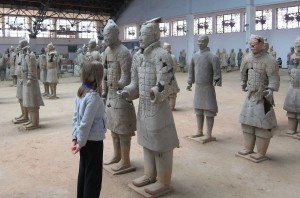
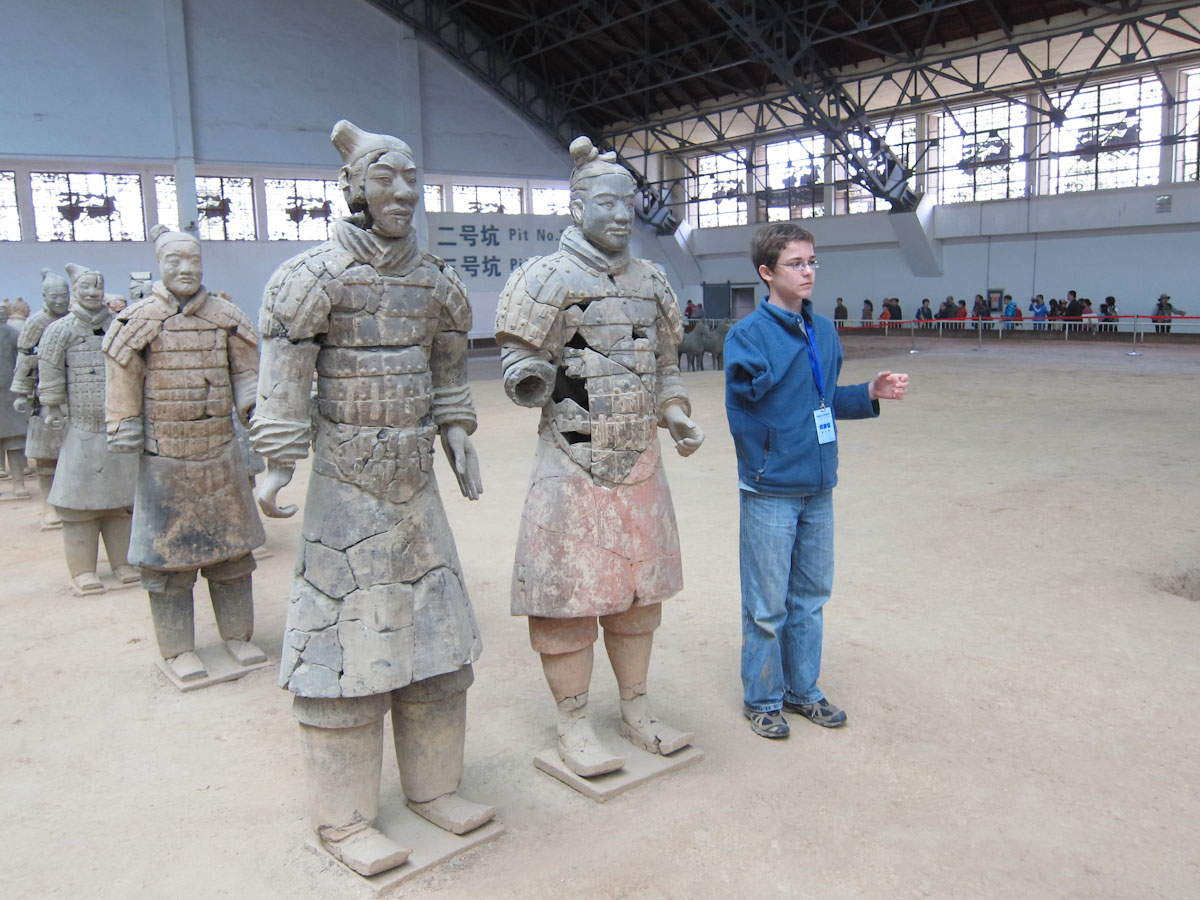
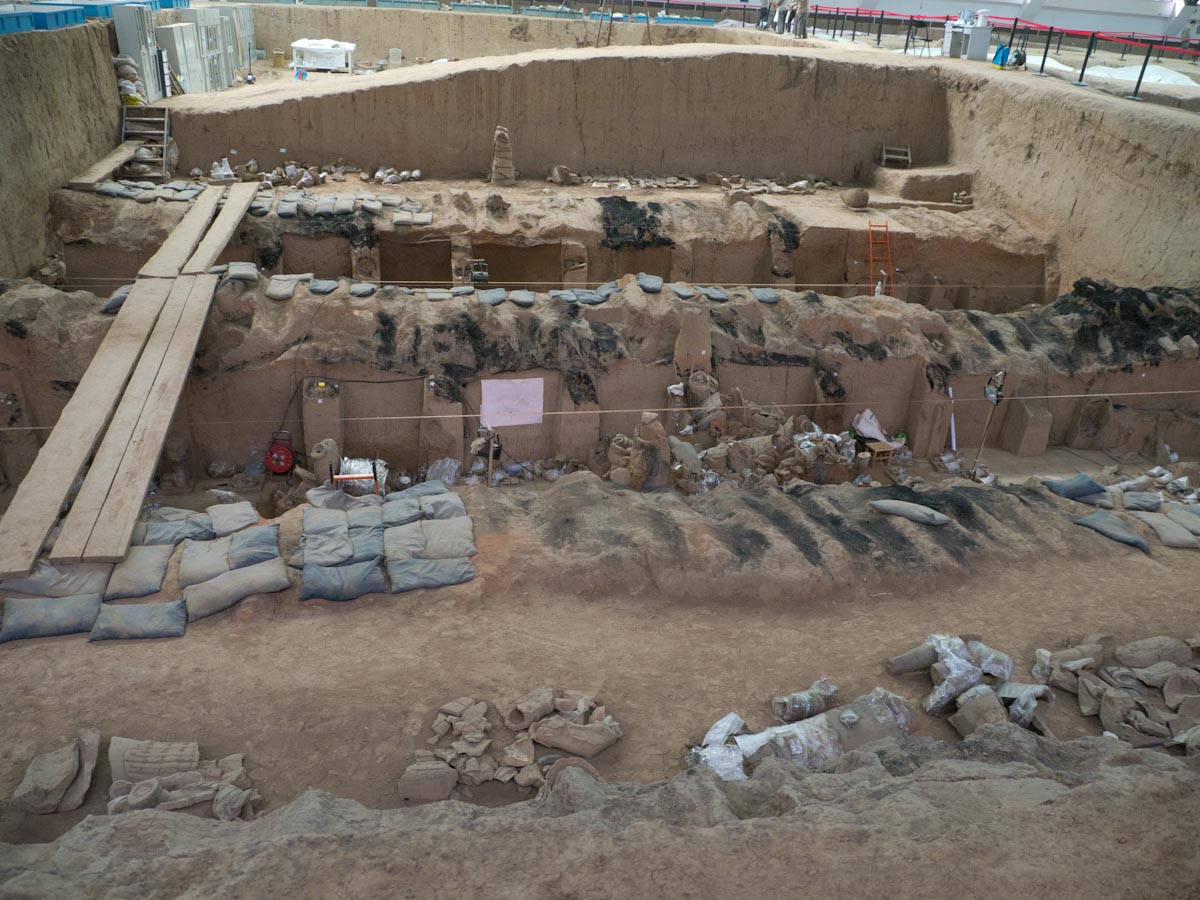
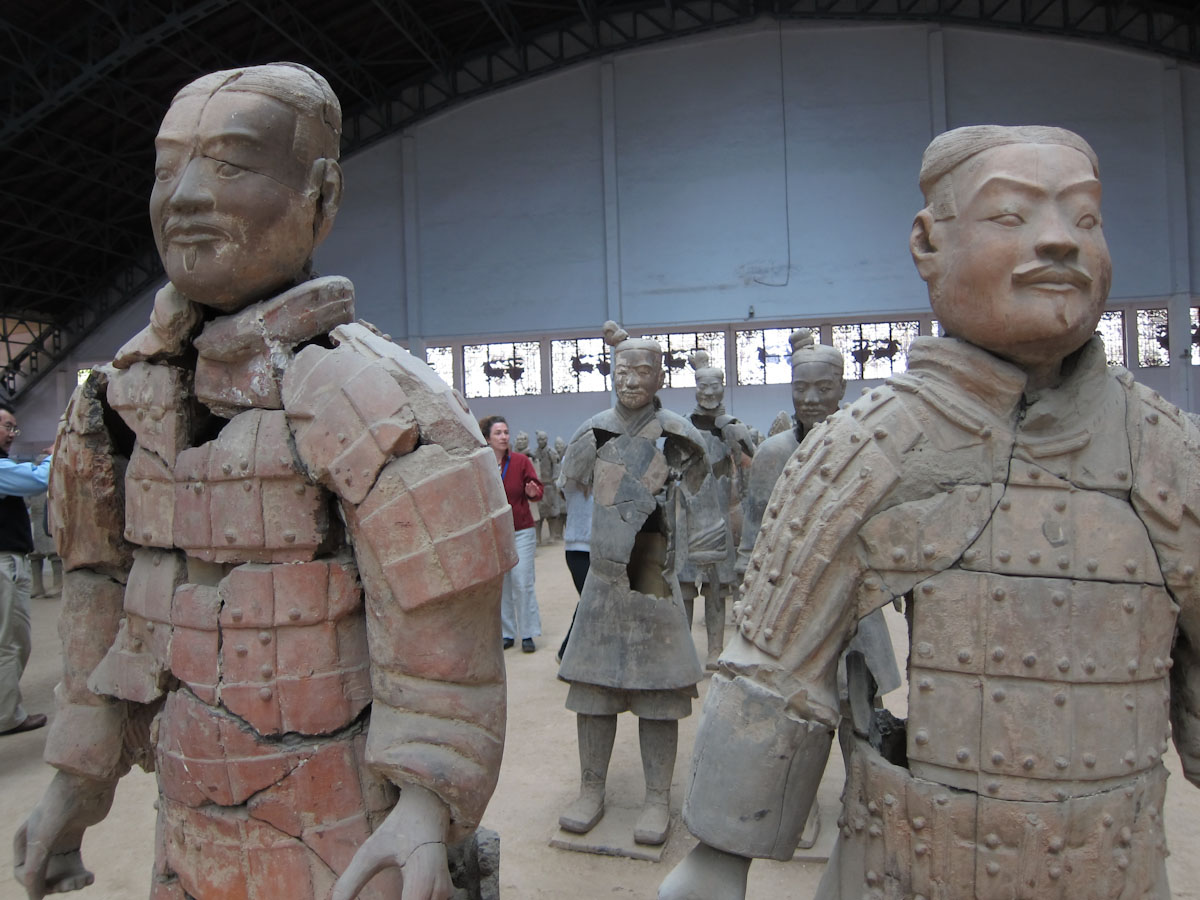
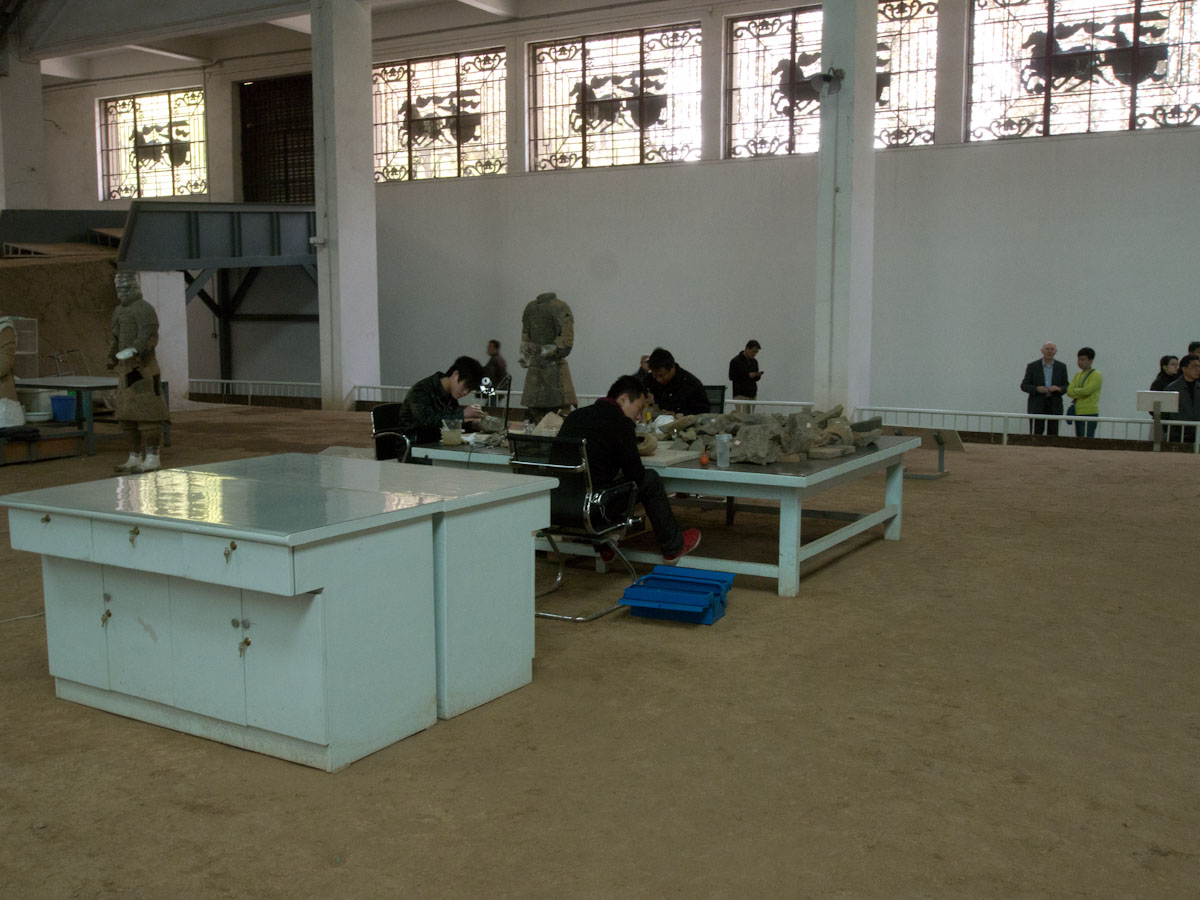
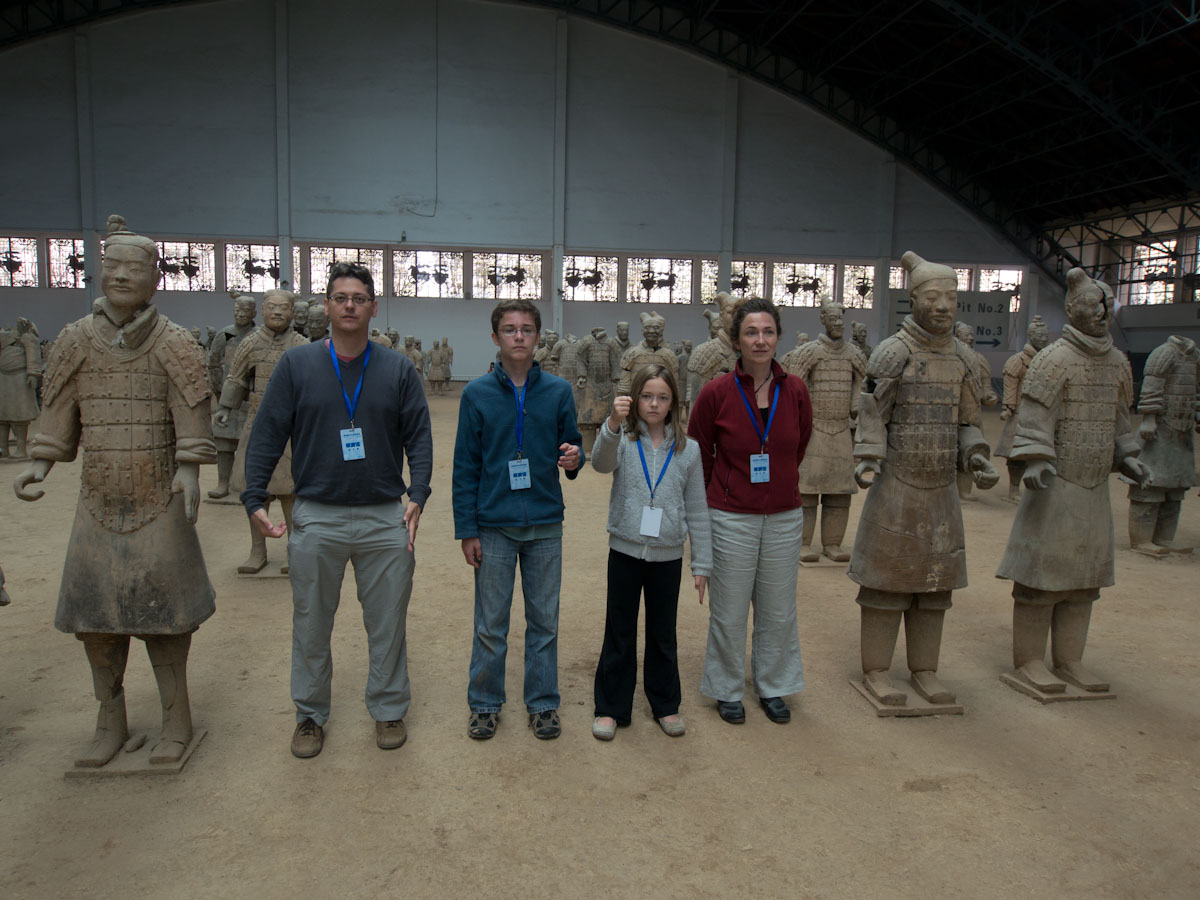
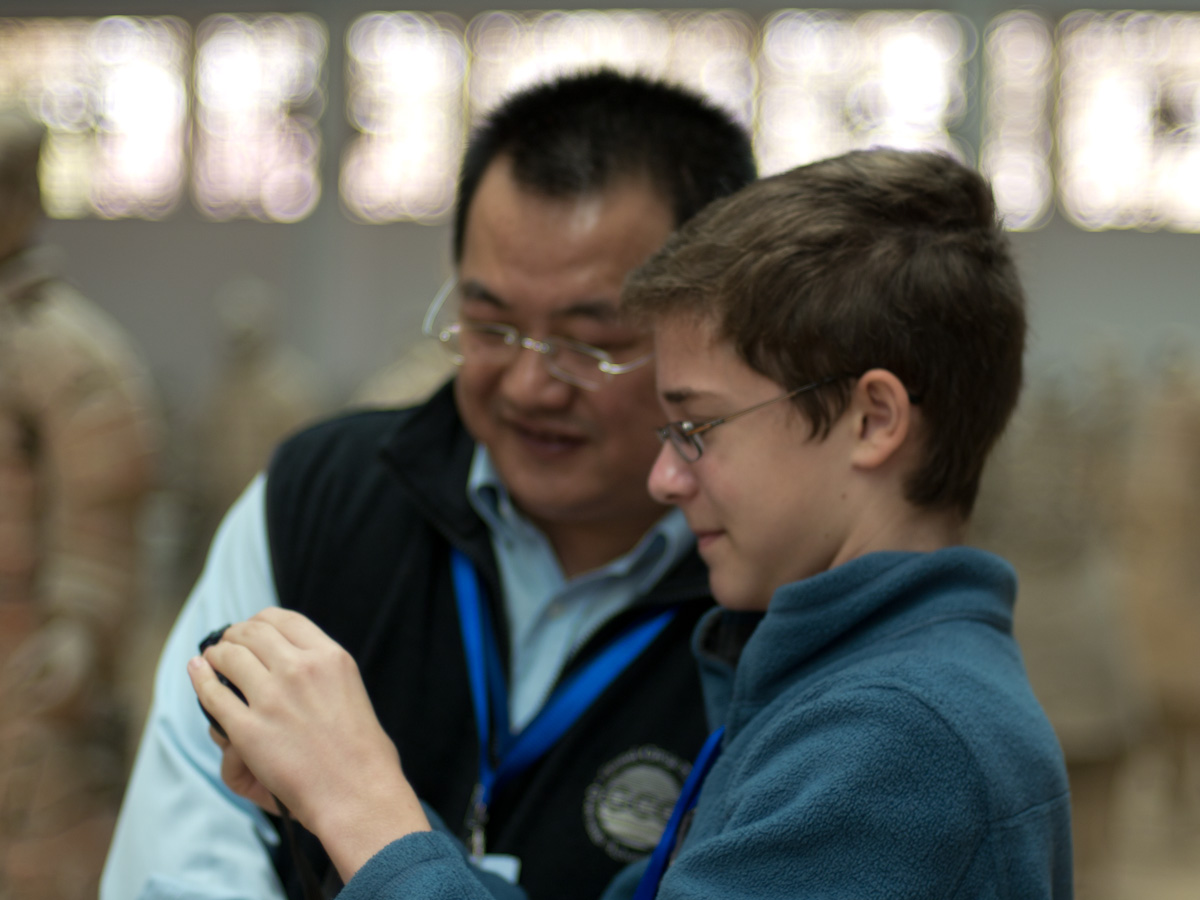
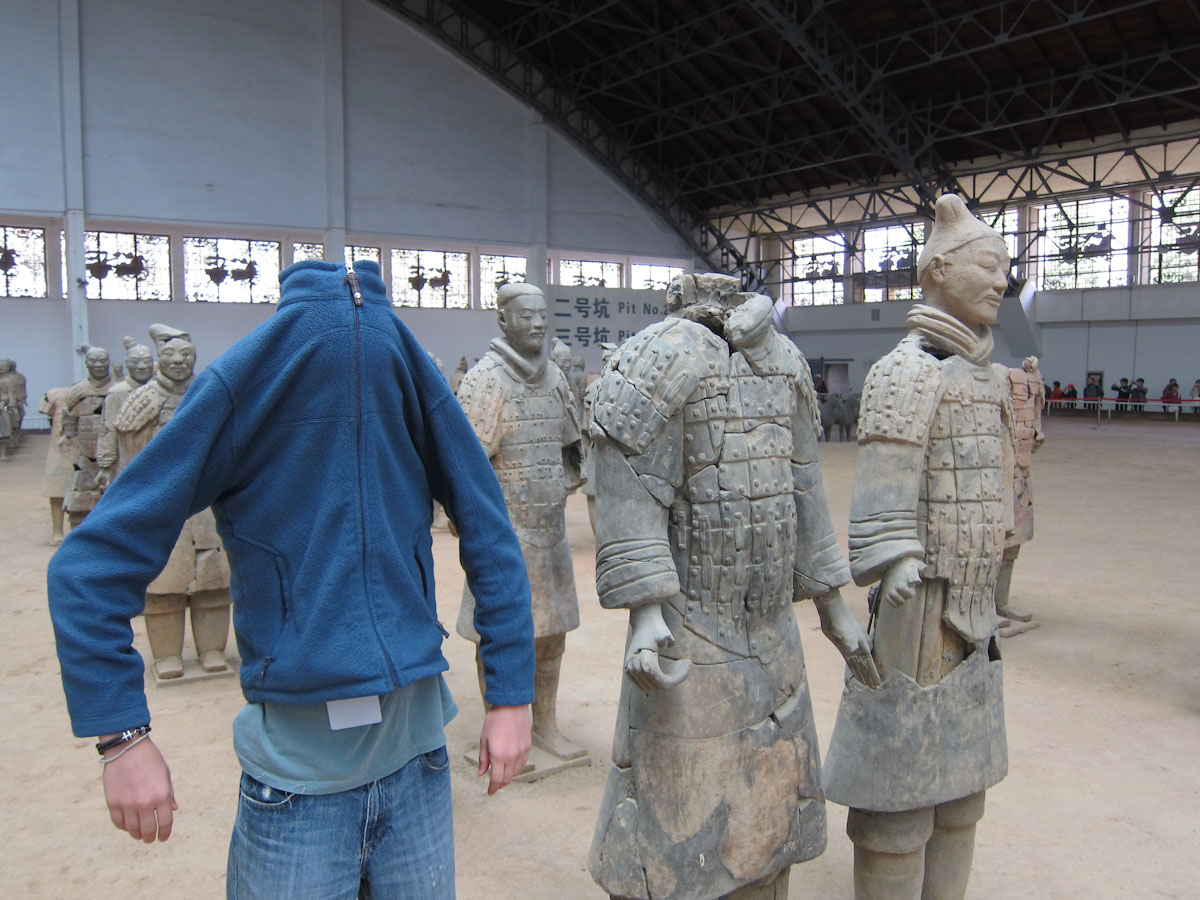
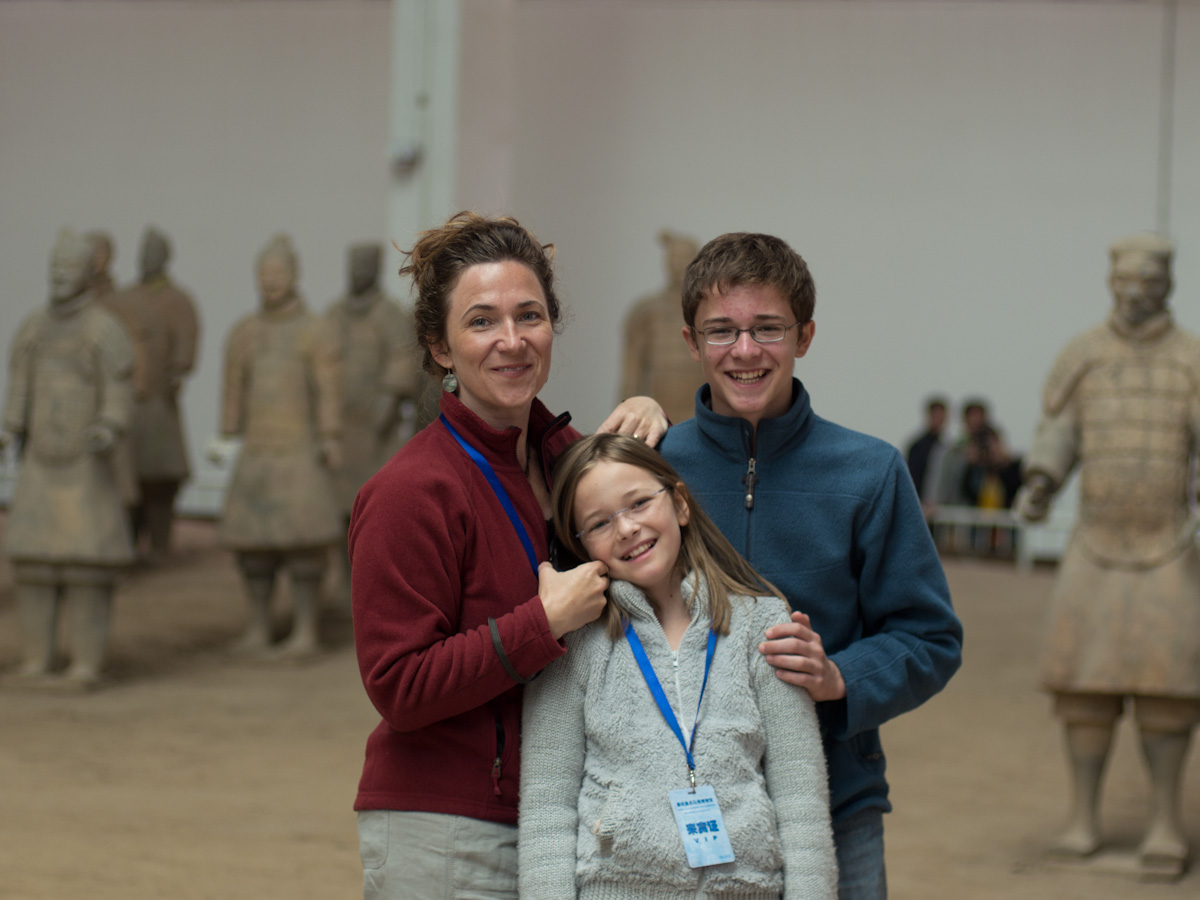
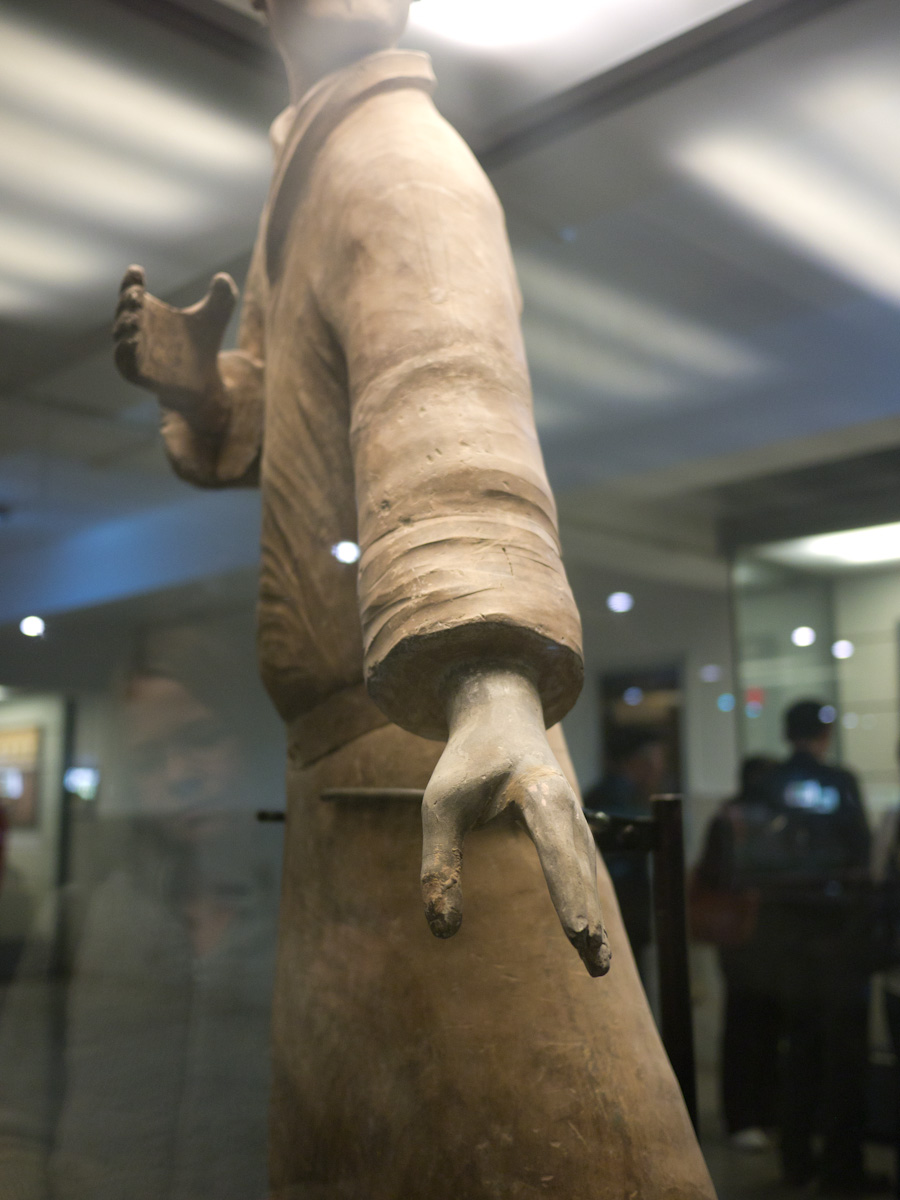
Flash forward 2,200 years and we walked around the pit, known as pit 1, to a small break in the fence where two policemen waited with an archaeologist from the Department of Relic Preservation. Gerard, our guide, and the archaeologist brought us out so that we were walking among the warriors! If I wanted to (I did not do this) I could have reached out and touched them. There was absolutely nothing between us and the soldiers. Being so close was amazing, an honor usually reserved for celebrities and presidents. Recently these included German Prime Minister Angela Merkel, French President Sarkozy, and actor Robert DeNiro!
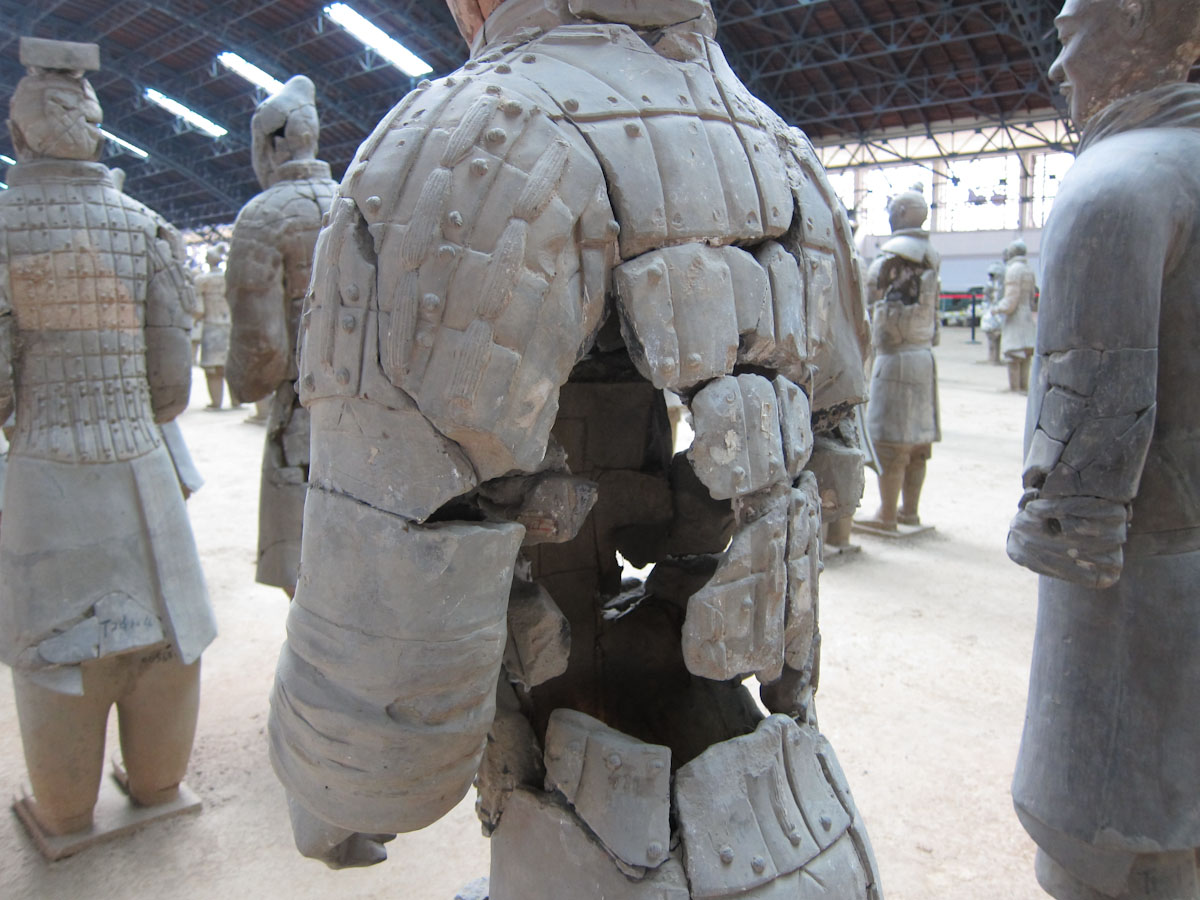
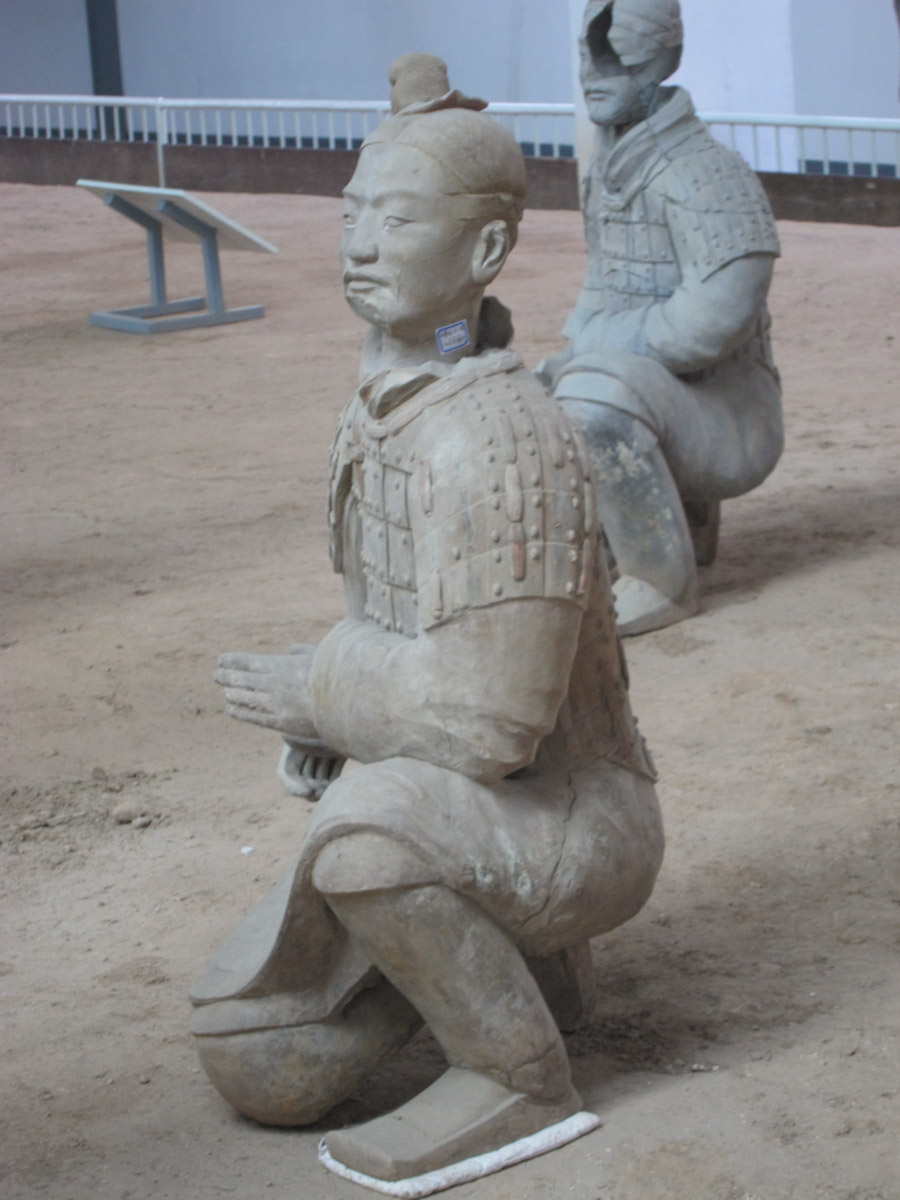
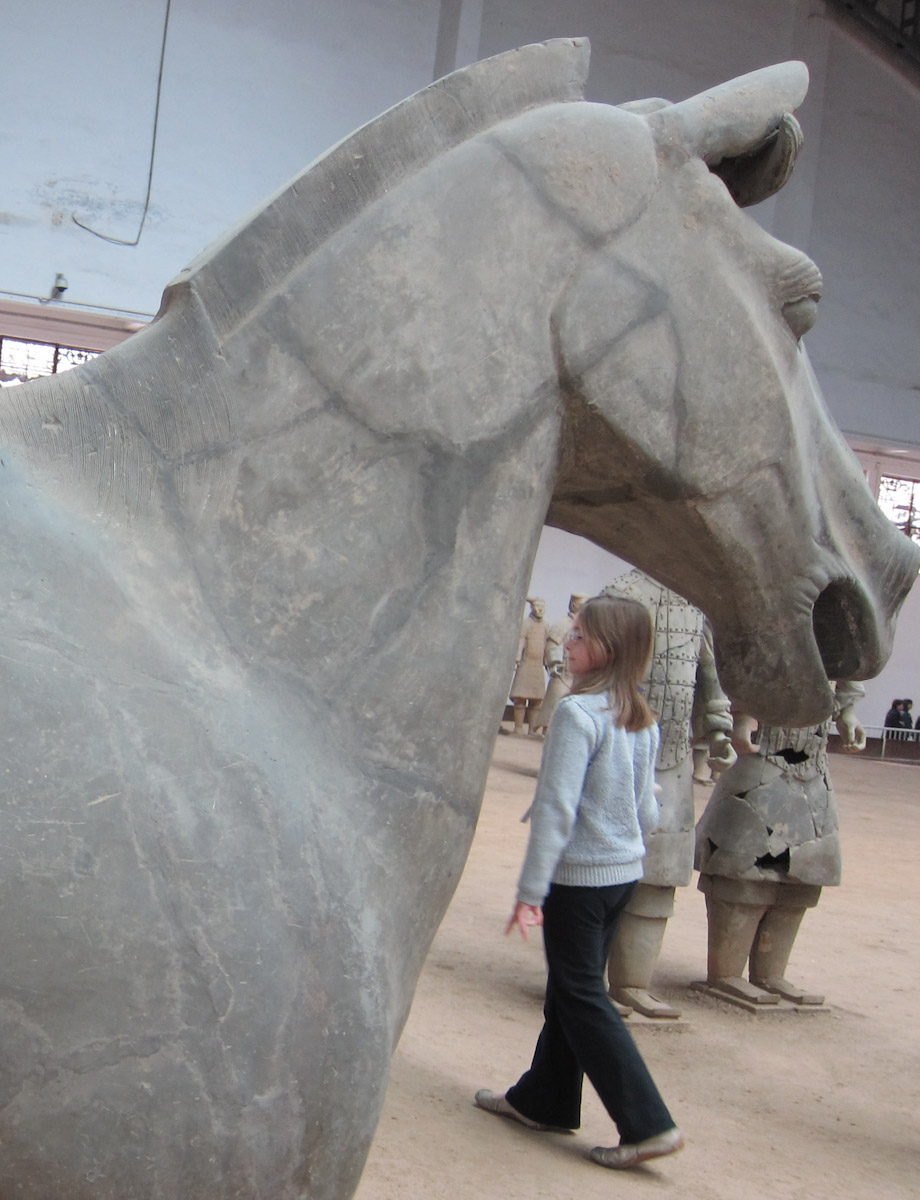
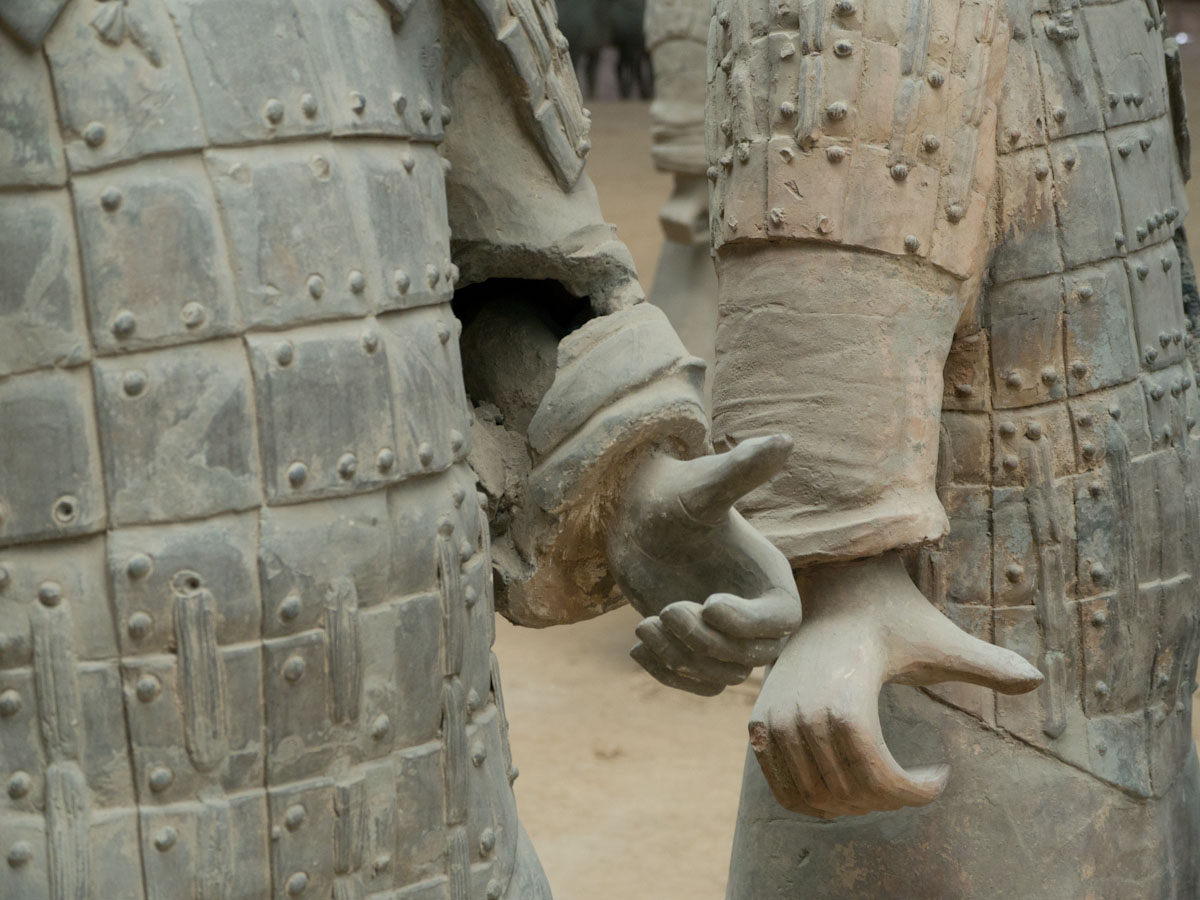
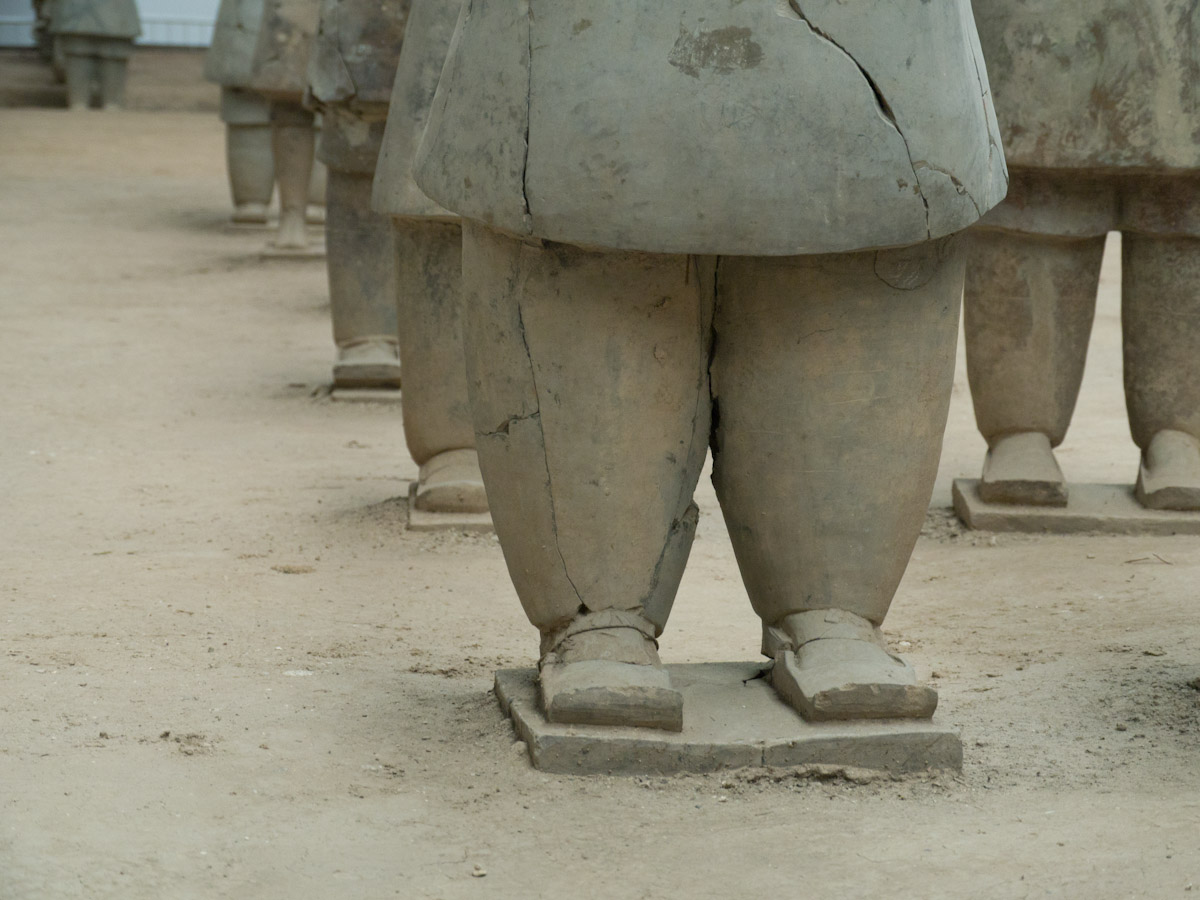
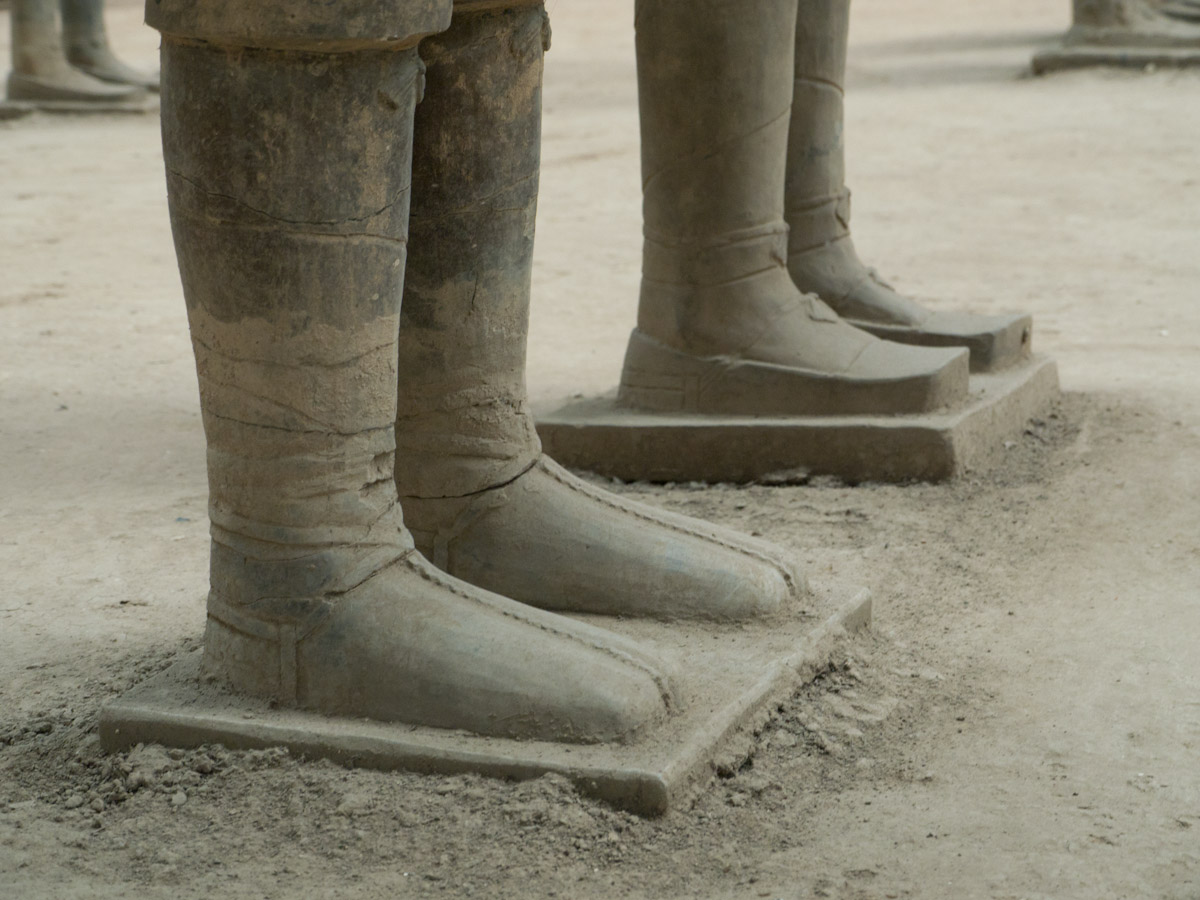
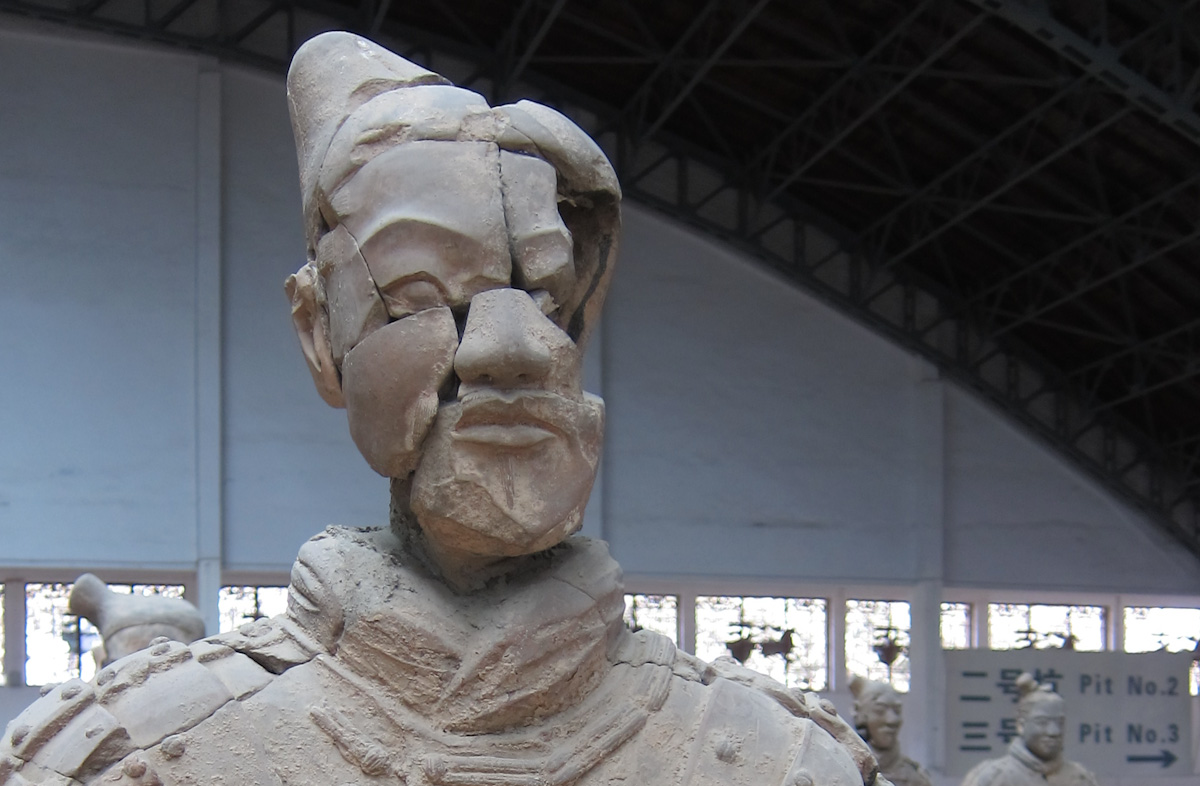
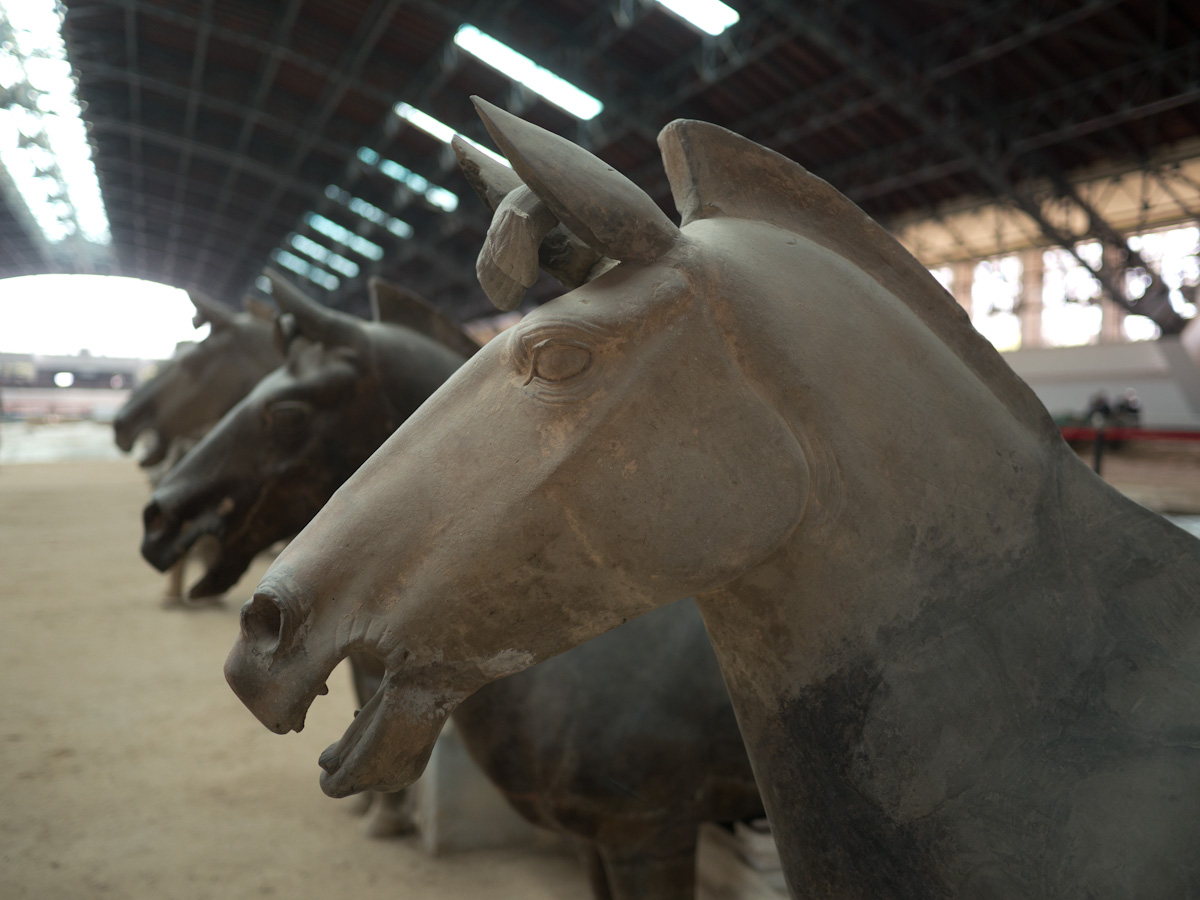
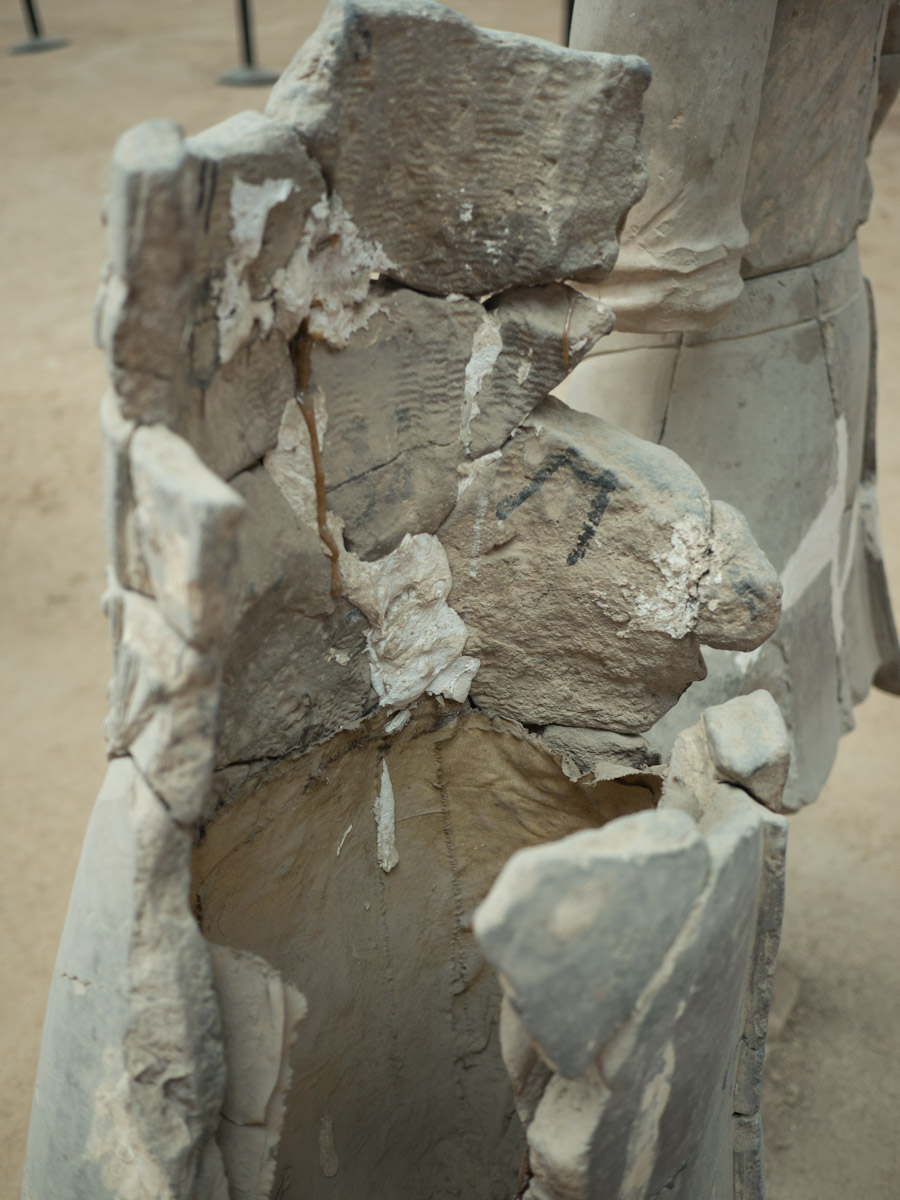
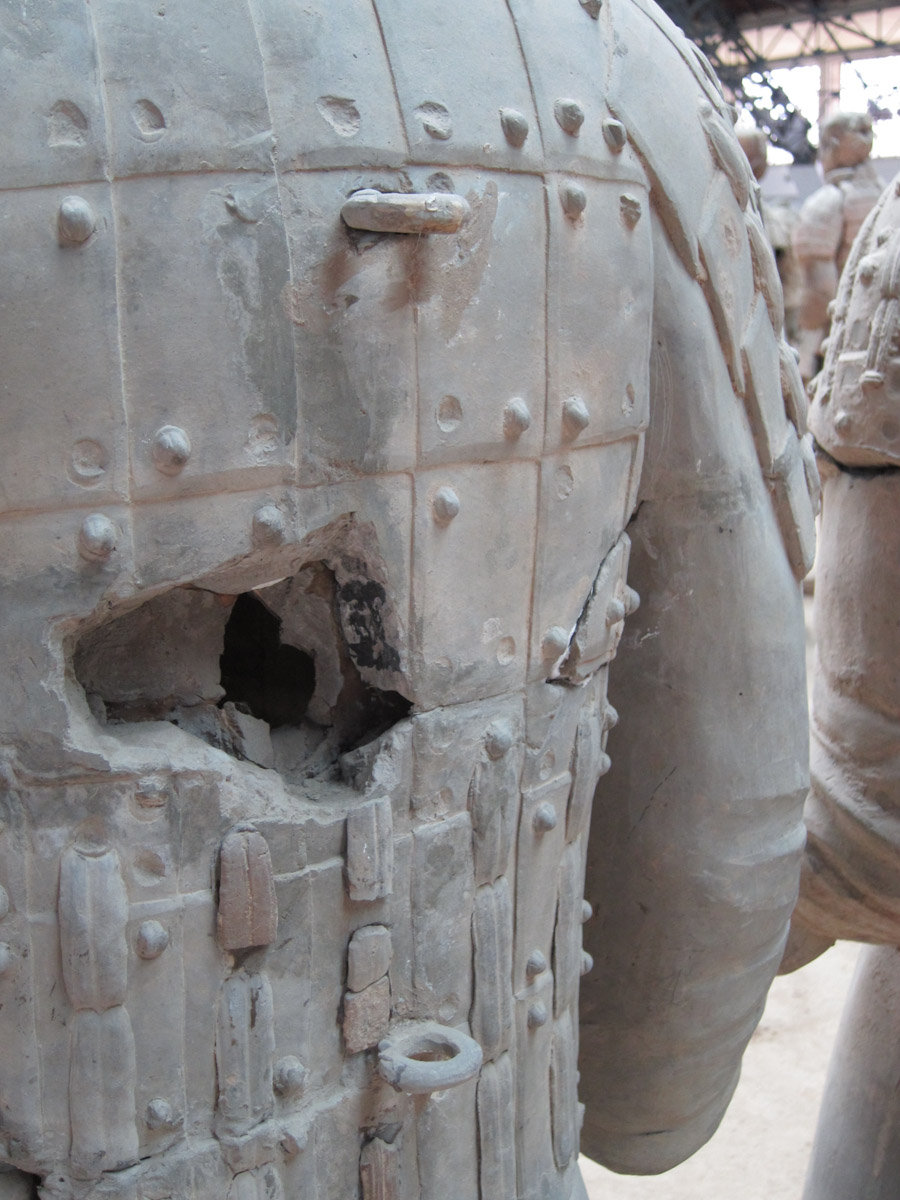
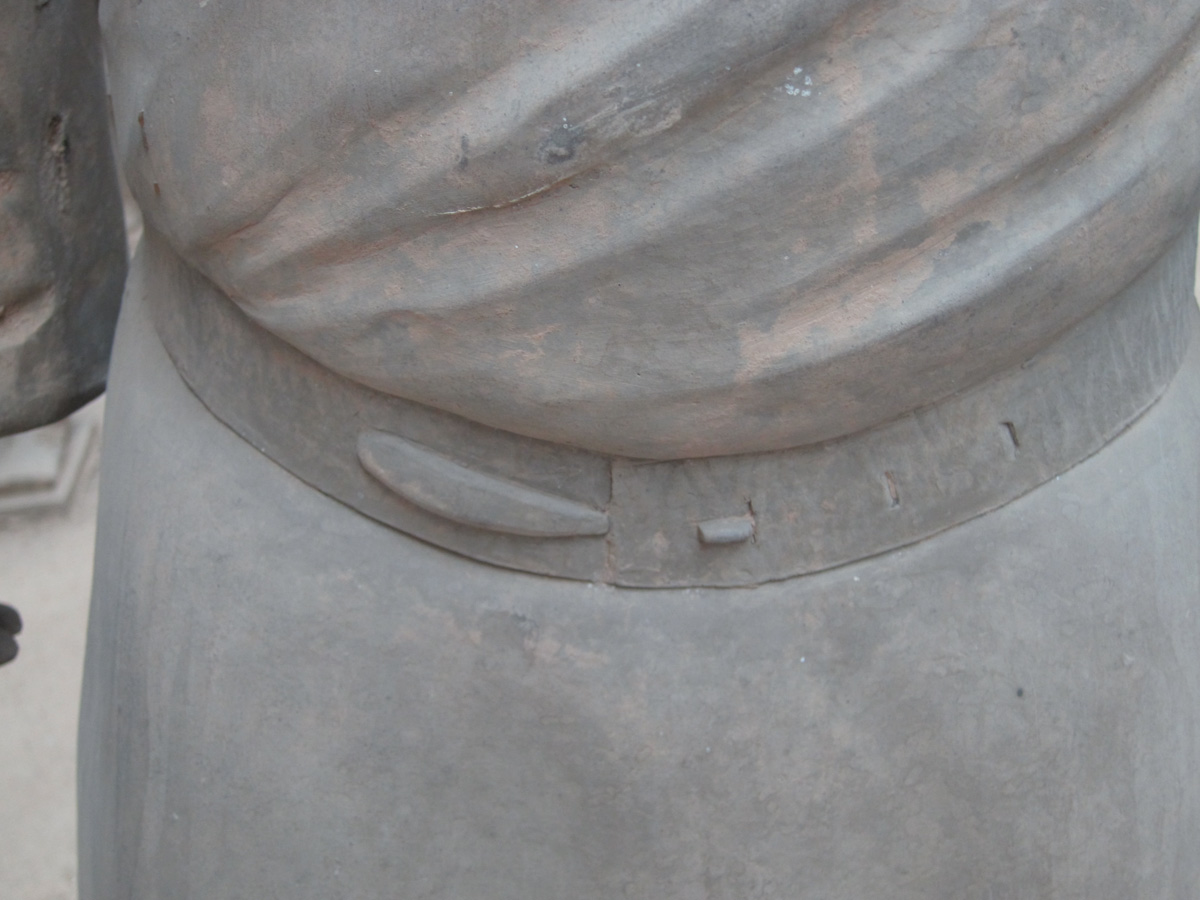
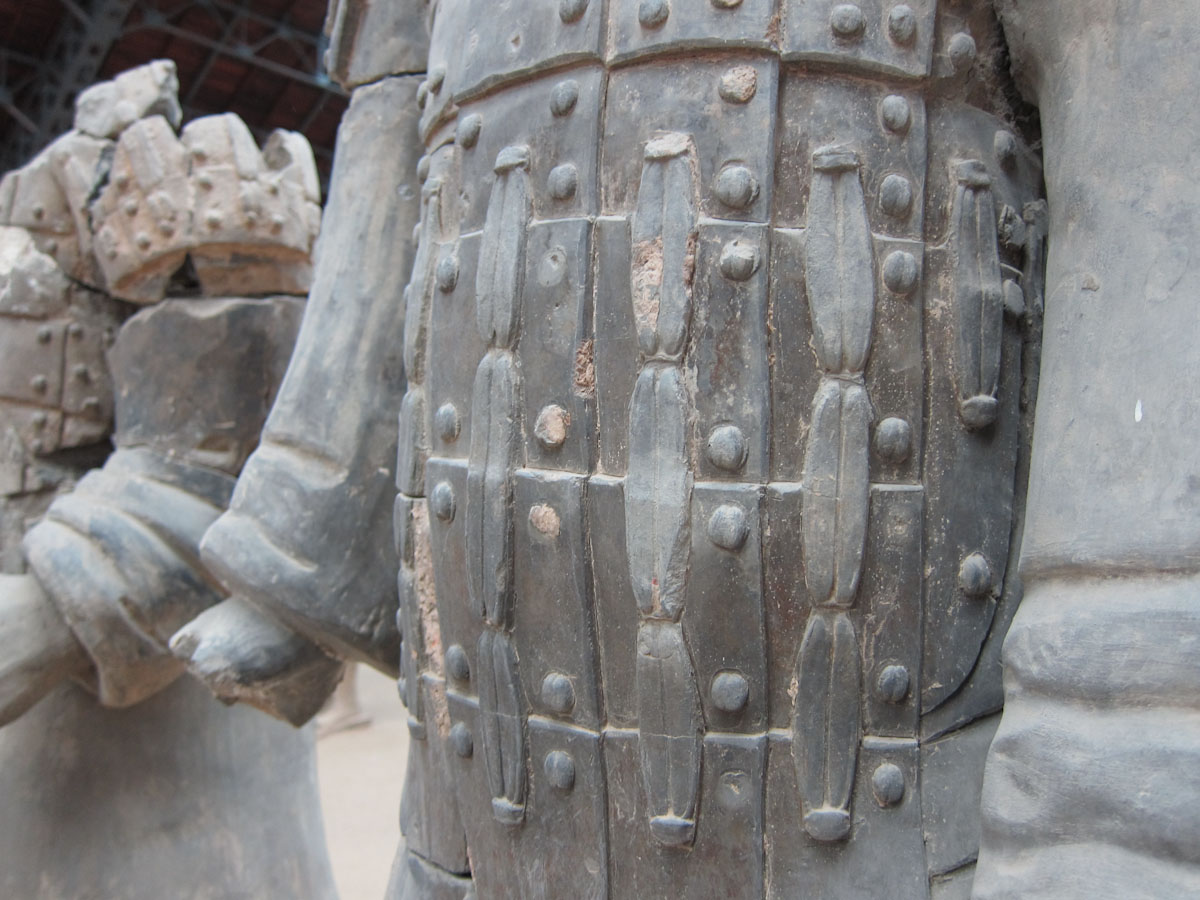
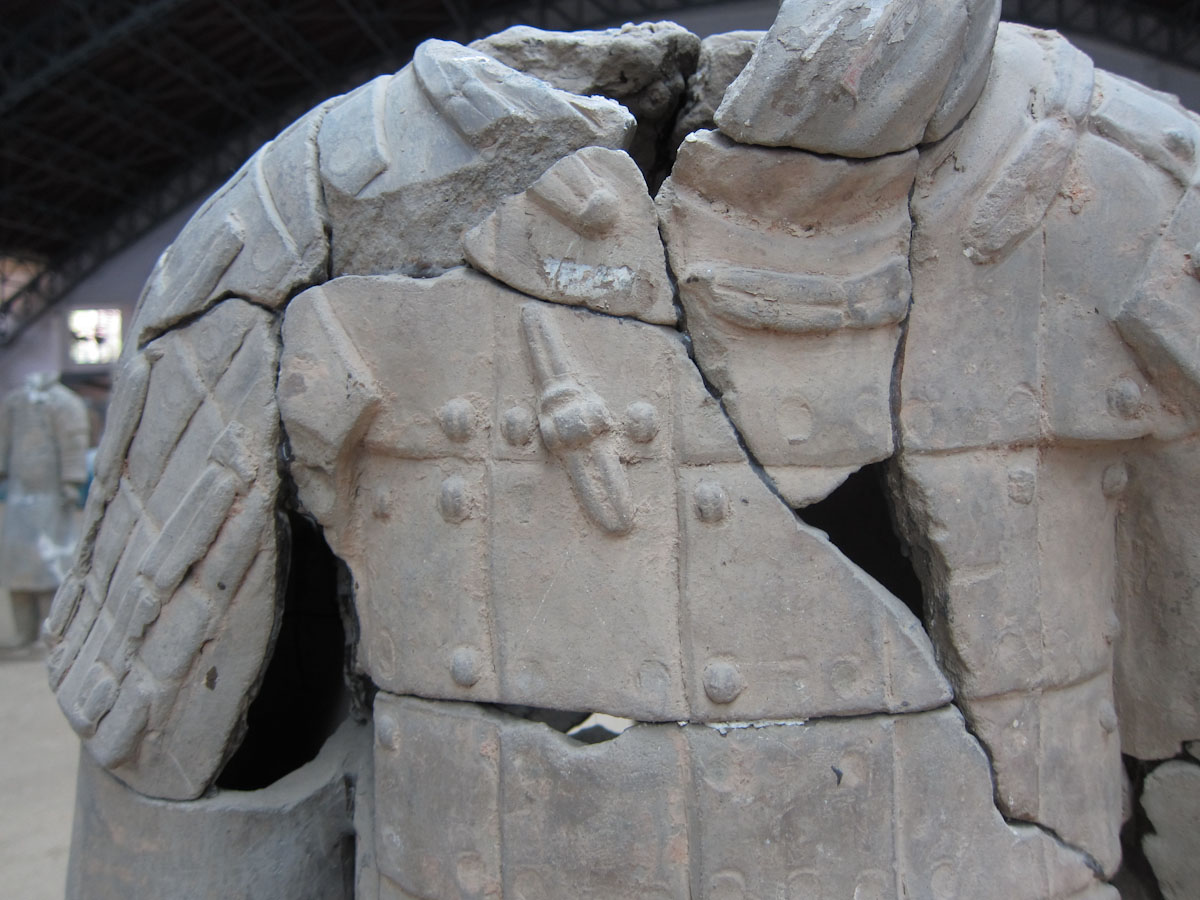
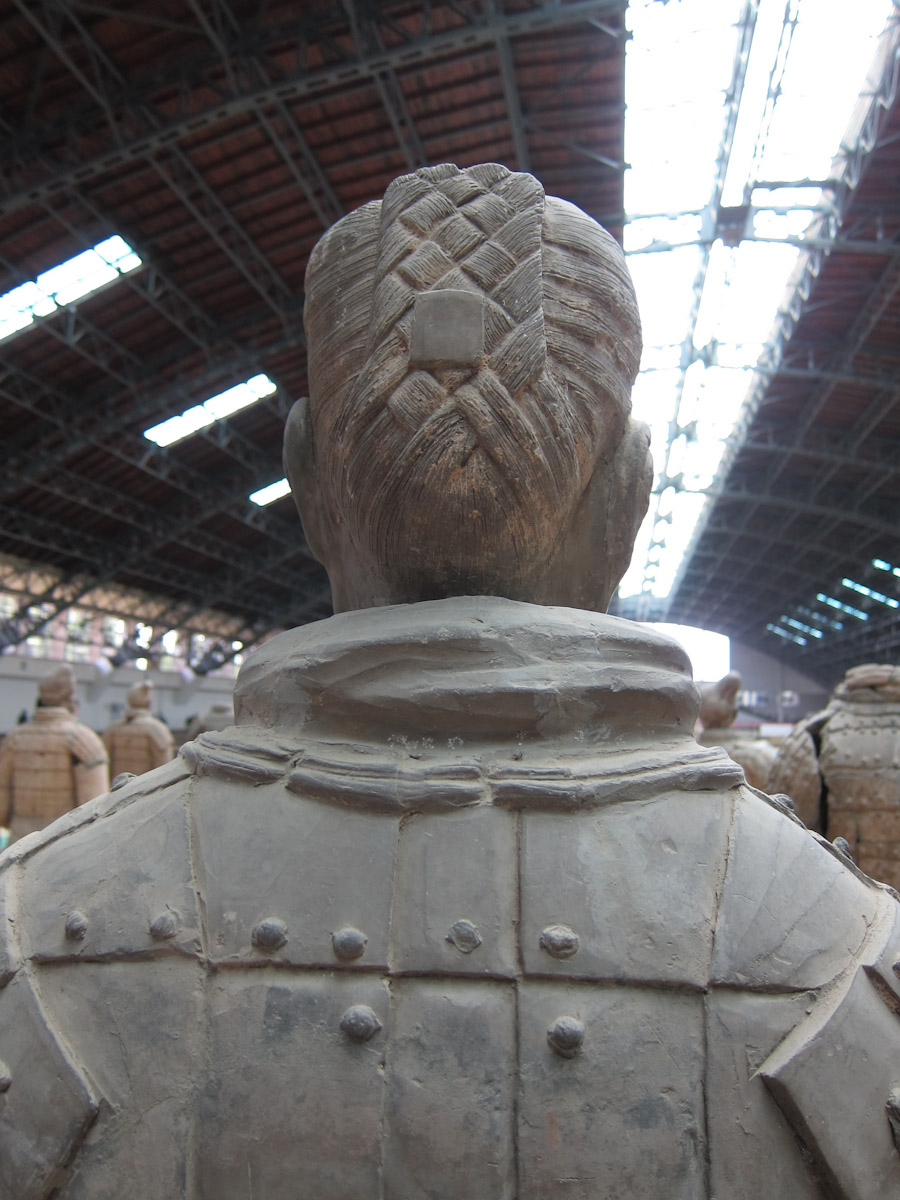
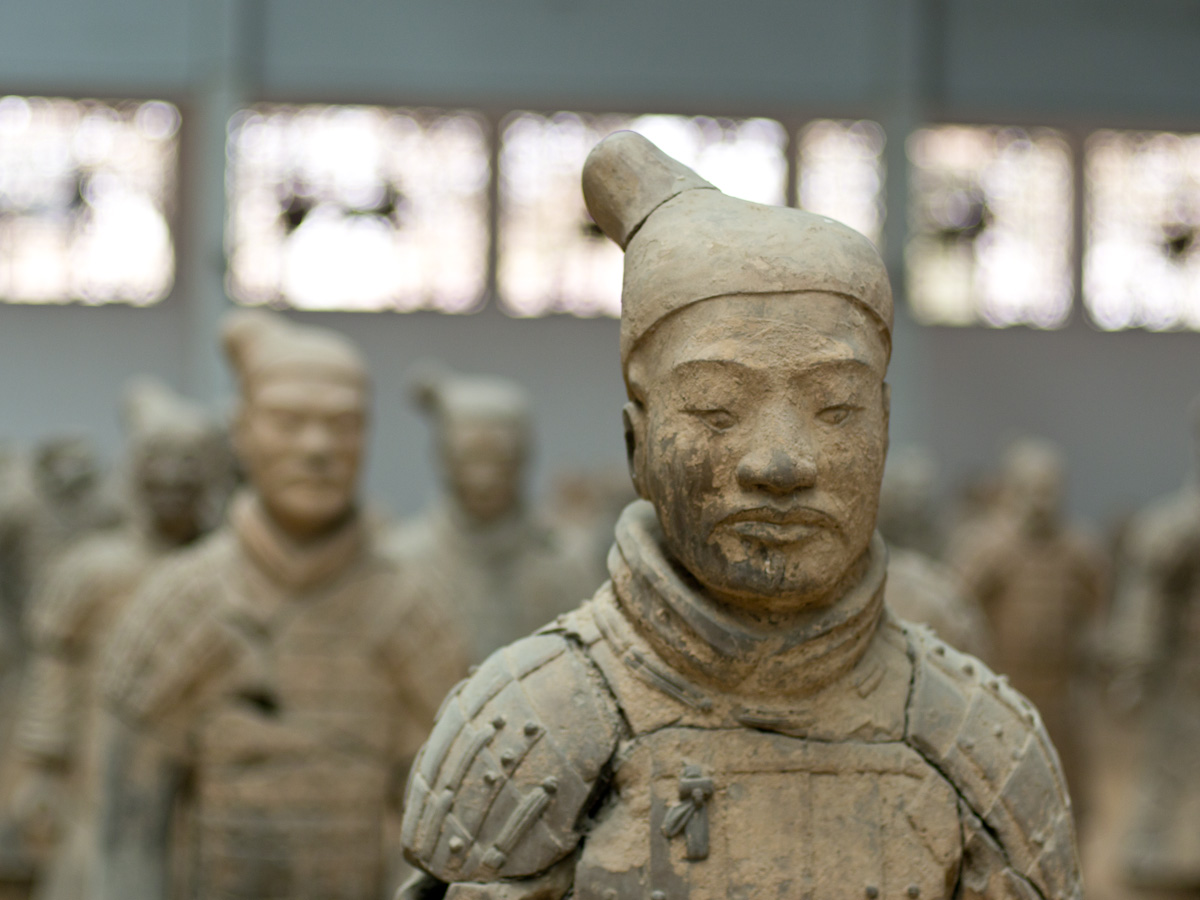
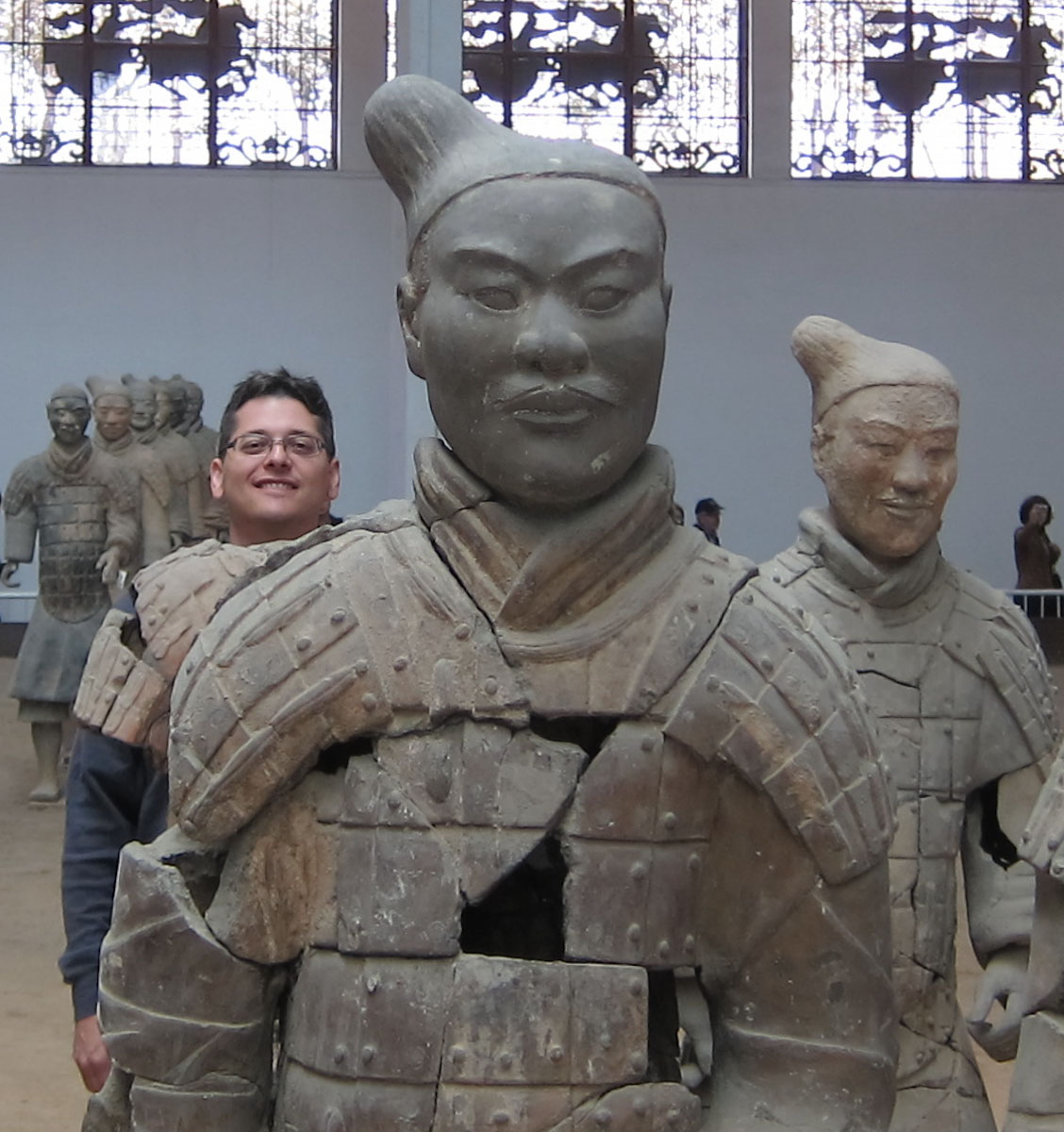
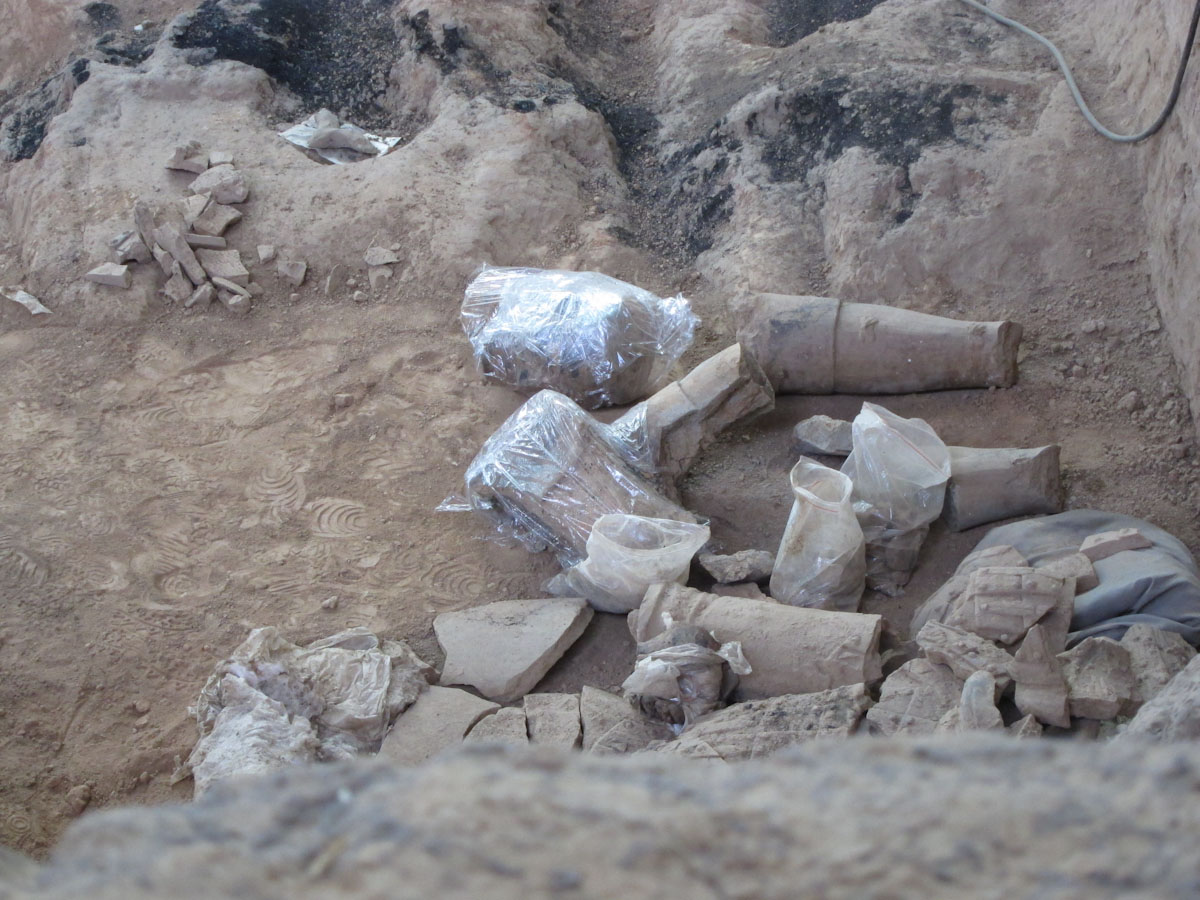
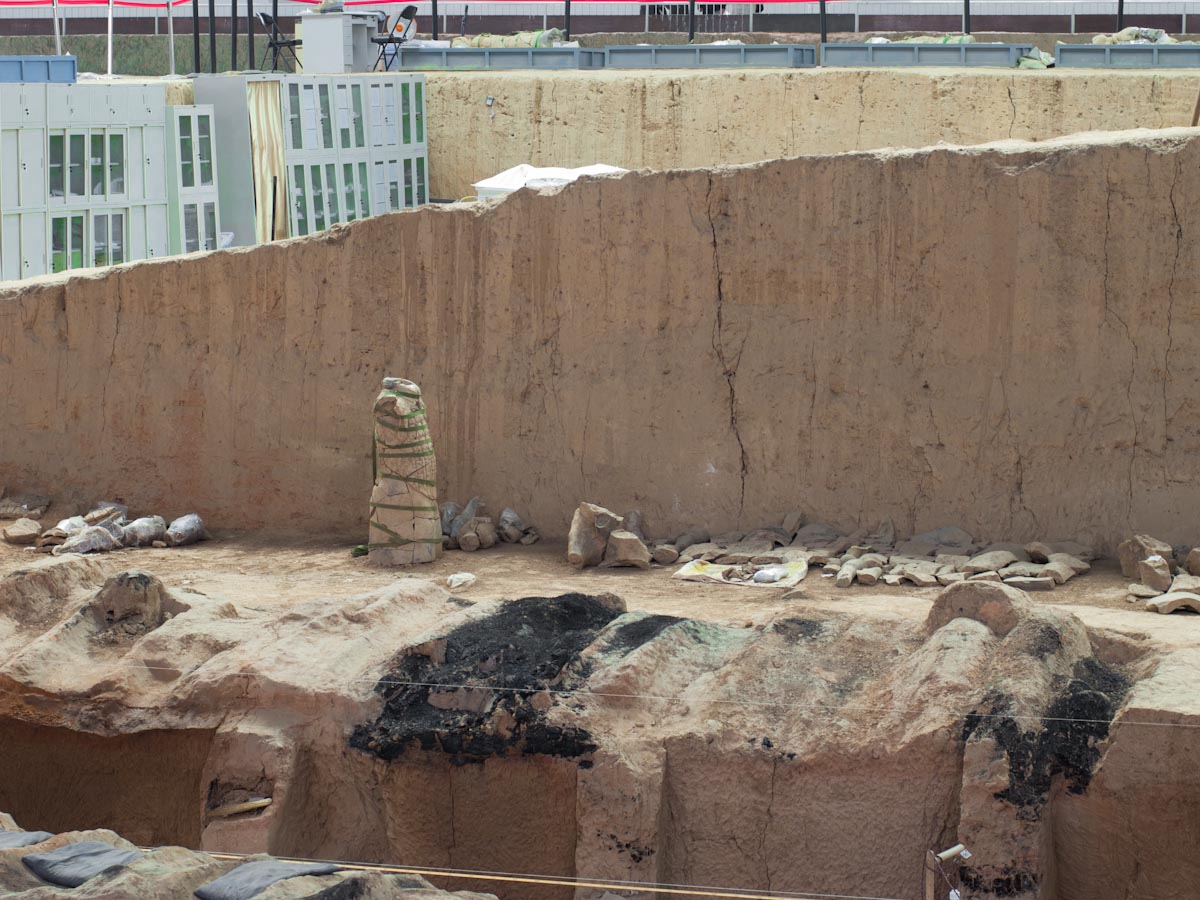
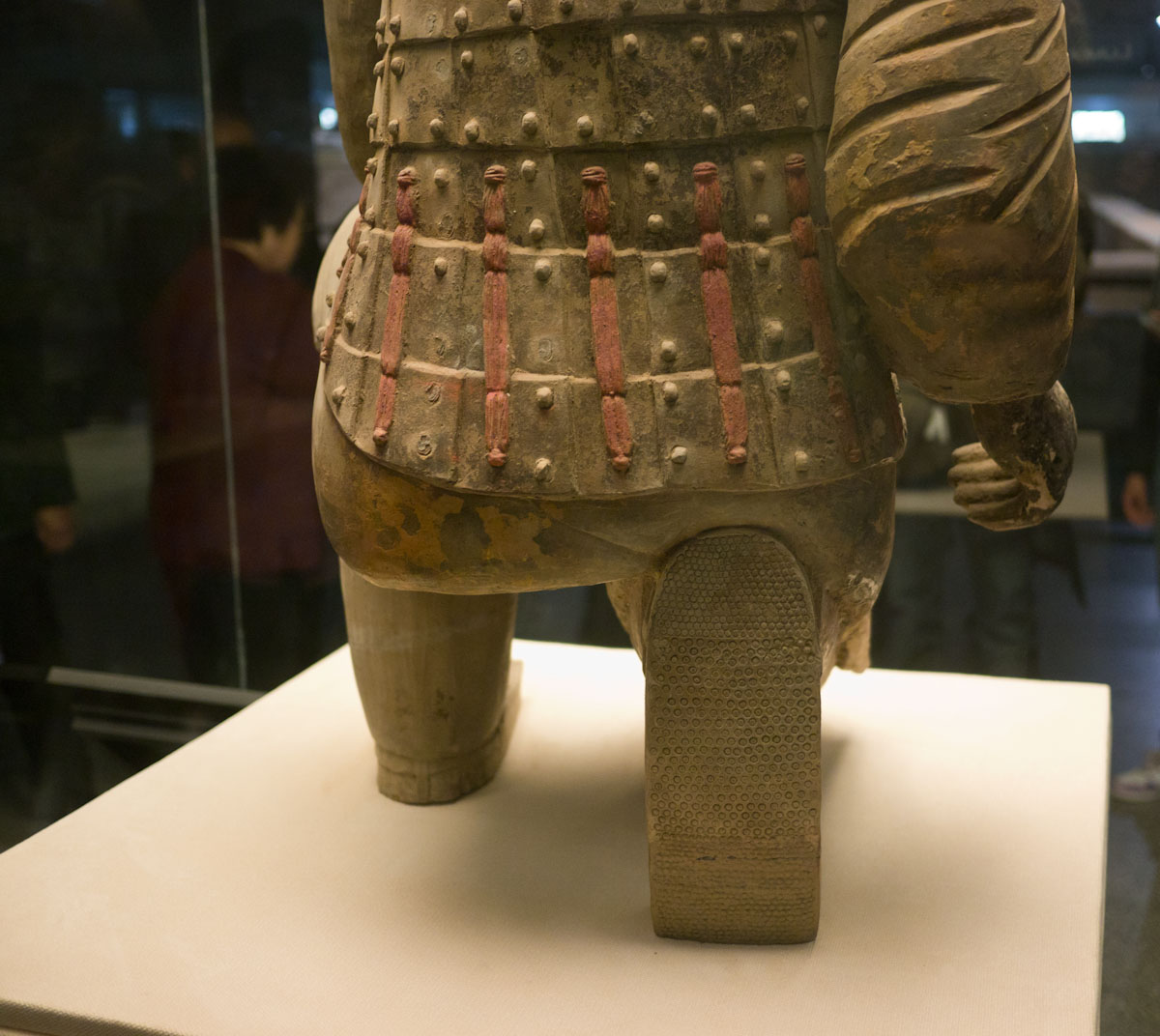
When the soldiers were originally found they were all in pieces. Unfortunately, during the peasant rebellion many government buildings and monuments were destroyed in an effort to bring power to the farmers, the Terracotta Warriors were not excluded. Many soldiers were missing heads, and none were completely intact. (Since they were all smashed, I mean intact as in all the parts are there). A few were only legs, and one or two had only a thin strip connecting their head and their waist. Some had holes in their chests, and I could see inside of them. The famous tiled armor was SO cool! The details were amazing; each warrior had individual hair strands! The horses were also cool, but in my opinion the soldiers were the real thing to be looking at.
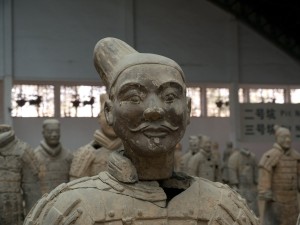
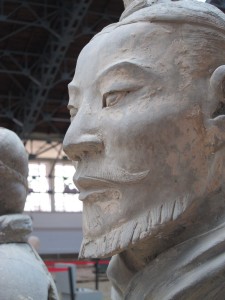
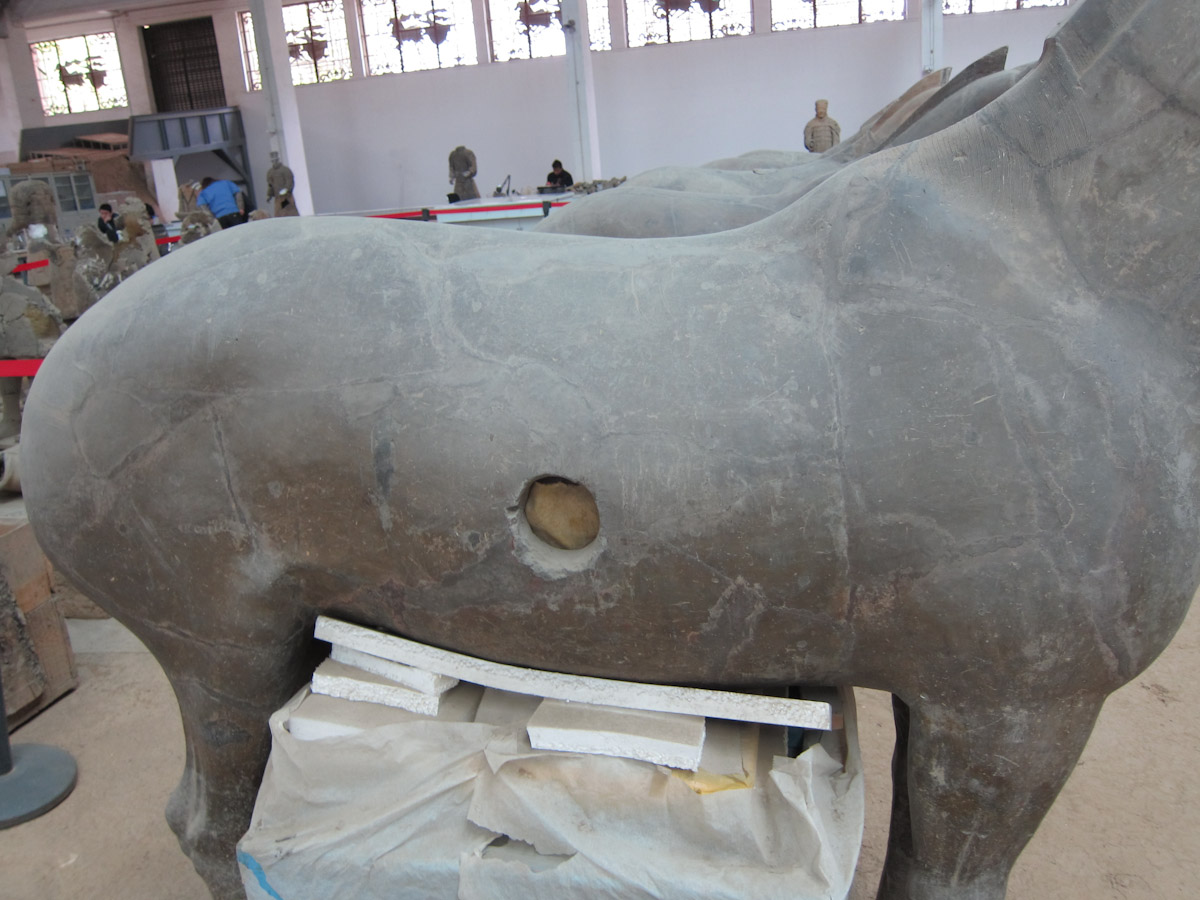
Gerard pointed out that each horse had at least one hole in it, where the heat could escape during and after the firing. The soldiers’ heads and bodies were fired separately, and the soldiers were hollow, so the only hole on them was one on the base of the neck.
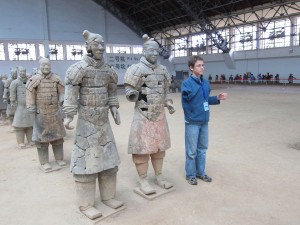
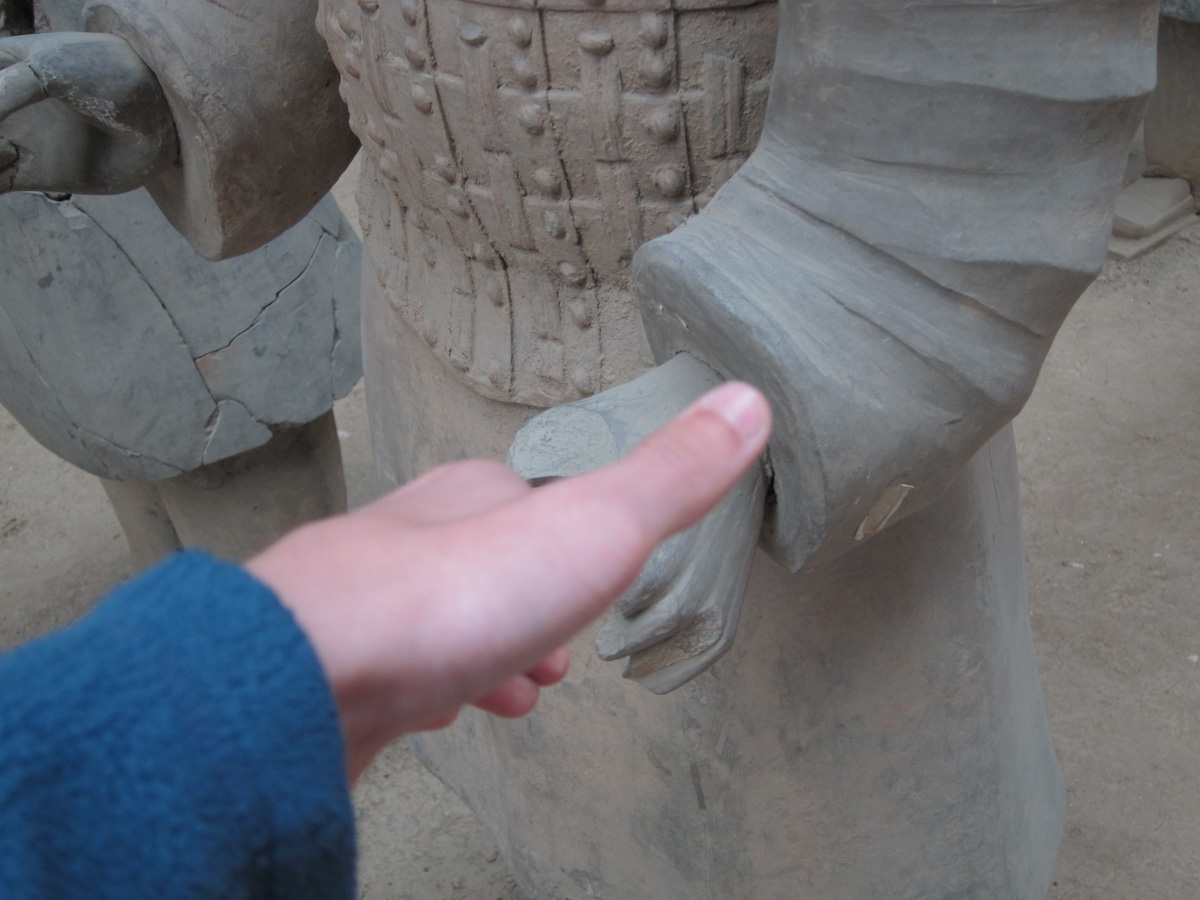
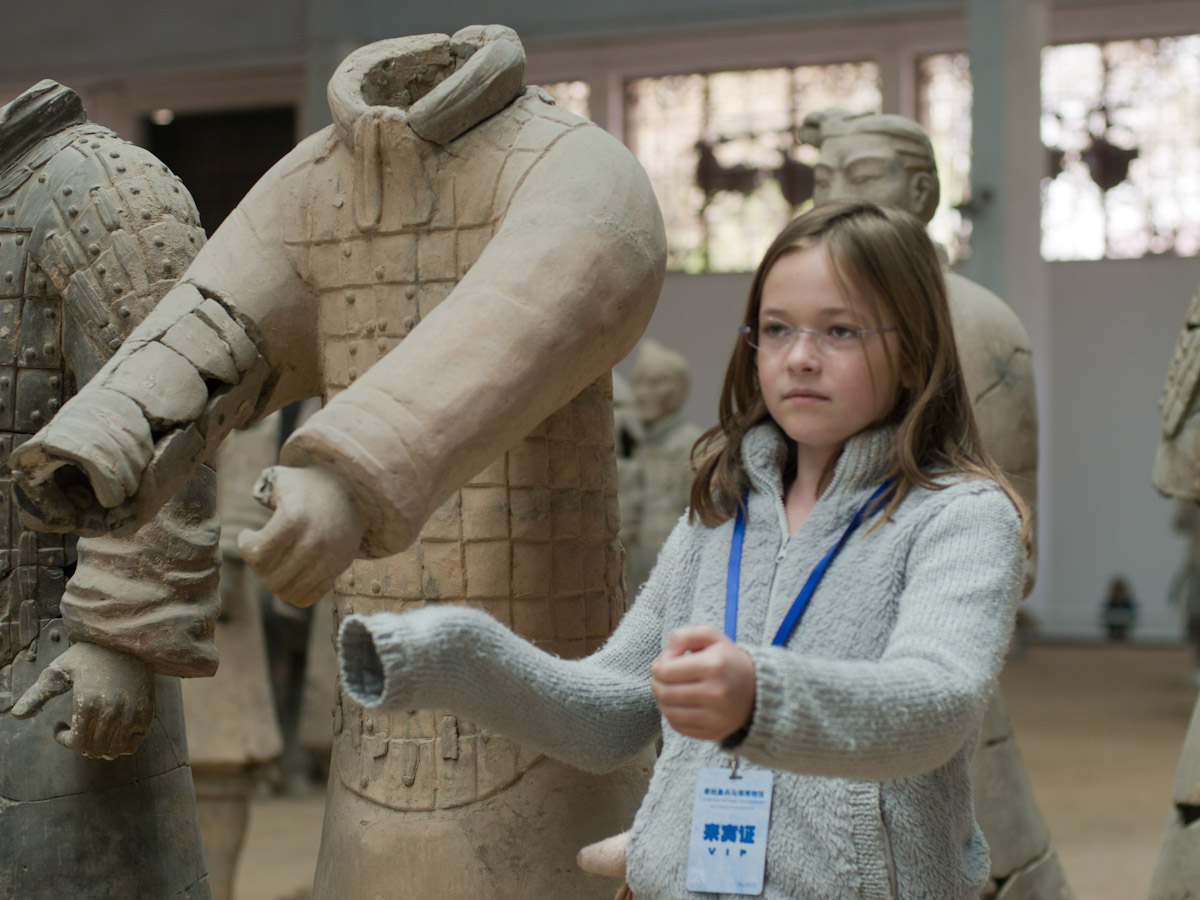
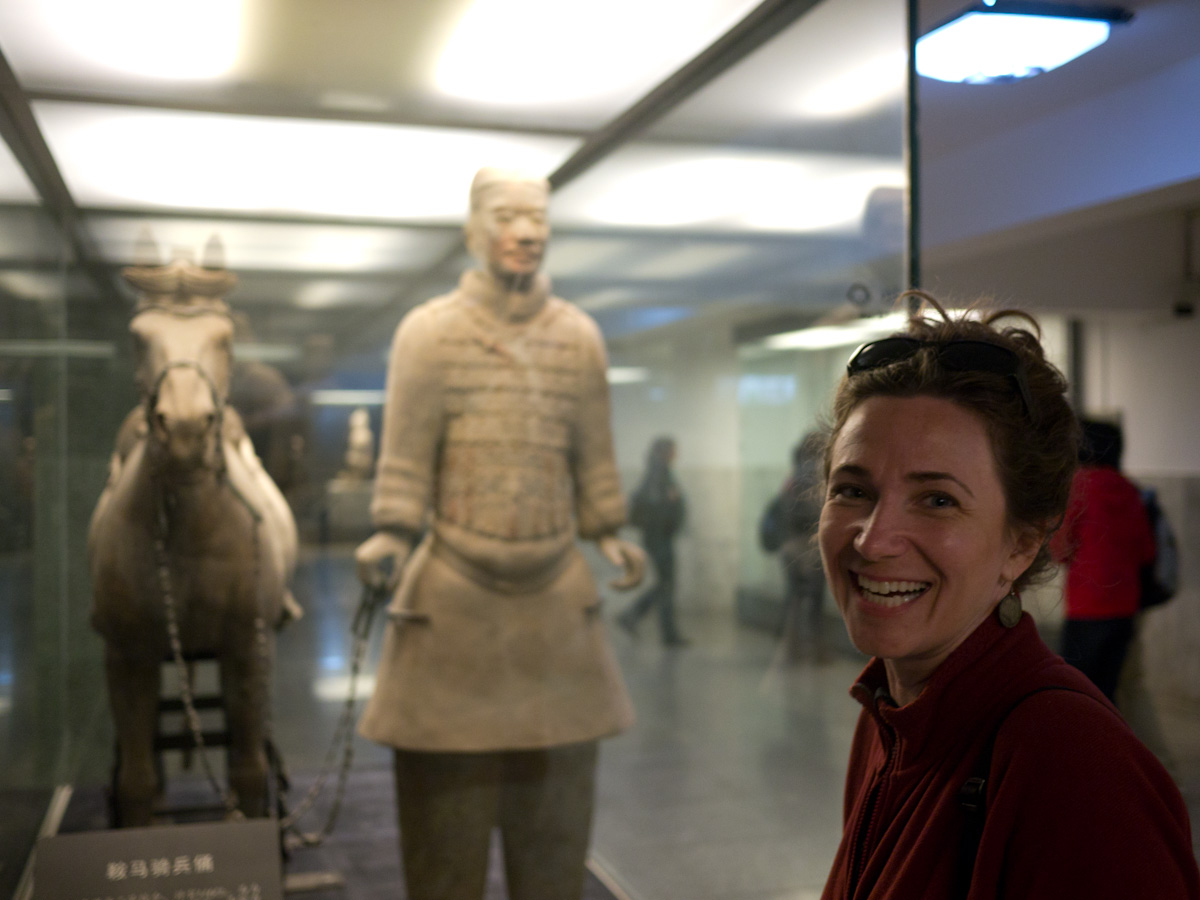
We took a TON of pictures. I even had the idea to make it look like I had only one arm, just like the buff Terracotta Warrior I was standing next to.
I was kind of sad when they told us we had to leave, but I was just too excited. I can’t believe I actually got to do that. In the immortal words of our Beijing guide John Sun, “
Oh my God… Oh my God...!”

Error thrown
Call to undefined function ereg()