
Apr 01
I have read that some parents will go to great lengths to remain connected to their children once their precious babies reach those dreaded teenage years, but I never really imagined myself as one of those sorts.
That is, until I found myself knee-deep in primordial crocodile-infested swamp mud.
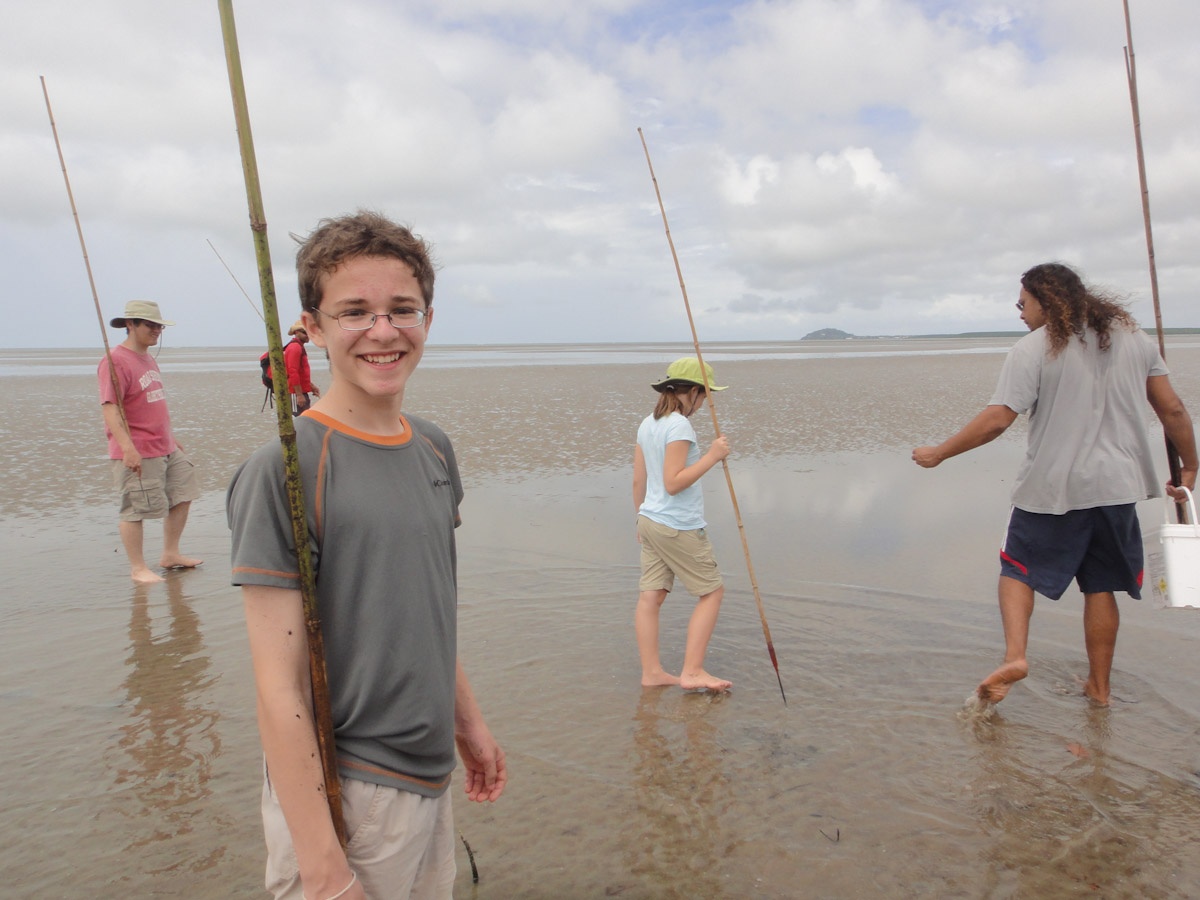
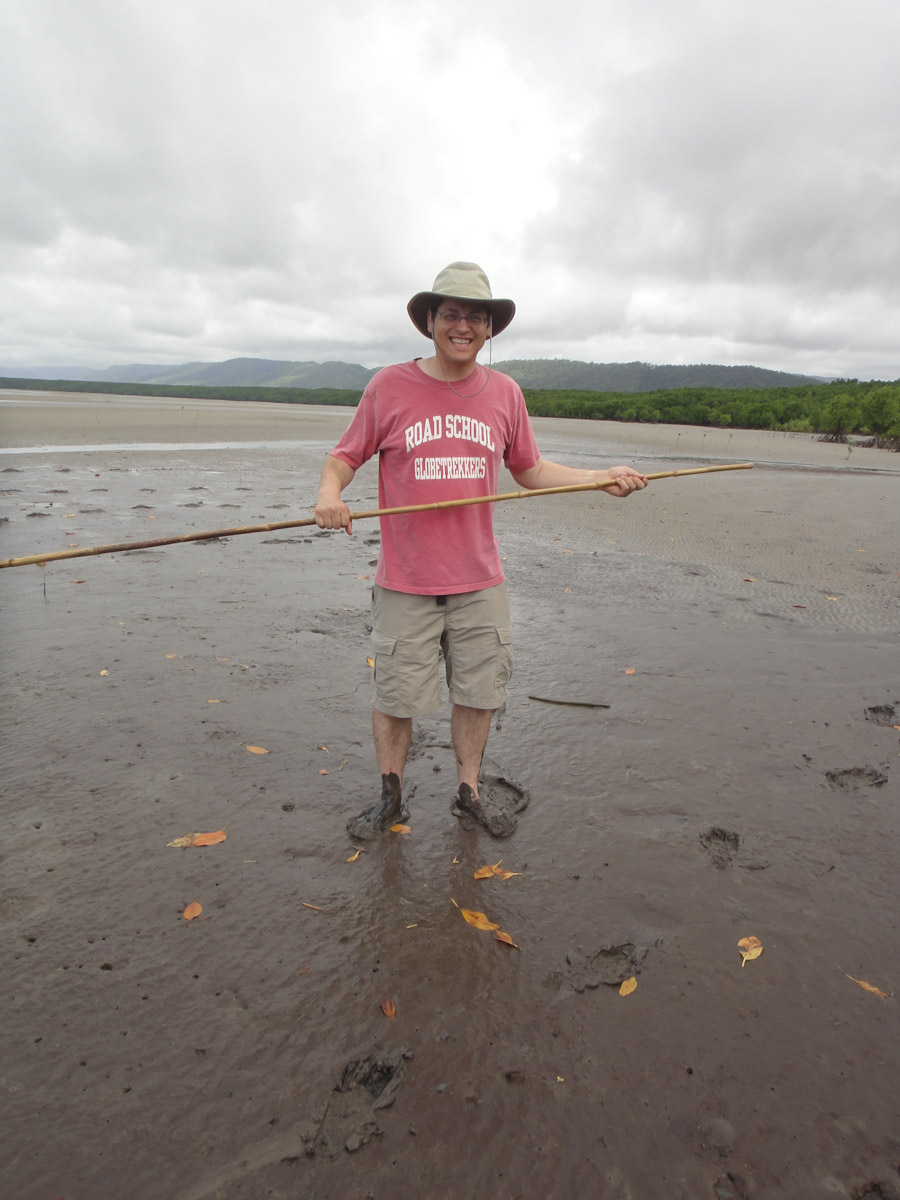
Carter could not stop grinning; he was in his element. We were on the coastal outskirts of the Daintree Rainforest in Australia. I was holding a six-foot long bamboo spear with which I was meant to stab giant mud crabs. It did not match my outfit.
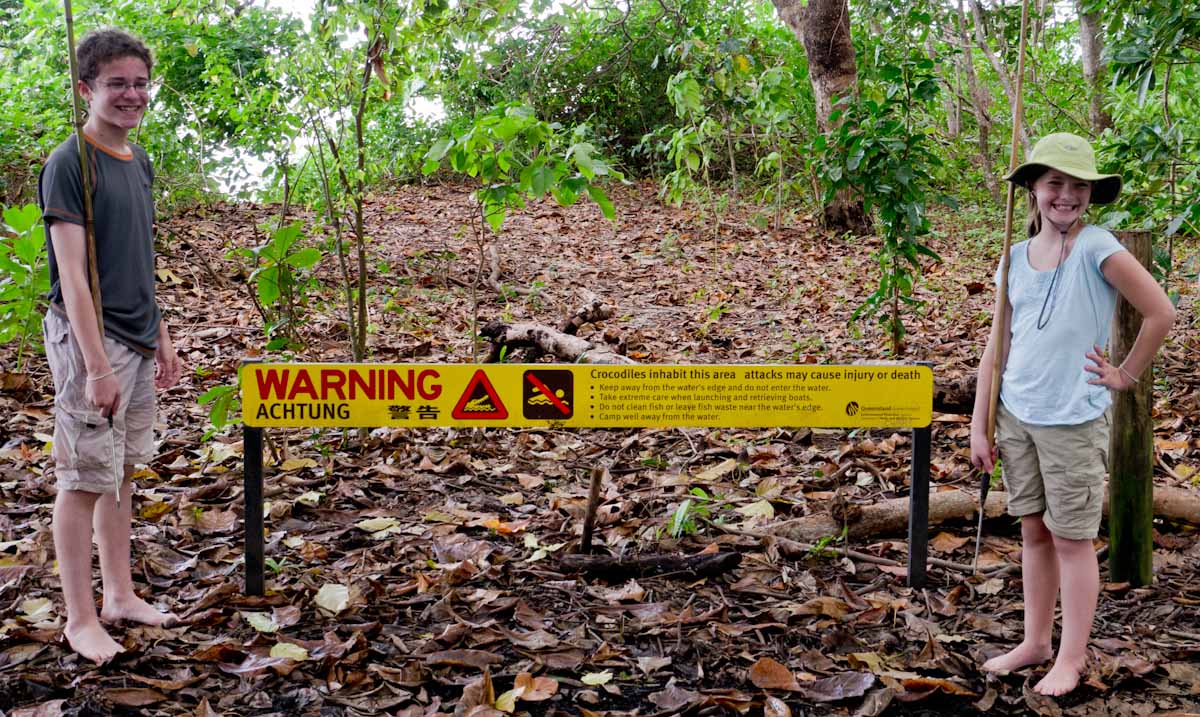
The tides were out and, theoretically, so were the crocodiles that normally lived here. Gigantic swaths of mudflats stretched out toward the horizon. At the edge, I could see the green canopy of the mangrove forest which was our destination. We were not alone. Russ and Katherine were of course with us, along with Link, an Aboriginal guide, and Barney, an expert Aussie outdoorsman. The latter two encouraged us along and assured us that a tasty meal of steamed sea crab would be our reward if we were any good with our spears.
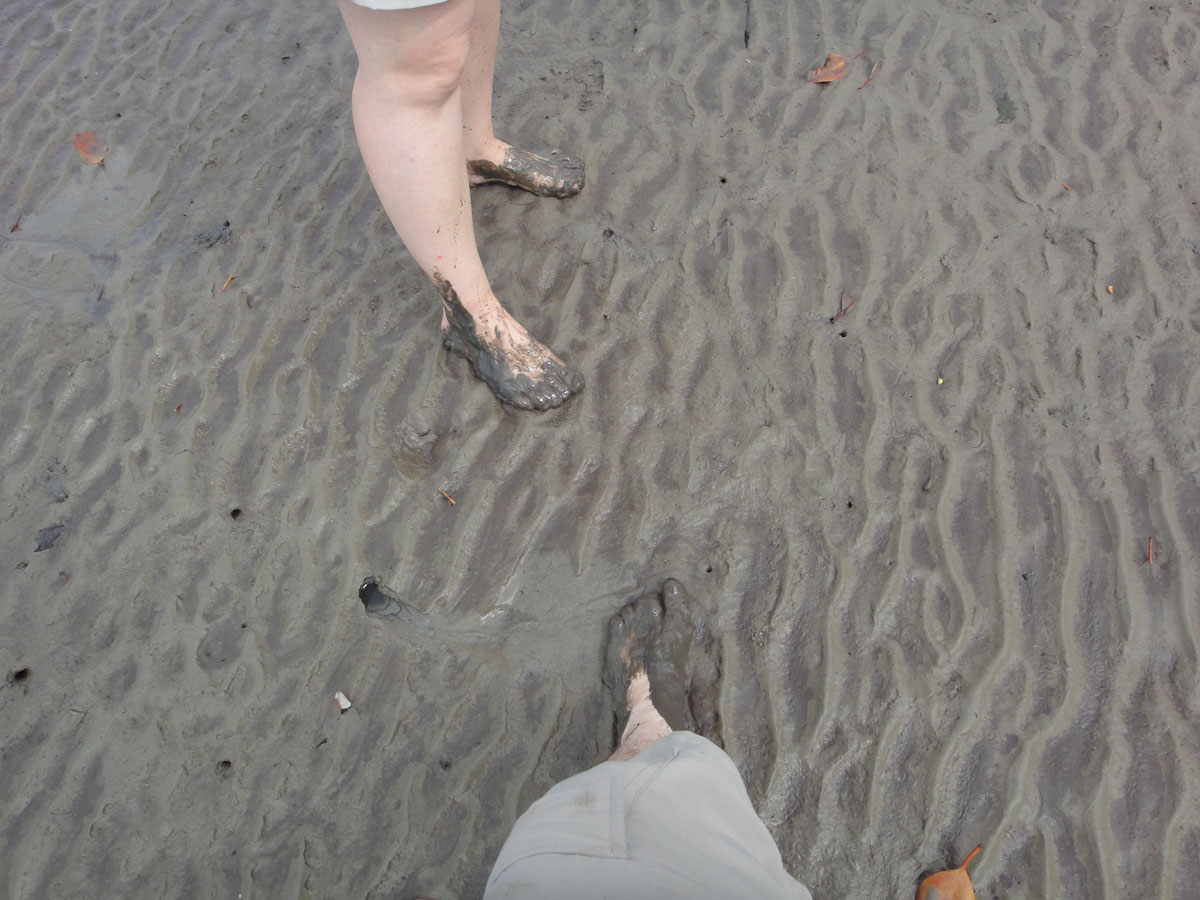
I looked down at the goopy landmass that served as the sea bed and then at my freshly-pedicured toes. “So, we just walk out there?” I asked, knowing full well what the answer would be. Link smiled and told me to pay no mind to the thousands of little bumpy things underfoot. “They’re sea snails, they won’t hurt you.” Ewwww.
Carter, Russ, and Katherine practiced throwing their spears as we walked: there is quite a science to perfecting the arc so that the spear falls point down. I used my spear as a walking stick and focused exclusively on not puncturing my toes and avoiding squishy bits while walking as quickly as I could.
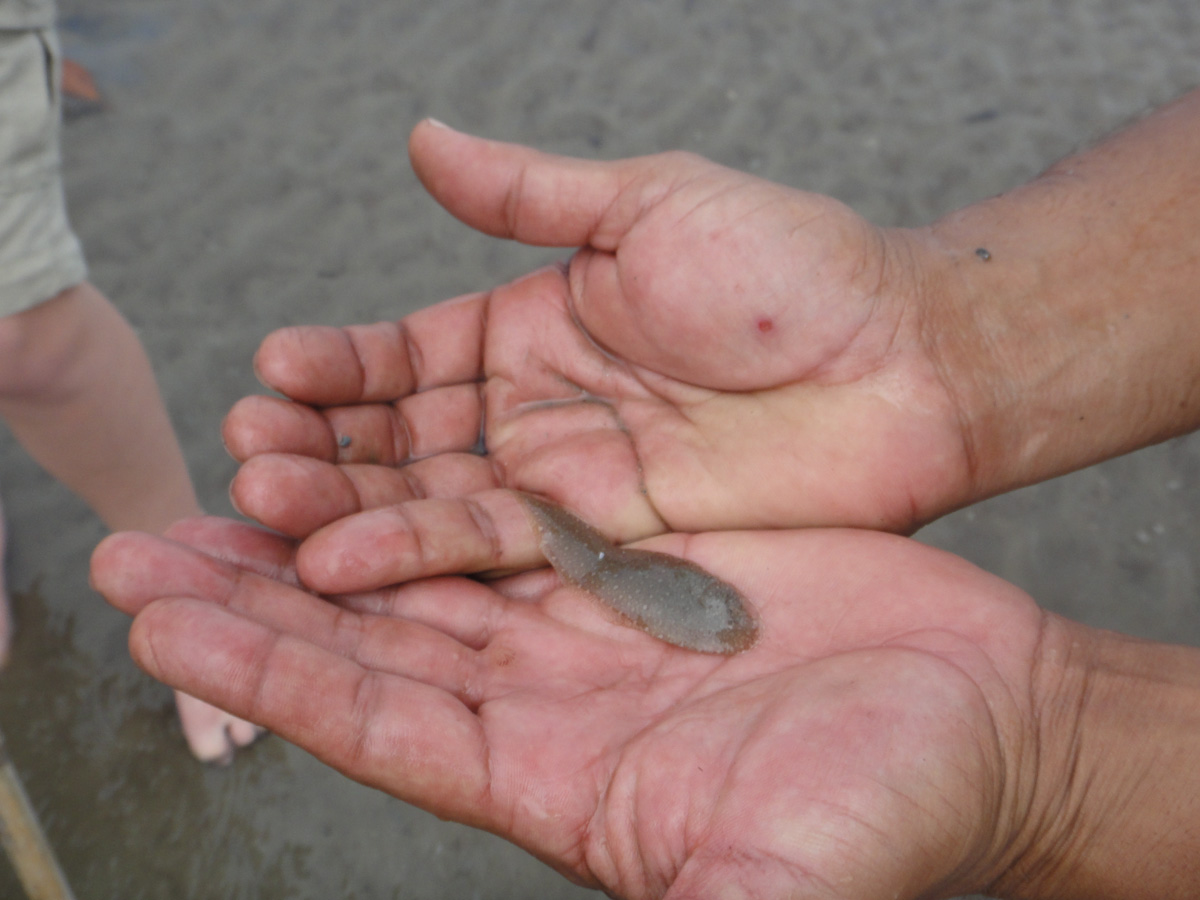
We splashed our way along. The sun was bright and the shallow water was warm and clear. Suddenly, Link stopped and squiggled his foot into a little puddle. He reached down and plucked out a tiny sand skipper fish. The man actually caught a fish with his bare foot! He let the kids take turns holding it while he scooped and poured handfuls of water to keep it safe. He was extremely gentle and respectful of this tiny creature no bigger than two inches long. It was a powerful and wordless lesson.
We walked a little further and he pointed out the hundreds of sand tube worms we passed. About as thick as a strand of yarn, these creatures stay anchored in their holes and stretch out quite far in search of food. When you poke them, they disappear quick as lightening down their holes. The movie “Dune” flashed before my clenched eyes; I desperately tried not to think about what else was passing through my toes as I gingerly squelched my way across the flats.
We reached the edge of the mangrove swamp where Barney pointed out the important role this miraculous tree plays in the ecosystem. It survives in sea water by concentrating the salt in a small number of sacrificial leaves. They die, thereby allowing the others to survive and continue the critical process of photosynthesis. The roots of the mangrove are arched and enormous and reach deep into the sea bed. Their tangle makes it impossible for large fish to enter, thereby creating a mini microcosm which is a perfect sanctuary for small fish and mammals. It is one gigantic nursery.
Link called our attention to a different aspect of the mangroves: he pointed out the bright green and yellow ants which were scurrying up and down the branches. He called them “citrus ants.” I watched astounded as he picked one up, plucked off its head, and popped the torso in his mouth.
He explained that three of these insects provide an adult with a full day’s supply of vitamin C and that the aboriginals munch them whenever they have a cold or feel a flu coming on. To my abject horror, both of my children clamored for an ant. I watched in slow motion as Carter ate three and Katherine settled for one. Carter then plucked another and said something like “Mom, you’ve really got to try one. They’re tasty.” I don’t think any sound came out because my lips were clamped tighter than a wood vise. The violent shaking of my head successfully conveyed my response.
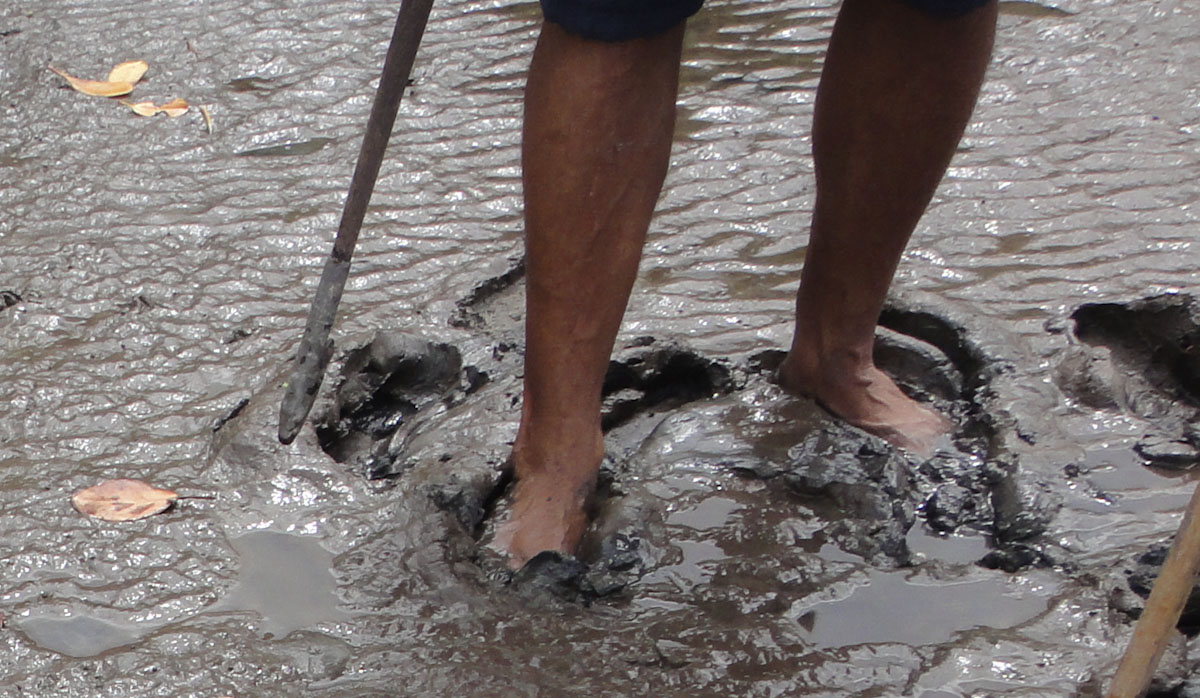
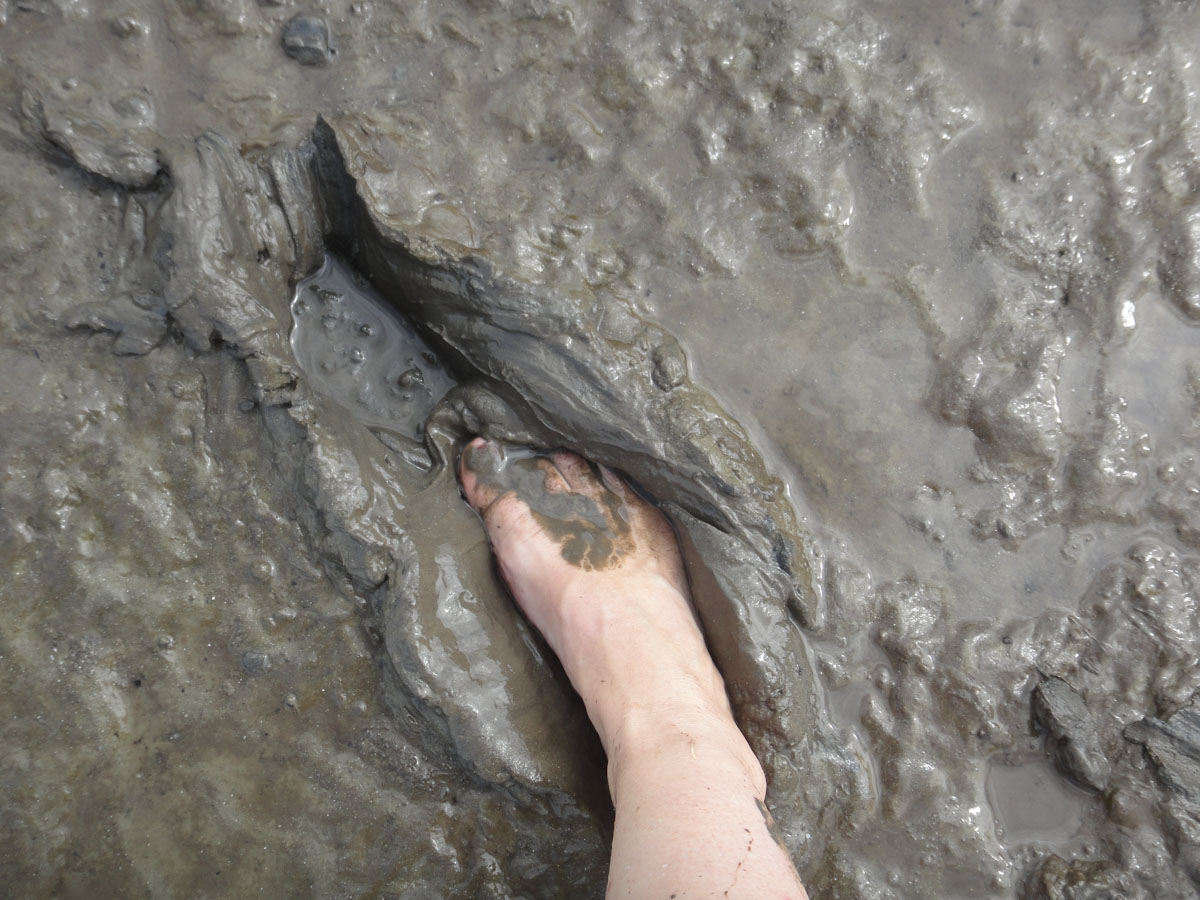
Having finally reached the edge of the swamp, we began to make our way inside. The mangrove foliage overhead was dense and it was dark. The gnarled roots came up to our waists and the mud here took on an entirely different texture, sort of like stepping into buckets of goose fat. It was slick and black and, at certain points, seemed bottomless. I fleetingly wondered if it could be quicksand as I found myself up to my knees in inky muck. With every step I heard a giant slurping, sucking sound. I could only imagine what microorganisms where thriving in this stuff. The irony of the tiny bottle of Purell in my pocket was more than I could bear.
I looked over and saw the kids thrusting their spears into every tidal puddle. We would be feasting soon: they had helped corner three huge and very angry male crabs, entirely undeterred by the ominous clicking of pinchers and beady eyes that followed our every move.
They were not bothered by the dirt, the dark, or that creepy feeling that something was watching. On the contrary, they were hunting with an expert Aboriginal guide and having the time of their lives. I laughed at myself and my unbelievable good fortune. I couldn’t imagine any better place to be than here, in the primordial mud, with them.
Error thrown
Call to undefined function ereg()