
Feb 03
New Zealand Wine Class at Treetops
by Russ in Antipodes, Food, New Zealand
The folks at Treetops are fond of saying “Anything is possible here.” That is a statement that begs to be tested.
Can you arrange for local Maori elders to greet us on arrival with a ritual welcoming ceremony? Yes! Can you schedule a helicopter to fly us to an offshore volcano? Yes! Could you make a bucket of ice filled with various drinks available in the cottage 24 hours a day all week long? Yes! Can the kids help you pick vegetables in the garden? Yes! Could you pick up our children at cottage, feed them at the lodge and then bring them back and set them up to watch a movie while we are away hiking and dining? Yes! Could you print out directions from here to Bag End? Yes!
We did stump them once. Giles – a fisherman extraordinaire – asked them to find a place where he could go dry-fly fishing. In this extreme fishing sport, the fisherman stands in a river and looks until he sees a fish, then casts a lure (much less tasty than live bait) delicately, so that it stays on top of the water while landing near the fish he sees. He must then use psionic fisherman powers to make the lure appear alive, and hopefully inspire a bite and catch a fish. The problem was that we arrived two days after a small hurricane hit northern New Zealand. Treetops bills itself as an excellent fly-fishing lodge, but since hard rain brings down leaves and stirs up water, and since dirty water is not good for this sport, none of their guides would go out. (Giles was not satisfied with this answer and eventually he found a guide in another town willing to try. Hopefully they will bring home something for dinner tonight.)
Now, if you do catch a fish, will Treetops prepare it for you in their own kitchen, in any manner you wish and serve it up plated? Another yes!
Well this sort of thing brings on more requests. Here we were with just a few days left in New Zealand and though we had tasted a few bottles of wine, we remained novices.
Can you create a one night lecture and tasting for us about New Zealand wine, concentrating on reds? Yes!
By now we knew they would say yes, but we weren’t sure what to expect with only 2 days prior notice. We offered that if any other guests at the lodge wanted to come, we would be pleased to open the class to all comers.
They turned to the Lodge Manager, John Logan. It turns out he not only enjoys wines, he actually worked for years in the New Zealand wine industry. From the gleam in his eyes, we knew he would embrace the challenge enthusiastically.
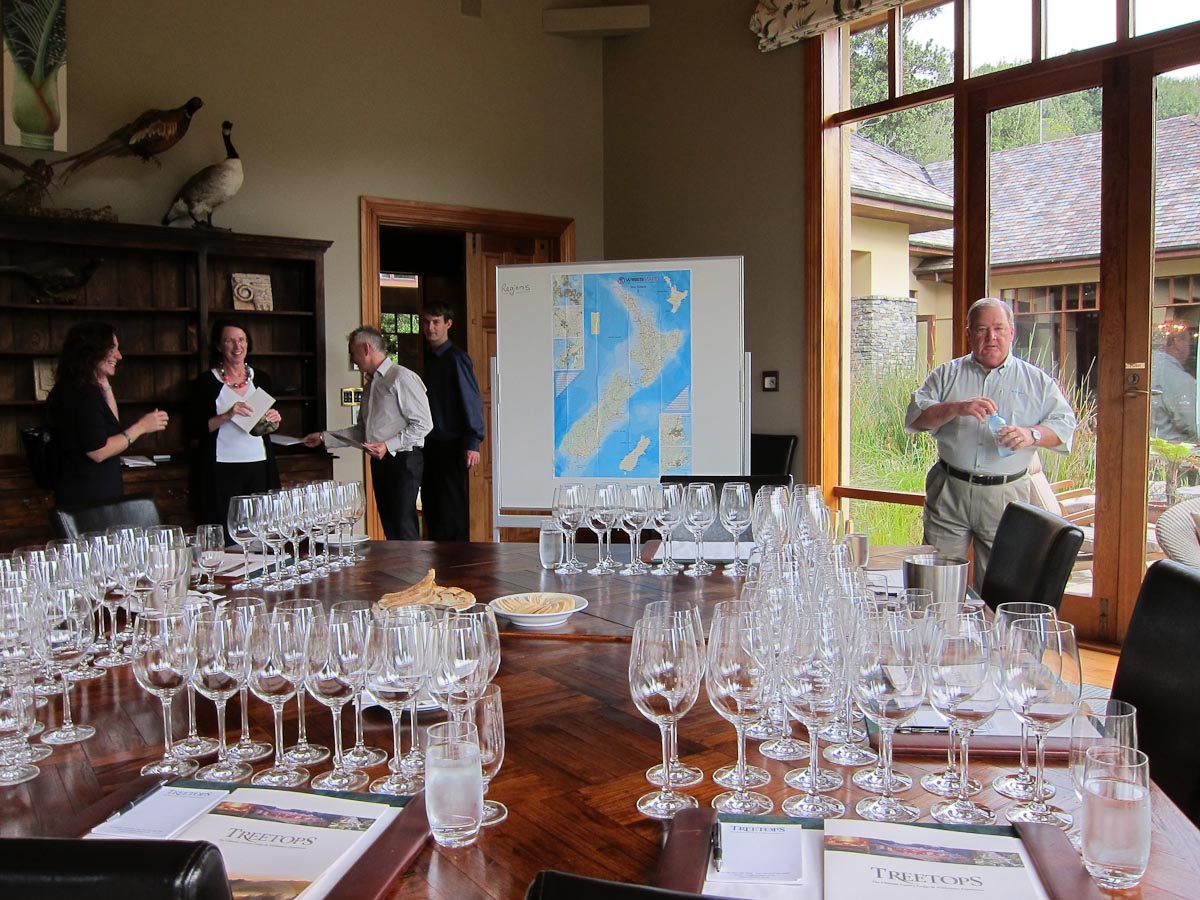
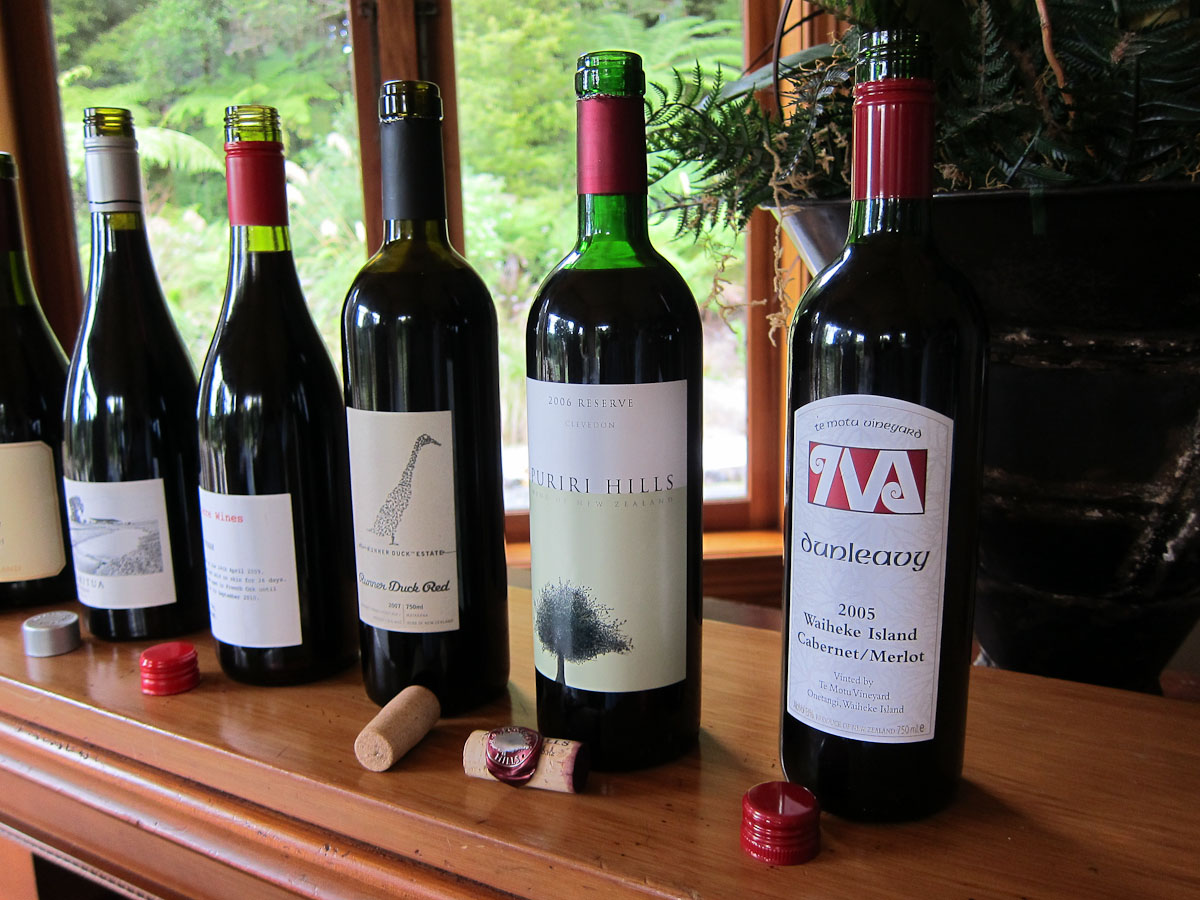
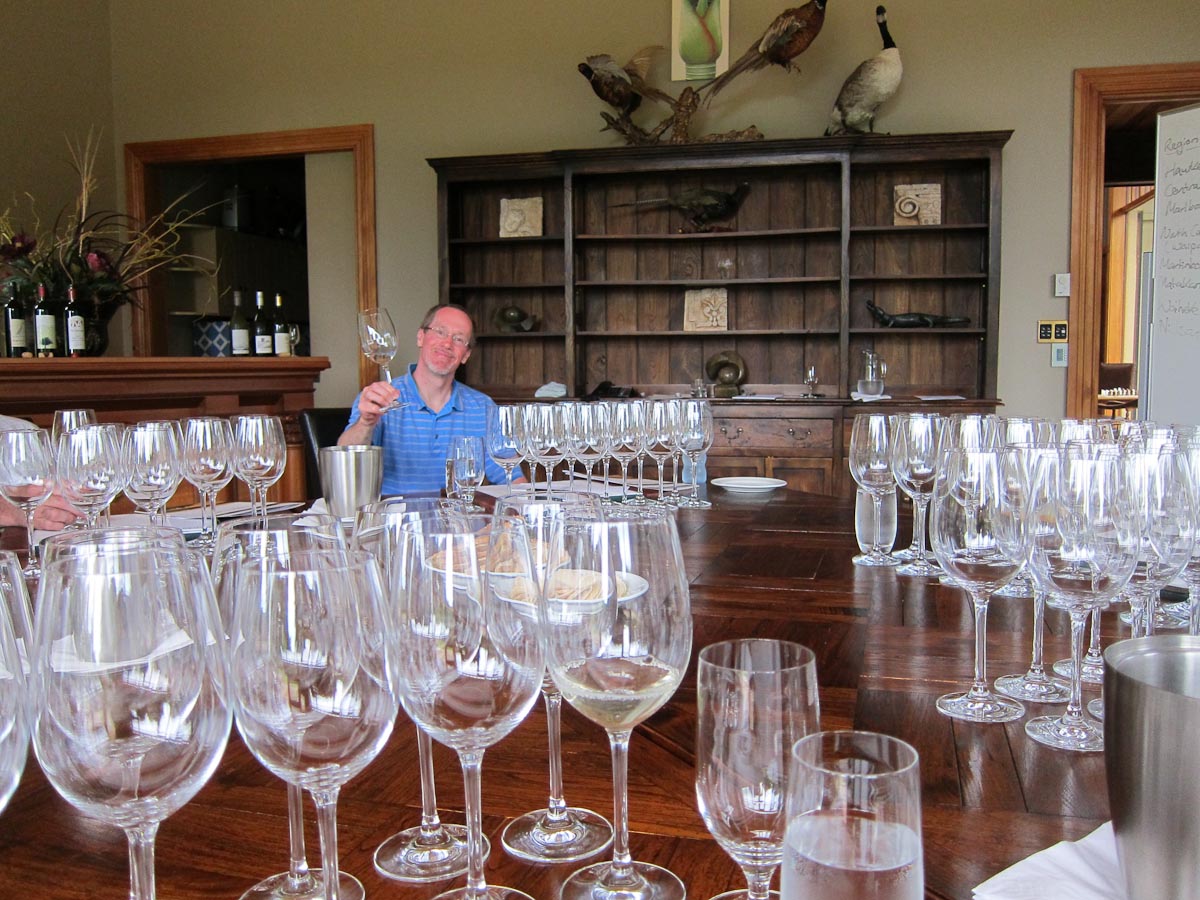
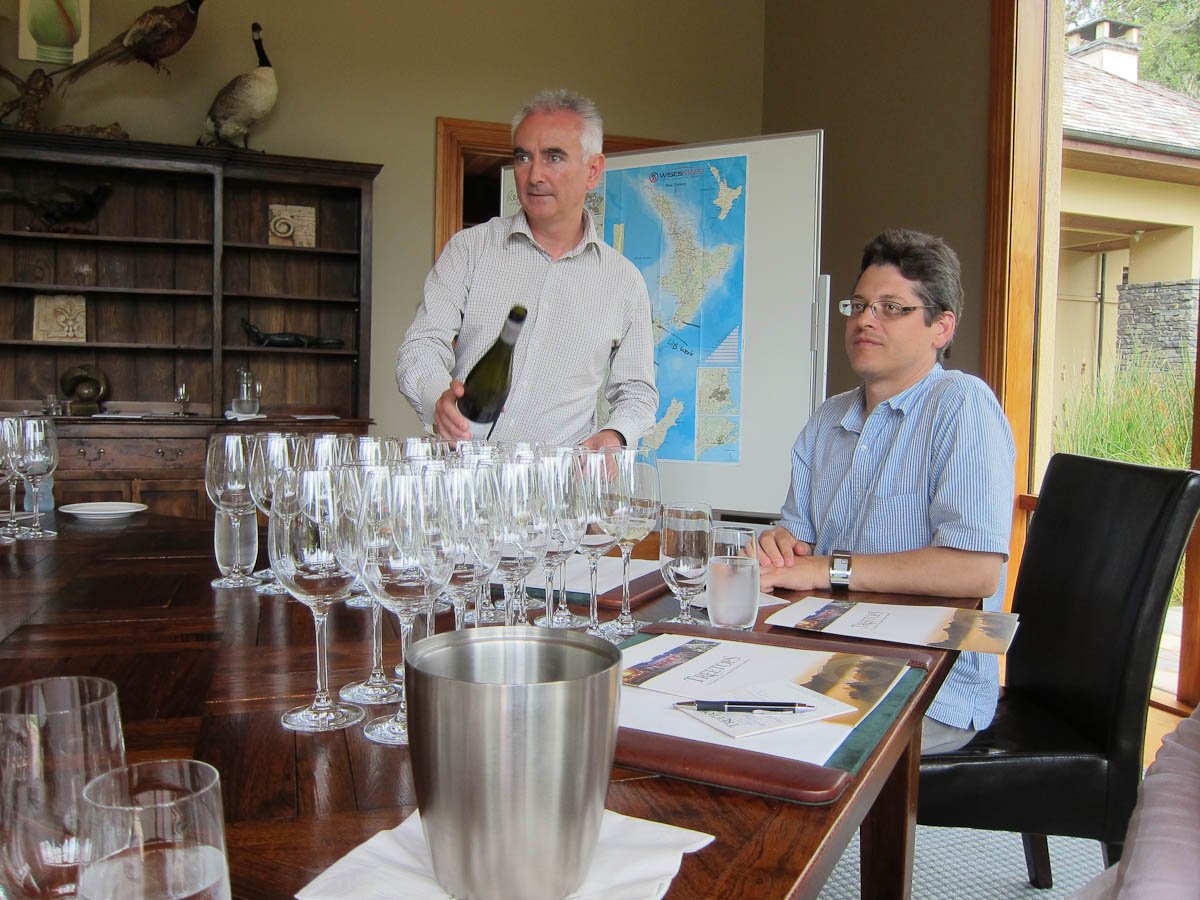
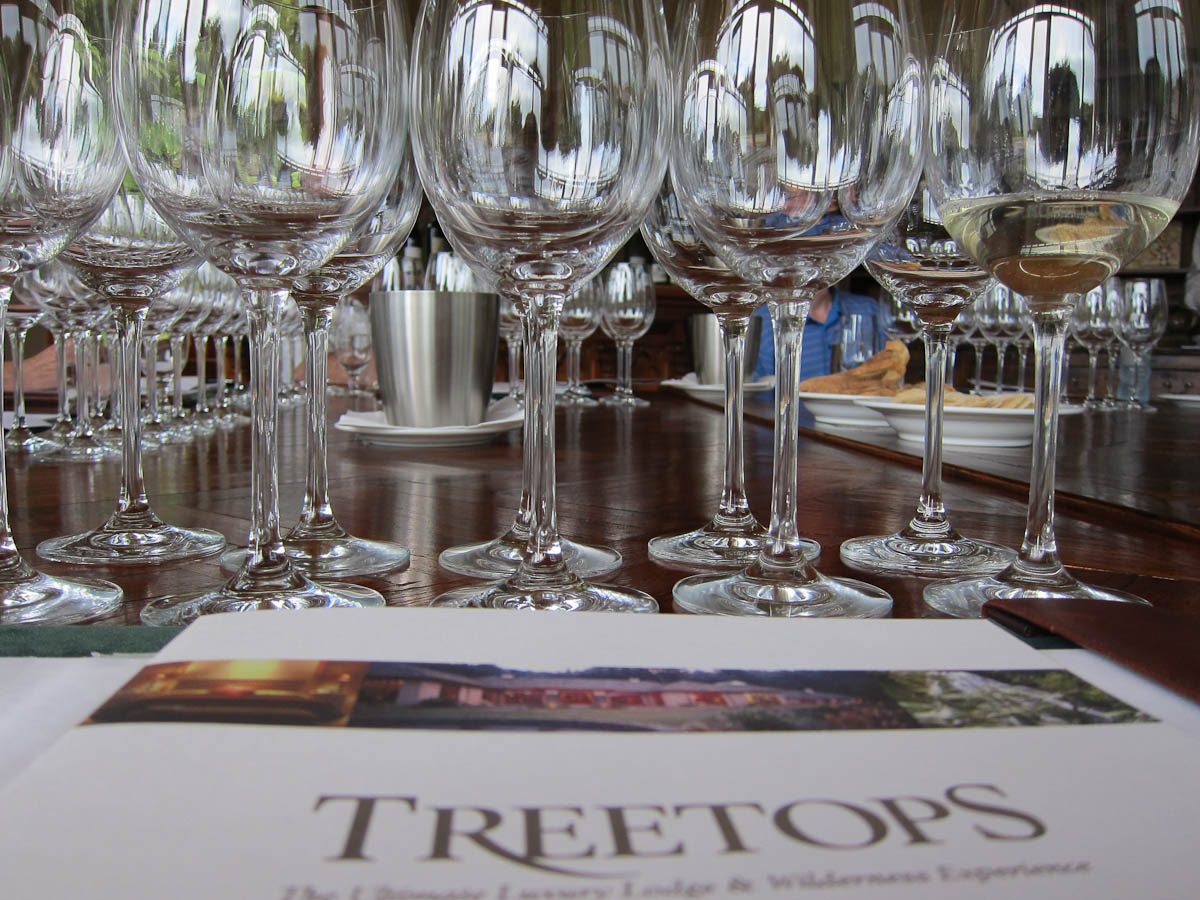
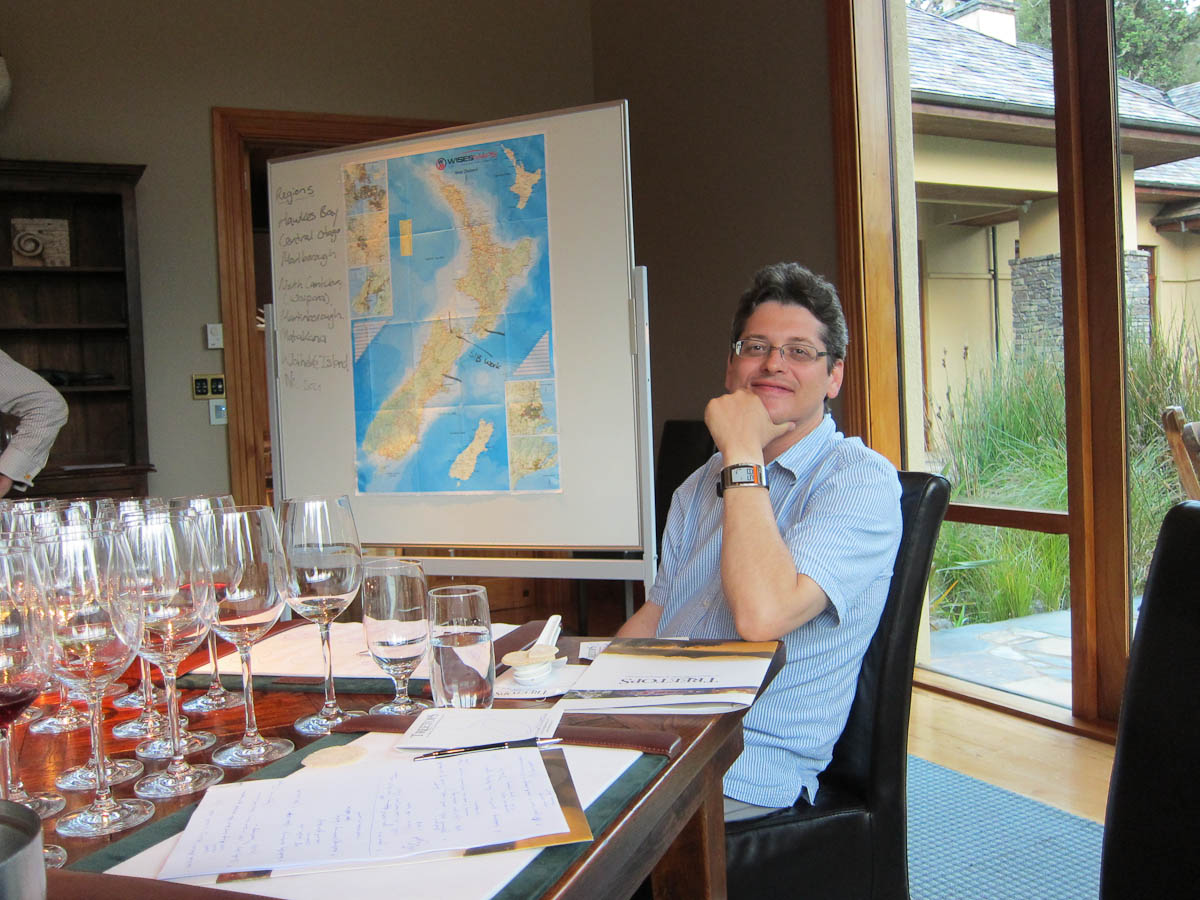
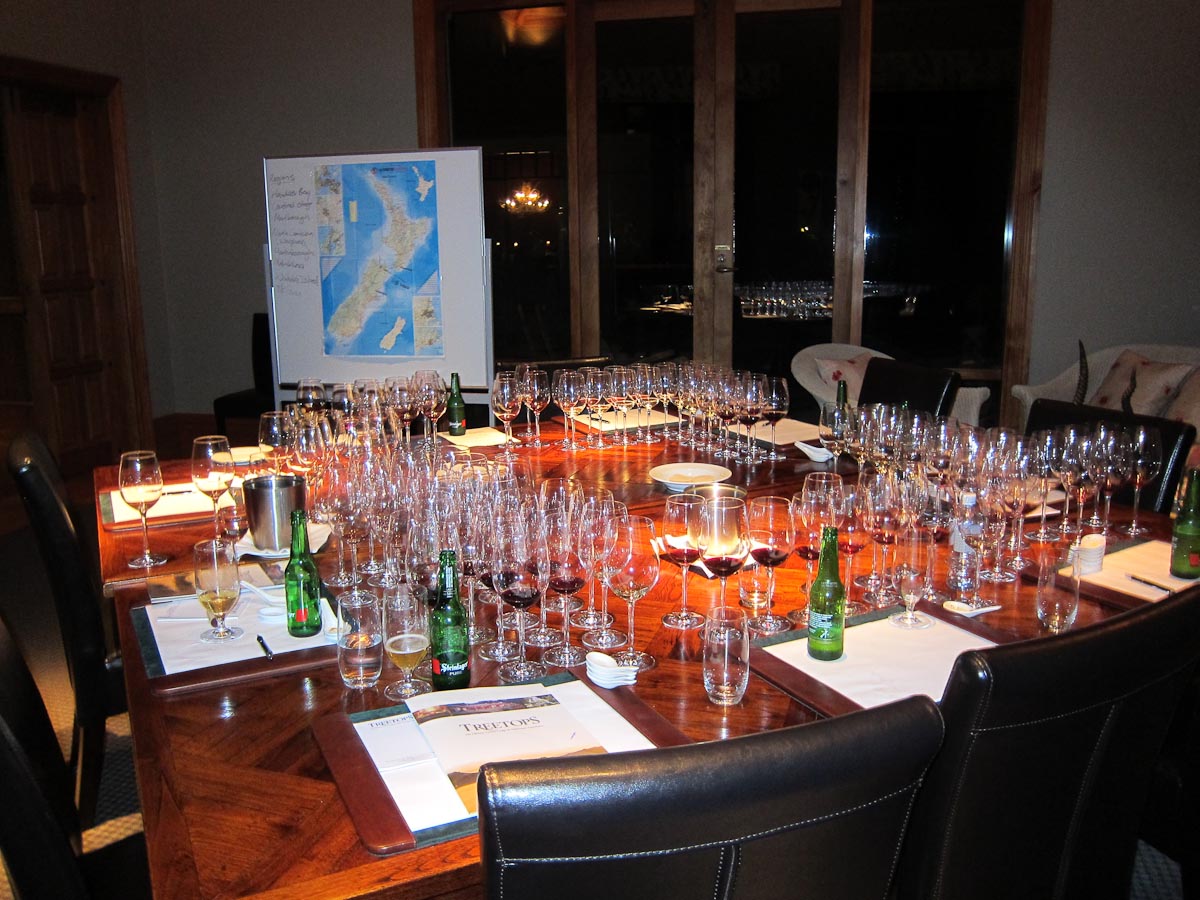
When we showed up for the class, we discovered two other lovely couples waiting. We entered the library together. There we saw a blizzard of glasses arranged in rows, a whiteboard waiting with a giant map of New Zealand, Treetops notepads with pens, and folders stuffed with articles and background reading. Nine reds and four whites were lined up on the table, already open and waiting at the right temperature. We were eight delirious would-be wine snobs, glimpsing Heaven.
John then lectured and we tasted. New Zealand is best known for its Sauvignon Blanc which is 80% of their exports (with Asia being their top export region). Sauvignon means “savage vine” and it is a hearty grape that is a bit of a weed and can survive anywhere which is one reason it was tried early in New Zealand. The grape has lots of sugar – apparently if you squeeze the grapes your hands get so sticky you can hardly pull them apart afterwards – and this provides the fuel for fermenting alcohol. The top New Zealand brand is Cloudy Bay from the Marlborough wine region. Marlborough is on the north coast of South Island and this area enjoys alluvial soil, hot days and cold nights. This helps give the Sauvignon Blanc a strong herbaceous quality (grass and vegetal plant taste) that adds a fresh spring outdoors flavor to your meal and enhances herbs.
We tasted the Cloudy Bay and some of their other top wines and found most to be simple, tasty and highly drinkable alongside food. Personal preferences: The Reislings from New Zealand are also great – with a sweet open and a strong tart finish that encourages another immediate sip – the perfect aperitif or balance to creamy or spicy food. The Hawkes Bay chardonnay was smooth and oaky and a fine choice for buttery foods. Gina and I were probably most impressed by the Pinot Noirs from Waipara (also known as North Canterbury) because they had plenty of black cherry and jammy red fruits and a smooth follow-through – yum!
We sipped happily from the other glasses as well - Pinots, Syrahs and blended varietal reds that were variously smoky, fruity, spicy, thyme-y, licorice-y, and clove-y… super to pair with ducks, spring lamb, or T-bones –but you would have to really know your independent producers and somehow get export into USA to take advantage of these.
Giles showed he was not only a fisherman but connoisseur as well, by successfully naming the various flavors of each vintage. As a final examination, John brought in the menu for that night's dinner and asked each person to select one of the thirteen wines to pair with each of the four courses. Giles won a bottle of champagne for proposing the best pairings of all.
We also learned about a wine industry tradition - after tasting so many wines the best way to celebrate and clear the palate is with... a refreshing cold beer! The wine class was a terrific success and we carried the rest of the bottles directly into a dinner with our new friends.
New Zealanders do allow an extra 1 or 1.5 percent of alcohol in their wine compared to the French, a fact the English couple found scandalizing. None of the Americans at the table complained, but then we typically do not drink wine as a normal daily beverage.
If there is a broad weakness of New Zealand wine, it comes from youth. Although wine has been made here as far back as the 1880s, all the vines are clones from other countries, so they have the same grapes as others… but on younger vines. There are many newer vineyards where the vintners have less experience with the local weather and with making wine under a wide range of conditions. The few producers who are true experts are highly sought, so little of the good stuff makes it out of the country at reasonable prices.
Packaging is another barrier at the high end. Due to a disaster with bad Portuguese cork a few years back, most wineries here have switched to the screw-top technology. That does seal the bottle, because they put an airtight label over it, but it works perhaps too well - it stops all air flow completely. Such wines will not age and mellow over the years, unlike a bottle with natural cork that can breathe a bit. New Zealanders don’t mind because they drink their wine young. But again this tips New Zealand mentality firmly toward making straightforward wines that most people will like to drink.
So if you want a nuanced wine to sip and study – stick with the French. If you are planning a casual dinner party, then New Zealand wine will be a great choice.
Bottom line: try a New Zealand Sauvignon Blanc or Reisling, followed by a delicious Pinot Noir from the Waipara region.

Error thrown
Call to undefined function ereg()