This is the true story of an Englishman who made a New Zealander dig forty-one holes in a hill, sixty years in the future.
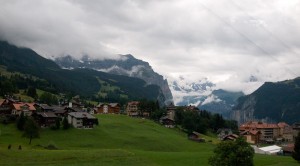
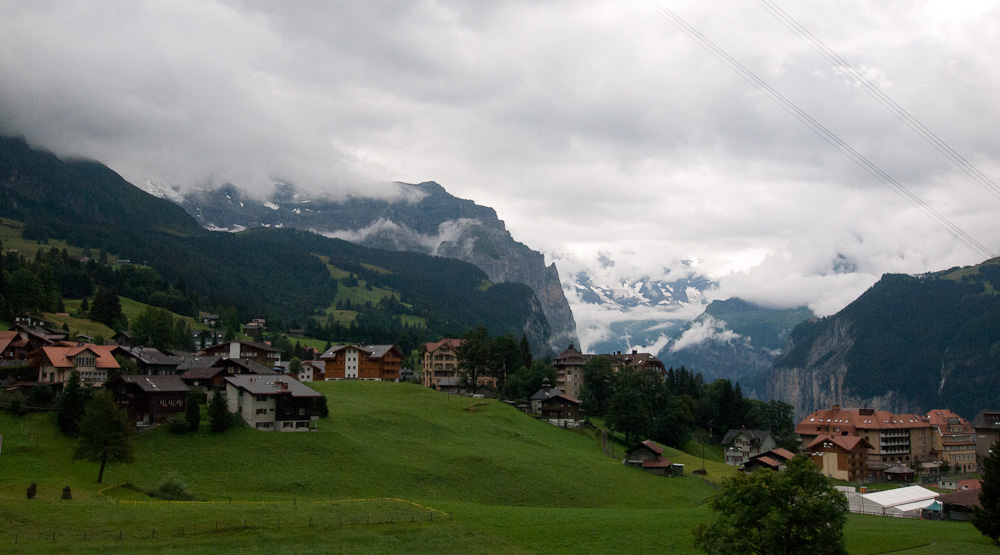
The Englishman J.R.R. Tolkien was born in Africa and came back to live in England at the age of three. His father and later his mother died of illnesses and he grew up in various English prep schools with a great talent for languages. Just before college he backpacked in Switzerland in a group of a dozen friends and the lofty peaks of the Jungfrau and the vistas from Interlaken and Kleine Schiedegg inspired the descriptions of Bilbo’s journey across the Misty Mountains. We could well imagine, because this is exactly where we had traveled last summer as well.
Tolkien graduated college in 1915 and married his childhood sweetheart after many years of separation, because their families kept them apart. His was Catholic and hers Protestant. But by summer 1916 he was fighting in the World War I trenches under heavy fire somewhere along the Western Front, serving as a signalman. Four months later he came down with serious trench fever and was shipped back to England, where he survived as an emaciated wreck requiring long convalescence. He turned to writing. By 1918 all but one of his close friends were dead. After the war he became a Professor of Literature at Oxford.
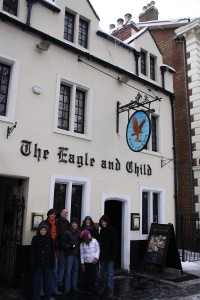
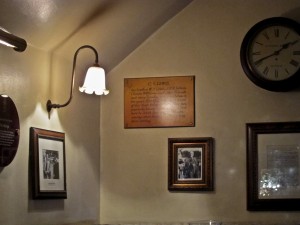
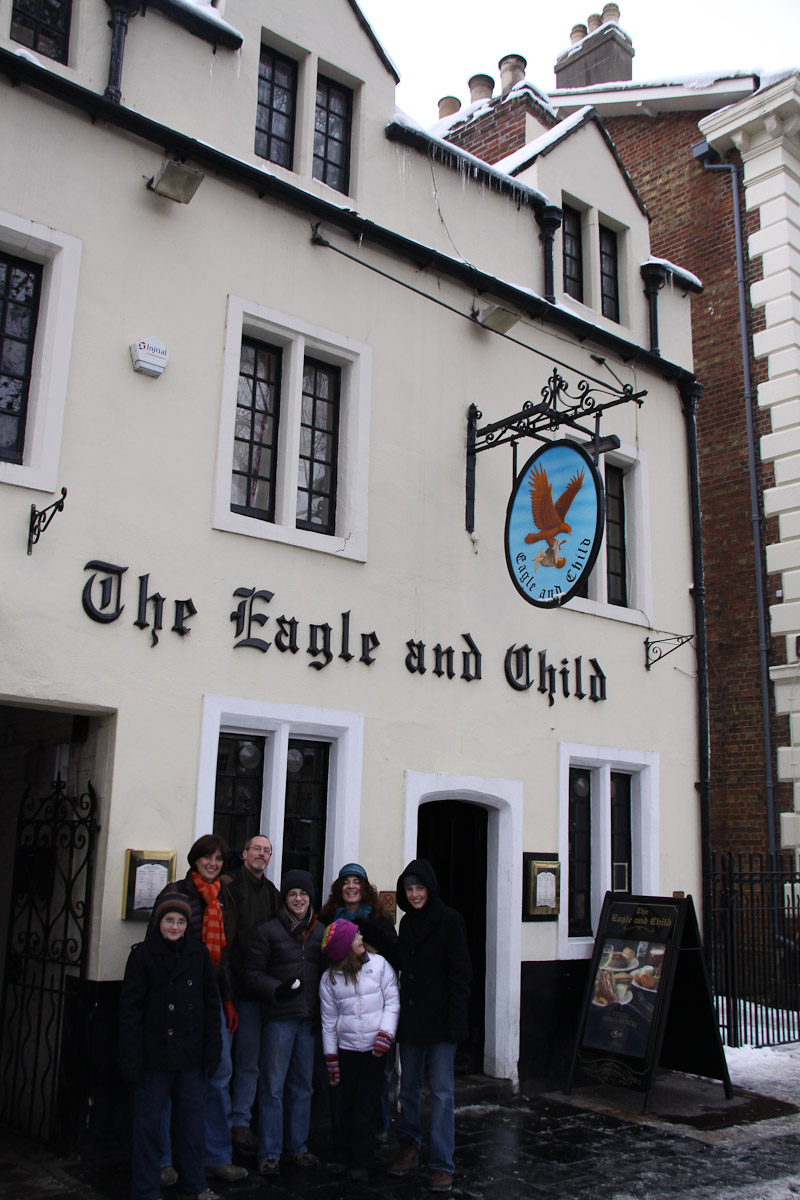
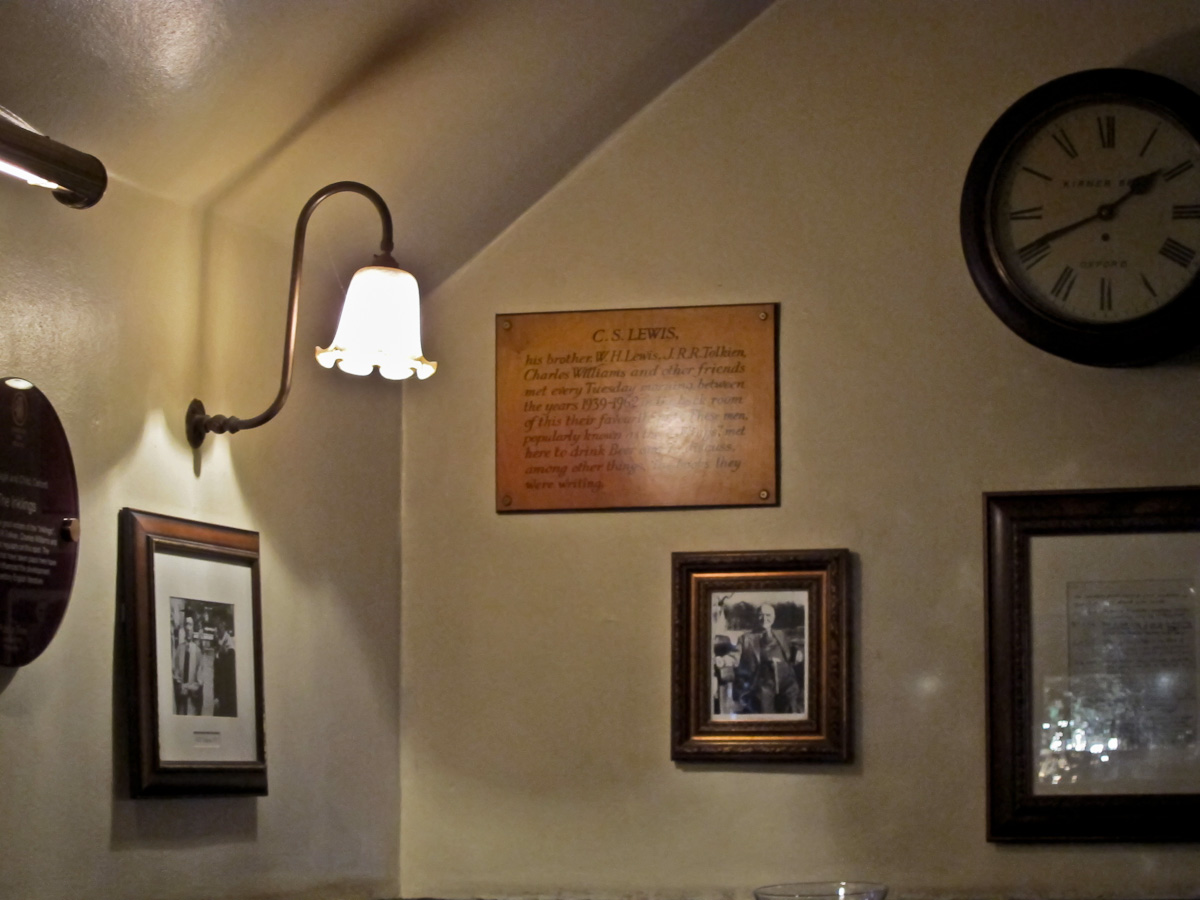
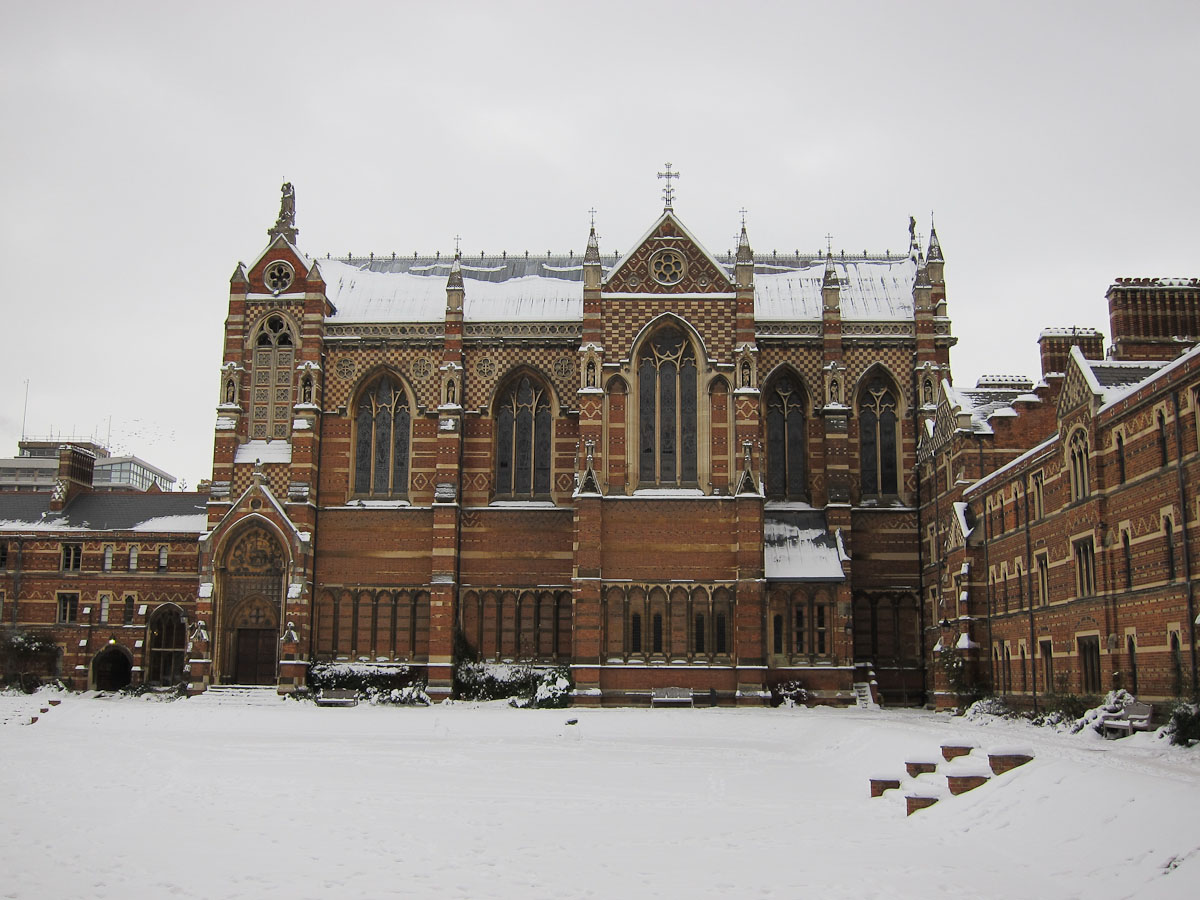
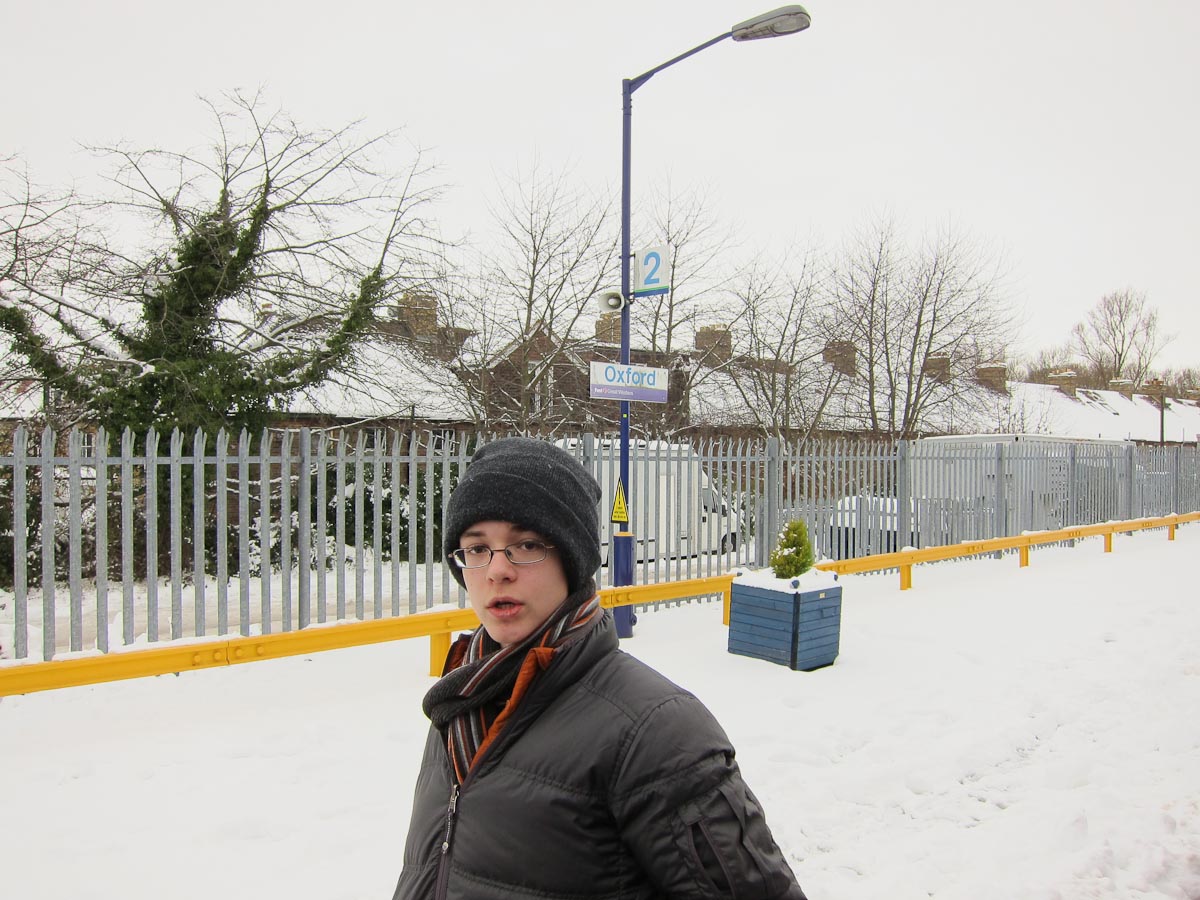
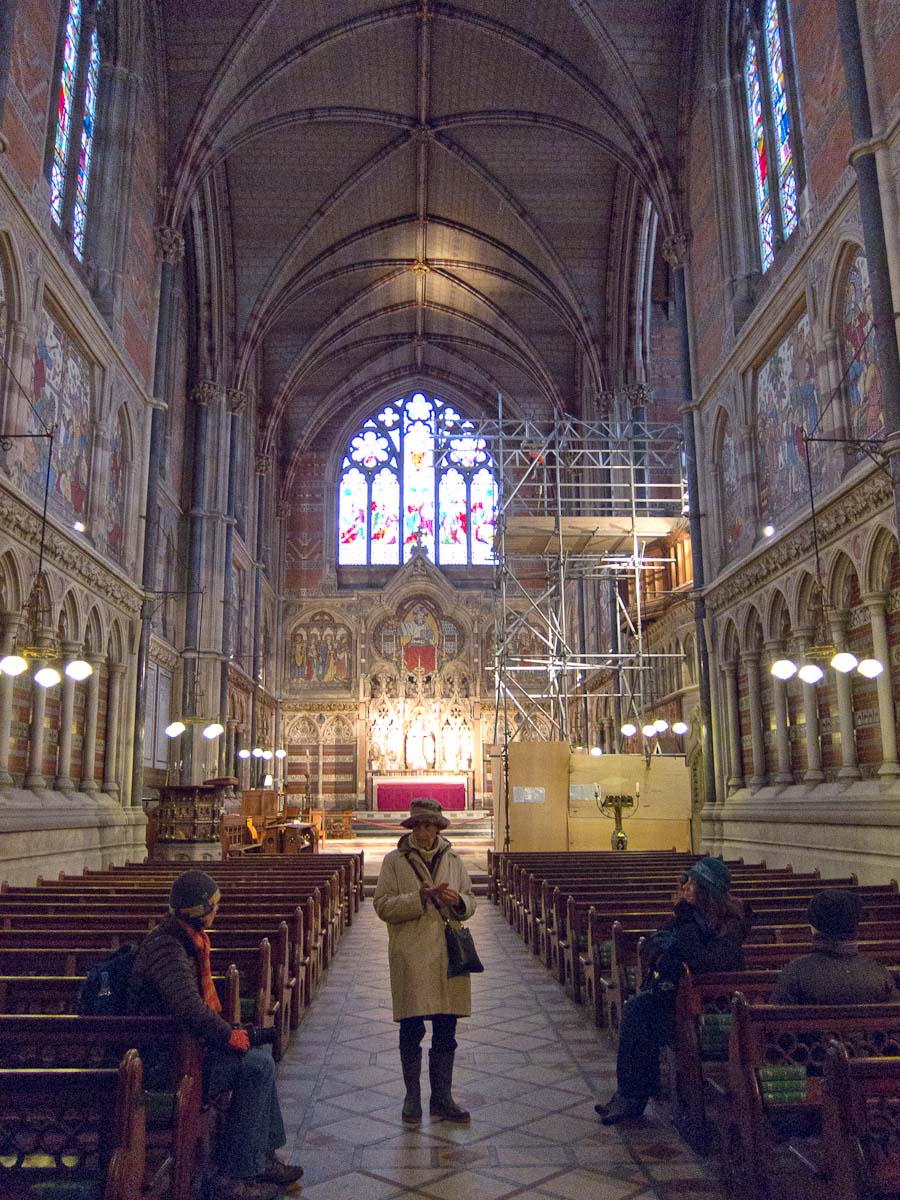
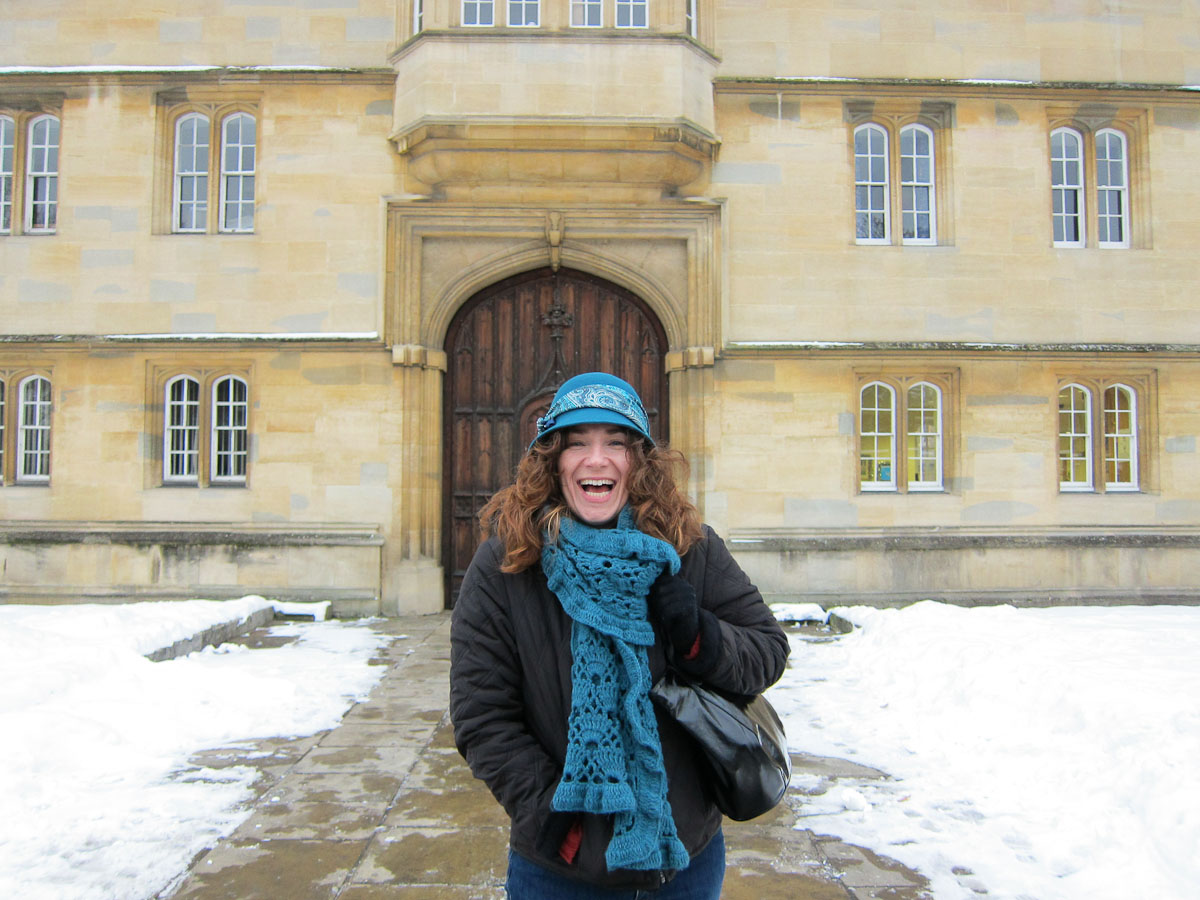
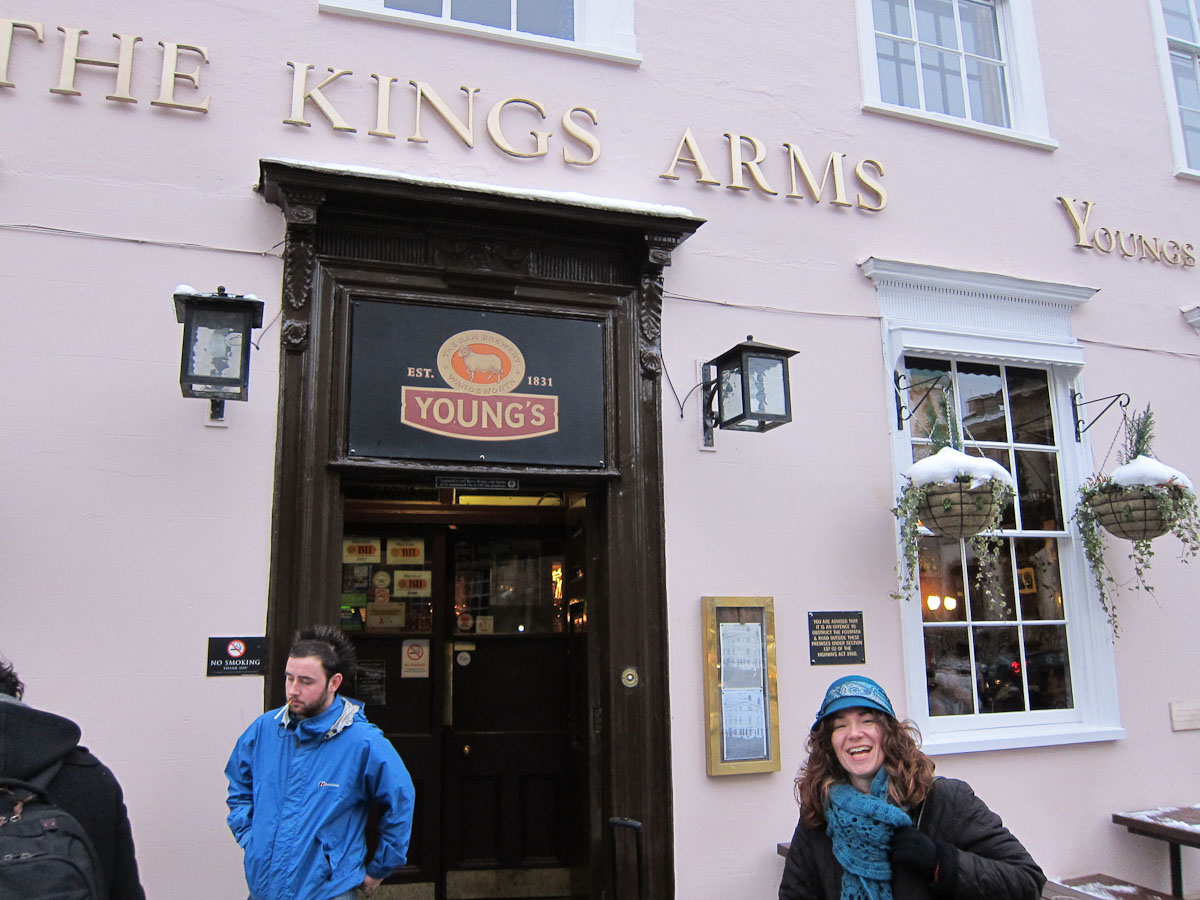
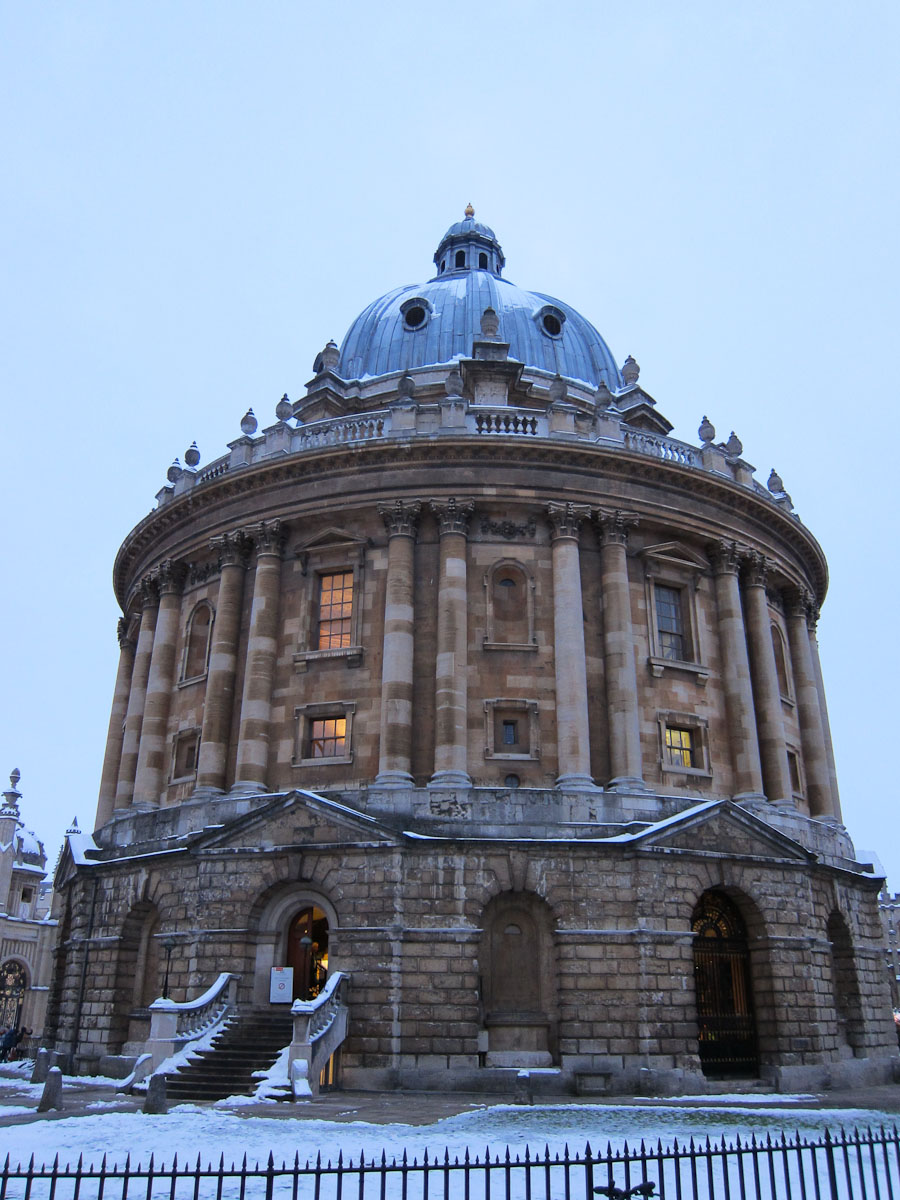
Here we crossed his trail again. While visiting with the Troughton’s in London this Christmas, we traveled to Oxford by train, arriving in time for lunch at “The Eagle and Child.” This small and venerable pub dates back to 1684 and is best known by locals as the “Bird and Baby”. It was here that JRR Tolkien would come for informal lunches with his writers club the Inklings (!) started by his good friend C.S. Lewis. They met on Tuesday mornings from 1939 through the 40s and 50s to take lunch and beer and discuss the books they were writing such as the Hobbit, the Lord of the Rings, and the Narnia series which have greatly inspired today’s fantasy book, film and video game genres. So we may fairly call the Bird and Baby pub the crucible from which modern high fantasy emerged.
We tucked into hot baked meat pies and black ale. I chewed thoughtfully at a table the back of the smoky room, watchful as Strider, observing the guarded and close-knit locals as they downed mugs of foamy lager. Ah, yes here we are. Then again Strider did not have noisy kids in tow.
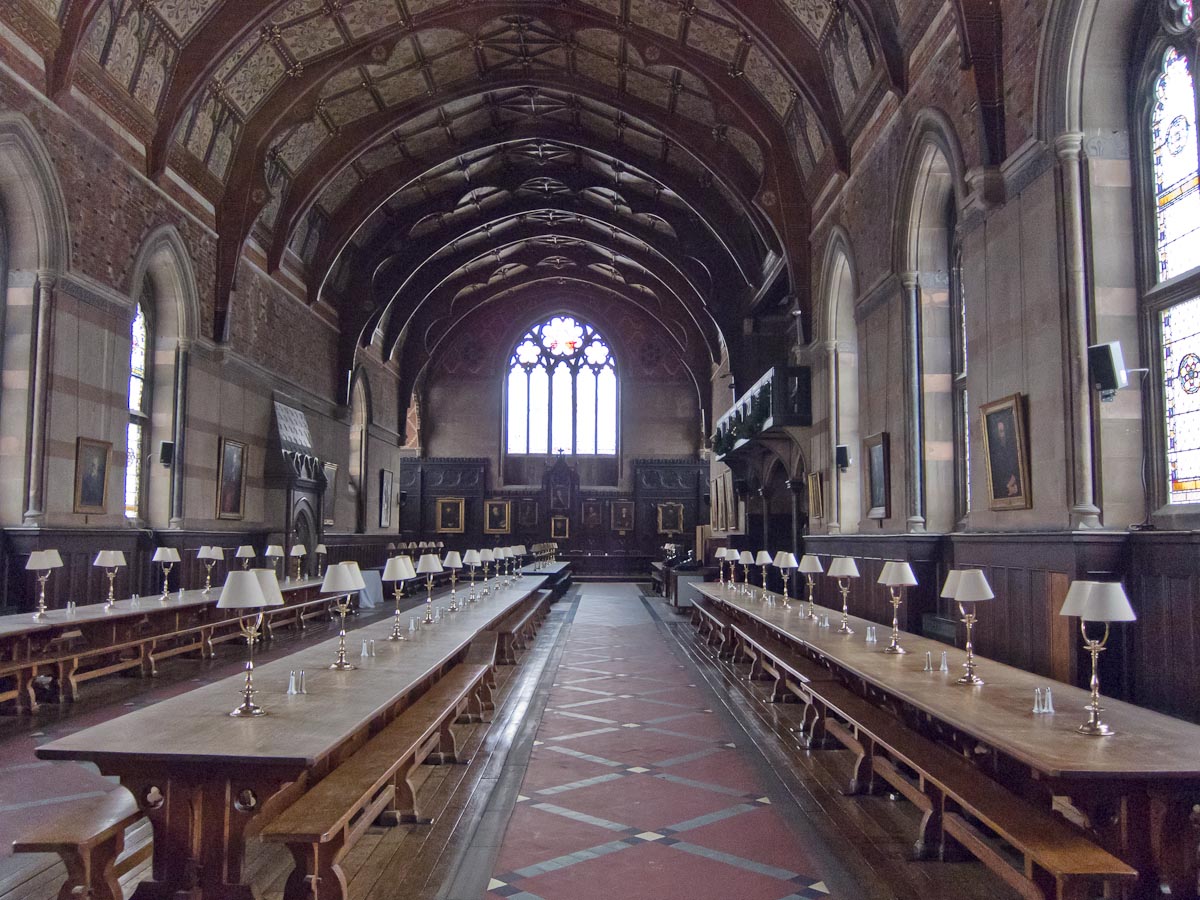
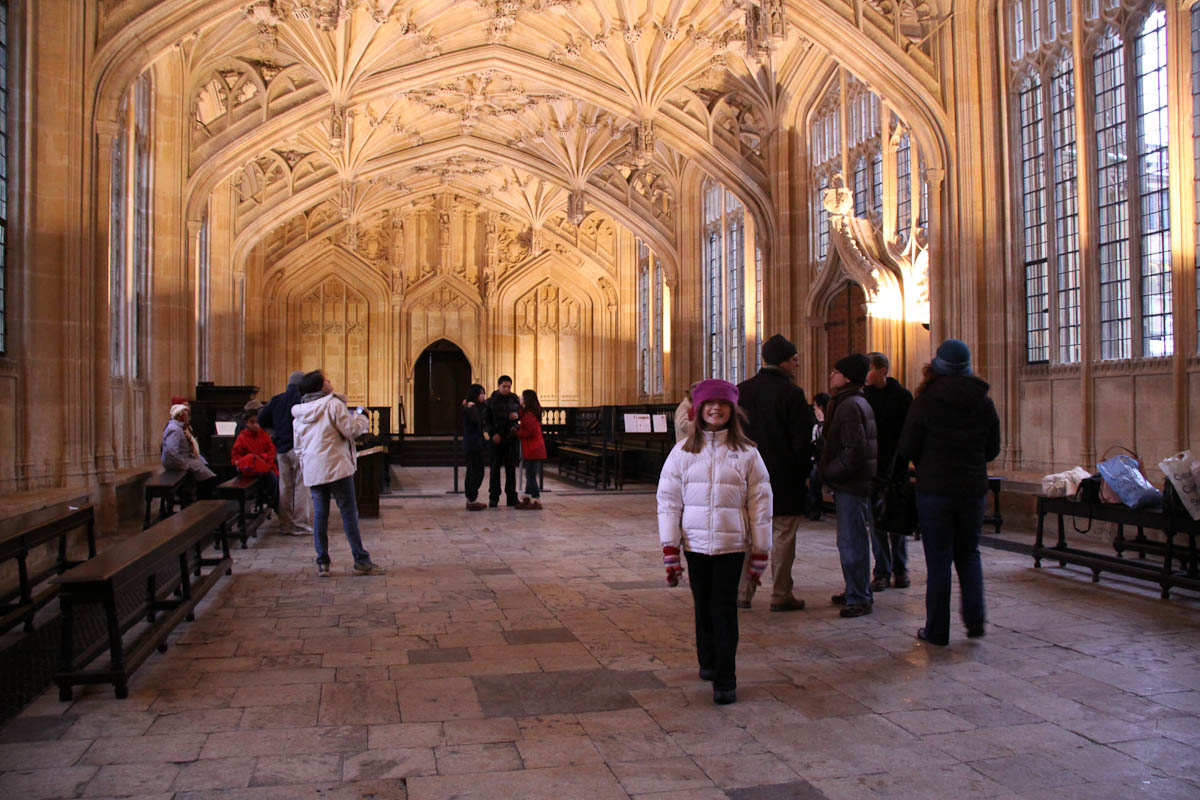
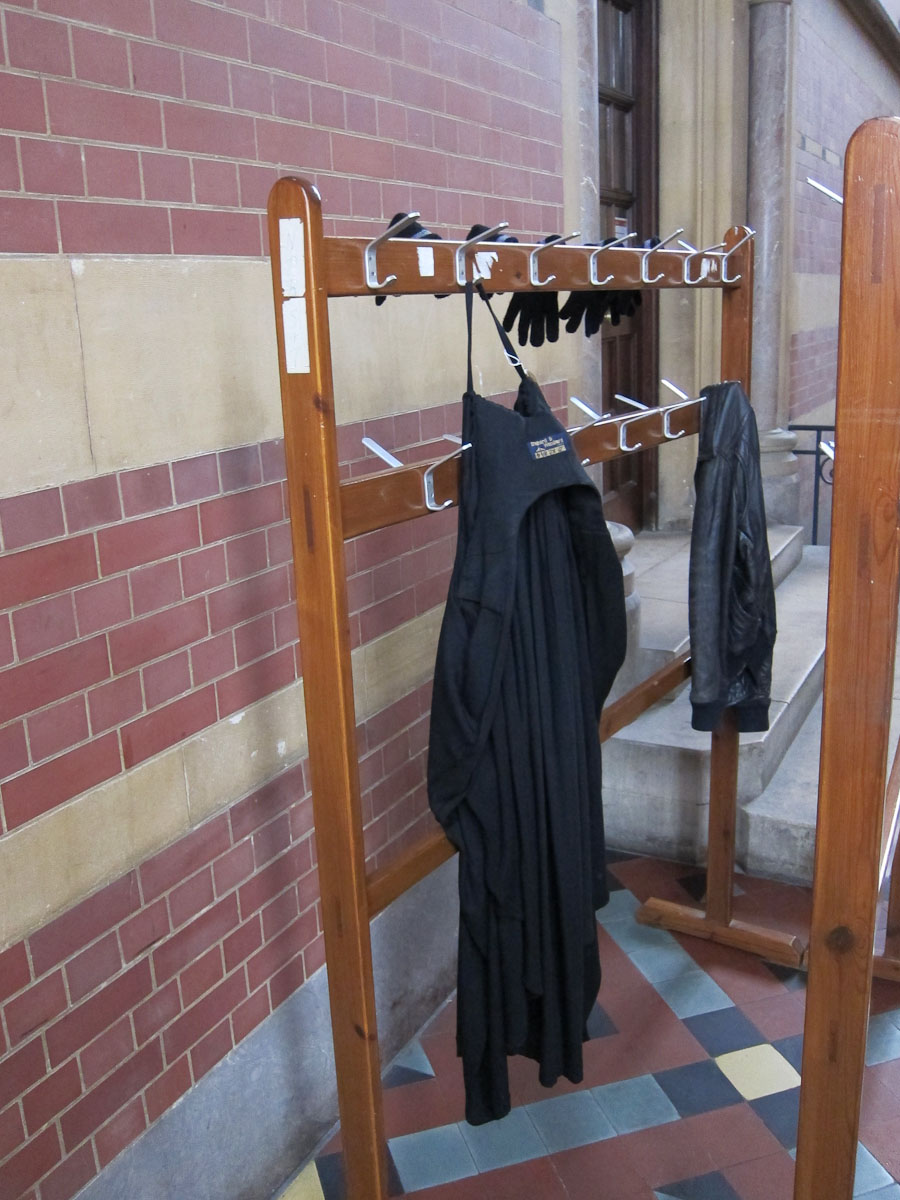
The mix of fantasy at Oxford goes back farther and continues recently as well. This is where the real Alice in Wonderland played on the river banks inspiring Lewis Caroll. Philip Pullman (the Golden Compass and many others) and Dianna Wynne Jones (Howl’s Moving Castle) were written here. And Oxford – surely a mental model for JK Rowling’s Hogwart’s - is where many of the scenes of Harry Potter were filmed and was also the childhood home for Emma Watson, which made Harry Potter the prime draw for the visit as far as our children were concerned. We learned that they still wear black robes in the dining hall but... no hats allowed!
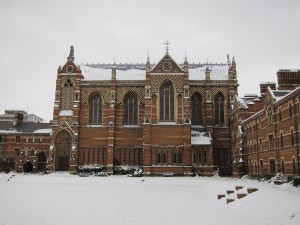
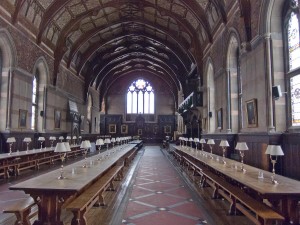
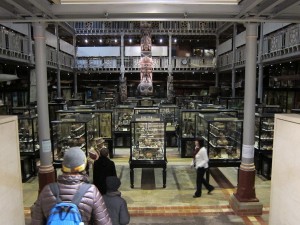
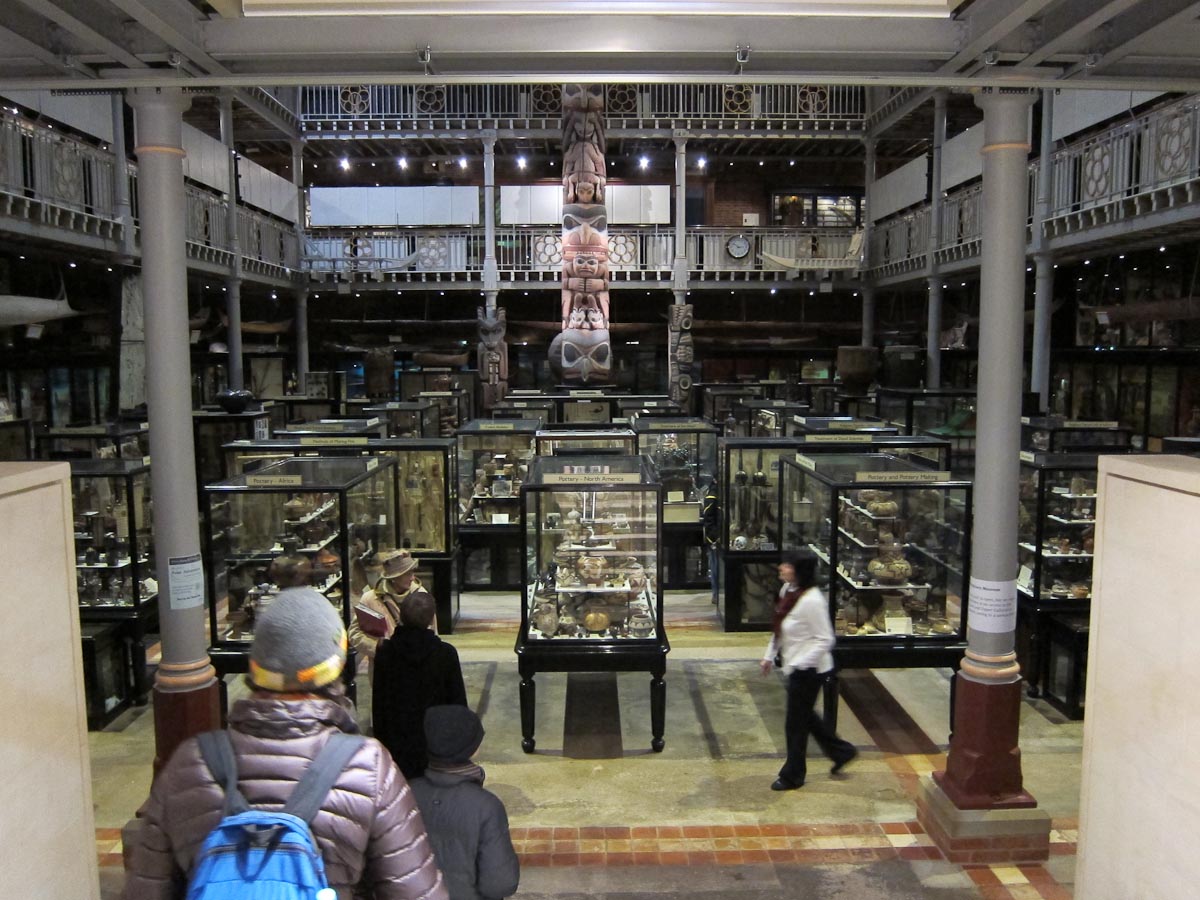
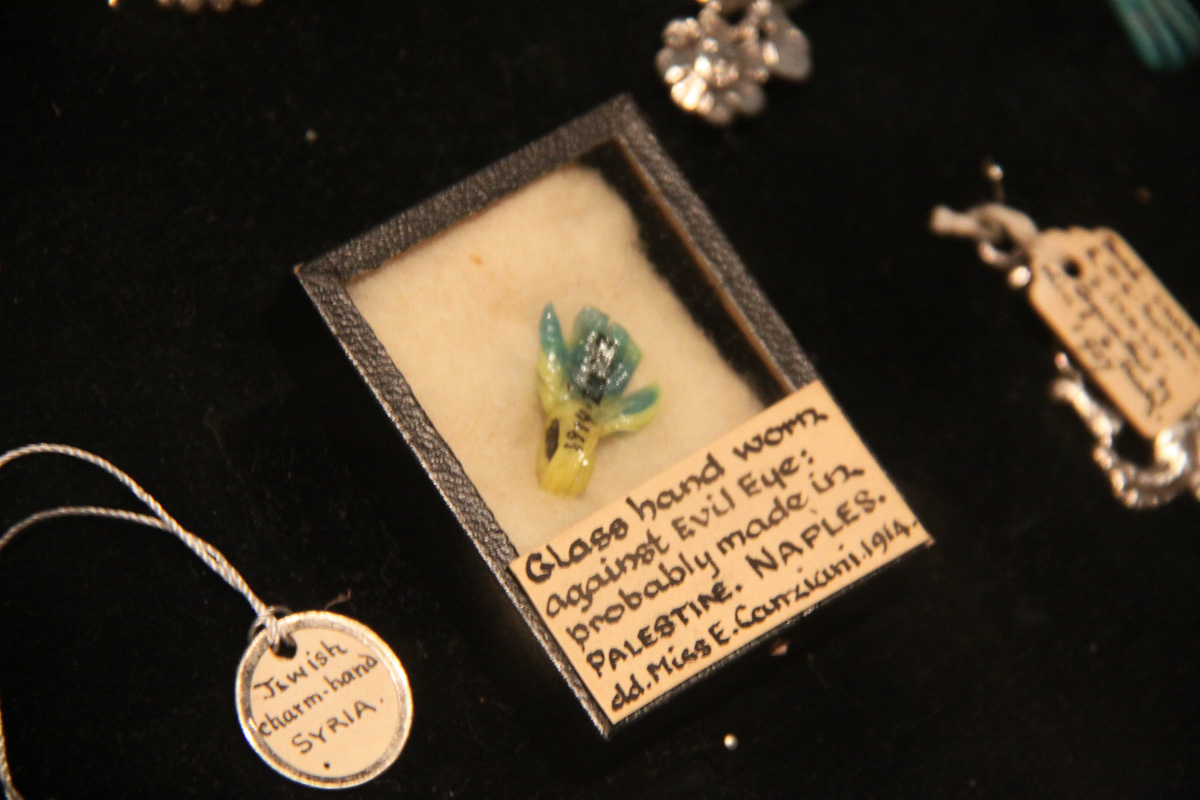
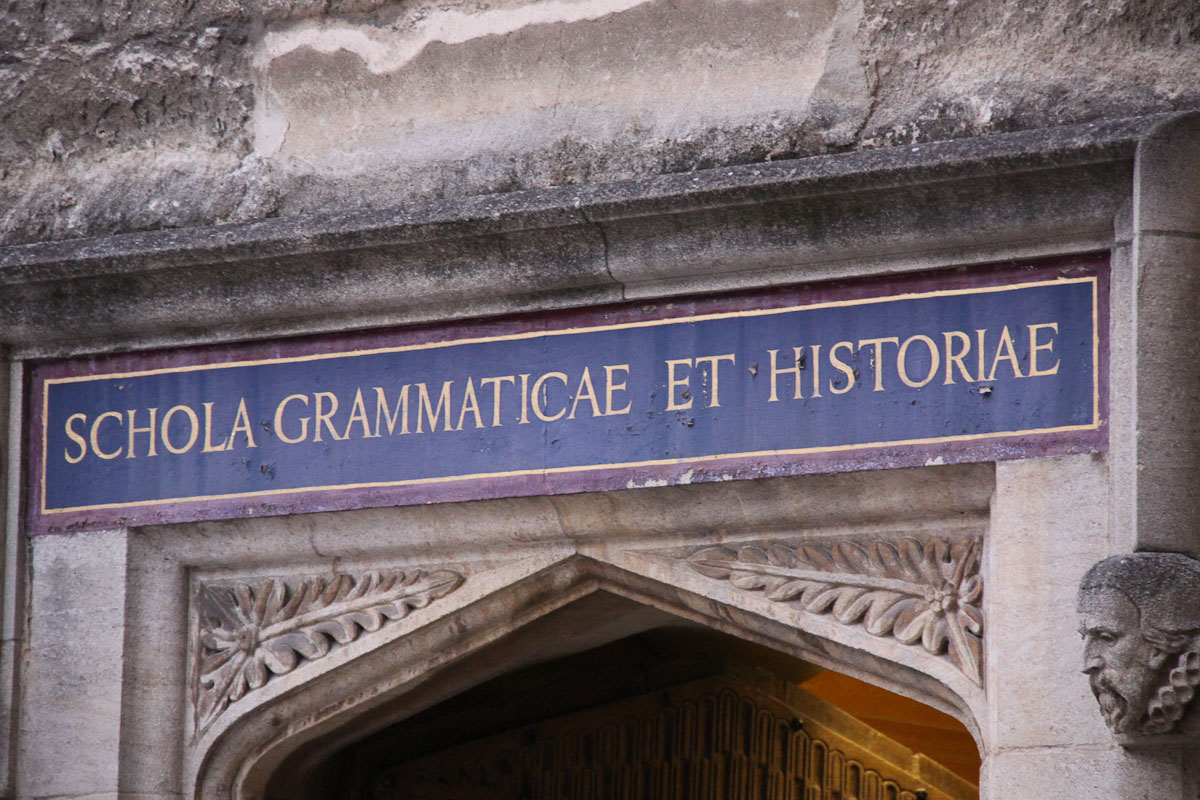
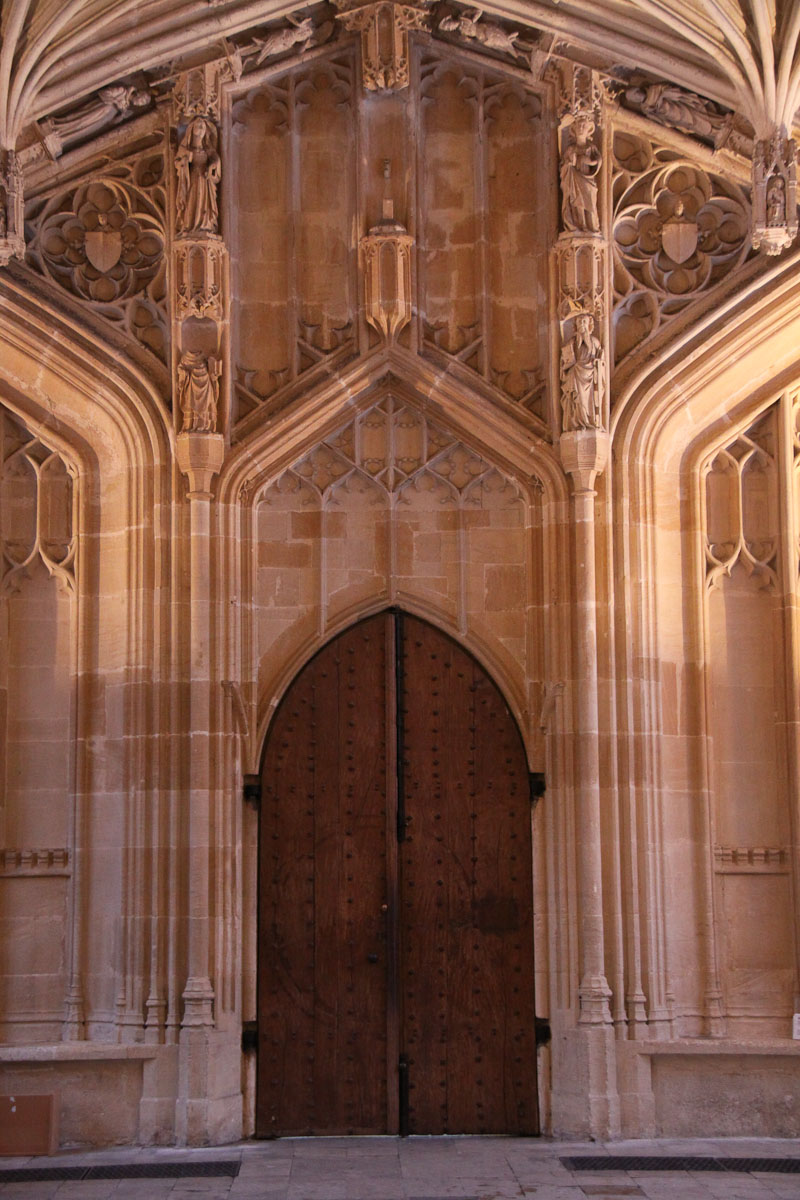
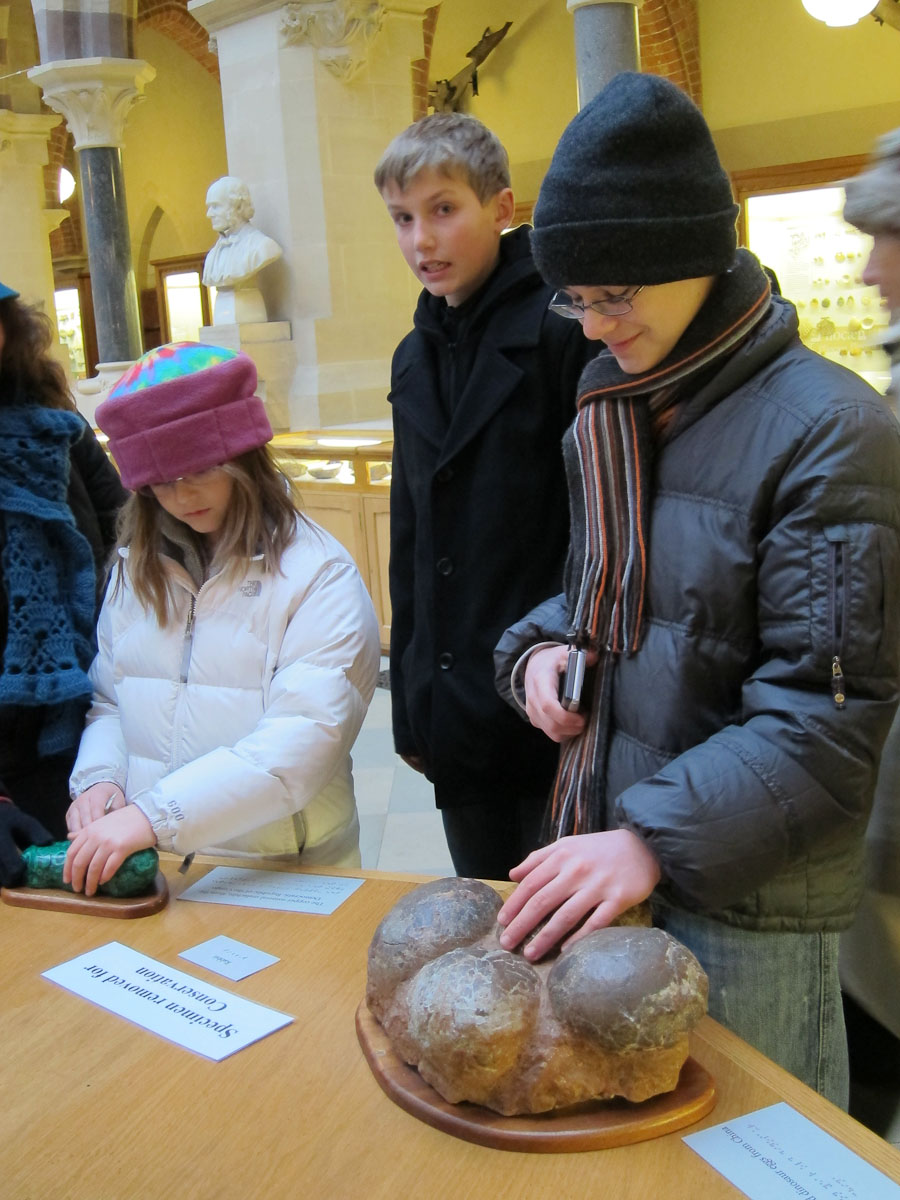
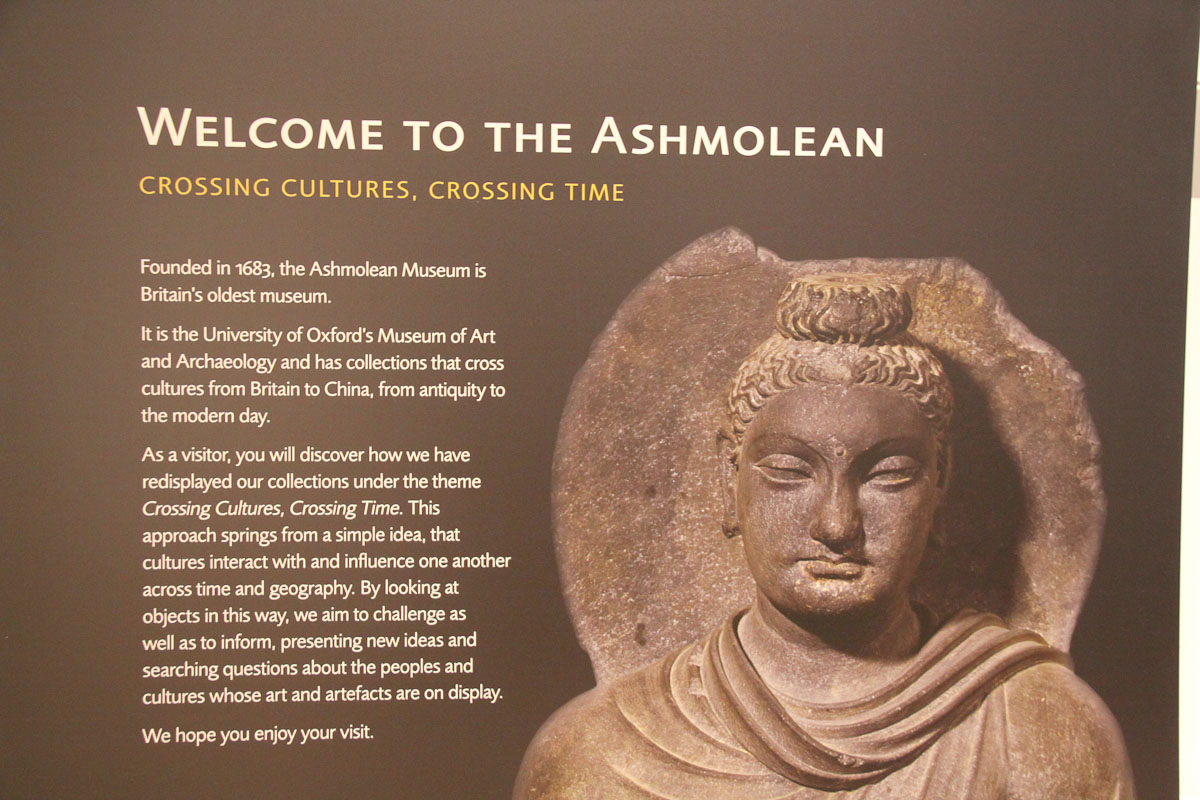
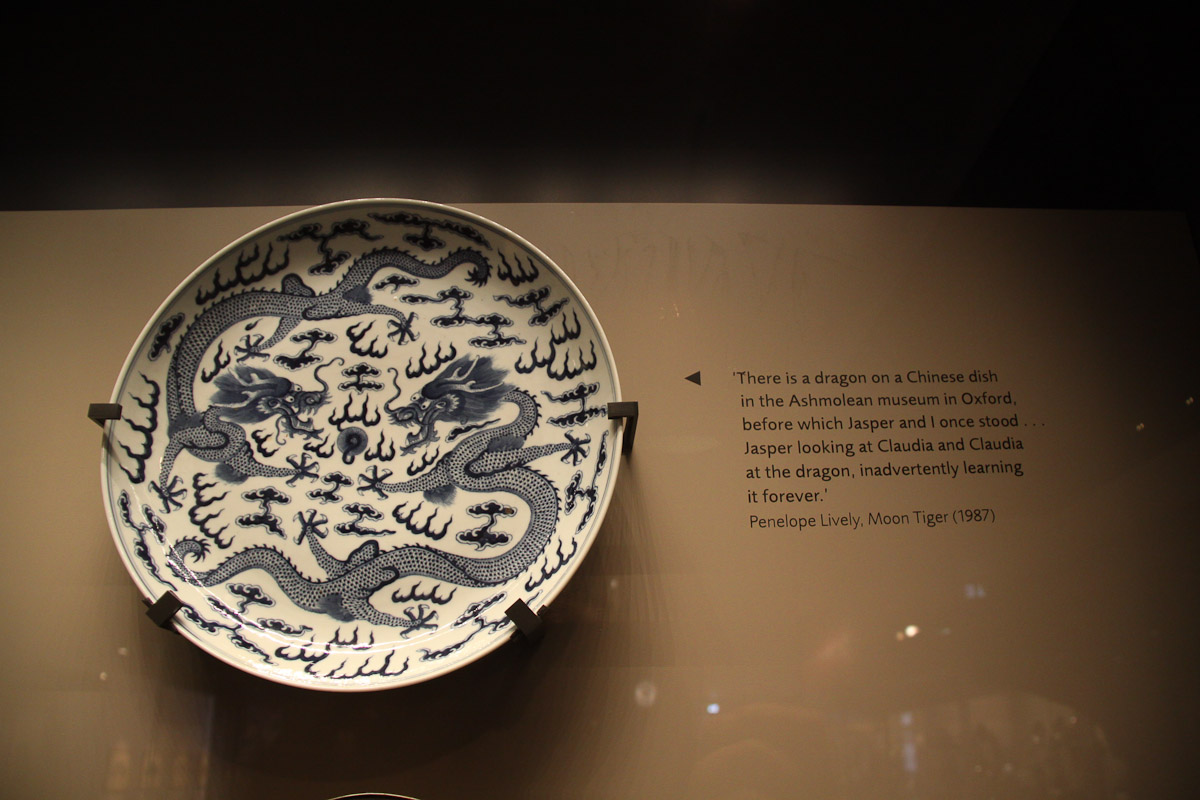
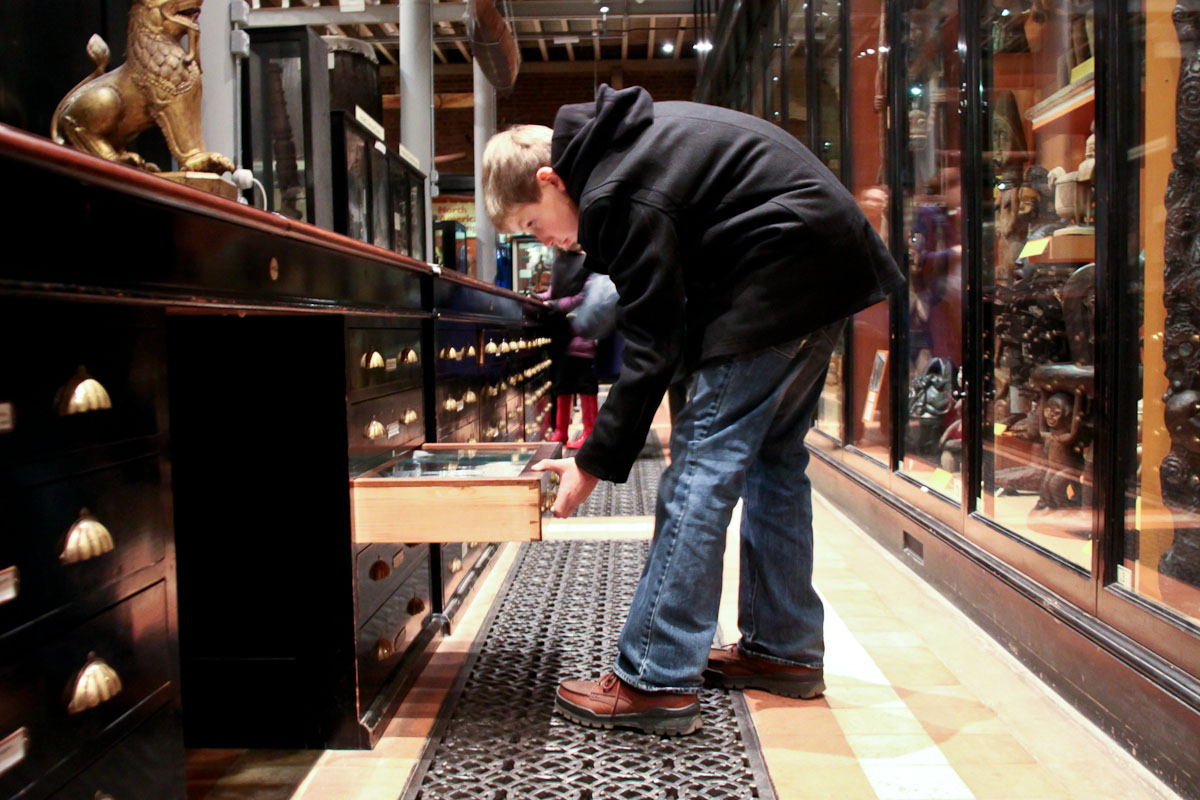
A few blocks down the street you can find three wellsprings for all this creativity. The Ashmolean Museum contains artwork and historic objects from all around the world. The Oxford Museum of Natural History was frequently visited by Lewis Carroll and is chock full of strange artifacts and natural and animal curiosities gathered by English anthropologists and adventurers. And of course Oxford University itself dates back to the 11
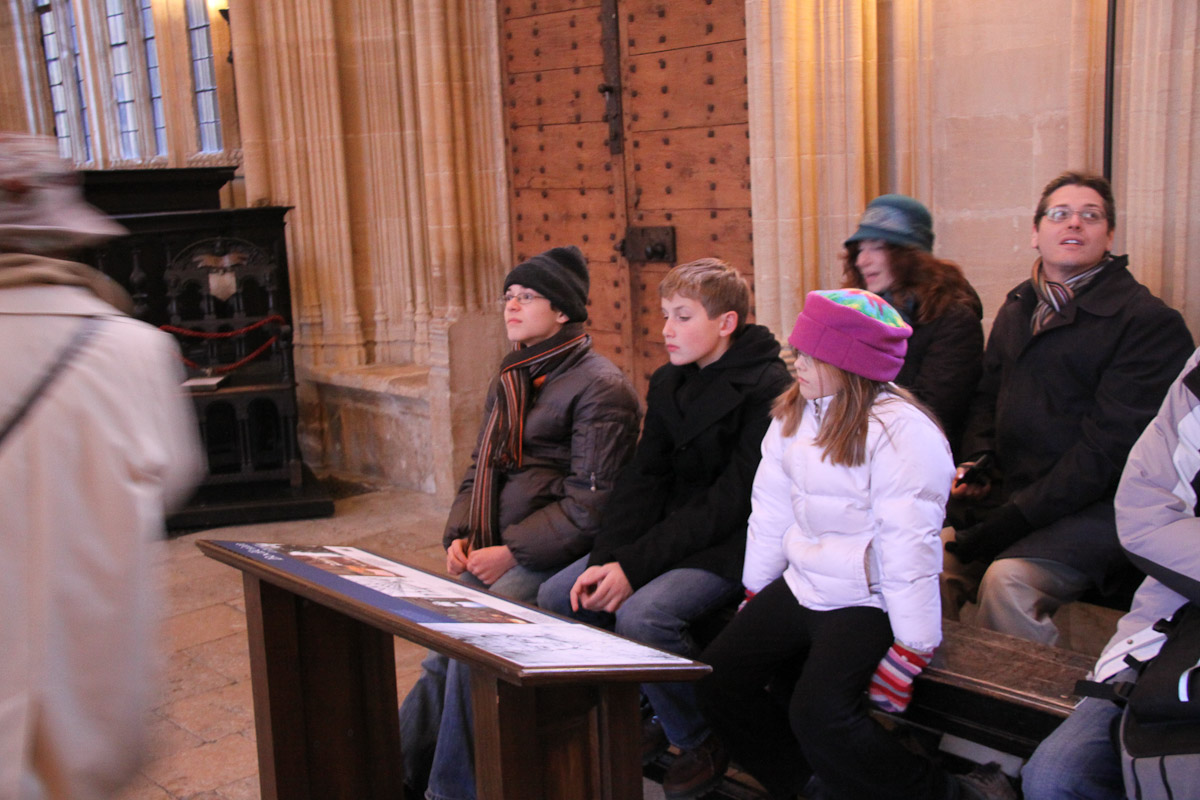
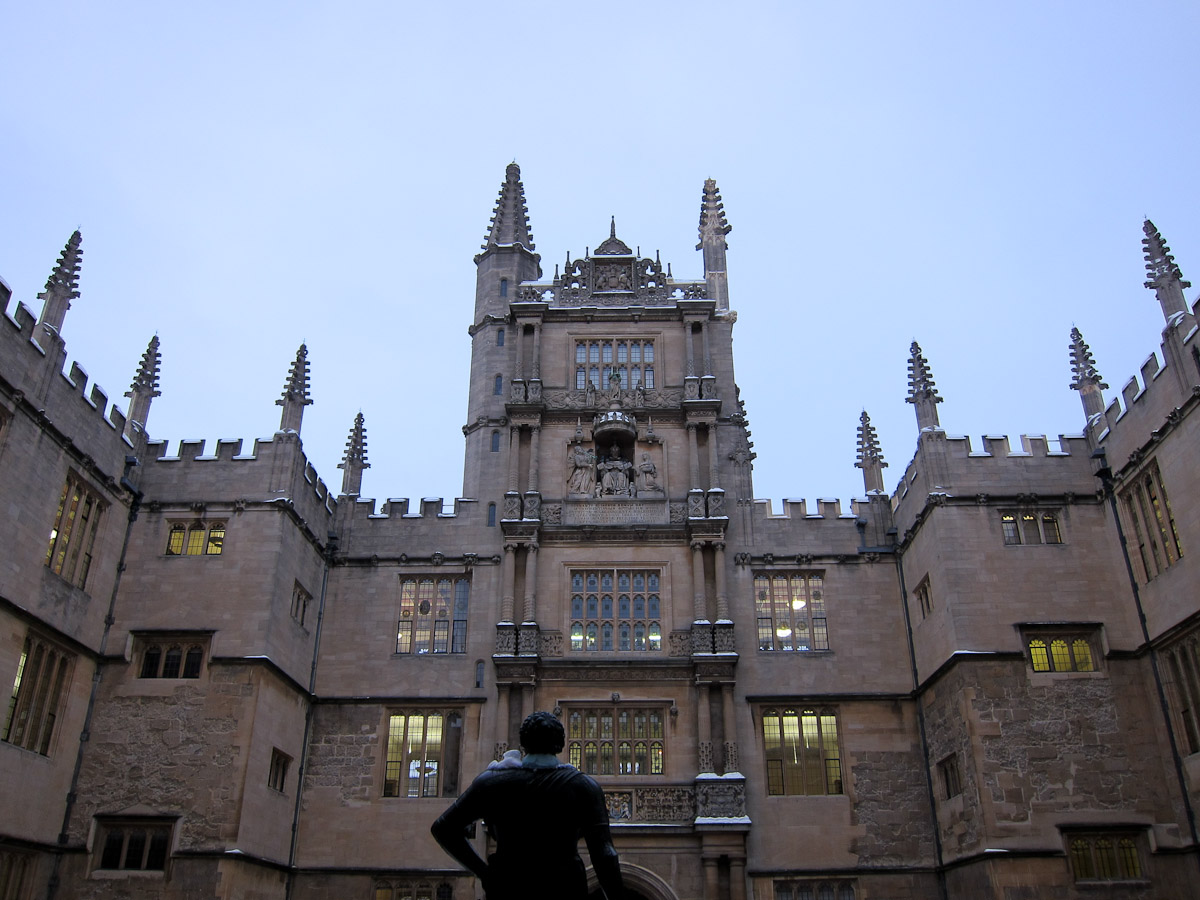
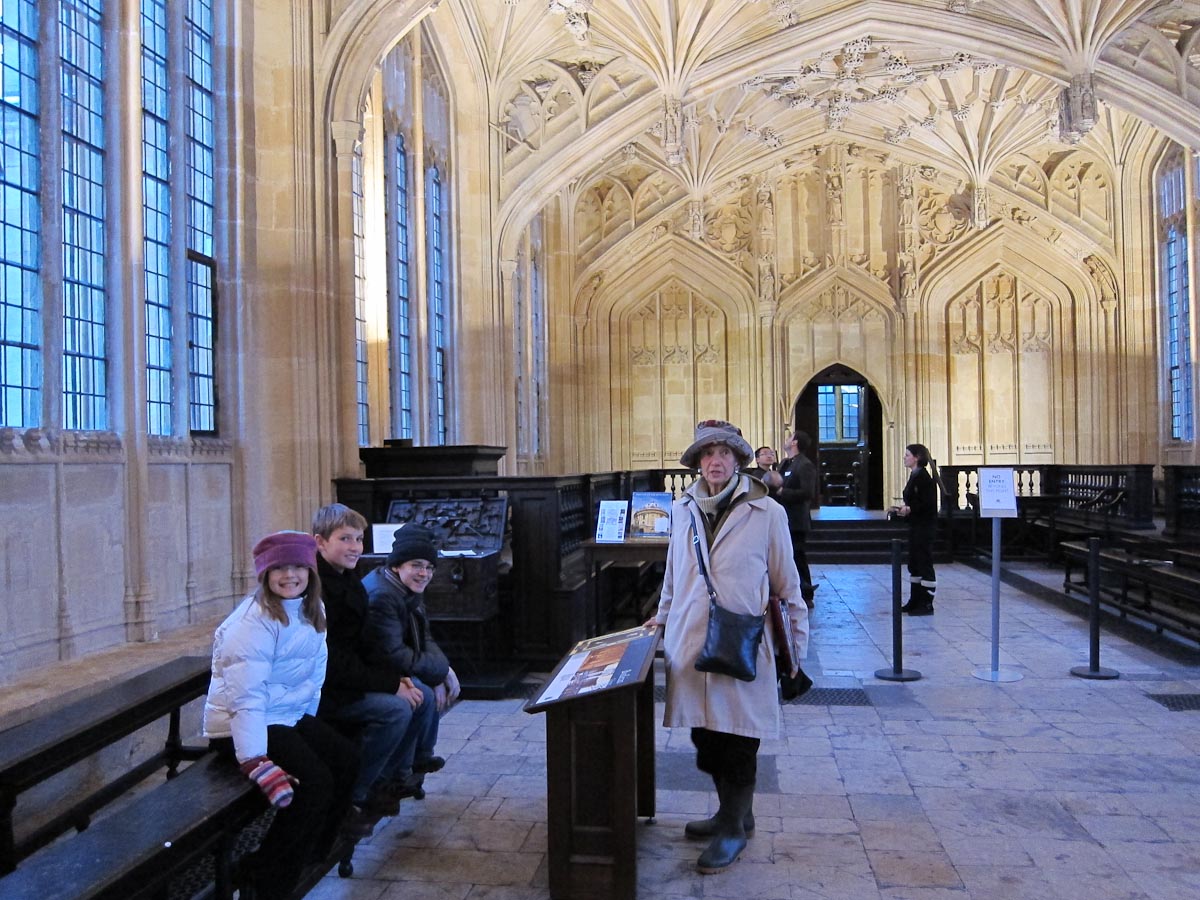
th century and is the oldest surviving university in the English-speaking world. The architecture – including individual college cathedrals and the Bodleian Library – is spectacular. We drank it all in, before braving chilly night air to return to the station and the train ride home to London.
So now we return to the Hobbit (1937) and the Lord of the Rings (1955). They did not sell much at first, but the word of mouth kept expanding and by the 1970s they were gaining lots of popularity. These were the books that my father would read aloud to our family each week. We would take our showers and pull on pajamas and then tumble downstairs to sit on the couch with him after dinner. He continued until late in the trilogy, then refused to read a word further. I was nine years old and I am sure I cried. “If you want to know what happens, you will have to read it for yourself,” he said. And that is how I really learned to read novels.
One of my best friends, Grant, was similarly gripped as a youngster by Lord of the Rings. Growing up in Kansas, he found imagination and idealism here. He still reads the books annually.
My children have not yet read the books as they were diverted totally by the Harry Potter series. They did watch the movies just a few years ago and were spellbound. As Carter grew, he and I also entered the online world of Lord of the Rings, where we spent many happy hours together, sharing the same swivel chair in front of the computer. Yes, we battled orcs but what we really loved was wandering. Our wizard elf rode across green meadows, collected rare seeds in the forest for the Ents, and blew horns and drank mead with the hobbits under the Party Tree in the Shire. We explored the frozen hills and caverns near Lothlorien and even spied on Gollum. Eventually we had seen the whole online world and as E Ink started to get busier and Carter entered school, we put this game away.
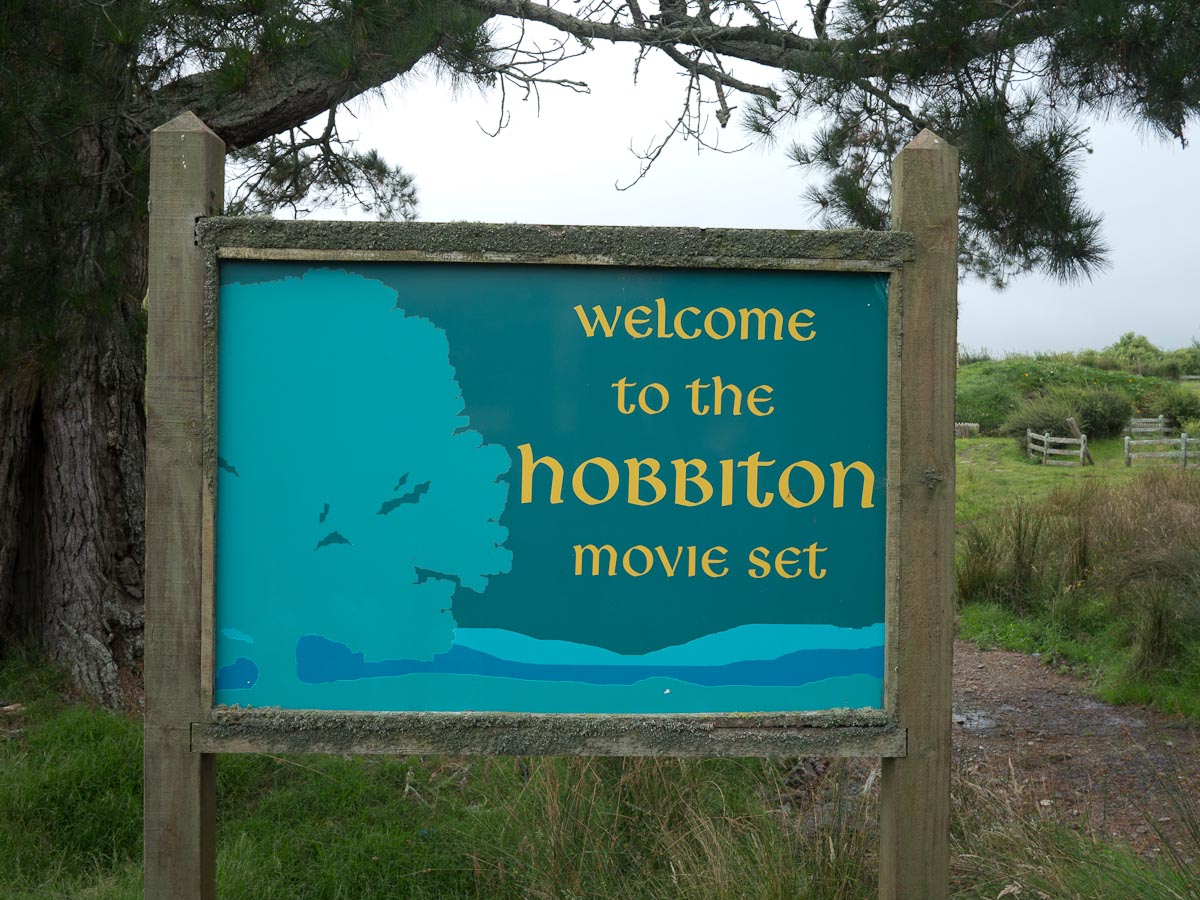
By now you have realized that the New Zealander was Peter Jackson, a self-taught film director who exploded to fame with the Lord of the Rings series, which he filmed here in 2000. The holes in the hill were hobbit homes, dug for the set of the Shire. And the set is located on Buckland Road in Matamata, just a 90-minute drive from Treetops. And while the years did cause considerable decay to the original set, it has been recently restored and even extended, because filming for the Hobbit is due to start within the next several weeks!
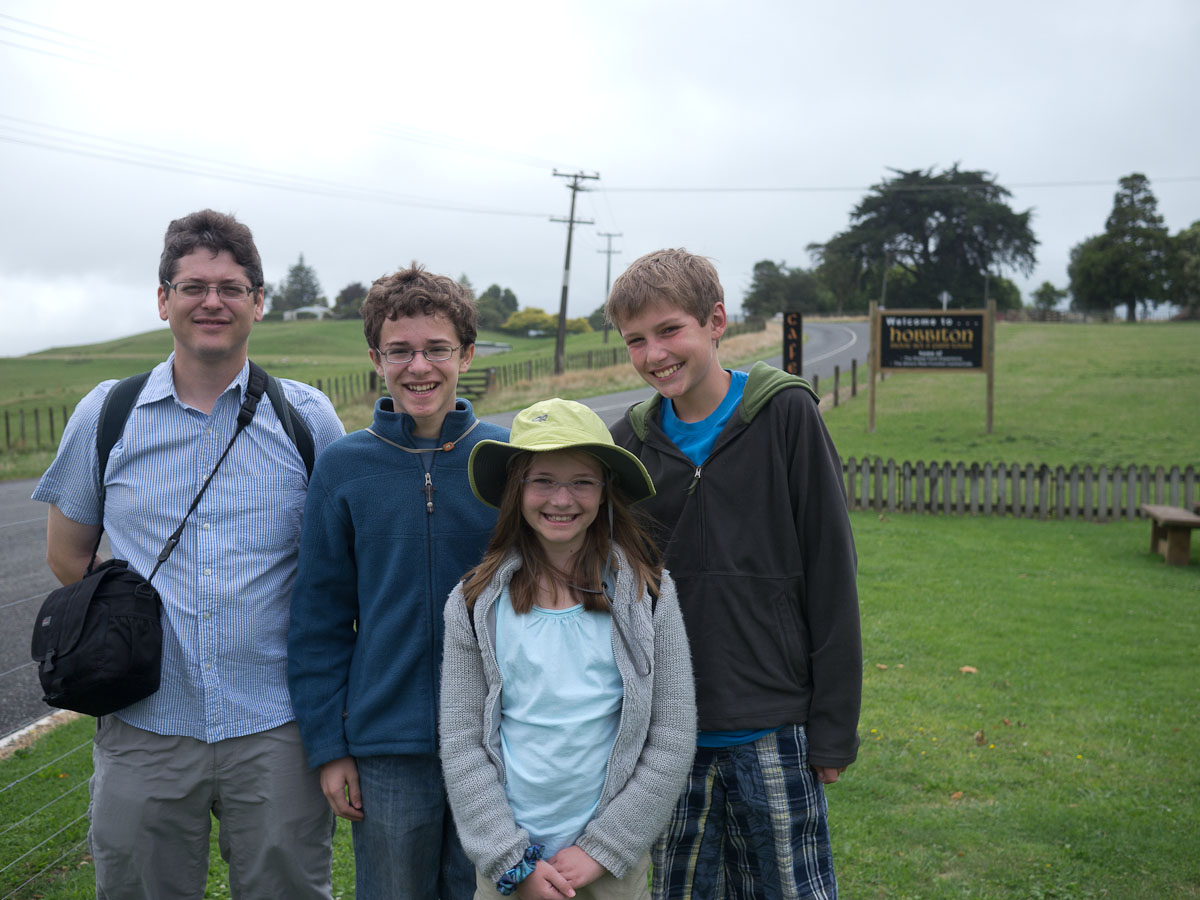
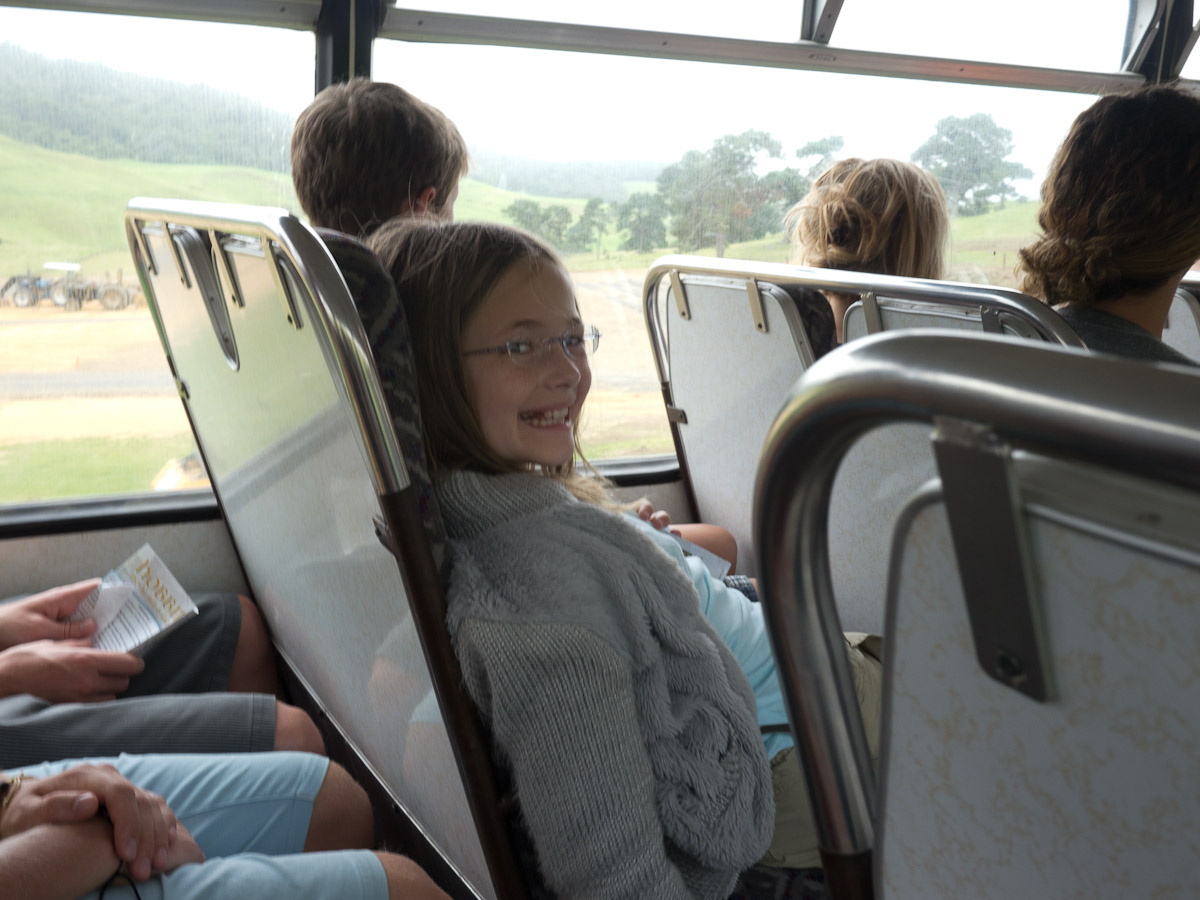
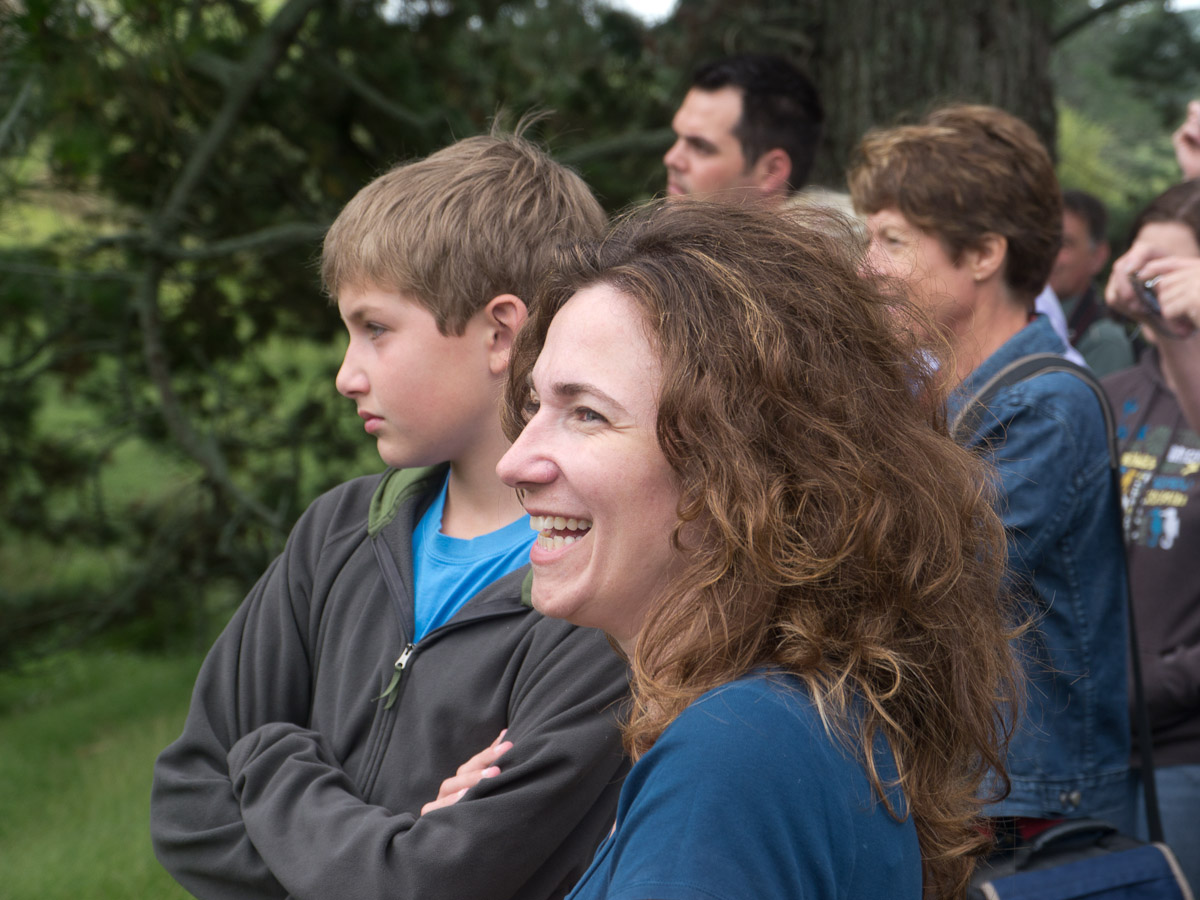
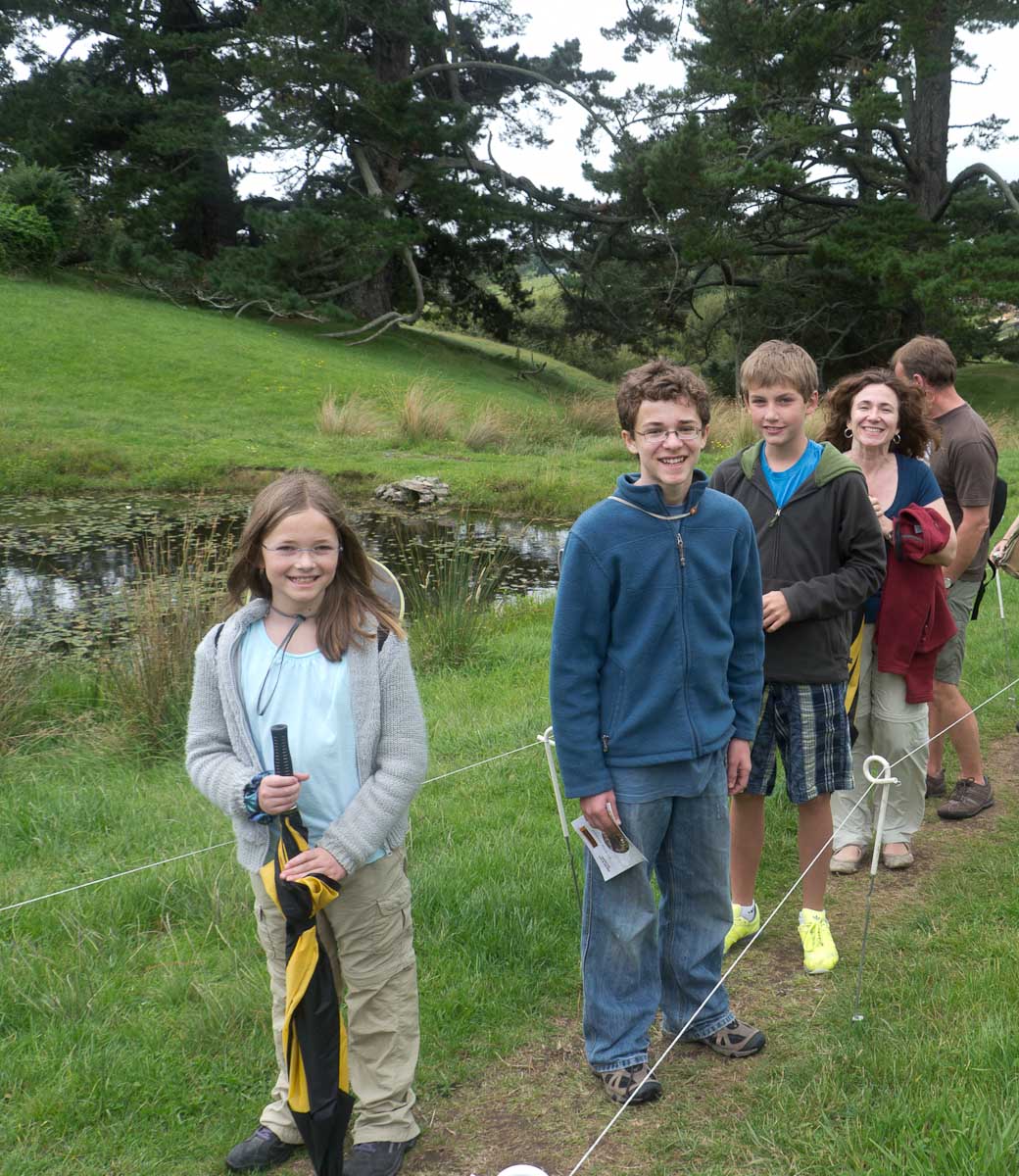
Nothing could have barred us from a visit. Our family, along with Colin Troughton, woke early and arrived in time for the first tour of the day. We learned later that we were incredibly lucky – Peter Jackson is here and was ready to start filming in January but was delayed for one month by ulcer surgery. Had he started on time, the set would have been closed when we arrived. Right now filming is scheduled from February 14 to March 20. The films are due out Xmas 2012 and 2013.
Thus we were able to enter and to see the set in its most pristine state. They did ask us to sign NDAs and not to post any set pictures to the Web, so we will only show indistinct images here. (We are allowed to show pictures for personal use, so if this is something you want to see and agree not to pass along, please email me directly Grant and family.)
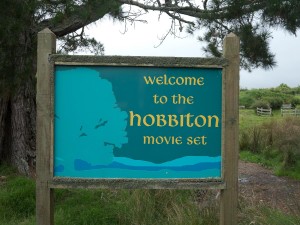
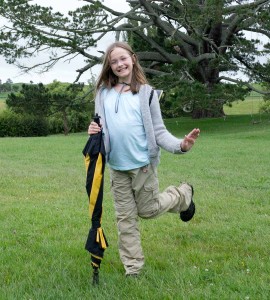
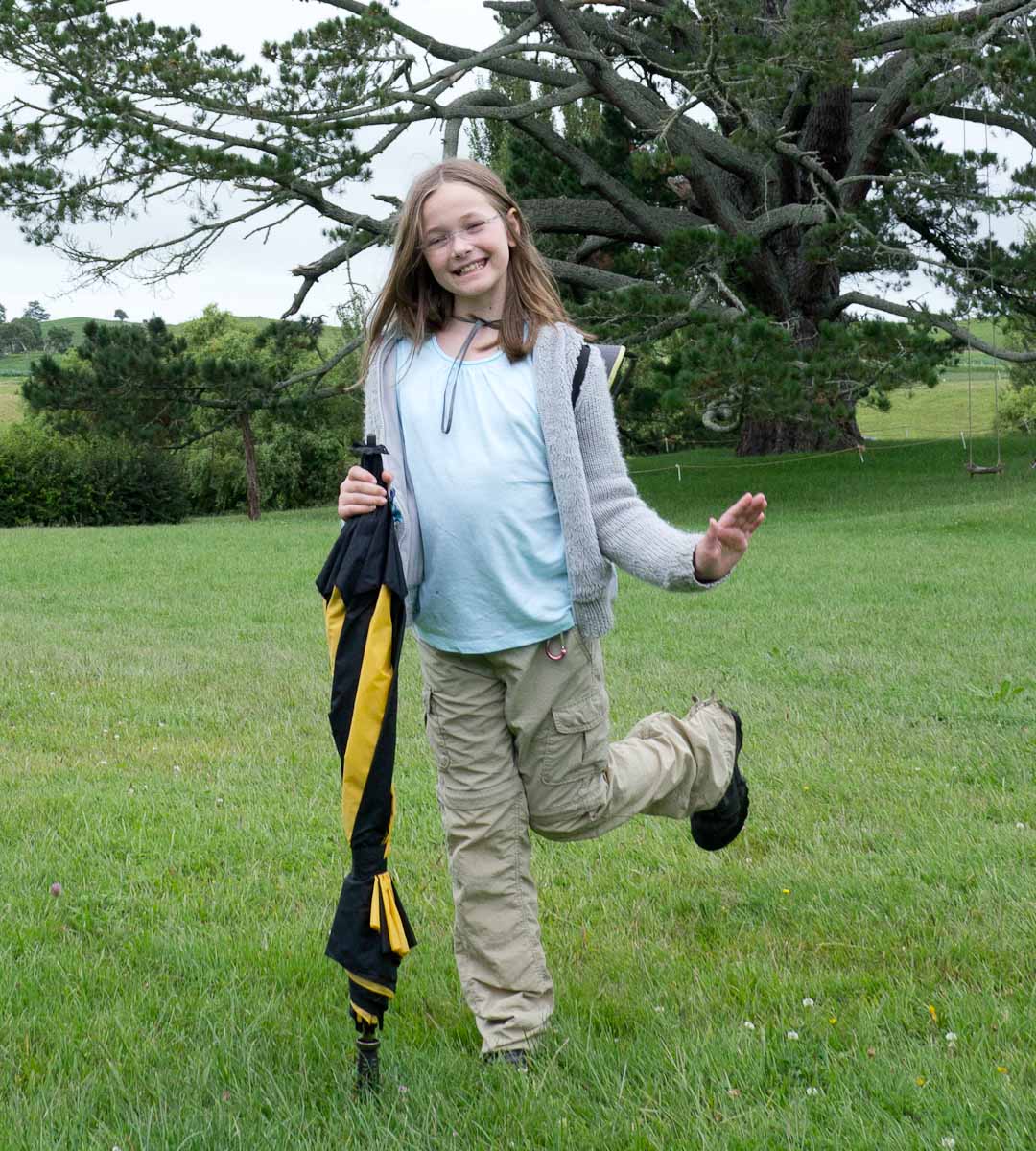
We can report that the Shire is looking great! The vegetable gardens and fruit trees are spectacularly lush. The fences and paths are in good repair. Katherine danced under the Party Tree. We saw (but could not enter) Bag End. We saw the Mill. We saw the Green Dragon pub perched next to a beautiful blue lake. As with many LOTR sets, one side is quite short (to make humans look tall) and the other side rather tall (for filming Bilbo).
We learned that the tallest actor from the Fellowship of the Nine in real life was… Jonathon Rhys-Davies who plays Gimli! He is 6’ 1” feet tall. This made him exactly 10% taller than the actors playing hobbits (who were 5’ 6” in real life) and so he could be filmed directly with them in the same scene. Other races had to be filmed in a separate camera pass with different perspective. Casting calls for extras on the Hobbit film have already been held in local New Zealand towns. Women must be less than 5’ 2” and men less than 5’ 4”.
Real hobbits are between 2 and 4 feet tall (Bilbo was 3 feet). The record is held by Bullroarer Took who was a few inches over 4 feet. There were two hobbits who grew taller, but they had magical assistance.
One of the local citizens who had acted as a hobbit extra told our guide about the experience. It took them 1-2 hours each day to get into make-up. One sunny day, when they finished Peter Jackson was not onsite. The assistant director asked them to spend the entire day just running up and down a hill. They returned to their local homes and collapsed. That night Jackson saw the images and was not satisfied. He flew back. The next day, he brought his bullhorn over to the hill and they spent the rest of the day running up and down all over again. (No report on whether she auditioned for the latest movies).
Our guide said he had seen quite a few people take the tour in costume. He himself was not allowed to get into costume (but his homespun humor and bucolic delivery quite put us in the mood). The craziest fan he had met was a man who bought a gold “One Ring” replica for $800 after the tour, and then hired a helicopter to fly him over the actual New Zealand volcano where the Mordor scenes had been shot. He threw it in.
We spent a good deal of time admiring the set carpentry. For example the chimneys were all built of real square bricks, but some curved at fantastic angles. They all showed signs of smoke – it turned out that when a scene would show the chimneys a beekeeper’s smoke can would be placed inside. They would do this for ALL chimneys for maximum realism in case a shot pulled back. We also admire the fencing – to make the green moss realistic, the designers took buckets of paint and yoghurt and threw fistfuls of both onto the wood. Soon it was a wonderfully three dimensional green that appeared to be aged lichen and moss. Another detail was the double-arched stone bridge over the lake. This proved impossible to build as drawn unless they first built a piling in the middle of the lake. So they brought in large pumps and drained the lake until the construction was done.
We noted that each Hobbit home has its own wooden box out front with a different design. Gina mused that this means some Hobbits must be postmen! Carter and I thought back to one of the most ticklish quests we had completed from Lord of the Rings Online, where you must deliver letters and pies against the clock while running madly all over the Shire. Had this been inspired by a videogame designer’s similar thought after taking the same tour?
According to Tolkien, Bag End was overlooked by a massive dominating Oak tree. The LOTR designers flew by plane over New Zealand until they spotted the right tree and bought it from a (surprised) farmer. Then they cut it down piece by piece starting from the top and numbered each branch. They brought the pieces back to the set and put it together like a jigsaw puzzle. Then, since all the leaves had died, they brought in 250,000 leaves from Taiwan and wired these to the branches. The finished tree weighed 26 tons.
The Oak tree appears in the first movie for 15 seconds and in the third movie for 5 seconds more.
When we arrived, it was long gone. However there were strange white forms strewn all over a nearby field. These were tree limbs encased in white plaster; they were building a new Oak tree. “Couldn’t they re-use the old tree?” we asked. “Of course not” the guide explained, “it is 60 years younger at the time of the Hobbit.”
Souvenirs? A keychain seemed too trite and could be purchased anywhere. Instead, how about a bottle of Sobering Thought? This is an amber brown stout, concocted especially for the movie by a nearby New Zealand brewery. It looks and (supposedly) tastes just like the real thing, but the alcohol content is less than 1%. It was created so that the actors could raise their mugs and quaff, all day long.
On the drive home we reflected on the enormous lengths taken by the set designers to bring the Shire to life, without ever knowing whether the director would film their particular work in a scene. We loved the passion they showed, and we shared it.

Error thrown
Call to undefined function ereg()