We didn’t really know much about the Valley of the Kings and so went in with modest expectations. After all, two days prior we had descended into the pyramids themselves like modern-day tomb raiders. What could top that? Our interest was piqued when we were informed that no photography of any sort was allowed in the Valley, and that cameras brought inside would be confiscated and stored for the duration of the visit.
What could they possibly be keeping in there?
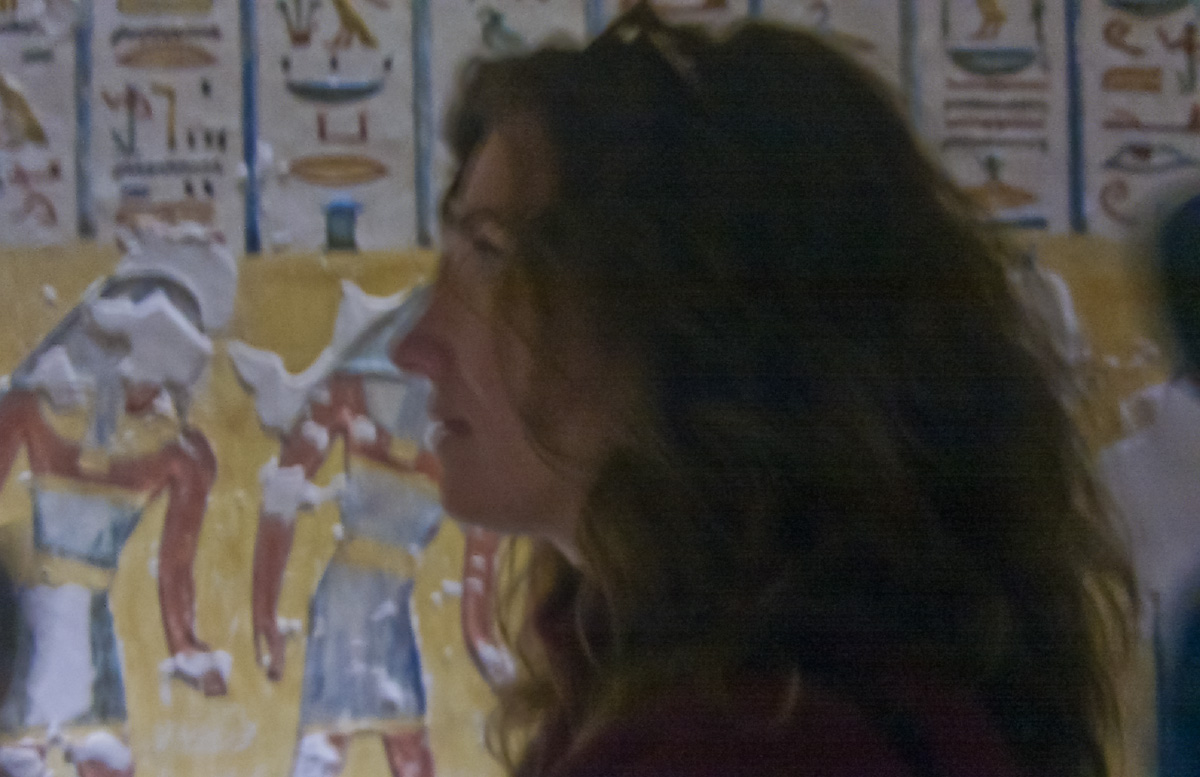
It turns out that Middle Kingdom tombs trump Old Kingdom pyramids any day. I just wish we had the pictures to prove it. [Russ: well... we did get one grainy no-flash cellphone picture of Gina in the spectacular tomb of Ramses V/IV.]
The Valley of the Kings is majestically situated and was built over centuries. It is younger than the pyramids at Giza—the pyramids date back to 2600 BC, the Valley to approximately 1800 BC—and it holds 64 known royal burial complexes, with more likely yet undiscovered. At any given time, eight tombs are open for visiting. We saw four, starting with the one belonging to King Tut. Interestingly, our guide discouraged us from choosing that tomb because he said it was one of the least visually interesting: Tutankhamen reigned for less than ten years and his death caught everyone by surprise; his architects and artists simply didn’t have enough time to craft an elaborate burial chamber. We learned that the pharaohs began building their tombs as soon as they were crowned and the work, hopefully, went on for decades. As Katherine said in her post, they put a lot of effort into planning for the next life.
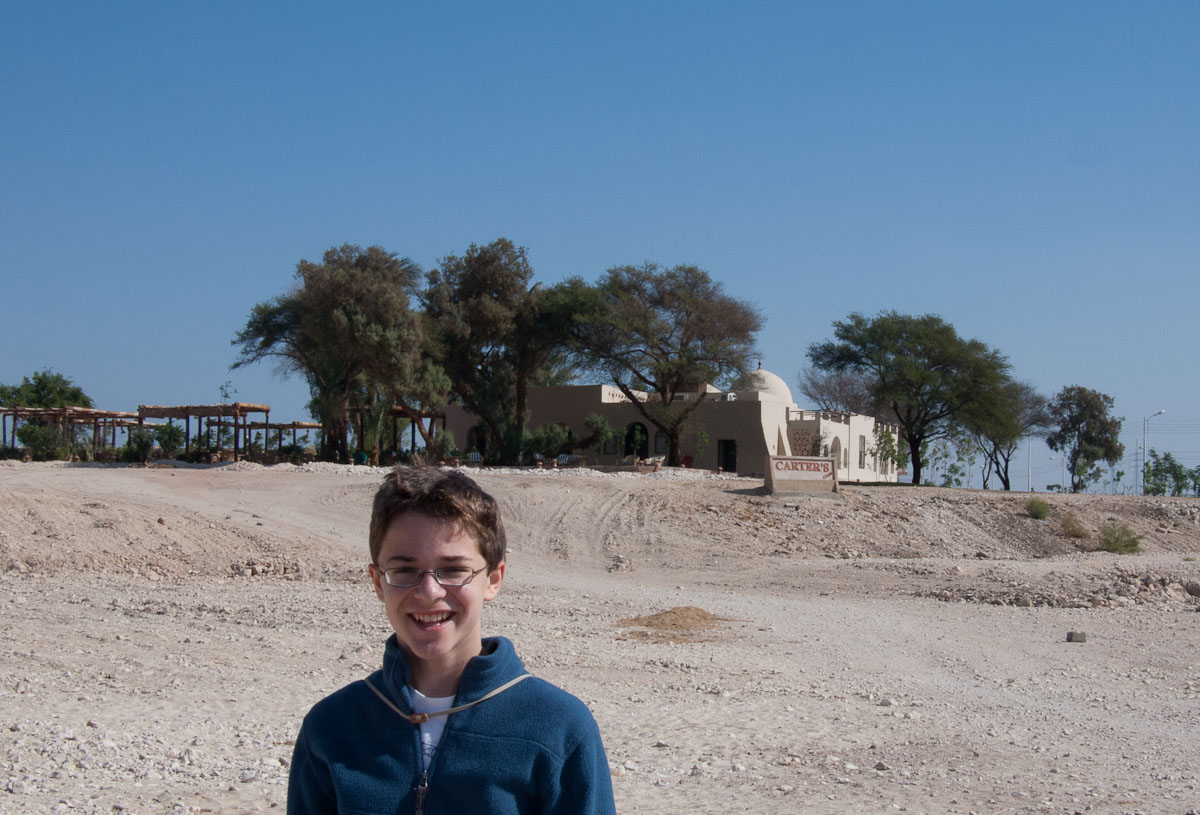
Despite our guide’s cautions, however, we were enthusiastic about visiting Tut’s final resting place. We had just seen all of his staggering treasures at the Egyptian Museum and the famous British archeologist who discovered the sight in 1922 was named Howard Carter; how could we not go inside??
We were not disappointed. For starters, getting inside was easy. Unlike entering the pyramids, here we simply descended a short staircase with a modestly inclined corridor. There was no need to crouch and creep endlessly along on your haunches [a mode of movement which not only proves to be a most inelegant way to make an entrance, but results in scorching flaccid thigh muscles that remind one of how very old and out of shape one is].
Once inside, we could make out two medium-size chambers and one small “crawl-space” sort of room. That one was pitch black. Fortunately, the other two were brightly lit---all the better to get up close and personal with King Tutankhamen himself, or at least his mummified self. We were so surprised! We had no idea that his mummy was there and, as a sort of testament to how blasé our Egyptian counterparts are to the history which surrounds them on every corner, our guide just smiled and said “yes, they did keep his mummy there because there’s not so much else to see.” We borrowed a flashlight to inspect Tut’s form and tried to search for evidence of the blow to the back of the head which some Oxford scholars suggest was actually the cause of his death, not Malaria as has been widely believed. We couldn’t find any evidence of foul play but our thoughts ran wild with plots of pharaohnic courtly intrigue.
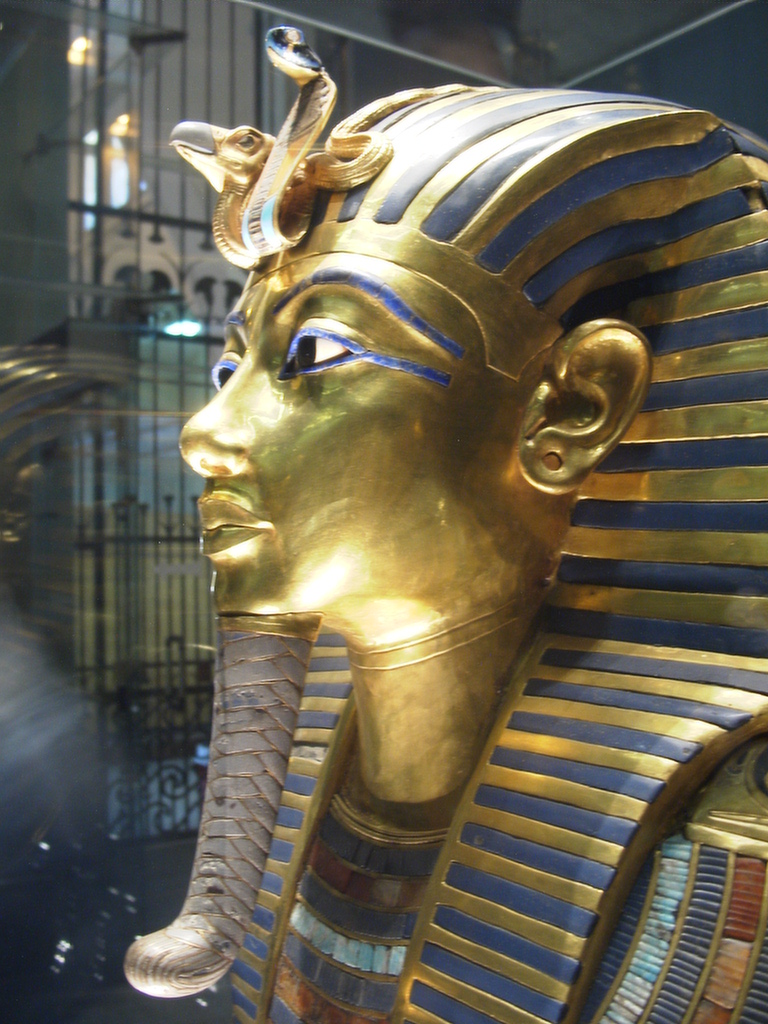
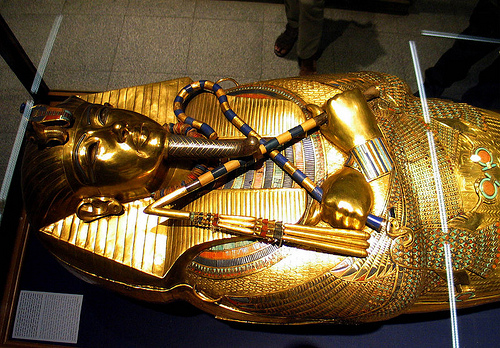
In truth, King Tutankhamen had captured our imaginations long before we arrived in Egypt but my fascination only increased as I learned more. For example, our visit to the Egyptian Museum revealed the great love story between Tut and his wife Ahnksamon. As we inspected his throne, which was made of solid gold and silver (silver, interestingly, was far more precious in Egypt because they didn’t have any silver mines of their own), our guide pointed out a touching scene crafted out of the precious metals:

There in large glittering relief were Tut and his wife, she is gently anointing his shoulder with precious oils as he looks lovingly on. They are each wearing only one sandal---one wears the left, the other the right---of a single pair. This intimate sharing signified a genuine affection and appealed greatly to my sense of romance. It made me happy to imagine a royal couple deeply and obviously in love.
Apparently, that story also appealed to the citizenry of Tut’s time because we saw additional imagery which taught us the significance of the eight lotus flowers. In other treasures, we see Tut offering his bride eight blossoms. This is the most romantic thing you can imagine.
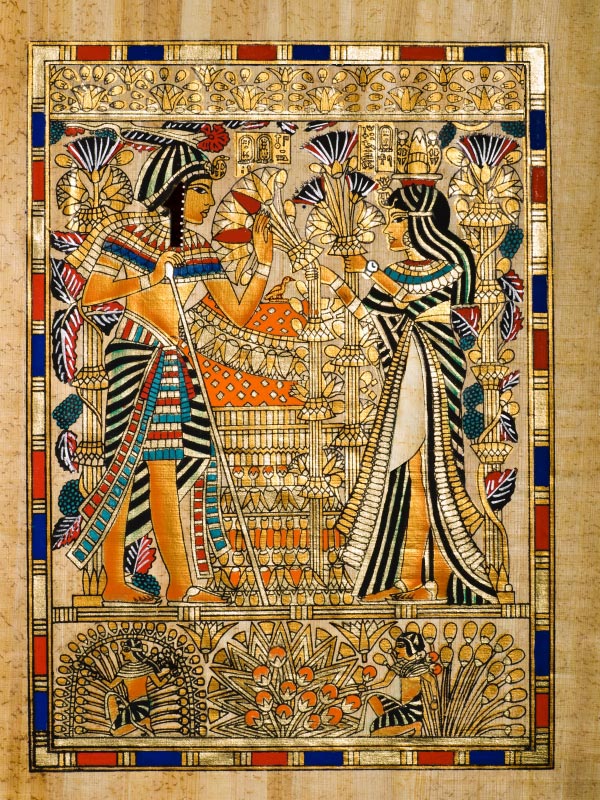
At the time, when a man proposed he offered eight flowers. The woman could choose to accept three, five, or eight. If she took three, it signified that she would marry him but did not love him; five meant that she loved him but could not marry him; and eight meant that she loved him, would marry him, and would spend eternity with him. Ahnksamon is holding three in one hand and five in the other.
For me, history comes alive when we see glimpses of the real people who made it. My favorite peeks are the ones which reveal something about the character of an individual or the important choices they made. I found myself wanting to learn more about Ahnksamon. She and Tut had two daughters, both of which were stillborn. I am curious to know what became of her upon Tut’s death. Without children, was she all alone? Did her belief in the afterlife provide some measure of comfort for the remainder of her own? That makes one story and numerous more tombs to explore. The others we visited were, as our guide suggested, vastly more visually arresting (for more details, see Russ’s post “Mini Tour of Egypt”) but none captured my imagination like Tut’s.
NOTE: golden Tut pictures are from the Internet

Error thrown
Call to undefined function ereg()