Turkey is a feast for all the senses but my taste buds were on overdrive as we sampled street fare, sweets, and dishes fit for a Sultan.
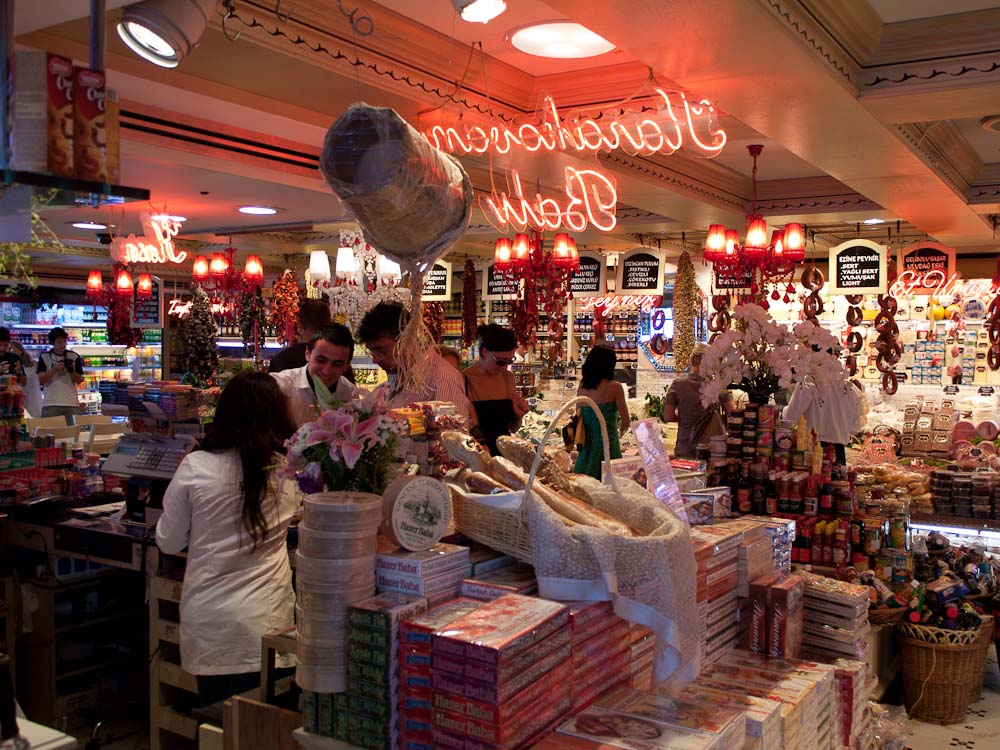
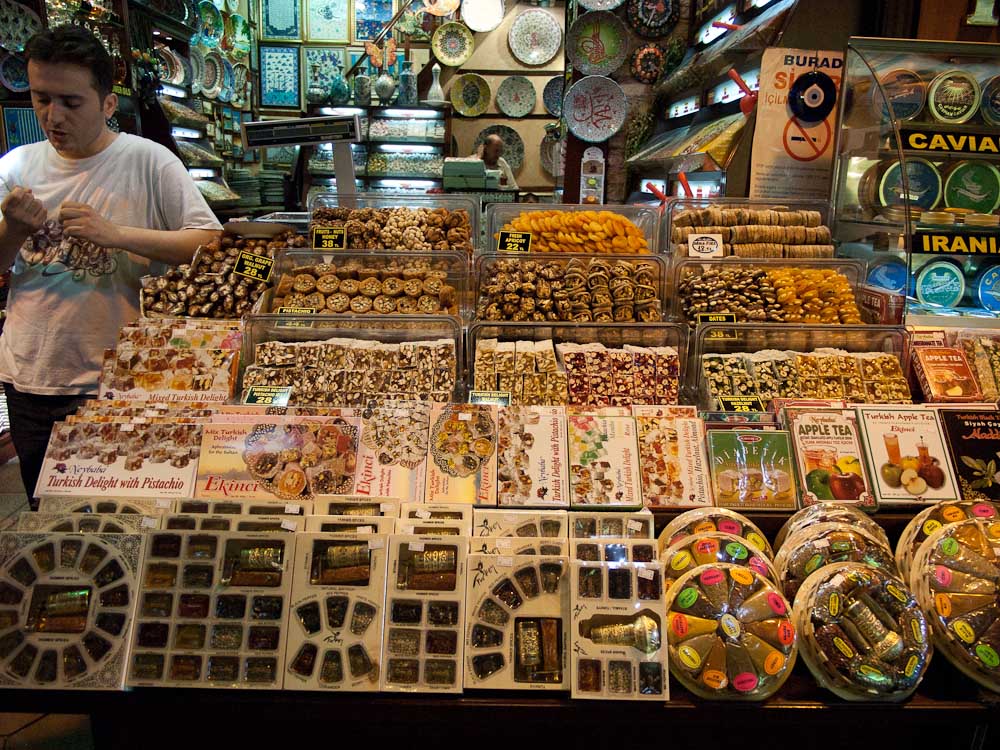
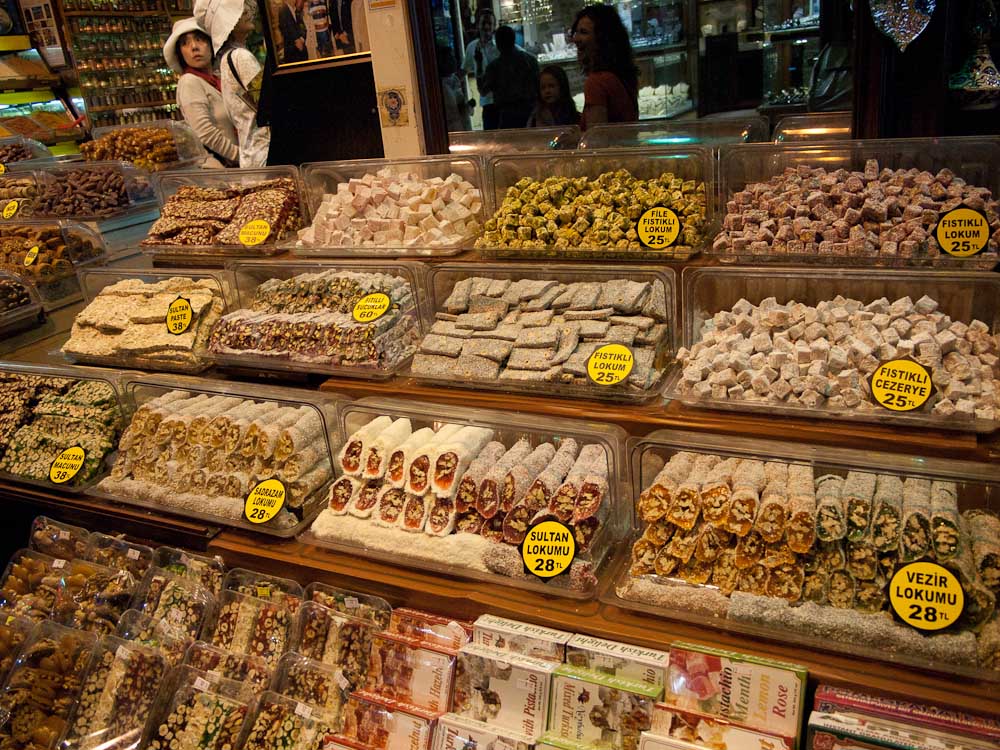
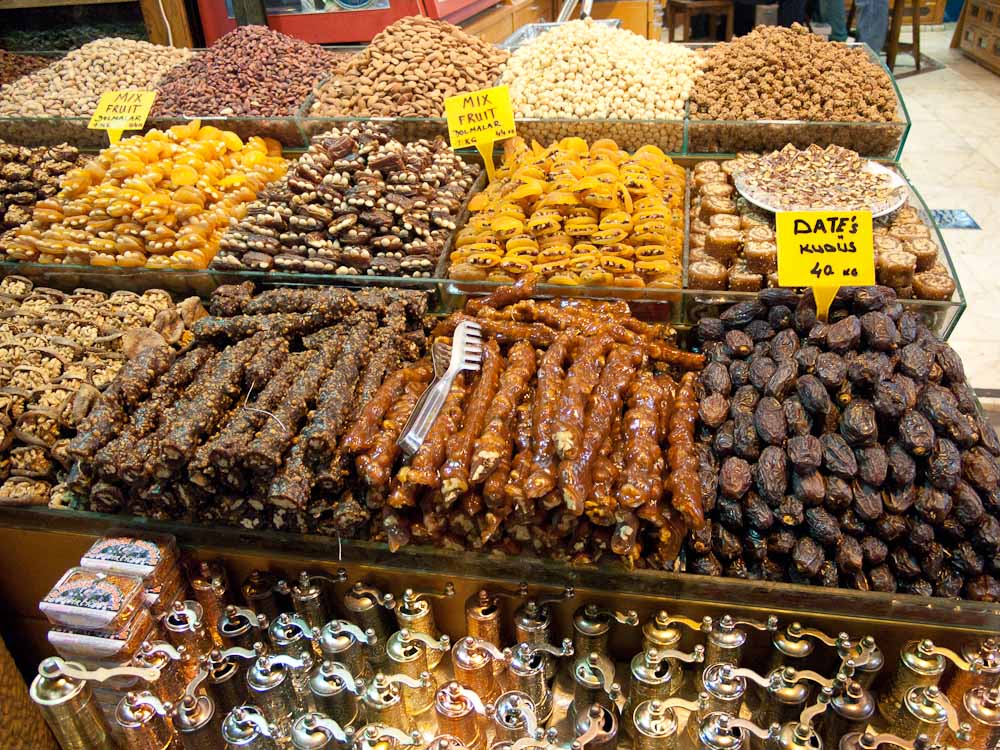
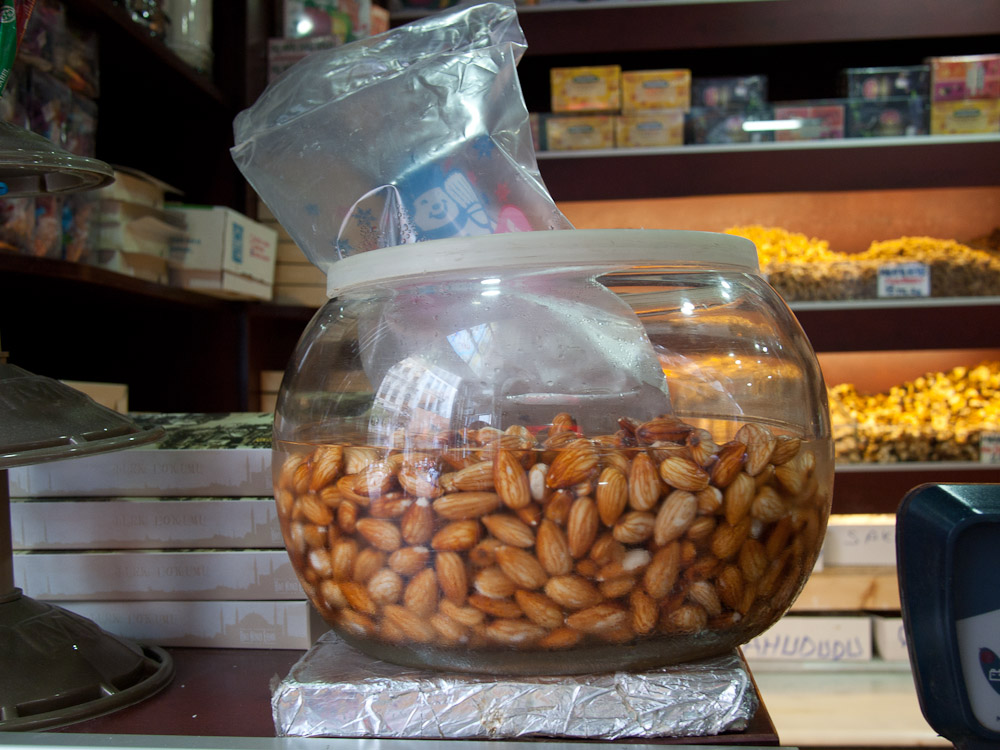
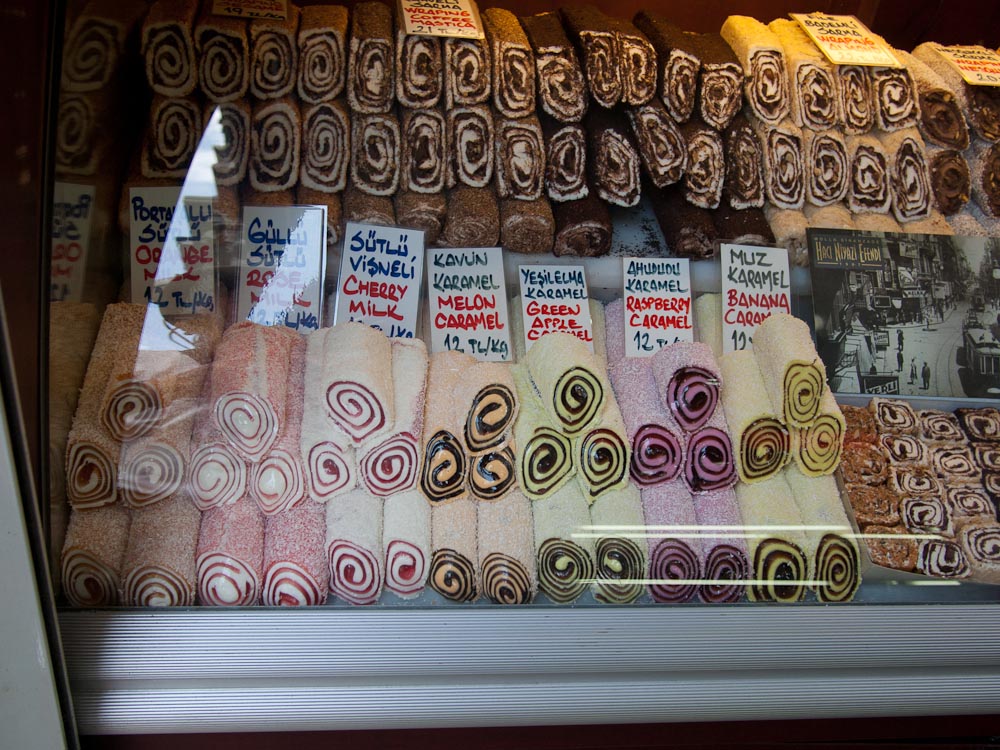
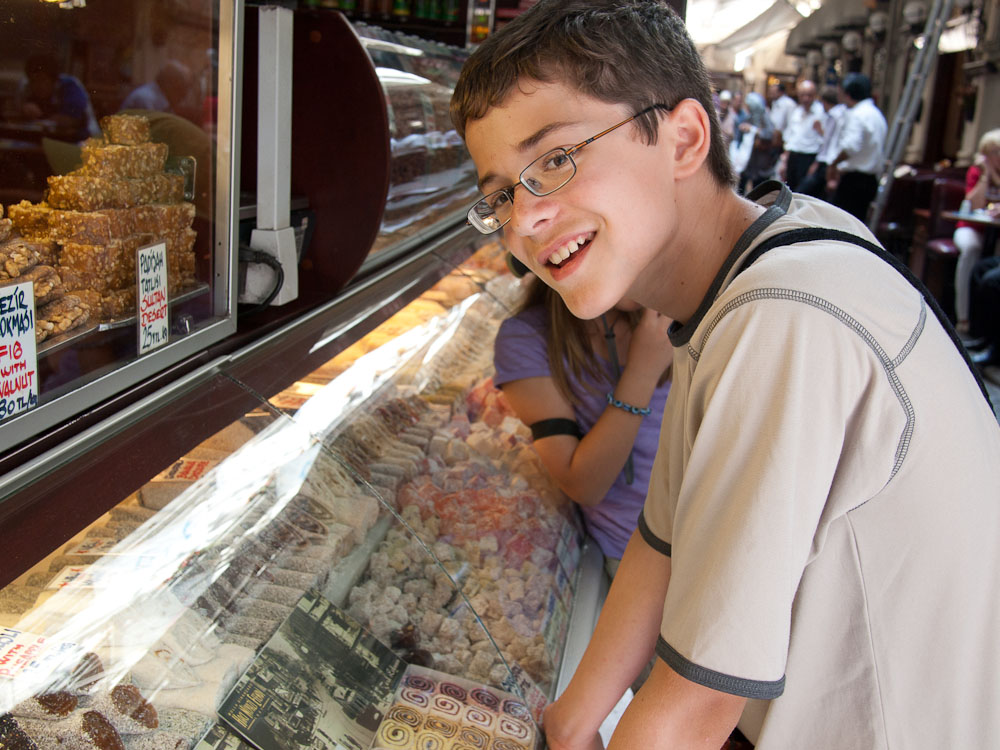
In lieu of chips or packaged snacks we found lots of little stands selling all sorts of nuts, dried fruits, and—of course—Turkish delight. The latter is a sort of nougat studded with pistachios traditionally scented with rose water or lemon. Originally made from Arabic gum, today’s confection is made with sweetened corn starch and comes in a mind-boggling array of flavors ranging from apricot to chocolate-banana. The kids had a hard time choosing so we ended up with a box full of pretty little colored slices.
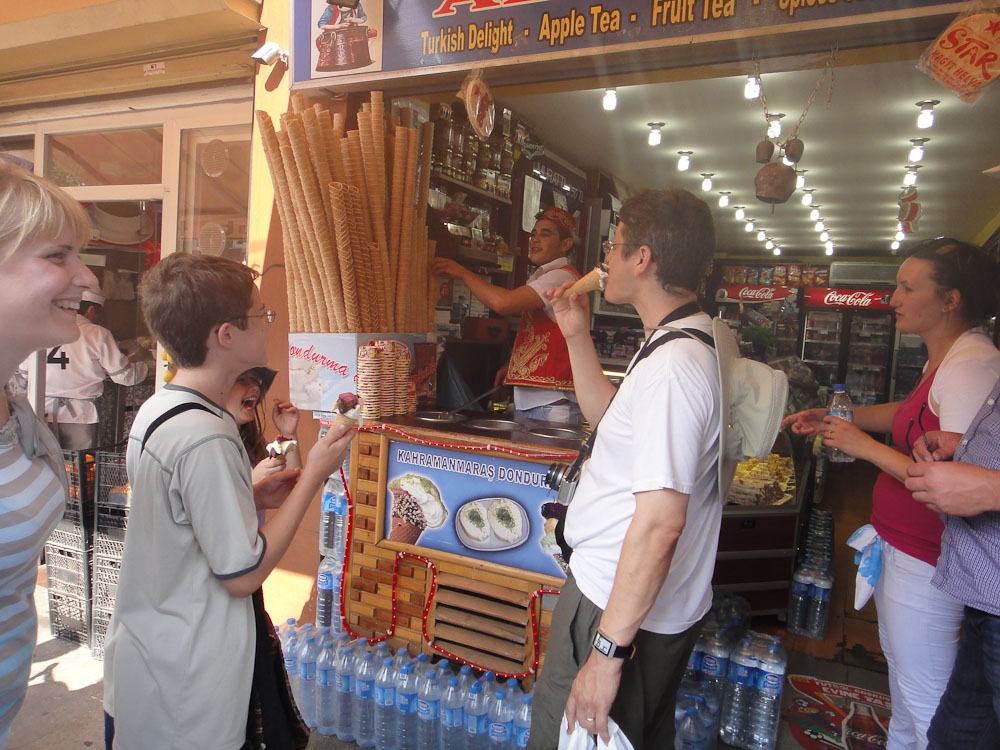
The kids also tried the street vendor snacks: Carter opted for grilled corn brushed with melted butter and sprinkled with salt. The corn is nothing like our sweet late summer ears; the only flavor comes from the butter and salt but it sure smells good. Katherine prefers the peaches which are luscious and dribbly. Both kids have been wildly entertained by the ice cream vendors who transform scooping into a one-man show complete with clanging bells and antics such as twirling the cones around on the end of their scooping sticks (they measure 3’ long and resemble gigantic cocktail stirrers).
Our lunches have largely consisted of classic Turkish workman’s meals which are easy on the wallet and the clock. Köfte, or meatballs, are delicious and almost every restaurant seems to offer their own version. They can be round or rectangular and are made with a combination of ground lamb and beef, herbs, and breadcrumbs. Interestingly, we haven’t been able to find any sauces in which to dip our köfte or bread. The Turkish equivalent of tzatiki is eaten with a spoon as its own course. We’ve had to make do with a fabulous simple salad of white beans, onion, tomato, and mint bathed in olive oil and lemon juice.
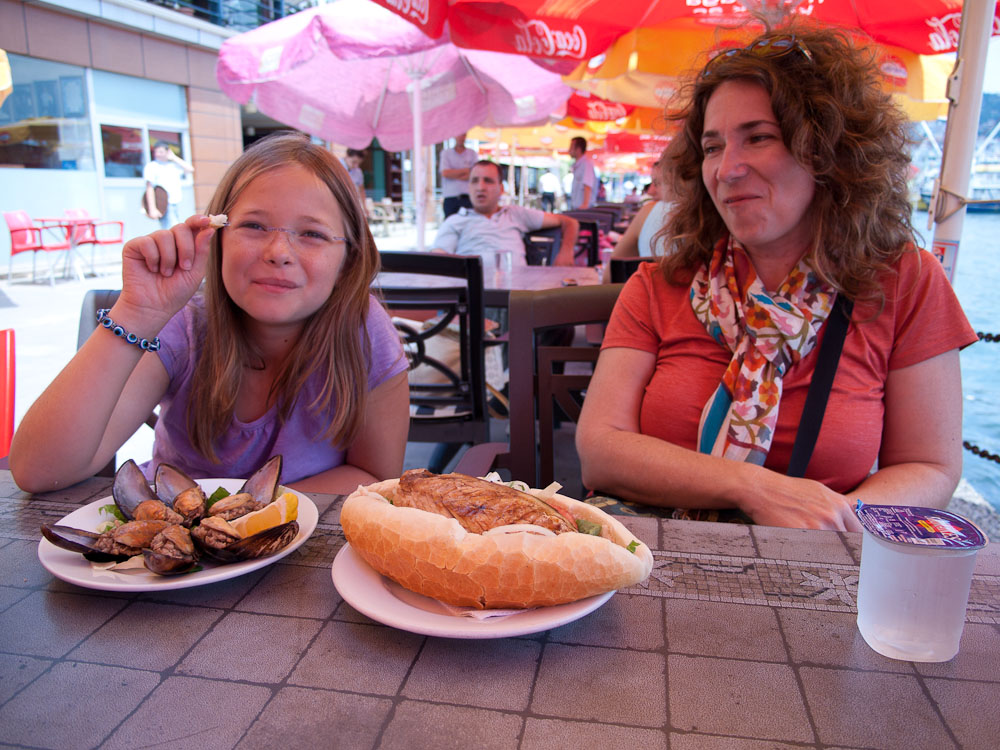
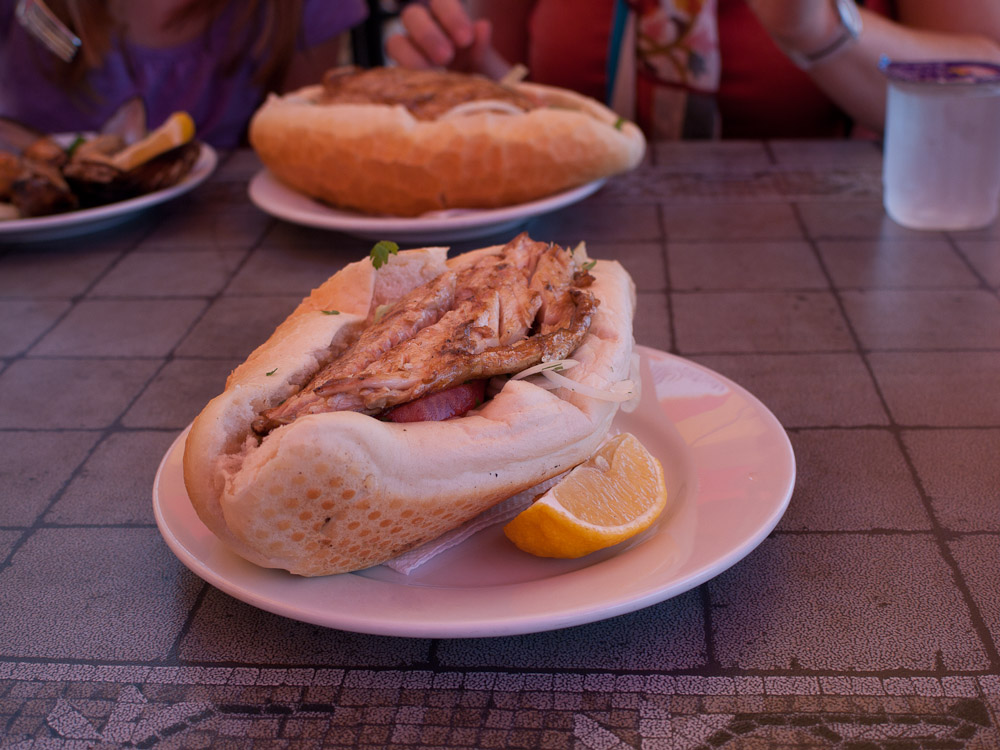
After a morning cruise down the Bosphorus, we stopped at a pier-side café and sampled the balik ekmek, or fish and bread. This is a sliced roll filled with a grilled mackerel fillet, shredded lettuce, tomatoes, and slivered onion. It is served with a fresh lemon wedge which you squeeze over the entire sandwich. Scrumptious.
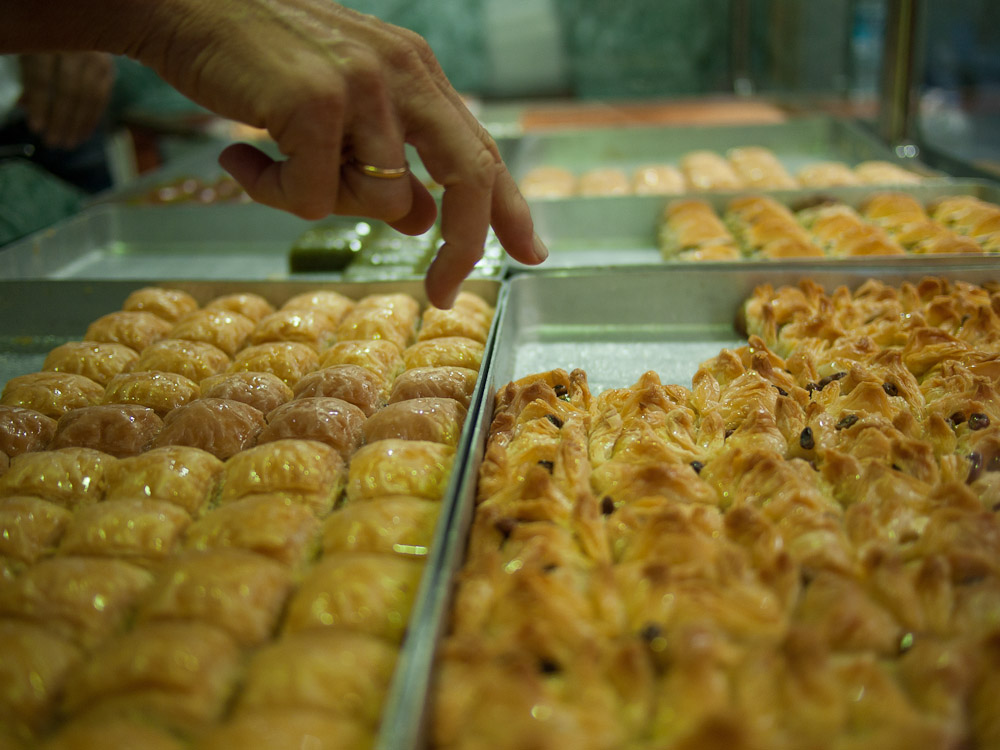
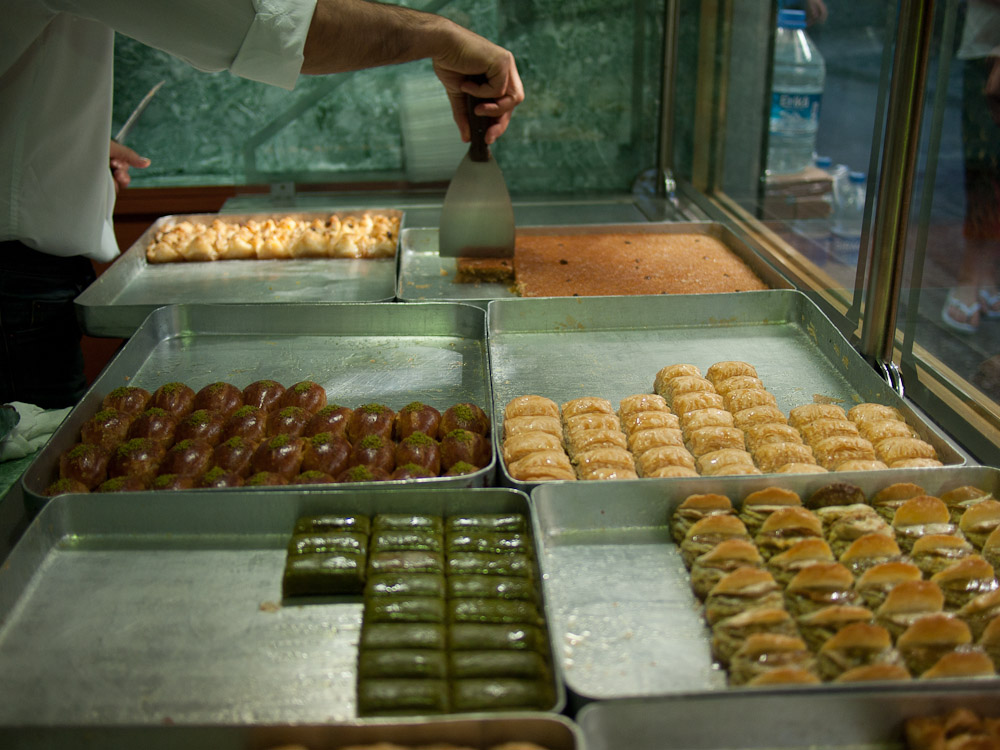
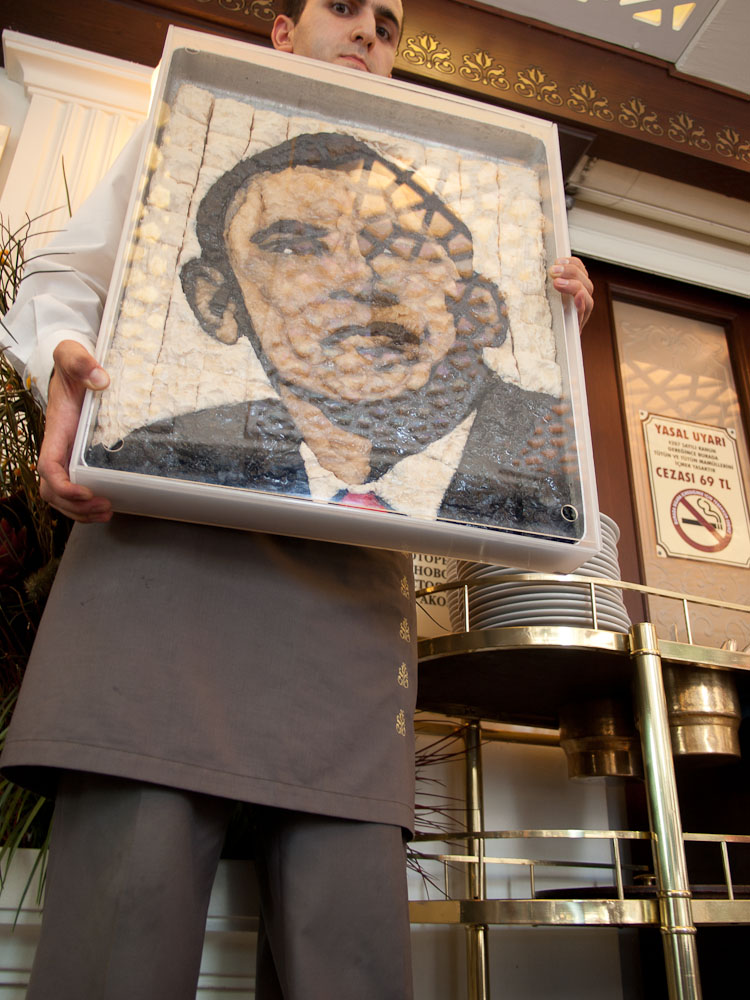
Among the many contributions of the Ottoman Empire---and there are a staggering number--- baklava surely has to be among the greatest. Thin transparent sheets of pastry, and lots of them, are the marks of a good baklava. Pistachio is the original filling but we saw many versions filled with walnuts. The baklava here is less syrupy than what we tried in Greece and even our Greek hosts conceded that the Turks make it best. We were told that a standard serving is four pieces. We’ve easily eaten four or five times the recommended amount and now consider ourselves experts.
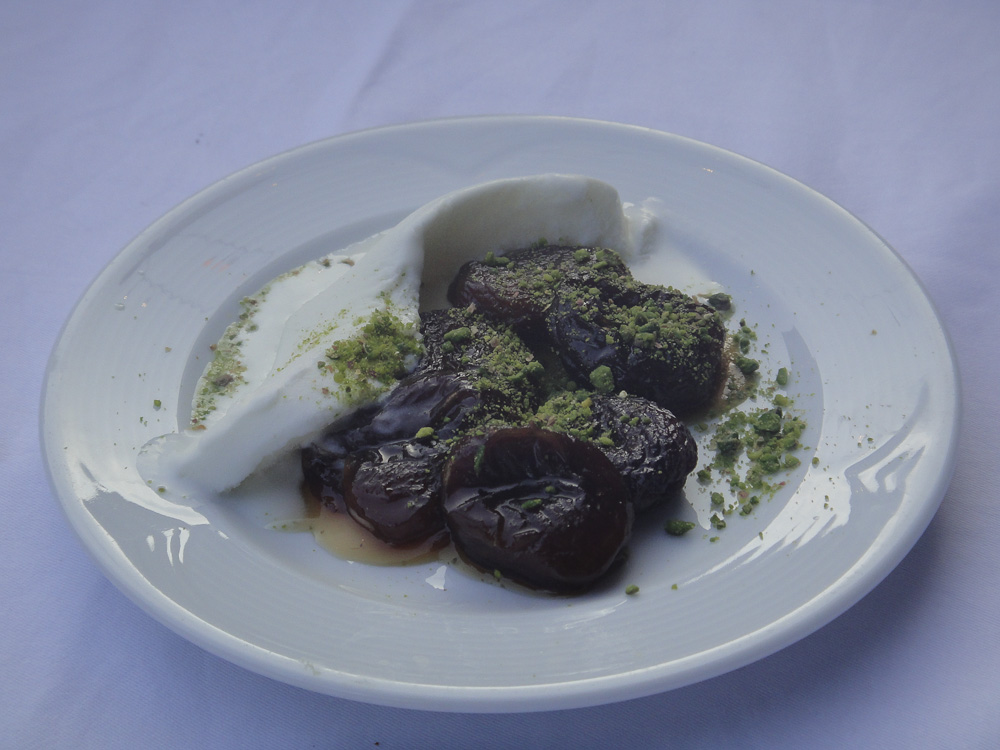
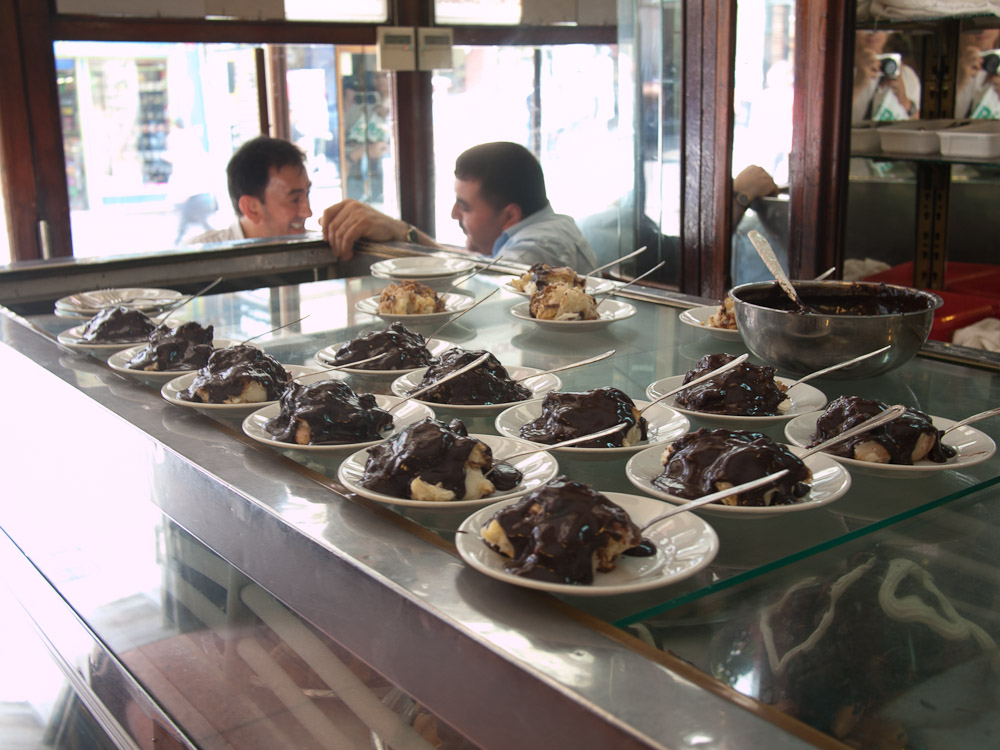
Two other noteworthy desserts include warm apricots stewed in a lemon-sugar syrup and a traditional dessert called ince, which means pearl. It is a profiterole filled with vanilla pastry cream which is then covered in a thick chocolate syrup. When you peek under the syrup, the ball of pastry cream looks like a pearl so this dish is aptly named.
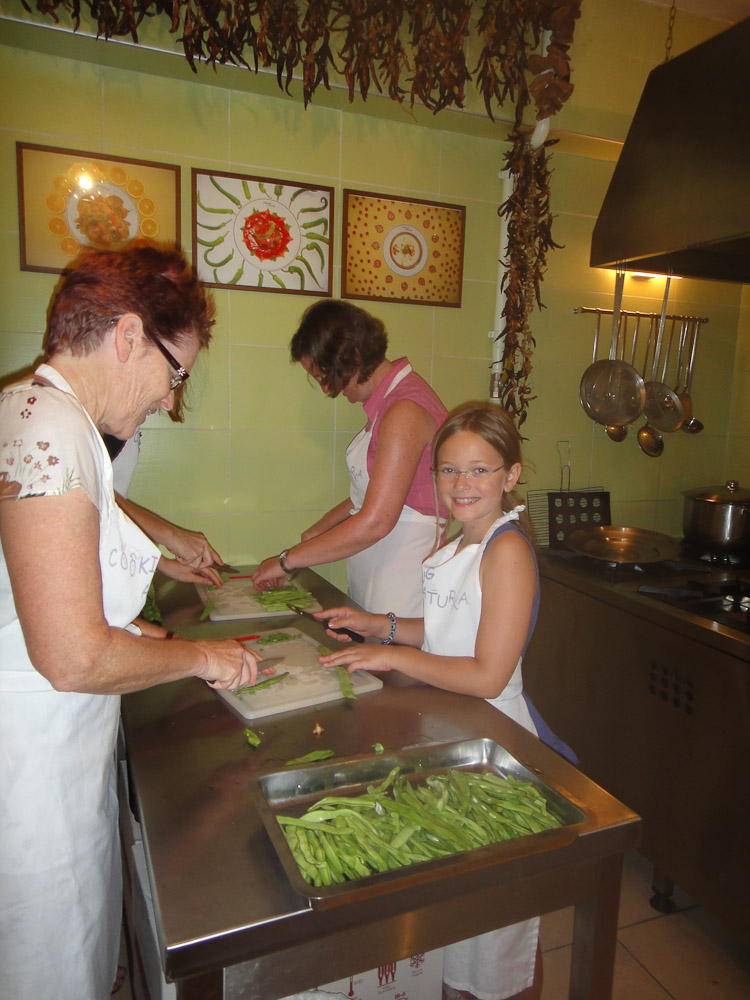
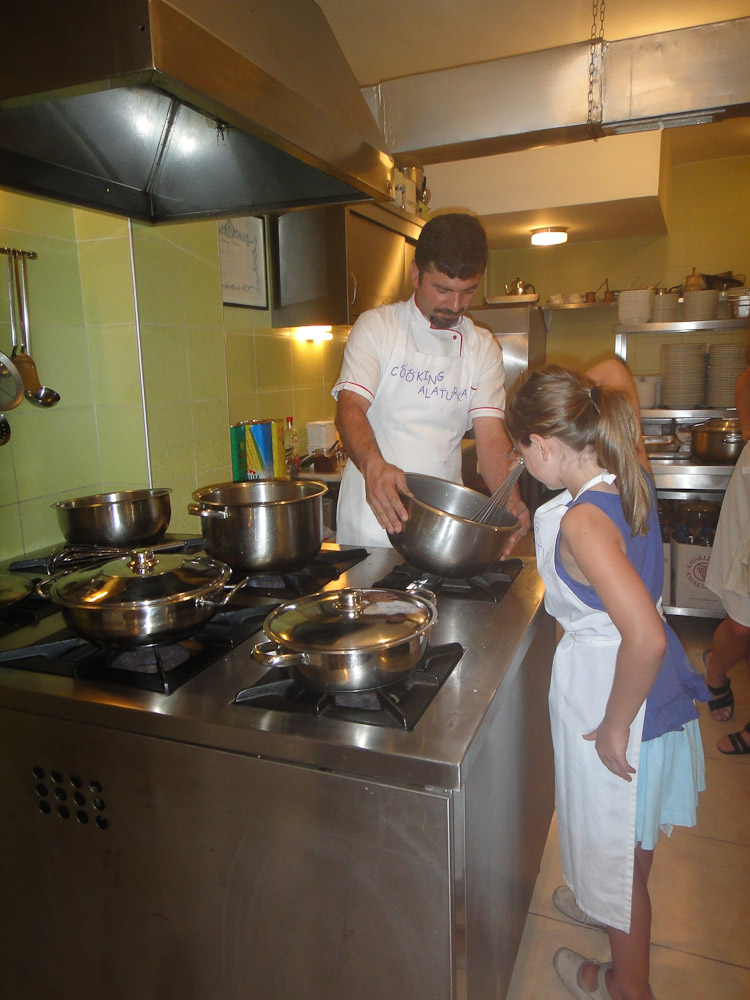
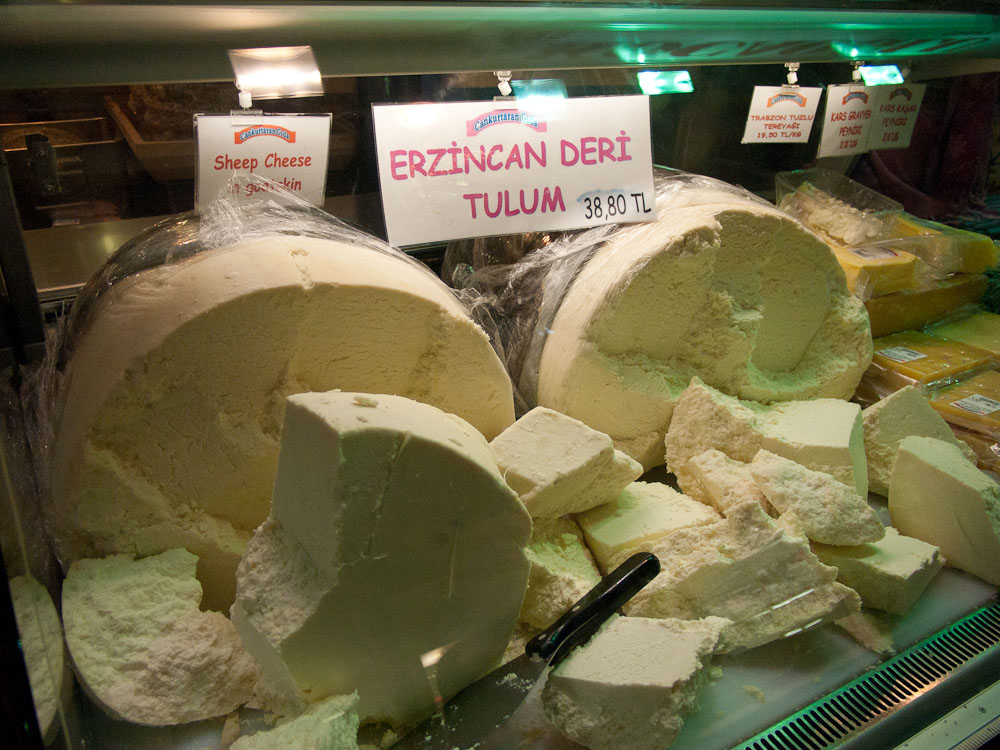
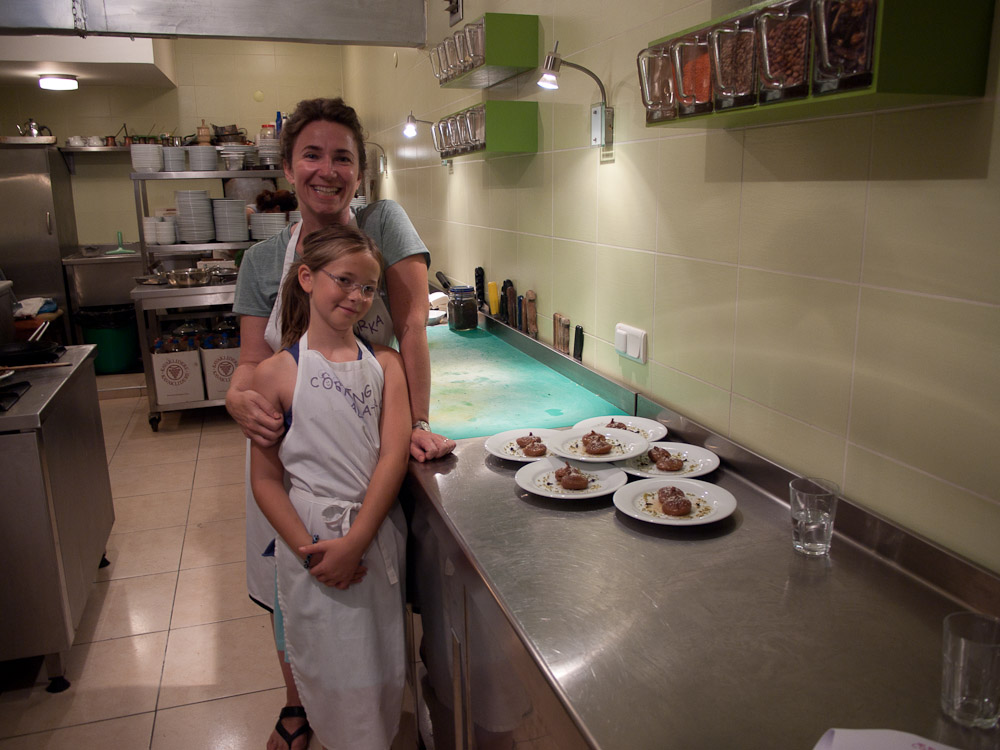
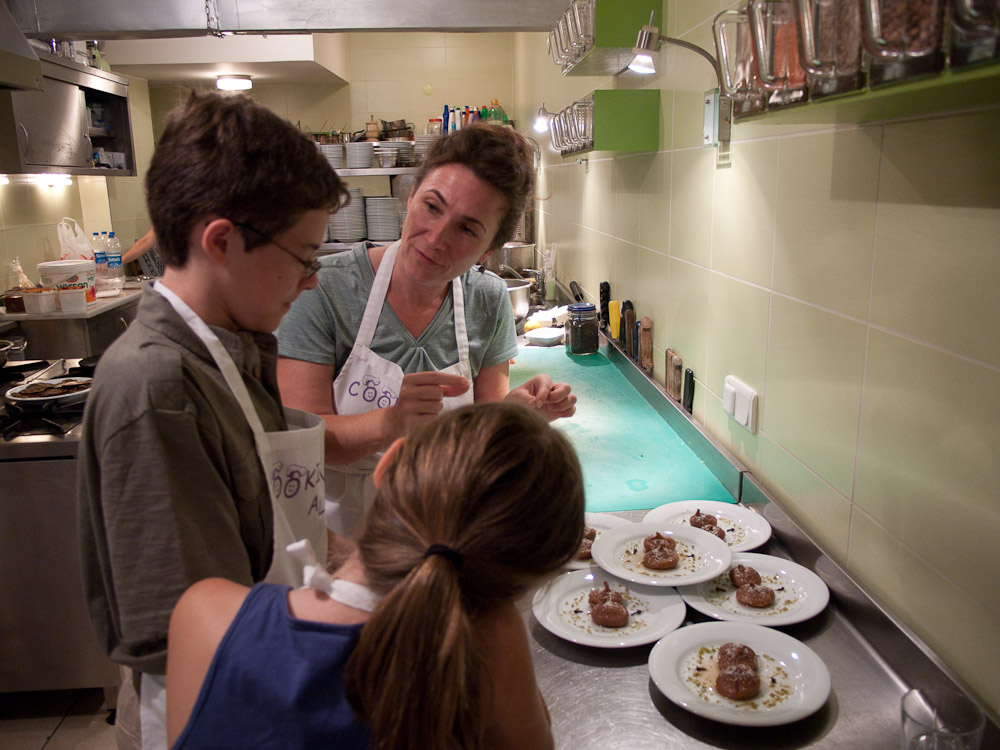
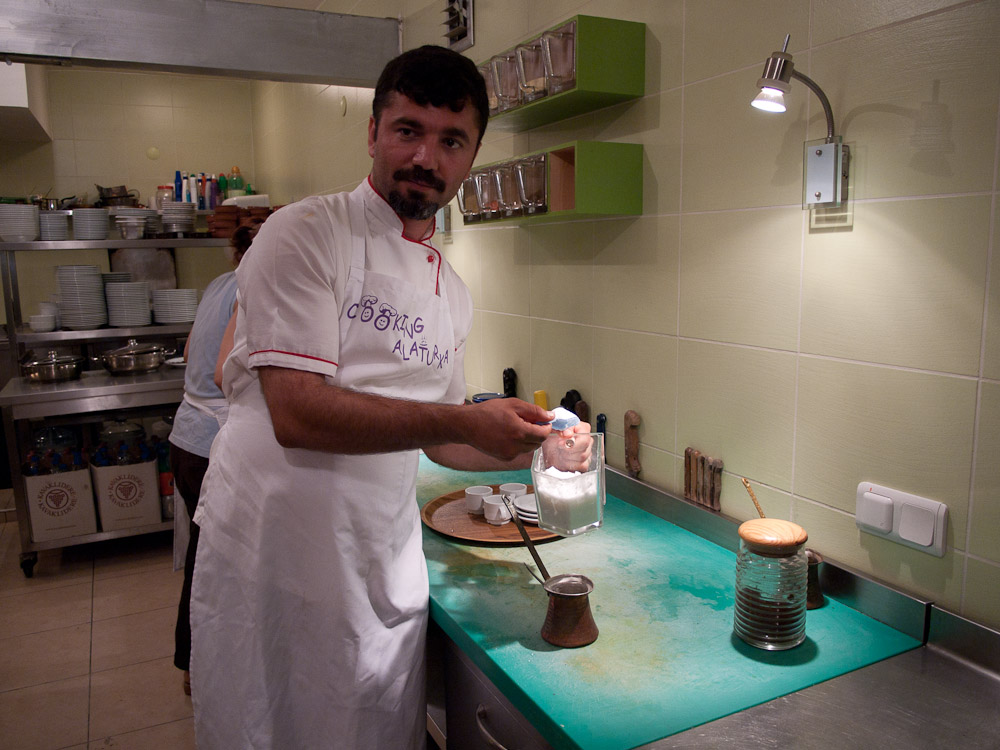
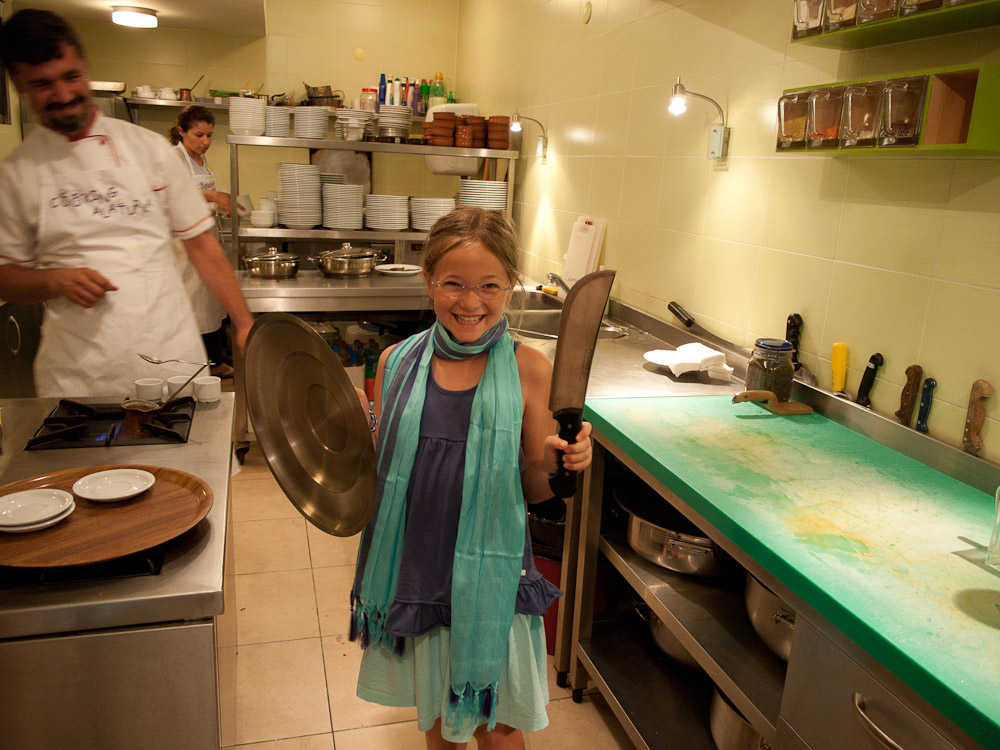
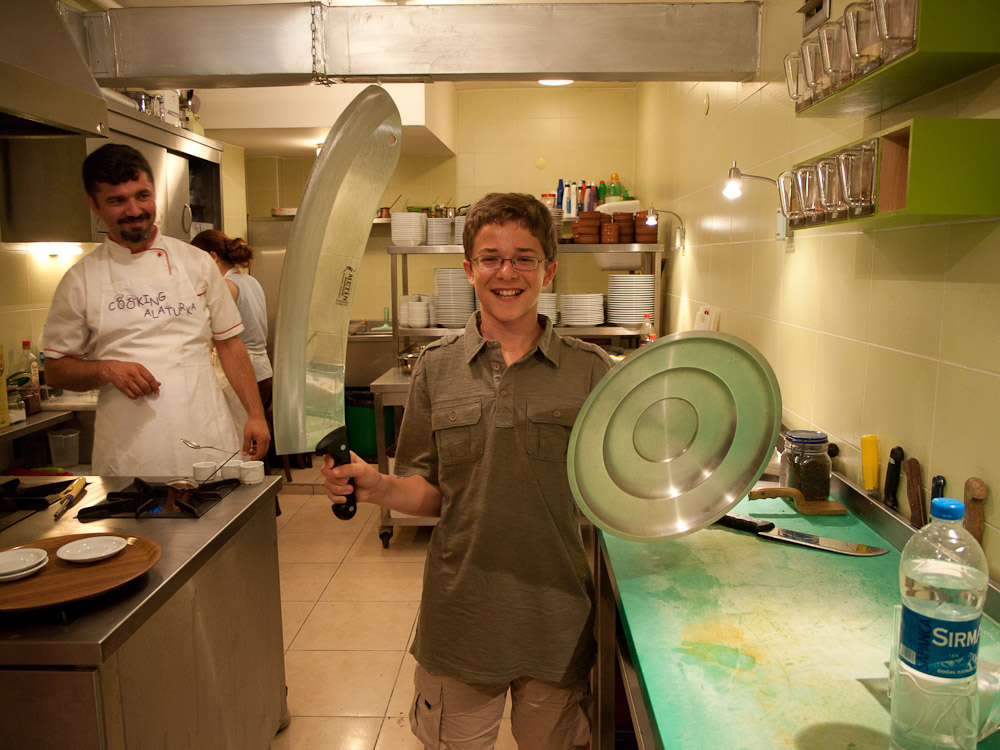
The capstone of our culinary exploration of Istanbul was a cooking class at Cooking Alaturka. The school is run by Evangeline, who is from Holland and is a graduate of the Cordon Bleu in Paris. She has lived and worked in New York, Paris, and Istanbul and has chosen the latter as her adopted home. There are good culinary reasons for that. Thanks to its historic role as the trading crossroad of Europe and Asia, Turkey’s cuisine incorporates lots of spices but nothing we’ve tried has been hot. The predominant flavors are Turkish red pepper (which is sweetly piquant), lemon, dill, garlic, and mint. Yogurt, eggplant, lamb, white cheese (similar to feta but less salty), and seafood are other common ingredients. Of the five dishes we made in class, two are standouts that I definitely plan on making at home.
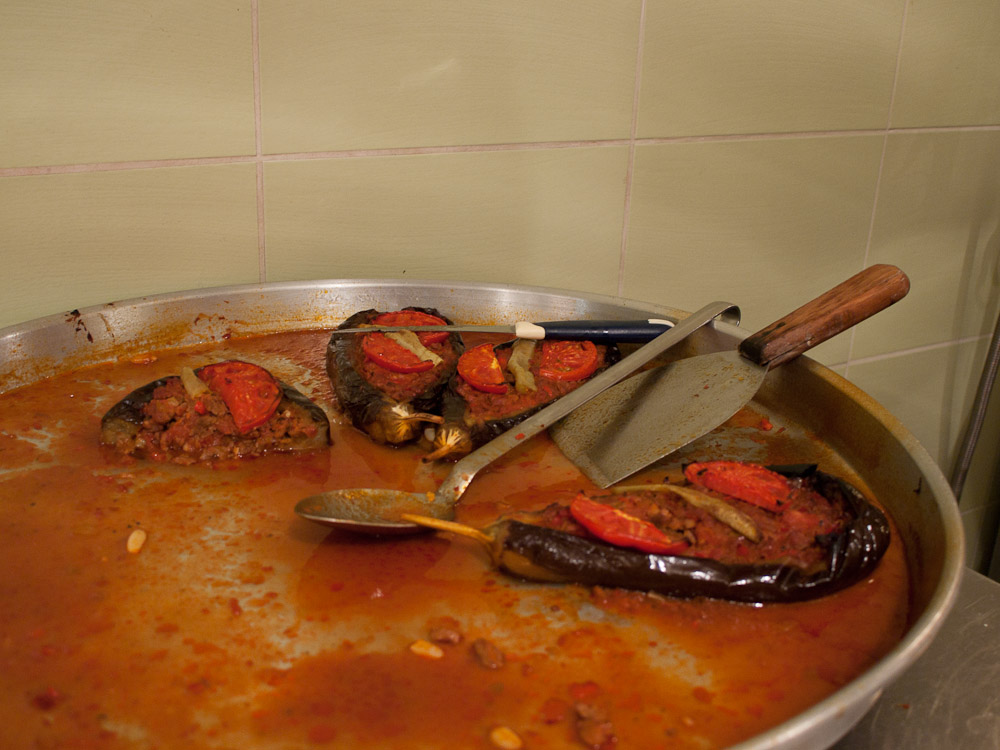
Karniyarik, or “Split Belly Eggplant,” is an old Ottoman dish. It is said that every Turk’s mother makes it best. İncir tatlisi is a dessert made by stuffing dried figs with walnut halves and then simmering them in a sugar syrup infused with whole cloves. The flavors are exotic but the preparations are simple and will transport you to the palace of the Sultan.
For a Word document with the eggplant and fig recipes click here.
More from Russ:
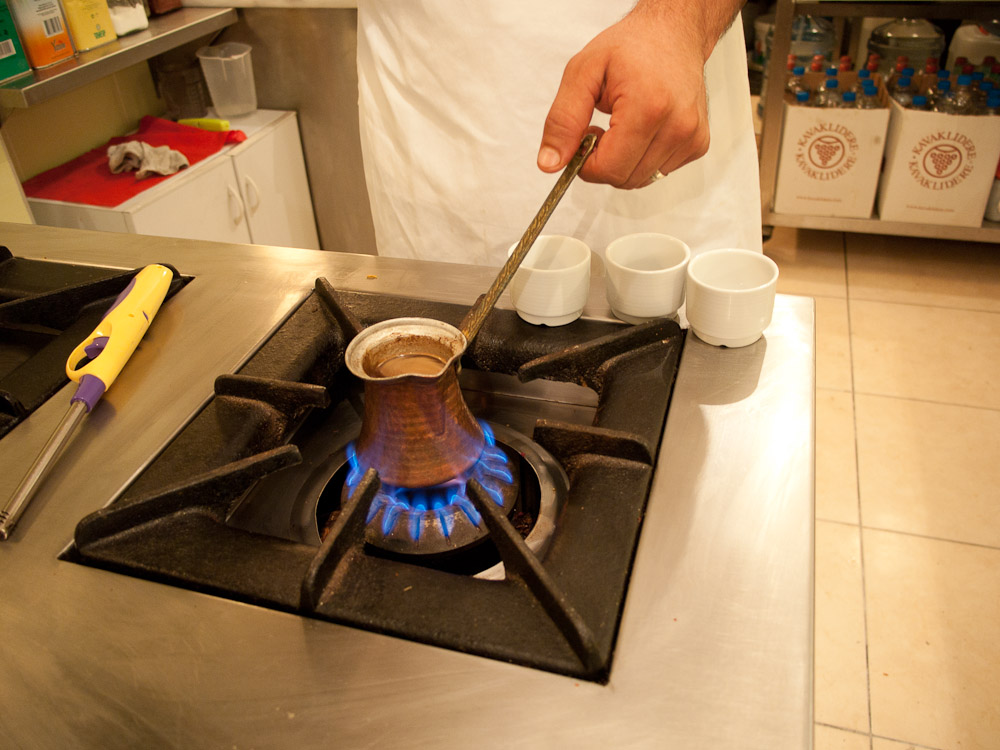
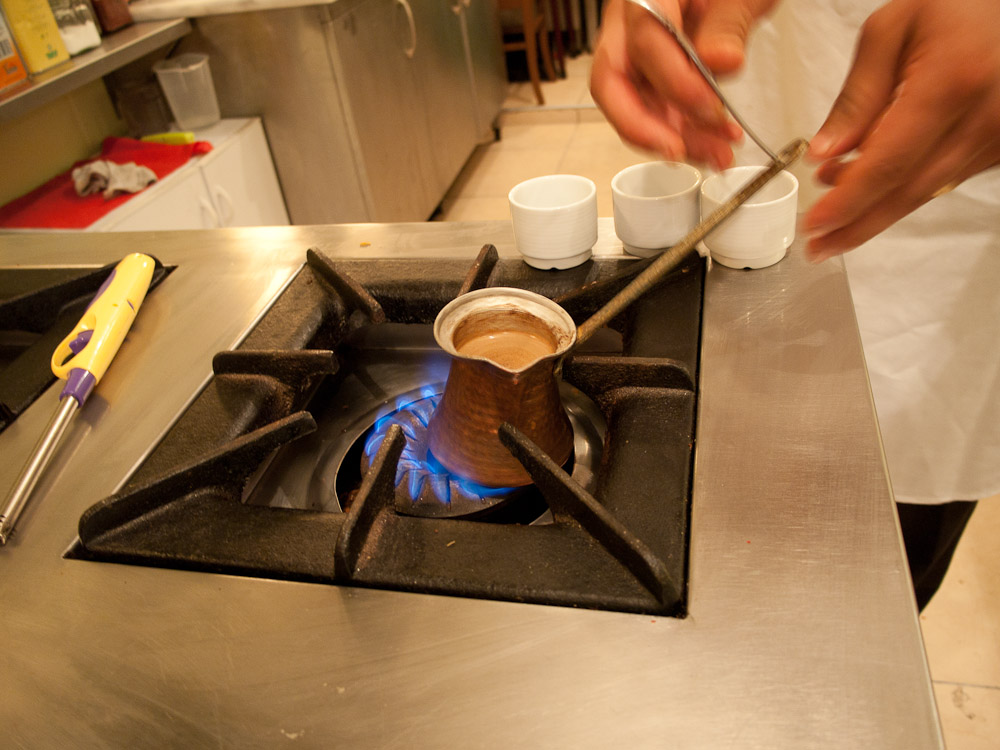
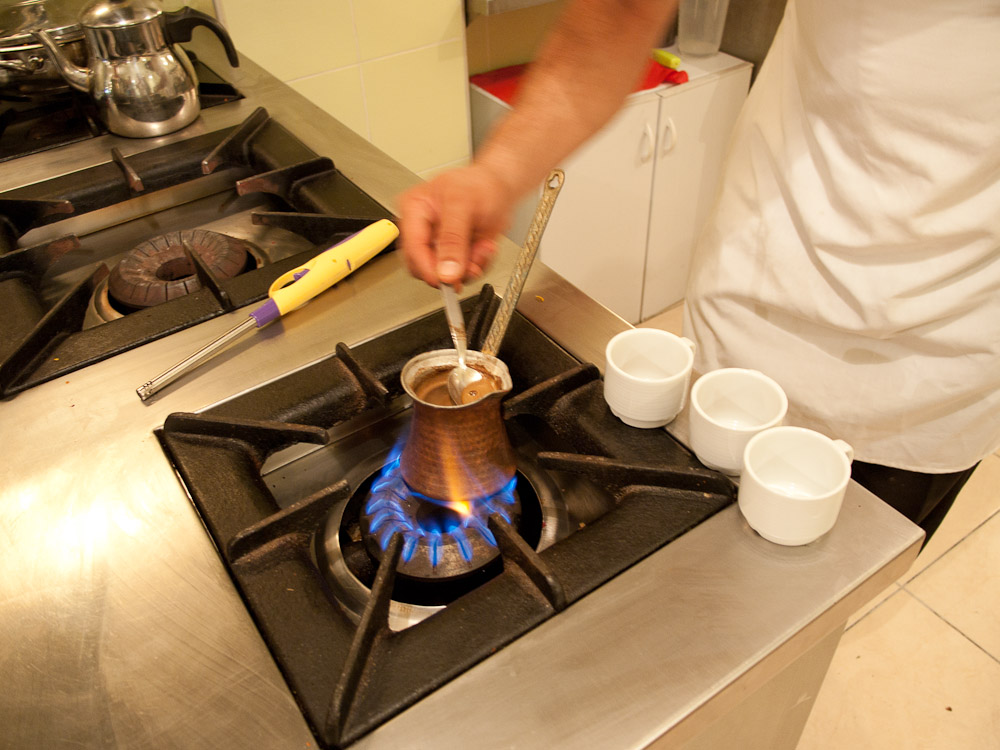
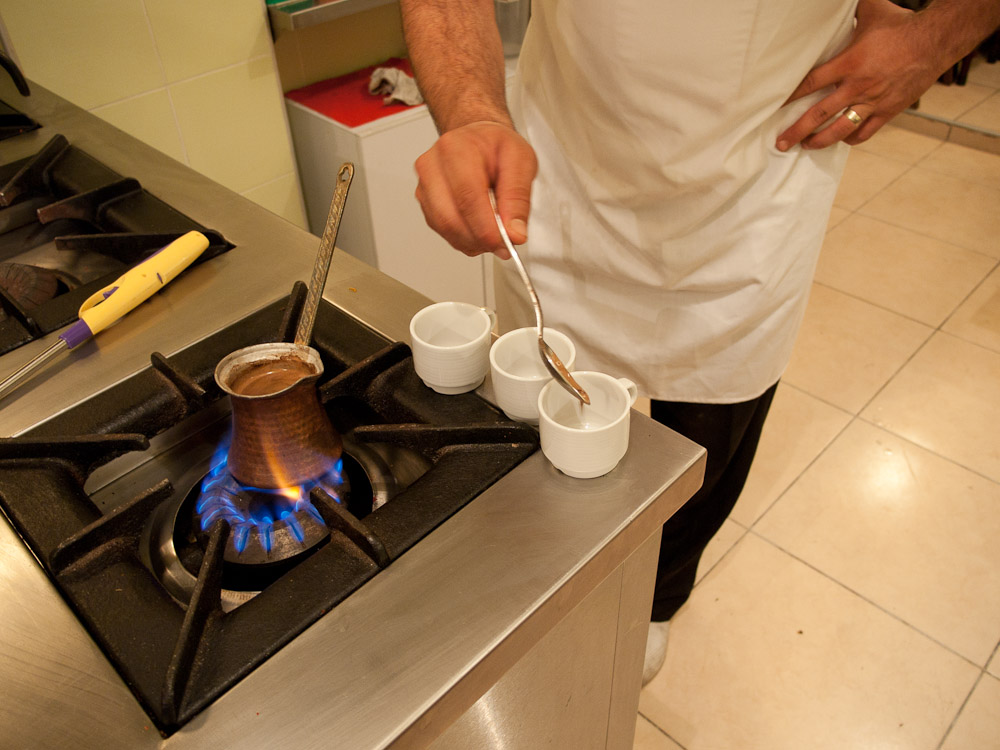
Turkish coffee can be made over a campfire (or gas burner see pictures). The grounds are spooned into a pot along with sugar and water. You must know the amount of sugar and add it ahead of time, because Turkish coffee is unfiltered and every cup comes with a half an inch or so of grounds at the bottom. That means you can’t stir it up after it is served. The pot is heated vigorously but NOT to a boil. As it heats, the beans release oil that foams up into a froth; this “crème” is spooned into the cup. If the pot starts to boil it is quickly pulled off the flame and allowed to cool. After 5-10 minutes, the liquid is poured into small cups along with the grounds; the grounds quickly settle and the coffee is served. It is a rich, deep coffee with lots of caffeine.
Despite a fierce summer sun, the Turks rarely drink cold fluids. One day after touring for some six or seven hours in the heat and humidity, we returned to our hotel and I limped over to the bar asking for Coke “boozgibby” which means “cold as ice”. This was a phrase Carter had learned that day at lunch and I was anxious to apply right away. The waiter’s eyes grew wide; he rummaged around in his refrigerator and found a can of Coke and after pouring it out into a glass in front of me – Tantulus slow – he went hunting into a freezer with tongs and brought out a (1) cube of ice and dropped it into the glass. He did that two more times and with the three cubes swimming at the top like lost sailors overboard, he could no longer bear to hold the glass, and released it to me in a rush saying “now that is VERY cold.” I later asked our guide where this custom came from, given that ice is fairly plentiful, and was told with seriousness that some Turks believe that ice-cold drinks promote asthma and throat infections especially among young children, possibly due to a special bacteria found in Turkey. So Turks rarely drink icy beverages and children will even drink warm water with their ice cream.
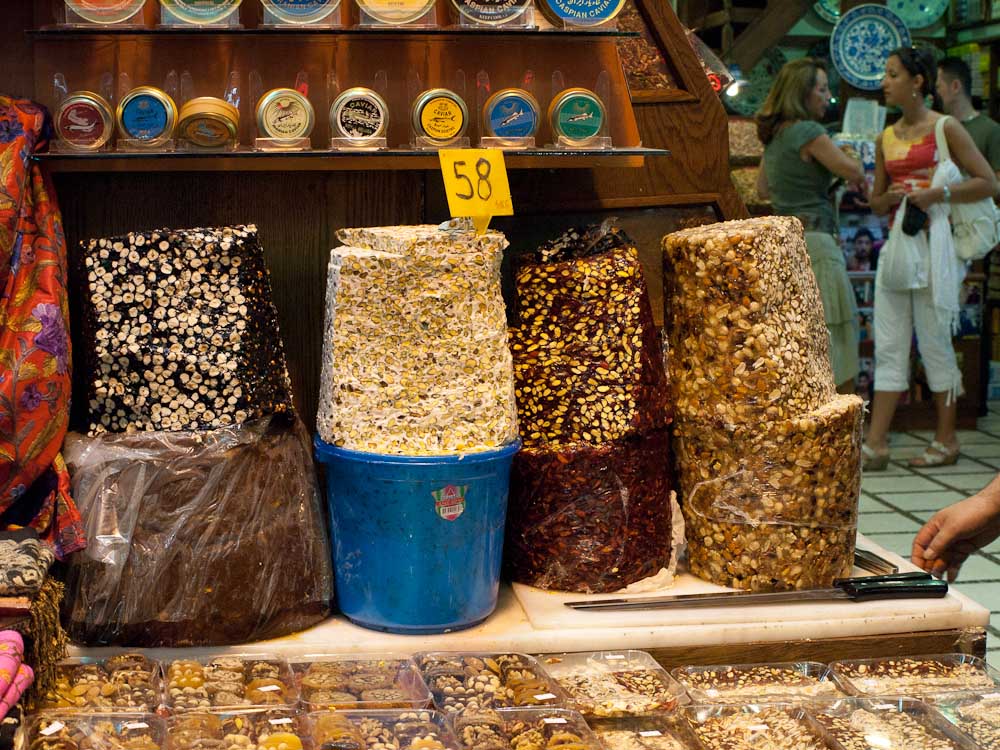
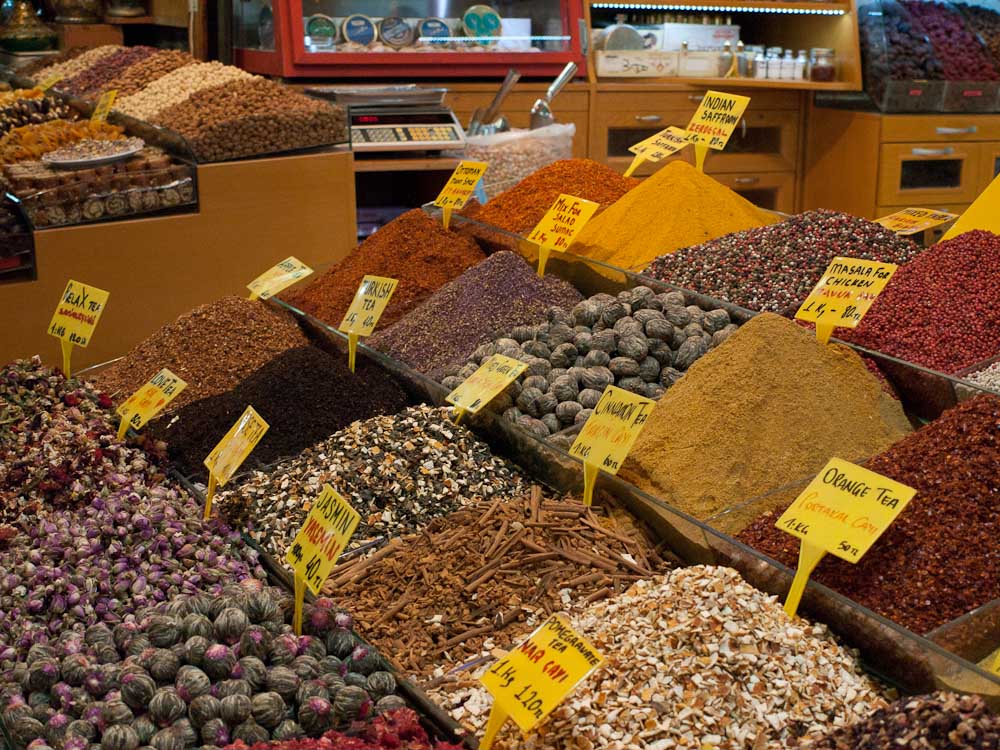
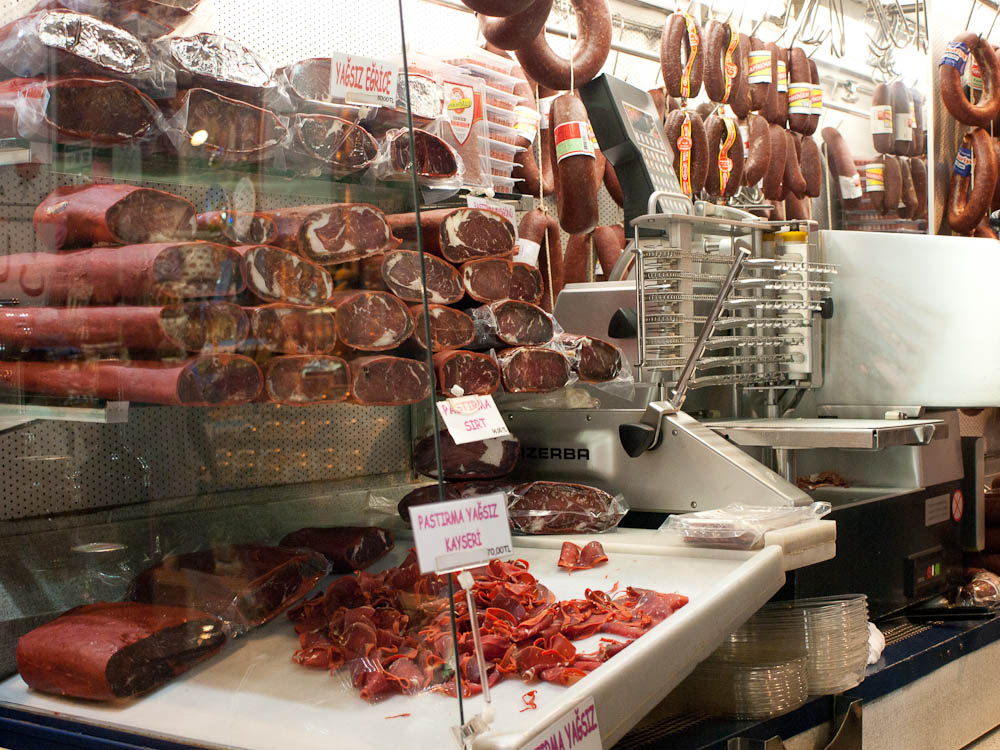
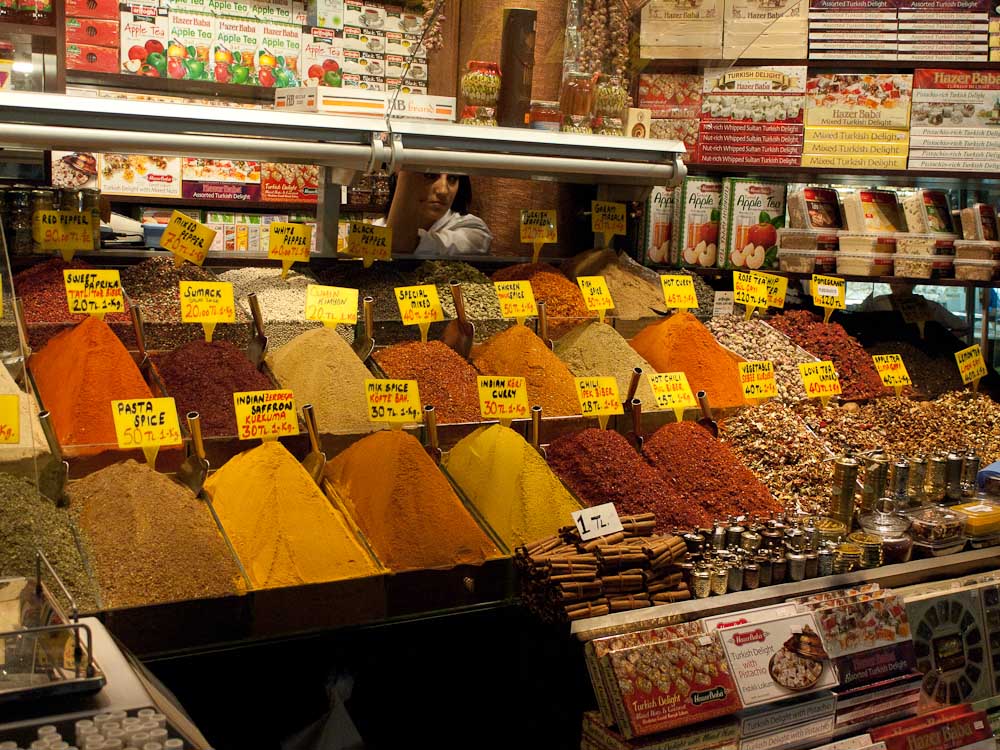
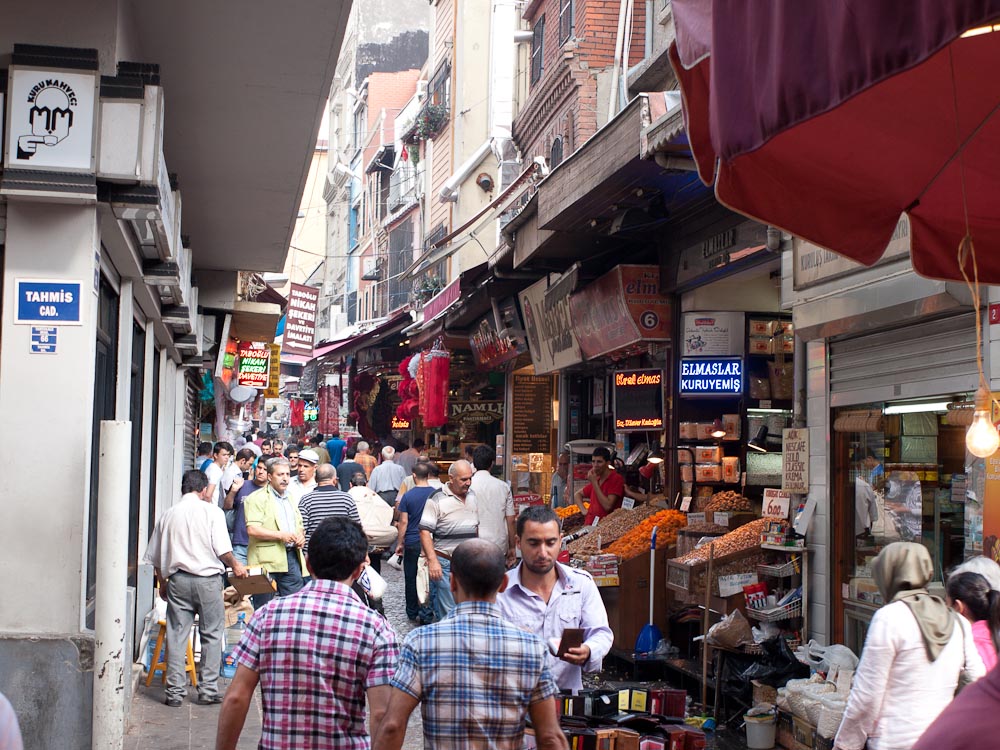
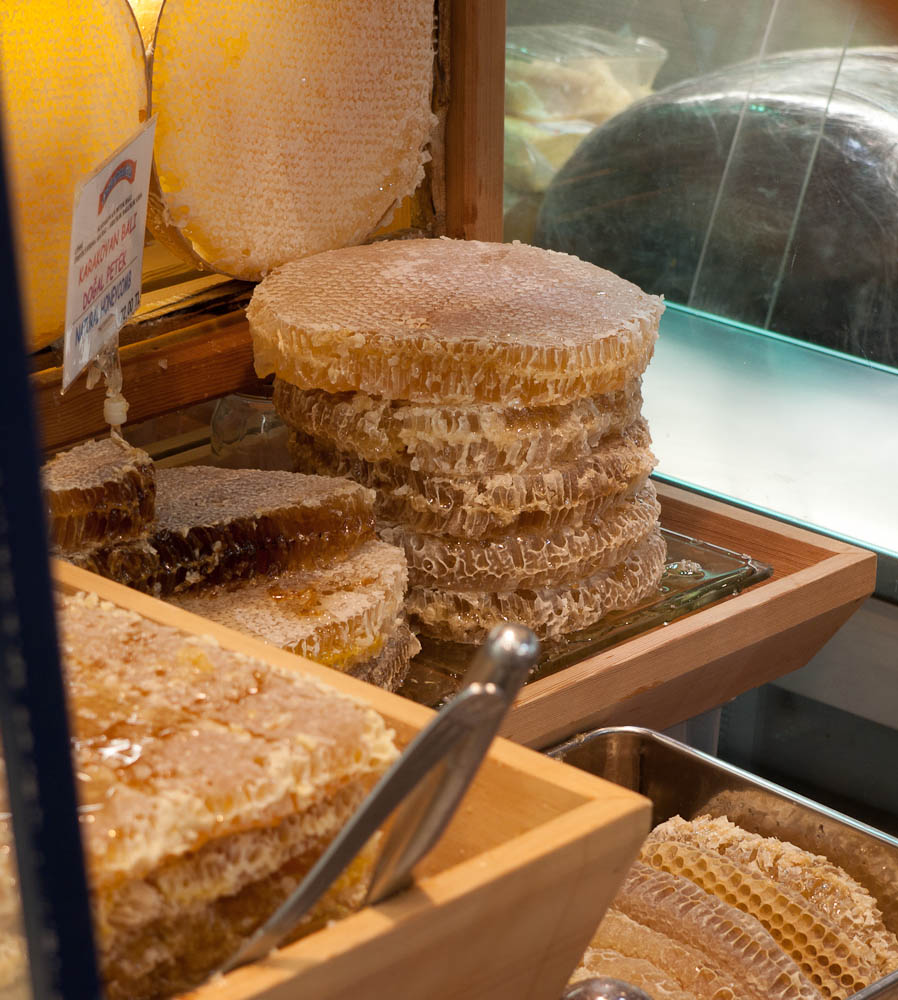
Istanbul’s spice market is an extension to the Grand Bazaar. Spices are sold heaped onto tables, along with nuts and dried fruits of every description, teas, giant wheels of white cheese, and honey still in the comb. We saw a bewildering variety of confections and will let the pictures speak for themselves.
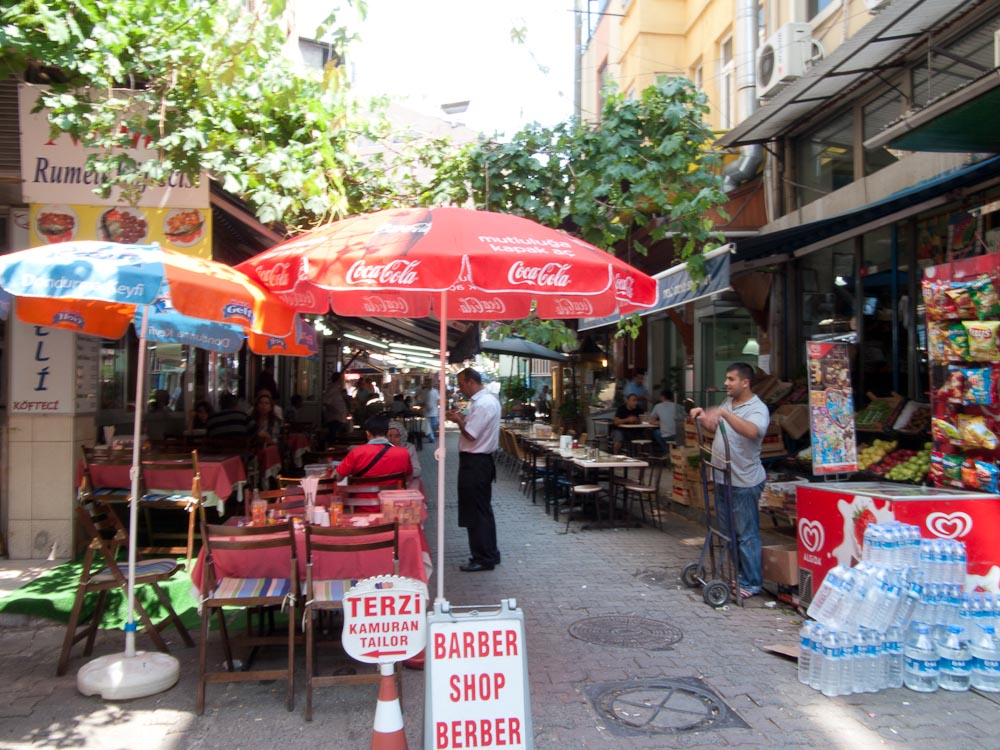
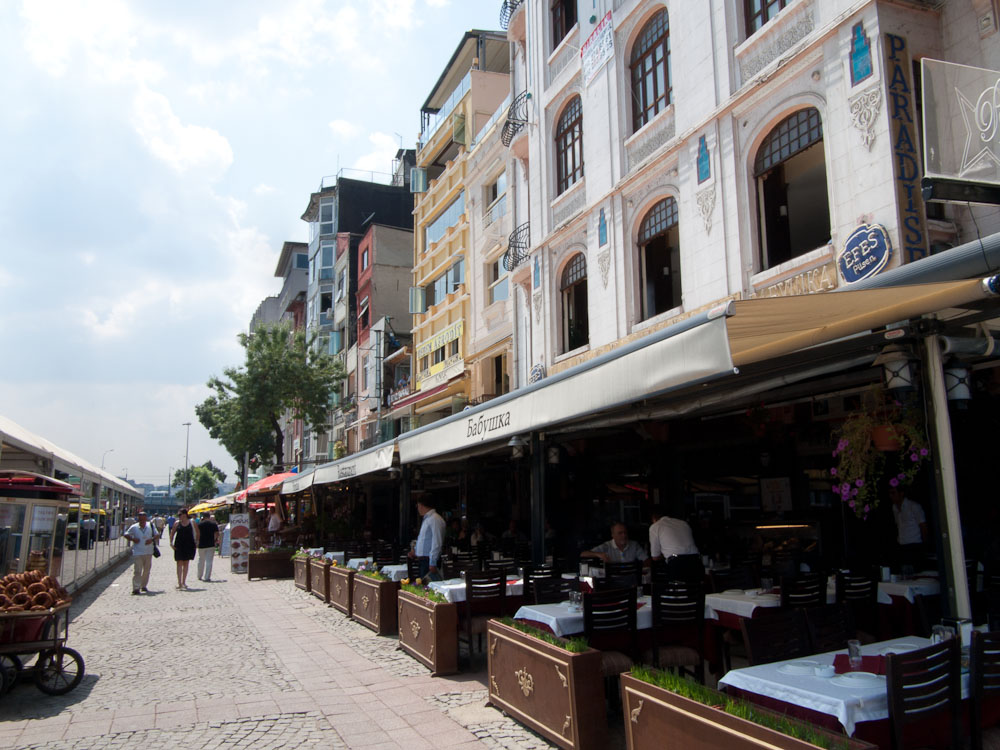
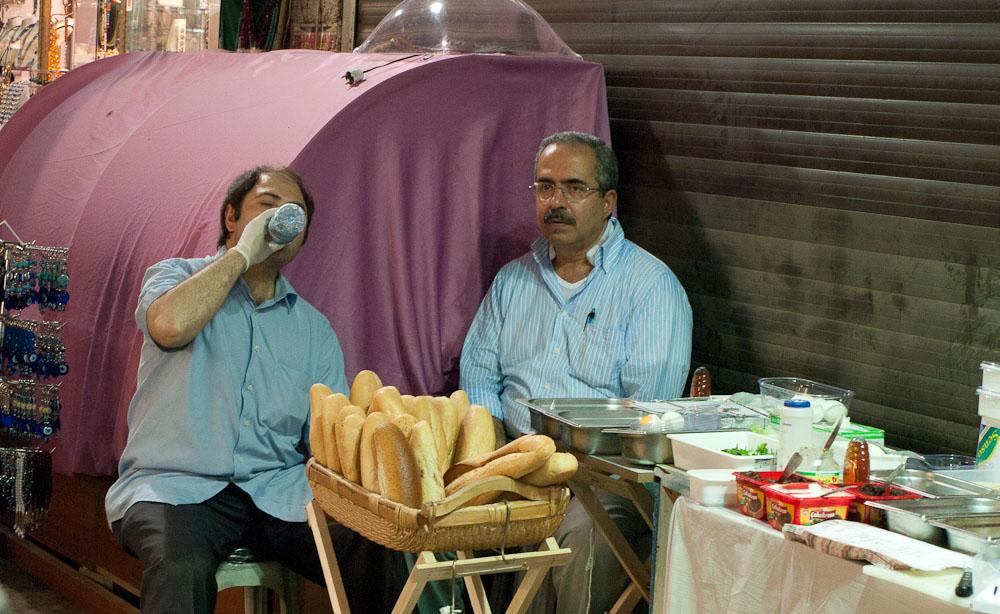
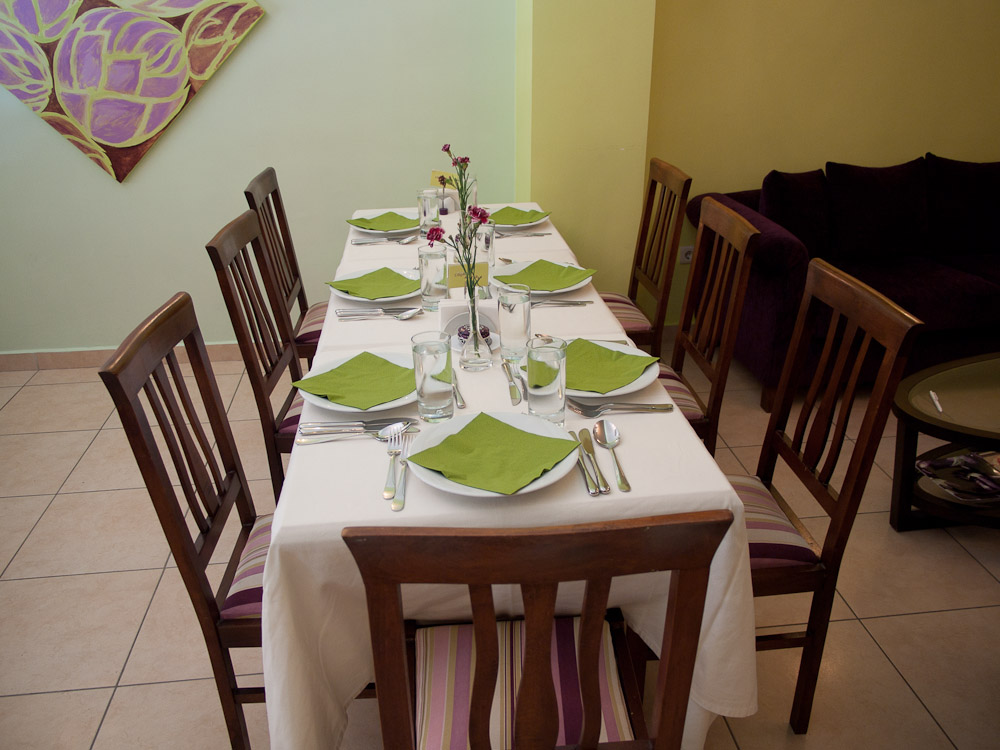
Turkish restaurants range from Western style tablecloths to simple affairs that are basically an open kitchen in a stall with a bunch of plastic tables on the street. We saw a Turkish equivalent to Subway (picture below) – it consisted of a table, a cashbox, a box of breads, and some open tins with lunch meats and garnishes. You pay and make your own sandwich. Who else would see a table and think “that’s a restaurant!” The nicest place we have tried so far was notable for its sea bass marinated in mustard dill sauce with whole black peppercorns and for its stuffed mussels rice bowl – where paella uses saffron this was based on cinnamon. More often the restaurants serve meatballs and doner kebab (lamb or chicken gyros). The meatball appears to be venerated in Turkey, and if France has 300 cheeses then we are told Turkey has 300 meatballs: each town has its special method of preparation, based on the lamb, the spices, the herbs, the amount and type of breadcrumb, and the type of charcoal and woods used for grilling.
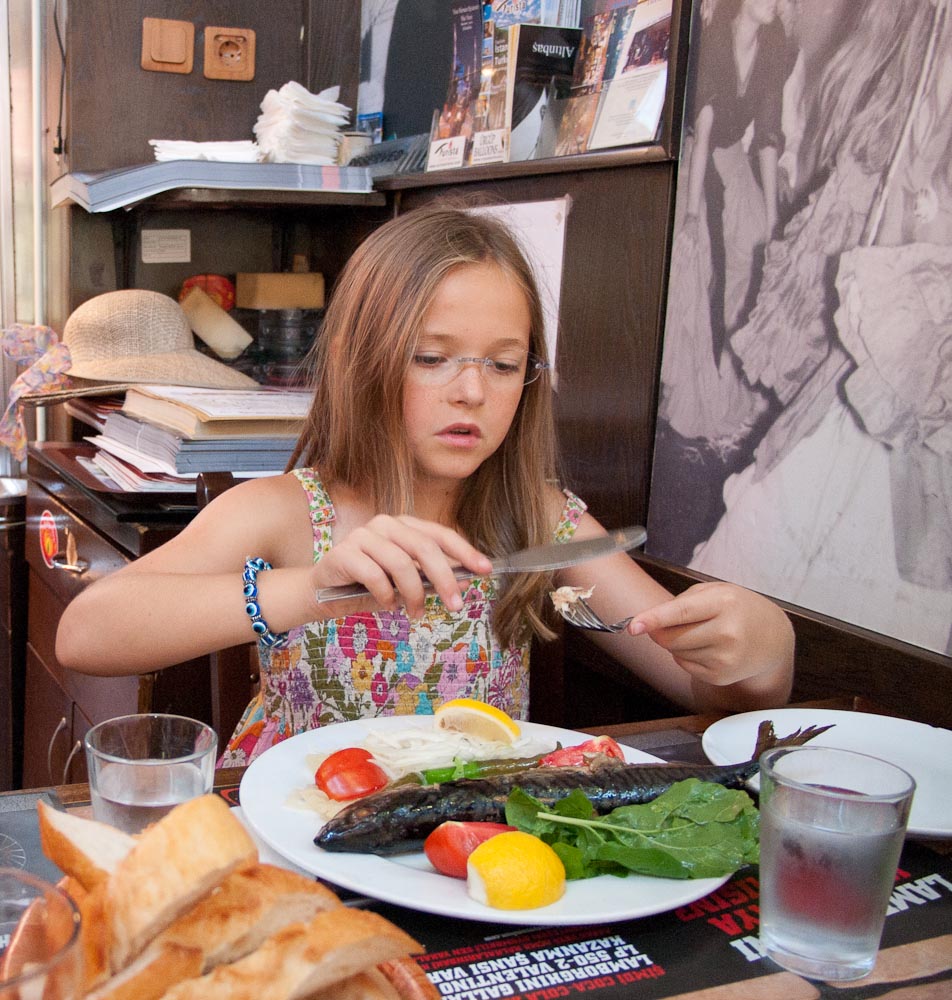
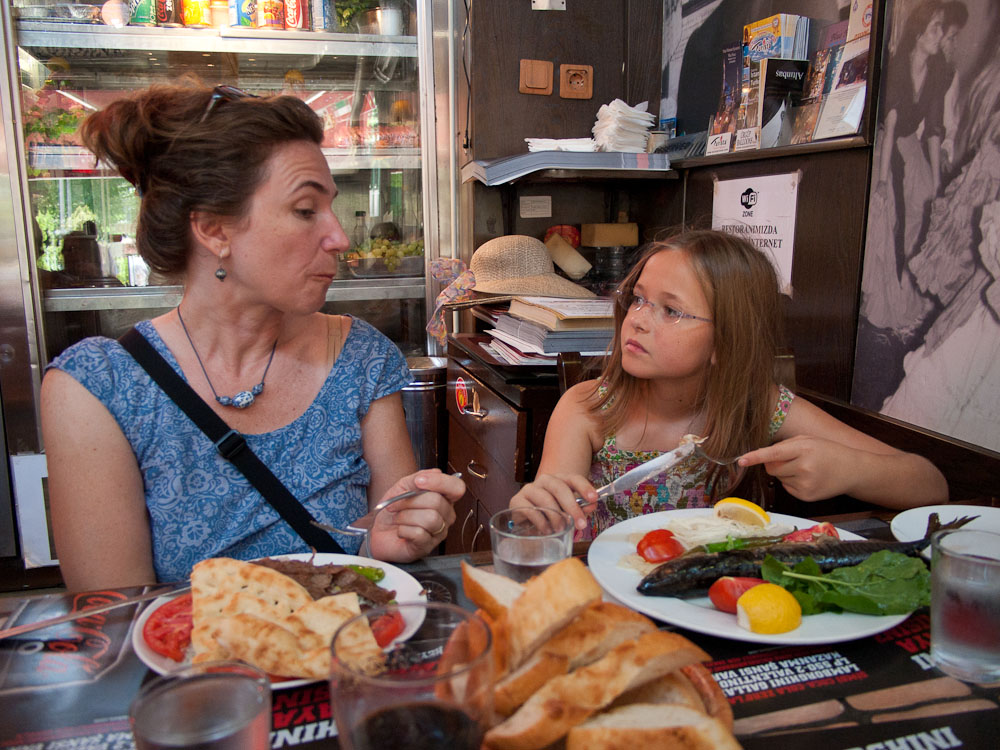
Seafood is quite good in Istanbul. Katherine surprised us by launching with gusto into a grilled sea bream that came whole to her plate. Istanbul has access to a wide range of fish who travel through the Bosphorous at various times of year. Many get diverted into a deep narrow bay inlet that leads into a dead end called the Golden Horn – so named because fish were so easy to catch there that one could easily earn gold. Our guide asserted this is the origin of the word cornucopia, meaning horn of plenty. Just as certain produce is “in season” the Instanbul natives keep track of which fish will be running through the Bosphorous and know what month the fish will be fattest and best for eating.
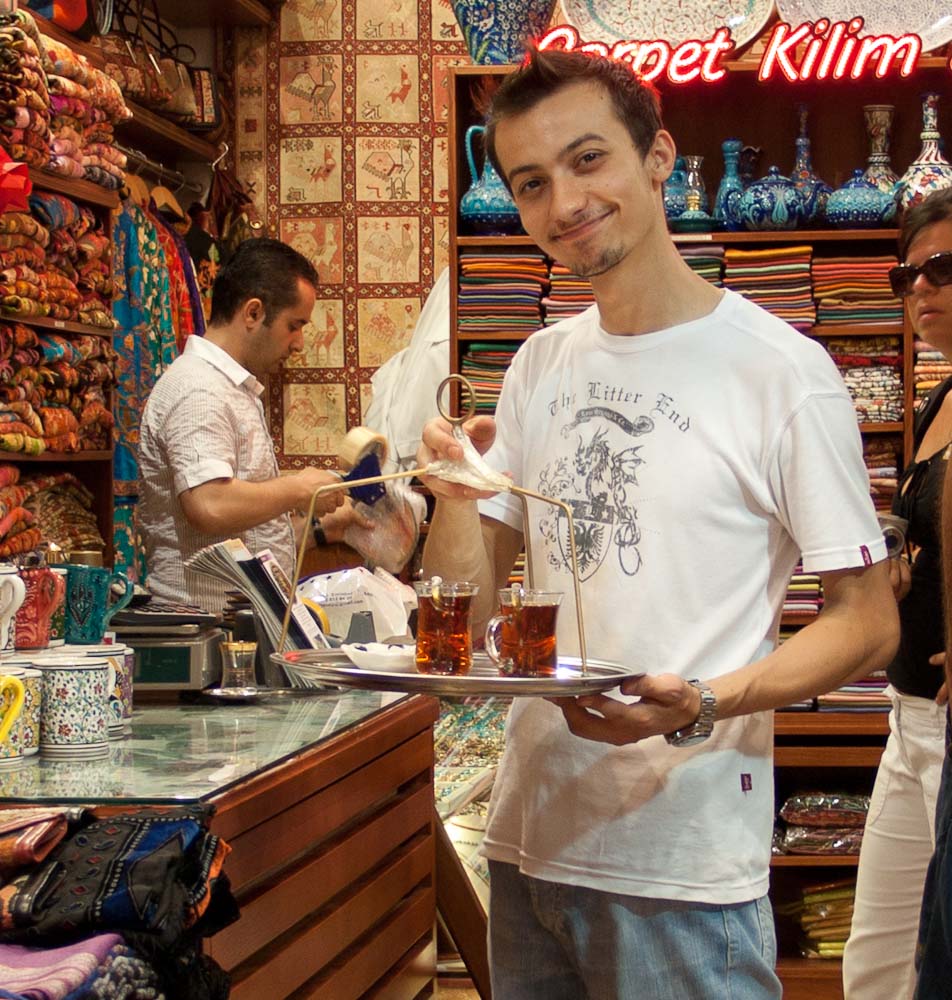
Another characteristic of Turkey is hot tea; drunk constantly and sold everywhere. In any line of stalls there will always be a tea man who is running up and down with a wire serving tray. They serve tourists a cheap artificial apple tea; locals drink the black tea with cubes of sugar. Tea is served in a small clear curvy glass with a reservoir bulb at the bottom, a narrow neck, and wide opening. Clear glass lets you instantly see whether the tea is a good color and the water is clean. The bulb and narrow neck keeps the tea warm, while the broad glass top is cool at the edges and can be held comfortably even though the glass is thin.
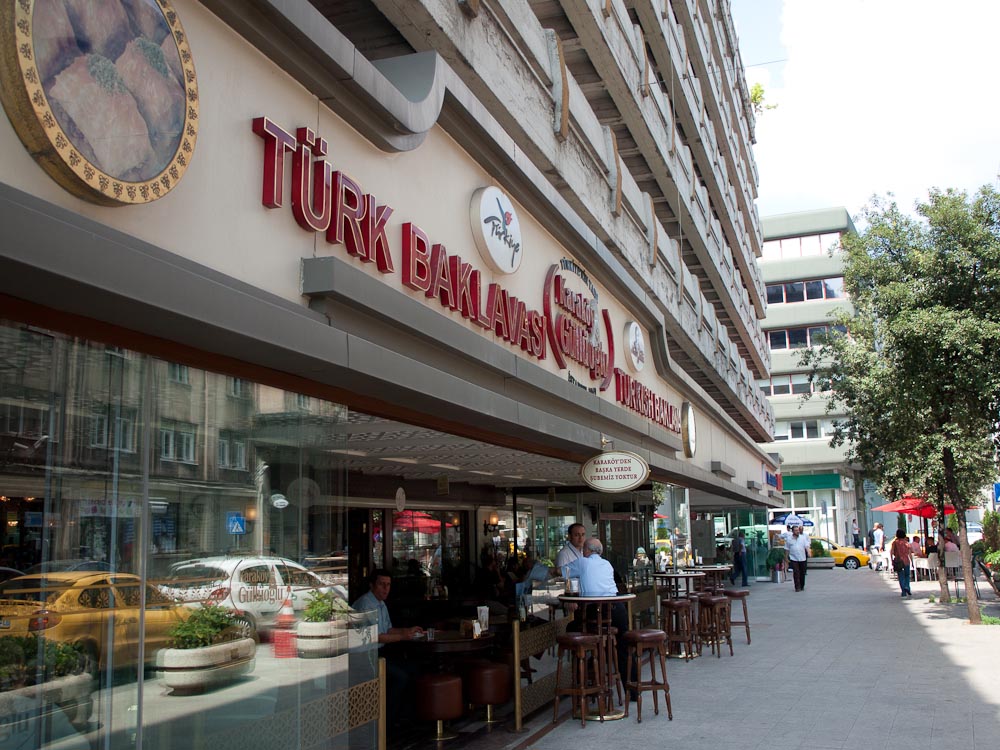
We really got a feeling that the Turkish people have a sweet tooth. Candies, fruits, pastries are everywhere. Where else would you find numerous shops devoted to a single dessert such as baklava – or also we discovered profiterole – where people come in, sit down and eat only that?
Results of our search for the perfect baklava: it starts with the honey. The honey-syrup in the Turkish baklava is pure and light. It melts in your mouth with a clean, sweet aftertaste. Somehow American baklava always has a bit of a bitter aftertaste for me. The second critical element is super-thin filo dough… so thin you can’t taste distinct layers… true bliss can only be achieved when there is a single unified crunch on the tooth. The Turks say “it must be thin enough to read a newspaper through it.” I noticed that in the best shops the dough layers are baked to curl down at the edges of each piece, so that the filo sheets are left concave – this meant the layers, like upside-down bowls, would stay centered on the baklava piece and would resist falling apart the way they would if all were flat. Lastly, nutmeats. Turkey is a major nut producer and the tiny minced nutmeats in Turkish baklava, especially pistachios, are so creamy as to pleasingly offset the sweet of the honey, much as rice does in rice pudding. There is a type of baklava here that looks like an open clamshell and it is stuffed with minced pistachios… heaven. If all this is not enough, in the very best shop our family fell to the floor when the baklava was served topped with fat dollops of whipped cream made of water buffalo milk. Yes we must credit the Turks who alone on earth have figured out why God created water buffalo. The cream of the water buffalo is a stiff thick consistency verging on pudding, and it melts in the mouth to wash down the pastry so you are ready for the next bite, like cookies with milk. Thus armed, one may consume a considerable amount of baklava.
Overall summary of Turkish cuisine: Mediterranean in materials, emphasizing fresh produce, lamb and seafood, with lots of garlic and many dishes adapted to cooking in a nomadic way. The folks at the cooking school also mentioned that the more labor that goes into a dish, the more exalted. On the other hand, the Ottoman Empire crossed numerous countries, so Ottoman cuisine such as served at the Sultan’s Palace could have nearly any taste. Bottom line: delicious variety and plenty of spices!

Error thrown
Call to undefined function ereg()