
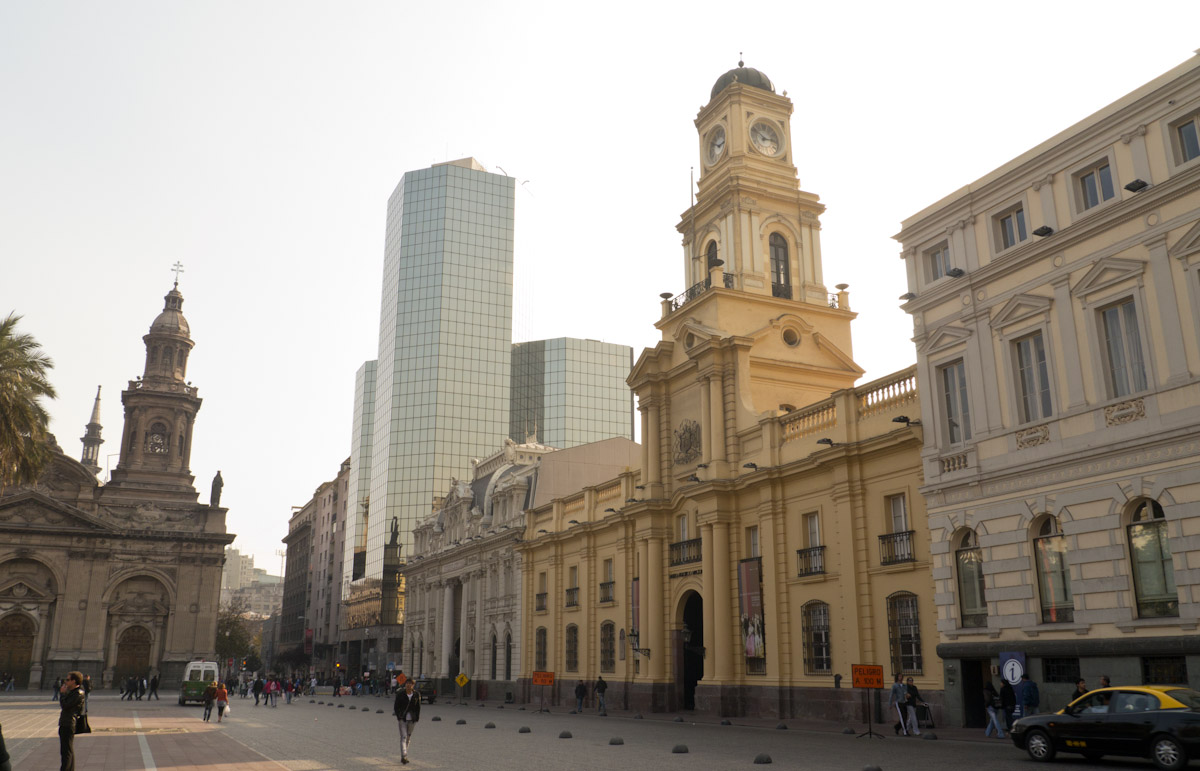
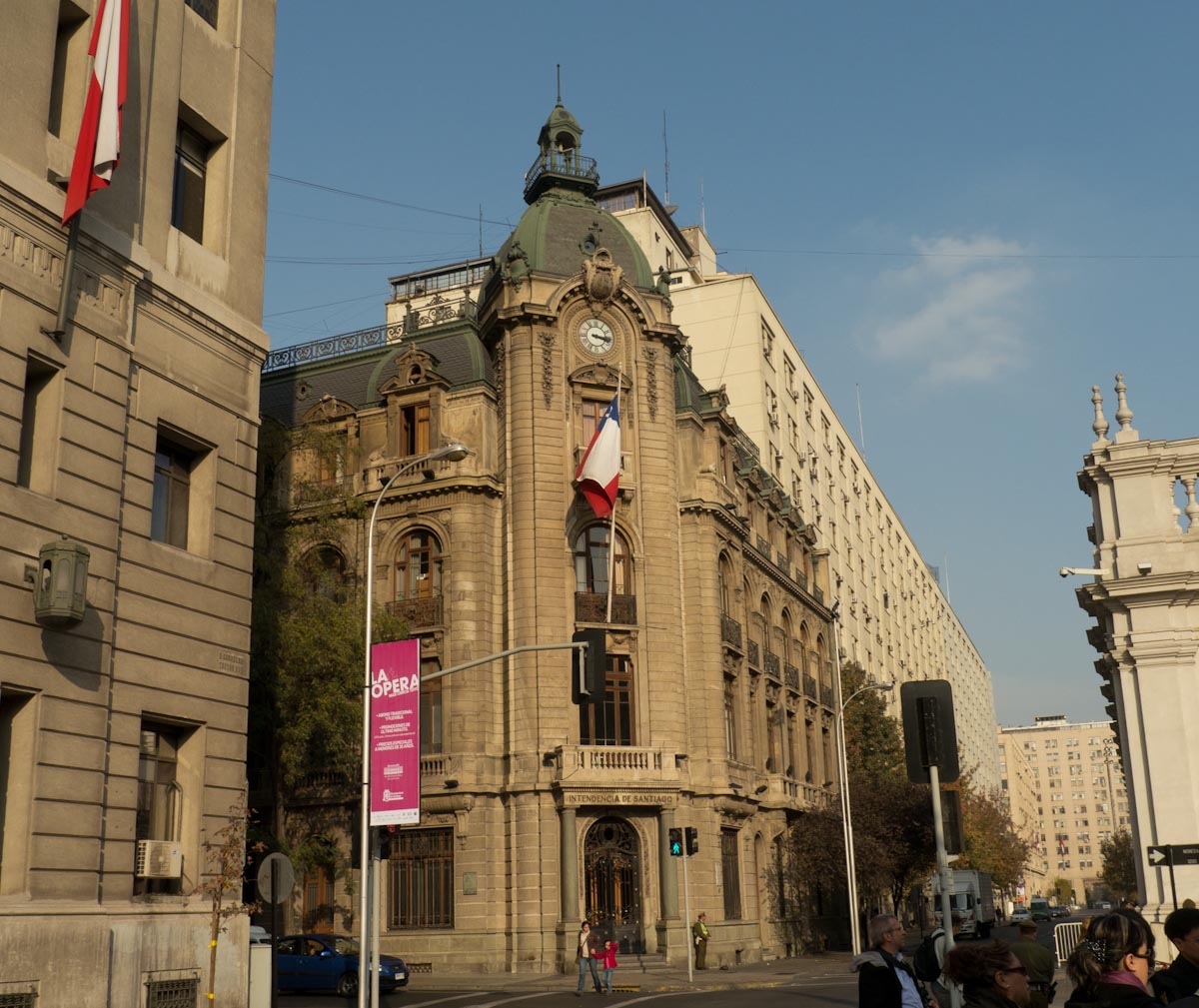
Santiago as a touring destination? The city tour takes you to the presidential palace and other major government buildings, a public square, the fish market, a cathedral, a pre-1500s history museum – all within close walking distance. The 1700s architecture is pleasant enough but not as large or dramatic as you might expect for a city of 6.5 million people and a national capital. Santiago cries out for a national landmark on the scale of the Parthenon, Eiffel Tower, Trevi Fountain or similar.
The most active tourism in Chile is outdoors, from sunny vineyards to snowy mountains. There are dry moonscape deserts to the north. Easter Island is reachable by plane to the west. Penguins, dramatic fjords and the gateway to Antarctica are to the south. We will have to come back to explore these further. Seeking to get beyond the basic city tour, we scheduled two visits with local people. The first was a visit to a local vocational high school for agriculture, which Katherine explained. The second was a visit to Dinkenesh, a small business owned by Renate Dockendorff, a woman who makes and sells chocolate candies from a studio in her home. Renate led us on a chocolate tasting and then helped us make our own one-of-a-kind chocolate bars – yum! Afterward, Carter and Katherine worked off a few calories playing soccer in the backyard and taking shots on net against her five-year-old son Ignacio. They came away convinced that he would be Chile’s future national goalie for sure. So what about Santiago as a place to live? If Argentina is filled with Italian descendants living in the Paris of South America, then Chile is “the England of Latin America.” Of all the Latin American cities we have seen so far, this one felt the closest to home. There are suburban neighborhoods that could be taken straight out of Massachusetts, and plenty of affluent shops and restaurants in the best districts of the city. The Internet was the fastest so far in Latin America. They have clean water from the Andes; the air has some smog detectable but not an oppressive amount. Summer can reach 90 degrees here but there is no humidity and the summer evenings are cool; winter is cold enough to change colors of the leaves but it only snows once every few years, while snow for skiing is available for a large portion of the year in the mountains. We did not see much of a theater scene and this is not a big publishing town, but they have some small movie studios and “the live shows in Buenos Aires are just a short flight away.” Chileans are mostly Roman-Catholic and 80% are of Spanish-Indian descent. Chile has the highest GDP per capita in Latin America and is a member of the OECD. It ranks number one in Latin America on economic freedom and freedom of the press and has a low perceived level of corruption. On the other hand, there is a fairly wide gap between wealthy and poor. On health care, the rich can pay $300 or more per person per month and get excellent coverage. Most middle class people use Formosa (spelling?) for $60 per month and it is “pretty reasonable if you know how to work it.” Those in poverty have access to free healthcare that is “bad and you wait for hours but in the end you do get seen.” Similarly for education, Chile has “the two absolute best universities in South America, where leaders from many countries send their kids”, but only 15% of the general population goes to college. Living in Santiago – which is spread out across a lot of land into 36 different districts like arrondisements – is quite convenient if you can afford a car and miserable if you have to rely on the sparse public transport. Like most Latin cities, security is worse than in America. You still see some houses with iron gates and electrified fences (but fewer than in Costa Rica). The fanciest residential street we saw had a guard booth at the entrance. And street theft by desperate people is a real concern (“but less than in Argentina or Brazil!”). You cannot wear fancy jewelry in the streets, you do not carry anything you can’t afford to lose (e.g. a passport), and you keep your camera firmly strapped around your shoulders. Break these rules and you are basically asking to be mugged. There is a good science museum here (MIM) but we were warned off the soccer stadium (“too rough”) and the Fantasyland amusement park (“not for younger kids”). That said, these guidelines are not particular to Chile – they are customary across Latin American cities. So if you look past that and try to figure out where to be or where to invest in Latin America, Chile has merit. The country is doing well economically. Chile has huge copper reserves, excellent wineries, lots of export crops, and plenty of fresh seafood. Chileans are conservative, religious and more reserved than their colorful neighbors in Argentina and Brazil. The dollar may be dropping but it still goes a long way here. We were embarrassed to know so little about Chilean history, especially as America played (according to locals) an enormous part. The short version is this: in 1970 Chile fractured along class lines and through a series of events ended up selecting Salvador Allende – a socialist and avowed Marxist – as President. Allende nationalized the American-owned copper mine and started taking assets from the rich to give to the poor and started printing money. The economy crashed. The locals here told us that the USA helped destabilize the government and funded Allende’s military leader, General Augusto Pinochet, to lead a military coup. Pinochet bombed the Presidential Palace in 1973 and Allende died. Pinochet consolidated power and stayed in control for the next 17 years through torture and blood, however we did make some economic advances. In 1988 he held a plebiscite expecting to confirm his power but somehow lost the vote! From there Chile shifted to a more mainstream democratic government, electing a woman President in 2006. The current President is a wealthy right-wing businessman named Sebastián Piñera. Chile was thrown for a loop by a huge earthquake in early 2010, which killed 500 people and caused billions in damage. Chile has suffered two mega-earthquakes in the 8.5-9.5 category in the past decade and, as the east side of the Pacific Ring of Fire, is one of the most seismologically active countries in the world. While we were here, there were tens of thousands of people protesting in the streets. It was a battle of green vs. green caused by a government plan for a mega hydroelectric project that would produce sustainable energy but flood some of the most beautiful areas of Chilean Patagonia. A group of five dams would increase Chile’s power by 20% using sustainable energy sources – the equivalent of three nuclear plants (but much less risky given the earthquakes here). Once the major power lines were in place, Chile could add further dams in the mountains of Patagonia to grow further. The project would help eliminate Chile’s energy dependence on natural gas from Argentina which is growing rapidly more expensive. But it would also flood huge tracts of uninhabited raw land containing mountain glaciers and valley rainforests. Despite the protests, look for the project to proceed. Bottom line, if you only have two weeks in Latin America then go see Galapagos and Machu Picchu, but for a low-cost retirement or long-term investment in the region, today's Chile is a solid bet.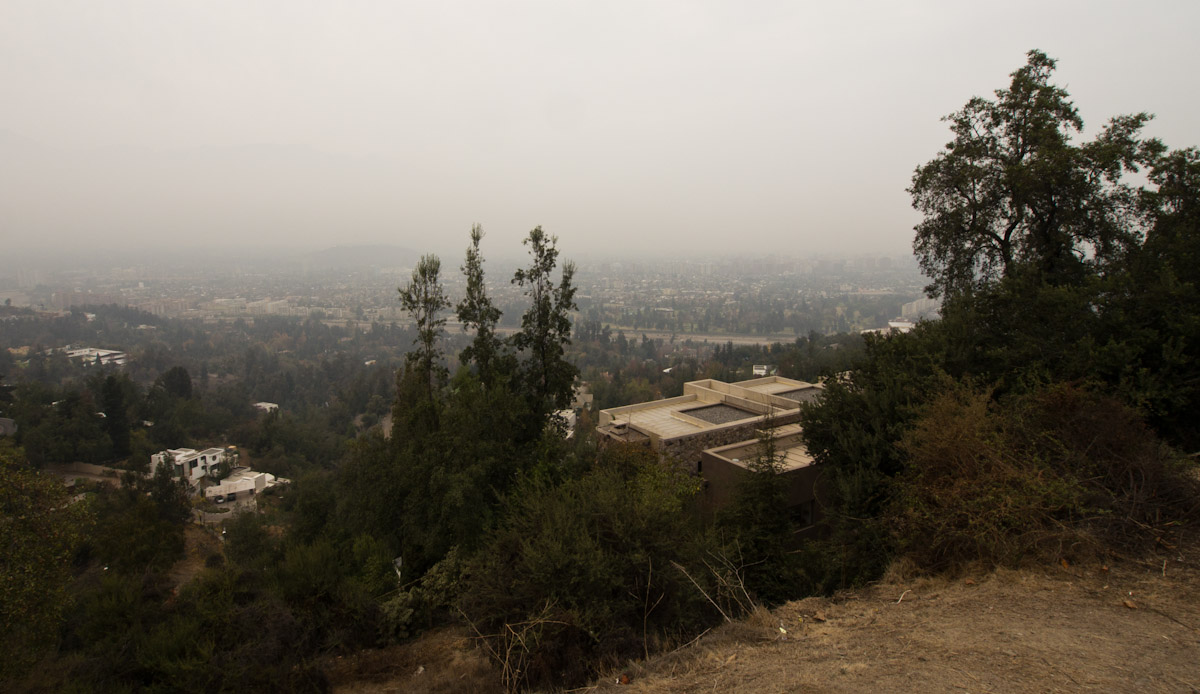
Error thrown
Call to undefined function ereg()